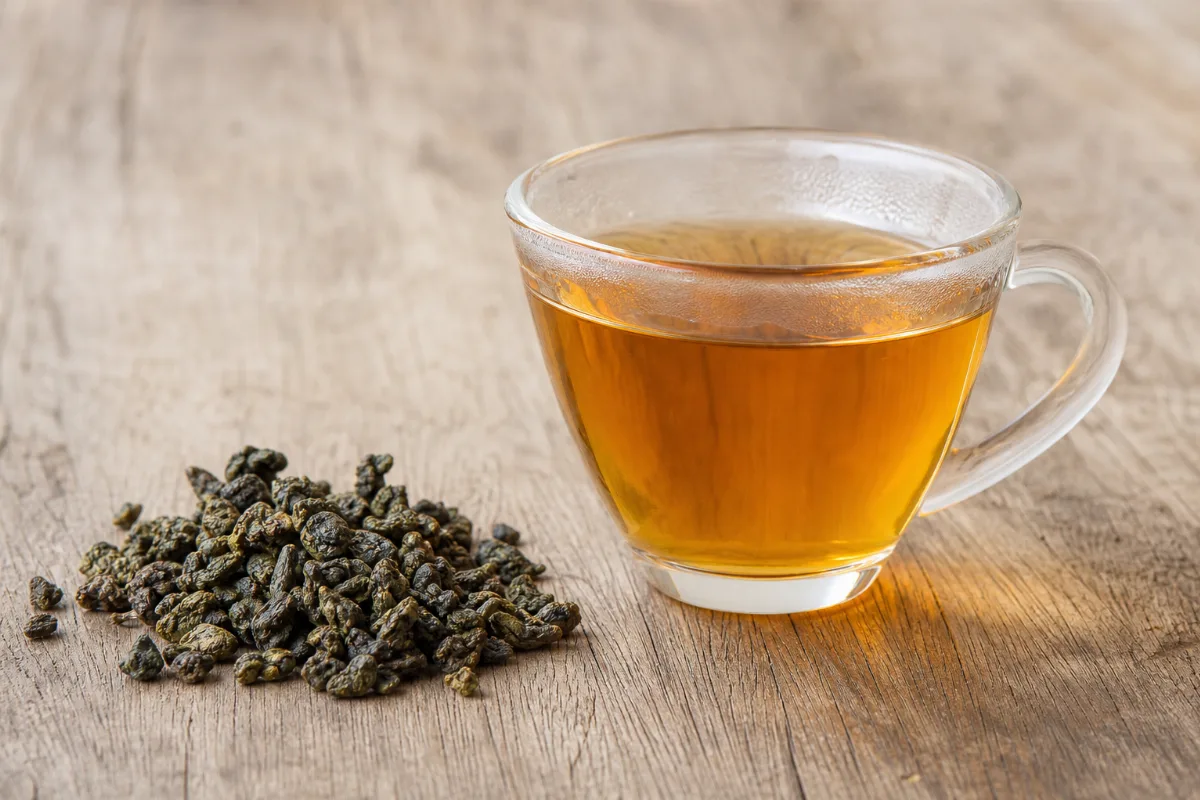
Herbal Teas & Extracts · Tea
Oolong Tea
Camellia sinensis (L.) Kuntze · also called Oolong, wulong tea, partially oxidised tea
Oolong is a tea made from the leaves of the tea plant after partial oxidation, between green and black tea. It has caffeine. Small trials of the drink found short-term rises in energy use and fat burning, but caffeine alone did much the same and no good trial shows weight loss. The main cautions: caffeine in pregnancy, lower iron absorption, and concentrated tea extracts, which are not the same as a cup of tea.
General information, not medical advice. Last substantive update · Not medically reviewed. A named clinician has not signed off on this page. How this page is made
About Oolong Tea
Oolong is a tea made from the leaves of the tea plant (Camellia sinensis) after partial oxidation, between green and black tea. It has caffeine. Small human studies of the drink suggest short-term rises in energy use and fat burning, but caffeine alone did much the same, and there is no good trial showing weight loss. Blood-sugar results disagree. The main cautions are caffeine in pregnancy, lower iron absorption, concentrated tea extracts and very hot drinks.
What oolong tea is
Oolong comes from Camellia sinensis, the same plant as green, black, white and pu-erh tea. NCCIH says green tea is not fermented, oolong is partially fermented and black tea is fermented. A 2019 review groups tea into white, green, yellow, oolong, black and dark by degree of fermentation.
It is not a herbal tea. Herbal teas are made from other plants and do not contain tea-plant caffeine.
Compounds in the drink include caffeine, catechins (EGCG is one), polymerised polyphenols and L-theanine. The 2003 trial found oolong had about half the caffeine and EGCG of green tea and double the polymerised polyphenols.
What people use it for, and how strong the evidence is
Energy use and fat burning: three small trials (2001, 2003, 2020) of 11 to 12 people found modest rises in energy use or fat oxidation. Caffeine alone matched the tea in two of them, and the 14-day trial found no change in 24-hour energy use. This is low-certainty evidence on a lab measure.
Weight: no randomised trial of ordinary oolong tea on body weight was found. The 2026 review says available clinical data do not support tea as a primary treatment for obesity.
Blood sugar: results disagree (a positive trial in 20 people with diabetes, a null trial in 19 healthy men, and a cohort link between two or more cups a day and diabetes).
Heart markers: one small trial in 22 patients, markers only.
Skin: an uncontrolled study of atopic dermatitis.
Tea, enriched drink or extract?
A cup of oolong is the leaf compounds in water, with caffeine. The 12-week result on weight and blood fats came from a catechin-enriched oolong drink, which is a different product. Liver warnings in the green tea literature are mostly about extracts in capsules or tablets.
Findings for one form do not carry over to another. Ask a doctor or pharmacist about concentrated products.
Tradition
The authors of two trials say traditional Chinese belief holds that oolong helps control body weight or body fat. These are the authors' statements, not tested claims. NCCIH says there is evidence of tea use for health purposes going back about 3,000 years, for the tea plant in general.
At a glance
Traditional uses history, not proof
- The authors of a 2001 trial say traditional Chinese belief holds that oolong tea helps control body weight. That is a belief they quote, not a finding.
- NCCIH says tea was used for health purposes for about 3,000 years, for the tea plant in general.
- We did not read a source on oolong specifically in older medical systems, so none is claimed.
Studied for research
- Short-term energy use and fat burning, low
- Body weight (ordinary tea), insufficient
- Blood sugar and diabetes risk, mixed
- Heart and blood-fat markers, very-low
- Atopic dermatitis, insufficient
- Catechin-enriched drink and blood fats (not ordinary tea), very-low
Main compounds
- Caffeine
- Catechins including EGCG
- Polymerised polyphenols
- L-Theanine
Common forms
- Brewed tea (loose leaf or bags)
- Bottled or ready-to-drink tea
- Catechin-enriched drinks (different product)
- Extracts and capsules (different product)
Research links: NHS: Foods to avoid in pregnancy · FDA: How much caffeine is too much? · NCCIH: Green tea · Research Library · Genes & Biomarkers Library
What it is and its history
- Accepted scientific name
- Camellia sinensis
- Naming authority
- (L.) Kuntze
- Common names
- Oolong tea (English); Wulong tea (English)
- Family or group
- Theaceae, per GBIF.
- Classification
- Plantae > Tracheophyta > Magnoliopsida > Ericales > Theaceae > Camellia > Camellia sinensis
- Native range
- Not checked in a source read. NCCIH says the tea plant was first cultivated in China thousands of years ago.
- Habitat
- Not checked in a source read.
- What it looks like
- Part used: Leaf. Oolong is the leaf after partial oxidation (partial fermentation).
- Look-alikes and adulterants
- Name: Green, black, white and pu-erh tea; Note: From the same plant, but processed differently; NCCIH says green tea is not fermented, oolong is partially fermented and black tea is fermented. A 2019 review sorts tea into white, green, yellow, oolong, black and dark by fermentation degree.; Name: Herbal teas (tisanes); Note: Made from other plants, with no Camellia sinensis, so they have different caffeine and safety profiles.
- Sustainability and conservation
- Not checked (no IUCN or CITES source read).
Traditional use and history history, not clinical proof
| Tradition or era | Documented use | Source |
|---|---|---|
| Traditional Chinese belief about body weight | The authors of the 2001 energy-use trial say that according to traditional Chinese belief, oolong tea is effective in the control of body weight; the 2003 authors call oolong a traditional Chinese tea long believed to decrease body fat. These are the authors' statements of belief; no older source was read. | Rumpler 2001; Komatsu 2003 (abstracts) |
| Tea plant and health use | NCCIH says green, black and oolong teas come from the same plant, the tea plant was first cultivated in China thousands of years ago, and there is evidence of tea being used for health purposes dating back about 3,000 years. | NCCIH green tea page, read 2026-10-25 |
Traditional use shows how it was used. It does not show that it works or is safe today.
What is inside, and how it may work
What it contains and how those compounds act in cells and animals. Laboratory and animal mechanisms are not proven effects in people.
Main compounds
| Compound | Family | Where it is concentrated | Activity studied | Level of evidence |
|---|---|---|---|---|
| Caffeine PubChem 2519 | purine alkaloid (methylxanthine) | Leaf (into the drink) About 4 mg per 200 mL in one lab test of oolong infusions, rising to 13.5 mg at the higher brewing temperature; other sources give higher figures for black and green tea. | Stimulant. In two trials, caffeine alone raised energy use or fat oxidation about as much as oolong tea. 23 1 13 20 | Human data |
| Catechins including EGCG PubChem 65064 | flavan-3-ols (tea polyphenols) | Leaf The 2020 trial's oolong drink contained catechins, gallic acid and polymerised polyphenols; amounts are not repeated here. | Tea catechins are the compounds in enriched drinks and extracts; EGCG has been linked to liver markers in extract supplements (earlier EFSA summary, not re-read). 24 20 18 | Human (extract) and laboratory |
| Polymerised polyphenols | oxidation products of catechins | Leaf, formed during oxidation The 2003 authors found oolong had about half the caffeine and EGCG of green tea and double the polymerised polyphenols. | The 2003 authors suggest these raised energy use. A hypothesis. 9 | Hypothesis |
| L-Theanine PubChem 439378 | amino acid | Leaf Highest in black and green tea in one lab test; stable with brewing temperature. | Measured in infusions; no oolong trial of theanine was read. 25 1 | Laboratory (content only) |
Mechanisms, receptors and pathways
| Target or pathway | Gene or receptor | What was found | Level |
|---|---|---|---|
| Energy use and fat oxidation | Not specified | Caffeine alone raised energy use in the 2001 trial and fat oxidation in the 2020 trial. The 2020 authors suggest unidentified ingredients in oolong also stimulate fat oxidation; the 2003 authors suggest polymerised polyphenols. 13 20 9 | Human (hypothesis for cause) |
| Obesity pathways (adipogenesis, AMPK, browning of fat, appetite) | Not specified | A 2026 review says these are supported mainly by cell and rodent studies. 7 | In vitro and animal (review) |
| Iron binding in the gut | Not specified | Tea polyphenols lowered iron absorption in people, in a dose-dependent way (black tea tested). 8 | Human data |
Absorption, metabolism and elimination
- Absorption
- A 2019 review says the bioavailability of tea phytochemicals is relatively low. A 2026 review also cites low systemic exposure to intact catechins.
- Distribution
- Not established.
- Metabolism
- The 2026 review mentions extensive phase-II metabolism of catechins.
- Elimination
- The 2026 review mentions rapid clearance. FDA notes wide variation in how fast people clear caffeine.
- Bioavailability
- Low for tea phytochemicals, per the reviews.
Isolated compounds versus whole extracts
A cup of oolong delivers leaf compounds in water along with caffeine. Catechin-enriched drinks and extracts concentrate certain compounds, and the cholesterol and weight result came from an enriched drink, so findings for one do not carry over. Liver warnings in the green tea literature are mostly about extracts.
Nutritional composition
Nutrient content of oolong tea was not described in the sources we read, so none is claimed.
1 mixed findings1 low certainty2 very low certainty2 not enough evidence
What is Oolong Tea good for?
The uses people ask about and how strong the evidence is for each. Read the certainty label before the summary.
Benefits, one by one
Each card is a research question, not a promise. Tap a goal to filter. Open a card to see the studies, doses and limits.
Short-term energy use and fat burning (oolong tea as a drink)
Low certaintyIn three small trials, drinking oolong tea raised energy use or fat burning for a few hours to two weeks. Caffeine on its own did much the same in the two trials that tested it, so the tea may add little beyond its caffeine. None of the trials measured weight.
3 studiesNot covered. This page gives no amounts and no brewing instructions.
Studies, doses and limits
What the trials found
Three randomised cross-over trials of the brewed drink: 12 men for 3 days (2001), 11 young Japanese women for a single drink (2003), and 12 non-obese men for 14 days (2020).
Results
2001: 24-hour energy use rose 2.9% with full-strength tea and 3.4% with caffeinated water, and fat oxidation was 12% higher with the tea than with water. 2003: energy use over 2 hours rose 10% after oolong and 4% after green tea. 2020: after 14 days, fat oxidation was about 20% higher with oolong tea and also with caffeine alone; 24-hour energy use did not change; sleep was not disturbed.
Effect sizes as reported
Energy use up about 3% (2001); up 10% over 2 hours (2003); fat oxidation up about 12% to 20%; 24-hour energy use unchanged at 14 days (2020).
Why this rating
Three small randomised trials (11 to 12 people each) that agree on a modest rise in a lab measure. Caffeine alone explained most of it in two trials, and none measured weight or body fat.
Form and dose studied
Not covered. This page gives no amounts and no brewing instructions.
Who was studied
Healthy, non-obese young adults (men in two trials, women in one).
Limits
Tiny, short trials of a lab measure. Not shown to cause weight loss. Caffeine-matched comparisons weaken the case for any extra effect of the tea.
Why researchers looked
Oolong has a reputation for body-weight control, so researchers measured how much energy people burn after drinking it.
Traditional use
According to the 2001 energy-use trial's authors, traditional Chinese belief holds that oolong tea helps control body weight. That is a belief the authors quote, not a finding.
Proposed mechanism Preliminary mechanism
The 2003 authors suggest the polymerised polyphenols made in oolong processing may be responsible. Not established.
A proposed mechanism does not show that the effect happens in people.
Oolong tea contains caffeine, which matters in pregnancy, for sleep sensitivity and with some medicines (see the Safety tab).
Body weight and body fat (ordinary oolong tea)
Not enough evidenceWe did not find a randomised trial that shows ordinary oolong tea lowers body weight. A 2026 review says oolong's metabolic effects are promising but less consistently tested in adequately powered human trials, and that tea is not supported as a main treatment for obesity.
1 studiesNot covered. This page gives no amounts and no brewing instructions.
Studies, doses and limits
What the trials found
No randomised trial of ordinary oolong tea with body weight as the result was found in our search. One review (2026) summarises the field.
Results
The 2026 review says evidence is strongest for modest effects of green tea catechin-caffeine preparations. It says a recent meta-analysis in women with overweight or obesity found an average loss of 1.23 kg, below usual clinical thresholds; that analysis is not about oolong. It says oolong's metabolic effects are promising but less consistently tested.
Effect sizes as reported
No effect size for ordinary oolong tea on weight was found.
Why this rating
No direct trial of ordinary oolong tea on weight. The review itself calls the evidence for oolong less consistently tested.
Form and dose studied
Not covered. This page gives no amounts and no brewing instructions.
Who was studied
Adults with overweight or obesity (for tea products in general, not oolong alone).
Limits
A narrative review quotes work on other tea products. Catechin-enriched drinks are a different product (see the Body tab).
Why researchers looked
Weight loss is the main reason people drink oolong, so the question matters.
Traditional use
According to the 2001 energy-use trial's authors, traditional Chinese belief holds that oolong tea helps control body weight. That is a belief the authors quote, not a finding.
Proposed mechanism Preliminary mechanism
Proposed ideas include more fat burning and less fat absorption. Mostly lab and animal work; not established in people.
A proposed mechanism does not show that the effect happens in people.
Weight-loss supplements made from tea extract carry different risks from a cup of tea (see the Safety tab).
Blood sugar and diabetes risk (oolong tea as a drink)
Mixed findingsResults disagree. In 20 people with type 2 diabetes, a month of oolong tea was followed by lower blood glucose than the water month. In 19 healthy men, five days of oolong tea did nothing to blood sugar. A large Japanese cohort linked two or more cups a day with more new diabetes, which does not prove the tea caused it.
3 studiesNot covered. This page gives no amounts and no brewing instructions.
Studies, doses and limits
What the trials found
One randomised cross-over trial in 20 people with type 2 diabetes (Taiwan, 30 days), one randomised double-blind cross-over trial in 19 healthy men (controlled diet, 5 days), and one cohort of 4,975 male workers in Japan followed for a median 3.4 years.
Results
Diabetes trial: glucose fell from 229 to 162.2 mg/dl and fructosamine from 409.9 to 323.3 micromol/l on oolong; the water period did not fall. Healthy men: no difference in fasting glucose, insulin or the glucose response after a meal for oolong, oolong with added catechins, or oolong with added polyphenols. Cohort: hazard ratio for new diabetes 1.00 for one cup a day and 1.64 (95% CI 1.11-2.40) for two or more cups a day.
Effect sizes as reported
Large before-and-after glucose fall in 20 people with diabetes; no change in healthy men; HR 1.64 for two or more cups a day in the cohort.
Why this rating
The three studies point in different directions: a small positive trial, a null trial and an observational signal of higher risk. All are small or observational, and none is long.
Form and dose studied
Not covered. This page gives no amounts and no brewing instructions.
Who was studied
Adults with type 2 diabetes (trial), healthy men (trial and cohort).
Limits
The positive trial had 20 people and compared before-and-after values. The cohort cannot show cause. Tea is not a substitute for diabetes care.
Why researchers looked
Researchers asked whether tea compounds help the body handle sugar.
Traditional use
None stated in the abstracts.
Proposed mechanism Preliminary mechanism
Not established. Proposed ideas include tea polyphenols acting on glucose handling; not shown in these studies.
A proposed mechanism does not show that the effect happens in people.
Anyone using diabetes medicines should talk to a doctor or pharmacist before changing how much tea they drink (see the Safety tab).
Heart and blood-fat markers (oolong tea as a drink)
Very low certaintyIn 22 people with coronary artery disease, a month of oolong tea raised a blood marker called adiponectin and made LDL particles slightly bigger compared with water. These are markers, not heart attacks or strokes.
1 studiesNot covered. This page gives no amounts and no brewing instructions.
Studies, doses and limits
What the trials found
One randomised cross-over trial: 22 patients with coronary artery disease, oolong tea or water for one month each.
Results
Adiponectin rose from 6.26 to 6.88 microg/ml (P<0.05) and LDL particle size from 25.02 to 25.31 nm (P<0.01) on oolong; the water period did not change. HbA1c fell from 7.23% to 6.99% (P<0.05). The abstract does not report cholesterol or triglyceride results.
Effect sizes as reported
Adiponectin up 0.62 microg/ml; LDL particle size up 0.29 nm; HbA1c down 0.24 points.
Why this rating
One small trial of 22 people for one month that measured markers only. Nothing shows fewer heart events.
Form and dose studied
Not covered. This page gives no amounts and no brewing instructions.
Who was studied
Adults with coronary artery disease.
Limits
Small, short, markers only. No heart outcome. Replication is lacking.
Why researchers looked
Adiponectin and LDL particle size are linked to heart disease risk, so they are common markers to track.
Traditional use
None stated in the abstract.
Proposed mechanism Preliminary mechanism
Not established. The authors suggest a possible effect on atherosclerosis; that is a hypothesis.
A proposed mechanism does not show that the effect happens in people.
People with heart disease should not change their treatment on the basis of this one small trial.
Itchy skin from atopic dermatitis (oolong tea as a drink)
Not enough evidenceIn an open study with no comparison group, 63% of 118 people whose atopic dermatitis had not responded to standard treatment improved after a month of oolong tea alongside their usual treatment. Without a control group we cannot say the tea did it.
1 studiesNot covered. This page gives no amounts and no brewing instructions.
Studies, doses and limits
What the trials found
One open, uncontrolled study in Japan: 121 enrolled, 118 completed. Patients kept their usual skin treatments.
Results
After 1 month, 74 of 118 (63%) were markedly or moderately improved. At 6 months, 64 patients (54%) still had a good response.
Effect sizes as reported
63% improved at 1 month; 54% at 6 months. No comparison group.
Why this rating
No control group and no blinding, and patients stayed on other treatments. Time, usual care and expectation could explain the improvement.
Form and dose studied
Not covered. This page gives no amounts and no brewing instructions.
Who was studied
People with atopic dermatitis that had not responded to standard treatment (ages not given in the abstract).
Limits
A single 2001 study, never shown to be repeated in the studies we read. Not a reason to stop skin treatment.
Why researchers looked
Tea polyphenols calmed allergic reactions in animal models, so the authors tried oolong tea in people.
Traditional use
None stated in the abstract.
Proposed mechanism Preliminary mechanism
The authors suggest anti-allergic effects of tea polyphenols. Not established in people.
A proposed mechanism does not show that the effect happens in people.
See a doctor about skin that is not improving; the study kept usual treatment in place.
Body weight, blood fats and fatty liver with a catechin-ENRICHED oolong drink (not ordinary tea)
Very low certaintyIn 60 adults with mildly raised cholesterol, a 12-week catechin-enriched oolong drink was followed by lower body weight, body fat and blood fats, and ultrasound suggested mild fatty liver returned to normal. This was a drink with added catechins, not a cup of ordinary tea, and the abstract gives no numbers.
1 studiesNot covered. This page gives no amounts and no brewing instructions.
Studies, doses and limits
What the trials found
One randomised double-blind placebo-controlled trial of 60 adults with mildly raised cholesterol: catechin-enriched oolong drink, catechin-enriched green tea drink or placebo for 12 weeks.
Results
Both enriched drinks lowered body weight, fat, BMI, lipid peroxidation and blood-fat values (p<0.05), improved antioxidant measures, and ultrasound suggested mild fatty liver reverted to normal. The enriched oolong drink had the greater lipid-lowering effect. No per-group numbers are in the abstract.
Effect sizes as reported
No numbers in the abstract.
Why this rating
One trial of an enriched product with no numbers in the abstract, no funding statement in the abstract and no repeat. It cannot be carried over to ordinary oolong tea.
Form and dose studied
Not covered. This page gives no amounts and no brewing instructions.
Who was studied
Adults with mildly raised cholesterol.
Limits
Product is not ordinary tea. Concentrated catechin products raise their own safety questions (see the Safety tab).
Why researchers looked
Researchers wanted to compare enriched green and oolong drinks for people with mildly raised cholesterol.
Traditional use
None stated in the abstract.
Proposed mechanism Preliminary mechanism
The authors point to antioxidant and fat-lowering activity. Not established.
A proposed mechanism does not show that the effect happens in people.
Concentrated catechin drinks and extracts are not the same as tea; the liver warnings in the tea literature are mostly about extracts.
Connections to the rest of health
How Oolong Tea connects to the rest of our health knowledge graph. Every link says what kind of connection it is. A safety link (for example to the liver) is a warning, not a benefit. A study that merely mentions a topic never creates a benefit link.
Explore every connection: goals, body systems, organs, symptoms, genes
A. Wellness goals
| Connected to | Kind of connection | Evidence status | Context | Studies |
|---|---|---|---|---|
| Metabolic Health | Low certainty | Short-term energy use and fat burning (oolong tea as a drink): In three small trials, drinking oolong tea raised energy use or fat burning for a few hours to two weeks. Caffeine on its own did much the same in the two trials that tested it, so the tea may add little beyond its caffeine. None of the trials measured weight. | 13 9 20 | |
| Energy Boost | Low certainty | Short-term energy use and fat burning (oolong tea as a drink): In three small trials, drinking oolong tea raised energy use or fat burning for a few hours to two weeks. Caffeine on its own did much the same in the two trials that tested it, so the tea may add little beyond its caffeine. None of the trials measured weight. | 13 9 20 | |
| Weight Management | Not enough evidence | Body weight and body fat (ordinary oolong tea): We did not find a randomised trial that shows ordinary oolong tea lowers body weight. A 2026 review says oolong's metabolic effects are promising but less consistently tested in adequately powered human trials, and that tea is not supported as a main treatment for obesity. | 7 | |
| Blood Sugar Balance | Mixed findings | Blood sugar and diabetes risk (oolong tea as a drink): Results disagree. In 20 people with type 2 diabetes, a month of oolong tea was followed by lower blood glucose than the water month. In 19 healthy men, five days of oolong tea did nothing to blood sugar. A large Japanese cohort linked two or more cups a day with more new diabetes, which does not prove the tea caused it. | 6 2 4 | |
| Metabolic Health | Mixed findings | Blood sugar and diabetes risk (oolong tea as a drink): Results disagree. In 20 people with type 2 diabetes, a month of oolong tea was followed by lower blood glucose than the water month. In 19 healthy men, five days of oolong tea did nothing to blood sugar. A large Japanese cohort linked two or more cups a day with more new diabetes, which does not prove the tea caused it. | 6 2 4 | |
| Heart Health | Very low certainty | Heart and blood-fat markers (oolong tea as a drink): In 22 people with coronary artery disease, a month of oolong tea raised a blood marker called adiponectin and made LDL particles slightly bigger compared with water. These are markers, not heart attacks or strokes. | 14 | |
| Cholesterol Balance | Very low certainty | Heart and blood-fat markers (oolong tea as a drink): In 22 people with coronary artery disease, a month of oolong tea raised a blood marker called adiponectin and made LDL particles slightly bigger compared with water. These are markers, not heart attacks or strokes. | 14 | |
| Healthy Skin | Not enough evidence | Itchy skin from atopic dermatitis (oolong tea as a drink): In an open study with no comparison group, 63% of 118 people whose atopic dermatitis had not responded to standard treatment improved after a month of oolong tea alongside their usual treatment. Without a control group we cannot say the tea did it. | 17 | |
| Cholesterol Balance | Very low certainty | Body weight, blood fats and fatty liver with a catechin-ENRICHED oolong drink (not ordinary tea): In 60 adults with mildly raised cholesterol, a 12-week catechin-enriched oolong drink was followed by lower body weight, body fat and blood fats, and ultrasound suggested mild fatty liver returned to normal. This was a drink with added catechins, not a cup of ordinary tea, and the abstract gives no numbers. | 18 | |
| Weight Management | Very low certainty | Body weight, blood fats and fatty liver with a catechin-ENRICHED oolong drink (not ordinary tea): In 60 adults with mildly raised cholesterol, a 12-week catechin-enriched oolong drink was followed by lower body weight, body fat and blood fats, and ultrasound suggested mild fatty liver returned to normal. This was a drink with added catechins, not a cup of ordinary tea, and the abstract gives no numbers. | 18 | |
| Liver Support | Very low certainty | Body weight, blood fats and fatty liver with a catechin-ENRICHED oolong drink (not ordinary tea): In 60 adults with mildly raised cholesterol, a 12-week catechin-enriched oolong drink was followed by lower body weight, body fat and blood fats, and ultrasound suggested mild fatty liver returned to normal. This was a drink with added catechins, not a cup of ordinary tea, and the abstract gives no numbers. | 18 |
B. Body systems
| Connected to | Kind of connection | Evidence status | Context | Studies |
|---|---|---|---|---|
| Metabolism Weight | Biological association | Low certainty | Studied for: Short-term energy use and fat burning (oolong tea as a drink) Studied for: Body weight and body fat (ordinary oolong tea) | 13 9 20 7 18 |
| Endocrine System | Biological association | Mixed findings | Studied for: Blood sugar and diabetes risk (oolong tea as a drink) | 6 2 4 |
| Cardiovascular System | Biological association | Very low certainty | Studied for: Heart and blood-fat markers (oolong tea as a drink) Studied for: Body weight, blood fats and fatty liver with a catechin-ENRICHED oolong drink (not ordinary tea) | 14 18 |
| Integumentary System | Biological association | Not enough evidence | Studied for: Itchy skin from atopic dermatitis (oolong tea as a drink) | 17 |
| Hepatic System | Biological association | Very low certainty | Studied for: Body weight, blood fats and fatty liver with a catechin-ENRICHED oolong drink (not ordinary tea) | 18 |
I. Biomarkers
| Connected to | Kind of connection | Evidence status | Context | Studies |
|---|---|---|---|---|
| Iron | Adverse effect or risk | Documented risk | Beverages rich in polyphenols lowered iron absorption from a meal in a 1999 human study. Preparation or compound: Tea polyphenols (black tea tested; oolong not) |
8 |
| Fat oxidation (how much fat the body burns, from breathing measurements) | Biological association | Low certainty | Measured in trials: increase. A lab change is not the same as a health benefit. | 13 20 |
| Energy expenditure (calories burned) | Biological association | Low certainty | Measured in trials: increase. A lab change is not the same as a health benefit. | 13 9 20 |
| Blood glucose, fasting glucose and fructosamine | Biological association | Mixed findings | Measured in trials: mixed. A lab change is not the same as a health benefit. | 6 2 |
| Adiponectin and LDL particle size | Biological association | Very low certainty | Measured in trials: increase. A lab change is not the same as a health benefit. | 14 |
| HbA1c (average blood sugar over about three months) | Biological association | Very low certainty | Measured in trials: decrease. A lab change is not the same as a health benefit. | 14 |
| Itch and skin lesion severity in atopic dermatitis | Biological association | Not enough evidence | Measured in trials: decrease. A lab change is not the same as a health benefit. | 17 |
| Blood fats (lipid profile) with an enriched oolong drink | Biological association | Very low certainty | Measured in trials: improve. A lab change is not the same as a health benefit. | 18 |
L. Active compounds
| Connected to | Kind of connection | Evidence status | Context | Studies |
|---|---|---|---|---|
| Caffeine | Adverse effect or risk | Documented risk | Oolong tea contains caffeine, which counts toward the daily limits in pregnancy. Preparation or compound: Brewed oolong tea |
12 16 1 |
| Caffeine | Biological association | Human | Stimulant. In two trials, caffeine alone raised energy use or fat oxidation about as much as oolong tea. Preparation or compound: Leaf (into the drink) |
23 1 13 20 |
| Catechins including EGCG | Biological association | Human (extract) and laboratory | Tea catechins are the compounds in enriched drinks and extracts; EGCG has been linked to liver markers in extract supplements (earlier EFSA summary, not re-read). Preparation or compound: Leaf |
24 20 18 |
| Polymerised polyphenols | Biological association | Hypothesis | The 2003 authors suggest these raised energy use. A hypothesis. Preparation or compound: Leaf, formed during oxidation |
9 |
| L-Theanine | Biological association | Laboratory (content only) | Measured in infusions; no oolong trial of theanine was read. Preparation or compound: Leaf |
25 1 |
Each connection is stored with the ingredient, the connected record, the kind of connection, the evidence status, the supporting studies, the preparation or compound involved, and a review date (last reviewed October 25, 2026).
Evidence at a glance: what changed in 1 lab markers
Tap a number to show only those markers. Counts are markers, not people.
The evidence
The research centre for Oolong Tea. Every record here was checked against PubMed or the publisher's page; we never list a study we have not verified.
Evidence by outcome
Bars show how many studies we found for each outcome, not how well it works. People are added up across trials only (reviews are not added, to avoid double counting).
How we rate evidence
High certainty
Several well-run trials or reviews agree; further research is unlikely to change the picture much.
Moderate certainty
Good trials point the same way, but some doubt remains.
Low certainty
Small, short or inconsistent trials. The finding could change with better research.
Very low certainty
Very little or very weak human data. Treat as a possibility only.
Mixed findings
Trials or reviews disagree with each other.
Not enough evidence
Not enough human research to say either way.
Evidence against
Good research found no benefit, or found harm.
We take the reviewers' own risk-of-bias and GRADE statements where they exist, and otherwise judge from study size, design, consistency, directness and whether a product matches what is sold. Many publications do not make evidence high. Method note: We read the abstracts of 16 PubMed records and the NHS, FDA and NCCIH pages, and checked the plant name in GBIF and three compounds in PubChem. Health Canada and EFSA pages could not be opened and are not relied on.
Study library: every study we checked 25
| Study | Design | People | Product, dose, length | Result |
|---|---|---|---|---|
| Ayakdaş 2025 Determination of L-Theanine and Caffeine Contents in Tea Infusions with Different Fermentation Degrees and Brewing Conditions Using the Chromatographic Method. Foods · PMID 40647065 · DOI |
Laboratory analysis laboratory (tea infusions) |
Tea infusions measured by HPLC | Oolong tea (Camellia sinensis), brewed drink compared with green, white, yellow, black and pu-erh leaf Not repeated here n/a · vs Other tea types |
Oolong infusion had 4 +/- 1.6 mg caffeine per 200 mL, less than green (11), black (14), pu-erh (13) and white (5.8). Caffeine in oolong rose from 4.4 to 13.5 mg per 200 mL at the higher brewing temperature in this test. Oolong was among the lowest in caffeine in this one test (Not applicable) Methods, limits and fundingOutcomes: Caffeine and L-theanine in infusions Limitations: One lab test. Caffeine varies by leaf, brewing and tea bag or loose leaf, and the NHS estimate for a cup of black or green tea is much higher than this lab's figure. Do not treat the low number as a guarantee. Funding and conflicts: Not stated in the abstract. Read: abstract |
| Baer 2011 Oolong tea does not improve glucose metabolism in non-diabetic adults. Eur J Clin Nutr · PMID 20959857 · DOI |
Randomised double blind cross over trial |
19 19 healthy men on a controlled diet (country not named in the abstract) |
Oolong tea (Camellia sinensis), brewed drink, oolong with added catechins, oolong with added oolong polyphenols, versus caffeinated water and water leaf Not repeated here 5 days per treatment · vs Caffeinated water and unsupplemented water |
No significant differences for fasting glucose, fasting insulin, or the glucose and insulin responses after a meal, for any of the oolong drinks. No improvement (Not given in the abstract) Methods, limits and fundingOutcomes: Fasting glucose, fasting insulin and a 4-hour glucose response after a standard meal Limitations: Healthy men, only 5 days. It does not test people with diabetes or long-term use. Funding and conflicts: Public funding is listed on the PubMed record (US government and non-US government research support); no industry funding is stated in the abstract. Read: abstract |
| European Food Safety Authority 2018 EFSA (2018): Scientific opinion on the safety of green tea catechins (summary from an earlier read; page blocked on 2026-10-25) European Food Safety Authority · Source |
Authoritative guidance human (guidance) |
General public | n/a n/a Not repeated here n/a · vs n/a |
NOT RE-READ. An earlier build summary says EFSA found catechins from traditionally brewed green tea generally safe with rare liver injury, and liver markers rose with supplements giving 800 mg or more of EGCG a day. Not confirmed today and about green tea, not oolong. Not applicable Methods, limits and fundingOutcomes: Official guidance Limitations: Not verified today (page returned an access block). About green tea, not oolong. Funding and conflicts: Public body. Read: summary-only |
| Hayashino 2011 High oolong tea consumption predicts future risk of diabetes among Japanese male workers: a prospective cohort study. Diabet Med · PMID 21244473 · DOI |
Prospective cohort study |
4975 4,975 male workers, Japan, followed a median of 3.4 years |
Self-reported oolong tea intake leaf Not repeated here Median 3.4 years of follow-up · vs Non-drinkers of oolong tea |
Compared with no oolong tea, the adjusted hazard ratio for diabetes was 1.00 (95% CI 0.67-1.49) for one cup a day and 1.64 (95% CI 1.11-2.40) for two or more cups a day. Higher diabetes risk at two or more cups a day (HR 1.64) (95% CI 1.11-2.40 for two or more cups) Methods, limits and fundingOutcomes: New diabetes (201 cases) Limitations: An observational link, so it cannot show the tea caused diabetes. Men only, tea intake self-reported. The authors say more studies are needed. Funding and conflicts: Not stated in the abstract (non-US government research support listed on PubMed). Read: abstract |
| Health Canada 2026 Health Canada: Caffeine in foods (summary from an earlier read; page could not be opened on 2026-10-25) Health Canada · Source |
Authoritative guidance human (guidance) |
General public | n/a n/a Not repeated here n/a · vs n/a |
NOT RE-READ. An earlier build summary says Health Canada lists 30-50 mg per 8 fl oz brewed black or green tea and 300 mg a day for pregnant people. This was not confirmed today. Not applicable Methods, limits and fundingOutcomes: Official guidance Limitations: Not verified today; the page did not open from this computer. Funding and conflicts: Public body. Read: summary-only |
| Hosoda 2003 Antihyperglycemic effect of oolong tea in type 2 diabetes. Diabetes Care · PMID 12766099 · DOI |
Randomised cross over trial |
20 20 adults with type 2 diabetes who kept taking their diabetes medicines, Miaoli, Taiwan |
Oolong tea (Camellia sinensis), brewed drink versus water leaf Not repeated here 30 days per treatment · vs Water |
On oolong tea, plasma glucose fell from 229 to 162.2 mg/dl (P<0.001) and fructosamine from 409.9 to 323.3 micromol/l (P<0.01). In the water period the values did not fall (glucose 208.7 to 232.3 mg/dl). Large fall in glucose and fructosamine in the abstract's before-and-after numbers (Not given in the abstract) Methods, limits and fundingOutcomes: Plasma glucose and fructosamine Limitations: Only 20 people. The abstract compares before-and-after values, and the starting glucose differed between the two periods. No hypoglycaemia report is given in the abstract. Not a replacement for medicines. Funding and conflicts: Not stated in the abstract. Read: abstract |
| Hu 2026 Tea Bioactive Compounds in Obesity Prevention and Management: Processing-Dependent Composition, Molecular Mechanisms, Human Evidence, and Translational Challenges. Int J Mol Sci · PMID 42653208 · DOI |
Narrative review human (review) |
Review of tea and obesity | All tea types, with a focus on green tea catechin-caffeine preparations leaf Not repeated here n/a · vs n/a |
Evidence is strongest for modest effects of green-tea catechin-caffeine preparations. For partially oxidised oolong, the effects are described as promising but less consistently tested in adequately powered human trials. The review says available clinical data do not support tea as a primary treatment for obesity. Not applicable (Not applicable) Methods, limits and fundingOutcomes: Energy metabolism, body weight, lipids Limitations: A narrative review, not a pooled analysis for oolong. The meta-analysis it quotes (-1.23 kg) is about tea products in women with overweight, not oolong alone. Funding and conflicts: The authors declared no conflicts of interest. Read: abstract |
| Hurrell 1999 Inhibition of non-haem iron absorption in man by polyphenolic-containing beverages. Br J Nutr · PMID 10999016 |
Controlled human absorption study |
Adult volunteers (number not given in the abstract) | Black tea, herb teas, coffee and cocoa served with a bread meal leaf Not repeated here Single meals · vs Water control meal |
All the drinks reduced iron absorption. Black tea cut it by 79-94%, peppermint tea by 84%, camomile by 47%. Oolong was not tested. Large fall in iron absorption with black tea (Not applicable) Methods, limits and fundingOutcomes: Iron absorption from a bread meal Limitations: Oolong was not tested, so the size of the effect for oolong is unknown. Single meals, not long-term iron status. Funding and conflicts: Not stated in the abstract. Read: abstract |
| Komatsu 2003 Oolong tea increases energy metabolism in Japanese females. J Med Invest · PMID 13678386 |
Randomised cross over trial |
11 11 healthy Japanese women aged about 20 |
Oolong tea (Camellia sinensis), brewed drink versus green tea versus water leaf Not repeated here Single drink, measured for 120 minutes · vs Water and green tea |
Over 120 minutes, energy expenditure rose by 10% after oolong tea and 4% after green tea. The authors suggest the polymerised polyphenols in oolong are responsible. 10% (oolong) and 4% (green tea) rise in energy use over 2 hours (Not given in the abstract) Methods, limits and fundingOutcomes: Energy expenditure measured by indirect calorimetry for 120 minutes after the drink Limitations: Eleven young women, a single drink, two hours of measurement. It does not show weight loss or that the effect lasts. Funding and conflicts: Not stated in the abstract. Read: abstract |
| Luo 2022 Hot Tea Consumption and Esophageal Cancer Risk: A Meta-Analysis of Observational Studies. Front Nutr · PMID 35479756 · DOI |
Systematic review and meta analysis of observational studies human (observational) |
23 reports: 5,050 cases and 10,609 controls | Hot tea drinking (tea types not separated in the abstract) n/a Not repeated here n/a · vs Lower-temperature or no tea |
Drinking hot tea was linked to higher risk (odds ratio 1.79, 95% CI 1.48-2.15). The link was for squamous cell cancer, not adenocarcinoma. OR 1.79 (95% CI 1.48-2.15) Methods, limits and fundingOutcomes: Esophageal cancer risk Limitations: Observational studies can show a link, not cause. Not about oolong alone, and the abstract does not give a temperature. Funding and conflicts: Not stated in the abstract. Read: abstract |
| NCCIH (US National Institutes of Health) 2026 NCCIH (US NIH): Green Tea: Usefulness and Safety, read 2026-10-25 NCCIH (US National Institutes of Health) · Source |
Authoritative guidance human (guidance) |
General public | n/a n/a Not repeated here n/a · vs n/a |
Says green, black and oolong tea all come from Camellia sinensis, with oolong partially fermented. For green tea as a drink, no safety concerns have been reported in adults, but it contains caffeine. Liver injury is uncommon and mostly tied to green tea extract tablets or capsules. High-dose green tea has been shown to reduce blood levels of the drug nadolol, green tea extract can reduce levels of atorvastatin, and an NCCIH-funded study showed an interaction with raloxifene. During pregnancy caffeine should not exceed moderate levels, and caffeine passes into breast milk (fussiness and poor sleep at high intake). Studies of green tea products and cholesterol mostly used extracts. Not applicable Methods, limits and fundingOutcomes: Official guidance Limitations: A page about green tea, not oolong. Its interaction and liver statements are for green tea and extracts. Funding and conflicts: Public body. Read: full-text |
| NHS (UK) 2026 NHS (UK): Foods to avoid in pregnancy (caffeine section), read 2026-10-25 NHS (UK) · Source |
Authoritative guidance human (guidance) |
General public | n/a n/a Not repeated here n/a · vs n/a |
Says you should not have more than 200 mg of caffeine a day in pregnancy, lists tea as a source (about 75 mg in a cup of black or green tea) and says too much caffeine has been linked to a higher chance of miscarriage and stillbirth. Not applicable Methods, limits and fundingOutcomes: Official guidance Limitations: General guidance on tea and caffeine; it does not name oolong. Funding and conflicts: Public body. Read: full-text |
| Rumpler 2001 Oolong tea increases metabolic rate and fat oxidation in men. J Nutr · PMID 11694607 · DOI |
Randomised cross over trial |
12 12 men (country not named in the abstract) |
Oolong tea (Camellia sinensis), brewed drink (two strengths) versus caffeinated water versus water leaf Not repeated here 3 days per treatment · vs Water, and water with caffeine matched to the full-strength tea |
Compared with water, 24-hour energy expenditure rose 2.9% with full-strength tea and 3.4% with the caffeinated water. Fat oxidation was 12% higher with full-strength tea than with water. Small rises in energy use (about 3%) and fat oxidation (12%) after 3 days (Not given in the abstract) Methods, limits and fundingOutcomes: 24-hour energy expenditure and fat oxidation by room calorimetry Limitations: Only 12 men, 3 days per treatment. The caffeine-only drink raised energy use as much as the tea, so caffeine may explain it. A lab measure, not weight loss. Funding and conflicts: Not stated in the abstract. Read: abstract |
| Shimada 2004 Oolong tea increases plasma adiponectin levels and low-density lipoprotein particle size in patients with coronary artery disease. Diabetes Res Clin Pract · PMID 15331202 · DOI |
Randomised cross over trial |
22 22 patients with coronary artery disease (country not named in the abstract) |
Oolong tea (Camellia sinensis), brewed drink versus water leaf Not repeated here 1 month per treatment · vs Water |
Adiponectin rose from 6.26 to 6.88 microg/ml (P<0.05) and LDL particle size from 25.02 to 25.31 nm (P<0.01) after a month of oolong tea; water changed neither. HbA1c fell from 7.23% to 6.99% (P<0.05). The abstract does not report the cholesterol results. Small changes in blood markers (Not given in the abstract) Methods, limits and fundingOutcomes: Plasma adiponectin, LDL particle size, cholesterol, triglycerides, glucose, HbA1c Limitations: Only 22 patients, one month, blood markers rather than heart attacks. The authors conclude it 'may' help; that is a hypothesis. Funding and conflicts: Not stated in the abstract. Read: abstract |
| Tang 2019 Health Functions and Related Molecular Mechanisms of Tea Components: An Update Review. Int J Mol Sci · PMID 31817990 · DOI |
Narrative review review |
Review of tea components and health | All tea types leaf Not repeated here n/a · vs n/a |
Tea is divided into six groups (white, green, yellow, oolong, black, dark) by degree of fermentation. The review says drinking tea is considered safe because reports of severe adverse effects are rare, and that tea phytochemicals have low bioavailability. Not applicable (Not applicable) Methods, limits and fundingOutcomes: Tea groups, components, health functions, safety Limitations: A broad narrative review of lab and human work; not specific to oolong. Funding and conflicts: Not stated in the abstract. Read: abstract |
| U.S. Food and Drug Administration 2026 U.S. FDA: Spilling the Beans: How Much Caffeine Is Too Much? read 2026-10-25 U.S. Food and Drug Administration · Source |
Authoritative guidance human (guidance) |
General public | n/a n/a Not repeated here n/a · vs n/a |
For most adults the FDA has cited 400 mg of caffeine a day as an amount not generally associated with negative effects, with wide variation in sensitivity. Some conditions and medicines make people more sensitive. People who are pregnant, trying to become pregnant or breastfeeding are told to talk to their health care provider about limiting caffeine. Too much caffeine in children and teens can cause fast heart rate, palpitations, high blood pressure, anxiety and sleep problems. Not applicable Methods, limits and fundingOutcomes: Official guidance Limitations: General caffeine guidance; it does not name oolong. Funding and conflicts: Public body. Read: full-text |
| Uehara 2001 A trial of oolong tea in the management of recalcitrant atopic dermatitis. Arch Dermatol · PMID 11176659 · DOI |
Open uncontrolled trial |
118 118 patients (of 121 enrolled) with atopic dermatitis that had not responded to standard treatment |
Oolong tea (Camellia sinensis), brewed drink, in addition to usual skin treatment leaf Not repeated here 1 month, then follow-up to 6 months · vs None (open study, no comparison group) |
After 1 month, 74 of 118 patients (63%) were markedly or moderately improved. At 6 months 64 patients (54%) still had a good response. 63% improved at 1 month; 54% at 6 months (Not applicable) Methods, limits and fundingOutcomes: Itch and skin lesions, scored from photographs and a 6-point scale Limitations: No control group, no blinding, and patients kept their usual treatments, so tea cannot be credited. Improvement could come from other treatment, time or expectation. Funding and conflicts: Not stated in the abstract. Read: abstract |
| Venkatakrishnan 2018 Comparative studies on the hypolipidemic, antioxidant and hepatoprotective activities of catechin-enriched green and oolong tea in a double-blind clinical trial. Food Funct · PMID 29384173 · DOI |
Randomised double blind placebo controlled trial |
60 60 adults with mildly raised cholesterol |
CATECHIN-ENRICHED oolong tea drink (not ordinary tea), catechin-enriched green tea drink, or placebo drink leaf (enriched drink) Not repeated here 12 weeks · vs Placebo drink |
Both enriched drinks lowered body weight, fat, BMI, lipid peroxidation and blood-fat values compared with the start (p<0.05). The enriched oolong drink had the greater lipid-lowering effect, and ultrasound suggested mild fatty liver returned to normal. The abstract gives no per-group numbers. Reported improvements; no numbers in the abstract (Not given in the abstract) Methods, limits and fundingOutcomes: Body weight, fat, BMI, blood fats, antioxidant markers, fatty liver on ultrasound Limitations: The drink was enriched with catechins, so it is not a cup of ordinary tea. The abstract does not name funding or the country. The reported fatty-liver change rests on ultrasound. Funding and conflicts: Not stated in the abstract. Read: abstract |
| Yao 2022 Prediction and Health Risk Assessment of Copper, Lead, Cadmium, Chromium, and Nickel in Tieguanyin Tea: A Case Study from Fujian, China. Foods · PMID 35681341 · DOI |
Laboratory measurement and risk assessment laboratory (tea leaf) |
Tieguanyin tea (a well-known oolong) from Fujian, China | Tieguanyin oolong tea leaf and brewing experiments leaf Not repeated here n/a · vs n/a |
Mean leaf levels were 8.18 mg/kg copper, 0.84 lead, 0.51 chromium, 0.04 cadmium and 1.90 nickel. Between 10.2% and 70.4% moved into the tea during brewing. The estimated daily intakes were far below tolerable limits and the authors found no significant non-cancer risk for six groups of drinkers at current habits. They still suggest attention to lead, nickel and cadmium. Metal intakes estimated well below tolerable limits (Not applicable) Methods, limits and fundingOutcomes: Five metals in the leaf and how much passes into the infusion Limitations: One oolong type (Tieguanyin) from one province. It does not describe all oolong or other regions. Funding and conflicts: The authors declared no competing interests. Read: abstract |
| Zhang 2020 Subacute Ingestion of Caffeine and Oolong Tea Increases Fat Oxidation without Affecting Energy Expenditure and Sleep Architecture: A Randomized, Placebo-Controlled, Double-Blinded Cross-Over Trial. Nutrients · PMID 33260552 · DOI |
Randomised double blind placebo controlled cross over trial |
12 12 non-obese men |
Oolong tea (Camellia sinensis), brewed drink versus caffeine alone versus placebo leaf Not repeated here 14 days per treatment · vs Placebo, and caffeine alone |
Caffeine and oolong tea each raised fat oxidation by about 20% without changing 24-hour energy expenditure. The fall in respiratory quotient during sleep was greater with oolong tea than with caffeine. Sleep was not disturbed by either. About 20% higher fat oxidation; no change in 24-hour energy expenditure or sleep (Not given in the abstract) Methods, limits and fundingOutcomes: 24-hour energy expenditure, fat oxidation (indirect calorimetry) and sleep (polysomnography) Limitations: Only 12 men, 14 days. Caffeine alone did similar things, so the tea's own effect beyond caffeine is unproven. Fat oxidation is a lab measure, not body weight or fat loss. Funding and conflicts: Not stated in the abstract. Read: abstract |
| Zhong 2022 Hot Tea Drinking and the Risk of Esophageal Cancer: A Systematic Review and Meta-Analysis. Nutr Cancer · PMID 34818954 · DOI |
Systematic review and meta analysis of case control studies human (observational) |
12 case-control studies: 5,253 cases and 8,273 controls | Hot tea drinking n/a Not repeated here n/a · vs Lower-temperature or no tea |
Hot tea drinking was linked to higher risk (pooled odds ratio 2.04, 95% CI 1.78-2.31). The authors say the evidence is still limited. OR 2.04 (95% CI 1.78-2.31) Methods, limits and fundingOutcomes: Esophageal cancer risk Limitations: Case-control studies only. Not about oolong alone. The authors call the evidence limited. Funding and conflicts: Not stated in the abstract. Read: abstract |
| n/a 2026 GBIF Backbone Taxonomy: Camellia sinensis (L.) Kuntze (match API read 2026-10-25) n/a · Source |
Registry or database n/a |
General public | n/a n/a Not repeated here n/a · vs n/a |
Camellia sinensis (L.) Kuntze is the ACCEPTED species name (key 3189635), family Theaceae, order Ericales. Not applicable Methods, limits and fundingOutcomes: Accepted name Limitations: Registry check only. Read: full-text |
| n/a 2026 PubChem: Caffeine (CID 2519, read 2026-10-25) n/a · Source |
Registry or database n/a |
General public | n/a n/a Not repeated here n/a · vs n/a |
PubChem lists Caffeine as CID 2519, formula C8H10N4O2. Not applicable Methods, limits and fundingOutcomes: Compound identity Limitations: Identity check only. Read: full-text |
| n/a 2026 PubChem: Epigallocatechin gallate (EGCG) (CID 65064, read 2026-10-25) n/a · Source |
Registry or database n/a |
General public | n/a n/a Not repeated here n/a · vs n/a |
PubChem lists Epigallocatechin gallate (EGCG) as CID 65064, formula C22H18O11. Not applicable Methods, limits and fundingOutcomes: Compound identity Limitations: Identity check only. Read: full-text |
| n/a 2026 PubChem: L-Theanine (CID 439378, read 2026-10-25) n/a · Source |
Registry or database n/a |
General public | n/a n/a Not repeated here n/a · vs n/a |
PubChem lists L-Theanine as CID 439378, formula C7H14N2O3. Not applicable Methods, limits and fundingOutcomes: Compound identity Limitations: Identity check only. Read: full-text |
What we do not know yet
- What the evidence supports: low for short-term energy use, mixed for blood sugar, very-low for heart markers, insufficient for weight and skin.
- No randomised trial of ordinary oolong tea on body weight was found.
- No oolong-specific source on pregnancy, children, liver, kidney or interactions was found.
- The tea's own effect beyond its caffeine is not shown.
- Health Canada and EFSA pages could not be re-read, so their figures are not relied on.
How new research is added
New studies are found by a saved PubMed search and are placed in a review queue. A person reads each one before it is added.
Lab markers
What changed in blood or saliva tests during trials. A changed number is not the same as feeling or being healthier, and we give no "normal ranges".
Metabolic 2
Blood glucose, fasting glucose and fructosamine
Mixed results in trials
Sugar in the blood, and fructosamine, a marker of average glucose over a few weeks.
Mixed findingsResults and what it means
Why it was measured
Main results in the two oolong blood-sugar trials.
Statistical vs. clinical meaning
Tells us about blood sugar, not about complications of diabetes.
Safety implication
Lower sugar in a person taking diabetes medicines could matter, so ask a pharmacist.
HbA1c (average blood sugar over about three months)
Decrease in trials
A blood test that reflects average glucose over weeks to months.
Very low certaintyResults and what it means
Why it was measured
A secondary result in the coronary artery disease trial.
Statistical vs. clinical meaning
A small change in 22 patients over a month, reported before and after.
Safety implication
None specific.
| Study | Result | People | Product |
|---|---|---|---|
| 14 | Fell from 7.23% to 6.99% (P<0.05) over one month of oolong tea. |
Other 5
Fat oxidation (how much fat the body burns, from breathing measurements)
Increase in trials
Measured by indirect calorimetry, which tracks oxygen used and carbon dioxide breathed out over hours.
Low certaintyResults and what it means
Why it was measured
Main result in the energy-use trials.
Statistical vs. clinical meaning
A lab measure of fuel use, not body weight or fat loss.
Safety implication
Caffeine alone gave a similar rise in the 2020 trial.
Energy expenditure (calories burned)
Increase in trials
Energy the body uses, measured by indirect calorimetry.
Low certaintyResults and what it means
Why it was measured
Main result in the 2001 and 2003 trials.
Statistical vs. clinical meaning
Short-lived and small, and the effect was not seen at 14 days.
Safety implication
None specific.
Adiponectin and LDL particle size
Increase in trials
Adiponectin is a hormone made by fat tissue. LDL particle size describes whether cholesterol-carrying particles are larger or smaller.
Very low certaintyResults and what it means
Why it was measured
Main results in the coronary artery disease trial.
Statistical vs. clinical meaning
Markers linked to heart disease risk; a rise is not the same as fewer heart events.
Safety implication
None specific.
| Study | Result | People | Product |
|---|---|---|---|
| 14 | Both rose after one month of oolong tea in 22 patients; water changed neither. |
Itch and skin lesion severity in atopic dermatitis
Decrease in trials
Scored from photographs of two or three lesion sites and a 6-point itch scale.
Not enough evidenceResults and what it means
Why it was measured
Main result of the open study.
Statistical vs. clinical meaning
A patient-rated and photo-rated outcome, but uncontrolled.
Safety implication
Patients stayed on usual skin treatment.
| Study | Result | People | Product |
|---|---|---|---|
| 17 | 74 of 118 patients (63%) improved at 1 month and 64 (54%) at 6 months, with no comparison group. |
Blood fats (lipid profile) with an enriched oolong drink
Improve in trials
Total cholesterol, LDL, HDL and triglycerides measured in blood.
Very low certaintyResults and what it means
Why it was measured
Main result of the enriched-drink trial.
Statistical vs. clinical meaning
Lab values; not heart events. Applies to an enriched product, not ordinary tea.
Safety implication
Not applicable to a cup of tea.
| Study | Result | People | Product |
|---|---|---|---|
| 18 | Reported to improve against the start in both enriched-drink groups, with the enriched oolong drink the stronger; numbers are not in the abstract. |
Safety
What studies and official sources say about side effects, medicines and who should check first. Each point shows what kind of evidence it comes from.
Main points to know 4
- Oolong is a true tea, so it has caffeine. In pregnancy the NHS says to keep total caffeine under 200 mg a day.. The NHS says too much caffeine has been linked to a higher chance of miscarriage and stillbirth, and lists tea as a source. The FDA tells people who are pregnant, trying to become pregnant or breastfeeding to talk to their health care provider about limiting caffeine. NCCIH says caffeine in pregnancy should not exceed moderate levels. One 2025 lab test found oolong low in caffeine (about 4 mg per 200 mL) but the NHS estimates a cup of black or green tea at much more, and the lab figure rose to 13.5 mg when brewed hotter, so do not rely on the low number. No source we read gives an oolong-specific pregnancy rule. Authoritative guidance 12 16 11 1
- Tea can lower how much iron the body takes in from a meal.. In a 1999 study, black tea cut iron absorption from a bread meal by 79-94%, and herb teas, coffee and cocoa also lowered it. Oolong was not tested, so its size of effect is unknown. People with low iron or anaemia should ask a clinician when to drink tea relative to meals. Human trial 8
- Concentrated green tea extracts, not a cup of tea, are the products linked to liver injury.. NCCIH says no safety concerns have been reported for green tea as a drink, but liver injury, though uncommon, has been reported mostly with green tea extracts in tablets or capsules. No oolong-specific liver report was found. Catechin-enriched drinks and extracts are different products from a cup of tea. Authoritative guidance 11
- Very hot tea is linked in studies to a higher risk of esophageal cancer.. Two meta-analyses of observational studies found higher esophageal cancer risk with hot tea (odds ratios 1.79 and 2.04). Both are association studies, not oolong alone, and the 2022 authors call the evidence limited. The link was for squamous cell cancer, not adenocarcinoma. Observational 10 21
Side effects 5
| Effect | How often | Severity and recovery | Evidence |
|---|---|---|---|
| Caffeine effects: jitteriness, fast heartbeat, trouble sleeping The FDA says about 400 mg of caffeine a day is not generally associated with negative effects in most adults, with wide variation in sensitivity, and that some conditions and medicines raise sensitivity. In a 14-day trial of 12 men, oolong tea did not disturb sleep stages. | Not measured for oolong | Varies with sensitivity Usually settles as caffeine wears off | Authoritative guidance 16 11 |
| Sleep disturbance In 12 non-obese men over 14 days, oolong tea or caffeine alone did not interfere with sleep. A small trial in men does not speak for everyone, and individual sensitivity differs. | Not seen in one trial | Not applicable Not applicable | Human trial 20 |
| Lower iron absorption Black tea cut absorption 79-94%; oolong not tested. | Seen in every beverage tested (not oolong) | Could matter for people with low iron Single-meal effect | Human trial 8 |
| Digestive upset, constipation, higher blood pressure (with green tea EXTRACT supplements) NCCIH lists these for green tea extract supplements, not for tea as a drink and not for oolong. | Not given | Not graded Not stated | Authoritative guidance 11 |
| Higher new-diabetes rate at two or more cups a day (an association) Observational, so not shown to be caused by the tea. Not seen in the 5-day trial in healthy men. | Hazard ratio 1.64 in one cohort of Japanese men | Not applicable Not applicable | Observational 4 |
Liver
NCCIH says liver injury from green tea products is uncommon and has mostly involved green tea extracts in tablets or capsules, and that no safety concerns have been reported for the drink in adults. No liver case report or liver-safety statement specific to oolong tea was found. An earlier summary of EFSA's 2018 opinion on green tea catechins (not re-read) says brewed infusions were generally considered safe with rare liver cases. 11 3
How often. Not established for oolong tea.
Monitoring. Not applicable for tea as a drink. People who use concentrated tea extracts should ask a doctor or pharmacist.
This is a safety connection. It is not evidence that Oolong Tea supports liver health.
Medicines and supplements 4
| With | Why it matters | Importance | Evidence | What to do |
|---|---|---|---|---|
| Nadolol (a beta-blocker), atorvastatin (a cholesterol medicine), raloxifene (an osteoporosis medicine) medicines (green tea evidence, not oolong) | NCCIH reports lower blood levels of nadolol with high-dose green tea, of atorvastatin with green tea extract, and an interaction with raloxifene. | Described for green tea, not oolong, and for high doses or extracts. We found no interaction report for oolong as a drink. | Authoritative guidance Very low certainty 11 | If you take any of these or other medicines, ask a pharmacist before drinking a lot of tea or using tea extracts. |
| Some medicines and conditions medicines that raise caffeine sensitivity | The FDA says certain conditions and some medications make people more sensitive to caffeine. | Not specific to oolong; the FDA does not list medicines in the page we read. | Authoritative guidance Low certainty 16 | Ask a doctor or pharmacist whether caffeine matters with your medicines. |
| Diabetes medicines diabetes medicines | In the one trial in type 2 diabetes, people drank oolong tea while still taking their diabetes medicines, and glucose fell. | The abstract does not report low-sugar events or any interaction. Whether tea changes the effect of any medicine was not studied. | Human trial Very low certainty 6 | If you take diabetes medicines, tell your doctor or pharmacist about regular tea drinking. |
| Iron from food iron supplements and iron-rich meals | Tea polyphenols bound iron in the gut and lowered absorption in a 1999 human study (black tea; oolong not tested). | Could matter for people with low iron. | Human trial Moderate certainty 8 | People with anaemia or low iron should ask a clinician about tea with meals. |
Who should check first 4
| Situation | Advice | Evidence |
|---|---|---|
| Pregnancy and trying to become pregnant | Count oolong toward your daily caffeine total. The NHS says not to go over 200 mg of caffeine a day; the FDA says to ask your provider. | Authoritative guidance 12 16 |
| Low iron or anaemia | Ask a clinician about tea with meals, since tea lowers iron absorption. | Human trial 8 |
| Caffeine sensitivity, heart rhythm problems, anxiety or sleep trouble | Ask a clinician. The sources we read do not give oolong-specific advice, and the FDA says sensitivity varies widely. | Authoritative guidance 16 |
| Concentrated green or oolong tea extract, capsules and enriched drinks | These are not the same as a cup of tea and have their own liver and interaction questions. Ask a doctor or pharmacist first. | Authoritative guidance 11 18 |
Overdose, product quality and regulators
Summary. No poisoning or toxic amount for oolong tea as a drink was found in the sources we read. The main hazards described are caffeine, lowered iron absorption and very hot drinks.
Amounts. No safe or unsafe amount of oolong is established here, and this page gives none beyond official caffeine limits quoted from the NHS and FDA.
Onset and course. Not described for oolong.
Repeated use. The Japanese cohort links two or more cups a day with more new diabetes, but this is an association only.
Animal data. Not reviewed.
Toxic parts. The leaf is the part used for the drink. Concentrated extracts are different products.
Not read. Health Canada and EFSA pages could not be opened on 2026-10-25; no oolong-specific liver, kidney or allergy source was read.
Tea leaves can carry trace metals and, as other sources say, pesticide residues. We read one study of one oolong.
Metals in one oolong (Tieguanyin, Fujian). Leaf levels of copper, lead, chromium, cadmium and nickel were measured and 10.2%-70.4% moved into the tea during brewing. Estimated daily intakes were far below tolerable limits, with no significant non-cancer risk for six groups at current habits. The authors still suggest attention to lead, nickel and cadmium. 19
Pesticides, fluoride, radioisotopes. We did not read an oolong-specific source on pesticide residues or fluoride, so none is claimed.
Caffeine varies. Caffeine in a cup depends on the leaf, brewing and form; a lab test found oolong lower than black, green and pu-erh tea, while the NHS gives a higher estimate for a cup of black or green tea. 1 12
| Body | Action | Date |
|---|---|---|
| NHS (UK) (United Kingdom) | Pregnancy: no more than 200 mg of caffeine a day; too much caffeine linked to miscarriage and stillbirth. Lists tea as a caffeine source. source | 2026 (page as read) |
| U.S. Food and Drug Administration (United States) | About 400 mg of caffeine a day is not generally associated with negative effects in most adults; pregnant, trying to conceive or breastfeeding: talk to a provider. source | 2026 (page as read) |
| NCCIH (US NIH) (United States) | Green tea page: no safety concerns for the drink in adults; liver injury uncommon and mostly with extracts; drug interactions with high-dose green tea or extract; moderate caffeine in pregnancy. source | 2026 (page as read) |
When to get medical help
- If someone has chest pain, a racing or irregular heartbeat, fainting or seizures after caffeine or a tea extract, seek emergency care.
- Yellow skin or eyes, dark urine, severe stomach pain or unusual tiredness after taking green or oolong tea extract capsules: stop and seek medical care.
- Difficulty swallowing, food sticking or unexplained weight loss in someone who drinks very hot tea regularly: see a doctor.
Stop using the product and contact a clinician or emergency service. In the US, Poison Control is 1-800-222-1222.
General information only, not medical advice. Ask a clinician or pharmacist before use, especially with medicines, in pregnancy or with a health condition. See the Natural Remedy Safety guide.
Frequently asked questions
Does oolong tea have caffeine?
Is oolong tea safe in pregnancy?
Does oolong tea help you lose weight?
Does oolong tea lower blood sugar?
Does oolong tea lower cholesterol?
Not shown for ordinary tea. A catechin-enriched oolong drink was followed by better blood fats in a 12-week trial of 60 adults, but the abstract gives no numbers and it was not ordinary tea.
Is oolong tea good for the heart?
One small trial in 22 patients with coronary artery disease found changes in adiponectin and LDL particle size after a month. These are markers; no heart events were measured.
Can oolong tea interact with medicines?
Does oolong tea affect iron?
Tea can lower iron absorption from a meal. Black tea cut it by 79-94% in a 1999 study; oolong was not tested. Ask a clinician if your iron is low.
Can oolong tea hurt the liver?
NCCIH says liver injury from green tea products is uncommon and mostly tied to extracts, and no safety concerns have been reported for the drink in adults. No oolong liver report was found.
Is very hot oolong tea risky?
Does oolong tea contain heavy metals?
Trace metals were measured in one oolong (Tieguanyin from Fujian). Estimated intakes were far below tolerable limits, though the authors suggest attention to lead, nickel and cadmium. We did not read a source on other oolongs.
Explore by health goal
Metabolic HealthWeight ManagementCholesterol BalanceEnergy BoostBlood Sugar BalanceHeart HealthHealthy SkinLiver Support
Editorial transparency
- Written by
- AlternativeMed editorial team. Research compiled with AI assistance, then checked against PubMed records.
- Medical review
- None. This page has not been reviewed by a physician or pharmacist.
- First published
- 2026-10-25
- Last substantive update
- 2026-10-25
- How we research
- We read the abstracts of 16 PubMed records and the NHS, FDA and NCCIH pages, and checked the plant name in GBIF and three compounds in PubChem. Health Canada and EFSA pages could not be opened and are not relied on.
- How we rate evidence
- See "How we rate evidence" in the Evidence tab.
- Independence
- No product is promoted on this page. No affiliate links are shown. Funding is stated where an abstract gave it.
Sources 25
Each source was opened and checked. Where we read only the abstract, it says so. The small numbers in the text point here.
- Ayakdaş G, Ağagündüz D. Determination of L-Theanine and Caffeine Contents in Tea Infusions with Different Fermentation Degrees and Brewing Conditions Using the Chromatographic Method.. Foods. 2025. PMID 40647065. DOI 10.3390/foods14132313. (abstract)
- Baer DJ, Novotny JA, Harris GK, et al. Oolong tea does not improve glucose metabolism in non-diabetic adults.. Eur J Clin Nutr. 2011. PMID 20959857. DOI 10.1038/ejcn.2010.192. (abstract)
- European Food Safety Authority. EFSA (2018): Scientific opinion on the safety of green tea catechins (summary from an earlier read; page blocked on 2026-10-25). European Food Safety Authority. 2018. (summary-only)
- Hayashino Y, Fukuhara S, Okamura T, et al. High oolong tea consumption predicts future risk of diabetes among Japanese male workers: a prospective cohort study.. Diabet Med. 2011. PMID 21244473. DOI 10.1111/j.1464-5491.2011.03239.x. (abstract)
- Health Canada. Health Canada: Caffeine in foods (summary from an earlier read; page could not be opened on 2026-10-25). Health Canada. 2026. (summary-only)
- Hosoda K, Wang MF, Liao ML, et al. Antihyperglycemic effect of oolong tea in type 2 diabetes.. Diabetes Care. 2003. PMID 12766099. DOI 10.2337/diacare.26.6.1714. (abstract)
- Hu Y, Huang G, Soonjae K. Tea Bioactive Compounds in Obesity Prevention and Management: Processing-Dependent Composition, Molecular Mechanisms, Human Evidence, and Translational Challenges.. Int J Mol Sci. 2026. PMID 42653208. DOI 10.3390/ijms27167203. (abstract)
- Hurrell RF, Reddy M, Cook JD. Inhibition of non-haem iron absorption in man by polyphenolic-containing beverages.. Br J Nutr. 1999. PMID 10999016. (abstract)
- Komatsu T, Nakamori M, Komatsu K, et al. Oolong tea increases energy metabolism in Japanese females.. J Med Invest. 2003. PMID 13678386. (abstract)
- Luo H, Ge H. Hot Tea Consumption and Esophageal Cancer Risk: A Meta-Analysis of Observational Studies.. Front Nutr. 2022. PMID 35479756. DOI 10.3389/fnut.2022.831567. (abstract)
- NCCIH (US National Institutes of Health). NCCIH (US NIH): Green Tea: Usefulness and Safety, read 2026-10-25. NCCIH (US National Institutes of Health). 2026. (full-text)
- NHS (UK). NHS (UK): Foods to avoid in pregnancy (caffeine section), read 2026-10-25. NHS (UK). 2026. (full-text)
- Rumpler W, Seale J, Clevidence B, et al. Oolong tea increases metabolic rate and fat oxidation in men.. J Nutr. 2001. PMID 11694607. DOI 10.1093/jn/131.11.2848. (abstract)
- Shimada K, Kawarabayashi T, Tanaka A, et al. Oolong tea increases plasma adiponectin levels and low-density lipoprotein particle size in patients with coronary artery disease.. Diabetes Res Clin Pract. 2004. PMID 15331202. DOI 10.1016/j.diabres.2004.01.003. (abstract)
- Tang GY, Meng X, Gan RY, et al. Health Functions and Related Molecular Mechanisms of Tea Components: An Update Review.. Int J Mol Sci. 2019. PMID 31817990. DOI 10.3390/ijms20246196. (abstract)
- U.S. Food and Drug Administration. U.S. FDA: Spilling the Beans: How Much Caffeine Is Too Much? read 2026-10-25. U.S. Food and Drug Administration. 2026. (full-text)
- Uehara M, Sugiura H, Sakurai K. A trial of oolong tea in the management of recalcitrant atopic dermatitis.. Arch Dermatol. 2001. PMID 11176659. DOI 10.1001/archderm.137.1.42. (abstract)
- Venkatakrishnan K, Chiu HF, Cheng JC, et al. Comparative studies on the hypolipidemic, antioxidant and hepatoprotective activities of catechin-enriched green and oolong tea in a double-blind clinical trial.. Food Funct. 2018. PMID 29384173. DOI 10.1039/c7fo01449j. (abstract)
- Yao Q, Huang M, Zheng Y, et al. Prediction and Health Risk Assessment of Copper, Lead, Cadmium, Chromium, and Nickel in Tieguanyin Tea: A Case Study from Fujian, China.. Foods. 2022. PMID 35681341. DOI 10.3390/foods11111593. (abstract)
- Zhang S, Takano J, Murayama N, et al. Subacute Ingestion of Caffeine and Oolong Tea Increases Fat Oxidation without Affecting Energy Expenditure and Sleep Architecture: A Randomized, Placebo-Controlled, Double-Blinded Cross-Over Trial.. Nutrients. 2020. PMID 33260552. DOI 10.3390/nu12123671. (abstract)
- Zhong Y, Yang C, Wang N, et al. Hot Tea Drinking and the Risk of Esophageal Cancer: A Systematic Review and Meta-Analysis.. Nutr Cancer. 2022. PMID 34818954. DOI 10.1080/01635581.2021.2007963. (abstract)
- n/a. GBIF Backbone Taxonomy: Camellia sinensis (L.) Kuntze (match API read 2026-10-25). n/a. 2026. (full-text)
- n/a. PubChem: Caffeine (CID 2519, read 2026-10-25). n/a. 2026. (full-text)
- n/a. PubChem: Epigallocatechin gallate (EGCG) (CID 65064, read 2026-10-25). n/a. 2026. (full-text)
- n/a. PubChem: L-Theanine (CID 439378, read 2026-10-25). n/a. 2026. (full-text)