Herbs & Botanicals · Toxic root behind black salve
Bloodroot
Sanguinaria canadensis · also called Sanguinaria
Bloodroot is a flowering plant from eastern North America. Its root is the main ingredient in black salve, a corrosive skin paste sold as a cancer cure. It has never been shown to treat cancer in people, and the paste can destroy healthy skin and leave cancer behind. Do not put it on any skin spot, and see a doctor about any spot that is new or changing.
General information, not medical advice. Last substantive update · Not medically reviewed. A named clinician has not signed off on this page. How this page is made
About Bloodroot
Bloodroot (Sanguinaria canadensis) is a plant whose root contains cell-killing alkaloids. The main concerns are black salve, a corrosive skin paste that can leave cancer behind, and old mouth products linked to white patches. No human trial supports any use.
What it is
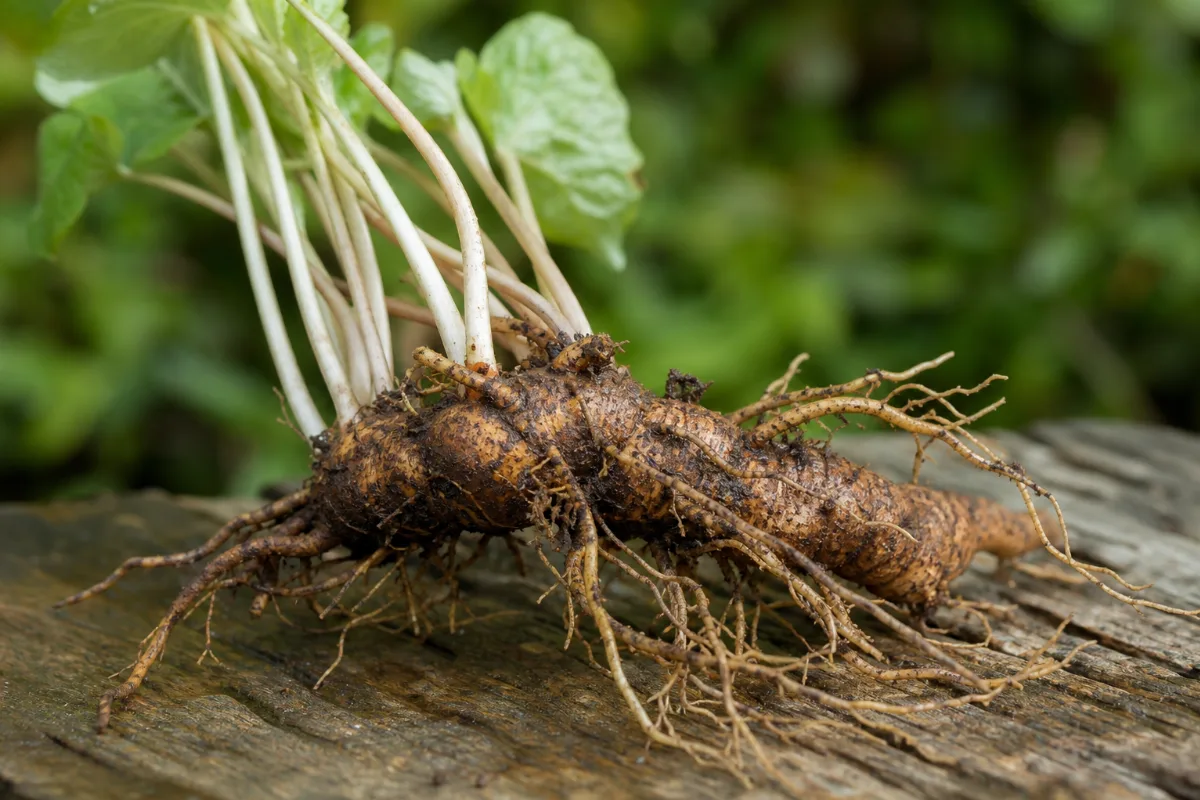
Bloodroot is a perennial flowering plant native to eastern North America (MSK). It belongs to the poppy family. Its underground stem, or rhizome, holds alkaloids, the best known being sanguinarine.
The common name is the one used on labels. Black salve is a product, not the plant, and it contains other ingredients too, such as zinc chloride in the product FDA reviewed.
What makes it distinctive
Bloodroot is best known as the main ingredient in black salve, sold online as a natural cancer cure. Sanguinarine kills cancer cells in the lab, which is why it is promoted. The same cell-killing action harms healthy skin.
Sanguinarine is also the alkaloid blamed for epidemic dropsy, an illness caused by argemone oil mixed into cooking oil. As of 2018 no black salve case had been reported, so that risk is theoretical. MSK also advises people with glaucoma to avoid bloodroot.
How it has been used
Native American medicine used bloodroot for many conditions. Folk use included cough, infection and inflammation. From the mid-1800s it was used in escharotic, or tissue-destroying, pastes for skin growths. In the late 1900s its extract was added to toothpaste and mouthwash; it was removed from one widely used product in 2001.
What the research shows
There is no clinical trial of bloodroot or black salve for any use. In 409 Australian patients whose treated skin was later examined, 18% of lesions were benign and cancer persisted in 34.2% of the rest. That figure only covers biopsied lesions, so it is not a failure rate for everyone.
A 2022 review found no human trial supporting any complementary therapy for skin cancer. For mouth products, a 2012 review found no clear plaque benefit when used alone and mixed results together. A case-control study linked a bloodroot toothpaste and rinse to leukoplakia; a critique argued the link is not causal.
At a glance
Traditional uses history, not proof
- Native American traditional medicine for a range of conditions
- Folk use for cough, infection and inflammation
- Black salve: a tissue-destroying skin paste used since the mid-1800s on skin growths
- Extract added to toothpaste and mouthwash against plaque (a modern product use, now largely gone)
Studied for research
- Skin cancer (black salve): no human trial; evidence points to harm
- Dental plaque and gingivitis (toothpaste and mouthwash): mixed, no consistent benefit
- Cough, infection, inflammation: no human studies
- Cancer cells in a dish: lab only
Main compounds
- Sanguinarine: the main alkaloid (PubChem CID 5154)
- Chelerythrine and other related alkaloids
Common forms
- Black salve: a corrosive paste, often with zinc chloride (FDA calls it an unapproved drug)
- Old toothpastes and mouthwashes with bloodroot extract
- Powdered root, capsules and tinctures are also sold; the sources we read do not cover them
Research links: FDA warning letter on a bloodroot and zinc chloride black salve (2021) · MSK Cancer Center: Bloodroot · Persisting cancer in black salve treated skin lesions (2023) · Sanguinaria-related leukoplakia (2001) · Research Library · Genes & Biomarkers Library
The plant and its history
- Accepted scientific name
- Sanguinaria canadensis L.
- Naming authority
- L.
- Common names
- Bloodroot (English); Sanguinaria (Latin genus name)
- Botanical family
- Papaveraceae (the poppy family).
- Classification
- Plantae > not checked > not checked > Ranunculales > Papaveraceae > Sanguinaria > Sanguinaria canadensis
- Native range
- Eastern North America (per MSK).
- Habitat
- Not verified here.
- What the plant looks like
- Roots: The rhizome (underground stem) is the part used and contains the alkaloids (p27618894).; Stems: Not verified here.; Leaves: Not verified here.; Flowers: A perennial flowering plant (MSK); details not verified.; Fruit: Not verified here.
- Cultivation
- Not verified here.
- Harvest and processing
- Not verified here.
- Look-alikes and adulterants
- Name: Greater celandine (Chelidonium majus); Note: Another poppy-family plant that holds sanguinarine and chelerythrine and has a wart tradition. A different plant; its main risk is liver injury. See its own page.; Name: Argemone (Argemone mexicana); Note: A different plant. Its seed oil, when it contaminates cooking oil, causes epidemic dropsy, which is blamed on sanguinarine (p29603306).
- Sustainability and conservation
- Not assessed.
Traditional use and history history, not clinical proof
| Tradition or era | Documented use | Source |
|---|---|---|
| Native American traditional medicine | Used for a diverse range of conditions (review). | p27618894 |
| Mid 19th century onward | Black salves (escharotics) in clinical use for skin cancer. | p29173498 |
| Modern herbal practice | Described as having antiseptic, diuretic and emetic properties and used for inflammation, cough, infection and plaque. | s-msk-bloodroot |
| Late 20th century dental products | Extract added to toothpaste and mouthwash; removed from one major product in 2001. | p22318955 |
| Twenty-first century regulation | FDA treats bloodroot-plus-zinc-chloride salve as an unapproved drug. | s-fda-mcdaniel-2021 |
Traditional use shows how a plant was used. It does not show that a supplement works or is safe today.
What is inside, and how it may work
What the plant contains and how those compounds act in cells and animals. Laboratory and animal mechanisms are not proven effects in people.
Main compounds
| Compound | Family | Where it is concentrated | Activity studied | Level of evidence |
|---|---|---|---|---|
| Sanguinarine PubChem 5154 | quaternary benzophenanthridine alkaloid | rhizome | Main alkaloid per MSK. Kills cells in the lab, binds DNA, antiplatelet in lab studies. Also found in argemone oil, where it is blamed for epidemic dropsy. 13 11 6 5 4 | Laboratory research |
| Chelerythrine PubChem 2703 | quaternary benzophenanthridine alkaloid | rhizome | At levels that were not cell-toxic alone, it made sanguinarine more toxic to cancer cell lines in one study. 13 6 | Laboratory research |
| Other benzophenanthridine and protopine alkaloids | alkaloids | rhizome | A review says the rhizome contains several; individual protopine compounds were not named in the abstracts read. 3 | Laboratory research |
Mechanisms, receptors and pathways
| Target or pathway | Gene or receptor | What was found | Level |
|---|---|---|---|
| DNA binding and cell death | DNA (guanine-cytosine-rich sequences); NF-kB; tubulin; Bcl-2 family; caspases | MSK lists lab findings that sanguinarine binds DNA, blocks NF-kB and tubulin formation and triggers cell death pathways. 11 | Laboratory research |
| Oxidative and ER stress, DNA damage | not established | A review says sanguinarine causes oxidative and endoplasmic reticulum stress and 8-hydroxyguanine DNA lesions; genotoxicity and carcinogenicity test results conflict. 4 | Laboratory research |
| Platelets and heart cells | COX-1, thromboxane, Na+/K+-ATPase | Antiplatelet effects and effects on the sodium-potassium pump and heart recovery time in lab studies (per MSK). 11 | Laboratory research |
| Human tissue effect | not applicable | On the skin, bloodroot with zinc chloride kills tissue regardless of whether it is cancer. 7 16 | Human data |
Absorption, metabolism and elimination
- Absorption
- No human data found.
- Distribution
- No human data found.
- Metabolism
- No data found.
- Elimination
- No data found.
- Bioavailability
- Not established. For epidemic dropsy, severity is reported to track plasma sanguinarine (p29603306), but this is not measured for bloodroot products.
Isolated compounds versus whole extracts
Most data are on the isolated alkaloid sanguinarine or on black salve, a mix with other corrosives. One study found chelerythrine boosts sanguinarine in cell tests. A review suggests natural alkaloid variation may explain mixed results. Whole-plant safety in people is largely unstudied.
Nutritional composition
Not a food or nutrient source. No nutrient data were found.
1 moderate certainty1 mixed findings3 not enough evidence1 evidence against
What is Bloodroot good for?
This page leads with the risks. The main things bloodroot is used or sold for are listed below with how strong the evidence is. Nothing here is advice to use it.
Benefits, one by one
Each card is a research question, not a promise. Tap a goal to filter. Open a card to see the studies, doses and limits.
Skin cancer: black salve (a bloodroot paste) used as a treatment
Evidence againstBlack salve is a corrosive paste made with bloodroot and often zinc chloride. It is sold as a cancer cure. It has not been shown to treat skin cancer in people. In Australian pathology records, cancer was still present in about one in three treated areas that were not benign, and the paste also destroyed normal tissue.
5 studiesNo amounts are given here. Bloodroot is not a safe self-treatment for…
Studies, doses and limits
What the trials found
No clinical trial was found. An Australian review of pathology records (409 people, 475 treated lesions) found benign lesions at the treatment site in 18% of cases and persisting cancer in 34.2% of the rest. A 2022 review found no human trial supporting any complementary therapy for skin cancer. MSK says bloodroot has not been tested for cancer in humans.
Results
Cancer persisted in 34.2% of non-benign treated areas in one record review. Black salve killed normal tissue on benign lesions. One case needed surgery and reconstruction after salve was used on an eyelid cancer (p32732547).
Effect sizes as reported
34.2% persisting cancer (non-benign treated areas); 18% benign lesions
Why this rating
Evidence points one way: no benefit shown, and repeated reports of harm, failed treatment and tissue loss. The 34.2% figure comes only from lesions that were later biopsied, so it is not a failure rate for all users.
Form and dose studied
No amounts are given here. Bloodroot is not a safe self-treatment for skin growths.
Who was studied
Adults who applied black salve to skin lesions, most often on the head and neck.
Limits
Pathology records have no control group and only include people whose tissue was later examined. Case reports are single cases. Only abstracts were read.
Why researchers looked
Bloodroot's main alkaloid, sanguinarine, kills cells in the lab, and black salve has been sold as a natural cancer cure since the mid-1800s.
Traditional use
Black salves are described as escharotic (tissue-destroying) skin cancer treatments in clinical use since the mid 19th century (p29173498).
Proposed mechanism Laboratory research
Lab work shows sanguinarine kills cells and binds to DNA. That is not the same as a safe, selective treatment. The paste damages healthy tissue as well (p36718525, s-fda-mcdaniel-2021).
A proposed mechanism does not show that the effect happens in people.
Do not self-treat a skin lesion. Black salve is a corrosive; FDA calls bloodroot and zinc chloride a combination that damages healthy and diseased tissue alike. See a doctor about any new or changing skin spot.
Skin damage, scarring and infection from black salve
Moderate certaintyPutting black salve on the skin has caused burning, dead tissue, scarring, disfigurement, infection and hospital stays. Doctors report these as the usual result, not rare accidents.
5 studiesNo amounts are given here. Bloodroot is not a safe self-treatment for…
Studies, doses and limits
What the trials found
A dermatology review reports unwanted cosmetic outcomes, irreversible scarring and premalignant conditions. A case report describes secondary infection after salve on an open wound. MSK lists disfigurement and worsening lesions, some needing hospital care, and permanent scarring after use on moles and tags.
Results
Reported harms: burning, scarring, disfigurement, infection, worsening of the lesion, hospital treatment, surgery. No frequency can be worked out from case reports.
Effect sizes as reported
No rates available
Why this rating
Many independent case reports and reviews describe the same pattern, plus a regulator statement. It is rated moderate for the harm being real, not for how often it happens.
Form and dose studied
No amounts are given here. Bloodroot is not a safe self-treatment for skin growths.
Who was studied
Adults who used salve on moles, skin tags, open wounds and suspected cancers.
Limits
Case reports and reviews cannot give a rate. Only abstracts and the MSK and FDA pages were read.
Why researchers looked
These harms are why the paste is a regulatory target. They are reported in case reports and reviews rather than trials.
Traditional use
Black salve is promoted online for removing moles, skin tags and growths.
Proposed mechanism Authoritative guidance
The paste contains corrosive ingredients. FDA describes the bloodroot and zinc chloride combination as capable of indiscriminately damaging healthy and diseased tissue and forming eschar (sloughed dead tissue).
A proposed mechanism does not show that the effect happens in people.
Seek urgent care for spreading redness, pus, fever or severe pain after any skin paste.
Dental plaque and gum disease: toothpaste and mouthwash with bloodroot extract
Mixed findingsBloodroot extract was added to some toothpastes and mouthwashes to fight plaque. Used alone they showed no clear effect, and results of the combination were mixed. One widely used brand dropped bloodroot in 2001 and later disappeared.
3 studiesHistorical products only. This page does not recommend any form.
Studies, doses and limits
What the trials found
A 2012 review says that separately the toothpastes and mouthwashes had no demonstrable clinical effect on plaque or gingivitis. Used together twice a day they seemed better than placebo, but newer studies conflict.
Results
No consistent benefit. A manufacturer-side critique and independent reports disagree about safety (see the leukoplakia row on the Safety tab).
Effect sizes as reported
No effect size in the abstract
Why this rating
The review calls results conflicting. We read only its abstract and could not check the underlying trials.
Form and dose studied
Historical products only. This page does not recommend any form.
Who was studied
Adults using over-the-counter oral care products.
Limits
Review abstract only. Trial data not read.
Why researchers looked
Sanguinarine was thought to bind to plaque and to kill mouth germs, so it was tried as an antiplaque ingredient.
Traditional use
This is a modern product use, not a long folk tradition (p22318955).
Proposed mechanism Preliminary mechanism
MSK says antiplaque effects may come from sanguinarine turning into a form that binds to plaque (lab theory).
A proposed mechanism does not show that the effect happens in people.
Oral white patches (leukoplakia) have been linked to these products. Avoid bloodroot in the mouth.
Killing cancer cells in the lab
Not enough evidenceIn dishes, sanguinarine killed skin cancer cells strongly, more than the chemotherapy cream ingredient 5-fluorouracil over 24 hours. Normal skin cells were not tested, and this does not show a treatment works in people.
3 studiesNot applicable.
Studies, doses and limits
What the trials found
None. Lab and cell-culture work only.
Results
24-hour IC50 of sanguinarine 2.1 micromolar (melanoma line) and 3.14 micromolar (squamous cell carcinoma line).
Effect sizes as reported
IC50 2.1 and 3.14 micromolar
Why this rating
Cell culture only; no normal-cell comparison; no human data. A 2022 review found no human trial for any complementary therapy for skin cancer.
Form and dose studied
Not applicable.
Who was studied
Cell lines (A375 melanoma, A431 squamous cell carcinoma).
Limits
Lab only.
Why researchers looked
This lab result is the main reason black salve is promoted.
Traditional use
None; this is a lab finding.
Proposed mechanism Laboratory research
Sanguinarine binds DNA and triggers cell death pathways in lab studies; the authors also found chelerythrine boosted its toxicity.
A proposed mechanism does not show that the effect happens in people.
Cell-killing power in a dish is also a warning sign: the same effect harms normal skin.
Cough, infection and inflammation (traditional uses)
Not enough evidenceBloodroot is traditionally used for cough, infections and inflammation. MSK says there is not enough evidence for cough and that the infection and inflammation uses are not backed by any studies.
2 studiesNot applicable.
Studies, doses and limits
What the trials found
No human study found for these uses.
Results
None available.
Effect sizes as reported
None
Why this rating
No human data; MSK says cough evidence is insufficient and the other uses are unsupported.
Form and dose studied
Not applicable.
Who was studied
Not applicable.
Limits
No trials.
Why researchers looked
Historic Native American and folk use, including as an antiseptic, diuretic and emetic (a vomit-inducer).
Traditional use
Used by Native Americans for many conditions (p27618894). MSK lists antiseptic, diuretic and emetic properties.
Proposed mechanism Laboratory research
Lab studies show sanguinarine has antimicrobial effects; no human mechanism for cough has been shown.
A proposed mechanism does not show that the effect happens in people.
Bloodroot can cause nausea and vomiting, so it is a poor choice for a cough. See the Safety tab.
Blood clotting and heart rhythm (lab effects, not a use)
Not enough evidenceIn lab studies sanguinarine slowed blood platelets and affected a heart cell pump. These are lab findings, not a proven benefit, and they are the reason to be careful with blood thinners and heart-rhythm medicines.
2 studiesNot applicable.
Studies, doses and limits
What the trials found
None in people.
Results
Lab and animal findings only (per MSK).
Effect sizes as reported
None
Why this rating
No human study was found; the reports behind MSK's lines were not read.
Form and dose studied
Not applicable.
Who was studied
Not applicable.
Limits
Lab and animal only.
Why researchers looked
Cardiovascular effects show up in older lab studies and old claims of blood-pressure-lowering use.
Traditional use
A dermatology review says bloodroot was historically used as an anti-hypertensive (p34847001).
Proposed mechanism Preliminary mechanism
MSK reports lab findings: antiplatelet effects, lower thromboxane production, and effects on the sodium-potassium ATPase pump and the heart's refractory period.
A proposed mechanism does not show that the effect happens in people.
Treat as a caution only. Ask a pharmacist if you take blood thinners or heart-rhythm medicine.
Connections to the rest of health
How Bloodroot connects to the rest of our health knowledge graph. Every link says what kind of connection it is. A safety link (for example to the liver) is a warning, not a benefit. A study that merely mentions a topic never creates a benefit link.
Explore every connection: goals, body systems, organs, symptoms, genes
A. Wellness goals
| Connected to | Kind of connection | Evidence status | Context | Studies |
|---|---|---|---|---|
| Skin Health | Adverse effect or risk | Evidence against | Skin cancer: black salve (a bloodroot paste) used as a treatment: Black salve is a corrosive paste made with bloodroot and often zinc chloride. It is sold as a cancer cure. It has not been shown to treat skin cancer in people. In Australian pathology records, cancer was still present in about one in three treated areas that were not benign, and the paste also destroyed normal tissue. Skin damage, scarring and infection from black salve: Putting black salve on the skin has caused burning, dead tissue, scarring, disfigurement, infection and hospital stays. Doctors report these as the usual result, not rare accidents. | 7 2 10 16 11 14 15 |
| Oral Cavity | Mixed findings | Dental plaque and gum disease: toothpaste and mouthwash with bloodroot extract: Bloodroot extract was added to some toothpastes and mouthwashes to fight plaque. Used alone they showed no clear effect, and results of the combination were mixed. One widely used brand dropped bloodroot in 2001 and later disappeared. | 17 11 12 | |
| Cellular Growth | Not enough evidence | Killing cancer cells in the lab: In dishes, sanguinarine killed skin cancer cells strongly, more than the chemotherapy cream ingredient 5-fluorouracil over 24 hours. Normal skin cells were not tested, and this does not show a treatment works in people. | 6 10 11 | |
| Respiratory Health | Traditional use | Not enough evidence | Cough, infection and inflammation (traditional uses): Bloodroot is traditionally used for cough, infections and inflammation. MSK says there is not enough evidence for cough and that the infection and inflammation uses are not backed by any studies. | 11 3 |
| Immune Support | Traditional use | Not enough evidence | Cough, infection and inflammation (traditional uses): Bloodroot is traditionally used for cough, infections and inflammation. MSK says there is not enough evidence for cough and that the infection and inflammation uses are not backed by any studies. | 11 3 |
| Heart Circulation | Not enough evidence | Blood clotting and heart rhythm (lab effects, not a use): In lab studies sanguinarine slowed blood platelets and affected a heart cell pump. These are lab findings, not a proven benefit, and they are the reason to be careful with blood thinners and heart-rhythm medicines. | 11 15 |
B. Body systems
| Connected to | Kind of connection | Evidence status | Context | Studies |
|---|---|---|---|---|
| Integumentary System | Biological association | Evidence against | Studied for: Skin cancer: black salve (a bloodroot paste) used as a treatment Studied for: Skin damage, scarring and infection from black salve | 7 2 10 16 11 14 15 6 |
| Digestive System | Biological association | Mixed findings | Studied for: Dental plaque and gum disease: toothpaste and mouthwash with bloodroot extract | 17 11 12 |
| Respiratory System | Biological association | Not enough evidence | Studied for: Cough, infection and inflammation (traditional uses) | 11 3 |
| Immune System | Biological association | Not enough evidence | Studied for: Cough, infection and inflammation (traditional uses) | 11 3 |
| Cardiovascular System | Biological association | Not enough evidence | Studied for: Blood clotting and heart rhythm (lab effects, not a use) | 11 15 |
C. Body parts and organs
E. Health conditions
| Connected to | Kind of connection | Evidence status | Context | Studies |
|---|---|---|---|---|
| Skin cancer | Adverse effect or risk | Evidence against | Not shown to treat; cancer persisted in 34.2% of non-benign treated areas in one review. Not shown to treat; cancer persisted in treated areas. Preparation or compound: Black salve |
7 2 10 |
| Oral leukoplakia | Adverse effect or risk | Low certainty | Association in a case-control study; disputed as to cause. Association with sanguinaria toothpaste and mouthwash; disputed. Preparation or compound: Sanguinaria toothpaste and mouthwash |
1 8 12 |
| Glaucoma | Contraindication | Not enough evidence | MSK advises avoiding bloodroot in glaucoma; the underlying paper was not read. MSK advises avoiding bloodroot. Preparation or compound: Bloodroot |
11 |
| Epidemic dropsy | Adverse effect or risk | Not enough evidence | Theoretical risk from black salve; no case reported as of 2018. Preparation or compound: Sanguinarine (from argemone oil) |
5 |
| Cough | Traditional use | Not enough evidence | Traditional use; no studies. Preparation or compound: Bloodroot |
11 |
I. Biomarkers
| Connected to | Kind of connection | Evidence status | Context | Studies |
|---|---|---|---|---|
| Cancer still present in the area treated with black salve | Biological association | Low certainty | Measured in trials: 34.2% of non-benign treated areas. A lab change is not the same as a health benefit. | 7 |
| Oral leukoplakia (white patches in the mouth) | Biological association | Low certainty | Measured in trials: raised with product use (association). A lab change is not the same as a health benefit. | 1 8 12 17 |
| Dose that halves cancer cell growth in a dish (IC50) | Biological association | Not enough evidence | Measured in trials: lower is more cell-toxic. A lab change is not the same as a health benefit. | 6 |
J. Genes, receptors and enzymes
K. Biological pathways
| Connected to | Kind of connection | Evidence status | Context | Studies |
|---|---|---|---|---|
| NF-kB signalling | Preliminary mechanism | In vitro | Inhibited by sanguinarine in lab studies (MSK). | 11 |
L. Active compounds
| Connected to | Kind of connection | Evidence status | Context | Studies |
|---|---|---|---|---|
| Sanguinarine | Biological association | In vitro | Main alkaloid per MSK. Kills cells in the lab, binds DNA, antiplatelet in lab studies. Also found in argemone oil, where it is blamed for epidemic dropsy. Preparation or compound: rhizome |
13 11 6 5 4 |
| Chelerythrine | Biological association | In vitro | At levels that were not cell-toxic alone, it made sanguinarine more toxic to cancer cell lines in one study. Preparation or compound: rhizome |
13 6 |
| Other benzophenanthridine and protopine alkaloids | Biological association | In vitro | A review says the rhizome contains several; individual protopine compounds were not named in the abstracts read. Preparation or compound: rhizome |
3 |
Each connection is stored with the ingredient, the connected record, the kind of connection, the evidence status, the supporting studies, the preparation or compound involved, and a review date (last reviewed October 25, 2026).
The evidence
The research centre for Bloodroot. Every record here was checked against PubMed or the publisher's page; we never list a study we have not verified.
Evidence by outcome
Bars show how many studies we found for each outcome, not how well it works. People are added up across trials only (reviews are not added, to avoid double counting).
How we rate evidence
High certainty
Several well-run trials or reviews agree; further research is unlikely to change the picture much.
Moderate certainty
Good trials point the same way, but some doubt remains.
Low certainty
Small, short or inconsistent trials. The finding could change with better research.
Very low certainty
Very little or very weak human data. Treat as a possibility only.
Mixed findings
Trials or reviews disagree with each other.
Not enough evidence
Not enough human research to say either way.
Evidence against
Good research found no benefit, or found harm.
We take the reviewers' own risk-of-bias and GRADE statements where they exist, and otherwise judge from study size, design, consistency, directness and whether a product matches what is sold. Many publications do not make evidence high. Method note: We searched PubMed, read the abstracts, read the MSK page and the FDA warning letter, and checked GBIF and PubChem. No study is cited that we could not verify.
Study library: every study we checked 17
| Study | Design | People | Product, dose, length | Result |
|---|---|---|---|---|
| Allen 2001 Sanguinaria-related leukoplakia: epidemiologic and clinicopathologic features of a recently described entity. General Dentistry · PMID 12024750 |
Case control |
People with and without oral leukoplakia, asked about use of Viadent (sanguinaria) toothpaste and mouthwash | Viadent toothpaste and mouthwash with sanguinaria extract rhizome extract |
A significant association was seen between Viadent product use and oral leukoplakia. Leukoplakias were also found at sites other than the cheek-side gum fold. Stopping the products may clear the patch, though often it does not. Significant association (numbers not in the abstract) Methods, limits and fundingOutcomes: Link between product use and leukoplakia Limitations: The abstract is truncated at the source and gives no numbers. A case-control design shows association, not proof of cause. Only the abstract was read. Funding and conflicts: Not stated in the abstract. Read: abstract |
| Bozung 2021 Persistent Basal Cell Carcinoma Following Self-Treatment With a "Natural Cure," Sanguinaria canadensis. Ophthalmic Plastic and Reconstructive Surgery · PMID 32732547 · DOI |
Case report |
1 A 65-year-old woman with basal cell carcinoma at the inner corner of the eye |
Black salve (Sanguinaria canadensis) rhizome (as an ingredient of the paste) |
She chose self-treatment with black salve instead of treatment for a diagnosed basal cell carcinoma. Each application caused worse inflammation around the eye and a scab of dead tissue, then scar bands that turned the lower eyelid outward. A biopsy confirmed cancer was still present in the scar tissue. She needed Mohs surgery and a multi-stage reconstruction. Single case Methods, limits and fundingOutcomes: Outcome after self-treatment Limitations: One case. Only the abstract was read. Funding and conflicts: The authors reported no financial conflicts of interest. Read: abstract |
| Croaker 2016 Sanguinaria canadensis: Traditional Medicine, Phytochemical Composition, Biological Activities and Current Uses. International Journal of Molecular Sciences · PMID 27618894 · DOI |
Narrative review mixed |
Review of bloodroot | Sanguinaria canadensis alkaloids rhizome |
Native Americans used bloodroot for many conditions. The rhizome holds several benzophenanthridine and protopine alkaloids that act on many cell processes. Despite being known for more than 50 years, they have not become successful medicines and instead are tied to toxicities from mouthwash-linked leukoplakia to salve-caused tissue death and treatment failure. The authors suggest natural variation in alkaloids may explain inconsistent effects. Not applicable Methods, limits and fundingOutcomes: History, chemistry and toxicity Limitations: Review; only the abstract was read. Funding and conflicts: The authors declared no conflict of interest. Read: abstract |
| Croaker 2017 Carcinogenic potential of sanguinarine, a phytochemical used in 'therapeutic' black salve and mouthwash. Mutation Research. Reviews in Mutation Research · PMID 29173498 · DOI |
Narrative review mixed |
Literature review of lab and human data on sanguinarine | Sanguinarine (bloodroot alkaloid) rhizome |
Whether sanguinarine causes cancer has not been settled, because lab and animal results conflict. It looks like known cancer-causing hydrocarbons, binds to DNA and causes oxidative stress and DNA damage in cells. Epidemiological studies have linked sanguinarine mouthwash with oral leukoplakia. Sanguinarine is also proposed as a cause of gallbladder cancer. Not applicable Methods, limits and fundingOutcomes: Whether sanguinarine can cause cancer Limitations: Review of conflicting lab data. The gallbladder link is a proposal, not shown here. Only the abstract was read. Funding and conflicts: No conflict statement in the abstract. Read: abstract |
| Croaker 2018 Assessing the risk of epidemic dropsy from black salve use. Journal of Applied Toxicology · PMID 29603306 · DOI |
Narrative review mixed |
Literature review of epidemic dropsy | Argemone oil (sanguinarine-containing) compared with black salve seed oil of Argemone mexicana; bloodroot rhizome in black salve |
Epidemic dropsy is a potentially life-threatening illness from eating argemone oil, usually in mustard cooking oil that was adulterated by accident. Sanguinarine is thought to be the cause, and severity tracks blood sanguinarine levels. Cases have also followed skin use of an argemone-containing massage oil. Black salve contains much more sanguinarine than that massage oil. The authors say no black salve case had been reported at the time, so the risk is theoretical. Theoretical risk; no case reported (as of 2018) Methods, limits and fundingOutcomes: Presentation of epidemic dropsy and risk from black salve Limitations: Review of a theoretical risk. The abstract does not mention glaucoma. Only the abstract was read. Funding and conflicts: No conflict statement in the abstract. Read: abstract |
| Croaker 2022 Understanding of black salve toxicity by multi-compound cytotoxicity assays. BMC Complementary Medicine and Therapies · PMID 36127674 · DOI |
Laboratory research in-vitro |
A375 melanoma and A431 squamous cell carcinoma cell lines (no normal skin cells tested) | Individual and combined black salve ingredients, including sanguinarine and chelerythrine rhizome alkaloids |
Sanguinarine was the most cell-toxic compound tested: 24-hour IC50 2.1 micromolar (melanoma cells) and 3.14 micromolar (squamous cell carcinoma cells). All black salve ingredients killed the two cancer cell lines more than 5-fluorouracil over 24 hours. Chelerythrine and minor related alkaloids made sanguinarine more toxic, possibly more than additive. The authors say tests on normal skin cells are still needed. IC50 2.1 and 3.14 micromolar Methods, limits and fundingOutcomes: Cell killing compared with the chemotherapy cream ingredient 5-fluorouracil Limitations: Cell culture only, 24 hours. Normal skin cells were not tested, so these results say nothing about safety or benefit in people. Funding and conflicts: Conflict statement 'Not Applicable'. Read: abstract |
| Croaker 2023 Persisting Cancer in Black Salve Treated Skin Lesions: Results of a Large 5 Year Retrospective Analysis of Australian Histopathology Specimens. Integrative Cancer Therapies · PMID 36718525 · DOI |
Case series |
409 409 patients whose pathology request noted black salve use on 475 skin lesions (Australia, 2015 to 2019) |
Black salve (bloodroot-based escharotic paste) rhizome (as an ingredient of the paste) |
Benign lesions were present at the treatment site in 18% of cases. Persisting cancer was found in 34.2% of the remaining treated areas. Most treated areas were on the head and neck. Black salve caused death of normal tissue when used on benign lesions, which does not fit claims that it targets only cancer. Pathology specimens linked to black salve more than doubled between 2015 and 2019. 18% of lesions benign; 34.2% of the rest had persisting cancer Methods, limits and fundingOutcomes: Whether cancer was still present in treated areas; type and site of lesions treated; use by rurality Limitations: Only people whose treated area was later sent for pathology are counted, so this cannot give an overall failure rate for everyone who uses it. No control group. Only the abstract was read. Funding and conflicts: The authors declared no conflicts of interest. Read: abstract |
| Eversole 2000 Sanguinaria-associated oral leukoplakia: comparison with other benign and dysplastic leukoplakic lesions. Oral Surgery, Oral Medicine, Oral Pathology, Oral Radiology and Endodontics · PMID 10760727 · DOI |
Other |
Archived tissue samples of benign keratosis, sanguinaria-associated keratosis and keratosis with dysplasia | Dentifrices and mouthrinses containing sanguinaria rhizome extract |
Sanguinaria-associated white patches showed some marker and image-analysis patterns similar to precancerous (dysplastic) patches of other causes, with more dividing cells than ordinary benign keratosis (P below .001). The authors advise avoiding sanguinaria preparations until the issue is resolved. P below .001 for growth marker versus benign keratosis Methods, limits and fundingOutcomes: DNA content, p53 and a growth marker (PCNA) Limitations: Laboratory analysis of stored tissue; no follow-up of cancer outcomes. Only the abstract was read. Funding and conflicts: Not stated in the abstract. Read: abstract |
| GBIF 2026 GBIF Backbone: Sanguinaria canadensis L. (usageKey 5334192) GBIF species API · Source |
Reference database n/a |
n/a | Exact match; status ACCEPTED; family Papaveraceae (poppy family); order Ranunculales; kingdom Plantae. Methods, limits and fundingOutcomes: Accepted name and family Limitations: Checked by API on 2026-10-25. NCBI taxonomy was not checked. Funding and conflicts: Not applicable. Read: full-text | |
| Hidalgo 2022 Complementary and alternative therapies in skin cancer a literature review of biologically active compounds. Dermatologic Therapy · PMID 36124923 · DOI |
Narrative review mixed |
Review of complementary therapies used by people with skin cancer (MEDLINE to July 2022) | Plant-based and other complementary agents, including black salve various |
Plant-derived compounds have the best laboratory evidence against skin cancer cells, but none has proved effective in human patients. The authors found no human clinical trial supporting any complementary therapy for skin cancer. They warn of adverse effects, interactions and complications. No human trial found Methods, limits and fundingOutcomes: Evidence for efficacy and risks Limitations: Black salve is a small part of a wide review. Only the abstract was read. Funding and conflicts: The authors declared no conflict of interest. Read: abstract |
| Memorial Sloan Kettering Cancer Center 2026 Memorial Sloan Kettering Cancer Center: Bloodroot (About Herbs) MSK About Herbs · Source |
Consumer reference mixed |
Patient and clinician herb monograph | Bloodroot (Sanguinaria canadensis) rhizome |
Says bloodroot is a perennial flowering plant native to eastern North America and its main constituent is sanguinarine, but that efficacy has not been tested in humans. Topical use for skin cancer can cause severe adverse effects including disfigurement; use of sanguinarine as an antiplaque agent has been linked to leukoplakia. Lists cough, infection, inflammation and cancer as purported uses without good support. Side effects: dizziness, vertigo, nausea, vomiting; skin irritation, burning and lesions in the mouth and throat. Patients with glaucoma should avoid it. Lab work: antiplatelet effects and effects on the sodium-potassium pump and heart refractory period. Methods, limits and fundingOutcomes: Uses, mechanism, warnings, adverse reactions Limitations: Gives no dose, pregnancy, liver or drug-interaction information in the sections read. Its glaucoma warning cites a 1962 paper we did not read. Funding and conflicts: Non-profit cancer centre; not applicable. Read: full-text |
| Munro 1999 Viadent usage and oral leukoplakia: a spurious association. Regulatory Toxicology and Pharmacology · PMID 10620468 · DOI |
Narrative review mixed |
Critique of a 1999 case series that linked Viadent to leukoplakia | Viadent (sanguinaria extract) toothpaste and rinse rhizome extract |
The authors argue the earlier case series does not show cause: it did not show use came before the patch, or a dose-response, and has selection bias and possible confounding. They report that human studies of up to 6 months and animal studies found no irritation, genotoxicity or cancer effect. Argues no causal link Methods, limits and fundingOutcomes: Whether the link is causal Limitations: The paper defends a commercial product and the abstract does not state its funding, so an industry link is possible and not verified. Human studies cited ran up to 6 months only. Only the abstract was read. Funding and conflicts: Not stated in the abstract; the paper argues for the safety of a commercial product, so possible industry links were not excluded. Read: abstract |
| NCBI PubChem 2026 PubChem compound records: sanguinarine (CID 5154) and chelerythrine (CID 2703) PubChem PUG REST · Source |
Reference database n/a |
n/a | Sanguinarine is CID 5154, formula C20H14NO4+. Chelerythrine is CID 2703, formula C21H18NO4+. Both found by name lookup on 2026-10-25. Methods, limits and fundingOutcomes: Compound identity Limitations: Identity only. Funding and conflicts: Not applicable. Read: full-text | |
| Ordille 2023 Black Salve: A Dangerous Corrosive Disguised as an Alternative Medicine. Cureus · PMID 37529807 · DOI |
Case report |
1 One patient who applied black salve to an open skin wound |
Black salve rhizome (as an ingredient of the paste) |
The patient developed a secondary infection after applying black salve to an open wound. It was resolved with care from infectious disease, surgical and skin specialists. The authors say secondary infection is a common after-effect of putting black salve on skin lesions and that clinicians have little guidance on managing black salve harms. Single case Methods, limits and fundingOutcomes: Management of a secondary infection Limitations: One case; the abstract does not give details of the lesion, product or outcome timeline. Only the abstract was read. Funding and conflicts: No competing interests declared. Read: abstract |
| Schwartzberg 2021 Botanical Briefs: Bloodroot (Sanguinaria canadensis). Cutis · PMID 34847001 · DOI |
Narrative review mixed |
Dermatology review | Bloodroot and black salve rhizome |
Bloodroot has historically been used for antimicrobial, blood-pressure-lowering, anti-inflammatory and anti-cancer purposes. In skin care it has been used for its cell-killing effect and marketed as black salve as a cancer treatment. The authors report unwanted cosmetic outcomes, irreversible scarring and premalignant conditions. Not applicable Methods, limits and fundingOutcomes: Historical uses and toxicities in skin care Limitations: Only the abstract was read; no numbers in it. Funding and conflicts: No conflict statement in the abstract. Read: abstract |
| US Food and Drug Administration 2021 US FDA warning letter to McDaniel Water, LLC (616186), 7 September 2021: 'Black Indian Salve' FDA warning letters · Source |
Authoritative guidance n/a |
A product sold online as a dietary supplement | Product labelled to contain bloodroot (Sanguinaria canadensis) and zinc chloride rhizome |
FDA says both bloodroot and zinc chloride are known corrosive agents and that the combination is a corrosive topical agent able to damage healthy and diseased tissue alike and form eschar (dead, sloughed tissue). It says tissue death from black salves is well documented, that the product is not a dietary supplement because it is applied to the skin, and that it is an unapproved new drug sold in violation of the Food, Drug and Cosmetic Act. Methods, limits and fundingOutcomes: Regulatory status Limitations: One company-specific letter. The separate FDA consumer page on black salve returned 'not found' when we checked and was not read. Funding and conflicts: Not applicable. Read: full-text |
| Vlachojannis 2012 Rise and fall of oral health products with Canadian bloodroot extract. Phytotherapy Research · PMID 22318955 · DOI |
Narrative review mixed |
Review of toothpastes and mouthwashes containing bloodroot extract | Sanguinaria canadensis extract in toothpaste and mouthwash rhizome extract |
Used separately, the toothpastes and mouthwashes had no demonstrable clinical effect on plaque or gingivitis; used together twice a day they seemed better than placebo, but newer studies conflict. Safety studies to 2000 (none longer than 6 months) did not suggest harm. In 2003 an FDA panel judged bloodroot products safe but did not consider 1999 to 2001 papers linking them to leukoplakia. Bloodroot was removed in 2001 from one widely used product, and that brand later disappeared. No consistent plaque or gingivitis benefit Methods, limits and fundingOutcomes: Plaque, gingivitis and safety Limitations: Narrative review; only the abstract was read. Funding and conflicts: No conflict statement in the abstract. Read: abstract |
What we do not know yet
- What the evidence supports: black salve damages skin and has not been shown to treat cancer; an association with leukoplakia exists for old mouth products.
- What is uncertain: how often harm happens, whether the leukoplakia link is causal, and whether black salve can cause epidemic dropsy.
- What is missing: any clinical trial; pregnancy, breastfeeding, child, liver and drug-interaction data; human data on swallowing bloodroot.
- Only abstracts were read for the papers cited; MSK and the FDA letter were read directly. EMA and NCCIH had no bloodroot page to read.
How new research is added
New studies are found by a saved PubMed search and are placed in a review queue. A person reads each one before it changes any evidence rating, safety statement or date.
Lab markers
What changed in blood or saliva tests during trials. A changed number is not the same as feeling or being healthier, and we give no "normal ranges".
Other 3
Cancer still present in the area treated with black salve
34.2% of non-benign treated areas in trials
The share of treated skin areas where a pathologist still found cancer later.
Low certaintyResults and what it means
Why it was measured
The main way harm and failure of black salve has been measured.
Statistical vs. clinical meaning
Shows cancer often remains, but only among lesions that were later biopsied.
Safety implication
This is a treatment-failure signal, not a safe effect.
| Study | Result | People | Product |
|---|---|---|---|
| 7 | Persisting cancer was found in 34.2% of the black salve treated areas that were not benign; 18% of areas were benign. | 409 patients, 475 lesions, Australia 2015 to 2019 | Black salve (bloodroot-based paste) |
Oral leukoplakia (white patches in the mouth)
Raised with product use (association) in trials
A white patch in the mouth that cannot be wiped off and can sometimes become cancer.
Low certaintyResults and what it means
Why it was measured
The main harm signal for old bloodroot toothpastes and mouthwashes.
Statistical vs. clinical meaning
Association with biological plausibility, but contested and based on one product line.
Safety implication
Avoid sanguinaria in the mouth.
| Study | Result | People | Product |
|---|---|---|---|
| 1 | A significant association between Viadent (sanguinaria) toothpaste or mouthwash use and oral leukoplakia in a case-control study; stopping the products does not always clear the patch. | People with and without oral leukoplakia | Viadent toothpaste and mouthwash |
| 8 | Sanguinaria-associated patches had more dividing cells than ordinary benign keratosis (P below .001) and some precancer-like marker patterns. | Archived tissue samples | Sanguinaria dentifrices and mouthrinses |
| 12 | A critique argued the link is not causal (no time order or dose-response, bias). | Critique of an earlier case series | Viadent |
Dose that halves cancer cell growth in a dish (IC50)
Lower is more cell-toxic in trials
The concentration of a compound that kills half of cultured cells in a set time.
Not enough evidenceResults and what it means
Why it was measured
A common lab measure; here it shows sanguinarine is very cell-toxic.
Statistical vs. clinical meaning
Lab number only; no normal-cell comparison.
Safety implication
Cell toxicity is also a safety signal.
| Study | Result | People | Product |
|---|---|---|---|
| 6 | Sanguinarine 24-hour IC50 2.1 micromolar (A375 melanoma) and 3.14 micromolar (A431 squamous cell carcinoma); more cytotoxic than 5-fluorouracil. | Two cancer cell lines | Sanguinarine and other black salve ingredients |
Safety
What studies and official sources say about side effects, medicines and who should check first. Each point shows what kind of evidence it comes from.
Main points to know 6
- Do not put bloodroot or black salve on skin lesions. Black salve is a corrosive paste. FDA says bloodroot with zinc chloride can damage healthy and diseased skin alike and leave dead tissue. Reports describe burning, scarring, disfigurement, infection and hospital stays. It has not been shown to treat skin cancer. Authoritative guidance 16 11 15 14
- It can leave cancer behind and delay real diagnosis. In Australian pathology records, cancer persisted in 34.2% of treated areas that were not benign. In a case report a 65-year-old woman with basal cell carcinoma near the eye used the salve, developed a scarring eyelid deformity, still had cancer, and needed Mohs surgery and reconstruction. A scab and scar can hide a growing cancer. See a doctor about any new or changing skin spot. Case series 7 2 10
- Bloodroot in the mouth is linked to white patches (leukoplakia). Toothpastes and mouthwashes with sanguinaria extract have been tied to oral leukoplakia, a white patch that can sometimes become cancer. A case-control study found a significant association and tissue tests found precancer-like markers. A manufacturer-side critique disputed that this proves cause. Bloodroot was removed from one main product in 2001. Case series 1 8 12 17 11
- Swallowing bloodroot can cause sickness. MSK lists dizziness, vertigo, nausea and vomiting, and burning or lesions of the mouth and throat. We found no case series of poisoning and no confirmed figure for low blood pressure; a drop in blood pressure is not reported in the sources we read. Authoritative guidance 11
- Its main alkaloid also causes epidemic dropsy when it comes from argemone oil. Sanguinarine is thought to be the cause of epidemic dropsy, a potentially life-threatening illness from argemone oil mixed into cooking oil. Black salve has much more sanguinarine than an argemone massage oil that caused cases. As of 2018 no black salve case had been reported, so the risk is theoretical. The abstract we read does not mention glaucoma. MSK separately says people with glaucoma should avoid bloodroot, citing a 1962 paper we did not read. Other 5 11
- No pregnancy, breastfeeding or child safety data were found. No source read covers pregnancy, breastfeeding or children. Because it is corrosive and toxic, it should not be used in these groups, and we found nothing that supports use. Other 11
Side effects 6
| Effect | How often | Severity and recovery | Evidence |
|---|---|---|---|
| Burning, dead tissue (eschar), scarring and disfigurement of skin Salve killed normal tissue on benign lesions in Australian records. Frequency cannot be calculated. | Not established | serious Scarring is described as irreversible in a dermatology review. | Case series 15 7 16 11 |
| Infection after use on broken skin The case authors call secondary infection a common after-effect, without a figure. | Not established | serious Resolved in the one reported case after specialist care. | Case report 14 |
| Cancer left behind or worse, with loss of time for proper treatment Only biopsied lesions are counted. | 34.2% of non-benign treated areas had persisting cancer in one record review | serious Not applicable | Case series 7 2 |
| Dizziness, vertigo, nausea and vomiting Listed by MSK without detail. | Not established | moderate Not stated | Authoritative guidance 11 |
| Skin irritation, burning, and lesions in the mouth and throat With topical use per MSK. | Not established | moderate Not stated | Authoritative guidance 11 |
| Oral leukoplakia (white mouth patches) with sanguinaria toothpaste and mouthwash Disputed as to cause by a manufacturer-side critique (p10620468). | Not established | moderate Stopping may clear the patch, though often it does not. | Case series 1 8 |
Liver
We found no published case of human liver injury from bloodroot in the sources read. A search of the NCBI Bookshelf found no LiverTox or LactMed entry for bloodroot. Not finding reports is not proof of safety. A related alkaloid herb, greater celandine, is a known cause of liver injury, but that is a different plant. 11
How often. No frequency available.
Monitoring. No agency monitoring advice was found.
This is a safety connection. It is not evidence that Bloodroot supports liver health.
Medicines and supplements 3
| With | Why it matters | Importance | Evidence | What to do |
|---|---|---|---|---|
| Warfarin, aspirin, clopidogrel and similar blood thinners and antiplatelet medicines | Theory: MSK reports antiplatelet effects of sanguinarine in lab studies. | No human interaction study found. | Laboratory research Very low certainty 11 | Ask a pharmacist before using any bloodroot product, including a salve on a large area. |
| Digoxin and other heart-rhythm medicines heart-rhythm medicines | Theory: MSK reports lab findings that sanguinarine inhibits the sodium-potassium pump and lengthens the heart's recovery time. | No human interaction study found. | Laboratory research Very low certainty 11 | Ask a pharmacist. |
| Surgery, Mohs surgery, prescribed creams standard skin cancer care | Scar tissue and inflammation from salve can hide or complicate cancer treatment. | In the reported eyelid case, surgery and multi-stage reconstruction were needed. | Case report Low certainty 2 7 | Tell your skin doctor if you have used any salve on the area. |
Who should check first 6
| Situation | Advice | Evidence |
|---|---|---|
| Any skin lesion, mole, skin tag, wart or suspected skin cancer | Do not apply. See a doctor for diagnosis. | Authoritative guidance 16 11 10 |
| Open wounds or broken skin | Do not apply; infection is a reported result. | Case report 14 |
| Glaucoma | Avoid, per MSK. | Authoritative guidance 11 |
| Mouth products (toothpaste, mouthwash) or any oral use | Avoid because of the leukoplakia link. | Case series 1 8 17 |
| Pregnancy, breastfeeding, children | No safety data. Do not use. | Other 11 |
| Heart rhythm problems or use of blood thinners | Ask a doctor or pharmacist first; lab effects only. | Laboratory research 11 |
Overdose, product quality and regulators
Summary. Bloodroot's rhizome contains sanguinarine and related alkaloids that kill cells and damage tissue. The pastes are corrosive. Taken by mouth it can cause sickness. We found no human overdose case series.
Animal. Lab and animal data are mixed. A 2017 review says lab and animal tests of sanguinarine's genotoxicity and carcinogenicity conflict. A manufacturer-side critique reports no irritation, genotoxicity or cancer effect for the extract in animal studies, up to life-long dietary exposure.
Human doses studied. None reported here.
High dose or long term signals. Safety studies of bloodroot oral products up to 2000 did not run beyond 6 months (review). Leukoplakia emerged after longer real-world use.
Overdose response. No systematic data. For swallowing bloodroot or salve, call a poison control centre (US: 1-800-222-1222) or seek care.
Genotoxicity. Unsettled: sanguinarine binds DNA and causes oxidative stress in cells, but animal tests conflict.
Toxic plant parts. The rhizome is the medicinal and toxic part; MSK describes the alkaloid sanguinarine as its main constituent.
Black salve formulations vary between makers and contain other botanical and synthetic ingredients, including zinc chloride in the product FDA reviewed. Alkaloid content also varies naturally.
Variable black salve recipes. A cell study notes that black salve formulations vary between manufacturers and contain a number of botanical and synthetic ingredients. 6
Zinc chloride. FDA states the product it reviewed was labelled to contain bloodroot and zinc chloride, both corrosive. 16
Natural variation. A review suggests natural variation in alkaloids may explain inconsistent effects and toxicity. 3
| Body | Action | Date |
|---|---|---|
| US Food and Drug Administration (United States) | Warning letter of 7 September 2021 to a seller of 'Black Indian Salve' (bloodroot plus zinc chloride): an unapproved new drug, not a dietary supplement; the combination is corrosive and damages healthy and diseased tissue. source | 2021-09-07 |
When to get medical help
- Spreading redness, swelling, pus, fever or severe pain after putting anything on skin
- A skin wound that will not heal, or a lesion that changes or grows after using any salve
- Eyelid, eye or vision problems after using a salve near the eye
- A white or red patch in the mouth that does not go away
- Repeated vomiting, fainting or severe dizziness after swallowing bloodroot
- Anyone who swallowed black salve or bloodroot: call a poison control centre (US: 1-800-222-1222) or seek care
Stop the supplement and contact a clinician or emergency service. In the US, Poison Control is 1-800-222-1222.
General information only, not medical advice. Ask a clinician or pharmacist before use, especially with medicines, in pregnancy or with a health condition. See the Natural Remedy Safety guide.
Frequently asked questions
What is bloodroot?
What is black salve?
A corrosive paste made with bloodroot, often with zinc chloride, sold as a skin cancer cure. FDA calls it an unapproved drug that can damage healthy and diseased tissue alike.
Does black salve cure skin cancer?
What harm has black salve caused?
Why does a lab result matter if it kills cancer cells?
Is bloodroot mouthwash safe?
What if I used black salve already?
Can bloodroot cause epidemic dropsy?
Sanguinarine, its main alkaloid, is thought to cause epidemic dropsy when it comes from argemone oil. A 2018 review said no black salve case had been reported, so the risk is theoretical.
Is bloodroot safe in glaucoma?
MSK says people with glaucoma should avoid it. The paper behind that advice (1962) was not read for this page.
Is bloodroot safe in pregnancy or breastfeeding?
No safety data were found, and it is corrosive and toxic. It should not be used.
Does bloodroot help cough or infections?
MSK says there is not enough evidence for cough and no studies back the infection or inflammation uses. It can cause nausea and vomiting.
Can it interact with medicines?
No human interaction studies were found. Lab findings suggest effects on platelets and heart rhythm, so ask a doctor or pharmacist if you take blood thinners or heart medicines.
Explore by health goal
Skin HealthOral CavityCellular GrowthRespiratory HealthImmune SupportHeart Circulation
Editorial transparency
- Written by
- AlternativeMed editorial team. Research compiled with AI assistance, then checked against PubMed records.
- Medical review
- None. This page has not been reviewed by a physician or pharmacist.
- First published
- 2026-10-25
- Last substantive update
- 2026-10-25
- How we research
- We searched PubMed, read the abstracts, read the MSK page and the FDA warning letter, and checked GBIF and PubChem. No study is cited that we could not verify.
- How we rate evidence
- See "How we rate evidence" in the Evidence tab.
- Independence
- No product is promoted on this page. No affiliate links are shown. If one is added later it will be labelled and kept apart from the evidence.
Sources 17
Each source was opened and checked. Where we read only the abstract, it says so. The small numbers in the text point here.
- Allen CL, Loudon J, Mascarenhas AK. Sanguinaria-related leukoplakia: epidemiologic and clinicopathologic features of a recently described entity.. General Dentistry. 2001. PMID 12024750. (abstract)
- Bozung AK, Ko AC, Gallo RA, Rong AJ. Persistent Basal Cell Carcinoma Following Self-Treatment With a "Natural Cure," Sanguinaria canadensis.. Ophthalmic Plastic and Reconstructive Surgery. 2021. PMID 32732547. DOI 10.1097/IOP.0000000000001784. (abstract)
- Croaker A, King GJ, Pyne JH, Anoopkumar-Dukie S, Liu L. Sanguinaria canadensis: Traditional Medicine, Phytochemical Composition, Biological Activities and Current Uses.. International Journal of Molecular Sciences. 2016. PMID 27618894. DOI 10.3390/ijms17091414. (abstract)
- Croaker A, King GJ, Pyne JH, Anoopkumar-Dukie S, Simanek V, Liu L. Carcinogenic potential of sanguinarine, a phytochemical used in 'therapeutic' black salve and mouthwash.. Mutation Research. Reviews in Mutation Research. 2017. PMID 29173498. DOI 10.1016/j.mrrev.2017.09.001. (abstract)
- Croaker A, King GJ, Pyne JH, Anoopkumar-Dukie S, Liu L. Assessing the risk of epidemic dropsy from black salve use.. Journal of Applied Toxicology. 2018. PMID 29603306. DOI 10.1002/jat.3619. (abstract)
- Croaker A, Davis A, Carroll A, Liu L, Myers SP. Understanding of black salve toxicity by multi-compound cytotoxicity assays.. BMC Complementary Medicine and Therapies. 2022. PMID 36127674. DOI 10.1186/s12906-022-03721-y. (abstract)
- Croaker A, Liu L, Myers SP. Persisting Cancer in Black Salve Treated Skin Lesions: Results of a Large 5 Year Retrospective Analysis of Australian Histopathology Specimens.. Integrative Cancer Therapies. 2023. PMID 36718525. DOI 10.1177/15347354221151145. (abstract)
- Eversole LR, Eversole GM, Kopcik J. Sanguinaria-associated oral leukoplakia: comparison with other benign and dysplastic leukoplakic lesions.. Oral Surgery, Oral Medicine, Oral Pathology, Oral Radiology and Endodontics. 2000. PMID 10760727. DOI 10.1016/s1079-2104(00)70125-9. (abstract)
- GBIF. GBIF Backbone: Sanguinaria canadensis L. (usageKey 5334192). GBIF species API. 2026. (full-text)
- Hidalgo L, Saldias-Fuentes C, Carrasco K, Halpern AC, Mao JJ, Navarrete-Dechent C. Complementary and alternative therapies in skin cancer a literature review of biologically active compounds.. Dermatologic Therapy. 2022. PMID 36124923. DOI 10.1111/dth.15842. (abstract)
- Memorial Sloan Kettering Cancer Center. Memorial Sloan Kettering Cancer Center: Bloodroot (About Herbs). MSK About Herbs. 2026. (full-text)
- Munro IC, Delzell ES, Nestmann ER, Lynch BS. Viadent usage and oral leukoplakia: a spurious association.. Regulatory Toxicology and Pharmacology. 1999. PMID 10620468. DOI 10.1006/rtph.1999.1339. (abstract)
- NCBI PubChem. PubChem compound records: sanguinarine (CID 5154) and chelerythrine (CID 2703). PubChem PUG REST. 2026. (full-text)
- Ordille AJ, Porter A, Scholl AM. Black Salve: A Dangerous Corrosive Disguised as an Alternative Medicine.. Cureus. 2023. PMID 37529807. DOI 10.7759/cureus.41248. (abstract)
- Schwartzberg L, Osswald SS, Elston DM. Botanical Briefs: Bloodroot (Sanguinaria canadensis).. Cutis. 2021. PMID 34847001. DOI 10.12788/cutis.0345. (abstract)
- US Food and Drug Administration. US FDA warning letter to McDaniel Water, LLC (616186), 7 September 2021: 'Black Indian Salve'. FDA warning letters. 2021. (full-text)
- Vlachojannis C, Magora F, Chrubasik S. Rise and fall of oral health products with Canadian bloodroot extract.. Phytotherapy Research. 2012. PMID 22318955. DOI 10.1002/ptr.4606. (abstract)