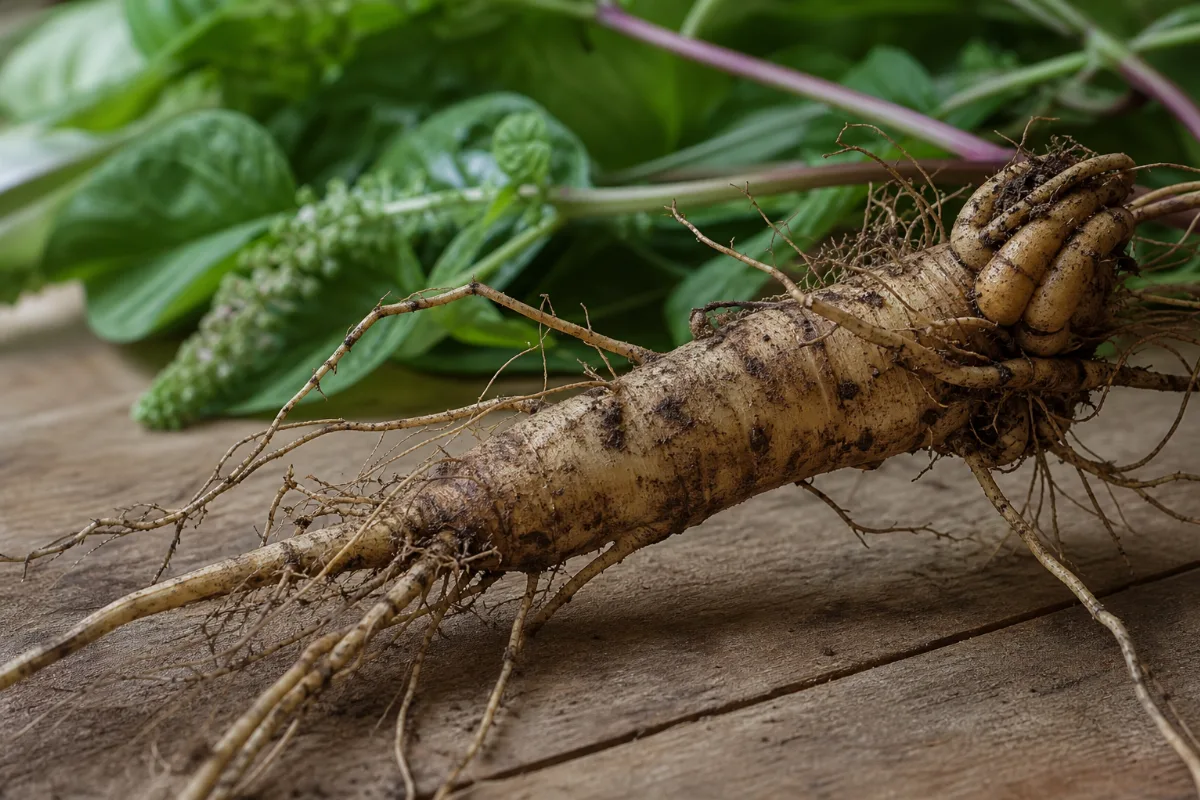
Herbs & Botanicals · Poisonous traditional herb
Poke Root
Phytolacca americana · also called Pokeweed, pokeberry, inkberry, pigeonberry, American nightshade, scoke
Poke root is the large root of pokeweed, a common North American weed. Folk medicine used it for arthritis, infections and cancer tonics, but no human trial supports these uses. The whole plant is poisonous, the root most of all, and deaths have been reported. Do not use it to treat yourself, and keep children away from the berries.
General information, not medical advice. Last substantive update · Not medically reviewed. A named clinician has not signed off on this page. How this page is made
About Poke Root
Poke root is a poisonous plant, not a proven remedy. Its story today is safety: poisoning from the root, leaves and berries, risk to children, and pregnancy.
Safety first: this plant is poisonous
MedlinePlus says all parts of pokeweed are toxic. The roots, leaves and stems hold the most poison and the fruit has small amounts. It says the roots should never be eaten, and that deaths have been reported. Ohio State says the root is the most poisonous part, leaves and stems are in between, and berries are the least toxic.
Symptoms usually begin within 6 hours. They include vomiting, stomach cramps, diarrhea that may be bloody, low blood pressure, rapid pulse, headache, muscle spasms, seizures, slow or difficult breathing and loss of consciousness. Large amounts can cause death from respiratory failure.
In 2025 a woman in China died within 33 hours of eating stir-fried pokeweed leaves. She developed shock, acidosis, heart injury and organ failure. Cooking did not make the plant safe. Adults have also been poisoned by mistaking the root for an edible tuber. If you or a child has eaten any part, call poison control right away (US Poison Help: 1-800-222-1222).
Children and berries
Children are most often poisoned by eating raw berries. Ohio State says infants have died from a few raw berries, and MedlinePlus warns that more than 10 uncooked berries can cause serious problems in children.
A review of 1,669 Kentucky poison-centre cases from 2000 to 2019 found most patients were young (median age 3), mostly berry exposures, and that cases were generally well tolerated with mainly stomach symptoms and no deaths. Even so, call poison control for any berry exposure.
Pregnancy and breastfeeding
Avoid poke root in pregnancy and while breastfeeding. Ohio State says research with humans suggests the plant can cause mutations and birth defects, but it does not name the study, and we could not check it. No breastfeeding data were found. The plant is poisonous on its own, so there is no reason to take the risk.
What it is
Phytolacca americana is a large perennial with a thick white taproot, red-purple stems and dark berries in drooping clusters. It grows in pastures, roadsides and open woods in the eastern United States and has spread to other countries. Its toxins include saponins, a ribosome-inactivating protein, a lectin called pokeweed mitogen, oxalic acid and an alkaloid.
History and traditional use
Native Americans and early settlers used the roots, leaves and berries for many conditions, from hemorrhoids to headaches. Young shoots were boiled and eaten as greens, and berry juice was used as a dye. Poke root was also part of the Hoxsey herbal tonic, a cancer remedy. Ohio State says ingestion of any part cannot be recommended.
What the evidence shows
No clinical trial or systematic review of poke root for any treatment use was found. Test-tube work shows a pokeweed protein can stop some viruses, and saponins reduced inflammation in rats, but these come from purified compounds, and Memorial Sloan Kettering notes none of it has been seen in the human body. The protein works by shutting down the cell's protein-making machinery, which is also why it is toxic. Lab results do not show a safe or useful way to take the root.
What authorities say
Memorial Sloan Kettering says pokeweed has toxic effects and should not be used to attempt to treat any medical condition. We did not find an NCCIH page or an EU herbal monograph for poke root; absence on our search does not prove none exists. LiverTox and LactMed entries were not found.
At a glance
Traditional uses history, not proof
- Used by Native Americans and early settlers for conditions from hemorrhoids to headaches (Ohio State).
- Tried for rheumatoid arthritis, infections and cancer, including in the Hoxsey herbal tonic (Memorial Sloan Kettering).
- Young shoots were eaten as boiled greens and berry juice was used as a dye, though no source recommends eating any part.
Studied for research
- Cancer: traditional claim, no human data (insufficient)
- Infections: lab protein studies only (insufficient)
- Inflammation and arthritis: animal and lab saponin studies only (insufficient)
- Tonsillitis: no data (insufficient)
- Hemorrhoids and headache: historic folk use (insufficient)
- Skin application: only harm reported (evidence against)
Main compounds
- Saponins (esculentosides, phytolaccasaponins)
- Pokeweed antiviral protein (a ribosome-inactivating protein)
- Pokeweed mitogen (a lectin)
- Oxalic acid and an alkaloid (phytolaccin)
Common forms
- Raw root, leaves and berries are poisonous
- Improperly prepared leaves and shoots have caused fatal poisoning
- No safe preparation is recommended by any source we read
Research links: MedlinePlus: pokeweed poisoning · Ohio State: common pokeweed · Memorial Sloan Kettering: pokeweed · Fatal leaf poisoning case (Toxicon 2025) · Kentucky poison-centre review (Toxicon 2022) · Research Library · Genes & Biomarkers Library
The plant and its history
- Accepted scientific name
- Phytolacca americana L.
- Naming authority
- Accepted species in the GBIF backbone (key 3084015), exact match, confidence 99. NCBI Taxonomy was not queried.
- Synonyms
- Phytolacca decandra (older name used by MSK and Ohio State)
- Common names
- Pokeweed; poke root; pokeberry; inkberry; pigeonberry; American nightshade; scoke; Virginia poke (English)
- Botanical family
- Phytolaccaceae (pokeweed family), per GBIF and Ohio State.
- Classification
- Plantae > Phytolaccaceae > Phytolacca > Phytolacca americana
- Native range
- Native to the eastern half of the United States (Ohio State). Now an invasive weed in China (case report).
- Habitat
- Pastures, roadsides, fencerows, open woods and disturbed soils (Ohio State).
- What the plant looks like
- Roots: A very large, fleshy white taproot, 4 to 6 inches across (Ohio State).; Stems: Smooth, thick, hollow, red-purple stems, up to 7 to 10 feet.; Leaves: Large, smooth, alternate, 5 to 20 inches long, with pink veins underneath.; Flowers: Small whitish-green flowers in long clusters, July to September.; Fruit: Juicy dark purple berries in drooping clusters, with crimson juice.
- Cultivation
- Not verified; it is a common weed.
- Harvest and processing
- Not described here. No preparation advice is given.
- Look-alikes and adulterants
- Name: Edible tubers; Note: Ohio State reports adults poisoned by mistaking the root for an edible tuber.; Name: Garden greens and shoots; Note: Young shoots have been eaten as greens, and improperly prepared leaves and shoots have caused fatal poisoning (Ohio State).
Traditional use and history history, not clinical proof
| Tradition or era | Documented use | Source |
|---|---|---|
| Native American and early settler medicine | Roots, leaves and berries used for conditions from hemorrhoids to headaches (Ohio State). | s-osu |
| Hoxsey herbal tonic | Pokeweed was part of the Hoxsey tonic, a traditional cancer remedy; MSK says there are no data to support this (MSK). | s-msk |
| Food and dye | Young shoots and leaves boiled as 'poke sallet'; berry juice used as a dye and to colour cheap wine; Ohio State says ingestion of any part cannot be recommended. | s-osu |
| 1964 laboratory finding | A Lancet paper reported mitogenic (cell-multiplying) activity in pokeweed; abstract not available, title only. | p14207901 |
Traditional use shows how a plant was used. It does not show that a supplement works or is safe today.
What is inside, and how it may work
What the plant contains and how those compounds act in cells and animals. Laboratory and animal mechanisms are not proven effects in people.
Main compounds
| Compound | Family | Where it is concentrated | Activity studied | Level of evidence |
|---|---|---|---|---|
| Esculentoside A PubChem 11657924 | saponin (triterpene glycoside) | Whole plant; high in the leaves in the fatal case 133 mg/kg in the whole plant specimen of one fatal case; not measured in products. | Anti-inflammatory in animals; considered a toxin in poisoning. Its blood breakdown product phytolaccagenin was the main form found in the patient. 14 2 12 | Human data |
| Phytolaccagenin PubChem 21594228 | sapogenin (saponin core) | Breakdown product 2.37 ng/mL in the patient's blood (fatal case). | Measured in blood after poisoning; MedlinePlus names phytolaccigenin as a poisonous ingredient. 14 8 12 | Human data |
| Phytolaccasaponins B, E and G | saponins | Root, leaf Not measured in products. | Identified as toxic components and detected in leaves and roots of a poisoning specimen. 10 | Lab |
| Pokeweed antiviral protein (PAP) | ribosome-inactivating protein | Plant tissues Not measured. | Enzyme that halts protein synthesis; antiviral in the lab; also toxic to cells. 3 9 | Lab |
| Pokeweed mitogen (Pa-2 lectin) | lectin (protein) | Root and others Not measured. | Makes certain white blood cells multiply in the lab; MSK lists mitogens among the known toxins. 1 4 9 | Lab |
| Oxalic acid and phytolaccin (alkaloid) | organic acid; alkaloid | Not clear Not measured. | Listed by Ohio State as thought primary toxic compounds; the fatal case paper also names oxalates. 11 14 | Authoritative guidance |
Mechanisms, receptors and pathways
| Target or pathway | Gene or receptor | What was found | Level |
|---|---|---|---|
| Gut lining irritation and fluid loss | Not applicable | Saponins are irritants and cause severe vomiting and diarrhea; in the fatal case this led to shock, acidosis and organ failure. 14 9 | Human data |
| Ribosome inactivation (PAP) | Ribosomal RNA (sarcin/ricin loop) | PAP removes purines from ribosomal RNA, stopping protein synthesis. This explains antiviral effects in the lab and also toxicity to cells. 3 | Lab |
| Mitogenic stimulation of lymphocytes | Lectin binding (Pa-2) | The lectin pokeweed mitogen stimulates cell division in lab tests; it is used as a lab reagent. Not a proven benefit in people. 1 9 | Lab |
| Anti-inflammatory signalling (saponins) | Review of molecular targets | Esculentosides reduce inflammation in lab and animal work. Not tested in people. 2 9 | Lab |
| Nervous-system stimulation | Cholinergic (suggested) | A case report authors suggest a cholinergic effect to explain sweating, tremor and confusion. A second report suggests heart block follows strong vagal tone from gut colic. 7 6 | Human data |
Absorption, metabolism and elimination
- Absorption
- Plant juice can be absorbed through bare skin (Ohio State). Gut absorption of the toxins was shown by their presence in blood in the fatal case.
- Distribution
- No data beyond blood levels in one patient.
- Metabolism
- Esculentoside A was converted to phytolaccagenin in the body in the fatal case; the metabolite was the main form in blood.
- Elimination
- No data.
- Bioavailability
- No data.
Isolated compounds versus whole extracts
The root contains saponins, a ribosome-inactivating protein, lectins and other compounds, and the purified compounds are studied for lab effects. No study compared the whole root to a single compound in people. The same compounds that show lab effects are the toxins, so lab results do not show a safe use.
Nutritional composition
Poke root is not a food or a source of nutrients. Boiled young shoots have been eaten in some places, but the plant is poisonous and sources do not recommend eating any part.
5 not enough evidence1 evidence against
What is Poke Root good for?
What poke root has been used for and how strong the evidence is. For every use, no human trial was found, and the plant is poisonous.
Benefits, one by one
Each card is a research question, not a promise. Tap a goal to filter. Open a card to see the studies, doses and limits.
Cancer (traditional claim)
Not enough evidencePoke root was used in old herbal cancer tonics. Memorial Sloan Kettering says there are no data to back this claim, and the plant is poisonous. Do not use it in place of cancer care.
2 studiesNo amounts or preparation advice are given on this page. This plant i…
Studies, doses and limits
What the trials found
No human trial of poke root for cancer was found. MSK: there are no data to back this claim.
Results
No human trial found.
Effect sizes as reported
Not applicable.
Why this rating
No human data. A major cancer centre says there are no data supporting use.
Form and dose studied
No amounts or preparation advice are given on this page. This plant is not recommended for self-treatment.
Who was studied
Adults, if used at all.
Limits
Not tested in people. The same cancer centre says the plant has significant toxicity and should not be used to treat any condition.
Why researchers looked
Part of the Hoxsey herbal tonic, a traditional cancer remedy.
Traditional use
MSK says some have attempted to use pokeweed for cancer as part of the Hoxsey herbal tonic.
Proposed mechanism Pharmacological theory
Lab work on one pokeweed protein (PAP) is looking at immunotoxins as a research idea. This is not a treatment.
A proposed mechanism does not show that the effect happens in people.
Poke root is poisonous. All parts of the plant are toxic and deaths have been reported. See the Safety tab. No use is recommended.
Infections (lab only)
Not enough evidenceIn test tubes, a pokeweed protein stopped some viruses and fungi from growing. This has not been seen in the human body, and no human trial exists.
3 studiesNo amounts or preparation advice are given on this page. This plant i…
Studies, doses and limits
What the trials found
No human trial. MSK: laboratory studies suggest extracts may stop some fungi and viruses, but human data are lacking.
Results
Lab results only. No human outcome measured.
Effect sizes as reported
Not applicable.
Why this rating
Test-tube evidence only; the same protein is a toxin.
Form and dose studied
No amounts or preparation advice are given on this page. This plant is not recommended for self-treatment.
Who was studied
Not applicable.
Limits
Lab findings do not predict benefit in people. The review is about a purified protein, not poke root as an herb.
Why researchers looked
Pokeweed antiviral protein (PAP) is well known in the lab.
Traditional use
MSK lists use for infections; OSU notes PAP research on HIV in human cells is ongoing, not a treatment.
Proposed mechanism Laboratory
PAP is an enzyme that switches off ribosomes, the cell's protein-making machines. That can stop a virus in a dish but also harms normal cells.
A proposed mechanism does not show that the effect happens in people.
Poke root is poisonous. All parts of the plant are toxic and deaths have been reported. See the Safety tab. No use is recommended.
Inflammation and arthritis (animal and lab only)
Not enough evidenceSome saponins from pokeweed-family plants reduced swelling in rats. No human trial was found. Poke root has been tried for rheumatoid arthritis, but it is poisonous.
2 studiesNo amounts or preparation advice are given on this page. This plant i…
Studies, doses and limits
What the trials found
No clinical trial of poke root for arthritis or inflammation was found.
Results
Animal and lab results only; no human outcome measured.
Effect sizes as reported
Not applicable.
Why this rating
Animal and lab evidence only. Review: 68 laboratory studies, mostly of isolated compounds.
Form and dose studied
No amounts or preparation advice are given on this page. This plant is not recommended for self-treatment.
Who was studied
Not applicable.
Limits
The review covers isolated compounds, mainly from related species, not the herb. MSK: clinical trials are lacking.
Why researchers looked
Saponins (esculentosides) from Phytolacca plants show anti-inflammatory activity in animals.
Traditional use
MSK says some have attempted to use pokeweed for rheumatoid arthritis. It cites saponin extracts reducing rat paw swelling.
Proposed mechanism Laboratory
Saponins such as esculentoside A reduce inflammatory signals in lab and animal work. The same family of saponins is thought to cause the poisoning.
A proposed mechanism does not show that the effect happens in people.
Poke root is poisonous. All parts of the plant are toxic and deaths have been reported. See the Safety tab. No use is recommended.
Tonsillitis (traditional claim)
Not enough evidencePoke root was used for sore throat and tonsillitis. Memorial Sloan Kettering says there are no data to support this.
1 studiesNo amounts or preparation advice are given on this page. This plant i…
Studies, doses and limits
What the trials found
No human trial found.
Results
No human trial found.
Effect sizes as reported
Not applicable.
Why this rating
No data; MSK says none support the claim.
Form and dose studied
No amounts or preparation advice are given on this page. This plant is not recommended for self-treatment.
Who was studied
Adults, if used at all.
Limits
A severe sore throat needs a medical check.
Why researchers looked
Traditional throat remedy.
Traditional use
MSK lists tonsillitis as a purported use.
Proposed mechanism Pharmacological theory
Not tested.
A proposed mechanism does not show that the effect happens in people.
Poke root is poisonous. All parts of the plant are toxic and deaths have been reported. See the Safety tab. No use is recommended.
Hemorrhoids and headache (traditional)
Not enough evidenceNative Americans and early settlers used the root, leaves and berries for conditions from hemorrhoids to headaches, according to Ohio State. No study tested this.
1 studiesNo amounts or preparation advice are given on this page. This plant i…
Studies, doses and limits
What the trials found
No human trial found.
Results
No human trial found.
Effect sizes as reported
Not applicable.
Why this rating
Historic folk use only.
Form and dose studied
No amounts or preparation advice are given on this page. This plant is not recommended for self-treatment.
Who was studied
Not advised.
Limits
Ohio State says ingestion of any part cannot be recommended. Headache and bleeding from the bowel can have serious causes that need a doctor.
Why researchers looked
Historic folk medicine in eastern North America.
Traditional use
Ohio State: roots, leaves and berries were used medicinally by Native Americans and early settlers, from hemorrhoids to headaches.
Proposed mechanism Pharmacological theory
Not tested.
A proposed mechanism does not show that the effect happens in people.
Poke root is poisonous. All parts of the plant are toxic and deaths have been reported. See the Safety tab. No use is recommended.
Skin applications (not advised)
Evidence againstPoke root has been applied to the skin in folk medicine. This is risky: the juice can pass through bare skin and cause poisoning, and MSK warns of significant toxicity from skin use.
3 studiesNo amounts or preparation advice are given on this page. This plant i…
Studies, doses and limits
What the trials found
No human trial of any benefit. In the Kentucky poison-centre review, skin contact caused swelling and pain.
Results
Harm signal only, no benefit measured.
Effect sizes as reported
Not applicable.
Why this rating
The only human information on skin contact is of harm: swelling, pain and absorption of the juice.
Form and dose studied
No amounts or preparation advice are given on this page. This plant is not recommended for self-treatment.
Who was studied
Not advised.
Limits
Evidence is of harm. Counts as a caution, not a use.
Why researchers looked
Folk external use.
Traditional use
MSK notes significant toxicity from topical use; OSU says juice can be absorbed through skin.
Proposed mechanism Pharmacological theory
Not tested.
A proposed mechanism does not show that the effect happens in people.
Poke root is poisonous. All parts of the plant are toxic and deaths have been reported. See the Safety tab. No use is recommended.
Connections to the rest of health
How Poke Root connects to the rest of our health knowledge graph. Every link says what kind of connection it is. A safety link (for example to the liver) is a warning, not a benefit. A study that merely mentions a topic never creates a benefit link.
Explore every connection: goals, body systems, organs, symptoms, genes
A. Wellness goals
| Connected to | Kind of connection | Evidence status | Context | Studies |
|---|---|---|---|---|
| Immune Support | Traditional use | Not enough evidence | Cancer (traditional claim): Poke root was used in old herbal cancer tonics. Memorial Sloan Kettering says there are no data to back this claim, and the plant is poisonous. Do not use it in place of cancer care. Tonsillitis (traditional claim): Poke root was used for sore throat and tonsillitis. Memorial Sloan Kettering says there are no data to support this. | 9 3 |
| Immune Support | Not enough evidence | Infections (lab only): In test tubes, a pokeweed protein stopped some viruses and fungi from growing. This has not been seen in the human body, and no human trial exists. | 9 11 3 | |
| Inflammation Balance | Not enough evidence | Inflammation and arthritis (animal and lab only): Some saponins from pokeweed-family plants reduced swelling in rats. No human trial was found. Poke root has been tried for rheumatoid arthritis, but it is poisonous. | 9 2 | |
| Joint Support | Not enough evidence | Inflammation and arthritis (animal and lab only): Some saponins from pokeweed-family plants reduced swelling in rats. No human trial was found. Poke root has been tried for rheumatoid arthritis, but it is poisonous. | 9 2 | |
| Inflammation Balance | Traditional use | Not enough evidence | Hemorrhoids and headache (traditional): Native Americans and early settlers used the root, leaves and berries for conditions from hemorrhoids to headaches, according to Ohio State. No study tested this. | 11 |
| Healthy Skin | Adverse effect or risk | Evidence against | Skin applications (not advised): Poke root has been applied to the skin in folk medicine. This is risky: the juice can pass through bare skin and cause poisoning, and MSK warns of significant toxicity from skin use. | 9 11 13 |
B. Body systems
| Connected to | Kind of connection | Evidence status | Context | Studies |
|---|---|---|---|---|
| Digestive system | Adverse effect or risk | Moderate certainty | Vomiting, cramps and bloody diarrhea are the leading poisoning effects. Preparation or compound: Root, leaves, berries (saponins) |
8 13 11 |
| Heart and blood pressure | Adverse effect or risk | Low certainty | Low blood pressure, shock and heart rhythm changes in poisoning reports. Preparation or compound: Leaves and shoots |
8 14 6 |
| Nervous system | Adverse effect or risk | Low certainty | Seizures, confusion and tremor in reports. Preparation or compound: Improperly prepared extract |
8 7 |
| Immune System | Biological association | Not enough evidence | Studied for: Cancer (traditional claim) Studied for: Infections (lab only) | 9 3 11 |
| Pain Inflammation | Biological association | Not enough evidence | Studied for: Inflammation and arthritis (animal and lab only) Studied for: Hemorrhoids and headache (traditional) | 9 2 11 |
| Bones Joints Muscles | Biological association | Not enough evidence | Studied for: Inflammation and arthritis (animal and lab only) | 9 2 |
| Respiratory System | Biological association | Not enough evidence | Studied for: Tonsillitis (traditional claim) | 9 |
| Digestive System | Biological association | Not enough evidence | Studied for: Hemorrhoids and headache (traditional) | 11 |
| Integumentary System | Biological association | Evidence against | Studied for: Skin applications (not advised) | 9 11 13 |
J. Genes, receptors and enzymes
| Connected to | Kind of connection | Evidence status | Context | Studies |
|---|---|---|---|---|
| Ribosomes (rRNA N-glycosidase action of PAP) | Preliminary mechanism | Lab | Target of pokeweed antiviral protein in the lab. | 3 |
L. Active compounds
| Connected to | Kind of connection | Evidence status | Context | Studies |
|---|---|---|---|---|
| Esculentoside A | Biological association | Human | Anti-inflammatory in animals; considered a toxin in poisoning. Its blood breakdown product phytolaccagenin was the main form found in the patient. Preparation or compound: Whole plant; high in the leaves in the fatal case |
14 2 12 |
| Phytolaccagenin | Biological association | Human | Measured in blood after poisoning; MedlinePlus names phytolaccigenin as a poisonous ingredient. Preparation or compound: Breakdown product |
14 8 12 |
| Phytolaccasaponins B, E and G | Biological association | Lab | Identified as toxic components and detected in leaves and roots of a poisoning specimen. Preparation or compound: Root, leaf |
10 |
| Pokeweed antiviral protein (PAP) | Biological association | Lab | Enzyme that halts protein synthesis; antiviral in the lab; also toxic to cells. Preparation or compound: Plant tissues |
3 9 |
| Pokeweed mitogen (Pa-2 lectin) | Biological association | Lab | Makes certain white blood cells multiply in the lab; MSK lists mitogens among the known toxins. Preparation or compound: Root and others |
1 4 9 |
| Oxalic acid and phytolaccin (alkaloid) | Biological association | Authoritative guidance | Listed by Ohio State as thought primary toxic compounds; the fatal case paper also names oxalates. Preparation or compound: Not clear |
11 14 |
Each connection is stored with the ingredient, the connected record, the kind of connection, the evidence status, the supporting studies, the preparation or compound involved, and a review date (last reviewed October 25, 2026).
The evidence
The research centre for Poke Root. Every record here was checked against PubMed or the publisher's page; we never list a study we have not verified.
Evidence by outcome
Bars show how many studies we found for each outcome, not how well it works. People are added up across trials only (reviews are not added, to avoid double counting).
How we rate evidence
High certainty
Several well-run trials or reviews agree; further research is unlikely to change the picture much.
Moderate certainty
Good trials point the same way, but some doubt remains.
Low certainty
Small, short or inconsistent trials. The finding could change with better research.
Very low certainty
Very little or very weak human data. Treat as a possibility only.
Mixed findings
Trials or reviews disagree with each other.
Not enough evidence
Not enough human research to say either way.
Evidence against
Good research found no benefit, or found harm.
We take the reviewers' own risk-of-bias and GRADE statements where they exist, and otherwise judge from study size, design, consistency, directness and whether a product matches what is sold. Many publications do not make evidence high. Method note: We started from our existing poke root summary, re-read the MedlinePlus, Ohio State and Memorial Sloan Kettering pages, checked plant names in GBIF and compound IDs in PubChem, and read PubMed abstracts for the poisoning cases and lab reviews. Two papers have no abstract (marked title-only) and are not used for any claim. NCCIH and EMA pages were not found. Certainty ratings are the compiler's own reading. No study is cited that we could not verify.
Study library: every study we checked 14
| Study | Design | People | Product, dose, length | Result |
|---|---|---|---|---|
| Ahmad 2009 Phytolacca americana lectin (Pa-2; pokeweed mitogen): an intrinsically unordered protein and its conversion into partial order at low pH. Biosci Rep · PMID 19438410 · DOI |
Laboratory biochemistry lab |
Purified protein | Pa-2 lectin (pokeweed mitogen) Plant protein Not given on this page Not applicable · vs Not applicable |
Shows that the lectin called pokeweed mitogen (Pa-2) is an acidic protein without regular structure at neutral pH. Structure study only; no biological effect in people was tested. Structure study Methods, limits and fundingOutcomes: Protein structure Limitations: Protein chemistry only. Funding and conflicts: Not stated in abstract Read: abstract |
| Bailly 2020 Esculentosides: Insights into the potential health benefits, mechanisms of action and molecular targets. Phytomedicine · PMID 33002830 · DOI |
Review of laboratory and animal studies lab |
68 studies analysed on esculentoside saponins from Phytolacca species (P. esculenta, P. americana, P. acinosa) | Esculentosides and phytolaccosides (saponins) Isolated compounds from Phytolacca plants Not given on this page Not applicable · vs Not applicable |
Esculentosides, especially ES-A, -B and -H, show anti-inflammatory, antifungal and anticancer activities in laboratory and animal work. The review covers the 26 known compounds and their molecular targets. No clinical trial results are described in the abstract. Review; no effect size Methods, limits and fundingOutcomes: Pharmacology Limitations: Mostly P. esculenta and isolated compounds; abstract read only. Funding and conflicts: Not stated in abstract Read: abstract |
| Domashevskiy 2015 Pokeweed antiviral protein, a ribosome inactivating protein: activity, inhibition and prospects. Toxins (Basel) · PMID 25635465 · DOI |
Narrative review (laboratory science) lab |
Biochemistry of one pokeweed protein | Pokeweed antiviral protein (PAP) Plant protein Not given on this page Not applicable · vs Not applicable |
PAP is a ribosome-inactivating protein: an enzyme that removes specific purine residues from ribosomal RNA and halts protein synthesis. It is thought to defend the plant against pathogens. The review discusses possible use of PAP-linked immunotoxins in cancer therapy, which is a research idea, not an established treatment. Review; no effect size Methods, limits and fundingOutcomes: Mechanism Limitations: Laboratory science; no human treatment data. Funding and conflicts: Not stated in abstract Read: abstract |
| Farnes 1964 Mitogenic activity in Phytolacca americana (pokeweed). Lancet · PMID 14207901 · DOI |
Laboratory study lab |
Not read (no abstract in PubMed) | Pokeweed extract Not stated Not given on this page Not applicable · vs Not applicable |
Title only: PubMed has no abstract. The title reports a mitogenic (cell-multiplying) activity in pokeweed; details not read. Not read Methods, limits and fundingLimitations: No abstract; used only to support that the mitogen was first described in 1964. Funding and conflicts: Not stated Read: title only |
| GBIF Secretariat 2026 GBIF Backbone Taxonomy: Phytolacca americana L. GBIF species match API · Source |
Taxonomic database record authoritative-guidance |
Taxonomy | Not applicable Not applicable Not given on this page Not applicable · vs Not applicable |
Phytolacca americana L. is an accepted species (GBIF key 3084015), family Phytolaccaceae, exact match, confidence 99. Not applicable Methods, limits and fundingOutcomes: Accepted name Limitations: NCBI Taxonomy was not queried. Funding and conflicts: Not applicable Read: full-text |
| Hamilton 1995 Mobitz type I heart block after pokeweed ingestion. Vet Hum Toxicol · PMID 7709598 |
Case report |
1 A family who ate raw and/or cooked pokeweed leaves; one member developed heart block |
Raw and/or cooked pokeweed leaves Leaf Not given on this page Not applicable · vs Not applicable |
Leaves typically cause a self-limited but severe gastroenteritis with intense vomiting and frothy diarrhea. One family member developed Mobitz type I heart block with vomiting, which resolved after intravenous promethazine. The authors suggest some heart effects are secondary to increased vagal tone from severe gut colic; no cardiac toxin has been identified in pokeweed. Case report; no rate Methods, limits and fundingOutcomes: Heart rhythm Limitations: One case; mechanism is the authors' suggestion. Funding and conflicts: Not stated in abstract Read: abstract |
| Jaeckle 1981 Pokeweed poisoning. South Med J · PMID 7244729 · DOI |
Case report |
1 One 68-year-old man |
Improperly prepared pokeweed extract Not stated in abstract Not given on this page Not applicable · vs Not applicable |
He had sweating, confusion, tremor, weakness, incontinence and fainting. From this and earlier cases the authors suggest the plant contains an agent that stimulates the nervous system in a cholinergic way. Case report; no rate Methods, limits and fundingOutcomes: Symptoms Limitations: One case; suggested mechanism only. Funding and conflicts: Not stated in abstract Read: abstract |
| MedlinePlus (US National Library of Medicine); reviewed by J Borke 2025 Pokeweed poisoning (MedlinePlus Medical Encyclopedia) MedlinePlus · Source |
Government health encyclopedia authoritative-guidance |
Pokeweed poisoning | Pokeweed (Phytolacca americana) - whole plant Roots, leaves, stems, berries Not given on this page Not applicable · vs Not applicable |
All parts are toxic to humans; the highest amounts of poison are in the roots, leaves and stems, with small amounts in the fruit. The roots should never be eaten. Symptoms usually start within 6 hours: seizures, diarrhea (sometimes bloody), headache, loss of consciousness, low blood pressure, muscle spasms, nausea and vomiting, rapid pulse, slow or difficult breathing, stomach pain, weakness. Treatment is supportive (for example charcoal, fluids, breathing support). Deaths have been reported. Improper cooking of leaves, or eating some root with the leaves, can cause serious poisoning. Eating more than 10 uncooked berries can cause serious problems in children. It says cooked berries and leaves can technically be eaten but this is never recommended, because there is no guarantee they are safe. Poison Help line (US): 1-800-222-1222. Authoritative guidance; no effect size Methods, limits and fundingOutcomes: Symptoms, toxic parts, outlook Limitations: Encyclopedia entry; reference list is textbooks. Page read in full 2026-10-25. Funding and conflicts: Not applicable Read: full-text |
| Memorial Sloan Kettering Cancer Center 2021 Pokeweed (About Herbs) - Memorial Sloan Kettering Cancer Center MSK About Herbs · Source |
Cancer centre herb monograph authoritative-guidance |
Pokeweed products (leaf, root, berry extracts) | Pokeweed products Leaf, root, berry Not given on this page Not applicable · vs Not applicable |
Says pokeweed has toxic effects and should not be used to attempt to treat any medical condition. No data support use against cancer or tonsillitis. Lab studies suggest extracts can stop some fungi and viruses (pokeweed antiviral protein stopped herpes simplex, influenza and poliovirus in the test tube) and saponins reduced inflammation in rats; none of this has been seen in the human body. Mitogens and saponins are known toxins. Reported reactions: nausea, vomiting, stomach cramps, diarrhea, weakness, vomiting blood, low blood pressure, fast heart rate. High doses or prolonged use can cause protracted vomiting, bloody diarrhea, difficulty breathing, muscle spasms, convulsions and death. Significant toxicity follows oral or topical use. Some have tried it for rheumatoid arthritis, infections and cancer (as part of the Hoxsey tonic). Authoritative guidance; no effect size Methods, limits and fundingOutcomes: Claimed uses, mechanisms, adverse reactions Limitations: Monograph; last updated 2021. Page read in full 2026-10-25. Funding and conflicts: Not applicable Read: full-text |
| Narita 2025 Isolation of Toxic Components from Phytolacca americana and Establishment of Simultaneous Analysis Method of their Components. Shokuhin Eiseigaku Zasshi · PMID 41192842 · DOI |
Laboratory chemistry and food poisoning analysis lab |
Plant extracts and a 2018 food-poisoning specimen (Japan) | Pokeweed root extract Root, leaf Not given on this page Not applicable · vs Not applicable |
Phytolaccasaponins B, E and G were isolated from the root and identified as toxic components. A test method found three of them in the leaves and two in the roots of a 2018 food-poisoning specimen. Method paper; no effect size Methods, limits and fundingOutcomes: Toxic saponins Limitations: Title translated from an English abstract; chemistry and analysis only. Funding and conflicts: Not stated in abstract Read: abstract |
| Ohio State University CFAES 2026 Common Pokeweed (Phytolacca americana) - Ohio Weedguide Ohio State University CFAES Weed Guide · Source |
University plant guide authoritative-guidance |
Pokeweed | Pokeweed (Phytolacca americana) - whole plant Roots, leaves, stems, berries Not given on this page Not applicable · vs Not applicable |
Native to the eastern half of the US; a large perennial with a big fleshy white taproot, red-purple stems and dark purple berries in clusters. All parts are toxic to humans, pets and livestock: roots are the most poisonous, leaves and stems are intermediate, berries the least. Children are most often poisoned by eating raw berries, and infants have died from a few raw berries. Adults have been poisoned, sometimes fatally, by improperly prepared leaves and shoots (especially with root attached) and by mistaking the root for an edible tuber. The guide says research with humans has shown the plant can cause mutations (possibly leading to cancer) and birth defects; the underlying study is not cited. Juice can be absorbed through the skin. Symptoms: burning mouth, salivation, cramps, vomiting, bloody diarrhea; larger amounts cause anemia, altered heart rate and breathing, convulsions and death from respiratory failure. Toxins thought to be oxalic acid, saponins and an alkaloid (phytolaccin). Folklore: used by Native Americans and early settlers from hemorrhoids to headaches. The guide says it cannot recommend eating any part. Authoritative guidance; no effect size Methods, limits and fundingOutcomes: Toxicity, plant description, folklore Limitations: Weed guide; the mutation and birth-defect statement has no cited study. Page read in full 2026-10-25. Funding and conflicts: Not applicable Read: full-text |
| PubChem (NCBI) 2026 PubChem compound records: Esculentoside A (CID 11657924) and Phytolaccagenin (CID 21594228) PubChem · Source |
Chemical database record authoritative-guidance |
Chemistry | Not applicable Not applicable Not given on this page Not applicable · vs Not applicable |
Name search returned CID 11657924 (Esculentoside A, C42H66O16) and CID 21594228 (Phytolaccagenin, C31H48O7); titles confirmed by property lookup. Not applicable Methods, limits and fundingOutcomes: Compound identity Limitations: Matched by name; not matched to a plant-specific record. Funding and conflicts: Not applicable Read: full-text |
| Woolum 2022 Human exposures to Phytolacca americana in Kentucky. Toxicon · PMID 36332712 · DOI |
Observational study (poison centre database) |
1669 1,669 human exposures reported to US poison centres in Kentucky, 2000-2019; median age 3 years |
Pokeweed exposure, mostly accidental Mostly berries (93.9%) Not given on this page Not applicable · vs Not applicable |
97.2% of exposures were unintentional and 98.3% were by mouth. Exposures were generally well tolerated: 239 adverse events, most often abdominal pain, nausea, vomiting and diarrhea. Skin contact caused swelling and pain. Treatment was mainly supportive and no deaths were reported in this period. Descriptive; no effect size Methods, limits and fundingOutcomes: Symptoms, treatment, outcomes Limitations: Poison-centre reports are voluntary; mostly berries in young children, so it does not describe root poisoning. Abstract read. Funding and conflicts: Not stated in abstract Read: abstract |
| Xu 2025 Description of a fatal case of acute Phytolacca americana poisoning due to leaf ingestion in China. Toxicon · PMID 40602544 · DOI |
Case report |
1 One 50-year-old woman in China |
Stir-fried pokeweed leaves (about 150 g raw) Leaf Not given on this page Not applicable · vs Not applicable |
Severe gastrointestinal symptoms began 2 hours after eating stir-fried pokeweed leaves. She developed metabolic acidosis (pH 7.11), shock from fluid loss, heart injury (troponin I 12.70 ng/mL) and clotting problems, and died of multi-organ failure within 33 hours. Esculentoside A and its breakdown product were found in the plant and in her blood. Case report: fatal outcome; no rate Methods, limits and fundingOutcomes: Clinical course, toxin levels Limitations: One case. Cause linked by toxin testing of plant and blood. Funding and conflicts: Not stated in abstract Read: abstract |
What we do not know yet
- No clinical trial of poke root for any use.
- Toxin content of poke root products is not measured.
- The birth-defect statement has no cited study.
- NCCIH, EMA, LiverTox and LactMed entries were not found.
- A 1986 poisoning paper and a 1964 mitogen paper have no abstract and were not read.
How new research is added
New studies are found by a saved PubMed search and are placed in a review queue. A person reads each one before it changes any evidence rating or safety wording. New publications never change ratings automatically.
Lab markers
What changed in blood or saliva tests during trials. A changed number is not the same as feeling or being healthier, and we give no "normal ranges".
Safety
What studies and official sources say about side effects, medicines and who should check first. Each point shows what kind of evidence it comes from.
Main points to know 4
- All parts of the plant are poisonous. MedlinePlus says all parts of pokeweed are toxic to humans, with the most poison in the roots, leaves and stems and less in the berries. It says the roots should never be eaten. Deaths have been reported. Ohio State says it cannot recommend eating any part. Memorial Sloan Kettering says pokeweed should not be used to try to treat any medical condition. Authoritative guidance 8 11 9
- Cooking does not make it reliably safe. A 50-year-old woman died within 33 hours of eating stir-fried pokeweed leaves, with shock, acidosis, heart injury and organ failure. MedlinePlus says improper cooking of leaves, or eating some root with the leaves, can cause serious poisoning, and that no preparation is guaranteed safe. Adults have also been poisoned by mistaking the root for an edible tuber (Ohio State). Case report 14 8 11
- Children and berries. Children are most often poisoned by eating raw berries. Ohio State says infants have died from only a few raw berries; MedlinePlus says more than 10 uncooked berries can cause serious problems in children. In 1,669 Kentucky poison-centre cases (mostly berries, median age 3), exposures were generally well tolerated with no deaths, so most berry cases were mild to moderate, but severe cases are reported elsewhere. Observational 13 11 8
- Not recommended for self-treatment. No clinical trial of poke root for any use was found. The lab findings (antiviral, anti-inflammatory) come from purified proteins or saponins, and the same compounds are the toxins. There is no known safe amount of the root. Authoritative guidance 9 3 2
Side effects 7
| Effect | How often | Severity and recovery | Evidence |
|---|---|---|---|
| Vomiting, nausea, stomach cramps Symptoms usually begin within 6 hours (MedlinePlus). Leaves can cause intense vomiting and frothy diarrhea (case report). | Most common effects in poison-centre cases; no rate for root products | mild to severe Most people recover in 1 to 2 days after small amounts (Ohio State) | Observational 13 11 8 |
| Diarrhea, sometimes bloody Vomiting blood is also reported by MSK. | Common in reports | moderate to severe Usually resolves with supportive care | Authoritative guidance 8 9 13 |
| Low blood pressure and shock MedlinePlus lists low blood pressure; the fatal case had shock from fluid loss. | Not given | serious Fatal in the leaf poisoning case | Case report 8 14 |
| Heart rhythm changes, fast pulse The authors suggest the heart block came from strong gut spasm, not from a heart toxin; none has been identified. | Rare in reports | potentially serious Heart block settled after the vomiting was treated in one case | Case report 6 8 |
| Confusion, tremor, sweating, fainting, seizures A man who took an improperly prepared extract had sweating, confusion, tremor, incontinence and fainting. | Rare in reports | serious Not given | Case report 7 8 |
| Slow or difficult breathing, muscle spasms, convulsions, death Ohio State describes death from respiratory failure after large amounts. | Large amounts | life-threatening Deaths reported | Authoritative guidance 8 11 9 |
| Skin swelling, pain and absorption of juice Avoid bare-skin contact with the plant. | Reported after skin contact | mild to moderate Not given | Observational 13 11 9 |
Liver
A fatal leaf case involved multi-organ failure, but no study of poke root and the liver was found. A LiverTox entry was not found. Absence of data is not proof of liver safety. 14
How often. No frequency can be given.
Monitoring. No monitoring advice was found.
This is a safety connection. It is not evidence that Poke Root supports liver health.
Medicines and supplements 2
| With | Why it matters | Importance | Evidence | What to do |
|---|---|---|---|---|
| Any medicine unknown | No interaction studies of poke root were found in the sources read. | Unknown. The poisoning itself (low blood pressure, vomiting, heart rhythm changes) could be dangerous for people taking heart or blood-pressure medicines. | Authoritative guidance Not enough evidence 9 8 | Do not take it. If you have already taken any, tell a doctor or poison centre and give your medicine list. |
| Cancer treatments prescription | Not studied. MSK says there are no data supporting use against cancer. | Unknown, and the plant's own toxicity is a risk during treatment. | Authoritative guidance Not enough evidence 9 | Tell your cancer team about any herb you are thinking of, and do not use it instead of treatment. |
Who should check first 5
| Situation | Advice | Evidence |
|---|---|---|
| Pregnancy | Avoid. Ohio State says research with humans suggests the plant can cause mutations and birth defects; the study behind that statement was not cited or read. | Authoritative guidance 11 |
| Breastfeeding | Avoid. No data were found, and LactMed has no entry that we found. | Authoritative guidance 11 |
| Children and infants | Keep children away from the berries and plant. Infants have died after a few raw berries (Ohio State). | Authoritative guidance 11 8 13 |
| Anyone with heart, blood pressure, stomach or bowel disease | Avoid. The poisoning causes low blood pressure, rhythm changes and bloody diarrhea. | Authoritative guidance 8 9 |
| Everyone, for self-treatment | Not recommended. Roots should never be eaten (MedlinePlus). | Authoritative guidance 8 9 |
Overdose, product quality and regulators
Summary. Poke root is the most poisonous part of a poisonous plant. The toxins are thought to include saponins (phytolaccatoxin, esculentosides), oxalic acid, an alkaloid (phytolaccin) and mitogenic lectins. The dose that harms is not a safe or measured amount for any product.
Animal. Horses, sheep and cattle have been poisoned by fresh leaves or fodder, and pigs by the roots (Ohio State). A veterinary case report describes a goat with bloody diarrhea that recovered with supportive care.
Human doses studied. None. No safe amount of the root has been established. This page gives no amounts.
High dose or long term signals. MSK: high doses or prolonged use can cause protracted vomiting, bloody diarrhea, difficulty breathing, muscle spasms, convulsions and death.
Overdose response. Call poison control or emergency services at once; do not wait for symptoms. In the US the Poison Help line is 1-800-222-1222 (MedlinePlus). Do not make the person vomit unless told to. Treatment in hospital is supportive (monitoring, fluids, sometimes activated charcoal and breathing support).
Genotoxicity. Ohio State states that research with humans has shown the plant can cause mutations and birth defects; we did not find or read the study and treat this as unverified.
Toxic plant parts. Root: most poisonous. Leaves and stems: intermediate, increasing with maturity. Berries: least toxic but the usual cause of poisoning in children. Raw juice is absorbed through bare skin.
No test of poke root products for contaminants, strength or identity was found.
Unknown strength. Toxin levels vary by plant part and age. A Japanese method found toxic saponins in both leaves and roots of a food-poisoning specimen, and the fatal leaf case found high esculentoside A in the plant. No product strength testing was found. 10 14
Mix-ups. Adults have been poisoned by mistaking the root for an edible tuber (Ohio State). The shoots can be mistaken for greens. 11
| Body | Action | Date |
|---|---|---|
| Memorial Sloan Kettering (cancer centre) (United States) | Says pokeweed has toxic effects and should not be used to attempt to treat any medical condition. source | 2021 |
| US poison centres (MedlinePlus / Poison Help) (United States) | Poison Help line 1-800-222-1222; MedlinePlus says the roots should never be eaten. source | 2025 |
When to get medical help
- After eating or drinking any part of pokeweed, or if a child has eaten berries: call poison control (US 1-800-222-1222) or emergency services right away.
- Repeated vomiting, bloody vomit or diarrhea, severe stomach pain.
- Fainting, confusion, seizures, slow or difficult breathing, or a very fast, slow or uneven pulse.
- Plant juice on bare skin: wash it off and call poison control for advice; swelling and pain can follow.
Stop the supplement and contact a clinician or emergency service. In the US, Poison Control is 1-800-222-1222.
General information only, not medical advice. Ask a clinician or pharmacist before use, especially with medicines, in pregnancy or with a health condition. See the Natural Remedy Safety guide.
Frequently asked questions
Is poke root safe?
Can cooking make it safe?
What are the signs of pokeweed poisoning?
What should I do if someone eats pokeweed?
Call poison control or emergency services at once. In the US the Poison Help line is 1-800-222-1222. Do not make the person vomit unless told to.
Are the berries dangerous to children?
Is poke root safe in pregnancy or breastfeeding?
Avoid it. Ohio State says human research suggests it can cause mutations and birth defects, though the study is not named. There are no breastfeeding data.
Does poke root treat cancer or arthritis?
No human study shows this. Memorial Sloan Kettering says there are no data to back the cancer claim, and clinical trials for inflammation are lacking. Do not use it instead of care.
Does it fight viruses?
Can touching it harm me?
What is in the root?
Can it affect the heart?
Explore by health goal
Editorial transparency
- Written by
- AlternativeMed editorial team. Research compiled with AI assistance, then checked against PubMed records.
- Medical review
- None. This page has not been reviewed by a physician or pharmacist.
- First published
- 2026-10-25
- Last substantive update
- 2026-10-25
- How we research
- We started from our existing poke root summary, re-read the MedlinePlus, Ohio State and Memorial Sloan Kettering pages, checked plant names in GBIF and compound IDs in PubChem, and read PubMed abstracts for the poisoning cases and lab reviews. Two papers have no abstract (marked title-only) and are not used for any claim. NCCIH and EMA pages were not found. Certainty ratings are the compiler's own reading. No study is cited that we could not verify.
- How we rate evidence
- See "How we rate evidence" in the Evidence tab.
- Independence
- No product is promoted on this page. No affiliate links are shown. If one is added later it will be labelled and kept apart from the evidence.
Sources 14
Each source was opened and checked. Where we read only the abstract, it says so. The small numbers in the text point here.
- Ahmad E, Kamranur Rahman S, Masood Khan J, Varshney A, Hasan Khan R. Phytolacca americana lectin (Pa-2; pokeweed mitogen): an intrinsically unordered protein and its conversion into partial order at low pH.. Biosci Rep. 2009. PMID 19438410. DOI 10.1042/BSR20090035. (abstract)
- Bailly C, Vergoten G. Esculentosides: Insights into the potential health benefits, mechanisms of action and molecular targets.. Phytomedicine. 2020. PMID 33002830. DOI 10.1016/j.phymed.2020.153343. (abstract)
- Domashevskiy AV, Goss DJ. Pokeweed antiviral protein, a ribosome inactivating protein: activity, inhibition and prospects.. Toxins (Basel). 2015. PMID 25635465. DOI 10.3390/toxins7020274. (abstract)
- Farnes P, Barker BE, Brownhill LE, Fanger H. Mitogenic activity in Phytolacca americana (pokeweed).. Lancet. 1964. PMID 14207901. DOI 10.1016/s0140-6736(64)92616-9. (title only)
- GBIF Secretariat. GBIF Backbone Taxonomy: Phytolacca americana L.. GBIF species match API. 2026. (full-text)
- Hamilton RJ, Shih RD, Hoffman RS. Mobitz type I heart block after pokeweed ingestion.. Vet Hum Toxicol. 1995. PMID 7709598. (abstract)
- Jaeckle KA, Freemon FR. Pokeweed poisoning.. South Med J. 1981. PMID 7244729. DOI 10.1097/00007611-198105000-00038. (abstract)
- MedlinePlus (US National Library of Medicine); reviewed by J Borke MD. Pokeweed poisoning (MedlinePlus Medical Encyclopedia). MedlinePlus. 2025. (full-text)
- Memorial Sloan Kettering Cancer Center. Pokeweed (About Herbs) - Memorial Sloan Kettering Cancer Center. MSK About Herbs. 2021. (full-text)
- Narita Y, Shinohara H, Nakajima K, Nagaoka Y. Isolation of Toxic Components from Phytolacca americana and Establishment of Simultaneous Analysis Method of their Components.. Shokuhin Eiseigaku Zasshi. 2025. PMID 41192842. DOI 10.3358/shokueishi.66.100. (abstract)
- Ohio State University CFAES. Common Pokeweed (Phytolacca americana) - Ohio Weedguide. Ohio State University CFAES Weed Guide. 2026. (full-text)
- PubChem (NCBI). PubChem compound records: Esculentoside A (CID 11657924) and Phytolaccagenin (CID 21594228). PubChem. 2026. (full-text)
- Woolum JA, Akpunonu P, Johnson M, Webb AN. Human exposures to Phytolacca americana in Kentucky.. Toxicon. 2022. PMID 36332712. DOI 10.1016/j.toxicon.2022.106962. (abstract)
- Xu H, Zhou H, Wang Q, Wan S, Chen W, Hu J. Description of a fatal case of acute Phytolacca americana poisoning due to leaf ingestion in China.. Toxicon. 2025. PMID 40602544. DOI 10.1016/j.toxicon.2025.108476. (abstract)