Herbs & Botanicals · Herbs · Traditional labour herb with no proven benefit and serious pregnancy warnings
Blue Cohosh
Caulophyllum thalictroides (L.) Michx. · also called Papoose root, squawroot, cohosh bleu
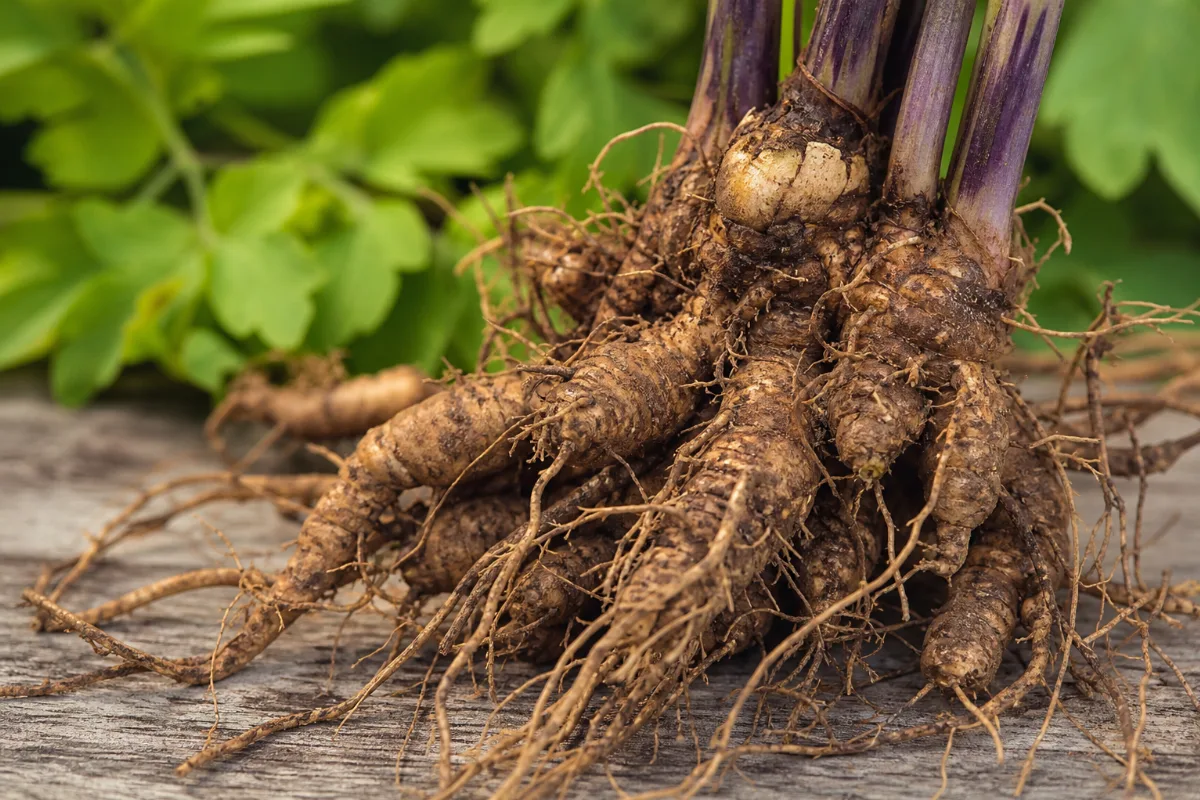
Blue cohosh is a North American woodland plant in the barberry family. Its root and rhizome have been used traditionally to bring on labour and for menstrual complaints. No human trial shows that it works. Case reports link its use near delivery to serious harm in newborns, so pregnancy and breastfeeding are the main reasons to avoid it. It is not black cohosh, which is a different plant.
General information, not medical advice. Last substantive update · Not medically reviewed. A named clinician has not signed off on this page. How this page is made
About Blue Cohosh
Blue cohosh (Caulophyllum thalictroides) is a woodland plant whose root has been used to bring on labour. No trials show benefit, and case reports describe serious harm to newborns. It is not recommended in pregnancy or breastfeeding.
What it is
Blue cohosh is a plant in the barberry family (Berberidaceae). The root and rhizome are the part used. It is a different plant from black cohosh, although both are sold for women's health and sometimes together.
The root contains alkaloids, including a nicotine-like one called N-methylcytisine, and saponins. How much varies a lot between products.
Use in labour and the newborn reports
Midwives have used blue cohosh to bring on labour. The 2008 systematic review found three case reports of harm to newborns: a stroke, a heart attack with heart failure and shock, and multi-organ injury from lack of oxygen. In the best-described case the baby was critically ill for several weeks and recovered.
These are case reports. They do not prove the herb caused the harm and they do not tell us how often it happens. They are still the reason reviewers advise extreme caution.
What lab and animal studies add
In fish embryos a root extract disrupted heart-vessel and facial cartilage development. In a rat-embryo test in the lab, N-methylcytisine caused abnormal development, and taspine was very toxic to the embryos. Saponins disrupted how cells make energy. A test-tube study found the alkaloid part of the root blocks several liver enzymes that break down medicines.
None of this has been shown in people. It is a reason for caution, not proof of harm.
At a glance
Traditional uses history, not proof
- Used by Native Americans and later by midwives to bring on labour.
- Traditionally used for menstrual difficulties and as an aid in childbirth.
- About 64% of US midwives surveyed in a study cited by a 2008 review reported using it as a labour aid.
Studied for research
- Bringing on labour: insufficient evidence; reviews say it should not be recommended
- Menstrual and women's complaints: no human studies
- Womb-stimulating action: lab statements only
Main compounds
- N-methylcytisine, a nicotine-like alkaloid found in all supplements analysed in one review
- Other alkaloids including anagyrine, taspine and magnoflorine
- Saponins such as cauloside A and cauloside C
Common forms
- Dried root and rhizome
- Capsules and tablets
- Liquid extracts and tinctures
- Combination women's or labour formulas
Research links: NCCIH black cohosh page (mentions blue cohosh warnings) · LactMed: Blue Cohosh · 2008 systematic review in pregnancy and lactation (Dugoua) · Research Library · Genes & Biomarkers Library
The plant and its history
- Accepted scientific name
- Caulophyllum thalictroides (L.) Michx.
- Naming authority
- (L.) Michx. (GBIF)
- Synonyms
- Caulophyllum thalictroides var. thalictroides; Leontice thalictrifolium Salisb.; Leontice thalictroides L.
- Common names
- Blue cohosh (English); Papoose root (English); Squawroot (English); Cohosh bleu (French)
- Botanical family
- Berberidaceae (barberry family). Not related to black cohosh, which is in Ranunculaceae.
- Classification
- Plantae > Tracheophyta > Magnoliopsida > Ranunculales > Berberidaceae > Caulophyllum > Caulophyllum thalictroides
- Native range
- Eastern North America (from the introduction of the 2014 genus review as recorded in our existing summary; not re-checked).
- Habitat
- Not described in the sources read.
- What the plant looks like
- Roots: The root and rhizome (underground stem) are the part used.; Stems: Not described in the sources read.; Leaves: Not described in the sources read.; Flowers: Not described in the sources read.; Fruit: Not described in the sources read.
- Cultivation
- Not described in the sources read.
- Harvest and processing
- Supplements are dried root or extracts (methanol extracts were used in lab studies).
- Look-alikes and adulterants
- Name: Black cohosh (Actaea racemosa); Note: Different plant and family; sometimes sold in the same women's formulas. NCCIH says they are different herbs.; Name: Other Caulophyllum species (e.g. C. giganteum, Asian C. robustum); Note: Related species; a web summary says one American Herbal Pharmacopoeia monograph covers C. giganteum as well. NOT verified here.
- Sustainability and conservation
- Not verified.
Traditional use and history history, not clinical proof
| Tradition or era | Documented use | Source |
|---|---|---|
| Native American traditional medicine | Used by Native Americans for medicinal purposes (FDA-authored product analyses) and traditionally for menstrual difficulties and as an aid in childbirth (2003 chemistry paper). Which peoples used it for what is NOT verified here. | p18376582 |
| Modern midwifery | About 64% of US midwives surveyed in the study cited by the 2008 review reported using it to help bring on labour. | p18204101 |
| Regulation | No EMA/HMPC monograph found. The 2008 review said it should not be sold over the counter. It is sold as a US dietary supplement. | s-regulator-search-not-found |
Traditional use shows how a plant was used. It does not show that a supplement works or is safe today.
What is inside, and how it may work
What the plant contains and how those compounds act in cells and animals. Laboratory and animal mechanisms are not proven effects in people.
Main compounds
| Compound | Family | Where it is concentrated | Activity studied | Level of evidence |
|---|---|---|---|---|
| N-methylcytisine PubChem 670971 | quinolizidine (nicotine-like) alkaloid | Root and rhizome | Nicotinic toxicity in the poisoning case; teratogenic in the rat-embryo culture; found in all supplements analysed in one review. 16 10 17 | Laboratory research |
| Anagyrine PubChem 5351589 | quinolizidine alkaloid | Root and rhizome | Described by reviewers as teratogenic in animals; not teratogenic in the rat-embryo test; blocked liver enzymes in vitro. 16 10 11 | Laboratory research |
| Taspine PubChem 215159 | alkaloid | Rhizome | Highly embryotoxic but not teratogenic in the rat-embryo culture. Synthetic taspine derivatives are being studied as drug leads. 10 21 | Laboratory research |
| Magnoflorine PubChem 73337 | aporphine alkaloid | Root and rhizome | Present; activity not covered in the sources read. 10 | Laboratory research |
| Baptifoline PubChem 160543 | quinolizidine alkaloid | Root and rhizome | Present; its acetyl derivative blocked liver enzymes in vitro. 10 11 | Laboratory research |
| Lupanine PubChem 91471 | quinolizidine alkaloid | Root and rhizome | Blocked liver enzymes in vitro. 10 11 | Laboratory research |
| Sparteine PubChem 644020 | quinolizidine alkaloid | Root and rhizome | Present; activity not covered in the sources read. 10 | Laboratory research |
| Cauloside C PubChem 13878151 | triterpene saponin | Root and rhizome | Disrupted cell respiration and mitochondrial membrane integrity in cells. 2 | Laboratory research |
| Cauloside A PubChem 441928 | triterpene saponin | Root and rhizome | Disrupted cell respiration and mitochondrial membrane integrity in cells. 2 | Laboratory research |
Mechanisms, receptors and pathways
| Target or pathway | Gene or receptor | What was found | Level |
|---|---|---|---|
| Mitochondrial membrane and cell respiration | Not applicable | Extract and three saponins first raised then sharply lowered cell respiration by disrupting membrane integrity. Authors propose it as a possible link to organ injury in newborns. 2 | Laboratory research |
| Endothelin-1 signalling in the developing embryo | gata2, ece1, preproendothelin-1 (fish) | Root extract raised these gene signals in fish embryos and disrupted heart-vessel and facial cartilage development. Animal only. 20 | Animal research |
| Nicotinic acetylcholine receptors | Not measured | Symptoms in one poisoning case were consistent with nicotinic toxicity, attributed to methylcytisine. Not tested directly. 17 | Human data |
| Drug-metabolising liver enzymes | CYP2C19, CYP3A4, CYP2D6, CYP1A2 | Alkaloid fraction blocked all four in a test tube; whole extract did not. 11 | Laboratory research |
| Womb muscle (oxytocic effect) | Not specified | Saponins are described as responsible for uterine stimulation; original experiments not read. 7 3 | Laboratory research |
Absorption, metabolism and elimination
- Absorption
- No human blood-level data found.
- Distribution
- Not found.
- Metabolism
- Not found in people. Lab only: alkaloids block several liver enzymes (p19137500).
- Elimination
- Not found. In the one poisoning case, symptoms resolved over 24 hours.
- Bioavailability
- Not established. The genus review covers pharmacokinetics but only the abstract was read.
Isolated compounds versus whole extracts
The alkaloids and saponins behave differently. The whole methanol extract did not block liver enzymes though its alkaloid fraction did. Individual compounds (N-methylcytisine, taspine, saponins) each show toxicity in lab tests, so safety cannot be judged from a single compound. Products vary so much in saponin and alkaloid content that results from one product may not apply to another.
Nutritional composition
A nutrient table is not meaningful: blue cohosh is not a food and no vitamin or mineral content is claimed.
3 not enough evidence
What is Blue Cohosh good for?
The traditional uses and how strong the human evidence is for each. "Insufficient" means there are no good human studies. For blue cohosh the safety questions matter more than any possible benefit.
Benefits, one by one
Each card is a research question, not a promise. Tap a goal to filter. Open a card to see the studies, doses and limits.
Bringing on labour (traditional use)
Not enough evidenceBlue cohosh is best known as a herb some midwives and traditional healers use to start or speed up labour. No controlled trial showing that it works was found. Reviews say it may be harmful and should not be recommended for this. See the safety tab before anything else.
5 studiesNot assessed on this page. Forms used traditionally include root, cap…
Studies, doses and limits
What the trials found
No randomized trial and no cohort study of blue cohosh for labour was found in the sources read. The 2008 systematic review (Dugoua, 7 databases) found only a midwife survey (about 64% of US midwives surveyed reported using it as a labour aid) and three case reports of serious harm to newborns. The 2012 review of natural labour-induction methods (Hall) says evidence for most methods is sparse and that blue cohosh may be harmful and should not be recommended for induction. The 2008 review asks for a proper cohort study of midwives who use it, to learn how safe it is.
Results
No evidence of benefit found. Evidence of possible serious harm to the newborn (case reports).
Effect sizes as reported
None available. No trial reported an effect size.
Why this rating
No controlled human study of benefit exists. The only human evidence is a survey of use and case reports of harm, which cannot show how often harm happens or whether the herb caused it.
Form and dose studied
Not assessed on this page. Forms used traditionally include root, capsules and tinctures; the content of products varies a lot (see the science tab).
Who was studied
Pregnant women near term; this is the group at the centre of the safety concern.
Limits
No trials. Case reports and a survey only. Products and amounts in the case reports are mostly unknown.
Why researchers looked
It has a long traditional use to bring on contractions, and a survey of US midwives found many used it, so reviewers looked at whether it is safe and effective.
Traditional use
Used by Native American peoples and later by midwives. The 2014 genus review and a 2002 lab paper both describe it as traditionally used for menstrual difficulties and as an aid in childbirth.
Proposed mechanism Pharmacological theory
The saponins in the root are thought to stimulate the womb, and one alkaloid and saponin group is toxic to heart muscle in animals. These are lab and animal ideas, not shown to explain any benefit in women.
A proposed mechanism does not show that the effect happens in people.
Case reports link its use near delivery to newborn stroke, heart attack with heart failure and shock, and multi-organ injury from lack of oxygen. A 2008 review advised extreme caution and no over-the-counter sale. Anyone thinking of using it for labour should talk to a doctor or midwife first.
Menstrual and other women's complaints (traditional)
Not enough evidenceBlue cohosh has been used for painful or irregular periods and other women's complaints. No human study of these uses was found, so nothing can be said about whether it helps.
2 studiesNot assessed.
Studies, doses and limits
What the trials found
No human trial, cohort or case series on menstrual or fertility effects of blue cohosh was found. The graph summary in our database rates fertility, hormone balance and women's wellness as 'insufficient'.
Results
No human results exist.
Effect sizes as reported
None.
Why this rating
No human studies at all.
Form and dose studied
Not assessed.
Who was studied
Not studied.
Limits
Traditional use only. Pregnancy risks (see safety) make it unsuitable for anyone who could be pregnant.
Why researchers looked
Traditional use for menstrual difficulties is stated in lab-chemistry papers as the reason the plant has been studied.
Traditional use
A 2003 chemistry paper says the roots are traditionally used for menstrual difficulties and as an aid in childbirth. The 2014 genus review describes a long history of use in Native American medicine.
Proposed mechanism Pharmacological theory
None demonstrated for periods. The saponins are described as possibly stimulating the womb; this is lab-based and unproven.
A proposed mechanism does not show that the effect happens in people.
Do not use if pregnant or trying to conceive without medical advice; see the safety tab.
Womb-stimulating (oxytocic) action
Not enough evidenceLab papers describe the saponins in blue cohosh as stimulating the womb. This explains the traditional use but also the pregnancy risk. It has not been shown in people.
3 studiesSaponin intake differed more than 100-fold between products in one an…
Studies, doses and limits
What the trials found
None. No human measurement of womb contractions after blue cohosh was found.
Results
Lab-based statement only.
Effect sizes as reported
None.
Why this rating
Lab and background statements only; the original experiments were not read.
Form and dose studied
Saponin intake differed more than 100-fold between products in one analysis, so any effect would depend heavily on the product.
Who was studied
Not studied.
Limits
Background claims in chemistry papers; not a tested outcome.
Why researchers looked
It is the proposed reason blue cohosh was used to start labour or bring on a period.
Traditional use
See the labour entry.
Proposed mechanism Laboratory research
Saponins are 'considered responsible' for the womb-stimulating effect (2003 chemistry paper); LactMed says the saponin caulosaponin constricts coronary vessels and may have oxytocic activity. The 2008 review cites lab evidence of oxytocic effects. The sources read give these as lab statements; we did not read the original lab experiments.
A proposed mechanism does not show that the effect happens in people.
The same action is the reason for the pregnancy warnings.
Connections to the rest of health
How Blue Cohosh connects to the rest of our health knowledge graph. Every link says what kind of connection it is. A safety link (for example to the liver) is a warning, not a benefit. A study that merely mentions a topic never creates a benefit link.
Explore every connection: goals, body systems, organs, symptoms, genes
A. Wellness goals
| Connected to | Kind of connection | Evidence status | Context | Studies |
|---|---|---|---|---|
| Womens Wellness | Traditional use | Not enough evidence | Bringing on labour (traditional use): Blue cohosh is best known as a herb some midwives and traditional healers use to start or speed up labour. No controlled trial showing that it works was found. Reviews say it may be harmful and should not be recommended for this. See the safety tab before anything else. Menstrual and other women's complaints (traditional): Blue cohosh has been used for painful or irregular periods and other women's complaints. No human study of these uses was found, so nothing can be said about whether it helps. | 3 8 9 5 13 7 21 |
| Hormone Balance | Traditional use | Not enough evidence | Menstrual and other women's complaints (traditional): Blue cohosh has been used for painful or irregular periods and other women's complaints. No human study of these uses was found, so nothing can be said about whether it helps. | 7 21 |
| Womens Wellness | Preliminary mechanism | Not enough evidence | Womb-stimulating (oxytocic) action: Lab papers describe the saponins in blue cohosh as stimulating the womb. This explains the traditional use but also the pregnancy risk. It has not been shown in people. | 7 3 14 |
B. Body systems
| Connected to | Kind of connection | Evidence status | Context | Studies |
|---|---|---|---|---|
| Reproductive system | Adverse effect or risk | Low certainty | Pregnancy and newborn harm in case reports; lab embryo toxicity. A safety relationship, not a benefit. Preparation or compound: Root and rhizome |
3 10 |
| Nervous system | Adverse effect or risk | Very low certainty | Nicotine-like poisoning in one case. Preparation or compound: N-methylcytisine |
17 16 |
| Reproductive System | Biological association | Not enough evidence | Studied for: Bringing on labour (traditional use) Studied for: Menstrual and other women's complaints (traditional) | 3 8 9 5 13 7 21 14 |
C. Body parts and organs
J. Genes, receptors and enzymes
K. Biological pathways
| Connected to | Kind of connection | Evidence status | Context | Studies |
|---|---|---|---|---|
| Mitochondrial respiration | Preliminary mechanism | In vitro | Disrupted by extract and saponins in cells. | 2 |
L. Active compounds
| Connected to | Kind of connection | Evidence status | Context | Studies |
|---|---|---|---|---|
| N-methylcytisine | Biological association | In vitro | Nicotinic toxicity in the poisoning case; teratogenic in the rat-embryo culture; found in all supplements analysed in one review. Preparation or compound: Root and rhizome |
16 10 17 |
| Anagyrine | Biological association | In vitro | Described by reviewers as teratogenic in animals; not teratogenic in the rat-embryo test; blocked liver enzymes in vitro. Preparation or compound: Root and rhizome |
16 10 11 |
| Taspine | Biological association | In vitro | Highly embryotoxic but not teratogenic in the rat-embryo culture. Synthetic taspine derivatives are being studied as drug leads. Preparation or compound: Rhizome |
10 21 |
| Magnoflorine | Biological association | In vitro | Present; activity not covered in the sources read. Preparation or compound: Root and rhizome |
10 |
| Baptifoline | Biological association | In vitro | Present; its acetyl derivative blocked liver enzymes in vitro. Preparation or compound: Root and rhizome |
10 11 |
| Lupanine | Biological association | In vitro | Blocked liver enzymes in vitro. Preparation or compound: Root and rhizome |
10 11 |
| Sparteine | Biological association | In vitro | Present; activity not covered in the sources read. Preparation or compound: Root and rhizome |
10 |
| Cauloside C | Biological association | In vitro | Disrupted cell respiration and mitochondrial membrane integrity in cells. Preparation or compound: Root and rhizome |
2 |
| Cauloside A | Biological association | In vitro | Disrupted cell respiration and mitochondrial membrane integrity in cells. Preparation or compound: Root and rhizome |
2 |
Each connection is stored with the ingredient, the connected record, the kind of connection, the evidence status, the supporting studies, the preparation or compound involved, and a review date (last reviewed October 25, 2026).
The evidence
The research centre for Blue Cohosh. Every record here was checked against PubMed or the publisher's page; we never list a study we have not verified.
Evidence by outcome
Bars show how many studies we found for each outcome, not how well it works. People are added up across trials only (reviews are not added, to avoid double counting).
How we rate evidence
High certainty
Several well-run trials or reviews agree; further research is unlikely to change the picture much.
Moderate certainty
Good trials point the same way, but some doubt remains.
Low certainty
Small, short or inconsistent trials. The finding could change with better research.
Very low certainty
Very little or very weak human data. Treat as a possibility only.
Mixed findings
Trials or reviews disagree with each other.
Not enough evidence
Not enough human research to say either way.
Evidence against
Good research found no benefit, or found harm.
We take the reviewers' own risk-of-bias and GRADE statements where they exist, and otherwise judge from study size, design, consistency, directness and whether a product matches what is sold. Many publications do not make evidence high. Method note: We searched PubMed, LactMed, NCCIH and regulator sites for blue cohosh, read the abstracts of every study cited, and marked anything not read as unverified. This is a lean review, not an exhaustive one.
Study library: every study we checked 21
| Study | Design | People | Product, dose, length | Result |
|---|---|---|---|---|
| Brown 2018 Heart Toxicity Related to Herbs and Dietary Supplements: Online Table of Case Reports. Part 4 of 5. J Diet Suppl · PMID 28981338 · DOI |
Case report compilation |
PubMed case reports of herbs/supplements and heart problems (1966 to April 2016) | Herbs and dietary supplements various |
Heart-related problems were associated with approximately seven herbs including blue cohosh (Caulophyllum thalictroides). The table covers case reports only. Blue cohosh is listed among about seven herbs Methods, limits and fundingOutcomes: Heart toxicity case reports Limitations: Compilation of case reports; excluded combination products and confounded cases; not controlled evidence. Read: abstract |
| Datta 2014 Toxins in botanical dietary supplements: blue cohosh components disrupt cellular respiration and mitochondrial membrane potential. J Nat Prod · PMID 24328138 · DOI |
Laboratory research in-vitro |
Cell respiration assays; 352 plant extracts screened | Blue cohosh methanol extract and saponins cauloside A, saponin PE, cauloside C root |
Among 352 extracts only blue cohosh (among those named) showed the mitochondria-damaging activity highlighted. The extract and three saponins first raised and then sharply lowered cell respiration within minutes by disrupting membrane integrity. The authors propose this as a possible explanation for the organ damage in newborns. Possible mechanism, not proof Methods, limits and fundingOutcomes: Cell energy use (mitochondria) Limitations: Cells in a dish; concentrations not compared with what a person could take. Funding and conflicts: Authors declare no competing financial interest Read: abstract |
| Dugoua 2008 Safety and efficacy of blue cohosh (Caulophyllum thalictroides) during pregnancy and lactation. Can J Clin Pharmacol · PMID 18204101 |
Systematic review |
Pregnant and breastfeeding women (published reports on blue cohosh) | Blue cohosh, various forms root and rhizome |
About 64% of US midwives surveyed reported using blue cohosh to help bring on labour. Three case reports link use at delivery to (1) perinatal stroke, (2) acute heart attack with profound heart failure and shock, (3) severe multi-organ injury from lack of oxygen. One case report suggests it can end a pregnancy. Lab evidence suggests possible harm to embryos and a uterine-stimulating effect. Safety in breastfeeding is unknown. Conclusion: extreme caution in pregnancy, medical supervision only, and it should not be sold over the counter. No controlled trial found; conclusions rest on case reports, one survey and lab data Methods, limits and fundingOutcomes: Use, safety and pharmacology in pregnancy and lactation Limitations: Seven databases searched; full text not read (abstract only); the survey is of midwives, not a safety study. Case reports cannot prove the herb caused the harm. Read: abstract |
| Feng 2023 Toxicities of herbal abortifacients. Am J Emerg Med · PMID 36924751 · DOI |
Narrative review |
People using herbal abortifacients | Herbal abortifacients including blue cohosh various |
The review names pennyroyal, blue cohosh, rue and quinine as common herbal abortifacients with significant illness and death risks, and advises attention to liver, heart, kidney and blood toxicity after exposure. Narrative review; no blue cohosh specific rates Methods, limits and fundingOutcomes: Toxicities of herbal abortifacients Limitations: Narrative review of a MEDLINE and HOLLIS search; the abstract does not give blue cohosh specific details. Funding and conflicts: No competing interests declared (authors have "no other conflicts") Read: abstract |
| Finkel 2004 Blue cohosh and perinatal stroke. N Engl J Med · PMID 15254294 · DOI |
Case report |
Perinatal stroke after blue cohosh (letter) | Blue cohosh unspecified |
A 2004 NEJM letter titled "Blue cohosh and perinatal stroke" with two follow-up letters (PMIDs 15559963, 15548789). PubMed holds no abstract, so its contents were not read; it is listed only because the 2008 review cites a perinatal stroke report. Not read Methods, limits and fundingOutcomes: Newborn stroke Limitations: No abstract available; NOT verified beyond title. Read: summary-only |
| GBIF Secretariat 2026 GBIF backbone: Caulophyllum thalictroides (L.) Michx. GBIF species API (usageKey 3033920) · Source |
Database record |
Blue cohosh unspecified |
Accepted species, family Berberidaceae, order Ranunculales. Synonyms returned: C. thalictroides var. thalictroides, Leontice thalictrifolium Salisb., Leontice thalictroides L. Methods, limits and fundingLimitations: Taxonomy record only. Read: full-text | |
| Ganzera 2003 Determination of saponins and alkaloids in Caulophyllum thalictroides (blue cohosh) by high-performance liquid chromatography and evaporative light scattering detection. Phytochem Anal · PMID 12597249 · DOI |
Analytical in-vitro |
Blue cohosh plant samples and commercial products | Products analysed by HPLC root |
Large differences were found between samples: daily intake of total saponins differed by more than 100-fold between products, while alkaloid content was more uniform. The authors state that the saponins are considered responsible for uterine stimulant effects and that the roots contain teratogenic alkaloids (background statement). 100-fold spread in saponin intake Methods, limits and fundingOutcomes: Saponin and alkaloid content Limitations: Chemistry study; background claims are not tested in it. Read: abstract |
| Hall 2012 Complementary and alternative medicine for induction of labour. Women Birth · PMID 21524953 · DOI |
Narrative review |
Women considering complementary methods to bring on labour | Several methods including blue cohosh various |
Most methods rest on traditional knowledge, and clinical evidence is sparse. The review says blue cohosh may be harmful during pregnancy and should not be recommended for induction. Evidence "sparse"; no firm conclusions on effectiveness Methods, limits and fundingOutcomes: Evidence for natural labour-induction methods Limitations: Literature from 2000 on; narrative review; abstract only. Read: abstract |
| Jones 1998 Profound neonatal congestive heart failure caused by maternal consumption of blue cohosh herbal medication. J Pediatr · PMID 9544922 · DOI |
Case report |
1 One newborn whose mother took blue cohosh to bring on contractions |
Blue cohosh herbal medication taken by the mother unspecified |
The newborn had a heart attack (acute myocardial infarction) with profound heart failure and shock. Other causes of heart attack were carefully excluded. The baby stayed critically ill for several weeks and recovered. The authors note blue cohosh contains vasoactive glycosides and an alkaloid known to be toxic to the heart muscle of laboratory animals, and call it the first described case of harm to a human fetus from maternal blue cohosh use. Single case Methods, limits and fundingOutcomes: Newborn heart and circulation Limitations: One case; product and amount not given in the abstract; cause and effect cannot be proven from one case. Read: abstract |
| Kennelly 1999 Detecting potential teratogenic alkaloids from blue cohosh rhizomes using an in vitro rat embryo culture. J Nat Prod · PMID 10543898 · DOI |
Laboratory research in-vitro |
Rat embryo culture (test for possible teratogens) | Alkaloids isolated from blue cohosh rhizomes rhizome |
Ten alkaloids were identified in the extract including taspine, anagyrine, N-methylcytisine, magnoflorine, baptifoline, lupanine and sparteine. N-methylcytisine showed teratogenic activity in rat embryos grown in the lab. Thalictroidine, anagyrine and alpha-isolupanine were not teratogenic at the concentrations tested. Taspine was highly toxic to the embryos (embryotoxic) but not teratogenic. N-methylcytisine teratogenic in vitro; taspine embryotoxic; anagyrine not teratogenic in this test Methods, limits and fundingOutcomes: Teratogenic or embryotoxic activity Limitations: Embryos in a dish; not a test in pregnant animals or women. Funding and conflicts: Authors at US FDA (affiliation) Read: abstract |
| Madgula 2009 Alkaloids and saponins as cytochrome P450 inhibitors from blue cohosh (Caulophyllum thalictroides) in an in vitro assay. Planta Med · PMID 19137500 · DOI |
Laboratory research in-vitro |
Liver enzyme (CYP450) tests in a test tube | Blue cohosh root methanol extract, alkaloid fraction, isolated alkaloids and saponins root and rhizome |
The whole methanol extract had no effect. The alkaloid fraction strongly blocked CYP2C19, 3A4, 2D6 and 1A2 (over 80% at 100 micrograms per mL, IC50 2 to 20 micrograms per mL). Among isolated compounds, caulophyllumine B, O-acetylbaptifolin, anagyrine and lupanine blocked these enzymes to different extents; N-methylcytisine only weakly blocked CYP3A4. Saponins caulosides C and D blocked CYP3A4 only at the top concentration. Lab inhibition only Methods, limits and fundingOutcomes: Inhibition of CYP2C19, 3A4, 2D6, 1A2 Limitations: Test tube only; the whole extract showed no effect, so the real-life meaning is unknown. Read: abstract |
| NCBI 2026 NCBI Taxonomy: Caulophyllum thalictroides (taxid 46963) NCBI Datasets taxonomy API · Source |
Database record |
Blue cohosh unspecified |
Species-level record with common names papooseroot and blue cohosh. Methods, limits and fundingLimitations: Taxonomy record only. Read: full-text | |
| National Center for Complementary and Integrative Health 2024 NCCIH, Black Cohosh (mentions blue cohosh) NCCIH website (updated November 2024) · Source |
Authoritative guidance |
Blue cohosh unspecified |
The black cohosh page says black and blue cohosh are different herbs, that blue cohosh may cause adverse effects such as high blood pressure, high blood sugar and chest pain, and that its use to induce labour has been associated with life-threatening complications. NCCIH has no page of its own for blue cohosh (/health/blue-cohosh returned 404; blue cohosh is not on its Herbs at a Glance list). Methods, limits and fundingLimitations: Read through a page-reading tool, so wording is a paraphrase; the infant-seizure part of the sentence was cut off and is not repeated here. Read: summary-only | |
| National Institute of Child Health and Human Development / US 2024 Blue Cohosh (Drugs and Lactation Database, LactMed) LactMed (PubMed record 30000839, updated 2024-12-15) · Source |
Authoritative guidance |
Blue cohosh unspecified |
LactMed says no data exist on safety and efficacy in nursing mothers or infants, that blue cohosh can cause severe gut and heart-circulation toxicity including in newborns whose mothers used it to start labour, and that most sources recommend strongly against use while breastfeeding. It describes the root as containing a nicotine-like compound (spelled N-methylcytosine in the entry) and caulosaponin, which constricts coronary vessels and may be oxytocic. Methods, limits and fundingLimitations: Summary text read through the PubMed record of the entry; the full entry page was not opened. Read: abstract | |
| Quiroz-Delfi 2024 Non-targeted chemical analysis of consumer botanical products labeled as blue cohosh (Caulophyllum thalictroides), goldenseal (Hydrastis canadensis), or yohimbe bark (Pausinystalia yohimbe) by NMR and MS. Anal Bioanal Chem · PMID 37910202 · DOI |
Analytical in-vitro |
Consumer products labelled blue cohosh, goldenseal or yohimbe bark | Commercial products analysed by NMR and mass spectrometry unspecified |
In each of the three botanicals several products were outliers. Checking known constituents sometimes supported and sometimes cast doubt on a product being what it said. Outlier products found; counts not given in the abstract Methods, limits and fundingOutcomes: Product similarity and authenticity Limitations: Abstract only; number of blue cohosh products not stated in the abstract. Funding and conflicts: Authors declare nothing to declare (US NIH) Read: abstract |
| Rader 2013 Primary constituents of blue cohosh: quantification in dietary supplements and potential for toxicity. Anal Bioanal Chem · PMID 23420136 · DOI |
Narrative review in-vitro |
Blue cohosh dietary supplements (chemistry) | Blue cohosh root and rhizome supplements root and rhizome |
Alkaloid and saponin amounts vary substantially between supplements. The nicotinic alkaloid N-methylcytisine, called a potent toxicant, was found in all supplements analysed. The alkaloid anagyrine, described as teratogenic, was found in some but not all. Content varies widely; N-methylcytisine in all supplements analysed Methods, limits and fundingOutcomes: Alkaloid and saponin content and toxicity potential Limitations: Review of analytical studies; the abstract gives no quantities. The "teratogenic" description of anagyrine is the review authors' wording (see Kennelly 1999 for a rat-embryo test that did not show it). Funding and conflicts: Authors at US FDA Read: abstract |
| Rao 2002 Nicotinic toxicity from tincture of blue cohosh (Caulophyllum thalictroides) used as an abortifacient. Vet Hum Toxicol · PMID 12136970 |
Case report |
1 21-year-old woman who used a blue cohosh tincture to try to end a pregnancy |
Blue cohosh tincture root |
She developed fast heartbeat, sweating, belly pain, vomiting, muscle weakness and muscle twitching (fasciculations), a picture the authors call nicotinic toxicity, probably from methylcytisine. Symptoms resolved over 24 hours and she went home. Single case, recovered in 24 hours Methods, limits and fundingOutcomes: Symptoms and recovery Limitations: One case; amount taken not stated in the abstract; the authors say the cause is "probable". Read: abstract |
| Satchithanandam 2008 Alkaloids and saponins in dietary supplements of blue cohosh (Caulophyllum thalictroides). J AOAC Int · PMID 18376582 |
Analytical in-vitro |
Commercial blue cohosh supplements | Dietary supplements (root, liquid extract) analysed by HPLC root and rhizome |
Using label doses, daily intake of alkaloids ranged from under 1 to 75 mg and of saponins from about 9 to 420 mg depending on the product form. The authors say recent studies point to specific alkaloids causing birth defects and neonatal heart failure and saponins possibly causing uterine stimulation. Wide spread in what a label dose delivers Methods, limits and fundingOutcomes: Alkaloid and saponin content Limitations: Chemistry survey; not a safety study; the opening statements about harm are the authors' background, not new findings. Funding and conflicts: Authors at US FDA Read: abstract |
| Search record 2026 EMA/HMPC and LiverTox searches for blue cohosh EMA, NCBI Bookshelf · Source |
Search record |
Blue cohosh unspecified |
A web search found no EMA/HMPC herbal monograph or assessment report for Caulophyllum. The EMA site search could not be read (HTTP 401). A Bookshelf search for LiverTox with blue cohosh returned nothing. Both are recorded as not found, not as proof that none exists. Methods, limits and fundingLimitations: Absence of a result is not proof of absence. Read: summary-only | |
| Wu 2010 Teratogenic effects of blue cohosh (Caulophyllum thalictroides) in Japanese medaka (Oryzias latipes) are probably mediated through GATA2/EDN1 signaling pathway. Chem Res Toxicol · PMID 20707411 · DOI |
Animal research animal |
Japanese medaka fish embryos | Methanol extract of blue cohosh root root |
The extract disrupted heart-vessel and facial cartilage development in a dose- and stage-specific way. Embryos exposed once the circulation had started were more affected. Gene changes (gata2, ece1, preproendothelin-1) were seen at 10 micrograms per mL for 48 hours; the authors suggest a GATA2-endothelin-1 pathway. Embryo defects in fish at lab concentrations Methods, limits and fundingOutcomes: Embryo death, hatching, heart-vessel and facial cartilage defects Limitations: Fish embryos only; not shown in people. Read: abstract |
| Xia 2014 Genus caulophyllum: an overview of chemistry and bioactivity. Evid Based Complement Alternat Med · PMID 24876877 · DOI |
Narrative review in-vitro |
Genus Caulophyllum (lab and chemistry literature) | Alkaloids and saponins from Caulophyllum root and rhizome |
Covers the alkaloids and saponins of the genus, pharmacological properties, mechanisms and pharmacokinetics, and synthetic derivatives of the alkaloid taspine made as possible drug leads. Aimed at drug developers, not at safety or human use. Reference for chemistry only Methods, limits and fundingOutcomes: Chemistry, pharmacology, mechanisms Limitations: Abstract only; covers the whole genus (including Asian species) not only C. thalictroides. Read: abstract |
What we do not know yet
- What the evidence supports: that blue cohosh has been used for labour and that case reports describe serious newborn harm.
- What is uncertain: whether blue cohosh caused those harms, how often they happen, and whether lab embryo findings apply to people.
- What is missing: any controlled trial, any prospective study of midwife use, human blood pressure or interaction data, and an EMA or NCCIH monograph.
- Case reports of stroke and organ injury were read only through a review abstract; details are unverified.
How new research is added
New studies are found by a saved PubMed search and are placed in a review queue. A person checks them before they are added.
Lab markers
What changed in blood or saliva tests during trials. A changed number is not the same as feeling or being healthier, and we give no "normal ranges".
Safety
What studies and official sources say about side effects, medicines and who should check first. Each point shows what kind of evidence it comes from.
Main points to know 8
- Do not use in pregnancy: case reports link blue cohosh taken near delivery to serious harm in newborns. The 2008 systematic review found three case reports: a newborn stroke, a newborn heart attack with profound heart failure and shock, and severe multi-organ injury from lack of oxygen. The review advised extreme caution in pregnancy, medical supervision only, and no over-the-counter sale. These are case reports, so cause and effect is not proven and the number of affected babies is unknown. Case report 3 9 5
- The best-described case: a newborn heart attack, heart failure and shock. In the 1998 report the mother took blue cohosh to bring on contractions. Her baby had an acute heart attack with profound heart failure and shock and was critically ill for several weeks before recovering. Other causes of heart attack were carefully excluded. Case report 9
- Used to end pregnancy, it caused nicotine-like poisoning in one reported woman. A 21-year-old woman who used a blue cohosh tincture to try to end a pregnancy developed fast heartbeat, sweating, belly pain, vomiting, muscle weakness and muscle twitching. She recovered in 24 hours. A 2023 review lists blue cohosh among herbal abortifacients with significant illness and death risks. Case report 17 4
- Possible birth defects: lab and animal evidence only. N-methylcytisine caused abnormal development in rat embryos grown in the lab; taspine was highly toxic to the embryos but did not cause birth defects in that test. A root extract disrupted heart-vessel and facial cartilage development in fish embryos. The alkaloid anagyrine is described by reviewers as teratogenic (causing birth defects) in animals, but it was not teratogenic in the rat-embryo test. None of this has been shown in human pregnancies. Laboratory research 10 20 16 3
- Heart and blood pressure: case reports and a regulator warning, no human measurements. Blue cohosh is among the herbs in a compilation of heart-toxicity case reports. NCCIH says blue cohosh may cause high blood pressure, high blood sugar and chest pain. No controlled human study measuring blood pressure or heart effects was found. Lab work shows root saponins disturb how cells make energy, which the authors suggest may help explain the newborn organ damage. Case report 1 13 2 9
- Nicotine-like effects (nicotinic receptors). N-methylcytisine, a nicotine-like alkaloid, was found in every blue cohosh supplement analysed in one review and is described as a potent toxicant. The one poisoning report matched nicotinic toxicity. Case report 16 17
- Do not use while breastfeeding. LactMed: no safety data exist, severe gut and heart-circulation toxicity can occur including in newborns of mothers who used it for labour, and most sources recommend strongly against use in breastfeeding. Authoritative guidance 14
- Products vary a lot and may not be what the label says. Alkaloid intake ranged from under 1 to 75 mg a day and saponin intake from about 9 to 420 mg a day across label doses; saponins differed more than 100-fold between products. A 2024 NMR and mass spectrometry study found outlier products, some casting doubt on authenticity. Analytical 18 7 15
Side effects 5
| Effect | How often | Severity and recovery | Evidence |
|---|---|---|---|
| Newborn stroke, heart attack, heart failure, shock or multi-organ injury after maternal use near delivery Three case reports in the 2008 review. Frequency unknown. Cause not proven. | Not established | severe One reported baby recovered after several weeks; outcomes in the other reports were not read in detail | Case report 3 9 |
| Nicotine-like poisoning: fast heartbeat, sweating, belly pain, vomiting, muscle weakness and twitching One woman using a tincture to try to end a pregnancy. | Not established | moderate Resolved over 24 hours in the one reported case | Case report 17 |
| High blood pressure, high blood sugar, chest pain NCCIH's wording on its black cohosh page; the underlying studies were not found, so this is listed as guidance only. | Not established | moderate Not stated | Authoritative guidance 13 |
| Severe stomach, gut and heart-circulation toxicity LactMed summary statement. | Not established | severe Not stated | Authoritative guidance 14 |
| Other heart problems in case-report compilation Blue cohosh is one of about seven herbs in the table. | Not established | severe Not stated | Case report 1 |
Liver
No liver injury case reports specific to blue cohosh were found in the sources read. NIH LiverTox has no blue cohosh entry that could be found (search returned nothing). Lab work suggests blue cohosh saponins disrupt cell energy production, an idea sometimes linked to organ injury, but that is a lab finding. The 2023 abortifacient review says liver, heart, kidney and blood effects should be considered after exposure to herbal abortifacients, not specifically blue cohosh. 2 4 19
How often. No frequency available. Do not read the absence of liver reports as proof of liver safety.
Monitoring. No guideline found.
This is a safety connection. It is not evidence that Blue Cohosh supports liver health.
Medicines and supplements 5
| With | Why it matters | Importance | Evidence | What to do |
|---|---|---|---|---|
| Medicines broken down by liver enzymes CYP3A4, CYP2D6, CYP2C19 and CYP1A2 (many prescription drugs) prescription | In a test tube, the alkaloid fraction of the root blocked these four enzymes strongly. The whole root extract did not. N-methylcytisine only weakly blocked CYP3A4. | Unknown. Not tested in people. | Laboratory research Very low certainty 11 | Tell your pharmacist or doctor before combining with any prescription medicine, especially ones with a narrow safety margin. |
| Oxytocin, prostaglandins or other labour-inducing or uterine-acting medicines prescription | Both act on the womb, so an added effect is plausible. No study tested this. | Unknown | Pharmacological theory Not enough evidence 3 | Do not take blue cohosh near delivery unless the midwife or doctor in charge knows. |
| Nicotine products and other nicotinic drugs drug | N-methylcytisine is a nicotine-like alkaloid; the poisoning case matched nicotinic toxicity. No interaction study was found. | Unknown | Pharmacological theory Not enough evidence 16 17 | Ask a doctor or pharmacist. |
| Blood pressure, heart, or diabetes medicines prescription | NCCIH lists high blood pressure and high blood sugar as possible effects of blue cohosh; no interaction study exists. | Unknown | Authoritative guidance Not enough evidence 13 | Do not use if you have heart disease, high blood pressure or diabetes without medical advice. |
| Black cohosh (a different plant often sold in the same women's formulas) herb | Different plants with different concerns. Check labels because mixed formulas exist. | Not studied | Traditional use Not enough evidence 13 | Check the botanical name on the label: Caulophyllum thalictroides is blue cohosh, Actaea racemosa is black cohosh. |
Who should check first 7
| Situation | Advice | Evidence |
|---|---|---|
| Pregnancy | Avoid. Case reports link use near delivery to newborn harm, and lab studies suggest possible embryo harm. A 2008 review advised extreme caution and supervision by a medical professional only. | Case report 3 9 10 |
| Labour or trying to bring on labour at home | Do not use for this. Reviews say it may be harmful and should not be recommended for induction; no trial shows it works. | Narrative review 8 3 |
| Breastfeeding | Avoid. No safety data, and LactMed says most sources recommend strongly against it. | Authoritative guidance 14 |
| Heart disease, high blood pressure, chest pain | Avoid unless a doctor agrees. Case reports and NCCIH guidance point to heart and blood pressure effects. | Case report 1 13 |
| Diabetes or blood sugar problems | NCCIH lists high blood sugar as a possible effect; ask a doctor first. | Authoritative guidance 13 |
| Children | No data on children were found in the sources read. Avoid. | Insufficient data |
| Surgery | No source on this was found; tell the surgical team about any herb you take. | Insufficient data |
Overdose, product quality and regulators
Summary. Poisoning is documented in one woman who took a tincture (nicotine-like symptoms, recovered in 24 hours). Newborn organ injury is documented in case reports after maternal use. The root contains N-methylcytisine, other alkaloids and saponins.
Animal. The 1998 case report says the plant contains vasoactive glycosides and an alkaloid toxic to heart muscle in laboratory animals (details of the animal studies not read). Fish embryos exposed to a root extract had heart-vessel and facial cartilage defects.
Human doses studied. No human trial exists, so no studied dose.
High dose or long term signals. Not studied. Label doses delivered anywhere from under 1 to 75 mg alkaloids a day depending on the product.
Overdose response. The one poisoning case recovered within 24 hours. A poison centre or emergency care is the right response to suspected poisoning.
Genotoxicity. Not found in the sources read.
Toxic plant parts. The root and rhizome are the part used and the part that contains the alkaloids and saponins discussed. Toxicity of other plant parts (leaves, seeds, berries) is not covered in the sources read.
Product content varies widely and some products may not be authentic.
Alkaloid and saponin content. Label doses delivered under 1 to 75 mg of alkaloids and about 9 to 420 mg of saponins a day depending on form (FDA-authored analysis). A second analysis found a more than 100-fold spread in saponin intake between products. 18 7
Authenticity. A 2024 NMR and mass spectrometry analysis found outlier products among those labelled blue cohosh; in some cases the data supported or refuted that the product was authentic. Counts are not in the abstract. 15
Mix-ups with black cohosh. Black cohosh (Actaea racemosa) is a different plant in a different family, and NCCIH says they are different herbs. Some women's formulas contain both. 13 6
| Body | Action | Date |
|---|---|---|
| NCCIH (US National Institutes of Health) (United States) | No page of its own for blue cohosh; not in Herbs at a Glance. Its black cohosh page warns that blue cohosh may cause high blood pressure, high blood sugar and chest pain, and that its use to induce labour has been associated with life-threatening complications. source | 2024-11 |
| LactMed (US National Library of Medicine) (United States) | Most sources recommend strongly against use while breastfeeding; no safety data in nursing mothers or infants. source | 2024-12-15 |
| US FDA (United States) | A 2010 paper says the safety and effectiveness of blue cohosh has not been evaluated by the FDA. It is sold as a dietary supplement. Two FDA-affiliated analyses of products are cited in this profile. source | 2010 |
When to get medical help
- Pregnant and have taken blue cohosh: tell your midwife or doctor right away.
- Newborn that is pale, limp, breathing fast, not feeding or having seizures after the mother used blue cohosh: emergency care at once and tell the team about the herb.
- Fast heartbeat, sweating, vomiting, muscle twitching or weakness after taking it: call a poison centre or emergency services.
- Chest pain, severe headache or very high blood pressure readings: emergency care.
Stop the supplement and contact a clinician or emergency service. In the US, Poison Control is 1-800-222-1222.
General information only, not medical advice. Ask a clinician or pharmacist before use, especially with medicines, in pregnancy or with a health condition. See the Natural Remedy Safety guide.
Frequently asked questions
Does blue cohosh bring on labour?
Is blue cohosh safe in pregnancy?
What happened in the newborn heart attack report?
A baby whose mother took blue cohosh to promote contractions had a heart attack with profound heart failure and shock. Other causes were carefully excluded. The baby was critically ill for several weeks and recovered.
Can blue cohosh cause a miscarriage?
Could it cause birth defects?
Is it safe while breastfeeding?
No. LactMed says there are no safety data and that most sources recommend strongly against use while breastfeeding.
Does blue cohosh affect blood pressure or the heart?
What is the nicotine-like effect?
Does it interact with medicines?
Only a test-tube study exists: the alkaloid part of the root blocked four liver enzymes involved in processing many medicines, though the whole extract did not. Whether this happens in people is unknown. Tell your pharmacist or doctor about any herb you take.
Is blue cohosh the same as black cohosh?
Are blue cohosh products reliable?
Explore by health goal
Editorial transparency
- Written by
- AlternativeMed editorial team. Research compiled with AI assistance, then checked against the original sources.
- Medical review
- None. This page has not been reviewed by a physician or pharmacist.
- First published
- 2026-10-25
- Last substantive update
- 2026-10-25
- How we research
- We searched PubMed, LactMed, NCCIH and regulator sites for blue cohosh, read the abstracts of every study cited, and marked anything not read as unverified. This is a lean review, not an exhaustive one.
- How we rate evidence
- See "How we rate evidence" in the Evidence tab.
- Independence
- No product is promoted on this page. No affiliate links are shown.
Sources 21
Each source was opened and checked. Where we read only the abstract, it says so. The small numbers in the text point here.
- Brown AC. Heart Toxicity Related to Herbs and Dietary Supplements: Online Table of Case Reports. Part 4 of 5.. J Diet Suppl. 2018. PMID 28981338. DOI 10.1080/19390211.2017.1356418. (abstract)
- Datta S, Mahdi F, Ali Z et al.. Toxins in botanical dietary supplements: blue cohosh components disrupt cellular respiration and mitochondrial membrane potential.. J Nat Prod. 2014. PMID 24328138. DOI 10.1021/np400758t. (abstract)
- Dugoua JJ, Perri D, Seely D et al.. Safety and efficacy of blue cohosh (Caulophyllum thalictroides) during pregnancy and lactation.. Can J Clin Pharmacol. 2008. PMID 18204101. (abstract)
- Feng C, Fay KE, Burns MM. Toxicities of herbal abortifacients.. Am J Emerg Med. 2023. PMID 36924751. DOI 10.1016/j.ajem.2023.03.005. (abstract)
- Finkel RS, Zarlengo KM. Blue cohosh and perinatal stroke.. N Engl J Med. 2004. PMID 15254294. DOI 10.1056/NEJM200407153510323. (summary-only)
- GBIF Secretariat. GBIF backbone: Caulophyllum thalictroides (L.) Michx.. GBIF species API (usageKey 3033920). 2026. (full-text)
- Ganzera M, Dharmaratne HR, Nanayakkara NP et al.. Determination of saponins and alkaloids in Caulophyllum thalictroides (blue cohosh) by high-performance liquid chromatography and evaporative light scattering detection.. Phytochem Anal. 2003. PMID 12597249. DOI 10.1002/pca.666. (abstract)
- Hall HG, McKenna LG, Griffiths DL. Complementary and alternative medicine for induction of labour.. Women Birth. 2012. PMID 21524953. DOI 10.1016/j.wombi.2011.03.006. (abstract)
- Jones TK, Lawson BM. Profound neonatal congestive heart failure caused by maternal consumption of blue cohosh herbal medication.. J Pediatr. 1998. PMID 9544922. DOI 10.1016/s0022-3476(98)70041-1. (abstract)
- Kennelly EJ, Flynn TJ, Mazzola EP et al.. Detecting potential teratogenic alkaloids from blue cohosh rhizomes using an in vitro rat embryo culture.. J Nat Prod. 1999. PMID 10543898. DOI 10.1021/np9901581. (abstract)
- Madgula VL, Ali Z, Smillie T et al.. Alkaloids and saponins as cytochrome P450 inhibitors from blue cohosh (Caulophyllum thalictroides) in an in vitro assay.. Planta Med. 2009. PMID 19137500. DOI 10.1055/s-0028-1112207. (abstract)
- NCBI. NCBI Taxonomy: Caulophyllum thalictroides (taxid 46963). NCBI Datasets taxonomy API. 2026. (full-text)
- National Center for Complementary and Integrative Health. NCCIH, Black Cohosh (mentions blue cohosh). NCCIH website (updated November 2024). 2024. (summary-only)
- National Institute of Child Health and Human Development / US NLM. Blue Cohosh (Drugs and Lactation Database, LactMed). LactMed (PubMed record 30000839, updated 2024-12-15). 2024. (abstract)
- Quiroz-Delfi GO, Rider CV, Ferguson SS et al.. Non-targeted chemical analysis of consumer botanical products labeled as blue cohosh (Caulophyllum thalictroides), goldenseal (Hydrastis canadensis), or yohimbe bark (Pausinystalia yohimbe) by NMR and MS.. Anal Bioanal Chem. 2024. PMID 37910202. DOI 10.1007/s00216-023-05004-y. (abstract)
- Rader JI, Pawar RS. Primary constituents of blue cohosh: quantification in dietary supplements and potential for toxicity.. Anal Bioanal Chem. 2013. PMID 23420136. DOI 10.1007/s00216-013-6783-7. (abstract)
- Rao RB, Hoffman RS. Nicotinic toxicity from tincture of blue cohosh (Caulophyllum thalictroides) used as an abortifacient.. Vet Hum Toxicol. 2002. PMID 12136970. (abstract)
- Satchithanandam S, Grundel E, Roach J et al.. Alkaloids and saponins in dietary supplements of blue cohosh (Caulophyllum thalictroides).. J AOAC Int. 2008. PMID 18376582. (abstract)
- Search record. EMA/HMPC and LiverTox searches for blue cohosh. EMA, NCBI Bookshelf. 2026. (summary-only)
- Wu M, Hu Y, Ali Z et al.. Teratogenic effects of blue cohosh (Caulophyllum thalictroides) in Japanese medaka (Oryzias latipes) are probably mediated through GATA2/EDN1 signaling pathway.. Chem Res Toxicol. 2010. PMID 20707411. DOI 10.1021/tx100205a. (abstract)
- Xia YG, Li GY, Liang J et al.. Genus caulophyllum: an overview of chemistry and bioactivity.. Evid Based Complement Alternat Med. 2014. PMID 24876877. DOI 10.1155/2014/684508. (abstract)