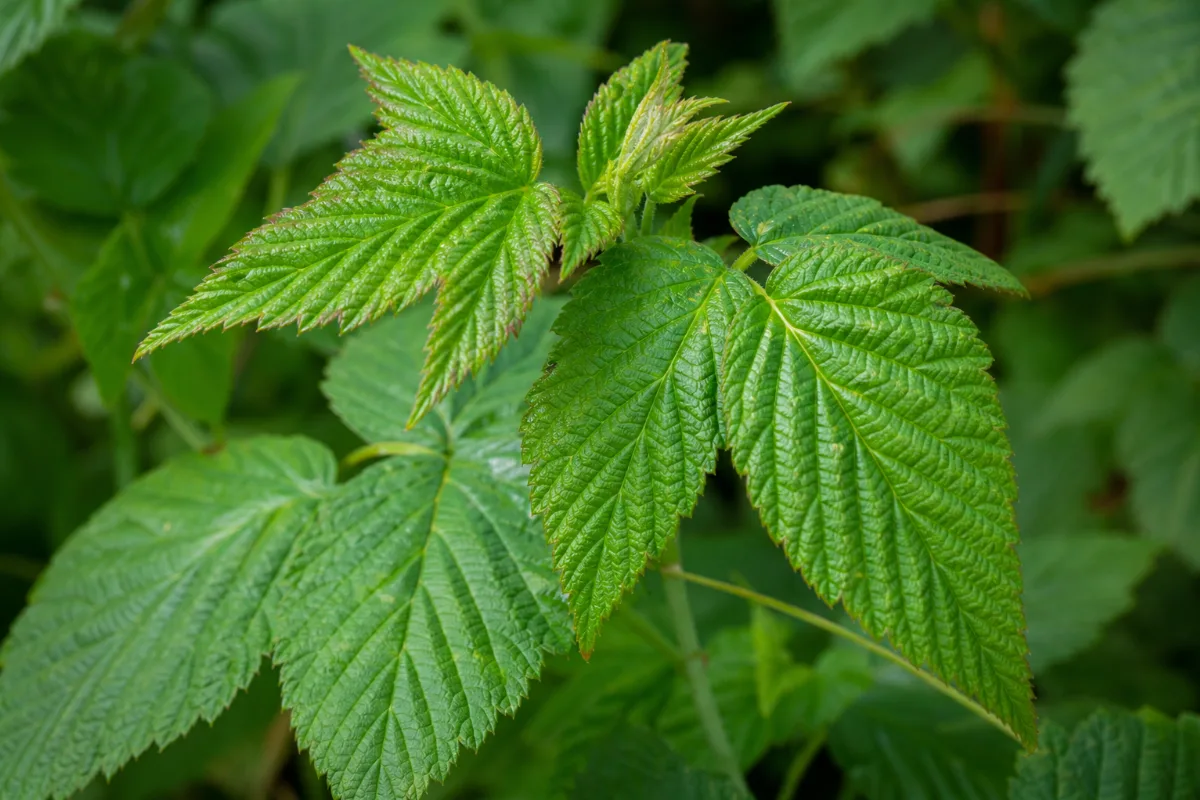
Herbs & Botanicals · Herbs · Leaf of the raspberry plant, taken as tea or tablets, mostly in late pregnancy
Red Raspberry Leaf
Rubus idaeus L. (leaf) · also called Red raspberry leaf, raspberry leaf, Rubi idaei folium (EMA name)
Red raspberry leaf is the dried leaf of the raspberry plant. Its main plant chemicals are ellagitannins, a type of polyphenol. Most women who use it take it in late pregnancy hoping labour will be easier. The research is small, and pregnancy safety has not been established.
General information, not medical advice. Last substantive update · Not medically reviewed. A named clinician has not signed off on this page. How this page is made
About Red Raspberry Leaf
Red raspberry leaf is mainly used in late pregnancy. The best test found it did not shorten the first stage of labour. The EU lists it as a traditional medicine for period spasms, mild diarrhoea and mild mouth or throat inflammation, and does not recommend it in pregnancy.
What it is
Red raspberry leaf is the leaf of Rubus idaeus, a member of the rose family. GBIF accepts the name Rubus idaeus L. It is drunk as tea or taken as tablets.
The leaf is rich in ellagitannins and other polyphenols. Raspberry fruit and raspberry ketone supplements are different materials and are not covered here.
What people use it for, and what the research shows
Most users are pregnant women: in a 2026 Australian survey, raspberry leaf was the most common herb, and the main reason was to make labour easier. A 192-woman trial found the first stage was not shorter; the pushing stage was about 10 minutes shorter and forceps births fewer, which has not been repeated. Observational studies disagree, and a review linked oral raspberry leaf to more caesareans.
Outside pregnancy, the EMA accepts traditional uses for period spasms, mild diarrhoea and mild mouth or throat inflammation. No trials of these were found. A small crossover trial in healthy adults found a smaller blood sugar rise after sucrose. Other findings are from the lab or from animals.
At a glance
Traditional uses history, not proof
- Period cramps, mild diarrhoea and mild mouth or throat inflammation: accepted by the EMA as traditional uses, on long use alone.
- Late pregnancy, to make labour easier: widely used, but the EMA does not list it and does not recommend use in pregnancy.
Studied for research
- First stage of labour: against a benefit
- Pushing stage and forceps births, low
- Medical help in labour, mixed
- Starting labour, insufficient
- Period cramps, insufficient (traditional use)
- Blood sugar after sucrose, low
- Weight and blood fats, insufficient
- Milk supply, insufficient
Main compounds
- Ellagitannins and ellagic acid, the main polyphenols
- Flavonoids such as quercetin and kaempferol forms
- Phenolic acids such as chlorogenic acid
Common forms
- Tea made from the dried leaf
- Tablets or capsules of the leaf
- Water dry extract (the form in the EMA monograph)
Research links: EMA herbal monograph and page (Rubi idaei folium) · LactMed: Raspberry (leaf) · Labour trial, 192 women (PubMed) · Systematic review of raspberry leaf in pregnancy (PubMed) · Research Library · Genes & Biomarkers Library
The plant and its history
- Accepted scientific name
- Rubus idaeus L.
- Naming authority
- L. (Linnaeus), per GBIF
- Synonyms
- Batidaea idaea (L.) Greene (GBIF synonym); Rubus idaeus f. idaeus (GBIF synonym); Other synonyms exist; only the first few were read
- Common names
- Red raspberry leaf (English); Raspberry leaf (English); Rubi idaei folium (Latin (EMA herbal name)); Frambueso, hoja de (Spanish (EMA monograph)); Himbeerblätter (German (EMA monograph))
- Botanical family
- Rosaceae (rose family).
- Classification
- Plantae > Tracheophyta > Rosales > Rosaceae > Rubus > Rubus idaeus
- Native range
- Not verified from a primary source here.
- Habitat
- Not verified.
- What the plant looks like
- Leaves: The leaf is the part used (EMA monograph: dried and cut leaf, Rubi idaei folium). Botanical description not verified.; Fruit: The fruit is the red raspberry; the fruit and its extracts are a different material with their own research and are not covered here.
- Cultivation
- Leaves are described as a by-product of raspberry growing (p40005280). Cultivars differ in leaf chemistry (p42883185).
- Harvest and processing
- The EMA covers dried, cut leaf and a water dry extract (4:1 ratio). Other processing not verified.
- Look-alikes and adulterants
- Name: Rubus occidentalis (black raspberry); Note: Different species. One cultivar study mixed it with red raspberry; do not borrow results across species.; Name: Rubus caesius (European dewberry); Note: Different species; its leaf was tested alongside raspberry in a platelet study. Results are not interchangeable.; Name: Raspberry fruit and raspberry ketone supplements; Note: Different material. Not covered here.
- Sustainability and conservation
- Not verified.
The plant and the parts used
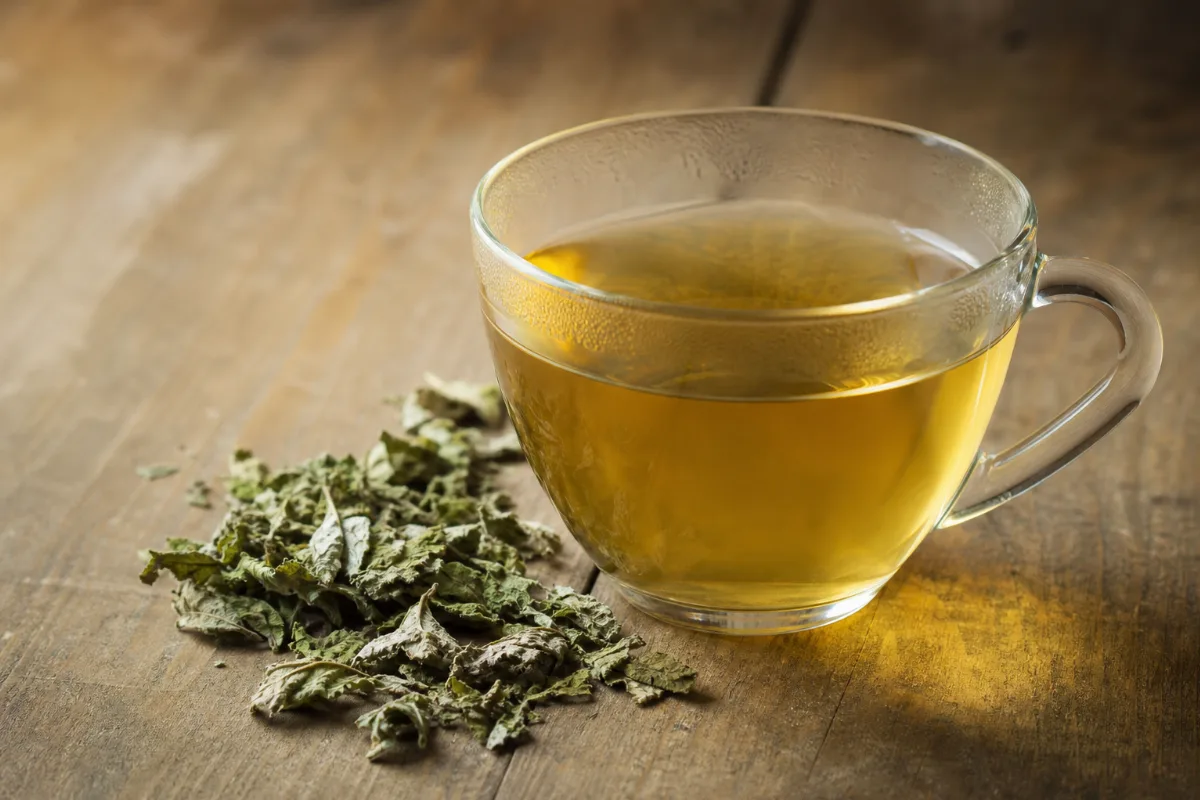
Traditional use and history history, not clinical proof
| Tradition or era | Documented use | Source |
|---|---|---|
| Long-standing traditional medicinal use in Europe | The EMA accepts raspberry leaf as a traditional herbal medicine based on long-standing use (at least 30 years of documented use, including 15 in the EU): minor spasms with periods, mild mouth or throat inflammation, mild diarrhoea. | s-ema-hmpc-monograph-2014 |
| Use in pregnancy | A 2021 systematic review says women have used various herbs in pregnancy for centuries and raspberry leaf is one of the most common. A 2026 Australian survey found 37% of the surveyed cohort (561 women answered the herb-use questions) had used it, mostly to make labour easier. The original tradition, region and date were not verified. | p33563275 |
| Early lab work | A 1941 British Medical Journal paper is titled 'Fragarine: An Inhibitor of Uterine Action'. Only the title was read. It is NOT verified what the paper found or whether fragarine is a single compound. | p20783856 |
| EMA review dates | EMA monograph and opinion published 21 March 2014; an addendum to the assessment report on 27 June 2023 (from a page summary). | s-ema-rubi-idaei-page |
Traditional use shows how a plant was used. It does not show that a supplement works or is safe today.
What is inside, and how it may work
What the plant contains and how those compounds act in cells and animals. Laboratory and animal mechanisms are not proven effects in people.
Main compounds
| Compound | Family | Where it is concentrated | Activity studied | Level of evidence |
|---|---|---|---|---|
| Ellagitannins (as a group) | hydrolysable tannin | Leaf 155.27 to 394.22 mg/100 g in six leaf samples; the main polyphenol group (p40005280). In 10 g of leaf brewed 5 minutes, about 38 mg (p40944237). | Gut bacteria turn them into urolithins, which reduced TNF-alpha in cultured immune cells. Specific ellagitannins were not individually verified here, so no single CID is given. 2 1 27 | Lab |
| Ellagic acid PubChem 5281855 | polyphenol (ellagitannin breakdown product) | Leaf Highest at a 5-minute brew: 380.29 mg/100 g of leaf in tea (p40005280). | Proposed by the authors to blunt the sugar rise after sucrose by blocking digestive enzymes; not shown in people. 2 1 25 | Lab, plus one small human trial of the tea |
| Flavonoids including quercetin and kaempferol forms PubChem 5280343 | flavonol | Leaf Flavonoids 125.03 to 156.73 mg/100 g in six leaf samples (p40005280). Kaempferol: CID 5280863 (C15H10O6). | In pregnant rats, kaempferol and quercetin produced offspring effects like those of the leaf (longer pregnancy, faster reproductive development, liver enzyme shifts). 17 21 34 2 25 | Animal research |
| Chlorogenic acid and other phenolic acids PubChem 1794427 | phenolic acid | Leaf Phenolic acids 38.87 to 119.03 mg/100 g (p40005280). | Named as one of seven polyphenols in a mouse obesity study; effect of the single compound not tested there. 34 2 25 | Animal research |
| Fragarine | Not verified | Leaf (per the 1941 title only) | Named in a 1941 paper title as an inhibitor of uterine action. No PubChem record was found under this name and the structure was not verified. 36 | Not verified |
Mechanisms, receptors and pathways
| Target or pathway | Gene or receptor | What was found | Level |
|---|---|---|---|
| Uterine muscle contraction | Not determined | Tea and capsule caused weak contractions in rat uteri and partly blocked oxytocin contractions at the highest amount; effects in pregnant rat uteri varied. The authors say this does not support a direct labour-speeding effect. 16 | Laboratory research |
| Gut smooth muscle relaxation | Not determined | Methanol extract relaxed stimulated guinea-pig ileum; at least two active components. 28 | Laboratory research |
| Sugar-digesting enzymes | alpha-glucosidase, alpha-amylase | Leaf extract blocked both in a dose-dependent way; the human tea trial authors suggest ellagic acid acts on alpha-glucosidase and beta-fructofuranosidase. 29 1 | Laboratory research |
| Drug-processing enzymes | CYP1A2, CYP2D6, CYP3A4, CYP2E1 | Blocked in the lab at IC50 44, 47, 81 and 27 ug/mL. 19 20 | Laboratory research |
| Platelets and neutrophils | Activated GPIIbIIIa receptor | Raspberry leaf extract (15 ug/mL) lowered activated GPIIbIIIa expression by 16% and aggregation by 31 to 41% in whole blood; no effect in plasma without white cells. 8 | Laboratory research |
| Inflammation and weight in obese mice | TNF, IL-6, AKT1, PPAR (predicted) | The extract lowered IL-6 and TNF-alpha and weight gain in mice. The targets are computer predictions. 34 | Animal research |
| Matrix enzymes in endometriosis | MMP-2, MMP-9 | The extract restored blood levels toward starting values in rats. 15 | Animal research |
Absorption, metabolism and elimination
- Absorption
- Not found for raspberry leaf in people. A study notes that ellagitannin bioavailability is not well established.
- Distribution
- Not found. Rat studies show exposure in pregnancy affects offspring (transplacental exposure is the authors' term for mice).
- Metabolism
- Human gut bacteria in a lab test turned raspberry leaf extract into urolithins A, B and C. The extract blocked liver enzymes in the lab.
- Elimination
- Not found.
- Bioavailability
- Not found.
Isolated compounds versus whole extracts
Almost all human work is on whole leaf as tablets or tea. Lab and animal work mixes whole leaf, solvent extracts and isolated compounds (kaempferol, quercetin, ellagic acid). In rat uterus tissue the tea, capsule and ethanol extract behaved differently, and polyphenol content varies between leaf samples, so results do not carry across products.
Nutritional composition
Raspberry leaf tea is mainly a source of plant polyphenols: about 50 mg total polyphenols per 10 g of leaf in the human sugar trial, mostly ellagitannins. Vitamin and mineral content of the leaf was not verified from a paper read here.
1 mixed findings2 low certainty10 not enough evidence1 evidence against
What was looked at
The 14 benefits and uses checked for Red Raspberry Leaf, each with how strong the evidence is. Tap one to open it.
- Shorter first stage of labourEvidence against
- Shorter pushing stage and fewer forceps birthsLow certainty
- Less need for medical help in labour (drugs to speed labour, instruments, caesarean)Mixed findings
- Starting labour (induction) and softening the cervixNot enough evidence
- Length of pregnancy and pre- or post-term birthNot enough evidence
- Toning or relaxing the wombNot enough evidence
- Period cramps (minor spasms with menstrual periods)Not enough evidence
- Blunting the blood sugar rise after sugary foodLow certainty
- Blood sugar control in diabetes and gestational diabetesNot enough evidence
- Body weight and blood fatsNot enough evidence
- Mild diarrhoea and mild mouth or throat inflammationNot enough evidence
- Milk supply while breastfeedingNot enough evidence
- Antioxidant, anti-inflammatory and blood-platelet effects (lab only)Not enough evidence
- Endometriosis (rats only)Not enough evidence
Lab markers tracked in the studies
Length of the first stage of labourLength of the second (pushing) stage of labourForceps birthsCaesarean birthMedical speeding up of labour (augmentation)Blood glucose after a sugary drinkInsulin after a sugary drinkBlood triglycerides after a high-fat meal
What is Red Raspberry Leaf good for?
The main proposed uses and how strong the human evidence is for each. "Against" means the best test found no benefit; "low" means one small study; "mixed" means studies disagree; "insufficient" means no human trial.
Benefits, one by one
Each card is a research question, not a promise. Tap a goal to filter. Open a card to see the studies, doses and limits.
Shorter first stage of labour
Evidence againstMany women drink raspberry leaf hoping it will make the first part of labour shorter. The one blinded trial found it did not.
3 studiesTablets (about 2.4 g a day) in the trial; tea is also widely used. No…
Studies, doses and limits
What the trials found
A double-blind, placebo-controlled trial in 192 low-risk first-time mothers in Sydney gave raspberry leaf tablets from 32 weeks until labour. It did not shorten the first stage. A systematic review of herb trials in pregnancy also reports that raspberry leaf did not shorten the first stage of labour.
Results
No shortening of the first stage in the only randomised trial.
Effect sizes as reported
No difference between groups; numbers not given in the abstract.
Why this rating
One randomised, placebo-controlled trial of 192 women found no effect on the first stage. It is one trial, one hospital, and the authors questioned whether the dose was high enough, so this is evidence against a benefit rather than proof of none.
Form and dose studied
Tablets (about 2.4 g a day) in the trial; tea is also widely used. Not compared in any trial.
Who was studied
Low-risk first-time mothers, from 32 weeks of pregnancy.
Limits
Single trial; the authors suggested a higher dose might behave differently. No trial in women who have given birth before.
Why researchers looked
Raspberry leaf tea and tablets are among the most widely used herbs in late pregnancy, mainly to make labour easier.
Traditional use
Used for centuries in pregnancy (reviews). The EMA monograph does not list pregnancy or labour as an approved traditional use; it says use in pregnancy is not recommended.
Proposed mechanism Laboratory research
Lab work on animal and human muscle shows raspberry leaf can affect smooth muscle including the uterus, but the effect varies by product and by pregnancy status, and one study concluded the results do not support a direct labour-speeding effect on the uterine muscle.
A proposed mechanism does not show that the effect happens in people.
Pregnancy: the EMA says safety has not been established and use in pregnancy is not recommended. See the safety section.
Shorter pushing stage and fewer forceps births
Low certaintyIn the same trial, women taking raspberry leaf tablets had a pushing stage about 10 minutes shorter and fewer forceps births. These were side findings and are not firm.
2 studiesTablets in the trial.
Studies, doses and limits
What the trials found
In the 192-woman trial the second stage was 9.59 minutes shorter and forceps births were 19.3% vs 30.4% with raspberry leaf. The authors call these the only clinically significant findings. A later systematic review calls the shorter second stage clinically meaningful but not statistically significant. No other trial has tested this.
Results
Second stage 9.59 minutes shorter; forceps births 19.3% vs 30.4%.
Effect sizes as reported
Mean difference 9.59 minutes in second stage; forceps 19.3% vs 30.4%. Confidence intervals not given in the abstract.
Why this rating
Side outcomes from a single trial, with no confidence intervals in the abstract. The two reviews describe the second-stage result differently. Nobody has repeated it.
Form and dose studied
Tablets in the trial.
Who was studied
Low-risk first-time mothers.
Limits
Not the main aim of the trial; not repeated; many outcomes were tested.
Why researchers looked
The same trial looked at every stage of labour and the way babies were born.
Traditional use
Women use it to make labour easier (survey).
Proposed mechanism Laboratory research
Unknown. Lab studies on rat uterus show variable effects.
A proposed mechanism does not show that the effect happens in people.
The same trial found no harms for mother or baby, but a trial of this size cannot rule out rare harms.
Less need for medical help in labour (drugs to speed labour, instruments, caesarean)
Mixed findingsTwo small studies of women who chose raspberry leaf found fewer medical steps in labour. A large review found more caesareans. The studies conflict and none can show cause.
3 studiesTablets, tea or other products; not standardised.
Studies, doses and limits
What the trials found
A retrospective study of 108 mothers (57 users) in Sydney suggested fewer artificial membrane ruptures, caesareans, forceps or vacuum births in users. A prospective study of 91 women in Canberra (44 users) found fewer augmentations, epidurals, instrumental births, caesareans and postpartum haemorrhages, but its authors say the results cannot be relied on and no safety concern is not proof of safety. A systematic review of herb safety in pregnancy found oral raspberry leaf associated with caesarean delivery (adjusted odds ratio 3.47, 95% CI 1.45 to 8.28).
Results
Opposite directions in different observational studies.
Effect sizes as reported
Caesarean: aOR 3.47 (95% CI 1.45 to 8.28) in the systematic review; no numbers in the abstracts of the two small studies.
Why this rating
All observational. Women who choose herbs may differ from others in many ways. The studies point in different directions and the numbers are missing or from an unspecified source.
Form and dose studied
Tablets, tea or other products; not standardised.
Who was studied
Pregnant women in Sydney, Canberra and (for the review) several countries.
Limits
Not randomised; small; self-chosen use; the abstracts do not say how much was taken.
Why researchers looked
Women hope raspberry leaf will help labour go on its own.
Traditional use
Reported by midwives and women (surveys).
Proposed mechanism Pharmacological theory
Not known.
A proposed mechanism does not show that the effect happens in people.
An association with caesarean in one review is a safety signal that has not been tested in a trial.
Starting labour (induction) and softening the cervix
Not enough evidenceSome pharmacists and midwives suggest raspberry leaf to start labour. Reviews find the evidence weak, and one review raises a possible negative effect on cervical ripening.
5 studiesTea or tablets; not compared.
Studies, doses and limits
What the trials found
A 2023 review concluded that data indicate a weak effect on labour induction and a possible negative impact on cervical ripening. A 2012 review said raspberry leaf may be beneficial but firm conclusions are not possible; a 2009 review called the efficacy not convincingly documented. No randomised trial of raspberry leaf for starting labour was found.
Results
No trial of induction; reviews call it weak or unproven.
Why this rating
Reviews only, no trial of induction, and the reviews do not agree on direction.
Form and dose studied
Tea or tablets; not compared.
Who was studied
Women at or past term (reviews).
Limits
No direct trial.
Why researchers looked
Women past their due date look for natural ways to start labour.
Traditional use
In a 1999 US survey 63% of midwives who used herbs to stimulate labour used raspberry leaf; 84% of 366 New York pharmacies called recommended it for labour induction.
Proposed mechanism Laboratory research
Lab studies show raspberry leaf has effects on smooth muscle including the uterus; the effect on the cervix in people is not shown.
A proposed mechanism does not show that the effect happens in people.
Do not use to start labour without asking your midwife or doctor.
Length of pregnancy and pre- or post-term birth
Not enough evidenceOne small retrospective study suggested fewer early and late births in users. Rat and mouse studies gave opposite results. Nothing is settled.
4 studiesNot standardised.
Studies, doses and limits
What the trials found
The Sydney retrospective study of 108 mothers suggested a lower likelihood of pre- and post-term birth in users. No trial measured this. The reviews say that safety for the unborn child cannot be ruled out.
Results
Human: suggestive only. Animals: longer in rats, shorter in mice.
Why this rating
One retrospective human study without numbers, and animal studies that disagree.
Form and dose studied
Not standardised.
Who was studied
Pregnant women (human study); rats and mice.
Limits
Animal doses do not translate to tea; no human trial.
Why researchers looked
People ask whether raspberry leaf changes when labour starts.
Traditional use
Used in late pregnancy.
Proposed mechanism Animal research
In rats, raspberry leaf in pregnancy lengthened pregnancy; in mice, a higher amount of aqueous extract shortened pregnancy and reduced litter size.
A proposed mechanism does not show that the effect happens in people.
See pregnancy section; EMA does not recommend use in pregnancy.
Toning or relaxing the womb
Not enough evidenceRaspberry leaf is said to tone the womb. In rat tissue it caused weak contractions and sometimes blocked them; results varied. No human test shows a toning effect.
4 studiesCommercial tea, capsule and ethanol extract in the lab; the extract c…
Studies, doses and limits
What the trials found
No study measured uterine contractions in women taking raspberry leaf. A systematic review says raspberry leaf affects animal and human smooth muscle including the uterus, in lab studies.
Results
Variable effects in rat uterus tissue; none in people.
Why this rating
Lab and animal tissue only, with inconsistent results.
Form and dose studied
Commercial tea, capsule and ethanol extract in the lab; the extract changed the effect.
Who was studied
Rat tissue.
Limits
Tissue in a dish does not show what happens in a woman.
Why researchers looked
The traditional claim is that raspberry leaf prepares the womb for labour.
Traditional use
An old report titled Fragarine: An Inhibitor of Uterine Action (BMJ, 1941) points to a relaxing effect; only the title was read.
Proposed mechanism Laboratory research
Commercial raspberry leaf tea and capsule caused weak contractions in rat uterus and partly blocked oxytocin contractions; in pregnant rats the tea had variable effects. An extract also relaxed guinea-pig gut muscle in a dish, with at least two active components.
A proposed mechanism does not show that the effect happens in people.
Because it may act on the womb, discuss with a midwife or doctor before use in pregnancy.
Period cramps (minor spasms with menstrual periods)
Not enough evidenceThe European medicines agency lists raspberry leaf as a traditional remedy for minor spasms with periods. No trial of it for period pain was found.
3 studiesThe EMA lists a dry extract taken by mouth for this use. Amounts: ask…
Studies, doses and limits
What the trials found
PubMed searches for raspberry leaf with dysmenorrhoea, menstrual pain or cramps returned no results. The EMA accepts the use on tradition, not on trials.
Results
No human trial found.
Why this rating
Traditional-use status only; no human study.
Form and dose studied
The EMA lists a dry extract taken by mouth for this use. Amounts: ask a doctor or pharmacist.
Who was studied
Adults (EMA); not for under 18.
Limits
Tradition is not proof. The EMA says to see a doctor if symptoms last more than 1 week or get worse.
Why researchers looked
It is an old remedy for period discomfort and the only women's use that the EMA lists.
Traditional use
The EMA/HMPC monograph (2014) accepts a traditional herbal medicine, based on long-standing use only, for the symptomatic relief of minor spasm associated with menstrual periods in adults.
Proposed mechanism Laboratory research
Raspberry leaf extract relaxed stimulated guinea-pig gut muscle in a dish; the same has not been shown for period cramps.
A proposed mechanism does not show that the effect happens in people.
The EMA does not recommend use in pregnancy or breastfeeding.
Blunting the blood sugar rise after sugary food
Low certaintyIn a small trial in healthy adults, a cup of raspberry leaf tea cut the blood sugar rise after a sucrose drink in the first half hour. It did nothing after a glucose drink.
3 studiesTea infusion of dried leaf (5-minute hot-water brew) in the trial.
Studies, doses and limits
What the trials found
A randomised crossover trial in 22 healthy adults gave 10 g of raspberry leaf as tea with 50 g sucrose or 50 g glucose. With sucrose, blood glucose was lower at 15 minutes (by 1.19 mmol/L, 25.59%) and 30 minutes (by 2.03 mmol/L, 43.57%) and insulin was lower at 15, 30 and 60 minutes. With glucose there was no significant difference.
Results
Lower early glucose and insulin after sucrose only.
Effect sizes as reported
Glucose 1.19 +/- 0.88 mmol/L lower at 15 min (p = 0.001); 2.03 +/- 1.05 mmol/L lower at 30 min (p = 0.0004).
Why this rating
One small, one-sitting crossover trial in healthy people; no long-term or diabetes trial. The authors call it the first clinical evidence.
Form and dose studied
Tea infusion of dried leaf (5-minute hot-water brew) in the trial.
Who was studied
22 healthy adults, 12 men and 10 women.
Limits
Acute effect only; healthy people only; one lab; mechanism unproven.
Why researchers looked
The leaf is rich in polyphenols (mostly ellagitannins), and polyphenols can slow sugar-digesting enzymes in the lab.
Traditional use
No traditional diabetes use was verified.
Proposed mechanism Laboratory research
Lab studies show raspberry leaf extracts block the sugar-digesting enzymes alpha-glucosidase and alpha-amylase. The trial authors suggest ellagic acid blocks alpha-glucosidase and beta-fructofuranosidase, but they did not prove this in people.
A proposed mechanism does not show that the effect happens in people.
Could add to the effect of diabetes medicines. See safety section.
Blood sugar control in diabetes and gestational diabetes
Not enough evidenceNo trial in people with diabetes was found. One woman with gestational diabetes had low blood sugar on raspberry leaf tea and needed less insulin.
2 studiesTea in the case.
Studies, doses and limits
What the trials found
One case report: a 38-year-old woman with gestational diabetes on insulin developed low blood sugar after raspberry leaf tea at 32 weeks and needed a lower insulin dose; stopping and restarting the tea supported the link. Her baby had no complications. No trial in diabetes or gestational diabetes was found.
Results
One case of low blood sugar needing a lower insulin dose.
Why this rating
A single case report and lab data.
Form and dose studied
Tea in the case.
Who was studied
One pregnant woman with gestational diabetes on insulin.
Limits
One person; frequency unknown.
Why researchers looked
The healthy-adult trial and lab enzyme findings raised the question for people with diabetes.
Traditional use
Not verified.
Proposed mechanism Laboratory research
Raspberry leaf extract blocks alpha-glucosidase and alpha-amylase in the lab. The case report authors note that low blood sugar effects have been documented with other species in the same plant family; this is not proof for raspberry leaf.
A proposed mechanism does not show that the effect happens in people.
People on insulin or diabetes pills should check blood sugar more often and tell their care team if they drink it.
Body weight and blood fats
Not enough evidenceIn mice, a raspberry leaf extract cut weight gain on a high-fat diet. In people, a one-week trial found no clear fat-lowering effect from it.
2 studiesProprietary extract (human trial); polyphenol-rich extract (mice).
Studies, doses and limits
What the trials found
In a 7-day trial of 90 overweight or obese adults, only the grape extract significantly lowered blood triglycerides after a high-fat meal; the abstract reports no significant effect for the other extracts, including raspberry leaf extract. No raspberry leaf weight-loss trial in people was found.
Results
Mouse benefit; no human benefit shown.
Effect sizes as reported
Human trial: grape extract AUC 181 vs 281 mg/dL*h (P = 0.021); none reported for raspberry leaf.
Why this rating
Mouse study plus a short trial in which the abstract shows no raspberry leaf effect.
Form and dose studied
Proprietary extract (human trial); polyphenol-rich extract (mice).
Who was studied
Overweight adults (trial); obese mice.
Limits
The abstract does not say how many people took the raspberry leaf extract. One author of the mouse study works for a food company.
Why researchers looked
Polyphenol-rich plant extracts were screened for blocking the enzyme DGAT1, which builds blood fats.
Proposed mechanism Animal research
Mice fed raspberry leaf extract gained less weight, had smaller fat cells, lower IL-6 and TNF-alpha, and changed gut bacteria. A lab screen found a raspberry leaf extract blocked DGAT1.
A proposed mechanism does not show that the effect happens in people.
None specific.
Mild diarrhoea and mild mouth or throat inflammation
Not enough evidenceThe EMA lists raspberry leaf tea as a traditional remedy for mild diarrhoea and as a gargle for mild mouth or throat inflammation. No trial was found.
4 studiesThe EMA describes tea and gargle uses; ask a doctor or pharmacist abo…
Studies, doses and limits
What the trials found
No human trial was found.
Why this rating
Traditional-use status and lab work only.
Form and dose studied
The EMA describes tea and gargle uses; ask a doctor or pharmacist about amounts.
Who was studied
Adults (EMA).
Limits
The EMA says to see a doctor if diarrhoea lasts more than 3 days or other symptoms last more than a week.
Why researchers looked
Old uses for the leaf.
Traditional use
EMA/HMPC (2014): traditional use, based on at least 30 years of documented use, for mild inflammation in the mouth or throat and for mild diarrhoea, in adults.
Proposed mechanism Laboratory research
An extract relaxed guinea-pig gut muscle in a dish. Human gut bacteria turned a leaf extract into urolithins, which reduced TNF-alpha release in cultured immune cells.
A proposed mechanism does not show that the effect happens in people.
No side effects known to the EMA.
Milk supply while breastfeeding
Not enough evidenceRaspberry leaf is sometimes taken to boost milk. LactMed says no valid clinical trials support this.
2 studiesNot applicable.
Studies, doses and limits
What the trials found
LactMed (updated 2024): no scientifically valid clinical trials support this use, and no data are available on safety in nursing mothers or infants.
Results
No evidence.
Why this rating
No clinical trial.
Who was studied
Breastfeeding mothers.
Limits
No data. The EMA does not recommend use while breastfeeding.
Why researchers looked
Sold as a milk-supply herb (galactogogue).
Traditional use
LactMed calls the leaf a purported galactogogue.
Proposed mechanism Pharmacological theory
None found.
A proposed mechanism does not show that the effect happens in people.
Safety in nursing mothers and infants has not been studied.
Antioxidant, anti-inflammatory and blood-platelet effects (lab only)
Not enough evidenceIn the lab the leaf is rich in antioxidant polyphenols and its extracts calm some inflammation signals and reduce platelet clumping. No human study shows a health benefit from this.
5 studiesMethanol and other lab extracts, not tea.
Studies, doses and limits
What the trials found
No human trial of these effects was found. The human-blood work was done in a dish.
Results
Lab effects only.
Effect sizes as reported
Platelet aggregation 31-41% lower in whole blood in a dish at 15 ug/mL.
Why this rating
Lab studies only; results vary a lot between leaf samples and cultivars.
Form and dose studied
Methanol and other lab extracts, not tea.
Who was studied
Cells and blood in a dish.
Limits
Lab amounts and extracts differ from tea.
Why researchers looked
Leaves are a by-product of raspberry growing and are rich in polyphenols, mainly ellagitannins.
Traditional use
Not verified.
Proposed mechanism Laboratory research
Ellagitannins are turned by gut bacteria into urolithins, which reduced TNF-alpha in cultured cells. Leaf extracts reduced platelet aggregation by 31 to 41% in whole blood in a dish and reduced free radicals from white cells.
A proposed mechanism does not show that the effect happens in people.
The platelet result is lab only, but ask a doctor if you take blood thinners.
Endometriosis (rats only)
Not enough evidenceIn rats, a raspberry leaf extract with a hormone drug gave smaller endometriosis lesions than the drug alone. It has not been tested in women.
1 studiesLeaf extract with the drug dienogest.
Studies, doses and limits
What the trials found
No human study.
Results
Rat lesions smaller with extract plus dienogest than with dienogest alone.
Effect sizes as reported
Not given in the abstract.
Why this rating
One rat study of 36 animals.
Form and dose studied
Leaf extract with the drug dienogest.
Who was studied
Female rats.
Limits
Not tested in women; used with a drug.
Why researchers looked
Raspberry leaf polyphenols have anti-inflammatory effects in the lab.
Proposed mechanism Animal research
Blood MMP-2 and MMP-9 were restored toward starting levels in the treated rats.
A proposed mechanism does not show that the effect happens in people.
Nothing is known about use with hormone treatments in women.
Connections to the rest of health
How Red Raspberry Leaf connects to the rest of our health knowledge graph. Every link says what kind of connection it is. A safety link (for example to the liver) is a warning, not a benefit. A study that merely mentions a topic never creates a benefit link.
Explore every connection: goals, body systems, organs, symptoms, genes
A. Wellness goals
| Connected to | Kind of connection | Evidence status | Context | Studies |
|---|---|---|---|---|
| Womens Wellness | Potential benefit | Evidence against | Shorter first stage of labour: Many women drink raspberry leaf hoping it will make the first part of labour shorter. The one blinded trial found it did not. Shorter pushing stage and fewer forceps births: In the same trial, women taking raspberry leaf tablets had a pushing stage about 10 minutes shorter and fewer forceps births. These were side findings and are not firm. | 30 7 3 |
| Womens Wellness | Biological association | Mixed findings | Less need for medical help in labour (drugs to speed labour, instruments, caesarean): Two small studies of women who chose raspberry leaf found fewer medical steps in labour. A large review found more caesareans. The studies conflict and none can show cause. Length of pregnancy and pre- or post-term birth: One small retrospective study suggested fewer early and late births in users. Rat and mouse studies gave opposite results. Nothing is settled. | 26 4 23 17 13 14 |
| Womens Wellness | Traditional use | Not enough evidence | Starting labour (induction) and softening the cervix: Some pharmacists and midwives suggest raspberry leaf to start labour. Reviews find the evidence weak, and one review raises a possible negative effect on cervical ripening. Period cramps (minor spasms with menstrual periods): The European medicines agency lists raspberry leaf as a traditional remedy for minor spasms with periods. No trial of it for period pain was found. | 31 12 14 35 22 9 10 28 18 |
| Womens Wellness | Preliminary mechanism | Not enough evidence | Toning or relaxing the womb: Raspberry leaf is said to tone the womb. In rat tissue it caused weak contractions and sometimes blocked them; results varied. No human test shows a toning effect. Endometriosis (rats only): In rats, a raspberry leaf extract with a hormone drug gave smaller endometriosis lesions than the drug alone. It has not been tested in women. | 16 28 3 36 15 |
| Blood Sugar Balance | Potential benefit | Low certainty | Blunting the blood sugar rise after sugary food: In a small trial in healthy adults, a cup of raspberry leaf tea cut the blood sugar rise after a sucrose drink in the first half hour. It did nothing after a glucose drink. | 1 29 2 |
| Blood Sugar Balance | Adverse effect or risk | Not enough evidence | Blood sugar control in diabetes and gestational diabetes: No trial in people with diabetes was found. One woman with gestational diabetes had low blood sugar on raspberry leaf tea and needed less insulin. | 6 29 |
| Weight Management | Preliminary mechanism | Not enough evidence | Body weight and blood fats: In mice, a raspberry leaf extract cut weight gain on a high-fat diet. In people, a one-week trial found no clear fat-lowering effect from it. | 34 33 |
| Metabolic Health | Preliminary mechanism | Not enough evidence | Body weight and blood fats: In mice, a raspberry leaf extract cut weight gain on a high-fat diet. In people, a one-week trial found no clear fat-lowering effect from it. | 34 33 |
| Digestive Support | Traditional use | Not enough evidence | Mild diarrhoea and mild mouth or throat inflammation: The EMA lists raspberry leaf tea as a traditional remedy for mild diarrhoea and as a gargle for mild mouth or throat inflammation. No trial was found. | 9 10 28 27 |
| Inflammation Balance | Preliminary mechanism | Not enough evidence | Antioxidant, anti-inflammatory and blood-platelet effects (lab only): In the lab the leaf is rich in antioxidant polyphenols and its extracts calm some inflammation signals and reduce platelet clumping. No human study shows a health benefit from this. | 8 27 32 29 2 |
| Heart Health | Preliminary mechanism | Not enough evidence | Antioxidant, anti-inflammatory and blood-platelet effects (lab only): In the lab the leaf is rich in antioxidant polyphenols and its extracts calm some inflammation signals and reduce platelet clumping. No human study shows a health benefit from this. | 8 27 32 29 2 |
B. Body systems
| Connected to | Kind of connection | Evidence status | Context | Studies |
|---|---|---|---|---|
| Reproductive System | Biological association | Evidence against | Studied for: Shorter first stage of labour Studied for: Shorter pushing stage and fewer forceps births | 30 7 3 26 4 23 31 12 14 35 22 17 13 16 28 36 9 10 18 15 |
| Endocrine System | Biological association | Low certainty | Studied for: Blunting the blood sugar rise after sugary food Studied for: Blood sugar control in diabetes and gestational diabetes | 1 29 2 6 |
| Metabolism Weight | Biological association | Low certainty | Studied for: Blunting the blood sugar rise after sugary food Studied for: Body weight and blood fats | 1 29 2 34 33 |
| Digestive System | Biological association | Not enough evidence | Studied for: Mild diarrhoea and mild mouth or throat inflammation | 9 10 28 27 |
| Immune System | Biological association | Not enough evidence | Studied for: Antioxidant, anti-inflammatory and blood-platelet effects (lab only) | 8 27 32 29 2 |
| Cardiovascular System | Biological association | Not enough evidence | Studied for: Antioxidant, anti-inflammatory and blood-platelet effects (lab only) | 8 27 32 29 2 |
C. Body parts and organs
| Connected to | Kind of connection | Evidence status | Context | Studies |
|---|---|---|---|---|
| Reproductive organs | Adverse effect or risk | Very low certainty | Animal studies show longer or shorter pregnancy depending on species; EMA does not recommend use in pregnancy. Preparation or compound: Raspberry leaf in pregnancy |
17 13 9 |
| Pancreas | Drug or supplement interaction | Low certainty | Lower blood sugar and insulin after sucrose; low blood sugar in one woman on insulin. Lower blood sugar and insulin after sucrose; one case of low blood sugar on insulin. Preparation or compound: Raspberry leaf tea |
6 1 |
| Reproductive organs | Biological association | Not enough evidence | Variable effects on rat womb tissue; traditional use for period spasms; no human trial. Preparation or compound: Raspberry leaf |
16 9 |
E. Health conditions
| Connected to | Kind of connection | Evidence status | Context | Studies |
|---|---|---|---|---|
| Pregnancy | Contraindication | Low certainty | EMA: safety not established, not recommended. EMA: safety not established; not recommended. Preparation or compound: Raspberry leaf |
9 |
| Gestational diabetes | Drug or supplement interaction | Very low certainty | One case of low blood sugar needing less insulin. One case report. Preparation or compound: Raspberry leaf tea |
6 |
I. Biomarkers
| Connected to | Kind of connection | Evidence status | Context | Studies |
|---|---|---|---|---|
| Length of the first stage of labour | Biological association | Evidence against | Measured in trials: no-change. A lab change is not the same as a health benefit. | 30 7 |
| Length of the second (pushing) stage of labour | Biological association | Low certainty | Measured in trials: lowered. A lab change is not the same as a health benefit. | 30 3 |
| Forceps births | Biological association | Low certainty | Measured in trials: lowered. A lab change is not the same as a health benefit. | 30 |
| Caesarean birth | Biological association | Mixed findings | Measured in trials: mixed. A lab change is not the same as a health benefit. | 26 4 23 |
| Medical speeding up of labour (augmentation) | Biological association | Very low certainty | Measured in trials: lowered. A lab change is not the same as a health benefit. | 4 3 |
| Blood glucose after a sugary drink | Biological association | Low certainty | Measured in trials: lowered. A lab change is not the same as a health benefit. | 1 |
| Insulin after a sugary drink | Biological association | Low certainty | Measured in trials: lowered. A lab change is not the same as a health benefit. | 1 |
| Blood triglycerides after a high-fat meal | Biological association | Not enough evidence | Measured in trials: no-change. A lab change is not the same as a health benefit. | 33 |
J. Genes, receptors and enzymes
| Connected to | Kind of connection | Evidence status | Context | Studies |
|---|---|---|---|---|
| CYP3A4 / CYP2D6 / CYP1A2 / CYP2E1 | Drug or supplement interaction | Very low certainty | Blocked in the lab. Preparation or compound: Raspberry leaf extract |
19 20 |
| CYP3A4 / CYP2D6 / CYP1A2 | Preliminary mechanism | In vitro | Blocked by leaf extract in the lab. | 19 |
| CYP2E1 | Preliminary mechanism | In vitro | Blocked by leaf extract in the lab. | 20 |
| alpha-glucosidase / alpha-amylase | Preliminary mechanism | In vitro | Blocked by leaf extract in the lab. | 29 |
| TNF / IL-6 | Preliminary mechanism | Animal | Lowered in mice and in cultured cells by leaf extract or urolithins. | 34 27 |
| MMP-2 / MMP-9 | Preliminary mechanism | Animal | Restored toward baseline in endometriosis rats. | 15 |
L. Active compounds
| Connected to | Kind of connection | Evidence status | Context | Studies |
|---|---|---|---|---|
| Ellagitannins (as a group) | Biological association | Lab | Gut bacteria turn them into urolithins, which reduced TNF-alpha in cultured immune cells. Specific ellagitannins were not individually verified here, so no single CID is given. Preparation or compound: Leaf |
2 1 27 |
| Ellagic acid | Biological association | Lab, plus one small human trial of the tea | Proposed by the authors to blunt the sugar rise after sucrose by blocking digestive enzymes; not shown in people. Preparation or compound: Leaf |
2 1 25 |
| Flavonoids including quercetin and kaempferol forms | Biological association | Animal | In pregnant rats, kaempferol and quercetin produced offspring effects like those of the leaf (longer pregnancy, faster reproductive development, liver enzyme shifts). Preparation or compound: Leaf |
17 21 34 2 25 |
| Chlorogenic acid and other phenolic acids | Biological association | Animal | Named as one of seven polyphenols in a mouse obesity study; effect of the single compound not tested there. Preparation or compound: Leaf |
34 2 25 |
| Fragarine | Biological association | Not verified | Named in a 1941 paper title as an inhibitor of uterine action. No PubChem record was found under this name and the structure was not verified. Preparation or compound: Leaf (per the 1941 title only) |
36 |
Each connection is stored with the ingredient, the connected record, the kind of connection, the evidence status, the supporting studies, the preparation or compound involved, and a review date (last reviewed October 25, 2026).
The evidence
The research centre for Red Raspberry Leaf. Every record here was checked against PubMed or the publisher's page; we never list a study we have not verified.
Evidence by outcome
Bars show how many studies we found for each outcome, not how well it works. People are added up across trials only (reviews are not added, to avoid double counting).
How we rate evidence
High certainty
Several well-run trials or reviews agree; further research is unlikely to change the picture much.
Moderate certainty
Good trials point the same way, but some doubt remains.
Low certainty
Small, short or inconsistent trials. The finding could change with better research.
Very low certainty
Very little or very weak human data. Treat as a possibility only.
Mixed findings
Trials or reviews disagree with each other.
Not enough evidence
Not enough human research to say either way.
Evidence against
Good research found no benefit, or found harm.
We take the reviewers' own risk-of-bias and GRADE statements where they exist, and otherwise judge from study size, design, consistency, directness and whether a product matches what is sold. Many publications do not make evidence high. Method note: We searched PubMed for raspberry leaf and Rubus idaeus leaf with pregnancy, labour, period pain, blood sugar, safety and interactions, read the abstracts, and read the EMA herbal monograph and the LactMed entry. Studies of raspberry fruit and raspberry ketones were left out.
Study library: every study we checked 36
| Study | Design | People | Product, dose, length | Result |
|---|---|---|---|---|
| Alkhudaydi 2025 Effects of Raspberry Leaf Tea Polyphenols on Postprandial Glucose and Insulin Responses in Healthy Adults Nutrients · PMID 40944237 · DOI |
Controlled trial |
22 22 healthy adults (12 men, 10 women), UK |
Raspberry leaf tea (10 g of leaf infused 5 minutes in hot water), taken with 50 g glucose or 50 g sucrose leaf 10 g leaf Single sitting; four sessions in a crossover · vs The same drink without the tea |
With sucrose, blood glucose was lower at 15 minutes (by 1.19 +/- 0.88 mmol/L, 25.59%, p = 0.001) and 30 minutes (by 2.03 +/- 1.05 mmol/L, 43.57%, p = 0.0004). Insulin was lower at 15, 30 and 60 minutes. With glucose, there were no significant differences. The infusion held about 38 mg ellagitannins, 7 mg flavonoids and 4 mg phenolic acids per 10 g of leaf. Sucrose: glucose lower by 1.19 mmol/L at 15 min and 2.03 mmol/L at 30 min; no effect with a glucose drink. Methods, limits and fundingOutcomes: Blood glucose and insulin at fasting and 15, 30, 60, 90 and 120 minutes Limitations: Small, one-time (acute) crossover in healthy people; no one with diabetes or pregnancy; not a long-term result. The authors propose enzyme blocking as the reason but did not prove it in people. Funding and conflicts: No conflicts declared. Read: abstract |
| Alkhudaydi 2025 Determination of the Polyphenol Composition of Raspberry Leaf Using LC-MS/MS Molecules · PMID 40005280 · DOI |
Laboratory research in-vitro |
Six raspberry leaf samples from different places, and tea brews | Raspberry leaf and raspberry leaf tea (2 g in 200 mL boiling water) leaf 2 g leaf in 200 mL Brew times 0.5 to 20 minutes |
Total polyphenols ranged 358.66 to 601.65 mg/100 g across samples; ellagitannins were the main group (155.27 to 394.22 mg/100 g), flavonoids 125.03 to 156.73 and phenolic acids 38.87 to 119.03 mg/100 g. Brewing for 5 minutes gave the highest polyphenols, and ellagic acid peaked at 5 minutes. Ellagitannins were the main polyphenol group. Methods, limits and fundingOutcomes: Polyphenol content by LC-MS Limitations: Chemical analysis only. Funding and conflicts: No conflicts declared. Read: abstract |
| Bowman 2021 Biophysical effects, safety and efficacy of raspberry leaf use in pregnancy: a systematic integrative review BMC Complement Med Ther · PMID 33563275 · DOI |
Systematic review |
13 13 studies (5 lab studies on animal and human tissue, 2 animal experiments, 6 human studies), published 1941 to 2016 |
Raspberry leaf (various preparations) leaf Various Various |
Raspberry leaf had effects on animal and human smooth muscle including the uterus. Toxicity appeared in animals at high doses given into a vein or the belly cavity. Human studies showed neither harm nor benefit, although one showed a clinically meaningful but not statistically significant shorter second stage and less augmentation. The authors call the evidence base weak. Evidence base weak (authors). Methods, limits and fundingOutcomes: Biophysical effects, safety and efficacy in pregnancy Limitations: Appraised with the MMAT tool; no GRADE rating given in the abstract. Mix of study types. Funding and conflicts: The first author was running her own observational study of raspberry leaf (declared). Read: abstract |
| Bowman 2024 Raspberry leaf (Rubus idaeus) use in pregnancy: a prospective observational study BMC Complement Med Ther · PMID 38649906 · DOI |
Observational |
91 Women at maternity services in Canberra (44 used raspberry leaf in pregnancy, 47 did not) |
Raspberry leaf (form not stated in the abstract) leaf During pregnancy · vs Women who did not use it |
Fewer women in the raspberry leaf group had labour augmentation, epidural, instrumental birth, caesarean or postpartum haemorrhage, and labour phases were shorter. The authors say results cannot be relied on or generalised, and that the lack of safety concerns is not evidence of safety. Raspberry leaf use was strongly predictive of not having labour medically augmented (Bayesian model); numbers not given in the abstract. Methods, limits and fundingOutcomes: Augmentation of labour and other birth outcomes Limitations: Observational and small. Women who choose herbs may differ from others. The authors call for a randomised trial. Funding and conflicts: No competing interests declared. Read: abstract |
| Bowman 2026 Beyond prescription medicine in pregnancy - raspberry leaf and other herbs in Australia BMC Complement Med Ther · PMID 41668030 · DOI |
Survey |
561 Pregnant women in Australia; 46 gave details of raspberry leaf use |
Raspberry leaf leaf |
68% used at least one herbal medicine; raspberry leaf was the most common (37%). The most common reason was to make labour easier. Most users said it was a positive experience. 37% used raspberry leaf. Methods, limits and fundingOutcomes: Herb use in pregnancy and why women use raspberry leaf Limitations: Self-reported survey; says nothing about effect on labour. Funding and conflicts: No competing interests declared. Read: abstract |
| Cheang 2016 Raspberry Leaf and Hypoglycemia in Gestational Diabetes Mellitus Obstet Gynecol · PMID 27824754 · DOI |
Case report |
1 A 38-year-old first-time mother with gestational diabetes, treated with insulin |
Raspberry leaf tea leaf From 32 weeks of pregnancy · vs Her own blood sugar and insulin need before and after stopping the tea |
She developed low blood sugar needing a lower insulin dose after drinking raspberry leaf tea at 32 weeks. The link was supported by her stopping and restarting the tea. The baby had no low blood sugar or other complications; placenta biopsy normal. Delivery by caesarean at 39 weeks. Reduced insulin need in one woman. Methods, limits and fundingOutcomes: Low blood sugar and insulin dose Limitations: One person; cannot show how common it is. The authors advise women with gestational diabetes to be cautioned and monitored more closely. Funding and conflicts: Not stated in the abstract Read: abstract |
| Dante 2013 Herb remedies during pregnancy: a systematic review of controlled clinical trials J Matern Fetal Neonatal Med · PMID 22928540 · DOI |
Systematic review |
14 14 randomised trials of herbs in pregnancy found for 1990 to Sept 2010 |
Several herbs; raspberry leaf is one leaf Various Various · vs Placebo or other |
Of 14 trials, ginger was the best supported. Raspberry leaf did not shorten the first stage of labour. The authors say that apart from ginger there is no data to support any herb in pregnancy. Raspberry leaf: no shortening of first stage (one trial). Methods, limits and fundingOutcomes: Benefits of herbs in pregnancy Limitations: Searched only to September 2010; raspberry leaf is one small part of a review of many herbs. Funding and conflicts: Not stated in the abstract Read: abstract |
| Dudzinska 2016 The influence of Rubus idaeus and Rubus caesius leaf extracts on platelet aggregation in whole blood. Cross-talk of platelets and neutrophils Platelets · PMID 26836594 · DOI |
Laboratory research in-vitro |
Human blood samples in the lab | Leaf extracts of Rubus idaeus and Rubus caesius (dewberry), 15 ug/mL leaf 15 ug/mL Lab test · vs Untreated blood |
In whole blood stimulated with ADP, the extracts reduced platelet aggregation by 31 to 41% for raspberry and lowered free radicals from neutrophils. In plasma without white cells they had no effect. Platelet aggregation 31-41% lower with raspberry leaf extract in whole blood. Methods, limits and fundingOutcomes: Platelet clumping (aggregation) and neutrophil free radicals Limitations: Blood in a dish; extract not a tea; not tested in people. Funding and conflicts: Not stated in the abstract Read: abstract |
| European Medicines Agency 2014 Community herbal monograph on Rubus idaeus L., folium (EMA/HMPC/44211/2012) EMA · Source |
Authoritative guidance |
Not applicable | Rubus idaeus leaf leaf |
Traditional herbal medicine (long-standing use only) for adults: relief of minor spasm with menstrual periods (dry extract by mouth), mild mouth or throat inflammation (gargle) and mild diarrhoea (tea). Contraindication: hypersensitivity. Not for under 18 (data lacking). Interactions: none reported. Pregnancy and lactation: safety not established; use not recommended. No fertility data. Undesirable effects: none known. No overdose reported. Reproductive toxicity, genotoxicity and carcinogenicity tests not performed. Not applicable Methods, limits and fundingOutcomes: Official or database statement Limitations: Traditional-use status rests on long-standing use, not on trials. The monograph PDF text was read directly (13 pages of text extracted) on 2026-10-25. Read: full-text |
| European Medicines Agency 2023 Rubi idaei folium - herbal medicinal product (EMA page) EMA website · Source |
Authoritative guidance |
Not applicable | Rubus idaeus leaf leaf |
Status "assessment finalised"; EU herbal monograph. Listed: monograph and HMPC opinion published 21 March 2014; addendum to assessment report published 27 June 2023; a review call for data in 2022. Traditional use needs at least 30 years of documented use including 15 in the EU. Not applicable Methods, limits and fundingOutcomes: Official or database statement Limitations: Read through a fetch-tool summary of the page on 2026-10-25, not the page itself; dates are as summarised. Read: summary-only |
| GBIF Secretariat 2026 GBIF Backbone Taxonomy: Rubus idaeus L. GBIF · Source |
Database plant |
Not applicable | Rubus idaeus leaf leaf |
Accepted species name Rubus idaeus L., key 2993094, family Rosaceae, order Rosales, genus Rubus. Synonyms include Batidaea idaea (L.) Greene and Rubus idaeus f. idaeus. Not applicable Methods, limits and fundingOutcomes: Official or database statement Limitations: Checked by API on 2026-10-25. Read: full-text |
| Hall 2012 Complementary and alternative medicine for induction of labour Women Birth · PMID 21524953 · DOI |
Narrative review |
Review of complementary and alternative medicine for starting labour (literature from 2000) | Several, including raspberry leaf leaf Various Various |
Clinical evidence is sparse. The authors say acupuncture and raspberry leaf may also be beneficial, and that blue cohosh may be harmful. They say it is not possible to make firm conclusions about effectiveness. May be beneficial (authors); no firm conclusions. Methods, limits and fundingOutcomes: Evidence for ways to stimulate labour Limitations: Narrative review. This 2012 review is more favourable than the 2009 and 2021 reviews and does not give numbers. Funding and conflicts: Not stated in the abstract Read: abstract |
| Hastings-Tolsma 2022 Effect of Rubus idaeus L. Consumption During Pregnancy on Maternal Mice and Their Offspring J Med Food · PMID 34714139 · DOI |
Animal research animal |
30 Pregnant C57BL/6N mice (10 per group) |
Rubus idaeus aqueous extract fluid, 1.78 or 2.66 mg/mL in drinking water leaf 1.78 or 2.66 mg/mL Through pregnancy · vs Plain water |
The higher amount gave shorter pregnancy and smaller litters (P <= 0.05), and pups were lighter on days 4 and 5. The authors say transplacental exposure affected the offspring. Shorter gestation and smaller litters at the higher amount. Methods, limits and fundingOutcomes: Length of pregnancy, litter size, pup weight and behaviour Limitations: Mice. The abstract does not say which plant part was used (the study is on Rubus idaeus and a tea product was supplied). A tea company supplied the product. Funding and conflicts: Traditional Medicinals provided the product (industry-linked); no other competing interests. Read: abstract |
| Holst 2009 Raspberry leaf--should it be recommended to pregnant women? Complement Ther Clin Pract · PMID 19880082 · DOI |
Narrative review |
12 12 original publications on raspberry leaf in pregnancy, pharmacology and lab tests |
Raspberry leaf (Rubus idaeus) leaf Various Various |
Documentation is limited and part of it is 50 years old or older. Only the latest animal study indicated an increased risk for the unborn child, but all studies are small and cannot rule out negative effects. Efficacy is not convincingly documented. Recommending it in pregnancy is questionable because of the lack of evidence for safety and efficacy. Efficacy not convincingly documented; safety not established. Methods, limits and fundingOutcomes: Safety and efficacy in pregnancy Limitations: Narrative review; no GRADE. Funding and conflicts: Not stated in the abstract Read: abstract |
| Jianu 2024 The Effect of Rubus idaeus Polyphenols Extract in Induced Endometriosis in Rats Molecules · PMID 38398530 · DOI |
Animal research animal |
36 Female Wistar rats with induced endometriosis |
Rubus idaeus leaf extract, alone or with the drug dienogest leaf 0.25 mL/kg a day 28 days · vs Vehicle, or dienogest alone |
The extract with dienogest gave smaller lesions and less weight gain than dienogest alone, and returned MMP-2 and MMP-9 to starting levels. Smaller lesions with extract plus dienogest vs dienogest alone. Methods, limits and fundingOutcomes: Lesion size and blood levels of MMP-2, MMP-9 and TGF-beta1 Limitations: Rats; extract used with a drug. Not tested in women. Funding and conflicts: No conflicts declared. Read: abstract |
| Jing Zheng 2010 The effects of commercial preparations of red raspberry leaf on the contractility of the rat's uterus in vitro Reprod Sci · PMID 20220111 · DOI |
Animal research animal |
Uteri taken from rats (non-pregnant, hormone-treated, and late pregnant) | Commercial red raspberry leaf tea, capsule and ethanol extract leaf Lab test · vs Oxytocin |
Tea and capsule caused weak contractions. They partly blocked existing oxytocin-driven contractions at the highest amount tested. The ethanol extract had little effect. In pregnant rats the tea sometimes increased and sometimes decreased oxytocin contractions. The authors conclude the results do not support the idea that raspberry leaf eases labour by a direct effect on the uterine muscle. Variable by product and pregnancy status. Methods, limits and fundingOutcomes: Uterine muscle contractions in a dish Limitations: Rat tissue in a dish; not a person. Funding and conflicts: Not stated in the abstract Read: abstract |
| Johnson 2009 Effect of maternal raspberry leaf consumption in rats on pregnancy outcome and the fertility of the female offspring Reprod Sci · PMID 19276407 · DOI |
Animal research animal |
Pregnant Wistar rats and their female offspring | Raspberry leaf (Rubus idaeus), or the flavonoids kaempferol or quercetin, 10 mg/kg a day leaf 10 mg/kg a day for the flavonoids; leaf dose not stated in the abstract From confirmed mating until birth · vs Vehicle (control) |
Raspberry leaf during pregnancy was associated with longer pregnancy and faster reproductive development in the daughters. The authors say this raises concerns about safety in pregnancy. Longer gestation; accelerated reproductive development in female offspring. Methods, limits and fundingOutcomes: Pregnancy outcome; development and fertility of female offspring Limitations: Rats, not people. Numbers are not given in the abstract. Funding and conflicts: Not stated in the abstract Read: abstract |
| LactMed (NICHD / NLM) 2024 Raspberry (LactMed) Drugs and Lactation Database (LactMed) · PMID 30000844 |
Authoritative guidance |
LactMed record, updated 15 Aug 2024 | Raspberry leaf (Rubus idaeus) leaf |
Raspberry leaf is a purported galactogogue (milk-supply herb), but no scientifically valid clinical trials support this. It is generally without side effects as a tea, but no data are available on safety in nursing mothers or infants. No safety data for nursing mothers or infants. Methods, limits and fundingOutcomes: Use while breastfeeding Limitations: The record is a short summary. The PubMed record carries the text; the full LactMed page was not opened. Funding and conflicts: Not applicable Read: abstract |
| Langhammer 2014 In vitro inhibition of human CYP1A2, CYP2D6, and CYP3A4 by six herbs commonly used in pregnancy Phytother Res · PMID 23843424 · DOI |
Laboratory research in-vitro |
Human enzymes made in the lab | Aqueous or ethanol extracts of commercial raspberry leaf products (and five other herbs) leaf Lab concentrations Lab test · vs Known inhibitor controls |
Raspberry leaf inhibited CYP1A2, 2D6 and 3A4 with IC50 of 44 +/- 2, 47 +/- 8 and 81 +/- 11 ug/mL. The authors say clinically relevant blocking could be possible for fennel, horsetail and raspberry leaf, and that gut CYP3A4 could be blocked by fennel and raspberry leaf. They say the effect in people should be tested. IC50 44, 47 and 81 ug/mL for the three enzymes. Methods, limits and fundingOutcomes: Block of CYP1A2, CYP2D6 and CYP3A4 (drug-processing enzymes) Limitations: Lab enzymes only; no human drug-level study. Funding and conflicts: Not stated in the abstract Read: abstract |
| Langhammer 2014 Fennel and raspberry leaf as possible inhibitors of acetaminophen oxidation Phytother Res · PMID 24458977 · DOI |
Laboratory research in-vitro |
Human CYP2E1 enzyme made in the lab | Extracts of commercial fennel and raspberry leaf products leaf Lab concentrations Lab test · vs Disulfiram control |
Raspberry leaf blocked CYP2E1 with IC50 27 +/- 5 ug/mL. With earlier results, the authors say it may block all the major pathways that turn acetaminophen into its liver-toxic by-product, and that this should be tested in vivo. IC50 27 +/- 5 ug/mL. Methods, limits and fundingOutcomes: Block of CYP2E1 (one route for paracetamol/acetaminophen breakdown) Limitations: Lab enzymes only; whether it helps or harms in people is untested. Funding and conflicts: Not stated in the abstract Read: abstract |
| Makaji 2011 Effects in rats of maternal exposure to raspberry leaf and its constituents on the activity of cytochrome p450 enzymes in the offspring Int J Toxicol · PMID 21115944 · DOI |
Animal research animal |
Pregnant rats and their offspring | Red raspberry leaf, or kaempferol, quercetin, ellagic acid leaf From confirmed mating until birth · vs Vehicle |
Mothers eating raspberry leaf had daughters with increased processing of 3 of 8 test substances at day 120, giving a more male-like pattern. Kaempferol and quercetin did the same. Long-term shift in liver enzyme activity in female offspring. Methods, limits and fundingOutcomes: Liver CYP enzyme activity in offspring at birth, weaning, day 65 and day 120 Limitations: Rats; tested with laboratory substances, not drugs; effect on health unknown. Funding and conflicts: Not stated in the abstract Read: abstract |
| McFarlin 1999 A national survey of herbal preparation use by nurse-midwives for labor stimulation. Review of the literature and recommendations for practice J Nurse Midwifery · PMID 10380441 · DOI |
Survey |
172 US certified nurse-midwives who answered a national survey (500 sent); 90 used herbs to stimulate labour, 82 did not |
Herbal preparations to stimulate labour, including red raspberry leaf (used by 63% of the 90) leaf |
63% of the midwives who used herbs used red raspberry leaf. 21% of those midwives reported complications (precipitous labour, tetanic contractions, nausea, vomiting) with herbal preparations as a group; the abstract does not say which herb caused which. 63% of herb-using midwives used raspberry leaf. Methods, limits and fundingOutcomes: Which herbs midwives use to stimulate labour, and complications Limitations: Survey from 1999. The complication rate is for all herbs together, not raspberry leaf alone. Funding and conflicts: Not stated in the abstract Read: abstract |
| Muñoz Balbontín 2019 Herbal Medicinal Product Use During Pregnancy and the Postnatal Period: A Systematic Review Obstet Gynecol · PMID 30969204 · DOI |
Systematic review |
74 74 articles on herbal products in pregnancy and after birth; 47 herbal products; 1,067,071 women |
Herbal products; oral raspberry leaf is one leaf |
Oral raspberry leaf was associated with caesarean delivery (adjusted odds ratio 3.47, 95% CI 1.45 to 8.28). The authors conclude that herbal products in pregnancy should be discouraged until robust safety evidence is available. Raspberry leaf and caesarean: aOR 3.47 (95% CI 1.45 to 8.28). (1.45 to 8.28) Methods, limits and fundingOutcomes: Adverse events and herb-drug interactions Limitations: The abstract does not say which underlying study gave this number or how raspberry leaf was taken. An association does not show cause (women who need a caesarean may differ from those who do not). It conflicts with the small studies that found fewer caesareans (p10754818, p38649906). Funding and conflicts: Not stated in the abstract Registration: PROSPERO CRD42017081058 Read: abstract |
| NCBI 2025 NCBI Taxonomy: Rubus idaeus (taxid 32247) NCBI Taxonomy · Source |
Database plant |
Not applicable | Rubus idaeus leaf leaf |
Rubus idaeus, common name red raspberry, taxid 32247, active record, modified 2025/08/14. Not applicable Methods, limits and fundingOutcomes: Official or database statement Limitations: Checked by API on 2026-10-25. Read: full-text |
| NCBI PubChem 2026 PubChem compound records: ellagic acid, kaempferol, quercetin, chlorogenic acid PubChem · Source |
Database plant |
Not applicable | Rubus idaeus leaf leaf |
CIDs: ellagic acid 5281855 (C14H6O8); kaempferol 5280863 (C15H10O6); quercetin 5280343 (C15H10O7); chlorogenic acid 1794427 (C16H18O9). No record was found under the name "fragarine". Not applicable Methods, limits and fundingOutcomes: Official or database statement Limitations: Name lookups through the PubChem API on 2026-10-25. That these compounds occur in the leaf comes from the cited papers, not from PubChem. Read: full-text |
| Parsons 1999 Raspberry leaf and its effect on labour: safety and efficacy Aust Coll Midwives Inc J · PMID 10754818 · DOI |
Observational |
108 Mothers who gave birth at one Sydney hospital Jan to Jul 1998; 57 used raspberry leaf products, 51 did not |
Raspberry leaf products (type not stated in the abstract) leaf During pregnancy (not stated further) · vs Mothers who did not use it |
The authors suggest it can be used for the purpose it is taken for, with no side effects found for mothers or babies, possibly fewer pre- and post-term births, and possibly less artificial rupture of membranes, caesarean, forceps or vacuum birth. Described as suggestive only; no numbers in the abstract. Methods, limits and fundingOutcomes: Safety, labour length, pre- and post-term birth, membrane rupture, caesarean, forceps, vacuum Limitations: Retrospective, not randomised, so users and non-users may differ in other ways. Small. No numbers in the abstract. Funding and conflicts: Not stated in the abstract Read: abstract |
| Piwowarski 2014 Role of human gut microbiota metabolism in the anti-inflammatory effect of traditionally used ellagitannin-rich plant materials J Ethnopharmacol · PMID 24969824 · DOI |
Laboratory research in-vitro |
Human faecal samples and a human macrophage cell line | Aqueous extract of Rubus idaeus leaf and other ellagitannin-rich plants leaf Lab concentrations Lab test |
Human gut microbes made urolithins A, B and C from the raspberry leaf extract (and the other plants). All urolithins reduced TNF-alpha production in macrophages; urolithin A did so at nanomolar levels. Urolithin A: 29.2 +/- 6.4% inhibition of TNF-alpha at 0.625 uM. Methods, limits and fundingOutcomes: Formation of urolithins by gut bacteria; effect of urolithins on inflammation signals Limitations: Lab; raspberry leaf is one of many plants tested. Funding and conflicts: Not stated in the abstract Read: abstract |
| Rojas-Vera 2002 Relaxant activity of raspberry (Rubus idaeus) leaf extract in guinea-pig ileum in vitro Phytother Res · PMID 12410549 · DOI |
Laboratory research in-vitro |
Guinea-pig ileum (gut muscle) in a dish | Raspberry leaf extracts made with different solvents; methanol extract strongest leaf Lab concentrations Lab test |
The methanol extract relaxed the gut muscle most, and at least two components of the leaf extract had relaxant activity. Dose-dependent relaxation in the lab. Methods, limits and fundingOutcomes: Relaxation of stimulated gut muscle Limitations: Animal tissue in a dish; a leaf tea is not the same as a methanol extract. Funding and conflicts: Not stated in the abstract Read: abstract |
| Sara 2025 Antioxidants from Rubus idaeus leaves: LC-MS/MS chemical profiling, in vitro antiglycation, α-glucosidase and α-amylase inhibitory activities Int J Environ Health Res · PMID 39290154 · DOI |
Laboratory research in-vitro |
Lab tests | Methanol extract of Rubus idaeus cv Maravilla leaves leaf Lab concentrations Lab test |
The extract was high in polyphenols (176.26 +/- 2.26 mg GAE/g), scavenged free radicals, blocked both sugar-digesting enzymes in a dose-dependent way and reduced advanced glycation end-products. Dose-dependent enzyme blocking in the lab. Methods, limits and fundingOutcomes: Antioxidant activity; blocking of alpha-glucosidase and alpha-amylase; anti-glycation Limitations: Methanol extract of one cultivar; lab only. Funding and conflicts: Not stated in the abstract Read: abstract |
| Simpson 2001 Raspberry leaf in pregnancy: its safety and efficacy in labor J Midwifery Womens Health · PMID 11370690 · DOI |
Controlled trial |
192 Low-risk first-time mothers (nulliparous), a large Sydney hospital, births May 1999 to Feb 2000 |
Raspberry leaf tablets (Rubus idaeus) leaf 2 x 1.2 g a day From 32 weeks of pregnancy until labour · vs Placebo tablets |
No adverse effects for mother or baby were found. The first stage of labour was not shortened. The second stage was 9.59 minutes shorter and forceps births were 19.3% vs 30.4%. No significant link with other birth outcomes. Second stage shorter by a mean of 9.59 minutes; forceps 19.3% (raspberry leaf) vs 30.4% (placebo). First stage: no difference. Methods, limits and fundingOutcomes: Length of labour stages, forceps births, other birth outcomes, harms to mother or baby Limitations: The authors call only the second-stage and forceps findings clinically significant, and a later systematic review (p33563275) calls the second-stage difference clinically meaningful but not statistically significant. The abstract does not give confidence intervals. One hospital. A trial of 192 cannot show rare harms. The authors themselves question whether the dose was high enough. Funding and conflicts: Not stated in the abstract Read: abstract |
| Socha 2023 Raspberry Leaves and Extracts-Molecular Mechanism of Action and Its Effectiveness on Human Cervical Ripening and the Induction of Labor Nutrients · PMID 37513625 · DOI |
Narrative review |
Review of raspberry leaf in pregnancy, with focus on the cervix | Raspberry leaves and extracts leaf Various Various |
The authors could not determine the exact effect of raspberry extracts on childbirth. Available data indicate a weak effect on labour induction and a possible negative impact on cervical ripening. Weak effect on induction; possible negative effect on cervical ripening (authors). Methods, limits and fundingOutcomes: Effect on cervical ripening, labour induction and safety Limitations: Narrative review; number of studies and methods not stated in the abstract. Funding and conflicts: No conflict of interest declared. Read: abstract |
| Stach 2026 Polyphenolic Composition and Multifunctional Biological Properties of Raspberry Leaves: Variation Among Cultivar-Specific Samples Molecules · PMID 42883185 · DOI |
Laboratory research in-vitro |
Leaves of seven raspberry cultivars (Rubus idaeus and Rubus occidentalis) | Raspberry leaf composite samples leaf Lab concentrations Lab test |
Composition and effects varied a lot between cultivars; 37 phenolic compounds found; flavan-3-ols and procyanidins were the largest group. The authors say species and cultivar cannot be separated in this design. Large variation between cultivars. Methods, limits and fundingOutcomes: Polyphenols, antioxidant power, sugar-enzyme and COX blocking, cancer cell viability Limitations: Lab only; mixes two species. Funding and conflicts: No conflicts declared. Read: abstract |
| Velliquette 2015 Identification of a botanical inhibitor of intestinal diacylglyceride acyltransferase 1 activity via in vitro screening and a parallel, randomized, blinded, placebo-controlled clinical trial Nutr Metab (Lond) · PMID 26246845 · DOI |
Controlled trial |
90 90 healthy overweight and obese adults |
Several polyphenol-rich plant extracts; red raspberry leaf extract was one of four that blocked the fat-making enzyme DGAT1 in the lab (grape, apple peel, apricot/nectarine the others) leaf 2 g a day of an extract (as stated for the extracts tested) 7 days · vs Placebo |
Only the grape extract significantly lowered the rise in blood triglycerides after the fat meal. The abstract reports no significant effect for the other extracts. Grape extract: AUC 181 vs 281 mg/dL*h (P = 0.021). No significant effect reported for raspberry leaf extract. Methods, limits and fundingOutcomes: Blood triglycerides after a high-fat meal Limitations: The abstract does not say how many people received the raspberry leaf extract. Extract was a proprietary one. Funding not stated in the abstract. Funding and conflicts: Not stated in the abstract Registration: NCT02333461 Read: abstract |
| Wang 2023 Integrated 16s RNA sequencing and network pharmacology to explore the effects of polyphenol-rich raspberry leaf extract on weight control Front Nutr · PMID 38260083 · DOI |
Animal research animal |
Male C57BL/6J mice fed a high-fat diet | Polyphenol-rich raspberry leaf extract (RLE) leaf Prevention stage weeks 1 to 16, treatment weeks 17 to 20 · vs High-fat diet without the extract |
The extract prevented and treated weight gain, reduced fat-cell enlargement and the inflammation markers IL-6 and TNF-alpha, and changed gut bacteria. Network-prediction suggested targets (TNF, IL-6, AKT1, PPAR). Less weight gain in mice. Methods, limits and fundingOutcomes: Body weight, fat cells, inflammation markers, gut bacteria Limitations: Mice and computer prediction, no people. Funding and conflicts: One author works for a food company; the authors declare no commercial relationships bearing on the work. Read: abstract |
| Wares 2023 Community pharmacist recommendations regarding raspberry leaf for induction of labor: A mystery caller approach J Am Pharm Assoc (2003) · PMID 37084809 · DOI |
Survey |
366 366 New York State community pharmacies called by a mystery caller in July 2022 |
Raspberry leaf products leaf |
84.1% (308 of 366) recommended it, although the authors describe efficacy and safety data as insufficient. Many did not clearly convey safety (45.9%) or efficacy (53.8%) information. 308 of 366 recommended it. Methods, limits and fundingOutcomes: Whether pharmacists recommended raspberry leaf for starting labour Limitations: Shows what pharmacists say, not whether the herb works. Funding and conflicts: Not stated in the abstract Read: abstract |
| Whitehouse 1941 Fragarine: An Inhibitor of Uterine Action Br Med J · PMID 20783856 · DOI |
Historical report animal |
Title only | Fragarine leaf |
Only the title and journal were read (no abstract on PubMed): "Fragarine: An Inhibitor of Uterine Action", British Medical Journal, 1941. Nothing else is claimed from it. Not applicable Methods, limits and fundingOutcomes: Not applicable Limitations: Title only; content not read. Funding and conflicts: Not stated in the abstract Read: summary-only |
What we do not know yet
- Only one randomised, placebo-controlled labour trial was found (2001, 192 women).
- No trial of raspberry leaf for starting labour, period pain, diarrhoea or mouth and throat inflammation.
- No trial in people with diabetes or gestational diabetes.
- No human drug-interaction studies; enzyme results are from the lab.
- No data on use while breastfeeding.
- No source gives a first-trimester rule.
How new research is added
New studies are found by a saved PubMed search and are placed in a review queue. A person reads each one before it changes any evidence rating or safety wording.
Lab markers
What changed in blood or saliva tests during trials. A changed number is not the same as feeling or being healthier, and we give no "normal ranges".
Metabolic 3
Blood glucose after a sugary drink
Lowered in trials
The level of sugar in the blood after drinking sucrose or glucose.
Low certaintyResults and what it means
Why it was measured
Shows how fast the body takes up sugar.
Statistical vs. clinical meaning
A short-term change in healthy people. It does not show a health benefit or a benefit in diabetes.
Safety implication
Could add to the effect of diabetes medicines.
| Study | Result | People | Product |
|---|---|---|---|
| 1 | With sucrose: 1.19 +/- 0.88 mmol/L lower at 15 min (25.59%, p = 0.001) and 2.03 +/- 1.05 mmol/L lower at 30 min (43.57%, p = 0.0004). With glucose: no significant difference | 22 healthy adults | 10 g raspberry leaf tea with 50 g sucrose or glucose |
Insulin after a sugary drink
Lowered in trials
The hormone released after eating sugar.
Low certaintyResults and what it means
Why it was measured
Shows how hard the body works to handle sugar.
Statistical vs. clinical meaning
Lower insulin goes with lower early glucose; this is a short-term change.
Safety implication
None known.
| Study | Result | People | Product |
|---|---|---|---|
| 1 | With sucrose: lower at 15 min (113.90 +/- 59.58 pmol/L, p = 0.019), 30 min (161.76 +/- 91.96 pmol/L, p = 0.0008) and 60 min (139.44 +/- 75.96 pmol/L, p = 0.025) | 22 healthy adults | 10 g raspberry leaf tea with 50 g sucrose |
Blood triglycerides after a high-fat meal
No clear change in trials
Blood fats measured after a fatty meal (area under the curve).
Not enough evidenceResults and what it means
Why it was measured
A high rise after fatty meals is a risk marker for heart and metabolic disease.
Statistical vs. clinical meaning
The abstract shows no raspberry leaf effect but does not say how many took it.
Safety implication
None.
| Study | Result | People | Product |
|---|---|---|---|
| 33 | Only grape extract significantly reduced the rise (AUC 181 vs 281 mg/dL*h, P = 0.021); no significant effect reported for raspberry leaf extract | 90 overweight or obese adults, 7 days | 2 g a day of plant extracts vs placebo |
Other 5
Length of the first stage of labour
No clear change in trials
The time from regular contractions until the cervix is fully open.
Evidence againstResults and what it means
Why it was measured
The main outcome women hope to change.
Statistical vs. clinical meaning
A null result in one trial.
Safety implication
None for this measure.
| Study | Result | People | Product |
|---|---|---|---|
| 30 | No significant difference in the first stage; numbers not in the abstract | 192 low-risk first-time mothers | Raspberry leaf tablets from 32 weeks |
Length of the second (pushing) stage of labour
Lowered in trials
The time from a fully open cervix to birth of the baby.
Low certaintyResults and what it means
Why it was measured
Shorter pushing may mean less tiredness and fewer instruments.
Statistical vs. clinical meaning
Called clinically significant by the trial authors; a later review calls it clinically meaningful but not statistically significant.
Safety implication
None for this measure.
| Study | Result | People | Product |
|---|---|---|---|
| 30 | Mean difference 9.59 minutes shorter | 192 low-risk first-time mothers | Raspberry leaf tablets from 32 weeks |
Forceps births
Lowered in trials
The share of births needing forceps.
Low certaintyResults and what it means
Why it was measured
A marker of difficult births.
Statistical vs. clinical meaning
Reported as clinically significant, no confidence interval in the abstract; one trial.
Safety implication
None for this measure.
| Study | Result | People | Product |
|---|---|---|---|
| 30 | 19.3% with raspberry leaf vs 30.4% with placebo | 192 low-risk first-time mothers | Raspberry leaf tablets from 32 weeks |
Caesarean birth
Mixed results in trials
The share of births by caesarean section.
Mixed findingsResults and what it means
Why it was measured
A major birth outcome and a possible safety signal.
Statistical vs. clinical meaning
Opposite directions; all observational.
Safety implication
A possible higher caesarean rate is a safety signal that has not been tested in a trial.
| Study | Result | People | Product |
|---|---|---|---|
| 26 | Possibly less likely in users (no numbers in abstract) | 108 mothers in Sydney | Raspberry leaf products during pregnancy |
| 4 | Smaller proportion of users had a caesarean (no numbers in abstract) | 91 women in Canberra | Raspberry leaf in pregnancy |
| 23 | Adjusted odds ratio 3.47 (95% CI 1.45 to 8.28) for caesarean with oral raspberry leaf | Women in studies of herbal use in pregnancy | Oral raspberry leaf |
Medical speeding up of labour (augmentation)
Lowered in trials
Drugs or other steps used to strengthen or speed contractions.
Very low certaintyResults and what it means
Why it was measured
A marker of how well labour progresses on its own.
Statistical vs. clinical meaning
Small observational study; its authors say the result cannot be relied on.
Safety implication
None for this measure.
| Study | Result | People | Product |
|---|---|---|---|
| 4 | Raspberry leaf use strongly predicted not having labour augmented; numbers not in the abstract | 91 women in Canberra (44 users) | Raspberry leaf in pregnancy |
Safety
What studies and official sources say about side effects, medicines and who should check first. Each point shows what kind of evidence it comes from.
Main points to know 5
- Pregnancy: the EMA does not recommend raspberry leaf. The EMA herbal monograph says safety in pregnancy and lactation has not been established and that, without enough data, use during pregnancy and lactation is not recommended. Reviews agree the evidence for safety is thin. The one randomised trial (192 women, tablets from 32 weeks) found no harm to mothers or babies, but a trial that size cannot show rare harms. Authoritative guidance 9 30 14 3 23
- First three months of pregnancy: no source read gives a specific rule. Many midwives advise waiting until late pregnancy, but none of the sources read states a first-trimester rule or gives evidence for one. The EMA advice is broader: not recommended in pregnancy at all. Treat the first-trimester rule as NOT verified; ask your midwife or doctor before use at any stage. Authoritative guidance 9
- It may act on the womb. In rat uterine tissue, commercial raspberry leaf tea and capsule caused weak contractions and partly blocked oxytocin contractions; in pregnant rats the tea sometimes increased and sometimes decreased oxytocin contractions. A systematic review states raspberry leaf affects animal and human smooth muscle including the uterus. Rat studies in pregnancy found longer pregnancy and faster reproductive development in daughters (rats) and, at a higher amount, shorter pregnancy and smaller litters (mice). These are animal findings. Animal research 16 17 13 3
- Diabetes and blood sugar medicines. Raspberry leaf tea lowered blood sugar after sucrose in healthy adults, and one woman with gestational diabetes had low blood sugar and needed less insulin on it. If you use insulin or diabetes pills, check blood sugar more often and tell your care team. Case report 6 1
- Breastfeeding: no safety data. LactMed (2024) says it is generally without side effects as a tea but no data are available on safety in nursing mothers or their infants. The EMA does not recommend use while breastfeeding. Authoritative guidance 18 9
Side effects 5
| Effect | How often | Severity and recovery | Evidence |
|---|---|---|---|
| No adverse effects for mothers or babies in the labour trial Tablets from 32 weeks to labour. A trial of this size cannot rule out rare harms. | None reported in 192 women | not applicable Not applicable | Controlled trial 30 |
| No undesirable effects known (EMA) The EMA also says no case of overdose has been reported. This is a statement about reports, not a safety study. | Not established | not stated Not stated | Authoritative guidance 9 |
| Caesarean delivery (association) An association from observational data; the abstract does not give the underlying study. Two small studies found fewer caesareans, so the direction is unclear. | Adjusted odds ratio 3.47 (95% CI 1.45 to 8.28) with oral raspberry leaf in a systematic review | serious if real Not applicable | Systematic review 23 |
| Low blood sugar in diabetes in pregnancy Single patient. | One case report; frequency unknown | moderate (needed less insulin) Resolved when she stopped the tea; returned when restarted | Case report 6 |
| Complications with herbs used to stimulate labour (all herbs together) Covers blue cohosh, black cohosh, castor oil, evening primrose oil and raspberry leaf together. It cannot be attributed to raspberry leaf. | 21% of midwives using herbs reported complications such as very fast labour, very strong contractions, nausea and vomiting | not stated Not stated | Survey 22 |
Liver
No LiverTox entry for raspberry leaf was found and no case report of liver injury from it was found. In the lab, raspberry leaf extract blocked CYP2E1, an enzyme that makes the liver-toxic by-product of paracetamol (acetaminophen); the authors call for in-vivo tests. That is a lab finding, not a sign of liver harm. 20
How often. No frequency of liver injury was found. Not finding reports is not proof of safety.
Monitoring. No agency advice on liver tests was found.
This is a safety connection. It is not evidence that Red Raspberry Leaf supports liver health.
Medicines and supplements 5
| With | Why it matters | Importance | Evidence | What to do |
|---|---|---|---|---|
| Insulin and diabetes medicines prescription | Raspberry leaf tea lowered blood sugar and insulin after sucrose in healthy adults; extracts block sugar-digesting enzymes in the lab. | One pregnant woman on insulin had low blood sugar on the tea and needed a lower dose. | Case report Low certainty 6 1 | If you use insulin or diabetes pills, check blood sugar more often and tell your care team before starting. |
| Drugs broken down by the liver enzymes CYP1A2, CYP2D6 or CYP3A4 prescription | Raspberry leaf extract blocked these three human enzymes in the lab (IC50 44, 47 and 81 ug/mL). The authors say clinically relevant blocking may be possible, including in the gut for CYP3A4. | No human drug-level study. The EMA says no interactions have been reported. | Laboratory research Very low certainty 19 9 | Ask a pharmacist if you take a drug with a narrow safe range. |
| Paracetamol (acetaminophen) over-the-counter | Raspberry leaf extract blocked CYP2E1 (IC50 27 ug/mL). Together with earlier results the authors say it may block the main routes that make acetaminophen's liver-toxic by-product. | Lab only; whether this helps, harms or does nothing in people is unknown. | Laboratory research Very low certainty 20 | No change in advice from this; mention the tea to a pharmacist if you use paracetamol regularly. |
| Oxytocin or other drugs used to start or speed labour prescription | In rat uterus tissue, the tea sometimes increased and sometimes reduced oxytocin-driven contractions. | No human data. | Animal research Very low certainty 16 | Tell the midwife or doctor if you have been taking raspberry leaf when labour is started or sped up. |
| Blood thinners and antiplatelet drugs prescription | Leaf extracts reduced platelet aggregation by 31 to 41% in whole blood in a dish. | Lab only. No human data. | Laboratory research Very low certainty 8 | Ask a doctor or pharmacist if you take blood thinners. |
Who should check first 7
| Situation | Advice | Evidence |
|---|---|---|
| Pregnancy | The EMA does not recommend use. If you still plan to use it, talk to your midwife or doctor first. No source read gives a first-trimester rule; that part is NOT verified. | Authoritative guidance 9 14 23 |
| Breastfeeding | Not recommended by the EMA; LactMed has no safety data. | Authoritative guidance 18 9 |
| Gestational diabetes or diabetes treated with insulin or pills | Ask your care team first and check blood sugar more often. | Case report 6 |
| Hormone-sensitive conditions (for example breast, womb or ovarian cancer, endometriosis, fibroids) | No study of raspberry leaf in these conditions in people was found, and no source read gives a rule. In rats, raspberry leaf in pregnancy changed daughters' reproductive development and liver enzyme pattern, and the flavonoids kaempferol and quercetin did the same. Whether the leaf acts on hormones in adults is not shown. Ask your doctor. | Animal research 17 21 |
| Children and teenagers under 18 | The EMA says use is not recommended because adequate data are lacking. | Authoritative guidance 9 |
| Allergy to the product | The EMA lists hypersensitivity to the active substance as a contraindication. | Authoritative guidance 9 |
| Fertility | The EMA states no fertility data are available. | Authoritative guidance 9 |
Overdose, product quality and regulators
Summary. The EMA says reproductive toxicity, genotoxicity and carcinogenicity tests have not been performed and no overdose has been reported. A systematic review reports toxicity in animals only at high doses given into a vein or the belly cavity.
Animal. Pregnant rats and mice: longer pregnancy and faster reproductive development of daughters (rats); at a higher amount of aqueous extract, shorter pregnancy, smaller litters and lighter pups (mice); long-term shifts in liver enzyme activity in female offspring (rats).
Human doses studied. Tablets from 32 weeks of pregnancy until labour in one trial; tea in a one-sitting trial in healthy adults.
High dose or long term signals. No long-term human safety study was found.
Overdose response. The EMA says no case of overdose has been reported.
Genotoxicity. Not performed, according to the EMA.
Toxic plant parts. No toxic plant part was identified in the sources read. The leaf is the part used.
No contamination or adulteration study of raspberry leaf products was found.
Name confusion. GBIF accepts Rubus idaeus L. as the red raspberry. Studies of Rubus occidentalis (black raspberry), of raspberry fruit and of raspberry ketone supplements are different materials. One cultivar study mixed species and could not separate them. 11 32
Product to product variation. Total polyphenols in six leaf samples ranged from 358.66 to 601.65 mg/100 g, and different commercial products behaved differently in the rat uterus test. Products are not interchangeable. 2 16
| Body | Action | Date |
|---|---|---|
| EMA / HMPC (European Medicines Agency) (European Union) | EU herbal monograph (final, 28 January 2014). Traditional use only, for adults: minor spasms with menstrual periods; mild mouth or throat inflammation; mild diarrhoea. Contraindication: hypersensitivity. Not recommended in pregnancy or lactation, or under 18. No interactions or undesirable effects known; no overdose reported. Reproductive toxicity, genotoxicity and carcinogenicity tests not performed. source | 2014-01-28 |
| LactMed (US National Library of Medicine) (United States) | Raspberry (leaf): purported galactogogue; no valid trials; generally without side effects as a tea; no safety data for nursing mothers or infants (updated 15 Aug 2024). source | 2024-08-15 |
When to get medical help
- In pregnancy: regular painful contractions before 37 weeks, bleeding, fluid leaking, or the baby moving less. Call your midwife, doctor or emergency line at once.
- If you have diabetes: shaking, sweating, confusion, fast heartbeat or fainting (signs of low blood sugar). Treat as your care team taught you and get help.
- Swelling of the lips or face, rash, or trouble breathing after taking it: possible allergy. Seek emergency care.
- These are general warning signs, not findings from the studies.
Stop the supplement and contact a clinician or emergency service. In the US, Poison Control is 1-800-222-1222.
General information only, not medical advice. Ask a clinician or pharmacist before use, especially with medicines, in pregnancy or with a health condition. See the Natural Remedy Safety guide.
Frequently asked questions
What is red raspberry leaf?
Red raspberry leaf is the dried leaf of the raspberry plant (Rubus idaeus), usually drunk as a tea or taken as tablets. It belongs to the rose family. It is a different product from raspberry fruit or raspberry ketone supplements. Its main plant chemicals are ellagitannins, a type of polyphenol. A 1941 paper title mentions a compound called fragarine, but what it is has not been verified.
Does raspberry leaf make labour shorter?
Is raspberry leaf safe in pregnancy?
Not proven. The European Medicines Agency says safety in pregnancy has not been established and does not recommend it. The one trial found no harm to mothers or babies, but it was too small to show rare harms, and animal studies gave mixed signals. Ask your midwife or doctor before using it.
Is it safe in the first three months of pregnancy?
No source read gives a specific first-trimester rule. Many people advise waiting until late pregnancy, but that advice is not backed by a study found here. The EMA advice is not to use it in pregnancy. Please ask your midwife or doctor.
Can raspberry leaf start labour or soften the cervix?
Does it help period cramps?
Can it change my blood sugar?
Can I use it while breastfeeding, or to boost milk?
Does it interact with medicines?
What about hormone-sensitive conditions such as breast cancer or endometriosis?
Is it the same as raspberry fruit or raspberry ketones?
No. Fruit, fruit extracts and raspberry ketone products are different materials with their own research. This page is only about the leaf of Rubus idaeus.
Explore by health goal
Womens WellnessBlood Sugar BalanceWeight ManagementMetabolic HealthDigestive SupportInflammation BalanceHeart Health
Editorial transparency
- Written by
- AlternativeMed editorial team. Research compiled with AI assistance, then checked against PubMed records.
- Medical review
- None. This page has not been reviewed by a physician or pharmacist.
- First published
- 2026-10-25
- Last substantive update
- 2026-10-25
- How we research
- We searched PubMed for raspberry leaf and Rubus idaeus leaf with pregnancy, labour, period pain, blood sugar, safety and interactions, read the abstracts, and read the EMA herbal monograph and the LactMed entry. Studies of raspberry fruit and raspberry ketones were left out.
- How we rate evidence
- See "How we rate evidence" in the Evidence tab.
- Independence
- No product is promoted on this page. No affiliate links are shown. If one is added later it will be labelled and kept apart from the evidence.
Sources 36
Each source was opened and checked. Where we read only the abstract, it says so. The small numbers in the text point here.
- Alkhudaydi HMS, Spencer JPE. Effects of Raspberry Leaf Tea Polyphenols on Postprandial Glucose and Insulin Responses in Healthy Adults. Nutrients. 2025. PMID 40944237. DOI 10.3390/nu17172849. (abstract)
- Alkhudaydi HMS, Muriuki EN, Spencer JPE. Determination of the Polyphenol Composition of Raspberry Leaf Using LC-MS/MS. Molecules. 2025. PMID 40005280. DOI 10.3390/molecules30040970. (abstract)
- Bowman R, Taylor J, Muggleton S, et al.. Biophysical effects, safety and efficacy of raspberry leaf use in pregnancy: a systematic integrative review. BMC Complement Med Ther. 2021. PMID 33563275. DOI 10.1186/s12906-021-03230-4. (abstract)
- Bowman RL, Taylor J, Davis DL. Raspberry leaf (Rubus idaeus) use in pregnancy: a prospective observational study. BMC Complement Med Ther. 2024. PMID 38649906. DOI 10.1186/s12906-024-04465-7. (abstract)
- Bowman RL, Davis DL, Taylor J. Beyond prescription medicine in pregnancy - raspberry leaf and other herbs in Australia. BMC Complement Med Ther. 2026. PMID 41668030. DOI 10.1186/s12906-025-05229-7. (abstract)
- Cheang KI, Nguyen TT, Karjane NW, et al.. Raspberry Leaf and Hypoglycemia in Gestational Diabetes Mellitus. Obstet Gynecol. 2016. PMID 27824754. DOI 10.1097/AOG.0000000000001757. (abstract)
- Dante G, Pedrielli G, Annessi E, et al.. Herb remedies during pregnancy: a systematic review of controlled clinical trials. J Matern Fetal Neonatal Med. 2013. PMID 22928540. DOI 10.3109/14767058.2012.722732. (abstract)
- Dudzinska D, Bednarska K, Boncler M, et al.. The influence of Rubus idaeus and Rubus caesius leaf extracts on platelet aggregation in whole blood. Cross-talk of platelets and neutrophils. Platelets. 2016. PMID 26836594. DOI 10.3109/09537104.2015.1131254. (abstract)
- European Medicines Agency, HMPC. Community herbal monograph on Rubus idaeus L., folium (EMA/HMPC/44211/2012). EMA. 2014. (full-text)
- European Medicines Agency. Rubi idaei folium - herbal medicinal product (EMA page). EMA website. 2023. (summary-only)
- GBIF Secretariat. GBIF Backbone Taxonomy: Rubus idaeus L.. GBIF. 2026. (full-text)
- Hall HG, McKenna LG, Griffiths DL. Complementary and alternative medicine for induction of labour. Women Birth. 2012. PMID 21524953. DOI 10.1016/j.wombi.2011.03.006. (abstract)
- Hastings-Tolsma M, Stoffel RT, Quintana AS, et al.. Effect of Rubus idaeus L. Consumption During Pregnancy on Maternal Mice and Their Offspring. J Med Food. 2022. PMID 34714139. DOI 10.1089/jmf.2021.0078. (abstract)
- Holst L, Haavik S, Nordeng H. Raspberry leaf--should it be recommended to pregnant women?. Complement Ther Clin Pract. 2009. PMID 19880082. DOI 10.1016/j.ctcp.2009.05.003. (abstract)
- Jianu EM, Pop RM, Gherman LM, et al.. The Effect of Rubus idaeus Polyphenols Extract in Induced Endometriosis in Rats. Molecules. 2024. PMID 38398530. DOI 10.3390/molecules29040778. (abstract)
- Jing Zheng, Pistilli MJ, Holloway AC, et al.. The effects of commercial preparations of red raspberry leaf on the contractility of the rat's uterus in vitro. Reprod Sci. 2010. PMID 20220111. DOI 10.1177/1933719109359703. (abstract)
- Johnson JR, Makaji E, Ho S, et al.. Effect of maternal raspberry leaf consumption in rats on pregnancy outcome and the fertility of the female offspring. Reprod Sci. 2009. PMID 19276407. DOI 10.1177/1933719109332823. (abstract)
- LactMed (NICHD / NLM). Raspberry (LactMed). Drugs and Lactation Database (LactMed). 2024. PMID 30000844. (abstract)
- Langhammer AJ, Nilsen OG. In vitro inhibition of human CYP1A2, CYP2D6, and CYP3A4 by six herbs commonly used in pregnancy. Phytother Res. 2014. PMID 23843424. DOI 10.1002/ptr.5037. (abstract)
- Langhammer AJ, Nilsen OG. Fennel and raspberry leaf as possible inhibitors of acetaminophen oxidation. Phytother Res. 2014. PMID 24458977. DOI 10.1002/ptr.5124. (abstract)
- Makaji E, Ho SH, Holloway AC, et al.. Effects in rats of maternal exposure to raspberry leaf and its constituents on the activity of cytochrome p450 enzymes in the offspring. Int J Toxicol. 2011. PMID 21115944. DOI 10.1177/1091581810388307. (abstract)
- McFarlin BL, Gibson MH, O'Rear J, et al.. A national survey of herbal preparation use by nurse-midwives for labor stimulation. Review of the literature and recommendations for practice. J Nurse Midwifery. 1999. PMID 10380441. DOI 10.1016/s0091-2182(99)00037-3. (abstract)
- Muñoz Balbontín Y, Stewart D, Shetty A, et al.. Herbal Medicinal Product Use During Pregnancy and the Postnatal Period: A Systematic Review. Obstet Gynecol. 2019. PMID 30969204. DOI 10.1097/AOG.0000000000003217. (abstract)
- NCBI. NCBI Taxonomy: Rubus idaeus (taxid 32247). NCBI Taxonomy. 2025. (full-text)
- NCBI PubChem. PubChem compound records: ellagic acid, kaempferol, quercetin, chlorogenic acid. PubChem. 2026. (full-text)
- Parsons M, Simpson M, Ponton T. Raspberry leaf and its effect on labour: safety and efficacy. Aust Coll Midwives Inc J. 1999. PMID 10754818. DOI 10.1016/s1031-170x(99)80008-7. (abstract)
- Piwowarski JP, Granica S, Zwierzyńska M, et al.. Role of human gut microbiota metabolism in the anti-inflammatory effect of traditionally used ellagitannin-rich plant materials. J Ethnopharmacol. 2014. PMID 24969824. DOI 10.1016/j.jep.2014.06.032. (abstract)
- Rojas-Vera J, Patel AV, Dacke CG. Relaxant activity of raspberry (Rubus idaeus) leaf extract in guinea-pig ileum in vitro. Phytother Res. 2002. PMID 12410549. DOI 10.1002/ptr.1040. (abstract)
- Sara EA, Reda BM, Zakia Z, et al.. Antioxidants from Rubus idaeus leaves: LC-MS/MS chemical profiling, in vitro antiglycation, α-glucosidase and α-amylase inhibitory activities. Int J Environ Health Res. 2025. PMID 39290154. DOI 10.1080/09603123.2024.2404248. (abstract)
- Simpson M, Parsons M, Greenwood J, et al.. Raspberry leaf in pregnancy: its safety and efficacy in labor. J Midwifery Womens Health. 2001. PMID 11370690. DOI 10.1016/s1526-9523(01)00095-2. (abstract)
- Socha MW, Flis W, Wartęga M, et al.. Raspberry Leaves and Extracts-Molecular Mechanism of Action and Its Effectiveness on Human Cervical Ripening and the Induction of Labor. Nutrients. 2023. PMID 37513625. DOI 10.3390/nu15143206. (abstract)
- Stach M, Bęben D, Moreira H, et al.. Polyphenolic Composition and Multifunctional Biological Properties of Raspberry Leaves: Variation Among Cultivar-Specific Samples. Molecules. 2026. PMID 42883185. DOI 10.3390/molecules31193419. (abstract)
- Velliquette RA, Grann K, Missler SR, et al.. Identification of a botanical inhibitor of intestinal diacylglyceride acyltransferase 1 activity via in vitro screening and a parallel, randomized, blinded, placebo-controlled clinical trial. Nutr Metab (Lond). 2015. PMID 26246845. DOI 10.1186/s12986-015-0025-2. (abstract)
- Wang T, Yang J, Huang Z, et al.. Integrated 16s RNA sequencing and network pharmacology to explore the effects of polyphenol-rich raspberry leaf extract on weight control. Front Nutr. 2023. PMID 38260083. DOI 10.3389/fnut.2023.1306037. (abstract)
- Wares KE, Cieri-Hutcherson NE, Woodruff AE, et al.. Community pharmacist recommendations regarding raspberry leaf for induction of labor: A mystery caller approach. J Am Pharm Assoc (2003). 2023. PMID 37084809. DOI 10.1016/j.japh.2023.04.011. (abstract)
- Whitehouse B. Fragarine: An Inhibitor of Uterine Action. Br Med J. 1941. PMID 20783856. DOI 10.1136/bmj.2.4210.370. (summary-only)
Where to buy
Check the label first. Whatever you buy, look for these:
- The plant part and the extract type or ratio on the label
- A standardized amount of the active compounds, where relevant
- A third-party testing mark (USP, NSF or ConsumerLab)
- Interactions: ask a pharmacist if you take medicines, are pregnant or have a medical condition
Talk to a pharmacist or doctor before you start any supplement, especially if you take medicines. See the Safety tab for interactions.
Support our free guides: as an Amazon Associate we earn from qualifying purchases. Full disclosure.


