Herbs & Botanicals · Herbs · A water lily flower sold for relaxation and mind-altering effects, with no human trials and real quality and safety concerns
Blue lotus
Nymphaea caerulea Savigny (accepted in GBIF as Nymphaea nouchali; also N. nouchali var. caerulea); flower · also called Blue lotus, blue water lily, Egyptian blue lotus, loto azul (Spanish)
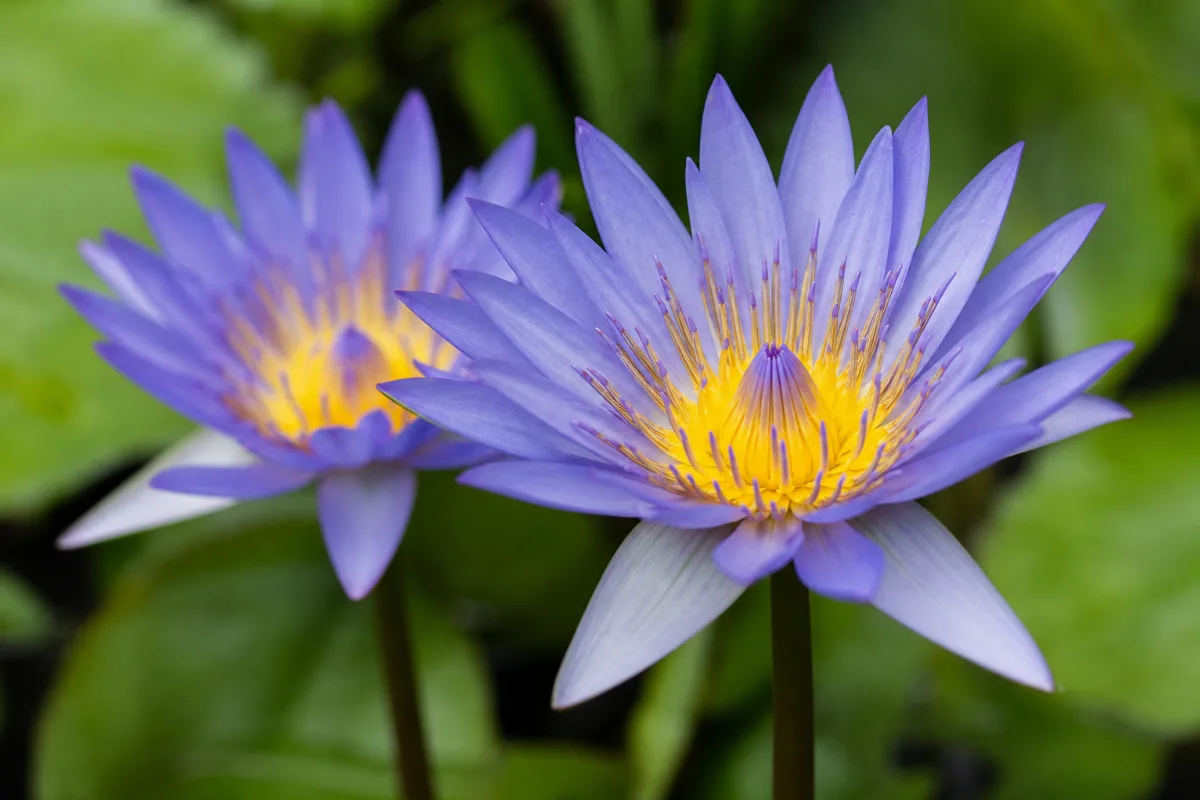
Blue lotus is the flower of a blue-petalled water lily linked to ancient Egypt. It is sold today as dried flower, tea, tincture, resin and vape liquid for relaxation and sleep. This profile is about that product. It is not sacred lotus (Nelumbo nucifera), a different plant.
General information, not medical advice. Last substantive update · Not medically reviewed. A named clinician has not signed off on this page. How this page is made
About Blue lotus
Blue lotus is a famous Egyptian flower now sold for relaxation, sleep and mind-altering effects. No human trial has tested it. The best data are chemistry reports showing that product content is unreliable, case reports of sedation and confusion, and forensic work finding synthetic cannabinoids in some blue lotus vapes. No agency monograph or safety entry was found. Legal rules vary and could not be verified from official sources.
What it is
Blue lotus is the flower of Nymphaea caerulea, a water lily with star-shaped blue petals. GBIF treats the name as a synonym of Nymphaea nouchali, and NCBI lists it as Nymphaea nouchali var. caerulea.
It is not sacred lotus (Nelumbo nucifera), which is a different plant in a different family. Many lab studies of the alkaloid nuciferine use sacred lotus leaves, and this profile labels those studies.
Traditional and current uses
The flower is painted on Egyptian tombs and papyri from the 14th century BCE, and traces of this lily were found in a 2nd-century BCE ritual vase together with other plants, a fermented fruit liquid and honey or royal jelly. That shows ritual use. It does not show what the flower did to people.
Today it is sold online as dried flower, tea, tincture, resin and vape liquid for relaxation and sleep.
What is in it and how it works
Blue lotus is said to hold the alkaloids nuciferine and apomorphine. Apomorphine is a dopamine-stimulating medicine for Parkinson disease. In lab and rodent tests, pure nuciferine acts on several dopamine and serotonin receptors and looks like some antipsychotic drugs.
But authentic industrial flower extracts held almost none of either alkaloid, and commercial products varied widely. The lab results on the pure compounds cannot be assumed for a tea or vape.
What the research shows
No human trial of blue lotus was found for any use. A 42-person preprint of a blue and pink lotus mix on acne reported improvement but is not peer reviewed. Antioxidant and leukaemia work is test-tube only.
The human data are about harm. Five military patients had sedation and perceptual disturbance after vaping or an infused drink. A conference abstract adds anxiety and psychotic symptoms. In US military cases, 90% of seized blue lotus or valerian vapes held synthetic cannabinoids.
At a glance
Traditional uses history, not proof
- Ancient Egypt: the flower appears on papyri and tombs from the 14th century BCE, and traces were found in a 2nd-century BCE ritual vase. This shows ritual use, not an effect.
- Ayurveda and traditional medicine: said to be used as a calming plant (one review; not verified).
- Today: relaxation, sleep and mind-altering use, marketed online.
Studied for research
- Calm and anxiety, insufficient (no human trial)
- Sleep, insufficient (rodent work on nuciferine only)
- Acne, very low (one non-peer-reviewed preprint of a mixed extract)
- Lab-only: antioxidant and leukaemia cell studies
Main compounds
- Aporphine alkaloids nuciferine and apomorphine (found in some products, almost none in authentic extracts)
- Flavonoids (quercetin, myricetin and kaempferol sugars) and gallic acid
- Blue pigments (delphinidin-type anthocyanins)
Common forms
- Dried flower and tea
- Tincture
- Resin or concentrate
- Vape liquid (untested way of use)
- Perfume absolute or concrete
Research links: Blue lotus chemistry and safety assessment (Molecules, 2023) · Blue lotus emergency case series (PubMed) · Synthetic cannabinoids in blue lotus vapes (PubMed) · Research Library · Genes & Biomarkers Library
The plant and its history
- Accepted scientific name
- Nymphaea nouchali Burm.f. (GBIF accepted); Nymphaea caerulea Savigny is listed as a synonym
- Naming authority
- Burm.f. (accepted); Savigny (synonym name used for blue lotus)
- Synonyms
- Nymphaea caerulea Savigny; Nymphaea caerulea Andrews; Nymphaea nouchali var. caerulea (Sav.) Verdc.; Nymphaea coerulea
- Common names
- Blue lotus (English); Blue water lily (English); Egyptian blue lotus / blue Egyptian lotus (English); Loto azul (Spanish (general usage, not checked))
- Botanical family
- Nymphaeaceae (water lilies)
- Classification
- Plantae > Tracheophyta > Magnoliopsida > Nymphaeales > Nymphaeaceae > Nymphaea > Nymphaea nouchali
- Native range
- Not verified from a botanical source read. Dosoky 2023 says it grows globally along rivers and lakes from sea level to 2700 m, and has long Egyptian cultural use.
- Habitat
- Freshwater lakes and rivers (Dosoky 2023).
- What the plant looks like
- Roots: Perennial spongy rhizome in the mud (Dosoky 2023).; Stems: Not verified.; Leaves: Floating round or oval flat leaves up to 40 cm across with a waxy upper surface (Dosoky 2023).; Flowers: Star-shaped flowers 15-20 cm across that open in mid-morning and close in the afternoon; most often blue but also white or pink (Dosoky 2023).; Fruit: Not verified.
- Cultivation
- Popular ornamental water plant (Dosoky 2023).
- Harvest and processing
- Industrial concrete and absolute were made by hexane then ethanol extraction, with yields of 0.18% and 0.09% (Dosoky 2023). Traditional preparations (tea, tincture, smoking blends) are not described in the sources read.
- Look-alikes and adulterants
- Name: Sacred lotus (Nelumbo nucifera Gaertn.); Note: A different plant in a different family (Nelumbonaceae, GBIF key 2882449). Often called lotus; sold as pink or white lotus. Its leaves are the main source of nuciferine in most studies. Studies of it are not studies of blue lotus and are labelled when used here.; Name: White water lily (Nymphaea alba) and other Nymphaea species; Note: Related water lilies that can be sold or mistaken under the same market names. Alkaloid content is not established for them in the sources read.; Name: Egyptian lotus / Nymphaea lotus; Note: A separate white-flowered Nymphaea species (GBIF key 2882429). Not shown to be the same product.
- Sustainability and conservation
- Not verified.
Traditional use and history history, not clinical proof
| Tradition or era | Documented use | Source |
|---|---|---|
| Ancient Egypt | Drawings and paintings of the blue lotus appear on Egyptian papyri and tombs from the 14th century BCE, which authors take to show use in rituals and health practices. | p37894493 |
| Ptolemaic Egypt, 2nd century BCE | Traces of Nymphaea nouchali var. caerulea were found in a ritual vase with Peganum harmala, a Cleome plant, a fermented fruit liquid and honey or royal jelly. This shows ritual use; it does not show an effect. | p39537764 |
| Ayurveda and traditional medicine | Said to be used for calming and a variety of health issues. Details are from one review and not verified. | p37894493 |
| Today | Sold online as dried flower, tea, tincture, resin and vape liquid for relaxation and sleep. No EU herbal monograph was found. | p37894493 |
Traditional use shows how a plant was used. It does not show that a supplement works or is safe today.
What is inside, and how it may work
What the plant contains and how those compounds act in cells and animals. Laboratory and animal mechanisms are not proven effects in people.
Main compounds
| Compound | Family | Where it is concentrated | Activity studied | Level of evidence |
|---|---|---|---|---|
| Nuciferine PubChem 10146 | aporphine alkaloid | Reported in Nelumbo nucifera leaves and in Nymphaea caerulea; very little in authentic industrial flower extracts 4300 ng/g in one confiscated resin; 10-72 ppb in authentic concrete and absolute | Blocks some serotonin receptors, partly stimulates some dopamine receptors, inhibits the dopamine transporter, and acted like an atypical antipsychotic in rodents. 4 10 3 11 | Animal research |
| Apomorphine PubChem 6005 | aporphine alkaloid | Reported in two of five blue lotus product samples; absent from authentic extracts Not detected in the confiscated resin | As a medicine it is a dopamine agonist used in Parkinson disease; common side effects are nausea, dizziness and somnolence. 10 3 6 | Human data |
| Quercetin glycosides PubChem 5280343 | flavonol | Flower Not given | Antioxidant in test tube assays. 1 | Laboratory research |
| Myricetin glycosides PubChem 5281672 | flavonol | Flower Not given | Among the most active antioxidants in the flower in test tube assays. 1 | Laboratory research |
| Kaempferol glycosides PubChem 5280863 | flavonol | Flower Not given | Isolated; antioxidant testing in the same paper. 1 | Laboratory research |
| Gallic acid PubChem 370 | phenolic acid | Flower Not given | Active antioxidant in test tube assays. 1 | Laboratory research |
| Delphinidin glycosides (blue anthocyanins) PubChem 128853 | anthocyanin | Flower (flower colour pigment) Not given | Pigment; Dosoky 2023 says blue flowers contain a delphinidin galactoside. 3 | Laboratory research |
Mechanisms, receptors and pathways
| Target or pathway | Gene or receptor | What was found | Level |
|---|---|---|---|
| Serotonin receptors (5-HT2A, 5-HT2C, 5-HT2B, 5-HT7, 5-HT1A, 5-HT6) | HTR2A, HTR2C, HTR2B, HTR7, HTR1A, HTR6 | Nuciferine was an antagonist at 5-HT2A, 5-HT2C and 5-HT2B, an inverse agonist at 5-HT7, a partial agonist at 5-HT6 and an agonist at 5-HT1A. 4 | Laboratory research |
| Dopamine receptors and transporter | DRD2, DRD5, DRD4, DAT | Nuciferine was a partial agonist at D2 and D5, an agonist at D4, and inhibited the dopamine transporter. In rodents it blocked drug-induced head twitches and rescued PCP-induced disruption of prepulse inhibition without catalepsy. 4 | Animal research |
| Sedation and sleep | Serotonin system (5-HT1A) | Nuciferine from sacred lotus leaves lengthened pentobarbital-induced sleep and raised NREM sleep in rodents, with raised hypothalamic 5-HT and 5-HT1A levels. 17 | Animal research |
| Cancer cell death | Caspases, cytokine genes (as measured) | A flower extract caused cell death in one leukaemia cell line. 2 | Laboratory research |
Absorption, metabolism and elimination
- Absorption
- No human absorption study of blue lotus was found. Nuciferine is insoluble in water and soluble in acid and organic solvents (Dosoky 2023), which may mean a plain water tea extracts little (our inference).
- Distribution
- Not studied.
- Metabolism
- Not studied in people.
- Elimination
- Not known.
- Bioavailability
- Unknown. Some plant extracts may not show on standard urine drug screens.
Isolated compounds versus whole extracts
Nearly all pharmacology is on isolated nuciferine (often from sacred lotus) or on apomorphine as a drug. Authentic whole-flower extracts held almost none of either alkaloid, so results on pure compounds should not be read as effects of the flower.
Nutritional composition
A nutrient table does not apply. It is a flower sold as a relaxing or mind-altering product, not as a food.
2 very low certainty7 not enough evidence
What was looked at
The 9 benefits and uses checked for Blue lotus, each with how strong the evidence is. Tap one to open it.
- Relaxation and calmNot enough evidence
- SleepNot enough evidence
- Anxiety and moodNot enough evidence
- Mind-altering effects (euphoria, perception changes)Very low certainty
- Acne and skinVery low certainty
- Fragrance ingredient (diluted, on skin)Not enough evidence
- Antioxidant activity (test tube only)Not enough evidence
- Cancer cells in a dishNot enough evidence
- Ritual and cultural use in ancient EgyptNot enough evidence
Lab markers tracked in the studies
Nuciferine in blue lotus products (lab measure)
What is Blue lotus good for?
The main proposed uses and how strong the human evidence is for each. "Very low" means one small or unclear study, and "insufficient" means no human study. No use of blue lotus is above very low.
Benefits, one by one
Each card is a research question, not a promise. Tap a goal to filter. Open a card to see the studies, doses and limits.
Relaxation and calm
Not enough evidenceBlue lotus is sold as a relaxing tea, tincture or vape. No human trial has tested it for calm. Case reports describe sedation and confusion instead.
5 studiesTeas, tinctures, dried flower, resins and vape liquids are sold. Cont…
Studies, doses and limits
What the trials found
No human trial of Nymphaea caerulea for calm, stress or relaxation was found. The sedation seen in emergency cases is a harm, not a treatment effect.
Results
No human result exists.
Why this rating
There is no human trial. Lab and animal work is on isolated nuciferine and cannot be carried over to teas or vapes.
Form and dose studied
Teas, tinctures, dried flower, resins and vape liquids are sold. Content is not standardised; no amount can be given.
Who was studied
Not tested.
Limits
Product content varies widely, and some vaping products sold as blue lotus held synthetic cannabinoids.
Why researchers looked
It is promoted online as a relaxant, and the flower is described in old traditions as soothing.
Traditional use
Authors describe calm and spiritual use in Egyptian culture and Ayurveda; this is tradition, not proof.
Proposed mechanism Lab animal
The alkaloids nuciferine and apomorphine are linked to dopamine and serotonin receptors in lab work. Real products often hold almost none of them.
A proposed mechanism does not show that the effect happens in people.
Safety is covered in the safety section: sedation, confusion, changed perception, products that may hold synthetic drugs, and no advice on safe amounts.
Sleep
Not enough evidenceBlue lotus is promoted as a sleep aid. No sleep study in people exists. Nuciferine, one of its alkaloids, lengthened sleep in rodents.
3 studiesNot applicable.
Studies, doses and limits
What the trials found
No human sleep trial was found.
Results
No human result exists.
Why this rating
Animal data on a pure compound from a different plant; no human data.
Who was studied
Not tested.
Limits
Rodent results do not show that teas or extracts help people sleep. Sedation can be unwanted, for example while driving.
Why researchers looked
Sedation seen after use, and rodent work on nuciferine, led to sleep claims.
Traditional use
Described as a modern use; not a documented traditional medicine in the sources read.
Proposed mechanism Animal research
In rats, pure nuciferine (from sacred lotus leaves) lowered movement and lengthened pentobarbital sleep through the serotonin system.
A proposed mechanism does not show that the effect happens in people.
Safety is covered in the safety section: sedation, confusion, changed perception, products that may hold synthetic drugs, and no advice on safe amounts.
Anxiety and mood
Not enough evidenceIt is called an anxiety reliever in product marketing. No human trial exists. Reports of anxiety, agitation and psychotic symptoms after use also exist.
3 studiesNot applicable.
Studies, doses and limits
What the trials found
No human trial. A conference abstract describes anxiety, derealisation and two vignettes with hypomanic and psychotic features after blue lotus use.
Results
No benefit shown; harms reported.
Why this rating
No trials. The harm reports are case-level and the abstract is not standard peer review.
Who was studied
People who used blue lotus (case reports).
Limits
Cannot say how often problems occur. People with a mood or psychotic illness should avoid it unless a doctor agrees.
Why researchers looked
Marketed as an anxiety reliever.
Proposed mechanism Lab animal
Nuciferine blocks some serotonin receptors and partly stimulates some dopamine receptors in lab and rodent tests, similar in pattern to some antipsychotic drugs.
A proposed mechanism does not show that the effect happens in people.
Safety is covered in the safety section: sedation, confusion, changed perception, products that may hold synthetic drugs, and no advice on safe amounts.
Mind-altering effects (euphoria, perception changes)
Very low certaintySome people use blue lotus for a mind-altering effect. Reports describe sedation, changed perception and, at high amounts, hallucinations. Amounts and causes are unclear.
5 studiesDried flower, tea, resin and vape liquid.
Studies, doses and limits
What the trials found
Five emergency cases had sedation and disturbed perception; none had a product test. Later work found synthetic cannabinoids in many seized blue lotus vaping products, so effects may come from added drugs.
Results
Sedation and perception changes in case reports.
Why this rating
Case series without product testing, and contamination with synthetic drugs is documented.
Form and dose studied
Dried flower, tea, resin and vape liquid.
Who was studied
Adults, including military patients in the case series.
Limits
Cannot link effects to the plant. This is not a benefit.
Why researchers looked
Forensic and chemistry papers study it as a novel psychoactive plant.
Traditional use
Egyptian ritual use is documented by archaeology; this does not tell us what it did to users.
Proposed mechanism Lab
Apomorphine (a dopamine-stimulating drug used in Parkinson disease) and nuciferine were found in some products and almost none in authentic industrial extracts.
A proposed mechanism does not show that the effect happens in people.
Safety is covered in the safety section: sedation, confusion, changed perception, products that may hold synthetic drugs, and no advice on safe amounts.
Acne and skin
Very low certaintyOne small preprint tested a mixed blue and pink lotus extract on acne. It has not been peer reviewed, so blue lotus alone cannot be said to help.
2 studiesSkin extract; strength unknown.
Studies, doses and limits
What the trials found
A 42-person randomised preprint of a mix of blue lotus and pink lotus flower extract reported large acne improvements. We summarised it earlier and did not re-open it for this profile.
Results
Large improvement reported in the preprint (details not re-checked).
Effect sizes as reported
Not re-checked
Why this rating
Small, not peer reviewed, two species mixed, not re-read.
Form and dose studied
Skin extract; strength unknown.
Who was studied
People with acne.
Limits
Cannot be applied to blue lotus alone.
Why researchers looked
Flower extracts are used in skin products.
Traditional use
Not documented in the sources read.
Proposed mechanism Lab
Not established.
A proposed mechanism does not show that the effect happens in people.
Skin safety of the extract was not assessed beyond the fragrance review (diluted authentic concrete or absolute).
Fragrance ingredient (diluted, on skin)
Not enough evidenceAuthors of one safety review saw no major concern for diluted authentic flower concrete or absolute used as a perfume ingredient. This says nothing about drinking, smoking or vaping.
1 studiesDiluted perfume use.
Studies, doses and limits
What the trials found
No human study. The assessment reads toxicity data of the main chemicals and finds limited whole-plant data.
Results
Safety assessment only.
Why this rating
Written by authors who work for an essential oil company (industry-linked); based on data on single chemicals.
Form and dose studied
Diluted perfume use.
Who was studied
Users of fragrance products.
Limits
Not a health benefit.
Why researchers looked
Flower extracts are used in perfume.
Traditional use
Egyptian scented use is described by authors; not verified here.
Proposed mechanism Lab
Not applicable.
A proposed mechanism does not show that the effect happens in people.
No safe amount for eating, vaping or smoking is known.
Antioxidant activity (test tube only)
Not enough evidenceFlower compounds such as quercetin and myricetin glycosides and gallic acid block oxidation in test tube assays. Nothing shows a benefit in people.
1 studiesNot applicable.
Studies, doses and limits
What the trials found
No human study.
Results
Lab only.
Why this rating
Lab-only; test tube antioxidant activity does not predict health effects.
Limits
Lab only.
Why researchers looked
Plant polyphenols are often screened for antioxidant action.
Proposed mechanism Lab
Nine of twenty isolated flower compounds were active in an antioxidant test.
A proposed mechanism does not show that the effect happens in people.
None identified from this lab work.
Cancer cells in a dish
Not enough evidenceA flower extract caused cell death in one leukaemia cell line in a dish. This is lab-only. It is not a cancer treatment.
1 studiesNot applicable.
Studies, doses and limits
What the trials found
No animal or human study.
Results
Lab only.
Why this rating
One cell line; no further testing.
Limits
Lab only.
Why researchers looked
Researchers screened a flower extract against cancer cells.
Proposed mechanism Lab
Cell death and changes in cytokine genes in one cell line.
A proposed mechanism does not show that the effect happens in people.
Do not use blue lotus to treat cancer.
Ritual and cultural use in ancient Egypt
Not enough evidenceTraces of this water lily were found with other plants and a fermented drink in a 2nd-century BCE Egyptian ritual vase. The painting and papyrus record show cultural use. It is not evidence of benefit.
2 studiesNot applicable.
Studies, doses and limits
What the trials found
Not a health study.
Results
Presence of the plant in a ritual vessel.
Why this rating
Archaeology cannot show effects.
Limits
One vessel; it also held other plants and fluids.
Why researchers looked
Historical interest.
Traditional use
Egyptian tombs and papyri show the flower from the 14th century BCE, per a 2023 review; the effect on users is unknown.
Proposed mechanism Other
Not applicable.
A proposed mechanism does not show that the effect happens in people.
Traditional use is not proof of safety.
Connections to the rest of health
How Blue lotus connects to the rest of our health knowledge graph. Every link says what kind of connection it is. A safety link (for example to the liver) is a warning, not a benefit. A study that merely mentions a topic never creates a benefit link.
Explore every connection: goals, body systems, organs, symptoms, genes
A. Wellness goals
| Connected to | Kind of connection | Evidence status | Context | Studies |
|---|---|---|---|---|
| Calm Relaxation | Not enough evidence | Relaxation and calm: Blue lotus is sold as a relaxing tea, tincture or vape. No human trial has tested it for calm. Case reports describe sedation and confusion instead. | 10 12 14 3 16 | |
| Stress Reduction | Not enough evidence | Relaxation and calm: Blue lotus is sold as a relaxing tea, tincture or vape. No human trial has tested it for calm. Case reports describe sedation and confusion instead. | 10 12 14 3 16 | |
| Better Sleep | Not enough evidence | Sleep: Blue lotus is promoted as a sleep aid. No sleep study in people exists. Nuciferine, one of its alkaloids, lengthened sleep in rodents. | 17 10 12 | |
| Anxiety Support | Not enough evidence | Anxiety and mood: It is called an anxiety reliever in product marketing. No human trial exists. Reports of anxiety, agitation and psychotic symptoms after use also exist. | 4 16 12 | |
| Mood Balance | Not enough evidence | Anxiety and mood: It is called an anxiety reliever in product marketing. No human trial exists. Reports of anxiety, agitation and psychotic symptoms after use also exist. | 4 16 12 | |
| Mental Clarity | Very low certainty | Mind-altering effects (euphoria, perception changes): Some people use blue lotus for a mind-altering effect. Reports describe sedation, changed perception and, at high amounts, hallucinations. Amounts and causes are unclear. | 12 14 10 9 3 | |
| Healthy Skin | Very low certainty | Acne and skin: One small preprint tested a mixed blue and pink lotus extract on acne. It has not been peer reviewed, so blue lotus alone cannot be said to help. Fragrance ingredient (diluted, on skin): Authors of one safety review saw no major concern for diluted authentic flower concrete or absolute used as a perfume ingredient. This says nothing about drinking, smoking or vaping. | 8 3 | |
| Cellular Protection | Not enough evidence | Antioxidant activity (test tube only): Flower compounds such as quercetin and myricetin glycosides and gallic acid block oxidation in test tube assays. Nothing shows a benefit in people. | 1 | |
| Immune Support | Not enough evidence | Cancer cells in a dish: A flower extract caused cell death in one leukaemia cell line in a dish. This is lab-only. It is not a cancer treatment. | 2 | |
| Holistic Balance | Traditional use | Not enough evidence | Ritual and cultural use in ancient Egypt: Traces of this water lily were found with other plants and a fermented drink in a 2nd-century BCE Egyptian ritual vase. The painting and papyrus record show cultural use. It is not evidence of benefit. | 15 3 |
B. Body systems
| Connected to | Kind of connection | Evidence status | Context | Studies |
|---|---|---|---|---|
| Nervous system | Adverse effect or risk | Very low certainty | Sedation, confusion and changed perception in case reports; some vaping products held synthetic cannabinoids. Sedation, confusion and changed perception in case reports; some vapes held synthetic cannabinoids. A safety relationship, not a benefit. Preparation or compound: Blue lotus products (vaped, infused drink, tea) |
12 14 |
| Nervous System | Biological association | Not enough evidence | Studied for: Relaxation and calm Studied for: Sleep | 10 12 14 3 16 17 4 9 15 |
| Integumentary System | Biological association | Very low certainty | Studied for: Acne and skin Studied for: Fragrance ingredient (diluted, on skin) | 8 3 |
| Whole Body | Biological association | Not enough evidence | Studied for: Antioxidant activity (test tube only) | 1 |
| Immune System | Biological association | Not enough evidence | Studied for: Cancer cells in a dish | 2 |
I. Biomarkers
| Connected to | Kind of connection | Evidence status | Context | Studies |
|---|---|---|---|---|
| Nuciferine in blue lotus products (lab measure) | Biological association | Low certainty | Measured in trials: varies. A lab change is not the same as a health benefit. | 10 3 |
J. Genes, receptors and enzymes
| Connected to | Kind of connection | Evidence status | Context | Studies |
|---|---|---|---|---|
| Serotonin receptor genes (HTR2A, HTR2C, HTR1A and others) | Preliminary mechanism | In vitro | Targets of nuciferine in lab assays | 4 |
| Dopamine receptor genes (DRD2, DRD4, DRD5) and the dopamine transporter | Preliminary mechanism | In vitro | Targets of nuciferine in lab assays | 4 |
L. Active compounds
| Connected to | Kind of connection | Evidence status | Context | Studies |
|---|---|---|---|---|
| Nuciferine | Very low certainty | Acts on dopamine and serotonin receptors in lab work; content in products is minimal to variable. Preparation or compound: Isolated alkaloid |
4 10 | |
| Nuciferine | Biological association | Animal | Blocks some serotonin receptors, partly stimulates some dopamine receptors, inhibits the dopamine transporter, and acted like an atypical antipsychotic in rodents. Preparation or compound: Reported in Nelumbo nucifera leaves and in Nymphaea caerulea; very little in authentic industrial flower extracts |
4 10 3 11 |
| Apomorphine | Biological association | Human | As a medicine it is a dopamine agonist used in Parkinson disease; common side effects are nausea, dizziness and somnolence. Preparation or compound: Reported in two of five blue lotus product samples; absent from authentic extracts |
10 3 6 |
| Quercetin glycosides | Biological association | In vitro | Antioxidant in test tube assays. Preparation or compound: Flower |
1 |
| Myricetin glycosides | Biological association | In vitro | Among the most active antioxidants in the flower in test tube assays. Preparation or compound: Flower |
1 |
| Kaempferol glycosides | Biological association | In vitro | Isolated; antioxidant testing in the same paper. Preparation or compound: Flower |
1 |
| Gallic acid | Biological association | In vitro | Active antioxidant in test tube assays. Preparation or compound: Flower |
1 |
| Delphinidin glycosides (blue anthocyanins) | Biological association | In vitro | Pigment; Dosoky 2023 says blue flowers contain a delphinidin galactoside. Preparation or compound: Flower (flower colour pigment) |
3 |
Each connection is stored with the ingredient, the connected record, the kind of connection, the evidence status, the supporting studies, the preparation or compound involved, and a review date (last reviewed October 25, 2026).
Evidence at a glance: what the research found for 9 outcomes
Each outcome below is one thing researchers measured. Certainty is how far the evidence can be trusted, not how well it works. The full studies are on the next tab.
The evidence
The research centre for Blue lotus. Every record here was checked against PubMed or the publisher's page; we never list a study we have not verified.
Evidence by outcome
Bars show how many studies we found for each outcome, not how well it works. People are added up across trials only (reviews are not added, to avoid double counting).
How we rate evidence
High certainty
Several well-run trials or reviews agree; further research is unlikely to change the picture much.
Moderate certainty
Good trials point the same way, but some doubt remains.
Low certainty
Small, short or inconsistent trials. The finding could change with better research.
Very low certainty
Very little or very weak human data. Treat as a possibility only.
Mixed findings
Trials or reviews disagree with each other.
Not enough evidence
Not enough human research to say either way.
Evidence against
Good research found no benefit, or found harm.
We take the reviewers' own risk-of-bias and GRADE statements where they exist, and otherwise judge from study size, design, consistency, directness and whether a product matches what is sold. Many publications do not make evidence high. Method note: We searched PubMed, read the abstracts of every cited study, and read the full text of the 2023 chemistry paper and the 2026 conference abstract. Plant names were checked in GBIF and NCBI Taxonomy, and chemical IDs in PubChem. We looked for NCCIH, EMA, LiverTox and LactMed entries and found none we could open. One acne preprint was summarised from our earlier notes and not re-read.
Study library: every study we checked 17
| Study | Design | People | Product, dose, length | Result |
|---|---|---|---|---|
| Agnihotri 2008 Antioxidant constituents of Nymphaea caerulea flowers Phytochemistry · PMID 18534639 · DOI |
Lab lab |
Chemistry of flowers | Nymphaea caerulea flower fractions and 20 isolated compounds flower |
20 compounds isolated, including quercetin, myricetin and kaempferol glycosides, gallic acid and sitosterol; nine were active in an antioxidant test. The ethyl acetate fraction was strongest. Methods, limits and fundingOutcomes: Isolation; antioxidant test tube assays Limitations: Test tube only; no link to any effect in people. Funding and conflicts: US NIH/USDA research funding listed; no industry link seen. Read: abstract |
| Chatterjee 2024 The Apoptotic Property of Nymphaea Caerulea Flower Extract on Acute Myeloid Leukaemia Cell Line, THP-1 Asian Pac J Cancer Prev · PMID 38285776 · DOI |
Lab lab |
THP-1 leukaemia cells and a normal kidney cell line | Hydro-ethanolic whole-flower extract (50% and 70%) flower |
The extract caused cell death in leukaemia cells in a dish. The authors call it a promising anti-leukaemia agent. Methods, limits and fundingOutcomes: Cell death and cytokine genes Limitations: One cell line in a dish; it does not show any effect in animals or people. No one should use it for cancer. Funding and conflicts: No conflicts declared. Read: abstract |
| Dosoky 2023 Chemical Composition, Market Survey, and Safety Assessment of Blue Lotus (Nymphaea caerulea Savigny) Extracts Molecules · PMID 37894493 · DOI |
Lab analysis lab |
17 Six authentic industrial flower extracts and eleven commercial products bought online (US) |
Flower concrete and absolute; commercial blue lotus products flower |
Apomorphine and nuciferine were virtually absent from authentic extracts (nuciferine 10-72 ppb). All eleven commercial products held synthetic fragrance components. The authors found no published safety data on the whole plant, say it is not GRAS classified, and see no major concern for diluted topical fragrance use only. Methods, limits and fundingOutcomes: Chemical makeup by GC-MS; safety review of main constituents Limitations: Authors work for an essential oil company (doTERRA), so this is industry-linked. Fragrance safety does not apply to drinking, smoking or vaping. Funding and conflicts: Industry-linked: all authors work for doTERRA International. Read: full-text |
| Farrell 2016 In Vitro and In Vivo Characterization of the Alkaloid Nuciferine PLoS One · PMID 26963248 · DOI |
Lab animal animal |
Receptor assays and rodent behaviour tests | Pure nuciferine (not a whole plant extract) isolated compound |
Nuciferine blocked some serotonin receptors, partly stimulated some dopamine receptors and inhibited the dopamine transporter. In rodents it acted like an atypical antipsychotic without catalepsy. The authors say it is similar to some approved antipsychotics. Methods, limits and fundingOutcomes: Receptor activity; rodent behaviour Limitations: Isolated compound in cells and rodents; no human data. Amounts in blue lotus products are very low or variable. Funding and conflicts: No competing interests declared. Read: abstract |
| GBIF Secretariat 2026 GBIF Backbone Taxonomy: Nymphaea nouchali Burm.fil. (accepted); Nymphaea caerulea Sav. listed as synonym GBIF species API, checked 2026-10-25 · Source |
Database other |
Plant names | Name check unspecified |
Accepted species Nymphaea nouchali Burm.f. (key 7326947), family Nymphaeaceae; Nymphaea caerulea Sav. (key 11310941) and N. caerulea Andrews are synonyms. Methods, limits and fundingOutcomes: Accepted name, family, synonyms Limitations: Name database, not a botanical source. Read: full-text |
| Hislop 2024 Sublingual apomorphine in treatment of Parkinson's disease: a review Int J Neurosci · PMID 35986574 · DOI |
Narrative review |
Adults with advanced Parkinson's disease | Apomorphine as a medicine (sublingual film) pure drug |
Common side effects of the drug were nausea, dizziness and somnolence, generally mild. This describes the medicine, not blue lotus. Methods, limits and fundingOutcomes: Efficacy and safety of the drug Limitations: Drug at prescribed doses, not blue lotus. Used here only to show what apomorphine does as a medicine. Funding and conflicts: Not stated in the abstract. Read: abstract |
| NCBI 2026 NCBI Taxonomy: Nymphaea nouchali var. caerulea (taxid 1616377) NCBI Taxonomy via E-utilities, checked 2026-10-25 · Source |
Database other |
Plant names | Name check unspecified |
Listed as Nymphaea nouchali var. caerulea, common name blue Egyptian lotus; synonyms Nymphaea caerulea and Nymphaea coerulea; family Nymphaeaceae. Methods, limits and fundingOutcomes: Accepted name, synonyms, lineage Limitations: Name database. Read: full-text |
| Not re-read 2021 The effect of blue and pink lotus flower extract on acne vulgaris: a randomized double-blind clinical trial (preprint) Europe PMC preprint PPR756412 · Source |
RCT preprint |
42 People with acne vulgaris |
Extract of blue lotus (Nymphaea caerulea) mixed with pink lotus (Nelumbo nucifera) flowers, applied to the skin flower |
Our earlier summary says large improvements were reported. We did not re-open the preprint for this profile. Methods, limits and fundingOutcomes: Acne improvement Limitations: Preprint, not peer reviewed; small; a mix of two different species, so it cannot be applied to blue lotus alone. Details not re-checked. Funding and conflicts: Not re-checked. Read: summary-only |
| Peace 2020 The analysis of commercially available natural products recommended for use in electronic cigarettes Rapid Commun Mass Spectrom · PMID 32110843 · DOI |
Lab analysis lab |
18 Eight e-liquids, six resins and four powders from eight "herbs" sold by one online maker, including blue lotus |
Commercial herbal e-liquids, resins and powders (incl. blue lotus) |
Compounds were found in only two of eight e-liquids, three of five resins and three of four powders, including nuciferine. The authors conclude that psychoactive and potentially harmful substances were present. Methods, limits and fundingOutcomes: Psychoactive compounds found by mass spectrometry Limitations: One seller; the abstract does not split results by herb. Funding and conflicts: No conflict of interest declared. Read: abstract |
| Poklis 2017 The Blue Lotus Flower (Nymphea caerulea) Resin Used in a New Type of Electronic Cigarette, the Re-Buildable Dripping Atomizer J Psychoactive Drugs · PMID 28266899 · DOI |
Lab analysis lab |
5 One confiscated resin plus four commercial blue lotus products |
Blue lotus resin and commercial products flower (as sold; part not stated) |
Nuciferine was found in all five samples and apomorphine in two. The confiscated resin had no apomorphine and 4300 ng/g of nuciferine. The resin turned into aerosol in the e-cigarette. Methods, limits and fundingOutcomes: Apomorphine and nuciferine content; whether the resin aerosolises in a dripping e-cigarette Limitations: Five samples only; this is a chemistry report, not a study of effects in people. Funding and conflicts: Funded in part by US NIH grants (as listed in PubMed); no industry link seen. Read: abstract |
| Ren 2024 Advances in the pharmacological effects and mechanisms of Nelumbo nucifera Gaertn. extract nuciferine J Ethnopharmacol · PMID 38670406 · DOI |
Narrative review animal |
Literature on nuciferine (mostly lab and animal) | Nuciferine isolated compound |
Describes nuciferine effects on smooth muscle, blood fats, insulin release, blood vessels, blood pressure and heart rhythm in lab work. Calls for work on toxicity, side effects and clinical pharmacology. Methods, limits and fundingOutcomes: Pharmacological activities Limitations: Narrative review; says nuciferine is obtained from both sacred lotus and Nymphaea caerulea. Mostly preclinical. Funding and conflicts: No conflict stated. Read: abstract |
| Schimpf 2023 Toxicity From Blue Lotus (Nymphaea caerulea) After Ingestion or Inhalation: A Case Series Mil Med · PMID 34345890 · DOI |
Case series |
5 Five active-duty patients seen in an emergency department with altered mental status |
Blue lotus products: vaped (4 patients) or an infused drink (1 patient) |
All five had sedation and disturbed perception. They recovered with supportive care and needed no sedating drugs. Some products may not show on standard urine drug screens. Methods, limits and fundingOutcomes: Symptoms and course Limitations: Five people; no product was tested, so the cause was assumed, not shown (the review by Dosoky 2023 notes this). Later work found synthetic cannabinoids in many blue lotus vaping products (Seither 2024), so these cases may not be due to the plant. Funding and conflicts: No conflict stated in the abstract; US Army authors. Read: abstract |
| Searched by the editors 2026 Regulator and database searches for blue lotus (NCCIH, EMA/HMPC, LiverTox, LactMed) checked 2026-10-25 (and earlier in the profile summary) · Source |
Search record other |
Agency websites and NCBI Bookshelf | Not applicable unspecified |
NCCIH page for blue lotus returned not found (404). NCBI Bookshelf search for blue lotus or Nymphaea within LiverTox and LactMed returned nothing. The EMA site could not be read (access refused); our earlier summary also found no HMPC monograph. These are marked not found, not as proof none exists. Methods, limits and fundingOutcomes: Whether an entry exists Limitations: Absence of a page we could open is not proof of absence. Read: not-found |
| Seither 2024 Synthetic cannabinoid identification in cases associated with blue lotus and valerian root vaping products J Anal Toxicol · PMID 39082147 · DOI |
Forensic case series |
94 29 seized-drug cases mentioning blue lotus or valerian root, and 65 toxicology cases mentioning blue lotus (US military laboratories, 2020-2023) |
Seized vaping products sold as blue lotus or valerian root |
In 90% of the 29 seized-drug cases at least one item held a synthetic cannabinoid. The 65 toxicology cases all contained synthetic cannabinoids or their metabolites, with blue lotus named in the history. The authors recommend synthetic cannabinoid screening whenever blue lotus vaping is suspected. Methods, limits and fundingOutcomes: Presence of synthetic cannabinoids Limitations: Selected military forensic cases; cannot say how common this is in all blue lotus products. It shows that some products sold under the name are not what they claim. Funding and conflicts: US government laboratories; no industry link. Read: abstract |
| Tanasi 2024 Multianalytical investigation reveals psychotropic substances in a ptolemaic Egyptian vase Sci Rep · PMID 39537764 · DOI |
Archaeological analysis other |
1 One Egyptian ritual vase, 2nd century BCE |
Residue of a ritual liquid traces of Nymphaea nouchali var. caerulea, Peganum harmala and Cleome |
Traces of Nymphaea nouchali var. caerulea were found with other plants, a fermented fruit liquid and honey or royal jelly. This shows ritual use, not a health effect. Methods, limits and fundingOutcomes: Plant sources of residues Limitations: One vessel; the amount and effect on users cannot be known. Funding and conflicts: No competing interests declared. Read: abstract |
| Teixeira FMAA 2026 Blue Lotus and Acute Psychiatric Symptoms: A Short Review (conference abstract) BJPsych Open 12(Suppl 1):S85-S86 (RCPsych International Congress abstract) · Source · DOI |
Narrative review |
2 Narrative search of fewer than ten publications plus two clinical vignettes |
Blue lotus (Nymphaea caerulea) products |
Reports agitation, confusion, derealisation and anxiety in the one peer-reviewed case series, and two vignettes of hypomanic and psychotic presentations after use. Cites UK OPSS concern about unknown doses, variable content and purity. Says active compounds act on dopamine and serotonin receptors. Methods, limits and fundingOutcomes: Psychiatric symptoms; regulatory concerns Limitations: Conference abstract reviewed by the college faculty, not standard BJPsych Open peer review, and the journal says it should not be quoted as peer reviewed. The OPSS document was not read. Funding and conflicts: No funding stated in the abstract. Read: full-text |
| Wang 2025 Sedative and hypnotic effects of nuciferine: enhancing rodent sleep via serotonergic system modulation Int J Neuropsychopharmacol · PMID 40160035 · DOI |
Animal research animal |
Rodents | Nuciferine from sacred lotus (Nelumbo nucifera) leaves isolated compound dose-dependent · vs vehicle |
Nuciferine lowered movement and lengthened pentobarbital-induced sleep in a dose-dependent way, and increased total and NREM sleep in rats. Methods, limits and fundingOutcomes: Locomotor activity; pentobarbital sleep time; EEG sleep Limitations: Rodents only, isolated compound from a different plant (sacred lotus leaf). It supports the sedation plausibility but is not evidence in people. Funding and conflicts: No conflicts declared. Read: abstract |
What we do not know yet
- What the evidence supports: nothing about blue lotus is above very low certainty. There is no human trial for calm, anxiety, sleep or mood. Acne rests on one non-peer-reviewed mixed-species preprint; antioxidant and leukaemia work is test-tube only.
- What is uncertain: whether the effects seen in case reports come from the plant or from added drugs, how much nuciferine or apomorphine real flower products hold, and what amounts cause harm. Legal status could not be verified from official sources.
- Missing: studies of driving, alcohol combinations, pregnancy, breastfeeding, children and liver safety; an EMA or NCCIH assessment; and testing of authentic whole-flower tea.
How new research is added
New studies are found by a saved PubMed search and are placed in a review queue. A person reads each one before it changes any evidence rating or safety wording. New publications never change ratings automatically.
Lab markers
What changed in blood or saliva tests during trials. A changed number is not the same as feeling or being healthier, and we give no "normal ranges".
Other 1
Nuciferine in blue lotus products (lab measure)
Varies in trials
How much of the alkaloid nuciferine a product holds, measured in a laboratory.
Low certaintyResults and what it means
Why it was measured
Nuciferine is the main alkaloid blamed for effects on the mind.
Statistical vs. clinical meaning
Shows that content is unreliable. It is not a measure of any health benefit.
Safety implication
Strength cannot be judged from a label.
Safety
What studies and official sources say about side effects, medicines and who should check first. Each point shows what kind of evidence it comes from.
Main points to know 3
- Mind-altering and sedating: do not drive or work with machines. Five emergency patients had sedation and disturbed perception after vaping or an infused drink of blue lotus. A review says high amounts are known to give euphoria and hallucinations. No study measured driving or reaction time, but sedation makes driving unsafe, so avoid driving or operating machinery after use. This advice is our inference from the case reports. Case report 12 3
- Products may not be what the label says. Eleven online products all held synthetic fragrance components, and authentic industrial extracts had almost no nuciferine or apomorphine. In US military laboratory cases, 90% of seized items sold as blue lotus or valerian vapes held synthetic cannabinoids, and 65 toxicology cases naming blue lotus contained them. Effects blamed on the plant may be from added drugs. Other 3 14 10
- Pregnancy, breastfeeding and children: no safety data, avoid. No study in pregnancy, breastfeeding or children was found, and no agency guidance was found. With psychoactive alkaloids and unknown product content, avoiding it is the careful choice (our inference). No evidence 13
Side effects 5
| Effect | How often | Severity and recovery | Evidence |
|---|---|---|---|
| Sedation and drowsiness Also reported with synthetic cannabinoid-laced vapes. | Not established | moderate Recovered with supportive care in the case series | Case report 12 14 |
| Confusion and altered mental status Four of the five patients had vaped blue lotus; one had an infused drink. | Not established | moderate Recovered with supportive care; five emergency patients | Case report 12 |
| Changed perception, derealisation, hallucinations at high amounts Frequency unknown. | Not established | moderate Recovered in the case series | Case report 12 16 |
| Agitation, anxiety, and in vignettes hypomanic or psychotic symptoms Two vignettes in a conference abstract; not standard peer review. | Not established | serious Not stated | Case report 16 |
| Effects of apomorphine as a drug (nausea, dizziness, sleepiness) These are known for the prescription drug at prescribed doses. Whether blue lotus products give enough apomorphine to matter is not shown; authentic extracts had none. | Not established | mild Not applicable | Other 6 |
Liver
No case of liver injury linked to blue lotus was found, and there is no LiverTox entry. Absence of reports is not proof of safety. Test-tube and rodent work on nuciferine does not address liver safety in people. 13
How often. Not known.
Monitoring. No agency monitoring advice was found.
This is a safety connection. It is not evidence that Blue lotus supports liver health.
Medicines and supplements 3
| With | Why it matters | Importance | Evidence | What to do |
|---|---|---|---|---|
| Alcohol, sedatives, sleep medicines, opioids and other drugs that slow the brain cns-depressant | Nuciferine lengthened pentobarbital sleep in rodents, which suggests added sedation. Not tested for blue lotus in people. | Unknown. Added sedation is plausible. | Animal research Very low certainty 17 | Do not combine with alcohol or sedating medicines. Ask a doctor or pharmacist. |
| Drugs that act on dopamine or serotonin (for example antipsychotics, Parkinson drugs, antidepressants) prescription | Lab work shows nuciferine acts on several dopamine and serotonin receptors and the dopamine transporter. Apomorphine is itself a dopamine-stimulating drug. | No interaction has been reported or tested in people. Product alkaloid content is too variable to predict. | Laboratory research Very low certainty 4 10 | Ask a doctor or pharmacist before use if you take any such medicine. |
| Other recreational or psychoactive substances other | Not studied; adulterated vapes may hold synthetic cannabinoids. | Unknown. | Case report Very low certainty 14 | Avoid combining. |
Who should check first 4
| Situation | Advice | Evidence |
|---|---|---|
| Pregnancy and breastfeeding | Avoid. No data exist. | No evidence 13 |
| Before driving, work with machinery or any task needing alertness | Avoid. | Case report 12 |
| Mood, psychotic or substance use disorders | Avoid unless a doctor agrees; psychiatric symptoms have been reported. | Case report 16 |
| Children and adolescents | Avoid; no safety data exist, and one resin report began with a product confiscated from an adolescent. | Case report 10 |
Overdose, product quality and regulators
Summary. No safety data on the whole plant were found (Dosoky 2023 states this). No safe amount is known.
Animal. No whole-plant animal toxicity study was found in the sources read. Rodent work on pure nuciferine is in the science file.
High dose or long term signals. Hallucinations and euphoria are described at high amounts; long-term effects unknown.
Overdose response. Emergency patients were managed with supportive care and needed no sedating drugs.
Genotoxicity. Not studied for the whole plant.
Toxic plant parts. Not documented. Products use the flower; the chemistry papers analysed flowers, resins and extracts.
Quality is the biggest problem. Content varies, labels are incomplete, and some products held synthetic fragrance or synthetic drugs.
Synthetic cannabinoids in blue lotus vapes. 90% of 29 US Army seized-drug cases mentioning blue lotus or valerian held at least one synthetic cannabinoid; all 65 toxicology cases contained them. 14
Synthetic fragrance. All eleven commercial products held synthetic fragrance components; some seemed to have citrus, lavender or geranium oil added; none resembled the authentic aroma. 3
Mislabeled alkaloid content. Apomorphine was found in two of five samples and nuciferine in all five; authentic extracts had almost none of either. Some e-liquids and resins held no detectable psychoactive compound. 10 3 9
Look-alike plants. Blue lotus is often confused with sacred lotus (Nelumbo nucifera) and white and other water lilies; both contain nuciferine in some reports, so a label alone does not tell which plant is in a product. 11 4
Drug screens. Some plant extracts may not show on standard urine drug screens. 12
| Body | Action | Date |
|---|
When to get medical help
- Severe drowsiness, being hard to wake, or confusion after use
- Hallucinations, severe agitation or paranoia
- Slow or difficult breathing, fainting, or seizure
- Call local emergency services or poison control and say what was used, including the vape or product
Stop the supplement and contact a clinician or emergency service. In the US, Poison Control is 1-800-222-1222.
General information only, not medical advice. Ask a clinician or pharmacist before use, especially with medicines, in pregnancy or with a health condition. See the Natural Remedy Safety guide.
Frequently asked questions
What is blue lotus?
Is blue lotus the same as sacred lotus?
Does blue lotus help anxiety or sleep?
What does blue lotus do to the mind?
Is it safe to drive after using blue lotus?
No study tested driving. Because it can cause sedation and changed perception, avoid driving or using machinery after use. This is a cautious inference from the case reports.
Can I mix blue lotus with alcohol or sleeping pills?
Avoid it. No human study tested the mix, but pure nuciferine lengthened sleep caused by a sedative in rodents, so added sedation is plausible. Ask a doctor or pharmacist.
Do blue lotus products contain what the label says?
Does blue lotus contain apomorphine?
Is blue lotus legal?
Is blue lotus safe in pregnancy or breastfeeding?
No safety data exist for pregnancy, breastfeeding or children, and no agency guidance was found. Avoid it.
Does blue lotus affect the liver or interact with medicines?
Explore by health goal
Healthy SkinCalm RelaxationStress ReductionBetter SleepAnxiety SupportMood BalanceMental ClarityCellular ProtectionImmune SupportHolistic Balance
Editorial transparency
- Written by
- AlternativeMed editorial team. Research compiled with AI assistance, then checked against PubMed records.
- Medical review
- None. This page has not been reviewed by a physician or pharmacist.
- First published
- 2026-10-25
- Last substantive update
- 2026-10-25
- How we research
- We searched PubMed, read the abstracts of every cited study, and read the full text of the 2023 chemistry paper and the 2026 conference abstract. Plant names were checked in GBIF and NCBI Taxonomy, and chemical IDs in PubChem. We looked for NCCIH, EMA, LiverTox and LactMed entries and found none we could open. One acne preprint was summarised from our earlier notes and not re-read.
- How we rate evidence
- See "How we rate evidence" in the Evidence tab.
- Independence
- No product is promoted on this page. No affiliate links are shown. If one is added later it will be labelled and kept apart from the evidence.
Sources 17
Each source was opened and checked. Where we read only the abstract, it says so. The small numbers in the text point here.
- Agnihotri VK, ElSohly HN, Khan SI, Smillie TJ, Khan IA, Walker LA. Antioxidant constituents of Nymphaea caerulea flowers. Phytochemistry. 2008. PMID 18534639. DOI 10.1016/j.phytochem.2008.04.009. (abstract)
- Chatterjee D, Singh B, Paira K, Das S. The Apoptotic Property of Nymphaea Caerulea Flower Extract on Acute Myeloid Leukaemia Cell Line, THP-1. Asian Pac J Cancer Prev. 2024. PMID 38285776. DOI 10.31557/APJCP.2024.25.1.123. (abstract)
- Dosoky NS, Shah SA, Dawson JT, Banjara SS, Poudel A, Bascoul C, Satyal P. Chemical Composition, Market Survey, and Safety Assessment of Blue Lotus (Nymphaea caerulea Savigny) Extracts. Molecules. 2023. PMID 37894493. DOI 10.3390/molecules28207014. (full-text)
- Farrell MS, McCorvy JD, Huang XP, et al.. In Vitro and In Vivo Characterization of the Alkaloid Nuciferine. PLoS One. 2016. PMID 26963248. DOI 10.1371/journal.pone.0150602. (abstract)
- GBIF Secretariat. GBIF Backbone Taxonomy: Nymphaea nouchali Burm.fil. (accepted); Nymphaea caerulea Sav. listed as synonym. GBIF species API, checked 2026-10-25. 2026. (full-text)
- Hislop J, Margolesky J, Shpiner DS. Sublingual apomorphine in treatment of Parkinson's disease: a review. Int J Neurosci. 2024. PMID 35986574. DOI 10.1080/00207454.2022.2115908. (abstract)
- NCBI. NCBI Taxonomy: Nymphaea nouchali var. caerulea (taxid 1616377). NCBI Taxonomy via E-utilities, checked 2026-10-25. 2026. (full-text)
- Not re-read. The effect of blue and pink lotus flower extract on acne vulgaris: a randomized double-blind clinical trial (preprint). Europe PMC preprint PPR756412. 2021. (summary-only)
- Peace MR, Smith ME, Poklis JL. The analysis of commercially available natural products recommended for use in electronic cigarettes. Rapid Commun Mass Spectrom. 2020. PMID 32110843. DOI 10.1002/rcm.8771. (abstract)
- Poklis JL, Mulder HA, Halquist MS, Wolf CE, Poklis A, Peace MR. The Blue Lotus Flower (Nymphea caerulea) Resin Used in a New Type of Electronic Cigarette, the Re-Buildable Dripping Atomizer. J Psychoactive Drugs. 2017. PMID 28266899. DOI 10.1080/02791072.2017.1290304. (abstract)
- Ren X, Chen H, Wang H, Wang Y, Huang C, Pan H. Advances in the pharmacological effects and mechanisms of Nelumbo nucifera Gaertn. extract nuciferine. J Ethnopharmacol. 2024. PMID 38670406. DOI 10.1016/j.jep.2024.118262. (abstract)
- Schimpf M, Ulmer T, Hiller H, Barbuto AF. Toxicity From Blue Lotus (Nymphaea caerulea) After Ingestion or Inhalation: A Case Series. Mil Med. 2023. PMID 34345890. DOI 10.1093/milmed/usab328. (abstract)
- Searched by the editors. Regulator and database searches for blue lotus (NCCIH, EMA/HMPC, LiverTox, LactMed). checked 2026-10-25 (and earlier in the profile summary). 2026. (not-found)
- Seither JZ, Karschner EL, Jackson KR, Deakin A, Roper SH, Walterscheid JP. Synthetic cannabinoid identification in cases associated with blue lotus and valerian root vaping products. J Anal Toxicol. 2024. PMID 39082147. DOI 10.1093/jat/bkae065. (abstract)
- Tanasi D, van Oppen de Ruiter BF, Florian F, et al.. Multianalytical investigation reveals psychotropic substances in a ptolemaic Egyptian vase. Sci Rep. 2024. PMID 39537764. DOI 10.1038/s41598-024-78721-8. (abstract)
- Teixeira FMAA. Blue Lotus and Acute Psychiatric Symptoms: A Short Review (conference abstract). BJPsych Open 12(Suppl 1):S85-S86 (RCPsych International Congress abstract). 2026. DOI 10.1192/bjo.2026.11137. (full-text)
- Wang LX, Liu YM, Gu YF, et al.. Sedative and hypnotic effects of nuciferine: enhancing rodent sleep via serotonergic system modulation. Int J Neuropsychopharmacol. 2025. PMID 40160035. DOI 10.1093/ijnp/pyaf019. (abstract)


