California Poppy (Eschscholzia californica): Uses, Evidence and Safety
California poppy (Eschscholzia californica) is used for nervousness and sleep. What the few human trials and lab studies show, and what the sources do not say about safety.
Content last updated . This page has not been medically reviewed.
Safety first. Supplements can cause side effects and interact with medicines. Read mushroom safety and interactions before you use any mushroom product.
What is California poppy good for?
What the body uses it for, and how strong the evidence is. A normal job in the body is not proof that extra supplements add benefit; each card says which.
Anxiety scores (in a combination product)
Preliminary or mixedOne 3-month trial of 264 adults with mild-to-moderate anxiety found lower anxiety scores with a product combining California poppy, hawthorn and magnesium than with placebo.
Supplements: One company-linked trial of a fixed combination. No trial of California poppy alone was found.
Sedative effect (animal studies)
Lab or animal research onlyIn mice, a water extract reduced activity and induced sleep at higher amounts.
Supplements: Mouse results do not show that a product helps people sleep.
Anxiety-like behaviour (animal studies)
Lab or animal research onlyAt a lower amount, the extract increased steps climbed and time in the lit box in mice, signs used in animal tests of reduced anxiety.
Supplements: Animal tests only; not shown in people when taken alone.
Action on benzodiazepine receptors (mice)
Lab or animal research onlyIn mice, a drug that blocks benzodiazepine receptors suppressed the sedative and anxiety-reducing effects of the extract, suggesting the extract acts on these receptors.
Supplements: Mechanism in animals only.
Peripheral pain relief (mice)
Lab or animal research onlyAn alcohol-water extract produced pain-relieving effects outside the brain in mice, but no antidepressant, antipsychotic-like or antihistamine effects.
Supplements: No human data found.
Traditional use for pain and sedation
Not enough evidenceThe plant was traditionally used by rural people in California for pain-relieving and sedative effects.
Supplements: Traditional use alone does not show benefit.
Connected topics
Open a group to see how each topic connects and how strong the evidence is.
Health goals (3)
- Anxiety SupportPreliminary or mixed
One trial of a combination product (California poppy, hawthorn, magnesium) lowered anxiety scores versus placebo in adults with mild-to-moderate anxiety; it cannot be credited to California poppy alone.
- Better SleepLab or animal research only
An extract induced sleep in mice. No human trial of California poppy alone for sleep was found.
- Calm & RelaxationLab or animal research only
Mouse studies show sedative and anxiety-like-behaviour effects of an extract. No human trial of California poppy alone was found.
Body systems (4)
- Nervous SystemLab or animal research only
The extract appears to act on benzodiazepine receptors in mice. This is animal evidence only.
- Pain & InflammationLab or animal research only
Peripheral pain-relieving effects were seen in mice only.
- Sleep & RecoveryLab or animal research only
Sleep induction was seen in mice; human sleep evidence was not found.
- Stress & MoodPreliminary or mixed
Only a combination product has been tested in people with anxiety; effects on mood were not shown (no antidepressant effect in mice).
Body parts (2)
- BrainLab or animal research only
Sedative and anxiety-like-behaviour changes in mice suggest an effect on brain receptors; not shown in people.
- Nervous SystemLab or animal research only
Affinity for benzodiazepine receptors in mice; animal evidence only.
Functional actions (3)
- CalmingLab or animal research only
Sedative and anxiety-like-behaviour effects in mice. Human data are limited to a combination product.
- Nervous System SupportLab or animal research only
Extract acts on benzodiazepine receptors in mice; animal evidence only.
- Pain ReliefLab or animal research only
Peripheral analgesic effect in mice; no human data found.
Conditions & symptoms (1)
- Generalized Anxiety DisorderPreliminary or mixed
One trial of a California poppy, hawthorn and magnesium combination in adults with mild-to-moderate generalised anxiety found lower scores than placebo. California poppy alone was not tested.
Documented risks and interactions (4)
- Possible interaction with sedating medicines. Because the extract seems to act on benzodiazepine receptors in mice, combining it with sedating medicines is a question for a pharmacist.
- Mild side effects in the combination trial. In the combination trial, 11.5% on the active product and 9.7% on placebo reported adverse events, mostly mild or moderate digestive or psychological problems.
- Pregnancy: cell-study safety signal only. A placental-cell study found California poppy extract and its alkaloid protopine showed no harmful effects in the tests used, but the paper notes these herbs are not officially approved in pregnancy for lack of safety data.
- Product strength varies widely. In eight commercial products, californidine ranged from 0.13 to 2.55 mg per gram, so two products can differ a lot.
Key points first
- Human evidence is thin. The one randomized trial we found tested a fixed combination of California poppy, hawthorn and magnesium, so it cannot show what California poppy does alone. [1]
- California poppy is not the opium poppy. They are different species in the same plant family. [2]
- Safety in pregnancy, interactions with medicines, and drug-test questions were not described in the sources we read. Ask a pharmacist or clinician before use, especially if you take sedating medicines. See how interactions work.
Overview
California poppy products are commonly used for nervousness, anxiety and sleeping disorders. [3] This page covers the herb itself. It does not cover cannabis or the opium poppy, and it gives no amounts for a person.Names, parts and look-alikes
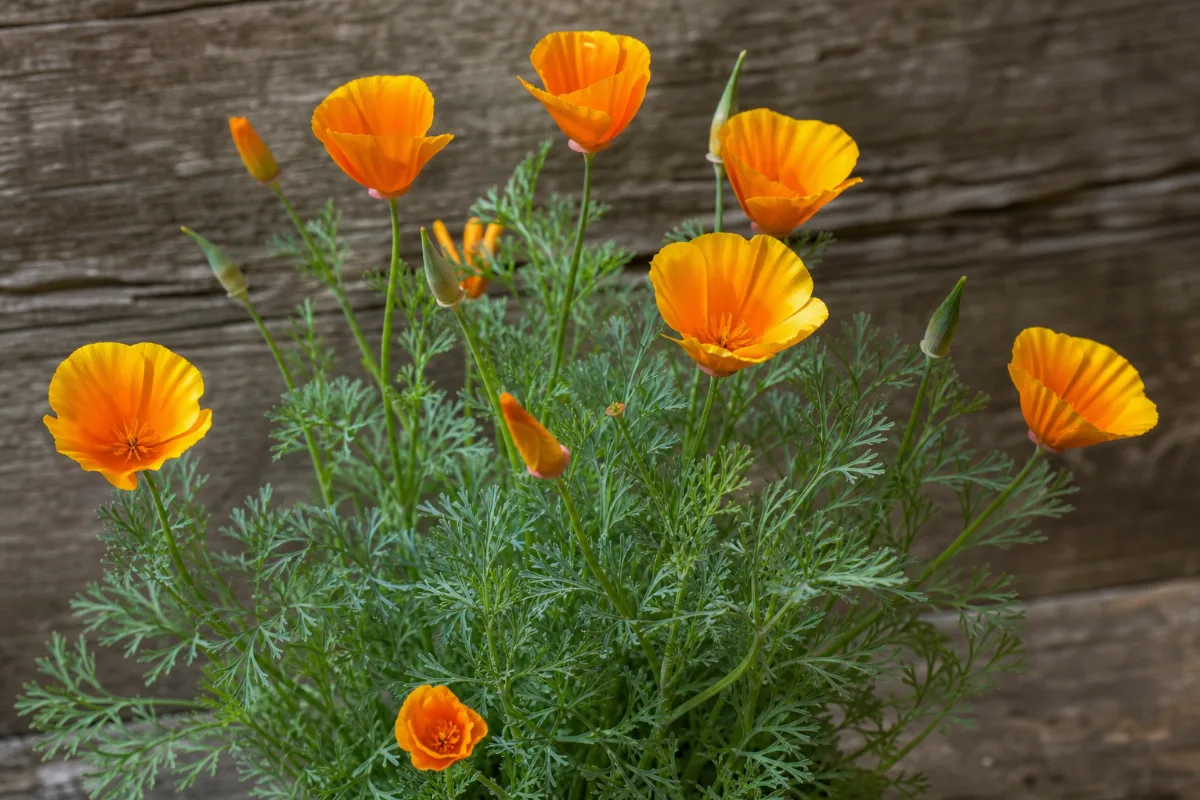
The accepted scientific name is Eschscholzia californica Cham., in the family Papaveraceae. [2] The opium poppy is a different species, Papaver somniferum L., placed in the same family. [2] Sharing a family does not make two plants the same. Which plant parts the products contain was not described in the sources we read. A lab analysis measured three alkaloids (californidine, escholtzine and protopine) in eight commercial products. [3] Check the label for the species name and plant part (see botanical names and plant parts on labels).Traditional use (not proof of effect)
A 1991 laboratory paper describes California poppy as a traditional medicinal plant used by rural people in California for pain-relieving and sedative effects. [4] The source does not say which communities, so we do not attribute the use to any particular people. Traditional use is a record of how a plant has been used, not evidence that it works.What research shows
| Question | What the source found | Strength of evidence | Population and form |
|---|---|---|---|
| Anxiety (human) | A 3-month randomized, placebo-controlled trial of 264 adults with mild-to-moderate generalized anxiety used a fixed combination of two plant extracts (hawthorn and California poppy) plus magnesium. Anxiety scores fell more with the combination than with placebo. [1] | Promising but limited; cannot be credited to California poppy alone | Adults; combination product that a company produces and markets [1] |
| Sleep (human) | Proper evidence not found. We searched PubMed for Eschscholzia with anxiety, sleep and clinical trial and found no randomized trial of California poppy alone for sleep. | No good human evidence found | None |
| Sedative and anxiety-like behavior in animals | In mice, a water extract reduced activity at higher amounts and, at a lower amount, increased the steps climbed in an anxiety test. [4] In a later mouse study a drug that blocks benzodiazepine receptors suppressed the sedative and anxiety-reducing effects. [5] | Preclinical (animals) | Mice; extracts |
Animal results do not show that a product helps people.
Forms and why the form matters
The products people buy vary. In one analysis of eight commercial California poppy products, alkaloid content ranged widely (for example californidine from 0.13 to 2.55 mg per gram). [3] So two products labeled "California poppy" can differ in strength, and a trial of one product does not transfer to another.Safety
- Medicines and sedatives: the animal work suggests the extract acts on benzodiazepine receptors, so combining with sedating medicines is a question for a pharmacist. [5] No human interaction data were in the sources we read.
- Side effects: in the combination trial, 15 of 130 people (11.5%) on the active product and 13 of 134 (9.7%) on placebo reported adverse events, mostly mild or moderate digestive or psychological problems. [1]
- Pregnancy and breastfeeding: a laboratory study on placental cells suggested extracts of several calming herbs, including California poppy, were likely to be safe at usual clinical amounts. It was a cell study, and the same paper notes these herbal medicines are not officially approved in pregnancy for lack of safety data. [6] Please see pregnancy and breastfeeding.
- Children, older adults, liver, kidney, surgery, allergy: not described in the sources we read.
- Legal status and drug tests: not described in the sources we read. If you are subject to drug testing, ask the testing program or a pharmacist.
Quality
Because alkaloid content differs so much between products, read labels and see quality testing and certifications.Related
Herbs for sleep: what research shows and natural sleep aids compared.Frequently asked questions
Is California poppy the same as opium poppy?
No. California poppy is Eschscholzia californica; the opium poppy is Papaver somniferum. Both are listed in the family Papaveraceae. [2]
Does California poppy help with sleep?
Animal studies suggest sedative effects. [4] Proper evidence not found for a human trial of California poppy alone for sleep in the sources we searched.
Does it help with anxiety?
One trial of a combination product found lower anxiety scores than placebo, but it cannot be credited to California poppy alone. [1]
Is it safe in pregnancy?
Only a placental-cell laboratory study was in the sources we read; official approval for use in pregnancy is lacking because of missing safety data. [6]
Can it be combined with sleeping pills?
Not studied in the sources we read. The extract appeared to act on benzodiazepine receptors in mice, so ask a pharmacist. [5]
References
- Hanus M, Lafon J, Mathieu M. Double-blind, randomised, placebo-controlled study of a fixed combination containing two plant extracts (Crataegus oxyacantha and Eschscholtzia californica) and magnesium in mild-to-moderate anxiety disorders. Curr Med Res Opin 2004. PubMed. Read 2026-10-22.
- GBIF Backbone Taxonomy, species match: Eschscholzia californica and Papaver somniferum. Read 2026-10-22.
- Chauveau A, et al. Alkaloids in commercial preparations of California poppy: quantification, intestinal permeability and microbiota interactions. Biomed Pharmacother 2023. PubMed. Read 2026-10-22.
- Rolland A, et al. Behavioural effects of the American traditional plant Eschscholzia californica: sedative and anxiolytic properties. Planta Med 1991. PubMed. Read 2026-10-22.
- Rolland A, et al. Neurophysiological effects of an extract of Eschscholzia californica Cham. (Papaveraceae). Phytother Res 2001. PubMed. Read 2026-10-22.
- Spiess D, et al. Advanced in vitro safety assessment of herbal medicines for the treatment of non-psychotic mental disorders in pregnancy. Front Pharmacol 2022. PubMed. Read 2026-10-22.