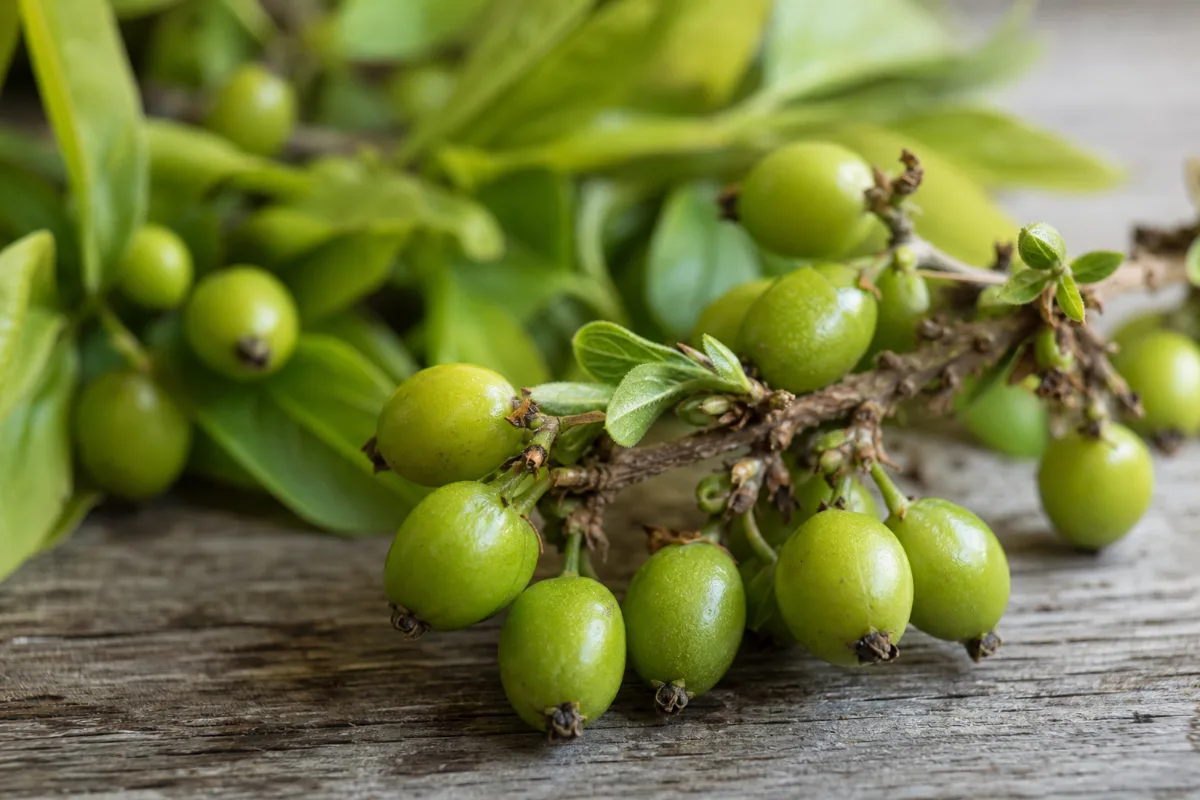
Herbs & Botanicals · Herbs · Fruit of a Chinese heat-clearing herb, with evidence only for formulas, not forsythia alone
Forsythia (Lian Qiao)
Forsythia suspensa (Thunb.) Vahl · also called Lian qiao, lianqiao, Forsythiae Fructus, Fructus Forsythiae, weeping forsythia, golden bells; qing qiao is the unripe fruit and lao qiao the ripe fruit
Forsythia fruit (lian qiao) is the dried fruit of a shrub in the olive family. In Chinese medicine it is used for colds, fever, sore throat and skin infections, nearly always in formulas with other herbs. Small trials of formulas that contain it, such as Yin Qiao San and Lianhua Qingwen, report benefits for colds, flu, COVID-19 and pneumonia, but no trial has tested forsythia on its own. Those formula trials are mostly from China, small, and of low to very low certainty. Avoid it in pregnancy, and do not use it in place of medical care for serious infections.
General information, not medical advice. Last substantive update · Not medically reviewed. A named clinician has not signed off on this page. How this page is made
About Forsythia (Lian Qiao)
Forsythia fruit is a traditional Chinese herb for colds, fever and infection. The only human evidence is for formulas that contain it (Yin Qiao San, Lianhua Qingwen) and it is low to very low certainty. Forsythia alone has not been tested for any illness. Safety information is thin: avoid in pregnancy, and ask about blood thinners.
What it is
Forsythia fruit, called lian qiao, is the dried fruit of Forsythia suspensa, a shrub in the olive family. Plant databases list it as an accepted species. The fruit is picked either unripe (qing qiao) or ripe (lao qiao), and the two differ in chemistry.
It was recorded in the oldest Chinese herbal text and has been used for over 2,000 years. It is listed in the Chinese, Japanese and Korean pharmacopoeias.
What makes it distinctive
Forsythia is almost never used alone. It is a core herb of two best-known formulas: Yin Qiao San (honeysuckle and forsythia, with licorice and others) and Lianhua Qingwen (a 13-herb formula). Evidence for those formulas must not be credited to forsythia by itself.
Its main compounds include forsythoside A and phillyrin. The isolated compound phillyrin has only been tested for safety in healthy adults.
What the research shows
A small Korean placebo-controlled trial of Yin Qiao San found lower cold scores after 6 days, but it stopped early. Meta-analyses of Chinese trials of Lianhua Qingwen report better outcomes in flu and fewer mild or moderate COVID-19 cases becoming severe, and a meta-analysis of Yinqiao powder reports better results in pneumonia. These are add-ons to usual treatment, from small trials of unclear quality, with signs of publication bias in the pneumonia work. One COVID-19 review's authors say it cannot draw clear conclusions.
Lab tests show extracts block an enzyme and virus binding in test tubes. That does not show benefit in people.
At a glance
Traditional uses history, not proof
- Traditional Chinese medicine: a 'heat-clearing, detoxifying' herb recorded for over 2,000 years for fever, sore throat, boils and infections
- Core herb in Yin Qiao San, a classic formula for the early stage of a cold with fever and sore throat
- Listed in the pharmacopoeias of China, Japan and Korea; more than 40 Chinese preparations contain it
Studied for research
- Common cold: low certainty, from one small placebo-controlled trial of the Yin Qiao San formula (not forsythia alone)
- Influenza: very low certainty, Chinese trials of Lianhua Qingwen added to usual drugs
- COVID-19: low certainty, small early-pandemic Chinese trials of Lianhua Qingwen
- Pneumonia: very low certainty, Yinqiao powder added to western medicine, with signs of publication bias
- Laboratory antiviral, anti-inflammatory and antioxidant effects: lab and animal only
Main compounds
- Forsythoside A and other phenylethanoid glycosides
- Phillyrin (forsythin) and other lignans
- Over 290 compounds identified in the plant
Common forms
- Dried fruit (unripe and ripe fruit differ)
- Decoction, granules or tablets, nearly always combined with other herbs
- Multi-herb formulas: Yin Qiao San and Lianhua Qingwen (their results belong to the whole formula)
- Isolated compound phillyrin (forsythin), tested for safety only in healthy adults
Research links: PubMed: Yin Qiao San common cold trial (Integr Med Res, 2023) · PubMed: Forsythiae Fructus review (Molecules, 2017) · PubMed: Forsythiae Fructus updated systematic review incl. toxicity (Phytochemistry, 2024) · Research Library · Genes & Biomarkers Library
The plant and its history
- Accepted scientific name
- Forsythia suspensa (Thunb.) Vahl
- Naming authority
- (Thunb.) Vahl; GBIF backbone shows this as the accepted name (usageKey 5415056).
- Synonyms
- Not listed here; GBIF holds the synonym list.
- Common names
- Weeping forsythia (English); Golden bells (English); Lian qiao (Lianqiao) (Chinese (pinyin)); Forsythiae Fructus (Fructus Forsythiae) (Latin pharmacopoeial); Qing qiao (unripe fruit); Lao qiao (ripe fruit) (Chinese (pinyin))
- Botanical family
- Oleaceae (the olive family), order Lamiales: related to olive, ash and jasmine.
- Classification
- Plantae > not recorded > not recorded > Lamiales > Oleaceae > Forsythia > Forsythia suspensa
- Native range
- Not verified in a source read (Plants of the World Online was blocked). The fruit is used in the Chinese, Japanese and Korean pharmacopoeias.
- Habitat
- Not verified.
- What the plant looks like
- Roots: Not used in the herb.; Stems: Shrub; details not verified.; Leaves: Forsythia leaf is a different material and is studied separately; not covered here.; Flowers: Yellow spring flowers (not the medicinal part); details not verified in a source read.; Fruit: The dried fruit (capsule) is the medicinal part: unripe green fruit (qing qiao) and ripe yellow fruit (lao qiao) are picked at different times.
- Cultivation
- Not verified.
- Harvest and processing
- Per the 2017 review: unripe fruit is collected in early September and ripe fruit in October; both are listed as Forsythiae Fructus in the Chinese Pharmacopoeia but differ in chemistry.
- Look-alikes and adulterants
- Name: Forsythia viridissima (green-stemmed forsythia); Note: A separately accepted species in GBIF (usageKey 5415053). We did not verify which species is allowed in which pharmacopoeia.; Name: Unripe versus ripe Forsythia suspensa fruit; Note: Same species but different chemistry and different effects in a rat study; product labels often do not say which is used.
- Sustainability and conservation
- Not verified. No IUCN assessment was retrieved.
Traditional use and history history, not clinical proof
| Tradition or era | Documented use | Source |
|---|---|---|
| Traditional Chinese medicine, ancient China | Forsythiae Fructus was first recorded in the Shennong Bencao Jing, an early Chinese herbal text, and has been used for over 2,000 years as a heat-clearing and detoxifying herb for infectious illness, fever and skin infections. | p28869577 |
| Qing dynasty, formula Yin Qiao San | Yin Qiao San is a prescription from Wen Bing Tiao Bian (Systematized Identification of Warm Pathogen Diseases) by Wu Ju-Tong, used for 'wind-heat' colds with chills, fever, head and throat pain and cough. The century of the book is not stated in the source we read. | p38033649 |
| Modern pharmacopoeias (China, Japan, Korea) | Listed in the pharmacopoeias of the People's Republic of China, Japan and Korea; more than forty Chinese preparations containing it are in the Chinese Pharmacopoeia. | p28869577 |
| European and US regulators | No EMA/HMPC herbal monograph, NCCIH fact sheet or LiverTox entry was found (see Safety). Wikipedia was not used. | s-regulators-not-found |
Traditional use shows how a plant was used. It does not show that a supplement works or is safe today.
What is inside, and how it may work
What the plant contains and how those compounds act in cells and animals. Laboratory and animal mechanisms are not proven effects in people.
Main compounds
| Compound | Family | Where it is concentrated | Activity studied | Level of evidence |
|---|---|---|---|---|
| Forsythoside A PubChem 5281773 | phenylethanoid glycoside | Fruit | Reported anti-inflammatory and antiviral actions in lab tests. In rats only about 0.5% was absorbed and most left through bile. 2 16 | Animal research |
| Phillyrin (also called forsythin) PubChem 101712 | lignan glycoside | Fruit | Used as a quality marker. The isolated compound was tested for safety in a early-stage trial in healthy adults; it is well absorbed and extensively metabolised in humans. 8 9 16 | Human early safety |
| Forsythoside B PubChem 23928102 | phenylethanoid glycoside | Fruit | One of the 42 phenylethanoid glycosides listed for the plant; no human data. 9 16 | Laboratory research |
| Phillygenin (PubChem title: Sylvatesmin) PubChem 3083590 | lignan (aglycone of phillyrin) | Fruit | Rodent liver-protection findings in reviews; no human data. 2 16 | Animal research |
| Pinoresinol PubChem 73399 | lignan | Fruit | A lignan present in the fruit; no human data. 9 16 | Laboratory research |
Mechanisms, receptors and pathways
| Target or pathway | Gene or receptor | What was found | Level |
|---|---|---|---|
| Virus-sensing and inflammation signalling | TLR7, RIG-I, MAVS, NF-kB, MyD88 | A 2024 review reports forsythia fruit and its glycosides and lignans inhibit these pathways in anti-influenza lab and animal work. Human relevance not shown. 9 | Laboratory research |
| SARS-CoV-2 spike binding to ACE2 and ACE2 enzyme activity | ACE2 | Water and ethanol extracts inhibited ACE2 activity and spike-ACE2 binding in cell-free tests; the water extract was stronger on ACE2 activity and the ethanol extract on spike binding. 4 | Laboratory research |
| Bile acid metabolism and gut microbiota | not specified | Ripe fruit extract reduced bile-acid build-up in bile-duct-ligated rats more than green fruit; authors propose gut microbiota involvement. 12 | Animal research |
| Liver drug-metabolising enzymes | CYP1A2, CYP2D, CYP2C (rat forms) | Isolated phillyrin and forsythoside A appeared to induce some rat CYP enzymes. 1 | Animal research |
Absorption, metabolism and elimination
- Absorption
- Human data only for isolated forsythin: well absorbed after single or repeated doses. In rats, forsythoside A peaks in about 20 minutes but its bioavailability was about 0.5%.
- Distribution
- Not established in humans.
- Metabolism
- Forsythin is extensively metabolised in humans into an aglycone (M1), a sulphate (M2) and a glucuronide (M7).
- Elimination
- In rats most forsythoside A leaves through bile. Human elimination of the herb's compounds was not found.
- Bioavailability
- Low for the main glycosides, per reviews; improving it was suggested as a need.
Isolated compounds versus whole extracts
Forsythin alone has a early-stage safety study in healthy adults; forsythia fruit alone has no efficacy trial, and the formula trials contain many other herbs. Compound results cannot be assumed to apply to the whole fruit or to formulas, and food raised forsythin exposure about 1.4-fold at 100 mg.
Nutritional composition
A nutrient table is not meaningful for this medicinal fruit; it is used as a herb, not a food.
2 low certainty2 very low certainty4 not enough evidence
What is Forsythia (Lian Qiao) good for?
The main proposed uses and how strong the human evidence is for each. 'Low' is the best rating any use reached. Every human result here is for a multi-herb formula that contains forsythia, not forsythia alone; these are labelled as combinations. 'Very low' and 'insufficient' mean few, small, biased or lab-only studies. Most formula trials are from China, so results may not apply elsewhere. Ratings are this profile's own reading, not formal grades.
Benefits, one by one
Each card is a research question, not a promise. Tap a goal to filter. Open a card to see the studies, doses and limits.
Common cold symptoms (Yin Qiao San formula, not forsythia alone)
Low certaintyOne small placebo-controlled trial of a 10-ingredient formula that includes forsythia fruit found lower cold scores after 6 days than placebo. It stopped early and cannot show that forsythia itself did anything.
1 studiesGranules in sachets, three a day, taken for up to 8 days in the trial…
Studies, doses and limits
What the trials found
Korean adults with a cold of up to 48 hours took the Yin Qiao San formula, a second formula without forsythia, or placebo three times a day for up to 8 days. Planned for 375 people, but only 128 joined before the trial was stopped because of COVID-19. Forsythia fruit made up a small part of each sachet.
Results
Total cold score fell more with Yin Qiao San than placebo on day 6, as did the symptom and quality-of-life parts. No severe adverse events. No trial has tested forsythia fruit on its own for this.
Effect sizes as reported
Adjusted mean difference versus placebo: total score -14.91 (95% CI -26.48 to -3.33); symptom score -8.10 (-14.26 to -1.94); quality of life -7.14 (-12.92 to -1.37). Lower is better.
Why this rating
One small, early-stopped trial in one country; the formula has 10 ingredients (including licorice), so the credit cannot go to forsythia. Our earlier summary, not re-checked, says the length of the cold did not clearly differ.
Form and dose studied
Granules in sachets, three a day, taken for up to 8 days in the trial. Amounts are not advice.
Who was studied
Adults, mostly young women, in Korea.
Limits
Underpowered; one formula; not forsythia alone; the effect is on a symptom questionnaire, which is partly subjective even with placebo.
Why researchers looked
Forsythia fruit is a core ingredient of Yin Qiao San, a classic Chinese formula for the early stage of a cold.
Traditional use
In Chinese medicine, lian qiao is a 'heat-clearing and detoxifying' herb, used for over 2,000 years for fevers, sore throats and infections. Yin Qiao San is a classic formula that pairs it with honeysuckle flower.
Proposed mechanism Preliminary mechanism
Lab and animal work reports anti-inflammatory and antiviral actions of forsythia compounds, but how they might act in a person with a cold is not known.
A proposed mechanism does not show that the effect happens in people.
No severe adverse events in 44 people on the formula over up to 8 days. A short trial says little about long-term use.
Influenza (Lianhua Qingwen formula added to usual drugs)
Very low certaintyMany Chinese trials of a 13-herb formula that includes forsythia, added to usual flu drugs, report better 'effective' and 'cure' rates. The trials are mostly from China and of unclear quality, and none tested forsythia alone.
1 studiesCapsules or granules of the whole formula; not forsythia alone. Amoun…
Studies, doses and limits
What the trials found
A 2024 meta-analysis pooled 32 articles with 3,592 Chinese patients with influenza, comparing Lianhua Qingwen plus conventional drugs against the drugs alone.
Results
The formula plus drugs beat drugs alone on 'clinical effective rate' and 'cure rate'. The reported fall in adverse reactions compares after with before treatment, an odd comparison, so we do not use it as safety proof. No trial has tested forsythia fruit on its own for this.
Effect sizes as reported
Clinical effective rate RR 1.22 (95% CI 1.18 to 1.26); cure rate RR 1.54 (1.35 to 1.75).
Why this rating
All trials are in China; the abstract does not describe blinding, placebo use or the case definitions; 'effective rate' definitions vary; regional publication bias is a known concern for traditional-medicine trials from one country. The authors say only that the formula 'may be more effective'.
Form and dose studied
Capsules or granules of the whole formula; not forsythia alone. Amounts are not advice.
Who was studied
Chinese adults and some children with influenza (abstract says patients in China).
Limits
Add-on design; unclear quality; a formula containing ephedra and licorice with their own cautions (see Safety); no forsythia-only trial.
Why researchers looked
Forsythia is a core herb in formulas for flu in Chinese practice, and Lianhua Qingwen combines two classic formulas, Yinqiao and Maxing Shigan.
Traditional use
In Chinese medicine, lian qiao is a 'heat-clearing and detoxifying' herb, used for over 2,000 years for fevers, sore throats and infections. Yin Qiao San is a classic formula that pairs it with honeysuckle flower.
Proposed mechanism Preliminary mechanism
Lab work reviewed in 2024 suggests forsythia compounds may affect virus-sensing and inflammation pathways (TLR7, RIG-I, MAVS, NF-kB, MyD88); this is lab and animal work only.
A proposed mechanism does not show that the effect happens in people.
The formula contains other herbs, so side effects cannot be traced to forsythia.
COVID-19 (Lianhua Qingwen formula added to usual care)
Low certaintyMeta-analyses of small, mostly Chinese trials found fewer mild or moderate COVID-19 patients became severe when a forsythia-containing formula was added to usual care. One analysis says the trials were too rushed to draw clear conclusions.
3 studiesCapsules or granules of the whole formula, added to usual care. Amoun…
Studies, doses and limits
What the trials found
Shi 2022 pooled 5 randomized trials (830 people) and rated study quality 'moderate'. Li 2022 pooled 7 studies (916 people) and says the analysis 'cannot draw clear conclusions' because the studies were rushed and low in methodological quality. A hospital cohort of 4,918 patients found no clear difference in death but more virus-negative conversion with the capsules.
Results
Fewer people progressed to severe disease with the formula in both meta-analyses. The cohort is not randomized. No trial has tested forsythia fruit on its own for this.
Effect sizes as reported
Conversion to severe disease: RR 0.47 (95% CI 0.31 to 0.71; Shi 2022); OR 0.47 (0.30 to 0.75; Li 2022). Cohort: death adjusted OR 0.66 (0.38 to 1.15); virus-negative conversion adjusted OR 4.02 (2.58 to 6.25).
Why this rating
Two meta-analyses agree in direction, but the trials were small, from China, mostly not clearly blinded (not stated in the abstracts) and from the early rush of 2020. One review's own authors warn against firm conclusions. This is old-variant, mostly pre-vaccine evidence.
Form and dose studied
Capsules or granules of the whole formula, added to usual care. Amounts are not advice.
Who was studied
Adults with mild or moderate COVID-19 in China; hospital cohort in Central China.
Limits
Early-pandemic studies; overlap between the meta-analyses (they may include some of the same trials); formula-level only.
Why researchers looked
Lianhua Qingwen was widely used in China during the pandemic, and forsythia is one of its main herbs.
Traditional use
In Chinese medicine, lian qiao is a 'heat-clearing and detoxifying' herb, used for over 2,000 years for fevers, sore throats and infections. Yin Qiao San is a classic formula that pairs it with honeysuckle flower.
Proposed mechanism Laboratory research
A test-tube study found that forsythia fruit extracts blocked ACE2 activity and spike-protein binding. No live virus or people were tested in that study.
A proposed mechanism does not show that the effect happens in people.
Both meta-analyses report fewer adverse events with the formula than with controls, but see Safety for why this is not proof of safety.
Pneumonia (Yinqiao powder added to western medicine)
Very low certaintyA meta-analysis of 15 Chinese trials found better treatment-success rates when Yin Qiao San was added to western medicine for pneumonia, with signs of publication bias. Pneumonia can be serious and needs medical treatment.
1 studiesPowder or decoction of Yin Qiao San (a multi-herb formula), not forsy…
Studies, doses and limits
What the trials found
Fan 2021 pooled 15 randomized trials (1,705 patients) of Yinqiao powder plus western medicine versus western medicine alone, and used GRADE (ratings not in the abstract).
Results
Higher total effective rate, better bacterial clearance, shorter time to cool down, faster fall in CRP and procalcitonin, and fewer adverse reactions. No difference in the fall of neutrophils or white cells. No trial has tested forsythia fruit on its own for this.
Effect sizes as reported
Total effective rate RR 1.21 (95% CI 1.15 to 1.27); bacterial clearance RR 1.13 (1.05 to 1.22); adverse reactions RR 0.54 (0.38 to 0.76).
Why this rating
Funnel plot and statistical tests pointed to publication bias, possibly from unpublished negative trials; the authors call for higher-quality studies; all trials in China.
Form and dose studied
Powder or decoction of Yin Qiao San (a multi-herb formula), not forsythia alone.
Who was studied
Patients with pneumonia in China.
Limits
Publication bias; add-on design; formula-level.
Why researchers looked
Yin Qiao San is used in China in early respiratory infections, so researchers tested it as an add-on in pneumonia.
Traditional use
In Chinese medicine, lian qiao is a 'heat-clearing and detoxifying' herb, used for over 2,000 years for fevers, sore throats and infections. Yin Qiao San is a classic formula that pairs it with honeysuckle flower.
Proposed mechanism Preliminary mechanism
No mechanism is shown in the meta-analysis; lab work is described in the Safety and Science sections.
A proposed mechanism does not show that the effect happens in people.
Never replace antibiotics or hospital care for pneumonia with a herb.
Antiviral activity in the laboratory
Not enough evidenceIn test tubes, forsythia fruit extracts blocked an enzyme (ACE2) and the binding of the COVID virus spike protein. That is a cell-free test and does not show an effect in people.
2 studiesNot applicable
Studies, doses and limits
What the trials found
No human trial of forsythia fruit alone for any infection was found. The only human study of a forsythia compound is a early-stage safety study in healthy people with forsythin.
Results
Lab results only. No claim of benefit in people is supported.
Effect sizes as reported
Not applicable
Why this rating
Test-tube and animal findings often fail to carry over to people. No forsythia-only human trial exists.
Form and dose studied
Not applicable
Who was studied
None
Limits
Cell-free tests; no live virus; no animals or people in the key study.
Why researchers looked
Researchers look for virus-blocking actions to explain why forsythia is used for colds and flu.
Traditional use
In Chinese medicine, lian qiao is a 'heat-clearing and detoxifying' herb, used for over 2,000 years for fevers, sore throats and infections. Yin Qiao San is a classic formula that pairs it with honeysuckle flower.
Proposed mechanism Laboratory research
Water and ethanol extracts of the fruit inhibited ACE2 activity and spike-ACE2 binding in cell-free tests. Reviews also list effects on virus-sensing signalling pathways in lab and animal work.
A proposed mechanism does not show that the effect happens in people.
Not applicable
Anti-inflammatory and antioxidant effects
Not enough evidenceReviews list anti-inflammatory and antioxidant effects of forsythia fruit and its compounds, but these come from cell and animal tests. No human trial was found.
2 studiesNot applicable
Studies, doses and limits
What the trials found
No human trial of forsythia for inflammation or antioxidant status was found.
Results
Lab and animal only.
Effect sizes as reported
Not applicable
Why this rating
Only lab and animal data; the authors of the lab study say animal and human work is needed.
Form and dose studied
Not applicable
Who was studied
None
Limits
Cell and animal tests; extracts vary by ripeness and processing.
Why researchers looked
The compounds forsythoside A, phillyrin and others calm inflammation signals in lab tests.
Traditional use
In Chinese medicine, lian qiao is a 'heat-clearing and detoxifying' herb, used for over 2,000 years for fevers, sore throats and infections. Yin Qiao San is a classic formula that pairs it with honeysuckle flower.
Proposed mechanism Laboratory research
Cell and animal work reports effects on NF-kB and other inflammation pathways; water and ethanol extracts also scored well in test-tube antioxidant assays.
A proposed mechanism does not show that the effect happens in people.
Not applicable
Liver and bile effects (rat study)
Not enough evidenceIn rats with blocked bile ducts, extract of ripe fruit eased bile-acid build-up better than green fruit. This is an animal model and not evidence for people.
1 studiesNot applicable
Studies, doses and limits
What the trials found
None in people. We found no human trial of forsythia for liver disease.
Results
Rat model only. It also shows ripe and green fruit act differently.
Effect sizes as reported
Not applicable
Why this rating
Animal model only.
Form and dose studied
Not applicable
Who was studied
Rats with surgically blocked bile ducts.
Limits
One rat study.
Why researchers looked
Chinese medicine calls forsythia 'detoxifying', which some researchers link to bile acids and gut bacteria.
Traditional use
In Chinese medicine, lian qiao is a 'heat-clearing and detoxifying' herb, used for over 2,000 years for fevers, sore throats and infections. Yin Qiao San is a classic formula that pairs it with honeysuckle flower.
Proposed mechanism Animal research
The rat study suggests gut bacteria and bile-acid handling are involved.
A proposed mechanism does not show that the effect happens in people.
Liver safety in people is covered in the Safety section, not here.
Traditional use: heat-clearing, sore throat, skin infections
Not enough evidenceIn Chinese medicine, lian qiao is used for fever, sore throat, boils and skin infections. We found no human trial of forsythia alone for these uses.
1 studiesDried fruit decoction in traditional practice, nearly always combined…
Studies, doses and limits
What the trials found
Traditional use is not evidence of benefit.
Results
No trial results.
Effect sizes as reported
Not applicable
Why this rating
Traditional use only for forsythia alone.
Form and dose studied
Dried fruit decoction in traditional practice, nearly always combined with other herbs.
Who was studied
Not applicable
Limits
Tradition is not proof; unripe and ripe fruit are used differently.
Why researchers looked
Recorded in the oldest Chinese herbal text and used for over 2,000 years.
Traditional use
In Chinese medicine, lian qiao is a 'heat-clearing and detoxifying' herb, used for over 2,000 years for fevers, sore throats and infections. Yin Qiao San is a classic formula that pairs it with honeysuckle flower.
Proposed mechanism Pharmacological theory
Not applicable
A proposed mechanism does not show that the effect happens in people.
No special notes.
Connections to the rest of health
How Forsythia (Lian Qiao) connects to the rest of our health knowledge graph. Every link says what kind of connection it is. A safety link (for example to the liver) is a warning, not a benefit. A study that merely mentions a topic never creates a benefit link.
Explore every connection: goals, body systems, organs, symptoms, genes
A. Wellness goals
| Connected to | Kind of connection | Evidence status | Context | Studies |
|---|---|---|---|---|
| Immune Support | Potential benefit | Low certainty | Common cold symptoms (Yin Qiao San formula, not forsythia alone): One small placebo-controlled trial of a 10-ingredient formula that includes forsythia fruit found lower cold scores after 6 days than placebo. It stopped early and cannot show that forsythia itself did anything. Influenza (Lianhua Qingwen formula added to usual drugs): Many Chinese trials of a 13-herb formula that includes forsythia, added to usual flu drugs, report better 'effective' and 'cure' rates. The trials are mostly from China and of unclear quality, and none tested forsythia alone. | 6 13 11 7 10 3 |
| Immune Support | Preliminary mechanism | Not enough evidence | Antiviral activity in the laboratory: In test tubes, forsythia fruit extracts blocked an enzyme (ACE2) and the binding of the COVID virus spike protein. That is a cell-free test and does not show an effect in people. | 4 9 |
| Inflammation Balance | Preliminary mechanism | Not enough evidence | Anti-inflammatory and antioxidant effects: Reviews list anti-inflammatory and antioxidant effects of forsythia fruit and its compounds, but these come from cell and animal tests. No human trial was found. | 2 4 |
| Liver Support | Preliminary mechanism | Not enough evidence | Liver and bile effects (rat study): In rats with blocked bile ducts, extract of ripe fruit eased bile-acid build-up better than green fruit. This is an animal model and not evidence for people. | 12 |
| Immune Support | Traditional use | Not enough evidence | Traditional use: heat-clearing, sore throat, skin infections: In Chinese medicine, lian qiao is used for fever, sore throat, boils and skin infections. We found no human trial of forsythia alone for these uses. | 2 |
B. Body systems
| Connected to | Kind of connection | Evidence status | Context | Studies |
|---|---|---|---|---|
| Immune System | Biological association | Low certainty | Studied for: Common cold symptoms (Yin Qiao San formula, not forsythia alone) Studied for: Influenza (Lianhua Qingwen formula added to usual drugs) | 6 13 11 7 10 3 4 9 2 |
| Respiratory System | Biological association | Low certainty | Studied for: Common cold symptoms (Yin Qiao San formula, not forsythia alone) Studied for: Influenza (Lianhua Qingwen formula added to usual drugs) | 6 13 11 7 10 3 |
| Hepatic System | Biological association | Not enough evidence | Studied for: Liver and bile effects (rat study) | 12 |
| Integumentary System | Biological association | Not enough evidence | Studied for: Traditional use: heat-clearing, sore throat, skin infections | 2 |
C. Body parts and organs
| Connected to | Kind of connection | Evidence status | Context | Studies |
|---|---|---|---|---|
| Lungs | Potential benefit | Low certainty | Formula add-on trials in colds, flu, COVID-19 and pneumonia; see Evidence. Preparation or compound: Multi-herb formulas (Yin Qiao San, Lianhua Qingwen), not forsythia alone |
6 11 |
| Liver | Biological association | Not enough evidence | No human liver-injury case found; rat bile-duct study only. Preparation or compound: Forsythia fruit extracts (rats); Lianhua Qingwen (COVID-19 cohort) |
10 12 |
D. Symptoms
| Connected to | Kind of connection | Evidence status | Context | Studies |
|---|---|---|---|---|
| Common cold | Potential benefit | Low certainty | One small placebo-controlled trial of the Yin Qiao San formula; stopped early; not forsythia alone. Preparation or compound: Yin Qiao San formula (contains forsythia fruit) |
6 |
| COVID-19 progression | Potential benefit | Low certainty | Two meta-analyses of small Chinese trials; one says no clear conclusions. Preparation or compound: Lianhua Qingwen formula (contains forsythia fruit) |
11 7 |
E. Health conditions
| Connected to | Kind of connection | Evidence status | Context | Studies |
|---|---|---|---|---|
| Pregnancy and breastfeeding | Contraindication | Not enough evidence | Avoid; no safety data. Secondary sources only. Preparation or compound: Forsythia fruit |
18 14 |
I. Biomarkers
| Connected to | Kind of connection | Evidence status | Context | Studies |
|---|---|---|---|---|
| Cold symptom score (WURSS-21-K questionnaire) | Biological association | Low certainty | Measured in trials: lowered. A lab change is not the same as a health benefit. | 6 |
| Progression of COVID-19 from mild or moderate to severe | Biological association | Low certainty | Measured in trials: lowered. A lab change is not the same as a health benefit. | 11 7 |
| Time to a negative COVID-19 virus test | Biological association | Very low certainty | Measured in trials: raised. A lab change is not the same as a health benefit. | 10 |
| 'Clinical effective rate' and cure rate in influenza | Biological association | Very low certainty | Measured in trials: raised. A lab change is not the same as a health benefit. | 13 |
| C-reactive protein (CRP) and procalcitonin (PCT) fall in pneumonia | Biological association | Very low certainty | Measured in trials: lowered. A lab change is not the same as a health benefit. | 3 |
J. Genes, receptors and enzymes
K. Biological pathways
| Connected to | Kind of connection | Evidence status | Context | Studies |
|---|---|---|---|---|
| NF-kB / MyD88 / TLR7 / RIG-I-MAVS signalling | Preliminary mechanism | In vitro | Reported anti-influenza mechanisms in lab and animal work. | 9 |
L. Active compounds
| Connected to | Kind of connection | Evidence status | Context | Studies |
|---|---|---|---|---|
| Forsythoside A | Biological association | Animal | Reported anti-inflammatory and antiviral actions in lab tests. In rats only about 0.5% was absorbed and most left through bile. Preparation or compound: Fruit |
2 16 |
| Phillyrin (also called forsythin) | Biological association | Human early safety | Used as a quality marker. The isolated compound was tested for safety in a early-stage trial in healthy adults; it is well absorbed and extensively metabolised in humans. Preparation or compound: Fruit |
8 9 16 |
| Forsythoside B | Biological association | In vitro | One of the 42 phenylethanoid glycosides listed for the plant; no human data. Preparation or compound: Fruit |
9 16 |
| Phillygenin (PubChem title: Sylvatesmin) | Biological association | Animal | Rodent liver-protection findings in reviews; no human data. Preparation or compound: Fruit |
2 16 |
| Pinoresinol | Biological association | In vitro | A lignan present in the fruit; no human data. Preparation or compound: Fruit |
9 16 |
Each connection is stored with the ingredient, the connected record, the kind of connection, the evidence status, the supporting studies, the preparation or compound involved, and a review date (last reviewed October 25, 2026).
Evidence at a glance: what changed in 5 lab markers
Tap a number to show only those markers. Counts are markers, not people.
The evidence
The research centre for Forsythia (Lian Qiao). Every record here was checked against PubMed or the publisher's page; we never list a study we have not verified.
Evidence by outcome
Bars show how many studies we found for each outcome, not how well it works. People are added up across trials only (reviews are not added, to avoid double counting).
How we rate evidence
High certainty
Several well-run trials or reviews agree; further research is unlikely to change the picture much.
Moderate certainty
Good trials point the same way, but some doubt remains.
Low certainty
Small, short or inconsistent trials. The finding could change with better research.
Very low certainty
Very little or very weak human data. Treat as a possibility only.
Mixed findings
Trials or reviews disagree with each other.
Not enough evidence
Not enough human research to say either way.
Evidence against
Good research found no benefit, or found harm.
We take the reviewers' own risk-of-bias and GRADE statements where they exist, and otherwise judge from study size, design, consistency, directness and whether a product matches what is sold. Many publications do not make evidence high. Method note: We started from our existing forsythia summary, then looked up gaps in PubMed, NCCIH, EMA, LiverTox and plant and chemical databases. Each study's design, people, product and result are recorded as reported. One trial was read in full; the rest by abstract. Some sources (a clinical monograph and a drug-information page) could not be opened and are marked not verified. Certainty ratings are the compiler's reading unless the reviewers gave their own. No study is cited that we could not verify.
Study library: every study we checked 18
| Study | Design | People | Product, dose, length | Result |
|---|---|---|---|---|
| Cheng 2016 Effects of phillyrin and forsythoside A on rat cytochrome P450 activities in vivo and in vitro Xenobiotica · PMID 27310729 · DOI |
Animal research animal |
Rats and rat liver microsomes | Isolated phillyrin and isolated forsythoside A isolated compounds Not stated in the abstract Not stated in the abstract · vs Untreated rats |
Phillyrin had potential inductive effects on rat CYP1A2 and CYP2D1; forsythoside A on CYP1A2 and CYP2C11. CYP3A1/2 was not changed by either. Not applicable Methods, limits and fundingOutcomes: Activity of CYP1A2, CYP2C11, CYP2D1, CYP3A1/2 liver enzymes Limitations: Rat enzymes and isolated compounds; human relevance unknown. Funding and conflicts: Not checked Read: abstract |
| Dong 2017 Forsythiae Fructus: A Review on its Phytochemistry, Quality Control, Pharmacology and Pharmacokinetics Molecules · PMID 28869577 · DOI |
Systematic review animal |
Laboratory and animal literature | Forsythiae Fructus (dried fruit) and its compounds fruit Not applicable Not applicable · vs Not applicable |
Describes the dried fruit as first recorded in the Shennong Bencao Jing and listed in the Chinese, Japanese and Korean pharmacopoeias; used for over 2,000 years to clear heat and detoxify; 321 compounds identified; unripe (qing qiao, picked early September) and ripe (lao qiao, October) fruit differ in their chemistry. In rats, forsythoside A reached its peak in 20 minutes but only about 0.5% was absorbed. Anti-inflammatory, antioxidant, hepatoprotective and other effects are from cell and animal tests. No human trials in the parts read Methods, limits and fundingOutcomes: Phytochemistry, quality control, pharmacology, pharmacokinetics Limitations: A narrative review of lab and animal work; we read the introduction and keyword-matched parts of the full text, not every section. Funding and conflicts: Not checked Read: full-text |
| Fan 2021 Efficacy and safety of yinqiao powder combined with western medicine in the treatment of pneumonia: A systematic review and meta-analysis Complementary Therapies in Clinical Practice · PMID 33360842 · DOI |
Meta-analysis |
1705 Patients with pneumonia (15 randomized trials, in China) |
Yinqiao powder (Yin Qiao San, a formula with forsythia fruit) plus western medicine fruit (as one ingredient of a formula) Not stated in the abstract Not stated in the abstract · vs Western medicine alone |
The combination did better on total effective rate, bacterial clearance, time to fever settling, T cells, CRP and PCT decline, and had fewer adverse reactions. No difference in neutrophil or white-cell decline. Total effective rate RR 1.21; bacterial clearance RR 1.13; adverse reactions RR 0.54 (Effective rate 1.15 to 1.27; bacterial clearance 1.05 to 1.22; adverse 0.38 to 0.76) Methods, limits and fundingOutcomes: Total effective rate, bacterial clearance, fever time, CRP, PCT, adverse reactions Limitations: Tests and funnel plots pointed to publication bias, possibly from unpublished negative studies; the authors say study quality and quantity were limited and GRADE was used but the ratings are not in the abstract. Pneumonia is a different illness from a cold. Funding and conflicts: Authors report no conflicts. Read: abstract |
| Gao 2024 Chemical Compositions of Lianqiao (Forsythia suspensa) Extracts and Their Potential Health Benefits Pharmaceuticals (Basel) · PMID 38931407 · DOI |
Laboratory research in-vitro |
Cell-free laboratory tests | Water and ethanol extracts of forsythia fruit fruit Not applicable Not applicable · vs Not applicable |
Both extracts blocked ACE2 activity and spike-protein binding in a test tube, and mopped up free radicals; the water extract had more phenolics. No live virus, animals or people were tested. Not applicable Methods, limits and fundingOutcomes: 42 compounds tentatively identified; ACE2 enzyme inhibition; SARS-CoV-2 spike-ACE2 binding; free-radical scavenging Limitations: Cell-free test only. The authors say it 'warrants further research'. Funding and conflicts: Authors report no conflicts. Read: abstract |
| Hu 2022 The Adverse Reactions of Lianhua Qingwen Capsule/Granule Compared With Conventional Drug in Clinical Application: A Meta-Analysis Frontiers in Pharmacology · PMID 35153773 · DOI |
Meta-analysis |
Patients in 217 studies of Lianhua Qingwen (mostly respiratory infections, in China) | Lianhua Qingwen capsule or granule (multi-herb formula that includes forsythia fruit) fruit (as one ingredient of a formula) Not stated in the abstract Not stated in the abstract · vs Conventional drugs |
Adverse reactions were less common with the formula than with conventional drugs, including fewer gastrointestinal events (nausea or vomiting), skin rashes, dizziness or headache. The number of people is not given in the abstract. Adverse reactions RR 0.63 versus conventional drugs (0.58 to 0.69) Methods, limits and fundingOutcomes: Incidence of adverse reactions by body system Limitations: Compares the formula with other drugs, not with placebo, so it does not say how common side effects are in absolute terms; studies were mainly Chinese trials of varying quality; authors call for long-term high-quality studies. Funding and conflicts: Authors report no conflicts. Read: abstract |
| Kim 2023 Effects of herbal medicines (Eunkyosan/Yin qiao san and Samsoeum/Shen su yin) for treating the common cold: A randomized, placebo-controlled, multicenter clinical trial Integrative Medicine Research · PMID 38033649 · DOI |
Controlled trial |
128 Adults in South Korea with a cold of up to 48 hours (about four in five were women, average age about 31-33) |
Eunkyosan (Yin Qiao San) granules, a 10-ingredient formula: honeysuckle flower, forsythia fruit, platycodon root, mint, licorice, fermented soybean, burdock seed, lophatherum, schizonepeta and a small amount of antelope horn. Forsythia fruit was 0.41 g in each 3 g sachet. fruit (as one ingredient of a formula) Three sachets a day Up to 8 days (primary outcome on day 6) · vs Placebo (and a second formula, Samsoeum, which has no forsythia) |
Planned 375 people but stopped early with 128 (44 Yin Qiao San, 42 Samsoeum, 42 placebo) because of COVID-19. Yin Qiao San lowered the total cold score more than placebo, and also the symptom and quality-of-life parts. No severe adverse events. Blood tests (including AST and ALT) showed no differences between groups. Adjusted mean difference in total score versus placebo -14.91; symptom score -8.10; quality-of-life score -7.14 (lower is better) (Total score -26.48 to -3.33; symptom -14.26 to -1.94; quality of life -12.92 to -1.37) Methods, limits and fundingOutcomes: Change in total WURSS-21-K cold score on day 6; symptom score; quality-of-life score; symptom duration; safety Limitations: Stopped early, so underpowered; one country; mostly young women; the formula has 10 ingredients so the effect cannot be given to forsythia; the abstract does not say how long symptoms lasted, and our earlier summary (not re-opened) says symptom duration did not clearly differ. Funding and conflicts: Government research grant (Korean traditional medicine programme) and a hospital grant; authors report no conflicts. Read: full-text |
| Li 2022 Efficacy and Safety of Chinese Medicine Lianhua Qingwen for Treating COVID-19: An Updated meta-Analysis Frontiers in Pharmacology · PMID 35721166 · DOI |
Meta-analysis |
916 Patients with COVID-19 (7 studies, randomized trials or case-control studies, in China) |
Lianhua Qingwen plus western medicine (a multi-herb formula that includes forsythia fruit) fruit (as one ingredient of a formula) Not stated in the abstract Not stated in the abstract · vs Western medicine alone |
The formula group did better on total efficacy, CT findings, conversion to severe disease and fever duration, and had fewer adverse events. Total efficacy OR 2.23; adverse events OR 0.42; CT OR 1.74; conversion to severe OR 0.47 (Efficacy 1.56 to 3.18; adverse events 0.18 to 0.97; CT 1.12 to 2.72; severe 0.30 to 0.75) Methods, limits and fundingOutcomes: Total efficacy, adverse events, CT findings, conversion to severe disease, symptoms Limitations: The authors themselves say the studies were rushed, of low methodological quality and not rigorous, and that the analysis 'cannot draw clear conclusions'. Includes case-control studies. Funding and conflicts: Authors report no conflicts. Registered CRD42020190757. Read: abstract |
| Li 2023 Safety, tolerability and pharmacokinetics of forsythin in healthy subjects: a double-blinded, placebo-controlled single-dose and multiple-dose escalation and food effect study Annals of Medicine · PMID 37980573 · DOI |
Controlled trial |
Healthy Chinese adults (early-stage) | Forsythin (phillyrin), one isolated compound from the fruit isolated compound Single doses 50 to 800 mg; repeated doses 50, 100 or 200 mg three times a day 5 days (repeated-dose part) · vs Placebo |
Adverse event rates with forsythin were similar to placebo. The compound was well absorbed and heavily metabolised; food raised exposure about 1.4-fold at 100 mg; steady state in about 3 days. Adverse event rates similar to placebo (no numbers in the abstract) Methods, limits and fundingOutcomes: Adverse events, blood levels, food effect Limitations: Healthy volunteers only; short; an isolated compound, not the herb; it says nothing about treating a cold or flu. Funding and conflicts: Authors report no competing interests. Read: abstract |
| Li 2024 The phytochemistry, pharmacology, pharmacokinetics, quality control, and toxicity of Forsythiae Fructus: An updated systematic review Phytochemistry · PMID 38641141 · DOI |
Systematic review animal |
Laboratory and animal literature | Forsythiae Fructus (dried fruit) fruit Not applicable Not applicable · vs Not applicable |
290 compounds identified in the plant (248 from the fruit). Reported anti-influenza mechanisms in lab work involve the TLR7, RIG-I, MAVS, NF-kB and MyD88 signalling pathways. Blood levels of the main active groups are low. Current quality control only measures forsythoside A and phillyrin. The authors state there are no reports of toxicity of the fruit yet, but that toxicity should not be neglected in clinical use. No human trials Methods, limits and fundingOutcomes: Phytochemistry, pharmacology, pharmacokinetics, quality control, toxicity Limitations: Only the abstract was read; the toxicity section itself was not seen. Funding and conflicts: Authors report no conflicts. Read: abstract |
| Lu 2023 Effectiveness and Safety of Lianhua Qingwen Capsules for COVID-19: A Propensity-Score Matched Cohort Study Evidence-Based Complementary and Alternative Medicine · PMID 36846053 · DOI |
Cohort study |
4918 Adults hospitalised with COVID-19 at four hospitals in Central China, Dec 2019 to Apr 2020 (2,760 took the capsules, 2,158 did not) |
Lianhua Qingwen capsules (multi-herb formula that includes forsythia fruit) fruit (as one ingredient of a formula) Not stated in the abstract Not stated in the abstract · vs No Lianhua Qingwen (matched controls) |
Deaths did not differ significantly. Virus-negative conversion was higher with the capsules. Acute liver injury was comparable between groups, and acute kidney injury was lower with the capsules. Death adjusted OR 0.66; negative conversion adjusted OR 4.02; acute liver injury adjusted OR 0.85; acute kidney injury adjusted OR 0.71 (Death 0.38 to 1.15; negative conversion 2.58 to 6.25; liver injury 0.71 to 1.02; kidney injury 0.50 to 1.00) Methods, limits and fundingOutcomes: In-hospital death, virus-negative conversion, acute liver injury, acute kidney injury Limitations: Retrospective, not randomized, so unmeasured differences between groups may remain; hospital patients with COVID-19, where liver injury is itself common. Funding and conflicts: Authors report no conflicts. Read: abstract |
| Shi 2022 Lianhua Qingwen Capsules Reduced the Rate of Severity in Patients with COVID-19: A System Review and Meta-Analysis of Randomized Controlled Trials Evidence-Based Complementary and Alternative Medicine · PMID 35126606 · DOI |
Meta-analysis |
830 Adults with mild or moderate COVID-19 (5 randomized trials, in China) |
Lianhua Qingwen capsules or granules (a 13-herb formula that includes forsythia fruit), added to usual care fruit (as one ingredient of a formula) Not stated in the abstract Not stated in the abstract · vs Usual (conventional) care |
Lianhua Qingwen plus usual care beat usual care alone on clinical efficacy, CT improvement and fewer people becoming severe. Conversion to severe disease: risk ratio 0.47; clinical efficacy RR 1.24; CT improvement RR 1.22 (Severe disease 0.31 to 0.71; efficacy 1.13 to 1.36; CT 1.10 to 1.34) Methods, limits and fundingOutcomes: Clinical efficacy, CT improvement, conversion to severe disease Limitations: Only 5 trials, searched to March 2021; the authors call study quality 'moderate'; blinding and placebo use not stated in the abstract; add-on design, so it tests the whole formula, not forsythia. Funding and conflicts: Authors report no conflicts. Read: abstract |
| Wang 2022 Better detoxifying effect of ripe forsythiae fructus over green forsythiae fructus and the potential mechanisms involving bile acids metabolism and gut microbiota Frontiers in Pharmacology · PMID 36034807 · DOI |
Animal research animal |
Rats with bile-duct ligation (a model of blocked bile flow) | Ripe versus green forsythia fruit extracts fruit Not stated in the abstract Not stated in the abstract · vs Untreated model rats |
Ripe fruit did better than green fruit at reducing toxic bile acid build-up. The authors suggest gut bacteria are involved. Not applicable Methods, limits and fundingOutcomes: Bile acids, liver injury markers, gut microbiota Limitations: Rat model only; shows that ripe and green fruit act differently; not evidence for people. Funding and conflicts: Authors report no conflicts. Read: abstract |
| Yuan 2024 Efficacy and safety of Lianhua Qingwen as an adjuvant treatment for influenza in Chinese patients: A meta-analysis Medicine (Baltimore) · PMID 38241551 · DOI |
Meta-analysis |
3592 Patients with influenza in China (32 articles) |
Lianhua Qingwen plus conventional drugs (a multi-herb formula that includes forsythia fruit) fruit (as one ingredient of a formula) Not stated in the abstract Not stated in the abstract · vs Conventional drugs alone |
Adding the formula to conventional drugs gave higher effective and cure rates. The adverse-reaction result compares 'after versus before treatment', which is an unusual comparison. Clinical effective rate RR 1.22; cure rate RR 1.54; adverse reactions after versus before treatment RR 0.70 (Effective rate 1.18 to 1.26; cure 1.35 to 1.75; adverse 0.50 to 0.98) Methods, limits and fundingOutcomes: Clinical effective rate, cure rate, adverse reactions Limitations: Chinese patients only; trial quality, blinding and placebo use are not described in the abstract; add-on design; the abstract's own conclusion is only 'may be more effective'. Funding and conflicts: Authors report no funding and no conflicts. Read: abstract |
| s-drugscom-forsythia Drugs.com natural product monograph: Forsythia · Source |
Secondary clinical monograph n/a |
Methods, limits and fundingRead: summary-only | ||
| s-gbif-forsythia-suspensa GBIF Backbone: Forsythia suspensa (Thunb.) Vahl (usageKey 5415056) · Source |
Reference database n/a |
Methods, limits and fundingRead: full-text | ||
| s-pubchem-forsythia-compounds PubChem compound records for forsythoside A (CID 5281773), phillyrin (101712), forsythoside B (23928102), phillygenin (3083590) and (+)-pinoresinol (73399) · Source |
Reference database n/a |
Methods, limits and fundingRead: full-text | ||
| s-regulators-not-found Regulator checks for forsythia fruit: NCCIH, EMA/HMPC, LiverTox, LactMed, WHO · Source |
Regulatory search n/a |
Methods, limits and fundingRead: full-text | ||
| s-vitaly-forsythia Clinical monograph: Forsythia (vital.ly, 2025) · Source |
Secondary clinical monograph n/a |
Methods, limits and fundingRead: summary-only |
What we do not know yet
- What the evidence supports: formulas that contain forsythia may ease cold symptoms and add to usual care in flu, COVID-19 and pneumonia, at low to very low certainty.
- Forsythia alone has not been tested in any illness, so no benefit can be credited to it.
- Formula trials are mostly Chinese, small and of unclear quality; the pneumonia work shows publication bias.
- Safety in pregnancy, children and long-term use, and herb-drug interactions, is unstudied; the bleeding and azithromycin claims come from one secondary source.
- No EMA, NCCIH, LiverTox or LactMed entry was found.
How new research is added
New studies are found by a saved PubMed search and placed in a review queue. A person reads each one before it changes any evidence rating or safety wording. New publications never change ratings automatically.
Lab markers
What changed in blood or saliva tests during trials. A changed number is not the same as feeling or being healthier, and we give no "normal ranges".
Inflammatory 1
C-reactive protein (CRP) and procalcitonin (PCT) fall in pneumonia
Lowered in trials
Blood markers that rise with inflammation and bacterial infection.
Very low certaintyResults and what it means
Why it was measured
Used to follow how fast pneumonia settles.
Statistical vs. clinical meaning
Lab markers, not how patients did; publication bias flagged by the authors.
Safety implication
None specific.
| Study | Result | People | Product |
|---|---|---|---|
| 3 | Faster decline in CRP and PCT with Yinqiao powder plus western medicine (statistically significant, p<0.05; exact numbers not in the abstract); no difference in neutrophil or white-cell decline | 15 trials, 1,705 pneumonia patients in China | Yinqiao powder plus western medicine |
Other 4
Cold symptom score (WURSS-21-K questionnaire)
Lowered in trials
A questionnaire where people rate runny nose, cough, sore throat and how much the cold limits daily life.
Low certaintyResults and what it means
Why it was measured
It was the main outcome of the Yin Qiao San cold trial.
Statistical vs. clinical meaning
Statistically significant, but self-reported, from an early-stopped trial. The questionnaire's own cut-off for a worthwhile difference was not stated in what we read.
Safety implication
None specific.
| Study | Result | People | Product |
|---|---|---|---|
| 6 | Total score on day 6: adjusted mean difference -14.91 versus placebo (95% CI -26.48 to -3.33); both groups improved over time (placebo -29.09, Yin Qiao San -44.00 adjusted change) | 128 Korean adults with a cold | Yin Qiao San granules (10-ingredient formula including forsythia fruit) three times a day |
Progression of COVID-19 from mild or moderate to severe
Lowered in trials
Whether a patient's illness got worse and met the criteria for severe COVID-19.
Low certaintyResults and what it means
Why it was measured
Preventing progression to severe disease is the main goal in early COVID-19.
Statistical vs. clinical meaning
A clinical outcome, so it matters, but the trials were small and the reviewers warn about quality.
Safety implication
None specific.
Time to a negative COVID-19 virus test
Raised in trials
Whether a patient's swab test turned negative.
Very low certaintyResults and what it means
Why it was measured
A marker of clearing the virus.
Statistical vs. clinical meaning
A test result, not how the patient felt; retrospective cohort.
Safety implication
None specific.
| Study | Result | People | Product |
|---|---|---|---|
| 10 | Negative conversion adjusted OR 4.02 (95% CI 2.58 to 6.25); in-hospital death not significantly different (adjusted OR 0.66, 0.38 to 1.15) | 4,918 hospital patients in a matched, non-randomized cohort | Lianhua Qingwen capsules |
'Clinical effective rate' and cure rate in influenza
Raised in trials
Chinese trials often define 'effective' by a set of symptom changes chosen by each trial, so the meaning differs between trials.
Very low certaintyResults and what it means
Why it was measured
Main outcome in the Chinese influenza trials.
Statistical vs. clinical meaning
Definitions vary between trials, so the numbers are hard to interpret.
Safety implication
None specific.
| Study | Result | People | Product |
|---|---|---|---|
| 13 | Effective rate RR 1.22 (95% CI 1.18 to 1.26); cure rate RR 1.54 (1.35 to 1.75) | 3,592 patients with influenza in 32 Chinese articles | Lianhua Qingwen plus conventional drugs versus drugs alone |
Safety
What studies and official sources say about side effects, medicines and who should check first. Each point shows what kind of evidence it comes from.
Main points to know 4
- There is almost no safety research on forsythia alone. Every human study we found tested a multi-herb formula or one isolated compound. Short trials of formulas reported no severe adverse events, and a early-stage trial of the isolated compound forsythin in healthy adults found side-effect rates similar to placebo. None of that tells us about long-term use of forsythia fruit products. Controlled trial 6 8 9
- Formulas contain other herbs with their own cautions. Yin Qiao San contains licorice. Lianhua Qingwen contains licorice and ephedra (ma huang), according to our earlier summary (not re-opened here). Those herbs can raise blood pressure or lower potassium and can interact with medicines, so side effects of a formula cannot be put down to forsythia. Authoritative guidance 6 18
- Avoid in pregnancy and breastfeeding. Safety in pregnancy and breastfeeding has not been established. A clinical monograph (secondary source) advises avoiding forsythia, and a drug-information site summary says it is contraindicated in pregnancy. Neither was backed by trial data in anything we read. Authoritative guidance 18 14
- Do not delay care for flu, COVID-19 or pneumonia. The positive formula trials are add-ons to proper treatment. A herb is not a substitute for medical care, antivirals or antibiotics. Authoritative guidance 3 7
Side effects 4
| Effect | How often | Severity and recovery | Evidence |
|---|---|---|---|
| Stomach or gut upset (nausea, vomiting) For Lianhua Qingwen (a formula), a 217-study meta-analysis found fewer gastrointestinal events than with conventional drugs (adverse reactions overall RR 0.63, 95% CI 0.58 to 0.69), but this compares with other drugs, not with placebo, and gives no absolute rate. A clinical monograph (secondary, not re-opened) says there is not enough reliable information on side effects by mouth. The cold trial (Yin Qiao San, 44 people) reported no severe adverse events. | Not established | mild Not stated in the sources read | Meta-analysis 5 |
| Skin rash, dizziness or headache Listed as less common with Lianhua Qingwen than with conventional drugs in the same meta-analysis; again a formula, not forsythia alone. | Not established | mild Not stated in the sources read | Meta-analysis 5 |
| Reactions to the isolated compound forsythin in healthy adults Adverse event rates were similar to placebo across single doses of 50 to 800 mg and 5 days of repeated doses. Healthy volunteers only; an isolated compound, not the herb. | Not established | not stated in the abstract Not stated | Controlled trial 8 |
| Allergy to forsythia We found no published allergy report in the sources read. A 2024 review states there are no reports of toxicity of the fruit yet, but adds that toxicity should not be neglected. Absence of reports is not proof of safety. | Not established | unknown Unknown | Insufficient 9 |
Liver
We found no published human case of liver injury attributed to forsythia fruit in two PubMed searches (forsythia with liver injury terms; Lianhua Qingwen with liver, hepatotoxicity and adverse-reaction terms). Formula studies give mixed signals only indirectly: in a 4,918-patient hospital cohort of COVID-19 patients, acute liver injury was comparable between those who took Lianhua Qingwen and those who did not (adjusted OR 0.85, 95% CI 0.71 to 1.02), and in the Yin Qiao San cold trial AST and ALT showed no differences between groups. Rat studies describe liver-protective effects, which are not a safety finding for people. NIH LiverTox: no entry was found. 10 6 12 17
How often. No frequency of human liver injury from forsythia was found. Not established.
Monitoring. No agency monitoring advice was found. Stop and seek care for yellow skin or eyes, dark urine, pale stools or persistent itching. Formula ingredients other than forsythia may affect the liver; this search was short and not exhaustive.
This is a safety connection. It is not evidence that Forsythia (Lian Qiao) supports liver health.
Medicines and supplements 5
| With | Why it matters | Importance | Evidence | What to do |
|---|---|---|---|---|
| Blood thinners (warfarin, antiplatelet medicines) and surgery prescription | A secondary clinical monograph says forsythia might slow blood clotting. No mechanism or human data were seen. | Listed as a moderate interaction in that monograph (summary only); advised to stop two weeks before surgery. Not confirmed by trials or a regulator. | Pharmacological theory Very low certainty 18 | If you take a blood thinner or have surgery planned, ask your doctor or pharmacist before using forsythia. |
| Azithromycin prescription | Not stated in the summary we hold. | Listed as a minor interaction in the same secondary monograph (summary only). | Pharmacological theory Very low certainty 18 | Mention it to your pharmacist if you are prescribed azithromycin. |
| Medicines processed by liver enzymes CYP1A2, CYP2C and CYP2D (many common drugs) prescription | In rats, isolated phillyrin appeared to increase CYP1A2 and CYP2D1 activity, and isolated forsythoside A CYP1A2 and CYP2C11, with no change in CYP3A. | Rat data on isolated compounds only; no human interaction study of forsythia fruit was found. | Animal research Very low certainty 1 | Treat as a theoretical possibility; ask a pharmacist if you take narrow-margin medicines. |
| Licorice-containing and ephedra-containing formulas: blood pressure and heart medicines, diuretics, digoxin, stimulants prescription | Licorice can raise blood pressure and lower potassium; ephedra is a stimulant. These come from the other herbs in the formulas, not from forsythia. | Well-known cautions of those herbs (general knowledge; not verified in this file). Matters for Yin Qiao San (licorice) and Lianhua Qingwen (licorice, ephedra). | Pharmacological theory Not enough evidence 6 18 | If you use a formula and take heart, blood pressure or potassium-affecting drugs, ask your doctor or pharmacist. |
| Other herbs and supplements herb/supplement | No data. | No interaction studies of forsythia fruit with other herbs or supplements were found. | Insufficient Not enough evidence 9 | Tell your pharmacist about everything you take. |
Who should check first 4
| Situation | Advice | Evidence |
|---|---|---|
| Pregnancy and breastfeeding | Avoid. Safety has not been established; one monograph (secondary) advises avoidance. | Authoritative guidance 18 14 |
| Bleeding disorders, blood-thinner use, or planned surgery | Ask a doctor first. The secondary monograph advises stopping two weeks before surgery. | Pharmacological theory 18 |
| Children | No safety data for forsythia fruit in children were found. Talk to a paediatrician. | Insufficient 9 |
| Serious infection (high fever that will not settle, breathing trouble, pneumonia) | Needs medical care. Do not rely on forsythia. | Authoritative guidance 3 |
Overdose, product quality and regulators
Summary. A 2024 systematic review says there are no reports of toxicity of the fruit yet but that toxicity should not be neglected. We did not read its toxicity section, only the abstract, and found no animal toxicity data of our own.
Animal. Not read.
Human doses studied. Isolated forsythin: single doses 50 to 800 mg and 50 to 200 mg three times a day for 5 days in healthy adults, with adverse events similar to placebo. Amounts are not advice.
High dose or long term signals. None identified. No long-term human data.
Overdose response. Not found.
Genotoxicity. Not verified. A drug-information site summary mentions some chromosome findings in mice (not opened, not verified).
Toxic plant parts. No toxic part of the fruit was identified in the sources read. Unripe (qing qiao) and ripe (lao qiao) fruit differ in chemistry and effects in rats, so do not assume one result covers both.
No adulteration case was found in the sources read. The documented quality issue is variation: harvest time, origin and processing change the compounds, and quality control mostly measures only forsythoside A and phillyrin.
Variation between unripe and ripe fruit. The Chinese pharmacopoeia lists both unripe (qing qiao, early September) and ripe (lao qiao, October) fruit, which differ in chemistry; a rat study found ripe fruit worked better than green on bile-acid handling. 2 12
Narrow quality control. Quality control only measures forsythoside A and phillyrin; other active compounds are not checked. 9
| Body | Action | Date |
|---|---|---|
| Chinese, Japanese and Korean pharmacopoeias (China, Japan, Korea) | Forsythiae Fructus is listed in each; more than 40 Chinese preparations containing it appear in the Chinese Pharmacopoeia. source |
When to get medical help
- Trouble breathing, chest pain, blue lips, or confusion (especially with a cold, flu, COVID-19 or pneumonia)
- High fever that does not settle after a few days, or a fever with a stiff neck or rash
- Hives, swelling of the face or throat, or wheeze after taking a product
- Yellow skin or eyes, dark urine, pale stools or severe itching
- Unusual bruising or bleeding, black stools, or heavy bleeding
- Persistent vomiting or severe stomach pain
Stop the supplement and contact a clinician or emergency service. In the US, Poison Control is 1-800-222-1222.
General information only, not medical advice. Ask a clinician or pharmacist before use, especially with medicines, in pregnancy or with a health condition. See the Natural Remedy Safety guide.
Frequently asked questions
Does forsythia work for colds or flu?
Nobody knows for forsythia alone. One small placebo-controlled trial of the 10-herb Yin Qiao San formula found lower cold scores after 6 days, but it stopped early and cannot be credited to forsythia. Trials of Lianhua Qingwen in flu are mostly from China and of unclear quality. Certainty is low to very low.
Is forsythia proven against COVID-19?
No. Two pooled analyses of small, early Chinese trials of the Lianhua Qingwen formula reported fewer mild or moderate cases becoming severe, but one set of authors says the trials cannot support clear conclusions. Forsythia is one of 13 herbs in that formula, and nothing shows forsythia alone works. It is not a substitute for vaccination or medical treatment.
Is forsythia the same as Yin Qiao San or Lianhua Qingwen?
What part of the plant is used?
Is it the same as the garden forsythia bush?
It is the same genus, but the medicine is the dried fruit of one species, Forsythia suspensa. Another species, Forsythia viridissima, is separately accepted in plant databases. Do not use garden plants as medicine.
What are the side effects?
Studies of formulas reported few. The cold trial reported no severe adverse events, and a large pooled analysis found fewer adverse reactions with Lianhua Qingwen than with conventional drugs, including fewer nausea and vomiting reports. That is a comparison with other drugs, not placebo, and not a long-term safety study of forsythia. A review says no toxicity reports exist for the fruit yet, but toxicity should not be neglected.
Can forsythia hurt the liver?
We found no human case of liver injury from forsythia in two PubMed searches. In a large hospital cohort of COVID-19 patients, acute liver injury was similar with and without Lianhua Qingwen. Rat studies suggest liver-protective effects, which is not a safety finding. Stop and seek care for yellow skin or eyes or dark urine.
Is it safe in pregnancy or while breastfeeding?
Does it interact with medicines?
Possibly. One secondary monograph lists a moderate interaction with blood thinners (it may slow clotting) and a minor one with azithromycin. This is not confirmed by trials. Rat studies of isolated compounds hint at effects on liver enzymes. Formulas add the cautions of licorice and ephedra. Ask a pharmacist before combining it with medicines or before surgery.
Does a regulator approve it?
Were the trials reliable?
Treat them with care. Most formula trials are from China, small, and from the early pandemic; the abstracts do not describe blinding or placebo use; the pneumonia analysis reports signs of publication bias; and the one placebo-controlled cold trial stopped early. All of them test whole formulas.
Explore by health goal
Editorial transparency
- Written by
- AlternativeMed editorial team. Research compiled with AI assistance, then checked against PubMed records.
- Medical review
- None. This page has not been reviewed by a physician or pharmacist.
- First published
- 2026-10-25
- Last substantive update
- 2026-10-25
- How we research
- We started from our existing forsythia summary, then looked up gaps in PubMed, NCCIH, EMA, LiverTox and plant and chemical databases. Each study's design, people, product and result are recorded as reported. One trial was read in full; the rest by abstract. Some sources (a clinical monograph and a drug-information page) could not be opened and are marked not verified. Certainty ratings are the compiler's reading unless the reviewers gave their own. No study is cited that we could not verify.
- How we rate evidence
- See "How we rate evidence" in the Evidence tab.
- Independence
- No product is promoted on this page. No affiliate links are shown. If one is added later it will be labelled and kept apart from the evidence.
Sources 18
Each source was opened and checked. Where we read only the abstract, it says so. The small numbers in the text point here.
- Cheng Y, Liang X, Feng L, et al.. Effects of phillyrin and forsythoside A on rat cytochrome P450 activities in vivo and in vitro. Xenobiotica. 2016. PMID 27310729. DOI 10.1080/00498254.2016.1193262. (abstract)
- Dong Z, Lu X, Tong X, et al.. Forsythiae Fructus: A Review on its Phytochemistry, Quality Control, Pharmacology and Pharmacokinetics. Molecules. 2017. PMID 28869577. DOI 10.3390/molecules22091466. (full-text)
- Fan Y, Liu W, Wan R, et al.. Efficacy and safety of yinqiao powder combined with western medicine in the treatment of pneumonia: A systematic review and meta-analysis. Complementary Therapies in Clinical Practice. 2021. PMID 33360842. DOI 10.1016/j.ctcp.2020.101297. (abstract)
- Gao B, Zhu H, Liu Z, et al.. Chemical Compositions of Lianqiao (Forsythia suspensa) Extracts and Their Potential Health Benefits. Pharmaceuticals (Basel). 2024. PMID 38931407. DOI 10.3390/ph17060740. (abstract)
- Hu C, He B, Gong F, et al.. The Adverse Reactions of Lianhua Qingwen Capsule/Granule Compared With Conventional Drug in Clinical Application: A Meta-Analysis. Frontiers in Pharmacology. 2022. PMID 35153773. DOI 10.3389/fphar.2022.764774. (abstract)
- Kim KI, Hong M, Park YC, et al.. Effects of herbal medicines (Eunkyosan/Yin qiao san and Samsoeum/Shen su yin) for treating the common cold: A randomized, placebo-controlled, multicenter clinical trial. Integrative Medicine Research. 2023. PMID 38033649. DOI 10.1016/j.imr.2023.101005. (full-text)
- Li Y, Xiao P, Liu N, et al.. Efficacy and Safety of Chinese Medicine Lianhua Qingwen for Treating COVID-19: An Updated meta-Analysis. Frontiers in Pharmacology. 2022. PMID 35721166. DOI 10.3389/fphar.2022.888820. (abstract)
- Li C, Wu M, Zhang H, et al.. Safety, tolerability and pharmacokinetics of forsythin in healthy subjects: a double-blinded, placebo-controlled single-dose and multiple-dose escalation and food effect study. Annals of Medicine. 2023. PMID 37980573. DOI 10.1080/07853890.2023.2274512. (abstract)
- Li JJ, Chen ZH, Liu CJ, et al.. The phytochemistry, pharmacology, pharmacokinetics, quality control, and toxicity of Forsythiae Fructus: An updated systematic review. Phytochemistry. 2024. PMID 38641141. DOI 10.1016/j.phytochem.2024.114096. (abstract)
- Lu Y, Zhang M, Yang QQ, et al.. Effectiveness and Safety of Lianhua Qingwen Capsules for COVID-19: A Propensity-Score Matched Cohort Study. Evidence-Based Complementary and Alternative Medicine. 2023. PMID 36846053. DOI 10.1155/2023/6028554. (abstract)
- Shi C, Wu M, Yang K, et al.. Lianhua Qingwen Capsules Reduced the Rate of Severity in Patients with COVID-19: A System Review and Meta-Analysis of Randomized Controlled Trials. Evidence-Based Complementary and Alternative Medicine. 2022. PMID 35126606. DOI 10.1155/2022/9617429. (abstract)
- Wang T, Li XJ, Qin LH, et al.. Better detoxifying effect of ripe forsythiae fructus over green forsythiae fructus and the potential mechanisms involving bile acids metabolism and gut microbiota. Frontiers in Pharmacology. 2022. PMID 36034807. DOI 10.3389/fphar.2022.987695. (abstract)
- Yuan C, Guan Y. Efficacy and safety of Lianhua Qingwen as an adjuvant treatment for influenza in Chinese patients: A meta-analysis. Medicine (Baltimore). 2024. PMID 38241551. DOI 10.1097/MD.0000000000036986. (abstract)
- . Drugs.com natural product monograph: Forsythia. . . (summary-only)
- . GBIF Backbone: Forsythia suspensa (Thunb.) Vahl (usageKey 5415056). . . (full-text)
- . PubChem compound records for forsythoside A (CID 5281773), phillyrin (101712), forsythoside B (23928102), phillygenin (3083590) and (+)-pinoresinol (73399). . . (full-text)
- . Regulator checks for forsythia fruit: NCCIH, EMA/HMPC, LiverTox, LactMed, WHO. . . (full-text)
- . Clinical monograph: Forsythia (vital.ly, 2025). . . (summary-only)