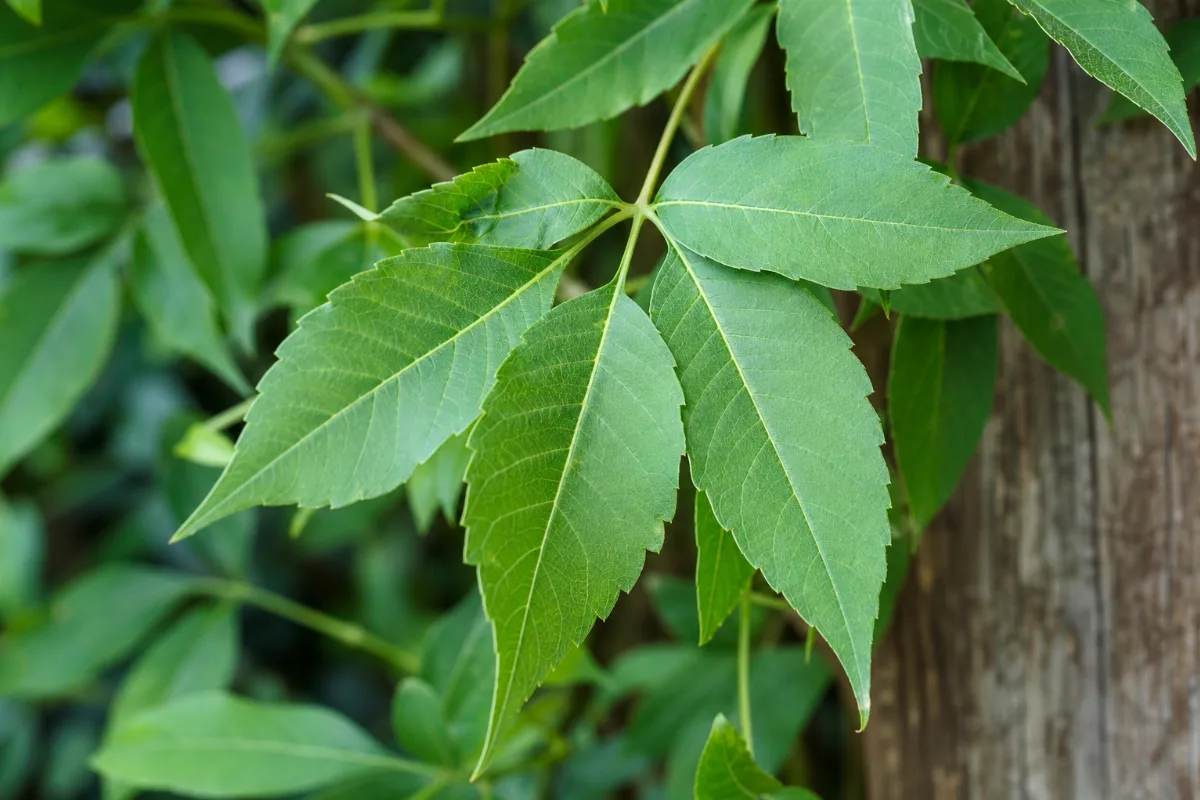
Herbs & Botanicals · Ayurvedic leaf for joint aches
Nirgundi
Vitex negundo · also called Chinese chaste tree, nirgundi, nirgudi, lagundi
Nirgundi is the leaf (and sometimes seed) of a shrub used in Ayurveda for aches, joint pain and rheumatism. Human research is limited to two small trials of one branded leaf-and-ginger blend, both linked to the company that sells it. Most other findings come from animals and lab tests. Do not assume it is safe in pregnancy or with hormone-sensitive conditions; it has barely been studied, and its relative chasteberry has hormone cautions.
General information, not medical advice. Last substantive update · Not medically reviewed. A named clinician has not signed off on this page. How this page is made
About Nirgundi
Nirgundi is an Ayurvedic leaf used for aches and joint pain. Human evidence is two small company-linked trials of one leaf-and-ginger blend; everything else is traditional use or animal and lab work. Safety data in people are almost missing.
What it is
Nirgundi is the leaf of Vitex negundo, a shrub of the mint family also called Chinese chaste tree. Seeds, oil and other parts are used too. In South Asia it is made into juice, paste, decoctions and a medicated oil used for massage.
Do not confuse it with chasteberry (Vitex agnus-castus), a different plant sold for premenstrual symptoms. The two share the name chaste tree, but the research and the hormone cautions belong mostly to chasteberry.
How it may work
The leaf contains flavonoids such as vitexin and isovitexin, plus lignans in the seed, iridoids and phenolic acids. In lab and animal studies, extracts affected inflammation pathways such as COX-2 and NF-kB.
These effects have not been shown in people. A 2026 review also notes there are few studies on how the body absorbs and handles nirgundi compounds.
What the research shows
Two small trials tested the branded blend E-PR-01, made of nirgundi leaf and ginger rhizome. In 72 adults with low back pain, pain and disability scores improved more than with placebo over 30 days. In 40 healthy adults, one dose gave faster relief of pain after exercise than placebo. Both are low certainty, linked to the company, and cannot be credited to nirgundi alone.
For nirgundi by itself, and for cough, blood sugar, liver and other claims, there is only traditional use and lab or animal work. The 2022 genus review says only chasteberry has gone through clinical trials.
At a glance
Traditional uses history, not proof
- Leaf juice, paste, decoction and medicated oil for aches, joint pain and rheumatism in Ayurveda
- Seeds used for rheumatism in Chinese and Ayurvedic medicine
- Folk uses for cough, headache and digestion
Studied for research
- Low back pain (branded leaf-and-ginger blend, 72 people), low
- Pain after exercise (same blend, 40 people), low
- Joint pain and rheumatism on its own, insufficient
- Inflammation, cough and other uses (lab and animal only), insufficient
Main compounds
- Vitexin (CID 5280441) and isovitexin (CID 162350), flavonoids
- Lignans in the seed
- Iridoids, luteolin derivatives and phenolic acids
Common forms
- Fresh leaf juice, paste or decoction
- Nirgudi medicated oil for massage
- Branded leaf-and-ginger capsule (the only form tested in people)
- Seed extracts (lab and animal only)
Research links: Srivastava 2024: leaf-and-ginger blend for low back pain, trial (PubMed) · Srivastava 2023: same blend for knee discomfort after exercise (PubMed) · Phate 2026: Vitex negundo review of lab and animal work (PubMed) · Kulkarni 2024: skin reaction after nirgudi oil massage (PubMed) · Research Library · Genes & Biomarkers Library
The plant and its history
- Accepted scientific name
- Vitex negundo L. (GBIF ACCEPTED, exact match, confidence 98)
- Naming authority
- L.
- Common names
- Nirgundi (Sanskrit / Hindi); Chinese chaste tree (English); Five-leaved chaste tree (English); Lagundi (Filipino); Nirgudi (Hindi (alternate spelling))
- Botanical family
- Lamiaceae (mint family; older books place Vitex in Verbenaceae)
- Classification
- Plantae > Not checked > Not checked > Lamiales > Lamiaceae > Vitex > Vitex negundo
- Native range
- South Asia and elsewhere (2024 summary-only; not re-checked).
- Habitat
- Not covered in the sources read.
- What the plant looks like
- Roots: Not covered in the sources read.; Stems: Shrub or small tree (Vitex genus described as large shrubs in the 2022 review).; Leaves: Leaves are the main medicinal part. The 'five-leaved' name is not verified here.; Flowers: Not described in sources read.; Fruit: Not described in sources read.; Seeds: Seeds are used in Chinese and Ayurvedic medicine for rheumatism per a 2019 abstract.
- Cultivation
- Not covered in the sources read.
- Harvest and processing
- Leaves are used fresh, as juice, paste or decoction, and in a medicated oil with sesame oil (existing summary). Not re-checked.
- Look-alikes and adulterants
- Name: Vitex agnus-castus L. (chasteberry, chaste tree); Note: GBIF ACCEPTED (key 2925562). A different species with its own fruit-based herbal products, EMA monograph and human trials for premenstrual syndrome. Its safety statements do not automatically apply to nirgundi.
- Sustainability and conservation
- Not covered in the sources read.
Traditional use and history history, not clinical proof
| Tradition or era | Documented use | Source |
|---|---|---|
| Ayurveda and South Asian folk medicine | Leaf juice, paste, decoction and medicated oil for aches, joint pain and rheumatism; folk uses also include cough, headache and digestion. | p35893648 |
| Chinese medicine | Seeds used for rheumatism and joint inflammation. | p30831463 |
| Philippines | Lagundi, stated to be an approved herbal drug for cough and asthma. | p34976744 |
Traditional use shows how a plant was used. It does not show that a supplement works or is safe today.
What is inside, and how it may work
What the plant contains and how those compounds act in cells and animals. Laboratory and animal mechanisms are not proven effects in people.
Main compounds
| Compound | Family | Where it is concentrated | Activity studied | Level of evidence |
|---|---|---|---|---|
| Vitexin PubChem 5280441 | Flavone C-glycoside | Leaf (per review, not quantified here) | Named by the 2026 review among more than 25 compounds; lab activity only. 14 8 | Lab |
| Isovitexin PubChem 162350 | Flavone C-glycoside | Not stated | Named by the 2026 review; lab activity only. 14 8 | Lab |
| Lignans (seed) | Lignans | Seed | A purified total-lignan fraction of seeds was tested in arthritic rats (results not read). 4 | Animal research |
| Iridoids, luteolin derivatives, phenolic acids | Mixed groups | Not stated | Listed in the 2026 review; lab activity only. 8 | Lab |
Mechanisms, receptors and pathways
| Target or pathway | Gene or receptor | What was found | Level |
|---|---|---|---|
| Inflammation signalling | COX-2, NF-kB, MAPK | The 2026 review lists these pathways from lab and animal studies of nirgundi extracts. 8 | Lab |
| Energy and antioxidant signalling | AMPK, Nrf2/ARE | Listed in the same review; lab and animal evidence. 8 | Lab |
| Joint inflammation in arthritic rats | COX-2, iNOS, IkB | A seed lignan fraction was tested on these markers in rats; results not read. 4 | Animal research |
Absorption, metabolism and elimination
- Absorption
- Not found; the 2026 review notes limited pharmacokinetic data.
- Distribution
- Not found.
- Metabolism
- Not found.
- Elimination
- Not found.
- Bioavailability
- No human blood-level study was found.
Isolated compounds versus whole extracts
Lab work uses purified fractions (for example seed lignans) or solvent extracts; the human trials used a branded leaf-and-ginger blend. None of these is the same as home leaf preparations or oil.
Nutritional composition
Nirgundi is a medicinal plant, not a food or a source of essential nutrients, in the sources read.
2 low certainty4 not enough evidence
What is Nirgundi good for?
The studied uses and how strong the human evidence is for each. The only human trials used a branded blend with ginger, as noted.
Benefits, one by one
Each card is a research question, not a promise. Tap a goal to filter. Open a card to see the studies, doses and limits.
Low back pain (branded nirgundi leaf and ginger blend, one trial)
Low certaintyIn one 30-day trial of 72 adults with low back pain, a branded blend of nirgundi leaf and ginger lowered pain and disability scores more than placebo. The trial was run by people linked to the company, and it did not test nirgundi alone.
1 studiesBranded capsule (nirgundi leaf plus ginger rhizome). The result appli…
Studies, doses and limits
What the trials found
Srivastava 2024 (India): 72 adults aged 18 to 60 took the blend E-PR-01 (nirgundi leaf plus ginger rhizome) or placebo for 30 days.
Results
Roland-Morris disability score fell by 5.47 (blend) versus 2.48 (placebo); pain on a 100-point scale fell by 31.29 versus 14.55; bending distance changed by 5.60 versus 2.38 cm. Work productivity and sleep quality also improved, and the pain and function gains were still present 7 days after stopping. No significant adverse event was reported.
Effect sizes as reported
Group differences in the abstract: about 3 points on the disability scale and about 17 points on the pain scale. p values for the main outcomes were not in the abstract text we read.
Why this rating
One small trial, one branded blend with ginger (ginger also has pain research), a short 30-day follow-up, and a first author who works for the company that sells the product. Nirgundi alone has no human trial.
Form and dose studied
Branded capsule (nirgundi leaf plus ginger rhizome). The result applies to that product only.
Who was studied
Adults 18 to 60 with non-specific low back pain, India. Not tested in people with nerve pain, older adults or children.
Limits
Single trial, industry-linked, blend with ginger, 30 days, abstract only read.
Why researchers looked
Nirgundi leaf is used in Ayurveda and folk medicine for pain and joint complaints.
Traditional use
In Ayurveda, nirgundi leaf, oil and paste are used for aches, sciatica and rheumatism.
Proposed mechanism Preliminary mechanism
Lab and animal work points to effects on inflammation pathways (COX-2, NF-kB). This is not shown in people.
A proposed mechanism does not show that the effect happens in people.
No significant adverse event was reported in the abstract. See the Safety tab.
Knee pain after exercise (same branded blend, one cross-over trial)
Low certaintyIn a 5-day trial of 40 healthy adults, the same leaf-and-ginger blend gave faster relief of pain after exercise than placebo. These were healthy people with exercise-related discomfort, not people with knee arthritis.
1 studiesBranded blend, 200 mg twice daily in the trial. Applies to that produ…
Studies, doses and limits
What the trials found
Srivastava 2023 (India): 40 adults aged 20 to 60 with pain after exertion took the blend or placebo in a cross-over design.
Results
After the first dose, average time to meaningful pain relief was 3.38 hours; 32.50% of the blend group reached it versus no one on placebo. Pain-intensity difference at 4 hours was -23.58 mm versus 2.45 mm. 95% had some relief within 2 hours versus 37.5% on placebo.
Effect sizes as reported
Time-weighted pain difference over 4 hours: -67.48 vs -0.08 mm.
Why this rating
Small, 5-day, healthy volunteers, one branded blend, and an author who is affiliated with the company. Not tested in people with arthritis.
Form and dose studied
Branded blend, 200 mg twice daily in the trial. Applies to that product only.
Who was studied
Healthy adults 20 to 60 with exercise-induced knee discomfort. Not tested in knee osteoarthritis.
Limits
Very short, healthy volunteers, industry-linked, blend with ginger, abstract only read.
Why researchers looked
Nirgundi is traditionally used for painful joints; the blend was developed for joint comfort.
Traditional use
Leaf paste and oil are applied to painful joints in folk and Ayurvedic practice.
Proposed mechanism Preliminary mechanism
Not tested in this trial. Lab and animal work suggests anti-inflammatory effects.
A proposed mechanism does not show that the effect happens in people.
Safety results are not in the abstract.
Joint pain and rheumatism with nirgundi on its own (traditional use)
Not enough evidenceNirgundi leaf and seed are used traditionally for joint pain and rheumatism, but no human trial of the plant on its own was found.
3 studiesNot established.
Studies, doses and limits
What the trials found
None for nirgundi alone. A 2022 review of the whole Vitex genus says only V. agnus-castus has gone through clinical trials.
Results
No human result for nirgundi alone.
Effect sizes as reported
Not available.
Why this rating
Traditional use and animal work only; the only human trials are of a blend.
Form and dose studied
Not established.
Who was studied
Not studied.
Limits
No human trial of the plant alone; seed results only partly read.
Why researchers looked
It is one of the best-known Ayurvedic herbs for aches and sciatica.
Traditional use
Leaf juice, decoction, paste and medicated oil; seeds in Chinese and Ayurvedic medicine for rheumatism.
Proposed mechanism Animal research
A purified seed lignan fraction was tested in rats with induced arthritis; the abstract we read did not include the results.
A proposed mechanism does not show that the effect happens in people.
See the Safety tab for a skin reaction after oil massage.
Inflammation (lab and animal studies only)
Not enough evidenceLab and animal studies of nirgundi leaf and seed extracts suggest anti-inflammatory effects. No human study of nirgundi alone shows the same.
2 studiesNot established for people.
Studies, doses and limits
What the trials found
None for nirgundi alone.
Results
Lab and animal only. The authors of the 2026 review note inconsistent study designs and call for toxicology and clinically relevant studies.
Effect sizes as reported
Not applicable to people.
Why this rating
Lab and animal only; animal results often do not carry over to people.
Form and dose studied
Not established for people.
Who was studied
Not studied in people.
Limits
Mixed designs, no standard extract, no human data.
Why researchers looked
Folk use for swelling and pain.
Traditional use
Leaf poultices and decoctions for swollen, painful joints.
Proposed mechanism Animal research
A 2026 review lists COX-2, NF-kB, MAPK, AMPK and Nrf2 pathways from lab and animal work. A purified seed lignan fraction was tested in rats with induced arthritis.
A proposed mechanism does not show that the effect happens in people.
See the Safety tab.
Cough and airways (animal study; Philippine herbal-drug status stated by authors)
Not enough evidenceA solvent extract of nirgundi reduced induced cough in mice, similar in size to codeine and dextromethorphan in that test. No human trial was found by us.
2 studiesButanol extract in mice; not applicable to people.
Studies, doses and limits
What the trials found
None found by us. A 2022 lab paper states that the Philippine FDA approved V. negundo (lagundi) as an herbal drug for cough and asthma after clinical trials; we did not see those trials.
Results
In mice at 1000 mg/kg, cough was inhibited by 67.4% at 60 minutes (codeine 75.7%, dextromethorphan 74.7%, saline 0%).
Effect sizes as reported
Mouse data only.
Why this rating
Mouse study; the human trials mentioned by another paper's authors were not read.
Form and dose studied
Butanol extract in mice; not applicable to people.
Who was studied
Mice.
Limits
Animal study; solvent extract that is not like a home preparation.
Why researchers looked
Leaf juice is used in folk medicine for cough and sore throat.
Traditional use
Leaf juice and decoctions for cough, cold and sore throat.
Proposed mechanism Animal research
Not established.
A proposed mechanism does not show that the effect happens in people.
LD50 above 5000 mg/kg in mice.
Other uses: blood sugar, liver, kidney, nerve and germ-fighting (lab and animal only)
Not enough evidenceA 2026 review lists antidiabetic, liver-protective, kidney-protective, nerve-protective and antimicrobial effects from lab and animal studies. None of these has been shown in people.
2 studiesNot established.
Studies, doses and limits
What the trials found
None.
Results
Lab and animal only.
Effect sizes as reported
Not applicable.
Why this rating
No human studies.
Form and dose studied
Not established.
Who was studied
Not studied.
Limits
Heterogeneous lab designs; reviewers note no biomarker-based standardization.
Why researchers looked
A long list of folk uses across South Asia.
Traditional use
Used for headache, digestion, skin problems and, in some places, a leaf-boiled bath after childbirth.
Proposed mechanism Animal research
Reported through pathways such as AMPK and Nrf2 in lab and animal work.
A proposed mechanism does not show that the effect happens in people.
See the Safety tab.
Connections to the rest of health
How Nirgundi connects to the rest of our health knowledge graph. Every link says what kind of connection it is. A safety link (for example to the liver) is a warning, not a benefit. A study that merely mentions a topic never creates a benefit link.
Explore every connection: goals, body systems, organs, symptoms, genes
A. Wellness goals
| Connected to | Kind of connection | Evidence status | Context | Studies |
|---|---|---|---|---|
| Joint Support | Potential benefit | Low certainty | Low back pain (branded nirgundi leaf and ginger blend, one trial): In one 30-day trial of 72 adults with low back pain, a branded blend of nirgundi leaf and ginger lowered pain and disability scores more than placebo. The trial was run by people linked to the company, and it did not test nirgundi alone. Knee pain after exercise (same branded blend, one cross-over trial): In a 5-day trial of 40 healthy adults, the same leaf-and-ginger blend gave faster relief of pain after exercise than placebo. These were healthy people with exercise-related discomfort, not people with knee arthritis. | 11 10 |
| Joint Support | Not enough evidence | Joint pain and rheumatism with nirgundi on its own (traditional use): Nirgundi leaf and seed are used traditionally for joint pain and rheumatism, but no human trial of the plant on its own was found. | 5 4 8 | |
| Inflammation Balance | Not enough evidence | Inflammation (lab and animal studies only): Lab and animal studies of nirgundi leaf and seed extracts suggest anti-inflammatory effects. No human study of nirgundi alone shows the same. | 8 4 | |
| Breathing Support | Not enough evidence | Cough and airways (animal study; Philippine herbal-drug status stated by authors): A solvent extract of nirgundi reduced induced cough in mice, similar in size to codeine and dextromethorphan in that test. No human trial was found by us. | 3 1 | |
| Holistic Balance | Not enough evidence | Other uses: blood sugar, liver, kidney, nerve and germ-fighting (lab and animal only): A 2026 review lists antidiabetic, liver-protective, kidney-protective, nerve-protective and antimicrobial effects from lab and animal studies. None of these has been shown in people. | 8 5 |
B. Body systems
| Connected to | Kind of connection | Evidence status | Context | Studies |
|---|---|---|---|---|
| Bones Joints Muscles | Biological association | Low certainty | Studied for: Low back pain (branded nirgundi leaf and ginger blend, one trial) Studied for: Knee pain after exercise (same branded blend, one cross-over trial) | 11 10 5 4 8 |
| Pain Inflammation | Biological association | Not enough evidence | Studied for: Inflammation (lab and animal studies only) | 8 4 |
| Respiratory Health | Biological association | Not enough evidence | Studied for: Cough and airways (animal study; Philippine herbal-drug status stated by authors) | 3 1 |
| Whole Body Balance | Biological association | Not enough evidence | Studied for: Other uses: blood sugar, liver, kidney, nerve and germ-fighting (lab and animal only) | 8 5 |
E. Health conditions
| Connected to | Kind of connection | Evidence status | Context | Studies |
|---|---|---|---|---|
| Hormone-sensitive conditions | Related species regulator | NCCIH flags chasteberry for hormone-sensitive cancers; not shown for nirgundi. Preparation or compound: Vitex agnus-castus (chasteberry), not nirgundi |
7 | |
| Pregnancy and breastfeeding | Gap | No safety data for nirgundi; relative flagged by NCCIH. Preparation or compound: Nirgundi leaf, seed, oil |
7 12 | |
| Skin reaction after oil massage | Adverse effect or risk | Case report | One case of furunculosis. Preparation or compound: Nirgudi oil with sweat therapy |
6 |
| Low back pain | Potential benefit | Low certainty | One 72-person, 30-day, company-linked trial. Preparation or compound: Nirgundi leaf plus ginger blend (E-PR-01) |
11 |
I. Biomarkers
| Connected to | Kind of connection | Evidence status | Context | Studies |
|---|---|---|---|---|
| Roland-Morris disability score (back pain) | Biological association | Low certainty | Measured in trials: lowered. A lab change is not the same as a health benefit. | 11 |
| Pain intensity (100-point visual scale) | Biological association | Low certainty | Measured in trials: lowered. A lab change is not the same as a health benefit. | 11 10 |
| Bending flexibility (distance, cm) | Biological association | Low certainty | Measured in trials: changed. A lab change is not the same as a health benefit. | 11 |
| Cough inhibition after sulphur dioxide (mice) | Biological association | Not enough evidence | Measured in trials: raised. A lab change is not the same as a health benefit. | 3 |
K. Biological pathways
| Connected to | Kind of connection | Evidence status | Context | Studies |
|---|---|---|---|---|
| COX-2 / NF-kB inflammation signalling | Preliminary mechanism | Lab | Reported in lab and animal studies of nirgundi extracts. | 8 |
L. Active compounds
| Connected to | Kind of connection | Evidence status | Context | Studies |
|---|---|---|---|---|
| Vitexin | Biological association | Lab | Named by the 2026 review among more than 25 compounds; lab activity only. Preparation or compound: Leaf (per review, not quantified here) |
14 8 |
| Isovitexin | Biological association | Lab | Named by the 2026 review; lab activity only. Preparation or compound: Not stated |
14 8 |
| Lignans (seed) | Biological association | Animal | A purified total-lignan fraction of seeds was tested in arthritic rats (results not read). Preparation or compound: Seed |
4 |
| Iridoids, luteolin derivatives, phenolic acids | Biological association | Lab | Listed in the 2026 review; lab activity only. Preparation or compound: Not stated |
8 |
Each connection is stored with the ingredient, the connected record, the kind of connection, the evidence status, the supporting studies, the preparation or compound involved, and a review date (last reviewed October 25, 2026).
Evidence at a glance: what changed in 3 lab markers
Tap a number to show only those markers. Counts are markers, not people.
The evidence
The research centre for Nirgundi. Every record here was checked against PubMed or the publisher's page; we never list a study we have not verified.
Evidence by outcome
Bars show how many studies we found for each outcome, not how well it works. People are added up across trials only (reviews are not added, to avoid double counting).
How we rate evidence
High certainty
Several well-run trials or reviews agree; further research is unlikely to change the picture much.
Moderate certainty
Good trials point the same way, but some doubt remains.
Low certainty
Small, short or inconsistent trials. The finding could change with better research.
Very low certainty
Very little or very weak human data. Treat as a possibility only.
Mixed findings
Trials or reviews disagree with each other.
Not enough evidence
Not enough human research to say either way.
Evidence against
Good research found no benefit, or found harm.
We take the reviewers' own risk-of-bias and GRADE statements where they exist, and otherwise judge from study size, design, consistency, directness and whether a product matches what is sold. Many publications do not make evidence high. Method note: We started from our existing nirgundi summary, re-checked the PubMed abstracts of every cited study, and checked plant names in GBIF and compound IDs in PubChem. EMA and NCCIH pages for chasteberry (a different species) were read as look-alike context; LiverTox and LactMed could not be read.
Study library: every study we checked 15
| Study | Design | People | Product, dose, length | Result |
|---|---|---|---|---|
| Clemen-Pascual 2022 Comparative toxicity, phytochemistry, and use of 53 Philippine medicinal plants Toxicol Rep · PMID 34976744 · DOI |
Lab study lab |
Brine shrimp lethality test of 53 plant extracts | Vitex negundo 95% ethanol extract medicinal parts (not specified in the abstract) n/a n/a · vs Potassium dichromate control |
V. negundo had LC50 between 100 and 500 ug/mL, called mildly toxic with a likely reasonable safety margin. The authors note V. negundo is a Philippine FDA-approved herbal drug for cough and asthma after clinical trials (their statement; we did not see those trials). Mild toxicity in a simple lab test; says nothing about safety in people. Methods, limits and fundingOutcomes: Brine shrimp lethality (LC50) Limitations: Brine shrimp test only; the Philippine approval and trials are stated in the abstract, not verified by us. Funding and conflicts: No conflict declared. Read: abstract |
| EMA / HMPC 2026 EMA: Agni casti fructus (agnus castus fruit) herbal medicinal product (Vitex agnus-castus; a different species) European Medicines Agency · Source |
Database or regulator record n/a |
n/a | n/a n/a n/a n/a · vs n/a |
For agnus castus fruit, EMA says lab studies suggest an effect on the hypothalamus and pituitary leading to lower prolactin. Listed side effects: severe allergic reactions (face swelling, trouble breathing and swallowing), rash and acne, headache, dizziness, stomach and gut effects, menstrual disorders; frequency unknown. There is no EMA/HMPC monograph for Vitex negundo. n/a Methods, limits and fundingOutcomes: Safety statements Limitations: Different species; used as look-alike context only. Full monograph not read. Funding and conflicts: n/a Read: full-text |
| Haq 2012 Antitussive and toxicological evaluation of Vitex negundo Nat Prod Res · PMID 21809956 · DOI |
Animal study mouse |
Mice with sulphur-dioxide-induced cough | Butanol extract of Vitex negundo not stated in the abstract 250-1000 mg/kg single dose, 60-minute peak · vs Saline, codeine, dextromethorphan |
At 1000 mg/kg cough was inhibited by 67.4% at 60 minutes (codeine 75.7%, dextromethorphan 74.7%, saline 0%). LD50 above 5000 mg/kg; no signs of nerve impairment or behaviour changes at cough-relieving doses. Cough-suppressing effect in mice; no human data. Methods, limits and fundingOutcomes: Cough inhibition; acute neurotoxicity; median lethal dose Limitations: Mouse study of a solvent extract. Funding and conflicts: No conflict statement in the abstract. Read: abstract |
| Jing 2019 Therapeutic effects of the total lignans from Vitex negundo seeds on collagen-induced arthritis in rats Phytomedicine · PMID 30831463 · DOI |
Animal study rat |
Rats with collagen-induced arthritis | Total lignans of Vitex negundo seeds (purified fraction, TOV) seed not stated in the text we read 30 days · vs Untreated arthritis rats |
The abstract we read (cut off before the results) says the seeds are used in Chinese and Ayurvedic medicine for rheumatism and joint inflammation and that the lignan fraction was tested for anti-arthritis effects in rats over 30 days. Rat arthritis model of a purified seed fraction; the results section was not read. Methods, limits and fundingOutcomes: Paw swelling, arthritis score, joint tissue, blood inflammatory signals (MMPs, cytokines), COX-2, iNOS, IkB Limitations: Only the background and methods of the abstract were read; no results are cited. Funding and conflicts: Not stated. Read: abstract-partial |
| Kamal 2022 Traditional Medicinal Uses, Phytochemistry, Biological Properties, and Health Applications of Vitex sp. Plants (Basel) · PMID 35893648 · DOI |
Narrative review review |
Review of the Vitex genus, 161 compounds, literature 1982-2022 | Vitex species (leaves, fruits, pastes, decoctions) leaf, fruit n/a n/a · vs n/a |
The review says Vitex agnus-castus (a different species) is the only one reported to have gone through clinical trials, mainly for breast pain, menstrual problems and premenstrual syndrome. Most commercial Vitex products are made for women's menstrual health. No clinical trials of V. negundo are described in the abstract; trials are for V. agnus-castus. Methods, limits and fundingOutcomes: Traditional uses, compounds, biological activities, clinical trials, toxicology Limitations: Abstract read only (the full text was read in an earlier summary, but not re-checked here). Funding and conflicts: No conflict of interest declared. Read: abstract |
| Kulkarni 2024 A Case Study of Furunculosis following an Ayurvedic Oil Massage, Sudation Therapy, and Lessons to Learn Case Rep Dermatol Med · PMID 38361501 · DOI |
Case report |
1 One 72-year-old man, India |
Nirgudi (nirgundi) oil massage followed by sudation (sweat) therapy on the right knee oil (leaf-based Ayurvedic oil; composition not given in the abstract) not stated repeated sessions · vs None |
Redness, papules, itching and burning pain developed after the massage and sweat therapy and only partly eased when sweat therapy stopped. The authors link the furunculosis (boils) to the oil massage or sudation. One reported skin reaction after oil massage plus steam; cause not proven. Methods, limits and fundingOutcomes: Skin reaction Limitations: Single case; the oil and the heat treatment cannot be separated. Funding and conflicts: No conflicts declared. Read: abstract |
| NCCIH 2024 NCCIH: Chasteberry (Vitex agnus-castus; a different species) National Center for Complementary and Integrative Health · Source |
Database or regulator record n/a |
n/a | n/a n/a n/a n/a · vs n/a |
For chasteberry (V. agnus-castus), NCCIH says supplementation may not be safe for women with hormone-sensitive conditions such as breast, uterine or ovarian cancer, and that some preclinical evidence says use in pregnancy or breastfeeding may be unsafe. There is no NCCIH page for Vitex negundo. n/a Methods, limits and fundingOutcomes: Safety statements Limitations: Different species; used as look-alike context only. Funding and conflicts: n/a Read: full-text |
| Phate 2026 Vitex negundo Linn.: A decade of advances in phytochemistry, pharmacological activities, and biotechnological interventions (2015-2025) - A comprehensive review Phytomedicine · PMID 41650524 · DOI |
Narrative review lab/animal review |
Review of laboratory and animal work 2015-2025 (PubMed, Scopus, Web of Science, Google Scholar) | Vitex negundo extracts and compounds leaf, seed and others n/a n/a · vs n/a |
More than 25 compounds (vitexin, isovitexin, luteolin derivatives, iridoids, lignans, phenolic acids). Anti-inflammatory, antioxidant, antidiabetic, hepatoprotective, nephroprotective, neuroprotective, antimicrobial and antiviral effects were reported in lab and animal studies, with pathways such as COX-2, NF-kB, MAPK, AMPK and Nrf2. The authors note inconsistent study designs, no biomarker-based standardization and limited pharmacokinetic data. Lab and animal findings only; the authors call for toxicology and clinically relevant studies. Methods, limits and fundingOutcomes: Phytochemistry, pharmacology, standardization Limitations: Abstract read only; it does not report human trials or a safety assessment. Funding and conflicts: No competing interests declared; funded by a state science council that had no role in the study. Read: abstract |
| Shanmugasundaram 2026 90-Day Repeated-Dose Toxicological Assessment of MUVZ in Sprague Dawley Rats: Subchronic Study J Toxicol · PMID 42871579 · DOI |
Animal toxicity rat |
Sprague Dawley rats, 10 per sex per group (OECD 408, GLP) | MUVZ, a proprietary blend extract of Vitex negundo leaves and twigs with ginger rhizome leaf and twig (blend with ginger rhizome) 1000, 2000 and 3000 mg/kg body weight by gavage 90 days plus 28 days recovery · vs Vehicle |
No MUVZ-related effects on deaths, clinical signs, body weight or feed intake. Some blood-test differences had no dose pattern and no matching tissue findings. No toxicologically significant findings at 3000 mg/kg. No toxic effects in rats up to the highest dose tested. Methods, limits and fundingOutcomes: Deaths, clinical signs, body weight, clinical pathology, organ pathology Limitations: Rats, not people; a blend, not nirgundi alone; the author is employed by the contract lab (Vedic Lifesciences) and the product developer is not named in the abstract. Funding and conflicts: Author declares no conflict; the abstract does not name the funder. Read: abstract |
| Srivastava 2023 Effect of E-PR-01 on Activity-Induced Acute Knee Joint Discomfort in Healthy Individuals: A Randomized, Placebo-Controlled, Double-Blind, Cross-Over Study J Pain Res · PMID 37384126 · DOI |
Randomized crossover trial |
40 40 healthy adults aged 20-60 with pain after exertion (>=60 mm on a 100-mm scale), India |
E-PR-01, a proprietary formula of Vitex negundo and Zingiber officinale (ginger) not stated in the abstract (blend with ginger) 200 mg twice daily 5 days · vs Placebo (cross-over) |
Average time to meaningful pain relief was 3.38 hours; 32.50% of the blend group reached it after the first dose versus no one on placebo. Pain-intensity difference at 4 hours: -23.58 vs 2.45 mm. 95% of the blend group had some relief within 2 hours versus 37.5% on placebo. Faster relief of pain after exercise than placebo after a single dose (blend, not nirgundi alone). Methods, limits and fundingOutcomes: Time to meaningful pain relief (>=40% drop in pain score) after one dose; pain-intensity difference at 2-4 hours; responders; exercise duration Limitations: Short (5 days), healthy adults with exercise-induced discomfort, not people with knee osteoarthritis. One branded blend. Safety results are not in the abstract. Funding and conflicts: Industry-linked: one author is affiliated with Enovate Biolife (conflict declared); the other reports none. Read: abstract |
| Srivastava 2024 Effect of E-PR-01 on non-specific low back pain in the adult population: A randomized, double-blind, placebo-controlled, parallel-group trial J Back Musculoskelet Rehabil · PMID 38073372 · DOI |
Randomized trial |
72 72 adults aged 18-60 with non-specific low back pain, India |
E-PR-01, a proprietary blend of Vitex negundo leaves and Zingiber officinale (ginger) rhizome leaf (blend with ginger rhizome) 2 capsules/day in two divided doses 30 days (plus 7 days after stopping) · vs Placebo |
Versus placebo: Roland-Morris score -5.47 vs -2.48; pain VAS -31.29 vs -14.55; bending distance -5.60 vs -2.38 cm. Work productivity and sleep quality also improved. Benefit on pain and function was still seen 7 days after stopping. No significant adverse event was reported. Larger fall in disability and pain than placebo over 30 days (blend of leaf and ginger, not nirgundi alone). Methods, limits and fundingOutcomes: Functional disability (Roland-Morris score), pain (VAS), bending flexibility, work productivity, sleep quality; adverse events Limitations: Small, 30-day trial of a branded blend; cannot be credited to nirgundi alone. Group sizes and p values for the main outcomes are not in the abstract text we read. Funding and conflicts: Industry-linked: the first author works in clinical development at Enovate Biolife, the company that makes E-PR-01. Funding is not stated in the abstract. Read: abstract |
| n/a 2026 Regulator and database checks for Vitex negundo (not found) Checked 2026-10-25 · Source |
Database or regulator record n/a |
n/a | n/a n/a n/a n/a · vs n/a |
No EMA/HMPC monograph, NCCIH page, WHO monograph or LactMed entry for Vitex negundo was found. LiverTox (NCBI Bookshelf) returned a bot check and could not be read. n/a Methods, limits and fundingOutcomes: Regulatory status Limitations: Absence of a record is not proof of safety. Funding and conflicts: n/a Read: not-found |
| n/a 2026 GBIF Backbone Taxonomy species match: Vitex negundo and Vitex agnus-castus GBIF API (checked 2026-10-25) · Source |
Database or regulator record n/a |
n/a | n/a n/a n/a n/a · vs n/a |
Vitex negundo L.: ACCEPTED, exact match, confidence 98, key 2925564, family Lamiaceae, order Lamiales. Vitex agnus-castus L.: ACCEPTED, key 2925562, family Lamiaceae. n/a Methods, limits and fundingOutcomes: Identity Limitations: Taxonomy only. Funding and conflicts: n/a Read: full-text |
| n/a 2026 PubChem compound records: vitexin and isovitexin PubChem PUG REST (checked 2026-10-25) · Source |
Database or regulator record n/a |
n/a | n/a n/a n/a n/a · vs n/a |
Vitexin CID 5280441, formula C21H20O10. Isovitexin CID 162350, formula C21H20O10. n/a Methods, limits and fundingOutcomes: Compound identity Limitations: Identity only; does not show how much is in the plant. Funding and conflicts: n/a Read: full-text |
| n/a 2026 UniProt taxonomy search (NCBI Taxonomy IDs): Vitex negundo UniProt REST API (checked 2026-10-25) · Source |
Database or regulator record n/a |
n/a | n/a n/a n/a n/a · vs n/a |
Vitex negundo is NCBI Taxonomy ID 361442, rank species. n/a Methods, limits and fundingOutcomes: Identity Limitations: Taxonomy ID only. Funding and conflicts: n/a Read: full-text |
What we do not know yet
- No human trial of nirgundi leaf, seed or oil on its own
- The only human trials are of one branded blend and are company-linked
- No data on pregnancy, breastfeeding, children, hormones or drug interactions
- No readable LiverTox, EMA, NCCIH or LactMed record for this plant
How new research is added
New studies are found by a saved PubMed search and placed in a review queue. A person reads each one before it changes any rating or safety wording.
Lab markers
What changed in blood or saliva tests during trials. A changed number is not the same as feeling or being healthier, and we give no "normal ranges".
Other 4
Roland-Morris disability score (back pain)
Lowered in trials
A questionnaire on how much back pain limits daily tasks. A lower score means less disability.
Low certaintyResults and what it means
Why it was measured
A standard measure of back-pain disability.
Statistical vs. clinical meaning
Self-rated and the trial is industry-linked; the size of the difference looks meaningful but was seen in one small trial.
Safety implication
No significant adverse event in the abstract.
| Study | Result | People | Product |
|---|---|---|---|
| 11 | Mean change -5.47 with the blend versus -2.48 with placebo. | 72 adults with low back pain | Nirgundi leaf plus ginger blend, 2 capsules/day for 30 days |
Pain intensity (100-point visual scale)
Lowered in trials
People mark how bad their pain is on a line from 0 to 100. A lower score is less pain.
Low certaintyResults and what it means
Why it was measured
Pain is the main symptom people want to treat.
Statistical vs. clinical meaning
Self-rated; both trials are small and industry-linked.
Safety implication
None reported in the abstracts we read.
| Study | Result | People | Product |
|---|---|---|---|
| 11 | Back pain: -31.29 with the blend versus -14.55 with placebo over 30 days. | 72 adults with low back pain | Nirgundi leaf plus ginger blend for 30 days |
| 10 | Pain after exercise: -23.58 mm versus 2.45 mm at 4 hours after one dose; 32.50% reached meaningful relief versus none on placebo. | 40 healthy adults with exercise-induced knee discomfort | Same blend, 200 mg twice daily for 5 days |
Bending flexibility (distance, cm)
Changed in trials
A simple measure of how far a person can bend forward, in centimetres.
Low certaintyResults and what it means
Why it was measured
Shows whether back movement has improved.
Statistical vs. clinical meaning
The abstract reports this as improved flexibility; the direction of the distance measure is not explained in the abstract.
Safety implication
None reported.
| Study | Result | People | Product |
|---|---|---|---|
| 11 | Change of -5.60 cm with the blend versus -2.38 cm with placebo. | 72 adults with low back pain | Nirgundi leaf plus ginger blend for 30 days |
Cough inhibition after sulphur dioxide (mice)
Raised in trials
The percentage by which an extract reduces cough in mice breathing an irritant gas.
Not enough evidenceResults and what it means
Why it was measured
A standard animal screen for cough remedies.
Statistical vs. clinical meaning
Animal screening result; not a human outcome.
Safety implication
No nerve or behaviour signs at cough-relieving doses.
| Study | Result | People | Product |
|---|---|---|---|
| 3 | 67.4% inhibition at 60 minutes at 1000 mg/kg versus 75.7% for codeine and 0% for saline. | Mice | Butanol extract of Vitex negundo, single dose |
Safety
What studies and official sources say about side effects, medicines and who should check first. Each point shows what kind of evidence it comes from.
Main points to know 4
- Almost no human safety data for nirgundi on its own. We found no trial or large report on nirgundi alone. The two human trials were of one branded leaf-and-ginger blend; the back-pain abstract reports no significant adverse event, and the knee abstract does not report safety. Absence of reports is not proof of safety. Human trial 11 10
- Pregnancy and breastfeeding: no safety data; the look-alike chasteberry is flagged. We found no safety data for nirgundi in pregnancy or breastfeeding. For its relative chasteberry (Vitex agnus-castus, a different plant), NCCIH says some preclinical evidence suggests use in pregnancy or breastfeeding may be unsafe. Nirgundi is not the same plant, so this is a reason for caution, not proof of harm. Gap 7 12
- Hormone effects are known for chasteberry, not shown for nirgundi. EMA describes agnus castus fruit as lowering the hormone prolactin through the brain's hypothalamus and pituitary, and NCCIH says chasteberry may not be safe for women with hormone-sensitive conditions such as breast, uterine or ovarian cancer. We found no study showing this for nirgundi, but because the plants are related and nirgundi has not been tested, ask a clinician first if you have a hormone-sensitive condition or take hormone or dopamine-related medicines. Related species regulator 2 7
- Oil massage plus heat caused a skin reaction in one man. A case report describes redness, itching, burning pain and boils (furunculosis) in a 72-year-old man after nirgudi oil massage and sweat therapy. The authors suggest checking allergy history and hygiene. Case report 6
Side effects 3
| Effect | How often | Severity and recovery | Evidence |
|---|---|---|---|
| No significant adverse event in the back-pain trial (blend) 72 adults, 30 days, a branded blend with ginger. The knee trial abstract did not report safety. | Not established | Not applicable Not applicable | Human trial 11 |
| Skin redness, itching, burning and boils after nirgudi oil massage with steam The oil and the heat could not be separated, and cause was not proven. | One case | Not graded; partly eased after sweat therapy stopped Only partly eased when sweat therapy stopped, per the abstract | Case report 6 |
| Allergic reactions, rash, stomach upset, headache, dizziness and menstrual changes (chasteberry only) Listed by EMA for agnus castus fruit, a different species. Not shown for nirgundi, but a plant allergy cannot be ruled out. | Unknown | Includes severe allergic reactions Not stated | Related species regulator 2 |
Liver
No LiverTox record for Vitex negundo could be read (the NCBI Bookshelf returned a bot check). No human case of liver injury from nirgundi was found. A 2026 review reports liver-protective effects in lab and animal work, which is not evidence of safety in people. 12 8
How often. No frequency of liver injury is available.
Monitoring. No monitoring advice was found. Stop and seek care for yellow eyes or skin, dark urine, or severe stomach pain.
- .
This is a safety connection. It is not evidence that Nirgundi supports liver health.
Medicines and supplements 3
| With | Why it matters | Importance | Evidence | What to do |
|---|---|---|---|---|
| Blood thinners (warfarin, other anticoagulants, antiplatelets) prescription | No bleeding or clotting effect of nirgundi was found. The blend in the trials contains ginger, which has its own bleeding-risk cautions. | Unknown; no interaction study or case report was found. | Gap Not enough evidence 12 | Tell your doctor or pharmacist if you take a blood thinner before using a nirgundi or ginger product. |
| Hormone-related and dopamine-related medicines (hormonal birth control, hormone therapy, dopamine drugs, prolactin treatments) prescription | Chasteberry (a different Vitex) is reported to lower prolactin through the brain; this has not been shown for nirgundi. | Unknown for nirgundi. | Related species regulator Not enough evidence 2 7 | Ask a doctor or pharmacist before combining, especially if you are being treated for a hormone or prolactin condition. |
| Any medicine general | No interaction study of nirgundi was found. | Unknown. | Gap Not enough evidence 12 | Check with a pharmacist before using it alongside regular medicines. |
Who should check first 5
| Situation | Advice | Evidence |
|---|---|---|
| Pregnancy, trying to conceive, or breastfeeding | No safety data for nirgundi; avoid as a medicine unless a clinician advises. Chasteberry, a relative, is flagged by NCCIH for these situations. | Gap 7 12 |
| Hormone-sensitive conditions (breast, uterine or ovarian cancer, endometriosis, fibroids) or a prolactin or pituitary problem | Not studied for nirgundi. Chasteberry may not be safe for hormone-sensitive conditions, so talk to your clinician first. | Related species regulator 7 2 |
| Children | No safety data found; do not give as a medicine without a clinician's advice. | Gap 12 |
| Known plant allergy or very sensitive skin (oil on the skin) | Patch test or avoid; stop if redness, itching or burning develops. | Case report 6 |
| Before surgery or with bleeding disorders | No data for nirgundi; the trial blend contained ginger. Ask your surgeon or doctor. | Gap 12 |
Overdose, product quality and regulators
Summary. Animal and lab data suggest low acute toxicity, but there is no formal human toxicity assessment of nirgundi.
Animal. Mice: LD50 of a butanol extract above 5000 mg/kg with no nerve or behaviour signs at cough-relieving doses. Rats: a 90-day study of a leaf-and-twig blend with ginger found no toxicologically significant findings up to 3000 mg/kg.
Human doses studied. Trials lasted 5 and 30 days (blend only).
High dose or long term signals. None seen in the rat study; no long-term human data.
Overdose response. Not found.
Genotoxicity. Not found in the sources read.
Toxic plant parts. No toxic plant part was identified in the sources read. Evidence covers leaf, twig and seed extracts only; roots and other parts are not covered. In a brine shrimp test an ethanol extract was mildly toxic.
The main quality issue is identity. Nirgundi (Vitex negundo) is often confused with chasteberry (Vitex agnus-castus), which has different research and hormone cautions. Oils may be mixed with other herbs and sesame oil.
Species mix-up. Vitex negundo and V. agnus-castus are both accepted species in the mint family (Lamiaceae); only V. agnus-castus has gone through clinical trials. 13 5
Contamination testing. No heavy metal, pesticide or adulteration study of nirgundi products was found. The trial product is a branded blend. 12
| Body | Action | Date |
|---|---|---|
| EMA / HMPC (European Union) | No monograph for Vitex negundo found. The page for Agni casti fructus (Vitex agnus-castus, a different species) was read. source | 2026-10-25 |
| NCCIH (US National Center for Complementary and Integrative Health) (United States) | No page for Vitex negundo. The chasteberry (V. agnus-castus) page was read. source | 2026-10-25 |
When to get medical help
- Swelling of the face, lips, tongue or throat, trouble breathing, or a spreading rash: get emergency help.
- Yellow skin or eyes, dark urine or severe stomach pain: stop and see a doctor.
- Spreading redness, boils, pus or fever after oil massage: stop and get medical care.
Stop the supplement and contact a clinician or emergency service. In the US, Poison Control is 1-800-222-1222.
General information only, not medical advice. Ask a clinician or pharmacist before use, especially with medicines, in pregnancy or with a health condition. See the Natural Remedy Safety guide.
Frequently asked questions
What is nirgundi?
Is nirgundi the same as chasteberry?
Does nirgundi help back pain?
One 30-day trial of 72 adults found that a branded blend of nirgundi leaf and ginger reduced pain and disability more than placebo. The trial was linked to the company and did not test nirgundi alone, so certainty is low.
Does it help knee pain or arthritis?
Has nirgundi been tested for cough?
Is nirgundi safe in pregnancy or breastfeeding?
Can it affect hormones?
Does it interact with blood thinners or other medicines?
Can it harm the liver?
Can the oil cause skin problems?
One case report describes redness, itching, burning pain and boils in a man after nirgudi oil massage with steam therapy. The cause was not proven. Stop if the skin reacts and see a clinician.
Is it safe to take for a long time?
Do the seeds work too?
Seeds are used traditionally for rheumatism. A purified seed fraction was tested in arthritic rats only. There is no human evidence.
Explore by health goal
Joint SupportInflammation BalanceBreathing SupportHolistic Balance
Editorial transparency
- Written by
- AlternativeMed editorial team. Research compiled with AI assistance, then checked against PubMed records.
- Medical review
- None. This page has not been reviewed by a physician or pharmacist.
- First published
- 2026-10-25
- Last substantive update
- 2026-10-25
- How we research
- We started from our existing nirgundi summary, re-checked the PubMed abstracts of every cited study, and checked plant names in GBIF and compound IDs in PubChem. EMA and NCCIH pages for chasteberry (a different species) were read as look-alike context; LiverTox and LactMed could not be read.
- How we rate evidence
- See "How we rate evidence" in the Evidence tab.
- Independence
- No product is promoted on this page. No affiliate links are shown. Company-linked trials are flagged where the abstract shows it.
Sources 15
Each source was opened and checked. Where we read only the abstract, it says so. The small numbers in the text point here.
- Clemen-Pascual LM, Macahig RAS, Rojas NRL. Comparative toxicity, phytochemistry, and use of 53 Philippine medicinal plants. Toxicol Rep. 2022. PMID 34976744. DOI 10.1016/j.toxrep.2021.12.002. (abstract)
- EMA / HMPC. EMA: Agni casti fructus (agnus castus fruit) herbal medicinal product (Vitex agnus-castus; a different species). European Medicines Agency. 2026. (full-text)
- Haq RU, Shah AU, Khan AU, et al.. Antitussive and toxicological evaluation of Vitex negundo. Nat Prod Res. 2012. PMID 21809956. DOI 10.1080/14786419.2010.534472. (abstract)
- Jing R, Ban Y, Xu W, et al.. Therapeutic effects of the total lignans from Vitex negundo seeds on collagen-induced arthritis in rats. Phytomedicine. 2019. PMID 30831463. DOI 10.1016/j.phymed.2019.152825. (abstract-partial)
- Kamal N, Mio Asni NS, Rozlan INA, et al.. Traditional Medicinal Uses, Phytochemistry, Biological Properties, and Health Applications of Vitex sp.. Plants (Basel). 2022. PMID 35893648. DOI 10.3390/plants11151944. (abstract)
- Kulkarni SP, Kulkarni PS, Kumar S. A Case Study of Furunculosis following an Ayurvedic Oil Massage, Sudation Therapy, and Lessons to Learn. Case Rep Dermatol Med. 2024. PMID 38361501. DOI 10.1155/2024/3660064. (abstract)
- NCCIH. NCCIH: Chasteberry (Vitex agnus-castus; a different species). National Center for Complementary and Integrative Health. 2024. (full-text)
- Phate PV, Patil AS. Vitex negundo Linn.: A decade of advances in phytochemistry, pharmacological activities, and biotechnological interventions (2015-2025) - A comprehensive review. Phytomedicine. 2026. PMID 41650524. DOI 10.1016/j.phymed.2026.157895. (abstract)
- Shanmugasundaram D. 90-Day Repeated-Dose Toxicological Assessment of MUVZ in Sprague Dawley Rats: Subchronic Study. J Toxicol. 2026. PMID 42871579. DOI 10.1155/jt/9540593. (abstract)
- Srivastava S, Girandola RN. Effect of E-PR-01 on Activity-Induced Acute Knee Joint Discomfort in Healthy Individuals: A Randomized, Placebo-Controlled, Double-Blind, Cross-Over Study. J Pain Res. 2023. PMID 37384126. DOI 10.2147/JPR.S412018. (abstract)
- Srivastava S, Karvir S, Girandola RN. Effect of E-PR-01 on non-specific low back pain in the adult population: A randomized, double-blind, placebo-controlled, parallel-group trial. J Back Musculoskelet Rehabil. 2024. PMID 38073372. DOI 10.3233/BMR-230197. (abstract)
- n/a. Regulator and database checks for Vitex negundo (not found). Checked 2026-10-25. 2026. (not-found)
- n/a. GBIF Backbone Taxonomy species match: Vitex negundo and Vitex agnus-castus. GBIF API (checked 2026-10-25). 2026. (full-text)
- n/a. PubChem compound records: vitexin and isovitexin. PubChem PUG REST (checked 2026-10-25). 2026. (full-text)
- n/a. UniProt taxonomy search (NCBI Taxonomy IDs): Vitex negundo. UniProt REST API (checked 2026-10-25). 2026. (full-text)