Herbs & Botanicals · Traditional immune and lymph herb
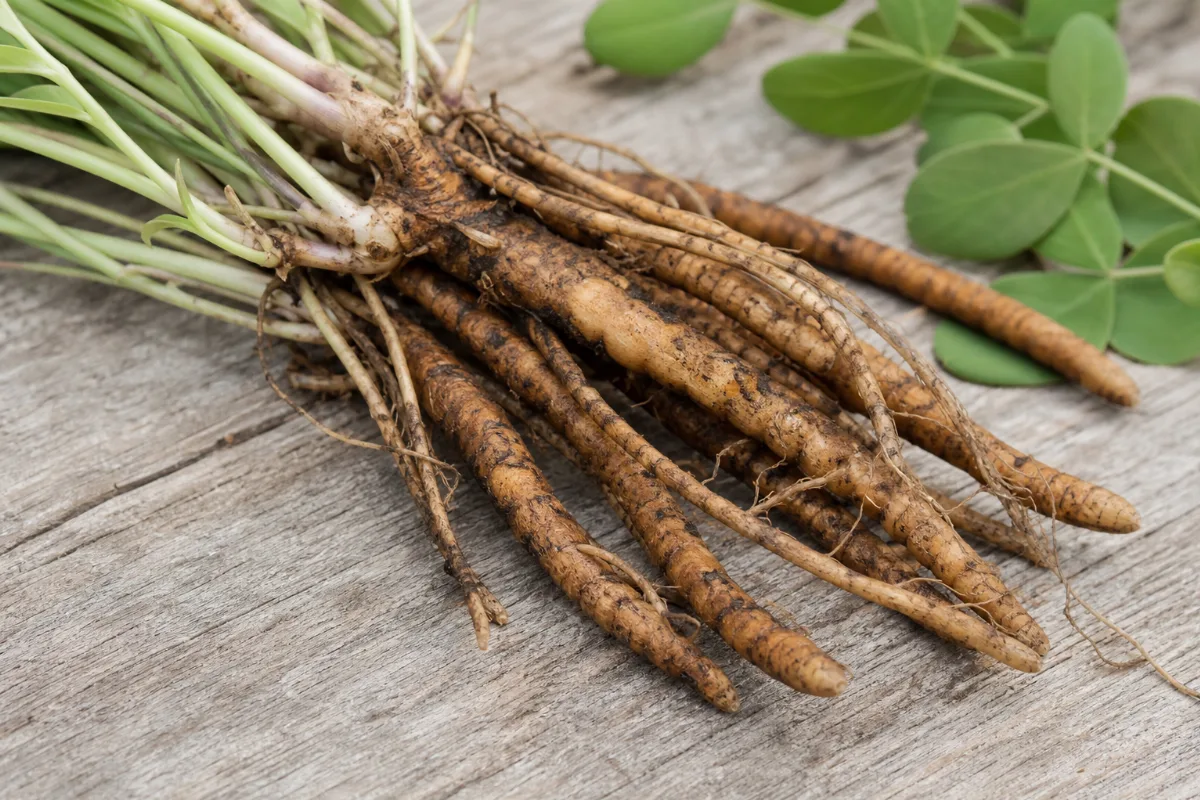
Wild Indigo
Baptisia tinctoria · also called Wild indigo, yellow wild indigo, horsefly weed
Wild indigo is a North American root used for infections and sore throats, and it is one part of some European cold products. The only human trials tested a mixture with Echinacea and Thuja, so wild indigo on its own has not been proven to help. The key caution: the plant has nicotine-like alkaloids that can cause vomiting, diarrhoea and nerve effects in larger amounts, and it should be avoided in pregnancy.
General information, not medical advice. Last substantive update · Not medically reviewed. A named clinician has not signed off on this page. How this page is made
About Wild Indigo
Wild indigo (Baptisia tinctoria) is a root from a North American pea-family plant, used traditionally for infections and sore throats. Human trials tested only a mixture with Echinacea and Thuja. It contains nicotine-like alkaloids and can cause poisoning in larger amounts.
What it is
Wild indigo is a plant of the pea family. The root is used in herbal medicine. It is not the same as the dye indigo plant.
Other names include yellow wild indigo and horsefly weed.
What makes it distinctive
The root holds sugar-protein compounds that stimulated mouse immune cells in a dish, and cytisine-type alkaloids that act on the same receptors as nicotine. The first is why it is used in immune products. The second is why it can be a poison.
What people use it for
In the 1800s Eclectic physicians used it for ulcers, sore throat and fevers. Today it is mostly seen as one ingredient in European cold products, and in tinctures and very diluted homeopathic-type preparations.
What the research shows
One placebo-controlled trial of 91 adults found a wild indigo, Echinacea and Thuja mixture linked to fewer tissues used and quicker improvement of cold symptoms. A small bronchitis trial was borderline, and a vaccine trial found no effect on its main outcome. Two reviews call the sinusitis evidence limited. The trials were small and the makers were involved.
Wild indigo alone has not been tested in people. Lab and mouse studies show immune-cell stimulation, which does not prove a benefit in people.
At a glance
Traditional uses history, not proof
- Sore throat and swollen glands
- Foul ulcers and wounds
- Fevers, including typhoid-type fevers
- Infections, as an immune and lymph herb
Studied for research
- Common cold: one small trial of a mixture
- Bronchitis flare-up: one small trial of a mixture, with antibiotics
- Hepatitis B vaccine response: no clear effect
- Sinusitis: limited evidence for the mixture
- Immune cells: mouse and lab work only
Main compounds
- Cytisine-type alkaloids (the safety concern)
- Sugar-protein compounds that stimulated mouse immune cells
- Isoflavones (named in the brief; not read)
Common forms
- Dried root
- Tincture or liquid extract
- Combination extract with Echinacea and Thuja
- Ultradilute (homeopathic-type) preparation
Research links: Cold trial of the wild indigo, Echinacea and Thuja mixture (2005) · Bronchitis add-on trial (2002) · Hepatitis B vaccine trial (2002) · Systematic review: herbal medicines for sinusitis (2006) · Baptisia poisoning case report (2015) · Consumer reference: wild indigo · Research Library · Genes & Biomarkers Library
The plant and its history
- Accepted scientific name
- Baptisia tinctoria (L.) R.Br.
- Naming authority
- (L.) R.Br.
- Common names
- Wild indigo (English); Yellow wild indigo (English); Horsefly weed (English); Baptisiae tinctoriae radix (Latin (pharmacy name))
- Botanical family
- Fabaceae (pea family)
- Classification
- Plantae > Fabales > Fabaceae > Baptisia > Baptisia tinctoria
- Native range
- Eastern North America; not confirmed in a source we read.
- Habitat
- Not described in the sources read.
- What the plant looks like
- Roots: The root is the part used in medicine.; Stems: Not described.; Leaves: Not described.; Flowers: Not described (the common name 'yellow wild indigo' suggests yellow flowers).; Fruit: Not described.
- Cultivation
- Not verified.
- Harvest and processing
- Dried root, tincture or liquid extract; alkaloid content of raw root is not standardised (our earlier summary).
- Look-alikes and adulterants
- Name: Other Baptisia species (for example blue false indigo); Note: A veterinary guide lists them as poisonous plants too. Young shoots resemble asparagus.; Name: Dye indigo (Indigofera); Note: A different plant. Not the same herb.
- Sustainability and conservation
- Not assessed here.
Traditional use and history history, not clinical proof
| Tradition or era | Documented use | Source |
|---|---|---|
| Eclectic medicine, North America (1800s) | Root for foul ulcers, sore throat and typhoid-type fevers; large amounts said to cause vomiting and purging. | s-kings |
| European herbal practice, 20th century to now | Root extract as one part of Echinacea-Baptisia-Thuja cold products. | p12244885 |
| Consumer reference listing | Infections, sore throat, ulcers and wounds, with unsafe warnings for pregnancy and larger amounts. | s-rxlist |
Traditional use shows how a plant was used. It does not show that a supplement works or is safe today.
What is inside, and how it may work
What the plant contains and how those compounds act in cells and animals. Laboratory and animal mechanisms are not proven effects in people.
Main compounds
| Compound | Family | Where it is concentrated | Activity studied | Level of evidence |
|---|---|---|---|---|
| Cytisine PubChem 10235 | quinolizidine alkaloid | Baptisia plants (veterinary guide; amount in the root not found) | Acts on nicotinic receptors like nicotine; the main reason for the poisoning warning. Used as a drug for smoking cessation. 4 10 13 | Human data |
| Anagyrine PubChem 5351589 | quinolizidine alkaloid | Not confirmed for B. tinctoria root in the sources read | Named in the brief as an alkaloid of interest. Its presence in wild indigo root was not confirmed here. 13 | Not established |
| Arabinogalactan-proteins (sugar-protein compounds) | polysaccharide-protein | Root (water extract) Mainly galactose (58.7%) and arabinose (34.0%) in the carbohydrate part. | Stimulated mouse immune cells in a dish. 15 5 | Laboratory research |
| Isoflavones | polyphenol | Root (named in the brief) | Not read in any source for this round; not described. | Not established |
Mechanisms, receptors and pathways
| Target or pathway | Gene or receptor | What was found | Level |
|---|---|---|---|
| Mouse lymphocytes and macrophages | IgM, nitrite, IL-6 release | Root sugar-protein compounds stimulated them in a dish. 5 | Laboratory research |
| Phagocytosis | granulocytes | A four-plant extract containing wild indigo raised phagocytosis in a dish and in mice. 16 | Animal research |
| Nicotinic acetylcholine receptors | nicotinic receptors | Cytisine acts like nicotine; this fits the nerve and gut effects in poisoning. 1 4 | Human data |
Absorption, metabolism and elimination
- Absorption
- Not studied for wild indigo.
- Distribution
- Not studied.
- Metabolism
- Not studied.
- Elimination
- Not studied.
- Bioavailability
- Not established.
Isolated compounds versus whole extracts
Human trials tested a fixed mixture of wild indigo root, Echinacea root and Thuja, not wild indigo alone. Lab immune effects come from purified root compounds. Ultradilute (homeopathic-type) preparations contain almost no plant material. Results from one of these should not be carried over to another, and none show what a tincture or dried root does.
Nutritional composition
Not a food or nutrient source.
1 low certainty3 very low certainty3 not enough evidence
What is Wild Indigo good for?
What wild indigo has been studied for and how strong the evidence is. Most results come from a mixture, not wild indigo alone, and nothing here is proven for the herb itself.
Benefits, one by one
Each card is a research question, not a promise. Tap a goal to filter. Open a card to see the studies, doses and limits.
Common cold symptoms (combination product)
Low certaintyOne small placebo-controlled trial of a mixture of wild indigo, Echinacea and Thuja found fewer tissues used and quicker improvement at the higher level tested. Wild indigo alone has not been tested.
1 studiesThe product is a mixture with set amounts of each plant; no product m…
Studies, doses and limits
What the trials found
One placebo-controlled trial of 91 adults tested a fixed mixture of wild indigo root, Echinacea root and Thuja herb.
Results
Tissues used fell as the extract level rose, and clear improvement came sooner at the higher level (about half a day sooner than placebo in the time measure). No adverse events were reported.
Effect sizes as reported
Standardised effect size 0.46 at the higher level; time to improvement 1.1 days on placebo and 0.52 days at the higher level.
Why this rating
One small trial, from the maker of the product, testing a mixture; the wild indigo share cannot be separated.
Form and dose studied
The product is a mixture with set amounts of each plant; no product made of wild indigo alone was tested.
Who was studied
Adults with common cold symptoms.
Limits
Small, industry-linked, one trial. Does not show wild indigo alone works.
Why researchers looked
Wild indigo is an old remedy for infections, and European companies sell it in mixtures for colds.
Traditional use
Eclectic and European herbal practice used the root for infections, throat problems and swollen glands.
Proposed mechanism Pharmacological theory
Not established. The mixture is thought to stir immune cells, mainly from lab work on sugar-protein compounds in the root and in Echinacea.
A proposed mechanism does not show that the effect happens in people.
Wild indigo can cause stomach and nerve effects in large amounts. See the Safety tab. Ask a doctor or pharmacist about amounts.
Add-on in a chronic bronchitis flare-up (combination product)
Very low certaintyIn 53 people taking antibiotics for a bronchitis flare-up, a wild indigo, Echinacea and Thuja product was linked to better lung-function scores at day 10 than placebo. It is a small trial and not proof.
1 studiesGiven on top of antibiotics. It does not replace them.
Studies, doses and limits
What the trials found
One double-blind trial of 53 adults with a bronchitis flare-up given a macrolide antibiotic plus Esberitox N or placebo.
Results
Lung function (FEV1) on day 10 averaged 68.7% of predicted with the product and 59.2% with placebo; half of the maximal improvement came at 5.7 days against 12.8 days. No serious adverse events.
Effect sizes as reported
Difference of 267 ml in FEV1 (p = 0.0499).
Why this rating
Small trial of a mixture, borderline statistics, maker-linked, never repeated in the papers we found.
Form and dose studied
Given on top of antibiotics. It does not replace them.
Who was studied
Adults with chronic bronchitis (FEV1 35 to 75% of predicted).
Limits
Small and unreplicated; wild indigo share unknown.
Why researchers looked
Researchers asked whether an immune herb mix helps recovery when antibiotics are already being used.
Traditional use
Wild indigo was a traditional remedy for chest and throat infections.
Proposed mechanism Pharmacological theory
Not established. The authors suggest the mix may stop antibiotics from weakening the immune response; this is a theory.
A proposed mechanism does not show that the effect happens in people.
A bronchitis flare-up needs a doctor. Do not use this in place of antibiotics.
Response to a hepatitis B vaccine (combination product)
Very low certaintyIn 346 students, the same type of mixture made no difference to how many responded to the first vaccine shot. Antibody levels were higher in a small subgroup, which is not a firm finding.
1 studiesA mixture; wild indigo alone not tested.
Studies, doses and limits
What the trials found
One placebo-controlled trial in medical students taking Esberitox N around their vaccination.
Results
After the first shot, 22% of both groups had responded, so no advantage. After the second shot, 89% of each group had. In those who had responded after shot one, the median antibody level was 37.0 IU/L with the product and 15.5 IU/L with placebo.
Effect sizes as reported
Median anti-HBs 37.0 IU/L (95% CI 18 to 68) vs 15.5 IU/L (95% CI 8 to 30), subgroup only.
Why this rating
Main outcome was null; the antibody difference is a subgroup finding in one German-language trial.
Form and dose studied
A mixture; wild indigo alone not tested.
Who was studied
Healthy medical students.
Limits
Subgroup analysis; maker-linked authors; German-language abstract only.
Why researchers looked
The vaccine was used as a model to see whether the mixture really boosts immunity.
Traditional use
Not part of traditional use.
Proposed mechanism Pharmacological theory
Not established.
A proposed mechanism does not show that the effect happens in people.
Do not skip or change vaccinations because of any herb.
Sinusitis (combination product)
Not enough evidenceTwo reviews found only one small trial of the wild indigo mixture for sinusitis. One said it needs independent replication; the other found little evidence for it.
2 studiesNot wild indigo alone. Sinupret, which the same reviews rate more fav…
Studies, doses and limits
What the trials found
Two systematic reviews listed a single trial of Esberitox among trials of several herbal products.
Results
The 2006 review called the evidence for any herbal medicine in sinusitis limited and said single-trial results like this need replication. The 2016 review found little evidence for Esberitox.
Effect sizes as reported
Not pooled.
Why this rating
One trial in two reviews; the reviews judge it weak.
Form and dose studied
Not wild indigo alone. Sinupret, which the same reviews rate more favourably, is a different mix that to our knowledge does not contain wild indigo (not checked from a label).
Who was studied
Adults with sinusitis.
Limits
Reviews describe small trials of mixed quality; we did not read the original sinusitis trial.
Why researchers looked
Sinusitis is one of the infections the mixture is sold for.
Traditional use
Wild indigo root was used for throat and nose complaints in old herbal texts.
Proposed mechanism Pharmacological theory
Not established.
A proposed mechanism does not show that the effect happens in people.
See bronchitis note; sinus infections that last or worsen need a doctor.
Immune-cell stimulation (laboratory and mouse only)
Very low certaintySugar-protein compounds from the root stimulated mouse immune cells in a dish, and a four-plant mix raised immune-cell activity in mice. This does not show a benefit in people.
3 studiesPurified compounds and a four-plant mix; not a tea or tincture.
Studies, doses and limits
What the trials found
No human study of these compounds.
Results
Highly active in all mouse-cell tests for the wild indigo and Echinacea pallida compounds; a four-plant extract raised phagocytosis in a dish and in mice.
Effect sizes as reported
None in people.
Why this rating
Lab and animal work only.
Form and dose studied
Purified compounds and a four-plant mix; not a tea or tincture.
Who was studied
Mouse cells and mice.
Limits
Lab and mouse only. Says nothing about what happens in people.
Why researchers looked
Scientists wanted to find what in the root might act on immune cells.
Traditional use
Wild indigo is a traditional lymph and immune herb.
Proposed mechanism Laboratory research
Sugar-protein compounds (arabinogalactan-proteins) from the root stimulated mouse lymphocytes and macrophages in a dish.
A proposed mechanism does not show that the effect happens in people.
None known from this work.
Typhoid (ultradilute preparation)
Not enough evidenceA 2012 paper claimed an extremely diluted wild indigo preparation helps typhoid by prompting antibodies. The abstract shows no patient data, and typhoid needs medical care.
1 studiesExtremely diluted preparation; not comparable to the root herb.
Studies, doses and limits
What the trials found
No controlled patient trial is described in the abstract.
Results
No measured results are given in the abstract.
Effect sizes as reported
None.
Why this rating
A claim without data in the abstract, about a preparation with almost no plant in it.
Form and dose studied
Extremely diluted preparation; not comparable to the root herb.
Who was studied
Not clear.
Limits
Not a clear trial; authors from a homeopathic foundation.
Why researchers looked
Homeopathic researchers looked at an old use for fevers.
Traditional use
Wild indigo was used in Eclectic practice for typhoid-type fevers.
Proposed mechanism Pharmacological theory
The authors propose it prompts antibody formation; not demonstrated in the abstract.
A proposed mechanism does not show that the effect happens in people.
Typhoid is serious and needs antibiotics and a doctor.
Traditional use for infections, ulcers and sore throat
Not enough evidenceAn 1898 text and a consumer reference list wild indigo for infections, sore throat, ulcers and swollen glands. These come from tradition. We found no trial of wild indigo alone for any of them.
2 studiesHistoric preparations were not standardised.
Studies, doses and limits
What the trials found
No human trial of wild indigo alone was found.
Results
None.
Effect sizes as reported
None.
Why this rating
Old texts and a consumer reference; no trial.
Form and dose studied
Historic preparations were not standardised.
Who was studied
Not studied.
Limits
Old use is not proof it works, and the same texts warn of vomiting in large amounts.
Why researchers looked
Eclectic physicians of the 1800s used the root for these problems, and European herbal practice took it up.
Traditional use
Root used by mouth, as a wash or on ulcers in Eclectic practice; the same texts say large amounts cause vomiting and purging.
Proposed mechanism Pharmacological theory
Not established.
A proposed mechanism does not show that the effect happens in people.
Skin use and larger amounts are described as unsafe in a consumer reference. See the Safety tab.
Connections to the rest of health
How Wild Indigo connects to the rest of our health knowledge graph. Every link says what kind of connection it is. A safety link (for example to the liver) is a warning, not a benefit. A study that merely mentions a topic never creates a benefit link.
Explore every connection: goals, body systems, organs, symptoms, genes
A. Wellness goals
| Connected to | Kind of connection | Evidence status | Context | Studies |
|---|---|---|---|---|
| Immune Support | Low certainty | Common cold symptoms (combination product): One small placebo-controlled trial of a mixture of wild indigo, Echinacea and Thuja found fewer tissues used and quicker improvement at the higher level tested. Wild indigo alone has not been tested. Add-on in a chronic bronchitis flare-up (combination product): In 53 people taking antibiotics for a bronchitis flare-up, a wild indigo, Echinacea and Thuja product was linked to better lung-function scores at day 10 than placebo. It is a small trial and not proof. | 12 9 3 | |
| Seasonal Wellness | Low certainty | Common cold symptoms (combination product): One small placebo-controlled trial of a mixture of wild indigo, Echinacea and Thuja found fewer tissues used and quicker improvement at the higher level tested. Wild indigo alone has not been tested. | 12 | |
| Breathing Support | Very low certainty | Add-on in a chronic bronchitis flare-up (combination product): In 53 people taking antibiotics for a bronchitis flare-up, a wild indigo, Echinacea and Thuja product was linked to better lung-function scores at day 10 than placebo. It is a small trial and not proof. | 9 | |
| Breathing Support | Not enough evidence | Sinusitis (combination product): Two reviews found only one small trial of the wild indigo mixture for sinusitis. One said it needs independent replication; the other found little evidence for it. | 8 11 | |
| Immune Support | Very low certainty | Immune-cell stimulation (laboratory and mouse only): Sugar-protein compounds from the root stimulated mouse immune cells in a dish, and a four-plant mix raised immune-cell activity in mice. This does not show a benefit in people. | 5 16 15 | |
| Immune Support | Traditional use | Not enough evidence | Typhoid (ultradilute preparation): A 2012 paper claimed an extremely diluted wild indigo preparation helps typhoid by prompting antibodies. The abstract shows no patient data, and typhoid needs medical care. Traditional use for infections, ulcers and sore throat: An 1898 text and a consumer reference list wild indigo for infections, sore throat, ulcers and swollen glands. These come from tradition. We found no trial of wild indigo alone for any of them. | 2 6 14 |
B. Body systems
| Connected to | Kind of connection | Evidence status | Context | Studies |
|---|---|---|---|---|
| Immune System | Biological association | Low certainty | Studied for: Common cold symptoms (combination product) Studied for: Add-on in a chronic bronchitis flare-up (combination product) | 12 9 3 5 16 15 2 6 14 |
| Respiratory Health | Biological association | Low certainty | Studied for: Common cold symptoms (combination product) Studied for: Add-on in a chronic bronchitis flare-up (combination product) | 12 9 8 11 |
I. Biomarkers
| Connected to | Kind of connection | Evidence status | Context | Studies |
|---|---|---|---|---|
| Tissues used during a cold | Biological association | Low certainty | Measured in trials: lowered. A lab change is not the same as a health benefit. | 12 |
| Lung function (FEV1) | Biological association | Very low certainty | Measured in trials: improved. A lab change is not the same as a health benefit. | 9 |
| Hepatitis B antibody level and response rate | Biological association | Very low certainty | Measured in trials: mixed. A lab change is not the same as a health benefit. | 3 |
| Immune-cell activity in mouse cells | Biological association | Very low certainty | Measured in trials: raised. A lab change is not the same as a health benefit. | 5 |
| Phagocytosis (cells engulfing particles) | Biological association | Very low certainty | Measured in trials: raised. A lab change is not the same as a health benefit. | 16 |
J. Genes, receptors and enzymes
L. Active compounds
| Connected to | Kind of connection | Evidence status | Context | Studies |
|---|---|---|---|---|
| Cytisine | Biological association | Human | Acts on nicotinic receptors like nicotine; the main reason for the poisoning warning. Used as a drug for smoking cessation. Preparation or compound: Baptisia plants (veterinary guide; amount in the root not found) |
4 10 13 |
| Anagyrine | Biological association | Not established | Named in the brief as an alkaloid of interest. Its presence in wild indigo root was not confirmed here. Preparation or compound: Not confirmed for B. tinctoria root in the sources read |
13 |
| Arabinogalactan-proteins (sugar-protein compounds) | Biological association | In vitro | Stimulated mouse immune cells in a dish. Preparation or compound: Root (water extract) |
15 5 |
| Isoflavones | Biological association | Not established | Not read in any source for this round; not described. Preparation or compound: Root (named in the brief) |
Each connection is stored with the ingredient, the connected record, the kind of connection, the evidence status, the supporting studies, the preparation or compound involved, and a review date (last reviewed October 25, 2026).
Evidence at a glance: what changed in 4 lab markers
Tap a number to show only those markers. Counts are markers, not people.
The evidence
The research centre for Wild Indigo. Every record here was checked against PubMed or the publisher's page; we never list a study we have not verified.
Evidence by outcome
Bars show how many studies we found for each outcome, not how well it works. People are added up across trials only (reviews are not added, to avoid double counting).
How we rate evidence
High certainty
Several well-run trials or reviews agree; further research is unlikely to change the picture much.
Moderate certainty
Good trials point the same way, but some doubt remains.
Low certainty
Small, short or inconsistent trials. The finding could change with better research.
Very low certainty
Very little or very weak human data. Treat as a possibility only.
Mixed findings
Trials or reviews disagree with each other.
Not enough evidence
Not enough human research to say either way.
Evidence against
Good research found no benefit, or found harm.
We take the reviewers' own risk-of-bias and GRADE statements where they exist, and otherwise judge from study size, design, consistency, directness and whether a product matches what is sold. Many publications do not make evidence high. Method note: We built on our existing summary, read PubMed abstracts, and checked GBIF and PubChem. A consumer drug reference was re-read; a veterinary guide and an 1898 text were carried over from our earlier summary and not re-opened. Most studies were read as abstracts only.
Study library: every study we checked 16
| Study | Design | People | Product, dose, length | Result |
|---|---|---|---|---|
| Anderson 2015 Baptisia poisoning: a new and toxic look-alike in the neighborhood J Emerg Med · PMID 25453859 · DOI |
Case report |
2 Two people who ate Baptisia plant material together |
Baptisia plant material eaten as a food plant (species not stated in abstract) immature shoots (looked like asparagus) not given here not given here · vs none |
Both patients had general weakness and stomach and bowel symptoms typical of cytisine-type (nicotine-like) poisoning, and both had marked loss of balance (ataxia). The authors warn that young Baptisia shoots look like asparagus. Poisoning in 2 people Methods, limits and fundingOutcomes: Symptoms of poisoning Limitations: Two cases; exact species and amount eaten not given in the abstract, so it may not be wild indigo (B. tinctoria) itself. Abstract read only. Funding and conflicts: Not stated in abstract Read: abstract |
| Banerji 2012 Efficacy of Baptisia tinctoria in the treatment of typhoid: its possible role in inducing antibody formation J Complement Integr Med · PMID 22850071 · DOI |
Other unclear |
Not a clear patient trial in the abstract | Baptisia tinctoria ultradilute (homeopathic-type) preparation root not given here not given here · vs none |
The abstract states that the ultradilute preparation is "highly effective" for typhoid and suggests it may prompt antibody formation, but it gives no patient numbers or measured results. The conclusion goes beyond what the abstract shows. Unclear; claim is not backed by data in the abstract Methods, limits and fundingOutcomes: Antibody formation; typhoid outcomes Limitations: Ultradilute preparations contain almost no plant material, so this says nothing about the root herb. Authors are from a homeopathic research foundation. Abstract read only. Funding and conflicts: Authors from a homeopathic foundation; funding not stated Read: abstract |
| Bostelmann 2002 Immunomodulation by herbal agents. A double-blind study in a medical university hospital involving a hepatitis B vaccine adjuvant model (in German) Fortschr Med Orig · PMID 12613268 |
Controlled trial |
346 Medical students given hepatitis B vaccine (318 analysed) |
Esberitox N tablets (wild indigo, Echinacea, Thuja) root (wild indigo part of a mixture) not given here not given here · vs placebo |
After the first injection 22% in both groups had seroconverted, so no advantage. After the second injection 89% in each group had. In the subset who had seroconverted after the first shot, the median antibody level was 37.0 IU/L (95% CI 18 to 68) with the test product (n = 34) against 15.5 IU/L (95% CI 8 to 30) with placebo (n = 36; p = 0.003). The authors conclude the influence on seroconversion is negligible. No effect on seroconversion; higher antibody level in a subgroup Methods, limits and fundingOutcomes: Seroconversion rate and anti-HBs antibody level Limitations: German-language paper; the subgroup comparison was not the main outcome. A maker-linked author. Abstract read only. Funding and conflicts: Industry-linked (an author is at the maker) Read: abstract |
| Campagnari 2024 An example of cytisine overdose with no consequent side-effects: a case report J Med Case Rep · PMID 39614385 · DOI |
Case report |
1 One 64-year-old woman using cytisine to quit smoking |
Cytisine, the pure drug (not wild indigo) not applicable not given here not given here · vs none |
The authors note that cytisine, which is chemically similar to nicotine, can cause nausea, vomiting, diarrhoea, drowsiness, delirium and muscle twitching when someone is poisoned. In this single case a woman took twice the planned amount for 8 days and reported no reaction. One case does not show the amount is safe. Single case without side effects Methods, limits and fundingOutcomes: Adverse reactions after taking twice the planned amount Limitations: One person, pure drug, not a plant. It does not show wild indigo is safe. Abstract read only. Funding and conflicts: No competing interests declared Read: abstract |
| Classen 2006 Immunomodulatory effects of arabinogalactan-proteins from Baptisia and Echinacea Phytomedicine · PMID 17085292 · DOI |
Laboratory research mouse cells |
Mouse immune cells in culture | Arabinogalactan-proteins (sugar-protein compounds) purified from wild indigo root, Echinacea pallida root and Echinacea purpurea cell culture root not given here not given here · vs none |
The sugar-protein compounds from wild indigo root and Echinacea pallida root were highly active in all the test systems. The one from Echinacea purpurea cell culture was weak or inactive. Immune-cell stimulation in the lab Methods, limits and fundingOutcomes: Mouse lymphocyte growth, IgM and macrophage nitrite and IL-6 Limitations: Mouse cells in a dish; says nothing about effects in people. Abstract read only. Funding and conflicts: Not stated in abstract Read: abstract |
| Felter 1898 King's American Dispensatory (1898): Baptisia Historical text · Source |
Reference |
not applicable | Wild indigo root (Baptisia tinctoria) root not given here not given here · vs none |
Per our earlier summary: the 1898 text recommended it for foul ulcers, sore throat and typhoid-type fevers and said large amounts cause vomiting and purging. not applicable Methods, limits and fundingOutcomes: see results Limitations: Historical text from Eclectic practice, not evidence of benefit; carried over from our earlier summary and not re-opened. Funding and conflicts: not applicable Read: summary-only |
| GBIF 2026 GBIF species match: Baptisia tinctoria (L.) R.Br. (key 7943262) GBIF · Source |
Registry or database plant |
not applicable | Wild indigo (Baptisia tinctoria) root not given here not given here · vs none |
GBIF API on 2026-10-25: Baptisia tinctoria (L.) R.Br. is ACCEPTED (exact match), family Fabaceae, order Fabales. not applicable Methods, limits and fundingOutcomes: see results Limitations: Taxonomy database record. Funding and conflicts: not applicable Read: full-text |
| Guo 2006 Herbal medicines for the treatment of rhinosinusitis: a systematic review Otolaryngol Head Neck Surg · PMID 17011407 · DOI |
Systematic review |
10 Ten randomised trials of herbal products for sinusitis |
Six herbal products, one of which was Esberitox (wild indigo, Echinacea, Thuja) various not given here not given here · vs none |
Ten trials were found. Single trials of Esberitox and three other products reported some positive results that need independent replication. The review rated the evidence that any herbal medicine helps as limited. The encouraging results it names are for Sinupret and bromelain, not for Esberitox. Limited evidence Methods, limits and fundingOutcomes: Symptoms of rhinosinusitis Limitations: Review of small, mixed-quality trials (median quality 3 of 5). Sinupret is a different herbal mix that, to our knowledge, does not contain wild indigo (not checked from a label), so its results are not counted for wild indigo. Abstract read only. Funding and conflicts: Not stated in abstract Read: abstract |
| Hauke 2002 Esberitox N as supportive therapy when providing standard antibiotic treatment in subjects with a severe bacterial infection (acute exacerbation of chronic bronchitis). A multicentric, prospective, double-blind, placebo-controlled study Chemotherapy · PMID 12476043 · DOI |
Controlled trial |
53 Adults with a flare-up of chronic bronchitis, all given a macrolide antibiotic |
Esberitox N, a combination of wild indigo root, Echinacea and Thuja (with antibiotic) root (wild indigo part of a mixture) not given here not given here · vs placebo |
FEV1 on day 10 averaged 68.7% of predicted with Esberitox N and 59.2% with placebo (p = 0.0303), a difference of 267 ml (p = 0.0499). Time to half of the maximal improvement was 5.7 days against 12.8 days. No serious adverse events were documented. Better lung-function scores at day 10 Methods, limits and fundingOutcomes: Lung function (FEV1) on day 10; time to half of the maximal improvement Limitations: Small trial of a mixture given with antibiotics. The authors say it seems to help, which is not the same as proof. Funding not stated in the abstract; one author is linked to the maker. Abstract read only. Funding and conflicts: Possible industry link (not stated in abstract) Read: abstract |
| IVIS Baptisia species: Blue false indigo (Guide to Poisonous House and Garden Plants, IVIS) IVIS (veterinary) · Source |
Reference plant |
not applicable | Baptisia species (B. tinctoria is listed) whole plant not given here not given here · vs none |
Per our earlier summary: Baptisia plants contain quinolizidine alkaloids, with cytisine the main one. not applicable Methods, limits and fundingOutcomes: see results Limitations: Veterinary guide on Baptisia in general; carried over from our earlier summary and not re-opened. A measured alkaloid content for wild indigo root was not found. Funding and conflicts: not applicable Read: summary-only |
| Koch 2016 A Systematic Review of Phytotherapy for Acute Rhinosinusitis (in German) Forsch Komplementmed · PMID 27404100 · DOI |
Systematic review |
7 Seven controlled trials in acute rhinosinusitis |
Pelargonium, Myrtol, Sinupret, Cyclamen and Esberitox products various not given here not given here · vs none |
Seven trials were included, with mixed risk of bias. Pelargonium appeared useful and Myrtol and the Sinupret products might help. The review found little evidence for Cyclamen and for Esberitox. Little evidence for Esberitox Methods, limits and fundingOutcomes: Symptoms of acute rhinosinusitis Limitations: Few trials of mixed quality. Abstract read only; the review is in German. Funding and conflicts: Not stated in abstract Read: abstract |
| Naser 2005 A randomized, double-blind, placebo-controlled, clinical dose-response trial of an extract of Baptisia, Echinacea and Thuja for the treatment of patients with common cold Phytomedicine · PMID 16323289 · DOI |
Controlled trial |
91 Adults with a common cold |
SB-TOX, a combination extract of wild indigo root, Echinacea root and Thuja herb root (wild indigo part of a mixture) not given here not given here · vs placebo |
Tissues used fell as the extract level rose (trend p = 0.0259). The effect size at the higher level was 0.46 against placebo. Time to clear improvement was 1.1 days (95% CI 0.52 to 1.67) on placebo, 0.76 days on the lower level and 0.52 days (95% CI 0.22 to 0.82) on the higher level (log-rank p = 0.0175). No adverse events were reported. Modest, in a mixture (0.22 to 0.82 days (higher level)) Methods, limits and fundingOutcomes: Tissues used during the cold; time until fewer than 30 tissues a day Limitations: Small trial of a fixed mixture, so wild indigo alone cannot be judged. Authors include an employee of the maker. Abstract read only. Funding and conflicts: Industry-linked (an author is at the maker, Schaper & Brummer) Read: abstract |
| PubChem 2026 PubChem compound records: cytisine (CID 10235), anagyrine (CID 5351589) PubChem · Source |
Registry or database chemical |
not applicable | Cytisine and anagyrine, quinolizidine alkaloids not applicable not given here not given here · vs none |
PubChem name lookups on 2026-10-25 returned cytisine CID 10235 (C11H14N2O) and anagyrine CID 5351589 (C15H20N2O). not applicable Methods, limits and fundingOutcomes: see results Limitations: Only the compound identities were checked, not their content in wild indigo root. Funding and conflicts: not applicable Read: full-text |
| RxList 2026 Wild Indigo: Health Benefits, Side Effects, Uses, Dose and Precautions (RxList) RxList (consumer drug reference) · Source |
Reference |
not applicable | Wild indigo root (Baptisia tinctoria) root not given here not given here · vs none |
Page read 2026-10-25. It says wild indigo is used for infections, sore throat, ulcers and wounds, and lists Esberitox (a combination with Echinacea and Thuja) for the common cold as "possibly effective" on early research. It calls wild indigo unsafe by mouth or on the skin long-term or in large amounts, says large amounts can cause vomiting, diarrhoea, other bowel problems and spasms, and says to avoid it in pregnancy, breastfeeding and in people with stomach or bowel problems. not applicable Methods, limits and fundingOutcomes: see results Limitations: Consumer reference, not a regulator and not a primary study; gives no sources in the text read. Funding and conflicts: not applicable Read: full-text |
| Wack 2005 An acidic arabinogalactan-protein from the roots of Baptisia tinctoria Planta Med · PMID 16206034 · DOI |
Chemistry plant |
Laboratory analysis of wild indigo root extract | Water extract of Baptisia tinctoria root root not given here not given here · vs none |
A sugar-protein compound (arabinogalactan-protein) was isolated from a water extract of wild indigo root and its make-up described (mainly galactose and arabinose with a protein part). Identifies a root compound Methods, limits and fundingOutcomes: Chemical structure of a sugar-protein compound Limitations: Chemistry only; no biological effect tested. Funding and conflicts: Not stated in abstract Read: abstract |
| Wagner 1991 Immunologic studies of plant combination preparations. In-vitro and in-vivo studies on the stimulation of phagocytosis (in German) Arzneimittelforschung · PMID 1799388 |
Animal research mouse |
Granulocytes in a dish and mice | Four-plant extract combination: Echinacea angustifolia, Eupatorium perfoliatum, Baptisia tinctoria, Arnica montana not stated in abstract not given here not given here · vs none |
Adding each of the four extracts stepwise raised phagocytosis, by partly more than 50% against Echinacea angustifolia alone, in both the dish test and the mouse carbon-clearance test. Higher phagocytosis in lab and mouse tests Methods, limits and fundingOutcomes: Phagocytosis (immune cells engulfing particles) Limitations: A four-plant mix, so the wild indigo share cannot be separated. Lab and mouse only. Abstract read only. Funding and conflicts: Not stated in abstract Read: abstract |
What we do not know yet
- No trial of wild indigo root alone for any use.
- No independent repeat of the cold or bronchitis trials.
- No regulator monograph or liver data found.
- No measured alkaloid content of the root, and no safe amount established.
- No pregnancy, breastfeeding or children data.
How new research is added
New studies are found by a saved PubMed search and are placed in a review queue. A person reads each one before it changes any evidence rating or safety wording.
Lab markers
What changed in blood or saliva tests during trials. A changed number is not the same as feeling or being healthier, and we give no "normal ranges".
Other 5
Tissues used during a cold
Lowered in trials
A simple count of facial tissues used as a measure of runny nose.
Low certaintyResults and what it means
Why it was measured
The trial used it as its main yardstick for cold severity.
Statistical vs. clinical meaning
Self-counted symptom measure from one small trial.
Safety implication
None specific.
| Study | Result | People | Product |
|---|---|---|---|
| 12 | Tissues used fell as the level of the mixture rose (trend p = 0.0259). | 91 adults with a cold | Wild indigo, Echinacea, Thuja mixture |
Lung function (FEV1)
Improved in trials
How much air a person can blow out in the first second; a standard lung test.
Very low certaintyResults and what it means
Why it was measured
Used to track recovery from a bronchitis flare-up.
Statistical vs. clinical meaning
Borderline statistics; one small trial.
Safety implication
None specific.
| Study | Result | People | Product |
|---|---|---|---|
| 9 | FEV1 on day 10 was 68.7% of predicted with the mixture vs 59.2% with placebo. | 53 adults with a bronchitis flare-up on antibiotics | Esberitox N plus antibiotic |
Hepatitis B antibody level and response rate
Mixed results in trials
Blood antibodies after hepatitis B vaccination, and how many people respond.
Very low certaintyResults and what it means
Why it was measured
A test of whether an immune herb adds to vaccine response.
Statistical vs. clinical meaning
Main result null; subgroup result is uncertain.
Safety implication
None specific.
| Study | Result | People | Product |
|---|---|---|---|
| 3 | No difference in responder rate (22% vs 22% after dose 1; 89% each after dose 2). Higher median level in a small subgroup of early responders. | 346 students (318 analysed) | Esberitox N |
Immune-cell activity in mouse cells
Raised in trials
Growth and chemical signals (IgM, nitrite, IL-6) from mouse immune cells in a dish.
Very low certaintyResults and what it means
Why it was measured
To test if root compounds can stir immune cells.
Statistical vs. clinical meaning
Lab screen only.
Safety implication
None for people from this test.
| Study | Result | People | Product |
|---|---|---|---|
| 5 | Root compounds were highly active in all test systems. | Mouse lymphocytes and macrophages in culture | Wild indigo root sugar-protein compounds |
Phagocytosis (cells engulfing particles)
Raised in trials
How well immune cells take up foreign particles.
Very low certaintyResults and what it means
Why it was measured
To test if the four-plant mix helps immune cells clear particles.
Statistical vs. clinical meaning
Lab and mouse; wild indigo share unknown.
Safety implication
None for people from this test.
| Study | Result | People | Product |
|---|---|---|---|
| 16 | Stepwise addition of the four extracts raised phagocytosis, partly by over 50% against Echinacea angustifolia alone. | Granulocytes in a dish and mice | Four-plant extract containing wild indigo |
Safety
What studies and official sources say about side effects, medicines and who should check first. Each point shows what kind of evidence it comes from.
Main points to know 4
- Larger amounts can poison: vomiting, diarrhoea and nicotine-like effects. Wild indigo contains cytisine-type alkaloids. A consumer reference says large amounts can cause vomiting, diarrhoea, other bowel problems and spasms, and an 1898 text says the same. Two people who ate Baptisia plant material had weakness, stomach and bowel symptoms and marked loss of balance. A safe amount has not been established. Case report 14 6 1 10
- Avoid in pregnancy and breastfeeding. A consumer reference calls wild indigo unsafe by mouth or on the skin in pregnancy and breastfeeding and says to avoid it. No regulator statement or human study was found. Other observational 14
- Not for people with stomach or bowel problems. The same reference says wild indigo can be especially harmful for people with stomach or bowel problems. Other observational 14
- Safety information is thin. No EMA/HMPC monograph, no LiverTox or LactMed entry and no other regulator statement was found. The safety picture rests on a consumer reference, old texts, a veterinary guide and case reports. Other 14 10
Side effects 4
| Effect | How often | Severity and recovery | Evidence |
|---|---|---|---|
| Vomiting, nausea and diarrhoea Listed for large amounts by a consumer reference and an 1898 text. Cytisine poisoning in people causes the same stomach and bowel effects (see the cytisine case report). | Not established | moderate to serious Unknown | Other observational 14 6 |
| Nicotine-like nerve effects: weakness, loss of balance, twitching, delirium (alkaloid poisoning) Reported after eating Baptisia plant material (two people; species not stated in the abstract) and described for cytisine poisoning generally. Not shown for normal use of wild indigo products. | Not established | potentially serious Unknown | Case report 1 4 |
| Muscle spasms Listed by a consumer reference for large amounts. | Not established | moderate Unknown | Other observational 14 |
| No adverse events in the combination trials Two trials of a mixture reported none or no serious events. These were small, short and maker-linked, and cannot rule out rarer harms. | Not established | not applicable not applicable | Controlled trial 12 9 |
Liver
No case of liver injury from wild indigo was found, and LiverTox has no entry for it that we could read. Absence of reports is not proof of safety.
How often. Unknown.
Monitoring. No official advice found. Yellow skin or eyes, dark urine or severe tiredness need prompt medical care.
This is a safety connection. It is not evidence that Wild Indigo supports liver health.
Medicines and supplements 4
| With | Why it matters | Importance | Evidence | What to do |
|---|---|---|---|---|
| Nicotine products, nicotine patches and cytisine (the smoking-cessation drug) prescription | Cytisine acts on the same nicotinic receptors as nicotine. Wild indigo contains cytisine-type alkaloids. | Unknown. Combined effects were not studied. | Pharmacological theory Very low certainty 4 10 | Tell your doctor or pharmacist if you use nicotine replacement or cytisine before using wild indigo. |
| Antibiotics prescription | In the bronchitis trial the mixture was given alongside a macrolide antibiotic with no serious events recorded. | No harm shown in one small trial. It does not replace antibiotics. | Controlled trial Very low certainty 9 | Do not replace an antibiotic with any herb. Ask your doctor or pharmacist. |
| Drugs that calm or suppress the immune system (for example after a transplant or for autoimmune disease) prescription | Wild indigo is used as an immune stimulant, and lab work shows it can stir immune cells. | Not studied. Theoretical concern only. | Laboratory research Very low certainty 5 | Ask your specialist before using any immune herb. |
| Echinacea and Thuja (the other herbs in the studied mixture) herb | Used together in the trial mixture. | Effect of the three together was studied; effects of each alone are unknown. | Controlled trial Low certainty 12 | Check the label if you use a combination product. |
Who should check first 4
| Situation | Advice | Evidence |
|---|---|---|
| Pregnancy | Avoid it. A consumer reference calls it unsafe; no regulator guidance was found. | Other observational 14 |
| Breastfeeding | Avoid it. A consumer reference calls it unsafe; there is no LactMed entry we could read. | Other observational 14 |
| Stomach or bowel problems | Avoid it. May cause more harm. | Other observational 14 |
| Children | No safety information was found for children, so it should not be given to them. | Other |
Overdose, product quality and regulators
Summary. Quinolizidine alkaloids, mainly cytisine, are the toxic compounds named for Baptisia plants. Cytisine acts like nicotine. A safe amount of wild indigo root has not been established, and none of the sources read give a measured toxic amount for it.
Animal. A veterinary guide lists Baptisia species as poisonous plants (carried from our earlier summary).
Human doses studied. Not given here.
High dose or long term signals. A consumer reference calls long-term or large use unsafe.
Overdose response. Poisoning from eating Baptisia plant material caused weakness, bowel symptoms and severe loss of balance in two people. Pure cytisine poisoning is described as causing nausea, vomiting, diarrhoea, drowsiness, delirium and muscle twitching. One person who took twice the planned cytisine amount for 8 days reported no reaction, which shows people differ and is not reassurance.
Genotoxicity. Not found in the sources read.
Toxic plant parts. The root is the medicinal part. Alkaloid content of raw root is not standardised. Young shoots of Baptisia look like asparagus and have caused poisoning when eaten.
Raw root is not standardised for alkaloids, so strength varies. Look-alike risk exists for the young shoots.
Alkaloid content not standardised. Our earlier summary notes the alkaloid content of raw root is not standardised; no measured alkaloid figures for wild indigo root were found. 10
Asparagus look-alike. Immature Baptisia shoots resemble asparagus, and two people were poisoned after eating them. 1
Not the same as other 'indigo' plants. Wild indigo (Baptisia) is not dye indigo (Indigofera). Check the Latin name on a label. 7
| Body | Action | Date |
|---|
When to get medical help
- Repeated vomiting or severe diarrhoea after taking it or eating a Baptisia plant
- Weakness, trouble walking or loss of balance
- Muscle twitching, confusion, severe drowsiness or fainting
- Yellow skin or eyes, dark urine
- Pregnant or breastfeeding and have taken it (call your doctor or poison centre)
Stop the supplement and contact a clinician or emergency service. In the US, Poison Control is 1-800-222-1222.
General information only, not medical advice. Ask a clinician or pharmacist before use, especially with medicines, in pregnancy or with a health condition. See the Natural Remedy Safety guide.
Frequently asked questions
What is wild indigo?
Is wild indigo the same as the dye indigo plant?
No. Wild indigo (Baptisia tinctoria) is a different plant from dye indigo (Indigofera). Check the Latin name on a label.
Does wild indigo help colds?
Only a mixture has been tested. One small trial of wild indigo, Echinacea and Thuja found fewer tissues used and quicker improvement. Wild indigo alone has not been tested.
Does it work for bronchitis or sinusitis?
Does it boost the immune system?
Can it help with typhoid?
No. A 2012 paper on a very diluted preparation claimed it can, but the abstract gives no patient data. Typhoid is serious and needs a doctor.
Is wild indigo safe?
Can I take it during pregnancy or breastfeeding?
Avoid it. A consumer reference calls it unsafe in pregnancy and breastfeeding. No regulator guidance or human study was found.
Who should not use it?
Does it interact with medicines?
Can I pick wild Baptisia and eat it?
No. Young Baptisia shoots look like asparagus, and two people were poisoned after eating them.
Is there a regulator-approved use?
We did not find an EMA/HMPC monograph, NCCIH page or LiverTox entry for wild indigo. That may be a gap in what we could read, so we do not treat it as proof that none exist.
Explore by health goal
Editorial transparency
- Written by
- AlternativeMed editorial team. Research compiled with AI assistance, then checked against PubMed records.
- Medical review
- None. This page has not been reviewed by a physician or pharmacist.
- First published
- 2026-10-25
- Last substantive update
- 2026-10-25
- How we research
- We built on our existing summary, read PubMed abstracts, and checked GBIF and PubChem. A consumer drug reference was re-read; a veterinary guide and an 1898 text were carried over from our earlier summary and not re-opened. Most studies were read as abstracts only.
- How we rate evidence
- See "How we rate evidence" in the Evidence tab.
- Independence
- No product is promoted on this page. No affiliate links are shown. If one is added later it will be labelled and kept apart from the evidence.
Sources 16
Each source was opened and checked. Where we read only the abstract, it says so. The small numbers in the text point here.
- Anderson MJ, Kurtycz DF, Cline JR. Baptisia poisoning: a new and toxic look-alike in the neighborhood. J Emerg Med. 2015. PMID 25453859. DOI 10.1016/j.jemermed.2014.09.037. (abstract)
- Banerji P, Banerji P, Das GC, et al.. Efficacy of Baptisia tinctoria in the treatment of typhoid: its possible role in inducing antibody formation. J Complement Integr Med. 2012. PMID 22850071. DOI 10.1515/1553-3840.1622. (abstract)
- Bostelmann HC, Bodeker RH, Dames W, et al.. Immunomodulation by herbal agents. A double-blind study in a medical university hospital involving a hepatitis B vaccine adjuvant model (in German). Fortschr Med Orig. 2002. PMID 12613268. (abstract)
- Campagnari S, Zamboni L, Barbon I, et al.. An example of cytisine overdose with no consequent side-effects: a case report. J Med Case Rep. 2024. PMID 39614385. DOI 10.1186/s13256-024-04938-w. (abstract)
- Classen B, Thude S, Blaschek W, et al.. Immunomodulatory effects of arabinogalactan-proteins from Baptisia and Echinacea. Phytomedicine. 2006. PMID 17085292. DOI 10.1016/j.phymed.2005.10.004. (abstract)
- Felter HW, Lloyd JU. King's American Dispensatory (1898): Baptisia. Historical text. 1898. (summary-only)
- GBIF. GBIF species match: Baptisia tinctoria (L.) R.Br. (key 7943262). GBIF. 2026. (full-text)
- Guo R, Canter PH, Ernst E. Herbal medicines for the treatment of rhinosinusitis: a systematic review. Otolaryngol Head Neck Surg. 2006. PMID 17011407. DOI 10.1016/j.otohns.2006.06.1254. (abstract)
- Hauke W, Kohler G, Henneicke-von Zepelin HH, Freudenstein J. Esberitox N as supportive therapy when providing standard antibiotic treatment in subjects with a severe bacterial infection (acute exacerbation of chronic bronchitis). A multicentric, prospective, double-blind, placebo-controlled study. Chemotherapy. 2002. PMID 12476043. DOI 10.1159/000066763. (abstract)
- IVIS. Baptisia species: Blue false indigo (Guide to Poisonous House and Garden Plants, IVIS). IVIS (veterinary). . (summary-only)
- Koch AK, Klose P, Lauche R, et al.. A Systematic Review of Phytotherapy for Acute Rhinosinusitis (in German). Forsch Komplementmed. 2016. PMID 27404100. DOI 10.1159/000447467. (abstract)
- Naser B, Lund B, Henneicke-von Zepelin HH, et al.. A randomized, double-blind, placebo-controlled, clinical dose-response trial of an extract of Baptisia, Echinacea and Thuja for the treatment of patients with common cold. Phytomedicine. 2005. PMID 16323289. DOI 10.1016/j.phymed.2005.03.002. (abstract)
- PubChem. PubChem compound records: cytisine (CID 10235), anagyrine (CID 5351589). PubChem. 2026. (full-text)
- RxList. Wild Indigo: Health Benefits, Side Effects, Uses, Dose and Precautions (RxList). RxList (consumer drug reference). 2026. (full-text)
- Wack M, Classen B, Blaschek W. An acidic arabinogalactan-protein from the roots of Baptisia tinctoria. Planta Med. 2005. PMID 16206034. DOI 10.1055/s-2005-871247. (abstract)
- Wagner H, Jurcic K. Immunologic studies of plant combination preparations. In-vitro and in-vivo studies on the stimulation of phagocytosis (in German). Arzneimittelforschung. 1991. PMID 1799388. (abstract)