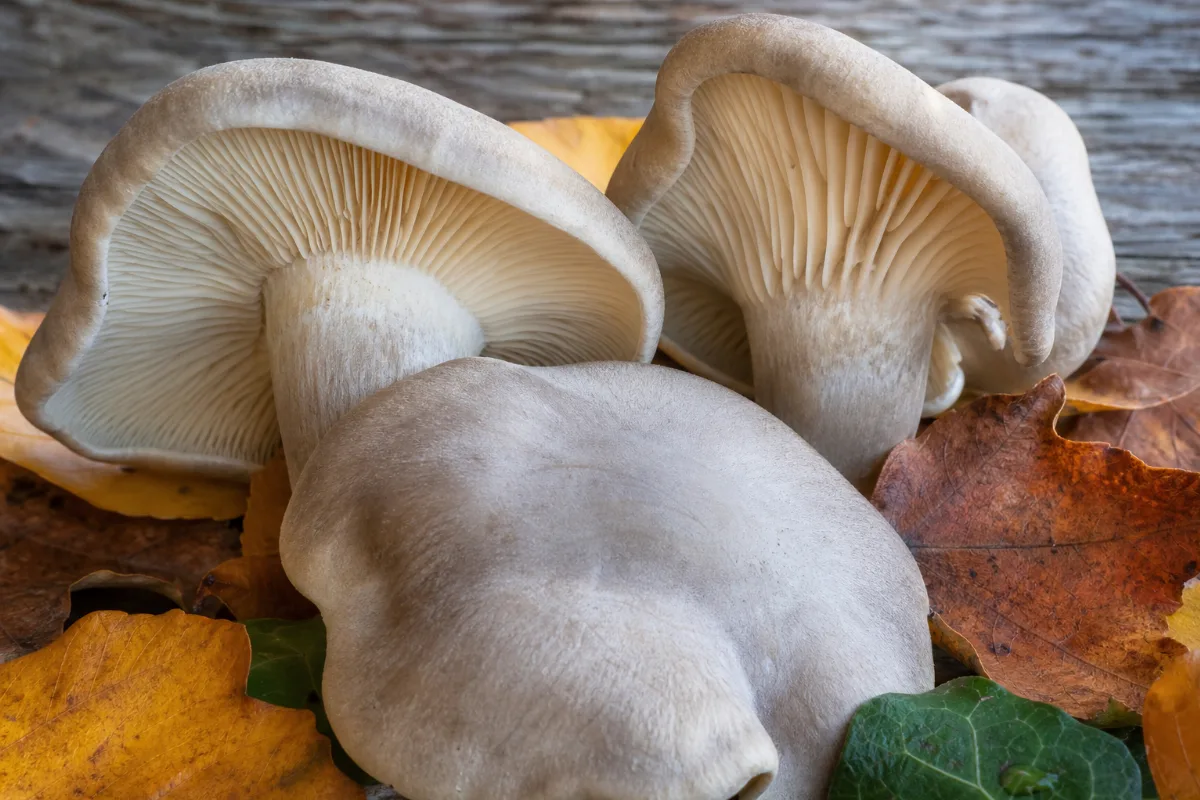
Mushrooms · Wild mushroom
Clouded agaric
Clitocybe nebularis (Lepista nebularis) · also called Clouded funnel, cloud funnel
Clouded agaric is a common wild mushroom of European woods that some people eat and others avoid. Poisoning reports and foraging guides say it upsets the stomach of a number of people, with diarrhoea, nausea and vomiting. It can also be mistaken for a much more dangerous mushroom. Studies of it are lab work only: nothing shows a health benefit in people.
General information, not medical advice. Last substantive update · Not medically reviewed. A named clinician has not signed off on this page. How this page is made
About Clouded agaric
Clouded agaric (Clitocybe nebularis, also called Lepista nebularis) is a common autumn mushroom of European woods. Foragers disagree about it. Poisoning reports link it with diarrhoea, nausea and vomiting, and no study tests it as a remedy. The mushroom can be mistaken for a dangerous one, so this page gives no identification help.
What it is
Clouded agaric is a fungus in the family Tricholomataceae. GBIF accepts the name Clitocybe nebularis and lists Lepista nebularis as a synonym, which is why you may see both names. It is not a plant and is not sold as a supplement in the sources we read.
What the research shows
Every study found is lab work. A purified protein (the lectin CNL) was toxic to leukaemia cells and activated immune cells in dishes. An extract slowed colon cancer cells and added to the effect of a cancer drug in dishes. An ethanol extract was antioxidant in test tubes and blocked some bacteria. None of this was tested in animals or people, and none shows a benefit from eating the mushroom.
At a glance
Traditional uses history, not proof
- No traditional medicinal use was found in the sources read. Foragers in parts of Europe eat it cooked (Wild Food UK; Galloway Wild Foods).
Studied for research
- Colon and leukaemia cancer cells in dishes, insufficient (lab only)
- Immune cells in dishes (the lectin CNL), insufficient (lab only)
- Antioxidant, enzyme and bacteria tests in test tubes, insufficient (lab only)
- Food composition, insufficient (no usable figures)
Main compounds
- CNL, a small stable lectin protein
- Phenolic compounds (found in an ethanol extract)
- Unsaturated fatty acids
Common forms
- Fresh, cooked (wild-collected; not recommended here)
- Laboratory extracts only; no supplement product found
Research links: Poison Help (US) · Sardinian mushroom poisoning review (2024) · Swiss mushroom poisoning review (2018) · Wild Food UK foraging guide · Research Library · Genes & Biomarkers Library
What it is and its history
- Accepted scientific name
- Clitocybe nebularis
- Naming authority
- (Batsch) P.Kumm. (GBIF)
- Synonyms
- Lepista nebularis (Batsch) Harmaja (a synonym in GBIF; still widely used); Agaricus nebularis Batsch (basionym); Clitocybe nebularis var. alba and other varieties (GBIF)
- Common names
- Clouded agaric (English); Clouded funnel (English); Cloud funnel (English); Lejkowka szarawa (Polish)
- Family or group
- Tricholomataceae (a fungus family), not a plant
- Classification
- Fungi > Basidiomycota > Agaricomycetes > Agaricales > Tricholomataceae > Clitocybe > Clitocybe nebularis
- Native range
- Not checked beyond the guides read, which describe it as common in Europe.
- Habitat
- The foraging guide says it grows in rings, often under conifers but also in deciduous woodland, grassland and hedgerows, in autumn.
- What it looks like
- Fruiting body: Not described here on purpose: this page gives no identification help.
- Cultivation
- No cultivation found.
- Harvest and processing
- Not applicable. No harvest advice is given.
- Look-alikes and adulterants
- Name: Livid pinkgill (Entoloma sinuatum); Note: Named by a forager and an encyclopedia page as a mushroom the clouded agaric can be mistaken for. It is considered highly poisonous. No identification detail is given here.; Name: Wood blewit (Lepista nuda); Note: A foraging guide lists it as a possible mix-up in one direction; this page gives no identification help.
- Sustainability and conservation
- Not checked.
Traditional use and history history, not clinical proof
| Tradition or era | Documented use | Source |
|---|---|---|
| Foraging in Europe (modern) | Eaten after cooking by some foragers in parts of Europe, while guides place it among mushrooms that upset the stomach of a number of people. | s-wildfooduk |
Traditional use shows how it was used. It does not show that it works or is safe today.
What is inside, and how it may work
What it contains and how those compounds act in cells and animals. Laboratory and animal mechanisms are not proven effects in people.
Main compounds
| Compound | Family | Where it is concentrated | Activity studied | Level of evidence |
|---|---|---|---|---|
| Clitocybe nebularis lectin (CNL) | lectin (protein) | Fruiting body | Small stable protein that binds a sugar pattern; toxic to insects, nematodes, amoebae and leukaemia T-cell lines; activates human dendritic cells (lab). 9 8 10 | Laboratory research |
| Phenolic compounds (catechin, myricetin, quercetin, rutin, gallic and vanillic acid) | phenolic | Fruiting body (ethanol extract) | Antioxidant in test tubes. 3 | Laboratory research |
| Linoleic and oleic acid | fatty acid | Fruiting body Over 50% of fatty acids together in one analysis of four mushrooms | Nutritional fats; no effect shown. 2 | Compositional |
Mechanisms, receptors and pathways
| Target or pathway | Gene or receptor | What was found | Level |
|---|---|---|---|
| Cell surface proteins CD45 and CD43 | CD45, CD43 | The lectin binds these on Jurkat cells and triggers cell death in the lab. 8 | Laboratory research |
| Toll-like receptor 4 pathway | TLR4 | The lectin matured human dendritic cells through this pathway in dishes. 10 | Laboratory research |
| Cell cycle genes p21, p27, p53 | CDKN1A, CDKN1B, TP53 | Expression rose after extract treatment in colon cancer cells in dishes. 7 | Laboratory research |
Absorption, metabolism and elimination
- Absorption
- Not found.
- Distribution
- Not found.
- Metabolism
- Not found.
- Elimination
- Not found.
- Bioavailability
- Not established.
Isolated compounds versus whole extracts
All lab effects come from purified lectin or ethanol extract. No study tested the cooked mushroom, and none shows these effects occur from eating it.
Nutritional composition
No open nutrient table was found. Not recommended as a food; see the Safety tab.
4 not enough evidence
What is Clouded agaric good for?
The uses researchers have looked at, and how strong the evidence is. All of it is lab work; none is a reason to eat this mushroom.
Benefits, one by one
Each card is a research question, not a promise. Tap a goal to filter. Open a card to see the studies, doses and limits.
Cancer cells in the lab (cell dishes only)
Not enough evidenceIn cell dishes, a mushroom extract slowed colon cancer cells and a purified protein from the mushroom killed leukaemia T cells. No animal or human study was found. This does not show the mushroom helps against cancer.
3 studiesLaboratory extracts and a purified protein; the mushroom is not sold …
Studies, doses and limits
What the trials found
No human or animal study was found.
Results
Extract: toxic to HT-29 and Caco-2 colon cancer cells but not HEK-293 cells, and added to the effect of 5-fluorouracil. Lectin CNL: cell death selectively in Jurkat leukaemia T cells.
Effect sizes as reported
Cell-dish findings only; no effect sizes in people.
Why this rating
Cell-line work only. Lab results of this kind very often fail to carry over to people.
Form and dose studied
Laboratory extracts and a purified protein; the mushroom is not sold as a supplement (none found).
Who was studied
Human cell lines in dishes
Limits
Not tested in animals or people. An extract that harms cells in a dish can also harm healthy tissue.
Why researchers looked
Wild mushrooms are screened in the lab for substances that harm cancer cells.
Traditional use
No traditional medicinal use was found in the sources read.
Proposed mechanism Laboratory research
The extract raised p21, p27 and p53 activity and held colon cancer cells in the S phase of the cell cycle. The purified lectin CNL binds the surface proteins CD45 and CD43 on Jurkat cells and triggers an unusual kind of cell death. These are cell-dish findings.
A proposed mechanism does not show that the effect happens in people.
Eating the wild mushroom has caused stomach upset in poisoning reports. See the Safety tab first. The lectin is toxic to insects, nematodes and amoebae in the lab.
Immune cells in the lab (cell dishes only)
Not enough evidenceThe purified mushroom protein CNL made human immune cells mature in dishes and pushed them toward a Th1 response. No study in people was found.
2 studiesPurified protein, not mushroom food or a product.
Studies, doses and limits
What the trials found
No human study was found.
Results
Dendritic cells treated with CNL at 1 to 10 micrograms per ml showed higher CD80, CD86, CD83 and HLA-DR.
Effect sizes as reported
Cell-dish findings only.
Why this rating
Cell-culture work with a purified protein; no animal or human outcome.
Form and dose studied
Purified protein, not mushroom food or a product.
Who was studied
Donor immune cells in dishes
Limits
A stronger immune signal in a dish is not a health benefit and could be unwanted. Eating the mushroom was not tested for any immune effect.
Why researchers looked
Researchers study mushroom lectins as possible immune-stimulating proteins.
Traditional use
No traditional medicinal use was found in the sources read.
Proposed mechanism Laboratory research
CNL activates human dendritic cells through the toll-like receptor 4 pathway in dishes (Svajger 2011); a 2019 review describes strong Th1 stimulation.
A proposed mechanism does not show that the effect happens in people.
Eating the wild mushroom has caused stomach upset in poisoning reports. See the Safety tab first.
Antioxidant, antibacterial and enzyme tests (test tubes only)
Not enough evidenceIn test tubes, an ethanol extract mopped up a test radical, blocked an enzyme and slowed some resistant bacteria. This says nothing about eating the mushroom.
2 studiesEthanol and water extracts in the lab
Studies, doses and limits
What the trials found
No human study was found.
Results
About 79% of DPPH radicals scavenged; aldose reductase blocked by 30 to 80%; glutathione-S-transferase blocked by 10 to 18%; some multidrug-resistant Gram-positive bacteria and biofilms inhibited. A second study found water extracts most antioxidant and no antimicrobial activity, so results differ between labs and extracts.
Effect sizes as reported
Test-tube measurements only.
Why this rating
Test-tube work; two studies disagree on antimicrobial activity.
Form and dose studied
Ethanol and water extracts in the lab
Who was studied
None (tests on extracts)
Limits
Antioxidant scores in test tubes do not predict effects in the body.
Why researchers looked
Researchers test wild mushroom extracts for phenolic compounds and antioxidant power.
Traditional use
No traditional medicinal use was found in the sources read.
Proposed mechanism Laboratory research
The extract contains phenolic compounds (catechin, myricetin, quercetin, rutin, gallic and vanillic acid) and blocked the enzymes aldose reductase and glutathione-S-transferase in the lab.
A proposed mechanism does not show that the effect happens in people.
Eating the wild mushroom has caused stomach upset in poisoning reports. See the Safety tab first.
Food composition (minerals and fats)
Not enough evidenceStudies list its fats and minerals, but no useful nutrition table exists. It is not recommended as a food because of the stomach upset reports.
2 studiesFresh wild mushroom
Studies, doses and limits
What the trials found
Not applicable: composition data, not a health trial.
Results
One Serbian analysis and one Turkish element survey included the species, but their abstracts give no figures for clouded agaric alone.
Effect sizes as reported
Composition data without species figures in the abstracts.
Why this rating
Abstracts do not report values for this species; full tables were not read.
Form and dose studied
Fresh wild mushroom
Who was studied
Mushrooms from specific sites
Limits
Wild mushrooms can take up metals from soil and levels vary by site. The Turkish survey flagged iron and cadmium above limits in other species.
Why researchers looked
People who forage want to know what is in a wild food.
Traditional use
No traditional medicinal use was found in the sources read.
Proposed mechanism Compositional analysis
Unsaturated fatty acids (linoleic and oleic acid over 50% together) dominate in one analysis of four wild mushrooms; element levels differ by species.
A proposed mechanism does not show that the effect happens in people.
Eating the wild mushroom has caused stomach upset in poisoning reports. See the Safety tab first.
Connections to the rest of health
How Clouded agaric connects to the rest of our health knowledge graph. Every link says what kind of connection it is. A safety link (for example to the liver) is a warning, not a benefit. A study that merely mentions a topic never creates a benefit link.
Explore every connection: goals, body systems, organs, symptoms, genes
A. Wellness goals
| Connected to | Kind of connection | Evidence status | Context | Studies |
|---|---|---|---|---|
| Immune Support | Preliminary mechanism | Not enough evidence | Cancer cells in the lab (cell dishes only): In cell dishes, a mushroom extract slowed colon cancer cells and a purified protein from the mushroom killed leukaemia T cells. No animal or human study was found. This does not show the mushroom helps against cancer. Immune cells in the lab (cell dishes only): The purified mushroom protein CNL made human immune cells mature in dishes and pushed them toward a Th1 response. No study in people was found. | 7 8 9 10 |
B. Body systems
| Connected to | Kind of connection | Evidence status | Context | Studies |
|---|---|---|---|---|
| Digestive System | Adverse effect or risk | Low certainty | Diarrhoea, nausea and vomiting in poisoning reports; frequency unknown. Preparation or compound: Wild fruiting body, cooked |
6 4 12 |
| Immune System | Biological association | Not enough evidence | Studied for: Cancer cells in the lab (cell dishes only) Studied for: Immune cells in the lab (cell dishes only) | 7 8 9 10 |
| Digestive System | Biological association | Not enough evidence | Studied for: Food composition (minerals and fats) | 2 5 |
E. Health conditions
| Connected to | Kind of connection | Evidence status | Context | Studies |
|---|---|---|---|---|
| Food Poisoning | Adverse effect or risk | Low certainty | 4 Sardinian cases; Swiss cluster cases. Preparation or compound: Wild fruiting body |
6 4 |
I. Biomarkers
| Connected to | Kind of connection | Evidence status | Context | Studies |
|---|---|---|---|---|
| Dendritic cell maturation markers (CD80, CD86, CD83, HLA-DR) | Biological association | Not enough evidence | Measured in trials: raised. A lab change is not the same as a health benefit. | 10 |
| Viability of Jurkat leukaemia T cells | Biological association | Not enough evidence | Measured in trials: lowered. A lab change is not the same as a health benefit. | 8 9 |
| DPPH radical scavenging | Biological association | Not enough evidence | Measured in trials: raised. A lab change is not the same as a health benefit. | 3 |
J. Genes, receptors and enzymes
| Connected to | Kind of connection | Evidence status | Context | Studies |
|---|---|---|---|---|
| CD45 / CD43 | Preliminary mechanism | In vitro | Bound by the lectin on Jurkat cells in the lab. | 8 |
L. Active compounds
| Connected to | Kind of connection | Evidence status | Context | Studies |
|---|---|---|---|---|
| Clitocybe nebularis lectin (CNL) | Biological association | In vitro | Small stable protein that binds a sugar pattern; toxic to insects, nematodes, amoebae and leukaemia T-cell lines; activates human dendritic cells (lab). Preparation or compound: Fruiting body |
9 8 10 |
| Phenolic compounds (catechin, myricetin, quercetin, rutin, gallic and vanillic acid) | Biological association | In vitro | Antioxidant in test tubes. Preparation or compound: Fruiting body (ethanol extract) |
3 |
| Linoleic and oleic acid | Biological association | Compositional | Nutritional fats; no effect shown. Preparation or compound: Fruiting body |
2 |
Each connection is stored with the ingredient, the connected record, the kind of connection, the evidence status, the supporting studies, the preparation or compound involved, and a review date (last reviewed October 25, 2026).
Evidence at a glance: what changed in 3 lab markers
Tap a number to show only those markers. Counts are markers, not people.
The evidence
The research centre for Clouded agaric. Every record here was checked against PubMed or the publisher's page; we never list a study we have not verified.
Evidence by outcome
Bars show how many studies we found for each outcome, not how well it works. People are added up across trials only (reviews are not added, to avoid double counting).
How we rate evidence
High certainty
Several well-run trials or reviews agree; further research is unlikely to change the picture much.
Moderate certainty
Good trials point the same way, but some doubt remains.
Low certainty
Small, short or inconsistent trials. The finding could change with better research.
Very low certainty
Very little or very weak human data. Treat as a possibility only.
Mixed findings
Trials or reviews disagree with each other.
Not enough evidence
Not enough human research to say either way.
Evidence against
Good research found no benefit, or found harm.
We take the reviewers' own risk-of-bias and GRADE statements where they exist, and otherwise judge from study size, design, consistency, directness and whether a product matches what is sold. Many publications do not make evidence high. Method note: We read PubMed records and abstracts for 9 papers (3 case series, 4 lab studies, 1 review, 1 composition survey), the Sardinian poisoning review in full, a Wild Food UK guide, a Galloway Wild Foods page, the US Poison Help page, a Wikipedia article (secondary, used only for the look-alike), and checked the names in GBIF. Index Fungorum, regulators and poison-centre databases were not searched in depth. Certainty ratings are the compiler's own reading.
Study library: every study we checked 15
| Study | Design | People | Product, dose, length | Result |
|---|---|---|---|---|
| Cassidy 2011 Mushroom poisoning in Ireland: the collaboration between the National Poisons Information Centre and expert mycologists. Clinical Toxicology · PMID 21495886 · DOI |
Retrospective case series |
70 70 suspected mushroom exposures reported to the Irish National Poisons Information Centre, 2004 to 2009 |
Clouded agaric (Clitocybe nebularis) material as described fruiting body Not shown here n/a · vs n/a |
In one of five case examples the mushroom was identified as Clitocybe nebularis and serious poisoning was excluded. The authors conclude that health workers should not try to identify toxic mushrooms using the internet because wrong identifications occur. 1 case example Methods, limits and fundingOutcomes: Case types and mycologist involvement Limitations: One case in a series about how poison centres work; no symptoms are given for it. Funding and conflicts: Funding not stated in the abstract Read: abstract |
| Dimitrijevic 2019 First Report about Mineral Content, Fatty Acids Composition and Biological Activities of Four Wild Edible Mushrooms. Chemistry & Biodiversity · PMID 30458066 · DOI |
Compositional analysis fungus |
Four wild mushroom species including Clitocybe nebularis | Clouded agaric (Clitocybe nebularis) material as described fruiting body Not shown here n/a · vs n/a |
Water extracts showed the highest antioxidant activity; unsaturated fatty acids (mostly linoleic and oleic acid, over 50% together) dominated; element levels depended on the species; no antimicrobial activity was found. Composition data Methods, limits and fundingOutcomes: Antioxidant tests, minerals, fatty acids, antimicrobial tests Limitations: Abstract does not give species-by-species numbers; it calls the four species 'edible', which conflicts with poisoning reports. Funding and conflicts: Funding not stated in the abstract Read: abstract |
| Dizeci 2021 Comparison of the chemical composition and biological effects of Clitocybe nebularis and Infundibulicybe geotropa. Mycologia · PMID 34477496 · DOI |
Laboratory research lab |
Ethanol extracts in test tubes and cell lines | Clouded agaric (Clitocybe nebularis) material as described fruiting body Not shown here n/a · vs n/a |
The Clitocybe nebularis ethanol extract scavenged about 79% of a test radical (DPPH), blocked the enzyme aldose reductase by 30 to 80%, slowed HT-29 and MCF-7 cancer cell lines, and inhibited some multidrug-resistant Gram-positive bacteria and their biofilms. Test-tube findings only Methods, limits and fundingOutcomes: Phenolic content, antioxidant tests, enzyme blocking, cell growth, bacteria and biofilms Limitations: Test-tube and cell work with an ethanol extract; the authors' phrase 'potential source of natural medicine' is a hope, not a result in people. Funding and conflicts: Funding not stated in the abstract Read: abstract |
| Keller 2018 Mushroom Poisoning-A 17 Year Retrospective Study at a Level I University Emergency Department in Switzerland. International Journal of Environmental Research and Public Health · PMID 30558129 · DOI |
Retrospective case series |
51 51 mushroom poisoning presentations at one Bern emergency department, 2001 to 2017 |
Clouded agaric (Clitocybe nebularis) material as described fruiting body Not shown here n/a · vs n/a |
Gastrointestinal disturbances occurred in 86% of the 51 cases. Clitocybe nebularis was among the most common mushrooms named (5 cases, four of them part of one cluster). There were no deaths and 80% of patients went home within 24 hours. 5 of 51 cases Methods, limits and fundingOutcomes: Symptoms, mushroom type, outcome Limitations: The abstract does not say which symptoms went with which mushroom. A cluster means several people ate one meal, so 5 cases do not mean 5 separate events. The mushroom is not described as the cause in every case. Funding and conflicts: No conflict of interest declared Read: abstract |
| Keskin 2022 Wild mushrooms from Ilgaz Mountain National Park (Western Black Sea, Turkey): element concentrations and their health risk assessment. Environmental Science and Pollution Research · PMID 35013958 · DOI |
Compositional analysis fungus |
Wild mushrooms collected in a Turkish national park, 13 edible species including Clitocybe nebularis | Clouded agaric (Clitocybe nebularis) material as described fruiting body Not shown here n/a · vs n/a |
Across all species, element levels were wide-ranging. For the edible group, intake and risk index values were within legal limits except iron in two species and cadmium in one (neither was C. nebularis). Composition and risk index Methods, limits and fundingOutcomes: Metal and mineral levels and a health risk index Limitations: Abstract does not give C. nebularis figures separately; it lists the species as 'edible'. Funding and conflicts: Funding not stated in the abstract Read: abstract |
| La Rosa 2024 Epidemiology and clinical aspect of mushroom poisonings in South Sardinia: A 10-year retrospective analysis (2011-2021). Food Science & Nutrition · PMID 38268883 · DOI |
Retrospective case series |
164 164 mushroom poisoning cases recorded by a Mycological Inspectorate in three South Sardinian provinces, 2011 to 2021 |
Clouded agaric (Clitocybe nebularis) material as described fruiting body Not shown here n/a · vs n/a |
Clitocybe nebularis was listed as toxic: 4 cases (about 2.4% of 164) with diarrhoea, nausea and vomiting, symptoms starting on average 2.5 hours after eating, and an average stay of 2 days. The only Entoloma species in the table, Entoloma sinuatum, was listed as toxic with 14 cases (about 8.5%): diarrhoea, headache, nausea, stomach ache, sweating, tremor, vertigo and vomiting, starting on average after 1 hour, with an average stay of 1 day. 4 of 164 cases Methods, limits and fundingOutcomes: Species, symptoms, delay of symptoms, hospital stay Limitations: Read from the full text (Table 3 only; the body text does not discuss the species). Small numbers; does not say how many people ate the mushroom without trouble, so it gives no rate of illness. Funding and conflicts: Funding not read Read: full text |
| Onar 2023 Clitocybe nebularis extract and 5-fluorouracil synergistically inhibit the growth of HT-29 colorectal cancer cells by inducing the S phase arrest. 3 Biotech · PMID 36647531 · DOI |
Laboratory research cell-line |
Human colon cancer cell lines (HT-29, Caco-2) and normal kidney cells (HEK-293) in dishes | Clouded agaric (Clitocybe nebularis) material as described fruiting body Not shown here n/a · vs n/a |
The mushroom extract was toxic to HT-29 and Caco-2 colon cancer cells but not to HEK-293 cells, and added to the effect of the cancer drug 5-fluorouracil in HT-29 cells. p21, p27 and p53 activity rose. Cell-dish findings only Methods, limits and fundingOutcomes: Cell killing, drug combination, cell cycle, gene activity Limitations: Cell lines in dishes; no animals or people; extract not standardised in the abstract. Not evidence the mushroom treats anything. Funding and conflicts: Authors declare no conflict of interest Read: abstract |
| Perisic Nanut 2022 The fungal Clitocybe nebularis lectin binds distinct cell surface glycoprotein receptors to induce cell death selectively in Jurkat cells. FASEB Journal · PMID 35224765 · DOI |
Laboratory research cell-line |
Human leukaemia T-cell lines (Jurkat and others) in dishes | Clouded agaric (Clitocybe nebularis) material as described fruiting body Not shown here n/a · vs n/a |
The purified lectin CNL caused an unusual kind of cell death selectively in Jurkat leukaemia T cells and bound the surface proteins CD45 and CD43. Cell-dish findings only Methods, limits and fundingOutcomes: Cell death after exposure to the purified lectin CNL Limitations: Purified protein, not the mushroom as eaten; cell lines only. Funding and conflicts: Funding not stated in the abstract Read: abstract |
| Sabotic 2019 CNL-Clitocybe nebularis Lectin-The Fungal GalNAcbeta1-4GlcNAc-Binding Lectin. Molecules · PMID 31756927 · DOI |
Narrative review lab |
Review of lab work on one mushroom lectin | Clouded agaric (Clitocybe nebularis) material as described fruiting body Not shown here n/a · vs n/a |
CNL is a small, stable protein; it is toxic to insects, nematodes, amoebae and leukaemia T-cell lines in the lab, and stimulates human dendritic cells. Its likely job is to defend the mushroom from predators. Review of lab findings Methods, limits and fundingOutcomes: Lectin structure, binding, toxicity, immune effects Limitations: Narrative review of laboratory work; no human outcomes. Funding and conflicts: Authors declare no conflict of interest Read: abstract |
| Svajger 2011 CNL, a ricin B-like lectin from mushroom Clitocybe nebularis, induces maturation and activation of dendritic cells via the toll-like receptor 4 pathway. Immunology · PMID 22044067 · DOI |
Laboratory research cell-line |
Human immune cells (dendritic cells) from donors, in dishes | Clouded agaric (Clitocybe nebularis) material as described fruiting body Not shown here n/a · vs n/a |
In dishes, CNL at 1 to 10 micrograms per ml made human dendritic cells mature (higher CD80, CD86, CD83, HLA-DR) and push T cells toward a Th1 response. Cell-dish findings only Methods, limits and fundingOutcomes: Immune-cell maturation markers after exposure to the purified lectin CNL Limitations: Purified protein in cell culture; no animal or human data in the abstract (read part only). Funding and conflicts: Funding not stated in the abstract Read: abstract |
| n/a 2025 Clouded agaric - identification, distribution, edibility Galloway Wild Foods · Source |
Guide n/a |
n/a | Clouded agaric (Clitocybe nebularis) material as described fruiting body Not shown here n/a · vs n/a |
A Scottish forager rates it 2 out of 5 for edibility and says some people eat it after thorough cooking while it can cause stomach upset in some. It reports that responses differ between people. It names a highly poisonous look-alike. The article body does not discuss alcohol; reader comments mention an unverified rumour about alcohol. Methods, limits and fundingOutcomes: n/a Limitations: A forager's website and reader comments. Anecdote, not controlled evidence. Its cooking advice is not repeated here. Funding and conflicts: Not a funded study; Galloway Wild Foods Read: full text |
| n/a 2026 Clouded Funnel (foraging guide) Wild Food UK · Source |
Guide n/a |
n/a | Clouded agaric (Clitocybe nebularis) material as described fruiting body Not shown here n/a · vs n/a |
The guide lists clouded funnel in its poisonous section because it can cause alarming stomach upsets in a number of people. It says about 1 in 5 people can be made quite ill by it. It names the wood blewit as a possible mix-up. Methods, limits and fundingOutcomes: n/a Limitations: A commercial foraging guide, not a clinical source. The 1 in 5 figure has no study behind it on the page. Its advice to test a small amount is not repeated here and is not safe advice. Funding and conflicts: Not a funded study; Wild Food UK Read: full text |
| n/a 2026 Entoloma sinuatum Wikipedia · Source |
Encyclopedia n/a |
n/a | Clouded agaric (Clitocybe nebularis) material as described fruiting body Not shown here n/a · vs n/a |
The article, citing mycology texts, says the livid pinkgill causes mainly gastrointestinal poisoning starting 30 minutes to 2 hours after eating, that its toxin is unknown, and that fatalities have been reported by at least one source. It lists the clouded agaric among mushrooms it may be mistaken for. Methods, limits and fundingOutcomes: n/a Limitations: Secondary, editable source; used only to show that the look-alike is serious, not for any identification detail. Funding and conflicts: Not a funded study; Wikipedia Read: full text |
| n/a 2026 Poison Help America's Poison Centers (HRSA / CDC / FDA partners) · Source |
Authoritative guidance n/a |
n/a | Clouded agaric (Clitocybe nebularis) material as described fruiting body Not shown here n/a · vs n/a |
The US Poison Help line is 1-800-222-1222, free, confidential and open 24 hours. Call 911 if someone has collapsed, had a seizure, has trouble breathing or cannot be woken. Methods, limits and fundingOutcomes: n/a Limitations: US service; people elsewhere should use their own poison centre or emergency number. Funding and conflicts: Not a funded study; America's Poison Centers (HRSA / CDC / FDA partners) Read: full text |
| n/a 2026 GBIF Backbone Taxonomy: Clitocybe nebularis GBIF · Source |
Taxonomy record n/a |
n/a | Clouded agaric (Clitocybe nebularis) material as described fruiting body Not shown here n/a · vs n/a |
GBIF accepts Clitocybe nebularis (Batsch) P.Kumm., family Tricholomataceae, order Agaricales, with Lepista nebularis (Batsch) Harmaja and Agaricus nebularis Batsch among its synonyms (API checked 2026-10-25, key 2531072). Methods, limits and fundingOutcomes: n/a Limitations: Index Fungorum was not checked; GBIF is a database, not a mycological authority. Funding and conflicts: Not a funded study; GBIF Read: full text |
What we do not know yet
- No human, and no animal, study of clouded agaric for any health use was found.
- The lab work uses purified proteins or ethanol extracts, not the cooked mushroom people eat.
- No rate of illness in people who eat it, and no known cause of the upset.
- No source on alcohol; none for pregnancy or children.
How new research is added
New studies are found by a saved PubMed search and placed in a review queue. A person reads each one before it changes any evidence rating or safety wording.
Lab markers
What changed in blood or saliva tests during trials. A changed number is not the same as feeling or being healthier, and we give no "normal ranges".
Other 3
Dendritic cell maturation markers (CD80, CD86, CD83, HLA-DR)
Raised in trials
Proteins on the surface of immune cells that rise when the cells switch on.
Not enough evidenceResults and what it means
Why it was measured
Used in the lab to see whether a substance activates immune cells.
Statistical vs. clinical meaning
Dose-dependent rise in cell culture.
Safety implication
A rise in a dish does not show a benefit or a harm in a person.
| Study | Result | People | Product |
|---|---|---|---|
| 10 | Higher after CNL at 1 to 10 micrograms per ml in human dendritic cells in dishes. | Donor immune cells in dishes | Purified lectin CNL |
Viability of Jurkat leukaemia T cells
Lowered in trials
The share of cultured leukaemia T cells that stay alive.
Not enough evidenceResults and what it means
Why it was measured
Used to test whether a substance is toxic to cancer cells.
Statistical vs. clinical meaning
Cell-line result.
Safety implication
The same protein is toxic to insects, nematodes and amoebae in the lab.
| Study | Result | People | Product |
|---|---|---|---|
| 8 | CNL caused dose-dependent cell death selectively in Jurkat cells. | Jurkat cells in dishes | Purified lectin CNL |
DPPH radical scavenging
Raised in trials
A test-tube measure of how much a substance neutralises a coloured chemical radical.
Not enough evidenceResults and what it means
Safety
What studies and official sources say about side effects, medicines and who should check first. Each point shows what kind of evidence it comes from.
Main points to know 4
- Eating it has upset the stomach of many people, by several sources. A guide for foragers puts it in its poisonous section for causing alarming stomach upsets in a number of people. A hospital-style review of poisonings in South Sardinia listed it as toxic: 4 of 164 cases, with diarrhoea, nausea and vomiting about 2.5 hours after eating. A Swiss emergency department series named it among the most common mushrooms in its 51 cases. The cause is not known and no rate in people who eat it is known. Edibility is disputed: some people eat it after cooking with no trouble, others do not. Case series 6 4 12 11
- It can be mistaken for a much more dangerous mushroom. Foraging and mushroom texts name the livid pinkgill (Entoloma sinuatum) as something the clouded agaric can be confused with. In the Sardinian review the pinkgill caused more cases (14) than clouded agaric and produced a wider set of symptoms, including headache, sweating, tremor and vertigo. Do not try to identify wild mushrooms from words, photos or apps: an Irish poisons centre paper warns that identifying toxic mushrooms using the internet leads to errors, and mycologists are needed for serious cases. Case series 6 1 13 11
- Alcohol: no source was found. Some foraging talk links wild mushrooms with bad reactions to alcohol. For clouded agaric the only mention found was an unverified reader comment on a forager's page. No study or authoritative source supports or rules it out, so this page makes no claim either way. Do not take it as a sign that alcohol is safe with this mushroom. Anecdote 11
- No supplement or product evidence exists. No product was found, and no study in people of any health use. Lab results (cell dishes, test tubes) do not show a benefit. This page is not a guide to eating it. Gap 7 3
Side effects 4
| Effect | How often | Severity and recovery | Evidence |
|---|---|---|---|
| Diarrhoea Reported after eating the wild mushroom. | In the Sardinian review all 4 clouded agaric cases had diarrhoea, nausea and vomiting; the rate among people who eat it is not known. | moderate Not described as lasting; average hospital stay in those cases 2 days. | Case series 6 12 |
| Nausea and vomiting Onset time is an average from 4 cases. | Same 4 cases; start on average 2.5 hours after eating. | moderate Not described as lasting | Case series 6 |
| Stomach upset in a number of eaters (foraging guide) Commercial forager's source. | Guide says about 1 in 5; no study behind the figure, so it is not used as a fact here. | moderate Not stated | Anecdote 12 11 |
| More severe symptoms with the look-alike (livid pinkgill) This is about the look-alike, not clouded agaric. | 14 cases in the Sardinian review; symptoms included headache, sweating, tremor, vertigo. | moderate to severe Average stay 1 day in that review; at least one source reports deaths | Case series 6 13 |
Liver
No liver injury report for clouded agaric was found in the sources read. The look-alike livid pinkgill is said by one secondary source to cause liver toxicity in some cases; that is not verified here. LiverTox was not searched for this species. 13
How often. No data.
Monitoring. No monitoring advice was read.
This is a safety connection. It is not evidence that Clouded agaric supports liver health.
Medicines and supplements 3
| With | Why it matters | Importance | Evidence | What to do |
|---|---|---|---|---|
| Alcohol substance | Not known | No source found; a reader comment on a forager's page mentions a rumour, which is unverified. | Anecdote Not enough evidence 11 | Do not rely on any claim either way; avoid wild mushroom eating if unsure. |
| Prescription medicines (any) prescription | Not studied | No interaction study was found. Vomiting and diarrhoea can stop oral medicines from being absorbed or cause dehydration, which can matter for people on blood pressure, kidney, heart or diabetes medicines. | Theoretical Not enough evidence 6 | Ask a doctor or pharmacist; if you ate a wild mushroom and feel unwell, call poison help or emergency services. |
| Cancer drugs such as 5-fluorouracil prescription | The extract added to 5-fluorouracil's cell-killing in a cell dish. | Cell-dish finding only; no human data. It must not be read as a reason to combine them. | Laboratory research Not enough evidence 7 | Tell your cancer team about any mushroom or supplement. |
Who should check first 3
| Situation | Advice | Evidence |
|---|---|---|
| Anyone not sure what mushroom they have | Do not eat wild mushrooms you cannot have identified by an expert in person. | Case series 1 6 |
| Pregnancy, breastfeeding, children, older people, people with kidney, liver or heart disease | No data on these groups was found. Vomiting and diarrhoea are more dangerous with dehydration, so avoid wild mushrooms known to cause them. | Gap |
| People with a history of mushroom upset | Avoid it; reactions differ from person to person. | Anecdote 11 |
Overdose, product quality and regulators
Summary. The cause of the stomach upset is not known. The mushroom holds a lectin (CNL) that is toxic to insects, nematodes, amoebae and leukaemia cell lines in the lab, but no source linked it or any other compound to the upset in people. No toxin has been shown.
Animal. Lab toxicity of the purified lectin to insects, nematodes and amoebae (review). No mammal toxicity study was read.
Human doses studied. No dose studies in people. No amounts are given or advised.
High dose or long term signals. Not studied. A forager says a bigger meal gives a worse reaction; that is an anecdote.
Overdose response. Not described. After eating a wild mushroom, if you feel unwell, call poison help or emergency services.
Genotoxicity. Not read.
Toxic or hazardous parts. Fungus: fruiting body. Cooking is advised by foragers but it does not remove the risk for everyone.
Wild mushrooms can take up metals from soil and can be confused with other species. No quality-tested product exists.
Metals in wild mushrooms. A Turkish survey of 13 edible species including Clitocybe nebularis found intake and risk values within legal limits except for iron in two species and cadmium in one species (not C. nebularis). 5
Mix-ups. Wrong identification is a real cause of poisoning. The Irish poisons centre paper reports poisonings from confusing toxic and edible species and warns against using the internet to identify them. 1
| Body | Action | Date |
|---|---|---|
| America's Poison Centers (Poison Help) (United States) | Gives the free emergency line 1-800-222-1222 for poisonings. It is not a statement about clouded agaric. source | 2026-10-25 |
When to get medical help
- Vomiting or diarrhoea that does not stop, or signs of dehydration (dizziness, very little urine, dry mouth)
- Severe stomach pain
- Confusion, tremor, severe headache, sweating, or fainting
- Yellow skin or eyes, dark urine, or no urine
- Anyone who has collapsed, had a seizure, has trouble breathing or cannot be woken: call emergency services at once
- Anyone who has eaten a wild mushroom they were unsure of: call Poison Help (1-800-222-1222 in the US) or your local poison centre right away and keep a sample of the mushroom
If someone may be poisoned or in a crisis, contact a clinician or emergency service straight away. In the US, Poison Control is 1-800-222-1222.
General information only, not medical advice. Ask a clinician or pharmacist before use, especially with medicines, in pregnancy or with a health condition. See the Natural Remedy Safety guide.
Frequently asked questions
What is clouded agaric?
Is clouded agaric poisonous?
What symptoms does it cause?
What should I do if I have eaten a wild mushroom and feel unwell?
Call Poison Help (1-800-222-1222 in the US) or your local poison centre or emergency number right away, and keep a sample of the mushroom. Call emergency services at once if someone has collapsed, had a seizure, has trouble breathing or cannot be woken.
What is it confused with?
Foraging and mushroom texts name the livid pinkgill (Entoloma sinuatum), a highly poisonous mushroom, and the wood blewit. This page gives no identification help, because wild mushrooms should not be identified from words or apps. An Irish poisons centre paper warns against identifying toxic mushrooms using the internet.
Is it safe with alcohol?
No reliable source was found either way. A forager's reader comment mentions a rumour of a bad reaction, which is unverified. Do not take silence as safety.
Does clouded agaric fight cancer?
Does it boost the immune system?
Does it have antioxidant or antibacterial effects?
Can I buy it as a supplement?
No supplement product was found. Research uses laboratory extracts.
Is it safe in pregnancy, breastfeeding or for children?
No data were found. Because it is reported to cause vomiting and diarrhoea, ask a doctor or pharmacist before eating any wild mushroom.
Why is it sometimes called Lepista nebularis?
Mycologists moved it between genera over time. GBIF currently accepts Clitocybe nebularis and treats Lepista nebularis as a synonym. Index Fungorum was not checked.
Explore by health goal
Editorial transparency
- Written by
- AlternativeMed editorial team. Research compiled with AI assistance, then checked against PubMed records.
- Medical review
- None. This page has not been reviewed by a physician or pharmacist.
- First published
- 2026-10-25
- Last substantive update
- 2026-10-25
- How we research
- We read PubMed records and abstracts for 9 papers (3 case series, 4 lab studies, 1 review, 1 composition survey), the Sardinian poisoning review in full, a Wild Food UK guide, a Galloway Wild Foods page, the US Poison Help page, a Wikipedia article (secondary, used only for the look-alike), and checked the names in GBIF. Index Fungorum, regulators and poison-centre databases were not searched in depth. Certainty ratings are the compiler's own reading.
- How we rate evidence
- See "How we rate evidence" in the Evidence tab.
- Independence
- No product is promoted on this page. No affiliate links are shown. This page is information, not a recommendation to eat this mushroom.
Sources 15
Each source was opened and checked. Where we read only the abstract, it says so. The small numbers in the text point here.
- Cassidy N, Duggan E, Tracey JA. Mushroom poisoning in Ireland: the collaboration between the National Poisons Information Centre and expert mycologists.. Clinical Toxicology. 2011. PMID 21495886. DOI 10.3109/15563650.2011.560854. (abstract)
- Dimitrijevic MV, Mitic VD, Nikolic JS, et al. First Report about Mineral Content, Fatty Acids Composition and Biological Activities of Four Wild Edible Mushrooms.. Chemistry & Biodiversity. 2019. PMID 30458066. DOI 10.1002/cbdv.201800492. (abstract)
- Dizeci N, Onar O, Karaca B, et al. Comparison of the chemical composition and biological effects of Clitocybe nebularis and Infundibulicybe geotropa.. Mycologia. 2021. PMID 34477496. DOI 10.1080/00275514.2021.1951076. (abstract)
- Keller SA, Klukowska-Rotzler J, Schenk-Jaeger KM, et al. Mushroom Poisoning-A 17 Year Retrospective Study at a Level I University Emergency Department in Switzerland.. International Journal of Environmental Research and Public Health. 2018. PMID 30558129. DOI 10.3390/ijerph15122855. (abstract)
- Keskin F, Sarikurkcu C, Demirak A, et al. Wild mushrooms from Ilgaz Mountain National Park (Western Black Sea, Turkey): element concentrations and their health risk assessment.. Environmental Science and Pollution Research. 2022. PMID 35013958. DOI 10.1007/s11356-021-18011-2. (abstract)
- La Rosa L, Corrias S, Pintor I, Cosentino S. Epidemiology and clinical aspect of mushroom poisonings in South Sardinia: A 10-year retrospective analysis (2011-2021).. Food Science & Nutrition. 2024. PMID 38268883. DOI 10.1002/fsn3.3793. (full text)
- Onar O, Telkoparan-Akillilar P, Yildirim O. Clitocybe nebularis extract and 5-fluorouracil synergistically inhibit the growth of HT-29 colorectal cancer cells by inducing the S phase arrest.. 3 Biotech. 2023. PMID 36647531. DOI 10.1007/s13205-023-03471-9. (abstract)
- Perisic Nanut M, Zurga S, Konjar S, et al. The fungal Clitocybe nebularis lectin binds distinct cell surface glycoprotein receptors to induce cell death selectively in Jurkat cells.. FASEB Journal. 2022. PMID 35224765. DOI 10.1096/fj.202101056RR. (abstract)
- Sabotic J, Kos J. CNL-Clitocybe nebularis Lectin-The Fungal GalNAcbeta1-4GlcNAc-Binding Lectin.. Molecules. 2019. PMID 31756927. DOI 10.3390/molecules24234204. (abstract)
- Svajger U, Pohleven J, Kos J, et al. CNL, a ricin B-like lectin from mushroom Clitocybe nebularis, induces maturation and activation of dendritic cells via the toll-like receptor 4 pathway.. Immunology. 2011. PMID 22044067. DOI 10.1111/j.1365-2567.2011.03500.x. (abstract)
- n/a. Clouded agaric - identification, distribution, edibility. Galloway Wild Foods. 2025. (full text)
- n/a. Clouded Funnel (foraging guide). Wild Food UK. 2026. (full text)
- n/a. Entoloma sinuatum. Wikipedia. 2026. (full text)
- n/a. Poison Help. America's Poison Centers (HRSA / CDC / FDA partners). 2026. (full text)
- n/a. GBIF Backbone Taxonomy: Clitocybe nebularis. GBIF. 2026. (full text)