Seaweed & Algae · Seaweed
Sea Grapes (Umibudo)
Caulerpa lentillifera · also called Umibudo, green caviar, rong nho
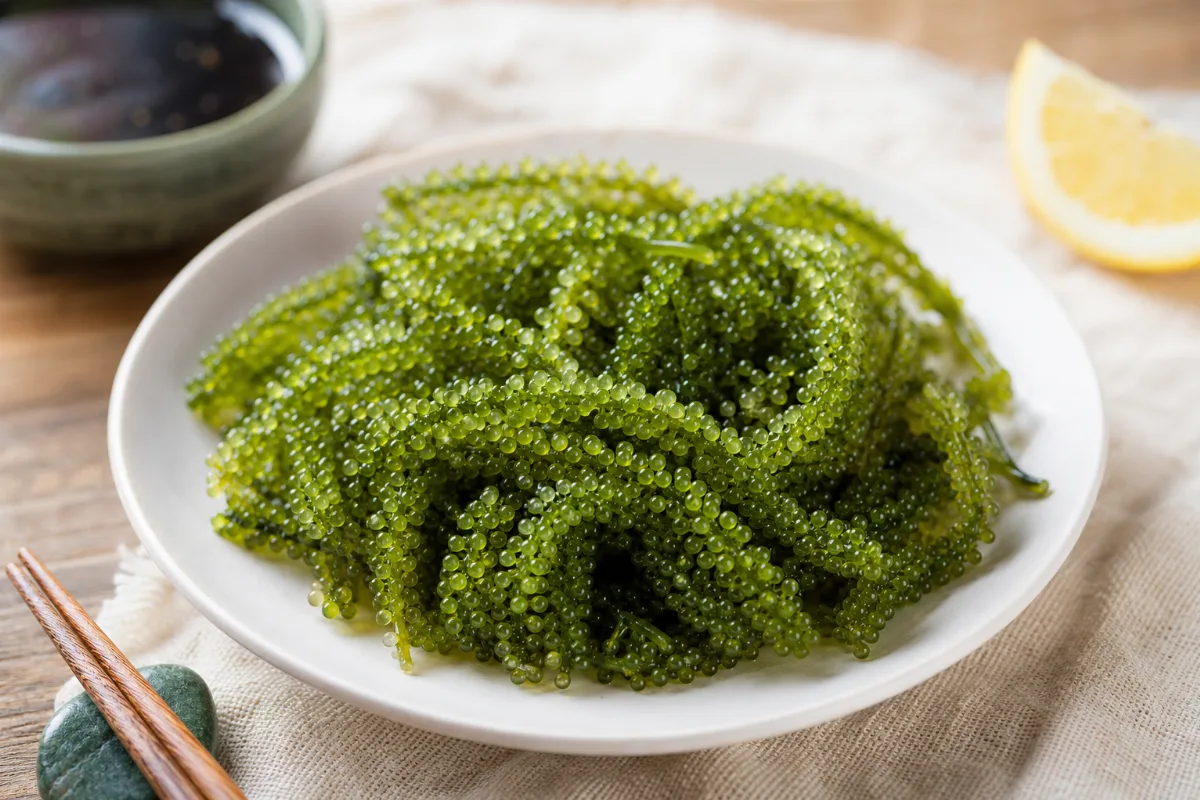
Sea grapes are a green seaweed that looks like tiny strings of green beads and is eaten raw, mostly in Southeast Asia and Japan. Little research exists on eating them: one tiny test of noodles with sea grape powder in 10 healthy people saw a lower blood sugar rise, and the rest is rat, mouse and lab work. The main cautions are raw-food handling, a lot of salt in brined packs, and iodine and metal levels that have not been measured.
General information, not medical advice. Last substantive update · Not medically reviewed. A named clinician has not signed off on this page. How this page is made
About Sea Grapes (Umibudo)
Sea grapes are a green seaweed, Caulerpa lentillifera, eaten raw for their pop-in-the-mouth beads. It is a food, not a proven remedy. Very little research exists, so this page is short and says plainly what is missing.
What it is
Sea grapes (umibudo in Japan, green caviar in Europe, rong nho in Vietnam) are a green alga, Caulerpa lentillifera, an accepted species in GBIF. It has a creeping stem with upright fronds that carry small round beads. It is farmed in several countries and eaten fresh as a sea vegetable, mostly in Southeast Asia. Only 7 of the 100 known Caulerpa seaweeds are eaten. After harvest the seaweed is still alive and does not keep long.
There is no USDA FoodData Central entry, so no USDA numbers are shown.
What is in it
In a Thai study, fresh sea grapes were 95.14% water. Of the dry matter, 65.6% was ash (minerals and salts), 19.1% carbohydrate, 6.3% fat, 4.9% protein and 4.1% fibre. By simple arithmetic, 100 g of fresh sea grapes holds about 4.9 g of dry matter, so roughly 0.24 g protein, 0.2 g fibre, 0.3 g fat and 3.2 g minerals and salts. This is our estimate from the percentages, not a measured label.
In a Chinese study of six farm areas, protein ranged from 8.70% at one farm to 18.57% at another, crude fat reached 5.10% and total sugar was about 32.5%. The abstract does not say whether these are fresh or dry weights. Iodine, sodium, potassium and arsenic were not reported in either study. Vitamin C was about 25 mg/100 g in a storage study, basis not stated.
What the research shows
One small human test: 10 healthy people ate noodles with 2.5% or 5.0% sea grape powder or plain noodles. Blood glucose rose less with the sea grape noodles (p < 0.05) and they scored a low glycaemic index of 47 and 43. The abstract gives no funding and no control value, and whole sea grapes were not tested.
A purified polysaccharide and carotenoid and peptide extracts lowered weight gain and blood fats in mice and rats. The same polysaccharide killed colon cancer cells in a dish and slowed tumours in mice, and a water extract slowed H. pylori in the lab. All of this is animal or lab work on extracts, and none of it shows an effect in people. No evidence was found for thyroid, immune or detox claims.
Food versus extracts
The only human result is for sea grape powder in noodles. The blood fat, cancer and H. pylori results use purified polysaccharides or extracts in animals or in the lab. These are not the same as eating a bowl of sea grapes, and nothing on this page says an extract is safe to take.
At a glance
Traditional uses history, not proof
- Eaten fresh as a sea vegetable, mostly in Southeast Asia and Japan
- Long use as food is not proof that it treats any condition
Studied for research
- Nutrient content, moderate certainty (two lab studies that differ by farm)
- Blood sugar after a meal, very low certainty (10 healthy people, noodles with powder)
- Blood fats and weight, insufficient evidence (rodent studies of extracts)
- Colon cancer cells, insufficient evidence (lab and mouse work)
- H. pylori, insufficient evidence (lab test of an extract)
Main compounds
- Minerals and salts (most of the dry matter)
- Carbohydrate, including polysaccharides
- Protein and amino acids
- Chlorophyll and carotenoids
Common forms
- Fresh sea grapes, eaten raw
- Sea grapes packed in brine (10% to 30% salt in the storage study)
- Sea grape powder baked into noodles (used in one test)
- Extracts and polysaccharides are lab products and are not covered
Research links: 2025 study: nutrients in sea grapes from six farm areas · 2023 study: sea grapes stored in brine, bacteria and nutrients · 2025 lab study: bacteria on fresh sea grapes and 48-hour storage · American Thyroid Association statement on excess iodine · Research Library · Genes & Biomarkers Library
What it is and its history
- Accepted scientific name
- Caulerpa lentillifera J.Agardh
- Naming authority
- GBIF accepted name
- Common names
- Sea grapes (English); Green caviar (English (used in Europe, per Pan-utai 2023)); Umibudo (Japanese); Rong nho (Vietnamese); Uvas de mar (Spanish (general knowledge, not a source read))
- Family or group
- Caulerpaceae, a family of green algae, as given by GBIF. Sea grapes are a green seaweed (an alga), not a fish or an animal.
- Classification
- Plantae (per GBIF) > Chlorophyta > Ulvophyceae > Bryopsidales > Caulerpaceae > Caulerpa > Caulerpa lentillifera
- Native range
- Not verified from a source read.
- Habitat
- Not verified from a source read. Pan-utai 2023 says it is commonly eaten as fresh seaweed in Southeast Asia.
- What it looks like
- Roots: A siphonous alga with horizontal stolons and rhizomes (Pan-utai 2023).; Stems: Not verified beyond the stolons.; Leaves: Edible fronds bearing vesicle-like branchlets, the small round beads (Pan-utai 2023).
- Cultivation
- Farm-grown in many places: samples came from aquaculture areas in Guangdong, Beihai, Dongshan (China) and Nha Trang (Vietnam) in Zhou 2025, and from a farm in Krabi, Thailand in Thacharoen 2025.
- Harvest and processing
- Eaten fresh or packed in brine (10% to 30% salt in the storage study). After harvest the seaweed is still alive and the shelf life is short, according to the Pan-utai discussion. Only 7 of 100 known Caulerpa species are eaten; C. lentillifera and C. racemosa are the leading ones.
- Look-alikes and adulterants
- Name: Caulerpa racemosa; Note: Another eaten Caulerpa; not studied on this page.; Name: Caulerpa cylindracea; Note: An invasive Mediterranean species; its salt content is used only as context.; Name: Sea lettuce; Note: Another green seaweed with its own page; a different genus.
Photographs
What is inside, and how it may work
What it contains and how those compounds act in cells and animals. Laboratory and animal mechanisms are not proven effects in people.
Main compounds
| Compound | Family | Where it is concentrated | Activity studied | Level of evidence |
|---|---|---|---|---|
| Minerals and salts (ash) | minerals | Whole seaweed 65.6% of dry weight in fresh sea grapes (Thai sample) | Reflects sea water minerals including salt; sodium was not measured in the studies read. 6 | Laboratory |
| Carbohydrate, including polysaccharides | carbohydrate | Whole seaweed 19.1% of dry weight (Thai sample); total sugar about 32.5% in two Chinese farms | A purified polysaccharide (CLP) was used in the mouse studies of blood fats and colon cancer. 6 12 5 11 | Animal research |
| Protein and amino acids | protein | Whole seaweed 4.9% of dry weight (Thai sample); 8.70% to 18.57% by farm in Chinese samples; total amino acids 7.05% to 12.37% | Aspartic acid and glutamic acid were notable amino acids in the Chinese study. 6 12 | Laboratory |
| Fat | lipid | Whole seaweed 6.3% of dry weight (Thai sample); 5.10% at one Chinese farm | Total fatty acids were 2.400% at the Daya farm. 6 12 | Laboratory |
| Vitamin C (ascorbic acid) | vitamin | Whole seaweed About 25 mg/100 g in sea grapes in a storage study (basis not stated) | Measured in the Vietnamese study during storage; not a claim about health. 10 | Laboratory |
| Pigments (chlorophyll and carotenoids) | pigment | Whole seaweed Fell by 18% (chlorophyll) and 21% (carotenoids) after 48 hours of treated storage | A carotenoid and peptide extract from Caulerpa sp. was used in the rat study. 10 2 | Animal research |
Mechanisms, receptors and pathways
| Target or pathway | Gene or receptor | What was found | Level |
|---|---|---|---|
| Gut bacteria and bile acids | Not specified | In mice a purified polysaccharide raised short-chain-fatty-acid-producing bacteria and changed bile acids. 5 | Animal research |
| p53/Bax/Caspase-3 cell-death pathway | p53, Bax, Caspase-3 | In colon cancer cells a polysaccharide lowered aspartate, raised reactive oxygen species and triggered cell death. 11 | Laboratory research |
| H. pylori energy and amino acid metabolism | Not specified | A water extract disturbed the bacteria's TCA cycle and amino acid pathways in the lab. 9 | Laboratory research |
Absorption, metabolism and elimination
- Absorption
- Not found.
- Distribution
- Not found.
- Metabolism
- Not found.
- Elimination
- Not found.
- Bioavailability
- Not found for any sea grape compound in people.
Isolated compounds versus whole extracts
The only human result is for sea grape powder in noodles. The blood fat, cancer and H. pylori results use purified polysaccharides or extracts in animals or in the lab. None of them tested sea grapes as usually eaten.
Nutritional composition
There is no USDA FoodData Central entry for sea grapes, so no USDA values are given. The figures here come from two published lab analyses of the seaweed and differ by farm. Thai sample (Pan-utai 2023): fresh sea grapes are 95.14% water; of the dry matter, 65.6% is ash, 19.1% carbohydrate, 6.3% fat, 4.9% protein and 4.1% fibre. As simple arithmetic, 100 g of fresh sea grapes holds about 4.9 g of dry matter, so roughly 0.24 g protein, 0.2 g fibre, 0.3 g fat and 3.2 g minerals and salts. This is our estimate from the percentages, not a measured label. Chinese samples (Zhou 2025): protein 8.70% to 18.57%, fat up to 5.10%, total sugar about 32.5% (basis not stated). No official serving size was found. Iodine, sodium, potassium, and arsenic were not reported in the sources read.
1 moderate certainty1 very low certainty3 not enough evidence
What was looked at
The 5 benefits and uses checked for Sea Grapes (Umibudo), each with how strong the evidence is. Tap one to open it.
- What is in sea grapes (nutrient content)Moderate certainty
- Blood sugar after a meal (glycaemic index of noodles)Very low certainty
- Blood fats and weight (rat and mouse studies)Not enough evidence
- Colon cancer cells and tumours in miceNot enough evidence
- Stomach germ H. pylori (lab test)Not enough evidence
Lab markers tracked in the studies
Blood glucose after a mealBlood fats (cholesterol, triglycerides) in rodents
What is Sea Grapes (Umibudo) good for?
The main studied uses and how strong the evidence is for each. The one human result is a tiny noodle test; everything else is lab or animal work on extracts.
Benefits, one by one
Each card is a research question, not a promise. Tap a goal to filter. Open a card to see the studies, doses and limits.
What is in sea grapes (nutrient content)
Moderate certaintyFresh sea grapes are about 95% water. What is left is mostly minerals and salts from sea water, with some carbohydrate, fat, protein and fibre. Protein, fat and sugar differ a lot between farms.
2 studiesSea grapes as food (fresh unless stated).
Studies, doses and limits
What the trials found
No trial. Two lab analyses. A Chinese study compared six farm areas. A Thai study measured fresh sea grapes and sea grapes stored in brine for 12 weeks.
Results
The food is mostly water and its dry matter is mostly ash (minerals and salt). Fresh sea grapes in the Thai study were 65.6% ash, 19.1% carbohydrate, 6.3% fat, 4.9% protein and 4.1% fibre of dry weight. In the Chinese study protein was 8.70% at one farm and 18.57% at another. Neither abstract names iodine, sodium or metals.
Effect sizes as reported
Water 95.14% (fresh). Dry-weight shares in the Thai sample: ash 65.6%, carbohydrate 19.1%, fat 6.3%, protein 4.9%, fibre 4.1%. Protein 8.70% to 18.57% by farm in the Chinese study (basis not stated).
Why this rating
Moderate that the food is mostly water with a salty, mineral-rich dry matter, because two labs agree. Exact amounts in any pack are unknown: they changed with farm, and the two studies report different bases.
Form and dose studied
Sea grapes as food (fresh unless stated).
Who was studied
Adults.
Limits
Two studies, a few farms, and no USDA entry. The Chinese abstract does not say if the percentages are fresh or dry weight. Brine-stored samples were washed before testing.
Why researchers looked
Sea grapes are a newer food in many countries and cooks and growers want to know what they contain. USDA has no entry for them.
Traditional use
Sea grapes (umibudo in Japan) are eaten fresh as a sea vegetable, mostly in Southeast Asia. Long use as food is not proof that they treat any condition.
Proposed mechanism Laboratory measurement
These are measured amounts in the seaweed. They are not health effects.
A proposed mechanism does not show that the effect happens in people.
Raw-food handling, salt and missing iodine and metal data come first; see the Safety tab.
Blood sugar after a meal (glycaemic index of noodles)
Very low certaintyIn a tiny test with 10 healthy people, noodles made with sea grape powder raised blood sugar less than plain noodles. The noodles scored a low glycaemic index. Whole sea grapes were not tested.
1 studiesSea grape powder at 2.5% or 5.0% of a noodle recipe (a research recip…
Studies, doses and limits
What the trials found
One small human test in 10 healthy volunteers. They ate noodles with 2.5% or 5.0% sea grape powder, or plain control noodles, and blood glucose was measured after the meal.
Results
After the meal blood glucose rose less with the sea grape noodles than with the control noodles (p < 0.05). The glycaemic index was 47 for 2.5% powder and 43 for 5.0% powder; below 55 counts as low.
Effect sizes as reported
GI 47 (2.5% powder) and 43 (5.0% powder). The control value is not in the abstract.
Why this rating
Very low: ten healthy people, one food, one test, results only from the abstract, no funding statement and no repeat.
Form and dose studied
Sea grape powder at 2.5% or 5.0% of a noodle recipe (a research recipe, not a serving).
Who was studied
Healthy adult volunteers.
Limits
Healthy people only, not people with diabetes. Powder baked into noodles, not sea grapes as usually eaten. Not repeated.
Why researchers looked
Sea grapes contain fibre and other compounds, and the authors wanted to see if adding them to a high-starch food such as noodles would lower the blood sugar rise.
Traditional use
Sea grapes (umibudo in Japan) are eaten fresh as a sea vegetable, mostly in Southeast Asia. Long use as food is not proof that they treat any condition.
Proposed mechanism Author proposed
The authors propose the powder acts as a functional ingredient; the abstract gives no mechanism.
A proposed mechanism does not show that the effect happens in people.
Not tested in people with diabetes. Ask a clinician about food and diabetes medicine.
Blood fats and weight (rat and mouse studies)
Not enough evidenceExtracts and a purified polysaccharide from sea grapes lowered weight gain and blood fats in mice and rats on rich diets. These were extracts, in animals. No human trial exists.
2 studiesPurified polysaccharide (mice) and carotenoid and peptide extracts (r…
Studies, doses and limits
What the trials found
Two animal studies. No human trial was found.
Results
The polysaccharide improved body weight, blood lipids and liver function in high-fat-diet mice after 8 weeks. The extracts in rats went with less weight gain and lower triglycerides, total cholesterol, LDL and blood glucose, and higher HDL.
Effect sizes as reported
No numbers in either abstract.
Why this rating
Insufficient for people: animal studies only, using extracts, with amounts and numbers not in the abstracts.
Form and dose studied
Purified polysaccharide (mice) and carotenoid and peptide extracts (rats). Not the whole food.
Who was studied
Mice and rats.
Limits
Rodents, extracts, unknown amounts. One study names the seaweed only as Caulerpa sp.
Why researchers looked
Seaweed fibres and pigments are often tested for effects on cholesterol and gut bacteria.
Traditional use
Sea grapes (umibudo in Japan) are eaten fresh as a sea vegetable, mostly in Southeast Asia. Long use as food is not proof that they treat any condition.
Proposed mechanism Animal research
In mice the polysaccharide changed gut bacteria and bile acids; in rats carotenoid and peptide extracts changed gut bacteria and blocked fat- and sugar-digesting enzymes.
A proposed mechanism does not show that the effect happens in people.
Extracts are not the food. Nothing here is advice to take an extract.
Colon cancer cells and tumours in mice
Not enough evidenceA purified sea grape polysaccharide killed colon cancer cells in a dish and slowed tumour growth in mice. No human study exists, and it says nothing about eating the seaweed.
1 studiesPurified polysaccharide.
Studies, doses and limits
What the trials found
Lab cells and mice only.
Results
CLP inhibited tumour growth in mice carrying CT26 colon cancer cells and triggered cell death in the dish.
Effect sizes as reported
No numbers in the abstract.
Why this rating
Insufficient: lab and mouse work only, with a purified extract.
Form and dose studied
Purified polysaccharide.
Who was studied
Cells and mice.
Limits
No human data. Amounts unknown. A hope for future drugs, not a result in people.
Why researchers looked
Seaweed polysaccharides are widely tested against cancer cells in the lab.
Traditional use
Sea grapes (umibudo in Japan) are eaten fresh as a sea vegetable, mostly in Southeast Asia. Long use as food is not proof that they treat any condition.
Proposed mechanism In vitro and animal
In the dish, the polysaccharide lowered a cell amino acid, built up reactive oxygen species and switched on the p53/Bax/Caspase-3 cell-death pathway.
A proposed mechanism does not show that the effect happens in people.
No cancer claim is made for eating sea grapes.
Stomach germ H. pylori (lab test)
Not enough evidenceA water extract of sea grapes slowed the growth of H. pylori bacteria in a dish. This is lab work only, not a stomach treatment.
1 studiesWater extract.
Studies, doses and limits
What the trials found
Bacteria in the lab only.
Results
The extract slowed H. pylori growth in a dose-dependent way.
Effect sizes as reported
No numbers in the abstract.
Why this rating
Insufficient: bacteria in a dish only.
Form and dose studied
Water extract.
Who was studied
Bacteria in the lab.
Limits
Not tested in animals or people. Not a test of eating sea grapes.
Why researchers looked
H. pylori resists some antibiotics, so labs look for natural compounds that slow it.
Traditional use
Sea grapes (umibudo in Japan) are eaten fresh as a sea vegetable, mostly in Southeast Asia. Long use as food is not proof that they treat any condition.
Proposed mechanism Laboratory research
The extract disturbed the bacteria's energy cycle and amino acid chemistry.
A proposed mechanism does not show that the effect happens in people.
Anyone with stomach pain or a positive H. pylori test should see a clinician; do not use this as treatment.
Connections to the rest of health
How Sea Grapes (Umibudo) connects to the rest of our health knowledge graph. Every link says what kind of connection it is. A safety link (for example to the liver) is a warning, not a benefit. A study that merely mentions a topic never creates a benefit link.
Explore every connection: goals, body systems, organs, symptoms, genes
A. Wellness goals
| Connected to | Kind of connection | Evidence status | Context | Studies |
|---|---|---|---|---|
| Blood Sugar Balance | Preliminary | Noodles with sea grape powder gave a lower blood sugar rise in 10 healthy people; whole sea grapes were not tested. Preparation or compound: Sea grape powder in noodles |
7 | |
| Blood Sugar Balance | Very low certainty | Blood sugar after a meal (glycaemic index of noodles): In a tiny test with 10 healthy people, noodles made with sea grape powder raised blood sugar less than plain noodles. The noodles scored a low glycaemic index. Whole sea grapes were not tested. | 7 | |
| Cholesterol Balance | Not enough evidence | Blood fats and weight (rat and mouse studies): Extracts and a purified polysaccharide from sea grapes lowered weight gain and blood fats in mice and rats on rich diets. These were extracts, in animals. No human trial exists. | 5 2 | |
| Digestive Support | Not enough evidence | Stomach germ H. pylori (lab test): A water extract of sea grapes slowed the growth of H. pylori bacteria in a dish. This is lab work only, not a stomach treatment. | 9 |
B. Body systems
| Connected to | Kind of connection | Evidence status | Context | Studies |
|---|---|---|---|---|
| Digestive system | Adverse effect or risk | Documented risk | Fresh sea grapes carried coliforms and other bacteria in lab studies, so handling and storage matter. No illness data for sea grapes was found. Fresh sea grapes carried coliform bacteria in lab studies, so handling and storage matter. No illness data were found. Preparation or compound: Raw sea grapes |
6 10 |
| Digestive System | Biological association | Moderate certainty | Studied for: What is in sea grapes (nutrient content) Studied for: Colon cancer cells and tumours in mice | 12 6 11 9 |
| Metabolic System | Biological association | Very low certainty | Studied for: Blood sugar after a meal (glycaemic index of noodles) | 7 |
| Cardiovascular System | Biological association | Not enough evidence | Studied for: Blood fats and weight (rat and mouse studies) | 5 2 |
I. Biomarkers
| Connected to | Kind of connection | Evidence status | Context | Studies |
|---|---|---|---|---|
| Blood glucose after a meal | Biological association | Very low certainty | Measured in trials: lowered. A lab change is not the same as a health benefit. | 7 |
| Blood fats (cholesterol, triglycerides) in rodents | Biological association | Not enough evidence | Measured in trials: lowered. A lab change is not the same as a health benefit. | 2 5 |
K. Biological pathways
L. Active compounds
| Connected to | Kind of connection | Evidence status | Context | Studies |
|---|---|---|---|---|
| Minerals and salts (ash) | Biological association | Laboratory | Reflects sea water minerals including salt; sodium was not measured in the studies read. Preparation or compound: Whole seaweed |
6 |
| Carbohydrate, including polysaccharides | Biological association | Animal | A purified polysaccharide (CLP) was used in the mouse studies of blood fats and colon cancer. Preparation or compound: Whole seaweed |
6 12 5 11 |
| Protein and amino acids | Biological association | Laboratory | Aspartic acid and glutamic acid were notable amino acids in the Chinese study. Preparation or compound: Whole seaweed |
6 12 |
| Fat | Biological association | Laboratory | Total fatty acids were 2.400% at the Daya farm. Preparation or compound: Whole seaweed |
6 12 |
| Vitamin C (ascorbic acid) | Biological association | Laboratory | Measured in the Vietnamese study during storage; not a claim about health. Preparation or compound: Whole seaweed |
10 |
| Pigments (chlorophyll and carotenoids) | Biological association | Animal | A carotenoid and peptide extract from Caulerpa sp. was used in the rat study. Preparation or compound: Whole seaweed |
10 2 |
Each connection is stored with the ingredient, the connected record, the kind of connection, the evidence status, the supporting studies, the preparation or compound involved, and a review date (last reviewed October 26, 2026).
The evidence
The research centre for Sea Grapes (Umibudo). Every record here was checked against PubMed or the publisher's page; we never list a study we have not verified.
Evidence by outcome
Bars show how many studies we found for each outcome, not how well it works. People are added up across trials only (reviews are not added, to avoid double counting).
How we rate evidence
High certainty
Several well-run trials or reviews agree; further research is unlikely to change the picture much.
Moderate certainty
Good trials point the same way, but some doubt remains.
Low certainty
Small, short or inconsistent trials. The finding could change with better research.
Very low certainty
Very little or very weak human data. Treat as a possibility only.
Mixed findings
Trials or reviews disagree with each other.
Not enough evidence
Not enough human research to say either way.
Evidence against
Good research found no benefit, or found harm.
We take the reviewers' own risk-of-bias and GRADE statements where they exist, and otherwise judge from study size, design, consistency, directness and whether a product matches what is sold. Many publications do not make evidence high. Method note: We started from our existing sea grapes summary, re-read the PubMed abstracts for the lab, animal and food-analysis studies, read the 2023 brine-storage article in full, read the glycaemic noodle abstract on Europe PMC, checked the species name in GBIF and read the American Thyroid Association and NHS iodine pages. Items we could not verify are flagged in the research gaps.
Study library: every study we checked 15
| Study | Design | People | Product, dose, length | Result |
|---|---|---|---|---|
| Iveša 2025 Caulerpa cylindracea: First Insight into Its Nutritional Potential. Foods · PMID 41008181 · DOI |
Laboratory analysis Caulerpa cylindracea (not C. lentillifera) |
Caulerpa cylindracea from the northern Adriatic Sea | Seaweed measured for nutrients and minerals Whole seaweed |
Protein was 11.8 g/100 g dry weight, fibre 24.4 g/100 g and salt 33.8 g/100 g. Toxic heavy metals were absent. The authors say the high salt content suggests desalination before eating to reduce sodium intake risks. Salt 33.8 g/100 g dry weight (Not applicable) Methods, limits and fundingOutcomes: Protein, fibre, minerals, heavy metals, salt Limitations: A different species (Caulerpa cylindracea), not sea grapes. Shown only as a reminder that Caulerpa seaweeds can hold a lot of salt. Funding and conflicts: The authors declare no conflicts of interest. Read: abstract |
| Kurniawan 2025 Carotenoid and peptide supplementation from Caulerpa sp. (sea grapes) extract mitigate metabolic syndrome in cholesterol-enriched diet rats via modulation of gut microbiota. Diabetol Metab Syndr · PMID 40813684 · DOI |
Animal study Rat; Caulerpa sp. extract |
Rats fed a cholesterol- and fat-enriched diet | Carotenoid and peptide extracts from Caulerpa sp. (sea grapes) Extracts of the seaweed Not given in the abstract Not given in the abstract · vs Rats on the enriched diet without extract |
The extracts went with less weight gain and lower triglycerides, total cholesterol, LDL and blood glucose, and higher HDL (p < 0.05), plus changes in gut bacteria. Not given as numbers in the abstract (Not stated in the abstract) Methods, limits and fundingOutcomes: Weight gain, triglycerides, cholesterol, LDL, HDL, blood glucose, gut bacteria Limitations: Animal study of extracts, not the whole food and not people. The abstract names the seaweed only as Caulerpa sp. Funding and conflicts: Not stated in the abstract. Read: abstract |
| Lagourgue 2025 Assessment of contaminant concentrations and nutritional value of New Caledonian seaweeds. Mar Pollut Bull · PMID 40712334 · DOI |
Laboratory analysis 17 New Caledonian species (not C. lentillifera) |
17 17 seaweed species from New Caledonia |
Seaweeds measured for metals, iodine, pollutants and pesticides Whole seaweed · vs Between species |
All samples exceeded the European total arsenic maximum limit (for food additives) and half of the species exceeded French recommendations for inorganic arsenic. A few samples exceeded limits for cadmium, iodine and some pollutants. Five species were identified as safe for consumption: Caulerpa oligophylla, Codium sp., Gracilaria salicornia, Ulva meridionalis and Umbraulva kuaweuweu. All 17 species above the EU total arsenic limit for food additives (Not applicable) Methods, limits and fundingOutcomes: Heavy metals, arsenic, iodine, pollutants, hazard index Limitations: A different Caulerpa species (oligophylla), not sea grapes, from one region. Shows the arsenic and metal question is real for seaweeds and has to be tested species by species. Funding and conflicts: The authors report no conflict of interest. Read: abstract |
| Lee 2025 Analysis and Risk Assessment of Total Iodine Content in Edible Seaweeds in South Korea. Foods · PMID 40870777 · DOI |
Laboratory analysis Five Korean seaweed species (not Caulerpa) |
348 348 samples of five Korean edible seaweeds (laver, sea mustard, sea tangle, green laver, hijiki), 2020 to 2024 |
Seaweeds measured for total iodine Whole seaweed · vs Between species |
Iodine varied widely between species. Sea tangle (a kelp) was highest at a mean of 2432 mg/kg dry weight. Hazard index values were all below 1.0 by Korean standards, but sea tangle exceeded 1.0 by EFSA and JECFA standards. Sea tangle mean 2432 mg/kg dry weight (Not applicable) Methods, limits and fundingOutcomes: Total iodine and a risk (hazard index) assessment Limitations: Sea grapes were not among the five seaweeds. Used only to show how widely seaweed iodine varies. Funding and conflicts: The authors declare no conflicts of interest. Read: abstract |
| Long 2025 Polysaccharide from Caulerpa lentillifera alleviates hyperlipidaemia through altering bile acid metabolism mediated by gut microbiota. Int J Biol Macromol · PMID 40044008 · DOI |
Animal study Mouse; Caulerpa lentillifera extract |
Mice fed a high-fat diet | Purified sea grape polysaccharide (CLP) Polysaccharide extracted from the seaweed Not given in the abstract 8 weeks · vs Mice on a high-fat diet without CLP |
CLP treatment for 8 weeks improved body weight, lipid profiles and liver function in the mice and raised short-chain-fatty-acid-producing gut bacteria. Not given as numbers in the abstract (Not stated in the abstract) Methods, limits and fundingOutcomes: Body weight, blood fats, liver function, gut bacteria, bile acids Limitations: Animal study of a purified extract, not the whole food and not people. Funding and conflicts: No competing interests declared. Read: abstract |
| Pan-utai 2023 Brine-Processed Caulerpa lentillifera Macroalgal Stability: Physicochemical, Nutritional and Microbiological Properties. Life (Basel) · PMID 38004252 · DOI |
Laboratory analysis Caulerpa lentillifera |
Fresh sea grapes and sea grapes stored 12 weeks in table-salt, sea-salt and flower-salt brine (10%, 20% and 30%) | Brine storage of sea grapes Whole seaweed Brine at 10%, 20% and 30% salt 12 weeks · vs Fresh sea grapes |
Fresh sea grapes were 95.14% water. On a dry-weight basis they were 65.6% ash, 6.3% fat, 4.9% protein, 4.1% fibre and 19.1% carbohydrate. Fresh sea grapes had a plate count of 1.40 x 10^4 CFU/g, mould of 2.30 x 10^2 CFU/g and coliforms of 9.87 MPN/g. In table-salt brines coliforms were below 3 MPN/g at weeks 0, 4 and 12. Mould of about 2.0 to 2.5 x 10^2 CFU/g appeared at week 12 in the flower-salt brines. The authors advise no more than 30% table salt and continued food-safety monitoring. Water 95.14%; protein 4.9% of dry weight (Not applicable) Methods, limits and fundingOutcomes: Moisture, ash, fat, protein, fibre, carbohydrate, colour, texture, yeast, mould, coliforms Limitations: A storage study of products from one source; it did not test for Vibrio, Salmonella or E. coli. Brine-stored samples were washed with distilled water before analysis, so the figures are not for sea grapes as sold in brine. Funding and conflicts: Funded by a Kasetsart University research institute. The authors state that the brine methods are covered by a Thai petty patent (a possible conflict). No conflicts otherwise declared in the text read. Read: full-text |
| Syakilla 2025 The potential of noodles incorporated with green seaweed Caulerpa lentillifera as a low-glycaemic food J Appl Phycol · Source |
Human glycaemic trial Caulerpa lentillifera |
10 Healthy volunteers (n = 10) |
Noodles made with sea grape powder Dried sea grape powder 2.5% (CLP2.5) or 5.0% (CLP5.0) powder in the noodles Single test meals (post-meal blood glucose) · vs Control noodles without sea grape powder (CLP0) |
Blood glucose after the meal rose less with the sea grape noodles than with the control noodles (p < 0.05). The noodles scored a low GI: 47 for 2.5% powder and 43 for 5.0% powder (low GI is below 55). GI 47 (2.5%) and 43 (5.0%); control GI not given in the abstract (Not stated in the abstract) Methods, limits and fundingOutcomes: Post-meal blood glucose and glycaemic index (GI) Limitations: Ten healthy people, one food (noodles with powder), a lab-style test. Whole sea grapes were not tested. Study design details and funding are not in the abstract. Funding and conflicts: Not stated in the abstract. Read: abstract |
| Taylor 2026 What Endocrinologists Should Know About Iodine: Population Deficiency, Individual Excess and Misinformation in the United Kingdom. Clin Endocrinol (Oxf) · PMID 42144726 · DOI |
Narrative review n/a |
UK iodine status and practice | Review |
Describes a growing minority of patients with iodine-induced thyroid dysfunction, linked to kelp-based supplements that give far more iodine than recommended. It does not mention sea grapes. Not applicable (Not applicable) Methods, limits and fundingOutcomes: Iodine deficiency, iodine excess, kelp supplements Limitations: A review about kelp supplements. Does not cover sea grapes. Funding and conflicts: Not stated in the abstract. Read: abstract |
| Thacharoen 2025 Metabolomic Profiling and Anti-Helicobacter pylori Activity of Caulerpa lentillifera (Sea Grape) Extract. Mar Drugs · PMID 40710507 · DOI |
Laboratory research Caulerpa lentillifera water extract |
H. pylori bacteria grown in the lab | Water extract of farm-grown sea grapes (Krabi, Thailand) Whole seaweed extract Several concentrations; not given in the abstract Lab exposure · vs Untreated bacteria |
The extract slowed H. pylori growth in a dose-dependent way and disturbed the germ's energy and amino acid chemistry. The extract was rich in nucleosides and phenolic compounds. Not given as numbers in the abstract (Not stated in the abstract) Methods, limits and fundingOutcomes: H. pylori growth and bacterial metabolism Limitations: Lab test on bacteria in a dish. No animal or human data. Not a test of eating sea grapes. Funding and conflicts: The authors declare no conflicts of interest. Read: abstract |
| Than 2025 Postharvest treatment of sea grapes (Caulerpa lentillifera) using cold plasma activated seawater. Food Res Int · PMID 41214952 · DOI |
Laboratory experiment Caulerpa lentillifera |
Fresh sea grapes in a lab | Soaking in plasma-activated seawater (PASW) Whole seaweed 20 minutes soaking; plasma activation times varied Stored 24 to 48 hours · vs Untreated sea grapes |
The PASW30 treatment removed coliforms and total bacteria, a drop of 3 and 5 log10 CFU/g against untreated sea grapes, so the untreated ones carried both. After 48 hours of storage weight loss rose from 0.5% to 1.22%, malondialdehyde rose from 2.06 to 2.28 umol/mg, and chlorophyll and carotenoids fell by 18% and 21%. Vitamin C stayed near 25 mg/100 g and no nitrate residue built up. Coliforms and total bacteria reduced by 3 and 5 log10 CFU/g with treatment (Not stated in the abstract) Methods, limits and fundingOutcomes: Bacteria on the surface, weight loss, malondialdehyde (fat oxidation), phenolics, vitamin C, pigments Limitations: A lab test of a food-processing method, not a trial in people. It did not test for Vibrio or other named germs in the abstract. Funding and conflicts: The authors declare no competing interests. Read: abstract |
| Wen 2025 Molecular mechanisms underlying the anti-Colon Cancer effects of Caulerpa lentillifera polysaccharides (CLP). Int J Biol Macromol · PMID 40157667 · DOI |
Cell and animal study Mouse and cell lines; Caulerpa lentillifera extract |
Colon cancer cells in a dish and mice carrying CT26 colon tumours | Purified sea grape polysaccharide (CLP) Polysaccharide extracted from the seaweed Not given in the abstract Not given in the abstract · vs Untreated cells and mice |
CLP lowered a cell amino acid (aspartate), raised reactive oxygen species and set off cell death through the p53/Bax/Caspase-3 pathway. In mice, CLP inhibited tumour growth. Not given as numbers in the abstract (Not stated in the abstract) Methods, limits and fundingOutcomes: Cell death (apoptosis), tumour growth, cell chemistry Limitations: Cells and mice only; a purified extract at unknown amounts. No human data. The authors call it a promising therapeutic strategy, which is a lab hope, not a result in people. Funding and conflicts: No competing interests declared. Read: abstract |
| Zhou 2025 Comparative Analysis of the Nutrient Composition of Caulerpa lentillifera from Various Cultivation Sites. Foods · PMID 39942066 · DOI |
Laboratory analysis Caulerpa lentillifera |
Caulerpa lentillifera from six aquaculture areas (three in Guangdong, China; Beihai, Dongshan and Nha Trang) | Sea grapes measured for nutrients, amino acids and fatty acids Whole seaweed · vs Samples from different sites |
Crude protein was 8.70% (Dapeng) and 18.57% (Daya), significantly higher than at Beihai, Dongshan and Nha Trang. Crude lipid at Daya was 5.10%. Total sugar was 32.50% (Daya) and 32.87% (Shanwei). Total amino acids ranged from 7.05% to 12.37%. Total fatty acids at Daya were 2.400%. Protein 8.70% to 18.57% by site (Not applicable (means with standard deviations; no intervals in the abstract)) Methods, limits and fundingOutcomes: Crude protein, lipid, total sugar, amino acids, fatty acids Limitations: A measurement of seaweed from farms, not a trial. The abstract does not say whether the percentages are fresh or dry weight, and it names no iodine, sodium or metal values. Funding and conflicts: Funding not stated in the abstract. The authors declare no conflicts of interest. Read: abstract |
| s-ata-2013 American Thyroid Association: statement on the potential risks of excess iodine ingestion and exposure (5 June 2013) · Source |
Expert statement n/a |
Methods, limits and fundingRead: full-text | ||
| s-gbif-caulerpa-lentillifera GBIF Backbone: Caulerpa lentillifera J.Ag. (usageKey 2642878) · Source |
Reference database n/a |
Methods, limits and fundingRead: full-text | ||
| s-nhs-iodine NHS: Vitamins and minerals - Iodine · Source |
Expert statement n/a |
Methods, limits and fundingRead: full-text |
What we do not know yet
- No trial of whole sea grapes on any health outcome was found; the only human result is a 10-person noodle test.
- No iodine, sodium, arsenic, cadmium or lead values for sea grapes were found, and the Chinese protein figures do not state fresh or dry basis.
- No study tested sea grapes for Vibrio, Salmonella or E. coli, and no illness or allergy reports were found. The CDC Vibrio page could not be fetched.
- No advice for pregnancy, breastfeeding, children, thyroid medicine, warfarin or diabetes medicine specific to sea grapes was found.
- History, native range and farming practice were not researched, and no USDA entry or official serving size exists.
How new research is added
New studies are found by a saved PubMed search and placed in a review queue before the page changes.
Lab markers
What changed in blood or saliva tests during trials. A changed number is not the same as feeling or being healthier, and we give no "normal ranges".
Metabolic 1
Blood glucose after a meal
Lowered in trials
The sugar level in the blood in the hours after eating.
Very low certaintyResults and what it means
Why it was measured
How high and how fast blood sugar rises after a food is summed up as its glycaemic index.
Statistical vs. clinical meaning
A smaller blood sugar rise in a tiny test; not proof that sea grapes help anyone with blood sugar problems.
Safety implication
None found for this measure.
| Study | Result | People | Product |
|---|---|---|---|
| 7 | Lower rise after sea grape noodles than control noodles (p < 0.05); GI 47 and 43 | 10 healthy volunteers | Noodles with 2.5% or 5.0% sea grape powder |
Other 1
Blood fats (cholesterol, triglycerides) in rodents
Lowered in trials
The fats carried in the blood, including LDL and HDL cholesterol and triglycerides.
Not enough evidenceResults and what it means
Why it was measured
Raised blood fats are linked to heart disease risk in people.
Statistical vs. clinical meaning
Animal findings only. They do not show an effect in people.
Safety implication
None found for this measure.
| Study | Result | People | Product |
|---|---|---|---|
| 2 | Lower triglycerides, total cholesterol and LDL, higher HDL (p < 0.05); no numbers in the abstract | Rats on a cholesterol-enriched diet | Carotenoid and peptide extracts from Caulerpa sp. |
| 5 | Improved lipid profiles after 8 weeks; no numbers in the abstract | Mice on a high-fat diet | Sea grape polysaccharide |
Safety
What studies and official sources say about side effects, medicines and who should check first. Each point shows what kind of evidence it comes from.
Main points to know 4
- It is often eaten raw, so keep it cold and clean. Sea grapes are usually eaten uncooked. In a Thai study, fresh sea grapes carried a plate count of 14,000 CFU/g and coliform bacteria of 9.87 MPN/g. In a Vietnamese lab study, untreated sea grapes carried coliforms and bacteria until they were treated, and quality fell after 48 hours of storage. Neither abstract names a disease-causing germ, and we found no study that tested sea grapes for Vibrio, Salmonella or E. coli. Laboratory measurement 6 10
- Salt: much of the dry matter is salt and minerals. Fresh sea grapes in the Thai study were 65.6% ash (minerals and salts) of dry weight. Sea grapes are also sold packed in brine; the storage study used 10% to 30% salt. A related species (Caulerpa cylindracea) was about one third salt by dry weight, and its authors advised desalting before eating. No sodium value for sea grapes was found. People on low-sodium diets should check the label and ask a clinician. Laboratory measurement 6 1
- Iodine and metals: no sea grape numbers found. None of the abstracts or papers read gave iodine, arsenic, cadmium or lead values for sea grapes. Other seaweeds range widely: a Korean survey found sea tangle (a kelp) averaged 2432 mg/kg dry weight, and a New Caledonian survey found all 17 seaweed species above the European arsenic limit for food additives. Do not assume sea grapes are low or high. The American Thyroid Association says more than 1,100 mcg of iodine a day is not recommended. Data gap with context 4 3 13
- Extracts are not the food. The cholesterol, cancer and H. pylori results come from purified polysaccharides and extracts tested in animals and in the lab. Eating sea grapes is not the same, and nothing on this page says an extract is safe to take. Expert judgement 5 11 9
Side effects 4
| Effect | How often | Severity and recovery | Evidence |
|---|---|---|---|
| Food poisoning from raw or poorly stored sea grapes (general risk of any raw ready-to-eat food) Bacteria were counted on fresh sea grapes in two lab studies. These counts show the food is not sterile; they do not show how often people become ill. | No case reports or outbreak data for sea grapes were found. | varies Not described in the sources read. | Laboratory measurement 6 10 |
| Too much sodium from brined sea grapes Brine at 10% to 30% salt is used in the storage study. No sodium value for sea grapes was read. | Not found. | not stated Not described. | Laboratory measurement 6 1 |
| Iodine excess and thyroid disturbance (possible, not measured for this food) ATA: more than 1,100 mcg a day may cause thyroid dysfunction. NHS: high doses for long periods could change how the thyroid works. Sea grape iodine has not been measured in the sources read. | Not found for sea grapes. | can be serious over time Not described in the sources read. | Authoritative guidance 13 15 8 |
| Allergic reaction Proper evidence not found. Any food can cause an allergic reaction. | No sea grape allergy report was found. | can be serious Not applicable | None found |
Liver
No liver injury linked to eating sea grapes was found in the sources read. One mouse study of a purified extract reported better liver function, not harm. 5
How often. No frequency was found.
Monitoring. No agency monitoring advice was found.
This is a safety connection. It is not evidence that Sea Grapes (Umibudo) supports liver health.
Medicines and supplements 3
| With | Why it matters | Importance | Evidence | What to do |
|---|---|---|---|---|
| Thyroid medicines (levothyroxine, antithyroid drugs) and thyroid disease prescription | Iodine acts on the thyroid itself. Sea grape iodine was not measured, and no interaction study was found. | No source on sea grapes with thyroid medicine was read. | None found Not enough evidence 13 | If you have thyroid disease or take thyroid medicine, ask your clinician before eating seaweed often. |
| Warfarin and other blood thinners (vitamin K) prescription | Some leafy foods contain vitamin K. No vitamin K value for sea grapes was found. | No sea grape source on blood thinners was read. | None found Not enough evidence | If you take a blood thinner, ask your pharmacist before changing how much seaweed you eat. |
| Diabetes medicines (blood sugar) prescription | A 10-person test of sea grape powder in noodles saw a smaller blood sugar rise after a meal. | Whether sea grapes change blood sugar in people on diabetes medicine was not studied. | None found Not enough evidence 7 | If you take diabetes medicine, talk to your clinician before making sea grapes a regular food. |
Who should check first 3
| Situation | Advice | Evidence |
|---|---|---|
| Thyroid disease, or taking thyroid medicine | Ask your clinician before eating seaweed often. Sea grape iodine has not been measured. | Expert guidance 13 15 |
| Weakened immune system, pregnancy or advanced age, with raw foods | Raw ready-to-eat foods carry a general bacteria risk. Ask your clinician whether raw sea grapes are right for you; the studies read tested no named germs, so we cannot say how big the risk is. | Expert judgement 6 10 |
| Low-sodium diet or kidney disease | Brined sea grapes may carry a lot of salt. Check the label and ask a clinician. | Expert judgement 6 1 |
Overdose, product quality and regulators
Summary. The safety points for sea grapes as food are raw-food handling, salt, and missing iodine and metal data. No natural toxin report for this species was found in the sources read.
Animal. Rodent studies of extracts reported benefits, not toxicity; they did not set out to test safety.
High dose or long term signals. Not found for sea grapes.
Overdose response. Not found.
Genotoxicity. Not researched.
Sea grapes grow in sea water, are eaten raw and contain a lot of water.
Bacteria on fresh sea grapes. A Thai study counted a plate count of 1.40 x 10^4 CFU/g, mould of 2.30 x 10^2 CFU/g and coliforms of 9.87 MPN/g on fresh sea grapes. A Vietnamese study found coliforms and bacteria on untreated sea grapes; a plasma-activated seawater soak removed them, but quality fell after 48 hours. 6 10
Brine storage. In 10% to 30% brines the coliform count was below 3 MPN/g at weeks 0, 4 and 12 in the Thai study. Plate counts fell by week 4 and came back to about 3 x 10^2 CFU/g in the 10% brines by week 12, and mould of about 2 x 10^2 CFU/g appeared in the flower-salt brines. The authors advise no more than 30% table salt and ongoing food-safety checks. 6
Arsenic and metals. No arsenic or metal values for sea grapes were found. In a New Caledonian survey all 17 species exceeded the European total arsenic limit for food additives; Caulerpa oligophylla was named among five judged safe by the authors' framework. That is another species. 3
Iodine. No iodine value for sea grapes was found. Other seaweeds range from low to very high; a Korean kelp averaged 2432 mg/kg dry weight. 4
| Body | Action | Date |
|---|---|---|
| American Thyroid Association (United States) | Statement: more than 1,100 mcg of iodine a day (Tolerable Upper Limit) is not recommended and may cause thyroid dysfunction; advises against iodine and kelp supplements over 500 mcg a day; higher intakes encouraged in pregnancy and breastfeeding. source | 2013-06-05 |
| NHS (United Kingdom) | Iodine: high doses for long periods could change how the thyroid works; 0.5 mg a day or less of iodine supplements is unlikely to cause harm. source | 2020-08-03 |
When to get medical help
Stop using the product and contact a clinician or emergency service. In the US, Poison Control is 1-800-222-1222.
General information only, not medical advice. Ask a clinician or pharmacist before use, especially with medicines, in pregnancy or with a health condition. See the Natural Remedy Safety guide.
Frequently asked questions
What are sea grapes?
Are sea grapes safe to eat raw?
Do sea grapes contain a lot of salt?
Their dry matter is mostly minerals and salts: 65.6% in one Thai sample. Packs in brine use 10% to 30% salt for storage. No sodium value for sea grapes was found, so check the label if you limit salt.
How much iodine do sea grapes have?
Not known. No iodine value for sea grapes was found. Other seaweeds range from low to very high; sea tangle, a kelp, averaged 2432 mg/kg dry weight in Korea. Do not assume sea grapes are low.
Are sea grapes good for blood sugar?
One test with 10 healthy people found that noodles made with sea grape powder raised blood sugar less than plain noodles. That is too small to show a benefit, and whole sea grapes were not tested.
Do sea grapes lower cholesterol?
Do sea grapes fight cancer?
No. A purified polysaccharide killed colon cancer cells in a dish and slowed tumours in mice. There is no human evidence, and it is not about eating the seaweed.
Can sea grapes treat H. pylori?
No. A water extract slowed H. pylori growth in a lab dish. Nobody has tested it in people. See a clinician for stomach symptoms or a positive H. pylori test.
Do sea grapes contain arsenic or heavy metals?
No arsenic or metal values for sea grapes were found. In a New Caledonian survey all 17 seaweed species were above the European arsenic limit for food additives, and one Caulerpa species was among five the authors judged safe. That is another species.
Are sea grapes safe in pregnancy or for children?
No advice specific to sea grapes was found. Sea grape iodine is unknown, and the American Thyroid Association says more than 1,100 mcg of iodine a day is not recommended. Ask your midwife, doctor or child's clinician.
Do sea grapes interact with medicines?
Explore by health goal
Editorial transparency
- Written by
- AlternativeMed editorial team. Research compiled with AI assistance, then checked against the sources listed.
- Medical review
- None. This page has not been reviewed by a physician or pharmacist.
- First published
- 2026-10-26
- Last substantive update
- 2026-10-26
- How we research
- We started from our existing sea grapes summary, re-read the PubMed abstracts for the lab, animal and food-analysis studies, read the 2023 brine-storage article in full, read the glycaemic noodle abstract on Europe PMC, checked the species name in GBIF and read the American Thyroid Association and NHS iodine pages. Items we could not verify are flagged in the research gaps.
- How we rate evidence
- See "How we rate evidence" in the Evidence tab.
- Independence
- No product is promoted on this page. No affiliate links are shown. One cited study (Pan-utai 2023) states that its brine methods are covered by a Thai petty patent; funding is not stated in the other abstracts used.
Sources 15
Each source was opened and checked. Where we read only the abstract, it says so. The small numbers in the text point here.
- Iveša N, Kovačić I, Buršić M, Major N, Palčić I, Goreta Ban S, Užila Z, Millotti G. Caulerpa cylindracea: First Insight into Its Nutritional Potential.. Foods. 2025. PMID 41008181. DOI 10.3390/foods14183208. (abstract)
- Kurniawan R, Nurkolis F, Bukhari A, Syauki AY, Bahar B, Aman AM, Taslim NA. Carotenoid and peptide supplementation from Caulerpa sp. (sea grapes) extract mitigate metabolic syndrome in cholesterol-enriched diet rats via modulation of gut microbiota.. Diabetol Metab Syndr. 2025. PMID 40813684. DOI 10.1186/s13098-025-01869-4. (abstract)
- Lagourgue L, Payri CE, Zubia M, Robert V, Waeles M, Vanderklift MA, Steven A, Mattio L. Assessment of contaminant concentrations and nutritional value of New Caledonian seaweeds.. Mar Pollut Bull. 2025. PMID 40712334. DOI 10.1016/j.marpolbul.2025.118443. (abstract)
- Lee Y, Park HJ, Jo M, Ha KS, Mok JS. Analysis and Risk Assessment of Total Iodine Content in Edible Seaweeds in South Korea.. Foods. 2025. PMID 40870777. DOI 10.3390/foods14162865. (abstract)
- Long H, Huang R, Zhu S, Wang Z, Liu X, Zhu Z. Polysaccharide from Caulerpa lentillifera alleviates hyperlipidaemia through altering bile acid metabolism mediated by gut microbiota.. Int J Biol Macromol. 2025. PMID 40044008. DOI 10.1016/j.ijbiomac.2025.141663. (abstract)
- Pan-utai W, Satmalee P, Saah S, Paopun Y, Tamtin M. Brine-Processed Caulerpa lentillifera Macroalgal Stability: Physicochemical, Nutritional and Microbiological Properties.. Life (Basel). 2023. PMID 38004252. DOI 10.3390/life13112112. (full-text)
- Syakilla N, George R, Matanjun P. The potential of noodles incorporated with green seaweed Caulerpa lentillifera as a low-glycaemic food. J Appl Phycol. 2025. (abstract)
- Taylor PN, Prentice M, Bath S, et al.. What Endocrinologists Should Know About Iodine: Population Deficiency, Individual Excess and Misinformation in the United Kingdom.. Clin Endocrinol (Oxf). 2026. PMID 42144726. DOI 10.1111/cen.70162. (abstract)
- Thacharoen C, Inkaewwong T, Jumpathong W, Kaewsapsak P, Rattanapot T, Pisithkul T. Metabolomic Profiling and Anti-Helicobacter pylori Activity of Caulerpa lentillifera (Sea Grape) Extract.. Mar Drugs. 2025. PMID 40710507. DOI 10.3390/md23070282. (abstract)
- Than HAQ, Do NK, Tran MAN, Nguyen TT, Pham TH, Khacef A. Postharvest treatment of sea grapes (Caulerpa lentillifera) using cold plasma activated seawater.. Food Res Int. 2025. PMID 41214952. DOI 10.1016/j.foodres.2025.117442. (abstract)
- Wen Q, Liu J, Hu J, Kou KI, Li H, Zhang J, Zhang R, Zhong S, Huang R. Molecular mechanisms underlying the anti-Colon Cancer effects of Caulerpa lentillifera polysaccharides (CLP).. Int J Biol Macromol. 2025. PMID 40157667. DOI 10.1016/j.ijbiomac.2025.142594. (abstract)
- Zhou W, Wang Y, Xu R, Tian J, Li T, Chen S. Comparative Analysis of the Nutrient Composition of Caulerpa lentillifera from Various Cultivation Sites.. Foods. 2025. PMID 39942066. DOI 10.3390/foods14030474. (abstract)
- . American Thyroid Association: statement on the potential risks of excess iodine ingestion and exposure (5 June 2013). . . (full-text)
- . GBIF Backbone: Caulerpa lentillifera J.Ag. (usageKey 2642878). . . (full-text)
- . NHS: Vitamins and minerals - Iodine. . . (full-text)
Where to buy
Check the label first. Whatever you buy, look for these:
- The iodine amount: seaweed can be very high in iodine, which matters for thyroid conditions
- Heavy metal testing information from the maker
- Origin and harvest area
- Organic or tested labeling
Talk to a pharmacist or doctor before you start any supplement, especially if you take medicines. See the Safety tab for interactions.
Support our free guides: as an Amazon Associate we earn from qualifying purchases. Full disclosure.


