Seaweed & Algae · Seaweed
Sea Lettuce
Ulva lactuca (genus Ulva) · also called Aosa, green laver (Ulva)
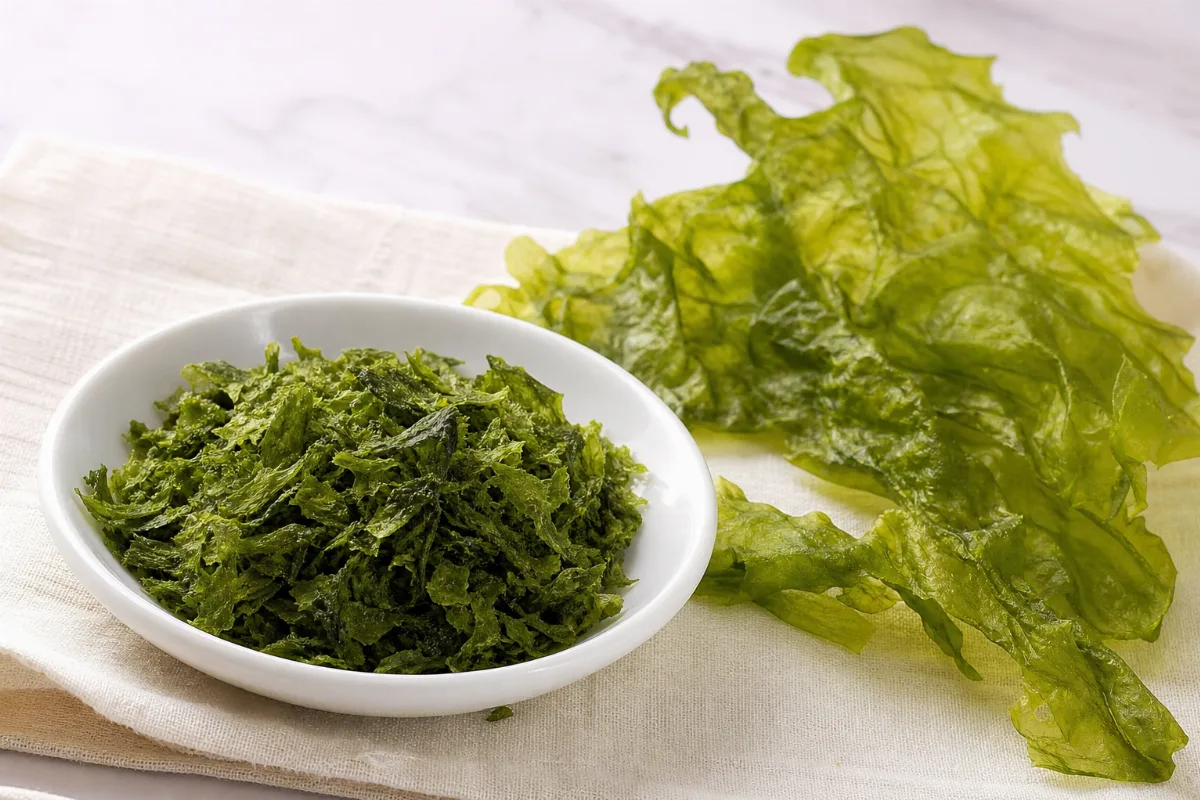
Sea lettuce is a thin green seaweed, sold dried as flakes. A Japanese food table lists the flakes as high in fibre, magnesium and iodine. There is almost no human research on eating it. The main caution is iodine: too much can upset the thyroid. It can also carry pollutants from the water it grows in.
General information, not medical advice. Last substantive update · Not medically reviewed. A named clinician has not signed off on this page. How this page is made
About Sea Lettuce
Sea lettuce is a thin green seaweed of the genus Ulva, eaten mostly as dried flakes. It is a food with a lot of fibre and minerals on paper and very high iodine. There is almost no human research, so this page is short, and it does not claim sea lettuce treats anything.
What it is
Sea lettuce is a green seaweed (algae) in the genus Ulva. GBIF accepts Ulva lactuca as a species in the family Ulvaceae. A 2025 review says Ulva species live in sea, brackish and fresh water around the world.
In Japan it is sold sun-dried and crumbled as aosa. The Japanese food composition table lists it under the name Ulva spp., so its numbers cover the genus, not Ulva lactuca alone.
What is in it
Per 100 g of the dried flakes the Japanese table lists 201 kcal, 22.1 g protein, 29.1 g fibre, 490 mg calcium, 3,200 mg magnesium, 3,200 mg potassium, 5.3 mg iron, 17.0 mg manganese, 2,200 mcg iodine, 3,900 mg sodium and 37.2 mcg vitamin B12. Because flakes are used by the pinch, 1 gram (our arithmetic) is about 2 kcal, 0.29 g fibre, 32 mg magnesium and 22 mcg iodine. No official serving or USDA entry was found.
The B12 number is not shown to be active B12 in people. A 2014 review found dried purple laver (nori), not sea lettuce, to be a useful plant source.
What the research shows
No trial of eating sea lettuce was found. One pilot trial gave 20 healthy adults a 300 mg Ulva lactuca extract or placebo for 28 days. Eighteen finished, and blood markers of oxidative stress and inflammation changed in the extract group. A company funded it, and an extract is not the food.
Other findings come from animals and labs: a large extract dose was linked with better liver markers in animals with chemical liver injury, and a processed fraction of another species protected cells and zebrafish embryos. These do not show a benefit for people.
At a glance
Traditional uses history, not proof
- Eaten in Japan as dried flakes (aosa), in soups and as a seasoning
- Long use as food is not proof that it treats any condition
Studied for research
- Fibre, minerals and carotenoids, high certainty for the nutrient content of dried flakes
- Iodine content, high certainty that it is high (a source and a risk)
- Antioxidant and inflammation blood markers, very low certainty (one tiny trial of an extract)
- Liver protection, insufficient evidence (animal study only)
- Vitamin B12, insufficient evidence
Main compounds
- Iodine
- Dietary fibre
- Magnesium and manganese
- Carotenoids
- Ulvans (sulfated sugars)
Common forms
- Dried flakes (aosa), the form with measured values
- Fresh or rehydrated fronds (no measured values read)
- Extracts, used in a small trial and animal work, are different from the food
Research links: 2026 study: stopping seaweed lowered TSH in regular eaters · 2025 review: the genus Ulva, uses and pollutant risks · 2026 trial: Ulva lactuca extract and blood markers · Research Library · Genes & Biomarkers Library
What it is and its history
- Accepted scientific name
- Ulva lactuca L.
- Naming authority
- L. (GBIF accepted name; the "sea lettuce" of the food page is the genus Ulva, and the Japanese food table lists it as Ulva spp.)
- Common names
- Sea lettuce (English); Aosa (Japanese); Green laver (Ulva) (English)
- Family or group
- Ulvaceae (green algae, GBIF). Sea lettuce is a seaweed, not a plant with roots, stems or flowers.
- Classification
- Plantae > Chlorophyta > Ulvophyceae > Ulvales > Ulvaceae > Ulva > Ulva lactuca
- Native range
- A 2025 review says Ulva species occur in marine, brackish and fresh water worldwide.
- Habitat
- Marine, brackish and freshwater (the same review).
- What it looks like
- Roots: Not verified.; Stems: Not verified.; Leaves: Not verified.
- Cultivation
- Not verified from a source read. The 2025 review covers aquaculture and bioremediation uses.
- Harvest and processing
- Sold sun-dried and crumbled as aosa flakes in Japan (food table item 09001). Other forms were not read.
- Look-alikes and adulterants
- Name: Ao-nori (green laver); Note: Another green Ulva-type seaweed sold in Japan; it has its own page and the food table lists it as a separate item.; Name: Nori; Note: A red seaweed (purple laver). The vitamin B12 research applies to nori, not to sea lettuce.
- Sustainability and conservation
- Not assessed.
Photographs
What is inside, and how it may work
What it contains and how those compounds act in cells and animals. Laboratory and animal mechanisms are not proven effects in people.
Main compounds
| Compound | Family | Where it is concentrated | Activity studied | Level of evidence |
|---|---|---|---|---|
| Iodine | mineral | Whole alga Table: 2,200 mcg per 100 g dried (about 22 mcg per gram) | Needed for thyroid hormones; excess can disturb the thyroid. 10 8 | Human data |
| Dietary fibre | fibre | Whole alga Table: 29.1 g per 100 g dried; a lab paper measured 39.43% fibre in Ulva lactuca | No health effect shown for sea lettuce. 10 5 | Lab |
| Magnesium and manganese | mineral | Whole alga Table: magnesium 3,200 mg and manganese 17.0 mg per 100 g dried | Composition only. 10 | Lab |
| Beta-carotene and other carotenoids | carotenoid | Whole alga Table: beta-carotene equivalent 2,700 mcg per 100 g dried | Composition only. 10 | Lab |
| Ulvans (sulfated polysaccharides) | polysaccharide | Cell wall Amount not read | Reported antioxidant and anti-inflammatory activity in preclinical models (the trial abstract's description); a processed Ulva prolifera fraction was antioxidant in cells and zebrafish. 4 6 | Lab |
| Phenolic compounds (gallic acid, quercetin) | polyphenol | Extract Detected by lab analysis; amounts not given in the abstract | Antioxidant in lab assays. 5 | Lab |
Mechanisms, receptors and pathways
| Target or pathway | Gene or receptor | What was found | Level |
|---|---|---|---|
| Antioxidant defence (Nrf2 pathway, antioxidant enzymes) | Nrf2, Keap1, NQO1, HO-1 | In rat liver cells and zebrafish embryos a processed Ulva prolifera polysaccharide fraction raised Nrf2-pathway proteins and antioxidant enzymes and lowered cell death markers. 6 | Lab |
| Oxidative stress and inflammation markers | PPAR-gamma, IL-6, CRP (blood markers) | In a 28-day pilot trial of an Ulva lactuca extract, antioxidant markers rose and inflammatory markers fell in the extract group. 4 | Human data |
| Liver protection against a chemical toxin | Not specified | A methanol extract was linked with better liver markers and tissue in injured animals. Authors attribute it to the nutrient and antioxidant makeup; that is their interpretation. 5 | Animal research |
Absorption, metabolism and elimination
- Absorption
- Not found for sea lettuce nutrients in people.
- Distribution
- Not found.
- Metabolism
- Not found.
- Elimination
- Seaweed iodine: urinary iodine fell from 270 to 87 mcg/L within six weeks of stopping seaweed (seaweeds not named).
- Bioavailability
- Not established for sea lettuce iodine, minerals or B12 in people.
Isolated compounds versus whole extracts
The only human trial used an Ulva lactuca extract, not the food. The thyroid study was of mixed seaweeds. Liver and cell findings are animal or lab results, with one using a different Ulva species. None of them shows what eating sea lettuce does.
Nutritional composition
Source: Standard Tables of Food Composition in Japan (8th revised edition, 2023 supplement), item 09001, algae / sea lettuce, sun-dried (genus Ulva), page read 2026-10-26 (no USDA entry exists). Per 100 g dried: 201 kcal, 16.9 g water, 22.1 g protein, 0.6 g fat, 29.1 g fibre, 490 mg calcium, 3,200 mg magnesium, 3,200 mg potassium, 3,900 mg sodium (9.9 g salt equivalent), 160 mg phosphorus, 5.3 mg iron, 1.2 mg zinc, 17.0 mg manganese, 2,200 mcg iodine, 2,700 mcg beta-carotene equivalent, 5 mcg vitamin K, 180 mcg folate, 25 mg vitamin C and 37.2 mcg vitamin B12 (not shown to be active B12 in people). Because dried flakes are used by the pinch, our arithmetic for 1 gram (the 100 g values divided by 100; no official serving found) is about 2 kcal, 0.22 g protein, 0.29 g fibre, 32 mg magnesium, 22 mcg iodine and 0.1 g salt. Fresh or rehydrated fronds are mostly water and no measured values were read.
2 high certainty1 very low certainty3 not enough evidence
What was looked at
The 6 benefits and uses checked for Sea Lettuce, each with how strong the evidence is. Tap one to open it.
- Fibre, minerals and carotenoids (nutrient content of dried flakes)High certainty
- Iodine content (a source, and a risk when high)High certainty
- Antioxidant and inflammation blood markers (Ulva lactuca extract, not the food)Very low certainty
- Liver protection (animal study only)Not enough evidence
- Cell and fish-embryo antioxidant effects (a different Ulva species, lab only)Not enough evidence
- Vitamin B12 claimsNot enough evidence
Lab markers tracked in the studies
Urinary iodine concentrationTSH (thyroid-stimulating hormone)CRP (C-reactive protein)MDA (malondialdehyde)Glutathione (GSH)
What is Sea Lettuce good for?
The few studied uses and how strong the human evidence is for each. Most of what is known is about nutrient content, not health effects, and nothing here comes from trials of eating the seaweed.
Benefits, one by one
Each card is a research question, not a promise. Tap a goal to filter. Open a card to see the studies, doses and limits.
Fibre, minerals and carotenoids (nutrient content of dried flakes)
High certaintyA Japanese food table lists dried sea lettuce as high in fibre (29.1 g per 100 g), magnesium (3,200 mg), potassium (3,200 mg) and manganese (17.0 mg), with beta-carotene. Flakes are used by the pinch, so a serving adds little.
1 studiesSun-dried sea lettuce (aosa), per 100 g edible portion. Fresh or rehy…
Studies, doses and limits
What the trials found
No trial was read testing whether eating sea lettuce changes fibre intake, mineral levels or any health outcome.
Results
Per 100 g of sun-dried sea lettuce (Japanese table, genus Ulva): 201 kcal, 22.1 g protein, 29.1 g fibre, 490 mg calcium, 3,200 mg magnesium, 3,200 mg potassium, 5.3 mg iron, 17.0 mg manganese, 2,700 mcg beta-carotene equivalent. Per 1 gram (our arithmetic): about 2 kcal, 0.22 g protein, 0.29 g fibre, 32 mg magnesium and 0.17 mg manganese.
Effect sizes as reported
Per 100 g dried, from one food table: fibre 29.1 g; magnesium 3,200 mg; manganese 17.0 mg; potassium 3,200 mg; beta-carotene equivalent 2,700 mcg.
Why this rating
High that the table lists these values for dried Ulva. Not tested in people, and one table covers the genus, not every product. Dried seaweed is eaten in small amounts.
Form and dose studied
Sun-dried sea lettuce (aosa), per 100 g edible portion. Fresh or rehydrated fronds are mostly water and no measured values were read.
Who was studied
General adult diet.
Limits
A food table, not a trial. It covers the genus Ulva (mainly the aosa sold in Japan), not Ulva lactuca alone. Values vary with species, place and drying.
Why researchers looked
People eat sea lettuce as a seasoning and a green sea vegetable, so the first question is what the food contains.
Traditional use
Dried sea lettuce flakes (aosa in Japan) are eaten as a seasoning and in soups. Long use as food is not proof that it treats any condition.
Proposed mechanism Composition table
Not applicable: this is a composition fact, not a body effect.
A proposed mechanism does not show that the effect happens in people.
The same table lists very high iodine and salt; see the iodine benefit below and the Safety tab.
Iodine content (a source, and a risk when high)
High certaintyDried sea lettuce is listed at 2,200 mcg of iodine per 100 g, about 22 mcg per gram. Iodine is needed for thyroid hormones, but too much can disturb the thyroid. Here the number is a caution as much as a plus.
3 studiesDried flakes. Fresh fronds and extracts were not measured in the sour…
Studies, doses and limits
What the trials found
No trial was read on sea lettuce and iodine status. A Norwegian study of habitual seaweed eaters (species not named) found their estimated iodine intake was above the upper limit; see Safety.
Results
Dried flakes list 2,200 mcg iodine per 100 g. The ATA says more than 1,100 mcg a day is not recommended, and the NHS says adults need 140 mcg a day. Because about 22 mcg sits in each gram, larger servings add up fast.
Effect sizes as reported
Table value 2,200 mcg per 100 g dried (about 22 mcg per gram). ATA upper limit 1,100 mcg per day; NHS adult need 140 mcg per day.
Why this rating
High that the table lists this iodine value for dried Ulva. Iodine in a given pack can differ, and the table says nothing about how much your body takes up.
Form and dose studied
Dried flakes. Fresh fronds and extracts were not measured in the sources read.
Who was studied
Adults; thyroid conditions and pregnancy need extra care (see Safety).
Limits
One food table and two agency pages. Real products vary, and the table is for the genus Ulva.
Why researchers looked
Seaweeds take up iodine from sea water, so people ask whether they are a useful iodine source and whether they carry too much.
Traditional use
Dried sea lettuce flakes (aosa in Japan) are eaten as a seasoning and in soups. Long use as food is not proof that it treats any condition.
Proposed mechanism General physiology
Iodine is a building block of thyroid hormones (general nutrition fact, not tested for sea lettuce).
A proposed mechanism does not show that the effect happens in people.
Too much iodine can cause thyroid problems. People with thyroid disease, and pregnant or breastfeeding women, should ask a clinician before eating seaweed often.
Antioxidant and inflammation blood markers (Ulva lactuca extract, not the food)
Very low certaintyA very small trial of an Ulva lactuca extract in healthy adults saw changes in blood markers over 28 days. It was an extract, funded by a company, with 18 finishers, so it is only a first signal.
1 studiesAn Ulva lactuca extract, 300 mg a day for 28 days. Not dried flakes o…
Studies, doses and limits
What the trials found
One randomized, double-blind, placebo-controlled pilot: 20 healthy adults, 28 days, 300 mg a day of an Ulva lactuca extract. Eighteen finished.
Results
Changes in the extract group by day 28: CRP -0.91 mg/L, IL-6 -2.97 pg/mL, IL-1 beta -8.87 pg/mL, MDA -6.08 nmol/mL; GSH +4.04 ng/mL. Authors call the extract well tolerated.
Effect sizes as reported
CRP -0.91 mg/L; IL-6 -2.97 pg/mL; MDA -6.08 nmol/mL; GSH +4.04 ng/mL (blood markers only).
Why this rating
Very low: one tiny pilot, healthy young adults, blood markers only, company-funded, extract not food, no replication.
Form and dose studied
An Ulva lactuca extract, 300 mg a day for 28 days. Not dried flakes or fronds as eaten.
Who was studied
Healthy adults aged 20 to 35.
Limits
Only 18 finishers and 28 days. Markers are not symptoms. Industry-linked (BluGen LLC). The abstract calls the changes within-group, so the exact comparison with placebo is unclear.
Why researchers looked
Sea lettuce contains ulvans (sulfated sugars), polyphenols and pigments that show antioxidant activity in lab studies, so researchers tested an extract in people.
Traditional use
Dried sea lettuce flakes (aosa in Japan) are eaten as a seasoning and in soups. Long use as food is not proof that it treats any condition.
Proposed mechanism Lab
Lab work on Ulva polysaccharides shows antioxidant effects in cells; this is a lab finding, not shown for the food in people.
A proposed mechanism does not show that the effect happens in people.
Tolerated in this small trial, but safety of extracts beyond 28 days was not studied.
Liver protection (animal study only)
Not enough evidenceIn animals given a liver-damaging chemical, a very large dose of Ulva lactuca extract was linked with better liver markers. This was not tested in people.
1 studiesMethanol extract of Ulva lactuca, 1000 mg per kg body weight for four…
Studies, doses and limits
What the trials found
No human study of sea lettuce and the liver was found.
Results
In the animal model the extract was linked with weight recovery, better lipid profile, lower liver and oxidative stress markers, and restored liver tissue.
Effect sizes as reported
Reported as p < 0.05; no effect sizes in the abstract.
Why this rating
Insufficient for people: a single animal and lab study.
Form and dose studied
Methanol extract of Ulva lactuca, 1000 mg per kg body weight for four weeks in animals.
Who was studied
Animals (not people).
Limits
Animal model using a toxic chemical, a very high extract dose, and no human data.
Why researchers looked
Lab tests found antioxidant compounds in Ulva, so researchers tried an extract in animals with chemically injured livers.
Traditional use
Dried sea lettuce flakes (aosa in Japan) are eaten as a seasoning and in soups. Long use as food is not proof that it treats any condition.
Proposed mechanism Animal research
Antioxidant compounds such as gallic acid and quercetin were detected; the authors link benefits to the nutrient and antioxidant makeup (animal and lab level).
A proposed mechanism does not show that the effect happens in people.
No liver injury from eating sea lettuce was found in the sources read; see Safety.
Cell and fish-embryo antioxidant effects (a different Ulva species, lab only)
Not enough evidenceA processed sugar fraction from another sea lettuce species (Ulva prolifera) protected liver cells and zebrafish embryos from damage in the lab. It says nothing about eating sea lettuce.
1 studiesLow-molecular-weight polysaccharide fraction (DUPP2) from Ulva prolif…
Studies, doses and limits
What the trials found
No human study.
Results
Cells and zebrafish embryos improved after treatment with the processed fraction; no numbers in the abstract.
Effect sizes as reported
Not given in the abstract.
Why this rating
Insufficient: cell and fish-embryo work with a different species and a chemically processed isolate.
Form and dose studied
Low-molecular-weight polysaccharide fraction (DUPP2) from Ulva prolifera.
Who was studied
Cells and zebrafish embryos.
Limits
Different species, isolate rather than food, no people.
Why researchers looked
Ulva sugars (polysaccharides) are studied as possible ingredients for functional foods.
Traditional use
Dried sea lettuce flakes (aosa in Japan) are eaten as a seasoning and in soups. Long use as food is not proof that it treats any condition.
Proposed mechanism Lab
The fraction raised antioxidant defence proteins (including Nrf2) and lowered signs of cell death in rat liver cells under hydrogen peroxide stress (lab level).
A proposed mechanism does not show that the effect happens in people.
None specific.
Vitamin B12 claims
Not enough evidenceA Japanese table lists 37.2 mcg of vitamin B12 per 100 g of dried sea lettuce, but there is no evidence this works as B12 in people. A review of plant B12 sources named nori, not sea lettuce.
2 studiesDried flakes.
Studies, doses and limits
What the trials found
No study was read showing sea lettuce raises B12 status.
Results
The table lists a B12 number; a 2014 review concluded dried purple laver (nori) was the most suitable plant B12 source for vegetarians and did not name sea lettuce.
Effect sizes as reported
Table value 37.2 mcg per 100 g dried; the method of measuring it was not read.
Why this rating
Insufficient: a table number without evidence of absorbable B12 in people.
Form and dose studied
Dried flakes.
Who was studied
Vegetarians and vegans (the group the review is about).
Limits
A table value is not proof of active vitamin B12, and the review abstract does not mention sea lettuce.
Why researchers looked
Some seaweeds contain B12-like compounds, so people ask whether sea lettuce can replace animal B12.
Traditional use
Dried sea lettuce flakes (aosa in Japan) are eaten as a seasoning and in soups. Long use as food is not proof that it treats any condition.
Proposed mechanism Not applicable
Not applicable.
A proposed mechanism does not show that the effect happens in people.
People who rely on plants for B12 should talk to a clinician about reliable sources.
Connections to the rest of health
How Sea Lettuce connects to the rest of our health knowledge graph. Every link says what kind of connection it is. A safety link (for example to the liver) is a warning, not a benefit. A study that merely mentions a topic never creates a benefit link.
Explore every connection: goals, body systems, organs, symptoms, genes
A. Wellness goals
| Connected to | Kind of connection | Evidence status | Context | Studies |
|---|---|---|---|---|
| Balanced Nutrition | High certainty | Fibre, minerals and carotenoids (nutrient content of dried flakes): A Japanese food table lists dried sea lettuce as high in fibre (29.1 g per 100 g), magnesium (3,200 mg), potassium (3,200 mg) and manganese (17.0 mg), with beta-carotene. Flakes are used by the pinch, so a serving adds little. | 10 | |
| Thyroid Support | High certainty | Iodine content (a source, and a risk when high): Dried sea lettuce is listed at 2,200 mcg of iodine per 100 g, about 22 mcg per gram. Iodine is needed for thyroid hormones, but too much can disturb the thyroid. Here the number is a caution as much as a plus. | 10 8 11 | |
| Inflammation Balance | Very low certainty | Antioxidant and inflammation blood markers (Ulva lactuca extract, not the food): A very small trial of an Ulva lactuca extract in healthy adults saw changes in blood markers over 28 days. It was an extract, funded by a company, with 18 finishers, so it is only a first signal. | 4 | |
| Liver Support | Not enough evidence | Liver protection (animal study only): In animals given a liver-damaging chemical, a very large dose of Ulva lactuca extract was linked with better liver markers. This was not tested in people. | 5 | |
| Cellular Protection | Not enough evidence | Cell and fish-embryo antioxidant effects (a different Ulva species, lab only): A processed sugar fraction from another sea lettuce species (Ulva prolifera) protected liver cells and zebrafish embryos from damage in the lab. It says nothing about eating sea lettuce. | 6 | |
| Balanced Nutrition | Not enough evidence | Vitamin B12 claims: A Japanese table lists 37.2 mcg of vitamin B12 per 100 g of dried sea lettuce, but there is no evidence this works as B12 in people. A review of plant B12 sources named nori, not sea lettuce. | 10 7 |
B. Body systems
| Connected to | Kind of connection | Evidence status | Context | Studies |
|---|---|---|---|---|
| Digestive System | Biological association | High certainty | Studied for: Fibre, minerals and carotenoids (nutrient content of dried flakes) | 10 |
| Endocrine System | Biological association | High certainty | Studied for: Iodine content (a source, and a risk when high) | 10 8 11 |
| Immune System | Biological association | Very low certainty | Studied for: Antioxidant and inflammation blood markers (Ulva lactuca extract, not the food) | 4 |
| Hepatic System | Biological association | Not enough evidence | Studied for: Liver protection (animal study only) Studied for: Cell and fish-embryo antioxidant effects (a different Ulva species, lab only) | 5 6 |
| Nervous System | Biological association | Not enough evidence | Studied for: Vitamin B12 claims | 10 7 |
C. Body parts and organs
| Connected to | Kind of connection | Evidence status | Context | Studies |
|---|---|---|---|---|
| Thyroid | Documented risk | Dried sea lettuce is a notable iodine source per gram; excess iodine can change thyroid function. Dried sea lettuce is a notable iodine source per gram; too much iodine can change thyroid function. Preparation or compound: Iodine in dried sea lettuce |
8 11 10 1 |
G. Root causes and contributing factors
| Connected to | Kind of connection | Evidence status | Context | Studies |
|---|---|---|---|---|
| Heavy metal exposure | Documented risk | Ulva can hyperaccumulate metals; no measured values for edible Ulva lactuca were read. Ulva can build up metals and other pollutants; no measured values for edible Ulva lactuca were read. Preparation or compound: Ulva grown in polluted water |
3 2 |
I. Biomarkers
| Connected to | Kind of connection | Evidence status | Context | Studies |
|---|---|---|---|---|
| TSH | Preliminary | TSH fell after six weeks without seaweed in 49 regular eaters. Preparation or compound: Habitual seaweed eating (species not named) |
1 | |
| Urinary iodine concentration | Biological association | Low certainty | Measured in trials: lowered when seaweed stopped. A lab change is not the same as a health benefit. | 1 |
| TSH (thyroid-stimulating hormone) | Biological association | Low certainty | Measured in trials: lowered after stopping seaweed. A lab change is not the same as a health benefit. | 1 |
| CRP (C-reactive protein) | Biological association | Very low certainty | Measured in trials: lowered. A lab change is not the same as a health benefit. | 4 |
| MDA (malondialdehyde) | Biological association | Very low certainty | Measured in trials: lowered. A lab change is not the same as a health benefit. | 4 |
| Glutathione (GSH) | Biological association | Very low certainty | Measured in trials: raised. A lab change is not the same as a health benefit. | 4 |
J. Genes, receptors and enzymes
| Connected to | Kind of connection | Evidence status | Context | Studies |
|---|---|---|---|---|
| Nrf2 (antioxidant pathway) | Preliminary mechanism | Lab | Raised by a processed Ulva prolifera fraction in liver cells and zebrafish embryos (lab). | 6 |
K. Biological pathways
L. Active compounds
| Connected to | Kind of connection | Evidence status | Context | Studies |
|---|---|---|---|---|
| Iodine | Biological association | Human | Needed for thyroid hormones; excess can disturb the thyroid. Preparation or compound: Whole alga |
10 8 |
| Dietary fibre | Biological association | Lab | No health effect shown for sea lettuce. Preparation or compound: Whole alga |
10 5 |
| Magnesium and manganese | Biological association | Lab | Composition only. Preparation or compound: Whole alga |
10 |
| Beta-carotene and other carotenoids | Biological association | Lab | Composition only. Preparation or compound: Whole alga |
10 |
| Ulvans (sulfated polysaccharides) | Biological association | Lab | Reported antioxidant and anti-inflammatory activity in preclinical models (the trial abstract's description); a processed Ulva prolifera fraction was antioxidant in cells and zebrafish. Preparation or compound: Cell wall |
4 6 |
| Phenolic compounds (gallic acid, quercetin) | Biological association | Lab | Antioxidant in lab assays. Preparation or compound: Extract |
5 |
Each connection is stored with the ingredient, the connected record, the kind of connection, the evidence status, the supporting studies, the preparation or compound involved, and a review date (last reviewed October 26, 2026).
Evidence at a glance: what changed in 3 lab markers
Tap a number to show only those markers. Counts are markers, not people.
The evidence
The research centre for Sea Lettuce. Every record here was checked against PubMed or the publisher's page; we never list a study we have not verified.
Evidence by outcome
Bars show how many studies we found for each outcome, not how well it works. People are added up across trials only (reviews are not added, to avoid double counting).
How we rate evidence
High certainty
Several well-run trials or reviews agree; further research is unlikely to change the picture much.
Moderate certainty
Good trials point the same way, but some doubt remains.
Low certainty
Small, short or inconsistent trials. The finding could change with better research.
Very low certainty
Very little or very weak human data. Treat as a possibility only.
Mixed findings
Trials or reviews disagree with each other.
Not enough evidence
Not enough human research to say either way.
Evidence against
Good research found no benefit, or found harm.
We take the reviewers' own risk-of-bias and GRADE statements where they exist, and otherwise judge from study size, design, consistency, directness and whether a product matches what is sold. Many publications do not make evidence high. Method note: We started from our existing sea lettuce summary, read the Japanese food composition table page, the American Thyroid Association and NHS iodine pages, and re-read PubMed abstracts for each study. Only abstracts were read for studies. The NIH iodine page could not be opened. Items we could not verify are flagged in the research gaps.
Study library: every study we checked 11
| Study | Design | People | Product, dose, length | Result |
|---|---|---|---|---|
| Aakre 2026 Impact of habitual seaweed consumption on iodine nutrition and thyroid function: a non-randomized pre-post clinical study. Eur J Nutr · PMID 41543576 · DOI |
Non randomised pre post study |
49 49 habitual seaweed eaters recruited by convenience sampling in two Norwegian cities |
Habitual seaweed eating (species not named in the abstract), then six weeks without seaweed Seaweed Usual intake, estimated by a seaweed food frequency questionnaire 6 weeks without seaweed · vs Same people before and after (no control group) |
Median urinary iodine was 270 mcg/L and estimated intake 658 mcg/day while eating seaweed, and fell to 87 mcg/L and 189 mcg/day after six weeks without it. Median intake before was above the Tolerable Upper Intake Level for iodine; afterwards it was well below it. Median TSH fell significantly after stopping seaweed, most in people with the highest earlier iodine intakes. Estimated iodine intake 658 (330-1516) mcg/day before vs 189 (142-264) mcg/day after; urinary iodine 270 (185-970) vs 87 (52-138) mcg/L; TSH fell (size not given in the abstract) (Interquartile ranges given as above; no confidence interval for TSH in the abstract) Methods, limits and fundingOutcomes: Urinary iodine, estimated iodine intake, TSH, fT3, fT4, TPO antibodies Limitations: No control group, convenience sample, intake estimated by questionnaire. The abstract does not name the seaweeds, so it does not show anything specific to sea lettuce. A fall in TSH is a lab change, not proof of harm. Funding and conflicts: Authors declare no conflict of interest. Read: abstract |
| Ashok 2026 Impact of different thermal treatments on heavy metals, aroma-active compounds, and protein-related nutritional quality of edible green seaweed Ulva reticulata. Food Chem · PMID 41380557 · DOI |
Laboratory analysis n/a |
Edible green seaweed Ulva reticulata tested in the lab | Hot water, steam, microwave or ultrasound treatment of Ulva reticulata Whole alga Not given in the abstract Not given in the abstract · vs Untreated seaweed |
Microwave and ultrasound treatment significantly lowered the heavy metals to within the Indian food safety authority (FSSAI) limits, with microwave giving up to 88% reduction. Hot water and steam raised hexanal, a fishy-smelling compound. Microwave kept essential amino acids best. Up to 88% reduction in heavy metals with microwave (Not given in the abstract) Methods, limits and fundingOutcomes: Heavy metals (arsenic, cadmium, tin, mercury, lead, nickel, chromium), fishy-smelling compounds, amino acids Limitations: A different species (Ulva reticulata), a lab study of processing, and the abstract does not give the starting metal levels. It shows metals were present, not that home cooking removes them. Funding and conflicts: Authors declare no competing interests. Read: abstract |
| Duong 2025 Advances in the Genus Ulva Research: From Structural Diversity to Applied Utility. Plants (Basel) · PMID 41095192 · DOI |
Narrative review n/a |
Review of research on the genus Ulva (sea lettuce) | Genus Ulva (sea lettuce) Whole alga |
The review says Ulva species live in sea, brackish and fresh water worldwide and can act as hyperaccumulators of heavy metals, microplastics and organic pollutants. This raises safety concerns for food and feed and means strict monitoring and quality control are needed. Not applicable (Not applicable) Methods, limits and fundingOutcomes: Biodiversity, nutrition, uses in food and feed, risks Limitations: A narrative review, not a systematic one; the abstract gives no measured values. It covers the whole genus. Funding and conflicts: Authors declare no conflicts of interest. Read: abstract |
| Jager 2026 Effect of an Ulva lactuca Extract on Systemic Antioxidant and Inflammatory Biomarkers in Healthy Adults: A Randomized, Double-Blind, Placebo-Controlled Trial. Nutrients · PMID 42514313 · DOI |
Randomised controlled trial |
20 20 healthy adults aged 20-35 (BMI 18.5-30); 18 finished |
Ulva lactuca extract Whole alga extract (details not in the abstract) 300 mg once a day 28 days · vs Matched placebo |
Eighteen of 20 finished. The authors report changes by day 28 in the extract group: GSH +4.04 ng/mL, GPx-1 +67.8 µU/mL, catalase +32.4 kU/L; MDA -6.08 nmol/mL, thioredoxin -1.48 ng/mL; CRP -0.91 mg/L, IL-6 -2.97 pg/mL, IL-11 -4.28 ng/mL, IL-1 beta -8.87 pg/mL; PPAR-gamma rose. They call the extract well tolerated. See results (changes in blood marker levels, not symptoms) (Not given in the abstract) Methods, limits and fundingOutcomes: Blood markers: GSH, MDA, catalase, GPx-1, thioredoxin (antioxidant) and CRP, IL-6, IL-1 beta, IL-11, PPAR-gamma (inflammation) Limitations: Pilot trial, 18 finishers, 28 days, healthy young adults, an extract not the food. Blood markers only, no symptoms or disease outcomes. The abstract describes the changes as within-group; the exact comparison with placebo is not stated. Funding and conflicts: Industry-linked: funded by BluGen LLC, whose co-founders include two authors; another author works for the company that ran the study. The funder is stated to have had no role in data collection or analysis. Read: abstract |
| Khan 2026 Evaluation of the Antioxidative and Hepatoprotective Activity of Ulva lactuca in a CCl(4)-Induced Liver Injury Model. Foods · PMID 42587955 · DOI |
Animal study animal |
Animals given carbon tetrachloride (CCl4) to injure the liver (species and group sizes not given in the abstract) | Ulva lactuca methanolic extract Whole alga extract 1000 mg per kg body weight 4 weeks · vs Injury-model animals without extract (details not in the abstract) |
Dried Ulva lactuca measured 10.5% ash, 10.83% protein and 39.43% fibre. The extract was linked with weight recovery, better lipid profile, lower liver and oxidative stress markers and restored liver tissue in the CCl4 animals. Lab tests found phenolic compounds including gallic acid and quercetin. Reported as p < 0.05; no effect sizes in the abstract (Not given in the abstract) Methods, limits and fundingOutcomes: Weight recovery, lipid profile, liver and oxidative stress markers, liver tissue Limitations: Animal and lab study using a chemical injury model and a very large extract dose per body weight. Not shown in people, and not the same as eating the seaweed. Funding and conflicts: Authors declare no conflict of interest. Read: abstract |
| Tan 2026 Antioxidant properties of low-molecular-weight Ulva prolifera polysaccharides against H2O2-induced oxidative damage in BRL 3A cells and zebrafish. Food Chem · PMID 41401579 · DOI |
Laboratory cell and zebrafish study lab |
Rat liver cells (BRL 3A) and zebrafish embryos exposed to hydrogen peroxide | Low-molecular-weight polysaccharide fraction (DUPP2) made from Ulva prolifera Polysaccharides, chemically broken down and purified Not given in the abstract Not given in the abstract · vs Untreated damaged cells and embryos |
The processed fraction raised antioxidant defence proteins and lowered signs of cell death in the damaged liver cells, and reduced reactive oxygen and improved survival in zebrafish embryos. Not given in the abstract (Not given in the abstract) Methods, limits and fundingOutcomes: Cell antioxidant proteins, cell death, reactive oxygen in zebrafish, embryo survival Limitations: A different Ulva species (U. prolifera), a chemically processed isolate, cells and fish embryos. It says nothing about eating sea lettuce. Funding and conflicts: Authors declare no competing interests. Read: abstract |
| Watanabe 2014 Vitamin B12-containing plant food sources for vegetarians. Nutrients · PMID 24803097 · DOI |
Narrative review n/a |
Survey of plant foods that contain vitamin B12, for vegetarians | Plant foods containing vitamin B12 Various; dried purple laver (nori) highlighted |
The review concluded that dried purple laver (nori) is the most suitable vitamin B12 source among plant foods for vegetarians. The abstract does not mention sea lettuce. Not applicable (Not applicable) Methods, limits and fundingOutcomes: Vitamin B12 content of plant foods Limitations: A 2014 review whose abstract names nori, not sea lettuce. It cannot be used to say sea lettuce is a B12 source. Funding and conflicts: Funding is not stated in the abstract. Read: abstract |
| s-ata-iodine American Thyroid Association: statement on the potential risks of excess iodine ingestion and exposure · Source |
Health agency n/a |
Methods, limits and fundingRead: full-text | ||
| s-gbif-ulva-lactuca GBIF species match: Ulva lactuca · Source |
Taxonomy database n/a |
Methods, limits and fundingRead: full-text | ||
| s-mext-aosa Standard Tables of Food Composition in Japan (8th revised edition, 2023 supplement): item 09001, algae / aosa (sea lettuce), sun-dried · Source |
Food composition table n/a |
Methods, limits and fundingRead: full-text | ||
| s-nhs-iodine NHS: Vitamins and minerals - Iodine · Source |
Health agency n/a |
Methods, limits and fundingRead: full-text |
What we do not know yet
- No trial of eating sea lettuce was found for any outcome.
- The nutrient values come from one Japanese table for the genus Ulva, not for Ulva lactuca alone.
- No measured metal or arsenic values for edible Ulva lactuca were read.
- Safety for pregnancy, children, thyroid medicines and wild harvesting was not researched specifically for sea lettuce.
How new research is added
New studies are found by a saved PubMed search and placed in a review queue before the page changes.
Lab markers
What changed in blood or saliva tests during trials. A changed number is not the same as feeling or being healthier, and we give no "normal ranges".
Hormonal 1
TSH (thyroid-stimulating hormone)
Lowered after stopping seaweed in trials
A hormone from the pituitary gland that tells the thyroid how hard to work. Doctors use it to check thyroid function.
Low certaintyResults and what it means
Why it was measured
To see whether seaweed iodine moves thyroid tests.
Statistical vs. clinical meaning
A lab change linked to stopping seaweed; it is not proof of harm and not specific to sea lettuce.
Safety implication
People with thyroid disease should ask a clinician before eating seaweed often.
| Study | Result | People | Product |
|---|---|---|---|
Inflammatory 1
CRP (C-reactive protein)
Lowered in trials
A blood protein that rises with inflammation.
Very low certaintyResults and what it means
Why it was measured
A common marker of low-grade inflammation.
Statistical vs. clinical meaning
A single small, company-funded trial of an extract in healthy adults.
Safety implication
None specific.
| Study | Result | People | Product |
|---|---|---|---|
Other 3
Urinary iodine concentration
Lowered when seaweed stopped in trials
The amount of iodine passed in urine, used as a marker of recent iodine intake.
Low certaintyResults and what it means
Why it was measured
To see how much iodine a person is taking in.
Statistical vs. clinical meaning
Shows that regular seaweed eating raises urinary iodine. Not specific to sea lettuce, no control group.
Safety implication
Very high iodine intake can affect the thyroid; see Safety.
| Study | Result | People | Product |
|---|---|---|---|
MDA (malondialdehyde)
Lowered in trials
A by-product of fat damage by oxidation, used as a marker of oxidative stress.
Very low certaintyResults and what it means
Why it was measured
To see whether the extract changes oxidative stress.
Statistical vs. clinical meaning
Same single small trial; blood marker only.
Safety implication
None specific.
| Study | Result | People | Product |
|---|---|---|---|
Glutathione (GSH)
Raised in trials
One of the body's own antioxidant molecules.
Very low certaintyResults and what it means
Why it was measured
To see whether the extract changes antioxidant defences.
Statistical vs. clinical meaning
Same single small trial; blood marker only.
Safety implication
None specific.
| Study | Result | People | Product |
|---|---|---|---|
Safety
What studies and official sources say about side effects, medicines and who should check first. Each point shows what kind of evidence it comes from.
Main points to know 5
- Iodine: dried sea lettuce is rich in it, and too much can upset the thyroid. A Japanese food table lists 2,200 mcg of iodine per 100 g of dried sea lettuce, about 22 mcg per gram. The American Thyroid Association says more than 1,100 mcg of iodine a day is not recommended and may cause thyroid problems. In a Norwegian study of 49 regular seaweed eaters (species not named), estimated iodine intake was above that upper level, and thyroid-stimulating hormone (TSH) fell after six weeks without seaweed. If you have thyroid disease, ask your doctor before eating seaweed often. Authoritative guidance and observational 8 11 10 1
- Pollutants and heavy metals can build up in Ulva. A 2025 review says Ulva species can act as hyperaccumulators of heavy metals, microplastics and organic pollutants, so strict monitoring and quality control matter. A lab study of a related species (Ulva reticulata) found arsenic, cadmium, tin, mercury, lead, nickel and chromium and that microwave or ultrasound treatment lowered them. No measured metal values for edible Ulva lactuca were read, so where it grew and how it was tested matters. Review and laboratory analysis 3 2
- Dried flakes are salty. The Japanese table lists 3,900 mg of sodium (9.9 g salt equivalent) per 100 g of dried sea lettuce, about 0.1 g of salt per gram. That matters mainly in larger amounts or in salted seasoning mixes. Composition table 10
- Pregnancy and breastfeeding: take advice. Iodine needs rise in pregnancy, but too much is also a concern. The ATA encourages 220 to 250 mcg a day in pregnancy and advises against iodine or kelp supplements above 500 mcg a day. No source read gives a safe amount of sea lettuce for pregnancy or breastfeeding, so ask your midwife or doctor. Authoritative guidance 8
- Extracts and supplements are not the same as the food. The one human trial read used an Ulva lactuca extract for 28 days in healthy adults and reported it was well tolerated, but it was tiny and company-funded. Safety of extracts over longer times was not studied. Randomised trial 4
Side effects 2
| Effect | How often | Severity and recovery | Evidence |
|---|---|---|---|
| Thyroid changes (for example a rise or fall in TSH) with high, repeated seaweed iodine intake The study did not name the seaweeds, so it is not specific to sea lettuce. | In 49 regular seaweed eaters, median estimated iodine intake was 658 mcg/day, above the upper limit; TSH fell significantly after stopping seaweed. Exact rates of thyroid disease were not given. | A lab change in this study; the abstract reports no illness. Higher intakes can cause thyroid dysfunction according to the ATA. TSH fell within six weeks of stopping seaweed in that study; reversibility of thyroid disease was not described. | Observational and authoritative guidance 1 8 |
| Stomach or gut upset from eating a lot of fibre-rich seaweed No source read reported this for sea lettuce. The table shows dried flakes are about 29% fibre, but no study linked that to symptoms. | Not found. | Not found. Not found. | None found |
Liver
No liver injury from eating sea lettuce was found in the sources read. One animal study found an Ulva lactuca extract was linked with better liver markers in animals given a liver-damaging chemical. That is not a human finding, and no liver safety source such as LiverTox was read for sea lettuce. 5
How often. No frequency was found.
Monitoring. No agency monitoring advice was found.
This is a safety connection. It is not evidence that Sea Lettuce supports liver health.
Medicines and supplements 2
| With | Why it matters | Importance | Evidence | What to do |
|---|---|---|---|---|
| Thyroid medicines (for example levothyroxine) and anti-thyroid drugs prescription | Iodine from seaweed can change thyroid hormone balance, so it could in principle matter for people on thyroid treatment. | No source read tested sea lettuce with thyroid medicines. This is a reasoned caution based on iodine, not a documented interaction. | Theoretical Not enough evidence 8 | If you take thyroid medicine, ask your doctor or pharmacist before eating seaweed often. |
| Iodine supplements, kelp supplements and other seaweeds dietary | Iodine from several sources adds up. | The ATA advises against iodine and kelp supplements above 500 mcg iodine a day and says more than 1,100 mcg a day from all sources is not recommended. | Authoritative guidance Moderate certainty 8 | Count iodine from all seaweeds and supplements together, and ask a clinician if unsure. |
Who should check first 3
| Situation | Advice | Evidence |
|---|---|---|
| Thyroid disease (including overactive or underactive thyroid, nodules, or autoimmune thyroid disease) | Ask your doctor before eating seaweed often, because iodine can affect thyroid function. | Authoritative guidance 8 11 |
| Pregnancy or breastfeeding | Ask your midwife or doctor. Iodine needs are higher, but excess is also a concern, and no sea lettuce amount is established. | Authoritative guidance 8 |
| Low-salt diets or high blood pressure advice | Dried flakes are salty (about 0.1 g salt per gram). Check labels of salted mixes. | Composition table 10 |
Overdose, product quality and regulators
Summary. No toxicity from sea lettuce eaten as food was found in the sources read. The concerns found are iodine and pollutant uptake.
Animal. One animal study of a methanol extract at 1000 mg per kg for four weeks reported benefit in a chemical liver-injury model; it was not designed as a safety study.
High dose or long term signals. High, repeated seaweed iodine intake went with thyroid-test changes in one study; see key safety.
Overdose response. Not found.
Genotoxicity. Not researched.
Ulva takes up what is in the water. Two sources describe pollutant and metal uptake.
Hyperaccumulation of metals, microplastics and organic pollutants (genus Ulva). A 2025 review says Ulva species can accumulate heavy metals, microplastics and organic pollutants, so monitoring is needed for food and feed use. 3
Metals in a related edible species and processing. In Ulva reticulata, microwave or ultrasound processing lowered arsenic, cadmium, tin, mercury, lead, nickel and chromium, up to 88% with microwave, to within Indian food safety limits. Starting levels were not given in the abstract and this was a different species. 2
| Body | Action | Date |
|---|---|---|
| American Thyroid Association (United States) | Statement on excess iodine: advises against iodine and kelp supplements above 500 mcg iodine a day; more than 1,100 mcg a day (Tolerable Upper Limit) is not recommended and may cause thyroid dysfunction; higher intakes are encouraged in pregnancy and breastfeeding. source | 2013-06-05 |
| NHS (UK) (United Kingdom) | Iodine: adults need 140 mcg a day from a varied diet; high doses for long periods could change how the thyroid works; 0.5 mg or less a day of iodine supplements is unlikely to cause harm. Seaweed is not mentioned on the page. source | 2020-08-03 |
When to get medical help
- Palpitations, a racing heart, sweating, weight loss, trembling or feeling very hot after eating a lot of seaweed (possible overactive thyroid): see a doctor soon
- Swelling in the neck, tiredness, weight gain or feeling cold that is new while eating seaweed often (possible underactive thyroid): see a doctor
Stop using the product and contact a clinician or emergency service. In the US, Poison Control is 1-800-222-1222.
General information only, not medical advice. Ask a clinician or pharmacist before use, especially with medicines, in pregnancy or with a health condition. See the Natural Remedy Safety guide.
Frequently asked questions
What is sea lettuce?
Is sea lettuce a plant?
No. It is a green alga (a seaweed), without true roots, stems or flowers. GBIF places Ulva lactuca in the family Ulvaceae.
What nutrients does dried sea lettuce contain?
A Japanese food table lists, per 100 g dried, 29.1 g fibre, 3,200 mg magnesium, 17.0 mg manganese, 3,200 mg potassium and 2,200 mcg iodine. Flakes are used by the pinch, so a serving adds little.
Is sea lettuce high in iodine?
Can seaweed affect the thyroid?
Is sea lettuce safe in pregnancy or breastfeeding?
No sea lettuce-specific advice was found. The ATA encourages 220 to 250 mcg of iodine a day in pregnancy but warns against kelp or iodine supplements above 500 mcg. Ask your midwife or doctor.
Does sea lettuce contain heavy metals?
Does sea lettuce lower inflammation?
Not shown. One tiny 28-day trial of an Ulva lactuca extract in 18 healthy adults saw lower CRP and other markers. It was company-funded, tested an extract and measured blood markers only.
Is sea lettuce good for the liver?
There is no human evidence. A large extract dose was linked with better liver markers in animals given a liver-damaging chemical.
Is sea lettuce a source of vitamin B12?
Is sea lettuce the same as nori or ao-nori?
Explore by health goal
Balanced NutritionThyroid SupportInflammation BalanceLiver SupportCellular Protection
Editorial transparency
- Written by
- AlternativeMed editorial team. Research compiled with AI assistance, then checked against the sources listed.
- Medical review
- None. This page has not been reviewed by a physician or pharmacist.
- First published
- 2026-10-26
- Last substantive update
- 2026-10-26
- How we research
- We started from our existing sea lettuce summary, read the Japanese food composition table page, the American Thyroid Association and NHS iodine pages, and re-read PubMed abstracts for each study. Only abstracts were read for studies. The NIH iodine page could not be opened. Items we could not verify are flagged in the research gaps.
- How we rate evidence
- See "How we rate evidence" in the Evidence tab.
- Independence
- No product is promoted on this page. No affiliate links are shown. The one human trial cited was funded by a company that makes an Ulva extract; this is stated where it is used.
Sources 11
Each source was opened and checked. Where we read only the abstract, it says so. The small numbers in the text point here.
- Aakre I, Vogt EC, Myrmel LS, Lundebye AK, et al.. Impact of habitual seaweed consumption on iodine nutrition and thyroid function: a non-randomized pre-post clinical study.. Eur J Nutr. 2026. PMID 41543576. DOI 10.1007/s00394-025-03813-8. (abstract)
- Ashok A, Policegoudra R, Chauhan OP, Kumar R. Impact of different thermal treatments on heavy metals, aroma-active compounds, and protein-related nutritional quality of edible green seaweed Ulva reticulata.. Food Chem. 2026. PMID 41380557. DOI 10.1016/j.foodchem.2025.147339. (abstract)
- Duong TT, Nguyen HTT, Nguyen HT, Nguyen QT, et al.. Advances in the Genus Ulva Research: From Structural Diversity to Applied Utility.. Plants (Basel). 2025. PMID 41095192. DOI 10.3390/plants14193052. (abstract)
- Jager R, Luesch H, Purpura M, Godavarthi A, et al.. Effect of an Ulva lactuca Extract on Systemic Antioxidant and Inflammatory Biomarkers in Healthy Adults: A Randomized, Double-Blind, Placebo-Controlled Trial.. Nutrients. 2026. PMID 42514313. DOI 10.3390/nu18142244. (abstract)
- Khan N, Ahmed W, Ali MA, Rabbani I. Evaluation of the Antioxidative and Hepatoprotective Activity of Ulva lactuca in a CCl(4)-Induced Liver Injury Model.. Foods. 2026. PMID 42587955. DOI 10.3390/foods15152695. (abstract)
- Tan J, Zheng Y, Ahn G, Wang L, et al.. Antioxidant properties of low-molecular-weight Ulva prolifera polysaccharides against H2O2-induced oxidative damage in BRL 3A cells and zebrafish.. Food Chem. 2026. PMID 41401579. DOI 10.1016/j.foodchem.2025.147475. (abstract)
- Watanabe F, Yabuta Y, Bito T, Teng F. Vitamin B12-containing plant food sources for vegetarians.. Nutrients. 2014. PMID 24803097. DOI 10.3390/nu6051861. (abstract)
- . American Thyroid Association: statement on the potential risks of excess iodine ingestion and exposure. . . (full-text)
- . GBIF species match: Ulva lactuca. . . (full-text)
- . Standard Tables of Food Composition in Japan (8th revised edition, 2023 supplement): item 09001, algae / aosa (sea lettuce), sun-dried. . . (full-text)
- . NHS: Vitamins and minerals - Iodine. . . (full-text)
Where to buy
Check the label first. Whatever you buy, look for these:
- The iodine amount: seaweed can be very high in iodine, which matters for thyroid conditions
- Heavy metal testing information from the maker
- Origin and harvest area
- Organic or tested labeling
Talk to a pharmacist or doctor before you start any supplement, especially if you take medicines. See the Safety tab for interactions.
Support our free guides: as an Amazon Associate we earn from qualifying purchases. Full disclosure.


