Seaweed & Algae · Seaweed
Dulse
Palmaria palmata · also called Red dulse, dillisk
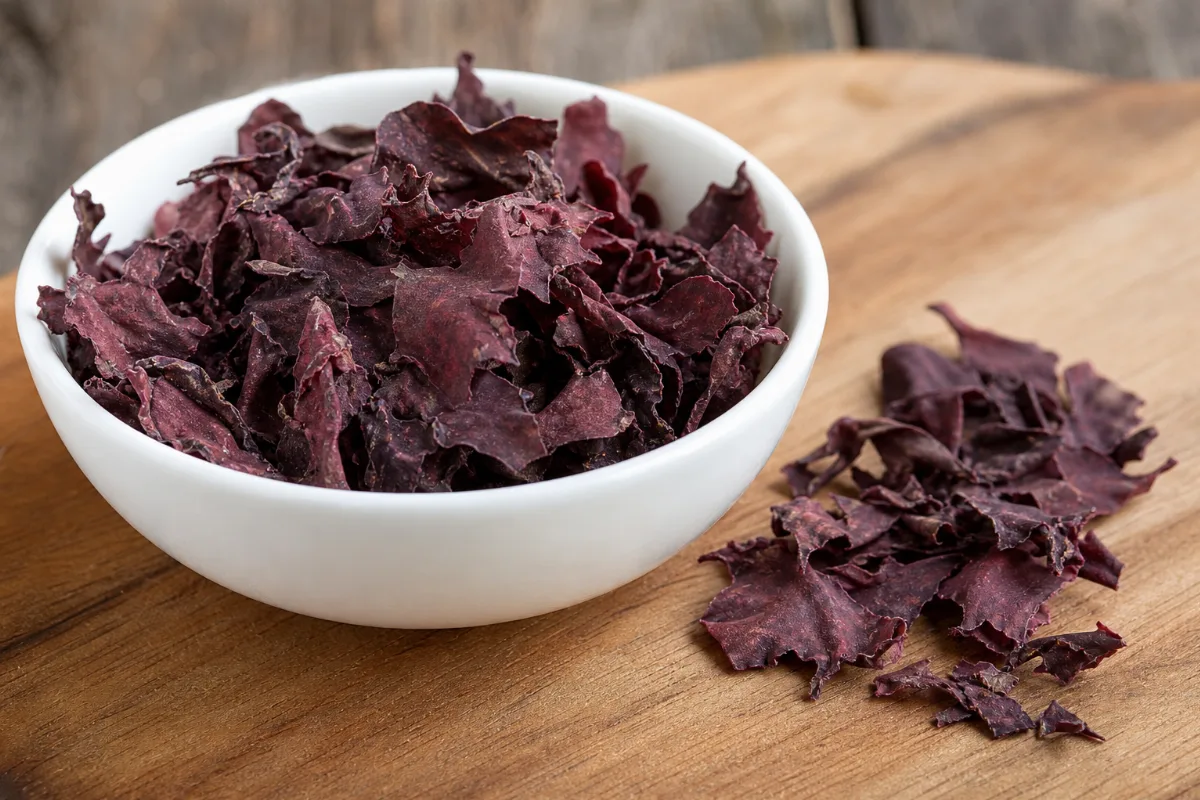
Dulse is a reddish-purple seaweed from cool northern coasts, eaten dried, as flakes or soaked. It is high in iodine, and the amount changes with the season, so too much can disturb the thyroid. Two small trials found no cholesterol benefit from dulse capsules, and dulse bread raised some blood markers within the normal range. The main cautions are iodine, thyroid disease, pregnancy, young children and metals such as arsenic.
General information, not medical advice. Last substantive update · Not medically reviewed. A named clinician has not signed off on this page. How this page is made
About Dulse
Dulse is a reddish-purple seaweed from cool northern coasts, eaten dried, as flakes, as powder or soaked. It is a food, not a proven remedy. It is high in iodine, and the amount changes with the season, so iodine is the first thing to know about it.
What it is
Dulse (Palmaria palmata) is a red alga that grows on the northern coasts of the Atlantic and Pacific oceans and is widely used as a source of fibre and protein. GBIF lists Palmaria palmata as the accepted name. It is a seaweed, not a plant.
USDA FoodData Central has no dulse item, so there is no nutrition table here. In a 2024 lab comparison, dulse had the highest protein of three seaweeds compared. In a 2025 Arctic study, protein was lowest in August and higher in late winter and spring.
Iodine comes first
The 2025 Arctic study found that dulse is high in iodine and that the level changes through the year. The authors calculated that 0.63 to 0.92 g of dry dulse a day would fit a 70 kg adult's iodine limit. That is their calculation, not a serving size.
The American Thyroid Association says more than 1,100 mcg of iodine a day is not recommended and may cause thyroid dysfunction. Seaweed products vary hugely: from under 0.1 to 7910 microg/g in Dutch shops, and iodine labelling was often missing in Norway. Iodine also dissolves in cooking water, so a finished dish is hard to estimate.
What the research shows
Two randomised trials of dulse were found. In 104 Japanese adults with high LDL cholesterol, 2 g a day of dulse capsules for eight weeks did not change LDL cholesterol, body mass index, waist size or blood sugar control. Triglycerides improved more in women on dulse (a secondary result). In healthy adults, dulse bread (5 g a day) raised CRP by 16.1 percent, triglycerides by 31.9 percent and TSH by 17.2 percent compared with control bread, all within the normal range.
In small Norwegian studies of regular seaweed eaters (dulse among the common kinds), urinary iodine was very high and TSH fell after six weeks without seaweed. A dulse extract calmed inflammation signals in human white blood cells in a dish; that is a lab finding, not an effect of the food. There is no good evidence for weight loss, detox, thyroid support or cancer claims.
Food versus extracts and supplements
The trials used dulse capsules (2 g a day) or dulse baked into bread (5 g a day). The cell work used a phenolic extract, which is not the food. Kelp tablets and iodine pills are different products and can contain far more iodine. The ATA advises against iodine and kelp supplements containing more than 500 mcg iodine a day.
At a glance
Traditional uses history, not proof
- Eaten as a sea vegetable, dried, as flakes or powder, or soaked in salads and soups
- Long use as food is not proof that it treats any condition
Studied for research
- Iodine content, moderate certainty that dulse is a high-iodine food, which is also its main risk
- Thyroid blood tests in seaweed eaters, low certainty (small, mixed studies)
- TSH in a dulse bread trial, low certainty (one trial)
- Cholesterol and triglycerides, mixed (two small trials disagree)
- Inflammation marker CRP, low certainty (higher with dulse bread)
- Blood sugar and weight measures, low certainty (no effect in one trial)
- Inflammation signals in cells, insufficient (lab only)
- Protein and composition, moderate (lab analysis)
Main compounds
- Iodine
- Protein and umami amino acids
- Phenolic compounds (in an extract)
- Arsenic, cadmium and lead (taken up from sea water)
Common forms
- Dried dulse fronds, flakes or powder (not verified against a source)
- Dulse capsules, 2 g a day, in an 8-week trial
- Dulse baked into bread, 5 g a day, in a trial
- Kelp tablets and iodine pills are different products and are not covered
Research links: 2025 Arctic study: dulse nutrients, iodine and metals by season · 2020 trial: dulse capsules, cholesterol and blood sugar · 2016 trial: dulse bread, inflammation, lipids and thyroid · American Thyroid Association statement on excess iodine · Research Library · Genes & Biomarkers Library
What it is and its history
- Accepted scientific name
- Palmaria palmata (L.) F.Weber & D.Mohr
- Naming authority
- GBIF accepted name
- Common names
- Dulse (English); Dillisk (English (Irish usage), from the existing nutrient summary); Red dulse (English); Dulse (Spanish)
- Family or group
- Palmariaceae (red algae, phylum Rhodophyta), as given by GBIF. Dulse is a seaweed, not a land plant.
- Classification
- Plantae (as listed by GBIF) > Rhodophyta > Florideophyceae > Palmariales > Palmariaceae > Palmaria > Palmaria palmata
- Native range
- A 2019 paper says it grows on the northern coasts of the Atlantic and Pacific oceans (abstract of PMID 31731428).
- Habitat
- Not verified from a source read beyond the coasts above.
- What it looks like
- Roots: Not verified.; Stems: Not verified.; Leaves: Not verified.
- Cultivation
- Not verified from a source read.
- Harvest and processing
- The existing summary lists dried whole fronds, flakes and powder as forms; these forms were not checked against a source.
- Look-alikes and adulterants
- Name: Nori; Note: Another red seaweed with its own page; it was the lowest-iodine seaweed in a 2004 survey.; Name: Kelp and kombu; Note: Brown seaweeds, usually much higher in iodine; they have their own pages.
Photographs
What is inside, and how it may work
What it contains and how those compounds act in cells and animals. Laboratory and animal mechanisms are not proven effects in people.
Main compounds
| Compound | Family | Where it is concentrated | Activity studied | Level of evidence |
|---|---|---|---|---|
| Iodine | mineral (halogen) | Whole seaweed High and varying by season; no microg/g figure read for dulse. | Needed for thyroid hormones. Too much may disturb the thyroid. 5 12 | Human data |
| Protein and umami amino acids (glutamic and aspartic acid) | protein | Whole seaweed Highest protein of three seaweeds compared; lowest in August. | Nutrient content; glutamic and aspartic acid give the umami taste. 4 5 | Laboratory |
| Phenolic compounds | polyphenols | Extract of the seaweed Not stated in the abstract read. | A phenolic extract calmed inflammation signals in human neutrophils in a dish. 7 | Laboratory |
Mechanisms, receptors and pathways
| Target or pathway | Gene or receptor | What was found | Level |
|---|---|---|---|
| Thyroid hormone production | Not specified in the sources read | Iodine is needed to make thyroid hormones; high intake may cause thyroid dysfunction according to the ATA. 12 2 | Human data |
| Inflammation signals in white blood cells (TLR4, IL-8, IL-1 beta, IL-6, TNF-alpha) | TLR4 gene expression | A phenolic dulse extract lowered these signals in human neutrophils in a dish. In the dulse bread trial, CRP rose, and dulse extracts raised IL-8 from gut cells in a dish. 7 3 | Laboratory |
Absorption, metabolism and elimination
- Absorption
- Not found for dulse. A Dutch lab digestion model found 24 to 56 percent of iodine in seaweed products came out of the food (mixed products).
- Distribution
- Not found.
- Metabolism
- Not found.
- Elimination
- Iodine leaves in urine; urinary iodine fell within six weeks of stopping seaweed in one study.
- Bioavailability
- Not established in people for dulse.
Isolated compounds versus whole extracts
The cell findings are for a phenolic extract. The trials used dulse capsules (2 g a day) or dulse baked into bread (5 g a day). Kelp tablets and iodine pills are different products and can contain far more iodine.
Nutritional composition
USDA FoodData Central (SR Legacy) has no dulse item, so no per-100 g or per-portion table is given; we prefer no number to an invented one. What was read: in a 2024 lab comparison of dulse, knotted wrack and Irish moss, dulse had the highest protein of the three; in a 2025 Arctic study, protein and ash were higher in late winter and spring and lowest in August, and sugar and dry matter were higher in late summer and autumn. The same Arctic study found the umami amino acids glutamic and aspartic acid throughout the year, and high iodine. The existing page also mentions the carotenoids lutein and alpha-carotene in a 2025 dulse extract analysis; that paper was not re-read for this build, so it is not stated as fact here.
2 moderate certainty1 mixed findings4 low certainty1 not enough evidence
What was looked at
The 8 benefits and uses checked for Dulse, each with how strong the evidence is. Tap one to open it.
- Iodine content (a nutrient fact, and the main risk)Moderate certainty
- Thyroid blood tests in regular seaweed eatersLow certainty
- TSH in a trial of dulse breadLow certainty
- Blood fats (cholesterol and triglycerides)Mixed findings
- Inflammation markers (CRP)Low certainty
- Blood sugar and body weight measuresLow certainty
- Inflammation signals in cells (lab only)Not enough evidence
- Protein and mineral compositionModerate certainty
Lab markers tracked in the studies
TSH (thyroid-stimulating hormone)Urinary iodineLDL cholesterolTriglyceridesC-reactive protein (CRP)
What is Dulse good for?
The main studied uses and how strong the human evidence is for each. Only two small trials of dulse itself were found, and they disagree on triglycerides.
Benefits, one by one
Each card is a research question, not a promise. Tap a goal to filter. Open a card to see the studies, doses and limits.
Iodine content (a nutrient fact, and the main risk)
Moderate certaintyDulse is a high-iodine seaweed, and how much iodine it holds changes with the season. A 2025 study of Arctic dulse worked out that only 0.63 to 0.92 g of dry dulse a day would fit a 70 kg adult's iodine limit at the high-iodine times of year. That is the authors' calculation, not an official serving.
4 studiesDulse as food (dried, fresh or in products). Other seaweeds in the su…
Studies, doses and limits
What the trials found
No trial tested dulse to correct iodine shortage. The Arctic study (Norway) measured dulse harvested every month for a year and found high iodine that varied a lot, higher in spring and summer. The abstract gives no iodine figure per gram for dulse. Across 12 other seaweeds in a US survey (2004), iodine ranged from 16 microg/g in nori to over 8165 microg/g in one processed kelp product; that abstract does not list dulse. In a Dutch market study of seaweed products (2025), iodine ranged from under 0.1 to 7910 microg/g fresh weight, 24 to 56 percent of it came out in a lab digestion test, and 25 percent of 80 regular seaweed eaters were over the 600 microg a day limit used in the study.
Results
Dulse is a high-iodine food and the amount changes by season and place, so one bag cannot be compared with another. This is a measurement, not a health benefit.
Effect sizes as reported
Arctic dulse: maximum 0.63 to 0.92 g dry weight a day for a 70 kg person (authors' calculation from iodine content). Other seaweeds: nori 16 microg/g to processed kelp granules over 8165 microg/g (2004); Dutch products under 0.1 to 7910 microg/g fresh weight (2025).
Why this rating
Moderate that dulse is a high-iodine food: one well-described Arctic study, and the wider seaweed surveys point the same way. No dulse iodine figure per gram was read, so the exact amount is unknown.
Form and dose studied
Dulse as food (dried, fresh or in products). Other seaweeds in the surveys.
Who was studied
Adults.
Limits
One harvest site and one year for dulse itself. The two product surveys do not name dulse. Iodine dissolves in cooking water, so the amount in a prepared dish is hard to estimate.
Why researchers looked
Seaweed is one of the few rich food sources of iodine, and iodine that is too high or too low affects the thyroid.
Traditional use
Dulse is a red seaweed that grows on the northern coasts of the Atlantic and Pacific oceans and is widely used as a source of fibre and protein, according to a 2019 paper. Long use as food is not proof that it treats any condition.
Proposed mechanism Laboratory measurement
These are measured amounts of iodine in the food. Iodine is needed to make thyroid hormones.
A proposed mechanism does not show that the effect happens in people.
Iodine comes first; see the Safety tab.
Thyroid blood tests in regular seaweed eaters
Low certaintyIn small Norwegian studies, people who ate seaweed often (dulse among the common kinds) had very high urinary iodine and a TSH that was higher than in comparison groups. When 49 of them stopped seaweed for six weeks, their TSH fell. These are blood-test changes, not proven harm or proven benefit.
2 studiesHabitual eating of mixed seaweeds.
Studies, doses and limits
What the trials found
In 44 Norwegian seaweed eaters (sugar kelp, winged kelp, dulse and laver the most common), median urinary iodine was 1200 microg/L, which the authors called excessive, and TSH was within reference values but higher than in other comparable groups (thyroid blood tests in 19 of them). In a before-and-after study of 49 habitual seaweed eaters, estimated iodine intake fell from 658 to 189 microg a day after six weeks without seaweed, and median TSH decreased significantly, most in those with the highest iodine intake.
Results
High-iodine seaweed eating goes with high urinary iodine and a TSH at the higher end of normal. Neither study shows that it causes thyroid disease, and neither shows that it helps the thyroid.
Effect sizes as reported
Urinary iodine 1200 microg/L (median, 44 people). Intake 658 to 189 microg a day and a significant fall in TSH after stopping (49 people).
Why this rating
Low: small, non-randomised studies, mixed seaweeds (not dulse alone), blood tests rather than disease. The direction of the finding is a caution, not a benefit.
Form and dose studied
Habitual eating of mixed seaweeds.
Who was studied
Adult seaweed eaters in Norway.
Limits
No control group in the before-and-after study. Convenience samples. Not specific to dulse.
Why researchers looked
Seaweed is the main iodine source for many regular eaters, and researchers want to know whether that much iodine changes thyroid tests.
Traditional use
Dulse is a red seaweed that grows on the northern coasts of the Atlantic and Pacific oceans and is widely used as a source of fibre and protein, according to a 2019 paper. Long use as food is not proof that it treats any condition.
Proposed mechanism Observational
Not shown. Iodine is needed to make thyroid hormones, and the studies read look only at blood and urine tests.
A proposed mechanism does not show that the effect happens in people.
Iodine comes first; see the Safety tab.
TSH in a trial of dulse bread
Low certaintyIn a randomised trial in healthy adults, eating 5 g a day of dulse baked into bread went with a 17.2 percent higher TSH than control bread. The change stayed within the normal range.
1 studiesDulse (5 g a day) baked into bread.
Studies, doses and limits
What the trials found
A randomised parallel placebo-controlled trial in healthy adults compared bread with 5 g a day of dulse (Palmaria palmata) against control bread. Dulse bread significantly increased TSH (+17.2 percent, P = 0.017). The authors concluded that dulse altered thyroid function, but the changes stayed within the normal clinical range.
Results
TSH went up with dulse bread, within the normal range. This is a safety-type finding, not a benefit.
Effect sizes as reported
TSH +17.2 percent versus control (P = 0.017).
Why this rating
Low: one trial, in healthy adults. The number of participants and the length of the trial are not in the abstract.
Form and dose studied
Dulse (5 g a day) baked into bread.
Who was studied
Healthy adults.
Limits
Funding is not stated in the abstract. Bread, not dulse eaten on its own.
Why researchers looked
Researchers measured thyroid function as a safety check in a trial of dulse and inflammation.
Traditional use
Dulse is a red seaweed that grows on the northern coasts of the Atlantic and Pacific oceans and is widely used as a source of fibre and protein, according to a 2019 paper. Long use as food is not proof that it treats any condition.
Proposed mechanism Not established
Not shown. The abstract does not explain why TSH rose.
A proposed mechanism does not show that the effect happens in people.
Iodine comes first; see the Safety tab.
Blood fats (cholesterol and triglycerides)
Mixed findingsTwo randomised trials looked at blood fats and gave different answers. In people with high LDL cholesterol, 2 g a day of dulse capsules for eight weeks did not change LDL cholesterol. Triglycerides fell more in women on dulse than on placebo. In healthy adults eating dulse bread, triglycerides rose by 31.9 percent.
2 studiesDulse capsules (2 g a day) and dulse bread (5 g a day).
Studies, doses and limits
What the trials found
Takase 2020: an 8-week randomised, double-blind, placebo-controlled trial in Japanese adults with LDL cholesterol of 120 mg/dL or more (104 completed) gave capsules with 2 g a day of Palmaria palmata or placebo. There was no significant difference in LDL cholesterol (the main measure), body mass index or waist size. Triglycerides improved significantly more in women on dulse (-9.0 versus -1.0, p = .03). Allsopp 2016: in healthy adults eating dulse bread (5 g a day) against control bread, triglycerides were 31.9 percent higher (P = 0.001), within the normal range.
Results
Mixed. No effect on LDL cholesterol in the larger trial. Triglycerides went down in women in one trial (a secondary result) and up in the other trial. Different forms, doses and groups, so the two cannot be added together.
Effect sizes as reported
LDL cholesterol: no significant difference (capsules, 8 weeks, 104 people). Triglycerides: women -9.0 vs -1.0 (p = .03, units not in the abstract); dulse bread +31.9 percent vs control (P = 0.001).
Why this rating
Mixed: two small trials with opposite triglyceride results, different forms and populations. The main LDL result was null, and the triglyceride finding was a secondary, subgroup result.
Form and dose studied
Dulse capsules (2 g a day) and dulse bread (5 g a day).
Who was studied
Japanese adults with raised LDL cholesterol; healthy adults.
Limits
Capsules versus bread. One group had high cholesterol, the other was healthy. Funding not stated in the abstracts.
Why researchers looked
Red algae lowered blood fats in rat studies, so researchers tested dulse in people.
Traditional use
Dulse is a red seaweed that grows on the northern coasts of the Atlantic and Pacific oceans and is widely used as a source of fibre and protein, according to a 2019 paper. Long use as food is not proof that it treats any condition.
Proposed mechanism Author interpretation
Not shown. The Japanese authors cite rat studies of red algae as the reason for the trial.
A proposed mechanism does not show that the effect happens in people.
Iodine comes first; see the Safety tab.
Inflammation markers (CRP)
Low certaintyIn the dulse bread trial, a blood marker of inflammation (CRP) was 16.1 percent higher with dulse than with control bread, still in the normal range. This is the opposite of an anti-inflammatory effect.
1 studiesDulse (5 g a day) baked into bread.
Studies, doses and limits
What the trials found
In the randomised trial of dulse bread (5 g a day) in healthy adults, serum CRP was significantly higher than with control bread (+16.1 percent, P = 0.011). The authors concluded that dulse stimulated inflammation, with changes within the normal range.
Results
No sign of an anti-inflammatory effect in people. One trial found CRP went up, within the normal range.
Effect sizes as reported
CRP +16.1 percent versus control (P = 0.011).
Why this rating
Low: one trial, in healthy adults, with the number of participants and trial length missing from the abstract.
Form and dose studied
Dulse (5 g a day) baked into bread.
Who was studied
Healthy adults.
Limits
Bread, not plain dulse. Normal-range changes in healthy people may not matter for health.
Why researchers looked
Dulse is described as containing anti-inflammatory compounds, so the trial tested that in people.
Traditional use
Dulse is a red seaweed that grows on the northern coasts of the Atlantic and Pacific oceans and is widely used as a source of fibre and protein, according to a 2019 paper. Long use as food is not proof that it treats any condition.
Proposed mechanism Laboratory
In lab tests in the same paper, dulse extracts and protein digests made gut cells (Caco-2) release more IL-8, an inflammation signal, which the authors suggest may explain the human result.
A proposed mechanism does not show that the effect happens in people.
Iodine comes first; see the Safety tab.
Blood sugar and body weight measures
Low certaintyIn the 8-week dulse capsule trial in people with high LDL cholesterol, blood sugar control, body mass index and waist size did not differ from placebo.
1 studiesDulse capsules (2 g a day).
Studies, doses and limits
What the trials found
In the 8-week randomised, double-blind, placebo-controlled trial (104 completed) with 2 g a day of dulse capsules, there was no significant difference from placebo in glycemic control, body mass index or waist circumference.
Results
No effect found on these measures in this trial.
Effect sizes as reported
No significant differences; numbers not given in the abstract.
Why this rating
Low: one trial of eight weeks in people with raised LDL cholesterol, a null result.
Form and dose studied
Dulse capsules (2 g a day).
Who was studied
Japanese adults with LDL cholesterol of 120 mg/dL or more.
Limits
Capsules, one trial, one country. The abstract names no specific blood sugar test.
Why researchers looked
Red algae were reported to improve sugar and fat handling in rats.
Traditional use
Dulse is a red seaweed that grows on the northern coasts of the Atlantic and Pacific oceans and is widely used as a source of fibre and protein, according to a 2019 paper. Long use as food is not proof that it treats any condition.
Proposed mechanism Author interpretation
Not shown.
A proposed mechanism does not show that the effect happens in people.
Iodine comes first; see the Safety tab.
Inflammation signals in cells (lab only)
Not enough evidenceA phenolic dulse extract calmed inflammation signals in human white blood cells (neutrophils) in a dish. Nobody has shown that eating dulse does this in people, and the trial of dulse bread pointed the other way.
1 studiesPhenolic dulse extract (DULEXT), not the food.
Studies, doses and limits
What the trials found
No human study of this extract. The work was on primary human neutrophils in the lab.
Results
A lab finding for an extract. It is not evidence that dulse as food calms inflammation.
Effect sizes as reported
Not given as numbers in the abstract.
Why this rating
Insufficient: cells in a dish only, an extract rather than the food, and the human trial of dulse bread found higher CRP.
Form and dose studied
Phenolic dulse extract (DULEXT), not the food.
Limits
No people studied. Extract, not whole dulse.
Why researchers looked
Researchers wanted to know whether dulse compounds can calm overactive white blood cells.
Traditional use
Dulse is a red seaweed that grows on the northern coasts of the Atlantic and Pacific oceans and is widely used as a source of fibre and protein, according to a 2019 paper. Long use as food is not proof that it treats any condition.
Proposed mechanism Laboratory
In cells exposed to a bacterial toxin (LPS), the extract lowered TLR4 gene signal and the release of IL-8, IL-1 beta, IL-6 and TNF-alpha, and reduced ROS, nitric oxide and myeloperoxidase.
A proposed mechanism does not show that the effect happens in people.
Iodine comes first; see the Safety tab.
Protein and mineral composition
Moderate certaintyIn a 2024 lab comparison of dulse, knotted wrack and Irish moss, dulse had the highest protein of the three. A 2025 Arctic study found dulse protein and ash were higher in late winter and spring and lowest in August.
3 studiesDried dulse samples analysed in the lab.
Studies, doses and limits
What the trials found
No trial shows that eating dulse corrects a protein or mineral shortfall. The comparison (2024) and the Arctic study (2025) are lab analyses of dulse samples. USDA's database has no dulse entry, so no per-100 g table is given.
Results
Dulse is a protein-rich seaweed on paper, and its composition changes with the season. This is composition, not a proven health benefit.
Effect sizes as reported
Highest protein of three seaweeds (2024); protein lowest in August (2025). No numbers in the abstracts.
Why this rating
Moderate that dulse has more protein than knotted wrack or Irish moss in that comparison, and that it varies with season. Not a health effect.
Form and dose studied
Dried dulse samples analysed in the lab.
Limits
Two lab studies, mostly one harvest region each. No portion-size values were read.
Why researchers looked
People eat seaweed for protein and minerals as well as flavour.
Traditional use
Dulse is a red seaweed that grows on the northern coasts of the Atlantic and Pacific oceans and is widely used as a source of fibre and protein, according to a 2019 paper. Long use as food is not proof that it treats any condition.
Proposed mechanism Laboratory measurement
These are measured amounts in the food.
A proposed mechanism does not show that the effect happens in people.
Iodine comes first; see the Safety tab.
Connections to the rest of health
How Dulse connects to the rest of our health knowledge graph. Every link says what kind of connection it is. A safety link (for example to the liver) is a warning, not a benefit. A study that merely mentions a topic never creates a benefit link.
Explore every connection: goals, body systems, organs, symptoms, genes
A. Wellness goals
| Connected to | Kind of connection | Evidence status | Context | Studies |
|---|---|---|---|---|
| Thyroid Support | Moderate certainty | Iodine content (a nutrient fact, and the main risk): Dulse is a high-iodine seaweed, and how much iodine it holds changes with the season. A 2025 study of Arctic dulse worked out that only 0.63 to 0.92 g of dry dulse a day would fit a 70 kg adult's iodine limit at the high-iodine times of year. That is the authors' calculation, not an official serving. | 5 10 6 12 | |
| Thyroid Support | Low certainty | Thyroid blood tests in regular seaweed eaters: In small Norwegian studies, people who ate seaweed often (dulse among the common kinds) had very high urinary iodine and a TSH that was higher than in comparison groups. When 49 of them stopped seaweed for six weeks, their TSH fell. These are blood-test changes, not proven harm or proven benefit. TSH in a trial of dulse bread: In a randomised trial in healthy adults, eating 5 g a day of dulse baked into bread went with a 17.2 percent higher TSH than control bread. The change stayed within the normal range. | 1 2 3 | |
| Cholesterol Balance | Mixed findings | Blood fats (cholesterol and triglycerides): Two randomised trials looked at blood fats and gave different answers. In people with high LDL cholesterol, 2 g a day of dulse capsules for eight weeks did not change LDL cholesterol. Triglycerides fell more in women on dulse than on placebo. In healthy adults eating dulse bread, triglycerides rose by 31.9 percent. | 9 3 | |
| Inflammation Balance | Low certainty | Inflammation markers (CRP): In the dulse bread trial, a blood marker of inflammation (CRP) was 16.1 percent higher with dulse than with control bread, still in the normal range. This is the opposite of an anti-inflammatory effect. | 3 | |
| Blood Sugar Balance | Low certainty | Blood sugar and body weight measures: In the 8-week dulse capsule trial in people with high LDL cholesterol, blood sugar control, body mass index and waist size did not differ from placebo. | 9 | |
| Weight Management | Low certainty | Blood sugar and body weight measures: In the 8-week dulse capsule trial in people with high LDL cholesterol, blood sugar control, body mass index and waist size did not differ from placebo. | 9 | |
| Inflammation Balance | Not enough evidence | Inflammation signals in cells (lab only): A phenolic dulse extract calmed inflammation signals in human white blood cells (neutrophils) in a dish. Nobody has shown that eating dulse does this in people, and the trial of dulse bread pointed the other way. | 7 | |
| Preventive Wellness | Moderate certainty | Protein and mineral composition: In a 2024 lab comparison of dulse, knotted wrack and Irish moss, dulse had the highest protein of the three. A 2025 Arctic study found dulse protein and ash were higher in late winter and spring and lowest in August. | 4 5 15 |
B. Body systems
| Connected to | Kind of connection | Evidence status | Context | Studies |
|---|---|---|---|---|
| Endocrine System | Biological association | Moderate certainty | Studied for: Iodine content (a nutrient fact, and the main risk) Studied for: Thyroid blood tests in regular seaweed eaters | 5 10 6 12 1 2 3 |
| Cardiovascular System | Biological association | Mixed findings | Studied for: Blood fats (cholesterol and triglycerides) | 9 3 |
| Immune System | Biological association | Low certainty | Studied for: Inflammation markers (CRP) Studied for: Inflammation signals in cells (lab only) | 3 7 |
| Metabolic System | Biological association | Low certainty | Studied for: Blood sugar and body weight measures Studied for: Protein and mineral composition | 9 4 5 15 |
C. Body parts and organs
| Connected to | Kind of connection | Evidence status | Context | Studies |
|---|---|---|---|---|
| Thyroid | Adverse effect or risk | Documented risk | Dulse is high in iodine and the amount varies by season. Iodine above the 1,100 mcg a day adult upper limit may cause thyroid dysfunction. Dulse iodine can pass the 1,100 mcg adult upper limit, which may cause thyroid dysfunction. Preparation or compound: Iodine in dulse |
12 5 2 |
I. Biomarkers
| Connected to | Kind of connection | Evidence status | Context | Studies |
|---|---|---|---|---|
| TSH | Preliminary | TSH was higher with dulse bread and fell after regular seaweed eaters stopped for six weeks, in both cases within the normal range. Preparation or compound: Dulse bread; mixed seaweeds |
3 2 | |
| TSH (thyroid-stimulating hormone) | Biological association | Low certainty | Measured in trials: raised. A lab change is not the same as a health benefit. | 3 2 1 |
| Urinary iodine | Biological association | Low certainty | Measured in trials: raised. A lab change is not the same as a health benefit. | 1 2 |
| LDL cholesterol | Biological association | Low certainty | Measured in trials: no significant change. A lab change is not the same as a health benefit. | 9 |
| Triglycerides | Biological association | Mixed findings | Measured in trials: mixed. A lab change is not the same as a health benefit. | 9 3 |
| C-reactive protein (CRP) | Biological association | Low certainty | Measured in trials: raised. A lab change is not the same as a health benefit. | 3 |
J. Genes, receptors and enzymes
| Connected to | Kind of connection | Evidence status | Context | Studies |
|---|---|---|---|---|
| TLR4 (cell signal) | Preliminary mechanism | Laboratory | Lowered by a dulse extract in cells in a dish. | 7 |
K. Biological pathways
L. Active compounds
| Connected to | Kind of connection | Evidence status | Context | Studies |
|---|---|---|---|---|
| Iodine | Biological association | Human | Needed for thyroid hormones. Too much may disturb the thyroid. Preparation or compound: Whole seaweed |
5 12 |
| Protein and umami amino acids (glutamic and aspartic acid) | Biological association | Laboratory | Nutrient content; glutamic and aspartic acid give the umami taste. Preparation or compound: Whole seaweed |
4 5 |
| Phenolic compounds | Biological association | Laboratory | A phenolic extract calmed inflammation signals in human neutrophils in a dish. Preparation or compound: Extract of the seaweed |
7 |
Each connection is stored with the ingredient, the connected record, the kind of connection, the evidence status, the supporting studies, the preparation or compound involved, and a review date (last reviewed October 26, 2026).
The evidence
The research centre for Dulse. Every record here was checked against PubMed or the publisher's page; we never list a study we have not verified.
Evidence by outcome
Bars show how many studies we found for each outcome, not how well it works. People are added up across trials only (reviews are not added, to avoid double counting).
How we rate evidence
High certainty
Several well-run trials or reviews agree; further research is unlikely to change the picture much.
Moderate certainty
Good trials point the same way, but some doubt remains.
Low certainty
Small, short or inconsistent trials. The finding could change with better research.
Very low certainty
Very little or very weak human data. Treat as a possibility only.
Mixed findings
Trials or reviews disagree with each other.
Not enough evidence
Not enough human research to say either way.
Evidence against
Good research found no benefit, or found harm.
We take the reviewers' own risk-of-bias and GRADE statements where they exist, and otherwise judge from study size, design, consistency, directness and whether a product matches what is sold. Many publications do not make evidence high. Method note: We started from our existing dulse summary, checked the species name in GBIF, read the American Thyroid Association, NHS and AAAAI pages, and re-read PubMed abstracts for the studies. Only abstracts were read for studies. Items we could not verify are flagged in the research gaps.
Study library: every study we checked 15
| Study | Design | People | Product, dose, length | Result |
|---|---|---|---|---|
| Aakre 2020 Iodine Status and Thyroid Function in a Group of Seaweed Consumers in Norway Nutrients · PMID 33202773 · DOI |
Observational Mixed seaweeds |
44 Norwegian adults who eat seaweed (dulse one of the common species) |
Habitual seaweed eating (sugar kelp, winged kelp, dulse and laver most common) Whole seaweeds Habitual eating · vs Comparison with other population groups |
Median urinary iodine was 1200 (370 to 2850) microg/L. Median estimated iodine intake without seaweed was 110 microg a day, so seaweed was the main source. TSH was within reference values but higher than in other comparable groups. One third ate seaweed daily. Iodine labelling was lacking for many products. The authors called the iodine status excessive. Median urinary iodine 1200 microg/L (Not stated in the abstract) Methods, limits and fundingOutcomes: Urinary iodine, TSH, fT4, fT3, TPO antibodies (the last four in 19 people) Limitations: Small, cross-sectional, mixed species; dulse not analysed on its own. Thyroid blood tests in only 19 people. Funding and conflicts: The authors declare no conflict of interest. Read: abstract |
| Aakre 2026 Impact of habitual seaweed consumption on iodine nutrition and thyroid function: a non-randomized pre-post clinical study Eur J Nutr · PMID 41543576 · DOI |
Non randomised before and after study Mixed seaweeds |
49 Habitual seaweed eaters in the two largest cities in Norway |
Stopping habitual seaweed eating Whole seaweeds 6 weeks without seaweed · vs Before versus after in the same people |
Median urinary iodine fell from 270 to 87 microg/L and estimated iodine intake from 658 to 189 microg a day after six weeks without seaweed. Before stopping, median intake was above the upper limit. Median TSH decreased significantly, most in those with the highest iodine intake. Intake 658 to 189 microg a day; urinary iodine 270 to 87 microg/L (Not stated in the abstract) Methods, limits and fundingOutcomes: Urinary iodine, estimated iodine intake, TSH, fT3, fT4, TPO antibodies Limitations: No control group, convenience sample, mixed seaweed species. Funding and conflicts: The authors declare no conflict of interest. Read: abstract |
| Allsopp 2016 The effect of consuming Palmaria palmata-enriched bread on inflammatory markers, antioxidant status, lipid profile and thyroid function in a randomised placebo-controlled intervention trial in healthy adults Eur J Nutr · PMID 26254196 · DOI |
RCT Palmaria palmata (dulse) |
Healthy adults | Dulse (Palmaria palmata) baked into bread Whole seaweed 5 g a day of dulse in bread · vs Control bread |
Compared with control bread, dulse bread significantly increased serum CRP (+16.1 percent, P = 0.011), triglycerides (+31.9 percent, P = 0.001) and TSH (+17.2 percent, P = 0.017). Changes stayed within the normal clinical range. In the lab, dulse extracts and protein digests raised IL-8 from Caco-2 gut cells. The authors concluded that dulse stimulated inflammation, raised triglycerides and altered thyroid function. CRP +16.1%, triglycerides +31.9%, TSH +17.2% versus control (Not stated in the abstract) Methods, limits and fundingOutcomes: CRP and other inflammation markers, cholesterol, triglycerides, TSH, antioxidant status; plus lab tests of dulse extracts on gut cells Limitations: Number of participants and length of the trial are not in the abstract. Changes stayed in the normal range. Funding and conflicts: Funding is not stated in the abstract. Read: abstract |
| Cmikova 2024 Seaweed Nutritional Value and Bioactive Properties: Insights from Ascophyllum nodosum, Palmaria palmata, and Chondrus crispus Life (Basel) · PMID 39598320 · DOI |
Laboratory analysis Palmaria palmata (dulse) |
Three seaweeds analysed in the lab | Dulse, knotted wrack and Irish moss, laboratory analysis Whole seaweed · vs The three seaweeds compared |
Dulse had the highest protein content of the three. Irish moss was richest in calcium, iron, manganese and zinc. The strongest cancer-cell effects in the dish were for knotted wrack and Irish moss extracts, not dulse. No per-100 g figures in the abstract (Not stated in the abstract) Methods, limits and fundingOutcomes: Protein, amino acids, minerals, fatty acids, polyphenols, carotenoids, antioxidant activity, cell toxicity Limitations: Lab study of dried samples; no people studied. Only the protein result is about dulse. Funding and conflicts: The authors declare no conflicts of interest. Read: abstract |
| Maribu 2025 Seasonal variation in the nutritional composition and potentially toxic elements of the red macroalga Palmaria palmata in the Arctic Food Res Int · PMID 40382074 · DOI |
Laboratory analysis Palmaria palmata (dulse) |
Dulse harvested monthly in the Arctic (Norway) | Whole dulse, laboratory analysis of monthly samples Whole seaweed Samples taken monthly across a year |
Dry matter and sugar were higher in late summer and autumn. Ash and protein were higher in late winter and spring, lowest in August. Iodine was high and varied a lot, higher in spring and summer, which limited the recommended daily intake of dulse to a maximum of 0.63 to 0.92 g dry weight for a 70 kg person. Arsenic, cadmium and lead were higher in winter and spring. Iodine-based maximum of 0.63 to 0.92 g dry weight a day for a 70 kg person (the authors' calculation) (Not stated in the abstract) Methods, limits and fundingOutcomes: Dry matter, sugar, protein, ash, iodine, arsenic, cadmium, lead, umami amino acids Limitations: One harvest site and one year. The abstract gives no iodine figure per gram and does not say how the metals compare with legal limits. Funding and conflicts: The authors declare no conflict of interest. Read: abstract |
| Melse-Boonstra 2025 Content, bio-accessibility and intake of iodine from seaweed-containing food products available in The Netherlands Eur J Nutr · PMID 41351699 · DOI |
Laboratory analysis and survey Mixed seaweed products (dulse not named in the abstract) |
80 Seaweed products on the Dutch market; 80 regular seaweed consumers |
Seaweed-containing food products analysed for iodine; food frequency questionnaire Seaweed products Last month of eating |
Iodine in the products ranged from under 0.1 to 7910 microg/g fresh weight (3.5 to 36,975 microg per serving). Bio-accessibility of iodine was 24 to 56 percent. Median daily intake of the 80 consumers was 270 microg (range 68 to 16,544) and 25 percent were over the 600 microg a day limit used in the study. Median intake 270 microg a day; 25% above 600 microg a day (Not stated in the abstract) Methods, limits and fundingOutcomes: Iodine content, bio-accessibility, intake Limitations: Seaweed products in general, not dulse alone. Bio-accessibility came from a lab digestion model, not from people. Funding and conflicts: The authors declare no conflict of interest. Read: abstract |
| Millan-Linares 2019 Nutraceutical Extract from Dulse (Palmaria palmata L.) Inhibits Primary Human Neutrophil Activation Mar Drugs · PMID 31731428 · DOI |
Laboratory (cells) Palmaria palmata (dulse) |
Human neutrophils in a dish | Phenolic dulse extract (DULEXT) Extract of the seaweed · vs Cells without extract |
The extract lowered TLR4 gene signal and the release of IL-8, IL-1 beta, IL-6 and TNF-alpha, and reduced ROS, nitric oxide and myeloperoxidase in the cells. Not given as numbers in the abstract (Not stated in the abstract) Methods, limits and fundingOutcomes: Inflammation signals in cells exposed to LPS Limitations: Cells in a dish, an extract, not the food. Nothing was tested in people. Funding and conflicts: The authors declare no conflict of interest. Read: abstract |
| Smyth 2021 Iodine, Seaweed, and the Thyroid Eur Thyroid J · PMID 33981614 · DOI |
Narrative review Seaweeds in general (brown seaweeds highlighted) |
Review of iodine and seaweed | Not applicable |
The review says universal salt iodization remains the optimum way to reach good iodine status, and cautions against eating brown seaweeds (kelps) because even small amounts can have antithyroid actions and labelling may be insufficient. Dulse is a red seaweed; the abstract does not discuss dulse. Not applicable (Not stated in the abstract) Methods, limits and fundingOutcomes: Benefits and possible dangers of dietary iodine-rich seaweed Limitations: A narrative review. The caution is about brown seaweeds, not dulse. Funding and conflicts: The author declares no conflicts of interest. Read: abstract |
| Takase 2020 Effects of Palmaria palmata on lipid metabolism and glycemic control in participants with hypercholesterolemia in a randomized double-blind placebo-controlled trial Phytother Res · PMID 32242987 · DOI |
RCT Palmaria palmata (dulse) |
104 Japanese adults with LDL cholesterol of 120 mg/dL or more |
Capsules of dulse (Palmaria palmata), a red alga from northern Japan Whole seaweed, in capsules 2 g a day 8 weeks · vs Placebo capsules |
No significant difference between groups in the change in LDL cholesterol, body mass index, waist circumference or glycemic control. Serum triglycerides improved significantly more in women taking dulse than in women on placebo (-9.0 versus -1.0, p = .03). Triglycerides in women -9.0 (-25.0, +5.0) versus -1.0 (-11.0, +19.0); units not in the abstract (Not stated in the abstract) Methods, limits and fundingOutcomes: Change in LDL cholesterol (primary); other lipids, BMI, waist, glycemic control Limitations: Capsules, not food. Triglycerides were a secondary result seen in a subgroup of women. Funding is not stated in the abstract. Funding and conflicts: Funding is not stated in the abstract. Read: abstract |
| Teas 2004 Variability of iodine content in common commercially available edible seaweeds Thyroid · PMID 15588380 · DOI |
Laboratory analysis 12 seaweed species (dulse not named in the abstract) |
12 seaweed species from US shops and harvesters in Canada, Tasmania and Namibia | Commercial and harvested seaweeds measured for iodine Whole seaweeds |
Iodine ranged from 16 microg/g in nori to over 8165 microg/g in one sample of processed kelp granules. Iodine dissolves in cooking water and may vaporise in humid storage, so the iodine in prepared food is hard to estimate. Some Asian seaweed dishes may exceed the 1100 microg a day upper limit. Nori 16 microg/g; processed kelp granules over 8165 microg/g (Not stated in the abstract) Methods, limits and fundingOutcomes: Iodine per gram Limitations: The abstract does not list dulse. It shows how wide the range is across seaweeds. Funding and conflicts: Funding is not stated in the abstract. Read: abstract |
| s-aaaai-seafood AAAAI: Radiocontrast Material and Seafood Allergy: The Myths and Facts · Source |
Health agency n/a |
Methods, limits and fundingRead: full-text | ||
| s-ata-2013 American Thyroid Association: ATA statement on the potential risks of excess iodine ingestion and exposure · Source |
Health agency n/a |
Methods, limits and fundingRead: full-text | ||
| s-gbif-palmaria-palmata GBIF Backbone: Palmaria palmata (L.) F.Weber & D.Mohr (usageKey 7843860) · Source |
Reference database n/a |
Methods, limits and fundingRead: full-text | ||
| s-nhs-iodine NHS: Vitamins and minerals: Iodine · Source |
Health agency n/a |
Methods, limits and fundingRead: full-text | ||
| s-usda-none-dulse USDA FoodData Central (SR Legacy): no dulse entry · Source |
Reference database n/a |
Methods, limits and fundingRead: saved-copy |
What we do not know yet
- Only two trials of dulse were found; the abstract of the bread trial does not give the number of people or the length of the trial.
- No study of dulse in people with thyroid disease, on thyroid medicine or on warfarin was found.
- No iodine figure per gram for dulse was read; the Arctic study abstract gives only a calculated daily maximum.
- USDA has no dulse item, so no per-portion nutrition values were found.
- History, farming, seaweed allergy, the forms of arsenic in dulse and children's iodine limits were not researched.
How new research is added
New studies are found by a saved PubMed search and placed in a review queue before the page changes.
Lab markers
What changed in blood or saliva tests during trials. A changed number is not the same as feeling or being healthier, and we give no "normal ranges".
Metabolic 2
LDL cholesterol
No significant change in trials
The so-called bad cholesterol carried in the blood.
Low certaintyResults and what it means
Why it was measured
High LDL cholesterol raises the risk of heart disease.
Statistical vs. clinical meaning
A null result in one trial.
Safety implication
None found for this measure.
| Study | Result | People | Product |
|---|---|---|---|
| 9 | No significant difference from placebo after 8 weeks | 104 Japanese adults with LDL-C of 120 mg/dL or more | Dulse capsules (2 g a day) vs placebo |
Triglycerides
Mixed results in trials
A type of fat carried in the blood.
Mixed findingsResults and what it means
Why it was measured
High triglycerides go with a higher risk of heart and metabolic disease.
Statistical vs. clinical meaning
Opposite directions in two trials.
Safety implication
A rise in triglycerides was seen in the bread trial, within the normal range.
Other 3
TSH (thyroid-stimulating hormone)
Raised in trials
A hormone from the brain that tells the thyroid how much to work. It is the usual first test of thyroid function.
Low certaintyResults and what it means
Why it was measured
Too much iodine can disturb the thyroid, and TSH is the common screening test.
Statistical vs. clinical meaning
TSH moved with iodine from seaweed, within normal ranges. It does not show disease.
Safety implication
A higher TSH can be an early sign of the thyroid struggling with too much or too little iodine; a clinician interprets it.
| Study | Result | People | Product |
|---|---|---|---|
| 3 | Significantly higher with dulse bread than control bread (+17.2 percent, P = 0.017), still in the normal range | Healthy adults, randomised trial | Dulse bread (5 g a day) vs control bread |
| 2 | Median TSH decreased significantly after six weeks without seaweed | 49 habitual seaweed eaters, Norway | Stopping seaweed (mixed species) |
Urinary iodine
Raised in trials
The amount of iodine in urine. It is the usual measure of recent iodine intake.
Low certaintyResults and what it means
Why it was measured
It shows whether iodine intake is low, adequate or excessive.
Statistical vs. clinical meaning
A direct sign that regular seaweed eating can push iodine intake high.
Safety implication
Very high urinary iodine over a long time is the situation the thyroid guidance warns about.
C-reactive protein (CRP)
Raised in trials
A blood protein that rises with inflammation.
Low certaintyResults and what it means
Why it was measured
It is a common marker of inflammation.
Statistical vs. clinical meaning
One trial found a rise, not a fall.
Safety implication
A small rise in the normal range is unlikely to matter on its own; the authors thought it unlikely to impact health.
| Study | Result | People | Product |
|---|---|---|---|
| 3 | 16.1 percent higher with dulse bread than control bread (P = 0.011), within the normal range | Healthy adults, randomised trial | Dulse bread (5 g a day) |
Safety
What studies and official sources say about side effects, medicines and who should check first. Each point shows what kind of evidence it comes from.
Main points to know 3
- Iodine comes first. Dulse is a high-iodine seaweed and the amount changes with the season. A 2025 Arctic study calculated that 0.63 to 0.92 g of dry dulse a day would fit a 70 kg adult's iodine limit at the high-iodine times of year (the authors' calculation, not an official serving). The American Thyroid Association says more than 1,100 mcg of iodine a day is not recommended and may cause thyroid dysfunction. Laboratory measurement and authoritative guidance 5 12
- Thyroid disease, pregnancy, breastfeeding and young children need extra care. The American Thyroid Association names infants, older adults, pregnant and breastfeeding women and people with existing thyroid disease as more susceptible to excess iodine. No dulse-specific advice was found for any of these groups. Ask a clinician before eating dulse often. Expert guidance 12
- Arsenic, cadmium and lead. Arsenic, cadmium and lead were measured in Arctic dulse and were higher in winter and spring. The abstract does not say how they compare with legal limits. Laboratory analysis 5
Side effects 3
| Effect | How often | Severity and recovery | Evidence |
|---|---|---|---|
| Too much iodine can disturb the thyroid (thyroid dysfunction) ATA: more than 1,100 mcg a day may cause thyroid dysfunction. NHS: high doses of iodine for long periods could change how the thyroid works. | Not found for dulse as food. | can be serious over time Not described for dulse in the sources read. | Authoritative guidance 12 14 |
| Higher TSH, still in the normal range, in regular seaweed eaters and with dulse bread Blood-test values within the normal range; the seaweed studies were of mixed species. | Seen in small studies; no rate found. | not serious in the studies read In 49 habitual seaweed eaters, median TSH decreased significantly after six weeks without seaweed. | Observational and one randomised trial 1 2 3 |
| Higher CRP and triglycerides (within the normal range) in a trial of dulse bread The authors judged the changes unlikely to affect health because they stayed within the normal clinical range. | One trial. | not serious in the trial Not stated. | Randomised trial 3 |
Liver
No liver injury from eating dulse was found in the sources read. A liver-safety source (such as LiverTox) was not searched for dulse.
How often. No frequency was found.
Monitoring. No agency monitoring advice was found.
This is a safety connection. It is not evidence that Dulse supports liver health.
Medicines and supplements 3
| With | Why it matters | Importance | Evidence | What to do |
|---|---|---|---|---|
| Thyroid medicines (levothyroxine, antithyroid drugs) and thyroid disease prescription | Iodine acts on the thyroid itself; whether dulse changes how thyroid medicine works was not found. | No source on dulse with thyroid medicine was read. Given the iodine facts and the ATA statement, people with thyroid disease are a group the ATA names as susceptible. | None found Not enough evidence 12 | If you have thyroid disease or take thyroid medicine, ask your clinician before eating dulse often. |
| Kelp tablets, iodine pills and iodine-containing supplements supplement | Iodine adds up from all sources. | ATA advises against iodine and kelp supplements containing more than 500 mcg iodine daily, and says many contain up to several thousand times the upper limit. | Authoritative guidance Moderate certainty 12 | Count iodine from every source, and ask a pharmacist or clinician before combining dulse with kelp or iodine supplements. |
| Warfarin and other vitamin K-sensitive blood thinners prescription | Not known for dulse. No vitamin K value for dulse was read, because USDA has no dulse entry. | No dulse-specific source was read. | None found Not enough evidence 15 | If you take a blood thinner, ask your pharmacist and keep what you eat steady. |
Who should check first 4
| Situation | Advice | Evidence |
|---|---|---|
| Thyroid disease, or taking thyroid medicine | Ask your clinician before eating dulse often. This page does not tell anyone to eat or avoid it. | Expert guidance 12 |
| Pregnancy or breastfeeding | The American Thyroid Association says recommended iodine intakes are higher in pregnancy (220 to 250 mcg a day) and breastfeeding (250 to 290 mcg), and that in these times the recommended upper limit ranges from 500 to 1,100 mcg a day. No dulse-specific advice was found. Ask your midwife or doctor. | Authoritative guidance 12 |
| Infants and young children | The ATA names infants as susceptible to excess iodine. Children's upper limits are lower than adults', but no table was re-read for this page, so no figures are given. Ask a clinician before giving children dulse often. | Authoritative guidance 12 |
| Older adults | The ATA names the elderly as susceptible to adverse effects of excess iodine. Ask a clinician if you eat seaweed often. | Authoritative guidance 12 |
Overdose, product quality and regulators
Summary. The safety points for dulse as food are iodine and the metals arsenic, cadmium and lead. No other toxicity from ordinary dulse was found in the sources read.
Animal. Not reviewed.
High dose or long term signals. NHS says high doses of iodine for long periods could change how the thyroid works. ATA says more than 1,100 mcg of iodine a day may cause thyroid dysfunction.
Overdose response. Not found.
Genotoxicity. Not researched.
Seaweed takes up minerals and metals from sea water, so the content changes with place and season.
Arsenic, cadmium and lead. Seasonal swings were found for arsenic, cadmium and lead in Arctic dulse, with higher concentrations in winter and spring. The abstract does not compare them with limits, and no source on which forms of arsenic dulse contains was read. 5
Iodine labelling. In Norwegian seaweed eaters, labelling of iodine content was lacking for a large share of the products consumed. 1
Iodine in cooking. Iodine in seaweed is water-soluble and may vaporise in humid storage, so the amount in prepared food is hard to estimate. No dulse-specific cooking figure was read. 10
| Body | Action | Date |
|---|---|---|
| American Thyroid Association (United States) | Statement: more than 1,100 mcg of iodine a day (Tolerable Upper Limit) is not recommended and may cause thyroid dysfunction. Advises against iodine and kelp supplements containing more than 500 mcg iodine a day. Names infants, the elderly, pregnant and lactating women and people with existing thyroid disease as susceptible. source | 2013-06-05 |
| NHS (United Kingdom) | Adults need 140 micrograms of iodine a day. High doses of iodine for long periods could change the way the thyroid works; 0.5 mg or less a day of iodine supplements is unlikely to cause harm. source | 2020-08-03 |
When to get medical help
Stop using the product and contact a clinician or emergency service. In the US, Poison Control is 1-800-222-1222.
General information only, not medical advice. Ask a clinician or pharmacist before use, especially with medicines, in pregnancy or with a health condition. See the Natural Remedy Safety guide.
Frequently asked questions
What is dulse?
Is dulse high in iodine?
Yes. A 2025 Arctic study found high iodine in dulse that changed with the season, higher in spring and summer. The authors calculated that only 0.63 to 0.92 g of dry dulse a day would fit a 70 kg adult's iodine limit. That is their calculation, not an official serving. No iodine figure per gram for dulse was found.
Is dulse good for the thyroid?
No source shows that dulse supports the thyroid. Iodine is needed for the thyroid, but too much can disturb it. In Norwegian seaweed eaters, TSH was higher than in comparison groups and fell after six weeks without seaweed. In a trial, dulse bread raised TSH by 17.2 percent within the normal range.
Does dulse lower cholesterol?
Does dulse reduce inflammation?
Can dulse help with blood sugar or weight loss?
No effect was found. In the eight-week capsule trial, blood sugar control, body mass index and waist size did not differ from placebo. No other human trial was found.
Is dulse safe in pregnancy and breastfeeding?
No dulse-specific advice was found. The American Thyroid Association says pregnant and breastfeeding women need more iodine than other adults, and that they are more susceptible to excess iodine, with an upper limit of 500 to 1,100 mcg a day depending on the source. Ask your midwife or doctor.
Is dulse safe for children?
No dulse-specific advice was found. The American Thyroid Association names infants as susceptible to excess iodine, and children's limits are lower than adults'. Ask a clinician before giving children dulse often.
Does dulse contain arsenic, cadmium or lead?
Arsenic, cadmium and lead were measured in Arctic dulse and were higher in winter and spring. The abstract does not compare them with legal limits, and no source on the forms of arsenic in dulse was read.
Is dulse the same as kelp tablets or kombu?
No. Dulse is a red seaweed. Kombu and kelp are brown seaweeds, usually much higher in iodine. A review cautions that even small amounts of brown seaweeds can have antithyroid action. No source comparing dulse with kelp directly was found. Kelp and iodine supplements can contain far more iodine than food; the ATA advises against those over 500 mcg a day.
Does dulse interact with medicines?
No dulse-specific interaction source was found. Because of its iodine, people with thyroid disease or on thyroid medicine should ask a clinician. If you take warfarin, ask your pharmacist and keep what you eat steady.
Is a seafood allergy a reason to avoid dulse?
No source on seaweed allergy was read. The AAAAI says seafood allergy is caused by a protein (tropomyosin) in fish and shellfish, not by iodine. Dulse is an alga, not fish or shellfish, but if you have had a reaction to any food, ask an allergy specialist.
Explore by health goal
Thyroid SupportInflammation BalanceCholesterol BalanceBlood Sugar BalanceWeight ManagementPreventive Wellness
Editorial transparency
- Written by
- AlternativeMed editorial team. Research compiled with AI assistance, then checked against the sources listed.
- Medical review
- None. This page has not been reviewed by a physician or pharmacist.
- First published
- 2026-10-26
- Last substantive update
- 2026-10-26
- How we research
- We started from our existing dulse summary, checked the species name in GBIF, read the American Thyroid Association, NHS and AAAAI pages, and re-read PubMed abstracts for the studies. Only abstracts were read for studies. Items we could not verify are flagged in the research gaps.
- How we rate evidence
- See "How we rate evidence" in the Evidence tab.
- Independence
- No product is promoted on this page. No affiliate links are shown. Funding is not stated in the abstracts of the two trials used.
Sources 15
Each source was opened and checked. Where we read only the abstract, it says so. The small numbers in the text point here.
- Aakre I, Tveito Evensen L, Kjellevold M, et al.. Iodine Status and Thyroid Function in a Group of Seaweed Consumers in Norway. Nutrients. 2020. PMID 33202773. DOI 10.3390/nu12113483. (abstract)
- Aakre I, Vogt EC, Myrmel LS, et al.. Impact of habitual seaweed consumption on iodine nutrition and thyroid function: a non-randomized pre-post clinical study. Eur J Nutr. 2026. PMID 41543576. DOI 10.1007/s00394-025-03813-8. (abstract)
- Allsopp P, Crowe W, Bahar B, et al.. The effect of consuming Palmaria palmata-enriched bread on inflammatory markers, antioxidant status, lipid profile and thyroid function in a randomised placebo-controlled intervention trial in healthy adults. Eur J Nutr. 2016. PMID 26254196. DOI 10.1007/s00394-015-1011-1. (abstract)
- Cmikova N, Kowalczewski PL, Kmiecik D, et al.. Seaweed Nutritional Value and Bioactive Properties: Insights from Ascophyllum nodosum, Palmaria palmata, and Chondrus crispus. Life (Basel). 2024. PMID 39598320. DOI 10.3390/life14111522. (abstract)
- Maribu I, Elvevold K, Eilertsen KE, Blikra MJ. Seasonal variation in the nutritional composition and potentially toxic elements of the red macroalga Palmaria palmata in the Arctic. Food Res Int. 2025. PMID 40382074. DOI 10.1016/j.foodres.2025.116477. (abstract)
- Melse-Boonstra A, Bossink R, Sollie V, et al.. Content, bio-accessibility and intake of iodine from seaweed-containing food products available in The Netherlands. Eur J Nutr. 2025. PMID 41351699. DOI 10.1007/s00394-025-03835-2. (abstract)
- Millan-Linares MC, Martin ME, Rodriguez NM, et al.. Nutraceutical Extract from Dulse (Palmaria palmata L.) Inhibits Primary Human Neutrophil Activation. Mar Drugs. 2019. PMID 31731428. DOI 10.3390/md17110610. (abstract)
- Smyth PPA. Iodine, Seaweed, and the Thyroid. Eur Thyroid J. 2021. PMID 33981614. DOI 10.1159/000512971. (abstract)
- Takase T, Nakamura A, Miyoshi H, et al.. Effects of Palmaria palmata on lipid metabolism and glycemic control in participants with hypercholesterolemia in a randomized double-blind placebo-controlled trial. Phytother Res. 2020. PMID 32242987. DOI 10.1002/ptr.6680. (abstract)
- Teas J, Pino S, Critchley A, Braverman LE. Variability of iodine content in common commercially available edible seaweeds. Thyroid. 2004. PMID 15588380. DOI 10.1089/thy.2004.14.836. (abstract)
- . AAAAI: Radiocontrast Material and Seafood Allergy: The Myths and Facts. . . (full-text)
- . American Thyroid Association: ATA statement on the potential risks of excess iodine ingestion and exposure. . . (full-text)
- . GBIF Backbone: Palmaria palmata (L.) F.Weber & D.Mohr (usageKey 7843860). . . (full-text)
- . NHS: Vitamins and minerals: Iodine. . . (full-text)
- . USDA FoodData Central (SR Legacy): no dulse entry. . . (saved-copy)
Where to buy
Check the label first. Whatever you buy, look for these:
- The iodine amount: seaweed can be very high in iodine, which matters for thyroid conditions
- Heavy metal testing information from the maker
- Origin and harvest area
- Organic or tested labeling
Talk to a pharmacist or doctor before you start any supplement, especially if you take medicines. See the Safety tab for interactions.
Support our free guides: as an Amazon Associate we earn from qualifying purchases. Full disclosure.


