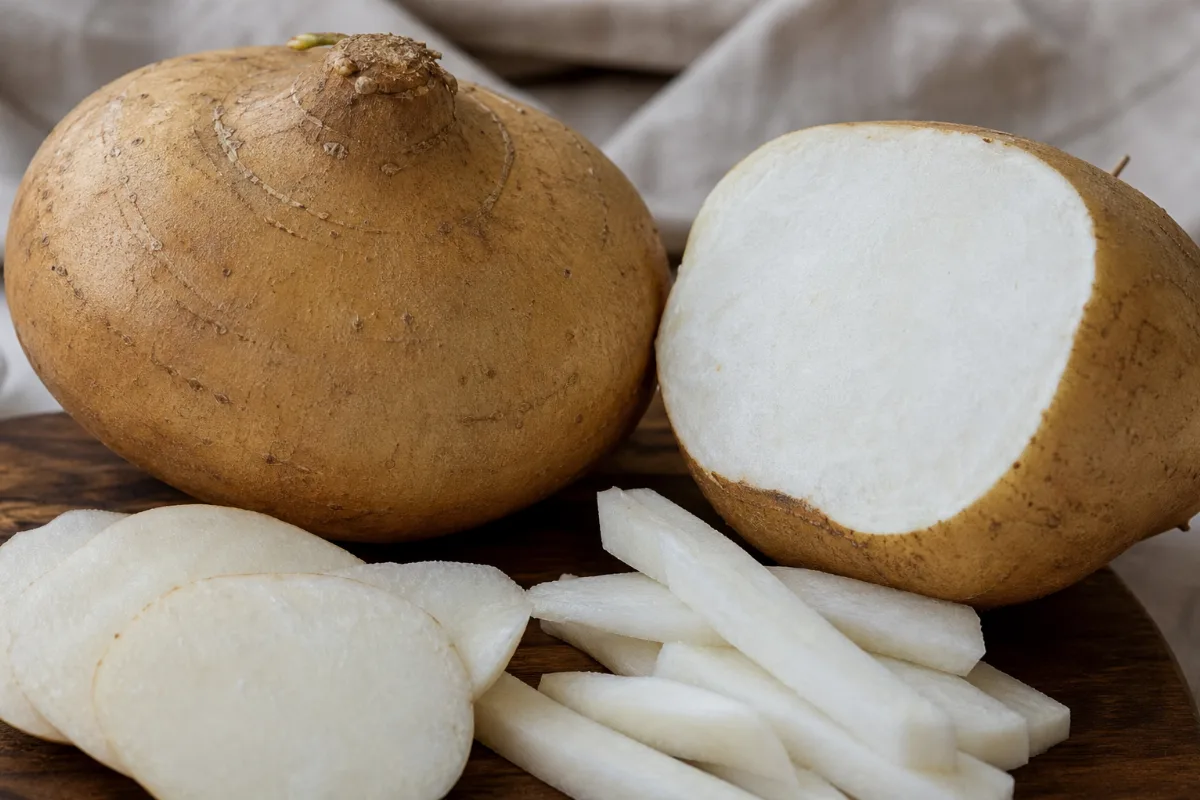
Vegetables · Vegetable
Jicama
Pachyrhizus erosus · also called Yam bean, Mexican turnip, jícama (Spanish)
Jicama is the crisp, lightly sweet root of a bean-family plant, usually peeled and eaten raw. A cup of slices has about 6 g of fiber and 24 mg of vitamin C (USDA). We found no human trial of eating jicama for any health outcome; the other findings come from the lab and from mice. Only the peeled root is food: the seeds contain rotenone, a natural poison that has caused deaths.
General information, not medical advice. Last substantive update · Not medically reviewed. A named clinician has not signed off on this page. How this page is made
About Jicama
Jicama is a crunchy, mild root that adds fiber and vitamin C to a meal. It is a food, not a proven remedy. The firmest facts are about nutrients. The one serious caution is that the plant's seeds, and by one report its pods and leaves, are poisonous: eat only the peeled root.
What it is
Jicama (Pachyrhizus erosus), also called yam bean or Mexican turnip, is a plant in the bean family. The part people eat is the large storage root, peeled and usually eaten raw.
USDA data for raw jicama: 38 kcal per 100 g. One cup of slices (120 g) has about 46 kcal, 5.9 g fiber, 0.9 g protein, 10.6 g carbohydrate, 2.2 g sugars, 24 mg vitamin C, 180 mg potassium, 14 mg calcium, 0.7 mg iron and 14 mg magnesium. It has almost no vitamin K (0.4 micrograms per cup). Cooked values were not read.
What the research shows
The firmest fact is vitamin C. Lack of vitamin C causes scurvy and jicama is a source, but no trial tested jicama for it.
Jicama contains inulin-type fibers. A lab analysis found the most inulin in young roots. A 2025 review of 20 trials found purified fibers of a similar kind modestly raised stool frequency, with low certainty. Jicama itself was not tested, and the abstract does not list which fibers the trials used.
A lab report gave jicama a low glycemic index. Extracts lowered blood sugar in diabetic mice. Mouse results often do not carry over to people. A mouse study of isolated jicama fiber and cell studies of peel extracts are also early work. A 2021 review says proper clinical studies are lacking.
Food versus extracts and isolated fiber
The bowel review used purified fiber supplements, the mouse studies used extracts or isolated fiber, and the cell studies used peel and flesh extracts. None of these is the same as eating the peeled root.
Amounts
This page gives no amounts to eat. Ask a doctor, pharmacist or dietitian what is right for you, especially if you have diabetes, a sensitive gut or a known allergy.
At a glance
Traditional uses history, not proof
- Eaten as a crisp root vegetable, peeled and raw in slices or sticks, or sometimes cooked
- Long use as food is not proof that it treats any condition
Studied for research
- Vitamin C for preventing scurvy, high certainty for the nutrient, no jicama trial
- Fiber and prebiotic inulin, insufficient evidence (composition and test-tube work)
- Bowel regularity, insufficient for jicama (low-certainty trials of purified fibers)
- Blood sugar and glycemic index, insufficient evidence (lab and mouse studies)
- Weight, inflammation and other claims, insufficient evidence (mouse and cell studies)
Main compounds
- Vitamin C
- Inulin and other fructooligosaccharides
- Isoflavones (mainly in the peel)
- Chlorogenic acid
- Potassium
- Rotenone (seeds only)
Common forms
- Peeled raw root as food
- Cooked or pre-cut root as food
- Extracts and isolated fiber (used in animal and lab studies, not the vegetable)
Research links: 2024 review: acute rotenone poisoning · 2025 review: oligosaccharide fibers and constipation · FDA: Selecting and serving produce safely · Research Library · Genes & Biomarkers Library
What it is and its history
- Accepted scientific name
- Pachyrhizus erosus
- Naming authority
- (L.) Urb. (GBIF accepted)
- Common names
- Jicama (English); Yam bean (English); Mexican turnip (English); Jícama (Spanish)
- Family or group
- Fabaceae (the legume or bean family), as given by GBIF and by the 2021 review.
- Classification
- Plantae > Tracheophyta > Magnoliopsida > Fabales > Fabaceae > Pachyrhizus > Pachyrhizus erosus
- Native range
- Not verified from a source read.
- Habitat
- Not verified from a source read.
- What it looks like
- Roots: The edible part is a large storage root. In one study two commercial varieties reached about 12 to 13 cm (the abstract does not say which dimension) after 106 or 127 days of growing. USDA household weights: 1 cup of slices = 120 g, 1 small root = 365 g, 1 medium = 659 g, 1 large = 1,200 g.; Stems: Not verified.; Leaves: Not verified. Described as toxic by the authors of a case report.; Flowers: Not verified.; Fruit: Seeds in pods; the seeds contain rotenone (case reports, laboratory study).
- Cultivation
- The 2021 review calls it an underutilized crop with nitrogen-fixing ability.
- Harvest and processing
- Peeled root eaten raw (existing nutrient summary), sometimes cooked or sold pre-cut. How cooking changes nutrients was not read.
- Look-alikes and adulterants
- Name: Yacon (Smallanthus sonchifolius); Note: A different root sometimes mentioned with jicama because it is also rich in fructooligosaccharides. It is a different plant; results for yacon syrup are not assumed to apply to jicama.; Name: Other yam bean species (Pachyrhizus); Note: USDA lists its entry as Pachyrhizus spp. Studies of 'yam bean' seeds may cover other Pachyrhizus species; the species is stated in each result where the abstract gives it.
- Sustainability and conservation
- Not assessed.
Photographs
Traditional use and history history, not clinical proof
| Tradition or era | Documented use | Source |
|---|---|---|
| p35052562 |
Traditional use shows how it was used. It does not show that it works or is safe today.
What is inside, and how it may work
What it contains and how those compounds act in cells and animals. Laboratory and animal mechanisms are not proven effects in people.
Main compounds
| Compound | Family | Where it is concentrated | Activity studied | Level of evidence |
|---|---|---|---|---|
| Vitamin C (ascorbic acid) PubChem 54670067 | vitamin | Root USDA: 20.2 mg per 100 g raw | Needed to prevent scurvy (NHS). 21 20 | Human data |
| Inulin and other fructooligosaccharides | fibre (fructan) | Root Inulin up to 13.4% in young Yellow Seed roots, under 6.0% later; nystose 15.8% to 18.5% at 106 days (laboratory analysis) | Fibers that people do not digest; isolated jicama inulin promoted growth of two probiotic bacteria in culture. 7 2 | Lab |
| Biochanin A PubChem 5280373 | isoflavone | Peel (mainly) 52.5 mg per 100 g dry weight in fresh peel | Cell studies only. 13 | Lab |
| Daidzein PubChem 5281708 | isoflavone | Peel (mainly) 23.0 mg per 100 g dry weight in fresh peel | Cell studies only. 13 | Lab |
| Genistein PubChem 5280961 | isoflavone | Peel (mainly) 2.6 mg per 100 g dry weight in fresh peel | Cell studies only. 13 | Lab |
| Chlorogenic acid PubChem 1794427 | phenolic acid | Peel (mainly) 61.7 mg per 100 g dry weight in fresh peel | Cell studies only. 13 | Lab |
| Rotenone PubChem 6758 | rotenoid (natural poison) | Seeds Seeds: below 0.58 to 3.53 mg per g across more than 100 samples; none detected in the fresh tuber analysed | Blocks mitochondrial complex I; poisoning can be fatal (scoping review). 16 17 10 9 13 | Human data |
Mechanisms, receptors and pathways
| Target or pathway | Gene or receptor | What was found | Level |
|---|---|---|---|
| Mitochondrial complex I (rotenone) | Complex I of the respiratory chain | Rotenone inhibits mitochondrial complex I, reducing ATP production and raising lactate and oxidative stress; this is how seed poisoning causes lactic acidosis. 16 17 | Human data |
| Starch-digesting enzymes | Alpha-glucosidase and alpha-amylase | A jicama extract blocked both enzymes in the test tube (IC50 0.083 and 0.091 mg/mL). Laboratory result only. 11 | Lab |
| Glucose handling in muscle and liver | Phosphorylated AMPK, AS160, GLUT4; glucose 6-phosphatase, PEPCK | In diabetic mice the extract raised muscle proteins linked to glucose uptake and lowered liver proteins linked to glucose production. 12 | Animal research |
| Growth of gut bacteria in culture | Not applicable | Isolated jicama inulin promoted growth of Enterococcus faecium and Lactiplantibacillus plantarum in culture. 2 | Lab |
Absorption, metabolism and elimination
- Absorption
- Not found for jicama nutrients.
- Distribution
- Not found.
- Metabolism
- Not found.
- Elimination
- Not found.
- Bioavailability
- Not established.
Isolated compounds versus whole extracts
The bowel-regularity review used purified fiber supplements, the mouse studies used extracts or isolated fiber, and the cell studies used extracts of peel and flesh. None of these is the same as eating the peeled root. The seed poison, rotenone, is not found in the root as far as one laboratory study shows.
Nutritional composition
Nutrition from USDA FoodData Central (Yambean (jicama), raw, FDC 170073, SR Legacy, last updated 4/1/2019, read 2026-10-26). Per 100 g of raw root: 38 kcal, 0.72 g protein, 0.09 g fat, 8.82 g carbohydrate, 4.9 g fiber, 1.8 g total sugars, 90.1 g water, 12 mg calcium, 0.6 mg iron, 12 mg magnesium, 150 mg potassium, 4 mg sodium, 20.2 mg vitamin C, 12 micrograms folate, 0.042 mg vitamin B6, 0.048 mg copper, 0.3 micrograms vitamin K. One cup of slices (120 g, USDA household portion; our arithmetic from the per-100 g values): about 46 kcal, 0.9 g protein, 10.6 g carbohydrate, 5.9 g fiber, 2.2 g sugars, 14 mg calcium, 0.7 mg iron, 14 mg magnesium, 180 mg potassium, 24 mg vitamin C, 14 micrograms folate and 0.4 micrograms vitamin K. Values vary with variety, ripeness and storage. Cooked values were not read.
1 high certainty7 not enough evidence
What was looked at
The 8 benefits and uses checked for Jicama, each with how strong the evidence is. Tap one to open it.
- Vitamin C from a root vegetable (preventing scurvy)High certainty
- Fiber and prebiotic fibers (inulin) for gut bacteriaNot enough evidence
- Bowel regularity (evidence is for purified fibers, not jicama)Not enough evidence
- Blood sugar and glycemic index (lab and mouse results only)Not enough evidence
- Body weight and fat mass (mouse study of isolated jicama fiber)Not enough evidence
- Antioxidant and anti-inflammatory compounds (cell studies, mostly peel)Not enough evidence
- Effects on cancer cells in the labNot enough evidence
- Other claims (immune, bone, antiviral, anti-ageing)Not enough evidence
Lab markers tracked in the studies
Stool frequencyFecal pHGlycemic index of jicama rootAfter-meal blood glucose in diabetic miceBlood glucose and glycosylated hemoglobin in diabetic miceBody weight and fat mass in mice on a high-sugar dietInflammation signals (TNF-alpha, IL-6, nitric oxide) in cellsViability of thyroid cancer and normal thyroid cells
What is Jicama good for?
The main studied uses and how strong the evidence is for each. Most results are for nutrients, purified fibers, extracts or animals, not for people eating jicama.
Benefits, one by one
Each card is a research question, not a promise. Tap a goal to filter. Open a card to see the studies, doses and limits.
Vitamin C from a root vegetable (preventing scurvy)
High certaintyJicama is a source of vitamin C: about 24 mg in a cup of slices (120 g), by USDA data. Too little vitamin C causes scurvy, and the body cannot store it. This is a nutrient fact, not a jicama trial.
2 studiesRaw peeled root as food. How cooking changes jicama's vitamin C was n…
Studies, doses and limits
What the trials found
USDA lists 20.2 mg of vitamin C per 100 g of raw jicama root. The NHS says vitamin C is found in a wide variety of fruit and vegetables, cannot be stored in the body, and that adults aged 19 to 64 need 40 mg a day.
Results
Jicama is a recognised vitamin C-containing food by USDA data. No trial of eating jicama for vitamin C status or scurvy was read. A cup of slices (24 mg) is about 60% of the NHS adult figure of 40 mg (our arithmetic).
Effect sizes as reported
USDA: 20.2 mg per 100 g raw root; about 24 mg per cup of slices (120 g).
Why this rating
High for the nutrient role and for jicama containing vitamin C (health-agency statement and USDA data). There is no jicama-specific trial, and the NHS says a normal diet should supply enough vitamin C.
Form and dose studied
Raw peeled root as food. How cooking changes jicama's vitamin C was not found in a source.
Who was studied
Everyone; vitamin C is needed every day.
Limits
Nutrient information, not a trial. Values vary with variety, ripeness and storage.
Why researchers looked
People ask whether jicama is a useful vitamin C food, because it is eaten raw.
Traditional use
Jicama is eaten as a crisp root, peeled and usually raw. Long use as food is not proof that it treats any condition.
Proposed mechanism Authoritative guidance
The NHS says vitamin C helps protect cells and keep them healthy, keeps skin, blood vessels, bones and cartilage healthy, and helps wounds heal. A lack of vitamin C can lead to scurvy.
A proposed mechanism does not show that the effect happens in people.
None specific for the peeled root. See the Safety tab for the poisonous seeds and other plant parts.
Fiber and prebiotic fibers (inulin) for gut bacteria
Not enough evidenceJicama has 4.9 g of fiber per 100 g (USDA) and contains inulin and other fructooligosaccharides, which are fibers gut bacteria can use. This is food chemistry and test-tube work. No human trial tested jicama on gut bacteria.
3 studiesRaw root as food (composition work) and inulin isolated from the root…
Studies, doses and limits
Results
The root contains prebiotic-type fibers, and young roots hold more inulin. No study read tested jicama's effect on gut bacteria or digestion in people.
Effect sizes as reported
Inulin up to 13.4% (Yellow Seed) in young roots and under 6.0% later; USDA fiber 4.9 g per 100 g (5.9 g per cup of slices).
Why this rating
Insufficient for any health effect of jicama itself: only composition and test-tube results were read. The fiber content is a plain nutrient fact (USDA).
Form and dose studied
Raw root as food (composition work) and inulin isolated from the root (test-tube work).
Limits
Composition varies with variety and maturity. Test-tube growth of bacteria does not show a benefit in the human gut. The abstract does not say what the percentages are a share of.
Why researchers looked
Jicama is often called a prebiotic food because it contains inulin.
Traditional use
Jicama is eaten as a crisp root, peeled and usually raw. Long use as food is not proof that it treats any condition.
Proposed mechanism Laboratory research
Inulin and similar fibers are not digested by people. In a laboratory culture, inulin isolated from jicama promoted the growth of two probiotic bacteria (Enterococcus faecium and Lactiplantibacillus plantarum).
A proposed mechanism does not show that the effect happens in people.
Fibers like this can cause gas or bloating in some people; see the Safety tab.
Bowel regularity (evidence is for purified fibers, not jicama)
Not enough evidenceA 2025 review of 20 trials found that purified non-digestible oligosaccharide fibers modestly raised stool frequency, more in constipated people. The certainty is low. Jicama itself was not tested.
2 studiesPurified oligosaccharide supplements in the trials; not jicama. Trial…
Studies, doses and limits
What the trials found
A 2025 systematic review and meta-analysis of 20 randomised trials (1,786 people) compared non-digestible oligosaccharide supplements with placebo. Stool frequency rose overall, more in constipated people (SMD 0.99, 95% CI 0.58 to 1.28) than in people without constipation (SMD 0.30, 0.10 to 0.51), and more in trials of 3 weeks or less (SMD 0.89, 0.40 to 1.38) than in longer trials (SMD 0.24, 0.09 to 0.38). Stool consistency overall did not change significantly. Fecal pH fell (SMD -1.02, -1.25 to -0.79).
Results
Modest gains in stool frequency for purified fibers; none shown for jicama. The reviewers rate the certainty as low.
Effect sizes as reported
Stool frequency SMD 0.99 (constipated) and 0.30 (not constipated); fecal pH SMD -1.02.
Why this rating
Low certainty for purified fibers (the reviewers' own rating) and insufficient for jicama, which was not tested. We do not know which fiber types were in the 20 trials; the abstract names seven types without listing them.
Form and dose studied
Purified oligosaccharide supplements in the trials; not jicama. Trial detail, not advice.
Who was studied
Constipated and non-constipated people in the trials.
Limits
Different product from a whole root. The jicama fiber type and amount per serving were not matched to the trials.
Why researchers looked
Jicama contains fibers of this general kind (short-chain carbohydrates that resist digestion), so people ask whether it helps constipation.
Traditional use
Jicama is eaten as a crisp root, peeled and usually raw. Long use as food is not proof that it treats any condition.
Proposed mechanism Human data
The review lists lower stool pH with these fibers. The abstract does not explain how they change stool frequency.
A proposed mechanism does not show that the effect happens in people.
See gas and bloating on the Safety tab.
Blood sugar and glycemic index (lab and mouse results only)
Not enough evidenceA laboratory study reported a low glycemic index for jicama roots (under 25%). In two mouse studies a jicama extract lowered blood sugar. No human trial of jicama and blood sugar was found.
3 studiesExtract (preparation not described in the abstracts) in animals; raw …
Studies, doses and limits
Results
In diabetic mice given the extract, blood glucose after a meal was 342.00, 367.00 and 329.67 mg/dL at 30, 60 and 120 minutes, against 383.75 and 402.50 mg/dL at 30 and 60 minutes and 349.67 mg/dL at 120 minutes in controls. In db/db mice, blood glucose and glycosylated hemoglobin were lower after 6 weeks of extract.
Effect sizes as reported
Mouse after-meal glucose lower with extract; enzyme IC50 0.083 mg/mL (alpha-glucosidase) and 0.091 mg/mL (alpha-amylase).
Why this rating
Insufficient: laboratory and mouse results with an extract, and no human study of jicama. Mouse results often do not carry over to people.
Form and dose studied
Extract (preparation not described in the abstracts) in animals; raw root for the glycemic index measure.
Who was studied
Mice. No human data.
Limits
Extract is not the food. Dose and preparation not stated. Mouse blood sugar after a single meal is not a treatment test.
Why researchers looked
Jicama is low in sugar and high in fiber, and extracts have been tested for blood sugar effects.
Traditional use
Jicama is eaten as a crisp root, peeled and usually raw. Long use as food is not proof that it treats any condition.
Proposed mechanism Lab and animal
In the test tube, a jicama extract blocked two starch-digesting enzymes (alpha-glucosidase and alpha-amylase). In diabetic mice it raised insulin sensitivity and changed muscle and liver proteins linked to glucose handling. This is lab and animal work only.
A proposed mechanism does not show that the effect happens in people.
These results are not a reason to change diabetes treatment. See the Safety tab.
Body weight and fat mass (mouse study of isolated jicama fiber)
Not enough evidenceIn mice fed a high-sugar diet, adding fiber isolated from jicama at 25% of the diet prevented excess weight gain and a rise in blood sugar. No human study was found.
1 studiesFiber isolated from jicama, 10% or 25% of mouse diet (animal detail, …
Studies, doses and limits
Results
In BALB/c mice fed a high-sugar diet for 8 weeks, 25% jicama fiber significantly prevented the rise in blood glucose, excess weight gain and poor glucose tolerance. At 10% and 25%, it blunted the gain in white fat mass but did not stop loss of brown fat mass. Food and water intake changed little.
Effect sizes as reported
Not given as numbers in the abstract.
Why this rating
Insufficient: one mouse study of a purified fiber at a high share of the diet. It says nothing yet about eating the vegetable.
Form and dose studied
Fiber isolated from jicama, 10% or 25% of mouse diet (animal detail, not advice).
Who was studied
Adult male mice. No human data.
Limits
Isolated fiber, not the root; very high share of diet; mice.
Why researchers looked
Fiber-rich roots are sometimes suggested for weight control, so researchers tested the root's fiber in mice.
Traditional use
Jicama is eaten as a crisp root, peeled and usually raw. Long use as food is not proof that it treats any condition.
Proposed mechanism Animal research
Not established. The authors suggest jicama fiber helps keep blood glucose steady; the abstract does not show how.
A proposed mechanism does not show that the effect happens in people.
None found.
Antioxidant and anti-inflammatory compounds (cell studies, mostly peel)
Not enough evidenceJicama contains isoflavones and phenolic acids, mostly in the peel, which is not eaten. In dishes of cells, extracts lowered inflammation signals. No human study was found.
1 studiesExtracts of flesh and peel in cell tests.
Studies, doses and limits
Results
Peel held the most isoflavones (mg per 100 g dry weight: biochanin A 52.5, daidzein 23.0, genistein 2.6) and phenolic acids (chlorogenic acid 61.7, isochlorogenic acids 95.8). Flesh extracts were slightly stronger at lowering inflammation signals than peel extracts. Freezing for 3 and 4 months lowered antioxidant activity but not anti-inflammatory effect. No rotenone was detected in the tuber analysed.
Effect sizes as reported
Peel biochanin A 52.5, daidzein 23.0, genistein 2.6 mg per 100 g dry weight.
Why this rating
Insufficient: cells only. A cell result does not show a benefit in people.
Form and dose studied
Extracts of flesh and peel in cell tests.
Who was studied
Cells in a dish.
Limits
Peel is not usually eaten; extract strengths used are not what a person eats.
Why researchers looked
Plant compounds in a food can show antioxidant effects in the lab, so researchers measure them.
Traditional use
Jicama is eaten as a crisp root, peeled and usually raw. Long use as food is not proof that it treats any condition.
Proposed mechanism Laboratory research
Cell studies. Extracts lowered TNF-alpha, IL-6 and nitric oxide in mouse macrophage cells.
A proposed mechanism does not show that the effect happens in people.
Peel extracts also harmed normal thyroid cells in the same study.
Effects on cancer cells in the lab
Not enough evidenceJicama peel extract reduced the survival of thyroid cancer cells in a dish, but it also harmed normal thyroid cells. This is not evidence that eating jicama affects cancer.
1 studiesPeel and flesh extracts in cell tests.
Studies, doses and limits
Results
Peel extracts reduced the viability of three thyroid cancer cell lines (FTC133, 8505C, TPC1) in a dose-dependent way, most strongly in FTC133. They also reduced viability of normal thyroid cells, which the authors call a potential risk. Flesh extracts were weaker.
Effect sizes as reported
Not given as numbers in the abstract.
Why this rating
Insufficient: cell lines only; extracts of the peel, which is not eaten.
Form and dose studied
Peel and flesh extracts in cell tests.
Who was studied
Human cell lines.
Limits
No animal or human data in this study. Not a test of eating the root.
Why researchers looked
Plant compounds are screened against cancer cell lines in early research.
Traditional use
Jicama is eaten as a crisp root, peeled and usually raw. Long use as food is not proof that it treats any condition.
Proposed mechanism Laboratory research
Not established; cell viability tests only.
A proposed mechanism does not show that the effect happens in people.
Do not read this as a treatment or a cancer-prevention claim.
Other claims (immune, bone, antiviral, anti-ageing)
Not enough evidenceA 2021 review lists many reported activities of the jicama plant, but says proper clinical studies are still lacking. We read no study that tested these in people eating jicama.
1 studiesMixed plant parts and extracts.
Studies, doses and limits
What the trials found
The review says some human studies exist but that well-defined clinical studies are lacking; we did not read them.
Results
The review reports antioxidant, immune-modulating, anticancer, anti-diabetes, anti-osteoporosis, antiviral and anti-ageing activities and more than 50 compounds, but says clinical evidence is lacking.
Why this rating
Insufficient: narrative review of mostly non-human work; underlying studies not read.
Form and dose studied
Mixed plant parts and extracts.
Limits
Review mixes seeds, leaves and root; some plant parts are poisonous.
Why researchers looked
Jicama is promoted as an under-used crop with possible uses.
Traditional use
Jicama is eaten as a crisp root, peeled and usually raw. Long use as food is not proof that it treats any condition.
Proposed mechanism Narrative review
Not established. The review compiles lab, animal and some human work on different plant parts and extracts.
A proposed mechanism does not show that the effect happens in people.
Some plant parts reviewed are toxic. See the Safety tab.
Connections to the rest of health
How Jicama connects to the rest of our health knowledge graph. Every link says what kind of connection it is. A safety link (for example to the liver) is a warning, not a benefit. A study that merely mentions a topic never creates a benefit link.
Explore every connection: goals, body systems, organs, symptoms, genes
A. Wellness goals
| Connected to | Kind of connection | Evidence status | Context | Studies |
|---|---|---|---|---|
| Digestive Support | Not enough evidence | Fiber and prebiotic fibers (inulin) for gut bacteria: Jicama has 4.9 g of fiber per 100 g (USDA) and contains inulin and other fructooligosaccharides, which are fibers gut bacteria can use. This is food chemistry and test-tube work. No human trial tested jicama on gut bacteria. | 21 7 2 | |
| Digestive Support | Not enough evidence | Bowel regularity (evidence is for purified fibers, not jicama): A 2025 review of 20 trials found that purified non-digestible oligosaccharide fibers modestly raised stool frequency, more in constipated people. The certainty is low. Jicama itself was not tested. | 4 7 | |
| Blood Sugar Balance | Not enough evidence | Blood sugar and glycemic index (lab and mouse results only): A laboratory study reported a low glycemic index for jicama roots (under 25%). In two mouse studies a jicama extract lowered blood sugar. No human trial of jicama and blood sugar was found. | 7 11 12 | |
| Weight Management | Not enough evidence | Body weight and fat mass (mouse study of isolated jicama fiber): In mice fed a high-sugar diet, adding fiber isolated from jicama at 25% of the diet prevented excess weight gain and a rise in blood sugar. No human study was found. | 15 | |
| Inflammation Balance | Not enough evidence | Antioxidant and anti-inflammatory compounds (cell studies, mostly peel): Jicama contains isoflavones and phenolic acids, mostly in the peel, which is not eaten. In dishes of cells, extracts lowered inflammation signals. No human study was found. | 13 |
B. Body systems
| Connected to | Kind of connection | Evidence status | Context | Studies |
|---|---|---|---|---|
| Immune System | Biological association | High certainty | Studied for: Vitamin C from a root vegetable (preventing scurvy) Studied for: Antioxidant and anti-inflammatory compounds (cell studies, mostly peel) | 21 20 13 8 |
| Blood And Immune | Biological association | High certainty | Studied for: Vitamin C from a root vegetable (preventing scurvy) | 21 20 |
| Digestive System | Biological association | Not enough evidence | Studied for: Fiber and prebiotic fibers (inulin) for gut bacteria Studied for: Bowel regularity (evidence is for purified fibers, not jicama) | 21 7 2 4 |
| Gut Health | Biological association | Not enough evidence | Studied for: Fiber and prebiotic fibers (inulin) for gut bacteria Studied for: Bowel regularity (evidence is for purified fibers, not jicama) | 21 7 2 4 |
| Blood Sugar Support | Biological association | Not enough evidence | Studied for: Blood sugar and glycemic index (lab and mouse results only) | 7 11 12 |
| Metabolism Weight | Biological association | Not enough evidence | Studied for: Blood sugar and glycemic index (lab and mouse results only) Studied for: Body weight and fat mass (mouse study of isolated jicama fiber) | 7 11 12 15 |
| Cellular | Biological association | Not enough evidence | Studied for: Antioxidant and anti-inflammatory compounds (cell studies, mostly peel) Studied for: Effects on cancer cells in the lab | 13 |
| Endocrine System | Biological association | Not enough evidence | Studied for: Effects on cancer cells in the lab | 13 |
| Whole Body | Biological association | Not enough evidence | Studied for: Other claims (immune, bone, antiviral, anti-ageing) | 8 |
C. Body parts and organs
E. Health conditions
| Connected to | Kind of connection | Evidence status | Context | Studies |
|---|---|---|---|---|
| Rotenone poisoning | Adverse effect or risk | Documented risk | Seeds contain rotenone; poisonings and deaths are reported. Eat only the peeled root. The seeds contain rotenone and have caused poisonings and deaths. Eat only the peeled root. Preparation or compound: Jicama (yam bean) seeds, not the root |
17 10 16 |
| Oral allergy syndrome | Adverse effect or risk | Case reports | Itching of the mouth and throat after eating jicama in a case series of 10 people. Preparation or compound: Raw jicama root |
1 |
| Scurvy | Biological association | Deficiency link | Jicama is a vitamin C food; scurvy comes from too little vitamin C. Preparation or compound: Raw peeled jicama root as a vitamin C food |
20 21 |
I. Biomarkers
| Connected to | Kind of connection | Evidence status | Context | Studies |
|---|---|---|---|---|
| Stool frequency | Biological association | Not enough evidence | Measured in trials: raised. A lab change is not the same as a health benefit. | 4 |
| Fecal pH | Biological association | Not enough evidence | Measured in trials: lowered. A lab change is not the same as a health benefit. | 4 |
| Glycemic index of jicama root | Biological association | Not enough evidence | Measured in trials: low. A lab change is not the same as a health benefit. | 7 |
| After-meal blood glucose in diabetic mice | Biological association | Not enough evidence | Measured in trials: lowered. A lab change is not the same as a health benefit. | 11 |
| Blood glucose and glycosylated hemoglobin in diabetic mice | Biological association | Not enough evidence | Measured in trials: lowered. A lab change is not the same as a health benefit. | 12 |
| Body weight and fat mass in mice on a high-sugar diet | Biological association | Not enough evidence | Measured in trials: lowered. A lab change is not the same as a health benefit. | 15 |
| Inflammation signals (TNF-alpha, IL-6, nitric oxide) in cells | Biological association | Not enough evidence | Measured in trials: lowered. A lab change is not the same as a health benefit. | 13 |
| Viability of thyroid cancer and normal thyroid cells | Biological association | Not enough evidence | Measured in trials: lowered. A lab change is not the same as a health benefit. | 13 |
K. Biological pathways
| Connected to | Kind of connection | Evidence status | Context | Studies |
|---|---|---|---|---|
| Vitamin C | Preliminary mechanism | Human | Jicama is a vitamin C food; lack of vitamin C causes scurvy. | 21 20 |
| Dietary fiber (inulin-type) | Preliminary mechanism | Lab | Jicama contains inulin and other fructooligosaccharides. | 21 7 |
| Rotenone | Preliminary mechanism | Human | Present in the seeds; inhibits mitochondrial complex I. | 16 |
L. Active compounds
| Connected to | Kind of connection | Evidence status | Context | Studies |
|---|---|---|---|---|
| Vitamin C (ascorbic acid) | Biological association | Human | Needed to prevent scurvy (NHS). Preparation or compound: Root |
21 20 |
| Inulin and other fructooligosaccharides | Biological association | Lab | Fibers that people do not digest; isolated jicama inulin promoted growth of two probiotic bacteria in culture. Preparation or compound: Root |
7 2 |
| Biochanin A | Biological association | Lab | Cell studies only. Preparation or compound: Peel (mainly) |
13 |
| Daidzein | Biological association | Lab | Cell studies only. Preparation or compound: Peel (mainly) |
13 |
| Genistein | Biological association | Lab | Cell studies only. Preparation or compound: Peel (mainly) |
13 |
| Chlorogenic acid | Biological association | Lab | Cell studies only. Preparation or compound: Peel (mainly) |
13 |
| Rotenone | Biological association | Human | Blocks mitochondrial complex I; poisoning can be fatal (scoping review). Preparation or compound: Seeds |
16 17 10 9 13 |
Each connection is stored with the ingredient, the connected record, the kind of connection, the evidence status, the supporting studies, the preparation or compound involved, and a review date (last reviewed October 26, 2026).
Evidence at a glance: what changed in 7 lab markers
Tap a number to show only those markers. Counts are markers, not people.
The evidence
The research centre for Jicama. Every record here was checked against PubMed or the publisher's page; we never list a study we have not verified.
Evidence by outcome
Bars show how many studies we found for each outcome, not how well it works. People are added up across trials only (reviews are not added, to avoid double counting).
How we rate evidence
High certainty
Several well-run trials or reviews agree; further research is unlikely to change the picture much.
Moderate certainty
Good trials point the same way, but some doubt remains.
Low certainty
Small, short or inconsistent trials. The finding could change with better research.
Very low certainty
Very little or very weak human data. Treat as a possibility only.
Mixed findings
Trials or reviews disagree with each other.
Not enough evidence
Not enough human research to say either way.
Evidence against
Good research found no benefit, or found harm.
We take the reviewers' own risk-of-bias and GRADE statements where they exist, and otherwise judge from study size, design, consistency, directness and whether a product matches what is sold. Many publications do not make evidence high. Method note: We started from our existing jicama summary, re-checked nutrition at USDA FoodData Central, read the NHS and FDA pages, and searched PubMed for reviews, trials, case reports and laboratory studies. Only abstracts were read for studies, and one allergy report had no abstract. Items we could not verify are flagged in the research gaps.
Study library: every study we checked 21
| Study | Design | People | Product, dose, length | Result |
|---|---|---|---|---|
| Bedolla-Barajas 2022 Oral Allergy Syndrome Associated with Jicama. Med J Islam Repub Iran · PMID 35999918 · DOI |
Case series |
10 10 people (6 women) with oral allergy symptoms after eating jicama; mean age 28.3 years; all had allergic rhinitis, 3 also had asthma |
Fresh jicama (eaten; skin prick test with fresh jicama) Root |
Symptoms began about 5 minutes after eating jicama, mainly itching of the throat, palate and lips; 4 of 10 also had skin symptoms. The prick-prick skin test with fresh jicama gave a mean wheal of 8.1 +/- 5.4 mm. The authors say jicama should be considered a cause of oral allergy syndrome, especially where it is eaten in large amounts. 10 cases; onset about 5 minutes; skin test wheal 8.1 mm (Not applicable) Methods, limits and fundingOutcomes: Oral allergy syndrome symptoms and skin prick test Limitations: Case series from Mexico with no comparison group; it shows it can happen, not how often. Funding and conflicts: Not stated in the abstract. Read: abstract |
| Bhanja 2023 Characterization and identification of inulin from Pachyrhizus erosus and evaluation of its antioxidant and in-vitro prebiotic efficacy. J Food Sci Technol · PMID 36618034 · DOI |
Laboratory study lab |
Inulin isolated from jicama and tested in laboratory cultures | Inulin extracted from jicama by microwave heating Root |
The isolated material was confirmed as inulin by chemical tests. In culture it promoted the growth of two probiotic bacteria, Enterococcus faecium and Lactiplantibacillus plantarum, and showed antioxidant activity in test-tube assays. The authors say it has good prebiotic potential and propose it could be used as a prebiotic in future. Growth of two probiotic bacterial strains in culture; DPPH inhibition 75.74% +/- 4.5% (Not applicable) Methods, limits and fundingOutcomes: Chemical identity, antioxidant tests and growth of probiotic bacteria in culture Limitations: Purified inulin in a test tube, not eating jicama and not in people. Funding and conflicts: Authors declare no competing interests. Read: abstract |
| Catteau 2013 Degradation of rotenone in yam bean seeds ( Pachyrhizus sp.) through food processing. J Agric Food Chem · PMID 24175585 · DOI |
Laboratory study lab |
Yam bean (Pachyrhizus) seeds treated by food processing methods | Yam bean seeds (drying, roasting, boiling, frying, alcohol extraction, traditional recipes) Seeds · vs Untreated seeds |
Processing removed up to 80% of the rotenone. Drying, roasting and alcohol maceration of the flour worked best. The abstract notes that rotenone is toxic to mammals and that chronic exposure produced Parkinson-like symptoms in rats. Up to 80% less rotenone after processing (Not applicable) Methods, limits and fundingOutcomes: Rotenone content after processing Limitations: Laboratory study of seeds. Up to 80% removal means some rotenone is left; the study does not show seeds are safe to eat. Funding and conflicts: Not stated in the abstract. Read: abstract |
| Chen 2025 Non-Digestible Oligosaccharides and Constipation: A Systematic Review and Meta-Analysis of Randomized Trials on Stool Frequency, Stool Consistency, and Fermentation Biomarkers. Nutrients · PMID 41156499 · DOI |
Systematic review meta analysis |
1786 1,786 participants in 20 randomised trials of non-digestible oligosaccharides versus placebo (adults and others; the abstract does not give ages) |
Non-digestible oligosaccharide supplements (seven types; the abstract does not list them) Purified fibre supplements, not jicama Trial detail, not advice Shorter (3 weeks or less) and longer trials compared · vs Placebo |
Supplements significantly increased stool frequency overall, with larger effects in constipated people than in people without constipation. Stool consistency overall did not change significantly. Fecal pH fell. Data on short-chain fatty acids were inconclusive. The authors rate the certainty of evidence as low. Stool frequency, constipated: SMD 0.99; not constipated: SMD 0.30. Trials of 3 weeks or less: SMD 0.89; longer trials: SMD 0.24. Fecal pH: SMD -1.02. (Constipated 0.58 to 1.28; not constipated 0.10 to 0.51; 3 weeks or less 0.40 to 1.38; longer 0.09 to 0.38; fecal pH -1.25 to -0.79) Methods, limits and fundingOutcomes: Stool frequency, stool consistency, fecal pH, short-chain fatty acids Limitations: Not a test of jicama or of any food. Heterogeneity and study limitations are noted by the authors; certainty is low. Funding and conflicts: Authors declare no conflict of interest. Read: abstract |
| Escartin 1989 Survival and Growth of Salmonella and Shigella on Sliced Fresh Fruit. J Food Prot · PMID 31003391 · DOI |
Laboratory study lab |
Five strains of Shigella and Salmonella placed on sliced jicama, papaya and watermelon in the laboratory | Sliced fresh jicama contaminated with bacteria on purpose Root Up to 6 hours at 25 to 27 C |
The bacteria survived on the sliced fruit and in most cases increased in number when stored at room temperature for up to 6 hours. Lemon juice on the surface of jicama and papaya reduced Salmonella typhi somewhat, but growth resumed after several hours. The authors give practical advice to limit contamination when preparing and selling cut fruit. Survival and growth at 25-27 C for up to 6 hours (Not applicable) Methods, limits and fundingOutcomes: Survival and growth of bacteria Limitations: 1989 laboratory study with bacteria added on purpose; it shows cut jicama can support germs, not how often it happens. Funding and conflicts: Not stated in the abstract. Read: abstract |
| Fine 1991 Hypersensitivity reaction to jicama (Pachyrhizus, yam bean). Ann Allergy · PMID 1994788 |
Case report |
Case report (number of patients not available from the record) | Jicama (yam bean) Root |
Only the title and publication type were read (the PubMed record has no abstract). The title reports a hypersensitivity reaction to jicama. Not available (Not available) Methods, limits and fundingOutcomes: Allergic (hypersensitivity) reaction Limitations: No abstract to read. Case report: shows it can happen, not how often. Funding and conflicts: Not stated. Read: title-only |
| González-Vázquez 2022 Polysaccharides of nutritional interest in jicama (Pachyrhizus erosus) during root development. Food Sci Nutr · PMID 35432974 · DOI |
Laboratory composition analysis lab |
Two commercial jicama root varieties (Yellow Seed and Purple Seed) grown to four stages of maturity | Raw jicama root, laboratory analysis Root Roots grown 106 or 127 days |
Inulin was found by analysis. It was highest in young roots (Yellow Seed 13.4% +/- 0.7%, Purple Seed 8.4% +/- 0.2%) and fell below 6.0% as roots matured. Another fructooligosaccharide, nystose, reached 15.8% (Yellow Seed) and 18.5% (Purple Seed) at 106 days. The authors report a low glycemic index (under 25%). Inulin up to 13.4% (Yellow Seed) in young roots, under 6.0% later; glycemic index under 25% (Not applicable) Methods, limits and fundingOutcomes: Starch, fructooligosaccharides (including inulin), pectin (as galacturonic acid) and glycemic index Limitations: Food chemistry in a laboratory, not a human test. The abstract does not state what the percentages are a share of or how the glycemic index was measured. Funding and conflicts: No conflict of interest declared. Read: abstract |
| Jaiswal 2021 The Bioactivity and Phytochemicals of Pachyrhizus erosus (L.) Urb.: A Multifunctional Underutilized Crop Plant. Antioxidants (Basel) · PMID 35052562 · DOI |
Narrative review mixed |
Review of laboratory, animal and some human studies of the jicama plant (Pachyrhizus erosus) | Pachyrhizus erosus plant parts and extracts Whole plant |
The review lists more than 50 compounds from the plant and reports antioxidant, immune-modulating, anticancer, anti-diabetes, anti-osteoporosis, antiviral and anti-ageing effects from in vivo, in vitro, ex vivo and human studies. The authors say well-defined clinical studies are still lacking for establishing any biological property. More than 50 phytochemicals reported; clinical studies lacking (Not applicable) Methods, limits and fundingOutcomes: Compiled biological activities and phytochemicals Limitations: Narrative review; the individual studies were not read for this page. It mixes plant parts and extracts. Funding and conflicts: Authors declare no conflict of interest. Read: abstract |
| Lautié 2013 Fast method for the simultaneous quantification of toxic polyphenols applied to the selection of genotypes of yam bean (Pachyrhizus sp.) seeds. Talanta · PMID 24209316 · DOI |
Laboratory study lab |
More than 100 yam bean seed samples from different accessions, locations and harvest dates | Yam bean seeds Seeds |
Rotenone ranged from below 0.58 mg/g to 3.53 mg/g of seeds, and pachyrrhizine from below 0.25 mg/g to 3.29 mg/g. The authors screened for low-toxin genotypes. Rotenone below 0.58 to 3.53 mg/g seed (Not applicable) Methods, limits and fundingOutcomes: Rotenone and pachyrrhizine content Limitations: Laboratory measurement in seeds; not a human study. Funding and conflicts: Not stated in the abstract. Read: abstract |
| Narongchai 2005 The first fatal case of yam bean and rotenone toxicity in Thailand. J Med Assoc Thai · PMID 16241030 |
Case report |
1 A 59-year-old man found dead after eating yam bean |
Yam bean seeds Seeds 'A lot' of seeds (case detail, not advice) Single ingestion |
He died within 2 hours with respiratory failure. Rotenone was found in the seeds, in stomach contents and in blood (72 ng/mL). The authors say many people know that mature pods, seeds and foliage of the yam bean, except the tuberous root, are very toxic. Death within 2 hours; blood rotenone 72 ng/mL (Not applicable) Methods, limits and fundingOutcomes: Cause of death, rotenone detection Limitations: One case. The statement about pods and foliage is the authors' own, not a regulator's. Funding and conflicts: Not stated in the abstract. Read: abstract |
| Park 2015 Hypoglycemic Effect of Jicama (Pachyrhizus erosus) Extract on Streptozotocin-Induced Diabetic Mice. Prev Nutr Food Sci · PMID 26175995 · DOI |
Animal research animal |
Streptozotocin-induced diabetic mice and normal mice | Jicama extract (preparation not described in the abstract) Single meal tests · vs Control mice |
The extract blocked two starch-digesting enzymes in the test tube (IC50 0.083 +/- 0.004 mg/mL for alpha-glucosidase and 0.091 +/- 0.017 mg/mL for alpha-amylase). In diabetic mice, blood glucose after a meal was lower with the extract (342.00, 367.00 and 329.67 mg/dL at 30, 60 and 120 minutes) than in control mice (383.75 and 402.50 mg/dL at 30 and 60 minutes, 349.67 mg/dL at 120 minutes). The area under the curve was lower in diabetic mice given the extract (P<0.05). Diabetic mice, 30/60/120 min: 342.00, 367.00, 329.67 mg/dL with extract versus 383.75, 402.50, 349.67 mg/dL control (Not given) Methods, limits and fundingOutcomes: Alpha-glucosidase and alpha-amylase inhibition in the lab; blood glucose after a meal in mice Limitations: Mice and an extract, not people eating jicama. Dose and extract method not stated in the abstract. Funding and conflicts: Not stated in the abstract. Read: abstract |
| Park 2016 Jicama (Pachyrhizus erosus) extract increases insulin sensitivity and regulates hepatic glucose in C57BL/Ksj-db/db mice. J Clin Biochem Nutr · PMID 26798198 · DOI |
Animal research animal |
Male C57BL/Ksj-db/db mice (a type 2 diabetes model) | Jicama extract in the diet (preparation not described in the abstract) 6 weeks · vs Regular diet controls and a rosiglitazone group |
After 6 weeks, blood glucose and glycosylated hemoglobin were significantly lower in mice given the extract than in controls. Glucose and insulin tolerance tests showed higher insulin sensitivity, and the insulin resistance index was lower. Muscle and liver proteins linked to glucose handling changed. Lower glucose, glycosylated hemoglobin and insulin resistance index than control mice (numbers not given in the abstract) (Not given) Methods, limits and fundingOutcomes: Blood glucose, glycosylated hemoglobin, insulin sensitivity, liver and muscle gene expression Limitations: Mice and an extract, not people eating jicama. Dose and extract method not stated in the abstract. Funding and conflicts: Not stated in the abstract. Read: abstract |
| Paśko 2025 Impact of Storage on Bioactive and Toxic Compounds in Jicama (Pachyrhizus erosus) Tubers: Effects on Thyroid Cancer and Inflammatory Responses. Plant Foods Hum Nutr · PMID 40512265 · DOI |
Laboratory study lab |
Fresh and frozen jicama tuber (flesh and peel) extracts tested on human thyroid cancer cell lines, normal thyroid cells and mouse macrophage cells | Jicama flesh and peel extracts Flesh and peel of the tuber Freezing for 3 and 4 months compared with fresh · vs Normal thyroid cells and untreated cells |
The peel had the most isoflavones (mg per 100 g dry weight: biochanin A 52.5, daidzein 23.0, genistein 2.6) and phenolic acids (chlorogenic acid 61.7, isochlorogenic acids 95.8); these fell after freezing. No rotenone was detected. Peel extracts reduced the viability of thyroid cancer cells in a dose-dependent way but also harmed normal thyroid cells. Flesh extracts were weaker against cells but slightly stronger at lowering inflammation signals. Both extracts lowered TNF-alpha, IL-6 and nitric oxide in mouse macrophage cells. Freezing lowered antioxidant activity but not anti-inflammatory effect. Peel biochanin A 52.5, daidzein 23.0, genistein 2.6 mg/100 g dry weight; no rotenone detected (Not given) Methods, limits and fundingOutcomes: Isoflavones, phenolic acids, rotenone, antioxidant activity, cell viability, TNF-alpha, IL-6 and nitric oxide Limitations: Cells in a dish. The peel is not usually eaten. No human data. Funding and conflicts: One author is the journal's editor-in-chief and the group has worked with him for 30 years (declared). Read: abstract |
| Pereira 2025 Impacts of Yacon Syrup (Smallanthus sonchifolius) on Human Health: A Systematic Review of Scientific Evidence from the Last Decade. Nutrients · PMID 40077758 · DOI |
Systematic review |
161 161 participants in 7 clinical trials of yacon syrup (healthy, overweight or obese people) |
Yacon syrup (Smallanthus sonchifolius), a different plant from jicama Syrup rich in fructooligosaccharides Trial detail, not advice Varied · vs Control |
Yacon syrup lowered fasting insulin, HOMA-IR and LDL cholesterol and improved satiety and intestinal transit time in the reviewed trials. Acute results on blood sugar were inconsistent. Mild stomach and gut discomfort was reported and decreased with continued use. This is a different plant, used here only as an example of a fructooligosaccharide-rich root. Mild gastrointestinal discomfort reported, decreasing with continued use (Not given) Methods, limits and fundingOutcomes: Insulin, LDL cholesterol, satiety, transit time, gut comfort Limitations: Yacon is not jicama; results are not assumed to apply. Seven small trials. Funding and conflicts: Authors declare no conflicts of interest. Read: abstract |
| Santoso 2019 Jicama (Pachyrhizus erosus) fiber prevents excessive blood glucose and body weight increase without affecting food intake in mice fed with high-sugar diet. J Adv Vet Anim Res · PMID 31453195 · DOI |
Animal research animal |
Adult male BALB/c mice fed a high-sugar diet | Jicama fibre isolated from the root and added to the diet (10% and 25%) Root, isolated fibre 10% or 25% of the diet (animal detail, not advice) 8 weeks · vs Normal diet and high-sugar diet without jicama fibre |
In mice fed a high-sugar diet, 25% jicama fibre significantly prevented the rise in blood glucose, excess weight gain and poor glucose tolerance. Both 10% and 25% fibre blunted the gain in white fat mass but did not prevent loss of brown fat mass. Food and water intake were little changed. 25% jicama fibre prevented the rise in blood glucose and weight gain (numbers not given in the abstract) (Not given) Methods, limits and fundingOutcomes: Blood glucose, glucose tolerance, body weight, fat tissue mass, food and water intake Limitations: Mice and a purified fibre at a high share of the diet, not people eating jicama. Funding and conflicts: Authors declare no conflict of interest. Read: abstract |
| Tat 2024 Acute rotenone poisoning: A scoping review. Heliyon · PMID 38633629 · DOI |
Scoping review |
18 11 published case reports describing 18 people with acute rotenone poisoning (15 hospitalised, 5 died) |
Rotenone-containing plants (including some used as food) and pesticides Various |
Most cases happened when people unknowingly ate rotenone-containing plants. Vomiting and metabolic acidosis were most common. Some people had impaired heart and lung function. Treatment was supportive (stomach emptying or charcoal, blood pressure support, breathing machines, sodium bicarbonate); there is no antidote. The authors say poisoning is rare but can be fatal and may be under-reported. 18 victims, 15 hospitalised, 5 deaths (Not applicable) Methods, limits and fundingOutcomes: Exposure scenarios, clinical features, treatments, outcomes Limitations: Case reports only; not specific to jicama. The abstract does not name which plants. Funding and conflicts: Authors declare no competing interests. Read: abstract |
| Yu 2020 Oxidative storm in a patient with acute rotenone-containing plant poisoning. Am J Emerg Med · PMID 31956048 · DOI |
Case report |
1 A 64-year-old woman |
Cooked yam bean (Pachyrhizus erosus) seeds, 80 seeds eaten Seeds 80 seeds (case detail, not advice) Single ingestion |
She arrived in a coma, with seizure and lactic acidosis. Rotenone was measured at 31,590 ng/mL in the cooked seed sample and 100 ng/mL in her blood. Doctors gave N-acetylcysteine to try to lessen oxidative stress. Rotenone 31,590 ng/mL in cooked seed; 100 ng/mL in blood (Not applicable) Methods, limits and fundingOutcomes: Clinical course, rotenone levels Limitations: One case. The abstract does not state the outcome. It shows cooked seeds still held rotenone. Funding and conflicts: Authors report no conflicts of interest. Read: abstract |
| s-fda-produce FDA: Selecting and Serving Produce Safely · Source |
Health agency n/a |
Methods, limits and fundingRead: full-text | ||
| s-gbif-pachyrhizus-erosus GBIF Backbone: Pachyrhizus erosus (L.) Urb. (usageKey 2974683) · Source |
Reference database n/a |
Methods, limits and fundingRead: full-text | ||
| s-nhs-vitc NHS: Vitamin C · Source |
Health agency n/a |
Methods, limits and fundingRead: full-text | ||
| s-usda-fdc-170073 USDA FoodData Central: Yambean (jicama), raw (FDC 170073) · Source |
Reference database n/a |
Methods, limits and fundingRead: full-text |
What we do not know yet
- No trial of eating jicama in people was found for gut bacteria, bowel regularity, blood sugar, weight or any other outcome.
- The bowel review tested purified fibers, and its abstract does not list which types.
- No official food-safety agency statement on the toxic parts of the plant was found; the warning rests on case reports and one team's statement about pods and foliage.
- How common jicama allergy is was not found, and the 1991 case report had no abstract.
- Pregnancy, breastfeeding, choking risk in young children, pesticide residues, heavy metals, oxalate and FODMAP content of jicama were not researched. How cooking changes nutrients was not read.
How new research is added
New studies are found by a saved PubMed search and placed in a review queue before the page changes.
Lab markers
What changed in blood or saliva tests during trials. A changed number is not the same as feeling or being healthier, and we give no "normal ranges".
Other 8
Stool frequency
Raised in trials
How often a person has a bowel movement.
Not enough evidenceResults and what it means
Why it was measured
Constipation trials count how often people go.
Statistical vs. clinical meaning
Modest effect for purified fibers with low certainty. Not a result for jicama.
Safety implication
None stated in the abstract.
| Study | Result | People | Product |
|---|---|---|---|
| 4 | Non-digestible oligosaccharide supplements raised stool frequency: constipated people SMD 0.99 (95% CI 0.58 to 1.28), not constipated SMD 0.30 (0.10 to 0.51) | 1,786 people in 20 randomised trials | Purified oligosaccharide supplements versus placebo (not jicama) |
Fecal pH
Lowered in trials
How acid the stool is. It falls when gut bacteria ferment fibers.
Not enough evidenceResults and what it means
Why it was measured
A fall in stool pH is one sign that fibers are being fermented in the gut.
Statistical vs. clinical meaning
A lab marker, not a symptom. Not tested with jicama.
Safety implication
None stated.
| Study | Result | People | Product |
|---|---|---|---|
| 4 | Fecal pH lowered (SMD -1.02, 95% CI -1.25 to -0.79) | People in randomised trials | Purified oligosaccharide supplements versus placebo (not jicama) |
Glycemic index of jicama root
Low in trials
A score for how much a food raises blood sugar compared with a reference food.
Not enough evidenceResults and what it means
Why it was measured
People with diabetes and others ask how much a food raises blood sugar.
Statistical vs. clinical meaning
A single laboratory report. It does not tell a person with diabetes how jicama will affect them.
Safety implication
None.
| Study | Result | People | Product |
|---|---|---|---|
| 7 | Low glycemic index reported (under 25%) in two commercial jicama varieties | Laboratory analysis of roots (method not described in the abstract) | Raw jicama root |
After-meal blood glucose in diabetic mice
Lowered in trials
Blood sugar measured after a meal in mice with induced diabetes.
Not enough evidenceResults and what it means
Why it was measured
Used to test whether an extract slows starch digestion.
Statistical vs. clinical meaning
Mouse result only.
Safety implication
None stated.
| Study | Result | People | Product |
|---|---|---|---|
| 11 | 342.00, 367.00 and 329.67 mg/dL at 30, 60 and 120 minutes with extract versus 383.75 and 402.50 mg/dL (30, 60 minutes) and 349.67 mg/dL (120 minutes) in controls; area under the curve lower (P<0.05) | Streptozotocin-induced diabetic mice | Jicama extract (animal study) |
Blood glucose and glycosylated hemoglobin in diabetic mice
Lowered in trials
Long-term blood sugar marker (glycosylated hemoglobin) and fasting glucose in a mouse model of type 2 diabetes.
Not enough evidenceResults and what it means
Why it was measured
Shows whether an extract changes average blood sugar over weeks in animals.
Statistical vs. clinical meaning
Mouse result only.
Safety implication
None stated.
| Study | Result | People | Product |
|---|---|---|---|
| 12 | Blood glucose and glycosylated hemoglobin significantly lower than control after 6 weeks; insulin sensitivity higher | Male C57BL/Ksj-db/db mice | Jicama extract in the diet (animal study) |
Body weight and fat mass in mice on a high-sugar diet
Lowered in trials
Weight gain and the mass of white and brown fat tissue in mice.
Not enough evidenceResults and what it means
Why it was measured
A standard way to test whether a food fiber changes weight gain in animals.
Statistical vs. clinical meaning
Mouse result only.
Safety implication
None stated.
| Study | Result | People | Product |
|---|---|---|---|
| 15 | 25% jicama fiber significantly prevented excess body weight gain; 10% and 25% blunted white fat mass gain but not loss of brown fat mass | Adult male BALB/c mice, 8 weeks | Fiber isolated from jicama in the diet (animal study) |
Inflammation signals (TNF-alpha, IL-6, nitric oxide) in cells
Lowered in trials
Chemical signals that cells release when inflamed, measured in a dish.
Not enough evidenceResults and what it means
Why it was measured
Used in early tests of whether a plant extract calms inflammation.
Statistical vs. clinical meaning
Cell result only.
Safety implication
Peel extracts also harmed normal thyroid cells.
| Study | Result | People | Product |
|---|---|---|---|
| 13 | Both flesh and peel extracts reduced TNF-alpha, IL-6 and nitric oxide; flesh slightly stronger | Mouse RAW 264.7 macrophage cells | Jicama flesh and peel extracts (cell study) |
Viability of thyroid cancer and normal thyroid cells
Lowered in trials
How many cells survive after being exposed to an extract.
Not enough evidenceResults and what it means
Why it was measured
A first screen for whether a plant extract is toxic to cancer cells.
Statistical vs. clinical meaning
Cell result only. Harm to normal cells limits any meaning.
Safety implication
Cytotoxic to normal thyroid cells in the dish.
| Study | Result | People | Product |
|---|---|---|---|
| 13 | Peel extracts lowered cell viability in a dose-dependent way, most in FTC133 thyroid cancer cells, and also lowered viability of normal thyroid cells | Human thyroid cancer cell lines and normal thyroid cells | Jicama peel and flesh extracts (cell study) |
Safety
What studies and official sources say about side effects, medicines and who should check first. Each point shows what kind of evidence it comes from.
Main points to know 4
- Eat only the peeled root. The seeds contain rotenone, a natural poison, and have caused deaths.. Jicama is the root of a bean-family plant (yam bean). The seeds contain rotenone, which blocks the energy-making machinery inside cells (the 2024 scoping review). A 64-year-old woman arrived in a coma, with a seizure and lactic acidosis, after eating 80 cooked yam bean seeds; the cooked seeds still held rotenone. A 59-year-old man died within 2 hours after eating a lot of the seeds. In a review of 11 case reports of rotenone poisoning (18 people), 15 went to hospital and 5 died; there is no antidote, only supportive care. Do not eat the seeds. The authors of the Thai fatal case say mature pods and foliage, as well as seeds, are very toxic, and that the tuberous root is the exception. We found no health agency page on this, so that is the authors' statement. Cooking is not a safeguard: laboratory processing removed up to 80% of seed rotenone, which still leaves some. Case report 17 10 16 3 9
- Allergy: jicama can cause oral allergy symptoms. A 2022 case series from Mexico describes 10 people with oral allergy syndrome from jicama. Symptoms began about 5 minutes after eating it, mainly itching of the throat, palate and lips, and 4 of 10 also had skin symptoms. All 10 had allergic rhinitis. A 1991 case report (title only read) describes a hypersensitivity reaction to jicama. These show it can happen, not how often. For trouble breathing or swelling of the face or throat, call emergency services. Case report 1 6
- Food poisoning from cut jicama left warm. In a 1989 laboratory study, Salmonella and Shigella placed on sliced jicama survived and mostly increased in number over 6 hours at room temperature. The FDA says to wash produce under running water without soap, wash it before peeling or cutting, cut away damaged areas and keep cut produce at 40 F (4 C) or below. The FDA also says children, older adults, pregnant women and people with weakened immune systems can be especially vulnerable to foodborne illness. Authoritative guidance 5 18
- Gas and bloating can come with fermentable fibers. Jicama holds inulin-type fibers. No trial of jicama reported gas or bloating. A review of yacon syrup (a different root also rich in fructooligosaccharides) reported mild stomach and gut discomfort that decreased with continued use. Whether jicama is high or low in FODMAPs (fermentable carbohydrates that can trigger symptoms in some people with irritable bowel syndrome) was not found in a source we read. Indirect evidence 7 14
Side effects 4
| Effect | How often | Severity and recovery | Evidence |
|---|---|---|---|
| Rotenone poisoning after eating yam bean seeds: vomiting, metabolic acidosis, coma, seizure, breathing failure, death Seeds, not the root. Cases are rare and may be under-reported (reviewers' statement). Some plants in the review are not jicama. | 11 case reports in a review: 18 people, 15 hospitalised, 5 died | serious Not stated; supportive hospital care only, no antidote | Case report 16 17 10 |
| Oral allergy syndrome: itching of throat, palate and lips; skin symptoms in some The 1991 report had no abstract, only its title was read. | Case series of 10 people; how common it is was not found | not stated Not stated in the abstract | Case report 1 6 |
| Mild stomach or gut discomfort (gas, bloating) from fermentable fibers Evidence is for a different root (yacon syrup). No jicama study measured this. | Not established | mild In yacon syrup trials it decreased with continued use | Indirect evidence 14 |
| Foodborne illness from contaminated cut jicama The 1989 study added bacteria on purpose. No outbreak list entry for jicama was read. | Not established | not stated Not stated | Laboratory 5 18 |
Liver
No liver injury from eating the jicama root was found. A liver-safety source (such as LiverTox) was not searched for this food page. Case reports of seed poisoning do not describe liver outcomes in their abstracts.
How often. No frequency was found.
Monitoring. No agency monitoring advice was found.
This is a safety connection. It is not evidence that Jicama supports liver health.
Medicines and supplements 3
| With | Why it matters | Importance | Evidence | What to do |
|---|---|---|---|---|
| Diabetes medicines (insulin, tablets that lower blood sugar) prescription | Jicama extract lowered after-meal blood sugar in diabetic mice. The root is low in sugar and has fiber (USDA). | No human study of jicama with diabetes medicines was found. The mouse results are not a reason to change treatment. | Animal research Not enough evidence 11 12 | If you take diabetes medicines, ask a clinician or pharmacist before making big changes to what you eat. Do not change a prescribed medicine on your own. |
| Warfarin (blood thinner) prescription | Vitamin K affects warfarin. USDA lists very little vitamin K in raw jicama root (0.3 micrograms per 100 g). | No source read links jicama to warfarin. The USDA value is low, but we did not read any agency advice naming jicama. | Authoritative guidance Not enough evidence 21 | If you take warfarin, ask your clinic about changes in your diet. |
| Other medicines and supplements other | No interaction study of jicama root with any medicine was found. | None found Not enough evidence | Ask a pharmacist if you are unsure. |
Who should check first 5
| Situation | Advice | Evidence |
|---|---|---|
| Anyone: seeds, pods, leaves or stems of the jicama or yam bean plant | Do not eat them. They contain rotenone. Eat only the peeled root. If someone has eaten seeds, call your local emergency number or poison center. | Case report 17 10 16 |
| Known allergy to jicama, or oral allergy symptoms after eating it | Avoid it and ask an allergist. Call emergency services for trouble breathing or swelling of the face or throat. | Case report 1 6 |
| Pregnancy, young children, older age or weakened immunity (foodborne illness) | The FDA says these groups can be especially vulnerable to foodborne illness. Follow official food-safety advice for raw produce. | Authoritative guidance 18 |
| Irritable bowel syndrome or a sensitive gut | Fermentable fibers can cause gas or bloating in some people. No source read gives jicama's FODMAP content. Ask a dietitian. | Indirect evidence 14 |
| Diabetes | The mouse results do not tell you how jicama affects your blood sugar. Follow your care team's plan. | Animal research 11 12 |
Overdose, product quality and regulators
Summary. The peeled root has no toxicity finding in the sources read. The seeds are toxic because of rotenone, and the authors of a fatal case report say pods and foliage are also very toxic.
Animal. The processing paper's abstract says rotenone is toxic to mammals and that chronic exposure caused Parkinson-like symptoms in rats. Not otherwise reviewed.
Human doses studied. A case report: 80 cooked seeds in one woman (coma, seizure, lactic acidosis; blood rotenone 100 ng/mL). A fatal case: a lot of seeds, death within 2 hours, blood rotenone 72 ng/mL. These are poisonings, not studies of safe amounts.
Overdose response. No antidote. Hospital supportive care (stomach emptying or charcoal, blood pressure and breathing support, sodium bicarbonate); some patients received N-acetylcysteine (scoping review).
Genotoxicity. Not researched for the root.
Toxic or hazardous parts. Seeds contain rotenone (below 0.58 to 3.53 mg per g across more than 100 seed samples, and pachyrrhizine below 0.25 to 3.29 mg per g). Mature pods and foliage are called very toxic by the authors of the Thai case report. No rotenone was detected in the fresh tuber (flesh and peel) analysed in one 2025 laboratory study.
Cut jicama can support germs if left warm. Pesticide residues, heavy metals and soil contamination of jicama were not researched.
Bacteria on cut jicama. In a 1989 laboratory study, Shigella and Salmonella added to sliced jicama survived and in most cases increased in number over up to 6 hours at 25 to 27 C. Lemon juice on the surface reduced Salmonella typhi somewhat, but growth resumed after several hours. 5
Food safety handling (FDA). The FDA says to wash all produce under running water, not to use soap, detergent or commercial produce wash, to wash produce before peeling or cutting so dirt and bacteria are not moved from the surface, to cut away damaged or bruised areas, and to refrigerate cut or packaged produce at 40 F or below. 18
| Body | Action | Date |
|---|---|---|
| FDA (US Food and Drug Administration) (United States) | Produce safety page: wash produce under running water (before peeling or cutting), no soap or produce wash, cut away damaged areas, refrigerate cut or packaged produce at 40 F or below; some groups are especially vulnerable to foodborne illness source | 2024-03-05 |
| NHS (UK) (United Kingdom) | Vitamin C page: lack of vitamin C can lead to scurvy; vitamin C cannot be stored; found in a wide variety of fruit and vegetables source | 2020-08-03 |
When to get medical help
- Vomiting, severe weakness, confusion, drowsiness, fits or fast breathing after eating jicama seeds or any plant part other than the peeled root (case reports describe coma, seizure, lactic acidosis and breathing failure)
- Trouble breathing, swelling of the lips, face or throat, or widespread hives after eating jicama
- Vomiting, diarrhea, stomach pain, fever or body aches after eating raw cut produce (the FDA lists these as symptoms of foodborne illness)
Stop using the product and contact a clinician or emergency service. In the US, Poison Control is 1-800-222-1222.
General information only, not medical advice. Ask a clinician or pharmacist before use, especially with medicines, in pregnancy or with a health condition. See the Natural Remedy Safety guide.
Frequently asked questions
What is jicama good for?
Is jicama safe to eat?
Are jicama seeds poisonous?
Does cooking remove the poison from the seeds?
Is jicama a prebiotic food?
Does jicama help with constipation?
Not shown. A 2025 review found purified oligosaccharide fibers modestly raised stool frequency, with low certainty. Jicama itself was not tested.
Is jicama good for diabetes or blood sugar?
Can jicama cause gas or bloating?
Can you be allergic to jicama?
Is jicama safe in pregnancy?
No source read says the peeled root is a concern, and none tested it. The FDA says pregnant women are especially vulnerable to foodborne illness, so wash it and keep cut pieces cold. Ask your doctor.
Can cut jicama give you food poisoning?
Is jicama the same as yacon?
No. Yacon is a different plant, although it is also rich in fructooligosaccharides. Results for yacon syrup are not assumed to apply to jicama.
Explore by health goal
Digestive SupportBlood Sugar BalanceWeight ManagementInflammation Balance
Editorial transparency
- Written by
- AlternativeMed editorial team. Research compiled with AI assistance, then checked against the sources listed.
- Medical review
- None. This page has not been reviewed by a physician or pharmacist.
- First published
- 2026-10-26
- Last substantive update
- 2026-10-26
- How we research
- We started from our existing jicama summary, re-checked nutrition at USDA FoodData Central, read the NHS and FDA pages, and searched PubMed for reviews, trials, case reports and laboratory studies. Only abstracts were read for studies, and one allergy report had no abstract. Items we could not verify are flagged in the research gaps.
- How we rate evidence
- See "How we rate evidence" in the Evidence tab.
- Independence
- No product is promoted on this page. No affiliate links are shown.
Sources 21
Each source was opened and checked. Where we read only the abstract, it says so. The small numbers in the text point here.
- Bedolla-Barajas M, Bedolla-Pulido TR, Morales-Romero J, et al.. Oral Allergy Syndrome Associated with Jicama.. Med J Islam Repub Iran. 2022. PMID 35999918. DOI 10.47176/mjiri.36.26. (abstract)
- Bhanja A, Paikra SK, Sutar PP, et al.. Characterization and identification of inulin from Pachyrhizus erosus and evaluation of its antioxidant and in-vitro prebiotic efficacy.. J Food Sci Technol. 2023. PMID 36618034. DOI 10.1007/s13197-022-05619-6. (abstract)
- Catteau L, Lautié E, Koné O, et al.. Degradation of rotenone in yam bean seeds ( Pachyrhizus sp.) through food processing.. J Agric Food Chem. 2013. PMID 24175585. DOI 10.1021/jf402584k. (abstract)
- Chen H, Ren J, Wang L, et al.. Non-Digestible Oligosaccharides and Constipation: A Systematic Review and Meta-Analysis of Randomized Trials on Stool Frequency, Stool Consistency, and Fermentation Biomarkers.. Nutrients. 2025. PMID 41156499. DOI 10.3390/nu17203246. (abstract)
- Escartin EF, Ayala AC, Lozano JS. Survival and Growth of Salmonella and Shigella on Sliced Fresh Fruit.. J Food Prot. 1989. PMID 31003391. DOI 10.4315/0362-028X-52.7.471. (abstract)
- Fine AJ. Hypersensitivity reaction to jicama (Pachyrhizus, yam bean).. Ann Allergy. 1991. PMID 1994788. (title-only)
- González-Vázquez M, Calderón-Domínguez G, Mora-Escobedo R, et al.. Polysaccharides of nutritional interest in jicama (Pachyrhizus erosus) during root development.. Food Sci Nutr. 2022. PMID 35432974. DOI 10.1002/fsn3.2746. (abstract)
- Jaiswal V, Chauhan S, Lee HJ. The Bioactivity and Phytochemicals of Pachyrhizus erosus (L.) Urb.: A Multifunctional Underutilized Crop Plant.. Antioxidants (Basel). 2021. PMID 35052562. DOI 10.3390/antiox11010058. (abstract)
- Lautié E, Rozet E, Hubert P, et al.. Fast method for the simultaneous quantification of toxic polyphenols applied to the selection of genotypes of yam bean (Pachyrhizus sp.) seeds.. Talanta. 2013. PMID 24209316. DOI 10.1016/j.talanta.2013.08.038. (abstract)
- Narongchai P, Narongchai S, Thampituk S. The first fatal case of yam bean and rotenone toxicity in Thailand.. J Med Assoc Thai. 2005. PMID 16241030. (abstract)
- Park CJ, Han JS. Hypoglycemic Effect of Jicama (Pachyrhizus erosus) Extract on Streptozotocin-Induced Diabetic Mice.. Prev Nutr Food Sci. 2015. PMID 26175995. DOI 10.3746/pnf.2015.20.2.88. (abstract)
- Park CJ, Lee HA, Han JS. Jicama (Pachyrhizus erosus) extract increases insulin sensitivity and regulates hepatic glucose in C57BL/Ksj-db/db mice.. J Clin Biochem Nutr. 2016. PMID 26798198. DOI 10.3164/jcbn.15-59. (abstract)
- Paśko P, Galanty A, Markiewicz M, et al.. Impact of Storage on Bioactive and Toxic Compounds in Jicama (Pachyrhizus erosus) Tubers: Effects on Thyroid Cancer and Inflammatory Responses.. Plant Foods Hum Nutr. 2025. PMID 40512265. DOI 10.1007/s11130-025-01381-0. (abstract)
- Pereira MF, Soares IC, Cabral MM, et al.. Impacts of Yacon Syrup (Smallanthus sonchifolius) on Human Health: A Systematic Review of Scientific Evidence from the Last Decade.. Nutrients. 2025. PMID 40077758. DOI 10.3390/nu17050888. (abstract)
- Santoso P, Amelia A, Rahayu R. Jicama (Pachyrhizus erosus) fiber prevents excessive blood glucose and body weight increase without affecting food intake in mice fed with high-sugar diet.. J Adv Vet Anim Res. 2019. PMID 31453195. DOI 10.5455/javar.2019.f336. (abstract)
- Tat J, Heskett K, Boss GR. Acute rotenone poisoning: A scoping review.. Heliyon. 2024. PMID 38633629. DOI 10.1016/j.heliyon.2024.e28334. (abstract)
- Yu JH, Huang CF, Wang TH, et al.. Oxidative storm in a patient with acute rotenone-containing plant poisoning.. Am J Emerg Med. 2020. PMID 31956048. DOI 10.1016/j.ajem.2020.01.019. (abstract)
- . FDA: Selecting and Serving Produce Safely. . . (full-text)
- . GBIF Backbone: Pachyrhizus erosus (L.) Urb. (usageKey 2974683). . . (full-text)
- . NHS: Vitamin C. . . (full-text)
- . USDA FoodData Central: Yambean (jicama), raw (FDC 170073). . . (full-text)


