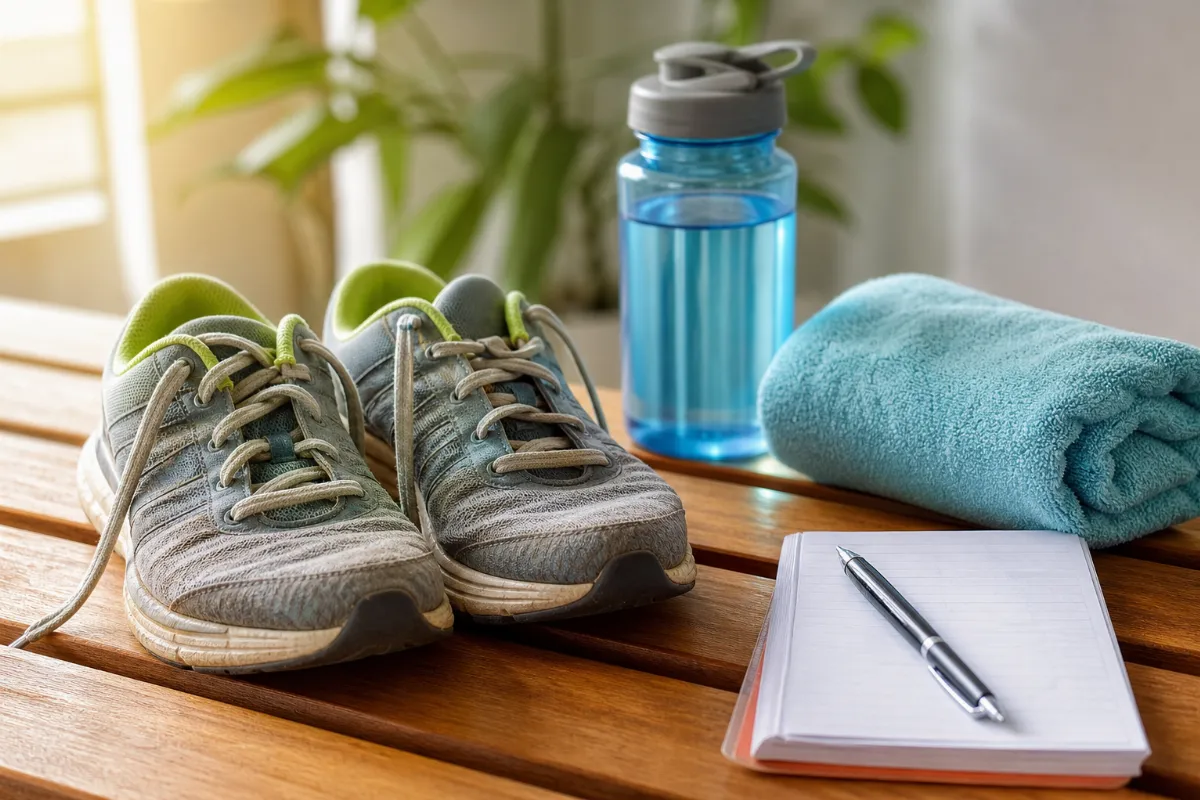
Recover & Feel More Comfortable
Balance Training & Recovery
Exercise makes the body stronger only when it is followed by enough recovery, so the aim is a mix of effort and rest that you can keep up. This page is about balancing how much you train against how much you recover; soreness after a single workout, rest-day activities, recovery nutrition and injuries have their own pages.
General information, not medical advice. Last updated October 31, 2026. Written by the AlternativeMed editorial team. Not medically reviewed.
Start here
- Build up gradually: raise distance, time or weight in small steps, and repeat a similar session a few times before stepping up again.
- Plan at least one full rest day each week and put it in your calendar like any other session.
- Keep a short log of sessions, sleep and how you feel; if tiredness, poor sleep or lower performance build up over a week or two, cut back before you push on.
Be careful with
- Do not train through sharp or worsening pain, or through illness. The NHS advises not running through pain and listening to your body.
- Feeling guilty or anxious when you skip exercise, or training to make up for eating, can be a sign of compulsive exercise or an eating problem; this needs professional support.
- This page does not replace advice from a clinician. If you have a heart, lung, joint or other health condition, or have not exercised for a while, speak to a doctor before increasing your training.
Get help when
- Tiredness, poor performance or low mood that continues after 1 to 2 weeks of rest or much lighter training (MedlinePlus).
- Chest pain, fainting, severe breathlessness or a racing or irregular heartbeat during or after exercise: stop and seek urgent medical care.
- Pain that is severe, comes with swelling, or does not settle within about a week of rest (the NHS gives timeframes for different areas).
- Loss of periods, rapid weight loss, fear of eating, or feeling out of control about exercise or food.
- Dark urine with severe muscle pain and weakness after hard exercise, which needs prompt medical care.
About Balance Training & Recovery
What this goal means
Training works by applying a stress and then allowing the body to adapt during recovery. A joint consensus statement of the European College of Sport Science and the American College of Sports Medicine describes successful training as overload without the combination of excessive overload and inadequate recovery.
This goal is about getting that balance right for your own life, whether you walk, lift, run or play a sport. It is not only for athletes: stress from work, poor sleep and illness all add to the load your body is carrying.
1,2What too much, too soon can feel like
MedlinePlus lists declining performance, needing longer to recover, persistent fatigue, low mood or irritability, poor sleep, sore or heavy muscles, overuse injuries, lost motivation and frequent colds among the signs of too much exercise.
A short dip in performance after a hard block of training is normal and can lead to better performance after recovery (called functional overreaching). If rest is not enough, the picture can become longer-lasting; the consensus statement calls the extreme end overtraining syndrome and notes that telling the stages apart is difficult and depends on the clinical picture.
3,1What affects the balance
The Kellmann consensus statement describes balance between stress (training and competition load plus other life demands) and recovery. Sleep, food, illness, heat, work and family stress, and the pace at which you increase training all play a part.
The IOC consensus on load and injury concludes that poor load management is a major risk factor for injury, including rapid changes in training load. A review by Gabbett describes how large, fast jumps in load are likely responsible for many soft-tissue injuries, while well-built training capacity can be protective, so the goal is gradual progress rather than avoiding training.
2,4,5Conditions that can look like overtraining
The consensus statement stresses that diagnosing overtraining involves excluding other causes, such as illness or infection, too little food energy, too little carbohydrate or protein, iron deficiency and magnesium deficiency. Persistent tiredness is therefore worth a medical check rather than a guess.
1Realistic expectations
Recovery is individual. MedlinePlus says cutting back or resting completely for 1 to 2 weeks is often enough, but you may need a month or longer if signs persist. The Kellmann statement notes people respond differently to training, competition and recovery strategies.
We did not find a trustworthy single number of rest days that suits everyone. MedlinePlus suggests a full day off each week as a general rule.
3,2Who this applies to
Anyone who exercises regularly or is building up: beginners, weekend sport players, recreational runners and lifters, and competitive athletes. Adults are advised by the NHS to do at least 150 minutes of moderate or 75 minutes of vigorous activity a week plus strengthening on 2 days; most people are better served by consistency than by extremes.
6,7Related conditions and symptoms
Anemia and iron deficiency → ME/CFS and post-exertional malaise → Eating disorders and disordered eating → Why am I so tired? →
A manageable starting plan
An educational starting point, not a personal prescription. Adjust it to your own situation and any advice from your clinician.
Your first actions
- Pick one full rest day a week and keep it.
- Increase one thing at a time, in small steps, and repeat each step a few times.
- Aim for steady sleep, regular meals and enough fluids through heavy weeks.
- Cut back sessions when ill, in extreme heat or cold, or under heavy stress.
Optional additions
- Alternate hard and easy days.
- Plan an easier week every few weeks.
- Try massage or gentle active recovery after hard sessions.
- If competing, plan a short taper with a coach.
What to track
- Sessions: time and how hard they felt.
- Hours slept and how rested you feel.
- Mood, motivation and aches.
- Resting tiredness lasting more than a few days.
When to reassess
Review your log every two weeks. If tiredness, poor sleep or lower performance have built up, cut back or rest for 1 to 2 weeks. If signs persist after that, see a doctor.
When to seek professional support
- See a doctor if tiredness or lower performance continue after 1 to 2 weeks of rest.
- Seek professional support for compulsive exercise or fear of eating.
- Ask a physiotherapist or coach for help planning progression after a break or injury.
What helps
Ordered by how well the research supports each step. Evidence strength is shown on every card; precautions sit next to the advice.
Start here
Increase training gradually
Moderate certaintyAddresses: Lower risk of overuse injury and burnout
Why it may help: The NHS running advice is to raise distance and pace slowly and repeat a similar session three or four times before stepping up. The IOC consensus links rapid changes in load to injury risk.
How to apply it: Change only one thing at a time (time, distance, intensity or weight) and keep the next step small. If you miss a week or two, restart below where you stopped.
Who it may suit: Beginners, returners and anyone adding a new activity or goal.
Precautions: If you have a medical condition, are pregnant or have not exercised for a while, check with a clinician first.
8,4,5Start Exercising With Confidence → Return to Exercise After a Break →
Take at least one full rest day a week
Low certaintyAddresses: Time for the body to adapt and for tiredness to clear
Why it may help: MedlinePlus advises a full day off each week and at least 6 hours of rest between exercise sessions to prevent overtraining.
How to apply it: Choose the day in advance. Light walking or easy stretching is fine if it feels restful; the point is that it does not feel like training.
Who it may suit: Almost everyone who exercises regularly.
Precautions: Agency advice is general; individual needs vary and people recovering from illness may need more rest.
3,2Protect your sleep
Moderate certaintyAddresses: Better recovery and fewer infections
Why it may help: The sleep consensus for athletes reports that habitually sleeping under 7 hours a night raises susceptibility to respiratory infection in the wider population, and recommends an individual approach rather than a fixed target. MedlinePlus suggests aiming for at least 8 hours a night when training hard.
How to apply it: Keep a regular bed and wake time and allow extra time in bed during heavy training weeks. Treat a run of short nights as a signal to ease training.
Who it may suit: Anyone with a heavy training or work schedule.
Precautions: Studies on napping and extra sleep are still limited, so do not expect naps to cancel out a poor week.
9,3Track how you feel, not only what you did
Low certaintyAddresses: Earlier warning when load is too high
Why it may help: Kellmann and colleagues describe systematic monitoring of recovery as the way to spot under-recovery before it becomes a problem. MedlinePlus lists persistent fatigue, longer recovery and low mood as signs of too much exercise.
How to apply it: Write down session length and how hard it felt, hours slept, mood and any aches. Look for trends across two weeks, not single days.
Who it may suit: Anyone training more than 3 days a week.
Precautions: Gadgets that score recovery have not been checked on this page; a simple diary needs no device. Do not let tracking become a source of anxiety.
2,3Additional options
Eat enough for your activity level
Moderate certaintyAddresses: Fuel for training and repair
Why it may help: MedlinePlus lists eating enough calories for your activity level and drinking enough fluids as ways to prevent overtraining. The overtraining consensus notes that low energy intake, or too little carbohydrate or protein, are factors to rule out when performance falls.
How to apply it: Eat regular meals that include carbohydrate and protein, and drink to thirst.
Who it may suit: Active adults, especially those in heavy training or trying to lose weight at the same time.
Precautions: Do not restrict food while increasing training. If you cannot eat enough or fear eating, seek professional help.
3,1,10Support Recovery Through Nutrition → Stay Hydrated for Daily Wellbeing →
Cut back when you are ill or under heavy stress
Low certaintyAddresses: Avoids adding load on a body that is already coping
Why it may help: MedlinePlus advises cutting back when you are unwell or under heavy stress and avoiding exercise in extreme heat or cold.
How to apply it: Swap hard sessions for easy ones, or skip them, until you feel well. Return in steps.
Who it may suit: Everyone.
Precautions: Chest symptoms, fever or whole-body aches are a reason to rest completely and seek advice.
3Reduce training before a big event (a taper)
Moderate certaintyAddresses: Better performance on the day for competitive athletes
Why it may help: A meta-analysis of 27 studies in competitive athletes found the best results from a 2-week taper where training volume was lowered by 41 to 60% without changing intensity or frequency.
How to apply it: Only relevant if you have a specific race or competition; plan the taper with a coach.
Who it may suit: Competitive and event-focused athletes.
Precautions: Evidence is from competitive athletes; it does not show that recreational exercisers need a taper.
11Still being studied
Stepping up training load smartly (the training-injury paradox)
Low certaintyAddresses: Fewer injuries from well-built capacity
Why it may help: Gabbett's review argues that athletes used to high training loads tend to have fewer injuries than those training less, and that sudden spikes in load, not training itself, are the likely risk. The acute-to-chronic workload ratio is described as a monitoring tool.
How to apply it: Build up steadily over weeks and months rather than avoiding training.
Who it may suit: Team-sport and endurance athletes and their coaches.
Precautions: Mostly observational and written for team sport; the ratio has been debated and does not replace common sense. We did not find evidence it works for casual exercisers.
5,4Formal recovery monitoring in sport
Not enough evidenceAddresses: May help detect under-recovery
Why it may help: The recovery consensus recommends monitoring recovery and using recovery routines to prevent underrecovery, nonfunctional overreaching, overtraining syndrome, injuries and illness. It also notes the best approach varies between people.
How to apply it: Used by coaches with questionnaires and performance checks.
Who it may suit: Athletes working with a coach.
Precautions: The overtraining consensus found that none of the hormonal, biochemical, performance or psychological markers meets all criteria for general use.
2,1Food & nutrition
Eating enough to recover
MedlinePlus lists eating enough calories for your activity level and drinking enough fluids as part of preventing overtraining. The overtraining consensus notes that dietary calorie restriction and low carbohydrate or protein intake should be ruled out when performance falls.
Details on protein, carbohydrate, timing and fluids after exercise are on the recovery nutrition page, so they are not repeated here.
3,1A caution about low energy availability
An IOC consensus statement describes relative energy deficiency in sport (RED-S), where energy intake does not match what exercise needs. If you have lost periods, are losing weight unintentionally or are afraid of eating, seek professional help rather than training on.
10,3Remedies & supplements
Traditional use, laboratory findings and human trials are kept apart. "Natural" does not mean safe.
We did not find a remedy or supplement with reliable human evidence for this goal in the sources we read. Be cautious of any product that promises a result, and read the "What to avoid" tab for claims that do not hold up.
Therapies & care
Established care for a lasting drop in performance or unexplained tiredness starts with a medical check to look for other causes; a sports medicine clinician, physiotherapist, dietitian or psychologist may be involved. This page does not recommend medicines or doses, and you should not stop a prescribed medicine on your own.
Massage
Moderate certaintyHands-on recovery technique A meta-analysis of 99 studies on post-exercise recovery found massage was the most effective technique for reducing muscle soreness and perceived fatigue, and was among the most powerful for reducing inflammation markers.
Who it may suit: Exercisers wanting to ease soreness and tiredness after hard sessions.
Precautions: Avoid over an injury, a hot swollen area or a suspected clot (calf pain with swelling needs urgent assessment).
12Cold-water immersion and other water methods
Low certaintyRecovery technique The same meta-analysis found immersion, contrast water therapy and cryotherapy gave small to large reductions in soreness, with cold exposure also reducing inflammation markers.
Who it may suit: Athletes between close-together events.
Precautions: Cold exposure is risky with heart or circulation problems; the review measured soreness and markers, not long-term training gains.
12Compression garments and active recovery
Low certaintyRecovery technique The meta-analysis found compression garments and active recovery gave small to large decreases in soreness, and that compression techniques helped perceived fatigue.
Who it may suit: Exercisers wanting a gentle recovery routine.
Precautions: Avoid tight garments if you have poor circulation or skin problems.
12Planning with a coach, physiotherapist or doctor
Moderate certaintyProfessional guidance The consensus statements describe diagnosing overtraining as a process of exclusion and recommend individual approaches to recovery, which usually means professional support.
Who it may suit: Anyone with tiredness or lower performance that lasts beyond 1 to 2 weeks of rest.
Precautions: Tell the clinician about all supplements and medicines you take.
1,2,3What to avoid
Habits, products and claims that can get in the way. Never stop a prescribed medicine without talking to the professional who prescribed it.
Risks that apply to most people
Big jumps in training load
Moderate certaintyWhy: The IOC consensus names rapid changes in training load as a risk factor for injury, and Gabbett links excessive, rapid increases to many soft-tissue injuries.
Who it applies to: Anyone adding distance, intensity or weight quickly, or restarting after a break at the old level.
Try instead: Increase in small steps and repeat a session a few times before progressing.
4,5,8Training through pain, illness or extreme weather
Moderate certaintyWhy: The NHS advises not running through pain; MedlinePlus advises cutting back when unwell and avoiding extreme heat or cold.
Who it applies to: Everyone.
Try instead: Stop, rest and seek advice if pain does not settle; return in steps.
8,3Hard sessions back to back with no rest day
Low certaintyWhy: MedlinePlus advises at least 6 hours between sessions and a full rest day every week.
Who it applies to: People training daily or twice a day.
Try instead: Alternate hard and easy days and keep a weekly rest day.
3Personal triggers to check
Short sleep during heavy training weeks
Moderate certaintyWhy: Sleep inadequacy is common in athletes, and habitually sleeping under 7 hours is linked with more respiratory infection in the wider population.
Who it applies to: Shift workers, parents of young children, travelling athletes.
Try instead: Protect time in bed and ease training after poor nights.
9Too little food energy or carbohydrate and protein
Moderate certaintyWhy: The overtraining consensus lists negative energy balance and low carbohydrate or protein intake among factors to exclude.
Who it applies to: Anyone dieting while training hard.
Try instead: Eat regular meals; seek professional advice if you struggle to eat enough.
1,10Products that need caution
Gadget scores used to override how you feel
Not enough evidenceWhy: The consensus statements stress individual variation and found no single marker that is generally accepted. We did not find evidence on consumer recovery scores on the pages read.
Who it applies to: Wearable users.
Try instead: Use device data as one input alongside sleep, mood and performance.
1,2Unsupported claims
"No pain, no gain" and "more is always better"
Evidence againstWhy: Overtraining consensus describes that overload plus inadequate recovery leads to performance falls and prolonged maladaptation, not gains.
Who it applies to: Motivated exercisers.
Try instead: Aim for steady progress with planned rest.
1,3Common mistakes
Exercising to compensate for eating
Moderate certaintyWhy: MedlinePlus separates compulsive exercise (guilt when skipping, training through injury, skipping social plans) and links it to eating disorders.
Who it applies to: Anyone with food or body-image worries.
Try instead: Talk to a clinician or counsellor trained in eating or exercise problems.
3Ignoring tiredness that does not clear
Moderate certaintyWhy: Persistent fatigue after 1 to 2 weeks of rest is a reason to see a provider, since other causes need excluding.
Who it applies to: Everyone.
Try instead: Book a check rather than training harder.
3,1Evidence & safety
What the research shows
Expert consensus statements agree that training needs enough recovery, that rapid jumps in load raise injury risk and that sleep, food and stress all feed into recovery. The strongest named evidence for a specific step is a meta-analysis of tapering for competitive athletes and a meta-analysis of recovery techniques for soreness. For everyday exercisers, the practical advice (gradual progress, a weekly rest day, listening to your body) comes from health agencies and expert consensus rather than from controlled trials.
Limits of the evidence
- Much of the research is in elite or competitive athletes and may not apply to casual exercisers.
- Consensus statements reflect expert agreement and not trial results.
- Overtraining has no single reliable test; markers are not generally accepted.
- Recovery technique reviews measure soreness and blood markers, which may not equal better long-term fitness.
- We did not find controlled trials that set a number of rest days for the general public.
Precautions and interactions
- Do not exercise through chest pain, fainting, severe breathlessness or palpitations.
- Check supplements and medicines with a pharmacist if you take regular medicines.
- Never stop a prescribed medicine to train more.
Life-stage considerations
- Pregnancy: ask a midwife or doctor before increasing training; the NHS says vigorous activity is not recommended if you were inactive beforehand.
- Older adults: recovery may take longer; build up slowly and ask a clinician about falls and conditions.
- Children and teenagers: we did not find guidance on training load for young people in the sources read; seek advice from a pediatrician or coach.
- People with long-term conditions: agree activity changes with your clinician.
Warning signs
- Chest pain, fainting, severe breathlessness or an irregular heartbeat with exercise.
- Dark urine with severe muscle pain and weakness.
- Fatigue, low mood or poor performance lasting beyond 1 to 2 weeks of rest.
- Lost periods, rapid weight loss or fear of eating.
- Severe pain, swelling or inability to bear weight after exercise.
Claim checks
You should train hard every day to improve fastest
Not supported
1,3Training load itself causes injuries, so lower is always safer
Mixed
5,4A blood test can diagnose overtraining
Not supported
1Everyone needs 8 hours of sleep to recover
Partly supported
3,9Questions people ask
How many rest days do I need?
MedlinePlus advises a full day off each week. Needs differ, so more rest may suit you if you feel run down. We did not find a reliable single number for everyone.
What are the signs I am doing too much?
MedlinePlus lists declining performance, needing longer to recover, persistent fatigue, low mood or irritability, poor sleep, sore or heavy muscles, overuse injuries, lost motivation and frequent colds.
How long does it take to recover from overdoing it?
MedlinePlus says 1 to 2 weeks of reduced training or complete rest is often enough, though it can take a month or longer. See a provider if signs persist.
Is it safe to train every day?
Some people do easy activity daily, but hard sessions need recovery. Alternate hard and easy days and keep a full rest day each week.
Does sleep really matter for recovery?
The sleep consensus for athletes reports short sleep is common in athletes, and short sleep in the general population is linked to more respiratory infections. It recommends an individual approach rather than a fixed hour count.
Should I rest or keep moving on a rest day?
Gentle movement is fine for many people if it feels restful. Details are on the rest days page.
How fast can I add distance or weight?
The NHS suggests raising distance and pace slowly and repeating a similar run three or four times before stepping up. Individual progress varies.
Does a massage help?
A meta-analysis found massage was the most effective recovery technique for muscle soreness and perceived fatigue. It does not replace rest.
Can exercise become unhealthy?
Yes. MedlinePlus describes compulsive exercise, with guilt when skipping sessions, training through injury and skipping other plans, and links it to eating disorders. Professional support helps.
When should I see a doctor?
If tiredness or reduced performance lasts after 1 to 2 weeks of rest, if you have chest pain, fainting or severe breathlessness with exercise, or if pain is severe or does not settle.
References
- Meeusen R, et al. Prevention, diagnosis, and treatment of the overtraining syndrome: joint consensus statement of the European College of Sport Science and the American College of Sports Medicine. Med Sci Sports Exerc. 2013. PMID 23247672. source
- Kellmann M, et al. Recovery and Performance in Sport: Consensus Statement. Int J Sports Physiol Perform. 2018. PMID 29345524. source
- MedlinePlus. Are you getting too much exercise? (page last reviewed 9/4/2024). Read 2026-10-31. source
- Soligard T, et al. How much is too much? (Part 1) International Olympic Committee consensus statement on load in sport and risk of injury. Br J Sports Med. 2016. PMID 27535989. source
- Gabbett TJ. The training-injury prevention paradox: should athletes be training smarter and harder? Br J Sports Med. 2016. PMID 26758673. source
- NHS. Physical activity guidelines for adults aged 19 to 64. Read 2026-10-31. source
- World Health Organization. Physical activity fact sheet. Read 2026-10-31. source
- NHS. Knee pain and other running injuries. Read 2026-10-31. source
- Walsh NP, et al. Sleep and the athlete: narrative review and 2021 expert consensus recommendations. Br J Sports Med. 2020. PMID 33144349. source
- Mountjoy M, et al. IOC consensus statement on relative energy deficiency in sport (RED-S): 2018 update. Br J Sports Med. 2018. PMID 29773536. source
- Bosquet L, et al. Effects of tapering on performance: a meta-analysis. Med Sci Sports Exerc. 2007. PMID 17762369. source
- Dupuy O, et al. An Evidence-Based Approach for Choosing Post-exercise Recovery Techniques to Reduce Markers of Muscle Damage, Soreness, Fatigue, and Inflammation: A Systematic Review With Meta-Analysis. Front Physiol. 2018. PMID 29755363. source
Related on AlternativeMed
Related goals
Recover Better After Exercise → Manage Post-Exercise Muscle Soreness → Build Better Rest Days → Support Recovery Through Nutrition → Support Recovery After Injury → Pace Activity Without Overdoing It → Balance Activity & Rest → Improve Your Sleep Quality → Build a Consistent Exercise Routine →
Research, safety and claim-check resources
Sleep hygiene → When to get help for fatigue → Everyday energy habits → Stay Hydrated for Daily Wellbeing →