Improve Your Mood & Emotional Wellbeing
Make More Room for Enjoyment
Many people go through stretches when things that used to be fun feel flat, or when there is simply no space left in the day for anything but duties. This page is about bringing small amounts of pleasure, play and interest back into ordinary life; low mood in general, motivation, irritability and loneliness have their own pages.
General information, not medical advice. Last updated October 31, 2026. Written by the AlternativeMed editorial team. Not medically reviewed.
Start here
- Pick two or three small things you used to enjoy or might enjoy (a walk, music, a hobby, a call with a friend), and put one on today's list, starting with the easiest.
- Do it even if you do not feel like it, for a short set time. Pleasure often follows doing rather than arriving first, so judge it afterwards instead of beforehand.
- If nothing has felt enjoyable for two weeks or more, or you feel hopeless, talk to a doctor. Losing interest or pleasure is a recognised sign of depression, and it is treatable.
Be careful with
- Losing interest or pleasure in most things, most of the day, for two weeks or more can be depression, not a lack of effort. Do not try to treat it on your own.
- St John's wort and other mood supplements can interact with many prescription medicines and are not a substitute for care. Check with a pharmacist or doctor first, and do not use them in pregnancy or breastfeeding without advice.
- Never stop or change a prescribed medicine because of how you feel without talking to the person who prescribed it. If you have thoughts of harming yourself, get help now (see below).
Get help when
- Low mood, or no interest or pleasure in most activities, on most days for two weeks or more (the NIMH and NHS use this kind of timeframe).
- Feeling hopeless, worthless or guilty, being unable to cope with work, home or relationships, or pulling away from people and things you used to do.
- Changes in sleep, appetite, energy or concentration alongside the flatness, or flatness that started after a new medicine, an illness or a big life change.
- Any thoughts of death, suicide or harming yourself: call or text 988 in the US, call Samaritans on 116 123 in the UK, or call your local emergency number now (999 in the UK, 911 in the US). In the UK you can also call 111 and choose the mental health option.
About Make More Room for Enjoyment
What this goal means
This goal is about enjoyment in everyday life: moments of pleasure, play, interest and satisfaction, and having time and energy for them. It covers the common experience of life feeling flat, grey or all work and no fun, and practical ways to put some colour back.
The NIMH lists loss of interest or pleasure in hobbies and activities as a common sign of depression, and the NHS lists "not getting any enjoyment out of life" and neglecting hobbies and interests among its symptoms. Feeling flat for a short time, though, is a normal human experience and does not mean something is wrong.
1,2What it can feel like
People describe a sense that nothing is much fun any more, going through the motions, being too tired or busy for anything but chores, or finding that favourite music, food, hobbies or friends no longer give the lift they used to. Some notice they have stopped doing things without deciding to.
The NIMH notes that older adults may report a lack of emotions rather than a sad mood, so flatness can look different from sadness. The NHS Every Mind Matters page says low mood can stop us doing important or enjoyable activities, which in turn can keep mood low.
1,3What can make it harder
The NHS says low mood is common after distressing events or major life changes, and sometimes happens for no obvious reason. It also says tiredness and low mood feed each other. Stress, poor sleep, long work hours, caring duties and little time outdoors or with others can crowd out enjoyable activities.
The NIMH says some medicines and medical conditions, such as viruses or thyroid disorders, can cause symptoms like depression, and that perimenopause can bring irritability, anxiety, sadness or loss of enjoyment for some women. A clinician can check for these.
3,1,4Conditions that can be behind it
Persistent flatness can be part of depression (including persistent depressive disorder, seasonal depression, bipolar disorder, perinatal depression and premenstrual dysphoric disorder), anxiety, burnout or grief. This page does not diagnose; see the linked condition guides and talk to a clinician if the pattern is lasting or heavy.
The NHS notes that it can be hard to tell grief from depression, and that grief usually eases with time while thoughts of suicide, hopelessness and guilt are rarer in grief and are a reason to seek help.
1,2Realistic expectations
Small steps usually bring small, gradual gains, not an instant return of joy. The NHS Every Mind Matters advice is to list the activities you value, start with the easier ones, and expect mood to improve as you progress. Most of the trial evidence below comes from people with diagnosed depression or from the general public, not specifically from people who feel "a bit flat", so treat the numbers as a guide rather than a promise.
If you have clinical depression, self-help alone may not be enough. The NHS says that with the right treatment and support, most people with depression can make a full recovery, and the sooner you ask for help the sooner recovery can start.
3,4Who this applies to
Adults who feel their life has become flat, joyless or all duty, including after stress, illness or a big change. Children, teenagers and pregnant or postnatal people can show low mood differently and should see a clinician early. Related goals cover mood in general, motivation, irritability, emotions, connection and loneliness.
1Related conditions and symptoms
Anxiety disorders → Stress, anxiety, burnout and depression: how they differ → Burnout → Trauma-related stress and PTSD → Perimenopause and menopause →
A manageable starting plan
An educational starting point, not a personal prescription. Adjust it to your own situation and any advice from your clinician.
Your first actions
- Write a list of 6 to 10 things that are enjoyable, meaningful or give a sense of achievement, from tiny (a cup of tea in the sun) to bigger (a day out).
- Put one small activity in your diary each day for a week, with a time and a place. Start with the easiest.
- Add movement most days and some time outdoors, aiming for about 2 hours a week of nature contact if you can manage it.
- Protect sleep and keep alcohol low so you have energy for enjoyment.
Optional additions
- Join a class, club or group connected to a hobby to add company.
- Make a mood playlist or a "things that made me smile" note.
- Try a mindfulness or gentle movement class.
What to track
- How many enjoyable activities you did each week, and a 0 to 10 rating of how you felt afterwards.
- Mood, sleep, appetite and energy, and anything that makes things better or worse.
- Any alcohol, supplements or new medicines.
When to reassess
Give small steps three to four weeks. If nothing has felt enjoyable for two weeks or more, if mood is getting heavier, or you cannot do daily tasks, see a doctor or talking therapy service rather than trying harder alone.
When to seek professional support
- Talk to a doctor, nurse or pharmacist if flatness lasts two weeks or more.
- In England you can refer yourself to NHS talking therapies; elsewhere ask your doctor or insurer.
- Tell a trusted friend or family member how you are doing.
- If you have thoughts of harming yourself, call or text 988 (US), call Samaritans on 116 123 (UK), or call local emergency services now.
What helps
Ordered by how well the research supports each step. Evidence strength is shown on every card; precautions sit next to the advice.
Start here
Plan small, pleasant activities and do the easiest first
Moderate certaintyAddresses: Brings back moments of enjoyment and breaks the stay-in, feel-flat, do-less cycle
Why it may help: This is the core of behavioural activation. A Cochrane review of 53 studies (5,495 people with depression or subthreshold depression) found moderate-certainty evidence that it works better than usual care in the short term, with no clear difference from cognitive behavioural therapy, although the advantage over usual care disappeared in worst-case sensitivity analyses. In the COBRA trial of 440 adults, behavioural activation delivered by junior mental health workers was not worse than CBT. The NHS Every Mind Matters advice is to list important and enjoyable activities, do some each day and start with the easier ones.
How to apply it: Write a short list of things that are pleasant, meaningful or give a sense of achievement. Schedule one or two for specific times this week, keep them small (ten minutes counts), and note afterwards how you felt. Add slightly harder ones as you go.
Who it may suit: Anyone whose days have narrowed to chores, or who has stopped doing things they used to like.
Precautions: The trials were in people with depression, so the results may not map exactly to everyday flatness. If you are very low or hopeless, do this with a therapist or doctor rather than alone.
5,6,3Move your body in a way you can stand to do
Moderate certaintyAddresses: Lifts mood and gives you something enjoyable to look forward to
Why it may help: A BMJ network meta-analysis of 218 trials in people with depression found moderate improvements for walking or jogging, yoga, strength training, mixed aerobic exercise and tai chi or qigong compared with usual-care controls, with larger effects at higher intensity. Confidence in the findings was low or very low, because only one trial had low risk of bias. The 2026 Cochrane review (73 trials) found exercise may reduce depressive symptoms (low-certainty evidence) and probably makes little to no difference compared with psychological therapy at the end of treatment (moderate certainty). The NHS lists exercise as one of the main treatments for mild depression and says to find activities you enjoy; you do not need hours in a gym.
How to apply it: Choose something you can start: a daily walk, a gentle yoga class, a short strength routine or dancing in the kitchen. Aim for regularity before intensity, and make it pleasant (music, a friend, a nice route).
Who it may suit: Most adults. Group classes add company.
Precautions: Check with a doctor before starting if you have heart, joint or other health problems. Cochrane reported injuries as an occasional adverse event. Exercise is not a substitute for care in moderate or severe depression.
7,8,9,10Try an old interest or a new hobby
Low certaintyAddresses: Gives pleasure, a sense of progress and a reason to look forward
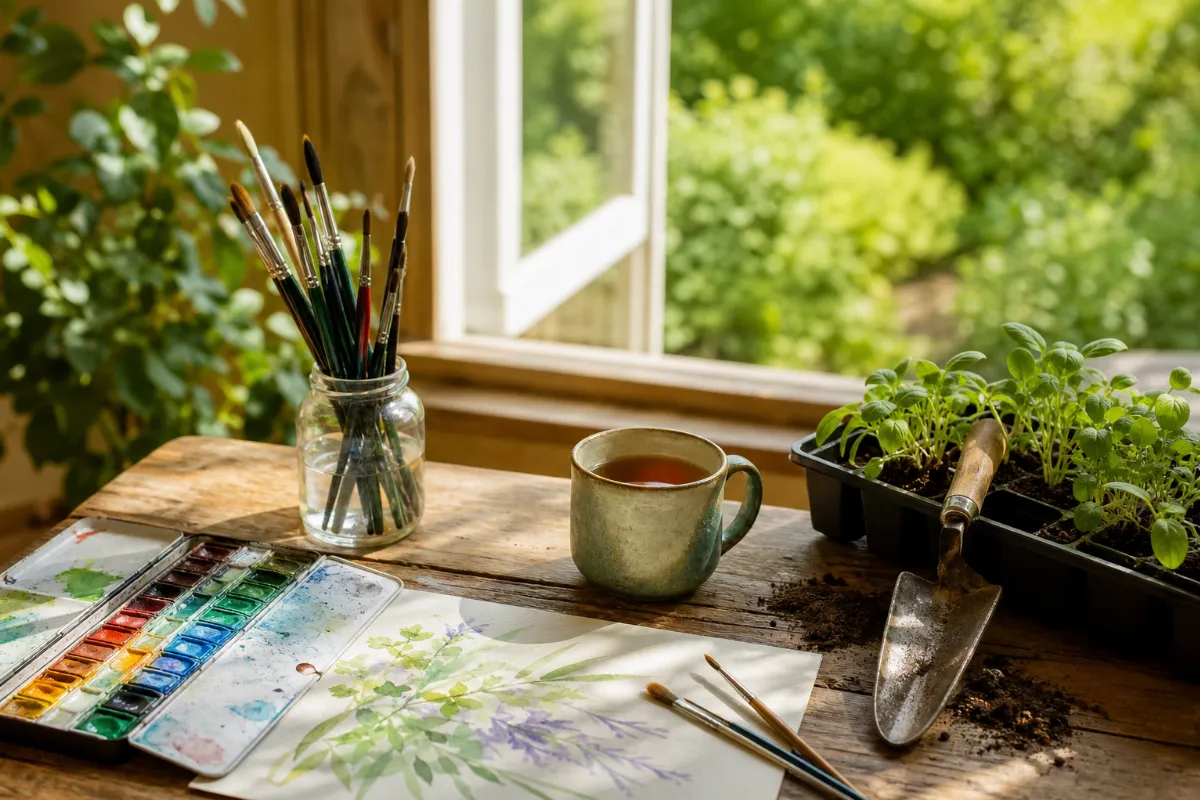
Why it may help: The NHS 5 steps to mental wellbeing says learning new skills can boost confidence and a sense of purpose, and suggests trying new hobbies such as painting, cooking something new or a DIY project, advising that you pick activities you enjoy. In an English study of 8,780 adults aged 50 and over followed for up to 12 years, a person taking up a hobby was linked with a drop in depressive symptoms and about 30% lower odds of depression (OR 0.70, 95% CI 0.64 to 0.76) compared with that person's own earlier years. This is observational, so it cannot prove the hobby caused the change.
How to apply it: Revisit something you liked in the past, or pick a low-cost new one (sketching, a puzzle, a plant, an instrument, a craft). Give it a few tries before judging it, and keep the bar low: enjoyment, not talent.
Who it may suit: Adults of any age, especially if time or interest has drifted away.
Precautions: Avoid hobbies that involve alcohol or gambling as the main activity. Do not push for perfection or turn the hobby into another thing to fail at.
10,11Additional options
Spend time outdoors and in green spaces
Low certaintyAddresses: Supports wellbeing and offers free, easy pleasure
Why it may help: A survey of 19,806 adults in England found that people with at least 120 minutes of recreational nature contact in the past week were more likely to report good health and high wellbeing (for example 120 to 179 minutes: OR 1.23 for wellbeing), with benefits peaking at about 200 to 300 minutes. It did not matter whether the time came in one long visit or several short ones. This was a single-time survey, so it shows an association, not cause.
How to apply it: Aim for time in a park, garden, beach or woods across the week; short visits count. Notice what you can see, hear and smell.
Who it may suit: Almost anyone; benefits were seen in older adults and people with long-term health conditions.
Precautions: Take care with sun, heat, ticks and uneven ground, and go with someone if you feel unsafe or very low.
12Garden, or grow something
Low certaintyAddresses: Gives a gentle routine, nature contact and visible results
Why it may help: A meta-analysis of 22 studies of gardening and horticultural therapy found positive effects on outcomes including lower depression and anxiety and higher life satisfaction and quality of life. The authors found signs of publication bias, though the effect held after adjusting for it, and most were not randomised trials.
How to apply it: Start with a pot of herbs, a windowsill of seedlings or a community garden plot.
Who it may suit: Anyone who likes the idea, including people without a yard.
Precautions: Wear gloves and wash hands; take care with tools and heavy lifting. Check labels before eating anything you forage or grow from unknown seed.
13Use music on purpose
Low certaintyAddresses: Lifts or settles feelings in a simple, immediate way
Why it may help: The NHS Every Mind Matters page suggests building a playlist for low moods, starting with slower choices and gradually moving to faster, uplifting songs. This is advice from a health service, not a trial result. Music therapy with a trained therapist has stronger evidence (see Therapies).
How to apply it: Make a playlist for different moods; try listening with full attention, singing, or moving along.
Who it may suit: Almost anyone.
Precautions: If music brings up painful memories or makes you feel worse, switch to something else.
3Add small acts of kindness, gratitude and savouring
Low certaintyAddresses: Creates positive feelings, purpose and connection
Why it may help: The NHS says acts of giving and kindness can create positive feelings and a sense of reward, and suggests saying thank you, really listening, and volunteering. Researchers have studied wider positive psychology exercises (such as gratitude and kind acts). One meta-analysis of 39 studies found small effects on wellbeing (standardised difference 0.34) and depression (0.23); a later re-analysis that adjusted for small-study bias found well-being effects were small (around r = 0.10) and depression effects variable and generally not statistically significant. Honest summary: a pleasant habit with modest, uncertain benefit.
How to apply it: Pick one: tell someone what you appreciated about them, write down three good moments from the day, or do one kind thing a week.
Who it may suit: People who like structured, simple exercises.
Precautions: If writing about gratitude feels forced or makes you feel guilty, set it aside. These exercises are not a treatment for depression.
10,14,15,16Practise paying attention to the present moment
Low certaintyAddresses: Helps notice small pleasures you would otherwise miss
Why it may help: The NHS 5 steps says mindfulness can help you enjoy life more and understand yourself better. A JAMA Internal Medicine review of 47 trials (3,515 people) found moderate evidence that mindfulness meditation programmes improve anxiety and depression, but low evidence of no effect or insufficient evidence for positive mood, attention, sleep and weight, so it should not be sold as a joy-maker.
How to apply it: Try slow, undistracted moments: the first sip of tea, a walk without your phone, a few minutes of breathing. Many people start with a short guided practice.
Who it may suit: Adults who find quiet attention comfortable.
Precautions: Meditation can occasionally bring up distress. Stop and talk to a clinician if it makes you feel worse.
10,17Still being studied
Tai chi and qigong
Not enough evidenceAddresses: May lift mood while giving gentle, social movement
Why it may help: In the BMJ network meta-analysis, tai chi or qigong (343 participants, 12 comparisons) reduced depression scores moderately compared with active controls (Hedges' g -0.42), though confidence was very low.
How to apply it: Look for a local beginners' class or a recorded session.
Who it may suit: Adults, including older adults and people who find intense exercise hard.
Precautions: Choose a qualified teacher and adapt moves if you have balance or joint problems.
7Food & nutrition
Make meals a small pleasure
Food is one of the easiest places to add enjoyment. The NHS 5 steps suggests learning to cook something new, and the Every Mind Matters page and 5 steps both highlight time with others, such as a fixed time for family dinner. Eating with people, trying a new recipe or shopping at a market are pleasures in themselves.
No food has been shown to restore enjoyment. The sources read here do not name a diet that treats low mood, so avoid claims that a single superfood fixes joy.
- Try one new recipe a week with ingredients you like the look of.
- Eat with someone, or at a set table, when you can.
- Pick a favourite food for a treat and eat it slowly, without a screen.
When appetite changes
The NHS and NIMH list changes in appetite or weight (up or down) as symptoms of depression. If your appetite has changed for weeks, or you are losing or gaining weight without trying, tell a doctor.
Regular simple meals are easier to manage than ideal ones. Do not use food restriction or bingeing to cope with feelings.
- Keep easy foods in the house for low-energy days.
- Tell a clinician about lasting appetite or weight changes.
Alcohol and mood
The NHS includes cutting down on alcohol among helpful lifestyle changes for depression, and the NIMH lists increased alcohol use among signs of depression. Alcohol may feel like relief but it can make mood and sleep worse; see the linked sleep guide.
- Notice whether you drink to feel something or to switch off.
- Try alcohol-free evenings and replace them with a ritual such as tea or a walk.
Remedies & supplements
Traditional use, laboratory findings and human trials are kept apart. "Natural" does not mean safe.
St John's wort
Mixed findingsStudied form and route: Standardised plant extract
Intended outcome: Mild to moderate depression
Human evidence: A Cochrane review of 29 trials (5,489 people) found extracts better than placebo for major depression and similar to standard antidepressants, with fewer dropouts due to side effects; trials from German-speaking countries were more favourable and the authors say this complicates interpretation. NCCIH summarises the results as mixed and says it is not consistently effective.
Traditional use: Used for centuries for mental health conditions and widely prescribed for depression in Europe (NCCIH).
Limits: Mixed trial results, differing extracts, and most evidence is for diagnosed depression, not everyday flatness.
Interactions and precautions: NCCIH warns that it limits the effectiveness of many prescription medicines and can cause a potentially life-threatening rise in serotonin if combined with certain antidepressants. There are case reports of dangerous effects in people with bipolar disorder or schizophrenia. Little is known about safety in pregnancy, breastfeeding and children. Do not use it to replace conventional care.
18,19Saffron
Low certaintyStudied form and route: Supplement extract or spice
Intended outcome: Depressive symptoms
Human evidence: A 2026 meta-analysis of 34 randomised trials (1,769 adults, at least 4 weeks) found saffron lowered self-reported Beck Depression Inventory scores (14 trials, mean difference -4.39 points) but not clinician-rated scales, with very high inconsistency between trials. The authors rated certainty moderate overall and say better trials are needed.
Limits: Self-reported scores only; large unexplained differences between trials; supplement products vary.
Interactions and precautions: Talk to a pharmacist or doctor if you take medicines or are pregnant or breastfeeding; do not use it as a replacement for care.
20Vitamin D
Evidence againstStudied form and route: Supplement
Intended outcome: Preventing depression and low mood
Human evidence: In VITAL-DEP (18,353 adults aged 50 and over, median 5.3 years) vitamin D3 did not lower the risk of depression or clinically relevant depressive symptoms (HR 0.97, 95% CI 0.87 to 1.09) or change mood scores. The authors say the findings do not support its use to prevent depression.
Limits: People with depressive symptoms at the start were excluded, so this does not test treatment of existing low mood.
Interactions and precautions: High doses can cause harm; take advice from a clinician, especially in pregnancy or with kidney disease.
21Omega-3 fish oil
Mixed findingsStudied form and route: Supplement
Intended outcome: Preventing depression and low mood
Human evidence: In the omega-3 arm of VITAL-DEP (18,353 adults aged 50 and over, median 5.3 years) there was no difference in mood scores and a small increase in risk of depression or clinically relevant depressive symptoms (HR 1.13, 95% CI 1.01 to 1.26). The authors describe the results as mixed.
Limits: One large trial in older adults who were not depressed at the start; results may differ for other groups.
Interactions and precautions: Ask a clinician if you take blood-thinning medicines or have a fish allergy.
22Therapies & care
Established care for depression includes talking therapies, medicines or both, chosen with a clinician according to severity. The NHS says mild depression may be managed with watchful waiting, guided self-help, exercise and talking therapy, and moderate to severe depression is usually treated with talking therapy plus medicines. Do not stop a prescribed medicine without speaking to your prescriber.
Behavioural activation
Moderate certaintyTalking therapy A practical therapy that helps you schedule rewarding activities and step back into daily life, usually without needing to change thoughts first. The Cochrane review found moderate-certainty evidence it works better than usual care short term and no clear difference from CBT; COBRA found it was not worse than CBT when delivered by trained junior workers.
Who it may suit: Adults with low mood, flatness or depression, including those who have withdrawn from activities.
Precautions: Needs regular practice between sessions; ask about wait times and online options.
5,6Cognitive behavioural therapy (CBT)
High certaintyTalking therapy The NIMH names CBT and interpersonal therapy as evidence-based therapies for depression. CBT teaches you to challenge unhelpful thoughts and behaviours; interpersonal therapy focuses on relationships and life events.
Who it may suit: Adults with persistent low mood or depression.
Precautions: Can feel demanding at first. In England you can refer yourself to NHS talking therapies without a GP.
1,9Exercise referral or group classes
Moderate certaintySupervised activity The NHS says exercise is one of the main treatments for mild depression and that you may be referred to a group exercise class designed to help with depression.
Who it may suit: People with mild low mood or depression who like structured, social activity.
Precautions: Check with a clinician if you have health problems; exercise alone may not be enough for more severe depression.
9,8Music therapy
Moderate certaintyTherapist-led A Cochrane review of 9 studies (421 people) found moderate-quality evidence that music therapy added to usual care gave short-term benefits for depression compared with usual care alone, with no more adverse events. Evidence on comparisons with other therapies is very uncertain.
Who it may suit: People who respond to music and want a creative route, alongside usual care.
Precautions: Few, small studies; it is a supplement to care, not a replacement.
23Mindfulness-based programmes
Moderate certaintyGroup or guided course A meta-analysis of 47 trials found moderate evidence of improved anxiety and depression, with low or insufficient evidence for positive mood. The NHS says mindfulness can help you enjoy life more.
Who it may suit: Adults who want a structured, skills-based approach.
Precautions: Can occasionally bring up distress; choose a trained teacher.
17,10Medicines for depression
High certaintyMedical care For moderate to severe depression, a doctor may discuss antidepressant medicines, often with talking therapy; the NHS says combined treatment usually works better than either alone. The NIMH says these medicines usually take 4 to 8 weeks to work. This is a decision for you and your prescriber.
Who it may suit: Adults whose doctor advises it.
Precautions: Never start, stop or change a prescribed medicine without medical advice.
9,1What to avoid
Habits, products and claims that can get in the way. Never stop a prescribed medicine without talking to the professional who prescribed it.
Risks that apply to most people
Waiting until you feel like it
Moderate certaintyWhy: The pattern of withdrawing and waiting for the mood to improve keeps life narrow. The NHS says low mood can stop us doing enjoyable activities, and its advice is to do some each day, starting with the easier ones. Behavioural activation, which works on exactly this, has moderate-certainty evidence behind it.
Who it applies to: Anyone who notices themselves doing less and less.
Try instead: Do a small, planned activity at a set time and rate it afterwards.
3,5Using alcohol to feel better
Low certaintyWhy: The NIMH lists increased use of alcohol or drugs among signs of depression, and the NHS advises cutting down on alcohol as part of living with depression. This is guideline advice rather than a trial result.
Who it applies to: Anyone drinking to relax or lift mood.
Try instead: Choose a non-alcoholic pleasure, or talk to a clinician or support service if alcohol feels hard to control.
1,4Treating flatness as weakness or laziness
Moderate certaintyWhy: The NHS says depression is a real illness and not a sign of weakness or something you can "snap out of". Harsh self-judgement can make it harder to start.
Who it applies to: Anyone who feels guilty for not enjoying things.
Try instead: Speak to yourself as you would to a friend, and get checked if it lasts.
4Personal triggers to check
Poor sleep and exhaustion
Moderate certaintyWhy: The NHS says low moods make us tired and tiredness can worsen mood. Joy is hard to find when you are running on empty.
Who it applies to: People sleeping badly or overworked.
Try instead: Work on sleep first; see the sleep goals.
3Cutting off friends, hobbies and routines
Moderate certaintyWhy: The NHS lists avoiding friends and neglecting hobbies as social symptoms of depression, and the Every Mind Matters page says feeling low may make someone stop doing the things they like.
Who it applies to: Anyone whose world is shrinking.
Try instead: Keep one small routine and one small contact going, even on bad days.
2,3Medicines, illness and hormonal change
Moderate certaintyWhy: The NIMH says some medicines and medical conditions (for example thyroid problems or viruses) can cause depression-like symptoms, and perimenopause can bring loss of enjoyment for some women. These are worth checking rather than guessing.
Who it applies to: Anyone whose flatness began with a new medicine, illness, pregnancy or a hormonal change.
Try instead: Ask a doctor or pharmacist to review your medicines and consider basic checks. Do not stop a medicine on your own.
1Perimenopause and menopause → Fatigue from medicines and mood →
Products that need caution
St John's wort mixed with other medicines
High certaintyWhy: NCCIH says St John's wort can weaken many prescription medicines, including some antidepressants, birth control pills, blood thinners and heart, transplant, HIV and cancer medicines, and combining it with certain antidepressants can raise serotonin to a potentially life-threatening level. It has also caused dangerous effects in people with bipolar disorder or schizophrenia in case reports.
Who it applies to: Anyone taking any prescription medicine, or with bipolar disorder or schizophrenia.
Try instead: Ask a pharmacist or doctor before use; do not combine it with an antidepressant.
19Vitamin D or fish oil to prevent low mood
Evidence againstWhy: In VITAL-DEP, a large trial of 18,353 adults aged 50 and over followed for a median 5.3 years, vitamin D3 did not change the risk of depression or mood scores, and omega-3 gave no change in mood scores and a small increase in risk of depression or depressive symptoms (HR 1.13). Neither trial tested people who already feel flat.
Who it applies to: Healthy adults taking these only for mood.
Try instead: Use them only for a medical reason with a clinician's guidance; spend the effort on activity and care instead.
21,22Supplements sold as mood or joy boosters
Not enough evidenceWhy: NCCIH notes US supplement standards are less strict than for medicines and that supplements can interact with medicines. The supplements covered on this page have mixed or negative results.
Who it applies to: Anyone tempted by products promising happiness or balance.
Try instead: Ask a pharmacist before any supplement; never use one to replace care.
19Unsupported claims
"St John's wort is a safe natural antidepressant"
Mixed findingsWhy: NCCIH says it is not consistently effective for depression, that results are mixed, and that it can interact dangerously. A Cochrane review of 29 trials found it beat placebo in major depression, but trials from German-speaking countries were more favourable, and the authors say this complicates interpretation. Natural does not mean safe.
Who it applies to: Anyone considering it for low mood.
Try instead: See a clinician first; do not use it to replace care or delay seeing your provider.
19,18"Gratitude or positive thinking will fix it"
Low certaintyWhy: Meta-analyses found small effects of positive psychology exercises, and when small-study bias was taken into account the effects on depression were variable and generally not significant. They can be pleasant extras, not replacements for care.
Who it applies to: People who feel pressured to "just be positive".
Try instead: Use them as one small habit among others.
14,16"A hobby alone will cure depression"
Low certaintyWhy: The hobby and depression findings are observational. Fancourt and colleagues found taking up a hobby linked to fewer depressive symptoms, but this cannot prove cause, and the study did not test hobbies as a treatment for depression.
Who it applies to: People with ongoing low mood.
Try instead: Enjoy hobbies as part of life and care, not instead of care.
11Common mistakes
Making the first step too big
Low certaintyWhy: The NHS says you do not have to spend hours in a gym and advises choosing activities you enjoy. Big plans are easier to abandon, which can deepen the sense of failure.
Who it applies to: Anyone restarting activities after a flat stretch.
Try instead: Start with ten minutes and build up.
10,3Only doing things you "should"
Low certaintyWhy: The NHS Every Mind Matters advice lists both important and enjoyable activities. A week made of obligations only is tiring and leaves little room for pleasure.
Who it applies to: People who feel their days are all duty.
Try instead: Schedule one thing purely because you like it.
3Relying on screens alone to connect
Low certaintyWhy: The NHS advises not to rely on technology or social media alone to build relationships. Messages are useful but do not replace time together.
Who it applies to: Anyone whose contact is mostly online.
Try instead: Mix messages with calls, walks and in-person time where possible.
10Putting off help
Moderate certaintyWhy: The NHS says many people wait a long time before seeking help and that it is best not to delay. If nothing has felt enjoyable for weeks, ask for support.
Who it applies to: Anyone with lasting flatness or heavy mood.
Try instead: Book a GP or doctor visit; in England you can self-refer to NHS talking therapies.
4,3Evidence & safety
What the research shows
Health agencies agree that lasting loss of interest or pleasure can be a sign of depression and needs professional assessment, and that for lower levels of low mood, planning enjoyable activities, moving more, connecting with others and learning or creating are sensible steps. The best-studied approach is behavioural activation (moderate-certainty evidence in people with depression). Exercise is supported by large reviews but with low certainty. Nature, gardening, hobbies, music and positive psychology exercises have small or observational studies. Supplements have mixed or negative evidence, and St John's wort carries serious interaction risks.
Limits of the evidence
- Most trials enrolled people with diagnosed depression or the general public; few studied "everyday flatness" as such, so results are extrapolated.
- Many exercise, gardening and positive psychology studies were small, unblinded or affected by publication bias.
- The nature and hobby findings are observational and cannot show cause.
- Saffron trials differed widely from one another and clinician-rated scales showed no effect.
- Study numbers here come from abstracts, agency pages and, for the hobbies paper, its open full text; most full texts were not read.
- Several sources are from 2026 and some were read once; the picture may change.
Precautions and interactions
- Check any herb or supplement with a pharmacist if you take medicines.
- Do not stop a prescribed medicine without speaking to your prescriber.
- Exercise, mindfulness and music can sometimes bring up distress; stop and seek advice if you feel worse.
Life-stage considerations
- Pregnancy and breastfeeding: low mood is common and treatable; see a midwife or doctor early. Little is known about the safety of St John's wort in pregnancy or breastfeeding, so talk to a clinician before using it.
- Children and teenagers: low mood can look like irritability, sulking or losing interest at school; the NIMH says it can look different from adult sadness. Talk to a doctor or school counsellor.
- Older adults: the NIMH says older adults may report a lack of emotions rather than sadness and are more likely to have other illnesses or take several medicines, so check with a clinician.
Warning signs
- No interest or pleasure in most things, most of the day, for two weeks or more.
- Hopelessness, guilt, worthlessness, or being unable to cope with daily tasks.
- Withdrawing from people or stopping responsibilities.
- Any thoughts of death, suicide or self-harm: call or text 988 in the US, call Samaritans on 116 123 in the UK, or call your local emergency number (999 in the UK, 911 in the US) now.
Claim checks
If I wait until I feel like it, enjoyment will come back by itself
Moderate certaintyBehavioural activation, which schedules activities regardless of mood, had moderate-certainty evidence of short-term benefit over usual care (RR 1.40) in a Cochrane review, though the advantage was not clear in worst-case analyses. The NHS also advises doing some enjoyable activities each day and starting with the easier ones.
5,3Exercise works as well as therapy for low mood
Moderate certaintyCochrane found exercise probably makes little to no difference compared with psychological therapy at the end of treatment (10 trials, moderate certainty), but overall certainty for exercise versus control is low and trial quality is mixed. It is a reasonable part of care, not a guaranteed substitute.
8,7Spending time in nature fixes low mood
Low certaintyA survey of 19,806 adults linked at least 120 minutes a week in nature with better wellbeing, but it measured association at one point in time and did not test treatment.
12St John's wort is a safe, natural alternative to antidepressants
Mixed findingsNCCIH calls results mixed, says it is not consistently effective, and warns about dangerous interactions. A Cochrane review found a benefit in trials, with more favourable results from German-speaking countries.
19,18Vitamin D or fish oil will lift my mood
Evidence againstIn a large trial of 18,353 adults aged 50 and over, vitamin D3 did not change depression risk or mood scores, and omega-3 gave no mood-score benefit and a small increase in depression risk. Neither was tested as a treatment for people already feeling low.
21,22Positive thinking or gratitude exercises can cure depression
Low certaintyMeta-analyses found small effects on wellbeing, and after adjusting for small-study bias the effects on depression were variable and generally not statistically significant.
14,16,15Help lines are only for people in an emergency
Moderate certaintyThe 988 Lifeline says it is for anyone facing mental health struggles or emotional distress, or who just needs someone to talk to. Samaritans says to call 116 123 any time, from any phone, for free, and the NHS lists it as a free listening service for anything troubling you, no matter how difficult. Use emergency numbers (999 in the UK, 911 in the US) if someone's life is at risk.
24,25,26Not enjoying things is a weakness I should snap out of
Moderate certaintyThe NHS says depression is a real illness with real symptoms and not a sign of weakness, and that most people can make a full recovery with the right treatment and support.
4Questions people ask
Why does nothing feel enjoyable any more?
Loss of interest or pleasure is common after stress, exhaustion, illness or a big change. If it lasts most days for two weeks or more, the NIMH and NHS list it as a sign of depression, so a doctor can help work out the cause.
Is it normal to feel flat sometimes?
Yes. The NHS says low moods are common after distressing events or major changes and often pass in days or weeks. It becomes worth seeking help if it lasts or interferes with daily life.
Do I have to wait until I feel like doing things?
No. Behavioural activation is built on doing small planned activities first and noticing how you feel afterwards. The NHS advice is to start with the easier ones and build up.
How much exercise do I need?
The research on depression varies. The NHS says you do not have to spend hours in a gym and to choose activities you enjoy; larger reviews found benefits from walking, yoga and strength training, especially when done regularly.
Does time in nature really help?
A large survey linked about 120 minutes a week in nature with better wellbeing, in one long visit or several short ones. It shows an association, not that nature treats low mood.
Are hobbies worth it if I am not good at them?
Yes. The NHS suggests picking activities you enjoy, not ones you excel at. Observational research links taking up a hobby with fewer depressive symptoms, though that cannot prove cause.
Can supplements bring back joy?
No supplement is proven to do this. Vitamin D and fish oil did not prevent depression in a large trial, saffron results are inconsistent, and St John's wort can interact dangerously with many medicines.
Is St John's wort safe?
Not for everyone. NCCIH says it weakens many prescription medicines and can cause a dangerous rise in serotonin with certain antidepressants. Ask a pharmacist or doctor first and do not use it to replace care.
When should I see a doctor?
If nothing feels enjoyable for two weeks or more, if you feel hopeless, or if daily life is hard. The NHS says it is best not to delay seeking help.
What if I have thoughts of harming myself?
Get help now. In the US call or text 988; in the UK call Samaritans on 116 123 or 999 in an emergency; elsewhere use your local emergency number. You do not have to cope alone.
Can I stop my medicine if I feel better?
Talk to the prescriber first. Never stop or change a prescribed medicine on your own.
References
- National Institute of Mental Health (NIMH). Depression. Read 2026-10-31. source
- NHS. Symptoms of depression in adults. Read 2026-10-31. source
- NHS Every Mind Matters. Low mood and depression. Read 2026-10-31. source
- NHS. Depression in adults: overview. Read 2026-10-31. source
- Uphoff E, et al. Behavioural activation therapy for depression in adults. Cochrane Database Syst Rev. 2020;7:CD013305. 53 studies, 5495 participants. PMID 32628293. source
- Richards DA, et al. Cost and Outcome of Behavioural Activation versus Cognitive Behavioural Therapy for Depression (COBRA): a randomised, controlled, non-inferiority trial. Lancet. 2016;388:871-80. PMID 27461440. source
- Noetel M, et al. Effect of exercise for depression: systematic review and network meta-analysis of randomised controlled trials. BMJ. 2024;384:e075847. 218 studies, 14,170 participants. PMID 38355154. source
- Clegg AJ, et al. Exercise for depression. Cochrane Database Syst Rev. 2026;1:CD004366. 73 trials. PMID 41500513. source
- NHS. Depression in adults: treatment. Read 2026-10-31. source
- NHS. 5 steps to mental wellbeing (page last reviewed 14 October 2026). Read 2026-10-31. source
- Fancourt D, Opher S, de Oliveira C. Fixed-effects analyses of time-varying associations between hobbies and depression in a longitudinal cohort study. Psychother Psychosom. 2020;89:111-113. 8,780 adults aged 50+ (ELSA). PMID 31658464; full text read at PMC7158225. source
- White MP, et al. Spending at least 120 minutes a week in nature is associated with good health and wellbeing. Sci Rep. 2019;9:7730. n = 19,806. PMID 31197192. source
- Soga M, Gaston KJ, Yamaura Y. Gardening is beneficial for health: a meta-analysis. Prev Med Rep. 2017;5:92-99. 22 studies. PMID 27981022. source
- Bolier L, et al. Positive psychology interventions: a meta-analysis of randomized controlled studies. BMC Public Health. 2013;13:119. 39 studies, 6,139 participants. PMID 23390882. source
- Sin NL, Lyubomirsky S. Enhancing well-being and alleviating depressive symptoms with positive psychology interventions: a practice-friendly meta-analysis. J Clin Psychol. 2009;65:467-87. PMID 19301241. source
- White CA, Uttl B, Holder MD. Meta-analyses of positive psychology interventions: the effects are much smaller than previously reported. PLoS One. 2019;14:e0216588. PMID 31141537. source
- Goyal M, et al. Meditation programs for psychological stress and well-being: a systematic review and meta-analysis. JAMA Intern Med. 2014. 47 trials, 3,515 participants. PMID 24395196. source
- Linde K, et al. St John's wort for major depression. Cochrane Database Syst Rev. 2008:CD000448. 29 trials, 5,489 patients. PMID 18843608. source
- NCCIH. St. John's Wort and Depression: In Depth. Read 2026-10-31. source
- Mahmoudi R, et al. Effect of saffron on depression, anxiety and mood disorder: a GRADE assessed systematic review and meta-analysis of 34 randomized controlled trials. Nutr Neurosci. 2026. PMID 41693488. source
- Okereke OI, et al. Effect of long-term vitamin D3 supplementation vs placebo on risk of depression or clinically relevant depressive symptoms and on change in mood scores (VITAL-DEP). JAMA. 2020. n = 18,353. PMID 32749491. source
- Okereke OI, et al. Effect of long-term supplementation with marine omega-3 fatty acids vs placebo on risk of depression or clinically relevant depressive symptoms and on change in mood scores (VITAL-DEP). JAMA. 2021. n = 18,353. PMID 34932079. source
- Aalbers S, et al. Music therapy for depression. Cochrane Database Syst Rev. 2017. 9 studies, 421 participants. PMID 29144545. source
- 988 Suicide & Crisis Lifeline (call, text or chat 988, 24/7, free and confidential). Read 2026-10-31. source
- Samaritans. Contact a Samaritan (call 116 123, free from any phone). Read 2026-10-31. source
- NHS. Where to get urgent help for mental health. Read 2026-10-31. source
Related on AlternativeMed
Related goals
Support a More Balanced Mood → Rebuild Motivation → Manage Irritability → Build Emotional Resilience → Cope With Difficult Life Changes → Practice Self-Compassion → Understand & Manage Your Emotions → Feel More Connected to Others → Reduce Loneliness → Relax Before Bed →
Ingredients, foods and supplements
St. John's wort → Saffron → Vitamin D → Fish oil →
Research, safety and claim-check resources
Meditation → Yoga → Tai chi → Qigong → Mindfulness and meditation for stress → Brain-healthy habits → Activity, strength and muscle → Therapy for anxiety and stress → Fatigue from medicines and mood →