Whole Grains · Whole grain
Rye
Secale cereale · also called Rye berries, whole rye, rye flour, rye bread, centeno (Spanish)
Rye is a cereal grain eaten whole, flaked, or milled into flour for bread and crispbread. It is very high in fibre. Small trials link rye foods to a smaller insulin rise after meals and a lower inflammation marker, but weight loss results are mixed. The main cautions are that rye contains gluten (not safe with celiac disease), is high in fructans that can upset irritable bowel, and can carry the ergot fungus.
General information, not medical advice. Last substantive update · Not medically reviewed. A named clinician has not signed off on this page. How this page is made
About Rye
Rye is a cereal grain, eaten whole, flaked, or milled into flour for bread and crispbread. It is very high in fibre and it contains gluten. It is a healthy-sounding food, not a proven remedy: the findings on blood sugar, weight and inflammation come from small, short trials.
What it is
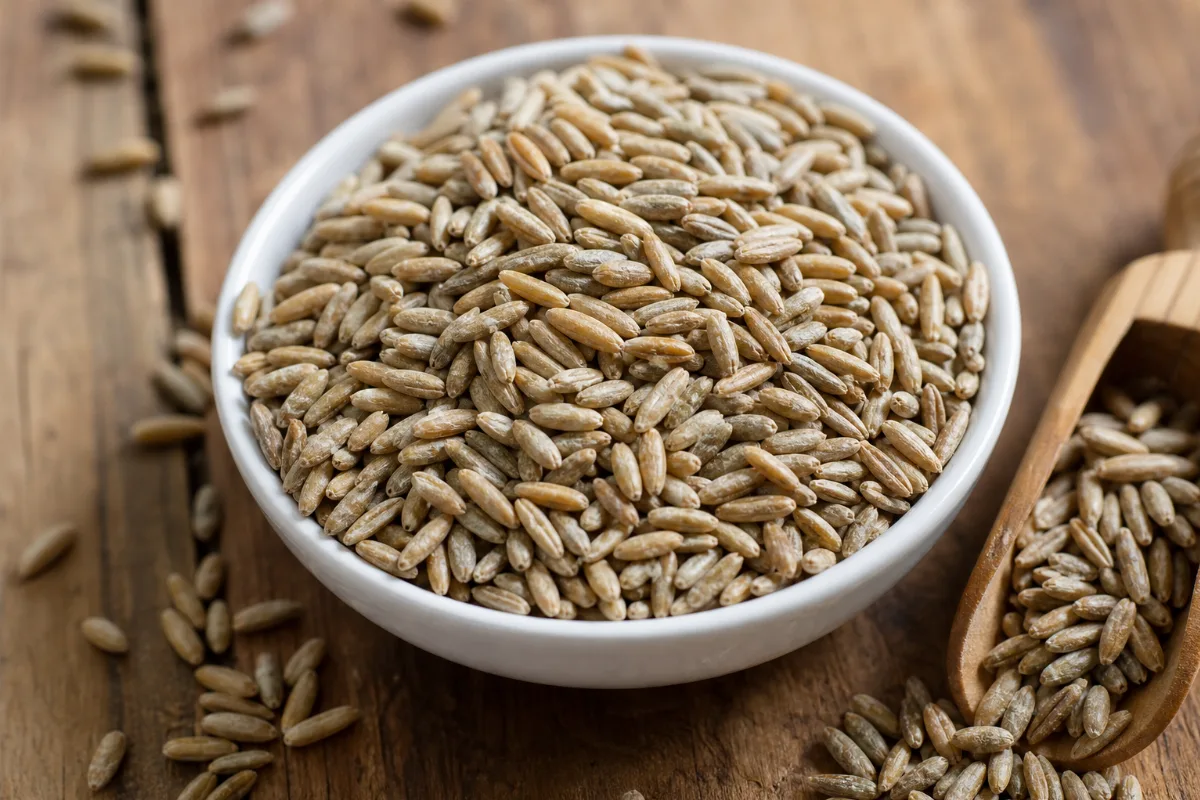
Rye (Secale cereale) is a grass-family cereal. It is eaten as whole grain (rye berries), flakes, flour, bread and crispbread. A loaf called rye is not automatically whole grain, because how much bran stays in the loaf varies.
USDA data for dry rye grain (our saved copy, not re-checked at the USDA site): 338 kcal per 100 g, with 10.34 g protein, 75.86 g carbohydrate and 15.1 g fibre. One dry cup (169 g) has about 571 kcal and 25.5 g fibre, and is a large amount of dry grain, so scale down for real servings. It is rich in manganese (2.577 mg per 100 g), with magnesium, phosphorus, zinc, copper, selenium, thiamin and niacin.
What the research shows
Short meal studies found that rye bread gave a smaller insulin rise after eating than wheat bread. A 2022 review says the effect may come from the structure of the food rather than from rye itself.
Two 12-week trials gave adults with overweight a reduced-calorie diet with rye or refined wheat foods. C-reactive protein, a blood marker of inflammation, was lower with rye (28% and 17%). Weight loss was 1.08 kg greater with rye in the first trial and not significantly different in the second (3.2 kg versus 2.9 kg). A small 3-week trial found rye bread eased constipation better than white wheat bread or usual laxatives.
Cohort studies link more whole grain to less heart disease and longer life, but they cannot show cause and are not about rye alone. A Cochrane review of whole-grain trials found insufficient evidence on cholesterol and blood pressure. Both RyeWeight trials involve authors linked to an industry-funded rye forum.
At a glance
Traditional uses history, not proof
- Eaten as bread, crispbread, flakes and whole grain
- Long use as food is not proof that it treats any condition
Studied for research
- Fibre, high certainty for the nutrient, not a trial result
- Blood sugar and insulin after meals, low certainty
- Weight loss on a reduced-calorie diet, mixed results
- Inflammation marker (CRP), low certainty
- Bowel regularity, low certainty (one small trial)
- Heart disease and early death, low certainty (whole grains, observational)
- Cholesterol and blood pressure, insufficient evidence
Main compounds
- Dietary fibre
- Fructans
- Gluten proteins
- Manganese and other minerals
- B vitamins
- Plant compounds
- Ergot alkaloids (contaminant)
Common forms
- Whole rye grain (rye berries) and flakes
- Rye bread and crispbread
- Rye flour
- Rye bran, fibre extracts and supplements are different products and are not covered
Research links: 2021 RyeWeight trial: rye vs wheat for weight loss · 2026 trial: wholegrain rye vs refined wheat · EFSA 2017: ergot alkaloid exposure · Research Library · Genes & Biomarkers Library
What it is and its history
- Accepted scientific name
- Secale cereale
- Naming authority
- L.
- Common names
- Rye (English); Rye berries (whole grain) (English); Whole rye (English); Centeno (Spanish)
- Family or group
- Poaceae (the grass family), as given by GBIF.
- Classification
- Plantae > Tracheophyta > Liliopsida > Poales > Poaceae > Secale > Secale cereale
- Native range
- Not verified from a source read.
- Habitat
- Not verified from a source read.
- What it looks like
- Roots: Not verified.; Stems: Not verified.; Leaves: Not verified.; Flowers: Not verified.; Fruit: The grain is eaten whole (rye berries), flaked, milled into flour for bread and crispbread, or used in cereals (existing nutrient summary). USDA gives a household portion of 1 cup of dry grain, 169 g.
- Cultivation
- Not verified from a source read.
- Harvest and processing
- Sold as whole rye berries, flakes or cracked rye, flour, bread, crispbread and bran (existing nutrient summary). The amount of bran left in bread and flour varies by product.
- Look-alikes and adulterants
- Name: Wheat, barley and triticale; Note: Related cereals. Wheat, barley and rye are the three grains NHS names as containing gluten; triticale is a wheat-rye cross named by FDA.
- Sustainability and conservation
- Not assessed.
Photographs
What is inside, and how it may work
What it contains and how those compounds act in cells and animals. Laboratory and animal mechanisms are not proven effects in people.
Main compounds
| Compound | Family | Where it is concentrated | Activity studied | Level of evidence |
|---|---|---|---|---|
| Dietary fibre | carbohydrate | Grain and bran USDA: 15.1 g per 100 g dry grain | Fermented by gut bacteria; rye is described as the richest whole-grain source of fibre. 16 5 | Human data |
| Fructans (a FODMAP) | fermentable carbohydrate | Grain, bran, bread Rye bread 1.94 g per 100 g (UK 2011 study); rye grain 4.6 to 6.6 g and rye bran 7 g per 100 g (Finnish analysis, summary-only) | Fermented in the gut and can cause wind, pain and cramps in people with irritable bowel syndrome. 10 8 13 | Human data |
| Gluten proteins | protein | Grain Not measured in the sources read | Trigger celiac disease in people with the condition. 14 15 | Human data |
| Manganese, magnesium, phosphorus, zinc, copper, selenium, thiamin and niacin | minerals and B vitamins | Grain USDA per 100 g dry grain: manganese 2.577 mg, magnesium 110 mg, phosphorus 332 mg, zinc 2.65 mg, copper 0.367 mg, selenium 13.9 mcg, thiamin 0.316 mg, niacin 4.27 mg | Nutrient content; no trial of correcting a shortfall with rye was read. 16 | Nutrient data |
| Benzoxazinoids, phenolic acids and lignan-derived compounds (e.g. enterolactone) | plant compounds and gut-bacteria products | Whole grain Not measured in the foods in the sources read | These rose in the blood after 12 weeks of rye foods. This shows the compounds are absorbed or made by gut bacteria, not that they cause a benefit. 9 | Human data |
| Ergot alkaloids (contaminant) | fungal toxins | Ergot bodies replacing grains in the ear Highest of the cereals tested in EFSA data; no figures read | Cause blood-vessel narrowing in animals; EFSA set a tolerable intake from a rat study. 3 2 | Animal research |
Mechanisms, receptors and pathways
| Target or pathway | Gene or receptor | What was found | Level |
|---|---|---|---|
| Slower glucose uptake after rye bread | Not specified | A 2022 review says mechanistic studies show slowed glucose uptake in the gut with rye bread, but this has also been shown for wheat bread and is likely an effect of the food structure rather than the grain. 6 | Human data |
| Gut fermentation of fibre and fructans | Not specified | After 12 weeks of rye foods, blood acetate and butyrate were higher and some gut bacteria changed. In people with irritable bowel syndrome, low-FODMAP rye bread produced less breath hydrogen than regular rye bread. 18 8 | Human data |
| Gluten and the small intestine | Immune reaction in celiac disease (not detailed in the pages read) | NIDDK says celiac disease is a chronic digestive and immune disorder that damages the small intestine and is triggered by gluten from wheat, barley and rye. 15 | Human data |
Absorption, metabolism and elimination
- Absorption
- Not found for rye nutrients. Blood levels of rye-related compounds and gut-bacteria products (including enterolactone sulfate and glucuronide) rose after 12 weeks of rye foods.
- Distribution
- Not found.
- Metabolism
- Gut bacteria appear to make some of the compounds that rise in blood (enterolactone); details not read.
- Elimination
- Not found.
- Bioavailability
- Not established for rye nutrients in the sources read.
Isolated compounds versus whole extracts
Every benefit result on this page is for rye as food (bread, crispbread, wholegrain products). Rye bran concentrates, fibre extracts and supplements are different products and were not studied in the sources read. How much bran stays in a loaf changes what you get, and a loaf labelled rye is not automatically whole grain.
Nutritional composition
Nutrition from USDA FoodData Central, rye grain, dry, uncooked (FDC 168884, SR Legacy). Values are those held in our existing nutrient summary and the earlier version of this page; the USDA site was not re-opened because its public API key was rate-limited on 2026-10-26, so they are flagged as not re-verified. Per 100 g dry grain: 338 kcal, 10.34 g protein, 1.63 g fat (0.197 g saturated), 75.86 g carbohydrate, 15.1 g fibre, 510 mg potassium, 110 mg magnesium, 332 mg phosphorus, 2.65 mg zinc, 2.577 mg manganese, 0.367 mg copper, 13.9 micrograms selenium, 0.316 mg thiamin and 4.27 mg niacin. The USDA household portion is 1 cup of dry grain (169 g), which is about 571 kcal, 17.5 g protein, 25.5 g fibre and 128.2 g carbohydrate (the per-100-g values multiplied by 1.69). That is a large dry amount: cooked grain, bread and crispbread are lighter because of water or different bran content, so scale down for what you actually eat. No cooked-rye, bread or crispbread values were read. Values vary with variety, growing place and milling.
1 high certainty1 mixed findings5 low certainty2 not enough evidence
What was looked at
The 9 benefits and uses checked for Rye, each with how strong the evidence is. Tap one to open it.
- Fibre (nutrient content)High certainty
- Blood sugar and insulin after mealsLow certainty
- Weight loss on a reduced-calorie dietMixed findings
- Inflammation marker (C-reactive protein)Low certainty
- Bowel regularity (constipation)Low certainty
- Heart disease and early death (whole grains, observational)Low certainty
- Cholesterol and blood pressure (whole grains, trials)Not enough evidence
- Gut bacteria and short-chain fatty acidsNot enough evidence
- Irritable bowel symptoms: low-FODMAP rye breadLow certainty
Lab markers tracked in the studies
Insulin after a mealBody weight during a reduced-calorie dietC-reactive protein (CRP)Total gut transit timeBlood acetate and butyrateTotal cholesterol (whole grains, trials)Breath hydrogen (gut fermentation)
What is Rye good for?
The main studied uses and how strong the human evidence is for each. Most trials are small and short. Heart results are for whole grains as a group, not rye alone.
Benefits, one by one
Each card is a research question, not a promise. Tap a goal to filter. Open a card to see the studies, doses and limits.
Fibre (nutrient content)
High certaintyRye grain is a very high-fibre food: USDA lists 15.1 g of fibre per 100 g of dry grain. A trial paper describes rye as the richest source of fibre among whole grains.
2 studiesWhole rye grain as food. Bread and crispbread have different fibre am…
Studies, doses and limits
What the trials found
USDA data: 15.1 g fibre per 100 g dry rye grain (about 25.5 g in 169 g, one dry cup). The background of the 2021 RyeWeight paper says that, among whole grains, rye is the richest source of dietary fibre.
Results
The fibre content is a nutrient fact. It does not show that eating rye gives a health benefit; the trials below test that.
Effect sizes as reported
USDA: 15.1 g fibre per 100 g dry grain.
Why this rating
High for rye containing a lot of fibre (USDA figure, not re-verified at the USDA site; the trial paper agrees). Not a trial result.
Form and dose studied
Whole rye grain as food. Bread and crispbread have different fibre amounts depending on how much bran remains (not measured in the sources read).
Who was studied
General adult diet.
Limits
A nutrient fact, not a trial. Fibre in rye bread and flour was not read.
Why researchers looked
Rye is known as a fibre-rich grain, so researchers ask what that fibre does in the gut and for body weight.
Traditional use
Eaten as whole grain, flakes, flour, bread and crispbread. Long use as food is not proof that it treats any condition.
Proposed mechanism Human trial marker
Fibre adds bulk and is fermented by gut bacteria; the RyeWeight trials measured gut bacteria and short-chain fatty acids after rye foods.
A proposed mechanism does not show that the effect happens in people.
Rye contains gluten and fructans; see the Safety tab.
Blood sugar and insulin after meals
Low certaintyIn short meal studies, rye breads gave a smaller insulin rise after eating than wheat breads. A 2022 review says glucose often responded the same way, but that the effect may come from how the food is built rather than from rye itself.
1 studiesRye breads and rye foods eaten at a meal (as food).
Studies, doses and limits
What the trials found
A 2022 narrative review of meal and extended-meal studies found that rye foods, compared with (mostly wheat) control foods, had a positive effect on both insulin and glucose responses after meals.
Results
A smaller after-meal insulin (and often glucose) response with rye foods than with wheat controls in short studies. Long-term effects on diabetes were not shown in the sources read.
Effect sizes as reported
No pooled number in the abstract.
Why this rating
A narrative review of mostly single-meal studies, no pooled estimate, and the authors say structure of the food may explain the effect.
Form and dose studied
Rye breads and rye foods eaten at a meal (as food).
Who was studied
Adults in meal studies, mostly healthy.
Limits
Not a trial of diabetes outcomes. Meal studies last hours. The review is by authors who work in rye research.
Why researchers looked
Rye bread has long been noted to cause a smaller insulin response than other breads (called the rye factor).
Traditional use
Eaten as whole grain, flakes, flour, bread and crispbread. Long use as food is not proof that it treats any condition.
Proposed mechanism Human mechanistic
Mechanistic studies suggest slower glucose uptake in the gut. The review notes this has also been shown for wheat bread, so food structure may matter more than the grain.
A proposed mechanism does not show that the effect happens in people.
Rye is a carbohydrate food: people with diabetes should count it, and should ask their care team before changing diet.
Weight loss on a reduced-calorie diet
Mixed findingsTwo 12-week trials gave adults with overweight a reduced-calorie diet with rye foods or refined wheat foods. One found 1.08 kg more weight loss with rye. The second, larger trial found no real difference.
2 studiesHigh-fibre or wholegrain rye products replacing usual cereal foods, i…
Studies, doses and limits
What the trials found
RyeWeight (2021): 242 adults, 12 weeks, rye group lost 1.08 kg more body weight and 0.54% more body fat than wheat (p < 0.01 and p = 0.03). Follow-up trial (2026): 255 adults, 12 weeks, weight loss 3.2 kg with rye and 2.9 kg with wheat, p = 0.32.
Results
Mixed. One trial favoured rye by about 1 kg; the other found no significant difference. Both were done by related research groups.
Effect sizes as reported
Trial 1: -1.08 kg more with rye (95% CI 0.36 to 1.80). Trial 2: 3.2 vs 2.9 kg (p = 0.32).
Why this rating
Two randomised trials of the same length point different ways; both are linked to a rye research forum funded by industry partners.
Form and dose studied
High-fibre or wholegrain rye products replacing usual cereal foods, inside a reduced-calorie diet (as food).
Who was studied
Adults with overweight or obesity (BMI 27 to 35 in the first trial).
Limits
Only 12 weeks. Weight loss came mainly from the reduced-calorie diet in both groups.
Why researchers looked
Rye is a high-fibre, filling food, so researchers ask whether it helps people lose weight.
Traditional use
Eaten as whole grain, flakes, flour, bread and crispbread. Long use as food is not proof that it treats any condition.
Proposed mechanism Unknown
Not established. The first trial found the extra weight loss could not be linked to appetite differences.
A proposed mechanism does not show that the effect happens in people.
None specific beyond the gluten and fructan cautions.
Inflammation marker (C-reactive protein)
Low certaintyIn both 12-week trials, blood C-reactive protein (CRP), a marker of inflammation, was lower with rye foods than with refined wheat foods.
2 studiesRye foods inside a reduced-calorie diet.
Studies, doses and limits
What the trials found
First trial: CRP 28% lower with rye than wheat after 12 weeks (p < 0.01). Second trial: CRP fell 17% in the rye group (p = 0.03).
Results
Lower CRP with rye in two trials of reduced-calorie diets. CRP is a blood marker, not a disease.
Effect sizes as reported
CRP -28% (CI 7 to 53) and -17% (p = 0.03).
Why this rating
Two randomised trials agree, but they are from related groups, are 12 weeks long, and measure a marker only.
Form and dose studied
Rye foods inside a reduced-calorie diet.
Who was studied
Adults with overweight or obesity.
Limits
A secondary outcome in trials designed for weight. Marker, not an illness outcome.
Why researchers looked
CRP is measured in diet trials as a sign of general inflammation linked to heart and metabolic risk.
Traditional use
Eaten as whole grain, flakes, flour, bread and crispbread. Long use as food is not proof that it treats any condition.
Proposed mechanism Human trial marker
Not established. The authors point to changes in gut bacteria and short-chain fatty acids, which are markers in the same trials.
A proposed mechanism does not show that the effect happens in people.
None specific.
Bowel regularity (constipation)
Low certaintyIn a small 3-week trial of 51 constipated adults, whole-grain rye bread moved food through the gut faster and gave more bowel movements than white wheat bread or usual laxatives.
1 studiesWhole-grain rye bread (trial detail: at least 240 g a day; not advice…
Studies, doses and limits
What the trials found
Randomised trial in 51 adults with constipation (2010): compared with white wheat bread, rye bread shortened total gut transit time by 23%, added 1.4 bowel movements a week, softened stools and eased passing them. Gut side effects did not differ between groups.
Results
Better bowel function with rye bread than white wheat bread or usual laxatives, in a small short trial using large amounts of bread.
Effect sizes as reported
Transit time -23% (p = 0.040); +1.4 defecations a week (p = 0.014) vs white wheat bread.
Why this rating
One small randomised trial, 3 weeks, not repeated in the sources read.
Form and dose studied
Whole-grain rye bread (trial detail: at least 240 g a day; not advice).
Who was studied
Adults with self-reported constipation.
Limits
Small trial. Amount of bread was large. Funding not stated in the abstract.
Why researchers looked
Rye is high in fibre, and fibre foods are commonly tried for constipation.
Traditional use
Eaten as whole grain, flakes, flour, bread and crispbread. Long use as food is not proof that it treats any condition.
Proposed mechanism Human trial marker
Not established in the abstract. The trial measured more acetic and butyric acid in stool with rye bread.
A proposed mechanism does not show that the effect happens in people.
Rye is not suitable for people with celiac disease. Rye fructans can worsen symptoms in people with irritable bowel syndrome.
Heart disease and early death (whole grains, observational)
Low certaintyPeople who eat more whole grain tend to have less heart disease and live longer in large cohort studies. Rye was not analysed on its own in the abstract, and cohort studies cannot prove cause.
1 studiesWhole grains as food (association per 90 g a day, not advice).
Studies, doses and limits
What the trials found
A 2016 meta-analysis of 45 prospective studies found that each extra 90 g a day of whole grain went with lower risk of coronary heart disease (RR 0.81), cardiovascular disease (RR 0.78) and death from any cause (RR 0.83). Stroke was not clearly lower (RR 0.88, CI 0.75 to 1.03).
Results
A lower risk in people who eat more whole grain as a group. No rye-only figure was in the abstract.
Effect sizes as reported
RR 0.81 coronary heart disease; 0.78 cardiovascular disease; 0.83 death from any cause per 90 g a day.
Why this rating
Observational data, whole grains as a group, not rye.
Form and dose studied
Whole grains as food (association per 90 g a day, not advice).
Who was studied
Adults in cohort studies.
Limits
Cohort studies cannot show cause. Rye alone was not reported in the abstract.
Why researchers looked
Rye is a whole-grain food, so researchers ask whether whole-grain eating protects the heart.
Traditional use
Eaten as whole grain, flakes, flour, bread and crispbread. Long use as food is not proof that it treats any condition.
Proposed mechanism Unknown
Not established; whole-grain eaters also tend to eat differently in other ways.
A proposed mechanism does not show that the effect happens in people.
Not suitable for people with celiac disease.
Cholesterol and blood pressure (whole grains, trials)
Not enough evidenceA Cochrane review of nine trials of whole-grain foods in general found no difference in total cholesterol and says the evidence for blood fats and blood pressure is insufficient. Rye was not separated out.
1 studiesWhole-grain foods or diets.
Studies, doses and limits
What the trials found
Cochrane 2017: nine randomised trials, 1,414 adults, 12 to 16 weeks. No trial reported heart events. No difference in total cholesterol (mean difference 0.07, 95% CI -0.07 to 0.21, low-quality evidence).
Results
No clear effect on cholesterol or blood pressure for whole grains as a group. The Cochrane review does not report rye alone.
Effect sizes as reported
Total cholesterol mean difference 0.07 (-0.07 to 0.21).
Why this rating
The reviewers rate the evidence low quality and call it insufficient; trials were small, short and at unclear or high risk of bias.
Form and dose studied
Whole-grain foods or diets.
Who was studied
Adults without known heart disease.
Limits
Whole grains as a group. Some trials had commercial cereal funding.
Why researchers looked
Whole-grain fibre is often said to lower cholesterol, so reviewers tested it in trials.
Traditional use
Eaten as whole grain, flakes, flour, bread and crispbread. Long use as food is not proof that it treats any condition.
Proposed mechanism Unknown
Not established.
A proposed mechanism does not show that the effect happens in people.
None specific.
Gut bacteria and short-chain fatty acids
Not enough evidenceAfter 12 weeks of rye foods, blood levels of acetate and butyrate (made by gut bacteria from fibre) were higher and some gut bacteria changed. These are markers, not proof of a health benefit.
2 studiesRye foods inside a reduced-calorie diet.
Studies, doses and limits
What the trials found
In the 255-person trial, blood acetate and butyrate were higher with rye than wheat (p = 0.003) and some bacteria linked to poor health were reduced. In a marker study from the first trial (207 adults) rye changed some bacteria and raised several compounds, including enterolactone, and two compounds were linked to lower weight, fat mass or fasting insulin.
Results
Clear changes in markers. Whether they cause a health benefit was not shown.
Effect sizes as reported
Acetate and butyrate higher with rye (p = 0.003).
Why this rating
Marker changes only, from related trials; links to health outcomes are associations.
Form and dose studied
Rye foods inside a reduced-calorie diet.
Who was studied
Adults with overweight or obesity.
Limits
Markers, not outcomes. The authors link exploratory findings to who may benefit more; not confirmed.
Why researchers looked
Rye fibre feeds gut bacteria, and researchers think their products could affect metabolism.
Traditional use
Eaten as whole grain, flakes, flour, bread and crispbread. Long use as food is not proof that it treats any condition.
Proposed mechanism Human trial marker
Gut bacteria ferment fibre into short-chain fatty acids such as acetate and butyrate; rye also raised compounds made by gut bacteria such as enterolactone.
A proposed mechanism does not show that the effect happens in people.
None specific.
Irritable bowel symptoms: low-FODMAP rye bread
Low certaintyIn 87 people with irritable bowel syndrome, rye bread made low in FODMAPs caused milder wind, pain and cramps than regular rye bread, though overall symptom score and quality of life did not differ.
1 studiesSpecially made low-FODMAP rye bread versus regular rye bread.
Studies, doses and limits
What the trials found
Double-blind cross-over trial, 4 weeks per bread (2016): flatulence, abdominal pain, cramps and stomach rumbling were milder on the low-FODMAP rye bread; the overall IBS-SSS score and quality of life did not differ.
Results
Regular rye bread caused more gut symptoms than a low-FODMAP version in people with IBS. This is a comparison of two rye breads, not a benefit of rye.
Effect sizes as reported
Mean VAS difference -3 (95% CI -6 to -1, p = 0.02); IBS-SSS no difference.
Why this rating
One cross-over trial of 87 people; mixed result across outcomes.
Form and dose studied
Specially made low-FODMAP rye bread versus regular rye bread.
Who was studied
Adults with irritable bowel syndrome.
Limits
Does not compare rye with no rye.
Why researchers looked
Rye is high in fructans, a FODMAP that can trigger gut symptoms, so a rye bread low in them was tested.
Traditional use
Eaten as whole grain, flakes, flour, bread and crispbread. Long use as food is not proof that it treats any condition.
Proposed mechanism Human trial marker
Less fermentable carbohydrate means less gas: breath hydrogen was lower on the low-FODMAP bread.
A proposed mechanism does not show that the effect happens in people.
See the Safety tab: rye is high in fructans.
Connections to the rest of health
How Rye connects to the rest of our health knowledge graph. Every link says what kind of connection it is. A safety link (for example to the liver) is a warning, not a benefit. A study that merely mentions a topic never creates a benefit link.
Explore every connection: goals, body systems, organs, symptoms, genes
A. Wellness goals
| Connected to | Kind of connection | Evidence status | Context | Studies |
|---|---|---|---|---|
| Digestive Support | High certainty | Fibre (nutrient content): Rye grain is a very high-fibre food: USDA lists 15.1 g of fibre per 100 g of dry grain. A trial paper describes rye as the richest source of fibre among whole grains. | 16 5 | |
| Blood Sugar Balance | Low certainty | Blood sugar and insulin after meals: In short meal studies, rye breads gave a smaller insulin rise after eating than wheat breads. A 2022 review says glucose often responded the same way, but that the effect may come from how the food is built rather than from rye itself. | 6 | |
| Weight Management | Mixed findings | Weight loss on a reduced-calorie diet: Two 12-week trials gave adults with overweight a reduced-calorie diet with rye foods or refined wheat foods. One found 1.08 kg more weight loss with rye. The second, larger trial found no real difference. | 5 18 | |
| Inflammation Balance | Low certainty | Inflammation marker (C-reactive protein): In both 12-week trials, blood C-reactive protein (CRP), a marker of inflammation, was lower with rye foods than with refined wheat foods. | 5 18 | |
| Digestive Support | Low certainty | Bowel regularity (constipation): In a small 3-week trial of 51 constipated adults, whole-grain rye bread moved food through the gut faster and gave more bowel movements than white wheat bread or usual laxatives. Gut bacteria and short-chain fatty acids: After 12 weeks of rye foods, blood levels of acetate and butyrate (made by gut bacteria from fibre) were higher and some gut bacteria changed. These are markers, not proof of a health benefit. | 4 18 9 8 | |
| Heart Health | Low certainty | Heart disease and early death (whole grains, observational): People who eat more whole grain tend to have less heart disease and live longer in large cohort studies. Rye was not analysed on its own in the abstract, and cohort studies cannot prove cause. | 1 | |
| Heart Health | Not enough evidence | Cholesterol and blood pressure (whole grains, trials): A Cochrane review of nine trials of whole-grain foods in general found no difference in total cholesterol and says the evidence for blood fats and blood pressure is insufficient. Rye was not separated out. | 7 |
B. Body systems
| Connected to | Kind of connection | Evidence status | Context | Studies |
|---|---|---|---|---|
| Digestive System | Biological association | High certainty | Studied for: Fibre (nutrient content) Studied for: Bowel regularity (constipation) | 16 5 4 18 9 8 |
| Blood Sugar Support | Biological association | Low certainty | Studied for: Blood sugar and insulin after meals | 6 |
| Metabolism Weight | Biological association | Mixed findings | Studied for: Weight loss on a reduced-calorie diet | 5 18 |
| Cardiovascular System | Biological association | Low certainty | Studied for: Inflammation marker (C-reactive protein) Studied for: Heart disease and early death (whole grains, observational) | 5 18 1 7 |
E. Health conditions
| Connected to | Kind of connection | Evidence status | Context | Studies |
|---|---|---|---|---|
| Celiac disease | Adverse effect or risk | Documented risk | Rye contains gluten and is not safe for people with celiac disease (NHS, NIDDK). Rye contains gluten and is not safe for people with celiac disease. Preparation or compound: Gluten in rye grain, flour and bread |
14 15 12 |
| Irritable bowel syndrome | Adverse effect or risk | Documented risk | Rye bread has the most fructan of breads tested; low-FODMAP rye bread caused milder symptoms than regular rye bread in an 87-person trial. Rye is high in fructans; low-FODMAP rye bread caused milder symptoms than regular rye bread in 87 people. Preparation or compound: Fructans in rye bread |
10 8 |
I. Biomarkers
| Connected to | Kind of connection | Evidence status | Context | Studies |
|---|---|---|---|---|
| CRP | Preliminary or mixed | C-reactive protein was lower with rye foods than refined wheat foods in two 12-week trials. Preparation or compound: Rye foods |
5 18 | |
| Insulin | Preliminary or mixed | Smaller insulin rise after meals with rye foods than wheat foods in short studies. Preparation or compound: Rye bread and rye foods |
6 | |
| Insulin after a meal | Biological association | Low certainty | Measured in trials: lowered. A lab change is not the same as a health benefit. | 6 |
| Body weight during a reduced-calorie diet | Biological association | Mixed findings | Measured in trials: mixed. A lab change is not the same as a health benefit. | 5 18 |
| C-reactive protein (CRP) | Biological association | Low certainty | Measured in trials: lowered. A lab change is not the same as a health benefit. | 5 18 |
| Total gut transit time | Biological association | Low certainty | Measured in trials: lowered. A lab change is not the same as a health benefit. | 4 |
| Blood acetate and butyrate | Biological association | Low certainty | Measured in trials: raised. A lab change is not the same as a health benefit. | 18 |
| Total cholesterol (whole grains, trials) | Biological association | Not enough evidence | Measured in trials: no clear change. A lab change is not the same as a health benefit. | 7 |
| Breath hydrogen (gut fermentation) | Biological association | Low certainty | Measured in trials: lowered with low-FODMAP bread. A lab change is not the same as a health benefit. | 8 |
K. Biological pathways
| Connected to | Kind of connection | Evidence status | Context | Studies |
|---|---|---|---|---|
| Fibre | Preliminary mechanism | Human | Rye is a very high-fibre grain. | 16 5 |
| C-reactive protein (CRP) | Preliminary mechanism | Human | Lower CRP with rye foods than refined wheat foods in two 12-week trials. | 5 18 |
| Insulin | Preliminary mechanism | Human | Lower insulin after meals with rye foods than wheat control foods in meal studies. | 6 |
L. Active compounds
| Connected to | Kind of connection | Evidence status | Context | Studies |
|---|---|---|---|---|
| Dietary fibre | Biological association | Human | Fermented by gut bacteria; rye is described as the richest whole-grain source of fibre. Preparation or compound: Grain and bran |
16 5 |
| Fructans (a FODMAP) | Biological association | Human | Fermented in the gut and can cause wind, pain and cramps in people with irritable bowel syndrome. Preparation or compound: Grain, bran, bread |
10 8 13 |
| Gluten proteins | Biological association | Human | Trigger celiac disease in people with the condition. Preparation or compound: Grain |
14 15 |
| Manganese, magnesium, phosphorus, zinc, copper, selenium, thiamin and niacin | Biological association | Nutrient data | Nutrient content; no trial of correcting a shortfall with rye was read. Preparation or compound: Grain |
16 |
| Benzoxazinoids, phenolic acids and lignan-derived compounds (e.g. enterolactone) | Biological association | Human | These rose in the blood after 12 weeks of rye foods. This shows the compounds are absorbed or made by gut bacteria, not that they cause a benefit. Preparation or compound: Whole grain |
9 |
| Ergot alkaloids (contaminant) | Biological association | Animal | Cause blood-vessel narrowing in animals; EFSA set a tolerable intake from a rat study. Preparation or compound: Ergot bodies replacing grains in the ear |
3 2 |
Each connection is stored with the ingredient, the connected record, the kind of connection, the evidence status, the supporting studies, the preparation or compound involved, and a review date (last reviewed October 26, 2026).
Evidence at a glance: what changed in 5 lab markers
Tap a number to show only those markers. Counts are markers, not people.
The evidence
The research centre for Rye. Every record here was checked against PubMed or the publisher's page; we never list a study we have not verified.
Evidence by outcome
Bars show how many studies we found for each outcome, not how well it works. People are added up across trials only (reviews are not added, to avoid double counting).
How we rate evidence
High certainty
Several well-run trials or reviews agree; further research is unlikely to change the picture much.
Moderate certainty
Good trials point the same way, but some doubt remains.
Low certainty
Small, short or inconsistent trials. The finding could change with better research.
Very low certainty
Very little or very weak human data. Treat as a possibility only.
Mixed findings
Trials or reviews disagree with each other.
Not enough evidence
Not enough human research to say either way.
Evidence against
Good research found no benefit, or found harm.
We take the reviewers' own risk-of-bias and GRADE statements where they exist, and otherwise judge from study size, design, consistency, directness and whether a product matches what is sold. Many publications do not make evidence high. Method note: We started from our existing rye summary, read the NHS, NIDDK, FDA and WHO pages as text, and re-read PubMed abstracts for the trials, reviews and EFSA reports. Only abstracts were read for studies. USDA nutrition values come from our saved copy and were not re-opened. Items we could not verify are flagged in the research gaps.
Study library: every study we checked 18
| Study | Design | People | Product, dose, length | Result |
|---|---|---|---|---|
| Aune 2016 Whole grain consumption and risk of cardiovascular disease, cancer, and all cause and cause specific mortality: systematic review and dose-response meta-analysis of prospective studies. BMJ · PMID 27301975 · DOI |
Systematic review meta analysis |
45 prospective (cohort) studies | Whole grains as food, all types together Whole grains as food Per 90 g a day more whole grain (about three servings), as an association Long-term follow-up · vs Lower whole grain intake |
Each extra 90 g a day of whole grain went with lower risk of coronary heart disease (RR 0.81), cardiovascular disease (RR 0.78), death from cancer (RR 0.85) and death from any cause (RR 0.83). The result for stroke was not clear (RR 0.88, CI 0.75 to 1.03). The abstract does not give a rye-only result. RR 0.81 coronary heart disease; 0.78 cardiovascular disease; 0.83 all-cause death. (Coronary heart disease 0.75 to 0.87; all-cause death 0.77 to 0.90; stroke 0.75 to 1.03) Methods, limits and fundingOutcomes: Coronary heart disease, stroke, cardiovascular disease, cancer and death Limitations: Observational: people who eat more whole grain differ in other ways, so cause is not shown. Whole grains as a group, not rye alone. Funding and conflicts: Funding is not stated in the abstract. Read: abstract |
| EFSA Panel on Contaminants in the Food Chain (CONTAM) 2012 Scientific Opinion on Ergot alkaloids in food and feed. EFSA J · PMID 42016129 · DOI |
Regulatory opinion rat (reference value) and human exposure data |
20,558 analytical results in 1,716 food, 496 feed and 67 unprocessed grain samples | Ergot alkaloids in food and feed Grain and grain products |
EFSA set a group tolerable daily intake of 0.6 micrograms per kg body weight per day and a group acute reference dose of 1 microgram per kg, based on tail muscle wasting in a 13-week rat study of ergotamine (a blood-vessel narrowing effect). The panel concluded that the available data did not indicate a concern for any population group, but exposure estimates covered few food groups and a contribution from other foods could not be excluded. Tolerable daily intake 0.6 micrograms per kg body weight per day (from rat data). (Rat BMDL10 0.33 mg per kg body weight per day) Methods, limits and fundingOutcomes: Safe-intake reference values for ergot alkaloids Limitations: The reference values come from a rat study. Exposure data covered a limited number of food groups. Funding and conflicts: Published by the European Food Safety Authority (regulatory body). Read: abstract |
| European Food Safety Authority 2017 Human and animal dietary exposure to ergot alkaloids. EFSA J · PMID 32625563 · DOI |
Regulatory exposure assessment n/a |
European food and feed samples analysed for 12 main ergot alkaloids | Ergot alkaloids from the fungus Claviceps purpurea in cereals Grain and grain products |
The highest ergot alkaloid levels were in rye and rye-containing products. Average long-term exposure was highest in toddlers and other children (upper-bound estimates 0.47 and 0.46 micrograms per kg body weight per day). The highest 95th percentile estimate was 0.86 micrograms per kg per day in toddlers. Upper-bound estimates were on average four times higher than lower-bound ones. Grains with no visible sclerotia (the fungus bodies) can still contain ergot alkaloids. Toddlers: 95th percentile upper-bound exposure 0.86 micrograms per kg body weight per day. (Not applicable) Methods, limits and fundingOutcomes: Ergot alkaloid levels in food; dietary exposure by age group Limitations: Upper-bound estimates assume that undetected samples contain the maximum possible amount. The abstract does not say whether the exposure is above a safe limit. Funding and conflicts: Published by the European Food Safety Authority (regulatory body). Read: abstract |
| Holma 2010 Constipation is relieved more by rye bread than wheat bread or laxatives without increased adverse gastrointestinal effects. J Nutr · PMID 20089780 · DOI |
Randomised controlled trial |
51 51 adults with constipation |
Whole-grain rye bread, with or without a probiotic (Lactobacillus rhamnosus GG), versus white wheat bread or usual laxatives Whole-grain rye bread At least 240 g of rye bread a day (trial detail, not advice) 3 weeks · vs White wheat bread (up to 192 g a day) or usual laxatives |
Compared with white wheat bread, rye bread shortened total gut transit time by 23% (p = 0.040), added 1.4 bowel movements a week (p = 0.014), softened stools and eased passing them. Compared with laxatives, it shortened transit time by 41%. Gut side effects did not differ between groups. The probiotic alone did not relieve constipation. Transit time -23% vs wheat bread; +1.4 bowel movements a week. (Not given in the abstract) Methods, limits and fundingOutcomes: Gut transit time, bowel movements, stool softness, stool chemistry, gut symptoms Limitations: Small trial, 3 weeks, large daily amounts of rye bread. Funding not stated in the abstract. Funding and conflicts: Funding is not stated in the abstract. Read: abstract |
| Iversen 2021 A hypocaloric diet rich in high fiber rye foods causes greater reduction in body weight and body fat than a diet rich in refined wheat: A parallel randomized controlled trial in adults with overweight and obesity (the RyeWeight study). Clin Nutr ESPEN · PMID 34620312 · DOI |
Randomised controlled trial |
242 242 adults aged 30 to 70 with overweight or obesity (BMI 27 to 35) |
High-fibre rye products versus refined wheat products, both within a reduced-calorie diet Rye foods (whole-grain, high-fibre rye products) Rye products replacing usual cereal foods (trial detail, not advice) 12 weeks after a 2-week run-in · vs Refined wheat products |
The rye group lost 1.08 kg more body weight and 0.54% more body fat than the wheat group. C-reactive protein was 28% lower with rye. There were no consistent group differences in appetite or other heart and metabolism markers. Weight: 1.08 kg more loss with rye (p < 0.01). Body fat: 0.54% more loss (p = 0.03). CRP: 28% lower (p < 0.01). (Weight 95% CI 0.36 to 1.80; body fat 95% CI 0.05 to 1.03; CRP CI 7 to 53 (percent)) Methods, limits and fundingOutcomes: Body weight and body fat (DXA scan), appetite over 14 hours, blood markers incl. C-reactive protein Limitations: One 12-week trial in people on a reduced-calorie diet; the weight difference was not explained by appetite; rye products, not other rye forms. Funding and conflicts: Industry link: the PubMed record says the last author founded the Nordic Rye Forum, which is funded by industrial partners, and leads projects funded by cereal companies; the other authors declared no conflicts. Product supply and budget details were not in the abstract. Registration: NCT03097237 Read: abstract |
| Iversen 2022 The Effect of Rye-Based Foods on Postprandial Plasma Insulin Concentration: The Rye Factor. Front Nutr · PMID 35757252 · DOI |
Narrative review |
Meal and extended-meal studies of rye-based foods compared with (mostly wheat) control foods | Rye-based foods versus wheat control foods Rye foods (mainly bread) Single meals and extended meal studies · vs Wheat control foods |
The review says rye foods lowered insulin after meals compared with wheat control foods, and that the studies showed a positive effect on both insulin and glucose responses. It adds that slower glucose uptake in the gut may explain this, but it has also been shown for wheat bread, so the effect is likely due to how the food is structured rather than rye itself. The authors call for more carefully controlled studies. Qualitative review; no pooled number in the abstract. (Not applicable) Methods, limits and fundingOutcomes: Blood insulin and glucose after meals Limitations: A narrative review of mostly short meal studies, not a pooled analysis. Authors include researchers linked to rye research programmes. Funding and conflicts: Funding and competing interests not stated in the abstract. Read: abstract |
| Kelly 2017 Whole grain cereals for the primary or secondary prevention of cardiovascular disease. Cochrane Database Syst Rev · PMID 28836672 · DOI |
Systematic review meta analysis |
1414 Nine randomised trials, 1,414 adults |
Whole grain foods or diets versus refined or lower whole-grain diets Whole grain foods as food Trial detail not given in the abstract At least 12 weeks, none longer than 16 weeks · vs Refined or lower whole-grain diets |
No trial reported heart attacks, stroke or heart death. There was no difference in total cholesterol (mean difference 0.07, 95% CI -0.07 to 0.21; low-quality evidence). The authors conclude the evidence for heart outcomes and risk factors such as blood fats and blood pressure is insufficient. Four trials had independent funding; the rest were funded in whole or part by organisations with commercial interests in cereals. Total cholesterol mean difference 0.07 (no difference). (-0.07 to 0.21) Methods, limits and fundingOutcomes: Death, heart events, blood fats and blood pressure Limitations: Whole grains as a group, not rye alone. Small, short trials at unclear or high risk of bias. Funding and conflicts: Cochrane abstract: some trials were funded in whole or part by organisations with commercial interests in cereals. Read: abstract |
| Laatikainen 2016 Randomised clinical trial: low-FODMAP rye bread vs. regular rye bread to relieve the symptoms of irritable bowel syndrome. Aliment Pharmacol Ther · PMID 27417338 · DOI |
Randomised crossover trial |
87 87 people with irritable bowel syndrome |
Low-FODMAP rye bread versus regular rye bread, each for 4 weeks (double blind, cross-over) Rye bread Bread supplied for each period (trial detail, not advice) 4 weeks per bread · vs Regular rye bread |
Flatulence, abdominal pain, cramps and stomach rumbling were milder on the low-FODMAP bread (p = 0.04, 0.049, 0.01 and 0.001). The mean of the symptom scales was a little better (-3, 95% CI -6 to -1, p = 0.02). The overall IBS-SSS score and quality of life did not differ. Breath hydrogen (a sign of fermentation) was lower on the low-FODMAP bread (median 52.9 vs 72.6, p = 0.01). Individual symptoms milder; IBS-SSS and quality of life no difference. (Mean VAS difference -3 (-6 to -1)) Methods, limits and fundingOutcomes: Symptom severity score (IBS-SSS), symptom visual scales, quality of life, breath hydrogen Limitations: Compares two kinds of rye bread, not rye with no rye. Low-FODMAP rye bread is a specially made product. Funding and conflicts: Funding is not stated in the abstract. Read: abstract |
| Unión Caballero 2025 Metabolite Biomarkers Linking a High-Fiber Rye Intervention with Cardiometabolic Risk Factors: The RyeWeight Study. J Agric Food Chem · PMID 40838659 · DOI |
Randomised controlled trial |
207 207 adults with obesity (108 rye, 99 wheat) in a 12-week trial |
High-fibre rye versus refined wheat within a reduced-calorie diet; blood metabolites measured High-fibre rye foods Trial detail not given in the abstract 12 weeks · vs Refined wheat |
Rye raised blood levels of several rye-related and gut-bacteria-made compounds (including enterolactone sulfate and glucuronide) and changed some gut bacteria. Two compounds (gallic acid-4-sulfate and phenylacetamides) were linked to lower weight, fat mass, BMI or fasting insulin. Qualitative; no single effect size in the abstract. (Not given in the abstract) Methods, limits and fundingOutcomes: Plasma metabolites, gut bacteria and links to weight, fat mass and fasting insulin Limitations: A marker study from the same trial. Links between a compound and weight do not show that the compound causes the change. Funding and conflicts: Funding and competing interests not stated in the abstract. Read: abstract |
| Whelan 2011 Fructan content of commonly consumed wheat, rye and gluten-free breads. Int J Food Sci Nutr · PMID 21428719 · DOI |
Laboratory analysis n/a |
A range of wheat, rye and gluten-free breads sold in the United Kingdom | Breads measured in the laboratory for fructan (a fermentable carbohydrate) Rye bread (finished loaf) · vs Wheat, granary and gluten-free breads |
Breads had 0.61 to 1.94 g of fructan per 100 g. Rye bread had the most (1.94 g per 100 g). Gluten-free bread had a similar amount (1.00 g per 100 g) to the others. Rye bread 1.94 g fructan per 100 g (highest of the breads tested). (Not applicable) Methods, limits and fundingOutcomes: Fructan per 100 g of bread Limitations: Laboratory measurement of bread, not a health outcome. Brands vary widely. Funding and conflicts: Funding is not stated in the abstract. Read: abstract |
| s-fda-acrylamide FDA: Acrylamide · Source |
Authoritative guidance n/a |
Methods, limits and fundingRead: full-text | ||
| s-fda-gluten-free FDA: Questions and answers on the gluten-free labeling of foods · Source |
Authoritative guidance n/a |
Methods, limits and fundingRead: full-text | ||
| s-karppinen-2003 Fructan content of rye and rye products (Karppinen S, et al.) · Source |
Laboratory analysis n/a |
Methods, limits and fundingRead: summary-only | ||
| s-nhs-coeliac NHS: Coeliac disease · Source |
Authoritative guidance n/a |
Methods, limits and fundingRead: full-text | ||
| s-niddk-celiac NIDDK: Definition and facts for celiac disease · Source |
Authoritative guidance n/a |
Methods, limits and fundingRead: full-text | ||
| s-usda-fdc-168884 USDA FoodData Central: Rye grain (FDC 168884, SR Legacy) · Source |
Reference database n/a |
Methods, limits and fundingRead: saved-summary | ||
| s-who-mycotoxins WHO: Mycotoxins fact sheet · Source |
Authoritative guidance n/a |
Methods, limits and fundingRead: full-text | ||
| Åberg 2026 Effects of hypocaloric wholegrain rye vs refined wheat diets on weight loss, cardiometabolic risk factors and gut microbiota: A 12-week randomized controlled trial. Clin Nutr · PMID 41861447 · DOI |
Randomised controlled trial |
255 255 adults with overweight or obesity were randomised; 229 finished |
Wholegrain rye foods versus refined wheat foods within a reduced-calorie diet Wholegrain rye foods Rye foods replacing habitual cereal foods (trial detail, not advice) 12 weeks · vs Refined wheat foods |
Weight loss was 3.2 kg with rye and 2.9 kg with wheat, not significantly different (p = 0.32). Blood acetate and butyrate were higher with rye (p = 0.003). C-reactive protein fell 17% in the rye group (p = 0.03). Some gut bacteria linked to poor health were reduced with rye. Weight: 3.2 vs 2.9 kg (p = 0.32). CRP: -17% (p = 0.03). (Not given in the abstract) Methods, limits and fundingOutcomes: Body weight, fat mass, metabolic markers, gut bacteria and short-chain fatty acids Limitations: No extra weight loss from rye. The CRP and gut findings are blood and stool markers, not diseases. Linking baseline CRP or HOMA-IR to who benefits was exploratory. Funding and conflicts: Industry link: the PubMed record says the initiator of the Nordic Rye Forum (annual fees from industrial partners) is an author. Trial funding was not in the abstract. Registration: NCT04203758 Read: abstract |
What we do not know yet
- No long-term trial of rye on diabetes, heart disease or death was found; heart results are for whole grains as a group.
- The weight and inflammation trials come from related research groups linked to an industry-funded rye forum; no independent repeat was found.
- Rye allergy, pregnancy and breastfeeding advice, oxalate, purine, heavy metal and pesticide data were not researched or found.
- USDA values come from a saved summary and were not re-opened at the USDA site; cooked rye, bread and crispbread values were not read.
How new research is added
New studies are found by a saved PubMed search and placed in a review queue before the page changes.
Lab markers
What changed in blood or saliva tests during trials. A changed number is not the same as feeling or being healthier, and we give no "normal ranges".
Metabolic 3
Insulin after a meal
Lowered in trials
The hormone released into the blood after eating to move sugar into cells. A big rise after meals is linked to poorer blood sugar control.
Low certaintyResults and what it means
Why it was measured
It is the main measure in meal studies of rye bread.
Statistical vs. clinical meaning
Suggests rye foods are digested more slowly in the short term. Long-term outcomes were not shown.
Safety implication
None specific.
| Study | Result | People | Product |
|---|---|---|---|
| 6 | Rye-based foods gave lower after-meal insulin and also positive effects on glucose compared with wheat control foods (qualitative, no pooled number). | Mostly healthy adults in meal studies | Rye bread and rye foods versus wheat controls |
Body weight during a reduced-calorie diet
Mixed results in trials
Weight in kilograms measured in a trial.
Mixed findingsResults and what it means
Why it was measured
A basic measure used in diet trials.
Statistical vs. clinical meaning
The two trials disagree, so a weight benefit from rye is not established.
Safety implication
None specific.
| Study | Result | People | Product |
|---|---|---|---|
| 5 | Rye group lost 1.08 kg more than wheat (95% CI 0.36 to 1.80, p < 0.01) | 242 adults with overweight or obesity | High-fibre rye products vs refined wheat, 12 weeks |
| 18 | Weight loss 3.2 kg with rye and 2.9 kg with wheat, no significant difference (p = 0.32) | 255 adults with overweight or obesity (229 finished) | Wholegrain rye vs refined wheat, 12 weeks |
Total cholesterol (whole grains, trials)
No clear change in trials
The total amount of cholesterol in the blood.
Not enough evidenceResults and what it means
Why it was measured
A common marker of heart risk.
Statistical vs. clinical meaning
No effect shown for whole grains as a group; rye was not separated.
Safety implication
None specific.
| Study | Result | People | Product |
|---|---|---|---|
| 7 | Mean difference 0.07 (95% CI -0.07 to 0.21), low-quality evidence | 722 participants in 6 studies | Whole-grain foods versus refined or lower whole-grain diets |
Inflammatory 1
C-reactive protein (CRP)
Lowered in trials
A blood protein that rises with inflammation. Used as a general marker of inflammation.
Low certaintyResults and what it means
Why it was measured
Often measured in diet trials as a marker of heart and metabolic risk.
Statistical vs. clinical meaning
A consistent but modest marker change in two trials from related groups.
Safety implication
None specific.
Other 3
Total gut transit time
Lowered in trials
How long food takes to pass through the whole digestive tract.
Low certaintyResults and what it means
Why it was measured
It is a direct measure of how quickly the bowel moves in constipation trials.
Statistical vs. clinical meaning
Faster movement in a small, short trial; a shorter time here is the aim for constipation.
Safety implication
None specific.
| Study | Result | People | Product |
|---|---|---|---|
| 4 | Transit time 23% shorter than with white wheat bread (p = 0.040) and 41% shorter than with usual laxatives (p = 0.006) | 51 adults with constipation | Whole-grain rye bread for 3 weeks |
Blood acetate and butyrate
Raised in trials
Short-chain fatty acids that gut bacteria make when they ferment fibre.
Low certaintyResults and what it means
Why it was measured
They are used as a sign of how well gut bacteria are fermenting fibre.
Statistical vs. clinical meaning
Shows the fibre is being fermented; not a proven health benefit.
Safety implication
More fermentation can mean more gas in sensitive people.
| Study | Result | People | Product |
|---|---|---|---|
| 18 | Acetate and butyrate were higher after 12 weeks with rye than wheat (p = 0.003) | 229 adults who finished | Wholegrain rye vs refined wheat in a reduced-calorie diet |
Breath hydrogen (gut fermentation)
Lowered with low-FODMAP bread in trials
Hydrogen gas in the breath, made when gut bacteria ferment carbohydrates.
Low certaintyResults and what it means
Why it was measured
Used to measure how much fermentation (and gas) a food causes.
Statistical vs. clinical meaning
Fits less gas with the low-FODMAP bread; compares two rye breads.
Safety implication
Regular rye bread caused more fermentation than the low-FODMAP version.
| Study | Result | People | Product |
|---|---|---|---|
| 8 | Area under the curve lower on low-FODMAP rye bread (median 52.9 vs 72.6, p = 0.01) | 87 people with irritable bowel syndrome | Low-FODMAP vs regular rye bread, 4 weeks each |
Safety
What studies and official sources say about side effects, medicines and who should check first. Each point shows what kind of evidence it comes from.
Main points to know 3
- Rye contains gluten: not safe with celiac disease. The NHS and NIDDK both name wheat, barley and rye as the grains whose gluten triggers celiac disease. The NHS says a gluten-free diet is how it is controlled. In the United States a food cannot be labelled gluten-free if it was intentionally made with rye unless the gluten was removed and the food has under 20 parts per million. Anyone with celiac disease should avoid rye unless their clinician says otherwise. Gluten sensitivity is different: it can cause similar symptoms but, per NIDDK, does not damage the small intestine. If you think you may have celiac disease, talk to a clinician before cutting out gluten, because tests work best while you are still eating it. Authoritative guidance 14 15 12
- Ergot: a fungus that can grow on rye. Ergot alkaloids come from the fungus Claviceps purpurea, which affects rye, wheat, triticale, barley, millets and oats. EFSA (2017) found the highest levels in rye and rye-containing products, and the highest average intake in toddlers and other children. In its highest estimate (95th percentile, upper-bound) toddlers reached 0.86 micrograms per kg body weight per day, which is above the 0.6 tolerable daily intake EFSA set in 2012. Upper-bound figures assume undetected samples hold the maximum possible amount and were on average four times higher than lower-bound ones, so they are a cautious worst case. EFSA 2012 also said the data then available did not point to a concern for any group, but covered few foods. Grain without visible ergot bodies can still contain alkaloids. Regulatory assessment 3 2
- Fructans: rye can trigger gut symptoms in people with irritable bowel syndrome. Rye is high in fructans, a type of FODMAP (fermentable carbohydrate). In a 2011 UK laboratory study rye bread had the most fructan of the breads tested, 1.94 g per 100 g. In 87 people with irritable bowel syndrome, a low-FODMAP rye bread caused milder wind, pain and cramps than regular rye bread. If rye bloats you, a dietitian can help. Randomised trial 10 8
Side effects 2
| Effect | How often | Severity and recovery | Evidence |
|---|---|---|---|
| Gut symptoms (wind, abdominal pain, cramps, stomach rumbling) in people with irritable bowel syndrome The comparison is regular rye bread against a modified rye bread, not rye against no rye. | In an 87-person cross-over trial each symptom was milder on low-FODMAP rye bread than on regular rye bread (p between 0.001 and 0.049); no frequency was given. | mild to moderate Not studied beyond the 4-week periods. | Randomised trial 8 |
| Symptoms and gut damage from gluten in people with celiac disease Applies only to people with celiac disease. | Not given. The NHS lists symptoms such as diarrhoea, abdominal pain and bloating. | can be serious in celiac disease (NIDDK) No cure; a gluten-free diet controls it (NHS). | Authoritative guidance 14 15 |
Liver
No liver injury from eating rye was found in the sources read. A liver-safety source (such as LiverTox) was not searched for rye as a food.
How often. No frequency was found.
Monitoring. No agency monitoring advice was found.
This is a safety connection. It is not evidence that Rye supports liver health.
Medicines and supplements 2
| With | Why it matters | Importance | Evidence | What to do |
|---|---|---|---|---|
| Medicines for diabetes prescription | Rye is a carbohydrate food and rye bread gave a smaller insulin response than wheat bread in meal studies; big changes in what you eat could in theory change medicine needs. | No source read names a rye and diabetes-medicine interaction. This is a general caution, not a documented one. | Theoretical Not enough evidence 6 | Ask your clinician or pharmacist before big diet changes if you take diabetes medicine. |
| Medicines and supplements in general general | No source read describes a medicine interaction with rye as a food. | None found Not enough evidence | Ask a pharmacist if you are unsure. Warfarin and vitamin K content of rye were not researched. |
Who should check first 2
| Situation | Advice | Evidence |
|---|---|---|
| Celiac disease | Avoid rye unless your clinician says otherwise. Rye is not safe for people with celiac disease, even in small amounts. | Authoritative guidance 14 15 |
| A diagnosed allergy to wheat or other cereals, or symptoms after eating rye | Ask an allergist before eating rye. No source read describes rye allergy or cross-reaction with wheat, so this is a precaution, not a documented risk. | Precaution no source |
Overdose, product quality and regulators
Summary. Eaten as normal food, rye is not described as toxic in the sources read. The toxic concern is the ergot fungus that can contaminate rye grain.
Animal. EFSA derived its tolerable intake for ergot alkaloids from a 13-week rat study of ergotamine (tail muscle wasting, a blood-vessel narrowing effect; BMDL10 0.33 mg per kg body weight per day).
Human doses studied. Trials of rye foods used rye bread and rye products in ordinary diets for 3 to 12 weeks with no serious problems reported in the abstracts.
Overdose response. Not found.
Genotoxicity. Not researched.
Toxic or hazardous parts. Ergot bodies (sclerotia) of Claviceps purpurea replace some grains in the ear. EFSA 2017 found a significant link between sclerotia content and ergot alkaloid levels, but grains with no sclerotia seen can still contain alkaloids.
Ergot is the main named contaminant of rye. Mould toxins and acrylamide from baking apply to cereals in general. Heavy metals and pesticide residues in rye were not researched.
Ergot alkaloids. EFSA found the highest ergot alkaloid levels in rye and rye-containing products, with the highest intake in toddlers and children. See Key safety. 3
Mould and mycotoxins. WHO says mycotoxins are made by moulds on cereals and other crops. Advice includes discarding grain that looks mouldy, discoloured or shrivelled, and buying grain as fresh as possible. Mould can reach deep into food, not just the surface. 17
Acrylamide. The FDA says acrylamide forms during high-temperature cooking (frying, roasting, baking) of potato and cereal-grain foods. Very high doses caused cancer in lab animals, and there is no consistent human evidence that acrylamide from food causes cancer. The FDA page does not name rye. 11
| Body | Action | Date |
|---|---|---|
| FDA (United States) | Gluten-free labelling: a food intentionally made with rye cannot be labelled gluten-free unless processed to remove gluten, and unavoidable gluten must be under 20 ppm. source | |
| EFSA CONTAM Panel (European Union) | Ergot alkaloids: group tolerable daily intake 0.6 micrograms per kg body weight per day and group acute reference dose 1 microgram per kg. source | 2012-07 |
| EFSA (European Union) | Dietary exposure to ergot alkaloids: highest levels in rye and rye products; highest exposure in toddlers and children. source | 2017-07 |
| WHO (International) | Mycotoxins fact sheet: discard mouldy, discoloured or shrivelled grain; buy grains fresh. source | 2023-10-02 |
| FDA (United States) | Acrylamide in cooked cereal-grain foods: monitored; no consistent human cancer evidence from food acrylamide. source |
When to get medical help
- Trouble breathing, swelling of the lips, face or throat, widespread hives, repeated vomiting or collapse soon after eating rye: call your local emergency number.
- You feel unwell after eating grain that was mouldy or looked contaminated: get medical advice and keep the packet if you can.
- Long-lasting diarrhoea, belly pain, bloating or weight loss: see a clinician before cutting out gluten, so celiac disease can be tested for.
Stop using the product and contact a clinician or emergency service. In the US, Poison Control is 1-800-222-1222.
General information only, not medical advice. Ask a clinician or pharmacist before use, especially with medicines, in pregnancy or with a health condition. See the Natural Remedy Safety guide.
Frequently asked questions
What is rye good for?
Does rye contain gluten?
Is rye safe if I have celiac disease?
No. Rye is not safe for people with celiac disease. In the US a food cannot be labelled gluten-free if it was intentionally made with rye unless the gluten was removed and the food has under 20 ppm. Gluten sensitivity is different: NIDDK says it can cause similar symptoms but does not damage the small intestine. Ask your clinician.
Does rye help control blood sugar?
In short meal studies rye bread gave a smaller insulin rise than wheat bread. A 2022 review says the effect may be due to food structure rather than rye itself. Long-term outcomes were not shown. This is not a treatment for diabetes.
Does rye help with weight loss?
Does rye lower inflammation?
Can rye help constipation?
In one small trial of 51 adults, whole-grain rye bread for 3 weeks eased constipation more than white wheat bread or usual laxatives. It needs repeating in larger trials.
Does rye lower cholesterol or protect the heart?
Why does rye bloat some people?
What is ergot and is it a risk in rye?
Ergot is a fungus that can grow on rye and other cereals. EFSA found the highest ergot alkaloid levels in rye products, with the highest intake in toddlers and children. Its upper-bound estimate for toddlers was above the tolerable daily intake, but upper-bound figures are a cautious worst case. Do not eat mouldy or discoloured grain.
Is rye safe in pregnancy or for children?
No rye-specific advice was found in the sources read. The only child-specific finding is EFSA ergot exposure data, where toddlers had the highest intake. Ask your doctor, midwife or child's clinician.
Does rye interact with medicines?
No source read names a medicine interaction with rye. Rye is a carbohydrate food, so ask your clinician or pharmacist before big diet changes if you take diabetes medicine.
Explore by health goal
Digestive SupportHeart HealthBlood Sugar BalanceWeight ManagementInflammation Balance
Editorial transparency
- Written by
- AlternativeMed editorial team. Research compiled with AI assistance, then checked against the sources listed.
- Medical review
- None. This page has not been reviewed by a physician or pharmacist.
- First published
- 2026-10-26
- Last substantive update
- 2026-10-26
- How we research
- We started from our existing rye summary, read the NHS, NIDDK, FDA and WHO pages as text, and re-read PubMed abstracts for the trials, reviews and EFSA reports. Only abstracts were read for studies. USDA nutrition values come from our saved copy and were not re-opened. Items we could not verify are flagged in the research gaps.
- How we rate evidence
- See "How we rate evidence" in the Evidence tab.
- Independence
- No product is promoted on this page. No affiliate links are shown.
Sources 18
Each source was opened and checked. Where we read only the abstract, it says so. The small numbers in the text point here.
- Aune D, Keum N, Giovannucci E, et al.. Whole grain consumption and risk of cardiovascular disease, cancer, and all cause and cause specific mortality: systematic review and dose-response meta-analysis of prospective studies.. BMJ. 2016. PMID 27301975. DOI 10.1136/bmj.i2716. (abstract)
- EFSA Panel on Contaminants in the Food Chain (CONTAM). Scientific Opinion on Ergot alkaloids in food and feed.. EFSA J. 2012. PMID 42016129. DOI 10.2903/j.efsa.2012.2798. (abstract)
- European Food Safety Authority, Arcella D, Gómez Ruiz JÁ, et al.. Human and animal dietary exposure to ergot alkaloids.. EFSA J. 2017. PMID 32625563. DOI 10.2903/j.efsa.2017.4902. (abstract)
- Holma R, Hongisto SM, Saxelin M, Korpela R. Constipation is relieved more by rye bread than wheat bread or laxatives without increased adverse gastrointestinal effects.. J Nutr. 2010. PMID 20089780. DOI 10.3945/jn.109.118570. (abstract)
- Iversen KN, Carlsson F, Andersson A, et al.. A hypocaloric diet rich in high fiber rye foods causes greater reduction in body weight and body fat than a diet rich in refined wheat: A parallel randomized controlled trial in adults with overweight and obesity (the RyeWeight study).. Clin Nutr ESPEN. 2021. PMID 34620312. DOI 10.1016/j.clnesp.2021.07.007. (abstract)
- Iversen KN, Jonsson K, Landberg R. The Effect of Rye-Based Foods on Postprandial Plasma Insulin Concentration: The Rye Factor.. Front Nutr. 2022. PMID 35757252. DOI 10.3389/fnut.2022.868938. (abstract)
- Kelly SA, Hartley L, Loveman E, et al.. Whole grain cereals for the primary or secondary prevention of cardiovascular disease.. Cochrane Database Syst Rev. 2017. PMID 28836672. DOI 10.1002/14651858.CD005051.pub3. (abstract)
- Laatikainen R, Koskenpato J, Hongisto SM, et al.. Randomised clinical trial: low-FODMAP rye bread vs. regular rye bread to relieve the symptoms of irritable bowel syndrome.. Aliment Pharmacol Ther. 2016. PMID 27417338. DOI 10.1111/apt.13726. (abstract)
- Unión Caballero A, Meroño T, Åberg S, Nordin E, et al.. Metabolite Biomarkers Linking a High-Fiber Rye Intervention with Cardiometabolic Risk Factors: The RyeWeight Study.. J Agric Food Chem. 2025. PMID 40838659. DOI 10.1021/acs.jafc.5c01415. (abstract)
- Whelan K, Abrahmsohn O, David GJ, et al.. Fructan content of commonly consumed wheat, rye and gluten-free breads.. Int J Food Sci Nutr. 2011. PMID 21428719. DOI 10.3109/09637486.2011.553588. (abstract)
- . FDA: Acrylamide. . . (full-text)
- . FDA: Questions and answers on the gluten-free labeling of foods. . . (full-text)
- . Fructan content of rye and rye products (Karppinen S, et al.). . . (summary-only)
- . NHS: Coeliac disease. . . (full-text)
- . NIDDK: Definition and facts for celiac disease. . . (full-text)
- . USDA FoodData Central: Rye grain (FDC 168884, SR Legacy). . . (saved-summary)
- . WHO: Mycotoxins fact sheet. . . (full-text)
- Åberg S, Nordin E, Iversen KN, et al.. Effects of hypocaloric wholegrain rye vs refined wheat diets on weight loss, cardiometabolic risk factors and gut microbiota: A 12-week randomized controlled trial.. Clin Nutr. 2026. PMID 41861447. DOI 10.1016/j.clnu.2026.106618. (abstract)
Where to buy
Check the label first. Whatever you buy, look for these:
- Whole grain listed first, with no added sugar
- Gluten-free labeling if you need it, since cross-contact is common
- A best-by date and airtight storage
- Allergen statements
Talk to a pharmacist or doctor before you start any supplement, especially if you take medicines. See the Safety tab for interactions.
Support our free guides: as an Amazon Associate we earn from qualifying purchases. Full disclosure.


