Functional Foods · Whole grain
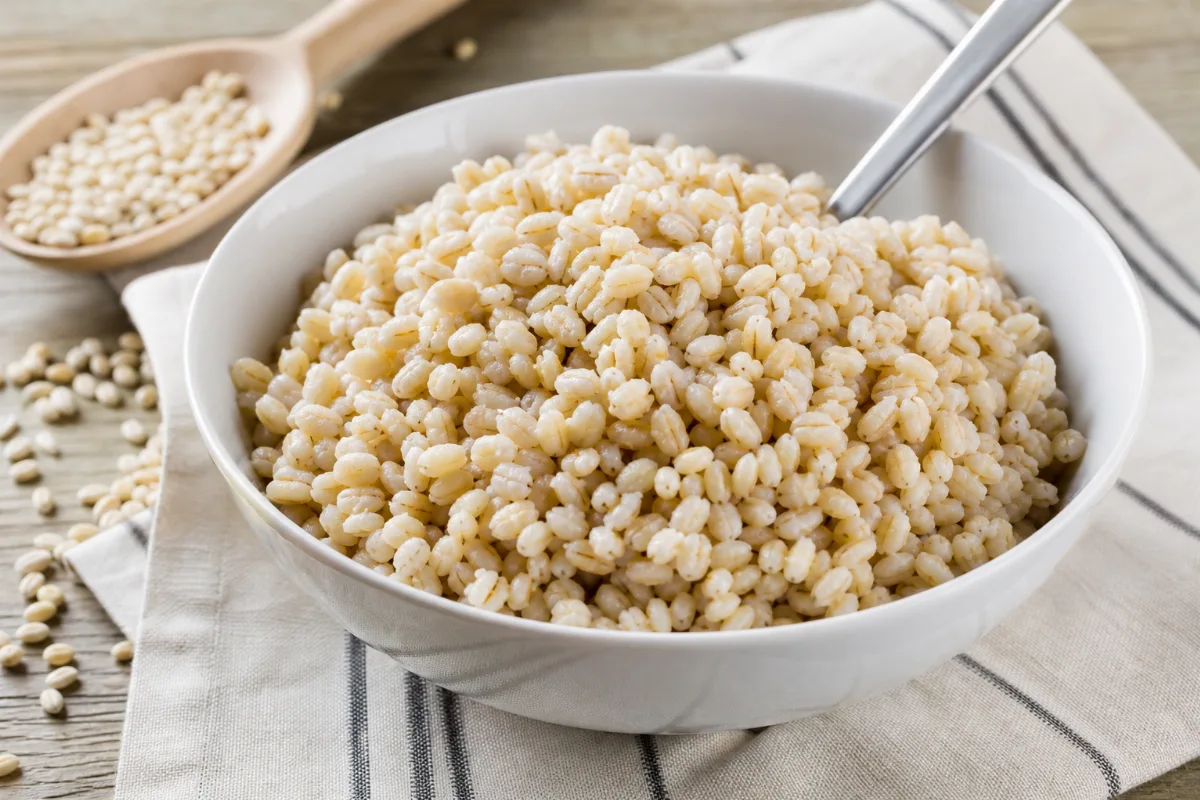
Barley
Hordeum vulgare L. · also called Pearl barley, pearled barley, hulled barley
Barley is a whole grain with a soluble fibre called beta-glucan. In pooled trials, barley and barley beta-glucan lowered LDL cholesterol a little, and barley lowered blood sugar for a couple of hours after meals but not over the long term. The trials are small and the cholesterol result is a blood marker, not proof of fewer heart attacks. The most important caution: barley contains gluten, so it is not safe for people with celiac disease.
General information, not medical advice. Last substantive update · Not medically reviewed. A named clinician has not signed off on this page. How this page is made
About Barley
Barley is a cereal grain eaten whole or pearled. It is a fibre-rich food with beta-glucan, not a proven remedy. The cholesterol findings come from small, older trials and are a blood marker. The main safety point is gluten.
What it is
Barley (Hordeum vulgare L., a grass in the family Poaceae) is a cereal grain. USDA lists hulled barley and pearled barley, and the US health-claim rule also names barley bran, flakes, grits, flour and meal.
Cooked pearled barley, per 100 g (USDA): 123 kcal, 2.26 g protein, 28.22 g carbohydrate, 3.8 g fibre, 1.33 mg iron, 8.6 micrograms selenium and 2.063 mg niacin. A cup of cooked pearled barley (157 g) has about 193 kcal, 6.0 g fibre and 13.5 micrograms selenium. Raw hulled barley is far denser: 17.3 g of fibre per 100 g, because cooked barley holds water.
Pearled or hulled barley: what the studies say
The US rule behind the heart-health label claim lists dehulled and hull-less whole grain barley and dry-milled products such as pearl barley, flakes, grits, flour and bran, each with minimum beta-glucan and fibre content. It is a labelling rule, not personal advice.
No study read compared hulled with pearled barley, so whether one lowers cholesterol more than the other is not known. The cholesterol analyses pooled barley foods with beta-glucan taken from barley.
What the research shows
Cholesterol: a 2010 pooled analysis of 11 randomised trials found total cholesterol 0.30 mmol/L lower and LDL 0.27 mmol/L lower with barley or barley beta-glucan than with control, with no clear dose pattern. A 2009 pooled analysis of 8 trials (391 people) found LDL about 10 mg/dL lower and lower triglycerides, with no clear change in HDL. These two analyses probably share trials.
Blood sugar: a 2026 pooled analysis of 31 trials found lower glucose and insulin in the first hours after a meal, with no significant effect on fasting glucose or HbA1c. How it might work for cholesterol: in a small crossover trial, a barley beta-glucan breakfast raised bile acid synthesis.
None of these studies counted heart attacks, strokes or diabetes. No trial compared barley with oats.
At a glance
Traditional uses history, not proof
- Eaten as a staple grain food
- Long use as food is not proof that it treats any condition
Studied for research
- Fibre and minerals, high certainty for the nutrient content
- Cholesterol, moderate certainty (pooled trials of barley and barley beta-glucan)
- Blood sugar after meals, mixed certainty (short-term drop, no long-term change)
Main compounds
- Beta-glucan (soluble fibre)
- Gluten proteins
- Fructans
Common forms
- Pearled barley, cooked, and hulled barley, raw, as food (USDA values read)
- Barley beta-glucan taken from barley appears in the cholesterol trials and is not the same as the grain
Research links: 2010 meta-analysis: barley beta-glucan and cholesterol (11 trials) · 2026 meta-analysis: barley and blood sugar (31 trials) · NHS: Coeliac disease · Research Library · Genes & Biomarkers Library
What it is and its history
- Accepted scientific name
- Hordeum vulgare L.
- Naming authority
- L. (GBIF accepted)
- Common names
- Barley (English); Pearl barley (pearled barley) (English); Hulled barley (English)
- Family or group
- Poaceae (the grass family), as given by GBIF.
- Classification
- Plantae > Tracheophyta > Liliopsida > Poales > Poaceae > Hordeum > Hordeum vulgare
- Native range
- Not verified from a source read.
- Habitat
- Not verified from a source read.
- What it looks like
- Roots: Not verified.; Stems: Not verified.; Leaves: Not verified.; Flowers: Not verified.; Fruit: The grain is the part eaten. USDA lists hulled barley (1 cup raw = 184 g) and pearled barley (1 cup cooked = 157 g).
- Cultivation
- Not verified from a source read.
- Harvest and processing
- The US health-claim rule lists whole grain barley as dehulled or hull-less and dry-milled products as barley bran, flakes, grits, pearl barley, flour and meal. How pearling is done was not read from a source.
- Look-alikes and adulterants
- Name: Wheat and rye; Note: The other two cereals the NHS and NIDDK name as carrying gluten. They have their own food profiles.; Name: Oats; Note: Also contains beta-glucan and is named with barley in the US heart-health label rule. The NHS says oats do not contain gluten but can cause a reaction if produced alongside wheat, barley or rye.; Name: Barley tea; Note: A roasted-barley drink with its own page; studies on the grain do not carry over to the tea.
- Sustainability and conservation
- Not assessed.
Photographs
What is inside, and how it may work
What it contains and how those compounds act in cells and animals. Laboratory and animal mechanisms are not proven effects in people.
Main compounds
| Compound | Family | Where it is concentrated | Activity studied | Level of evidence |
|---|---|---|---|---|
| Beta-glucan (soluble fibre) | polysaccharide | Grain The US rule requires eligible whole grain barley to have at least 4 percent beta-glucan (dry weight). This is a minimum for the claim, not a measured value for any product. | Pooled trials of barley and barley beta-glucan found lower total and LDL cholesterol; in a small human trial it raised bile acid synthesis. 9 1 8 | Human data |
| Dietary fibre (total) | fibre | Grain USDA per 100 g: 17.3 g (hulled, raw), 15.6 g (pearled, raw), 3.8 g (pearled, cooked). | Nutrient content only; no outcome was tied to total fibre in the studies read. 13 14 | Nutrient database |
| Gluten proteins | protein | Grain Not measured in the sources read. | The protein that triggers coeliac (celiac) disease; barley, wheat and rye contain it. 11 12 | Human data |
| Fructans | carbohydrate (FODMAP) | Grain Measured in cooked barley groats in a 2024 laboratory study; no figure in the abstract. | A type of fermentable carbohydrate that can cause bowel symptoms in some people. 6 | Lab |
| Selenium, niacin, manganese and copper | minerals and vitamins | Grain USDA, pearled barley cooked, per 100 g: selenium 8.6 micrograms, niacin 2.063 mg, manganese 0.259 mg, copper 0.105 mg. | Nutrients. No health outcome from these amounts was tested in the studies read. 14 | Nutrient database |
Mechanisms, receptors and pathways
| Target or pathway | Gene or receptor | What was found | Level |
|---|---|---|---|
| Bile acid synthesis | CYP7A1 (the authors tested the variant rs3808607) | In a crossover trial of 30 adults with mild high cholesterol, 3 g of high-molecular-weight barley beta-glucan in a breakfast lowered total cholesterol and raised bile acid synthesis, while cholesterol absorption and synthesis did not change significantly. The authors suggest more bile acid made may explain the effect. This is the authors' interpretation of a small trial. 8 | Human data |
| Blood sugar and insulin after meals | Not specified | The pooled analysis found lower after-meal glucose and insulin but its abstract does not describe how. 5 | Human data |
Absorption, metabolism and elimination
- Absorption
- Not found for barley nutrients in people.
- Distribution
- Not found.
- Metabolism
- Not found.
- Elimination
- Not found.
- Bioavailability
- Not established in the sources read.
Isolated compounds versus whole extracts
The cholesterol analyses pooled barley foods with beta-glucan isolated from barley; the 2010 authors found no significant difference by type of intervention or food matrix, but the foods and extracts are still different products. The mechanism trial used a barley beta-glucan in a breakfast. The appetite trial used a high-beta-glucan barley mixed with rice. Barley tea and supplements were not studied here.
Nutritional composition
Nutrition from USDA FoodData Central (SR Legacy, April 2018 release; values read 2026-10-26 from a saved copy of the USDA data kept with this project, because the public API key was rate-limited). Pearled barley, cooked (FDC 170285), per 100 g: 123 kcal, 2.26 g protein, 0.44 g fat, 28.22 g carbohydrate (0.28 g sugars), 3.8 g fibre, 93 mg potassium, 3 mg sodium, 11 mg calcium, 1.33 mg iron, 22 mg magnesium, 54 mg phosphorus, 0.82 mg zinc, 0.259 mg manganese, 0.105 mg copper, 8.6 micrograms selenium, 0.083 mg thiamin and 2.063 mg niacin. One typical USDA portion of 1 cup cooked (157 g, the 100 g values multiplied by 1.57): about 193 kcal, 3.6 g protein, 0.7 g fat, 44.3 g carbohydrate, 6.0 g fibre, 146 mg potassium, 5 mg sodium, 2.1 mg iron, 35 mg magnesium, 1.3 mg zinc, 0.41 mg manganese, 0.16 mg copper, 13.5 micrograms selenium and 3.2 mg niacin. Barley, hulled, raw (FDC 170283), per 100 g: 354 kcal, 12.48 g protein, 2.3 g fat, 73.48 g carbohydrate, 17.3 g fibre, 452 mg potassium, 3.6 mg iron, 133 mg magnesium, 2.77 mg zinc, 1.943 mg manganese, 37.7 micrograms selenium. Raw dry and cooked grain are not comparable by weight because cooked barley holds water. Values differ between products.
1 high certainty1 moderate certainty1 mixed findings1 low certainty1 not enough evidence
What was looked at
The 5 benefits and uses checked for Barley, each with how strong the evidence is. Tap one to open it.
- Fibre, selenium, niacin and other nutrients (nutrient content)High certainty
- Cholesterol (barley and barley beta-glucan)Moderate certainty
- Blood sugar and insulin after a mealMixed findings
- Appetite and the next mealsNot enough evidence
- Whole grains, heart disease and early death (observational)Low certainty
Lab markers tracked in the studies
LDL cholesterolTotal cholesterolTriglyceridesHDL cholesterolBlood glucose after a mealInsulin after a mealFasting glucose and HbA1c
What is Barley good for?
The main studied uses and how strong the human evidence is for each. Most results are blood markers, not heart attacks or diabetes outcomes.
Benefits, one by one
Each card is a research question, not a promise. Tap a goal to filter. Open a card to see the studies, doses and limits.
Fibre, selenium, niacin and other nutrients (nutrient content)
High certaintyCooked pearled barley has 3.8 g of fibre per 100 g (about 6 g in a cup), plus selenium, niacin, manganese and copper. Raw hulled barley has more fibre per 100 g (17.3 g) because it has not taken up water.
2 studiesPearled barley cooked and hulled barley raw, from USDA tables. Other …
Studies, doses and limits
What the trials found
No trial was read showing that eating barley corrects a nutrient shortfall. The numbers are food-table values.
Results
Barley is a fibre-rich grain. Cooked barley holds water, so its amounts per 100 g are lower than the raw grain's.
Effect sizes as reported
USDA, pearled barley cooked, per 100 g: 123 kcal, 2.26 g protein, 28.22 g carbohydrate, 3.8 g fibre, 8.6 micrograms selenium, 2.063 mg niacin, 0.259 mg manganese, 0.105 mg copper. Hulled barley raw, per 100 g: 354 kcal, 12.48 g protein, 17.3 g fibre.
Why this rating
High that the food contains these nutrients (USDA data, read from a saved copy). Not tested for any health outcome.
Form and dose studied
Pearled barley cooked and hulled barley raw, from USDA tables. Other forms (flakes, flour, bran) were not looked up.
Who was studied
General adult diet.
Limits
Nutrient facts, not trials. Values differ between raw and cooked grain, between hulled and pearled barley, and between brands.
Why researchers looked
Barley is a whole grain eaten for its fibre, and its beta-glucan fibre is the part most studied for health.
Traditional use
Traditional uses of barley were not read from a source for this page, so none is described.
Proposed mechanism Nutrient database
These are nutrient amounts in the food, taken from USDA tables.
A proposed mechanism does not show that the effect happens in people.
Barley contains gluten; see the Safety tab.
Cholesterol (barley and barley beta-glucan)
Moderate certaintyIn pooled trials, barley foods and beta-glucan taken from barley lowered total and LDL ('bad') cholesterol a little compared with control. The trials are older and small, and cholesterol is a risk marker, not a heart attack count.
3 studiesBarley foods and beta-glucan isolated from barley were pooled. The me…
Studies, doses and limits
What the trials found
A 2010 meta-analysis pooled 11 randomised trials (published 1989 to 2008) of barley and barley beta-glucan. A 2009 meta-analysis pooled 8 randomised trials (391 people, 4 to 12 weeks). A 2017 crossover trial in 30 adults with mild high cholesterol looked at how it might work. The two meta-analyses probably share some trials.
Results
Lower total and LDL cholesterol with barley than with control in both pooled analyses. The 2009 analysis also found lower triglycerides and no significant change in HDL. The 2010 authors say the effect did not look dose-dependent and did not differ by type of intervention or food matrix.
Effect sizes as reported
2010: total cholesterol -0.30 mmol/L (95% CI -0.39 to -0.21), LDL -0.27 mmol/L (-0.34 to -0.20). 2009: total -13.38 mg/dL, LDL -10.02 mg/dL (-14.03 to -6.00), triglycerides -11.83 mg/dL (-20.12 to -3.55); HDL not significant (P=.07).
Why this rating
Moderate: two pooled analyses agree and the differences are statistically clear. Held back from higher because the trials are small and old, foods and isolated beta-glucan were pooled, the analyses overlap, no formal certainty (GRADE) rating is given in the abstracts, and the outcome is a blood marker.
Form and dose studied
Barley foods and beta-glucan isolated from barley were pooled. The mechanism trial used a barley beta-glucan in a breakfast, not whole barley. No comparison of pearled with hulled barley was found.
Who was studied
Healthy adults and adults with high cholesterol.
Limits
Old, small trials. No trial reported heart attacks or strokes in these abstracts. Funding is not stated in the abstracts. A different effect for barley than for oats was not tested head to head in anything read.
Why researchers looked
Barley is rich in beta-glucan, a soluble fibre that is also studied in oats for cholesterol.
Traditional use
Not described in the sources read.
Proposed mechanism Human mechanistic trial
In a small human crossover trial, a barley beta-glucan breakfast raised bile acid synthesis; cholesterol absorption and synthesis did not change significantly. The authors suggest more bile acid made may explain the lower cholesterol.
A proposed mechanism does not show that the effect happens in people.
Barley contains gluten; see the Safety tab.
Blood sugar and insulin after a meal
Mixed findingsIn a 2026 pooled analysis of 31 controlled trials, barley lowered blood glucose in the first two hours after a meal and insulin in the early hours. It did not significantly change fasting glucose or HbA1c in longer trials.
1 studiesBarley intake (forms not described in the abstract).
Studies, doses and limits
What the trials found
One systematic review and meta-analysis of 31 controlled trials (34 arms; 660 case participants and 665 controls), registered with PROSPERO. Only the abstract was read.
Results
A short-lived drop in post-meal glucose and early post-meal insulin. No significant change in fasting glucose or HbA1c.
Effect sizes as reported
Glucose: -10.48 mg/dL at 30 minutes, -12.38 at 60, -6.95 at 120; no significant change at 180 minutes. Insulin: -6.02 pmol/L at 30 minutes, -12.83 at 60; -5.89 at 180 (unit printed differently in the abstract, likely a typo); no significant change at 120 minutes. Fasting glucose and HbA1c: not significant.
Why this rating
Mixed: a clear short-term effect on after-meal numbers but no long-term effect on fasting glucose or HbA1c. The abstract gives no quality rating, no heterogeneity figures and does not say which barley forms were pooled.
Form and dose studied
Barley intake (forms not described in the abstract).
Who was studied
Adults, mixed health status (not described in the abstract).
Limits
One pooled analysis, abstract only. The authors themselves say more high-quality trials are needed. The effect is short and does not show better long-term blood sugar control.
Why researchers looked
Barley is a fibre-rich grain, and soluble fibre is studied for how fast sugar reaches the blood after eating.
Traditional use
Not described in the sources read.
Proposed mechanism Not stated
Not described in the abstract.
A proposed mechanism does not show that the effect happens in people.
People who take medicine for diabetes should ask their prescriber before changing their diet a lot; no barley-specific interaction was found.
Appetite and the next meals
Not enough evidenceIn one small one-day trial, rice cooked with high-beta-glucan barley left 21 healthy Japanese women less hungry and eating less at the next meals than rice alone. Nothing about body weight was shown.
1 studiesCooked white rice mixed with a high-beta-glucan barley variety.
Studies, doses and limits
What the trials found
One randomised crossover trial in 21 healthy women. Breakfast was cooked white rice with high-beta-glucan barley or white rice alone; lunch and dinner were free choice.
Results
Hunger and wish to eat were rated lower, fullness before lunch was higher, and energy eaten at lunch and at lunch plus dinner was lower after the barley breakfast.
Effect sizes as reported
Hunger P=0.032; prospective food consumption P=0.019; fullness before lunch P=0.038; energy intake at lunch P=0.035 and lunch plus dinner P=0.021.
Why this rating
Insufficient: one small, one-day trial in healthy women using a special high-beta-glucan barley mixed with rice. No weight outcome.
Form and dose studied
Cooked white rice mixed with a high-beta-glucan barley variety.
Who was studied
21 healthy Japanese women.
Limits
Tiny, short study. Effects on weight were not measured. Whether ordinary barley does the same was not tested.
Why researchers looked
Fibre can make a meal feel more filling.
Traditional use
Not described in the sources read.
Proposed mechanism Not stated
Not shown in this trial.
A proposed mechanism does not show that the effect happens in people.
See the Safety tab.
Whole grains, heart disease and early death (observational)
Low certaintyLarge studies that followed people over time link eating more whole grain with lower rates of heart disease and death. The abstract does not separate barley, so this is background about whole grains as a group.
1 studiesWhole grain foods as a group.
Studies, doses and limits
What the trials found
A 2016 meta-analysis of 45 prospective studies of whole grain intake.
Results
More whole grain was linked with lower risk of coronary heart disease, cardiovascular disease, cancer death and death from any cause. The stroke link was not statistically significant.
Effect sizes as reported
Per 90 g a day more whole grain: coronary heart disease RR 0.81 (0.75 to 0.87); cardiovascular disease RR 0.78 (0.73 to 0.85); stroke RR 0.88 (0.75 to 1.03); death from any cause RR 0.83 (0.77 to 0.90).
Why this rating
Low: observational, and people who eat more whole grain often differ in other habits. The abstract names whole grain bread, breakfast cereals and bran, not barley.
Form and dose studied
Whole grain foods as a group.
Who was studied
Adults in 45 prospective studies.
Limits
Cannot prove cause and effect. Barley is not reported separately in the abstract.
Why researchers looked
Barley is a whole grain, and whole grains are studied as a group.
Traditional use
Not described in the sources read.
Proposed mechanism Not applicable
Not shown. Observational studies cannot show why.
A proposed mechanism does not show that the effect happens in people.
Barley contains gluten; see the Safety tab.
Connections to the rest of health
How Barley connects to the rest of our health knowledge graph. Every link says what kind of connection it is. A safety link (for example to the liver) is a warning, not a benefit. A study that merely mentions a topic never creates a benefit link.
Explore every connection: goals, body systems, organs, symptoms, genes
A. Wellness goals
| Connected to | Kind of connection | Evidence status | Context | Studies |
|---|---|---|---|---|
| Balanced Nutrition | High certainty | Fibre, selenium, niacin and other nutrients (nutrient content): Cooked pearled barley has 3.8 g of fibre per 100 g (about 6 g in a cup), plus selenium, niacin, manganese and copper. Raw hulled barley has more fibre per 100 g (17.3 g) because it has not taken up water. | 14 13 | |
| Cholesterol Balance | Moderate certainty | Cholesterol (barley and barley beta-glucan): In pooled trials, barley foods and beta-glucan taken from barley lowered total and LDL ('bad') cholesterol a little compared with control. The trials are older and small, and cholesterol is a risk marker, not a heart attack count. | 1 7 8 | |
| Heart Health | Moderate certainty | Cholesterol (barley and barley beta-glucan): In pooled trials, barley foods and beta-glucan taken from barley lowered total and LDL ('bad') cholesterol a little compared with control. The trials are older and small, and cholesterol is a risk marker, not a heart attack count. | 1 7 8 | |
| Blood Sugar Balance | Mixed findings | Blood sugar and insulin after a meal: In a 2026 pooled analysis of 31 controlled trials, barley lowered blood glucose in the first two hours after a meal and insulin in the early hours. It did not significantly change fasting glucose or HbA1c in longer trials. | 5 | |
| Weight Management | Not enough evidence | Appetite and the next meals: In one small one-day trial, rice cooked with high-beta-glucan barley left 21 healthy Japanese women less hungry and eating less at the next meals than rice alone. Nothing about body weight was shown. | 2 | |
| Heart Health | Low certainty | Whole grains, heart disease and early death (observational): Large studies that followed people over time link eating more whole grain with lower rates of heart disease and death. The abstract does not separate barley, so this is background about whole grains as a group. | 3 |
B. Body systems
| Connected to | Kind of connection | Evidence status | Context | Studies |
|---|---|---|---|---|
| Digestive System | Biological association | High certainty | Studied for: Fibre, selenium, niacin and other nutrients (nutrient content) Studied for: Appetite and the next meals | 14 13 2 |
| Cardiovascular System | Biological association | Moderate certainty | Studied for: Cholesterol (barley and barley beta-glucan) Studied for: Whole grains, heart disease and early death (observational) | 1 7 8 3 |
| Endocrine System | Biological association | Mixed findings | Studied for: Blood sugar and insulin after a meal | 5 |
C. Body parts and organs
| Connected to | Kind of connection | Evidence status | Context | Studies |
|---|---|---|---|---|
| Small Intestine | Adverse effect or risk | Documented risk | In celiac disease, gluten from barley, wheat and rye damages the small intestine (NIDDK). Preparation or compound: Gluten in barley |
12 |
E. Health conditions
| Connected to | Kind of connection | Evidence status | Context | Studies |
|---|---|---|---|---|
| Celiac Disease | Adverse effect or risk | Documented risk | Barley contains gluten and is not suitable for people with celiac disease. Preparation or compound: Gluten in barley |
11 12 |
| Irritable Bowel Syndrome | Adverse effect or risk | Not enough evidence | A laboratory study advises caution with barley groats on a low-FODMAP diet; no trial in people with IBS was read. Preparation or compound: Fructans in barley groats |
6 |
I. Biomarkers
| Connected to | Kind of connection | Evidence status | Context | Studies |
|---|---|---|---|---|
| LDL Cholesterol | Moderate certainty | LDL was lower with barley or barley beta-glucan in two pooled analyses of older, small trials. Preparation or compound: Barley foods and barley beta-glucan |
1 7 | |
| LDL cholesterol | Biological association | Moderate certainty | Measured in trials: lowered. A lab change is not the same as a health benefit. | 1 7 |
| Total cholesterol | Biological association | Moderate certainty | Measured in trials: lowered. A lab change is not the same as a health benefit. | 1 7 8 |
| Triglycerides | Biological association | Low certainty | Measured in trials: lowered. A lab change is not the same as a health benefit. | 7 |
| HDL cholesterol | Biological association | Low certainty | Measured in trials: no-change. A lab change is not the same as a health benefit. | 7 |
| Blood glucose after a meal | Biological association | Low certainty | Measured in trials: lowered. A lab change is not the same as a health benefit. | 5 |
| Insulin after a meal | Biological association | Low certainty | Measured in trials: lowered. A lab change is not the same as a health benefit. | 5 |
| Fasting glucose and HbA1c | Biological association | Low certainty | Measured in trials: no-change. A lab change is not the same as a health benefit. | 5 |
K. Biological pathways
| Connected to | Kind of connection | Evidence status | Context | Studies |
|---|---|---|---|---|
| Selenium | Preliminary mechanism | Nutrient database | Cooked pearled barley has 8.6 micrograms of selenium per 100 g by USDA tables; this is a food-table value only. | 14 |
| Beta-glucan | Preliminary mechanism | Human | The soluble fibre studied for cholesterol; named with oats in the US heart-health label rule. | 1 9 |
L. Active compounds
| Connected to | Kind of connection | Evidence status | Context | Studies |
|---|---|---|---|---|
| Beta-glucan (soluble fibre) | Biological association | Human | Pooled trials of barley and barley beta-glucan found lower total and LDL cholesterol; in a small human trial it raised bile acid synthesis. Preparation or compound: Grain |
9 1 8 |
| Dietary fibre (total) | Biological association | Nutrient database | Nutrient content only; no outcome was tied to total fibre in the studies read. Preparation or compound: Grain |
13 14 |
| Gluten proteins | Biological association | Human | The protein that triggers coeliac (celiac) disease; barley, wheat and rye contain it. Preparation or compound: Grain |
11 12 |
| Fructans | Biological association | Lab | A type of fermentable carbohydrate that can cause bowel symptoms in some people. Preparation or compound: Grain |
6 |
| Selenium, niacin, manganese and copper | Biological association | Nutrient database | Nutrients. No health outcome from these amounts was tested in the studies read. Preparation or compound: Grain |
14 |
Each connection is stored with the ingredient, the connected record, the kind of connection, the evidence status, the supporting studies, the preparation or compound involved, and a review date (last reviewed October 26, 2026).
The evidence
The research centre for Barley. Every record here was checked against PubMed or the publisher's page; we never list a study we have not verified.
Evidence by outcome
Bars show how many studies we found for each outcome, not how well it works. People are added up across trials only (reviews are not added, to avoid double counting).
How we rate evidence
High certainty
Several well-run trials or reviews agree; further research is unlikely to change the picture much.
Moderate certainty
Good trials point the same way, but some doubt remains.
Low certainty
Small, short or inconsistent trials. The finding could change with better research.
Very low certainty
Very little or very weak human data. Treat as a possibility only.
Mixed findings
Trials or reviews disagree with each other.
Not enough evidence
Not enough human research to say either way.
Evidence against
Good research found no benefit, or found harm.
We take the reviewers' own risk-of-bias and GRADE statements where they exist, and otherwise judge from study size, design, consistency, directness and whether a product matches what is sold. Many publications do not make evidence high. Method note: We started from our existing barley summary, re-read the PubMed abstracts for the pooled analyses, the trials and the lab and exposure reports, read the NHS, NIDDK and US eCFR pages, and used saved USDA FoodData Central values for nutrition. Only abstracts were read for studies. Items we could not verify are flagged in the research gaps.
Study library: every study we checked 14
| Study | Design | People | Product, dose, length | Result |
|---|---|---|---|---|
| AbuMweis 2010 β-glucan from barley and its lipid-lowering capacity: a meta-analysis of randomized, controlled trials. Eur J Clin Nutr · PMID 20924392 · DOI |
Systematic review meta analysis |
11 randomised trials published 1989 to 2008 | Barley foods and beta-glucan isolated from barley Barley grain foods and isolated barley beta-glucan, pooled Amounts varied between trials; not stated in the abstract · vs Control |
Barley and barley beta-glucan lowered total and LDL cholesterol compared with control. The pattern could not be viewed as dose-dependent. There were no significant differences by type of intervention or food matrix. Total cholesterol -0.30 mmol/L; LDL cholesterol -0.27 mmol/L (Total -0.39 to -0.21; LDL -0.34 to -0.20 (both P<0.00001)) Methods, limits and fundingOutcomes: Total and LDL cholesterol Limitations: Foods and isolated beta-glucan were pooled, so it is not a clean test of barley as eaten. Trials are old (to 2008). The abstract gives no certainty rating (GRADE). Blood cholesterol is a risk marker, not a heart attack or stroke count. Funding and conflicts: Funding is not stated in the abstract (the record lists non-US government research support). Read: abstract |
| Aoe 2014 Effect of cooked white rice with high β-glucan barley on appetite and energy intake in healthy Japanese subjects: a randomized controlled trial. Plant Foods Hum Nutr · PMID 25139426 · DOI |
Controlled trial |
21 21 healthy Japanese women (average BMI 23.3); randomised crossover |
Cooked white rice mixed with high beta-glucan barley Breakfast of cooked white rice with high-beta-glucan barley, followed by free-choice lunch and dinner One breakfast per arm; amounts not given in the abstract One day per arm (crossover) · vs Cooked white rice alone |
After the barley breakfast, hunger and wish to eat were rated lower and fullness before lunch higher. Energy eaten at lunch and across lunch plus dinner was lower than after white rice alone. Lower hunger (P=0.032), lower prospective food consumption (P=0.019), higher fullness before lunch (P=0.038); lower energy intake at lunch (P=0.035) and at lunch plus dinner (P=0.021) (Not given in the abstract) Methods, limits and fundingOutcomes: Hunger, fullness and energy eaten at lunch and dinner Limitations: One small one-day crossover trial in healthy women. Body weight was not measured in the abstract, so nothing is shown about weight. The barley was a high-beta-glucan variety mixed with rice. Funding and conflicts: Funding is not stated in the abstract (the record lists non-US government research support). Read: abstract |
| Aune 2016 Whole grain consumption and risk of cardiovascular disease, cancer, and all cause and cause specific mortality: systematic review and dose-response meta-analysis of prospective studies. BMJ · PMID 27301975 · DOI |
Systematic review meta analysis |
45 prospective studies (64 publications) of whole grain intake | Whole grains as a group (barley is not named in the abstract) Whole grain foods such as bread and breakfast cereals Per 90 g a day more whole grain Follow-up years (not stated in the abstract) · vs Lower intake |
Eating more whole grain was linked with lower risk of coronary heart disease, cardiovascular disease, cancer death and death from any cause. The link with stroke was not statistically significant. Per 90 g/day more whole grain: coronary heart disease RR 0.81; cardiovascular disease RR 0.78; stroke RR 0.88 (not significant); death from any cause RR 0.83; cancer death RR 0.85 (CHD 0.75 to 0.87; CVD 0.73 to 0.85; stroke 0.75 to 1.03; all-cause death 0.77 to 0.90; cancer death 0.80 to 0.91) Methods, limits and fundingOutcomes: Coronary heart disease, stroke, cardiovascular disease, cancer, deaths Limitations: Observational: it cannot show that whole grain caused the lower risk. The abstract names whole grain bread, breakfast cereals and bran, not barley, so it says nothing separate about barley. Funding and conflicts: The authors declare no support from any organisation for the submitted work and no relevant financial relationships. Read: abstract |
| European Food Safety Authority; Arcella 2017 Human and animal dietary exposure to ergot alkaloids. EFSA J · PMID 32625563 · DOI |
Exposure assessment n/a |
European food and feed samples analysed for 12 main ergot alkaloids; exposure estimated for people by age group | Cereals including rye, wheat, triticale, barley, millets and oats Cereal-based foods, measured for ergot alkaloids |
EFSA says the ergot fungus Claviceps purpurea commonly affects cereals such as rye, wheat, triticale, barley, millets and oats. The highest levels were in rye and rye products. Estimated exposure was highest in toddlers and other children. Highest mean chronic exposure (upper-bound estimate) 0.47 micrograms per kg body weight a day in toddlers and 0.46 in other children (Not applicable) Methods, limits and fundingOutcomes: Ergot alkaloid levels and dietary exposure Limitations: Not a barley study. It covers many foods, and the abstract does not give a barley figure. The risk for any one person from ordinary barley foods is not stated in the abstract. Funding and conflicts: Official risk assessment by the European Food Safety Authority. Read: abstract |
| Nematizadeh 2026 Effect of Barley Intervention on Glycemic Control and Insulin Sensitivity in Adults: A Systematic Review and Meta-Analysis of 31 Controlled Trials. Nutr Rev · PMID 41651462 · DOI |
Systematic review meta analysis |
1325 31 controlled trials (34 arms): 660 case participants and 665 controls |
Barley Barley intake (the abstract calls it barley supplementation; the forms pooled are not described) Short-term meal tests and longer trials · vs Control |
Barley lowered blood glucose in the first two hours after a meal and insulin in the early hours. In longer trials it did not significantly change fasting glucose or HbA1c. The authors ask for more high-quality trials. After-meal glucose: -10.48 mg/dL at 30 min, -12.38 at 60 min, -6.95 at 120 min, no significant change at 180 min. After-meal insulin: -6.02 pmol/L at 30 min, -12.83 at 60 min, -5.89 at 180 min (the abstract prints a different unit for the last figure, which looks like a typo), no significant change at 120 min. (Not given in the abstract) Methods, limits and fundingOutcomes: Blood glucose and insulin after a meal; fasting glucose; HbA1c Limitations: Abstract read only; the barley forms, the size of the differences between trials and the quality ratings are not in it. A very recent paper (online February 2026). The post-meal effect is short and does not carry over to fasting glucose or HbA1c. Funding and conflicts: Funding is not stated in the abstract. Registration: PROSPERO CRD42022368122 Read: abstract |
| Pejcz 2024 Fructan Concentrations in Cooked Cereal Grains as a Nutritional Consideration for Low-FODMAP Diet. Molecules · PMID 38257195 · DOI |
Laboratory analysis n/a |
Commercial cooked grains and rice analysed in a laboratory (white and brown rice, barley, wheat groats, buckwheat and others) | Cooked grains including barley groats Cooked grain products, measured for fructans · vs Other grains and rice |
The authors say that white long-grain rice and arborio rice look like safer choices on a low-FODMAP diet, and that caution is advised with barley groats and couscous. No numbers in the abstract (Not applicable) Methods, limits and fundingOutcomes: Fructan content of cooked grains Limitations: A laboratory measurement of products, not a trial in people and not a report of symptoms. The abstract gives no barley figure. Funding and conflicts: The authors declare no conflicts of interest. Read: abstract |
| Talati 2009 The effects of barley-derived soluble fiber on serum lipids. Ann Fam Med · PMID 19273871 · DOI |
Systematic review meta analysis |
391 8 randomised trials, 391 healthy and high-cholesterol men and women, 4 to 12 weeks |
Barley (barley-derived soluble fibre) Barley or barley beta-glucan, as given in each trial Varied; not stated in the abstract 4 to 12 weeks · vs Control |
Barley lowered total cholesterol, LDL cholesterol and triglycerides. HDL cholesterol did not change significantly (P=.07). Total cholesterol -13.38 mg/dL; LDL -10.02 mg/dL; triglycerides -11.83 mg/dL (Total -18.46 to -8.31; LDL -14.03 to -6.00; triglycerides -20.12 to -3.55) Methods, limits and fundingOutcomes: Total, LDL and HDL cholesterol, triglycerides Limitations: Small, short trials. This analysis and the 2010 one searched the same period and probably share trials; overlap was not checked, so they are not two independent confirmations. Funding and any rating of certainty are not in the abstract. Funding and conflicts: Funding is not stated in the abstract. Read: abstract |
| Wang 2017 Barley β-glucan reduces blood cholesterol levels via interrupting bile acid metabolism. Br J Nutr · PMID 29115200 · DOI |
Controlled trial |
30 30 adults with mild high cholesterol; randomised crossover |
Barley beta-glucan added to a breakfast Barley beta-glucan (3 g high-molecular-weight, 5 g low-molecular-weight or 3 g low-molecular-weight) in a breakfast As tested in the trial 5 weeks per arm (crossover) · vs Control diet |
The 3 g high-molecular-weight arm lowered total cholesterol (P=0.029). Cholesterol absorption (P=0.25) and synthesis (P=0.14) did not change significantly. Bile acid synthesis rose (P=0.049). The authors conclude that more bile acid made, not less cholesterol absorbed, may explain the effect. Total cholesterol lower with 3 g high-molecular-weight beta-glucan; the abstract gives P values, not the size of the fall (Not given in the abstract) Methods, limits and fundingOutcomes: Total cholesterol, cholesterol absorption, cholesterol synthesis, bile acid synthesis Limitations: Small trial of a beta-glucan fibre in a breakfast, not whole barley. The authors are at a Canadian government agriculture research centre and a university; funding is not stated in the abstract. It explains how, it does not show a heart benefit. Funding and conflicts: Funding is not stated in the abstract. Authors are at Agriculture and Agri-Food Canada research centres and the University of Manitoba. Read: abstract |
| s-fda-cfr-101-81 US eCFR, 21 CFR 101.81: Health claims: soluble fiber from certain foods and risk of coronary heart disease · Source |
Authoritative guidance n/a |
Methods, limits and fundingRead: full-text | ||
| s-gbif-hordeum-vulgare GBIF Backbone: Hordeum vulgare L. (usageKey 2706056) · Source |
Reference database n/a |
Methods, limits and fundingRead: full-text | ||
| s-nhs-coeliac NHS: Coeliac disease · Source |
Health agency n/a |
Methods, limits and fundingRead: full-text | ||
| s-niddk-celiac NIDDK: Definition and Facts for Celiac Disease · Source |
Health agency n/a |
Methods, limits and fundingRead: full-text | ||
| s-usda-fdc-170283 USDA FoodData Central: Barley, hulled (FDC 170283, SR Legacy, April 2018) · Source |
Reference database n/a |
Methods, limits and fundingRead: full-text | ||
| s-usda-fdc-170285 USDA FoodData Central: Barley, pearled, cooked (FDC 170285, SR Legacy, April 2018) · Source |
Reference database n/a |
Methods, limits and fundingRead: full-text |
What we do not know yet
- No trial of barley and heart attacks, strokes or deaths was found; the cholesterol results are a blood marker.
- No comparison of pearled with hulled barley, or of barley with oats, was found.
- The blood sugar analysis is abstract-only and does not say which barley forms were pooled.
- No barley-specific advice on pregnancy, breastfeeding, children, barley allergy or non-coeliac gluten sensitivity was found.
- History, traditional use and growing details of barley were not read from a source.
How new research is added
New studies are found by a saved PubMed search and placed in a review queue before the page changes.
Lab markers
What changed in blood or saliva tests during trials. A changed number is not the same as feeling or being healthier, and we give no "normal ranges".
Metabolic 4
LDL cholesterol
Lowered in trials
The 'bad' cholesterol carried in the blood. Higher levels are linked to a higher chance of heart and blood vessel disease.
Moderate certaintyResults and what it means
Why it was measured
It is the usual blood marker used in diet trials for heart risk.
Statistical vs. clinical meaning
A modest average fall that was consistent between two pooled analyses. It does not show fewer heart attacks.
Safety implication
None specific, apart from the gluten point on the Safety tab.
| Study | Result | People | Product |
|---|---|---|---|
| 1 | LDL -0.27 mmol/L (95% CI -0.34 to -0.20) with barley or barley beta-glucan versus control | 11 randomised trials, 1989 to 2008 | Barley foods and isolated barley beta-glucan |
| 7 | LDL -10.02 mg/dL (95% CI -14.03 to -6.00) with barley versus control | 8 randomised trials, 391 people, 4 to 12 weeks | Barley or barley-derived soluble fibre |
Total cholesterol
Lowered in trials
All the cholesterol carried in the blood, including LDL and HDL.
Moderate certaintyResults and what it means
Why it was measured
A routine blood test in diet trials.
Statistical vs. clinical meaning
Small average falls in older trials.
Safety implication
None specific.
| Study | Result | People | Product |
|---|---|---|---|
| 1 | Total cholesterol -0.30 mmol/L (95% CI -0.39 to -0.21) | 11 randomised trials | Barley foods and isolated barley beta-glucan |
| 7 | Total cholesterol -13.38 mg/dL (95% CI -18.46 to -8.31) | 8 randomised trials, 391 people | Barley or barley-derived soluble fibre |
| 8 | Total cholesterol lower with the 3 g high-molecular-weight beta-glucan breakfast (P=0.029); size not given in the abstract | 30 adults with mild high cholesterol, crossover | Barley beta-glucan in a breakfast, 5 weeks |
Triglycerides
Lowered in trials
A type of fat carried in the blood.
Low certaintyResults and what it means
Why it was measured
Often measured with cholesterol in diet trials.
Statistical vs. clinical meaning
Found in one pooled analysis only; the other pooled analysis read here did not report it in its abstract.
Safety implication
None specific.
| Study | Result | People | Product |
|---|---|---|---|
| 7 | Triglycerides -11.83 mg/dL (95% CI -20.12 to -3.55) | 8 randomised trials, 391 people | Barley or barley-derived soluble fibre |
HDL cholesterol
No clear change in trials
The 'good' cholesterol carried in the blood.
Low certaintyResults and what it means
Why it was measured
Measured with LDL to see the whole cholesterol picture.
Statistical vs. clinical meaning
Barley did not clearly change HDL in the pooled trials.
Safety implication
None specific.
| Study | Result | People | Product |
|---|---|---|---|
| 7 | No significant change in HDL cholesterol (P=.07) | 8 randomised trials, 391 people | Barley or barley-derived soluble fibre |
Other 3
Blood glucose after a meal
Lowered in trials
How high blood sugar climbs in the hours after eating.
Low certaintyResults and what it means
Why it was measured
It shows how quickly a meal's carbohydrate reaches the blood.
Statistical vs. clinical meaning
Short-lived and modest. The abstract gives no quality rating.
Safety implication
None specific.
| Study | Result | People | Product |
|---|---|---|---|
| 5 | Glucose -10.48 mg/dL at 30 minutes, -12.38 at 60, -6.95 at 120; no significant change at 180 minutes | 31 controlled trials (34 arms) | Barley intake, forms not described in the abstract |
Insulin after a meal
Lowered in trials
The hormone released after eating to move sugar out of the blood.
Low certaintyResults and what it means
Why it was measured
Used with glucose to see how the body handles a meal.
Statistical vs. clinical meaning
Early after-meal insulin was lower; later changes were not significant.
Safety implication
None specific.
| Study | Result | People | Product |
|---|---|---|---|
| 5 | Insulin -6.02 pmol/L at 30 minutes and -12.83 at 60; no significant change at 120 minutes; no significant change beyond the early period | 31 controlled trials (34 arms) | Barley intake |
Fasting glucose and HbA1c
No clear change in trials
Fasting glucose is blood sugar after not eating. HbA1c reflects average blood sugar over about three months.
Low certaintyResults and what it means
Why it was measured
These show longer-term blood sugar control.
Statistical vs. clinical meaning
The after-meal effect did not carry over to long-term blood sugar markers in this analysis.
Safety implication
None specific.
| Study | Result | People | Product |
|---|---|---|---|
| 5 | No significant change in fasting glucose or HbA1c in the longer-term trials | 31 controlled trials (34 arms) | Barley intake |
Safety
What studies and official sources say about side effects, medicines and who should check first. Each point shows what kind of evidence it comes from.
Main points to know 3
- Barley contains gluten: not for people with coeliac (celiac) disease. The NHS says coeliac disease is caused by a reaction to gluten, a protein found in wheat, barley and rye, and that gluten is in any food containing them. The US NIDDK says the same: celiac disease damages the small intestine and is triggered by gluten from wheat, barley and rye. The NHS adds that most beers are made with barley. If you have been told to avoid gluten, barley foods are not safe for you. Authoritative guidance 11 12
- Fructans: caution on a low-FODMAP diet. A 2024 laboratory study measured fructans (a type of FODMAP sugar) in cooked grains. Its authors advise caution with barley groats for people following a low-FODMAP diet, and name white long-grain rice and arborio rice as likely safer grains. This was a measurement of products, not a trial in people with bowel symptoms, and the abstract gives no barley figure. Laboratory analysis 6
- Ergot, a fungus that can affect cereals. The European Food Safety Authority says the ergot fungus Claviceps purpurea commonly affects cereals including rye, wheat, triticale, barley, millets and oats. The highest ergot alkaloid levels were in rye and rye products, and the estimated exposure was highest in toddlers and other children across all foods. EFSA's abstract does not give a barley level or say that ordinary barley foods are a problem. Authoritative guidance 4
Side effects 2
| Effect | How often | Severity and recovery | Evidence |
|---|---|---|---|
| Reaction to gluten in people with coeliac (celiac) disease: diarrhoea, stomach pain, bloating, wind, indigestion or constipation The symptom list is the NHS's list for coeliac disease; it is not specific to barley. | Not given in the sources read. | can be serious over time (damage to the small intestine) Not described in the parts read. | Authoritative guidance 11 12 |
| Bowel symptoms in some people sensitive to fructans (FODMAPs) The paper says fructans in grains can contribute to disorders in some individuals; it did not test people with barley. | Not found. | not described Not described. | Laboratory analysis 6 |
Liver
No liver injury from eating barley was found in the sources read. A liver-safety source (such as LiverTox) was not searched for barley.
How often. No frequency was found.
Monitoring. No agency monitoring advice was found.
This is a safety connection. It is not evidence that Barley supports liver health.
Medicines and supplements 2
| With | Why it matters | Importance | Evidence | What to do |
|---|---|---|---|---|
| Medicines that lower blood sugar (for example insulin or tablets for diabetes) prescription | Barley lowered blood glucose in the first hours after meals in a pooled analysis, so a big change in diet could in theory add to a medicine's effect. | No source read links barley to a specific interaction or low blood sugar episode. This is a general caution, not a documented interaction. | Theoretical Not enough evidence 5 | Tell your clinician or pharmacist if you make a big change to what you eat. |
| Cholesterol medicines prescription | Barley beta-glucan lowered cholesterol in trials, so a big change in diet could in theory add to a medicine's effect. | No source read links barley to a specific interaction with cholesterol medicines. | Theoretical Not enough evidence 1 7 | Tell your clinician or pharmacist if you make a big change to what you eat. |
Who should check first 4
| Situation | Advice | Evidence |
|---|---|---|
| Coeliac (celiac) disease or a medical gluten-free diet | Avoid barley and foods made with it, and read labels. This includes malt and most beers, which the NHS notes are made with barley. Ask your doctor or a dietitian about your own case. | Authoritative guidance 11 12 |
| Low-FODMAP diet for irritable bowel symptoms | One laboratory study advises caution with barley groats. Ask a dietitian who knows low-FODMAP diets how barley fits. | Laboratory analysis 6 |
| Pregnancy or breastfeeding | The sources read do not single out barley as a food for caution in pregnancy or breastfeeding, and none gave barley-specific advice. This is an absence of information, not a safety guarantee. Ask your midwife, doctor or dietitian about your own diet. | Insufficient |
| Children | No barley-specific advice for children, including choking risk, was read. EFSA's ergot assessment found the highest estimated ergot exposure in toddlers and other children across all foods. | Authoritative guidance 4 |
Overdose, product quality and regulators
Summary. No toxicity from barley as ordinary food was found in the sources read. The points on this page are gluten, fructans and a possible ergot contamination of cereals.
Animal. Not reviewed.
High dose or long term signals. Not researched.
Overdose response. Not found.
Genotoxicity. Not researched.
Heavy metals, pesticides and mould toxins other than ergot were not researched for barley. The one contamination source read is EFSA's report on ergot alkaloids in cereals.
Ergot alkaloids. Ergot (Claviceps purpurea) commonly affects cereals including barley. The highest levels were reported in rye products. EFSA found that grains with no visible ergot bodies can still contain measurable alkaloids, so looking at the grain does not clear it. 4
Cross-contamination with gluten. The NHS notes that oats can cause a reaction in coeliac disease if produced in the same place as wheat, barley and rye. This is about oats, not barley itself. 11
| Body | Action | Date |
|---|---|---|
| US FDA (eCFR 21 CFR 101.81) (United States) | Allows a labelled health claim linking diets low in saturated fat and cholesterol that include beta-glucan soluble fibre from whole oats or barley with a lower risk of coronary heart disease. Lists eligible barley forms: dehulled and hull-less whole grain barley and dry-milled barley products (bran, flakes, grits, pearl barley, flour, meal), each with minimum beta-glucan and fibre content. A labelling rule, not personal advice. source | 2026-10-26 |
| NHS (UK) (United Kingdom) | Coeliac disease: gluten is found in wheat, barley and rye; most beers are made with barley. source | 2023-03-31 |
| NIDDK (US National Institutes of Health) (United States) | Celiac disease: gluten is a protein found naturally in wheat, barley and rye and triggers the disease. source | 2020-10 |
| EFSA (European Food Safety Authority) (European Union) | Human and animal dietary exposure to ergot alkaloids (2017): ergot affects cereals including barley; highest levels in rye; highest estimated exposure in toddlers and other children. source | 2017-07-06 |
When to get medical help
- Ongoing diarrhoea, stomach pain, bloating or tiredness after foods that contain gluten: see a doctor for testing. The NHS lists these among the symptoms of coeliac disease.
- Ask a doctor or pharmacist before changing what you eat if you take medicine for diabetes or cholesterol.
Stop using the product and contact a clinician or emergency service. In the US, Poison Control is 1-800-222-1222.
General information only, not medical advice. Ask a clinician or pharmacist before use, especially with medicines, in pregnancy or with a health condition. See the Natural Remedy Safety guide.
Frequently asked questions
What is barley?
Does barley lower cholesterol?
Is barley better than oats for cholesterol?
Proper evidence not found. Both are named in the US heart-health label rule, but no head-to-head trial was found in what was read.
Is barley gluten-free?
Does barley help with blood sugar?
A 2026 pooled analysis of 31 trials found lower glucose and insulin in the first hours after a meal. It found no significant change in fasting glucose or HbA1c in longer trials.
Does barley help with weight loss?
Proper evidence not found. One small one-day trial of 21 women looked at hunger and food eaten at the next meals, not body weight.
Is pearled barley as good as hulled barley?
What nutrients are in cooked barley?
Per 100 g of cooked pearled barley, USDA lists 123 kcal, 3.8 g of fibre, 8.6 micrograms of selenium, 2.063 mg of niacin, 0.259 mg of manganese and 0.105 mg of copper.
Can I eat barley on a low-FODMAP diet?
A 2024 laboratory study of fructans in cooked grains advises caution with barley groats on a low-FODMAP diet and names white long-grain rice as a likely safer grain. It did not test people. A dietitian can help with your own case.
Is barley safe in pregnancy or for children?
The sources read gave no barley-specific advice for pregnancy, breastfeeding or children, so nothing is stated either way. Ask your midwife, doctor or dietitian about your own diet.
Does barley interact with medicines?
Explore by health goal
Heart HealthBalanced NutritionCholesterol BalanceBlood Sugar BalanceWeight Management
Editorial transparency
- Written by
- AlternativeMed editorial team. Research compiled with AI assistance, then checked against the sources listed.
- Medical review
- None. This page has not been reviewed by a physician or pharmacist.
- First published
- 2026-10-26
- Last substantive update
- 2026-10-26
- How we research
- We started from our existing barley summary, re-read the PubMed abstracts for the pooled analyses, the trials and the lab and exposure reports, read the NHS, NIDDK and US eCFR pages, and used saved USDA FoodData Central values for nutrition. Only abstracts were read for studies. Items we could not verify are flagged in the research gaps.
- How we rate evidence
- See "How we rate evidence" in the Evidence tab.
- Independence
- No product is promoted on this page. No affiliate links are shown. Funding was not stated in the abstracts of the cholesterol and blood sugar analyses; one small mechanism trial came from authors at Canadian government and university research centres.
Sources 14
Each source was opened and checked. Where we read only the abstract, it says so. The small numbers in the text point here.
- AbuMweis SS, Jew S, Ames NP. β-glucan from barley and its lipid-lowering capacity: a meta-analysis of randomized, controlled trials.. Eur J Clin Nutr. 2010. PMID 20924392. DOI 10.1038/ejcn.2010.178. (abstract)
- Aoe S, Ikenaga T, Noguchi H, Kohashi C, Kakumoto K, Kohda N. Effect of cooked white rice with high β-glucan barley on appetite and energy intake in healthy Japanese subjects: a randomized controlled trial.. Plant Foods Hum Nutr. 2014. PMID 25139426. DOI 10.1007/s11130-014-0437-6. (abstract)
- Aune D, Keum N, Giovannucci E, Fadnes LT, Boffetta P, Greenwood DC, Tonstad S, Vatten LJ, Riboli E, Norat T. Whole grain consumption and risk of cardiovascular disease, cancer, and all cause and cause specific mortality: systematic review and dose-response meta-analysis of prospective studies.. BMJ. 2016. PMID 27301975. DOI 10.1136/bmj.i2716. (abstract)
- European Food Safety Authority; Arcella D, Gómez Ruiz JÁ, Innocenti ML, Roldán R. Human and animal dietary exposure to ergot alkaloids.. EFSA J. 2017. PMID 32625563. DOI 10.2903/j.efsa.2017.4902. (abstract)
- Nematizadeh M, Babaei A, Nikbakht-Jam I, Elahikhah M, Mohammadi-Sartang M. Effect of Barley Intervention on Glycemic Control and Insulin Sensitivity in Adults: A Systematic Review and Meta-Analysis of 31 Controlled Trials.. Nutr Rev. 2026. PMID 41651462. DOI 10.1093/nutrit/nuaf293. (abstract)
- Pejcz E, Wojciechowicz-Budzisz A, Spychaj R, Gil Z, Harasym J. Fructan Concentrations in Cooked Cereal Grains as a Nutritional Consideration for Low-FODMAP Diet.. Molecules. 2024. PMID 38257195. DOI 10.3390/molecules29020282. (abstract)
- Talati R, Baker WL, Pabilonia MS, White CM, Coleman CI. The effects of barley-derived soluble fiber on serum lipids.. Ann Fam Med. 2009. PMID 19273871. DOI 10.1370/afm.917. (abstract)
- Wang Y, Harding SV, Thandapilly SJ, Tosh SM, Jones PJH, Ames NP. Barley β-glucan reduces blood cholesterol levels via interrupting bile acid metabolism.. Br J Nutr. 2017. PMID 29115200. DOI 10.1017/S0007114517002835. (abstract)
- . US eCFR, 21 CFR 101.81: Health claims: soluble fiber from certain foods and risk of coronary heart disease. . . (full-text)
- . GBIF Backbone: Hordeum vulgare L. (usageKey 2706056). . . (full-text)
- . NHS: Coeliac disease. . . (full-text)
- . NIDDK: Definition and Facts for Celiac Disease. . . (full-text)
- . USDA FoodData Central: Barley, hulled (FDC 170283, SR Legacy, April 2018). . . (full-text)
- . USDA FoodData Central: Barley, pearled, cooked (FDC 170285, SR Legacy, April 2018). . . (full-text)


