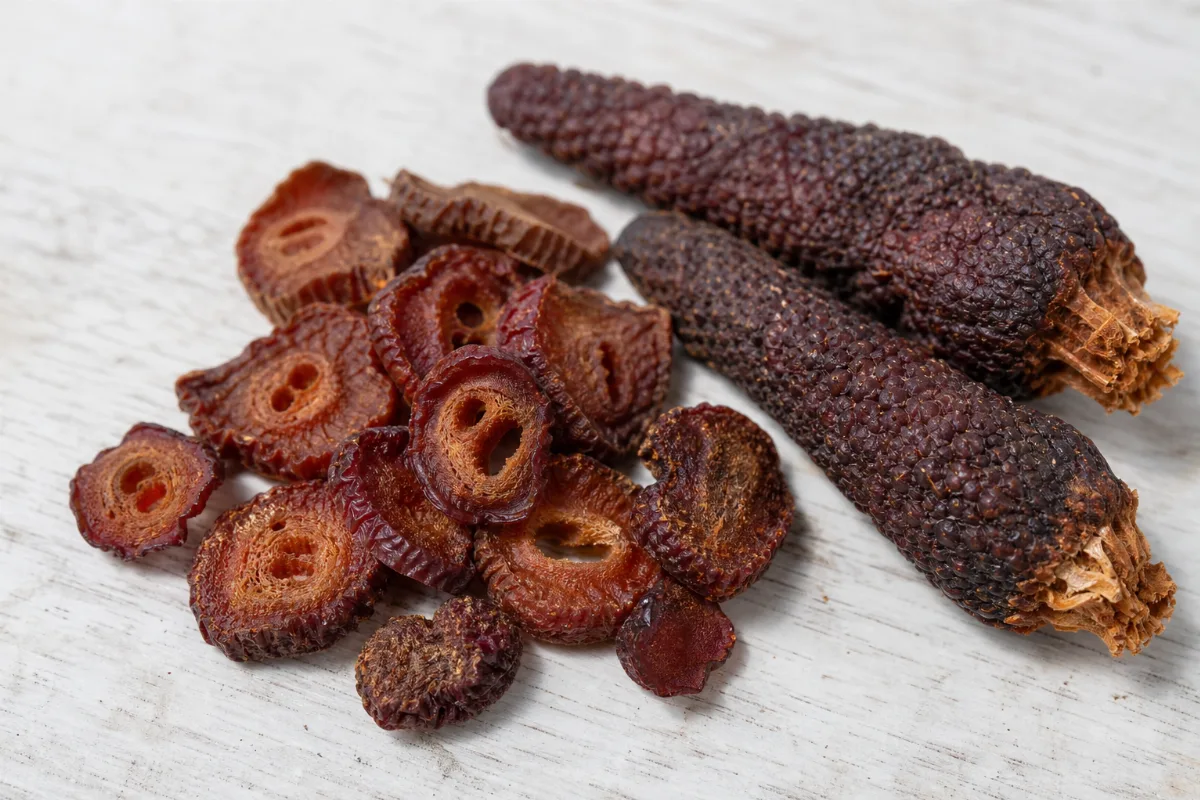
Adaptogens · Herbs & Botanicals · Desert-plant tonic from Chinese medicine
Cynomorium
Cynomorium songaricum · also called Suo yang, suoyang, Cynomorii Herba
Cynomorium (suo yang) is the fleshy stem of a parasitic desert plant, used in Chinese medicine as a tonic for male vitality and to ease constipation. We found no studies in people. Its benefits rest on tradition and on lab and animal work. The main caution: safety in people is unknown, it may loosen the stools, and it is not the same plant as cistanche.
General information, not medical advice. Last substantive update · Not medically reviewed. A named clinician has not signed off on this page. How this page is made
About Cynomorium
Cynomorium is an old Chinese tonic herb with no human trials. Lab and animal studies hint at effects on erection, sperm, blood sugar and more, but nothing is proven in people. Possible loose stools, blood-sugar and hormone effects, and confusion with cistanche are reasons for care.
What it is
Cynomorium songaricum is a fleshy, reddish-brown parasitic plant without chlorophyll that grows mostly under desert sand and lives on the roots of host shrubs. The stem is the part used.
The accepted name in the GBIF plant database is Cynomorium coccineum, with songaricum listed as a synonym. Cistanche is a different plant in a different family, although both are parasitic desert tonic herbs.
Traditional use
In Chinese medicine suo yang tonifies kidney and yang, moistens the intestines and promotes bowel movements. Ethnic medicines also use it for stomach ulcers, indigestion and sexual function.
Reviews list 98 compounds, with flavonoids, triterpenoids such as ursolic acid, and polysaccharides standing out.
What the research shows
We found no trial in people. The research is lab, mouse and rat work, plus reviews. Fractions of the stem blocked the PDE5 enzyme, raised testosterone in damaged mice and improved glucose handling in obese mice.
Most results use isolated fractions, not the dried herb, and the abstracts give few numbers. The evidence is rated insufficient for every use.
At a glance
Traditional uses history, not proof
- Fleshy stem to tonify kidney and yang in Chinese medicine
- Moistening the intestines and easing constipation
- Gastric ulcers and indigestion in ethnic medicines
- Male sexual function
Studied for research
- Erectile function (insufficient; lab and rats only)
- Sperm quality and testosterone (insufficient; mice and rats)
- Blood sugar and weight (insufficient; cells and mice)
- Mood (insufficient; one mouse study)
- Memory (insufficient; one rat study)
- Immune function (insufficient; mice and cells)
Main compounds
- Ursolic acid (PubChem CID 64945)
- Oleanolic acid (PubChem CID 10494)
- Catechin and epicatechin (CIDs 9064, 72276)
- Flavonoids
- Polysaccharides
Common forms
- Dried sliced stem in decoctions (traditional)
Research links: Zhang 2024: traditional uses and safety review (PubMed) · Liu 2025: metabolic syndrome review (PubMed) · Su 2026: PDE5 and erectile dysfunction in rats (PubMed) · Fu 2019: 90-day rat toxicity test (PubMed) · Research Library · Genes & Biomarkers Library
The plant and its history
- Accepted scientific name
- Cynomorium coccineum
- Naming authority
- L.
- Synonyms
- Cynomorium songaricum Rupr.
- Common names
- Cynomorium (English); Suo yang (Chinese (pinyin)); Suoyang (Chinese (pinyin)); Cynomorii Herba (Pharmacopoeia name); Songaria cynomorium (English (as in a Chinese toxicity paper))
- Botanical family
- Cynomoriaceae (GBIF). Not related to cistanche, which is in Orobanchaceae.
- Classification
- Plantae > Saxifragales > Cynomoriaceae > Cynomorium > Cynomorium coccineum
- Native range
- The 2026 host paper describes C. songaricum as growing in the arid regions of north-west China. Wider range not verified in the sources read.
- Habitat
- Arid desert. The 2024 review calls it a perennial succulent parasitic herb with a reddish-brown colour, mostly under sand and lacking chlorophyll.
- What the plant looks like
- Roots: Not verified in sources read; Stems: Fleshy reddish-brown stem, mostly buried in sand (2024 review abstract); Leaves: Lacks chlorophyll (2024 review abstract); Flowers: Not verified in sources read; Fruit: Not verified in sources read; Seeds: Very low germination without host-root chemical signals (2026 host paper); Cultivation: Not verified in sources read
- Harvest and processing
- The fleshy stem is dried and sliced for decoctions in Chinese medicine, according to the existing summary on this site; not re-checked here.
- Look-alikes and adulterants
- Name: Cistanche (Cistanche deserticola, C. tubulosa); Note: Another parasitic desert tonic plant in a different family (Orobanchaceae, GBIF). Not the same herb.; Name: Cynomorium coccineum; Note: The accepted GBIF name; Cynomorium songaricum is listed as its synonym. A rat study used C. coccineum under that name.
- Sustainability and conservation
- Not verified. The host paper stresses that seeds need specific host plants, which suggests wild supply depends on host stands.
Traditional use and history history, not clinical proof
| Tradition or era | Documented use | Source |
|---|---|---|
| Traditional Chinese medicine and ethnic medicines | Fleshy stem to tonify kidney and yang, moisten the intestines and ease constipation; ethnic medicines also use it for gastric ulcers, indigestion and sexual function. | Zhang 2024; Zhang 2026 |
Traditional use shows how a plant was used. It does not show that a supplement works or is safe today.
What is inside, and how it may work
What the plant contains and how those compounds act in cells and animals. Laboratory and animal mechanisms are not proven effects in people.
Main compounds
| Compound | Family | Where it is concentrated | Activity studied | Level of evidence |
|---|---|---|---|---|
| Ursolic acid PubChem 64945 | Pentacyclic triterpenoid | Stem | A main triterpenoid; improved glucose uptake and cut fat in cell and mouse work with oleanolic acid. 5 13 | Laboratory research |
| Oleanolic acid PubChem 10494 | Pentacyclic triterpenoid | Stem | The other main triterpenoid of the enriched extract; similar metabolic effects in cells and mice. 5 | Laboratory research |
| Catechin PubChem 9064 | Flavan-3-ol | Stem | Named among the characteristic components in the habitat analysis. 16 | Analytic |
| Epicatechin PubChem 72276 | Flavan-3-ol | Stem | Named among the characteristic components in the habitat analysis. 16 | Analytic |
| Gallic acid PubChem 370 | Phenolic acid | Stem | Measured in the habitat analysis; the main compound in the C. coccineum water extract. 16 12 | Analytic |
| Protocatechuic aldehyde PubChem 8768 | Phenolic aldehyde | Stem | Measured in the habitat analysis. 16 | Analytic |
| Phlorizin PubChem 6072 | Dihydrochalcone glycoside | Stem | Found in the ethyl acetate extract by LC-MS/MS. 13 | Analytic |
| Polysaccharides (CSP fractions) | Polysaccharide | Stem | Main active class in lab work: PDE5 inhibition, immune stimulation, testis protection in mice. 10 8 6 15 | Laboratory research |
Mechanisms, receptors and pathways
| Target or pathway | Gene or receptor | What was found | Level |
|---|---|---|---|
| PDE5 / cGMP | PDE5A | Polysaccharide fraction blocked PDE5 (IC50 37.73 ug/mL) and raised cGMP and erection pressure in castrated rats. 10 | Lab |
| Hormone axis and steroid enzymes | Steroid-making enzymes | Flavonoid fraction raised testosterone, LH, GnRH and FSH and lowered estradiol in drug-damaged mice. 1 | Animal research |
| Gut bacteria and testis inflammation | TLR4/MyD88/NF-kB | Polysaccharide changed gut bacteria and lowered testis inflammation in obese mice. 6 | Animal research |
| Insulin signalling and fat metabolism | Adiponectin | Triterpenoid extract raised adiponectin and glucose uptake and lowered weight gain in mice. 5 | Animal research |
| Brain inflammation | NF-kB / NLRP3 | Solvent extract lowered hippocampal inflammation in depressed-like mice. 13 | Animal research |
| Nerve growth signalling | BDNF / TrkB | Flavonoids improved memory in a rat Alzheimer model. 4 | Animal research |
| Immune signalling | MAPK / JNK | Polysaccharide CSP-III activated MAPK in macrophages and raised T cells in mice. 8 | Animal research |
Absorption, metabolism and elimination
- Absorption
- A gut-cell (Caco-2) model suggested the polysaccharide fraction can be absorbed. No human data.
- Distribution
- No data found.
- Metabolism
- No data found.
- Elimination
- No data found.
- Bioavailability
- No human data found.
Isolated compounds versus whole extracts
Almost every positive result is from an isolated or enriched fraction (polysaccharides, flavonoids, triterpenoids, a solvent extract). The only whole-herb water extract work is the rat toxicity study and a study of a related species. Results from a fraction cannot be assumed for the dried stem.
Nutritional composition
The 2026 polysaccharide review calls suo yang a medicine with dual medicinal and edible uses in China. It has no established nutrient role.
8 not enough evidence
What was looked at
The 8 benefits and uses checked for Cynomorium, each with how strong the evidence is. Tap one to open it.
- Erectile function (lab and rat studies only)Not enough evidence
- Sperm quality and testosterone (mouse and rat studies only)Not enough evidence
- Traditional kidney-yang tonic and bowel useNot enough evidence
- Blood sugar, weight and metabolic syndrome (lab and mouse studies)Not enough evidence
- Low mood (one mouse study)Not enough evidence
- Memory and learning (one rat study)Not enough evidence
- Immune function (mouse and cell studies)Not enough evidence
- Tiredness and stamina (reviews only)Not enough evidence
Lab markers tracked in the studies
PDE5 enzyme activityTestosterone and related hormonesSperm count and motilityIntracavernosal pressureGlucose tolerance (OGTT)AdiponectinBody weight gainT-cell counts and antibodies
What is Cynomorium good for?
The studied uses and how strong the evidence is. For Cynomorium, none has been tested in people, so every use is rated insufficient.
Benefits, one by one
Each card is a research question, not a promise. Tap a goal to filter. Open a card to see the studies, doses and limits.
Erectile function (lab and rat studies only)
Not enough evidenceIn a 2026 study, a polysaccharide purified from the stem blocked the PDE5 enzyme (the target of sildenafil-type medicines) in a test tube and raised erection pressure in castrated rats. No trial in men was found. Traditional use is not proof it works.
2 studiesPurified polysaccharide fractions in lab tests and rats. Not the powd…
Studies, doses and limits
What the trials found
No human trial was found.
Results
A purified polysaccharide fraction blocked PDE5 (IC50 37.73 ug/mL), raised cGMP and raised intracavernosal pressure in castrated rats. A cell model suggested it can be absorbed.
Effect sizes as reported
One enzyme figure; the rat numbers are not in the abstract.
Why this rating
Lab and rat work on one isolated fraction, with no human data. Traditional use does not count as evidence of effect.
Form and dose studied
Purified polysaccharide fractions in lab tests and rats. Not the powders or capsules sold to people.
Who was studied
Castrated male rats, enzyme and cell assays.
Limits
Isolated fraction, not whole herb; rats are not men; abstract gives few numbers.
Why researchers looked
Suo yang is a classic Chinese remedy for male sexual weakness, so researchers looked for the active part.
Traditional use
Used in Chinese medicine as a kidney-yang tonic, including for impotence.
Proposed mechanism Lab
PDE5 enzyme inhibition and higher cGMP in cells and rats. Not shown in people.
A proposed mechanism does not show that the effect happens in people.
Because the lab action resembles PDE5 medicines, a theoretical overlap with those medicines and with nitrate drugs cannot be ruled out. See the safety section.
Sperm quality and testosterone (mouse and rat studies only)
Not enough evidenceIn mice and rats with sperm damage from a drug, aluminium or a high-fat diet, suo yang extracts or fractions improved sperm measures and testosterone. These are damage-repair models in animals, and no human fertility study was found.
3 studiesFlavonoid and polysaccharide fractions (C. songaricum) and a water ex…
Studies, doses and limits
What the trials found
No human trial was found.
Results
A flavonoid fraction improved testis and epididymis tissue and raised testosterone, LH, GnRH and FSH while lowering estradiol in drug-damaged mice. A polysaccharide improved sperm count, motility and testosterone in obese mice. A water extract of the related species C. coccineum reversed aluminium-induced loss of sperm quality and testosterone in rats.
Effect sizes as reported
No numbers in the abstracts read.
Why this rating
Animal studies only, in damage models, with fractions or a different species. No human data.
Form and dose studied
Flavonoid and polysaccharide fractions (C. songaricum) and a water extract of C. coccineum.
Who was studied
Male mice and rats; mouse testis cells.
Limits
Animal only; abstracts give no numbers; results in healthy animals are not described; hormone effects could also be a safety concern.
Why researchers looked
Kidney-yang tonics are traditionally linked to male vitality, so researchers tested sperm and hormone effects in animals.
Traditional use
Used in Chinese and ethnic medicines for male sexual function.
Proposed mechanism Animal research
Authors point to higher steroid-making enzymes and hormone-axis changes (testosterone, LH, GnRH, FSH up; estradiol down) in mice, and to gut bacteria changes. Not shown in people.
A proposed mechanism does not show that the effect happens in people.
Raising sex hormones in animals is a reason for care in anyone with hormone-sensitive conditions. See the safety section.
Traditional kidney-yang tonic and bowel use
Not enough evidenceIn Chinese medicine suo yang tonifies kidney and yang, moistens the intestines and eases constipation. Ethnic medicines also use it for stomach ulcers and indigestion. This is traditional use. We found no human trial of it.
2 studiesTraditionally the dried stem in decoctions or formulas, according to …
Studies, doses and limits
What the trials found
No human trial was found.
Results
The 2024 and 2026 reviews describe the uses. Neither abstract reports a test of constipation or ulcers in people.
Why this rating
Reviews describe tradition. They do not report human tests, and the abstracts give no data on laxative strength.
Form and dose studied
Traditionally the dried stem in decoctions or formulas, according to the reviews. No preparation is endorsed here.
Who was studied
Traditional users.
Limits
Tradition is not evidence; the reviews' abstracts do not detail the bowel evidence.
Why researchers looked
This is the herb's reason for being in Chinese medicine.
Traditional use
Reviews describe kidney-yang tonic use, moistening the intestines and promoting bowel movements, and ethnic-medicine use for gastric ulcers, indigestion and sexual function.
Proposed mechanism Traditional
Kidney-yang is a traditional concept with no direct modern equivalent.
A proposed mechanism does not show that the effect happens in people.
If it does ease the bowels, loose stools are a plausible side effect; no human report was found.
Blood sugar, weight and metabolic syndrome (lab and mouse studies)
Not enough evidenceA 2025 review of 92 mostly lab and animal studies describes effects of suo yang on glucose handling and body weight. In obese mice a triterpenoid-rich extract cut weight gain and improved glucose tolerance. No human trial was found.
2 studiesTriterpenoid-enriched extract and isolated acids in cells and mice.
Studies, doses and limits
What the trials found
No human trial was found.
Results
In insulin-resistant fat cells a triterpenoid-enriched extract raised glucose uptake and adiponectin (36.74 to 79.83 pg/ml). In high-fat-diet mice the high dose cut weight gain by 14.3 percent, glucose tolerance AUC by 15.6 percent and lowered triglycerides. Oleanolic acid and ursolic acid, its main triterpenoids, had similar effects.
Effect sizes as reported
-14.3% weight gain and -15.6% OGTT AUC in mice (high-dose group vs model).
Why this rating
Lab and mouse work, with an enriched extract and isolated acids. Review of preclinical studies only.
Form and dose studied
Triterpenoid-enriched extract and isolated acids in cells and mice.
Who was studied
Fat cells; obese mice.
Limits
Mice are not people; extract is not the whole herb; no human data.
Why researchers looked
Suo yang is traditionally used in some regions for metabolic problems, including diabetes, according to a 2026 paper.
Traditional use
Described as used for metabolic disorders in Chinese medicine (one paper's statement).
Proposed mechanism Animal research
Authors point to better insulin signalling, less inflammation and changed gut bacteria. Not shown in people.
A proposed mechanism does not show that the effect happens in people.
If it lowers blood sugar in people it could add to diabetes medicines. This is theoretical; see the safety section.
Low mood (one mouse study)
Not enough evidenceAn ethyl acetate extract reduced depression-like behaviour and brain inflammation in mice. No human mood study was found.
1 studiesEthyl acetate (solvent) extract, not a food or tea.
Studies, doses and limits
What the trials found
No human trial was found.
Results
In mice with corticosterone-induced depression-like behaviour the extract improved sucrose preference and swim and tail tests and lowered brain inflammation markers.
Effect sizes as reported
No numbers in the abstract.
Why this rating
One mouse study. Depression-like behaviour is only a model of the human condition.
Form and dose studied
Ethyl acetate (solvent) extract, not a food or tea.
Who was studied
Male mice.
Limits
Single study; solvent extract; no human data.
Why researchers looked
The herb is traditionally called anti-depressant and anti-ageing in Chinese medicine, according to the authors.
Traditional use
Traditional anti-inflammatory, anti-depressant and anti-ageing use is cited by the authors.
Proposed mechanism Animal research
Authors point to lower inflammation in the hippocampus through NF-kB and NLRP3. Not shown in people.
A proposed mechanism does not show that the effect happens in people.
None specific.
Memory and learning (one rat study)
Not enough evidenceA flavonoid extract improved memory and learning in rats given amyloid-beta into the brain, a model of Alzheimer disease. No human study was found.
1 studiesTotal flavonoid extract in rats.
Studies, doses and limits
What the trials found
No human trial was found.
Results
After the extract, rats remembered and learned better, neurotransmitters were restored and brain tissue looked better than in model rats. Donepezil was the comparison.
Effect sizes as reported
No numbers in the abstract.
Why this rating
One rat study with an injection model.
Form and dose studied
Total flavonoid extract in rats.
Who was studied
Male rats (sex not stated in abstract).
Limits
Single study; no human data.
Why researchers looked
Flavonoids from the herb are credited with nerve-protecting effects.
Traditional use
Not a main traditional use.
Proposed mechanism Animal research
Authors link the effect to BDNF/TrkB signalling and less nerve-cell death. Not shown in people.
A proposed mechanism does not show that the effect happens in people.
None specific.
Immune function (mouse and cell studies)
Not enough evidenceA purified polysaccharide stimulated immune cells and, in mice with a weakened immune system, raised T-cell counts and antibodies. No human study was found.
2 studiesPurified polysaccharide fraction.
Studies, doses and limits
What the trials found
No human trial was found.
Results
In mice weakened by cyclophosphamide the polysaccharide CSP-III improved tissue damage, raised T and B cell growth, CD4 and CD8 counts, and IgG and IgM.
Effect sizes as reported
No numbers in the abstract.
Why this rating
Mouse and cell work on a purified polysaccharide.
Form and dose studied
Purified polysaccharide fraction.
Who was studied
Mice and cell lines.
Limits
Single type of study; not whole herb; no human data.
Why researchers looked
Polysaccharides are thought to be among the main active parts of the stem.
Traditional use
Not a main traditional use in the sources read.
Proposed mechanism Animal research
Authors point to the MAPK signalling pathway in macrophages. Not shown in people.
A proposed mechanism does not show that the effect happens in people.
None specific.
Tiredness and stamina (reviews only)
Not enough evidenceReviews list anti-fatigue effects among suo yang's lab results. We read no fatigue test in people.
2 studiesNot applicable.
Studies, doses and limits
What the trials found
No human trial was found.
Results
The reviews mention anti-fatigue activity but their abstracts give no data.
Why this rating
Only a mention in review abstracts; no data seen.
Limits
No data in the sources read.
Why researchers looked
A tonic herb is expected to be tested for fatigue.
Traditional use
Tonic use is traditional.
Proposed mechanism Traditional
Reviews cite antioxidant effects. Not shown in people.
A proposed mechanism does not show that the effect happens in people.
None.
Connections to the rest of health
How Cynomorium connects to the rest of our health knowledge graph. Every link says what kind of connection it is. A safety link (for example to the liver) is a warning, not a benefit. A study that merely mentions a topic never creates a benefit link.
Explore every connection: goals, body systems, organs, symptoms, genes
A. Wellness goals
| Connected to | Kind of connection | Evidence status | Context | Studies |
|---|---|---|---|---|
| Libido Support | Not enough evidence | Erectile function (lab and rat studies only): In a 2026 study, a polysaccharide purified from the stem blocked the PDE5 enzyme (the target of sildenafil-type medicines) in a test tube and raised erection pressure in castrated rats. No trial in men was found. Traditional use is not proof it works. | 10 15 | |
| Mens Vitality | Not enough evidence | Erectile function (lab and rat studies only): In a 2026 study, a polysaccharide purified from the stem blocked the PDE5 enzyme (the target of sildenafil-type medicines) in a test tube and raised erection pressure in castrated rats. No trial in men was found. Traditional use is not proof it works. | 10 15 | |
| Fertility Support | Not enough evidence | Sperm quality and testosterone (mouse and rat studies only): In mice and rats with sperm damage from a drug, aluminium or a high-fat diet, suo yang extracts or fractions improved sperm measures and testosterone. These are damage-repair models in animals, and no human fertility study was found. | 1 6 12 | |
| Mens Vitality | Not enough evidence | Sperm quality and testosterone (mouse and rat studies only): In mice and rats with sperm damage from a drug, aluminium or a high-fat diet, suo yang extracts or fractions improved sperm measures and testosterone. These are damage-repair models in animals, and no human fertility study was found. | 1 6 12 | |
| Mens Vitality | Not enough evidence | Traditional kidney-yang tonic and bowel use: In Chinese medicine suo yang tonifies kidney and yang, moistens the intestines and eases constipation. Ethnic medicines also use it for stomach ulcers and indigestion. This is traditional use. We found no human trial of it. | 14 15 | |
| Digestive Support | Not enough evidence | Traditional kidney-yang tonic and bowel use: In Chinese medicine suo yang tonifies kidney and yang, moistens the intestines and eases constipation. Ethnic medicines also use it for stomach ulcers and indigestion. This is traditional use. We found no human trial of it. | 14 15 | |
| Metabolic Health | Not enough evidence | Blood sugar, weight and metabolic syndrome (lab and mouse studies): A 2025 review of 92 mostly lab and animal studies describes effects of suo yang on glucose handling and body weight. In obese mice a triterpenoid-rich extract cut weight gain and improved glucose tolerance. No human trial was found. | 7 5 | |
| Blood Sugar Balance | Not enough evidence | Blood sugar, weight and metabolic syndrome (lab and mouse studies): A 2025 review of 92 mostly lab and animal studies describes effects of suo yang on glucose handling and body weight. In obese mice a triterpenoid-rich extract cut weight gain and improved glucose tolerance. No human trial was found. | 7 5 | |
| Mood Balance | Not enough evidence | Low mood (one mouse study): An ethyl acetate extract reduced depression-like behaviour and brain inflammation in mice. No human mood study was found. | 13 | |
| Memory Support | Not enough evidence | Memory and learning (one rat study): A flavonoid extract improved memory and learning in rats given amyloid-beta into the brain, a model of Alzheimer disease. No human study was found. | 4 | |
| Brain Health | Not enough evidence | Memory and learning (one rat study): A flavonoid extract improved memory and learning in rats given amyloid-beta into the brain, a model of Alzheimer disease. No human study was found. | 4 | |
| Immune Support | Not enough evidence | Immune function (mouse and cell studies): A purified polysaccharide stimulated immune cells and, in mice with a weakened immune system, raised T-cell counts and antibodies. No human study was found. | 8 15 | |
| Reduce Fatigue | Not enough evidence | Tiredness and stamina (reviews only): Reviews list anti-fatigue effects among suo yang's lab results. We read no fatigue test in people. | 14 15 |
B. Body systems
| Connected to | Kind of connection | Evidence status | Context | Studies |
|---|---|---|---|---|
| Reproductive System | Biological association | Not enough evidence | Studied for: Erectile function (lab and rat studies only) Studied for: Sperm quality and testosterone (mouse and rat studies only) | 10 15 1 6 12 14 |
| Digestive System | Biological association | Not enough evidence | Studied for: Traditional kidney-yang tonic and bowel use | 14 15 |
| Metabolism Weight | Biological association | Not enough evidence | Studied for: Blood sugar, weight and metabolic syndrome (lab and mouse studies) | 7 5 |
| Blood Sugar Support | Biological association | Not enough evidence | Studied for: Blood sugar, weight and metabolic syndrome (lab and mouse studies) | 7 5 |
| Nervous System | Biological association | Not enough evidence | Studied for: Low mood (one mouse study) Studied for: Memory and learning (one rat study) | 13 4 |
| Immune System | Biological association | Not enough evidence | Studied for: Immune function (mouse and cell studies) | 8 15 |
| Energy Fatigue | Biological association | Not enough evidence | Studied for: Tiredness and stamina (reviews only) | 14 15 |
I. Biomarkers
| Connected to | Kind of connection | Evidence status | Context | Studies |
|---|---|---|---|---|
| PDE5 enzyme activity | Biological association | Not enough evidence | Measured in trials: decrease. A lab change is not the same as a health benefit. | 10 |
| Testosterone and related hormones | Biological association | Not enough evidence | Measured in trials: increase. A lab change is not the same as a health benefit. | 1 6 12 |
| Sperm count and motility | Biological association | Not enough evidence | Measured in trials: increase. A lab change is not the same as a health benefit. | 6 12 |
| Intracavernosal pressure | Biological association | Not enough evidence | Measured in trials: increase. A lab change is not the same as a health benefit. | 10 |
| Glucose tolerance (OGTT) | Biological association | Not enough evidence | Measured in trials: improve. A lab change is not the same as a health benefit. | 5 |
| Adiponectin | Biological association | Not enough evidence | Measured in trials: increase. A lab change is not the same as a health benefit. | 5 |
| Body weight gain | Biological association | Not enough evidence | Measured in trials: decrease. A lab change is not the same as a health benefit. | 5 |
| T-cell counts and antibodies | Biological association | Not enough evidence | Measured in trials: increase. A lab change is not the same as a health benefit. | 8 |
J. Genes, receptors and enzymes
| Connected to | Kind of connection | Evidence status | Context | Studies |
|---|---|---|---|---|
| PDE5 | Preliminary mechanism | Lab | Blocked by a polysaccharide fraction in vitro. | 10 |
K. Biological pathways
| Connected to | Kind of connection | Evidence status | Context | Studies |
|---|---|---|---|---|
| BDNF/TrkB | Preliminary mechanism | Animal | Activated by flavonoids in rats. | 4 |
L. Active compounds
| Connected to | Kind of connection | Evidence status | Context | Studies |
|---|---|---|---|---|
| Ursolic acid | Biological association | In vitro | A main triterpenoid; improved glucose uptake and cut fat in cell and mouse work with oleanolic acid. Preparation or compound: Stem |
5 13 |
| Oleanolic acid | Biological association | In vitro | The other main triterpenoid of the enriched extract; similar metabolic effects in cells and mice. Preparation or compound: Stem |
5 |
| Catechin | Biological association | Analytic | Named among the characteristic components in the habitat analysis. Preparation or compound: Stem |
16 |
| Epicatechin | Biological association | Analytic | Named among the characteristic components in the habitat analysis. Preparation or compound: Stem |
16 |
| Gallic acid | Biological association | Analytic | Measured in the habitat analysis; the main compound in the C. coccineum water extract. Preparation or compound: Stem |
16 12 |
| Protocatechuic aldehyde | Biological association | Analytic | Measured in the habitat analysis. Preparation or compound: Stem |
16 |
| Phlorizin | Biological association | Analytic | Found in the ethyl acetate extract by LC-MS/MS. Preparation or compound: Stem |
13 |
| Polysaccharides (CSP fractions) | Biological association | In vitro | Main active class in lab work: PDE5 inhibition, immune stimulation, testis protection in mice. Preparation or compound: Stem |
10 8 6 15 |
Each connection is stored with the ingredient, the connected record, the kind of connection, the evidence status, the supporting studies, the preparation or compound involved, and a review date (last reviewed October 25, 2026).
Evidence at a glance: what the research found for 8 outcomes
Each outcome below is one thing researchers measured. Certainty is how far the evidence can be trusted, not how well it works. The full studies are on the next tab.
The evidence
The research centre for Cynomorium. Every record here was checked against PubMed or the publisher's page; we never list a study we have not verified.
Evidence by outcome
Bars show how many studies we found for each outcome, not how well it works. People are added up across trials only (reviews are not added, to avoid double counting).
How we rate evidence
High certainty
Several well-run trials or reviews agree; further research is unlikely to change the picture much.
Moderate certainty
Good trials point the same way, but some doubt remains.
Low certainty
Small, short or inconsistent trials. The finding could change with better research.
Very low certainty
Very little or very weak human data. Treat as a possibility only.
Mixed findings
Trials or reviews disagree with each other.
Not enough evidence
Not enough human research to say either way.
Evidence against
Good research found no benefit, or found harm.
We take the reviewers' own risk-of-bias and GRADE statements where they exist, and otherwise judge from study size, design, consistency, directness and whether a product matches what is sold. Many publications do not make evidence high. Method note: We started from our existing Cynomorium summary and added about 17 lookups, mostly PubMed abstracts. Plant names were checked in GBIF and compound IDs in PubChem. EMA, NCCIH, LiverTox and LactMed entries could not be confirmed.
Study library: every study we checked 16
| Study | Design | People | Product, dose, length | Result |
|---|---|---|---|---|
| Chen 2024 Cynomorium songaricum Rupr. flavonoids improve cyclophosphamide-induced reproductive function damage by regulating the testosterone synthesis pathway. Front Pharmacol · PMID 39239657 · DOI |
Animal study + cell mouse + cell |
Male mice given cyclophosphamide; mouse testis cells exposed to bisphenol A | Flavonoid fraction (CSF) of the herb stem |
Compared with damaged untreated mice, the flavonoid fraction improved testis and epididymis tissue, raised seminal fructose and zinc, raised testosterone, LH, GnRH and FSH and lowered estradiol. In cells it protected against bisphenol A damage and raised steroid-making enzymes. Improved versus model group (numbers not in abstract) Methods, limits and fundingOutcomes: Organ weights, testis and epididymis tissue, sex hormones, seminal fructose and zinc, steroid enzymes Limitations: Mice and cells; isolated flavonoid fraction; drug-damage model; no human data. Funding and conflicts: Not stated in abstract Read: abstract |
| Fu 2019 Subchronic toxicity test of songaria cynomorium herb aqueous extract in rat. Wei Sheng Yan Jiu · PMID 31032777 |
Animal toxicity study rat |
80 Wistar rats, 10 per sex per group, daily by mouth for 90 days |
Aqueous extract of the herb at 0, 2.83, 5.66 and 8.49 g/kg body weight herb (part not stated in abstract) 0, 2.83, 5.66, 8.49 g/kg/day 90 days |
No deaths and no obvious toxic signs. Some blood values changed within normal lab ranges. Prothrombin time (a clotting test) was longer in males at the middle and high doses. Testes weight index rose at the middle dose; spleen, testes and epididymis indices rose at the high dose. Tissue slides looked normal. The authors set a no-effect level of 2.83 g/kg and a lowest-effect level of 5.66 g/kg in rats. NOAEL 2.83 g/kg, LOAEL 5.66 g/kg (rats) Methods, limits and fundingOutcomes: Clinical signs, body weight, blood tests, organ weights, tissue slides Limitations: Rat data only; Chinese-language paper read as English abstract; not a human safety dose. Funding and conflicts: Not stated in abstract Read: abstract |
| GBIF Secretariat 2026 GBIF Backbone Taxonomy matches: Cynomorium songaricum, Cynomorium coccineum, Cistanche deserticola, Cistanche tubulosa GBIF API (api.gbif.org), checked 2026-10-25 · Source |
Database record plant taxonomy |
Cynomorium songaricum Rupr. is listed as a SYNONYM of Cynomorium coccineum L. (accepted, key 7445043), family Cynomoriaceae, order Saxifragales. Cistanche deserticola and Cistanche tubulosa are accepted species in Orobanchaceae, order Lamiales, a different family. Methods, limits and fundingOutcomes: Accepted names and families Limitations: One database; the research papers still use the name songaricum, and whether the Chinese plant is a separate species was not checked in POWO or Flora of China. Read: API record | ||
| Gu 2023 Total flavonoids of Cynomorium songaricum attenuates cognitive defects in an Abeta 1-42-induced Alzheimer's disease rat model by activating BDNF/TrkB signaling transduction. Neuroreport · PMID 37851367 · DOI |
Animal study rat |
Rats given amyloid-beta into the brain (3 doses, donepezil control) | Total flavonoids of the herb stem |
The flavonoid extract improved memory and learning in rats, restored neurotransmitters and reduced nerve-cell death, linked to BDNF/TrkB signalling. Improved versus model rats (numbers not in abstract) Methods, limits and fundingOutcomes: Memory and learning, brain tissue, neurotransmitters, BDNF/TrkB, cell death Limitations: Rats; injection model of Alzheimer disease; no human data. Funding and conflicts: Not stated in abstract Read: abstract |
| He 2026 Integrated multi-omics analysis unveils biochemical mechanism of a triterpenoid-enriched extract from Cynomorium songaricum against obesity and insulin resistance. J Ethnopharmacol · PMID 42142556 · DOI |
Animal study + cell mouse + cell |
Insulin-resistant fat cells (3T3-L1) and high-fat-diet obese mice | Triterpenoid-enriched extract (CST), oleanolic acid and ursolic acid stem |
In cells the extract raised glucose uptake and adiponectin (36.74 to 79.83 pg/ml). In obese mice the high dose cut weight gain by 14.3 percent, glucose tolerance AUC by 15.6 percent and lowered triglycerides. -14.3% weight gain, -15.6% OGTT AUC (high-dose group vs model, mice) Methods, limits and fundingOutcomes: Glucose uptake, fat accumulation, adiponectin, body weight, glucose tolerance, triglycerides Limitations: Mice and cells; enriched extract and isolated acids; no human data. Funding and conflicts: Not stated in abstract Read: abstract |
| Huan 2026 Cynomorium songaricum polysaccharide attenuates high-fat diet-induced testicular dysfunction by modulating the gut microbiota. Int J Biol Macromol · PMID 41276052 · DOI |
Animal study mouse |
Obese mice fed a high-fat diet | Purified water-soluble polysaccharide (CSP1) stem |
In high-fat-diet mice the polysaccharide improved sperm count and motility, restored testosterone and changed gut bacteria and short-chain fatty acids. A faecal-transplant test suggested the gut bacteria carried part of the effect. Improved versus untreated obese mice (numbers not in abstract) Methods, limits and fundingOutcomes: Sperm count and motility, testosterone, gut bacteria, gut barrier, inflammation Limitations: Mice; one purified fraction; no human data. Funding and conflicts: Not stated in abstract Read: abstract |
| Liu 2025 A decade review on phytochemistry and pharmacological activities of Cynomorium songaricum Rupr.: Insights into metabolic syndrome. Phytomedicine · PMID 40058318 · DOI |
Systematic review (PRISMA, lab and animal studies) review (lab and animal) |
92 92 mostly lab and animal studies |
Cynomorium songaricum proanthocyanidins, polysaccharides, triterpenoids stem |
Across 92 studies the authors describe lab effects on glucose absorption, insulin sensitivity, gut bacteria and obesity. They call the herb a promising candidate and the work preclinical. The abstract does not describe any human trial. No human effect size Methods, limits and fundingOutcomes: Metabolic syndrome: glucose, obesity, inflammation Limitations: Review of lab and animal work; no meta-analysis; no certainty grading in abstract. Funding and conflicts: Not stated in abstract Read: abstract |
| Lv 2023 Studies of the Immunomodulatory Activity of Polysaccharides from the Stem of Cynomorium songaricum Based on Intestinal Microbial Analysis. Molecules · PMID 38202727 · DOI |
Animal study + cell mouse + cell |
Mouse immune cells, macrophage cell line and cyclophosphamide-suppressed mice | Purified polysaccharide CSP-III stem |
The polysaccharide stimulated mouse immune cells and, in immune-suppressed mice, improved tissue damage, T and B cell growth, CD4 and CD8 counts and IgG and IgM. Improved versus model mice (numbers not in abstract) Methods, limits and fundingOutcomes: Lymphocyte growth, T-cell counts, IgG and IgM, MAPK signalling Limitations: Mice and cells; one purified fraction; no human data. Funding and conflicts: Not stated in abstract Read: abstract |
| NCBI PubChem 2026 PubChem compound records: ursolic acid, oleanolic acid, catechin, epicatechin, gallic acid, protocatechuic aldehyde, phlorizin PubChem PUG REST (pubchem.ncbi.nlm.nih.gov), checked 2026-10-25 · Source |
Database record chemistry |
CIDs: ursolic acid 64945; oleanolic acid 10494; catechin 9064; epicatechin 72276; gallic acid 370; protocatechuic aldehyde 8768; phlorizin 6072. Methods, limits and fundingOutcomes: Compound identifiers Limitations: Identifier lookup by name only. Which compounds a given product contains is not shown. Read: API record | ||
| Su 2026 Cynomorium Songaricum polysaccharides ameliorate erectile dysfunction through potent inhibition of phosphodiesterase-5. J Ethnopharmacol · PMID 41554452 · DOI |
Animal study + lab rat + cell + enzyme assay |
Orchiectomized (castrated) rats, enzyme and cell tests | Purified polysaccharide fractions (CSP) from the stem stem |
The polysaccharide fraction blocked the PDE5 enzyme in a dose-dependent way (IC50 37.73 ug/mL), raised cGMP in cells and rats and raised intracavernosal (penile) pressure in castrated rats. A gut-cell model suggested it can be absorbed. The authors call it non-toxic in their safety tests. IC50 37.73 ug/mL for PDE5 (lab); rat pressure rise (numbers not in abstract) Methods, limits and fundingOutcomes: PDE5 enzyme inhibition, cGMP, intracavernosal pressure, mating behaviour, acute toxicity Limitations: Isolated fraction, not whole herb; rats and cells; abstract gives few numbers; no human data. Funding and conflicts: Not stated in abstract Read: abstract |
| Tang 2026 Comparative Metabolomics Reveals Family-Genus-Specific Chemical Signatures and Potential Recognition Mechanisms in Cynomorium songaricum-Host Interactions. Molecules · PMID 41683468 · DOI |
Chemical analysis plant ecology |
Root-zone chemicals of five host plants (3 Nitraria species, Peganum multisectum, Zygophyllum xanthoxylum) | None (plant ecology study) |
The authors describe C. songaricum as a medicinal holoparasitic plant of arid north-west China. Its very low seed germination depends on chemical signals from the roots of specific host plants. 116 volatile compounds were found in the five hosts. Not applicable Methods, limits and fundingOutcomes: Root-zone volatile chemicals of host plants Limitations: Ecology and chemistry; nothing about human health. Host dependence is the authors' point; harvest impact on hosts is not discussed in the abstract. Funding and conflicts: Not stated in abstract Read: abstract |
| Toualbia 2026 Phytochemical Characterization and Reproductive Protective Potential of Cynomorium coccineum Against Aluminum-Induced Toxicity in Rats. Chem Biodivers · PMID 41665028 · DOI |
Animal study rat |
Adult male Wistar rats given aluminium chloride (4 groups) | Aqueous extract of Cynomorium coccineum (a related species, not C. songaricum) whole plant (part not stated in abstract) |
Aluminium chloride lowered sperm quality and testosterone. The C. coccineum water extract reversed these in rats. Gallic acid was the main compound among 14 found. An acute toxicity test found safety up to 2000 mg/kg in rats. Improved versus aluminium-only rats (numbers not in abstract) Methods, limits and fundingOutcomes: Sperm quality, testosterone, gonadosomatic index, testis structure; acute toxicity Limitations: Different species; rats; poison-damage model; no human data. Funding and conflicts: Not stated in abstract Read: abstract |
| Zhang 2023 Investigation of anti-depression effects and potential mechanisms of the ethyl acetate extract of Cynomorium songaricum Rupr. through the integration of in vivo experiments, LC-MS/MS chemical analysis, and a systems biology approach. Front Pharmacol · PMID 37954847 · DOI |
Animal study + network analysis mouse |
Mice with corticosterone-induced depression-like behaviour | Ethyl acetate extract (ECS) of the herb stem |
The extract reduced depression-like behaviour and brain inflammation in the mouse model, through the NF-kB/NLRP3 pathway. 30 compounds including ursolic acid and naringenin were found. The authors say its estrogen-like effects were reported earlier. Improved versus model mice (numbers not in abstract) Methods, limits and fundingOutcomes: Sucrose preference, forced swim and tail suspension tests, hippocampal inflammation Limitations: Mice only; solvent extract; depression-like behaviour is only a model. Funding and conflicts: Not stated in abstract Read: abstract |
| Zhang 2024 Research Progress in Traditional Applications, Phytochemistry, Pharmacology, and Safety Evaluation of Cynomorium songaricum. Molecules · PMID 38474452 · DOI |
Narrative review review (traditional use, lab and animal work) |
Review of traditional, chemical and lab/animal work on the stem | Cynomorium songaricum stem and fractions stem |
The review lists 98 compounds (flavonoids, terpenes, steroids and others). It says the stem has been used in ethnic medicine for gastric ulcers, indigestion, bowel movements and sexual function, and that flavonoids and polysaccharides show antioxidant and anti-inflammatory activity in lab work. It calls for more research. No human effect size Methods, limits and fundingOutcomes: Traditional uses, chemistry, pharmacology, toxicity Limitations: Narrative review; the abstract gives no toxicity details; lab and animal work, not human trials. Funding and conflicts: Not stated in abstract Read: abstract |
| Zhang 2026 Cynomorium songaricum polysaccharides: A comprehensive review on extraction, purification, structure analysis and biological activity. Carbohydr Res · PMID 42160967 · DOI |
Narrative review review (lab and animal work) |
Review of the polysaccharide fraction | Cynomorium songaricum polysaccharides stem |
The review says suo yang is a Chinese medicine used to tonify kidney and yang, moisten the intestines and promote bowel movements, and describes lab activity of its polysaccharides (antioxidant, immune, blood sugar, anti-fatigue and others). The authors say structure, mechanisms and structure-activity links are still poorly understood. No human effect size Methods, limits and fundingOutcomes: Structure and biological activity of polysaccharides Limitations: Review of isolated polysaccharides; no human data; abstract gives no numbers. Funding and conflicts: Not stated in abstract Read: abstract |
| Zhao 2023 Content analysis and quality evaluation of main active components and mineral elements of Cynomorium songaricum in different habitats. Zhongguo Zhong Yao Za Zhi · PMID 36872261 · DOI |
Chemical analysis plant chemistry |
25 Samples from 25 habitats in China |
Cynomorium songaricum stems stem |
Total flavonoids, ursolic acid, polysaccharides and many minerals varied widely between habitats, several with a coefficient of variation above 36 percent. The authors conclude habitat strongly affects quality. Variation between habitats; no human outcome Methods, limits and fundingOutcomes: 8 active components and 12 mineral elements Limitations: Lab analysis; says nothing about safety or benefit. Funding and conflicts: Not stated in abstract Read: abstract |
What we do not know yet
- No human trial of Cynomorium for any use
- No human safety, interaction, pregnancy or breastfeeding data
- Whole-herb studies are missing; most work uses isolated fractions
- Species identity and sustainable supply not settled in the sources read
How new research is added
New studies are found by a saved PubMed search and placed in a review queue. A person reads each one before it changes any rating or safety wording.
Lab markers
What changed in blood or saliva tests during trials. A changed number is not the same as feeling or being healthier, and we give no "normal ranges".
Hormonal 1
Testosterone and related hormones
Increase in trials
Testosterone, LH, GnRH, FSH and estradiol in blood.
Not enough evidenceResults and what it means
Why it was measured
Main hormone outcomes of the animal fertility tests.
Statistical vs. clinical meaning
Animal signal only, in damage models.
Safety implication
Raising sex hormones is a caution for hormone-sensitive conditions.
Other 7
PDE5 enzyme activity
Decrease in trials
Activity of an enzyme that breaks down cGMP and limits erections.
Not enough evidenceResults and what it means
Why it was measured
Used to see if a fraction could act like PDE5-blocking medicines.
Statistical vs. clinical meaning
Lab finding on isolated fractions.
Safety implication
Theoretical overlap with PDE5 medicines.
| Study | Result | People | Product |
|---|---|---|---|
| 10 | Polysaccharide fraction blocked PDE5 in a dose-dependent way (IC50 37.73 ug/mL) and raised cGMP | Enzyme and cell assays, castrated rats | Purified polysaccharides |
Sperm count and motility
Increase in trials
Number and movement of sperm in a sample.
Not enough evidenceResults and what it means
Why it was measured
Main outcome of animal fertility tests.
Statistical vs. clinical meaning
Animal signal only.
Safety implication
No human data.
Intracavernosal pressure
Increase in trials
Pressure in the penis tissue measured in anaesthetised animals; a rat stand-in for erection strength.
Not enough evidenceResults and what it means
Why it was measured
Standard rat test of erectile function.
Statistical vs. clinical meaning
Rat measure only.
Safety implication
None known.
| Study | Result | People | Product |
|---|---|---|---|
| 10 | Pressure rose in castrated rats given the polysaccharide fraction (numbers not in abstract) | Castrated male rats | Purified polysaccharides |
Glucose tolerance (OGTT)
Improve in trials
How quickly blood sugar returns to normal after a sugar load.
Not enough evidenceResults and what it means
Why it was measured
Standard test of blood sugar control in mice.
Statistical vs. clinical meaning
Mouse finding only.
Safety implication
Possible overlap with diabetes medicines in people (theoretical).
| Study | Result | People | Product |
|---|---|---|---|
| 5 | Glucose tolerance AUC 15.6% lower in the high-dose group than in model mice | High-fat-diet obese mice | Triterpenoid-enriched extract |
Adiponectin
Increase in trials
A hormone from fat tissue that helps insulin work.
Not enough evidenceResults and what it means
Body weight gain
Decrease in trials
Weight gained on a high-fat diet.
Not enough evidenceT-cell counts and antibodies
Increase in trials
CD4 and CD8 T cells in the spleen and IgG and IgM in blood.
Not enough evidenceResults and what it means
Why it was measured
Show recovery of the immune system in suppressed mice.
Statistical vs. clinical meaning
Mouse finding only.
Safety implication
None known.
| Study | Result | People | Product |
|---|---|---|---|
| 8 | CD4+ and CD8+ counts and IgG and IgM higher than in suppressed mice (numbers not in abstract) | Cyclophosphamide-treated mice | Polysaccharide CSP-III |
Safety
What studies and official sources say about side effects, medicines and who should check first. Each point shows what kind of evidence it comes from.
Main points to know 3
- No human safety data. We found no human trial and no case report on Cynomorium. Safety in people is unknown. The only systematic safety test is a 90-day rat study. Authoritative guidance 2
- Loose stools are plausible. Suo yang is traditionally used to moisten the intestines and ease constipation. If it works that way, it could cause loose stools or diarrhoea, especially with other laxatives. This is traditional use and theory, not a documented side effect. Traditional 14 15
- Blood sugar and hormones. Lab and animal work reports lower blood sugar and higher testosterone-related hormones. Whether this happens in people is unknown, so people with diabetes or hormone-sensitive conditions should ask a doctor first. Animal research 5 1
Side effects 2
| Effect | How often | Severity and recovery | Evidence |
|---|---|---|---|
| No obvious toxic signs in rats over 90 days. Changes seen: longer prothrombin time (a clotting test) in males at the middle and high doses; larger testes, epididymis and spleen weight indices at higher doses. Rat aqueous extract. Authors set a no-effect level of 2.83 g/kg and lowest-effect level of 5.66 g/kg. Not a human dose. | Not established | unknown for people unknown | Animal research 2 |
| Diarrhoea or loose stools (theoretical, from traditional laxative use) No human report found. | Not established | unknown unknown | Traditional 15 |
Liver
No case report of liver injury from Cynomorium was found in PubMed, and LiverTox was not confirmed to have an entry. The 90-day rat study did not report liver damage on tissue slides. 2
How often. Not known.
Monitoring. No monitoring guidance exists. People with liver disease should ask their doctor before use.
- .
- .
This is a safety connection. It is not evidence that Cynomorium supports liver health.
Medicines and supplements 5
| With | Why it matters | Importance | Evidence | What to do |
|---|---|---|---|---|
| Laxatives and medicines that cause loose stools drug | Traditional bowel-moistening action could add to them. | Unknown; theoretical. | Traditional Not enough evidence 15 | Ask your doctor or pharmacist if you take laxatives or have bowel disease. |
| Diabetes medicines and insulin drug | Lab and mouse work reports better glucose uptake and glucose tolerance; an additive effect on blood sugar is possible in theory. | Unknown in people. | Animal research Not enough evidence 5 7 | If you have diabetes, ask your doctor or pharmacist before use and watch your readings. |
| PDE5 medicines (sildenafil-type) and nitrate heart medicines drug | A purified fraction blocked the PDE5 enzyme in a test tube and raised erection pressure in rats; combined with PDE5 medicines or nitrates, blood pressure effects are a theoretical concern. | Unknown in people; fraction, not whole herb. | Pharmacological theory Not enough evidence 10 | Ask your doctor or pharmacist if you take heart or erection medicines. |
| Blood thinners (warfarin and similar) and before surgery drug | Prothrombin time was longer in male rats at higher doses; a clotting effect in people is unproven. | Unknown. | Animal research Not enough evidence 2 | Tell your doctor or pharmacist if you take blood thinners or have surgery planned. |
| Hormone treatments and hormone-sensitive conditions drug | Fractions raised testosterone, LH, GnRH and FSH and lowered estradiol in mice. A mouse paper cites earlier estrogen-like effects. | Unknown in people. | Animal research Not enough evidence 1 13 | Ask your doctor before use if you take hormone therapy or have a hormone-related condition. |
Who should check first 4
| Situation | Advice | Evidence |
|---|---|---|
| Pregnancy and breastfeeding | No human safety data. Animal work shows hormone-axis effects. Best avoided; ask a doctor. | Pharmacological theory 1 |
| Diarrhoea or loose stools, or bowel disease | Traditional bowel-moistening use makes it a poor fit; ask a doctor. | Traditional 15 |
| Diabetes on medicine | Possible added blood-sugar lowering (theory); ask a doctor. | Animal research 5 |
| Children | No data. Not suitable without medical advice. | Authoritative guidance |
Overdose, product quality and regulators
Summary. Human toxicity is unknown. A 90-day rat study found no deaths or obvious toxic signs, but a clotting-time change and organ-weight changes at higher doses.
Animal. Rat 90-day study of an aqueous extract: no-effect level 2.83 g/kg, lowest-effect level 5.66 g/kg. A related-species (C. coccineum) water extract showed safety up to 2000 mg/kg in a rat acute test.
Human doses studied. No dose advice is given here.
High dose or long term signals. Longer prothrombin time in males and heavier testes, epididymis and spleen weights at higher rat doses.
Overdose response. Unknown.
Genotoxicity. Not found in the sources read.
Toxic plant parts. The fleshy stem is the medicinal part. No toxic plant part was identified in the sources read.
No analysis of finished products for heavy metals, pesticides or fillers was found. Natural variation is large and species mix-ups are possible.
Quality varies by growing place. Stems from 25 habitats in China differed widely in flavonoids, ursolic acid, polysaccharides and minerals, several by more than 36 percent. 16
Wild harvest from a parasitic plant. Suo yang grows on the roots of specific desert host shrubs (Nitraria, Peganum, Zygophyllum species), and its seeds germinate poorly without host-root chemical signals. Wild collection can therefore harm host stands; the papers read do not measure this, so impact on host plants is not verified. 11
Species confusion. Suo yang (Cynomorium) is a different plant from cistanche (Cistanche, Orobanchaceae) and the two are not interchangeable. GBIF lists C. songaricum as a synonym of C. coccineum, so labels may use either name. 3
| Body | Action | Date |
|---|
When to get medical help
- Severe or bloody diarrhoea, or signs of dehydration: stop and seek care.
- Unusual bruising or bleeding, especially if you take blood thinners: stop and seek care.
- Very low blood sugar (shakiness, sweating, confusion) if you take diabetes medicine: treat it and seek care.
- Yellow skin or eyes, dark urine or pale stools: stop and seek care.
Stop the supplement and contact a clinician or emergency service. In the US, Poison Control is 1-800-222-1222.
General information only, not medical advice. Ask a clinician or pharmacist before use, especially with medicines, in pregnancy or with a health condition. See the Natural Remedy Safety guide.
Frequently asked questions
What is cynomorium?
Is cynomorium the same as cistanche?
No. Cistanche is in a different plant family (Orobanchaceae); Cynomorium is in Cynomoriaceae. Both are parasitic desert plants used as tonics, which is why they get mixed up.
Does cynomorium work for erectile dysfunction?
Not shown. A purified polysaccharide blocked PDE5 in a test tube and raised erection pressure in castrated rats, but no trial in men was found.
Does it help male fertility?
Does it help constipation?
It is traditionally used to moisten the intestines and ease constipation, but we found no human test of this.
Can it cause diarrhoea?
No human report was found. Because of its traditional bowel-moistening use, loose stools are plausible.
Does it lower blood sugar?
Does it change hormones?
In mice, fractions raised testosterone, LH, GnRH and FSH and lowered estradiol. Effects in people are unknown.
Is it safe in pregnancy or breastfeeding?
No human safety data exist, and animal work shows hormone-axis effects. It is best avoided; ask a doctor.
Is it toxic?
A 90-day rat study found no deaths or obvious toxic signs, but a longer clotting time in male rats and larger reproductive organ weights at higher doses. Human safety is unknown.
Why does the plant matter for sourcing?
Is it an adaptogen?
It is listed with the adaptogens on this site because of its tonic use in Chinese medicine, but none of the sources read shows adaptogenic effects in people.
Explore by health goal
Mens VitalityLibido SupportFertility SupportDigestive SupportMetabolic HealthBlood Sugar BalanceMood BalanceMemory SupportBrain HealthImmune SupportReduce Fatigue
Editorial transparency
- Written by
- AlternativeMed editorial team. Research compiled with AI assistance, then checked against PubMed records.
- Medical review
- None. This page has not been reviewed by a physician or pharmacist.
- First published
- 2026-10-25
- Last substantive update
- 2026-10-25
- How we research
- We started from our existing Cynomorium summary and added about 17 lookups, mostly PubMed abstracts. Plant names were checked in GBIF and compound IDs in PubChem. EMA, NCCIH, LiverTox and LactMed entries could not be confirmed.
- How we rate evidence
- See "How we rate evidence" in the Evidence tab.
- Independence
- No product is promoted on this page. No affiliate links are shown. Industry links are flagged where an abstract shows them.
Sources 16
Each source was opened and checked. Where we read only the abstract, it says so. The small numbers in the text point here.
- Chen J, Yang X, He Z, et al.. Cynomorium songaricum Rupr. flavonoids improve cyclophosphamide-induced reproductive function damage by regulating the testosterone synthesis pathway.. Front Pharmacol. 2024. PMID 39239657. DOI 10.3389/fphar.2024.1457780. (abstract)
- Fu S, Xu S, Pei D, et al.. Subchronic toxicity test of songaria cynomorium herb aqueous extract in rat.. Wei Sheng Yan Jiu. 2019. PMID 31032777. (abstract)
- GBIF Secretariat. GBIF Backbone Taxonomy matches: Cynomorium songaricum, Cynomorium coccineum, Cistanche deserticola, Cistanche tubulosa. GBIF API (api.gbif.org), checked 2026-10-25. 2026. (API record)
- Gu Z, Lv X, Guo Y, et al.. Total flavonoids of Cynomorium songaricum attenuates cognitive defects in an Abeta 1-42-induced Alzheimer's disease rat model by activating BDNF/TrkB signaling transduction.. Neuroreport. 2023. PMID 37851367. DOI 10.1097/WNR.0000000000001960. (abstract)
- He Q, Yu Y, Ren Z, et al.. Integrated multi-omics analysis unveils biochemical mechanism of a triterpenoid-enriched extract from Cynomorium songaricum against obesity and insulin resistance.. J Ethnopharmacol. 2026. PMID 42142556. DOI 10.1016/j.jep.2026.121856. (abstract)
- Huan P, Wang W, Qi Y, et al.. Cynomorium songaricum polysaccharide attenuates high-fat diet-induced testicular dysfunction by modulating the gut microbiota.. Int J Biol Macromol. 2026. PMID 41276052. DOI 10.1016/j.ijbiomac.2025.149114. (abstract)
- Liu Z, Li Q, Zhao F, et al.. A decade review on phytochemistry and pharmacological activities of Cynomorium songaricum Rupr.: Insights into metabolic syndrome.. Phytomedicine. 2025. PMID 40058318. DOI 10.1016/j.phymed.2025.156602. (abstract)
- Lv T, Chen J, He Z, et al.. Studies of the Immunomodulatory Activity of Polysaccharides from the Stem of Cynomorium songaricum Based on Intestinal Microbial Analysis.. Molecules. 2023. PMID 38202727. DOI 10.3390/molecules29010143. (abstract)
- NCBI PubChem. PubChem compound records: ursolic acid, oleanolic acid, catechin, epicatechin, gallic acid, protocatechuic aldehyde, phlorizin. PubChem PUG REST (pubchem.ncbi.nlm.nih.gov), checked 2026-10-25. 2026. (API record)
- Su Y, Zhao Y, Shui J, et al.. Cynomorium Songaricum polysaccharides ameliorate erectile dysfunction through potent inhibition of phosphodiesterase-5.. J Ethnopharmacol. 2026. PMID 41554452. DOI 10.1016/j.jep.2026.121228. (abstract)
- Tang Y, Chen C, Zhang X, et al.. Comparative Metabolomics Reveals Family-Genus-Specific Chemical Signatures and Potential Recognition Mechanisms in Cynomorium songaricum-Host Interactions.. Molecules. 2026. PMID 41683468. DOI 10.3390/molecules31030491. (abstract)
- Toualbia Y, Ramdane F, Mohammed Yassine B, et al.. Phytochemical Characterization and Reproductive Protective Potential of Cynomorium coccineum Against Aluminum-Induced Toxicity in Rats.. Chem Biodivers. 2026. PMID 41665028. DOI 10.1002/cbdv.202501709. (abstract)
- Zhang X, Li L, Chen J, et al.. Investigation of anti-depression effects and potential mechanisms of the ethyl acetate extract of Cynomorium songaricum Rupr. through the integration of in vivo experiments, LC-MS/MS chemical analysis, and a systems biology approach.. Front Pharmacol. 2023. PMID 37954847. DOI 10.3389/fphar.2023.1239197. (abstract)
- Zhang J, Chen X, Han L, et al.. Research Progress in Traditional Applications, Phytochemistry, Pharmacology, and Safety Evaluation of Cynomorium songaricum.. Molecules. 2024. PMID 38474452. DOI 10.3390/molecules29050941. (abstract)
- Zhang Y, Jiang S, Wang Y, et al.. Cynomorium songaricum polysaccharides: A comprehensive review on extraction, purification, structure analysis and biological activity.. Carbohydr Res. 2026. PMID 42160967. DOI 10.1016/j.carres.2026.109949. (abstract)
- Zhao PY, Yang YQ, Wang FF, et al.. Content analysis and quality evaluation of main active components and mineral elements of Cynomorium songaricum in different habitats.. Zhongguo Zhong Yao Za Zhi. 2023. PMID 36872261. DOI 10.19540/j.cnki.cjcmm.20220918.104. (abstract)
Where to buy
Check the label first. Whatever you buy, look for these:
- The plant part and extract type
- A third-party testing mark (USP, NSF or ConsumerLab)
- Other ingredients and fillers
- Interactions: ask a pharmacist if you take medicines, are pregnant or have a thyroid condition
Talk to a pharmacist or doctor before you start any supplement, especially if you take medicines. See the Safety tab for interactions.
Support our free guides: as an Amazon Associate we earn from qualifying purchases. Full disclosure.


