Herbs & Botanicals · Chinese kidney-yang tonic root
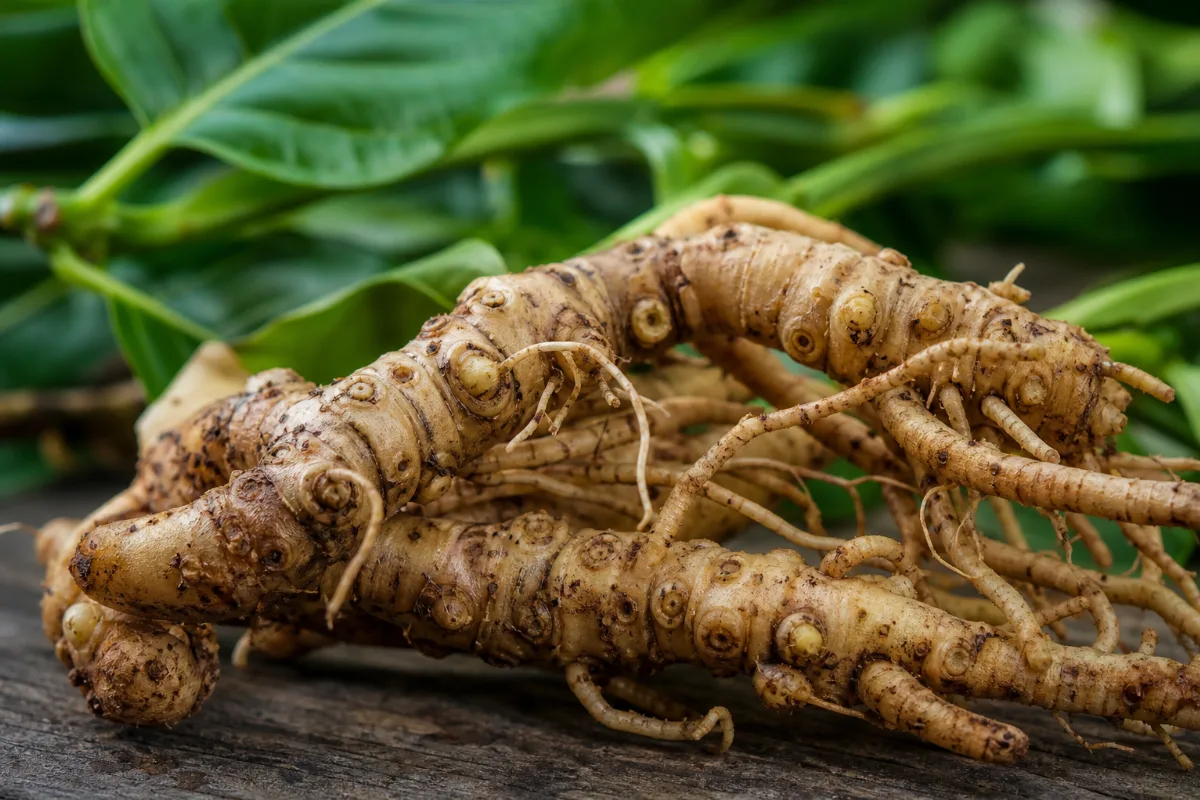
Morinda root
Morinda officinalis · also called Ba ji tian, Chinese morinda
Morinda root, called ba ji tian in China, is a tonic root used for bones, mood and sexual vigour. The best study evidence is for purified sugar capsules, which did about as well as antidepressants in seven trials in China, but none used a dummy pill. For bones and menopause the trials mostly tested herbal mixtures. Avoid it in pregnancy, ask first if you have a hormone-sensitive condition, and do not confuse it with noni.
General information, not medical advice. Last substantive update · Not medically reviewed. A named clinician has not signed off on this page. How this page is made
About Morinda root
Morinda root is a Chinese tonic root. Purified sugar capsules matched antidepressants in trials in China, but there was no placebo group. Bone and menopause uses rest on herbal mixtures. Safety data in people are thin. Avoid in pregnancy, and it is not noni.
Safety first
Not noni: Morinda root (Morinda officinalis, also called Gynochthodes officinalis) is a different plant from noni (Morinda citrifolia). The two roots are used interchangeably in Chinese medicine with no experiment supporting that, and chemistry can tell them apart. Noni has its own page and its own liver-injury reports. Check the Latin name on a label.
Pregnancy and breastfeeding: avoid. No safety data were found, and a consumer drug reference advises against it.
Hormone-sensitive conditions: ask your doctor first. No human study measured hormones, but the root sugars changed sex hormones in mice. This is a precaution.
Antidepressants and other mood medicines: the trials compared the capsules against antidepressants, not with them. Do not stop or swap an antidepressant without your prescriber.
Liver: the root contains anthraquinones. We found no human liver-injury report, and animal and cell work was reassuring, but no human liver study exists. See a doctor about yellow skin or eyes or dark urine.
Blood sugar and surgery: a consumer reference warns it might change blood sugar and advises stopping 2 weeks before surgery. This is not confirmed by a clinical source. Quality: one 2026 test found harmful-type bacteria in 40% of 30 batches of five dried Chinese herbs, including Morinda root (not given per herb), so buy from makers that test. Ask a doctor or pharmacist about amounts and your medicines.
What it is
Morinda root is the dried root of a plant of the coffee family (Rubiaceae), used mainly in China. GBIF now lists the accepted name as Gynochthodes officinalis, with Morinda officinalis as a synonym. In China it is called ba ji tian.
Reviews list more than 100 compounds. The main groups are sugars (polysaccharides and oligosaccharides, including inulin-type ones), iridoid glycosides such as monotropein, and anthraquinones.
What the research shows
Mood: a 2021 meta-analysis of 7 trials (1,384 adults with mild to moderate depression, China) found purified oligosaccharide capsules did not differ from antidepressants in effect (risk ratio 0.99) or adverse events (0.84; low-quality evidence). No placebo group. An 8-week trial of 108 adults added probiotics to the capsules and found no change in total depression score.
Bones: a 2026 review found 11 trials, mostly herbal mixtures, reporting benefit in osteoporosis with no evident adverse reactions, and called for trials of the root alone.
Menopause: the root is one of six herbs in Erxian decoction. A 2019 review of 16 studies called the studies low quality.
Sexual function, fatigue, immune and inflammation uses rest on tradition and lab or animal work. Everything labelled lab or animal does not show benefit in people.
At a glance
Traditional uses history, not proof
- Kidney-yang tonic
- Strengthening bones
- Impotence and low fertility
- Low mood and tiredness
- Rheumatoid arthritis and skin inflammation (traditional)
Studied for research
- Mild to moderate depression (purified capsules): low
- Osteoporosis (mostly herbal combinations): very low
- Menopause symptoms (six-herb formula): very low
- Sexual function and fertility: insufficient (traditional use and mouse studies)
- Fatigue, immune and inflammation: insufficient (lab and animal)
Main compounds
- Oligosaccharides (inulin-type, such as nystose)
- Iridoid glycosides (monotropein)
- Anthraquinones
- Polysaccharides
Common forms
- Dried root, often as a decoction
- Purified oligosaccharide capsules
- Extract
- Part of multi-herb formulas such as Erxian decoction
Research links: Du 2021: oligosaccharide capsules vs antidepressants, meta-analysis (PubMed) · Zhou 2025: capsules with probiotics, 8-week trial (PubMed) · Wei 2026: osteoporosis review (PubMed) · Zhang 2018: traditional uses and pharmacology review (PubMed) · Research Library · Genes & Biomarkers Library
The plant and its history
- Accepted scientific name
- Gynochthodes officinalis
- Naming authority
- (F.C.How) Razafim. & B.Bremer
- Synonyms
- Morinda officinalis F.C.How
- Common names
- Ba ji tian (zh (pinyin)); Morinda root (en); Chinese morinda (en); Morindae Officinalis Radix (la)
- Botanical family
- Rubiaceae (coffee family)
- Classification
- Plantae > Tracheophyta > Magnoliopsida > Gentianales > Rubiaceae > Gynochthodes > Gynochthodes officinalis
- Native range
- Not found in the sources read (reviews describe use in China and north-east Asia).
- Habitat
- Not found in the sources read.
- What the plant looks like
- Roots: The root is the medicinal part (Morindae Officinalis Radix).; Stems: Not found.; Leaves: Not found.; Flowers: Not found.; Fruit: Not found.
- Cultivation
- A review calls Deqing, Guangdong an authentic source area (one of the "Four Great Southern Medicinals").
- Harvest and processing
- Root may be fermented or otherwise processed; pharmacokinetics differ with processing (osteoporosis review).
- Look-alikes and adulterants
- Name: Noni (Morinda citrifolia); Note: A different species whose root is used interchangeably in Chinese medicine without experimental support. Chemistry separates the two (25 compounds shared).
- Sustainability and conservation
- Not found.
Traditional use and history history, not clinical proof
| Tradition or era | Documented use | Source |
|---|---|---|
| Traditional Chinese medicine, north-east Asia | Tonic to nourish the kidneys and strengthen bones; used for impotence, osteoporosis, depression, rheumatoid arthritis and skin inflammation. | p29126988 |
| Modern Chinese pharmacopoeia and formulas | A listed pharmacopoeia herb and one of six herbs in Erxian decoction for menopause. | p30658181 |
| Southern China (Guangdong) | One of the "Four Great Southern Medicinals" and a dietary supplement in the south. | p41987837 |
Traditional use shows how a plant was used. It does not show that a supplement works or is safe today.
What is inside, and how it may work
What the plant contains and how those compounds act in cells and animals. Laboratory and animal mechanisms are not proven effects in people.
Main compounds
| Compound | Family | Where it is concentrated | Activity studied | Level of evidence |
|---|---|---|---|---|
| Monotropein PubChem 73466 | iridoid glycoside | root | Reviews name it a main component and quality marker; distributed to many organs after oral use. 16 14 19 | Review |
| Desacetylasperulosidic acid PubChem 12315350 | iridoid glycoside | root | Named with monotropein in the pharmacokinetic review. 16 19 | Review |
| Bajijiasu PubChem 141054421 | sugar (disaccharide-type, formula C12H22O11) | root | Raised P-glycoprotein in cells and mice (interaction signal). 15 19 | Lab and animal |
| Nystose PubChem 166775 | inulin-type oligosaccharide | root | Described as a key oligosaccharide from the root; activated the Nrf2 pathway in disc cells and mice. 2 19 | Lab and animal |
| Anthraquinones (for example rubiadin) PubChem 124062 | anthraquinone | root 26 anthraquinones found in one root analysis | Class named as a major constituent group. That rubiadin specifically is in this root was not confirmed in the abstracts we read (NOT verified). Human effects untested. 12 14 19 | Chemical analysis |
| Polysaccharides and oligosaccharides | carbohydrate | root | Considered the main active group; the oligosaccharide fraction was the form tested in depression trials. 6 4 | Human and lab |
Mechanisms, receptors and pathways
| Target or pathway | Gene or receptor | What was found | Level |
|---|---|---|---|
| BDNF/TrkB/CREB brain pathway and gut bacteria | BDNF, NTRK2, CREB | Oligosaccharides eased depression-like behaviour in stressed mice and changed this pathway and gut bacteria. 1 | Animal research |
| Sex hormones and testis antioxidants | Oligosaccharides improved sex hormone levels, antioxidant markers and sperm quality in stressed male mice. 13 | Animal research | |
| Nrf2 antioxidant pathway | NFE2L2 (Nrf2) | Nystose activated Nrf2 in disc cells and mice; bajijiasu raised Nrf2 and P-gp in liver cells and mice. 2 15 | Lab and animal |
| P-glycoprotein drug pump | ABCB1 (P-gp) | Bajijiasu raised P-gp protein and activity. 15 | Lab and animal |
| Bone-building and bone-removing cells | Extracts and compounds are reported to improve bone balance in lab and animal studies. 14 | Lab and animal |
Absorption, metabolism and elimination
- Absorption
- After oral use, the review reports wide tissue distribution of root compounds, influenced by sex and processing.
- Distribution
- Monotropein and deacetylasperulosidic acid reach various organs and tissues (animal data).
- Metabolism
- Not found for the whole root in people.
- Elimination
- Not found.
- Bioavailability
- Not found in people.
Isolated compounds versus whole extracts
Depression trials used purified oligosaccharide capsules, not the plain root. Mouse and cell studies used isolated sugars or compounds (nystose, bajijiasu). Toxicity tests used fermented root or a two-herb liquid. Results do not carry over from one form to another.
Nutritional composition
Morinda root is a medicinal herb, not a source of any essential nutrient. Its oligosaccharides are inulin-type sugars, but no source we read tested effects on gut bacteria in people.
1 low certainty2 very low certainty4 not enough evidence
What is Morinda root good for?
What Morinda root is used for, and how strong the evidence is. Human evidence is limited; much of it is for purified capsules or herbal mixtures.
Benefits, one by one
Each card is a research question, not a promise. Tap a goal to filter. Open a card to see the studies, doses and limits.
Mild to moderate depression (purified oligosaccharide capsules)
Low certaintyIn China, capsules of purified sugars from the root did about as well as standard antidepressants in seven trials. No trial compared them with a dummy pill, so we cannot tell how much of the effect is the root.
2 studiesPurified oligosaccharide capsules were tested, not the dried root or …
Studies, doses and limits
What the trials found
A 2021 meta-analysis of 7 randomised trials (1,384 adults with mild to moderate depression, all in China) found no difference from antidepressants in effect (risk ratio 0.99) or in adverse events (0.84). An 8-week trial of 108 adults added probiotics to the capsules and found no difference in total depression score; both groups took the root sugars, so it does not test the root against placebo.
Results
Effect versus antidepressants: risk ratio 0.99 (95% CI 0.92-1.06). Adverse events: 0.84 (0.65-1.07), rated low quality by the authors. In the 108-person trial, total HAMD-17 change did not differ between groups (p=0.983).
Effect sizes as reported
Non-inferior to antidepressants in the meta-analysis; no placebo comparison anywhere.
Why this rating
Low: head-to-head trials against drugs show similar results, but none used a placebo, all were in one country, and the authors rate the side-effect evidence low. It is the best human evidence for this herb, but it is for purified capsules, not the plain root.
Form and dose studied
Purified oligosaccharide capsules were tested, not the dried root or a tea. Ask a doctor or pharmacist about amounts.
Who was studied
Adults with mild to moderate depression in China.
Limits
No placebo group. One country. Capsule product, not the whole root. The depression-severity wording differs between the abstract's results (moderate) and its conclusion (mild to moderate).
Why researchers looked
Chinese medicine uses the root to "tonify kidney yang", which includes low mood and low drive. Chemists then isolated the sugar fraction (oligosaccharides) and tested it as a medicine.
Traditional use
Used in China and north-east Asia as a tonic for the kidneys and bones and for low mood (2018 review).
Proposed mechanism Animal research
Animal work suggests the oligosaccharides act on the brain growth-factor BDNF pathway and on gut bacteria. This is mouse research only.
A proposed mechanism does not show that the effect happens in people.
Depression needs proper care. Do not replace or stop an antidepressant without your prescriber. No study tested the root together with antidepressants.
Stress and depression-like behaviour (mouse studies)
Not enough evidenceIn stressed mice, the root sugars eased depression-like behaviour and changed brain and gut markers. This is animal work and does not show the same in people.
2 studiesPurified oligosaccharides given to mice. Not a human dose.
Studies, doses and limits
What the trials found
None for these mechanisms.
Results
Two recent mouse studies (2025, 2026) report less depression-like behaviour after the oligosaccharides. The abstracts give few numbers.
Effect sizes as reported
Not available
Why this rating
Insufficient: animal studies only.
Form and dose studied
Purified oligosaccharides given to mice. Not a human dose.
Who was studied
Mice.
Limits
Mice, not people. Little numeric detail in the abstracts.
Why researchers looked
To find out how the oligosaccharides might work, researchers gave them to mice stressed by chronic mild stress or by a stress hormone.
Traditional use
Ties in with the traditional use for low mood.
Proposed mechanism Animal research
Changes in the brain BDNF/TrkB/CREB pathway, gut bacteria, sex hormones and antioxidant markers were reported in mice.
A proposed mechanism does not show that the effect happens in people.
None to report from these studies.
Memory and Alzheimer's-type changes (lab and animal only)
Not enough evidenceA 2026 review says the root sugars show anti-Alzheimer effects in pre-clinical work. No human study was found.
2 studiesNot applicable.
Studies, doses and limits
What the trials found
No human study found.
Results
None to report in people.
Effect sizes as reported
Not applicable
Why this rating
Insufficient: a review statement about pre-clinical work.
Form and dose studied
Not applicable.
Who was studied
None in people.
Limits
We read only the review abstract.
Why researchers looked
Reviews list anti-Alzheimer activity among the root's lab findings.
Traditional use
Not a classic traditional use.
Proposed mechanism Lab
Not established.
A proposed mechanism does not show that the effect happens in people.
Not a reason to use the root for memory loss. See a doctor about memory problems.
Osteoporosis (bone thinning)
Very low certaintyA 2026 review found 11 trials, mostly of herbal mixtures, that reported benefit in osteoporosis. Few tested the root alone, so we cannot tell what the root itself does.
3 studiesMostly multi-herb formulas. Ask a doctor or pharmacist about amounts.
Studies, doses and limits
What the trials found
The 2026 review counted 11 clinical trials, mainly of herbal combinations, reporting benefit in primary osteoporosis with no evident adverse reactions. The abstract does not rate their quality. The authors ask for trials of the root alone.
Results
11 trials, mostly combinations; no numbers in the abstract.
Effect sizes as reported
Not given in the abstract.
Why this rating
Very low: mostly combination products, trial quality not stated in what we read, and a review of reviews and lab work rather than a new pooled analysis.
Form and dose studied
Mostly multi-herb formulas. Ask a doctor or pharmacist about amounts.
Who was studied
People with primary osteoporosis (China).
Limits
Combination formulas; abstract only; no bone-density numbers read.
Why researchers looked
The root is a classic Chinese bone tonic. Lab work suggests it affects the cells that build and remove bone.
Traditional use
Used in China to nourish the kidneys and strengthen bones.
Proposed mechanism Lab and animal
Extracts and compounds are reported to balance bone-building and bone-removing cells in lab and animal work. A nystose study (disc cells and mice) points to the Nrf2 antioxidant pathway.
A proposed mechanism does not show that the effect happens in people.
Osteoporosis treatment should be guided by a doctor. Do not stop bone medicines because of an herb.
Sexual function and male fertility
Not enough evidenceThe root is a traditional treatment for impotence and low fertility. We found no human trial. In stressed mice, the root sugars improved sperm numbers and sexual behaviour.
3 studiesPurified oligosaccharides in mice. Not a human amount.
Studies, doses and limits
What the trials found
No human trial was found in our search.
Results
Mouse study (2025): improved testis and epididymis tissue, sex hormones, sperm concentration and viability and sexual behaviour measures in stressed mice; the abstract gives no numbers.
Effect sizes as reported
Not available
Why this rating
Insufficient: traditional use plus mouse studies only.
Form and dose studied
Purified oligosaccharides in mice. Not a human amount.
Who was studied
Male mice.
Limits
Mice only; no numbers in the abstract.
Why researchers looked
"Strengthening kidney yang" in Chinese medicine includes sexual vigour and fertility.
Traditional use
A leading traditional use (2018 review). A consumer reference rates the evidence insufficient.
Proposed mechanism Animal research
In mice the root sugars changed sex hormones, testis antioxidant markers and sperm quality.
A proposed mechanism does not show that the effect happens in people.
Because it may change sex hormones in animals, people with hormone-sensitive conditions should ask their doctor first (see Safety).
Menopausal symptoms (as part of a six-herb formula)
Very low certaintyThe root is one of six herbs in Erxian decoction. A 2019 review of 16 studies saw promising signs but said the studies were too weak to judge.
1 studiesA decoction of six herbs. Ask a doctor or pharmacist.
Studies, doses and limits
What the trials found
16 studies (1,594 women). Versus hormone therapy: the overall effective rate was better, but Kupperman index results were contradictory across 5 studies. One study showed better hot flush scores than placebo. Only two studies reported adverse effects. The authors concluded the studies were low quality and could not be reproduced.
Results
Total effective rate better than hormone therapy (P<0.05); Kupperman results contradictory.
Effect sizes as reported
Not given in the abstract.
Why this rating
Very low: a combination formula, low-quality studies, and the authors themselves say the evidence cannot be assessed.
Form and dose studied
A decoction of six herbs. Ask a doctor or pharmacist.
Who was studied
Women with menopausal syndrome (China).
Limits
Cannot say anything about Morinda alone.
Why researchers looked
Erxian decoction is a well-known Chinese formula for menopause. It contains Morinda officinalis root.
Traditional use
Formula use only.
Proposed mechanism Unknown
Not separable for Morinda in a six-herb formula.
A proposed mechanism does not show that the effect happens in people.
Menopause treatment, especially hormone therapy, should be decided with a doctor.
Fatigue, immune support and inflammation
Not enough evidenceReviews list anti-fatigue, immune and anti-inflammatory effects in lab and animal work. A mouse study of a two-herb liquid raised immune measures. There is no human trial.
2 studiesNot applicable.
Studies, doses and limits
What the trials found
No human trial found. A 2025 mouse study of a liquid containing Morinda officinalis and Polygonum multiflorum extracts reported higher lymphocyte growth and NK cell activity.
Results
No human results.
Effect sizes as reported
Not available
Why this rating
Insufficient: lab and animal studies, one using a combination product.
Form and dose studied
Not applicable.
Who was studied
Cells and mice.
Limits
Not shown in people.
Why researchers looked
Traditional use for tiredness, rheumatoid arthritis and skin inflammation.
Traditional use
Used in China for fatigue, joint inflammation and skin complaints (2018 review).
Proposed mechanism Lab and animal
Antioxidant, anti-inflammatory and immune-regulating activity in cells and animals.
A proposed mechanism does not show that the effect happens in people.
None specific.
Connections to the rest of health
How Morinda root connects to the rest of our health knowledge graph. Every link says what kind of connection it is. A safety link (for example to the liver) is a warning, not a benefit. A study that merely mentions a topic never creates a benefit link.
Explore every connection: goals, body systems, organs, symptoms, genes
A. Wellness goals
| Connected to | Kind of connection | Evidence status | Context | Studies |
|---|---|---|---|---|
| Mood Balance | Low certainty | Mild to moderate depression (purified oligosaccharide capsules): In China, capsules of purified sugars from the root did about as well as standard antidepressants in seven trials. No trial compared them with a dummy pill, so we cannot tell how much of the effect is the root. | 4 17 | |
| Mood Balance | Preliminary mechanism | Not enough evidence | Stress and depression-like behaviour (mouse studies): In stressed mice, the root sugars eased depression-like behaviour and changed brain and gut markers. This is animal work and does not show the same in people. | 1 13 |
| Stress Reduction | Preliminary mechanism | Not enough evidence | Stress and depression-like behaviour (mouse studies): In stressed mice, the root sugars eased depression-like behaviour and changed brain and gut markers. This is animal work and does not show the same in people. | 1 13 |
| Memory Support | Preliminary mechanism | Not enough evidence | Memory and Alzheimer's-type changes (lab and animal only): A 2026 review says the root sugars show anti-Alzheimer effects in pre-clinical work. No human study was found. | 6 16 |
| Bone Health | Very low certainty | Osteoporosis (bone thinning): A 2026 review found 11 trials, mostly of herbal mixtures, that reported benefit in osteoporosis. Few tested the root alone, so we cannot tell what the root itself does. | 14 2 16 | |
| Mens Vitality | Traditional use | Not enough evidence | Sexual function and male fertility: The root is a traditional treatment for impotence and low fertility. We found no human trial. In stressed mice, the root sugars improved sperm numbers and sexual behaviour. | 13 16 9 |
| Libido Support | Traditional use | Not enough evidence | Sexual function and male fertility: The root is a traditional treatment for impotence and low fertility. We found no human trial. In stressed mice, the root sugars improved sperm numbers and sexual behaviour. | 13 16 9 |
| Fertility Support | Traditional use | Not enough evidence | Sexual function and male fertility: The root is a traditional treatment for impotence and low fertility. We found no human trial. In stressed mice, the root sugars improved sperm numbers and sexual behaviour. | 13 16 9 |
| Menopause Support | Very low certainty | Menopausal symptoms (as part of a six-herb formula): The root is one of six herbs in Erxian decoction. A 2019 review of 16 studies saw promising signs but said the studies were too weak to judge. | 11 | |
| Reduce Fatigue | Preliminary mechanism | Not enough evidence | Fatigue, immune support and inflammation: Reviews list anti-fatigue, immune and anti-inflammatory effects in lab and animal work. A mouse study of a two-herb liquid raised immune measures. There is no human trial. | 16 3 |
| Immune Support | Preliminary mechanism | Not enough evidence | Fatigue, immune support and inflammation: Reviews list anti-fatigue, immune and anti-inflammatory effects in lab and animal work. A mouse study of a two-herb liquid raised immune measures. There is no human trial. | 16 3 |
| Inflammation Balance | Preliminary mechanism | Not enough evidence | Fatigue, immune support and inflammation: Reviews list anti-fatigue, immune and anti-inflammatory effects in lab and animal work. A mouse study of a two-herb liquid raised immune measures. There is no human trial. | 16 3 |
B. Body systems
| Connected to | Kind of connection | Evidence status | Context | Studies |
|---|---|---|---|---|
| Liver | Absence of evidence | Anthraquinones present; no human liver study. Preparation or compound: Anthraquinones |
12 | |
| Stress Mood | Biological association | Low certainty | Studied for: Mild to moderate depression (purified oligosaccharide capsules) Studied for: Stress and depression-like behaviour (mouse studies) | 4 17 1 13 |
| Brain Focus | Biological association | Not enough evidence | Studied for: Memory and Alzheimer's-type changes (lab and animal only) | 6 16 |
| Bones Joints Muscles | Biological association | Very low certainty | Studied for: Osteoporosis (bone thinning) | 14 2 16 |
| Reproductive Health | Biological association | Not enough evidence | Studied for: Sexual function and male fertility | 13 16 9 |
| Hormone Health | Biological association | Very low certainty | Studied for: Menopausal symptoms (as part of a six-herb formula) | 11 |
| Energy Fatigue | Biological association | Not enough evidence | Studied for: Fatigue, immune support and inflammation | 16 3 |
| Immune Support | Biological association | Not enough evidence | Studied for: Fatigue, immune support and inflammation | 16 3 |
I. Biomarkers
| Connected to | Kind of connection | Evidence status | Context | Studies |
|---|---|---|---|---|
| Hamilton depression score (HAMD-17) | Biological association | Low certainty | Measured in trials: no difference between groups. A lab change is not the same as a health benefit. | 17 |
| Treatment response compared with antidepressants | Biological association | Low certainty | Measured in trials: similar to antidepressants. A lab change is not the same as a health benefit. | 4 |
| Kupperman index (menopause symptom score) | Biological association | Very low certainty | Measured in trials: contradictory. A lab change is not the same as a health benefit. | 11 |
| Sperm concentration and viability (mice) | Biological association | Not enough evidence | Measured in trials: improved in mice. A lab change is not the same as a health benefit. | 13 |
K. Biological pathways
| Connected to | Kind of connection | Evidence status | Context | Studies |
|---|---|---|---|---|
| P-glycoprotein (ABCB1) | Preliminary mechanism | Lab and animal | Induced by bajijiasu in cells and mice. | 15 |
| Nrf2 (NFE2L2) | Preliminary mechanism | Lab and animal | Activated by nystose and bajijiasu. | 2 15 |
| BDNF | Preliminary mechanism | Animal | Pathway changed by oligosaccharides in stressed mice. | 1 |
L. Active compounds
| Connected to | Kind of connection | Evidence status | Context | Studies |
|---|---|---|---|---|
| Monotropein | Biological association | Review | Reviews name it a main component and quality marker; distributed to many organs after oral use. Preparation or compound: root |
16 14 19 |
| Desacetylasperulosidic acid | Biological association | Review | Named with monotropein in the pharmacokinetic review. Preparation or compound: root |
16 19 |
| Bajijiasu | Biological association | Lab and animal | Raised P-glycoprotein in cells and mice (interaction signal). Preparation or compound: root |
15 19 |
| Nystose | Biological association | Lab and animal | Described as a key oligosaccharide from the root; activated the Nrf2 pathway in disc cells and mice. Preparation or compound: root |
2 19 |
| Anthraquinones (for example rubiadin) | Biological association | Chemical analysis | Class named as a major constituent group. That rubiadin specifically is in this root was not confirmed in the abstracts we read (NOT verified). Human effects untested. Preparation or compound: root |
12 14 19 |
| Polysaccharides and oligosaccharides | Biological association | Human and lab | Considered the main active group; the oligosaccharide fraction was the form tested in depression trials. Preparation or compound: root |
6 4 |
Each connection is stored with the ingredient, the connected record, the kind of connection, the evidence status, the supporting studies, the preparation or compound involved, and a review date (last reviewed October 25, 2026).
The evidence
The research centre for Morinda root. Every record here was checked against PubMed or the publisher's page; we never list a study we have not verified.
Evidence by outcome
Bars show how many studies we found for each outcome, not how well it works. People are added up across trials only (reviews are not added, to avoid double counting).
How we rate evidence
High certainty
Several well-run trials or reviews agree; further research is unlikely to change the picture much.
Moderate certainty
Good trials point the same way, but some doubt remains.
Low certainty
Small, short or inconsistent trials. The finding could change with better research.
Very low certainty
Very little or very weak human data. Treat as a possibility only.
Mixed findings
Trials or reviews disagree with each other.
Not enough evidence
Not enough human research to say either way.
Evidence against
Good research found no benefit, or found harm.
We take the reviewers' own risk-of-bias and GRADE statements where they exist, and otherwise judge from study size, design, consistency, directness and whether a product matches what is sold. Many publications do not make evidence high. Method note: We read our existing herb summary, searched PubMed, read the abstract of each PubMed record cited, and checked names in GBIF and NCBI Taxonomy and compounds in PubChem. Regulator pages that could not be opened are marked not found or not verified.
Study library: every study we checked 19
| Study | Design | People | Product, dose, length | Result |
|---|---|---|---|---|
| (authors not recorded here) 2026 Morinda officinalis oligosaccharides ameliorate corticosterone-induced depression-like behaviour in mice by modulating the BDNF signalling pathway and gut microbiota Molecular Medicine Reports · PMID 42396642 · DOI |
Animal study mouse |
Mice given corticosterone for 35 days | Morinda officinalis oligosaccharides root oligosaccharides several amounts, not recorded here 35 days |
Oligosaccharides eased depression-like behaviour in this mouse model and changed the brain BDNF pathway and gut bacteria. Not recorded Methods, limits and fundingOutcomes: Depression-like behaviour, brain BDNF pathway, gut bacteria Limitations: Mice only. Read to the first part of the abstract only. Funding and conflicts: Not stated Read: abstract |
| (authors not recorded here) 2026 Nystose treats intervertebral disc degeneration via the Nrf2 axis: a focus on oxidative stress and ferroptosis Frontiers in Pharmacology · PMID 42528515 · DOI |
Lab and animal study in-vitro-and-mouse |
Disc cells in a dish and a mouse spine-instability model | Nystose, an oligosaccharide described as derived from Morinda officinalis isolated compound not given here |
Isolated nystose reduced oxidative stress in disc cells and protected the disc in mice by switching on the Nrf2 pathway. Isolated compound, not the whole root. Not recorded Methods, limits and fundingOutcomes: Oxidative stress, ferroptosis, disc matrix Limitations: Lab and mouse only; a single isolated compound. Funding and conflicts: Not stated Read: abstract |
| Chen 2025 Comprehensive Evaluation of Toxicological Profile and Immunomodulatory Impact of an Immune Enhancing Oral Liquid Foods · PMID 41008140 · DOI |
Animal toxicity study mouse-combination |
Mice | Oral liquid made from Polygonum multiflorum and Morinda officinalis extracts (combination) extracts not given here 28 days |
The two-herb liquid showed no obvious acute toxicity, genotoxicity or 28-day toxicity in mice, with no harm to blood-forming or liver function, and raised several immune measures. No toxicity found in mice Methods, limits and fundingOutcomes: Acute toxicity, genotoxicity, 28-day toxicity, immune tests Limitations: A two-herb product in mice, so it cannot show the safety of Morinda alone in people. Funding and conflicts: No conflicts declared Read: abstract |
| Du 2021 Efficacy and safety of Morinda officinalis oligosaccharide capsules for depressive disorder: a systematic review and meta-analysis Brazilian Journal of Psychiatry · PMID 32997072 · DOI |
Systematic review meta analysis human-review |
7 1,384 adults with mild to moderate depression (trials in China) |
Morinda officinalis oligosaccharide (MOO) capsules root (purified oligosaccharides) not given here · vs antidepressant drugs |
Seven randomised trials (1,384 people) compared MOO capsules with antidepressants. Effect on depression was not different from antidepressants (risk ratio 0.99). Adverse events were also not different (risk ratio 0.84). The authors rated the adverse-event evidence as low quality. Efficacy RR 0.99 (95% CI 0.92-1.06); adverse events RR 0.84 (95% CI 0.65-1.07) (0.92-1.06) Methods, limits and fundingOutcomes: Response/efficacy and adverse events compared with antidepressants Limitations: No placebo comparison. Only one country. Purified oligosaccharide capsules, not the plain root. Abstract does not give a GRADE rating for the efficacy result. Funding and conflicts: No conflicts of interest declared Read: abstract |
| GBIF 2026 GBIF species match: Morinda officinalis, Gynochthodes officinalis, Morinda citrifolia GBIF · Source |
Database record reference |
not given here |
Morinda officinalis F.C.How (key 5339779) is a SYNONYM of Gynochthodes officinalis (F.C.How) Razafim. & B.Bremer, the ACCEPTED species (key 7356096), family Rubiaceae, order Gentianales. Morinda citrifolia L. (noni) is a separate accepted species (key 5339879). Methods, limits and fundingRead: api-record (2026-10-25) | |
| Lei 2026 Research progress on the oligosaccharide components and pharmacological activities of Morinda officinalis Frontiers in Chemistry · PMID 41987837 · DOI |
Narrative review narrative-review |
Review of oligosaccharide research | Morinda officinalis oligosaccharides root not given here |
Says sugars (mono-, poly- and oligosaccharides) are considered the main active parts and that oligosaccharides show antidepressant, anti-Alzheimer and anti-osteoporosis effects. This is a review of mostly pre-clinical work. Not applicable Methods, limits and fundingOutcomes: Separation methods and pharmacological activities Limitations: Narrative review, mostly pre-clinical. Funding and conflicts: No commercial conflicts declared Read: abstract |
| Our search 2026 Regulator and safety-database check for Morinda officinalis (EMA/HMPC, NCCIH, LiverTox, LactMed) EMA, NCCIH, NCBI Bookshelf · Source |
Search record reference |
not given here |
NCCIH page for morinda: not found (404). EMA site search could not be read (401). An NCBI Bookshelf search for Morinda officinalis in LiverTox/LactMed returned no records. LiverTox and LactMed were not opened directly; one LiverTox page we tried was blocked by a bot check. So no regulator or database statement is cited, and absence is not proof of safety. Methods, limits and fundingLimitations: Not found is not the same as no risk. Read: search 2026-10-25 | |
| Ruan 2026 Microbial profiling of five traditional Chinese medicines: culture-based identification vs. 16S rRNA sequencing Journal of Medical Microbiology · PMID 41915421 · DOI |
Product analysis product-analysis |
30 30 batches of five southern Chinese herbs, including Morinda officinalis |
Dried Chinese medicine batches dried herb not given here |
Culture found bile-salt-resistant Gram-negative bacteria in 12 of 30 batches (40%) across the five herbs, including some that can cause infection. Enterobacter was cultured from Morinda officinalis samples but was not seen by sequencing. Results are not given per herb in the abstract. 12/30 batches (all five herbs together) Methods, limits and fundingOutcomes: Bacteria found by culture and by DNA sequencing Limitations: The abstract does not give a Morinda-only rate. Batches from one setting. Funding and conflicts: No conflicts declared Read: abstract |
| RxList 2026 Ba Ji Tian (RxList supplements monograph) RxList (consumer drug reference) · Source |
Consumer reference reference |
not given here |
Per our earlier summary: evidence for impotence, fertility and fatigue rated insufficient; advises avoiding it in pregnancy and breastfeeding; warns it might change blood sugar and diabetes medicines; advises stopping at least 2 weeks before planned surgery. Methods, limits and fundingLimitations: Not re-opened in this round. A consumer reference, not a clinical or regulator source. Read: summary-only | |
| Tao 2022 Genotoxicity, acute and subchronic toxicity evaluation of fermented Morinda officinalis Food and Chemical Toxicology · PMID 35413384 · DOI |
Animal toxicity study rat-mouse |
Mice and rats | Fermented Morinda officinalis processed root not given here up to 90 days |
Fermented Morinda officinalis was not genotoxic in three tests. No deaths or toxicity after a single very large amount in mice and rats. In a 90-day rat study there were no effects on survival, body weight, organ weights, blood counts, blood chemistry or urine. The authors report a no-observed-adverse-effect level of at least 8 g/kg a day. NOAEL not less than 8 g/kg body weight/day in rats Methods, limits and fundingOutcomes: Genotoxicity, acute toxicity, 90-day toxicity Limitations: Fermented root in animals. Not the same as the plain dried root or capsules in people. Funding and conflicts: None declared Read: abstract |
| Wang 2019 Erxian decoction, a Chinese herbal formula, for menopausal syndrome: An updated systematic review Journal of Ethnopharmacology · PMID 30658181 · DOI |
Systematic review meta analysis human-review-combination |
16 1,594 women with menopausal syndrome |
Erxian decoction: six-herb formula that includes Morinda officinalis root six-herb formula not given here · vs placebo, hormone therapy, other treatments |
Sixteen studies (1,594 women). Five studies gave contradictory Kupperman results versus hormone therapy. One study found better hot flush scores than placebo. The formula improved the overall effective rate versus hormone therapy. Only two studies reported adverse effects. The authors say the low-quality studies do not allow the evidence to be assessed. Total effective rate better than hormone therapy (P<0.05); Kupperman results contradictory Methods, limits and fundingOutcomes: Kupperman index, hot flush scores, effective rate, adverse events Limitations: A six-herb formula, so the effect cannot be put down to Morinda. The authors call the included studies low quality. Funding and conflicts: No conflicts declared Read: abstract |
| Wang 2019 Comparison of Anthraquinones, Iridoid Glycosides and Triterpenoids in Morinda officinalis and Morinda citrifolia Using UPLC/Q-TOF-MS and Multivariate Statistical Analysis Molecules · PMID 31906109 · DOI |
Chemical analysis chemical-and-cell |
Root extracts of two Morinda species (Hainan) | Methanol root extracts of M. officinalis and M. citrifolia root not given here |
The roots of both species are used interchangeably in Chinese medicine, with no experimental support for that. M. officinalis root had 26 anthraquinones, 15 triterpenes and 8 iridoid glycosides; M. citrifolia root had 30 anthraquinones, 1 triterpene and 8 iridoid glycosides. 25 compounds were shared, but the two could be clearly separated. Methanol root extracts of both were not toxic to normal cells and even promoted growth of normal liver cells in the dish. 26 vs 30 anthraquinones; 25 shared compounds Methods, limits and fundingOutcomes: Chemical profile; cell toxicity to normal cells Limitations: Chemistry and cell-dish work only. Funding and conflicts: No conflicts declared Read: abstract |
| Wang 2025 Morinda officinalis oligosaccharides alleviated mice chronic unpredictable mild stress induced sexual dysfunction Sexual Medicine · PMID 40979949 · DOI |
Animal study mouse |
Male mice under chronic mild stress | Morinda officinalis oligosaccharides root oligosaccharides not given here in what we read |
In stressed mice, MOO improved testis and epididymis damage, antioxidant markers, sex hormones and sperm concentration and viability, and eased depression-like behaviour and sexual behaviour measures. The abstract gives few numbers. Not given in the abstract Methods, limits and fundingOutcomes: Depression-like behaviour, sexual behaviour, testis tissue, sex hormones, sperm Limitations: Mice only. The abstract gives no numbers. Funding and conflicts: No conflicts declared Read: abstract |
| Wei 2026 Morinda officinalis in the prevention and treatment of osteoporosis: A comprehensive review Journal of Ethnopharmacology · PMID 42586395 · DOI |
Narrative review narrative-review |
215 215 publications (traditional, clinical, lab, animal, safety) |
Morinda officinalis root (Morindae Officinalis Radix) root not given here |
Eleven clinical trials, mainly of herbal combinations, reported benefit in primary osteoporosis with no evident adverse reactions. More than 190 compounds found; polysaccharides, iridoids and anthraquinones are the major groups. Lab work suggests effects on bone-building and bone-removing cells. The authors call safety evaluations generally favourable and ask for trials of the root on its own. 11 clinical trials, mostly combinations Methods, limits and fundingOutcomes: Bone-related uses, chemistry, pharmacokinetics, safety Limitations: A review of other studies. The abstract does not give the quality of the 11 trials. PubMed lists the print issue as 2027; the paper is online in 2026. Funding and conflicts: No competing interests declared Read: abstract |
| Yang 2019 Regulation of P-glycoprotein by Bajijiasu in vitro and in vivo by activating the Nrf2-mediated signalling pathway Pharmaceutical Biology · PMID 30929555 · DOI |
Lab and animal study in-vitro-and-mouse |
Human liver cells (HepG2) and mice | Bajijiasu, a compound isolated from Morinda officinalis isolated compound 10, 20, 40 micromolar in cells; mice 25-100 mg/kg 48 h cells; 2 weeks mice |
Bajijiasu raised P-gp protein in cells (by 12% to 134%) and in mouse tissue (by 49% to 106%) and increased P-gp pump activity in cells. The authors warn of possible herb-drug interactions with drugs carried out of cells by P-gp. P-gp protein up 12.3-134.3% (cells), 49.3-106.0% (mice) Methods, limits and fundingOutcomes: P-glycoprotein (P-gp) and Nrf2 levels Limitations: An isolated compound at lab amounts. Not shown in people or with the whole root. Funding and conflicts: None declared Read: abstract |
| Zhang 2018 Morinda officinalis How. - A comprehensive review of traditional uses, phytochemistry and pharmacology Journal of Ethnopharmacology · PMID 29126988 · DOI |
Narrative review narrative-review |
Literature on Morinda officinalis (mostly lab and animal) | Morinda officinalis root and isolated compounds root not given here |
Over 100 compounds isolated; main groups are polysaccharides, oligosaccharides, anthraquinones and iridoid glycosides. Acute toxicity and genotoxicity work indicated the plant was non-toxic. The authors found no reports of significant adverse effects at normal clinical use, but very large amounts in lab work may cause irritability, insomnia and unpleasant sensations in individual cases. Not applicable Methods, limits and fundingOutcomes: Traditional uses, chemistry, pharmacology, toxicology Limitations: A narrative review, not a systematic one. Mostly lab and animal findings. Funding and conflicts: No conflicts statement in the PubMed record Read: abstract |
| Zhou 2025 Efficacy and Safety of Morinda Officinalis Oligosaccharides Combined with Probiotics as a Therapeutic Strategy for Major Depressive Disorder with Gastrointestinal Symptoms: A Randomized, Double-Blind, Controlled Clinical Trial Neuropsychiatric Disease and Treatment · PMID 41050503 · DOI |
Rct double blind human-rct |
108 108 adults with major depression and gut symptoms, Beijing Anding Hospital |
MOO capsules plus a four-strain probiotic root oligosaccharides not given here 8 weeks · vs MOO plus placebo |
Both groups took MOO; one also took probiotics. Total HAMD-17 score fell by the same amount in both groups (p=0.983). Insomnia symptoms improved more with probiotics at week 2 (p=0.028). Adverse events were mild (mainly diarrhoea or constipation) and equal in both groups (5.56%). HAMD-17 change: no difference between groups (Z=0.02, p=0.983); adverse events 5.56% in each group Methods, limits and fundingOutcomes: Change in HAMD-17 depression score at week 8 Limitations: The trial tests probiotics added to MOO, not MOO against placebo. No MOO-free group. Single hospital. Funding and conflicts: No conflicts declared Registration: ChiCTR2200055780 Read: abstract |
| s-ncbi-tax NCBI Taxonomy: Morinda officinalis · Source |
Database record reference |
Methods, limits and fundingRead: api-record (2026-10-25) | ||
| s-pubchem PubChem records: monotropein, bajijiasu, nystose, rubiadin, desacetylasperulosidic acid · Source |
Database record reference |
Methods, limits and fundingRead: api-record (2026-10-25) |
What we do not know yet
- No placebo-controlled trial of Morinda oligosaccharide capsules on their own.
- No trial of the root alone for osteoporosis.
- No human trial for sexual function or fertility.
- No human liver, hormone or interaction study.
- No pregnancy or breastfeeding data.
How new research is added
New studies are found by a saved PubMed search and placed in a review queue. A person reads each one before it changes any rating or safety wording.
Lab markers
What changed in blood or saliva tests during trials. A changed number is not the same as feeling or being healthier, and we give no "normal ranges".
Other 4
Hamilton depression score (HAMD-17)
No difference between groups in trials
A clinician-rated 17-question scale for depression severity. Lower is better.
Low certaintyResults and what it means
Why it was measured
The main outcome in the 8-week trial of the oligosaccharide capsules with or without probiotics.
Statistical vs. clinical meaning
Shows that adding probiotics did not change the total score. It does not show what the root sugars do on their own.
Safety implication
Adverse events were mild and equal in both groups (5.56%).
| Study | Result | People | Product |
|---|---|---|---|
| 17 | Total score fell by the same amount with and without probiotics (Z=0.02, p=0.983); insomnia items improved more with probiotics at week 2 (p=0.028). | 108 adults with major depression and gut symptoms | MOO capsules plus probiotics vs MOO plus placebo, 8 weeks |
Treatment response compared with antidepressants
Similar to antidepressants in trials
The share of people whose depression improved enough to count as a response, compared between the capsules and standard drugs.
Low certaintyResults and what it means
Why it was measured
The pooled outcome in the 2021 meta-analysis.
Statistical vs. clinical meaning
Similar to drugs is not the same as better than a dummy pill.
Safety implication
Side-effect evidence is low quality.
| Study | Result | People | Product |
|---|---|---|---|
| 4 | Risk ratio 0.99 (95% CI 0.92-1.06) versus antidepressants; adverse events risk ratio 0.84 (0.65-1.07), rated low quality. | 1,384 adults, 7 randomised trials, China | MOO capsules vs antidepressants |
Kupperman index (menopause symptom score)
Contradictory in trials
A scored checklist of menopause symptoms such as hot flushes, sleep and mood. Lower is better.
Very low certaintyResults and what it means
Why it was measured
A main outcome in the Erxian decoction review.
Statistical vs. clinical meaning
Cannot be credited to Morinda.
Safety implication
Only two studies reported adverse effects.
| Study | Result | People | Product |
|---|---|---|---|
| 11 | Five studies gave contradictory Kupperman results versus hormone therapy; one study showed better hot flush scores than placebo. | Women with menopausal syndrome | Erxian decoction (six herbs, including Morinda officinalis root) |
Sperm concentration and viability (mice)
Improved in mice in trials
How many sperm there are and how many are alive and moving. Used in fertility studies.
Not enough evidenceResults and what it means
Why it was measured
Used to see whether the root sugars protect against stress-related damage in mice.
Statistical vs. clinical meaning
Mouse result; does not show a fertility benefit in men.
Safety implication
Hormone changes in animals suggest caution for hormone-sensitive conditions.
| Study | Result | People | Product |
|---|---|---|---|
| 13 | Stress lowered sperm concentration and viability; the oligosaccharides improved sperm quality in the stressed mice. No numbers in the abstract. | Male mice under chronic mild stress | Morinda officinalis oligosaccharides |
Safety
What studies and official sources say about side effects, medicines and who should check first. Each point shows what kind of evidence it comes from.
Main points to know 5
- Human safety data are thin. The best human evidence is for purified capsules in China. Adverse events were not different from antidepressants (risk ratio 0.84), but the authors rate that evidence low quality. In an 8-week trial, side effects were mild (mostly diarrhoea or constipation) and equal in both groups (5.56%). The osteoporosis review reports no evident adverse reactions, mainly from herbal combinations. Controlled trial 4 17 14
- This is not noni (Morinda citrifolia). Noni is a different species with its own safety record and its own page. The two roots are used interchangeably in Chinese medicine with no experimental support, and a chemical comparison could clearly separate them (25 compounds shared). Do not use noni safety or benefit claims for ba ji tian, or the reverse, and check the Latin name on the label. Observational 12 5
- Pregnancy and breastfeeding: avoid. No safety data in pregnancy or breastfeeding were found. A consumer drug reference advises avoiding it. Consumer reference 9 7
- Hormone-sensitive conditions: ask first. No human study measured hormones. In stressed male mice the root sugars changed sex hormones. Because of that, people with hormone-sensitive conditions (some breast, uterine or prostate cancers, endometriosis, fibroids) or on hormone treatment should ask their doctor before using it. This is a precaution, not a finding in people. Theoretical 13
- Liver: anthraquinones present, human effect unknown. The root contains anthraquinones (26 found in one analysis). We found no human report of liver injury from Morinda officinalis, and animal and cell work was reassuring, but no human liver or laxative study exists. Absence of evidence 12 10 7
Side effects 3
| Effect | How often | Severity and recovery | Evidence |
|---|---|---|---|
| Mild gut upset (diarrhoea, constipation) Both groups took the root sugars, so it does not separate the root from probiotics or chance. | 5.56% in each group of an 8-week trial | mild unknown | Controlled trial 17 |
| Irritability, insomnia and unpleasant sensations The 2018 review says very large amounts in lab work may cause these in individual cases; no significant adverse effect was reported at normal clinical use. | Not established | mild unknown | Review 16 |
| No side effects reported in most trials Many trials did not report adverse events, so "none reported" is not "none happened". | Not established | unknown unknown | Absence of evidence 14 4 |
Liver
No case of liver injury linked to Morinda officinalis was found in a PubMed search (including case-report terms). The root contains anthraquinones (26 in one analysis). We did not find any source that tested laxative or liver effects of these compounds from this plant in people. Rat studies of fermented root over 90 days showed no change in blood chemistry, and a two-herb liquid showed no liver harm in mice. A cell study found root extract did not harm normal liver cells. Noni (a different species) has liver injury reports; those do not apply to this plant. 10 3 12 7
How often. Unknown. No case reports found.
Monitoring. No source we read gives monitoring advice. Tell a doctor about yellow skin or eyes, dark urine, pale stools or severe tiredness.
This is a safety connection. It is not evidence that Morinda root supports liver health.
Medicines and supplements 5
| With | Why it matters | Importance | Evidence | What to do |
|---|---|---|---|---|
| Antidepressants and other mood or sleep medicines drug | The trials compared the root capsules against antidepressants, not with them. The combination was not tested. | Unknown. Do not stack with antidepressants or swap one for the other without a prescriber. | No data Not enough evidence 4 | Tell your prescriber. Do not stop an antidepressant to use this herb. |
| Drugs moved by the P-glycoprotein pump (some heart, cancer, immune and other medicines) drug | Bajijiasu, a compound from the root, raised P-gp protein and activity in liver cells and mice. More P-gp could lower the blood level of drugs that pump uses. | Theoretical. Isolated compound at lab amounts; not shown in people. | Lab and animal Very low certainty 15 | Ask a pharmacist, especially with narrow-margin drugs such as ciclosporin or digoxin. |
| Diabetes medicines and blood sugar drug | A consumer reference warns the root might raise or lower blood sugar. No clinical or lab study of ours confirms this. | Unverified. | Consumer reference Very low certainty 9 | If you take diabetes medicine, tell your prescriber and watch blood sugar closely. |
| Hormone therapy and anti-hormone cancer treatments drug | Sex-hormone changes were seen in mice. | Theoretical. | Animal research Not enough evidence 13 | Ask your doctor first. |
| Noni (Morinda citrifolia) herb | Different species with a different safety record. Using both adds unknowns. | Not studied. | Theoretical Not enough evidence 12 | Do not treat the two as the same product. |
Who should check first 4
| Situation | Advice | Evidence |
|---|---|---|
| Pregnancy and breastfeeding | Avoid. No safety data. | Consumer reference 9 |
| Planned surgery | A consumer reference advises stopping at least 2 weeks before, because of possible blood-sugar effects. Unverified. | Consumer reference 9 |
| Hormone-sensitive conditions or hormone treatment | Ask your doctor first (precaution). | Theoretical 13 |
| Children | No data found. Avoid unless a doctor advises. | Absence of evidence 7 |
Overdose, product quality and regulators
Summary. Animal tests found no toxicity, but they used fermented root or a two-herb liquid, not the plain root in people.
Animal. Fermented root was not genotoxic in three tests; a single very large amount caused no deaths in mice and rats; a 90-day rat study showed no harm and a no-effect level of at least 8 g/kg a day. A two-herb liquid showed no acute, genotoxic or 28-day toxicity in mice.
Human doses studied. Trials of capsules ran up to 8 weeks.
High dose or long term signals. The 2018 review mentions irritability and insomnia in lab work at very large amounts.
Overdose response. Not described.
Genotoxicity. Fermented root negative in Ames, micronucleus and spermatocyte chromosome tests.
Toxic plant parts. Root is the medicinal part. Toxicity of other parts was not assessed.
One 2026 study cultured harmful-type bacteria from 40% of 30 dried Chinese herb batches across five herbs, including Morinda officinalis; Enterobacter was cultured from the Morinda samples. Per-herb rates were not given. Heavy metal and pesticide data were not found. Noni root is sometimes used in its place.
Microbes in dried root. Culture found bile-salt-resistant Gram-negative bacteria in 12 of 30 batches across five herbs, and Enterobacter in Morinda officinalis samples (not seen by sequencing). 8
Substitution with noni root. Roots of M. officinalis and M. citrifolia are used interchangeably in Chinese medicine, though no experiment supports this. Chemistry can tell them apart. 12
| Body | Action | Date |
|---|---|---|
| Chinese Pharmacopoeia (China) | Radix Morindae Officinalis is a recorded pharmacopoeia herb (stated in a 2019 review abstract). source | 2019 (review) |
When to get medical help
- Yellow skin or eyes, dark urine, pale stools or severe tiredness.
- Rash, swelling of the face or lips, or trouble breathing.
- Low mood with thoughts of self-harm. Seek help at once and do not wait for a herb to work.
- Blood sugar very high or very low in someone with diabetes.
Stop the supplement and contact a clinician or emergency service. In the US, Poison Control is 1-800-222-1222.
General information only, not medical advice. Ask a clinician or pharmacist before use, especially with medicines, in pregnancy or with a health condition. See the Natural Remedy Safety guide.
Frequently asked questions
What is Morinda root (ba ji tian)?
Is it the same as noni?
Does it work for depression?
Can I take it with an antidepressant?
Nobody has tested the two together. Do not stop or swap an antidepressant yourself, and tell your prescriber.
Does it help bones or osteoporosis?
A 2026 review found 11 trials, mostly herbal mixtures, reporting benefit. The root on its own is not well tested, so the certainty is very low.
Does it help sexual function or fertility?
Is it safe in pregnancy or breastfeeding?
Is it safe with hormone-sensitive conditions?
Ask your doctor first. No human study measured hormones, but the root sugars changed sex hormones in mice.
Is it bad for the liver?
Does it affect blood sugar or diabetes medicines?
A consumer drug reference warns it might. No clinical or lab study we read confirms this. If you take diabetes medicine, tell your prescriber.
Does it interact with other medicines?
No human interaction study exists. A compound from the root raised the P-glycoprotein drug pump in cells and mice, which could in theory change levels of some drugs. Ask a pharmacist about your medicines.
Explore by health goal
Mood BalanceStress ReductionMemory SupportBone HealthMens VitalityLibido SupportFertility SupportMenopause SupportReduce FatigueImmune SupportInflammation Balance
Editorial transparency
- Written by
- AlternativeMed editorial team. Research compiled with AI assistance, then checked against PubMed records.
- Medical review
- None. This page has not been reviewed by a physician or pharmacist.
- First published
- 2026-10-25
- Last substantive update
- 2026-10-25
- How we research
- We read our existing herb summary, searched PubMed, read the abstract of each PubMed record cited, and checked names in GBIF and NCBI Taxonomy and compounds in PubChem. Regulator pages that could not be opened are marked not found or not verified.
- How we rate evidence
- See "How we rate evidence" in the Evidence tab.
- Independence
- No product is promoted on this page. No affiliate links are shown.
Sources 19
Each source was opened and checked. Where we read only the abstract, it says so. The small numbers in the text point here.
- (authors not recorded here). Morinda officinalis oligosaccharides ameliorate corticosterone-induced depression-like behaviour in mice by modulating the BDNF signalling pathway and gut microbiota. Molecular Medicine Reports. 2026. PMID 42396642. DOI 10.3892/mmr.2026.13948. (abstract)
- (authors not recorded here). Nystose treats intervertebral disc degeneration via the Nrf2 axis: a focus on oxidative stress and ferroptosis. Frontiers in Pharmacology. 2026. PMID 42528515. DOI 10.3389/fphar.2026.1842913. (abstract)
- Chen H, Ye Z, Chen S, et al.. Comprehensive Evaluation of Toxicological Profile and Immunomodulatory Impact of an Immune Enhancing Oral Liquid. Foods. 2025. PMID 41008140. DOI 10.3390/foods14183166. (abstract)
- Du Y, Zheng Q, Ou ZH, et al.. Efficacy and safety of Morinda officinalis oligosaccharide capsules for depressive disorder: a systematic review and meta-analysis. Brazilian Journal of Psychiatry. 2021. PMID 32997072. DOI 10.1590/1516-4446-2020-0945. (abstract)
- GBIF. GBIF species match: Morinda officinalis, Gynochthodes officinalis, Morinda citrifolia. GBIF. 2026. (api-record (2026-10-25))
- Lei Y, Wang Z, Dan Y, et al.. Research progress on the oligosaccharide components and pharmacological activities of Morinda officinalis. Frontiers in Chemistry. 2026. PMID 41987837. DOI 10.3389/fchem.2026.1813259. (abstract)
- Our search. Regulator and safety-database check for Morinda officinalis (EMA/HMPC, NCCIH, LiverTox, LactMed). EMA, NCCIH, NCBI Bookshelf. 2026. (search 2026-10-25)
- Ruan B, Li S, Chen C, et al.. Microbial profiling of five traditional Chinese medicines: culture-based identification vs. 16S rRNA sequencing. Journal of Medical Microbiology. 2026. PMID 41915421. DOI 10.1099/jmm.0.002137. (abstract)
- RxList. Ba Ji Tian (RxList supplements monograph). RxList (consumer drug reference). 2026. (summary-only)
- Tao Q, Peng D, Li P, et al.. Genotoxicity, acute and subchronic toxicity evaluation of fermented Morinda officinalis. Food and Chemical Toxicology. 2022. PMID 35413384. DOI 10.1016/j.fct.2022.113003. (abstract)
- Wang Y, Lou XT, Shi YH, et al.. Erxian decoction, a Chinese herbal formula, for menopausal syndrome: An updated systematic review. Journal of Ethnopharmacology. 2019. PMID 30658181. DOI 10.1016/j.jep.2019.01.010. (abstract)
- Wang M, Wang Q, Yang Q, et al.. Comparison of Anthraquinones, Iridoid Glycosides and Triterpenoids in Morinda officinalis and Morinda citrifolia Using UPLC/Q-TOF-MS and Multivariate Statistical Analysis. Molecules. 2019. PMID 31906109. DOI 10.3390/molecules25010160. (abstract)
- Wang T, Liu Z, He M, et al.. Morinda officinalis oligosaccharides alleviated mice chronic unpredictable mild stress induced sexual dysfunction. Sexual Medicine. 2025. PMID 40979949. DOI 10.1093/sexmed/qfaf074. (abstract)
- Wei LX, Lv YL, Xiao HM, et al.. Morinda officinalis in the prevention and treatment of osteoporosis: A comprehensive review. Journal of Ethnopharmacology. 2026. PMID 42586395. DOI 10.1016/j.jep.2026.122296. (abstract)
- Yang X, Hu G, Lv L, et al.. Regulation of P-glycoprotein by Bajijiasu in vitro and in vivo by activating the Nrf2-mediated signalling pathway. Pharmaceutical Biology. 2019. PMID 30929555. DOI 10.1080/13880209.2019.1582679. (abstract)
- Zhang JH, Xin HL, Xu YM, et al.. Morinda officinalis How. - A comprehensive review of traditional uses, phytochemistry and pharmacology. Journal of Ethnopharmacology. 2018. PMID 29126988. DOI 10.1016/j.jep.2017.10.028. (abstract)
- Zhou J, Wang X, Wang R, et al.. Efficacy and Safety of Morinda Officinalis Oligosaccharides Combined with Probiotics as a Therapeutic Strategy for Major Depressive Disorder with Gastrointestinal Symptoms: A Randomized, Double-Blind, Controlled Clinical Trial. Neuropsychiatric Disease and Treatment. 2025. PMID 41050503. DOI 10.2147/NDT.S534858. (abstract)
- . NCBI Taxonomy: Morinda officinalis. . . (api-record (2026-10-25))
- . PubChem records: monotropein, bajijiasu, nystose, rubiadin, desacetylasperulosidic acid. . . (api-record (2026-10-25))