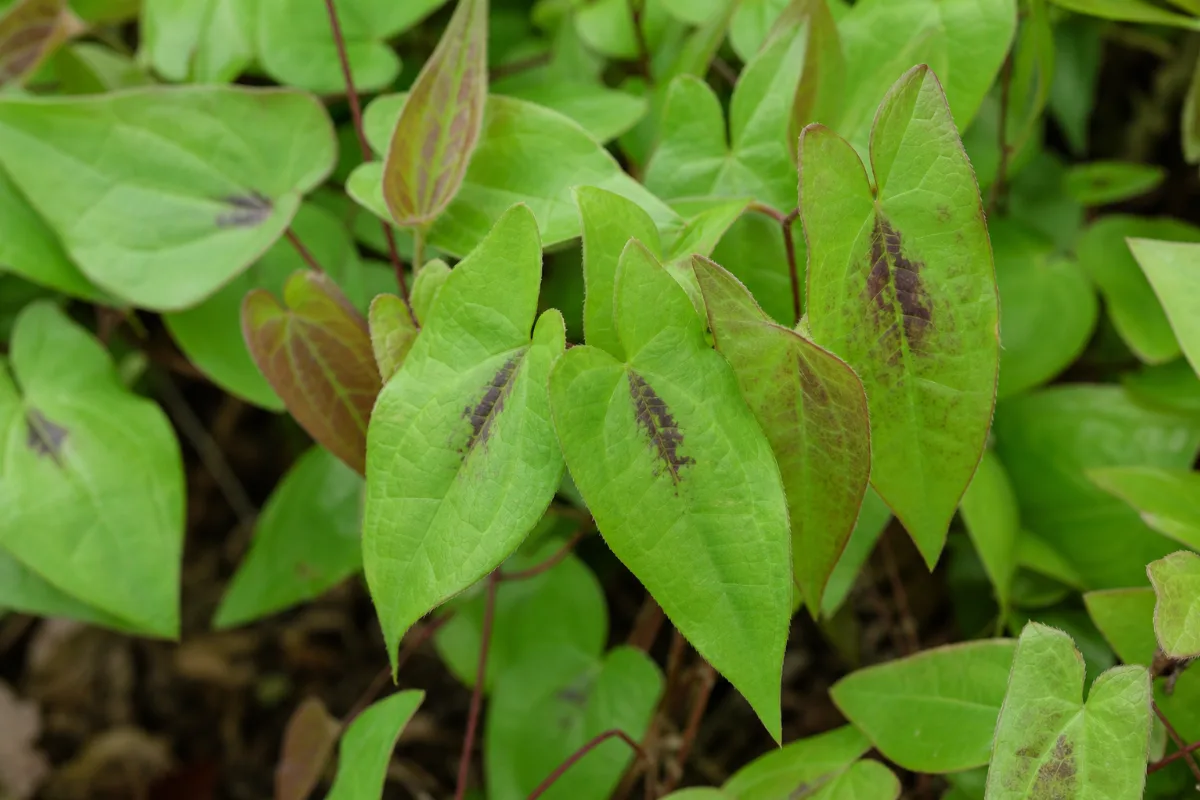
Herbs & Botanicals · Herbs · Traditional Chinese leaf tonic, with bone trials but no human trial of the herb for erections
Horny Goat Weed (Yin Yang Huo)
Epimedium grandiflorum, E. brevicornu (also spelled brevicornum) and E. sagittatum (leaf; main marker compound icariin) · also called Yin yang huo, epimedium, barrenwort, bishop's hat, fairy wings, Herba Epimedii
Horny goat weed is the leaf of several Epimedium species used for centuries in Chinese medicine as a kidney tonic. Today it is sold for libido, energy and bone health. The best human data are small trials of standardised flavonoid extracts in postmenopausal women, where bone loss was slowed in one 2-year trial. For erections, the case rests on lab and animal work. Safety needs care: case reports of fast irregular heartbeat, mood changes and psychosis, estrogen-like effects, drug interactions, uncertain liver safety and hidden prescription drugs in sexual-enhancement products.
General information, not medical advice. Last substantive update · Not medically reviewed. A named clinician has not signed off on this page. How this page is made
About Horny Goat Weed (Yin Yang Huo)
Horny goat weed is the leaf of Epimedium species, used for centuries as a kidney tonic in Chinese medicine. Human research is thin: standardised extracts slowed bone loss in a small 2-year trial, there is no controlled human trial of the herb for erections, and safety gaps are real.
What it is
Horny goat weed, or yin yang huo, is the leaf of several species in the genus Epimedium, a group of about 52 species in the barberry family. The ones named on labels are usually Epimedium grandiflorum, E. brevicornu (also spelled brevicornum) and E. sagittatum. E. koreanum is also in the Chinese pharmacopoeia and is more liver-toxic in rat studies.
Its main marker chemical is icariin. After a dose, icariin itself barely reaches the blood; gut bacteria turn most of it into icariside II and other breakdown products such as desmethylicaritin and icaritin.
Traditional and current uses
In Chinese medicine it is a kidney-yang tonic used for impotence, infertility, weak bones and tendons, and rheumatic aches. MSK lists fatigue, arthritic pain, nerve pain and sexual dysfunction. LiverTox calls it a tonic, aphrodisiac and antirheumatic.
Today it is sold for libido, energy and bone health, often in blends with other herbs. Many studies use purified icariin or icaritin, which are not the same as the whole leaf. Icaritin is a separate liver-cancer drug candidate.
What the research shows
Bone is the best-supported use. A 2-year trial of 100 postmenopausal women found a standardised flavonoid mix, which also held added soy isoflavones, kept bone density steady while the placebo group lost bone. A 6-week trial raised a bone-building marker. Two reviews of Chinese trials in osteoporosis found better scores than drugs alone, but trial quality and products varied and fractures were not reported.
For erections there is no controlled human trial of the herb. Icariin mildly blocks PDE5 in the test tube, and purified icariin helped nerve-injured rats. A small trial in Gulf War Illness found no benefit, and a knee-osteoarthritis combination product did not beat placebo.
At a glance
Traditional uses history, not proof
- Kidney-yang tonic in Chinese medicine, including for impotence and infertility
- Weak bones and tendons, rheumatic aches and numbness
- Fatigue and nerve pain (MSK)
- Tonic and aphrodisiac (LiverTox)
Studied for research
- Bone density after menopause (flavonoid extracts), low
- Osteoporosis (pooled Chinese trials), low
- Erectile function and libido: lab and animal work only, insufficient
- Knee osteoarthritis (combination product), insufficient
- Gulf War Illness symptoms: no benefit seen in a small trial
- Immune, nerve, cancer-cell and platelet effects: lab and animal only
Main compounds
- Icariin and related prenylated flavonoids
- Icariside II and desmethylicaritin (gut breakdown products found in blood)
- Icaritin (separate drug candidate)
- Epimedins A, B and C
Common forms
- Dried leaf, tea or decoction
- Capsules and tablets of leaf or extract
- Standardised extracts labelled by icariin
- Multi-herb formulas and sexual-enhancement blends
Research links: MSK Cancer Center: Epimedium · FDA: Sexual enhancement and energy product notifications · LiverTox: Horny Goat Weed (PubMed record) · 2-year bone trial in late-postmenopausal women (2007) · Meta-analysis in primary osteoporosis (2025) · Research Library · Genes & Biomarkers Library
The plant and its history
- Accepted scientific name
- Epimedium grandiflorum Morren (also sold as E. brevicornu Maxim. and E. sagittatum (Siebold & Zucc.) Maxim.; the pharmacopoeia also lists E. pubescens and E. koreanum Nakai)
- Naming authority
- Morren; Maxim.; (Siebold & Zucc.) Maxim.; Nakai. Four species checked ACCEPTED in the GBIF backbone on 2026-10-25: E. grandiflorum key 7300218, E. brevicornu key 3981041, E. sagittatum key 7300394, E. koreanum key 3982248, genus Epimedium L. key 3033908. NCBI Taxonomy IDs: genus 63350, E. grandiflorum 244027, E. brevicornu 253618, E. sagittatum 253616, E. koreanum 63351. E. pubescens was not looked up.
- Synonyms
- Epimedium brevicornum (older spelling used in many papers and by MSK; GBIF matches it to E. brevicornu by fuzzy match, so the spelling is not confirmed as a formal synonym); Herba Epimedii / Epimedii Folium (the leaf as a drug); Yin yang huo (Chinese name)
- Common names
- horny goat weed (English); yin yang huo (Chinese (pinyin)); epimedium (English, Latin); barrenwort (English); bishop's hat (English); fairy wings (English); rowdy lamb herb (English); xianlinpi (Chinese (pinyin)); yangheye (Chinese (pinyin))
- Botanical family
- Berberidaceae (barberry family)
- Classification
- Plantae > Tracheophyta > Magnoliopsida > Ranunculales > Berberidaceae > Epimedium > Epimedium grandiflorum (main species in this file; others listed above)
- Native range
- Not verified in the sources read. The genus review says the genus has about 52 species, and a Chinese review says species differ in geographic distribution.
- Habitat
- Not verified. LiverTox describes a low-growing plant with leathery leaves; its 'wetlands' statement was not cross-checked.
- What the plant looks like
- Roots: Not verified in sources read; Stems: Not verified; Leaves: Leathery leaves (LiverTox); the leaf is the part used; Flowers: Not verified; Fruit: Not verified
- Cultivation
- Not verified in sources read.
- Harvest and processing
- Chinese practice uses the dried leaf (Epimedii Folium). Processed forms exist but were not reviewed here.
- Look-alikes and adulterants
- Name: Other Epimedium species; Difference: Species differ in distribution, makeup and toxicity (Wang 2019 abstract). E. koreanum extract was more liver-toxic than other pharmacopoeia species in the authors' earlier rat work (Li 2022). Supplement labels seldom name the species.; Name: Mixed 'horny goat weed' sexual-enhancement products; Difference: Some contain other herbs or undeclared drugs; see the Safety file.
- Sustainability and conservation
- Not assessed here.
Traditional use and history history, not clinical proof
| Tradition or era | Documented use | Source |
|---|---|---|
| Traditional Chinese medicine | Kidney-yang tonic for impotence, infertility, spermatorrhea, weak tendons and bones, rheumatic paralysis, numbness and constriction; also asthma (E. koreanum review). | p37544344 |
| Modern integrative medicine summary | MSK lists traditional use for fatigue, arthritic pain, nerve pain and sexual dysfunction, and notes it is marketed as a libido supplement. | s-msk-epimedium |
| Chinese Pharmacopoeia, 2015 edition | Epimedii Folium defined as the dried leaves of E. brevicornu, E. sagittatum, E. pubescens or E. koreanum, with E. wushanense also included (as summarised in a Chinese review). | p31090340 |
| LiverTox description | Extracts used in traditional medicine as a tonic, aphrodisiac and antirheumatic agent. | p35998248 |
| Legend of a goat herder noticing his goats after they ate the plant, and classical texts such as Shennong Bencao Jing | NOT verified: these origin stories and classical citations were not checked against a primary text or any source read. | none |
Traditional use shows how a plant was used. It does not show that a supplement works or is safe today.
What is inside, and how it may work
What the plant contains and how those compounds act in cells and animals. Laboratory and animal mechanisms are not proven effects in people.
Main compounds
| Compound | Family | Where it is concentrated | Activity studied | Level of evidence |
|---|---|---|---|---|
| Icariin PubChem 5318997 | prenylated flavonol glycoside | Leaf (main marker compound) | Mild PDE5 inhibitor in test tubes; the compound products are often labelled by. Not detected in blood after a dose of extract because gut bacteria change it. 22 30 27 23 21 | Laboratory research |
| Icariside II PubChem 5488822 | prenylated flavonol glycoside | Formed from icariin in the gut | Main blood metabolite in volunteers (Tmax about 4 hours); about 91.2% of icariin is converted to it after a dose by mouth according to one review. 27 23 21 | Human data |
| Icaritin PubChem 5318980 | prenylated flavonol | Metabolite | Estrogen-receptor active in lab work; the purified compound is studied as an anticancer drug candidate (not equal to the herb). Below detection in blood in the single-dose study. 6 2 3 21 | Laboratory research |
| Desmethylicaritin (8-prenylkaempferol) PubChem 5318624 | prenylated flavonol | Metabolite | Predominant metabolite in blood in two human studies (late peak around 24 hours); blood levels rose alongside higher bone-specific ALP. 27 32 21 | Human data |
| Icariside I PubChem 5745470 | prenylated flavonol glycoside | Metabolite | Below detection in blood in both human studies. 27 32 21 | Human data |
| Epimedins A, B and C PubChem 5748394 | prenylated flavonol glycosides | Leaf | Co-occurring leaf glycosides; activity not covered in the abstracts read. 17 21 | Laboratory research |
| Other flavonoids, lignans, polysaccharides | various | Whole plant | More than 260 compounds isolated from the genus; prenylated flavonoids are the main group (Ma 2011); more than 379 compounds for E. koreanum (Qian 2024). 17 24 | Laboratory research |
Mechanisms, receptors and pathways
| Target or pathway | Gene or receptor | What was found | Level |
|---|---|---|---|
| PDE5 inhibition | PDE5A (PDE5A1, A2, A3) | Icariin inhibited PDE5 isoforms (IC50 about 0.75 to 1.1 microM; 0.432 in another assay) and raised cGMP in cultured muscle cells; about three times weaker than zaprinast. 22 30 | Laboratory research |
| Nitric oxide synthase and penile nerve markers | nNOS, eNOS | Purified icariin raised nNOS and calponin in penile tissue of nerve-injured rats and lengthened nerve outgrowth in culture. 26 | Animal research |
| Aromatase and estrogen synthesis | CYP19A1 (aromatase) | Icariin and an E. brevicornum extract raised estradiol output and aromatase expression in human ovarian-like cells. 31 18 | Laboratory research |
| Estrogen-receptor modulation | Estrogen receptors (ER-alpha) | An estrogenic extract acted like a selective estrogen-receptor modulator in mice (no breast tumour growth; uterine weight up at the lowest dose only). 8 | Animal research |
| Bone formation markers | Bone-specific ALP; TRAF6 | Prenylflavonoid extract raised BSAP (p<0.05) and tended to lower TRAF6 (p=0.068) in postmenopausal women. 32 | Human data |
| Platelet signalling | Integrin alpha-IIb-beta-3; ERK, Akt, PLC-gamma2, Src | An icariin-rich E. koreanum fraction reduced calcium mobilisation, thromboxane formation and integrin activation in platelets. 9 | Laboratory research |
| Immune and inflammatory signalling | Various (cytokines, macrophage and T-cell pathways) | Icariin and icaritin altered immune-cell function and inflammatory chemicals in cell and animal studies. 3 | Animal research |
| Liver cell injury (ferroptosis) | GPX4, System xc-, ACSL4 | E. koreanum ethanol extract lowered GPX4 and System xc- and raised ACSL4 in rat liver. 14 | Animal research |
Absorption, metabolism and elimination
- Absorption
- In 30 healthy men given a single 370, 740 or 1,110 mg dose of standardised extract, icariin, icariside I and icaritin were below detection; icariside II (Tmax about 4 hours) and desmethylicaritin (Tmax about 24 hours) were the main forms in blood.
- Distribution
- Not studied beyond blood levels.
- Metabolism
- Gut bacteria convert most icariin to icariside II (about 91.2% in one review's account); further metabolites include icaritin and desmethylicaritin.
- Elimination
- Not described in the abstracts read; blood sampling ran 48 hours.
- Bioavailability
- Low for icariin itself. After 6 weeks of 740 mg daily in postmenopausal women, desmethylicaritin median Cmax was 60.9 nM and AUC0-inf 157.9 nM x day.
Isolated compounds versus whole extracts
Most lab findings come from purified icariin, icariside II or icaritin, not from the whole leaf or tea. After a dose, icariin barely reaches the blood; its gut breakdown products do. Icaritin is a separate drug candidate in liver-cancer trials in China, and its results do not apply to the herb. Standardised flavonoid mixes used in bone trials also contained added soy isoflavones. Hidden PDE5-drug adulteration is a different problem from the herb itself.
Nutritional composition
Horny goat weed is used as a herb, not as a source of nutrients. No nutrient values were read.
3 low certainty9 not enough evidence
What is Horny Goat Weed (Yin Yang Huo) good for?
The main studied uses and how strong the human evidence is for each. 'Insufficient' means no controlled human trial of the herb was found. Rows with a standardised extract or a combination product describe those products, not plain horny goat weed.
Benefits, one by one
Each card is a research question, not a promise. Tap a goal to filter. Open a card to see the studies, doses and limits.
Slowing bone loss after menopause (flavonoid extracts)
Low certaintyIn one 2-year trial, late-postmenopausal women taking an Epimedium flavonoid mix lost less bone than women on placebo. A second, much shorter trial raised a bone-building marker. The first product also held added soy isoflavones, so it is not the plain herb.
4 studiesCapsule products of standardised extracts; amounts and exact products…
Studies, doses and limits
What the trials found
Zhang 2007: 100 healthy women, 10 to 18 years past menopause, spine T-score -2 to -2.5, randomized to an Epimedium-derived flavonoid mix (daily 60 mg icariin, 15 mg daidzein, 3 mg genistein) or placebo for 24 months; everyone took 300 mg calcium. 85 finished. The placebo group lost bone (lumbar spine -2.4%, femoral neck -1.8% at 24 months); the active group held steady (+1.3% spine, +1.6% femoral neck, not significant within group). The group difference was significant (spine p=0.006, femoral neck p=0.008 at 24 months). Estradiol and womb-lining thickness did not change. Yong 2021: 58 healthy postmenopausal women, 740 mg daily of a purified Epimedium prenylflavonoid extract versus placebo for 6 weeks: no significant side effects, no change in liver, blood or kidney tests, bone-specific alkaline phosphatase (a bone-building marker) higher (p<0.05). MSK also summarises small controlled studies as suggesting benefit.
Results
Positive but limited: one 2-year trial of a flavonoid mix with added soy isoflavones, and one 6-week marker study.
Effect sizes as reported
Zhang 2007: group difference in spine bone density p=0.006 and femoral neck p=0.008 at 24 months; deoxypyridinoline down 39 to 43%. Yong 2021: BSAP p<0.05; TRAF6 trend p=0.068.
Why this rating
One 2-year placebo-controlled trial of 100 women with 15% dropout, using a standardised mix that included added soy isoflavones, plus a short marker-only study. No fracture data in either. Not the plain herb or tea.
Form and dose studied
Capsule products of standardised extracts; amounts and exact products are not given here. Ask a doctor or pharmacist about amounts.
Who was studied
Healthy postmenopausal women (late menopause, mildly low spine density in the long trial).
Limits
Combination product; the main trial was not done in people with confirmed osteoporosis; bone density is a stand-in for fractures; not shown to prevent fractures; do not replace prescribed osteoporosis care.
Why researchers looked
Epimedium is a traditional Chinese remedy for weak bones, and its flavonoids act on bone cells in the lab.
Traditional use
Traditionally used for weak tendons and bones (Qian 2024 review; MSK).
Proposed mechanism Preliminary mechanism
Lab work suggests icariin and its breakdown products (icaritin, desmethylicaritin) act on bone cells and mimic estrogen in places. In people the main blood forms are desmethylicaritin, icaritin and icariside II.
A proposed mechanism does not show that the effect happens in people.
No serious problems reported in these two trials. The long trial found no womb-lining thickening. See the Safety file for hormone-sensitive conditions.
Osteoporosis treatment in pooled Chinese trials
Low certaintyTwo recent reviews pooled Chinese trials of Epimedium (alone or with usual drugs) in people with osteoporosis. They found better bone density and symptom scores than usual drugs alone. The trials were mixed in quality and few reported adverse effects in detail.
3 studiesDecoctions, capsules and other forms; Shi 2022 reports decoction gave…
Studies, doses and limits
What the trials found
Shi 2022: 12 randomized trials, 1,017 patients; Epimedium plus drugs improved BMD (p=0.03), effective rate (p=0.0001) and pain (p=0.01) over drugs alone; Epimedium alone beat conventional drugs on BMD (p=0.009) and effective rate (p<0.0001). Zhang 2025: 10 trials, 890 patients; efficacy OR 3.80 (95% CI 2.27 to 6.37); lumbar BMD SMD 1.15 (0.61 to 1.70); femoral-neck BMD SMD 1.11 (0.58 to 1.65); adverse effects low, mostly mild stomach upset or skin allergy. Both say more rigorous trials are needed.
Results
Pooled gains versus drugs, but from heterogeneous trials of uncertain quality.
Effect sizes as reported
Shi 2022 p-values above. Zhang 2025: OR 3.80 (2.27 to 6.37); SMD 1.15 (0.61 to 1.70) lumbar; SMD 1.11 (0.58 to 1.65) femoral neck.
Why this rating
Pooled effects are large but come from many small Chinese trials of different products and species, rated with simple tools; fractures not reported in the abstracts; the two reviews overlap in trials.
Form and dose studied
Decoctions, capsules and other forms; Shi 2022 reports decoction gave larger effects, which is not a safe basis for choosing a form.
Who was studied
Adults with primary osteoporosis (mostly Chinese populations).
Limits
Mixed products; different species; open-label designs likely; pooled standardised mean differences are hard to translate to real bone gain; no fracture outcome.
Why researchers looked
Osteoporosis drugs have side effects, and Epimedium is a common add-on in Chinese medicine.
Traditional use
Standard part of Chinese osteoporosis care (kidney-tonic herb).
Proposed mechanism Preliminary mechanism
Possible action on bone-building and bone-breaking cells; mostly lab and animal evidence.
A proposed mechanism does not show that the effect happens in people.
Reviews say adverse reactions were low; they are not a safety trial. See the Safety file.
Erectile function
Not enough evidenceHorny goat weed's reputation for erections rests on lab and animal work. In rats with nerve injury, purified icariin improved erection pressure. In the test tube icariin mildly blocks PDE5, the target of sildenafil and tadalafil. We found no controlled trial of the herb for erectile problems in men.
6 studiesSupplement labels often quote icariin amounts; products vary and cont…
Studies, doses and limits
What the trials found
No randomized or controlled human trial of Epimedium alone for erectile dysfunction was found in our PubMed searches. The Thai trial of a product called Cappra (63 men, mild ED) improved IIEF scores, but its abstract does not say it contains Epimedium, so it is not used here. A 2021 review of popular male-health supplements found no whole product had published trial evidence and horny goat weed was a common ingredient.
Results
Nothing in people to report. In rats: higher intracavernous pressure with low-dose icariin after 4 weeks.
Effect sizes as reported
Not applicable (no human data). Ning 2006: PDE5 IC50 1.0, 0.75, 1.1 microM. Xin 2003: PDE5 IC50 0.432 micromol/L, 167-fold selective over PDE4.
Why this rating
No controlled human trial found; the evidence is test-tube and rat work with purified icariin. Test-tube strength does not show it works in men.
Form and dose studied
Supplement labels often quote icariin amounts; products vary and contents are not guaranteed (see adulteration in the Safety file).
Who was studied
Men with erectile problems (traditional use); rats with nerve injury (animal).
Limits
Purified icariin is not the whole herb; whole-herb icariin barely reaches the blood (it is changed in the gut); no human outcome data.
Why researchers looked
Chinese medicine uses it as a kidney-yang tonic for impotence, and lab work found a PDE5-like action.
Traditional use
Traditional use for impotence and spermatorrhea (Qian 2024 review).
Proposed mechanism Laboratory research
Icariin blocked PDE5 isoforms with IC50 about 0.75 to 1.1 microM, roughly three times weaker than zaprinast (Ning 2006); in another test PDE5 IC50 was 0.432 micromol/L and PDE4 73.5 (Xin 2003). Gut bacteria turn most icariin into icariside II (Niu 2022). In nerve-injured rats purified icariin raised erection pressure and nerve markers (Shindel 2010).
A proposed mechanism does not show that the effect happens in people.
Do not combine with PDE5 drugs or nitrates without medical advice; hidden drugs in 'natural' sexual products are a real risk. See Safety.
Libido and sexual satisfaction (men and women)
Not enough evidenceHorny goat weed is sold for libido in both sexes. We found no controlled human trial of the herb for desire or satisfaction.
3 studiesNot applicable.
Studies, doses and limits
What the trials found
No controlled human trial of Epimedium for desire or satisfaction was found. MSK lists sexual dysfunction as a purported use without trial data; the 2021 supplement review found no whole product with published trial evidence.
Results
None to report.
Effect sizes as reported
Not applicable
Why this rating
No human trial found.
Form and dose studied
Not applicable.
Who was studied
No human data.
Limits
No human outcomes; product contents vary.
Why researchers looked
Its name and traditional use are about sexual vigour.
Traditional use
Traditional aphrodisiac and tonic (LiverTox; MSK).
Proposed mechanism Preliminary mechanism
Lab work suggests PDE5 blocking, nerve effects and, in cells, more estrogen production. None of this has been shown to change desire in people.
A proposed mechanism does not show that the effect happens in people.
See hidden drugs and heart warnings in the Safety file.
Knee osteoarthritis
Not enough evidenceOne 12-week trial tested a three-herb supplement containing Epimedium in 72 adults with knee osteoarthritis. It did not beat placebo on the main pain and stiffness scores. Animal studies suggest Epimedium compounds may calm joint inflammation. No trial of Epimedium alone was found.
3 studiesCombination capsule; amounts not in the abstract. Ask a doctor or pha…
Studies, doses and limits
What the trials found
Li 2025: 72 adults aged 40 to 75 with mild to moderate knee OA took GJ 191 (Epimedium, Dioscorea and Salvia miltiorrhiza extracts) or placebo for 12 weeks. WOMAC pain fell in both groups (about -1.78 vs -1.34 at 6 weeks and -2.31 vs -1.59 at 12 weeks) with no significant difference between groups. Current pain and bodily pain improved sooner with the product. It was safe and well tolerated. Animal evidence: a 2026 meta-analysis of 13 rodent studies (238 animals) found better cartilage scores and lower IL-6, MMP-13 and other markers.
Results
No benefit over placebo on the main scores; animal results positive.
Effect sizes as reported
WOMAC pain: no significant between-group difference at 6 or 12 weeks.
Why this rating
One small trial of a combination product that missed its main goal; animal evidence cannot be carried over to people. Epimedium alone has no human OA trial.
Form and dose studied
Combination capsule; amounts not in the abstract. Ask a doctor or pharmacist about amounts.
Who was studied
Adults 40 to 75 with mild to moderate knee OA.
Limits
Combination product; small; placebo also improved; funding not stated in the abstract.
Why researchers looked
Epimedium is used traditionally for rheumatic complaints and bone and joint weakness.
Traditional use
Traditional antirheumatic (LiverTox; Qian 2024 review).
Proposed mechanism Animal research
In mice and rats, Epimedium extracts and compounds such as icariin improved cartilage scores and lowered inflammatory chemicals.
A proposed mechanism does not show that the effect happens in people.
Tolerated well in this trial.
Fatigue and energy
Not enough evidenceHorny goat weed is traditionally used for tiredness and sold as an energy herb. MSK says it has not been tested in trials for this. Some people notice more energy as a side effect, which can also be a sign of an unwanted stimulant effect.
2 studiesNot applicable.
Studies, doses and limits
What the trials found
MSK lists fatigue as a purported use and lists 'increase in energy' among side effects. No trial of Epimedium for fatigue was found. A trial of Gulf War Illness (29 men) found no significant fall in fatigue or other symptoms (see that row).
Results
Nothing to report.
Effect sizes as reported
Not applicable
Why this rating
No human trial for fatigue found.
Form and dose studied
Not applicable.
Who was studied
No human data.
Limits
No human outcome data.
Why researchers looked
Kidney-tonic herbs are used for tiredness in Chinese medicine.
Traditional use
Traditional use for fatigue (MSK).
Proposed mechanism Pharmacological theory
No clear mechanism established.
A proposed mechanism does not show that the effect happens in people.
Raised energy and rapid heartbeat reports mean it may act as a stimulant in some people. See Safety.
Gulf War Illness symptoms (no benefit seen)
Low certaintyA small 2021 crossover trial of 29 men found Epimedium sagittatum did not reduce Gulf War Illness symptoms compared with placebo.
2 studiesAmounts are not in the abstract.
Studies, doses and limits
What the trials found
Younger 2021: 29 men with Gulf War Illness; 30 days placebo, then 30 days lower dose, then 30 days higher dose of Epimedium sagittatum (pseudo-randomized crossover). No significant change in symptom severity versus placebo at the lower dose (p=0.936) or higher dose (p=0.183). The authors say it does not appear to help. MSK also says small controlled trials did not support benefit for Gulf War Illness.
Results
Null result.
Effect sizes as reported
p=0.936 (lower dose) and p=0.183 (higher dose) versus placebo.
Why this rating
A small, preliminary crossover trial with a null result; the trial may have been too small to rule out a small effect.
Form and dose studied
Amounts are not in the abstract.
Who was studied
Men with Gulf War Illness.
Limits
29 men; pseudo-randomization; preliminary.
Why researchers looked
Chosen as one of three botanicals to screen as a treatment for a chronic symptom illness.
Traditional use
Not a traditional use.
Proposed mechanism Pharmacological theory
Not established.
A proposed mechanism does not show that the effect happens in people.
Safety details not in the abstract.
Hormone-like (estrogen-like) effects
Not enough evidenceIn lab tests, Epimedium and its compounds raise estrogen production and act on estrogen receptors. In mice an extract did not feed breast tumour growth but still affected the uterus at the lowest dose. Trial results in postmenopausal women found no change in estradiol or womb lining over 2 years. This is a caution, not a proven benefit.
4 studiesNot applicable.
Studies, doses and limits
What the trials found
Human: Zhang 2007 measured serum estradiol and endometrial thickness over 24 months in 100 women taking an Epimedium flavonoid mix with added soy isoflavones: neither changed in either group. Yong 2021 measured blood metabolites but its abstract does not report hormone levels. MSK advises caution in hormone-sensitive cancers.
Results
No hormone change in the one long human trial; lab results suggest estrogen-like activity.
Effect sizes as reported
Zhang 2007: no change in estradiol or endometrial thickness (values not in abstract). Indran 2014: uterine weight rose at the lowest dose only.
Why this rating
Lab and mouse evidence of estrogen-like action; one human trial found no hormone change but used a mixed product in healthy women.
Form and dose studied
Not applicable.
Who was studied
Postmenopausal women; mice; cell lines.
Limits
Cell and mouse data; different Epimedium products; no data in women with breast cancer or in men.
Why researchers looked
Its flavonoids look like plant estrogens, which could explain bone and other effects and also raise cautions.
Traditional use
Used traditionally for menstrual and kidney-yang problems (Qian 2024; Indran 2014 background).
Proposed mechanism Laboratory research
Icariin raised aromatase (the enzyme that makes estrogen) and estradiol output in human ovarian-like cells (Yang 2013). In nude mice an Epimedium extract acted as a tissue-specific, dose-dependent estrogen-receptor modulator (Indran 2014). MSK notes estrogen-like activity may come from icaritin and desmethylicaritin more than icariin.
A proposed mechanism does not show that the effect happens in people.
See hormone-sensitive conditions and aromatase inhibitors in Safety.
Cancer research (whole herb versus isolated icaritin)
Not enough evidenceIcaritin, a purified breakdown product of icariin, is being developed as a liver-cancer drug. That work does not show the whole herb treats cancer. Lab studies of Epimedium extracts in cancer cells exist, but no human trial of the herb was found.
3 studiesNot applicable.
Studies, doses and limits
What the trials found
Fan 2019: single-arm early-stage trial of purified icaritin 600 or 800 mg twice daily in 20 people with advanced liver cancer; no drug-related grade 3 or worse events; 7 of 15 evaluable had clinical benefit (1 partial response, 6 stable disease); median overall survival 192 days. Bailly 2020 reports icaritin was in a phase 3 trial. These tested the isolated drug candidate, not the herb or supplements. MSK lists anticancer effects as preclinical only and advises caution in hormone-sensitive cancers.
Results
Early-phase data for an isolated compound only.
Effect sizes as reported
Fan 2019: 7/15 clinical benefit; median OS 192 days (single-arm).
Why this rating
No human trial of horny goat weed itself for cancer. The icaritin work concerns a purified drug, not the herb.
Form and dose studied
Not applicable.
Who was studied
Adults with advanced liver cancer (icaritin).
Limits
Small single-arm study; cannot compare with standard care; the drug's approval status in China is not verified here.
Why researchers looked
Cell and animal studies found Epimedium compounds affect cancer-cell signalling.
Traditional use
Not a traditional cancer use.
Proposed mechanism Laboratory research
Icaritin acts on pathways such as the estrogen receptor splice variant ER-alpha36, STAT3 and NF-kB in lab work.
A proposed mechanism does not show that the effect happens in people.
Cancer patients should talk to their care team before using Epimedium (hormone-sensitive tumours, liver and drug interactions).
Immune and inflammation effects
Not enough evidenceLab and animal studies suggest icariin and icaritin change how immune cells behave. This is the basis for a theoretical caution in autoimmune disease. No human trial of Epimedium for immune conditions was found.
2 studiesNot applicable.
Studies, doses and limits
What the trials found
Bi 2022 reviews lab and animal studies in multiple sclerosis, asthma, lupus nephritis, bowel inflammation, rheumatoid arthritis and cancer; human data are not described in the abstract. MSK lists immune-modulating effects as preclinical.
Results
No human results.
Effect sizes as reported
Not applicable
Why this rating
Lab and animal only.
Form and dose studied
Not applicable.
Who was studied
No human data.
Limits
Mostly isolated compounds, not the whole herb.
Why researchers looked
Used traditionally for rheumatic complaints.
Traditional use
Traditional antirheumatic.
Proposed mechanism Animal research
Icariin and icaritin altered immune cell activity and inflammatory signals in cell and animal models (Bi 2022 review).
A proposed mechanism does not show that the effect happens in people.
Because the direction of any effect in people is unknown, people with autoimmune disease or on immune-suppressing drugs should ask a clinician first.
Nerve and brain protection
Not enough evidenceCell and animal studies report nerve-protective effects of icariin. No human trial of Epimedium for memory or mood was found. Two case reports describe mood or psychosis problems after use, so the safety direction is the stronger signal.
3 studiesNot applicable.
Studies, doses and limits
What the trials found
No human trial of memory, mood or nerve function with Epimedium was found. Safety reports: mood change and excitability in a man with heart failure (MSK), psychosis in a man with Parkinson's disease (Deliz 2026).
Results
No human benefit shown.
Effect sizes as reported
Not applicable
Why this rating
Cell and animal work only.
Form and dose studied
Not applicable.
Who was studied
No human data.
Limits
Isolated compounds in cells; no human outcomes.
Why researchers looked
Nerve-cell studies found icariin shields cells from damage.
Traditional use
Not a main traditional use.
Proposed mechanism Laboratory research
MSK lists neuroprotective effects in preclinical studies; icariin also lengthened nerve outgrowth in cultured rat ganglia (Shindel 2010).
A proposed mechanism does not show that the effect happens in people.
Mood and psychosis case reports; see Safety.
Platelet and clotting effects (lab only)
Not enough evidenceAn icariin-rich fraction of a related species (Epimedium koreanum) stopped platelets from clumping in the lab and affected clotting in animals. No human study. This matters mainly as a caution with blood thinners.
1 studiesNot applicable.
Studies, doses and limits
What the trials found
Irfan 2021: ethyl acetate fraction of E. koreanum (mostly icariin) blocked platelet aggregation in human and rat washed platelets and reduced clot formation in a rat shunt model; it changed bleeding in mice. No human study of bleeding or clotting was found.
Results
Lab and animal signal only.
Effect sizes as reported
Not applicable
Why this rating
Lab fraction and animals only.
Form and dose studied
Not applicable.
Who was studied
No human data.
Limits
Fraction of a related species; not the supplement.
Why researchers looked
Researchers tested whether the fraction could prevent clots.
Traditional use
Not a traditional use.
Proposed mechanism Laboratory research
The fraction cut calcium signalling, ATP release and thromboxane formation in platelets.
A proposed mechanism does not show that the effect happens in people.
Possible extra bleeding risk with anticoagulants or aspirin is theoretical; see Safety.
Connections to the rest of health
How Horny Goat Weed (Yin Yang Huo) connects to the rest of our health knowledge graph. Every link says what kind of connection it is. A safety link (for example to the liver) is a warning, not a benefit. A study that merely mentions a topic never creates a benefit link.
Explore every connection: goals, body systems, organs, symptoms, genes
A. Wellness goals
| Connected to | Kind of connection | Evidence status | Context | Studies |
|---|---|---|---|---|
| Men's vitality | Traditional use | Not enough evidence | Traditional sexual tonic; no controlled human trial of the herb found. Preparation or compound: Whole herb (traditional); purified icariin (lab) |
18 23 |
| Menopause support | Potential benefit | Low certainty | Bone outcomes in postmenopausal women, not menopause symptoms. Slowing bone loss after menopause (flavonoid extracts): In one 2-year trial, late-postmenopausal women taking an Epimedium flavonoid mix lost less bone than women on placebo. A second, much shorter trial raised a bone-building marker. The first product also held added soy isoflavones, so it is not the plain herb. Preparation or compound: Epimedium flavonoid extracts (bone markers and density) |
34 32 27 18 |
| Healthy Aging | Potential benefit | Low certainty | Slowing bone loss after menopause (flavonoid extracts): In one 2-year trial, late-postmenopausal women taking an Epimedium flavonoid mix lost less bone than women on placebo. A second, much shorter trial raised a bone-building marker. The first product also held added soy isoflavones, so it is not the plain herb. Osteoporosis treatment in pooled Chinese trials: Two recent reviews pooled Chinese trials of Epimedium (alone or with usual drugs) in people with osteoporosis. They found better bone density and symptom scores than usual drugs alone. The trials were mixed in quality and few reported adverse effects in detail. | 34 32 27 18 25 35 |
| Joint Support | Potential benefit | Low certainty | Osteoporosis treatment in pooled Chinese trials: Two recent reviews pooled Chinese trials of Epimedium (alone or with usual drugs) in people with osteoporosis. They found better bone density and symptom scores than usual drugs alone. The trials were mixed in quality and few reported adverse effects in detail. | 25 35 18 |
| Mens Vitality | Preliminary mechanism | Not enough evidence | Erectile function: Horny goat weed's reputation for erections rests on lab and animal work. In rats with nerve injury, purified icariin improved erection pressure. In the test tube icariin mildly blocks PDE5, the target of sildenafil and tadalafil. We found no controlled trial of the herb for erectile problems in men. | 22 30 26 23 12 18 |
| Libido Support | Preliminary mechanism | Not enough evidence | Erectile function: Horny goat weed's reputation for erections rests on lab and animal work. In rats with nerve injury, purified icariin improved erection pressure. In the test tube icariin mildly blocks PDE5, the target of sildenafil and tadalafil. We found no controlled trial of the herb for erectile problems in men. | 22 30 26 23 12 18 |
| Libido Support | Traditional use | Not enough evidence | Libido and sexual satisfaction (men and women): Horny goat weed is sold for libido in both sexes. We found no controlled human trial of the herb for desire or satisfaction. | 18 12 20 |
| Mens Vitality | Traditional use | Not enough evidence | Libido and sexual satisfaction (men and women): Horny goat weed is sold for libido in both sexes. We found no controlled human trial of the herb for desire or satisfaction. | 18 12 20 |
| Womens Wellness | Traditional use | Not enough evidence | Libido and sexual satisfaction (men and women): Horny goat weed is sold for libido in both sexes. We found no controlled human trial of the herb for desire or satisfaction. | 18 12 20 |
| Joint Support | Preliminary mechanism | Not enough evidence | Knee osteoarthritis: One 12-week trial tested a three-herb supplement containing Epimedium in 72 adults with knee osteoarthritis. It did not beat placebo on the main pain and stiffness scores. Animal studies suggest Epimedium compounds may calm joint inflammation. No trial of Epimedium alone was found. | 16 10 24 |
| Inflammation Balance | Preliminary mechanism | Not enough evidence | Knee osteoarthritis: One 12-week trial tested a three-herb supplement containing Epimedium in 72 adults with knee osteoarthritis. It did not beat placebo on the main pain and stiffness scores. Animal studies suggest Epimedium compounds may calm joint inflammation. No trial of Epimedium alone was found. Immune and inflammation effects: Lab and animal studies suggest icariin and icaritin change how immune cells behave. This is the basis for a theoretical caution in autoimmune disease. No human trial of Epimedium for immune conditions was found. | 16 10 24 3 18 |
| Energy Boost | Traditional use | Not enough evidence | Fatigue and energy: Horny goat weed is traditionally used for tiredness and sold as an energy herb. MSK says it has not been tested in trials for this. Some people notice more energy as a side effect, which can also be a sign of an unwanted stimulant effect. | 18 33 |
| Reduce Fatigue | Traditional use | Not enough evidence | Fatigue and energy: Horny goat weed is traditionally used for tiredness and sold as an energy herb. MSK says it has not been tested in trials for this. Some people notice more energy as a side effect, which can also be a sign of an unwanted stimulant effect. | 18 33 |
| Reduce Fatigue | Potential benefit | Low certainty | Gulf War Illness symptoms (no benefit seen): A small 2021 crossover trial of 29 men found Epimedium sagittatum did not reduce Gulf War Illness symptoms compared with placebo. | 33 18 |
| Inflammation Balance | Potential benefit | Low certainty | Gulf War Illness symptoms (no benefit seen): A small 2021 crossover trial of 29 men found Epimedium sagittatum did not reduce Gulf War Illness symptoms compared with placebo. | 33 18 |
| Hormone Balance | Biological association | Not enough evidence | Hormone-like (estrogen-like) effects: In lab tests, Epimedium and its compounds raise estrogen production and act on estrogen receptors. In mice an extract did not feed breast tumour growth but still affected the uterus at the lowest dose. Trial results in postmenopausal women found no change in estradiol or womb lining over 2 years. This is a caution, not a proven benefit. | 31 8 34 18 |
| Menopause Support | Biological association | Not enough evidence | Hormone-like (estrogen-like) effects: In lab tests, Epimedium and its compounds raise estrogen production and act on estrogen receptors. In mice an extract did not feed breast tumour growth but still affected the uterus at the lowest dose. Trial results in postmenopausal women found no change in estradiol or womb lining over 2 years. This is a caution, not a proven benefit. | 31 8 34 18 |
| Immune Support | Preliminary mechanism | Not enough evidence | Cancer research (whole herb versus isolated icaritin): Icaritin, a purified breakdown product of icariin, is being developed as a liver-cancer drug. That work does not show the whole herb treats cancer. Lab studies of Epimedium extracts in cancer cells exist, but no human trial of the herb was found. Immune and inflammation effects: Lab and animal studies suggest icariin and icaritin change how immune cells behave. This is the basis for a theoretical caution in autoimmune disease. No human trial of Epimedium for immune conditions was found. | 6 2 18 3 |
| Brain Health | Preliminary mechanism | Not enough evidence | Nerve and brain protection: Cell and animal studies report nerve-protective effects of icariin. No human trial of Epimedium for memory or mood was found. Two case reports describe mood or psychosis problems after use, so the safety direction is the stronger signal. | 18 26 5 |
| Mood Balance | Preliminary mechanism | Not enough evidence | Nerve and brain protection: Cell and animal studies report nerve-protective effects of icariin. No human trial of Epimedium for memory or mood was found. Two case reports describe mood or psychosis problems after use, so the safety direction is the stronger signal. | 18 26 5 |
| Heart Health | Preliminary mechanism | Not enough evidence | Platelet and clotting effects (lab only): An icariin-rich fraction of a related species (Epimedium koreanum) stopped platelets from clumping in the lab and affected clotting in animals. No human study. This matters mainly as a caution with blood thinners. | 9 |
B. Body systems
| Connected to | Kind of connection | Evidence status | Context | Studies |
|---|---|---|---|---|
| Cardiovascular system | Adverse effect or risk | Very low certainty | Rapid irregular heartbeat case reports; blood-pressure effects theoretical. Preparation or compound: Horny goat weed supplements |
18 5 |
| Hepatic system | Adverse effect or risk | Very low certainty | Sources disagree: LiverTox sees no link; Chinese case and rat data suggest risk. Sources disagree on liver risk. Preparation or compound: Epimedium leaf in multi-herb products; E. koreanum extract (rats) |
20 15 14 |
| Musculoskeletal System | Biological association | Low certainty | Studied for: Slowing bone loss after menopause (flavonoid extracts) Studied for: Osteoporosis treatment in pooled Chinese trials | 34 32 27 18 25 35 16 10 24 |
| Endocrine System | Biological association | Low certainty | Studied for: Slowing bone loss after menopause (flavonoid extracts) Studied for: Libido and sexual satisfaction (men and women) | 34 32 27 18 12 20 31 8 |
| Reproductive System | Biological association | Not enough evidence | Studied for: Erectile function Studied for: Libido and sexual satisfaction (men and women) | 22 30 26 23 12 18 20 31 8 34 |
| Cardiovascular System | Biological association | Not enough evidence | Studied for: Erectile function Studied for: Platelet and clotting effects (lab only) | 22 30 26 23 12 18 9 |
| Nervous System | Biological association | Not enough evidence | Studied for: Fatigue and energy Studied for: Gulf War Illness symptoms (no benefit seen) | 18 33 26 5 |
| Immune System | Biological association | Low certainty | Studied for: Gulf War Illness symptoms (no benefit seen) Studied for: Cancer research (whole herb versus isolated icaritin) | 33 18 6 2 3 |
G. Root causes and contributing factors
| Connected to | Kind of connection | Evidence status | Context | Studies |
|---|---|---|---|---|
| Medication side effects | Drug or supplement interaction | Very low certainty | PDE5 drugs, nitrates, blood thinners, aromatase inhibitors, CYP3A4 drugs. Preparation or compound: Whole herb and icariin |
18 9 31 |
I. Biomarkers
| Connected to | Kind of connection | Evidence status | Context | Studies |
|---|---|---|---|---|
| Estrogen | Biological association | Not enough evidence | Raised estrogen production and estrogen-receptor effects in cells and mice; no change in estradiol in one human trial. Estrogen-like activity in cells and mice; no change in estradiol in one human trial. Preparation or compound: Icariin, icaritin, desmethylicaritin (lab) |
31 8 34 |
| Bone mineral density (BMD) | Biological association | Low certainty | Measured in trials: raised. A lab change is not the same as a health benefit. | 34 35 25 |
| Bone turnover markers (deoxypyridinoline, bone-specific ALP, osteocalcin, TRAF6) | Biological association | Low certainty | Measured in trials: mixed. A lab change is not the same as a health benefit. | 34 32 35 |
| Serum estradiol and endometrial (womb lining) thickness | Biological association | Low certainty | Measured in trials: no-change. A lab change is not the same as a health benefit. | 34 31 8 |
| Gulf War Illness symptom severity | Biological association | Low certainty | Measured in trials: no-change. A lab change is not the same as a health benefit. | 33 |
J. Genes, receptors and enzymes
| Connected to | Kind of connection | Evidence status | Context | Studies |
|---|---|---|---|---|
| PDE5A | Preliminary mechanism | In vitro | Blocked by icariin in test tubes. | 22 30 |
| CYP19A1 (aromatase) | Preliminary mechanism | In vitro | Expression raised by icariin in ovarian-like cells. | 31 |
| NOS1 / NOS3 (nNOS, eNOS) | Preliminary mechanism | Animal | Higher in penile tissue of nerve-injured rats given icariin. | 26 |
| CYP3A4 | Preliminary mechanism | Authoritative guidance | Induced by prolonged use via PXR, per MSK; relevance unknown. | 18 |
K. Biological pathways
L. Active compounds
| Connected to | Kind of connection | Evidence status | Context | Studies |
|---|---|---|---|---|
| Icariin | Biological association | In vitro | Mild PDE5 inhibitor in test tubes; the compound products are often labelled by. Not detected in blood after a dose of extract because gut bacteria change it. Preparation or compound: Leaf (main marker compound) |
22 30 27 23 21 |
| Icariside II | Biological association | Human | Main blood metabolite in volunteers (Tmax about 4 hours); about 91.2% of icariin is converted to it after a dose by mouth according to one review. Preparation or compound: Formed from icariin in the gut |
27 23 21 |
| Icaritin | Biological association | In vitro | Estrogen-receptor active in lab work; the purified compound is studied as an anticancer drug candidate (not equal to the herb). Below detection in blood in the single-dose study. Preparation or compound: Metabolite |
6 2 3 21 |
| Desmethylicaritin (8-prenylkaempferol) | Biological association | Human | Predominant metabolite in blood in two human studies (late peak around 24 hours); blood levels rose alongside higher bone-specific ALP. Preparation or compound: Metabolite |
27 32 21 |
| Icariside I | Biological association | Human | Below detection in blood in both human studies. Preparation or compound: Metabolite |
27 32 21 |
| Epimedins A, B and C | Biological association | In vitro | Co-occurring leaf glycosides; activity not covered in the abstracts read. Preparation or compound: Leaf |
17 21 |
| Other flavonoids, lignans, polysaccharides | Biological association | In vitro | More than 260 compounds isolated from the genus; prenylated flavonoids are the main group (Ma 2011); more than 379 compounds for E. koreanum (Qian 2024). Preparation or compound: Whole plant |
17 24 |
Each connection is stored with the ingredient, the connected record, the kind of connection, the evidence status, the supporting studies, the preparation or compound involved, and a review date (last reviewed October 25, 2026).
The evidence
The research centre for Horny Goat Weed (Yin Yang Huo). Every record here was checked against PubMed or the publisher's page; we never list a study we have not verified.
Evidence by outcome
Bars show how many studies we found for each outcome, not how well it works. People are added up across trials only (reviews are not added, to avoid double counting).
How we rate evidence
High certainty
Several well-run trials or reviews agree; further research is unlikely to change the picture much.
Moderate certainty
Good trials point the same way, but some doubt remains.
Low certainty
Small, short or inconsistent trials. The finding could change with better research.
Very low certainty
Very little or very weak human data. Treat as a possibility only.
Mixed findings
Trials or reviews disagree with each other.
Not enough evidence
Not enough human research to say either way.
Evidence against
Good research found no benefit, or found harm.
We take the reviewers' own risk-of-bias and GRADE statements where they exist, and otherwise judge from study size, design, consistency, directness and whether a product matches what is sold. Many publications do not make evidence high. Method note: We searched PubMed, read the abstract of every PubMed study cited, read the public MSK Epimedium page and the 2026 Parkinson's psychosis case report in full, read FDA's general sexual-enhancement warning page, and checked plant names in GBIF and NCBI Taxonomy and compounds in PubChem. Not verified: NCCIH (page not found), EMA/HMPC (guessed addresses not found), LactMed (no entry found), WHO, Commission E, Health Canada and TGA (not checked). The full LiverTox page was blocked, so only its summary was read. Certainty ratings are the compiler's reading.
Study library: every study we checked 35
| Study | Design | People | Product, dose, length | Result |
|---|---|---|---|---|
| Aboras 2022 HPLC/Fluorescence-Diode Array Detection for Rapid and Reliable Determination of Illegal Synthetic Drugs in Male Sexual Herbal and Honey Remedies: Comparative Study with UFLC-MS. J AOAC Int · PMID 35298642 · DOI |
Laboratory research in-vitro |
Counterfeit sexual-enhancement nutraceuticals (herbal tablets and honey) | Products claiming icariin and yohimbine not applicable Not applicable Not applicable · vs Not applicable |
All analysed products held one or more synthetic drugs, while the natural aphrodisiacs icariin and yohimbine were absent. Tested fakes held drugs and no icariin (not applicable) Methods, limits and fundingOutcomes: Detection of synthetic drugs (sildenafil, tadalafil, avanafil, vardenafil, dapoxetine) Limitations: Lab-method paper with a small set of fake products; not a survey of real horny goat weed supplements Funding and conflicts: Not stated in the abstract Read: abstract |
| Bailly 2020 Molecular and cellular basis of the anticancer activity of the prenylated flavonoid icaritin in hepatocellular carcinoma. Chem Biol Interact · PMID 32437694 · DOI |
Narrative review in-vitro |
Review of icaritin | Icaritin (isolated) isolated compound Not applicable Not applicable · vs Not applicable |
The review states icaritin was undergoing a phase 3 trial for advanced liver cancer in 2020, and describes its effects on estrogen-receptor variant ER-alpha36, STAT3, NF-kB and the immune environment. An isolated compound developed as a cancer drug (not applicable) Methods, limits and fundingOutcomes: Anticancer mechanisms Limitations: Narrative review of a single compound Funding and conflicts: Not stated in the abstract Read: abstract |
| Bi 2022 Anti-inflammatory and immunoregulatory effects of icariin and icaritin. Biomed Pharmacother · PMID 35676785 · DOI |
Narrative review animal |
Lab and animal studies of icariin and icaritin | Icariin and icaritin isolated compounds Not applicable Not applicable · vs Not applicable |
Cell and animal studies suggest icariin and its metabolite icaritin alter immune cell function and inflammatory signals in models of multiple sclerosis, asthma, lupus nephritis, bowel inflammation, rheumatoid arthritis and cancer. Human data were not described in the abstract. Preclinical immune effects; no human trial described (not applicable) Methods, limits and fundingOutcomes: Immune and inflammatory effects Limitations: Isolated compounds; lab and animal Funding and conflicts: Not stated in the abstract Read: abstract |
| Bostock 2018 Mania Associated With Herbal Medicines, Other Than Cannabis: A Systematic Review and Quality Assessment of Case Reports. Front Psychiatry · PMID 30034348 · DOI |
Systematic review |
35 35 case reports of herbal-medicine-linked mania or hypomania |
Eleven herbs; one report involved a 'horny goat weed (Epimedium grandiflorum) mixture' various Not applicable Not applicable · vs Not applicable |
Of 35 case reports, one involved a horny goat weed mixture. Causality is hard to judge: few reports, antidepressants taken in 7 cases, no reference rate for spontaneous mania. Only one article tested the product and it found a likely causal drug mixed in (which herb that concerned is not stated in the abstract). One reported case among many herbs; cause unproven (not applicable) Methods, limits and fundingOutcomes: Mania or hypomania Limitations: Case reports only; mixture product Funding and conflicts: Not stated in the abstract Read: abstract |
| Deliz 2026 New-Onset Psychosis in a Person with Parkinson's Disease after "Horny Goat Weed" Use. Mov Disord Clin Pract · PMID 40916762 · DOI |
Case report |
1 59-year-old man with Parkinson's disease on carbidopa/levodopa and ropinirole |
Over-the-counter horny goat weed supplement (exact contents unknown) not stated Daily; amount not stated About 1 month before presentation · vs Not applicable |
He developed paranoid delusions and confusion and had new atrial fibrillation on the ECG, low potassium (3.2 mmol/L, which settled after his diuretics were stopped) and mild white-cell, urea and bilirubin rises that resolved within 48 hours. He had taken the supplement daily for a month. He needed 3 weeks in hospital and psychosis lasted for months, resolved after antipsychotic treatment (pimavenserin). Authors say concurrent dopamine drugs, diuretic-related low potassium and unlisted ingredients (they mention yohimbine and ginseng as possible content) may have contributed. Possible link between the supplement and a severe reaction; confounded (not applicable) Methods, limits and fundingOutcomes: New psychosis, atrial fibrillation, lab results Limitations: Single case; supplement not tested; other drugs and low potassium present; the CYP statement in the discussion is the authors' citation, not tested here Funding and conflicts: No funding or conflicts declared Read: full-text |
| Fan 2019 First-in-class immune-modulating small molecule Icaritin in advanced hepatocellular carcinoma: preliminary results of safety, durable survival and immune biomarkers. BMC Cancer · PMID 30922248 · DOI |
Clinical trial |
20 Adults with advanced liver cancer (HCC) |
Icaritin (purified drug candidate, not the herb) isolated compound 600 or 800 mg twice daily Not stated in abstract · vs None (single-arm) |
No drug-related grade 3 or worse adverse events in 20 patients. Of 15 evaluable, 7 had clinical benefit (1 partial response, 6 stable disease). Median overall survival 192 days. Early safety and signal for an isolated compound in cancer (not applicable) Methods, limits and fundingOutcomes: Safety, time to progression, survival Limitations: Early-stage, single-arm, 20 patients; retrospectively registered; irrelevant to supplement use Funding and conflicts: Registered NCT02496949 (retrospectively); competing-interest statement not read Read: abstract |
| GBIF Secretariat 2026 GBIF backbone taxonomy: Epimedium species GBIF species API · Source |
Database plant |
Not applicable | not applicable not applicable not applicable · vs not applicable |
Epimedium L. (genus, key 3033908); E. grandiflorum Morren (key 7300218); E. brevicornu Maxim. (key 3981041); E. sagittatum (Siebold & Zucc.) Maxim. (key 7300394); E. koreanum Nakai (key 3982248). All ACCEPTED, family Berberidaceae, order Ranunculales. Queried 2026-10-25. Not applicable Methods, limits and fundingOutcomes: Accepted names, family Limitations: Name matching only Funding and conflicts: Not applicable Read: full-text |
| Indran 2014 Selective estrogen receptor modulator effects of epimedium extracts on breast cancer and uterine growth in nude mice. Planta Med · PMID 24310211 · DOI |
Animal study animal |
Ovariectomized nude mice with MCF-7 breast cancer cells in the mammary fat pad | Estrogenic extract of Epimedium brevicornum extract Several doses (amounts not in abstract) Not stated in abstract · vs Ethinyl estradiol and soy-free feed alone |
Unlike ethinyl estradiol, the extract did not increase tumour growth; the highest dose reduced it. Uterine weight rose at the lowest dose but not at higher doses. Authors describe tissue-specific, dose-dependent estrogen-receptor modulation. Mixed: no tumour growth in mice, but uterus responded at the lowest dose (not applicable) Methods, limits and fundingOutcomes: Breast tumour growth, uterine weight Limitations: Mice only; a single extract; effect in people unknown Funding and conflicts: Not stated in the abstract Read: abstract |
| Irfan 2021 Antiplatelet and Antithrombotic Effects of Epimedium koreanum Nakai. Evid Based Complement Alternat Med · PMID 33953788 · DOI |
Laboratory research in-vitro |
Washed human and rat platelets; rats; mice | Ethyl acetate fraction of Epimedium koreanum (mostly icariin) fraction Not stated in abstract Not applicable · vs Control |
The fraction blocked platelet clumping and calcium signalling in human and rat platelets and reduced clot formation in rats. It also changed bleeding in mice (tail-bleeding test). Lab and animal sign that Epimedium may thin the blood (not applicable) Methods, limits and fundingOutcomes: Platelet clumping, clot formation, bleeding time Limitations: Lab fraction, not the herb; no human trial Funding and conflicts: Not stated in the abstract Read: abstract |
| Ji 2026 Preclinical pharmacological effects of epimedium-derived interventions in osteoarthritis: a systematic review and meta-analysis. Front Pharmacol · PMID 42638987 · DOI |
Meta-analysis animal |
238 13 animal studies of osteoarthritis (238 mice and rats) |
Epimedium extracts or components such as icariin extracts and isolated compounds Varied Varied · vs Controls |
Pelletier cartilage score and thermal pain latency improved; IL-6, MMP-13, IL-1beta, IL-18 and MMP-1 fell. Authors conclude potential in mouse and rat OA models. Animal evidence only (not applicable) Methods, limits and fundingOutcomes: Joint damage scores, pain tests, inflammatory markers Limitations: Animals only; many studies used isolated compounds Funding and conflicts: No conflicts declared Read: abstract |
| Kee 2023 Analytical methods for the detection and characterization of unapproved phosphodiesterase type 5 inhibitors (PDE-5i) used in adulteration of dietary supplements- a review. Food Addit Contam Part A · PMID 38011602 · DOI |
Systematic review in-vitro |
112 unapproved PDE-5 inhibitors found in supplements 2003 to July 2023 | Sexual-enhancement supplements (any herb) not applicable Not applicable Not applicable · vs Not applicable |
Reviewed 112 unapproved PDE-5 inhibitors found as adulterants in sexual-enhancement supplements: 67% sildenafil analogues, 23% tadalafil analogues, 8% vardenafil analogues, 2% other. New analogues are hard to identify. Hidden PDE-5 drugs in sexual-enhancement products are well documented (not applicable) Methods, limits and fundingOutcomes: Types and detection of hidden PDE-5 drugs Limitations: Does not say which products contained horny goat weed Funding and conflicts: Not stated in the abstract Read: abstract |
| Kuchakulla 2021 A systematic review and evidence-based analysis of ingredients in popular male testosterone and erectile dysfunction supplements. Int J Impot Res · PMID 32358510 · DOI |
Systematic review |
Top 16 testosterone and 16 ED supplements sold in the US | Ingredient review (horny goat weed among the most common) not applicable Not applicable Not applicable · vs Not applicable |
105 trials covered the 37 ingredients. Horny goat weed was one of the most common ingredients. No whole supplement product had published trial evidence. Of ingredients, 19% earned an A grade and 68% earned C or D grades (contradictory, negative or lacking evidence). Most ingredients in these products, including horny goat weed, lack good trial evidence (not applicable) Methods, limits and fundingOutcomes: Randomized trial evidence for each ingredient Limitations: Abstract does not give a grade for horny goat weed itself Funding and conflicts: Not stated in the abstract Read: abstract |
| Ledo 2025 Herba Epimedium (Horny Goat Weed) Toxicity With Severe Muscle Spasms and Elevated Creatine Kinase and Creatinine: A Case Report. Cureus · PMID 40546602 · DOI |
Case report |
1 33-year-old man |
Internet-bought Epimedium (horny goat weed) supplement not stated Not stated About 1 month before presentation · vs Not applicable |
Severe muscle spasms for 10 hours with raised CK and creatinine, starting about one month after he began the supplement. Both improved in hospital; he was told to stop it. Case report suggesting a link; cannot prove cause (not applicable) Methods, limits and fundingOutcomes: Muscle spasms, creatine kinase, creatinine Limitations: Single case; supplement contents not tested in the abstract Funding and conflicts: No funding or conflicts declared Read: abstract |
| Li 2022 Epimedium koreanum Nakai-Induced Liver Injury-A Mechanistic Study Using Untargeted Metabolomics. Front Pharmacol · PMID 35910368 · DOI |
Animal study animal |
Rats | Epimedium koreanum ethanol extract leaf (Epimedii Folium) Not stated in abstract 28 days · vs Control |
After 28 days liver weight and serum AST, ALP and bilirubin rose and the liver tissue was damaged. The authors link it to ferroptosis. Among several Chinese-pharmacopoeia Epimedium species their earlier work found E. koreanum had the stronger liver risk. Liver injury in rats at the doses used (not applicable) Methods, limits and fundingOutcomes: Liver tests and tissue, metabolomics Limitations: Rats; ethanol extract of a species not the main one on most labels; doses may not compare to human use Funding and conflicts: No competing interests declared Read: abstract |
| Li 2024 Herb induced liver injury by Xianling Gubao Tablets: A case assessed for causality using updated RUCAM and integrated evidence chain. Chin Herb Med · PMID 38706827 · DOI |
Case report |
1 One woman with acute liver injury |
Xianling Gubao tablets (Chinese multi-herb product in which Epimedium is a main ingredient) leaf (as part of a formula) Not stated in abstract Not stated in abstract · vs Not applicable |
Acute severe hepatocellular injury (ALT at least 3x upper limit, R=6). Updated RUCAM score 9 ('highly probable'). Tests found no added drugs, and pesticides, metals and aflatoxins were within pharmacopoeia limits. Highly probable liver injury from a multi-herb Epimedium product (not applicable) Methods, limits and fundingOutcomes: Liver injury and causality score Limitations: A multi-herb product, so Epimedium's own role cannot be separated; one case Funding and conflicts: No conflicts declared Read: abstract |
| Li 2025 A Randomized, Double-Blind, Placebo-Controlled Study Investigating the Safety and Efficacy of a Herbal Formulation on Knee Joint Function in Adults with Knee Osteoarthritis. J Integr Complement Med · PMID 39400265 · DOI |
Controlled trial |
72 Adults 40 to 75 with mild to moderate knee osteoarthritis |
GJ 191: a mix of Epimedium, Dioscorea and Salvia miltiorrhiza extracts (combination product) extracts (parts not stated in abstract) Not stated in abstract 12 weeks · vs Placebo |
WOMAC pain fell in both groups with no significant difference between product and placebo at 6 or 12 weeks. Current pain and bodily pain improved sooner with the product. The product was safe and well tolerated. No significant difference from placebo on the main pain and stiffness scores (not given in abstract) Methods, limits and fundingOutcomes: WOMAC pain and stiffness, pain scale, knee motion, CRP, rescue drug use Limitations: Combination product so Epimedium's own effect is unknown; small; placebo group also improved Funding and conflicts: Funding not stated in the abstract; registered NCT04395547 Read: abstract |
| Ma 2011 The genus Epimedium: an ethnopharmacological and phytochemical review. J Ethnopharmacol · PMID 21215308 · DOI |
Narrative review in-vitro |
Genus Epimedium | Genus review various Not applicable Not applicable · vs Not applicable |
Genus of about 52 species (Berberidaceae) with common names including horny goat weed and yin yang huo. More than 260 compounds isolated; prenylated flavonoids are the main group and chemical markers. Background on identity and chemistry (not applicable) Methods, limits and fundingOutcomes: Traditional uses and chemistry Limitations: Narrative review Funding and conflicts: Not stated in the abstract Read: abstract |
| Memorial Sloan Kettering Cancer Center 2023 Epimedium (Horny Goat Weed) - Memorial Sloan Kettering Integrative Medicine herb page MSK About Herbs · Source |
Authoritative guidance |
Not applicable | not applicable not applicable not applicable · vs not applicable |
Public page read in full (last updated 5 April 2023). Lists purported uses: fatigue, osteoporosis, sexual dysfunction. Side effects: sweating or feeling hot, rapid irregular heartbeat, more energy, mood changes. Do not take if sensitive to Epimedium, if you have heart disease (a case of rapid irregular heartbeat and excitability), or if you take drugs processed by CYP3A4 or aromatase inhibitors (anastrozole, exemestane, letrozole); clinical relevance not known. Clinical summary: small controlled studies and a systematic review suggest benefit for postmenopausal osteoporosis but not Gulf War Illness; other trials combine Epimedium with other herbs; caution in hormone-sensitive cancers. Case reports: a vasculitic rash in a 77-year-old taking ginkgo and/or horny goat weed; rapid irregular heartbeat and hypomania in a 66-year-old man with heart failure after 2 weeks. Prolonged use can induce CYP3A4 via PXR; icariin enhances aromatase. Not applicable Methods, limits and fundingOutcomes: Uses, side effects, interactions, case reports Limitations: Cancer-centre summary; dosage section is behind a log-in; secondary sources Funding and conflicts: Not applicable Read: full-text |
| National Center for Biotechnology Information 2026 NCBI Taxonomy: Epimedium NCBI Taxonomy · Source |
Database plant |
Not applicable | not applicable not applicable not applicable · vs not applicable |
Epimedium genus taxid 63350; E. grandiflorum 244027; E. brevicornu 253618; E. sagittatum 253616; E. koreanum 63351. Queried 2026-10-25 through esearch. Not applicable Methods, limits and fundingOutcomes: Taxonomy IDs Limitations: IDs only; lineage text not read Funding and conflicts: Not applicable Read: full-text |
| National Institute of Diabetes and Digestive and Kidney Diseases (LiverTox) 2022 Horny Goat Weed. In: LiverTox: Clinical and Research Information on Drug-Induced Liver Injury [Internet] LiverTox (NIDDK, Bethesda MD) · PMID 35998248 |
Authoritative guidance |
Not applicable | Horny goat weed (oral forms) not stated in abstract not applicable not applicable · vs not applicable |
LiverTox (record dated 2022 Aug 8) describes horny goat weed as a low-growing plant with leathery leaves used traditionally as a tonic, aphrodisiac and antirheumatic. It says oral forms have not been linked to raised liver enzymes or to clinically apparent liver injury. No liver-injury link recorded by LiverTox Methods, limits and fundingOutcomes: Liver injury Limitations: Only the abstract-level summary was read (the full LiverTox page was blocked by a bot check); it may be out of step with newer Chinese case reports of multi-herb products Funding and conflicts: Public agency Read: abstract |
| National Library of Medicine 2026 PubChem compound records for icariin, icaritin, icariside II, icariside I, desmethylicaritin and epimedins A, B, C PubChem PUG REST · Source |
Database plant |
Not applicable | not applicable not applicable not applicable · vs not applicable |
Icariin CID 5318997 (C33H40O15); icaritin 5318980 (C21H20O6); icariside II 5488822 (C27H30O10); icariside I 5745470 (C27H30O11); desmethylicaritin = 8-prenylkaempferol 5318624 (C20H18O6; synonym list includes desmethylicaritin); epimedin A 53486399 (C40H52O19); epimedin B 5748393 (C38H48O19); epimedin C 5748394 (C39H50O19). Queried 2026-10-25. Not applicable Methods, limits and fundingOutcomes: Compound IDs and formulas Limitations: Name lookup, not a statement that PubChem shows the compound in the plant Funding and conflicts: Not applicable Read: full-text |
| Ning 2006 Effects of icariin on phosphodiesterase-5 activity in vitro and cyclic guanosine monophosphate level in cavernous smooth muscle cells. Urology · PMID 17169663 · DOI |
Laboratory research in-vitro |
Isolated PDE5 enzymes and rat cavernous muscle cells | Icariin isolated compound 1e-11 to 1e-6 M in enzyme tests; 100 and 200 microM in cells Minutes to hours · vs Zaprinast (PDE5 blocker) |
Icariin blocked PDE5 isoforms with IC50 of 1.0, 0.75 and 1.1 microM, roughly three times weaker than zaprinast (0.33, 0.23, 0.32 microM). It kept cGMP higher in treated cells. Icariin is a mild PDE5 blocker in the test tube (IC50 values as given) Methods, limits and fundingOutcomes: PDE5 inhibition (IC50) and cGMP levels Limitations: Enzyme and cell test only; concentrations used may not be reached in people Funding and conflicts: Not stated in the abstract Read: abstract |
| Niu 2022 Deciphering the myth of icariin and synthetic derivatives in improving erectile function from a molecular biology perspective: a narrative review. Transl Androl Urol · PMID 35958901 · DOI |
Narrative review in-vitro |
Lab and animal studies of icariin and derivatives | Icariin, icariside II and a synthetic derivative (YS-10) isolated compounds Not applicable Not applicable · vs Not applicable |
Icariin and some derivatives inhibit PDE5 and may raise testosterone synthesis; in lab work they act on several signalling paths. After a dose by mouth, about 91.2% of icariin is changed to icariside II by gut bacteria. Authors recommend more clinical research with large samples. Mechanism work only (not applicable) Methods, limits and fundingOutcomes: Mechanisms for erectile function Limitations: Narrative review, not a systematic search; isolated compounds, not whole herb Funding and conflicts: No conflicts declared Read: abstract |
| Qian 2024 A systematic review of traditional uses, phytochemistry, pharmacology and toxicity of Epimedium koreanum Nakai. J Ethnopharmacol · PMID 37544344 · DOI |
Systematic review animal |
Literature on Epimedium koreanum | Epimedium koreanum (a related species used in Chinese pharmacopoeia) various Not applicable Not applicable · vs Not applicable |
More than 379 compounds found. Traditional uses include erectile dysfunction, infertility, osteoporosis and 'kidney yang deficiency'. The authors conclude crude extracts can cause liver toxicity and that more safety work is needed. Review mostly of lab and animal work; flags liver toxicity of crude extracts (not applicable) Methods, limits and fundingOutcomes: Traditional uses, chemistry, pharmacology, toxicity Limitations: Different species from the three named on most labels; narrative synthesis Funding and conflicts: No competing interests declared Read: abstract |
| Shi 2022 Epimedium for Osteoporosis Based on Western and Eastern Medicine: An Updated Systematic Review and Meta-Analysis. Front Pharmacol · PMID 35431937 · DOI |
Meta-analysis |
1017 Patients with osteoporosis in 12 randomized trials |
Epimedium (decoction and other forms) alone or added to conventional drugs not stated in abstract Not stated in abstract Varied · vs Conventional osteoporosis drugs |
Epimedium plus drugs improved BMD (p=0.03), effective rate and pain compared with drugs alone; Epimedium alone beat conventional drugs on BMD (p=0.009) and effective rate. Authors call for more rigorous trials. Better scores on several outcomes; mostly Chinese trials rated with the modified Jadad scale (not given in abstract) Methods, limits and fundingOutcomes: Bone mineral density, effective rate, pain (VAS), bone markers, adverse events Limitations: Trial quality rated only with a simple scale; forms and doses varied; fractures not reported in the abstract Funding and conflicts: No conflicts declared Read: abstract |
| Shindel 2010 Erectogenic and neurotrophic effects of icariin, a purified extract of horny goat weed (Epimedium spp.) in vitro and in vivo. J Sex Med · PMID 20141584 · DOI |
Animal study animal |
Rats with cavernous-nerve injury; cultured rat nerve ganglia | Icariin (purified) isolated compound 1, 5 or 10 mg/kg by gavage daily (single 10 mg/kg dose in another group) 4 weeks · vs Saline/DMSO placebo |
Low-dose icariin gave higher ICP/MAP ratios than controls and single-dose animals. All icariin groups had more nNOS and calponin in penile tissue. Icariin lengthened nerve outgrowth in culture. Better erection pressure in injured rats (not applicable) Methods, limits and fundingOutcomes: Pressure in the penis on nerve stimulation (ICP/MAP), nerve and muscle markers Limitations: Rats and cells only; purified icariin, not whole herb Funding and conflicts: Not stated in the abstract Read: abstract |
| Teo 2019 Pharmacokinetics of Prenylflavonoids following Oral Ingestion of Standardized Epimedium Extract in Humans. Planta Med · PMID 30522143 · DOI |
Controlled trial |
30 Healthy men |
Standardised Epimedium prenylflavonoid extract extract (part not stated in abstract; the paper notes leaves are the traditional part) Single oral dose of 370, 740 or 1110 mg Single dose, 48 hours of blood sampling · vs Placebo |
Well tolerated; no adverse effects observed. Main serum metabolites were icariside II (Tmax 4.1 to 4.3 hours) and desmethylicaritin (Tmax 24.1 to 24.4 hours; AUC up to 126.1 h x ng/mL at the top dose). Icariin, icariside I and icaritin were below detection. Most of the active material appears in blood as breakdown products, not as icariin itself (not applicable) Methods, limits and fundingOutcomes: Blood levels of icariin and its metabolites; tolerability Limitations: Single dose; 30 healthy men; no outcome on health Funding and conflicts: No competing interests declared Read: abstract |
| US Food and Drug Administration 2026 Sexual Enhancement and Energy Product Notifications - FDA Medication Health Fraud FDA web page · Source |
Authoritative guidance |
Not applicable | not applicable not applicable not applicable · vs not applicable |
FDA says many products claiming to enhance sexual performance or treat sexual dysfunction, such as male enhancement supplements, male energy pills and stamina pills, are likely to be contaminated with dangerous hidden ingredients, are sometimes falsely sold as dietary supplements or 'all-natural', can lead to severe health issues and hospitalization, and the list covers only a small fraction of the contaminated products on the market. A search of the page text found no horny-goat-weed-specific notification. Not applicable Methods, limits and fundingOutcomes: Hidden ingredients in sexual-enhancement products Limitations: General page read on 2026-10-25; the text read did not itemise ingredients or interactions; individual notifications were not opened Funding and conflicts: Not applicable Read: full-text |
| Wang 2019 [Discussion on safety evaluation and risk control measures of Epimedii Folium]. Zhongguo Zhong Yao Za Zhi · PMID 31090340 · DOI |
Narrative review |
Chinese literature on Epimedii Folium and two Chinese patent medicines (Xianling Gubao capsules, Zhuanggu Guanjie pills) | Epimedii Folium (leaf) and products containing it leaf Not applicable Not applicable · vs Not applicable |
The authors say reports of adverse reactions are rising and describe signs of toxicity of the leaf to the heart and blood vessels, nerves and liver, plus long-term, acute and genetic toxicity. Species differ in distribution, makeup and toxicity. The 2015 Chinese Pharmacopoeia lists four species (E. brevicornu, E. sagittatum, E. pubescens, E. koreanum), and E. wushanense is also included. Chinese review raising several safety flags (not applicable) Methods, limits and fundingOutcomes: Adverse reaction reports and toxicity Limitations: Read in abstract only (in Chinese); mixed patent medicines; details of evidence level not checked Funding and conflicts: Not stated in the abstract Read: abstract |
| Xin 2003 Effects of icariin on cGMP-specific PDE5 and cAMP-specific PDE4 activities. Asian J Androl · PMID 12646997 |
Laboratory research in-vitro |
PDE5 from human platelets; PDE4 from rat liver | Icariin isolated compound Dose-response in enzyme tests Not applicable · vs Papaverine |
Icariin blocked PDE5 with IC50 0.432 micromol/L (papaverine 0.680) and PDE4 with 73.50 micromol/L, about 167-fold more selective for PDE5. Icariin blocks PDE5 much more than PDE4 in the test tube (IC50 as given) Methods, limits and fundingOutcomes: PDE5 and PDE4 inhibition (IC50) Limitations: Enzyme test only Funding and conflicts: Not stated in the abstract Read: abstract |
| Yang 2013 Icariin from Epimedium brevicornum Maxim promotes the biosynthesis of estrogen by aromatase (CYP19). J Ethnopharmacol · PMID 23261485 · DOI |
Laboratory research in-vitro |
Human ovarian granulosa-like KGN cells; rat bone-cell line UMR-106 | Epimedium brevicornum extract and icariin extract and isolated compound Concentration- and time-dependent Not stated in abstract · vs Untreated cells |
The extract raised estradiol output; icariin was the active compound and increased aromatase mRNA and protein. Icariin also raised estrogen production and ALP in bone-cell line. Raises estrogen production in cultured cells (not applicable) Methods, limits and fundingOutcomes: Estradiol production, aromatase expression, ALP in bone cells Limitations: Cells only; not shown in people Funding and conflicts: Not stated in the abstract Read: abstract |
| Yong 2021 Randomized, double-blind, placebo-controlled trial to examine the safety, pharmacokinetics and effects of Epimedium prenylflavonoids, on bone specific alkaline phosphatase and the osteoclast adaptor protein TRAF6 in post-menopausal women. Phytomedicine · PMID 34352588 · DOI |
Controlled trial |
58 Healthy postmenopausal women, mean age 57.9 |
Purified Epimedium spp. prenylflavonoid extract extract (part not stated in abstract) 740 mg daily 6 weeks (plus 2 weeks follow-up) · vs Placebo |
58 women randomized and completed. No significant adverse symptoms and no changes in liver, blood or kidney tests. Main blood metabolites: desmethylicaritin, icaritin and icariside II; icariin and icariside I were below detection. BSAP was higher in the extract group (p<0.05); TRAF6 trended lower (p=0.068). Desmethylicaritin median Cmax 60.9 nM, AUC0-inf 157.9 nM x day. BSAP (a bone-building marker) rose; no safety signal in a 6-week study (p<0.05 for BSAP; p=0.068 for TRAF6) Methods, limits and fundingOutcomes: Safety, blood levels of Epimedium metabolites, bone-specific alkaline phosphatase (BSAP), TRAF6 in blood monocytes Limitations: Short (6 weeks); healthy women; marker outcomes, not bone density or fractures; small Funding and conflicts: Not stated in the abstract Read: abstract |
| Younger 2021 A Placebo-Controlled, Pseudo-Randomized, Crossover Trial of Botanical Agents for Gulf War Illness: Reishi Mushroom (Ganoderma lucidum), Stinging Nettle (Urtica dioica), and Epimedium (Epimedium sagittatum). Int J Environ Res Public Health · PMID 33915962 · DOI |
Controlled trial |
29 Men with Gulf War Illness |
Epimedium sagittatum not stated in abstract Lower and higher dose (amounts not in abstract) 30 days placebo, then 30 days lower dose, then 30 days higher dose · vs Placebo |
Epimedium did not lower symptoms versus placebo at the lower dose (p=0.936) or higher dose (p=0.183). The authors say it does not appear to help symptom severity. No benefit seen (p=0.936 and p=0.183) Methods, limits and fundingOutcomes: Gulf War Illness symptom severity, pain, fatigue Limitations: Small (29 men); pseudo-randomized crossover; preliminary Funding and conflicts: No competing interests; registered NCT02909686 Read: abstract |
| Zhang 2007 Epimedium-derived phytoestrogen flavonoids exert beneficial effect on preventing bone loss in late postmenopausal women: a 24-month randomized, double-blind and placebo-controlled trial. J Bone Miner Res · PMID 17419678 · DOI |
Controlled trial |
100 Healthy late-postmenopausal women (10 to 18 years after menopause) with lumbar-spine T-score between -2 and -2.5 |
Epimedium-derived phytoestrogen flavonoids (EPF) from Epimedium brevicornum: icariin plus added daidzein and genistein extract (part not stated in abstract) Daily: 60 mg icariin, 15 mg daidzein, 3 mg genistein; all women also took 300 mg elemental calcium 24 months · vs Placebo plus 300 mg calcium |
100 randomized (50 per group); 85 finished. Placebo group lost bone: lumbar spine -1.7% at 12 months and -2.4% at 24 months (p=0.002); femoral neck -1.8% at 24 months (p=0.048). EPF group held bone: lumbar spine +1.3% and femoral neck +1.6% at 24 months (not significant within group). Difference between groups: lumbar spine p=0.006 at 24 months, femoral neck p=0.008 at 24 months. Urine bone-breakdown marker deoxypyridinoline fell 39 to 43%; osteocalcin did not change significantly. Serum estradiol and endometrial thickness did not change in either group. EPF kept bone density steady while the placebo group lost bone; the active mix also held added soy isoflavones, so the result is not from the herb alone (not reported in abstract) Methods, limits and fundingOutcomes: Bone mineral density (spine, femoral neck), bone turnover markers, serum estradiol, endometrial thickness Limitations: Product is a standardised flavonoid mix with added daidzein and genistein, not whole herb; 15% dropped out; BMD is a stand-in for fractures, which were not reported in the abstract; only healthy women with T-score -2 to -2.5 Funding and conflicts: Not stated in the abstract Read: abstract |
| Zhang 2025 The efficacy and safety of Epimedium in the treatment of primary osteoporosis: a systematic review and meta-analysis. Front Med (Lausanne) · PMID 41048931 · DOI |
Meta-analysis |
890 Patients with primary osteoporosis in 10 randomized trials |
Epimedium (as add-on or alternative) versus conventional drugs not stated in abstract Not stated in abstract Varied · vs Conventional osteoporosis drugs |
Overall efficacy OR 3.80 (95% CI 2.27 to 6.37). Lumbar spine BMD SMD 1.15 (0.61 to 1.70); femoral neck SMD 1.11 (0.58 to 1.65). Serum ALP fell and bone-specific ALP rose. Adverse reactions were low, mainly mild stomach upset or skin allergy. Authors say more high-quality studies are needed. Large pooled gains in density and symptoms versus drugs, from trials of mixed quality (See results) Methods, limits and fundingOutcomes: Overall efficacy rate, BMD at several sites, back-pain relief, bone markers, adverse reactions Limitations: Pooled trials differ in product, species and design; many trials mix Epimedium with other treatments; no fracture data in the abstract Funding and conflicts: No conflicts declared Read: abstract |
What we do not know yet
- No controlled human trial of the whole herb for erectile function, libido or sexual satisfaction was found.
- No fracture data for any Epimedium use; the 2-year bone trial used a flavonoid mix with added soy isoflavones.
- No human data on blood pressure or heart rate, drug interactions, pregnancy, breastfeeding or children.
- Liver safety is disputed between LiverTox and Chinese reports of multi-herb products.
- NCCIH and EMA/HMPC entries not found; WHO, Commission E, Health Canada, TGA not checked; icaritin's drug approval in China not verified.
How new research is added
New studies are found by a saved PubMed search and placed in a review queue. A person reads each one before it changes any rating or safety wording.
Lab markers
What changed in blood or saliva tests during trials. A changed number is not the same as feeling or being healthier, and we give no "normal ranges".
Hormonal 1
Serum estradiol and endometrial (womb lining) thickness
No clear change in trials
Estradiol is the main estrogen in blood; womb-lining thickness shows whether tissue is being over-stimulated by estrogen-like activity.
Low certaintyResults and what it means
Why it was measured
Estrogen-like herbs could thicken the womb lining; checking it is a safety measure in postmenopausal women.
Statistical vs. clinical meaning
One trial of a mixed product in healthy women; lab work still suggests estrogen-like action.
Safety implication
Reassuring for womb lining in this trial; not tested in women with breast cancer or hormone-sensitive disease.
| Study | Result | People | Product |
|---|---|---|---|
| 34 | Neither serum estradiol nor endometrial thickness changed in either group over 24 months. | 100 late-postmenopausal women (85 finished) | EPF flavonoid mix (60 mg icariin, 15 mg daidzein, 3 mg genistein) daily |
Other 3
Bone mineral density (BMD)
Raised in trials
A scan measure of how dense bone is, usually at the lumbar spine and hip.
Low certaintyResults and what it means
Why it was measured
Low density is how osteoporosis is diagnosed and a stand-in for fracture risk.
Statistical vs. clinical meaning
Density is a stand-in for fractures, which were not reported in the abstracts. Pooled trials differ and are of uncertain quality.
Safety implication
None found in these studies.
| Study | Result | People | Product |
|---|---|---|---|
| 34 | Placebo group lost bone (spine -2.4%, femoral neck -1.8% at 24 months); the Epimedium flavonoid group held steady (spine +1.3%, femoral neck +1.6%, not significant within group); between-group spine p=0.006 and femoral neck p=0.008. | 100 late-postmenopausal women (85 finished) | EPF: 60 mg icariin + 15 mg daidzein + 3 mg genistein daily, plus calcium |
| 35 | Pooled lumbar BMD SMD 1.15 (0.61 to 1.70) and femoral neck SMD 1.11 (0.58 to 1.65) versus conventional drug treatment. | 890 patients in 10 randomized trials | Epimedium as add-on or alternative to drugs |
| 25 | BMD improved with Epimedium plus drugs (p=0.03) and Epimedium alone (p=0.009) versus drugs alone. | 1,017 patients in 12 randomized trials | Epimedium forms, mostly decoction |
Bone turnover markers (deoxypyridinoline, bone-specific ALP, osteocalcin, TRAF6)
Mixed results in trials
Blood or urine chemicals that rise and fall as bone is broken down or rebuilt.
Low certaintyResults and what it means
Why it was measured
They show early changes in bone activity before scans do.
Statistical vs. clinical meaning
Marker changes are not proof of stronger bones or fewer fractures.
Safety implication
None found.
| Study | Result | People | Product |
|---|---|---|---|
| 34 | Urine deoxypyridinoline (bone breakdown) fell 43% at 12 months and 39% at 24 months; osteocalcin did not change significantly. | Late-postmenopausal women | EPF flavonoid mix for 24 months |
| 32 | Bone-specific alkaline phosphatase (bone building) was higher (p<0.05); TRAF6 in monocytes trended lower (p=0.068). | 58 healthy postmenopausal women | 740 mg daily prenylflavonoid extract for 6 weeks |
| 35 | Total ALP fell (MD -8.78) and BALP rose (MD 6.73, 95% CI 3.32 to 10.14) in pooled trials. | 890 patients with primary osteoporosis | Epimedium versus drugs |
Gulf War Illness symptom severity
No clear change in trials
A self-reported daily score of symptoms in people with Gulf War Illness.
Low certaintyResults and what it means
Why it was measured
It is the main outcome in the trial.
Statistical vs. clinical meaning
Null result in a small preliminary trial.
Safety implication
Not reported in the abstract.
| Study | Result | People | Product |
|---|---|---|---|
| 33 | No significant fall versus placebo at lower dose (p=0.936) or higher dose (p=0.183). | 29 men with Gulf War Illness | Epimedium sagittatum, 30 days each dose |
Safety
What studies and official sources say about side effects, medicines and who should check first. Each point shows what kind of evidence it comes from.
Main points to know 5
- Heart rhythm, blood pressure and heart disease. MSK describes a 66-year-old man with heart failure who developed a rapid irregular heartbeat and hypomania after 2 weeks of daily Epimedium, and advises people with heart disease to avoid it. A 2026 case report describes new atrial fibrillation and psychosis in a 59-year-old man with Parkinson's disease who had taken horny goat weed daily for a month; he also had low potassium, took water pills and dopamine drugs, and the supplement was not tested. A Chinese review lists heart and blood-vessel toxicity among concerns for the leaf. No human study in the sources read reports blood pressure or heart-rate change. Because icariin blocks PDE5 in lab tests, a blood-pressure-lowering effect is a theory, not a measured fact. Case report 18 5 29 22
- Hormone-sensitive conditions. In cells, icariin raises estrogen production by turning up aromatase, and Epimedium extract acted like a selective estrogen-receptor modulator in mice. MSK advises caution in hormone-sensitive cancers and lists aromatase inhibitors (anastrozole, exemestane, letrozole) as a reason not to take it, noting clinical relevance is unknown. One 24-month trial found no change in estradiol or womb lining in healthy postmenopausal women taking a flavonoid mix. Authoritative guidance 18 31 8 34
- Hidden prescription drugs in 'natural' sexual products. FDA warns that many sexual-enhancement, male energy and stamina products are likely to be contaminated with dangerous hidden ingredients and can lead to severe health problems and hospitalization. A 2023 review counted 112 unapproved PDE-5 drug analogues found in such supplements (67% sildenafil-like, 23% tadalafil-like, 8% vardenafil-like). In one lab study of counterfeit sexual products that claimed icariin, the drugs were present and icariin was absent. We did not find a notification naming a horny goat weed product, so we cannot say how common this is for horny goat weed. Authoritative guidance 28 11 1
- Liver: sources disagree. LiverTox (NIDDK, 2022) says oral horny goat weed has not been linked to raised liver enzymes or clinically apparent liver injury. Against that, a Chinese multi-herb product in which Epimedium leaf is a main ingredient was linked to a 'highly probable' acute liver injury case, and a rat study found an E. koreanum extract raised liver enzymes. A 6-week trial in 58 healthy women found no liver-test changes. The overall picture is uncertain. Authoritative guidance 20 15 14 32
- No safe data for pregnancy, breastfeeding or children. No pregnancy, breastfeeding or child safety study was found. Because of estrogen-like activity in the lab, avoidance is the cautious position. Pharmacological theory 31 8
Side effects 7
| Effect | How often | Severity and recovery | Evidence |
|---|---|---|---|
| Sweating or feeling hot Listed by MSK, which says toxicity and safety evaluations are lacking. | Not established | mild Not stated | Authoritative guidance 18 |
| Rapid irregular heartbeat (tachyarrhythmia) One case with heart failure (MSK) and one with new atrial fibrillation in Parkinson's disease (Deliz 2026); the second had other possible causes. | Not established | serious Settled after treatment in the MSK case | Case report 18 5 |
| Mood changes, excitability, hypomania, psychosis A systematic review of herbal-linked mania found one report involving a horny goat weed mixture; cause unproven. | Not established | serious Improved with treatment and stopping; psychosis lasted months in the Parkinson's case | Case report 18 5 4 |
| Severe muscle spasms with raised creatine kinase and creatinine A 33-year-old man a month after starting an internet-bought supplement; contents not reported in the abstract. | Not established | serious Improved in hospital | Case report 13 |
| Vasculitic skin rash with pain and burning A 77-year-old man taking ginkgo and/or horny goat weed; cannot tell which. | Not established | moderate Resolved on stopping | Case report 18 |
| Mild stomach upset or skin allergy Reported as the main adverse reactions in pooled osteoporosis trials; frequencies not given in the abstract. | Not established | mild Not stated | Meta-analysis 35 |
| No adverse symptoms in short healthy-volunteer studies 58 women for 6 weeks and 30 men with a single dose; too small and short to catch rare problems. | Not established | not applicable not applicable | Controlled trial 32 27 |
Liver
LiverTox rates horny goat weed (oral forms) as not linked to liver-enzyme rises or clinically apparent injury; the record is dated 2022 and only its abstract was readable here. Chinese reports describe liver injury with multi-herb products where Epimedium leaf is a main ingredient: one case scored 'highly probable' on the updated RUCAM scale (score 9) with no added drugs or contaminants found. A Chinese review says Epimedii Folium has liver toxicity concerns and that species differ in toxicity, and a rat study of an E. koreanum ethanol extract found raised AST, ALP and bilirubin after 28 days. In people, a 6-week trial found no change in liver tests. 20 15 29 14 32 24
How often. No frequency data for horny goat weed itself. LiverTox and the Chinese case reports disagree, and the Chinese cases involve multi-herb products.
Monitoring. No agency monitoring advice found. People with liver disease or on liver-affecting medicines should ask a doctor or pharmacist. Seek care for yellow skin or eyes, dark urine or pale stools.
- p38706827. Acute severe hepatocellular injury after Xianling Gubao tablets (Epimedium leaf is a main ingredient of this multi-herb product), RUCAM score 9, no added drugs or exogenous contaminants over pharmacopoeia limits found.
This is a safety connection. It is not evidence that Horny Goat Weed (Yin Yang Huo) supports liver health.
Medicines and supplements 10
| With | Why it matters | Importance | Evidence | What to do |
|---|---|---|---|---|
| PDE5 drugs (sildenafil, tadalafil, vardenafil, avanafil) prescription | Icariin blocks PDE5 in test tubes (IC50 about 0.4 to 1.1 microM), so effects could add to the drugs. Gut bacteria turn most icariin into other compounds, and the amount reaching blood is small. | Unknown in people. No human interaction study. Additive blood-pressure lowering or headache is a theory. | Pharmacological theory Very low certainty 22 30 23 18 | Ask a doctor or pharmacist before combining. Do not assume a 'natural' product is free of the drug (see contamination). |
| Nitrate heart medicines (nitroglycerin, isosorbide) prescription | PDE5 blockers combined with nitrates can drop blood pressure dangerously. Icariin's weak PDE5 blocking makes an interaction theoretically possible; hidden sildenafil or tadalafil in products would make it a known danger. | No human case with Epimedium alone found. The nitrate-PDE5 drug danger is general pharmacology and was not checked in a source read for this page. | Pharmacological theory Very low certainty 22 28 | Do not use horny goat weed or any 'natural' sexual-enhancement product if you take nitrates unless your cardiologist agrees. |
| Blood thinners and antiplatelet drugs (warfarin, aspirin, clopidogrel, DOACs) prescription | An icariin-rich fraction of E. koreanum blocked platelet clumping in human and rat platelets and affected clotting and bleeding in rats and mice. | Unknown in people; no human report found. | Laboratory research Very low certainty 9 | Ask a doctor or pharmacist; stop before surgery only on medical advice. |
| Aromatase inhibitors (anastrozole, exemestane, letrozole) prescription | Icariin raised aromatase and estrogen production in cells, which could oppose these drugs. | MSK: clinical relevance not known. No human data. | Laboratory research Very low certainty 31 18 | Avoid unless your oncology team agrees. |
| Tamoxifen, hormone therapy and other hormone-sensitive treatments prescription | Estrogen-like activity in lab tests and tissue-specific modulation in mice. | Unknown in people. | Animal research Very low certainty 8 18 | Ask your care team before use. |
| Drugs broken down by CYP3A4 (many medicines) prescription | MSK: prolonged use can induce CYP3A4 through the pregnane X receptor, which could lower levels of such drugs. | MSK: clinical relevance not known. | Authoritative guidance Very low certainty 18 | Ask a pharmacist to check your list. |
| Dopamine drugs for Parkinson's disease (levodopa, ropinirole) prescription | The case authors suggest possible CYP1A2 inhibition (which breaks down ropinirole) or direct dopamine-like effects; this is their citation, not tested here. | One psychosis case in a person on levodopa and ropinirole. | Case report Very low certainty 5 | People with Parkinson's disease or psychosis risk should avoid it unless a neurologist agrees. |
| Antiarrhythmics, heart-failure drugs and blood-pressure drugs prescription | Rapid irregular heartbeat reports; PDE5-type blood-pressure lowering is theoretical. | No interaction study. A vasculitic rash case involved a man taking lisinopril who also used ginkgo and/or horny goat weed. | Case report Very low certainty 18 | People with heart disease should avoid it unless their cardiologist agrees (MSK). |
| Immune-suppressing drugs and autoimmune conditions prescription | Icariin and icaritin changed immune-cell function in lab and animal studies. | Direction in people is unknown; theoretical only. | Animal research Very low certainty 3 | Ask a specialist before use in autoimmune disease or with immune-suppressing drugs. |
| Other herbs: ginseng, yohimbe, ginkgo and stimulants herb-supplement | Product contents vary, and horny goat weed is often mixed with other sexual-health or stimulant herbs. The Parkinson's case authors raise that supplements may contain yohimbine or ginseng. | Not tested. | Case report Very low certainty 5 18 | Read every ingredient; avoid stacking stimulants. |
Who should check first 9
| Situation | Advice | Evidence |
|---|---|---|
| Heart disease, especially heart failure or rhythm problems | Avoid unless a cardiologist agrees (MSK). | Case report 18 5 |
| Taking nitrates | Avoid; get medical advice (pharmacology theory; hidden PDE5 drugs make this more important). | Pharmacological theory 28 22 |
| Hormone-sensitive cancers or conditions, or taking aromatase inhibitors | Use only with specialist approval (MSK). | Authoritative guidance 18 31 |
| Parkinson's disease, psychosis, bipolar disorder or mania history | Avoid; case reports of mood and psychosis changes. | Case report 5 18 4 |
| Liver disease | Ask a doctor; sources disagree on liver risk. | Authoritative guidance 20 15 |
| Bleeding disorders, anticoagulants, planned surgery | Ask a doctor; lab sign of platelet effects. | Laboratory research 9 |
| Pregnancy and breastfeeding | Avoid. No human safety data; estrogen-like activity in the lab. | Pharmacological theory 31 8 |
| Children | No safety data; avoid. | Pharmacological theory |
| Allergy to Epimedium | Do not use (MSK lists hypersensitivity). | Authoritative guidance 18 |
Overdose, product quality and regulators
Summary. No known safe or toxic human amount. Rat work found liver damage with an E. koreanum ethanol extract after 28 days. Chinese reviews describe heart, nerve, liver, acute, long-term and genetic toxicity concerns for the leaf, with differences between species.
Animal. E. koreanum ethanol extract, 28 days in rats: raised liver weight, AST, ALP and bilirubin and liver cell damage (Li 2022). Related Chinese review (abstract only) lists several toxicity types (Wang 2019).
Human doses studied. Single doses of 370, 740 and 1,110 mg of a standardised prenylflavonoid extract were well tolerated in 30 men; 740 mg daily for 6 weeks in 58 women had no safety signal. These are product-specific.
High dose or long term signals. No controlled long-term safety data beyond the 24-month trial of a flavonoid mix (no womb-lining change reported in the abstract).
Overdose response. MSK says sweating or feeling hot at high doses. No overdose series was found.
Genotoxicity. A Chinese review lists genetic toxicity among concerns; details not read.
Toxic plant parts. Leaf is the part used and studied; no toxic-part breakdown found in the sources read.
Sexual-enhancement and energy products are a known place for hidden prescription drugs. FDA's page says many such products are likely contaminated and sold as 'natural'.
Hidden PDE-5 drugs. A review counted 112 unapproved PDE-5 inhibitors found in sexual-enhancement supplements from 2003 to July 2023 (sildenafil analogues 67%, tadalafil analogues 23%, vardenafil analogues 8%). 11
Fake products claiming icariin. Counterfeit sexual-enhancement tablets and honey that claimed icariin and yohimbine contained synthetic drugs (sildenafil, tadalafil, avanafil, vardenafil, dapoxetine) and no icariin. 1
FDA warning. FDA says many male enhancement, energy and stamina products are likely contaminated with dangerous hidden ingredients and that its notification list covers only a small fraction of such products. No horny-goat-weed-specific notification was found in the text read. 28
Possible stimulants in mixed products. The Parkinson's case authors say horny goat weed supplements may contain yohimbine or ginseng; this is their statement, not a test result. 5
Species and content vary. A Chinese review says Epimedium species differ in distribution, composition and toxicity; a rat study found E. koreanum extract more liver-toxic than other pharmacopoeia species in the authors' earlier work. 29 14
Whole supplement products lack trial evidence. A review of popular male-health supplements found no whole product with published trial evidence. 12
| Body | Action | Date |
|---|---|---|
| Memorial Sloan Kettering Cancer Center (United States) | Information page: uses (fatigue, osteoporosis, sexual dysfunction); side effects (sweating or feeling hot, rapid irregular heartbeat, more energy, mood changes); do not take with heart disease, CYP3A4 drugs or aromatase inhibitors; caution in hormone-sensitive cancers. Dosage section is behind a log-in. source | 2023-04-05 |
| LiverTox (NIDDK / NLM) (United States) | Chapter 'Horny Goat Weed': oral forms not linked to serum aminotransferase elevations or clinically apparent liver injury. source | 2022-08-08 |
| US FDA (United States) | General warning page on hidden ingredients in sexual-enhancement and energy products; no horny-goat-weed-specific notification found in the text read. source |
When to get medical help
- Racing, pounding or irregular heartbeat, chest pain, fainting or shortness of breath.
- New confusion, paranoia, hallucinations or severe agitation.
- Severe muscle spasms, dark urine or very little urine.
- Yellow skin or eyes, dark urine or pale stools.
- Sudden severe headache, vision or hearing loss, or an erection lasting over 4 hours (possible hidden PDE5 drug).
Stop the supplement and contact a clinician or emergency service. In the US, Poison Control is 1-800-222-1222.
General information only, not medical advice. Ask a clinician or pharmacist before use, especially with medicines, in pregnancy or with a health condition. See the Natural Remedy Safety guide.
Frequently asked questions
Does horny goat weed help with erections?
We could not find a controlled human trial of the herb for erectile dysfunction. In the test tube icariin mildly blocks PDE5, the enzyme targeted by sildenafil. In rats with nerve injury, purified icariin improved erection pressure. These results do not show it works in men. A 2021 review found no whole sexual-health supplement with published trial evidence.
Does it improve bone density?
Possibly. In a 2-year trial of 100 late-postmenopausal women, a flavonoid mix with added soy isoflavones kept bone density steady while the placebo group lost bone. Reviews of Chinese trials in osteoporosis also favoured Epimedium. The evidence is low-certainty, did not measure fractures and does not replace prescribed osteoporosis care.
Is it the same as icariin or icaritin?
Is horny goat weed safe for the heart?
Not for everyone. MSK describes a rapid irregular heartbeat in a man with heart failure after 2 weeks of use and advises people with heart disease to avoid it. A 2026 case report describes new atrial fibrillation in a man with Parkinson's disease who also had low potassium and took other drugs. No controlled study reports blood pressure or heart rate. Ask a cardiologist first if you have a heart condition.
Does it act like estrogen?
In cells it raised estrogen production, and in mice an extract acted like a selective estrogen-receptor modulator. In the 2-year bone trial, estradiol and womb lining did not change. MSK advises caution in hormone-sensitive cancers and with aromatase inhibitors, though the real-world relevance is not known.
Can I take it with sildenafil, tadalafil or nitrates?
Can it cause liver damage?
Sources disagree. LiverTox (2022) says oral horny goat weed has not been linked to clinically apparent liver injury. Chinese reports describe liver injury with a multi-herb product that contains Epimedium leaf, and an E. koreanum extract raised liver enzymes in rats. A 6-week trial in 58 healthy women found no liver-test changes.
Can I take it if I take blood thinners?
Ask first. An icariin-rich fraction of a related species slowed platelet clumping in the lab and affected clotting in animals. No human study exists, so the risk is theoretical.
Is it safe in pregnancy, breastfeeding or for children?
Could my horny goat weed supplement contain hidden drugs?
It can happen with sexual-enhancement products in general. FDA warns many are likely contaminated with dangerous hidden ingredients, and a review counted 112 unapproved PDE-5 drug analogues found in such supplements. We found no FDA notification naming a horny goat weed product, so we cannot say how common this is for it.
Is horny goat weed approved or recommended by health agencies?
Can horny goat weed trigger mood problems?
Case reports describe hypomania in a man with heart failure (MSK) and psychosis in a man with Parkinson's disease (2026). A review of herb-linked mania found one report involving a horny goat weed mixture. Cause is unproven, but people with bipolar disorder, psychosis or Parkinson's disease should avoid it unless their specialist agrees.
Explore by health goal
Inflammation BalanceHealthy AgingMenopause SupportJoint SupportMens VitalityLibido SupportReduce FatigueImmune SupportWomens WellnessEnergy BoostHormone BalanceBrain HealthMood BalanceHeart Health
Editorial transparency
- Written by
- AlternativeMed editorial team. Research compiled with AI assistance, then checked against PubMed records.
- Medical review
- None. This page has not been reviewed by a physician or pharmacist.
- First published
- 2026-10-25
- Last substantive update
- 2026-10-25
- How we research
- We searched PubMed, read the abstract of every PubMed study cited, read the public MSK Epimedium page and the 2026 Parkinson's psychosis case report in full, read FDA's general sexual-enhancement warning page, and checked plant names in GBIF and NCBI Taxonomy and compounds in PubChem. Not verified: NCCIH (page not found), EMA/HMPC (guessed addresses not found), LactMed (no entry found), WHO, Commission E, Health Canada and TGA (not checked). The full LiverTox page was blocked, so only its summary was read. Certainty ratings are the compiler's reading.
- How we rate evidence
- See "How we rate evidence" in the Evidence tab.
- Independence
- No product is promoted on this page. No affiliate links are shown. Funding or industry links are flagged where the abstracts show them.
Sources 35
Each source was opened and checked. Where we read only the abstract, it says so. The small numbers in the text point here.
- Aboras SI, Korany MA, Abdine HH, et al.. HPLC/Fluorescence-Diode Array Detection for Rapid and Reliable Determination of Illegal Synthetic Drugs in Male Sexual Herbal and Honey Remedies: Comparative Study with UFLC-MS.. J AOAC Int. 2022. PMID 35298642. DOI 10.1093/jaoacint/qsac037. (abstract)
- Bailly C. Molecular and cellular basis of the anticancer activity of the prenylated flavonoid icaritin in hepatocellular carcinoma.. Chem Biol Interact. 2020. PMID 32437694. DOI 10.1016/j.cbi.2020.109124. (abstract)
- Bi Z, Zhang W, Yan X. Anti-inflammatory and immunoregulatory effects of icariin and icaritin.. Biomed Pharmacother. 2022. PMID 35676785. DOI 10.1016/j.biopha.2022.113180. (abstract)
- Bostock E, Kirkby K, Garry M, et al.. Mania Associated With Herbal Medicines, Other Than Cannabis: A Systematic Review and Quality Assessment of Case Reports.. Front Psychiatry. 2018. PMID 30034348. DOI 10.3389/fpsyt.2018.00280. (abstract)
- Deliz JR, Manoocheri K, Larson DN, et al.. New-Onset Psychosis in a Person with Parkinson's Disease after "Horny Goat Weed" Use.. Mov Disord Clin Pract. 2026. PMID 40916762. DOI 10.1002/mdc3.70350. (full-text)
- Fan Y, Li S, Ding X, et al.. First-in-class immune-modulating small molecule Icaritin in advanced hepatocellular carcinoma: preliminary results of safety, durable survival and immune biomarkers.. BMC Cancer. 2019. PMID 30922248. DOI 10.1186/s12885-019-5471-1. (abstract)
- GBIF Secretariat. GBIF backbone taxonomy: Epimedium species. GBIF species API. 2026. (full-text)
- Indran IR, Zhang SJ, Zhang ZW, et al.. Selective estrogen receptor modulator effects of epimedium extracts on breast cancer and uterine growth in nude mice.. Planta Med. 2014. PMID 24310211. DOI 10.1055/s-0033-1360112. (abstract)
- Irfan M, Kwon TH, Lee DH, et al.. Antiplatelet and Antithrombotic Effects of Epimedium koreanum Nakai.. Evid Based Complement Alternat Med. 2021. PMID 33953788. DOI 10.1155/2021/7071987. (abstract)
- Ji X, Tang R, Wan D, et al.. Preclinical pharmacological effects of epimedium-derived interventions in osteoarthritis: a systematic review and meta-analysis.. Front Pharmacol. 2026. PMID 42638987. DOI 10.3389/fphar.2026.1828529. (abstract)
- Kee CL, Ge X, Low MY, et al.. Analytical methods for the detection and characterization of unapproved phosphodiesterase type 5 inhibitors (PDE-5i) used in adulteration of dietary supplements- a review.. Food Addit Contam Part A. 2023. PMID 38011602. DOI 10.1080/19440049.2023.2279567. (abstract)
- Kuchakulla M, Narasimman M, Soni Y, et al.. A systematic review and evidence-based analysis of ingredients in popular male testosterone and erectile dysfunction supplements.. Int J Impot Res. 2021. PMID 32358510. DOI 10.1038/s41443-020-0285-x. (abstract)
- Ledo T, Patel D, Tamaska W, et al.. Herba Epimedium (Horny Goat Weed) Toxicity With Severe Muscle Spasms and Elevated Creatine Kinase and Creatinine: A Case Report.. Cureus. 2025. PMID 40546602. DOI 10.7759/cureus.84608. (abstract)
- Li P, Zhang L, Guo Z, et al.. Epimedium koreanum Nakai-Induced Liver Injury-A Mechanistic Study Using Untargeted Metabolomics.. Front Pharmacol. 2022. PMID 35910368. DOI 10.3389/fphar.2022.934057. (abstract)
- Li C, Li Y, Bai Z, et al.. Herb induced liver injury by Xianling Gubao Tablets: A case assessed for causality using updated RUCAM and integrated evidence chain.. Chin Herb Med. 2024. PMID 38706827. DOI 10.1016/j.chmed.2023.10.005. (abstract)
- Li L, Wang Y, Wang S, et al.. A Randomized, Double-Blind, Placebo-Controlled Study Investigating the Safety and Efficacy of a Herbal Formulation on Knee Joint Function in Adults with Knee Osteoarthritis.. J Integr Complement Med. 2025. PMID 39400265. DOI 10.1089/jicm.2023.0124. (abstract)
- Ma H, He X, Yang Y, et al.. The genus Epimedium: an ethnopharmacological and phytochemical review.. J Ethnopharmacol. 2011. PMID 21215308. DOI 10.1016/j.jep.2011.01.001. (abstract)
- Memorial Sloan Kettering Cancer Center. Epimedium (Horny Goat Weed) - Memorial Sloan Kettering Integrative Medicine herb page. MSK About Herbs. 2023. (full-text)
- National Center for Biotechnology Information. NCBI Taxonomy: Epimedium. NCBI Taxonomy. 2026. (full-text)
- National Institute of Diabetes and Digestive and Kidney Diseases (LiverTox). Horny Goat Weed. In: LiverTox: Clinical and Research Information on Drug-Induced Liver Injury [Internet]. LiverTox (NIDDK, Bethesda MD). 2022. PMID 35998248. (abstract)
- National Library of Medicine. PubChem compound records for icariin, icaritin, icariside II, icariside I, desmethylicaritin and epimedins A, B, C. PubChem PUG REST. 2026. (full-text)
- Ning H, Xin ZC, Lin G, et al.. Effects of icariin on phosphodiesterase-5 activity in vitro and cyclic guanosine monophosphate level in cavernous smooth muscle cells.. Urology. 2006. PMID 17169663. DOI 10.1016/j.urology.2006.09.031. (abstract)
- Niu Y, Lin G, Pan J, et al.. Deciphering the myth of icariin and synthetic derivatives in improving erectile function from a molecular biology perspective: a narrative review.. Transl Androl Urol. 2022. PMID 35958901. DOI 10.21037/tau-22-232. (abstract)
- Qian HQ, Wu DC, Li CY, et al.. A systematic review of traditional uses, phytochemistry, pharmacology and toxicity of Epimedium koreanum Nakai.. J Ethnopharmacol. 2024. PMID 37544344. DOI 10.1016/j.jep.2023.116957. (abstract)
- Shi S, Wang F, Huang Y, et al.. Epimedium for Osteoporosis Based on Western and Eastern Medicine: An Updated Systematic Review and Meta-Analysis.. Front Pharmacol. 2022. PMID 35431937. DOI 10.3389/fphar.2022.782096. (abstract)
- Shindel AW, Xin ZC, Lin G, et al.. Erectogenic and neurotrophic effects of icariin, a purified extract of horny goat weed (Epimedium spp.) in vitro and in vivo.. J Sex Med. 2010. PMID 20141584. DOI 10.1111/j.1743-6109.2009.01699.x. (abstract)
- Teo YL, Cheong WF, Cazenave-Gassiot A, et al.. Pharmacokinetics of Prenylflavonoids following Oral Ingestion of Standardized Epimedium Extract in Humans.. Planta Med. 2019. PMID 30522143. DOI 10.1055/a-0806-7673. (abstract)
- US Food and Drug Administration. Sexual Enhancement and Energy Product Notifications - FDA Medication Health Fraud. FDA web page. 2026. (full-text)
- Wang D, Jia DX, Li ZZ, et al.. [Discussion on safety evaluation and risk control measures of Epimedii Folium].. Zhongguo Zhong Yao Za Zhi. 2019. PMID 31090340. DOI 10.19540/j.cnki.cjcmm.20181226.022. (abstract)
- Xin ZC, Kim EK, Lin CS, et al.. Effects of icariin on cGMP-specific PDE5 and cAMP-specific PDE4 activities.. Asian J Androl. 2003. PMID 12646997. (abstract)
- Yang L, Lu D, Guo J, et al.. Icariin from Epimedium brevicornum Maxim promotes the biosynthesis of estrogen by aromatase (CYP19).. J Ethnopharmacol. 2013. PMID 23261485. DOI 10.1016/j.jep.2012.11.031. (abstract)
- Yong EL, Cheong WF, Huang Z, et al.. Randomized, double-blind, placebo-controlled trial to examine the safety, pharmacokinetics and effects of Epimedium prenylflavonoids, on bone specific alkaline phosphatase and the osteoclast adaptor protein TRAF6 in post-menopausal women.. Phytomedicine. 2021. PMID 34352588. DOI 10.1016/j.phymed.2021.153680. (abstract)
- Younger J, Donovan EK, Hodgin KS, et al.. A Placebo-Controlled, Pseudo-Randomized, Crossover Trial of Botanical Agents for Gulf War Illness: Reishi Mushroom (Ganoderma lucidum), Stinging Nettle (Urtica dioica), and Epimedium (Epimedium sagittatum).. Int J Environ Res Public Health. 2021. PMID 33915962. DOI 10.3390/ijerph18073671. (abstract)
- Zhang G, Qin L, Shi Y. Epimedium-derived phytoestrogen flavonoids exert beneficial effect on preventing bone loss in late postmenopausal women: a 24-month randomized, double-blind and placebo-controlled trial.. J Bone Miner Res. 2007. PMID 17419678. DOI 10.1359/jbmr.070405. (abstract)
- Zhang XQ, Hua ZH, Huang CJ, et al.. The efficacy and safety of Epimedium in the treatment of primary osteoporosis: a systematic review and meta-analysis.. Front Med (Lausanne). 2025. PMID 41048931. DOI 10.3389/fmed.2025.1675160. (abstract)