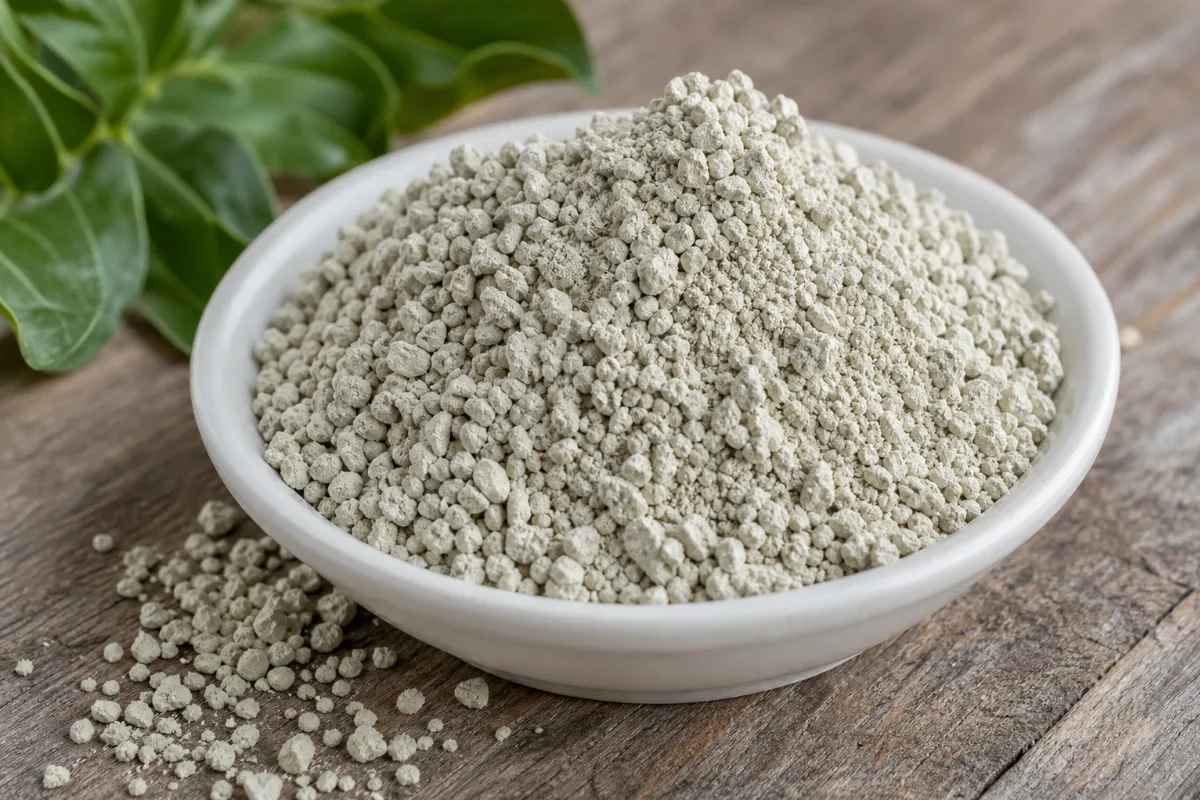
Clays & Charcoal · Mineral
Zeolite (Clinoptilolite)
Clinoptilolite (a natural zeolite mineral; not a plant) · also called Zeolite, clinoptilolite, clinoptilolite tuff, 'liquid zeolite' (shop name)
Zeolite is a porous volcanic mineral made of aluminium and silicon. Clinoptilolite is the type sold as a 'detox' supplement. We found no good human evidence that it detoxes healthy people, and one cancer centre says the FDA has sent warning letters about misleading claims. It may bind medicines, and some products have held heavy metals, so safety comes first.
General information, not medical advice. Last substantive update · Not medically reviewed. A named clinician has not signed off on this page. How this page is made
About Zeolite (Clinoptilolite)
Zeolite (clinoptilolite) is a natural porous mineral. The best human evidence is two trials of lead, both small, short and sponsor- or setting-limited. No source we read supports a daily detox. Safety cautions are drug binding, heavy metals in some products, and dust.
What it is
Zeolites are porous minerals made of aluminium and silicon. Clinoptilolite is a common natural one, found in volcanic rock and ash. Its structure lets it swap ions such as sodium and calcium for others and hold substances on its surface. That is real chemistry, and it is the basis of the detox idea.
Feed-grade clinoptilolite is described by EFSA as at least 80% clinoptilolite with up to 20% clay minerals. Supplements may be raw powder, micronized or 'activated' powder, tablets or 'liquid zeolite'. They are different products, and a result for one does not carry over to others.
Traditional and current uses
Zeolites are used in detergents, water and air purifiers, animal feed and some personal care products. In medicine, one zeolite is used as an external dressing to control bleeding. The supplement 'detox' use is modern marketing, not a traditional remedy.
Marketing is not proof that it works or is safe.
What the research shows
Lead poisoning: one 2025 trial of 80 people found lower blood lead after 2 weeks when zeolite tablets were added to standard treatment. Hematocrit was also lower in the zeolite group. The abstract does not give the product or a trial registration.
Healthy volunteers: one branded product taken with a tiny lead tracer cut the tracer's uptake by about 90%. The trial was paid for by the product's sponsor.
Irritable bowel: a 30-person pilot of the same kind of product found the same responder share as placebo on its main goal.
Blood minerals: in three trials of one product, copper, sodium and calcium fell at times in people with osteoporosis, and lead was higher at times before it fell again.
Animals: EFSA judged feed-grade clinoptilolite safe for named animal groups, and a 2026 rat study of a lab-made form reported no harm. Animal studies do not prove human supplement safety.
At a glance
Traditional uses history, not proof
- Used in industry, water treatment and animal feed; its use as a human 'detox' is a modern supplement idea.
- A zeolite is used in medicine as an external dressing to control bleeding; that is a different product.
Studied for research
- Detox or heavy-metal removal in healthy people, insufficient evidence
- Lead poisoning as an add-on to treatment, low (one trial)
- Less lead absorption taken at the same time, low (one trial, sponsor-linked)
- IBS with diarrhea, very low (small pilot)
- Skin and wounds, insufficient (lab and animal)
- Immune, cancer, autism and other claims, insufficient
Main compounds
- Clinoptilolite (hydrated aluminosilicate)
- Clay minerals (up to 20% in feed-grade material)
Common forms
- Raw or ground powder
- 'Activated' or micronized powder, tablets
- 'Liquid zeolite'
Research links: Memorial Sloan Kettering: Zeolite · Lead poisoning trial, 2025 (abstract) · Blood mineral safety data, 2022 (abstract) · EFSA opinion on clinoptilolite, 2025 (abstract) · NCCIH: Detoxes and cleanses · Poison Control · Research Library · Genes & Biomarkers Library
What it is and its history
- Accepted scientific name
- Zeolite (clinoptilolite): a natural porous aluminosilicate mineral
- Synonyms
- Clinoptilolite; Clinoptilolite tuff; Natural zeolite; Hydrated sodium calcium aluminosilicate (material name given in the product brief)
- Common names
- Zeolite (English); Clinoptilolite (English)
- Family or group
- A zeolite: microporous aluminium-silicon mineral. Feed-grade sedimentary clinoptilolite contains at least 80% clinoptilolite and up to 20% clay minerals (EFSA 2013).
- Native range
- Found naturally in volcanic rock and ash deposits (Memorial Sloan Kettering).
- Habitat
- Mined from deposits; the sources read give no detail on specific deposits.
- Harvest and processing
- Sold raw, ground, micronized or purified. Processing differs by maker and was not checked.
- Look-alikes and adulterants
- Name: Erionite; Note: A fibrous zeolite that causes cancer when inhaled, according to Memorial Sloan Kettering. It is not the same mineral as clinoptilolite.; Name: Diatomaceous earth, bentonite, activated charcoal; Note: Different materials. A result for one does not carry over to another.
Traditional use and history history, not clinical proof
| Tradition or era | Documented use | Source |
|---|---|---|
| Modern | Zeolites are used as drying agents, in detergents, and in water and air purifiers, animal feed and some personal care products. They are also marketed as dietary supplements. | s-msk |
| Medical | A zeolite is used in medicine as an external hemostatic dressing for trauma; this is a different product from supplements. | s-msk |
Traditional use shows how it was used. It does not show that it works or is safe today.
What is inside, and how it may work
What it contains and how those compounds act in cells and animals. Laboratory and animal mechanisms are not proven effects in people.
Main compounds
| Compound | Family | Where it is concentrated | Activity studied | Level of evidence |
|---|---|---|---|---|
| Clinoptilolite | zeolite mineral (hydrated aluminosilicate) | At least 80% of feed-grade sedimentary clinoptilolite (EFSA 2013). | Porous structure; can swap sodium and calcium for other ions (ion exchange) and adsorb substances. 5 11 | Laboratory |
Mechanisms, receptors and pathways
| Target or pathway | Gene or receptor | What was found | Level |
|---|---|---|---|
| Ion exchange and adsorption | None | Memorial Sloan Kettering describes a fine porous cage-like structure allowing ion exchange, adsorption and chelating-like binding, which may alter the ionic composition, pH and buffering capacity of the gut. This is chemistry; body-wide detox is not shown. 11 | Laboratory |
| Not absorbed into the body | None | EFSA (2013) says clinoptilolite is essentially not absorbed and is excreted in faeces, with no evidence it is degraded in the gut of animals. 5 | Animal research |
Absorption, metabolism and elimination
- Absorption
- EFSA (2013): essentially not absorbed in animals. In one product's trial, aluminium or lead leakage into blood was not detected 1 hour after intake.
- Distribution
- Not studied.
- Elimination
- Excreted in faeces in animals (EFSA 2013).
- Bioavailability
- Not studied for people beyond the one trial note above.
Isolated compounds versus whole extracts
Raw mined zeolite, purified or micronized tuff, lab-made clinoptilolite and silver- or zinc-loaded zeolites are different materials. Trial results are for named products only.
Nutritional composition
Zeolite is not a food or nutrient. It is not a source of minerals; it may bind some.
2 low certainty1 very low certainty3 not enough evidence
What was looked at
The 6 benefits and uses checked for Zeolite (Clinoptilolite), each with how strong the evidence is. Tap one to open it.
- 'Detox' or heavy-metal removal in healthy peopleNot enough evidence
- Lead poisoning: zeolite tablets added to standard treatmentLow certainty
- Taking zeolite with lead to reduce how much lead is absorbedLow certainty
- Irritable bowel with diarrhea (IBS-D)Very low certainty
- Skin care, acne and woundsNot enough evidence
- Immune, cancer, autism, herpes, hangover and pH claimsNot enough evidence
What is Zeolite (Clinoptilolite) good for?
The uses people ask about and how strong the evidence is for each. No use is proven for healthy people, and lab chemistry does not show benefit in the body.
Benefits, one by one
Each card is a research question, not a promise. Tap a goal to filter. Open a card to see the studies, doses and limits.
'Detox' or heavy-metal removal in healthy people
Not enough evidenceZeolite supplements are sold to 'pull heavy metals out of the body'. The sources we read found no good human evidence for this. The lab chemistry (swapping ions) is real, but a lab swap is not proof that a person is cleaned of anything.
3 studiesSold as powders, tablets and 'liquid zeolite'. No amounts are given o…
Studies, doses and limits
What the trials found
Memorial Sloan Kettering reports no published human data to support heavy-metal removal or other detox uses, and says the FDA has sent warning letters to distributors over misleading zeolite claims. NCCIH reports a 2015 review finding no compelling research that detox diets remove toxins.
Results
No human trial in healthy people showing zeolite clears metals or toxins from the body was found.
Why this rating
No human trial supports the detox claim for healthy people. Advice sources are cautious.
Form and dose studied
Sold as powders, tablets and 'liquid zeolite'. No amounts are given or advised here.
Who was studied
Not studied in healthy people for body-wide detox.
Limits
Our check was PubMed plus Memorial Sloan Kettering and NCCIH. Other summaries may exist.
Why researchers looked
Clinoptilolite has a porous structure that can swap its own calcium and sodium for other metal ions. That is the basis of the idea.
Traditional use
Natural zeolite has long been used in industry, animal feed and water treatment. Its use as a human 'detox' is a modern supplement-market idea.
Proposed mechanism Pharmacological theory
Ion exchange and adsorption in the gut (swapping ions and holding substances on its surface). This is chemistry that works in a test tube. Whether it clears metals from body tissues is not shown.
A proposed mechanism does not show that the effect happens in people.
Products have been found with metals, and zeolite may bind medicines (see Safety).
Lead poisoning: zeolite tablets added to standard treatment
Low certaintyOne 2025 trial of 80 people with mild to moderate lead poisoning found lower blood lead after 2 weeks when zeolite tablets were added to standard treatment. It is one trial under medical care. It does not support using zeolite on your own.
1 studiesTablets as an add-on to standard treatment, given in a hospital study…
Studies, doses and limits
What the trials found
One double-blind randomized trial, 80 patients in Tehran, mean age about 40.
Results
After 2 weeks serum lead was lower in the zeolite group (25.22 vs 37.68; p < 0.001). Hematocrit was also lower (36.21 vs 39.53; p = 0.032). The authors report no adverse effects.
Effect sizes as reported
Effect size 0.869 for serum lead as stated in the abstract.
Why this rating
A single randomized trial, short, with the product and registration not given in the abstract and no clinical outcomes measured. Not yet repeated.
Form and dose studied
Tablets as an add-on to standard treatment, given in a hospital study. No amounts are given or advised here.
Who was studied
Adults with mild to moderate lead poisoning; mostly men.
Limits
Two weeks; blood lead only; lower hematocrit also seen; not tested in healthy people.
Why researchers looked
Lead poisoning is treated by doctors. Zeolite's metal-binding is being tested as an extra.
Traditional use
No traditional use is described in the sources read.
Proposed mechanism Pharmacological theory
The authors say zeolite is known for its ability to remove heavy metals; they do not show how it did so here. A binding effect in the gut is the likely idea but was not tested in this abstract.
A proposed mechanism does not show that the effect happens in people.
Lead poisoning needs a doctor. Do not treat it at home with a supplement.
Taking zeolite with lead to reduce how much lead is absorbed
Low certaintyIn 42 healthy volunteers, one purified clinoptilolite product taken at the same time as a tiny lead tracer cut the tracer's uptake into blood by about 90%. This shows less absorption of lead taken at the same moment. It does not show the body is detoxed.
1 studiesPowder from a single branded purified product; no amounts are given o…
Studies, doses and limits
What the trials found
One randomized, placebo-controlled, double-blind trial, 42 healthy adults.
Results
Peak tracer enrichment was 0.505% of blood lead with placebo, and 0.073% and 0.057% with the two product amounts. Urinary excretion of the tracer was lower with the product.
Effect sizes as reported
About a 90% fall in tracer uptake, per the authors.
Why this rating
One small trial of one branded product, with a sponsor that makes it, and a tiny single tracer dose.
Form and dose studied
Powder from a single branded purified product; no amounts are given or advised here.
Who was studied
Healthy adults.
Limits
Single dose of lead tracer; one product; does not show removal of lead already in the body; industry-linked.
Why researchers looked
If lead is held in the gut, less would get into the blood.
Traditional use
No traditional use is described in the sources read.
Proposed mechanism Pharmacological theory
The product is thought to hold lead in the gut so it passes out in the stool. The study measured tracer lead in blood and urine; it did not measure stool.
A proposed mechanism does not show that the effect happens in people.
The same binding may also hold medicines and minerals (see Safety).
Irritable bowel with diarrhea (IBS-D)
Very low certaintyA small pilot trial of one purified clinoptilolite product in 30 people with IBS-D did not beat placebo on its main goal. Some secondary measures looked better. It is too small to decide.
2 studiesOne branded purified powder; no amounts are given or advised here.
Studies, doses and limits
What the trials found
One randomized, placebo-controlled, double-blind pilot, 30 adults with IBS-D (Rome IV), 12 weeks.
Results
Responders after 12 weeks were 21% with the product and 25% with placebo. After 4 weeks 36% vs 0% reported considerable relief. Daily abdominal pain improved in 94% vs 83% (P = 0.0353). No product-related serious adverse events were reported.
Effect sizes as reported
Not given as effect sizes in the abstract.
Why this rating
Tiny pilot; the primary outcome was a tie; sponsor-linked.
Form and dose studied
One branded purified powder; no amounts are given or advised here.
Who was studied
Adults with IBS-D.
Limits
30 people; benefit seen only in secondary or early outcomes; one product.
Why researchers looked
The product soaks up substances in the gut, so researchers tried it for diarrhea symptoms.
Traditional use
Memorial Sloan Kettering mentions a Cuban drug said to treat diarrhea but with no published data.
Proposed mechanism Pharmacological theory
Physical adsorption in the gut, according to the trial authors. Not tested directly.
A proposed mechanism does not show that the effect happens in people.
Zeolite may bind medicines and minerals (see Safety).
Skin care, acne and wounds
Not enough evidenceA 2025 review describes antibacterial and wound-healing potential in lab and animal skin models, mostly for silver- or zinc-loaded zeolites. It says clinical validation is still needed. Plain clinoptilolite on skin is not shown to work.
2 studiesNot applicable.
Studies, doses and limits
What the trials found
The review abstract does not report a controlled human trial of plain clinoptilolite for skin.
Results
Antibacterial and antifungal effects in skin models; no human outcomes given in the abstract.
Why this rating
Lab and animal work on modified zeolites; no human trial of plain clinoptilolite found.
Who was studied
Not studied in people for plain clinoptilolite.
Limits
Mixed zeolite types in one review; different materials.
Why researchers looked
Zeolite carries ions and drugs and can be loaded with silver or zinc, which fight germs.
Traditional use
Memorial Sloan Kettering notes a medical use of zeolite as an external hemostatic (bleeding-control) dressing; that is a different product from a supplement or mask.
Proposed mechanism Laboratory
Slow release of metal ions loaded onto the zeolite, and drug delivery. Lab and animal findings.
A proposed mechanism does not show that the effect happens in people.
EFSA treats dry clinoptilolite as a skin and breathing sensitiser (see Safety).
Immune, cancer, autism, herpes, hangover and pH claims
Not enough evidenceZeolite supplements are marketed for these. Memorial Sloan Kettering says there are no published human data to support them and that zeolites have not been shown to treat cancer or other conditions in people.
2 studiesNot applicable.
Studies, doses and limits
Results
No human results to report.
Why this rating
Lab and animal work only; the safety summary we read says human data are missing.
Who was studied
Not studied.
Limits
Our check used PubMed and one safety summary.
Why researchers looked
Lab and animal studies reported effects on immune cells and cancer cells.
Traditional use
Modern supplement marketing.
Proposed mechanism Laboratory
Antioxidant and immune effects seen in cells and animals. Memorial Sloan Kettering says animal data show zeolites can both stimulate and suppress the immune system.
A proposed mechanism does not show that the effect happens in people.
Do not use zeolite instead of cancer treatment. Speak to your doctor.
Connections to the rest of health
How Zeolite (Clinoptilolite) connects to the rest of our health knowledge graph. Every link says what kind of connection it is. A safety link (for example to the liver) is a warning, not a benefit. A study that merely mentions a topic never creates a benefit link.
Explore every connection: goals, body systems, organs, symptoms, genes
A. Wellness goals
| Connected to | Kind of connection | Evidence status | Context | Studies |
|---|---|---|---|---|
| Digestive Support | Very low certainty | Irritable bowel with diarrhea (IBS-D): A small pilot trial of one purified clinoptilolite product in 30 people with IBS-D did not beat placebo on its main goal. Some secondary measures looked better. It is too small to decide. | 1 11 | |
| Gut Health | Very low certainty | Irritable bowel with diarrhea (IBS-D): A small pilot trial of one purified clinoptilolite product in 30 people with IBS-D did not beat placebo on its main goal. Some secondary measures looked better. It is too small to decide. | 1 11 | |
| Healthy Skin | Not enough evidence | Skin care, acne and wounds: A 2025 review describes antibacterial and wound-healing potential in lab and animal skin models, mostly for silver- or zinc-loaded zeolites. It says clinical validation is still needed. Plain clinoptilolite on skin is not shown to work. | 2 11 | |
| Immune Support | Not enough evidence | Immune, cancer, autism, herpes, hangover and pH claims: Zeolite supplements are marketed for these. Memorial Sloan Kettering says there are no published human data to support them and that zeolites have not been shown to treat cancer or other conditions in people. | 11 6 |
B. Body systems
| Connected to | Kind of connection | Evidence status | Context | Studies |
|---|---|---|---|---|
| Digestive System | Biological association | Not enough evidence | Studied for: 'Detox' or heavy-metal removal in healthy people Studied for: Taking zeolite with lead to reduce how much lead is absorbed | 11 12 6 8 1 |
| Blood | Biological association | Low certainty | Studied for: Lead poisoning: zeolite tablets added to standard treatment | 10 |
| Integumentary System | Biological association | Not enough evidence | Studied for: Skin care, acne and wounds | 2 11 |
| Immune System | Biological association | Not enough evidence | Studied for: Immune, cancer, autism, herpes, hangover and pH claims | 11 6 |
L. Active compounds
Each connection is stored with the ingredient, the connected record, the kind of connection, the evidence status, the supporting studies, the preparation or compound involved, and a review date (last reviewed October 25, 2026).
Evidence at a glance: what the research found for 6 outcomes
Each outcome below is one thing researchers measured. Certainty is how far the evidence can be trusted, not how well it works. The full studies are on the next tab.
The evidence
The research centre for Zeolite (Clinoptilolite). Every record here was checked against PubMed or the publisher's page; we never list a study we have not verified.
Evidence by outcome
Bars show how many studies we found for each outcome, not how well it works. People are added up across trials only (reviews are not added, to avoid double counting).
How we rate evidence
High certainty
Several well-run trials or reviews agree; further research is unlikely to change the picture much.
Moderate certainty
Good trials point the same way, but some doubt remains.
Low certainty
Small, short or inconsistent trials. The finding could change with better research.
Very low certainty
Very little or very weak human data. Treat as a possibility only.
Mixed findings
Trials or reviews disagree with each other.
Not enough evidence
Not enough human research to say either way.
Evidence against
Good research found no benefit, or found harm.
We take the reviewers' own risk-of-bias and GRADE statements where they exist, and otherwise judge from study size, design, consistency, directness and whether a product matches what is sold. Many publications do not make evidence high. Method note: We searched PubMed, read the abstract of each cited paper, and read the Memorial Sloan Kettering, NCCIH and Poison Control pages. EFSA opinions were read as PubMed abstracts. FDA warning letters are cited only as reported by Memorial Sloan Kettering. Regulators outside the US and EU feed rules were not checked. Certainty ratings are the compiler's own reading.
Study library: every study we checked 13
| Study | Design | People | Product, dose, length | Result |
|---|---|---|---|---|
| Anderle 2022 Safety and efficacy of purified clinoptilolite-tuff treatment in patients with irritable bowel syndrome with diarrhea: Randomized controlled trial World Journal of Gastroenterology · PMID 36569277 · DOI |
Randomized controlled trial |
30 Adults with IBS with diarrhea (Rome IV criteria), Vienna, Austria; 14 treated, 16 placebo |
One branded, purified clinoptilolite tuff product taken for 12 weeks mineral (not a plant) Not given on this page See abstract · vs See abstract |
At 12 weeks the share of responders was similar: 21% with the product and 25% with placebo. At 4 weeks, 36% vs 0% reported considerable relief. Daily abdominal pain improved in 94% vs 83% (P = 0.0353). No product-related serious adverse events were reported. Methods, limits and fundingOutcomes: Share of people reporting relief at 12 weeks (primary); symptom scores, microbiome (secondary) Limitations: A small pilot (30 people). The main outcome was not different between groups, so the 'benefit' rests on secondary outcomes. One product only. Funding and conflicts: The study sponsor paid for trial work, and one author holds a research endowment from the sponsor's founder. Industry-linked. Read: abstract |
| Dring 2025 Review of Applications of Zeolites in Dermatology: Molecular Perspectives and Translational Potentials International Journal of Molecular Sciences · PMID 40725064 · DOI |
Narrative review mixed |
Review of lab, animal and some clinical work on zeolites in skin care (clinoptilolite, ZSM-5, ZIF-8, silver- and zinc-loaded forms) | Zeolite materials, mostly modified or metal-loaded forms mineral (not a plant) Not given on this page See abstract · vs See abstract |
The authors describe antibacterial and antifungal effects, antioxidant activity and drug-delivery uses in various skin models. They say further research into long-term safety, formulations and clinical validation is essential before mainstream use. Methods, limits and fundingOutcomes: Antibacterial, wound-healing, acne and cosmetic uses Limitations: The abstract does not break out plain clinoptilolite. Much of it is silver- or zinc-loaded or lab-made zeolites, which are different materials. Funding and conflicts: No conflicts declared. Read: abstract |
| EFSA FEEDAP Panel (Villa 2025 Safety and efficacy of the feed additive consisting of clinoptilolite of sedimentary origin for all animal species for the renewal of its authorisation (ZEOCEM, a.s.) EFSA Journal · PMID 40226503 · DOI |
Regulatory opinion animal feed |
Animal feed additive (binder, anticaking agent) | Clinoptilolite of sedimentary origin as a feed additive mineral (not a plant) Not given on this page See abstract · vs See abstract |
The Panel concluded the additive remains safe for all animal species, consumers and the environment under the authorised conditions of use. For users it is not a skin or eye irritant but should be considered a skin and respiratory sensitiser, and inhalation and skin exposure are considered a risk. Methods, limits and fundingOutcomes: Safety for animals, consumers, environment and users Limitations: An animal-feed opinion about a technological additive. It is not an opinion on supplements for people. Funding and conflicts: EFSA is an independent regulator-advisor; no commercial conflict. Read: abstract |
| EFSA FEEDAP Panel (Villa 2025 Safety and efficacy of a feed additive consisting of clinoptilolite of volcanic origin for all terrestrial animal species (IMERYS Talc Europe) EFSA Journal · PMID 41394341 · DOI |
Regulatory opinion animal feed |
Animal feed additive | Clinoptilolite of volcanic origin as a feed additive mineral (not a plant) Not given on this page See abstract · vs See abstract |
The Panel concluded it is safe at the stated feed level for poultry and pigs of named categories, with no conclusion possible for the other terrestrial species. It judged it safe for consumers and the environment, not an irritant to skin or eyes, but a dermal and respiratory sensitiser; dermal and inhalation exposure are considered a risk and should be minimised. Methods, limits and fundingOutcomes: Safety for animals, consumers, environment and users Limitations: An animal-feed opinion. It does not assess zeolite as a supplement for people. Funding and conflicts: EFSA is an independent regulator-advisor. Read: abstract |
| EFSA FEEDAP Panel 2013 Scientific Opinion on the safety and efficacy of clinoptilolite of sedimentary origin for all animal species EFSA Journal · PMID 42124975 · DOI |
Regulatory opinion animal feed |
Animal feed additive | Clinoptilolite of sedimentary origin mineral (not a plant) Not given on this page See abstract · vs See abstract |
The additive contains at least 80% clinoptilolite (hydrated calcium aluminosilicate) and up to 20% clay minerals. The Panel says clinoptilolite is essentially not absorbed and is excreted in the faeces, with no evidence it is broken down in the gut. It advised treating the dusty additive as an irritant and a dermal sensitiser (2013). Methods, limits and fundingOutcomes: Composition, absorption and safety Limitations: An older (2013) animal-feed opinion; later EFSA opinions updated the user-safety wording. Funding and conflicts: EFSA is an independent regulator-advisor. Read: abstract |
| Kraljevic Pavelic 2018 Critical Review on Zeolite Clinoptilolite Safety and Medical Applications in vivo Frontiers in Pharmacology · PMID 30538633 · DOI |
Narrative review mixed |
Review of animal and human literature on clinoptilolite-based materials | Various clinoptilolite materials mineral (not a plant) Not given on this page See abstract · vs See abstract |
The authors say concerns have been raised in the public about the safety of clinoptilolite materials used in the body, and review the literature on detoxification, immune response and general health. The abstract gives no figures. Methods, limits and fundingOutcomes: Safety and claimed health effects Limitations: Abstract only. The authors are linked to the makers of a clinoptilolite product (shared authors with the Front Med 2022 paper). Funding and conflicts: Not stated in the abstract; some authors are advisors to a zeolite company in related work. Read: abstract |
| Kraljevic Pavelic 2022 Clinical Evaluation of a Defined Zeolite-Clinoptilolite Supplementation Effect on the Selected Blood Parameters of Patients Frontiers in Medicine · PMID 35712111 · DOI |
Clinical trials combined |
People enrolled in three trials of one certified clinoptilolite product (PMA-zeolite): 28 days, 12 weeks (Crohn disease study) and 4 years (osteoporosis study) | One certified, defined clinoptilolite product mineral (not a plant) Not given on this page See abstract · vs See abstract |
Copper was lower in people with osteoporosis and normalised again in the long trial. Sodium and calcium fell below reference values in people with osteoporosis. Lead was higher in supplemented people in the short and long trials, then fell again during continued use. Aluminium or lead leakage from the material into blood was not detected 1 hour after intake in the short trial. Nickel and aluminium were lower after 4 years, and arsenic lower after 12 weeks. The authors suggest checking copper, calcium and sodium after 1 year in people with osteoporosis. Methods, limits and fundingOutcomes: Blood minerals and metals (copper, sodium, calcium, lead, aluminium, nickel, arsenic) Limitations: A safety-marker analysis, not a benefit study. One product. Blood levels, not health outcomes. Funding and conflicts: Two authors were independent scientific advisors of the product's company, and one was employed by it. Registration: NCT03901989, NCT05178719, NCT04370535, NCT04607018 Read: abstract |
| Samekova 2021 Concomitant oral intake of purified clinoptilolite tuff (G-PUR) reduces enteral lead uptake in healthy humans Scientific Reports · PMID 34285282 · DOI |
Randomized controlled trial |
42 Healthy adult volunteers given a tiny tracer amount of lead (isotope 204Pb) in water |
One branded, purified clinoptilolite tuff product taken at the same time as the lead tracer mineral (not a plant) Not given on this page See abstract · vs See abstract |
Taking the product with the tracer cut the tracer's uptake into blood by about 90% compared with placebo. Urinary excretion of the tracer was also lower. The product was well tolerated. Methods, limits and fundingOutcomes: Tracer lead in blood and urine Limitations: This tests whether lead taken at the same time is absorbed less. It does not show that zeolite removes lead already in the body. One product, a single tiny tracer dose, healthy volunteers. Funding and conflicts: Trial costs were paid by the product's sponsor, and some authors work for the sponsor (Glock Health). Industry-linked. Registration: NCT04138693 Read: abstract |
| Smith 2026 Safety Evaluation of Lab-Made Clinoptilolite: 90-Day Repeated Dose Toxicity Study in Sprague Dawley Rats and a Battery of In Vitro and In Vivo Genotoxicity Tests Toxics · PMID 41745796 · DOI |
Animal toxicity study animal |
Male and female Sprague Dawley rats (90 days, then a 28-day recovery), plus cell and mouse genotoxicity tests | A lab-made clinoptilolite given by stomach tube mineral (not a plant) Not given on this page See abstract · vs See abstract |
The authors report no adverse systemic, genotoxic or irreversible effects at the doses tested, and no mutagenic or clastogenic potential. Methods, limits and fundingOutcomes: Toxicity and genotoxicity Limitations: Rats, not people. A lab-made form, not mined zeolite. The tested amounts were small. It says nothing about metals in real products or about long-term human use. Funding and conflicts: Funded by a company, Coseva Advanced Laboratories, which employs the first author; the funder had no role in interpreting results. Read: abstract |
| Teimouri 2025 Oral Zeolite Therapy for Management of Mild to Moderate Lead Poisoning: A Randomized Clinical Trial Archives of Academic Emergency Medicine · PMID 40487907 · DOI |
Randomized controlled trial |
80 Adults with mild to moderate lead poisoning (Tehran, Iran; mean age about 40; 79% male) |
Zeolite tablets added to standard treatment (product details not in the abstract) mineral (not a plant) Not given on this page See abstract · vs See abstract |
The zeolite group had lower serum lead than the standard-treatment-only group after 2 weeks (25.22 vs 37.68; p < 0.001). Hematocrit was also lower in the zeolite group (36.21 vs 39.53; p = 0.032). The authors say it lowered lead without adverse effects. Methods, limits and fundingOutcomes: Serum lead and blood counts after 2 weeks Limitations: One trial in a medical setting with standard treatment. Only 2 weeks. The abstract does not name the product, give a trial registration or report clinical outcomes. A lower hematocrit is a blood-count difference the authors do not discuss in the abstract. Funding and conflicts: No conflicts of interest declared. Read: abstract |
| n/a 2023 Memorial Sloan Kettering Cancer Center: Zeolite - Purported Benefits, Side Effects & More (last updated 2023-02-06; read 2026-10-25) n/a · Source |
Authoritative guidance n/a |
n/a | n/a |
Says zeolites have not been shown to treat cancer or other conditions in humans; there are no published human data for detox, heavy-metal removal, autism, herpes or hangover; the FDA has issued several warning letters to distributors for misleading claims. Warns about erionite (a fibrous zeolite linked to mesothelioma when inhaled), about a European zeolite product with high arsenic, lead, mercury, cadmium, nickel, copper and chromium, and about binding of medicines, transplant and chemotherapy drugs, antibiotics and iron. Methods, limits and fundingOutcomes: Purported uses, warnings and adverse reactions Limitations: A cancer-centre information page, last updated 2023. It is not a regulator. FDA warning letters are reported there; we did not open them. Read: full-text |
| n/a 2025 NCCIH (NIH): Detoxes and Cleanses: What You Need To Know (last updated March 2025; read 2026-10-25) n/a · Source |
Authoritative guidance n/a |
n/a | n/a |
Reports a 2015 review that found no compelling research that detox diets eliminate toxins from the body. Methods, limits and fundingOutcomes: Evidence for detox products Limitations: General detox guidance. It does not name zeolite. Read: full-text |
| n/a 2026 Poison Control (National Capital Poison Center): home page, read 2026-10-25 n/a · Source |
Authoritative guidance n/a |
n/a | n/a |
Says help is free, expert and confidential online and by phone at 1-800-222-1222 (US), and to call 911 if the person collapses, has a seizure, has trouble breathing or cannot be awakened. Methods, limits and fundingOutcomes: What to do after a poisoning Limitations: Service information, not research. US numbers only. Read: full-text |
What we do not know yet
- No trial showing zeolite clears metals from healthy people.
- The lead-poisoning result needs repeating with a named, tested product.
- No independent metal testing of retail zeolite supplements found.
- No data on pregnancy, breastfeeding, children or medicine interactions beyond warnings.
How new research is added
New studies are found by a saved PubMed search and are placed in a review queue. A person reads each one before it changes any evidence rating or safety wording.
Lab markers
What changed in blood or saliva tests during trials. A changed number is not the same as feeling or being healthier, and we give no "normal ranges".
Safety
What studies and official sources say about side effects, medicines and who should check first. Each point shows what kind of evidence it comes from.
Main points to know 5
- No good human evidence for 'detox'; regulators and cancer centres warn about claims. Memorial Sloan Kettering says there are no published human data for zeolite as a heavy-metal remover or detox, and that the FDA has sent warning letters to distributors over misleading claims. NCCIH reports a 2015 review finding no compelling research that detox diets remove toxins. Authoritative guidance 11 6
- Contamination: some products held heavy metals. Memorial Sloan Kettering reports a zeolite product sold in Europe was found to hold high levels of arsenic, lead, mercury, cadmium, nickel, copper and chromium. Zeolite is an aluminium-silicon mineral, and the same page notes concern about aluminium building up in tissue of livestock fed zeolite. Quality differs between products. Authoritative guidance 11
- It may bind medicines. Memorial Sloan Kettering says zeolites can bind other substances and may keep medicines from being absorbed properly. It says not to take zeolite if you take medicines, are a transplant patient or take immune-suppressing drugs, or are having chemotherapy. Ask your pharmacist or doctor. Authoritative guidance 11
- Dust: do not breathe it. EFSA considers feed-grade clinoptilolite a skin and breathing sensitiser and says dermal and inhalation exposure are a risk to be minimised. Erionite is a different, fibrous zeolite linked to mesothelioma when inhaled. Regulatory opinion 3 4 11
- Blood minerals can change. In trials of one certified product, copper, sodium and calcium fell below reference values in people with osteoporosis, and blood lead was higher at times. The authors suggest checking minerals after a year. Clinical trial 7
Side effects 5
| Effect | How often | Severity and recovery | Evidence |
|---|---|---|---|
| Lower blood sodium, calcium and copper (one product, osteoporosis study) Blood levels from one product's trials; the authors tie some changes to bone remodelling. | Not established | unknown Copper normalised again in the long trial | Clinical trial 7 |
| Raised blood lead in supplemented groups at times (short and long trials), later falling The authors say aluminium or lead leaking from the material into blood was not detected 1 hour after intake. | Not established | unknown Fell again with continued use | Clinical trial 7 |
| Lung effects from breathing dust (pulmonary fibrosis, pneumoconiosis) Memorial Sloan Kettering lists these as reported adverse reactions. Rates are not given. | Not established | serious Not stated | Authoritative guidance 11 3 |
| Skin and breathing sensitisation from dry powder EFSA considers the feed additive a sensitiser; this is about handling dust. | Not established | unknown Not stated | Regulatory opinion 3 4 |
| Constipation, stomach upset Not described in the abstracts we read. Not described is not proof of safety. | Not established | unknown Not stated | Gap |
Liver
No report of liver injury from zeolite was found in the sources read. LiverTox was not searched.
How often. No rate in people.
Monitoring. No monitoring advice was found.
This is a safety connection. It is not evidence that Zeolite (Clinoptilolite) supports liver health.
Medicines and supplements 5
| With | Why it matters | Importance | Evidence | What to do |
|---|---|---|---|---|
| Medicines taken by mouth (in general) prescription | Zeolite can bind other substances and may change stomach acidity, so less medicine may be absorbed. | Memorial Sloan Kettering warns of reduced absorption. No clinical interaction study was found. | Authoritative guidance Low certainty 11 | Ask a pharmacist before taking zeolite if you take any medicine. |
| Immune-suppressing drugs and transplant medicines prescription | Memorial Sloan Kettering says zeolites may cause rejection; animal data show zeolites can both stimulate and suppress immune function. | Based on a summary page and animal data; no human interaction study found. | Authoritative guidance Not enough evidence 11 | Do not take zeolite without your transplant or immunology team's agreement. |
| Chemotherapy prescription | Memorial Sloan Kettering says zeolite has antioxidant effects and may interfere with chemotherapy. | No human interaction study found. | Authoritative guidance Not enough evidence 11 | Tell your cancer team before taking zeolite. |
| Antibiotics (tetracycline, quinolone) and iron prescription | Memorial Sloan Kettering says zeolite may decrease their effectiveness. | Summary statement; no named trial seen. | Authoritative guidance Not enough evidence 11 | Ask a pharmacist. |
| Minerals and supplements (copper, calcium, sodium) supplement | Blood levels fell at times in one product's trials. | Blood markers only. | Clinical trial Low certainty 7 | Ask a clinician about checking minerals if taken for long periods. |
Who should check first 7
| Situation | Advice | Evidence |
|---|---|---|
| Taking prescription medicines | Memorial Sloan Kettering lists this as a 'do not take if' because absorption may drop. Ask a pharmacist. | Authoritative guidance 11 |
| Transplant, immune-suppressing drugs or chemotherapy | Memorial Sloan Kettering says do not take. Speak with your specialist. | Authoritative guidance 11 |
| Pregnancy and breastfeeding | The sources we read do not describe pregnancy or breastfeeding. Because metal contamination has been reported in some products, ask a clinician first. | Gap 11 |
| Babies and children | The sources we read do not describe children. Keep powders out of reach and do not give zeolite to children without a clinician's advice. | Gap |
| Lung conditions or asthma | Do not breathe the dry powder. Memorial Sloan Kettering lists pulmonary fibrosis and pneumoconiosis among reported effects; EFSA considers inhalation a risk. | Authoritative guidance 11 3 |
| Kidney disease, osteoporosis or low blood minerals | Kidney disease was not described in the sources read. People with osteoporosis in one product's trials had lower sodium, calcium and copper at times. Ask a clinician. | Clinical trial 7 |
| Eyes and ears | Memorial Sloan Kettering says not to apply liquid zeolite directly into eyes or ears. | Authoritative guidance 11 |
Overdose, product quality and regulators
Summary. Zeolite is a mineral, not a plant. Memorial Sloan Kettering says the various forms are not significantly toxic in short-term animal studies, but inhalation toxicity is readily shown. A 2026 rat study of a lab-made clinoptilolite found no harm over 90 days. This is animal data and does not cover metal contamination in real products or long-term human use.
Animal. 90-day rat study of a lab-made form: no adverse systemic, genotoxic or irreversible effects reported. EFSA judged feed-grade clinoptilolite safe for named animal groups under authorised conditions.
Human doses studied. Trials used defined products in tablets or powder. Amounts are not advised on this page.
High dose or long term signals. In a 4-year trial of one product, sodium, calcium and copper changed at times. Memorial Sloan Kettering notes concern about aluminium accumulating in livestock tissue.
Overdose response. If someone has swallowed a lot of a zeolite product, or feels unwell after it, call poison control (US 1-800-222-1222) or your local emergency number. Call 911 for collapse, seizure, trouble breathing or inability to wake.
Genotoxicity. The 2026 rat study reports no mutagenic or clastogenic potential for a lab-made form. Memorial Sloan Kettering lists aberrant metaphase (chromosome changes) found in exposed human blood cells and mice in the inhalation literature it cites.
Zeolite is dug from volcanic deposits and sold under many labels. Metal content differs between products and a label rarely tells you.
Heavy metals in one European product. Memorial Sloan Kettering reports a zeolite product marketed in Europe was found to contain high levels of arsenic, lead, mercury, cadmium, nickel, copper and chromium. We did not read the original analysis. 11
Aluminium. Zeolites are aluminium-silicon minerals. In a trial of one certified product, aluminium and lead leaking from the material into blood were not detected 1 hour after intake, and aluminium was lower after 4 years. Memorial Sloan Kettering notes concern about aluminium building up in livestock tissue. Results for one product do not carry over to others. 7 11
Different zeolites. Erionite is a fibrous natural zeolite that causes cancer when inhaled. Feed-grade clinoptilolite is described by EFSA as a separate additive. Check the exact material on a label. 11 3
| Body | Action | Date |
|---|---|---|
| Memorial Sloan Kettering Cancer Center (information page, not a regulator) (United States) | Zeolites have not been shown to treat cancer or other conditions in humans. No published human data support detox, heavy-metal removal, autism, herpes or hangover uses. The FDA has issued several warning letters to distributors for misleading claims. Warns about drug binding, contaminated products, and inhaled dust. source | 2023-02-06 |
| EFSA (FEEDAP Panel) (EU) | Clinoptilolite of sedimentary origin remains safe as an animal feed additive under authorised conditions; users should treat it as a skin and respiratory sensitiser and minimise inhalation and skin exposure. source | 2025-04-11 |
| EFSA (FEEDAP Panel) (EU) | Clinoptilolite of volcanic origin judged safe as a feed additive for named poultry and pig categories, with no conclusion for other species; a dermal and respiratory sensitiser. source | 2025-12-11 |
| NCCIH (NIH) (United States) | Reports a 2015 review that found no compelling research that detox diets eliminate toxins. Does not name zeolite. source | 2025-03-01 |
When to get medical help
- Collapse, a seizure, trouble breathing or being impossible to wake after swallowing or breathing in a zeolite product: call 911 or your local emergency number.
- Swallowed a lot of a product, or a child has swallowed it, or you feel unwell afterwards: call poison control (US 1-800-222-1222).
- Cough, chest tightness or breathlessness after breathing dust: see a clinician.
- Known lead exposure or symptoms such as abdominal pain, tiredness or confusion: see a doctor. Lead poisoning is treated by clinicians.
Stop using the product and contact a clinician or emergency service. In the US, Poison Control is 1-800-222-1222.
General information only, not medical advice. Ask a clinician or pharmacist before use, especially with medicines, in pregnancy or with a health condition. See the Natural Remedy Safety guide.
Frequently asked questions
What is zeolite (clinoptilolite)?
Does zeolite detox the body?
Has the FDA said anything about zeolite claims?
Memorial Sloan Kettering reports that the FDA has sent several warning letters to zeolite distributors for misleading claims. We did not open the letters, so treat this as reported by MSK.
Does zeolite help with lead poisoning?
One 2025 trial of 80 patients found lower serum lead after 2 weeks when zeolite tablets were added to standard treatment. It was in a medical setting and has not been repeated, so it does not support treating lead exposure yourself.
Can zeolite products contain heavy metals?
Yes, some have. Memorial Sloan Kettering reports a zeolite product sold in Europe held high levels of arsenic, lead, mercury, cadmium, nickel, copper and chromium. A label that says 'natural' tells you nothing about metals.
Does zeolite contain aluminium, and is that a problem?
Zeolite is an aluminium-silicon mineral. In a trial of one certified product aluminium leaking into blood was not detected an hour after intake, and blood aluminium was lower after 4 years. Memorial Sloan Kettering notes concern about aluminium building up in livestock fed zeolite. Other products may differ.
Can zeolite affect my medicines?
It may. Memorial Sloan Kettering says zeolites can bind other substances and may keep medicines from being absorbed, and says not to take it with transplant or immune-suppressing drugs or with chemotherapy. Ask a pharmacist.
Is breathing zeolite dust dangerous?
Is zeolite safe in pregnancy or for children?
The sources we read do not describe it. Ask a clinician first.
Does zeolite help irritable bowel syndrome?
A 30-person pilot of one product found the same share of responders as placebo at 12 weeks, though some secondary results looked better. It is too small to decide and was sponsor-linked.
Does zeolite treat cancer, autism or other conditions?
Memorial Sloan Kettering says zeolites have not been shown to treat cancer or other conditions in humans. Do not use it in place of treatment.
What should I do if someone swallowed too much?
Call poison control (US 1-800-222-1222) or your local emergency number. Call 911 for collapse, seizure, trouble breathing or inability to wake.
Explore by health goal
Editorial transparency
- Written by
- AlternativeMed editorial team. Research compiled with AI assistance, then checked against PubMed records.
- Medical review
- None. This page has not been reviewed by a physician or pharmacist.
- First published
- 2026-10-25
- Last substantive update
- 2026-10-25
- How we research
- We searched PubMed, read the abstract of each cited paper, and read the Memorial Sloan Kettering, NCCIH and Poison Control pages. EFSA opinions were read as PubMed abstracts. FDA warning letters are cited only as reported by Memorial Sloan Kettering. Regulators outside the US and EU feed rules were not checked. Certainty ratings are the compiler's own reading.
- How we rate evidence
- See "How we rate evidence" in the Evidence tab.
- Independence
- No product is promoted on this page. No affiliate links are shown. Several trials of branded zeolite products were paid for by their makers; this is flagged where it applies.
Sources 13
Each source was opened and checked. Where we read only the abstract, it says so. The small numbers in the text point here.
- Anderle K, Wolzt M, Moser G, et al. Safety and efficacy of purified clinoptilolite-tuff treatment in patients with irritable bowel syndrome with diarrhea: Randomized controlled trial. World Journal of Gastroenterology. 2022. PMID 36569277. DOI 10.3748/wjg.v28.i46.6573. (abstract)
- Dring JC, Kaczynski M, Zureikat RM, et al. Review of Applications of Zeolites in Dermatology: Molecular Perspectives and Translational Potentials. International Journal of Molecular Sciences. 2025. PMID 40725064. DOI 10.3390/ijms26146821. (abstract)
- EFSA FEEDAP Panel (Villa RE, Azimonti G, et al). Safety and efficacy of the feed additive consisting of clinoptilolite of sedimentary origin for all animal species for the renewal of its authorisation (ZEOCEM, a.s.). EFSA Journal. 2025. PMID 40226503. DOI 10.2903/j.efsa.2025.9364. (abstract)
- EFSA FEEDAP Panel (Villa RE, Azimonti G, et al). Safety and efficacy of a feed additive consisting of clinoptilolite of volcanic origin for all terrestrial animal species (IMERYS Talc Europe). EFSA Journal. 2025. PMID 41394341. DOI 10.2903/j.efsa.2025.9780. (abstract)
- EFSA FEEDAP Panel. Scientific Opinion on the safety and efficacy of clinoptilolite of sedimentary origin for all animal species. EFSA Journal. 2013. PMID 42124975. DOI 10.2903/j.efsa.2013.3039. (abstract)
- Kraljevic Pavelic S, Simovic Medica J, Gumbarevic D, et al. Critical Review on Zeolite Clinoptilolite Safety and Medical Applications in vivo. Frontiers in Pharmacology. 2018. PMID 30538633. DOI 10.3389/fphar.2018.01350. (abstract)
- Kraljevic Pavelic S, Saftic Martinovic L, Simovic Medica J, et al. Clinical Evaluation of a Defined Zeolite-Clinoptilolite Supplementation Effect on the Selected Blood Parameters of Patients. Frontiers in Medicine. 2022. PMID 35712111. DOI 10.3389/fmed.2022.851782. (abstract)
- Samekova K, Firbas C, Irrgeher J, et al. Concomitant oral intake of purified clinoptilolite tuff (G-PUR) reduces enteral lead uptake in healthy humans. Scientific Reports. 2021. PMID 34285282. DOI 10.1038/s41598-021-94245-x. (abstract)
- Smith P, Kadam S, Mathada C, et al. Safety Evaluation of Lab-Made Clinoptilolite: 90-Day Repeated Dose Toxicity Study in Sprague Dawley Rats and a Battery of In Vitro and In Vivo Genotoxicity Tests. Toxics. 2026. PMID 41745796. DOI 10.3390/toxics14020122. (abstract)
- Teimouri S, Deravi N, Khazaei A, et al. Oral Zeolite Therapy for Management of Mild to Moderate Lead Poisoning: A Randomized Clinical Trial. Archives of Academic Emergency Medicine. 2025. PMID 40487907. DOI 10.22037/aaemj.v13i1.2534. (abstract)
- n/a. Memorial Sloan Kettering Cancer Center: Zeolite - Purported Benefits, Side Effects & More (last updated 2023-02-06; read 2026-10-25). n/a. 2023. (full-text)
- n/a. NCCIH (NIH): Detoxes and Cleanses: What You Need To Know (last updated March 2025; read 2026-10-25). n/a. 2025. (full-text)
- n/a. Poison Control (National Capital Poison Center): home page, read 2026-10-25. n/a. 2026. (full-text)


