Fruits · Fruit
Pineapple
Ananas comosus · also called Pina (Spanish)
Pineapple is a sweet tropical fruit and a good source of vitamin C and manganese. The enzyme mix bromelain is studied as a supplement, mostly for pain and swelling, but those trials used pills, not the fruit. Allergy is possible. Bromelain pills have medicine cautions, especially with blood thinners.
General information, not medical advice. Last substantive update · Not medically reviewed. A named clinician has not signed off on this page. How this page is made
About Pineapple
Pineapple is a sweet, juicy tropical fruit and a good source of vitamin C and manganese. It is a nutritious food, not a proven remedy: the studied health effects are for bromelain pills, not the fruit.
What it is
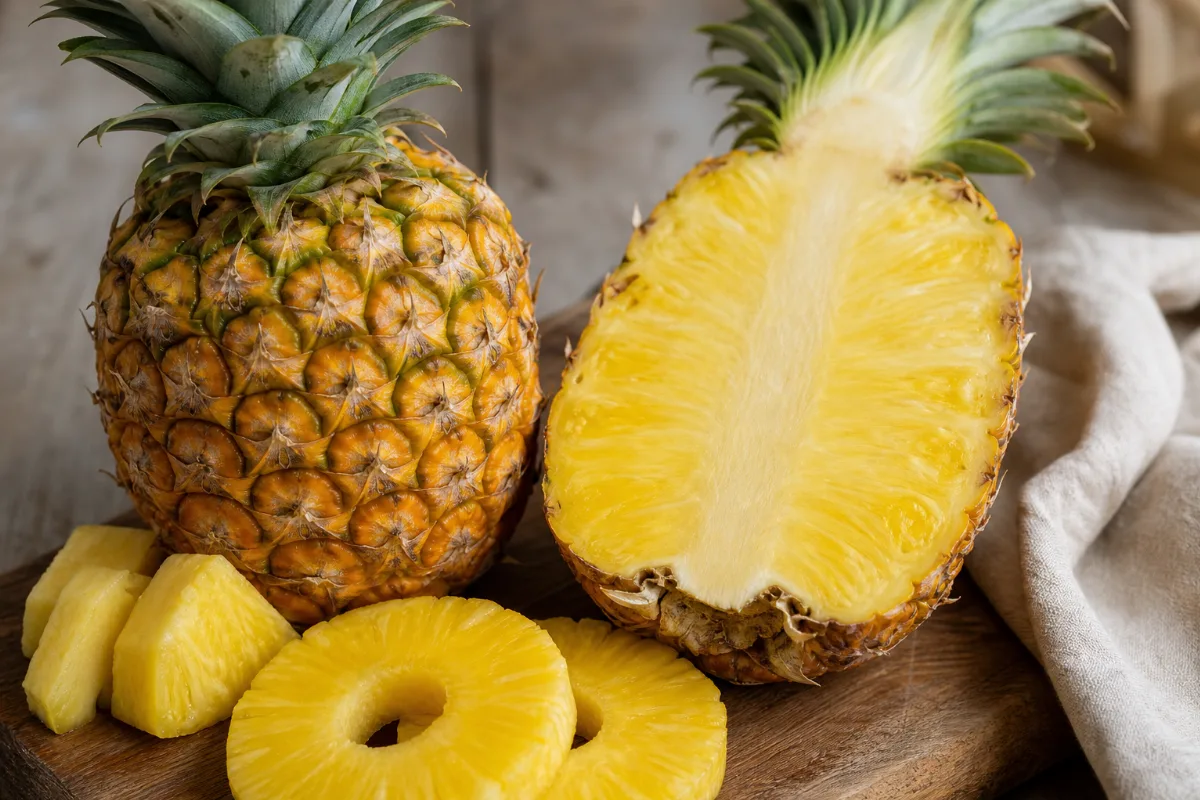
Pineapple (Ananas comosus) is a tropical fruit of the bromeliad family. People eat the flesh fresh, canned, frozen or dried, and drink the juice.
USDA data for raw pineapple: 50 kcal per 100 g. One cup of chunks (165 g) has about 83 kcal, 2.3 g fibre, 16 g natural sugars, 79 mg vitamin C, 1.5 mg manganese, 0.18 mg copper, 0.18 mg vitamin B6 and 180 mg potassium. Canned, dried and juice forms were not compared in a source we read, so check the label for added sugar.
What the research shows
The firmest fact is about vitamin C: too little causes scurvy, and vitamin C foods help prevent it. That is a nutrient fact, not a pineapple trial.
Most research is on bromelain, the enzyme mix, taken as tablets or extracts. A 2023 review found a small pain benefit and a mixed effect on inflammation markers. Small trials in knee osteoarthritis and after dental procedures were positive, but they used pills, were small, and some were industry-linked.
We found no trial of eating fresh pineapple for any disease. A study of Nigerian women linked eating pineapple in late pregnancy with shorter labour, but it cannot show cause.
Bromelain pills versus the fruit
Every bromelain trial we found used tablets, capsules or extracts, some mixed with trypsin, rutoside or turmeric. Commercial bromelain is taken from the stem (MSK). A result for a pill does not carry over to a slice of fruit, and the lack of fruit trials is not evidence that the fruit is harmful.
Amounts
This page gives no amounts to eat or drink. Ask a doctor or pharmacist what is right for you, especially if you take medicine, have an allergy or are pregnant.
At a glance
Traditional uses history, not proof
- Eaten fresh, canned, dried and as juice
- Bromelain from the plant has long been studied as a medicine ingredient; long use is not proof it works
Studied for research
- Preventing scurvy through vitamin C, high certainty for the nutrient, no pineapple trial
- Knee osteoarthritis pain, low certainty (a bromelain pill combination, not fruit)
- Pain after dental procedures, low certainty (bromelain or pineapple extract supplements)
- Pain in general, low certainty; inflammation markers, mixed
- Bruising after facial surgery and sinusitis, insufficient to low evidence (bromelain products)
- Labour and cervical ripening, very low certainty (observational, fruit eaten in late pregnancy)
Main compounds
- Vitamin C (ascorbic acid)
- Bromelain, a mix of protein-digesting enzymes
- Manganese and copper
- Natural sugars and a little fibre
Common forms
- Raw fruit
- Canned, frozen, dried and juice forms (not compared in a source we read)
- Bromelain tablets, capsules and extracts (used in the trials; not the same as fruit)
Research links: NHS: Vitamin C · Bromelain systematic review and meta-analysis (2023) · MSK: Bromelain, herb-drug cautions · Research Library · Genes & Biomarkers Library
What it is and its history
- Accepted scientific name
- Ananas comosus
- Naming authority
- (L.) Merr. (GBIF accepted; usageKey 5288819)
- Common names
- Pineapple (English); Pina (Spanish)
- Family or group
- Bromeliaceae (the bromeliad family).
- Classification
- Plantae > Tracheophyta > Liliopsida > Poales > Bromeliaceae > Ananas > Ananas comosus
- Native range
- Not verified from a source read.
- Habitat
- Not verified from a source read.
- What it looks like
- Roots: Not verified.; Stems: Not verified. MSK says commercial bromelain is obtained from pineapple stems.; Leaves: Not verified.; Flowers: Not verified.; Fruit: The fruit is the food. USDA lists a whole raw fruit as 905 g, with household portions of 1 cup of chunks (165 g) and slices of 56, 84 and 166 g.
- Cultivation
- Not verified from a source read.
- Harvest and processing
- Eaten raw, canned, frozen, dried or as juice (general knowledge; forms were not compared in a source read). Trials used bromelain tablets or extracts rather than the fruit.
- Look-alikes and adulterants
- Name: Pineapple-flavoured or pineapple-named foods and supplements; Note: Pineapple juice drinks, canned pineapple in syrup and bromelain tablets differ from raw fruit in sugar, fibre and enzyme content. Bromelain tablets are covered as a supplement, not as this food.
- Sustainability and conservation
- Not assessed.
Photographs
Traditional use and history history, not clinical proof
| Tradition or era | Documented use | Source |
|---|---|---|
| Ethnopharmacology and bromelain research | A 2023 review says pineapple has an important role in ethnopharmacology and that its enzyme, bromelain, has been extensively investigated for medicinal properties. It does not give dates or places. | p37157782 |
| Culinary use | Eaten fresh and processed (general knowledge; no historical source was read). | Not verified |
Traditional use shows how it was used. It does not show that it works or is safe today.
What is inside, and how it may work
What it contains and how those compounds act in cells and animals. Laboratory and animal mechanisms are not proven effects in people.
Main compounds
| Compound | Family | Where it is concentrated | Activity studied | Level of evidence |
|---|---|---|---|---|
| Ascorbic acid (vitamin C) PubChem 54670067 | vitamin | Fruit flesh USDA: 47.8 mg per 100 g raw pineapple; about 79 mg in 1 cup of chunks (165 g) | Essential nutrient. The NHS says it helps protect cells, keeps skin, blood vessels, bones and cartilage healthy and helps wound healing; lack of it can lead to scurvy. 17 18 16 | Human data |
| Bromelain | protein-digesting enzymes (cysteine proteases) | Pineapple plant; MSK says bromelain is obtained from the stem Not found for the fruit in the sources read | Studied as a supplement. Anti-inflammatory and other effects are shown mainly in cells and animals; human trials used pills, often in combination. 11 8 14 | Mixed (human supplement trials, lab and animal work) |
| Manganese and copper | minerals | Fruit flesh USDA per 100 g: manganese 0.927 mg, copper 0.11 mg | Nutrient content only; no pineapple trial of these was read. 18 | Composition only |
| Natural sugars (sucrose, glucose, fructose) | sugars | Fruit flesh USDA per 100 g: total sugars 9.85 g (sucrose 5.99 g, glucose 1.73 g, fructose 2.12 g) | Natural sugar in the fruit. 18 | Composition only |
| Fibre | carbohydrate | Fruit flesh USDA per 100 g: 1.4 g | Modest amount. 18 | Composition only |
Mechanisms, receptors and pathways
| Target or pathway | Gene or receptor | What was found | Level |
|---|---|---|---|
| NF-kB, MAPK and Nrf2 signalling by bromelain | NF-kB (via IkB-alpha), MAPK (ERK, JNK, p38), Nrf2 | The 2026 review says bromelain's anti-inflammatory and antioxidant effects act through these pathways, mainly shown in cells and animals. 11 | In vitro and animal |
| Interleukin-10 and cartilage turnover in knee osteoarthritis | IL-10, alpha2-macroglobulin, CTX-II | A bromelain, trypsin and rutoside tablet combination raised IL-10 and alpha2-macroglobulin and lowered urinary CTX-II in a small exploratory crossover trial. This is a combination pill, not bromelain alone or the fruit. 7 | Human data |
| Platelet clumping and bleeding | Not specified | MSK says preclinical studies suggest bromelain prevents platelet aggregation, which is why a bleeding caution exists with blood thinners. 14 | Preclinical |
| Cell death and DNA damage in normal blood cells | Caspase-9, caspase-3, Bax, PARP | At 60 and 120 micrograms/mL, isolated bromelain triggered apoptosis in human blood cells in the test tube, and caused DNA damage from 30 micrograms/mL. 2 | Laboratory research |
Absorption, metabolism and elimination
- Absorption
- The 2023 review reports that bromelain appears in blood with its enzyme activity kept after oral absorption. A 2026 review says its availability may be limited by breakdown in the gut. Neither measured the bromelain in eating fruit.
- Distribution
- Not found.
- Metabolism
- Not found.
- Elimination
- Not found.
- Bioavailability
- Not established for the fruit.
Isolated compounds versus whole extracts
Every bromelain trial found used tablets, capsules or extracts (some combined with trypsin, rutoside or turmeric), not fruit. The only fruit-eating study found was an observational one on late-pregnancy labour. A result for a pill does not carry over to a slice of fruit, and no pineapple trial is not evidence of harm.
Nutritional composition
Nutrition from USDA FoodData Central (raw pineapple, all varieties, FDC 169124, published 4/1/2019; values read 2026-10-25 from the SR Legacy download). Per 100 g: 50 kcal, 13.1 g carbohydrate, 9.85 g total sugars, 1.4 g fibre, 0.54 g protein, 0.12 g fat, 86 g water, 47.8 mg vitamin C, 0.927 mg manganese, 0.11 mg copper, 0.112 mg vitamin B6, 0.079 mg thiamin, 18 micrograms folate, 109 mg potassium, 13 mg calcium, 12 mg magnesium, 0.29 mg iron, 0.7 micrograms vitamin K, 3 micrograms vitamin A (RAE), 35 micrograms beta-carotene. One cup of chunks (165 g, USDA household portion; our arithmetic from the per-100 g values): about 83 kcal, 2.3 g fibre, 16 g total sugars, 79 mg vitamin C, 1.5 mg manganese, 0.18 mg copper, 0.18 mg vitamin B6, 180 mg potassium. Pineapple is mainly a vitamin C and manganese fruit. Figures vary with variety and ripeness; canned, dried and juice forms were not compared in a source read.
1 high certainty1 mixed findings5 low certainty1 very low certainty2 not enough evidence
What was looked at
The 10 benefits and uses checked for Pineapple, each with how strong the evidence is. Tap one to open it.
- Preventing scurvy (severe vitamin C shortage)High certainty
- Knee osteoarthritis pain (bromelain pill combination, not fruit)Low certainty
- Pain after dental procedures (bromelain or pineapple extract supplements)Low certainty
- Pain in general (oral bromelain supplements)Low certainty
- Blood markers of inflammation (bromelain supplements)Mixed findings
- Bruising after facial plastic surgery (bromelain)Not enough evidence
- Sinusitis (bromelain)Low certainty
- Heart and circulation (bromelain)Low certainty
- Cervical ripening and labour (eating pineapple in late pregnancy)Very low certainty
- Cancer, brain, metabolic and other claims for bromelain (lab and animal work)Not enough evidence
Lab markers tracked in the studies
Interleukin-10 (IL-10)Urinary CTX-II (cartilage breakdown marker)KOOS knee score (pain and symptoms)Pain after dental procedures (visual scale)Bruising after surgery (ecchymosis)Pooled pain scoreInflammatory markers (CRP, interleukins and others)Bishop score and labour length
What is Pineapple good for?
The main studied uses and how strong the human evidence is for each. Most results come from bromelain tablets or extracts, not from the fruit.
Benefits, one by one
Each card is a research question, not a promise. Tap a goal to filter. Open a card to see the studies, doses and limits.
Preventing scurvy (severe vitamin C shortage)
High certaintyScurvy comes from too little vitamin C over a long time. Pineapple is one vitamin C food: USDA lists 47.8 mg in 100 g of raw pineapple. No trial has tested pineapple itself against scurvy.
2 studiesRaw fruit as food. Frozen, canned, dried and juice forms were not com…
Studies, doses and limits
What the trials found
The NHS says vitamin C helps protect cells, keeps skin, blood vessels, bones and cartilage healthy and helps wounds heal, and that lack of it can lead to scurvy. USDA lists 47.8 mg of vitamin C per 100 g of raw pineapple, which is 78.9 mg in a cup of chunks (165 g). The NHS page names citrus fruit, peppers, strawberries, blackcurrants and some vegetables as good sources and does not name pineapple.
Results
The link between vitamin C foods and scurvy is well accepted. No trial of pineapple was found.
Effect sizes as reported
USDA: 47.8 mg vitamin C per 100 g; about 79 mg in 1 cup of chunks (165 g).
Why this rating
The vitamin C and scurvy link is established nutrition. The rating is for the nutrient fact, not for a pineapple trial.
Form and dose studied
Raw fruit as food. Frozen, canned, dried and juice forms were not compared in a source we read.
Who was studied
Anyone eating a very limited diet is the group at risk of scurvy.
Limits
Nutrient fact, not a pineapple trial. Vitamin C content varies with variety and ripeness and falls with storage and cooking.
Why researchers looked
Pineapple is mainly known as a vitamin C and manganese fruit, so people ask whether it protects against vitamin C shortage.
Traditional use
Pineapple is eaten fresh, canned, dried and as juice. Bromelain from the plant has long been studied as a medicine ingredient (a 2023 review calls pineapple important in ethnopharmacology). Long use is not proof that it treats any condition.
Proposed mechanism Authoritative guidance
Pineapple flesh supplies vitamin C (ascorbic acid), which the body needs for skin, blood vessels, bones, cartilage and wound healing. The fruit also contains bromelain, a mix of protein-digesting enzymes that has been studied on its own as a supplement.
A proposed mechanism does not show that the effect happens in people.
No safety concern at food amounts was found in the sources read for this point.
Knee osteoarthritis pain (bromelain pill combination, not fruit)
Low certaintyOne small trial of a pill that combined bromelain with trypsin and rutoside found better knee pain and symptom scores and some blood changes. The fruit was not tested, and the trial was linked to the maker's parent company.
2 studiesA tablet combining bromelain, trypsin and rutoside, taken twice daily…
Studies, doses and limits
What the trials found
In a crossover trial, 45 adults with knee osteoarthritis took a bromelain, trypsin and rutoside tablet combination or placebo for 8 weeks each. The combination improved the KOOS Pain subscore (p=0.0464) and Symptoms subscore (p=0.026) but not the global KOOS score. It raised interleukin-10 (p<0.0001) and alpha2-macroglobulin (p=0.038) and lowered urinary CTX-II (p=0.038). No serious related adverse events were reported.
Results
A three-ingredient pill improved two of the knee sub-scores in a small exploratory trial. Bromelain alone and pineapple fruit were not tested.
Effect sizes as reported
KOOS Pain p=0.0464; Symptoms p=0.026; global KOOS not significant. IL-10 p<0.0001.
Why this rating
One small exploratory trial, no correction for multiple comparisons, a combination product, and authors who are employees of the sponsor's parent group.
Form and dose studied
A tablet combining bromelain, trypsin and rutoside, taken twice daily (trial detail, not advice). Not the fruit.
Who was studied
Adults aged 40 or over with knee osteoarthritis, BMI 35 or under.
Limits
Exploratory design; cannot separate bromelain from the other two ingredients; industry-linked.
Why researchers looked
Bromelain is the best-known pineapple compound, and it is sold in tablets for joint complaints.
Traditional use
Pineapple is eaten fresh, canned, dried and as juice. Bromelain from the plant has long been studied as a medicine ingredient (a 2023 review calls pineapple important in ethnopharmacology). Long use is not proof that it treats any condition.
Proposed mechanism In vitro and animal
Bromelain is a protein-digesting enzyme mix from the pineapple plant. A 2026 review says its anti-inflammatory effects are shown mainly in cells and animals, through pathways such as NF-kB and Nrf2. In people the evidence is from supplement trials.
A proposed mechanism does not show that the effect happens in people.
No serious related adverse events in this trial. See the Safety tab for blood thinner and antibiotic cautions with bromelain.
Pain after dental procedures (bromelain or pineapple extract supplements)
Low certaintyTwo small dental trials used bromelain or a pineapple extract in tablet or capsule form. One found less pain than ibuprofen in the first hours after orthodontic separators. The other found less pain, swelling and painkiller use than placebo after a wisdom tooth removal. Neither used fresh fruit.
2 studiesTablets or capsules of bromelain or a pineapple extract titrated for …
Studies, doses and limits
What the trials found
In a triple-blind trial of 135 patients, pain at 2 hours (p=0.006) and 6 hours (p=0.025) after orthodontic separators was higher with ibuprofen than with bromelain or bromelain plus turmeric. At 48 hours, chewing pain was higher in the bromelain group than the ibuprofen group (p=0.024). In a placebo-controlled trial of 42 people after a wisdom tooth removal, the placebo group needed more ibuprofen from day 1 to day 7 (p<0.0001), and pain and swelling fell more with a freeze-dried pineapple extract or purified bromelain (p<0.0001 for almost all comparisons). The reduction in mouth-opening limit was not significant.
Results
Both trials point to a small short-term benefit from bromelain products. The first had no placebo group, and both were small.
Effect sizes as reported
Orthodontic trial: 2 h p=0.006, 6 h p=0.025 versus ibuprofen. Wisdom tooth trial: ibuprofen use p<0.0001 versus placebo.
Why this rating
Two small trials in one type of procedure each; supplement forms; the first has no placebo arm; the second involves a branded extract and a nutraceutical society.
Form and dose studied
Tablets or capsules of bromelain or a pineapple extract titrated for bromelain, for hours to a week (trial detail, not advice). Not fresh fruit.
Who was studied
People aged over 15 having orthodontic separators; adults having a lower wisdom tooth removed.
Limits
Short trials; small samples; supplements; dental pain only.
Why researchers looked
Bromelain is studied for pain and swelling after procedures because of its reported anti-inflammatory effect in cells and animals.
Traditional use
Pineapple is eaten fresh, canned, dried and as juice. Bromelain from the plant has long been studied as a medicine ingredient (a 2023 review calls pineapple important in ethnopharmacology). Long use is not proof that it treats any condition.
Proposed mechanism In vitro and animal
Bromelain is a protein-digesting enzyme mix from the pineapple plant. A 2026 review says its anti-inflammatory effects are shown mainly in cells and animals, through pathways such as NF-kB and Nrf2. In people the evidence is from supplement trials.
A proposed mechanism does not show that the effect happens in people.
Bromelain products can interact with blood thinners and some antibiotics. See the Safety tab.
Pain in general (oral bromelain supplements)
Low certaintyA 2023 review pooled nine trials and found oral bromelain lowered pain slightly more than controls. The conditions and products varied a lot, and none was the fruit.
1 studiesOral bromelain products. Not the fruit.
Studies, doses and limits
What the trials found
The meta-analysis of bromelain trials (54 articles in the review, 39 in the meta-analysis) found oral bromelain gave slightly better pain relief than controls: mean difference -0.27 (95% CI -0.45 to -0.08; 9 trials; I2=29%). The authors rate the studies as moderate quality.
Results
A small average pain difference across mixed trials.
Effect sizes as reported
Mean difference in pain score -0.27 (95% CI -0.45 to -0.08).
Why this rating
Small average effect, mixed conditions and products, and the abstract does not give the pain scale.
Form and dose studied
Oral bromelain products. Not the fruit.
Who was studied
Adults in mixed pain conditions.
Limits
Very varied trials; supplements only.
Why researchers looked
Bromelain is sold for aches, swelling and inflammation, so researchers pooled the trials.
Traditional use
Pineapple is eaten fresh, canned, dried and as juice. Bromelain from the plant has long been studied as a medicine ingredient (a 2023 review calls pineapple important in ethnopharmacology). Long use is not proof that it treats any condition.
Proposed mechanism In vitro and animal
Bromelain is a protein-digesting enzyme mix from the pineapple plant. A 2026 review says its anti-inflammatory effects are shown mainly in cells and animals, through pathways such as NF-kB and Nrf2. In people the evidence is from supplement trials.
A proposed mechanism does not show that the effect happens in people.
Reported side effects were flatulence, nausea and headache.
Blood markers of inflammation (bromelain supplements)
Mixed findingsSeven trials tested bromelain on inflammation markers. Some markers fell in most studies, but the markers differed and the authors call the overall effect inconsistent.
2 studiesBromelain alone or in combination, 1 to 16 weeks (review detail, not …
Studies, doses and limits
What the trials found
A systematic review of 7 randomised trials in adults found that bromelain, alone or combined with other compounds, lowered some inflammatory markers in most studies, but the effect varied between trials because of different people, doses, lengths and markers. Eleven participants had side effects and two stopped; effects were mainly gastrointestinal.
Results
Mixed and not consistent between studies.
Effect sizes as reported
No pooled number in the abstract.
Why this rating
Seven trials with different populations, doses and markers; the authors call the effect inconsistent.
Form and dose studied
Bromelain alone or in combination, 1 to 16 weeks (review detail, not advice). Not the fruit.
Who was studied
Adults in several conditions.
Limits
Few, varied trials.
Why researchers looked
Bromelain is promoted as anti-inflammatory because of cell and animal work.
Traditional use
Pineapple is eaten fresh, canned, dried and as juice. Bromelain from the plant has long been studied as a medicine ingredient (a 2023 review calls pineapple important in ethnopharmacology). Long use is not proof that it treats any condition.
Proposed mechanism In vitro and animal
Bromelain is a protein-digesting enzyme mix from the pineapple plant. A 2026 review says its anti-inflammatory effects are shown mainly in cells and animals, through pathways such as NF-kB and Nrf2. In people the evidence is from supplement trials.
A proposed mechanism does not show that the effect happens in people.
Side effects were mainly in the stomach and gut.
Bruising after facial plastic surgery (bromelain)
Not enough evidenceA 2026 review found only two studies of bromelain for bruising after facial surgery, and only one showed less bruising by day 7. The authors call the evidence limited.
2 studiesBromelain products around surgery. Not the fruit.
Studies, doses and limits
What the trials found
A systematic review of 10 articles (696 patients, mostly nose and eyelid surgery) looked at arnica and bromelain. Only 2 studied bromelain, and 1 of them showed less bruising by day 7. Adverse events were rare and mild.
Results
Not enough studies to say.
Effect sizes as reported
1 of 2 bromelain studies positive.
Why this rating
Only two bromelain studies, mixed methods and doses.
Form and dose studied
Bromelain products around surgery. Not the fruit.
Who was studied
People having facial plastic surgery.
Limits
Tiny evidence base.
Why researchers looked
Bromelain products are sold to people before and after surgery to reduce bruising and swelling.
Traditional use
Pineapple is eaten fresh, canned, dried and as juice. Bromelain from the plant has long been studied as a medicine ingredient (a 2023 review calls pineapple important in ethnopharmacology). Long use is not proof that it treats any condition.
Proposed mechanism In vitro and animal
Bromelain is a protein-digesting enzyme mix from the pineapple plant. A 2026 review says its anti-inflammatory effects are shown mainly in cells and animals, through pathways such as NF-kB and Nrf2. In people the evidence is from supplement trials.
A proposed mechanism does not show that the effect happens in people.
Bromelain may raise bruising and bleeding risk with blood thinners (MSK, preclinical). Tell the surgical team about any bromelain product.
Sinusitis (bromelain)
Low certaintyThe 2023 bromelain review says bromelain may be effective against sinusitis. The abstract gives no numbers, and the trials were of bromelain products.
1 studiesBromelain products. Not the fruit.
Studies, doses and limits
What the trials found
The systematic review reports that bromelain may be effective against sinusitis. The abstract does not give the size of the effect or the number of trials.
Results
A short statement in a review abstract.
Effect sizes as reported
Not given in the abstract.
Why this rating
Only the review's one-line statement was read; no individual sinusitis trial was opened.
Form and dose studied
Bromelain products. Not the fruit.
Limits
Details not read.
Why researchers looked
Bromelain was used in some countries for swelling in the nose and sinuses.
Traditional use
Pineapple is eaten fresh, canned, dried and as juice. Bromelain from the plant has long been studied as a medicine ingredient (a 2023 review calls pineapple important in ethnopharmacology). Long use is not proof that it treats any condition.
Proposed mechanism In vitro and animal
Bromelain is a protein-digesting enzyme mix from the pineapple plant. A 2026 review says its anti-inflammatory effects are shown mainly in cells and animals, through pathways such as NF-kB and Nrf2. In people the evidence is from supplement trials.
A proposed mechanism does not show that the effect happens in people.
None specific.
Heart and circulation (bromelain)
Low certaintyThe same review says bromelain was not effective for cardiovascular diseases. Cell and animal work on heart health is not proof for people.
2 studiesBromelain products. Not the fruit.
Studies, doses and limits
What the trials found
The 2023 systematic review states bromelain was not effective for cardiovascular diseases. A 2026 critical review says suggested heart and metabolic benefits come mostly from cell and animal studies, with limited clinical evidence.
Results
No benefit seen in the trials the review covered.
Effect sizes as reported
Not given in the abstract.
Why this rating
A short statement in a review abstract plus a review saying the rest is lab and animal work.
Form and dose studied
Bromelain products. Not the fruit.
Limits
Details not read.
Why researchers looked
Reviews mention bromelain effects on blood fats and clotting in animals.
Traditional use
Pineapple is eaten fresh, canned, dried and as juice. Bromelain from the plant has long been studied as a medicine ingredient (a 2023 review calls pineapple important in ethnopharmacology). Long use is not proof that it treats any condition.
Proposed mechanism In vitro and animal
Bromelain is a protein-digesting enzyme mix from the pineapple plant. A 2026 review says its anti-inflammatory effects are shown mainly in cells and animals, through pathways such as NF-kB and Nrf2. In people the evidence is from supplement trials.
A proposed mechanism does not show that the effect happens in people.
None specific.
Cervical ripening and labour (eating pineapple in late pregnancy)
Very low certaintyA Nigerian record-based study found women who reported eating pineapple in the third trimester had somewhat shorter labours and more vaginal births. It is a retrospective study and cannot show cause. Newborn outcomes did not differ.
2 studiesPineapple eaten as food.
Studies, doses and limits
What the trials found
A retrospective cohort of 2,400 women (1,200 who reported regular third-trimester pineapple eating and 1,200 who did not) found a higher Bishop score (adjusted mean difference 0.8; 95% CI 0.5 to 1.1), labour 1.7 hours shorter (95% CI -2.1 to -1.3) and higher odds of spontaneous vaginal delivery (aOR 1.8; 95% CI 1.4 to 2.3). Birth weight, Apgar scores and intensive care admissions did not differ.
Results
Linked with shorter labour in an observational study.
Effect sizes as reported
Bishop +0.8; labour -1.7 h; aOR 1.8.
Why this rating
Retrospective, self-reported eating and records; unmeasured differences between groups are likely; amounts not given in the abstract.
Form and dose studied
Pineapple eaten as food.
Who was studied
Women giving birth in Nigeria, 2018 to 2023.
Limits
Cannot show cause; one country; one study.
Why researchers looked
A folk belief says pineapple helps start labour, because it contains bromelain.
Traditional use
Pineapple is eaten fresh, canned, dried and as juice. Bromelain from the plant has long been studied as a medicine ingredient (a 2023 review calls pineapple important in ethnopharmacology). Long use is not proof that it treats any condition.
Proposed mechanism Hypothesis
The authors suggest the bromelain in pineapple may help cervical tissue change. This is a hypothesis; the study measured only what women reported eating.
A proposed mechanism does not show that the effect happens in people.
No harm to newborns was seen in this study, but it was not designed to measure safety. Ask your midwife or doctor about anything you eat for labour.
Cancer, brain, metabolic and other claims for bromelain (lab and animal work)
Not enough evidenceMany claims for bromelain rest on cell and animal studies. They show what bromelain can do in a dish, not what pineapple does in people.
2 studiesIsolated bromelain in cells and animals.
Studies, doses and limits
What the trials found
The 2026 critical review says bromelain shows many effects, with possible promise in cancer, heart, metabolic, infectious and brain diseases, but most findings are from in vitro and animal studies with limited clinical evidence. In a 2026 cell study of normal human blood cells, bromelain had low overall toxicity but caused cell death in some cells at 60 and 120 micrograms/mL and DNA damage from 30 to 120 micrograms/mL. That is a lab finding for isolated bromelain, not a result of eating fruit.
Results
No human evidence for these uses was found in the sources read.
Why this rating
Lab and animal evidence only.
Form and dose studied
Isolated bromelain in cells and animals.
Who was studied
Cells and animals.
Limits
Not a human result.
Why researchers looked
Bromelain attracts research as a possible drug ingredient.
Traditional use
Pineapple is eaten fresh, canned, dried and as juice. Bromelain from the plant has long been studied as a medicine ingredient (a 2023 review calls pineapple important in ethnopharmacology). Long use is not proof that it treats any condition.
Proposed mechanism In vitro and animal
Bromelain is a protein-digesting enzyme mix from the pineapple plant. A 2026 review says its anti-inflammatory effects are shown mainly in cells and animals, through pathways such as NF-kB and Nrf2. In people the evidence is from supplement trials.
A proposed mechanism does not show that the effect happens in people.
Lab findings do not show harm from eating the fruit.
Connections to the rest of health
How Pineapple connects to the rest of our health knowledge graph. Every link says what kind of connection it is. A safety link (for example to the liver) is a warning, not a benefit. A study that merely mentions a topic never creates a benefit link.
Explore every connection: goals, body systems, organs, symptoms, genes
B. Body systems
| Connected to | Kind of connection | Evidence status | Context | Studies |
|---|---|---|---|---|
| Immune System | Biological association | High certainty | Studied for: Preventing scurvy (severe vitamin C shortage) | 18 16 |
| Integumentary System | Biological association | High certainty | Studied for: Preventing scurvy (severe vitamin C shortage) Studied for: Bruising after facial plastic surgery (bromelain) | 18 16 9 14 |
| Musculoskeletal System | Biological association | Low certainty | Studied for: Knee osteoarthritis pain (bromelain pill combination, not fruit) | 7 11 |
| Pain Inflammation | Biological association | Low certainty | Studied for: Pain after dental procedures (bromelain or pineapple extract supplements) Studied for: Pain in general (oral bromelain supplements) | 1 4 8 10 11 |
| Respiratory System | Biological association | Low certainty | Studied for: Sinusitis (bromelain) | 8 |
| Cardiovascular System | Biological association | Low certainty | Studied for: Heart and circulation (bromelain) | 8 11 |
| Reproductive System | Biological association | Very low certainty | Studied for: Cervical ripening and labour (eating pineapple in late pregnancy) | 5 15 |
E. Health conditions
| Connected to | Kind of connection | Evidence status | Context | Studies |
|---|---|---|---|---|
| Food allergy | Adverse effect or risk | Documented risk | Pineapple ranked first for positive fruit IgE tests in a hospital database; sensitisation does not always cause symptoms. Pineapple had the highest rate of positive fruit IgE tests in one hospital database; sensitisation does not always cause reactions. Preparation or compound: Pineapple fruit and bromelain |
3 6 |
| Scurvy | Biological association | Deficiency link | Pineapple is a vitamin C food; scurvy comes from too little vitamin C. Preparation or compound: Raw pineapple as a vitamin C food |
16 18 |
I. Biomarkers
| Connected to | Kind of connection | Evidence status | Context | Studies |
|---|---|---|---|---|
| Interleukin-10 (IL-10) | Biological association | Low certainty | Measured in trials: increase. A lab change is not the same as a health benefit. | 7 |
| Urinary CTX-II (cartilage breakdown marker) | Biological association | Low certainty | Measured in trials: decrease. A lab change is not the same as a health benefit. | 7 |
| KOOS knee score (pain and symptoms) | Biological association | Low certainty | Measured in trials: improved. A lab change is not the same as a health benefit. | 7 |
| Pain after dental procedures (visual scale) | Biological association | Low certainty | Measured in trials: decrease. A lab change is not the same as a health benefit. | 1 4 |
| Bruising after surgery (ecchymosis) | Biological association | Not enough evidence | Measured in trials: decrease. A lab change is not the same as a health benefit. | 9 |
| Pooled pain score | Biological association | Low certainty | Measured in trials: decrease. A lab change is not the same as a health benefit. | 8 |
| Inflammatory markers (CRP, interleukins and others) | Biological association | Mixed findings | Measured in trials: mixed. A lab change is not the same as a health benefit. | 10 |
| Bishop score and labour length | Biological association | Very low certainty | Measured in trials: increase. A lab change is not the same as a health benefit. | 5 |
J. Genes, receptors and enzymes
K. Biological pathways
| Connected to | Kind of connection | Evidence status | Context | Studies |
|---|---|---|---|---|
| Vitamin C | Preliminary mechanism | Human | Pineapple is a vitamin C food; scurvy results from too little vitamin C. | 18 16 |
| NF-kB inflammatory signalling | Preliminary mechanism | In vitro and animal | Bromelain lowers NF-kB signalling in cells and animals. | 11 |
L. Active compounds
| Connected to | Kind of connection | Evidence status | Context | Studies |
|---|---|---|---|---|
| Ascorbic acid (vitamin C) | Biological association | Human | Essential nutrient. The NHS says it helps protect cells, keeps skin, blood vessels, bones and cartilage healthy and helps wound healing; lack of it can lead to scurvy. Preparation or compound: Fruit flesh |
17 18 16 |
| Bromelain | Biological association | Mixed (human supplement trials, lab and animal work) | Studied as a supplement. Anti-inflammatory and other effects are shown mainly in cells and animals; human trials used pills, often in combination. Preparation or compound: Pineapple plant; MSK says bromelain is obtained from the stem |
11 8 14 |
| Manganese and copper | Biological association | Composition only | Nutrient content only; no pineapple trial of these was read. Preparation or compound: Fruit flesh |
18 |
| Natural sugars (sucrose, glucose, fructose) | Biological association | Composition only | Natural sugar in the fruit. Preparation or compound: Fruit flesh |
18 |
| Fibre | Biological association | Composition only | Modest amount. Preparation or compound: Fruit flesh |
18 |
Each connection is stored with the ingredient, the connected record, the kind of connection, the evidence status, the supporting studies, the preparation or compound involved, and a review date (last reviewed October 25, 2026).
Evidence at a glance: what changed in 1 lab markers
Tap a number to show only those markers. Counts are markers, not people.
The evidence
The research centre for Pineapple. Every record here was checked against PubMed or the publisher's page; we never list a study we have not verified.
Evidence by outcome
Bars show how many studies we found for each outcome, not how well it works. People are added up across trials only (reviews are not added, to avoid double counting).
How we rate evidence
High certainty
Several well-run trials or reviews agree; further research is unlikely to change the picture much.
Moderate certainty
Good trials point the same way, but some doubt remains.
Low certainty
Small, short or inconsistent trials. The finding could change with better research.
Very low certainty
Very little or very weak human data. Treat as a possibility only.
Mixed findings
Trials or reviews disagree with each other.
Not enough evidence
Not enough human research to say either way.
Evidence against
Good research found no benefit, or found harm.
We take the reviewers' own risk-of-bias and GRADE statements where they exist, and otherwise judge from study size, design, consistency, directness and whether a product matches what is sold. Many publications do not make evidence high. Method note: We started from our existing pineapple summary, re-checked nutrition at USDA FoodData Central, and searched PubMed for human trials, reviews and safety evidence. Only abstracts were read for studies. Items we could not verify are flagged in the research gaps.
Study library: every study we checked 19
| Study | Design | People | Product, dose, length | Result |
|---|---|---|---|---|
| Ajami 2025 Analgesic Efficacy of Bromelain and Bromelain Plus Turmeric for Pain Control After Orthodontic Separator Placement: A Triple-Blind Randomized Clinical Trial. Clin Exp Dent Res · PMID 40260785 · DOI |
Controlled trial |
135 Patients over 15 years needing orthodontic treatment |
Bromelain tablets, or bromelain plus turmeric tablets, versus ibuprofen (tablets, not pineapple fruit) Bromelain enzyme extract One tablet once, right after separators were placed: ibuprofen 400 mg, bromelain 200 mg, or bromelain 150 mg + turmeric 300 mg (trial detail, not advice) Pain checked up to 48 hours · vs Ibuprofen (no placebo group) |
Pain at 2 hours (p=0.006) and 6 hours (p=0.025) differed between groups: the ibuprofen group had higher pain than the two bromelain groups. At 48 hours the only difference was in chewing, where the bromelain group had higher pain than the ibuprofen group (p=0.024). Lower early pain with bromelain than ibuprofen; higher chewing pain at 48 hours (p-values only in the abstract) Methods, limits and fundingOutcomes: Pain on a visual analogue scale at 0, 2, 6, 24 and 48 hours Limitations: Short, one-off dose; no placebo arm, so it compares two products only; one type of procedure. Funding and conflicts: The abstract declares no conflicts of interest. Read: abstract |
| Bernasinska-Slomczewska 2026 Assessment of the cytotoxic, proapoptotic, and genotoxic effects of bromelain on human peripheral blood mononuclear cells. Sci Rep · PMID 42045533 · DOI |
Laboratory research human cells (in vitro) |
Normal human blood cells (PBMCs) in the lab | Isolated bromelain in the test tube Bromelain enzyme 0 to 120 micrograms/mL (lab detail) Lab exposure · vs Untreated cells |
Overall cytotoxicity was low and bromelain did not cause non-specific protein breakdown. At 60 and 120 micrograms/mL it triggered apoptosis (9.8% and 15.08% of cells). From 30 to 120 micrograms/mL it caused dose-dependent DNA damage, up to 16.0% in the comet tail. Apoptosis 9.8% and 15.08%; DNA damage up to 16.0% Methods, limits and fundingOutcomes: Cell survival, protein integrity, cell death, DNA damage Limitations: Test-tube study of isolated bromelain; says nothing directly about eating pineapple. Funding and conflicts: The abstract declares no competing interests. Read: abstract |
| Chang 2022 Allergen Tests of Fruit Sensitization Involving Children with Allergic Diseases. Children (Basel) · PMID 35455514 · DOI |
Cross sectional database |
Patients with suspected allergic symptoms in a Taiwanese hospital database (Chang Gung Research Database), children and adults | Blood tests for fruit-specific IgE antibodies (sensitisation) Fruit · vs Negative test results |
Positive IgE was most often found for pineapple, then kiwi, banana and papaya. Children had higher positive rates than adults, and the pineapple rate stayed high even in older children. Dermatitis was more common in children with a positive IgE for these fruits. Pineapple ranked first for positive specific IgE (not given in the abstract) Methods, limits and fundingOutcomes: Rates of positive fruit-specific IgE; link with dermatitis Limitations: A positive IgE blood test shows sensitisation, not necessarily a reaction when eating the fruit. People tested already had suspected allergy, so the rates do not apply to everyone. Number tested is not given in the abstract. Funding and conflicts: The abstract declares no financial relationships. Read: abstract |
| Colletti 2024 An Evaluation of the Effects of Pineapple-Extract and Bromelain-Based Treatment after Mandibular Third Molar Surgery: A Randomized Three-Arm Clinical Study. Nutrients · PMID 38542694 · DOI |
Controlled trial |
42 People having one lower wisdom tooth removed under local anaesthetic |
A freeze-dried pineapple extract titrated for bromelain, or purified bromelain (supplements, not fresh fruit) Pineapple extract / bromelain Taken orally from the day of surgery for 7 days (trial detail, not advice) 7 days · vs Placebo |
The placebo group needed more ibuprofen from day 1 to day 7 (p<0.0001). Pain and swelling fell more in both active groups than in placebo (p<0.0001 for almost all comparisons), and quality of life was better (p<0.001). The reduction in trismus was not significant. Less ibuprofen use, pain and swelling than placebo (p-values only in the abstract) Methods, limits and fundingOutcomes: Need for ibuprofen (main); pain, swelling and mouth-opening limit (trismus) Limitations: Small (42 people); one procedure; supplement forms, not fruit. Funding and conflicts: The abstract declares no conflicts of interest. Some authors are linked to a nutraceutical formulators society and the named extract is a branded product, so treat as possibly industry-adjacent. Read: abstract |
| Elendu 2026 The impact of pineapple consumption on cervical ripening and labor outcomes: A Nationwide Retrospective Cohort Study among pregnant women in Nigeria. Medicine (Baltimore) · PMID 41995499 · DOI |
Retrospective cohort |
2400 Women aged 18 to 45 who gave birth in Nigeria in 2018 to 2023; 1,200 reported regular third-trimester pineapple eating and 1,200 did not |
Pineapple eaten as food, as reported by the women Fruit Regular third-trimester eating, self-reported (amount not given in the abstract) Third trimester · vs Women reporting no pineapple |
After adjustment, pineapple eating was linked to a higher Bishop score (mean difference 0.8; 95% CI 0.5 to 1.1), labour 1.7 hours shorter (95% CI -2.1 to -1.3) and higher odds of spontaneous vaginal delivery (aOR 1.8; 95% CI 1.4 to 2.3). Birth weight, Apgar scores and newborn intensive care admissions did not differ. Bishop +0.8; labour -1.7 h; aOR 1.8 (95% CI 0.5 to 1.1; -2.1 to -1.3; 1.4 to 2.3) Methods, limits and fundingOutcomes: Cervical ripening (Bishop score), labour length, mode of delivery, newborn outcomes Limitations: Retrospective and based on records and questionnaires, so memory errors and unmeasured differences between the two groups are likely; it cannot show that pineapple caused the differences. Funding and conflicts: The abstract declares no funding or conflicts. Read: abstract |
| Giangrieco 2023 Comparative Analysis of the Immune Response and the Clinical Allergic Reaction to Papain-like Cysteine Proteases from Fig, Kiwifruit, Papaya, Pineapple and Mites in an Italian Population. Foods · PMID 37569122 · DOI |
Cross sectional |
341 341 allergic patients in Italy |
IgE blood test (FABER) for fruit and mite enzymes Fruit enzymes incl. the pineapple one (bromelain-type) |
133 of 341 patients (39%) had IgE to at least one of the seven enzymes, mostly the mite ones. None of the people sensitised to the papaya, pineapple and fig enzymes reported symptoms after eating those foods. The authors suggest this kind of allergy may be mainly occupational. No eating symptoms in those sensitised to the pineapple enzyme (not applicable) Methods, limits and fundingOutcomes: IgE sensitisation to seven plant and mite enzymes and symptoms after eating the foods Limitations: Italian allergic patients only; sensitisation rates cannot be turned into a risk of reacting. Funding and conflicts: The test used was developed and sold by firms in which some authors are stakeholders or employees. Read: abstract |
| Henrotin 2025 Oral enzyme combination therapy reduces systemic inflammation, urinary CTXII and pain in knee osteoarthritis: a proof-of-mechanism, randomised, crossover, double-blind, placebo-controlled trial. RMD Open · PMID 40803821 · DOI |
Controlled trial |
45 Adults aged 40 or over with symptomatic knee osteoarthritis (BMI 35 or under); 43 completed both treatment periods |
Oral enzyme combination of bromelain, trypsin and rutoside tablets (a pill combination, not pineapple fruit) Bromelain enzyme extract (source part not stated in the abstract) 2 x 3 tablets a day (trial detail, not advice) 8 weeks per period, 4-week washout, crossover · vs Placebo |
The combination raised alpha2-macroglobulin (p=0.038) and interleukin-10 (p<0.0001) and lowered urinary CTX-II, a cartilage breakdown marker (p=0.038). KOOS Pain (p=0.0464) and Symptoms (p=0.026) improved, but the global KOOS score did not. No serious related adverse events. IL-10 up; CTX-II down; KOOS Pain and Symptoms better; global KOOS not different (p-values only in the abstract) Methods, limits and fundingOutcomes: Blood markers of innate immunity, inflammation and cartilage breakdown; KOOS knee score Limitations: Small; exploratory; no correction for multiple comparisons; a three-ingredient pill, so bromelain alone and the fruit were not tested. Funding and conflicts: Three authors are employees of Nestle Health Science and two others report consulting or speaker fees from it, so this is industry-linked. Read: abstract |
| Leelakanok 2023 Efficacy and safety of bromelain: A systematic review and meta-analysis. Nutr Health · PMID 37157782 · DOI |
Meta-analysis |
54 articles in the review and 39 in the meta-analysis of oral and topical bromelain | Oral and topical bromelain products Bromelain enzyme extract Varied Varied · vs Controls |
Oral bromelain lowered pain slightly more than controls (mean difference -0.27; 95% CI -0.45 to -0.08; 9 trials; I2=29%). It may help sinusitis but was not effective for cardiovascular diseases. Reported adverse events were flatulence, nausea and headache. Bromelain was found in blood with its enzyme activity kept after oral absorption. The authors rate the studies as moderate quality and say no major health risks were reported. Pain MD -0.27 (95% CI -0.45 to -0.08) Methods, limits and fundingOutcomes: Pain, sinusitis, cardiovascular disease, wound debridement, adverse events Limitations: Very varied products and conditions; the abstract does not say which pain scale was used or give the funding. Funding and conflicts: Not stated in the abstract. Read: abstract |
| Manouchehri 2026 Effectiveness of Arnica and Bromelain for Improving Ecchymosis Following Facial Plastic Surgery: A Systematic Review. Plast Surg (Oakv) · PMID 42539591 · DOI |
Systematic review |
696 10 studies (6 randomised trials, 3 prospective and 1 retrospective cohort) in facial plastic surgery, mostly rhinoplasty and eyelid surgery |
Arnica and/or bromelain products (bromelain in only 2 studies) Bromelain enzyme extract Varied Varied · vs Varied |
Two studies tested bromelain and one showed less bruising by day 7. The authors conclude evidence for bromelain is limited. Adverse events were rare and mild. 1 of 2 bromelain studies positive (not given in the abstract) Methods, limits and fundingOutcomes: Bruising (ecchymosis) after surgery; swelling; adverse effects Limitations: Only two bromelain studies; very mixed dosing and measuring tools, so no pooled analysis was possible. Funding and conflicts: The abstract declares no conflicts of interest. Read: abstract |
| Pereira 2023 Bromelain supplementation and inflammatory markers: A systematic review of clinical trials. Clin Nutr ESPEN · PMID 37202035 · DOI |
Systematic review |
7 randomised trials in adults | Bromelain alone or in combination with other oral compounds (supplements) Bromelain enzyme extract Alone: 200 to 1050 mg/day; combined products: 99.9 to 1200 mg/day (review detail, not advice) 1 to 16 weeks · vs Placebo or control |
In most studies bromelain, alone or combined, lowered some inflammatory markers, but the markers differed between trials. The authors call the overall effect inconsistent and say the effects are isolated and need standardising. Eleven participants had side effects and two stopped, mainly stomach and gut effects. Inconsistent (not given) Methods, limits and fundingOutcomes: Inflammatory markers such as CRP, interleukins, TNF-alpha Limitations: Only 7 trials, very different populations, doses and markers. Funding and conflicts: The abstract declares no conflicts of interest. Read: abstract |
| Sanlier 2026 Potential health benefits of bromelain: a critical review of the current literature. Front Nutr · PMID 42245557 · DOI |
Narrative review mostly lab and animal, some human |
Review of bromelain research | The review lists antioxidant, anti-inflammatory, immune, pain-related, anti-ulcer and blood-fat-lowering effects of bromelain, mostly in cells and animals. It says most findings come from in vitro and animal studies with limited clinical evidence, and that more well-designed clinical studies are needed for dosing, long-term safety and effectiveness. Qualitative Methods, limits and fundingOutcomes: Bromelain structure, absorption, metabolism and mechanisms Limitations: Narrative review; mostly cell and animal work. Funding and conflicts: The abstract declares no commercial or financial relationships. Read: abstract | |
| s-fda-produce FDA: Selecting and Serving Produce Safely · Source |
Health agency n/a |
Methods, limits and fundingRead: full-text | ||
| s-gbif-ananas-comosus GBIF Backbone: Ananas comosus (L.) Merr. (usageKey 5288819) · Source |
Reference database n/a |
Methods, limits and fundingRead: full-text | ||
| s-msk-bromelain Memorial Sloan Kettering Cancer Center: About Herbs, Bromelain · Source |
Health agency n/a |
Methods, limits and fundingRead: full-text | ||
| s-nhs-pregnancy-foods NHS: Foods to avoid in pregnancy · Source |
Health agency n/a |
Methods, limits and fundingRead: full-text | ||
| s-nhs-vitc NHS: Vitamin C · Source |
Health agency n/a |
Methods, limits and fundingRead: full-text | ||
| s-pubchem-ascorbic-acid PubChem: L-Ascorbic Acid (CID 54670067) · Source |
Reference database n/a |
Methods, limits and fundingRead: full-text | ||
| s-usda-fdc-169124 USDA FoodData Central: Pineapple, raw, all varieties (FDC 169124, NDB 9266) · Source |
Reference database n/a |
Methods, limits and fundingRead: full-text | ||
| van Kampen 2007 [Occupational allergies to bromelain]. Pneumologie · PMID 17342576 · DOI |
Literature review |
Workers exposed to bromelain enzyme dust in industry | Bromelain dust at work (industrial enzyme) Bromelain enzyme |
The review found clear cases of airway sensitisation to bromelain at work, with matching symptoms, skin prick tests, specific IgE and bronchial challenge tests, which points to an immune mechanism. Cases shown (not applicable) Methods, limits and fundingOutcomes: Airway sensitisation to bromelain Limitations: Workplace dust exposure, not eating fruit. Abstract in German journal; English abstract read. Funding and conflicts: Not stated in the abstract. Read: abstract |
What we do not know yet
- No trial has tested eating fresh pineapple, pineapple juice or canned pineapple for any disease outcome.
- Every bromelain trial found used tablets, capsules or extracts, and the knee trial is small, exploratory and industry-linked.
- The amount of bromelain in the fruit and how it is absorbed from food were not found.
- The sinusitis and heart findings come from review abstracts only, and the individual trials were not opened.
- How common pineapple allergy is when eating the fruit, latex-fruit cross-reactions, breastfeeding, children and choking risk, mouth soreness and tooth effects were not researched.
- Blood sugar response to pineapple, pesticide residues and the effects of canning, drying and juicing were not researched.
How new research is added
New studies are found by a saved PubMed search and placed in a review queue before the page changes.
Lab markers
What changed in blood or saliva tests during trials. A changed number is not the same as feeling or being healthier, and we give no "normal ranges".
Other 8
Interleukin-10 (IL-10)
Increase in trials
A blood protein made by immune cells that is linked to calming inflammation.
Low certaintyResults and what it means
Why it was measured
The knee osteoarthritis trial measured it to look for an anti-inflammatory effect.
Statistical vs. clinical meaning
A change in a blood marker is not the same as less pain or better joints.
Safety implication
None specific.
| Study | Result | People | Product |
|---|---|---|---|
| 7 | Higher on the enzyme combination than placebo (p<0.0001) | 43 adults with knee osteoarthritis who completed both periods | Bromelain, trypsin and rutoside tablet combination, 8 weeks, crossover |
Urinary CTX-II (cartilage breakdown marker)
Decrease in trials
A fragment of type II collagen in urine. More of it suggests more cartilage breakdown.
Low certaintyResults and what it means
Why it was measured
Used in osteoarthritis research as a marker of cartilage turnover.
Statistical vs. clinical meaning
Exploratory marker; no correction for multiple comparisons.
Safety implication
None specific.
| Study | Result | People | Product |
|---|---|---|---|
| 7 | Lower on the enzyme combination than placebo (p=0.038) | 43 adults with knee osteoarthritis | Bromelain, trypsin and rutoside tablet combination, 8 weeks, crossover |
KOOS knee score (pain and symptoms)
Improved in trials
A questionnaire where people rate knee pain, symptoms and function.
Low certaintyResults and what it means
Why it was measured
It is the patient-reported outcome used in the trial.
Statistical vs. clinical meaning
Borderline p-values from an exploratory trial of a combination pill.
Safety implication
None specific.
| Study | Result | People | Product |
|---|---|---|---|
| 7 | Pain subscore improved (p=0.0464) and Symptoms subscore improved (p=0.026); the global score did not change | 43 adults with knee osteoarthritis | Bromelain, trypsin and rutoside tablet combination, 8 weeks, crossover |
Pain after dental procedures (visual scale)
Decrease in trials
People mark their pain on a 0 to 10 style line scale.
Low certaintyResults and what it means
Why it was measured
Used to compare bromelain with ibuprofen and with placebo after dental procedures.
Statistical vs. clinical meaning
Short-term and procedure-specific.
Safety implication
None specific.
| Study | Result | People | Product |
|---|---|---|---|
| 1 | Lower pain than ibuprofen at 2 hours (p=0.006) and 6 hours (p=0.025); higher chewing pain than ibuprofen at 48 hours (p=0.024) | 135 patients over 15 years after orthodontic separators | Bromelain tablets or bromelain plus turmeric tablets versus ibuprofen |
| 4 | Less pain and swelling than placebo, and less ibuprofen needed (p<0.0001) | 42 adults after wisdom tooth removal | Freeze-dried pineapple extract or purified bromelain for 7 days |
Bruising after surgery (ecchymosis)
Decrease in trials
Skin discolouration from blood under the skin after an operation.
Not enough evidenceResults and what it means
Why it was measured
Used to judge whether a product reduces visible bruising after facial surgery.
Statistical vs. clinical meaning
Few studies and mixed methods.
Safety implication
Bromelain may raise bleeding risk with blood thinners (MSK, preclinical).
| Study | Result | People | Product |
|---|---|---|---|
| 9 | One of two bromelain studies showed less bruising by day 7; the review calls the evidence limited | 696 patients in 10 studies, mostly rhinoplasty and eyelid surgery | Bromelain (2 studies) or arnica |
Pooled pain score
Decrease in trials
Pain scores from several trials combined into one average difference.
Low certaintyResults and what it means
Why it was measured
Used by a meta-analysis to summarise nine oral bromelain trials.
Statistical vs. clinical meaning
A small average difference across mixed trials.
Safety implication
Flatulence, nausea and headache were reported.
| Study | Result | People | Product |
|---|---|---|---|
| 8 | Mean difference -0.27 (95% CI -0.45 to -0.08; 9 trials; I2=29%) | Adults in mixed conditions | Oral bromelain products versus controls |
Inflammatory markers (CRP, interleukins and others)
Mixed results in trials
Blood proteins that rise or fall with inflammation.
Mixed findingsResults and what it means
Why it was measured
Used to test the claim that bromelain is anti-inflammatory.
Statistical vs. clinical meaning
A marker change is not the same as feeling better.
Safety implication
Mostly stomach and gut side effects.
| Study | Result | People | Product |
|---|---|---|---|
| 10 | Some markers fell in most of the 7 trials, but effects were punctual and inconsistent between trials | Adults in 7 randomised trials | Bromelain alone or combined, 1 to 16 weeks |
Bishop score and labour length
Increase in trials
A midwife's score of how ready the cervix is for labour, and how many hours labour lasted.
Very low certaintyResults and what it means
Why it was measured
The Nigerian study compared them in women who did and did not report eating pineapple.
Statistical vs. clinical meaning
Observational; cannot show cause.
Safety implication
No newborn differences were seen, but safety was not the aim.
| Study | Result | People | Product |
|---|---|---|---|
| 5 | Bishop score +0.8 (95% CI 0.5 to 1.1); labour 1.7 hours shorter (95% CI -2.1 to -1.3) | 2,400 women, third trimester | Pineapple eaten as food, self-reported |
Safety
What studies and official sources say about side effects, medicines and who should check first. Each point shows what kind of evidence it comes from.
Main points to know 3
- Allergy to pineapple is possible. In a Taiwanese hospital database of people tested for suspected allergy, pineapple had the highest rate of positive IgE blood tests among the fruits tested, higher in children than adults. A positive blood test shows sensitisation, not always a reaction. An Italian study found that none of the people sensitised to the pineapple enzyme reported symptoms after eating the fruit. For swelling of the face, lips or throat or trouble breathing, call emergency services. Observational 3 6
- Bromelain supplements are not the same as the fruit, and they have medicine cautions. Memorial Sloan Kettering says preclinical studies suggest bromelain may raise bruising and bleeding risk with warfarin or other blood thinners, and that bromelain may raise blood and urine levels of tetracycline antibiotics. These cautions are written for bromelain products. No source we read tested them with the amount of bromelain in eating pineapple. Authoritative guidance 14
- Keep cut pineapple cold and handle it like any fresh produce. The FDA says to choose produce that is not bruised or damaged, buy pre-cut produce only if refrigerated or on ice, keep cut produce at 40 F (4 C) or below, wash hands first, rinse produce under running water without soap and cut away damaged areas. Authoritative guidance 12
Side effects 3
| Effect | How often | Severity and recovery | Evidence |
|---|---|---|---|
| Allergic reactions to pineapple or bromelain, from skin or mouth symptoms to (reported for bromelain generally) more serious reactions MSK says allergic reactions have been reported with bromelain. How often eating pineapple causes a reaction was not found. | Not established | varies Not stated | Observational 3 6 14 |
| Airway allergy in workers who breathe bromelain dust Industrial exposure to enzyme dust, not eating fruit. | Not established | moderate Not stated | Literature review 19 |
| Flatulence, nausea, headache and other stomach and gut effects from bromelain supplements Eleven participants across 7 trials had side effects and two stopped (one review). These are supplement trials. | Not established | mild Not stated | Systematic review 8 10 |
Liver
No liver injury from eating pineapple was found in the sources read. LiverTox could not be opened (a browser check blocked the page), so it was not checked for bromelain.
How often. No frequency was found.
Monitoring. No agency monitoring advice was found.
This is a safety connection. It is not evidence that Pineapple supports liver health.
Medicines and supplements 4
| With | Why it matters | Importance | Evidence | What to do |
|---|---|---|---|---|
| Warfarin and other blood thinners (bromelain supplements) prescription | Preclinical studies suggest bromelain may reduce platelet clumping and so raise bruising and bleeding risk (MSK). | Clinical relevance has not been determined (MSK). No source read tested the fruit. | Preclinical Low certainty 14 | If you take a blood thinner, ask your pharmacist or doctor before using bromelain products. |
| Tetracycline antibiotics (bromelain supplements) prescription | MSK says bromelain may increase blood and urine levels of these drugs, possibly by raising their absorption in the gut. | Not quantified in the page read. | Authoritative guidance Low certainty 14 | Ask a pharmacist before taking bromelain with antibiotics. |
| Medicines cleared by the liver enzyme CYP2C9 (bromelain supplements) prescription | Lab studies suggest bromelain inhibits CYP2C9 (MSK). | Clinical relevance has not been determined (MSK). | Laboratory research Very low certainty 14 | A pharmacist can check your own medicines. |
| Eating pineapple as a food with medicines food-drug | No source read describes a medicine interaction with eating pineapple. | Absence of a report is not proof of safety. | Gap Not enough evidence | If you take medicines and eat a lot of pineapple or drink a lot of the juice, a pharmacist can check them. |
Who should check first 3
| Situation | Advice | Evidence |
|---|---|---|
| Known pineapple or bromelain allergy | Avoid pineapple and bromelain products and ask an allergist. Call emergency services for trouble breathing or swelling of the face or throat. | Observational 3 14 |
| Taking warfarin, other blood thinners or tetracycline antibiotics | Ask a pharmacist before using bromelain products. These cautions were written for supplements, not the fruit. | Authoritative guidance 14 |
| Planned surgery | Tell the surgical team about any bromelain product, because of the possible bleeding effect seen in preclinical studies. | Preclinical 14 9 |
Overdose, product quality and regulators
Summary. No toxicity from eating pineapple was found in the sources read. The concerns are allergy, medicine cautions for bromelain supplements and food safety.
Animal. Not reviewed.
Human doses studied. Trials gave bromelain tablets or extracts for hours to 16 weeks. One review reported mainly mild stomach and gut side effects; another said no major health risks were reported.
Overdose response. Not found.
Genotoxicity. In the test tube, isolated bromelain was dose-dependently genotoxic to human blood cells (30 to 120 micrograms/mL). Not a result in people.
Toxic or hazardous parts. Not researched. Bromelain products are commonly taken from the stem (MSK); the fruit is the food.
Washing and keeping cut fruit cold reduces food safety risk. Pesticide residues, heavy metals and processing effects were not researched.
Food safety handling. The FDA says to rinse produce under running water without soap or produce wash, cut away damaged or bruised areas, throw away produce that looks rotten and keep cut produce at 40 F (4 C) or below. 12
Canned, dried and juiced pineapple. No source read compared the nutrients or sugar of these forms with fresh. The label shows what was added.
| Body | Action | Date |
|---|---|---|
| FDA (US Food and Drug Administration) (United States) | Produce safety guidance: choose undamaged produce, rinse, keep cut produce at 40 F (4 C) or below source | |
| Memorial Sloan Kettering Cancer Center (About Herbs) (United States) | Bromelain monograph: allergic reactions reported; possible bleeding with blood thinners; may raise tetracycline levels source | 2023-12-19 |
| NHS (UK) (United Kingdom) | Foods to avoid in pregnancy list does not name pineapple source |
When to get medical help
- Trouble breathing, swelling of the lips, face or throat, wheeze or widespread hives after eating pineapple or taking bromelain
- Unusual bruising or bleeding in someone taking a blood thinner and a bromelain product
- Bleeding gums, easy bruising, tiredness and joint pain with a very limited diet (possible vitamin C shortage; the NHS ties lack of vitamin C to scurvy)
Stop using the product and contact a clinician or emergency service. In the US, Poison Control is 1-800-222-1222.
General information only, not medical advice. Ask a clinician or pharmacist before use, especially with medicines, in pregnancy or with a health condition. See the Natural Remedy Safety guide.
Frequently asked questions
What is pineapple good for?
Does pineapple help with joint pain or arthritis?
Not shown for the fruit. One small trial of a bromelain, trypsin and rutoside pill improved knee pain and symptom scores, but it was a pill combination and linked to its sponsor.
What is bromelain?
It is a mix of protein-digesting enzymes from the pineapple plant, sold as supplements. Most of its wider claims come from cell and animal studies.
Is bromelain in fresh pineapple the same as supplements?
Does pineapple reduce inflammation?
Not shown for the fruit. Seven trials of bromelain supplements gave inconsistent results on inflammation markers.
Does pineapple help pain after dental work?
Does pineapple bring on labour?
Not proven. A retrospective Nigerian study linked late-pregnancy pineapple eating with shorter labour, but it cannot show cause. Ask your midwife or doctor.
Is pineapple safe in pregnancy?
Can I be allergic to pineapple?
Does pineapple interact with medicines?
We found no source describing an interaction with the fruit. For bromelain supplements, MSK warns of bleeding risk with blood thinners and higher levels of tetracycline antibiotics. Ask a pharmacist.
Is pineapple high in sugar?
A cup of chunks has about 16 g of natural sugar (USDA). People managing blood sugar can ask their care team about portions. We found no good trial of pineapple and blood sugar.
How should I store cut pineapple?
The FDA says to keep cut produce in a refrigerator at 40 F (4 C) or below, rinse the whole fruit under running water without soap before cutting, and throw away produce that looks rotten.
Explore by health goal
Editorial transparency
- Written by
- AlternativeMed editorial team. Research compiled with AI assistance, then checked against the sources listed.
- Medical review
- None. This page has not been reviewed by a physician or pharmacist.
- First published
- 2026-10-25
- Last substantive update
- 2026-10-25
- How we research
- We started from our existing pineapple summary, re-checked nutrition at USDA FoodData Central, and searched PubMed for human trials, reviews and safety evidence. Only abstracts were read for studies. Items we could not verify are flagged in the research gaps.
- How we rate evidence
- See "How we rate evidence" in the Evidence tab.
- Independence
- No product is promoted on this page. No affiliate links are shown.
Sources 19
Each source was opened and checked. Where we read only the abstract, it says so. The small numbers in the text point here.
- Ajami S, Hosseini SH, Babanouri N, Hashemi Z. Analgesic Efficacy of Bromelain and Bromelain Plus Turmeric for Pain Control After Orthodontic Separator Placement: A Triple-Blind Randomized Clinical Trial.. Clin Exp Dent Res. 2025. PMID 40260785. DOI 10.1002/cre2.70124. (abstract)
- Bernasinska-Slomczewska J, Hikisz P, Pieniazek A. Assessment of the cytotoxic, proapoptotic, and genotoxic effects of bromelain on human peripheral blood mononuclear cells.. Sci Rep. 2026. PMID 42045533. DOI 10.1038/s41598-026-50898-0. (abstract)
- Chang LS, Chang HY, Yang YH, et al.. Allergen Tests of Fruit Sensitization Involving Children with Allergic Diseases.. Children (Basel). 2022. PMID 35455514. DOI 10.3390/children9040470. (abstract)
- Colletti A, Procchio C, Pisano M, et al.. An Evaluation of the Effects of Pineapple-Extract and Bromelain-Based Treatment after Mandibular Third Molar Surgery: A Randomized Three-Arm Clinical Study.. Nutrients. 2024. PMID 38542694. DOI 10.3390/nu16060784. (abstract)
- Elendu C, Amaechi DC, Elendu TC, et al.. The impact of pineapple consumption on cervical ripening and labor outcomes: A Nationwide Retrospective Cohort Study among pregnant women in Nigeria.. Medicine (Baltimore). 2026. PMID 41995499. DOI 10.1097/MD.0000000000048335. (abstract)
- Giangrieco I, Ciardiello MA, Tamburrini M, et al.. Comparative Analysis of the Immune Response and the Clinical Allergic Reaction to Papain-like Cysteine Proteases from Fig, Kiwifruit, Papaya, Pineapple and Mites in an Italian Population.. Foods. 2023. PMID 37569122. DOI 10.3390/foods12152852. (abstract)
- Henrotin Y, Pap T, Lieten S, et al.. Oral enzyme combination therapy reduces systemic inflammation, urinary CTXII and pain in knee osteoarthritis: a proof-of-mechanism, randomised, crossover, double-blind, placebo-controlled trial.. RMD Open. 2025. PMID 40803821. DOI 10.1136/rmdopen-2025-005433. (abstract)
- Leelakanok N, Petchsomrit A, Janurai T, Saechan C, Sunsandee N. Efficacy and safety of bromelain: A systematic review and meta-analysis.. Nutr Health. 2023. PMID 37157782. DOI 10.1177/02601060231173732. (abstract)
- Manouchehri K, Datta S, Levin M. Effectiveness of Arnica and Bromelain for Improving Ecchymosis Following Facial Plastic Surgery: A Systematic Review.. Plast Surg (Oakv). 2026. PMID 42539591. DOI 10.1177/22925503261470270. (abstract)
- Pereira IC, Satiro Vieira EE, de Oliveira Torres LR, et al.. Bromelain supplementation and inflammatory markers: A systematic review of clinical trials.. Clin Nutr ESPEN. 2023. PMID 37202035. DOI 10.1016/j.clnesp.2023.02.028. (abstract)
- Sanlier N, Irmak E, Ankarali E. Potential health benefits of bromelain: a critical review of the current literature.. Front Nutr. 2026. PMID 42245557. DOI 10.3389/fnut.2026.1744666. (abstract)
- . FDA: Selecting and Serving Produce Safely. . . (full-text)
- . GBIF Backbone: Ananas comosus (L.) Merr. (usageKey 5288819). . . (full-text)
- . Memorial Sloan Kettering Cancer Center: About Herbs, Bromelain. . . (full-text)
- . NHS: Foods to avoid in pregnancy. . . (full-text)
- . NHS: Vitamin C. . . (full-text)
- . PubChem: L-Ascorbic Acid (CID 54670067). . . (full-text)
- . USDA FoodData Central: Pineapple, raw, all varieties (FDC 169124, NDB 9266). . . (full-text)
- van Kampen V, Merget R, Bruning T. [Occupational allergies to bromelain].. Pneumologie. 2007. PMID 17342576. DOI 10.1055/s-2006-955001. (abstract)
Where to buy
Check the label first. Whatever you buy, look for these:
- Unsweetened with no added sugar, if you want the fruit alone
- Sulfur dioxide (sulfites) listed on the label: some people react
- A best-by date and a resealable bag
- Dried fruit is high in sugar and calories, so watch portions
Talk to a pharmacist or doctor before you start any supplement, especially if you take medicines. See the Safety tab for interactions.
Support our free guides: as an Amazon Associate we earn from qualifying purchases. Full disclosure.


