Fruits · Fruit
Mango
Mangifera indica · also called Mango, mango (Spanish)
The mango is a sweet tropical fruit and a good source of vitamin C. Small trials of fresh mango in people with prediabetes, type 2 diabetes or overweight found better blood sugar measures, but the groups were tiny and some were funded by the mango industry. The main cautions are a delayed skin rash from the peel (especially after poison ivy), rare true allergy, a possible effect on warfarin, and keeping cut fruit cold.
General information, not medical advice. Last substantive update · Not medically reviewed. A named clinician has not signed off on this page. How this page is made
About Mango
The mango is a sweet, juicy tropical fruit with vitamin C, fibre and carotenoids. It is a nutritious food, not a proven remedy: the blood sugar results come from a few small trials.
What it is
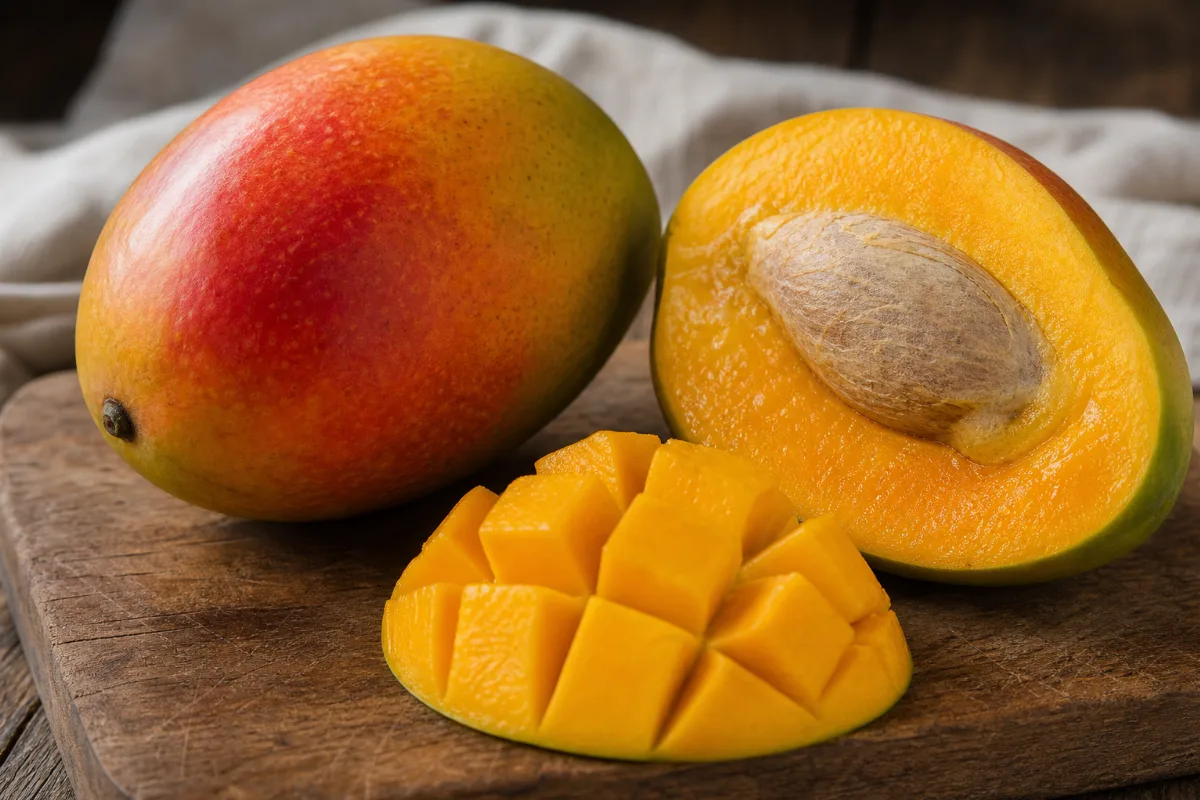
The mango (Mangifera indica) is the fruit of a tropical tree in the cashew family, the same family as poison ivy. People eat the orange flesh fresh, frozen, dried or as juice. The peel and the large stone are not usually eaten.
USDA data for raw mango: 60 kcal per 100 g. One cup of pieces (165 g) has about 99 kcal, 2.6 g fibre, 22.5 g sugars, 60 mg vitamin C, 89 micrograms vitamin A (RAE) and 277 mg potassium. One whole fruit without refuse (336 g) has about 122 mg vitamin C and 46 g of sugars. Dried mango has more sugar by weight.
What the research shows
Three small randomised trials tested fresh mango in people with prediabetes, type 2 diabetes or overweight. Fasting glucose or insulin resistance improved compared with a granola bar, bread or a control. Each trial had 23 to 48 people and the comparators were different.
Inflammation markers did not change in the 4-week trial. A larger feeding trial of 82 adults gave mango with avocado and found a small improvement in artery widening, but mango alone was not tested.
Gut bacteria, weight and cholesterol findings are small, secondary and very low certainty. Two of the trials were linked to the National Mango Board.
The fruit versus extracts
The human trials used fresh mango. Peel, seed and leaf extracts and mangiferin are different products and have been studied mostly in the lab and in animals. A 2023 review mixed them with fruit studies. Results for one form do not carry over to another.
Amounts
This page gives no amounts to eat. Ask a doctor, pharmacist or dietitian what is right for you, especially if you take medicine or have diabetes.
At a glance
Traditional uses history, not proof
- Eaten as a sweet fruit fresh, dried or as juice
- Mango and its by-products have traditional medicinal uses (2023 review); long use is not proof they work
Studied for research
- Vitamin C food, high certainty for the nutrient, no mango trial
- Blood sugar in prediabetes and type 2 diabetes, low certainty (small trials)
- Insulin sensitivity, low certainty; inflammation markers, no change
- Artery function (with avocado), low certainty
- Gut bacteria, weight and cholesterol, very low certainty
Main compounds
- Vitamin C (ascorbic acid)
- Beta-carotene
- Natural sugars and fibre
- Mangiferin (peel, mostly lab studies)
- Urushiol-like compounds in the peel (skin rash)
Common forms
- Fresh fruit (used in all the human trials)
- Frozen, canned or dried fruit
- Juice
- Peel, seed or leaf extracts and mangiferin (different products, mostly lab studies)
Research links: Daily mango intake in adults with prediabetes (Foods, 2025) · Two mango varieties versus white bread in type 2 diabetes (2025) · NHS: Food allergy · Research Library · Genes & Biomarkers Library
What it is and its history
- Accepted scientific name
- Mangifera indica
- Naming authority
- L. (GBIF accepted; usageKey 3190638)
- Common names
- Mango (English); Mango (Spanish)
- Family or group
- Anacardiaceae (the cashew family), which also includes cashew, pistachio, poison ivy and poison oak.
- Classification
- Plantae > Tracheophyta > Magnoliopsida > Sapindales > Anacardiaceae > Mangifera > Mangifera indica
- Native range
- Not verified from a source read.
- Habitat
- Not verified from a source read.
- What it looks like
- Roots: Not verified.; Stems: Not verified.; Leaves: Not verified.; Flowers: Not verified.; Fruit: The fruit is the food. USDA gives household portions of 1 cup of pieces (165 g) and one fruit without refuse (336 g); the stone is not eaten.
- Cultivation
- Not verified from a source read.
- Harvest and processing
- Eaten fresh, frozen, dried, canned or as juice. The trials used fresh mango; the Salmonella study used Tommy Atkins mango and the diabetes trial used Safeda and Dasheri.
- Look-alikes and adulterants
- Name: Mangosteen (Garcinia mangostana); Note: A different fruit despite the similar name. It has its own page.
Photographs
Traditional use and history history, not clinical proof
| Tradition or era | Documented use | Source |
|---|---|---|
| Culinary use | Mango is eaten as a sweet fruit fresh, dried or as juice (general knowledge; no historical source was read). | Not verified |
| Traditional medicine | A 2023 systematic review says mango and its by-products have traditional medicinal uses. It gives no detail in the abstract. | p38137871 |
Traditional use shows how it was used. It does not show that it works or is safe today.
What is inside, and how it may work
What it contains and how those compounds act in cells and animals. Laboratory and animal mechanisms are not proven effects in people.
Main compounds
| Compound | Family | Where it is concentrated | Activity studied | Level of evidence |
|---|---|---|---|---|
| Ascorbic acid (vitamin C) PubChem 54670067 | vitamin | Flesh USDA: 36.4 mg per 100 g; about 60 mg per cup of pieces | Essential nutrient that cannot be stored (NHS). 19 22 18 | Human data |
| Beta-carotene PubChem 5280489 | carotenoid | Flesh USDA: 640 micrograms per 100 g | Yellow-orange pigment. USDA lists vitamin A as 54 micrograms RAE per 100 g. No mango trial of beta-carotene was read. 20 22 | Composition only |
| Mangiferin PubChem 5281647 | xanthone (plant polyphenol) | Peel and other parts (per the existing summary; not re-verified) | Studied mostly in the lab and in animals. Appears in the 2023 review as one of the forms studied. 21 5 | Laboratory research |
| Urushiol-like compounds (5-resorcinols) | skin-sensitising plant compounds | Mainly the peel (case-report authors) | Overlap with poison ivy urushiol; linked to delayed skin rash in a sensitised person. 10 | Case report |
Mechanisms, receptors and pathways
| Target or pathway | Gene or receptor | What was found | Level |
|---|---|---|---|
| Insulin sensitivity | Nrf-2 (suggested) | The 2025 trial authors suggest mango may raise insulin sensitivity through Nrf-2 gene activity, but Nrf-2 expression was a non-significant twofold rise. 7 | Human data |
| Gut bacteria | Not specified | Mango changed gut bacteria diversity and some species versus cookies in a small crossover trial. 1 | Human data |
| Delayed skin allergy | T-cell mediated (type IV) | The case-report authors describe cross-sensitisation between urushiol and mango compounds as a T-cell reaction. 10 | Case report |
| Allergen cross-reaction | Mango profilin and chitinase | Patient serum bound mango proteins that resemble proteins in peanut, wheat, pistachio, cashew and hazelnut. 11 | Laboratory research |
Absorption, metabolism and elimination
- Absorption
- Not studied for mango.
- Distribution
- Not found.
- Metabolism
- Not found.
- Elimination
- Not found.
- Bioavailability
- Not established.
Isolated compounds versus whole extracts
The human trials used fresh whole mango (250 to 300 g a day, or two cups). Mango with avocado was one trial. Peel, seed and leaf extracts and mangiferin were studied mostly in the lab and animals and appear mixed into one review. Results for one form do not carry over to another.
Nutritional composition
Nutrition per USDA FoodData Central, 'Mangos, raw' (SR Legacy, FDC 169910). The figures come from the existing nutrient summary and food page, which record the USDA record as read; the USDA API itself was at its rate limit on 2026-10-25 so the numbers were not re-opened today. Per 100 g: 60 kcal, 1.6 g fibre, 13.7 g total sugars, 36.4 mg vitamin C, 43 micrograms folate (DFE), 0.11 mg copper, 0.12 mg vitamin B6, 54 micrograms vitamin A (RAE), 168 mg potassium, 640 micrograms beta-carotene. One cup of pieces (165 g): about 99 kcal, 2.6 g fibre, 22.5 g sugars, 60 mg vitamin C (about two thirds of the Daily Value), 71 micrograms folate, 0.18 mg copper, 0.20 mg vitamin B6, 89 micrograms vitamin A (RAE), 1.5 mg vitamin E, 6.9 micrograms vitamin K, 277 mg potassium. One whole fruit without refuse (336 g, USDA household portion): about 202 kcal, 5.4 g fibre, 46 g sugars and 122 mg vitamin C (scaled from the per-100 g values). NHS: 80 g of fresh fruit counts as one 5 A DAY portion. Mango is mainly a vitamin C, carotenoid and natural-sugar food. Dried mango has more sugar and calories by weight because water is removed. Values vary with variety and ripeness.
1 high certainty4 low certainty4 very low certainty
What was looked at
The 9 benefits and uses checked for Mango, each with how strong the evidence is. Tap one to open it.
- Vitamin C food (preventing scurvy)High certainty
- Blood sugar in prediabetes (daily fresh mango)Low certainty
- Blood sugar in type 2 diabetes (mango in place of bread)Low certainty
- Insulin sensitivity and inflammation (overweight, low-grade inflammation)Low certainty
- Artery function (mango with avocado)Low certainty
- Gut bacteria and bowel habitsVery low certainty
- Body weight and body compositionVery low certainty
- HDL cholesterolVery low certainty
- Antioxidant and other claims (mixed forms, mostly lab and animal)Very low certainty
Lab markers tracked in the studies
Fasting blood glucoseHbA1cInsulin resistance (HOMA-IR, QUICKI)Inflammation markers (IL-6, TNF-alpha, hs-CRP)Flow-mediated dilation (artery widening)Body weight and waistHDL cholesterolGut-lining proteins (ZO-1, claudin-2, occludin)Gut bacteria diversity
What is Mango good for?
The main studied uses and how strong the human evidence is for each. All human trials used fresh mango; they were small and short.
Benefits, one by one
Each card is a research question, not a promise. Tap a goal to filter. Open a card to see the studies, doses and limits.
Vitamin C food (preventing scurvy)
High certaintyMango is a good source of vitamin C, which the body cannot store and needs every day. USDA lists about 60 mg in one cup of pieces. No trial tested mango itself for scurvy.
2 studiesRaw mango as food. Cooking, drying and storage can change vitamin C; …
Studies, doses and limits
What the trials found
The NHS says vitamin C cannot be stored in the body and is needed in the diet daily. USDA lists 36.4 mg of vitamin C per 100 g of raw mango, or about 60 mg in 1 cup of pieces (165 g).
Results
Mango is one vitamin C food among many. No trial of mango for scurvy was found.
Effect sizes as reported
USDA: 36.4 mg per 100 g; about 60 mg per cup of pieces (165 g).
Why this rating
High for the general point that vitamin C foods meet vitamin C needs (health-agency guidance). There is no mango-specific trial, and a varied diet already supplies vitamin C. USDA figures were not re-opened today (summary-only).
Form and dose studied
Raw mango as food. Cooking, drying and storage can change vitamin C; this was not looked up for mango.
Who was studied
Anyone whose diet is very limited.
Limits
Not a trial of mango. Nutrient content varies with variety and ripeness.
Why researchers looked
Mango is best known as a sweet fruit with vitamin C, so people ask whether it helps meet vitamin C needs.
Traditional use
Mango is a tropical fruit eaten fresh, dried or as juice. Long use as food is not proof that it prevents or treats any condition.
Proposed mechanism Authoritative guidance
Vitamin C is an essential nutrient. The NHS says it cannot be stored in the body, so it is needed in the diet every day.
A proposed mechanism does not show that the effect happens in people.
Large vitamin C supplements (not food) can upset the stomach (NHS).
Blood sugar in prediabetes (daily fresh mango)
Low certaintyIn a small 24-week trial of adults with prediabetes, eating about one mango a day lowered fasting blood sugar compared with a granola bar of the same calories. Only 23 people finished.
1 studiesAbout 300 g of fresh mango a day for 24 weeks in the trial; trial det…
Studies, doses and limits
What the trials found
Randomised trial (Foods, 2025): about 300 g of fresh mango a day for 24 weeks versus an isocaloric granola bar. Twenty-three people finished (11 mango, 12 control). At week 24 the mango group had lower fasting glucose (p<0.02) and better insulin sensitivity by QUICKI (p=0.02); HOMA-IR showed only a trend (p=0.05). HbA1c stayed stable on mango and rose on the granola bar (p=0.02).
Results
Lower fasting glucose and steadier HbA1c on mango than on a granola bar, in a very small group.
Effect sizes as reported
Fasting glucose p<0.02; QUICKI p=0.02; HbA1c p=0.02 (group difference); mg/dL values not in the abstract.
Why this rating
One small randomised trial (23 completers). The comparator was a granola bar, so the result says mango did better than that snack, not that mango lowers sugar compared with no snack. Funder not named in the abstract.
Form and dose studied
About 300 g of fresh mango a day for 24 weeks in the trial; trial detail, not advice.
Who was studied
Adults with prediabetes.
Limits
Very small; one trial; granola bar comparator; no long-term outcomes such as diabetes diagnosis.
Why researchers looked
Mango is sweet, so people wonder whether it raises blood sugar. Researchers tested daily fresh mango in people with prediabetes.
Traditional use
Mango is a tropical fruit eaten fresh, dried or as juice. Long use as food is not proof that it prevents or treats any condition.
Proposed mechanism Hypothesis
Mango flesh supplies sugar, some fibre, vitamin C and carotenoids. Authors of the trials suggest fibre and plant compounds may matter, but none of the trials tested a mechanism directly.
A proposed mechanism does not show that the effect happens in people.
Mango has natural sugar (about 22 g per cup, USDA). People on diabetes medicine should ask their care team before changing fruit intake.
Blood sugar in type 2 diabetes (mango in place of bread)
Low certaintyIn an 8-week trial in India, 35 adults with type 2 diabetes ate mango instead of bread at breakfast within a calorie-restricted diet. Fasting sugar and HbA1c fell more on mango, but the groups were tiny.
1 studies250 g a day instead of bread, within a calorie-restricted diet; trial…
Studies, doses and limits
What the trials found
Randomised trial (J Diabetes Metab Disord, 2025): 250 g a day of Safeda or Dasheri mango (10 people each) versus white bread (15 people) for 8 weeks. Compared with bread, fasting glucose was lower by 26.9 and 36.1 mg/dL. HbA1c rose 0.3% on bread and fell 0.6% (Safeda) or 0.2% (Dasheri) on mango. HOMA-IR fell by 1.7 and 1.2 versus bread.
Results
Better fasting glucose, HbA1c and insulin resistance than with bread in a very small trial.
Effect sizes as reported
Fasting glucose -26.9 and -36.1 mg/dL versus bread; HbA1c -0.9 and -0.5 points versus bread.
Why this rating
A small randomised trial with 10 people per mango arm. Mango replaced bread, so the result may partly reflect removing bread. Two Indian varieties only. The abstract says authors had no competing interests; the funder is not named.
Form and dose studied
250 g a day instead of bread, within a calorie-restricted diet; trial detail, not advice.
Who was studied
Adults with type 2 diabetes.
Limits
Tiny groups; short; calorie-restricted diet; not a test of adding mango to a usual diet.
Why researchers looked
People with diabetes often ask whether they can eat mango. This trial swapped mango for bread rather than adding it.
Traditional use
Mango is a tropical fruit eaten fresh, dried or as juice. Long use as food is not proof that it prevents or treats any condition.
Proposed mechanism Hypothesis
Mango flesh supplies sugar, some fibre, vitamin C and carotenoids. Authors of the trials suggest fibre and plant compounds may matter, but none of the trials tested a mechanism directly.
A proposed mechanism does not show that the effect happens in people.
Do not change diabetes treatment or food on the strength of this one trial. Ask your care team.
Insulin sensitivity and inflammation (overweight, low-grade inflammation)
Low certaintyIn a 4-week trial of 48 adults with overweight and low-grade inflammation, eating two cups of mango a day lowered fasting insulin and insulin resistance, but inflammation markers did not change.
1 studies1 cup of mango twice a day for 4 weeks in the trial; trial detail, no…
Studies, doses and limits
What the trials found
Randomised parallel trial (Nutrients, 2025): 1 cup of mango twice a day versus a control product for 4 weeks in 48 adults who finished. IL-6, TNF-alpha and hs-CRP did not differ (p>0.05); fasting glucose did not differ. Fasting insulin was lower on mango (8.2 vs 15.3 microIU/mL, p=0.05), HOMA-IR 2.28 vs 4.67 (p=0.03) and disposition index 2.76 vs 5.37 (p=0.04).
Results
Better insulin measures on mango; no change in inflammation markers or fasting glucose.
Effect sizes as reported
HOMA-IR 2.28 vs 4.67 (p=0.03); insulin 8.2 vs 15.3 microIU/mL (p=0.05).
Why this rating
One 4-week randomised trial. The main inflammation question had a null result. Industry-linked: three authors received funds from, or research grants from, the National Mango Board.
Form and dose studied
1 cup of mango twice a day for 4 weeks in the trial; trial detail, not advice.
Who was studied
Adults with overweight or obesity and chronic low-grade inflammation.
Limits
Short; control product not described in the abstract; industry-linked; borderline p-values.
Why researchers looked
Researchers asked whether regular mango could improve how the body handles insulin in people with excess weight.
Traditional use
Mango is a tropical fruit eaten fresh, dried or as juice. Long use as food is not proof that it prevents or treats any condition.
Proposed mechanism Hypothesis
Mango flesh supplies sugar, some fibre, vitamin C and carotenoids. Authors of the trials suggest fibre and plant compounds may matter, but none of the trials tested a mechanism directly.
A proposed mechanism does not show that the effect happens in people.
Mango adds sugar and calories; people with diabetes should ask their care team.
Artery function (mango with avocado)
Low certaintyAn 8-week feeding trial in 82 adults with prediabetes gave one avocado plus one cup of mango a day. Artery widening improved by about 1% versus a low-fibre diet. Mango and avocado cannot be separated.
1 studies1 avocado and 1 cup of mango a day inside a set diet; trial detail, n…
Studies, doses and limits
What the trials found
Randomised parallel feeding study (J Am Heart Assoc, 2026): 82 adults, 1 avocado and 1 cup of mango a day for 8 weeks versus energy-matched low-fat, low-fibre foods. Flow-mediated vasodilation changed differently (effect -2.11 +/- 0.77%, P=0.008), rising about 1% on the fruit diet and falling on the control diet. Diastolic blood pressure differed (central P=0.07, brachial P=0.03), specifically in men. Other end points were generally not different (P>0.05).
Results
Better artery widening on the avocado-mango diet; mostly no other differences.
Effect sizes as reported
Flow-mediated vasodilation effect -2.11% (P=0.008).
Why this rating
One 8-week randomised trial. Mango and avocado were given together, so mango alone is untested. Industry-linked: two authors received funding from the Hass Avocado Board and the National Mango Board. Registered as NCT05353790.
Form and dose studied
1 avocado and 1 cup of mango a day inside a set diet; trial detail, not advice.
Who was studied
Adults with prediabetes.
Limits
Combination food; control was low-fibre; artery function is a marker, not heart attacks or strokes.
Why researchers looked
Low fruit intake is a risk factor for heart and metabolic disease, so researchers tested adding fruit.
Traditional use
Mango is a tropical fruit eaten fresh, dried or as juice. Long use as food is not proof that it prevents or treats any condition.
Proposed mechanism Hypothesis
Mango flesh supplies sugar, some fibre, vitamin C and carotenoids. Authors of the trials suggest fibre and plant compounds may matter, but none of the trials tested a mechanism directly.
A proposed mechanism does not show that the effect happens in people.
None specific.
Gut bacteria and bowel habits
Very low certaintyIn a 12-week crossover trial of 27 adults, 100 calories of mango a day changed some gut bacteria measures versus low-fat cookies. Bowel habits barely changed.
2 studies100 kcal of fresh mango a day in the trial; trial detail, not advice.
Studies, doses and limits
What the trials found
Randomised crossover trial (Food Sci Nutr, 2023): 27 overweight or obese adults ate 100 kcal a day of mango or low-fat cookies for 12 weeks each, with a 4-week washout. Gut bacteria diversity was higher on mango at week 4 and the overall make-up differed at week 12. Gut-lining proteins (ZO-1, claudin-2, occludin) did not differ. There was a slight rise in the amount of bowel movement with mango; frequency, consistency, strain, pain and constipation did not differ significantly.
Results
Some bacteria changed; gut-lining markers and symptoms did not.
Effect sizes as reported
No effect sizes in the abstract.
Why this rating
One small crossover trial. Changes in bacteria counts are lab markers, and the cookie comparator is not a fruit. No symptom benefit was shown.
Form and dose studied
100 kcal of fresh mango a day in the trial; trial detail, not advice.
Who was studied
Overweight or obese adults.
Limits
Small; the authors call it a reason for further study.
Why researchers looked
Mango has some fibre, so researchers asked whether it changes gut bacteria.
Traditional use
Mango is a tropical fruit eaten fresh, dried or as juice. Long use as food is not proof that it prevents or treats any condition.
Proposed mechanism Hypothesis
Fibre and plant compounds may feed gut bacteria. The authors do not show this directly.
A proposed mechanism does not show that the effect happens in people.
Mango is listed as a high-FODMAP fruit by Monash and may cause symptoms in some people with irritable bowel syndrome.
Body weight and body composition
Very low certaintyTwo small trials report changes in weight or body fat measures with daily mango, but these were secondary results and the comparators differ. No trial was designed to test weight loss.
2 studiesAs in the two trials; trial detail, not advice.
Studies, doses and limits
What the trials found
In the 24-week prediabetes trial, body fat percentage fell borderline (p=0.05) and fat-free mass rose (p<0.03) on mango versus a granola bar. In the 8-week diabetes trial, weight rose 1.9 kg on bread and fell 0.5 and 0.4 kg on mango, and waist circumference fell, within a calorie-restricted diet.
Results
Small differences versus the comparator; not a weight-loss trial.
Effect sizes as reported
Body fat p=0.05; fat-free mass p<0.03; weight about 2.4 and 2.1 kg lower than bread group change.
Why this rating
Secondary outcomes from small trials, with comparators (granola bar, bread) that drive the difference.
Form and dose studied
As in the two trials; trial detail, not advice.
Who was studied
Adults with prediabetes or type 2 diabetes.
Limits
Not designed for weight outcomes; very small groups.
Why researchers looked
Mango is sweet and calorie-containing, so people ask whether it affects weight.
Traditional use
Mango is a tropical fruit eaten fresh, dried or as juice. Long use as food is not proof that it prevents or treats any condition.
Proposed mechanism Hypothesis
Mango flesh supplies sugar, some fibre, vitamin C and carotenoids. Authors of the trials suggest fibre and plant compounds may matter, but none of the trials tested a mechanism directly.
A proposed mechanism does not show that the effect happens in people.
Mango has about 99 kcal per cup (USDA); dried mango is more concentrated by weight.
HDL cholesterol
Very low certaintyIn the 8-week diabetes trial, HDL ('good') cholesterol rose in both mango groups compared with bread. Other lipid results were not reported in the abstract.
1 studies250 g mango a day instead of bread; trial detail, not advice.
Studies, doses and limits
What the trials found
Randomised trial (J Diabetes Metab Disord, 2025): 35 adults with type 2 diabetes; HDL cholesterol increased significantly in both mango groups versus bread.
Results
Higher HDL in a very small trial; no other lipid result in the abstract.
Effect sizes as reported
No numbers in the abstract.
Why this rating
A secondary outcome from one tiny trial, with no numbers in the abstract.
Form and dose studied
250 g mango a day instead of bread; trial detail, not advice.
Who was studied
Adults with type 2 diabetes.
Limits
Very small; bread swap.
Why researchers looked
Researchers checked blood fats as a secondary outcome.
Traditional use
Mango is a tropical fruit eaten fresh, dried or as juice. Long use as food is not proof that it prevents or treats any condition.
Proposed mechanism Hypothesis
Mango flesh supplies sugar, some fibre, vitamin C and carotenoids. Authors of the trials suggest fibre and plant compounds may matter, but none of the trials tested a mechanism directly.
A proposed mechanism does not show that the effect happens in people.
None specific.
Antioxidant and other claims (mixed forms, mostly lab and animal)
Very low certaintyA 2023 systematic review of 13 studies called mango fruit, by-products and mangiferin 'favorable' for blood sugar, blood fats and more. Most of these studies were lab or animal work or used extracts, not the fruit.
1 studiesFruit, puree, extracts and mangiferin; not comparable.
Studies, doses and limits
What the trials found
Systematic review (Life, 2023): 13 studies met inclusion criteria across PubMed, EMBASE, Cochrane and Google Scholar. Forms ranged from fresh slices and puree to by-products, leaf extract, powder and mangiferin. The authors report favourable effects on glycemic control, lipids, food intake, mood, exercise performance, endothelial function and respiratory infections. The abstract gives no numbers.
Results
Mixed forms and mixed study types; no numbers in the abstract.
Effect sizes as reported
No numbers in the abstract.
Why this rating
The review mixes whole fruit, extracts and animal or lab work, so it cannot show what eating mango does. Treat extract and supplement results as a different product.
Form and dose studied
Fruit, puree, extracts and mangiferin; not comparable.
Who was studied
Mixed human, animal and lab studies.
Limits
Mixed forms; no per-study certainty in the abstract.
Why researchers looked
Mango peel, seed and leaf contain plant compounds such as mangiferin that are often studied in the lab.
Traditional use
Mango is a tropical fruit eaten fresh, dried or as juice. Long use as food is not proof that it prevents or treats any condition.
Proposed mechanism Laboratory research
Mangiferin and other plant compounds are antioxidants in the lab. Whether eating mango does this in people is not shown.
A proposed mechanism does not show that the effect happens in people.
Concentrated peel or leaf extracts are not the same as the fruit and were not assessed for safety here.
Connections to the rest of health
How Mango connects to the rest of our health knowledge graph. Every link says what kind of connection it is. A safety link (for example to the liver) is a warning, not a benefit. A study that merely mentions a topic never creates a benefit link.
Explore every connection: goals, body systems, organs, symptoms, genes
A. Wellness goals
| Connected to | Kind of connection | Evidence status | Context | Studies |
|---|---|---|---|---|
| Blood Sugar Balance | Low certainty | Blood sugar in prediabetes (daily fresh mango): In a small 24-week trial of adults with prediabetes, eating about one mango a day lowered fasting blood sugar compared with a granola bar of the same calories. Only 23 people finished. Blood sugar in type 2 diabetes (mango in place of bread): In an 8-week trial in India, 35 adults with type 2 diabetes ate mango instead of bread at breakfast within a calorie-restricted diet. Fasting sugar and HbA1c fell more on mango, but the groups were tiny. | 2 4 7 | |
| Inflammation Balance | Low certainty | Insulin sensitivity and inflammation (overweight, low-grade inflammation): In a 4-week trial of 48 adults with overweight and low-grade inflammation, eating two cups of mango a day lowered fasting insulin and insulin resistance, but inflammation markers did not change. | 7 | |
| Healthy Circulation | Low certainty | Artery function (mango with avocado): An 8-week feeding trial in 82 adults with prediabetes gave one avocado plus one cup of mango a day. Artery widening improved by about 1% versus a low-fibre diet. Mango and avocado cannot be separated. | 8 | |
| Digestive Support | Very low certainty | Gut bacteria and bowel habits: In a 12-week crossover trial of 27 adults, 100 calories of mango a day changed some gut bacteria measures versus low-fat cookies. Bowel habits barely changed. | 1 15 | |
| Weight Management | Very low certainty | Body weight and body composition: Two small trials report changes in weight or body fat measures with daily mango, but these were secondary results and the comparators differ. No trial was designed to test weight loss. | 2 4 | |
| Cholesterol Balance | Very low certainty | HDL cholesterol: In the 8-week diabetes trial, HDL ('good') cholesterol rose in both mango groups compared with bread. Other lipid results were not reported in the abstract. | 4 | |
| Cellular Protection | Very low certainty | Antioxidant and other claims (mixed forms, mostly lab and animal): A 2023 systematic review of 13 studies called mango fruit, by-products and mangiferin 'favorable' for blood sugar, blood fats and more. Most of these studies were lab or animal work or used extracts, not the fruit. | 5 |
B. Body systems
| Connected to | Kind of connection | Evidence status | Context | Studies |
|---|---|---|---|---|
| Immune System | Biological association | High certainty | Studied for: Vitamin C food (preventing scurvy) Studied for: Antioxidant and other claims (mixed forms, mostly lab and animal) | 18 22 5 |
| Integumentary System | Biological association | High certainty | Studied for: Vitamin C food (preventing scurvy) | 18 22 |
| Endocrine System | Biological association | Low certainty | Studied for: Blood sugar in prediabetes (daily fresh mango) Studied for: Blood sugar in type 2 diabetes (mango in place of bread) | 2 4 7 |
| Blood Sugar Support | Biological association | Low certainty | Studied for: Blood sugar in prediabetes (daily fresh mango) Studied for: Blood sugar in type 2 diabetes (mango in place of bread) | 2 4 7 |
| Cardiovascular System | Biological association | Low certainty | Studied for: Artery function (mango with avocado) Studied for: HDL cholesterol | 8 4 |
| Digestive System | Biological association | Very low certainty | Studied for: Gut bacteria and bowel habits | 1 15 |
C. Body parts and organs
| Connected to | Kind of connection | Evidence status | Context | Studies |
|---|---|---|---|---|
| Skin | Adverse effect or risk | Documented risk | Delayed rash in a person with earlier poison ivy exposure. Preparation or compound: Mango peel and sap |
10 |
| Immune system (allergy) | Adverse effect or risk | Case report and lab | Rare anaphylaxis; lab cross-reaction with cashew and pistachio proteins. Preparation or compound: Mango fruit |
3 11 |
E. Health conditions
| Connected to | Kind of connection | Evidence status | Context | Studies |
|---|---|---|---|---|
| Contact dermatitis | Adverse effect or risk | Documented risk | Mango peel and sap can cause a delayed rash in sensitised people (case report). Preparation or compound: Mango peel and sap |
10 |
I. Biomarkers
| Connected to | Kind of connection | Evidence status | Context | Studies |
|---|---|---|---|---|
| Fasting blood glucose | Biological association | Low certainty | Measured in trials: mixed. A lab change is not the same as a health benefit. | 2 4 7 |
| HbA1c | Biological association | Low certainty | Measured in trials: lowered. A lab change is not the same as a health benefit. | 2 4 |
| Insulin resistance (HOMA-IR, QUICKI) | Biological association | Low certainty | Measured in trials: lowered. A lab change is not the same as a health benefit. | 7 2 4 |
| Inflammation markers (IL-6, TNF-alpha, hs-CRP) | Biological association | Low certainty | Measured in trials: no clear change. A lab change is not the same as a health benefit. | 7 |
| Flow-mediated dilation (artery widening) | Biological association | Low certainty | Measured in trials: raised. A lab change is not the same as a health benefit. | 8 |
| Body weight and waist | Biological association | Very low certainty | Measured in trials: mixed. A lab change is not the same as a health benefit. | 4 2 |
| HDL cholesterol | Biological association | Very low certainty | Measured in trials: raised. A lab change is not the same as a health benefit. | 4 |
| Gut-lining proteins (ZO-1, claudin-2, occludin) | Biological association | Very low certainty | Measured in trials: no clear change. A lab change is not the same as a health benefit. | 1 |
| Gut bacteria diversity | Biological association | Very low certainty | Measured in trials: raised. A lab change is not the same as a health benefit. | 1 |
K. Biological pathways
L. Active compounds
| Connected to | Kind of connection | Evidence status | Context | Studies |
|---|---|---|---|---|
| Ascorbic acid (vitamin C) | Biological association | Human | Essential nutrient that cannot be stored (NHS). Preparation or compound: Flesh |
19 22 18 |
| Beta-carotene | Biological association | Composition only | Yellow-orange pigment. USDA lists vitamin A as 54 micrograms RAE per 100 g. No mango trial of beta-carotene was read. Preparation or compound: Flesh |
20 22 |
| Mangiferin | Biological association | In vitro | Studied mostly in the lab and in animals. Appears in the 2023 review as one of the forms studied. Preparation or compound: Peel and other parts (per the existing summary; not re-verified) |
21 5 |
| Urushiol-like compounds (5-resorcinols) | Biological association | Case report | Overlap with poison ivy urushiol; linked to delayed skin rash in a sensitised person. Preparation or compound: Mainly the peel (case-report authors) |
10 |
Each connection is stored with the ingredient, the connected record, the kind of connection, the evidence status, the supporting studies, the preparation or compound involved, and a review date (last reviewed October 25, 2026).
The evidence
The research centre for Mango. Every record here was checked against PubMed or the publisher's page; we never list a study we have not verified.
Evidence by outcome
Bars show how many studies we found for each outcome, not how well it works. People are added up across trials only (reviews are not added, to avoid double counting).
How we rate evidence
High certainty
Several well-run trials or reviews agree; further research is unlikely to change the picture much.
Moderate certainty
Good trials point the same way, but some doubt remains.
Low certainty
Small, short or inconsistent trials. The finding could change with better research.
Very low certainty
Very little or very weak human data. Treat as a possibility only.
Mixed findings
Trials or reviews disagree with each other.
Not enough evidence
Not enough human research to say either way.
Evidence against
Good research found no benefit, or found harm.
We take the reviewers' own risk-of-bias and GRADE statements where they exist, and otherwise judge from study size, design, consistency, directness and whether a product matches what is sold. Many publications do not make evidence high. Method note: We started from our existing mango summary, then re-read each study on PubMed and searched for safety reports. Only abstracts were read for studies. Items we could not verify are flagged in the research gaps.
Study library: every study we checked 22
| Study | Design | People | Product, dose, length | Result |
|---|---|---|---|---|
| Asuncion 2023 The effects of fresh mango consumption on gut health and microbiome - Randomized controlled trial. Food Sci Nutr · PMID 37051355 · DOI |
Crossover trial |
27 27 overweight or obese adults |
Fresh mango Fruit flesh 100 kcal a day; trial detail, not advice 12 weeks per arm, 4-week washout · vs Low-fat cookies (100 kcal a day) |
Alpha diversity of gut bacteria was higher on mango than on cookies at week 4, and the overall make-up differed at week 12. Some bacteria rose and Prevotella copri fell on mango. Gut-lining protein levels did not differ. There was a slight rise in the amount of bowel movement on mango, with no significant difference in frequency, consistency, strain, pain or constipation. No effect sizes in the abstract (Not given in the abstract) Methods, limits and fundingOutcomes: Gut bacteria diversity and types, gut-lining proteins (ZO-1, claudin-2, occludin), bowel habits Limitations: Small crossover study. Bacteria changes are lab markers, not symptoms. The comparator was a cookie, not another fruit. Funding and conflicts: Authors declare no conflict of interest. Funder not stated in the abstract. Read: abstract |
| Basiri 2025 Daily Mango Intake Improves Glycemic and Body Composition Outcomes in Adults with Prediabetes: A Randomized Controlled Study. Foods · PMID 40941087 · DOI |
Controlled trial |
23 Adults with prediabetes; 23 completed (11 mango, 12 control) |
Fresh mango Fruit flesh About 300 g a day; trial detail, not advice 24 weeks · vs Isocaloric granola bar |
At week 24 the mango group had lower fasting glucose (p<0.02) and better insulin sensitivity by QUICKI (p=0.02) than the granola bar group. HOMA-IR showed a trend (p=0.05). HbA1c stayed stable on mango and rose on the granola bar (p=0.02). Body fat percentage fell borderline (p=0.05) and fat-free mass rose (p<0.03) in the mango group. Fasting glucose p<0.02; QUICKI p=0.02; HbA1c p=0.02 (group difference) (Not given in the abstract) Methods, limits and fundingOutcomes: Fasting glucose, insulin sensitivity (QUICKI), HOMA-IR, HbA1c, body fat, fat-free mass Limitations: Only 23 people finished. Comparator was a granola bar, not no-treatment. Actual numbers in mg/dL are not in the abstract. Funding and conflicts: Authors declare no conflicts of interest; the funders had no role in design, data or interpretation. The abstract does not name the funder, so industry funding was not ruled out. Read: abstract |
| Dore 2026 Food-dependent exercise-induced anaphylaxis to mango. J Allergy Clin Immunol Glob · PMID 42281558 · DOI |
Case report |
1 One reported patient |
Mango (eaten, then exercise) Fruit |
The authors call this a rare case of mango-dependent exercise-induced anaphylaxis and say it shows the role of cofactors and the difficulty of identifying uncommon triggers. The abstract is one sentence and gives no patient detail. Single case (n/a) Methods, limits and fundingOutcomes: Anaphylaxis Limitations: One case; only a one-sentence abstract was available. Funding and conflicts: Authors declare no relevant conflicts of interest. Read: abstract |
| Kehar 2025 Glycemic, lipid, anthropometric and body composition responses to two Mango varieties versus white bread in people with type 2 diabetes: an 8-week randomised controlled trial. J Diabetes Metab Disord · PMID 40761695 · DOI |
Controlled trial |
35 35 adults with type 2 diabetes: Safeda mango n=10, Dasheri mango n=10, bread n=15 |
Fresh mango (Safeda or Dasheri variety) Fruit flesh 250 g a day in place of bread at breakfast, within a calorie-restricted diet; trial detail, not advice 8 weeks · vs White bread |
Compared with bread, fasting glucose was lower by 26.9 mg/dL (Safeda) and 36.1 mg/dL (Dasheri). HbA1c rose 0.3% on bread and fell 0.6% (Safeda) or 0.2% (Dasheri) on mango. HOMA-IR fell by 1.7 and 1.2 versus bread. Body weight rose 1.9 kg on bread and fell 0.5 and 0.4 kg on mango. Waist circumference fell and HDL cholesterol rose in both mango groups. Fasting glucose -26.9 and -36.1 mg/dL versus bread; HbA1c -0.9 and -0.5 points versus bread (Not given in the abstract) Methods, limits and fundingOutcomes: Fasting glucose, HbA1c, HOMA-IR, weight, skinfolds, waist, lipids Limitations: Very small groups (10 per mango arm). Mango replaced bread inside a calorie-restricted diet, so the result may partly reflect what was removed. Two Indian varieties only. Funding and conflicts: Authors declare no competing interests. Funder not stated in the abstract. Read: abstract |
| Minniti 2023 Mangifera indica L., By-Products, and Mangiferin on Cardio-Metabolic and Other Health Conditions: A Systematic Review. Life (Basel) · PMID 38137871 · DOI |
Systematic review mixed |
13 13 studies (animal, lab and human) of mango fruit, puree, by-products, leaf extract, powder and mangiferin |
Mixed: mango slices, puree, by-products, leaf extract, fruit powder, mangiferin Fruit, peel, seed, leaf Varied Varied · vs Varied |
The authors report favorable effects across the 13 studies, including better glycemic control and lipids, lower food intake, higher mood scores, better exercise performance and endothelial function, and fewer respiratory infections. The abstract says in vivo and in vitro studies were included and gives no numbers. No numbers in the abstract (Not given in the abstract) Methods, limits and fundingOutcomes: Glycemic control, plasma lipids, food intake, mood, exercise performance, endothelial function, respiratory infections Limitations: Mixes fruit with extracts and by-products, and includes lab and animal work. The abstract gives no per-study certainty rating. Funding and conflicts: Authors declare no conflict of interest. Read: abstract |
| Norwood 2015 A Comprehensive Review of Potential Warfarin-Fruit Interactions. J Pharm Pract · PMID 25112306 · DOI |
Narrative review |
23 23 citations (15 case reports and 7 controlled trials) on warfarin and fruit products |
Fruit products including mango Fruit Varied Varied · vs Varied |
Most cases involved cranberry. Mango, pomegranate juice, avocado, grapefruit juice and papain were also implicated in suspected interactions. The authors say it is difficult to judge their relevance as scientific evidence is scarce, and suggest clinicians ask about recent mango, pomegranate juice and avocado when INR is unstable. Not applicable (Not applicable) Methods, limits and fundingOutcomes: Reports of warfarin-fruit interactions Limitations: Review of mostly case reports; the abstract does not describe individual mango cases. Funding and conflicts: No conflict statement in the record. Read: abstract |
| Pett 2025 Mango Consumption Is Associated with Increased Insulin Sensitivity in Participants with Overweight/Obesity and Chronic Low-Grade Inflammation. Nutrients · PMID 39940348 · DOI |
Controlled trial |
48 48 adults with overweight or obesity and chronic low-grade inflammation (mean BMI 30.5) |
Fresh mango Fruit flesh 1 cup twice a day; trial detail, not advice 4 weeks · vs A control product (not described in the abstract) |
Inflammation markers did not differ (p>0.05) and fasting glucose did not differ. Fasting insulin was lower on mango (8.2 vs 15.3 microIU/mL, p=0.05). HOMA-IR was 2.28 vs 4.67 (p=0.03) and disposition index 2.76 vs 5.37 (p=0.04), both better on mango. HOMA-IR 2.28 vs 4.67 (p=0.03); insulin 8.2 vs 15.3 microIU/mL (p=0.05) (Not given in the abstract) Methods, limits and fundingOutcomes: Inflammation markers (IL-6, TNF-alpha, hs-CRP), fasting glucose, insulin, HOMA-IR, disposition index Limitations: Four weeks only. The authors' own title says 'associated with'. Control product is not described in the abstract. Mechanism (Nrf-2 gene activity) was a non-significant twofold rise. Funding and conflicts: Industry-linked: three authors received funds to review literature for the National Mango Board and have received research grants from it. Read: abstract |
| Preiss 2026 Effects of Increasing Total Fruit Intake With Avocado and Mango on Endothelial Function and Cardiometabolic Risk Factors in Adults With Prediabetes. J Am Heart Assoc · PMID 41698896 · DOI |
Controlled trial |
82 82 adults with prediabetes (mean age 45, BMI 30) |
Fresh mango plus avocado (combined diet) Fruit flesh 1 avocado and 1 cup of mango a day inside a weekly set diet; trial detail, not advice 8 weeks · vs Energy-matched low-fat, low-fiber foods |
Flow-mediated vasodilation changed differently between diets (effect -2.11 +/- 0.77%, P=0.008): it rose about 1% on the avocado-mango diet and fell on the control diet. Diastolic blood pressure differed (central P=0.07, brachial P=0.03), specifically in men. Other end points were generally not different (P>0.05). Total fruit, fiber, vitamin C and monounsaturated fat intake rose on the avocado-mango diet. Flow-mediated vasodilation effect -2.11% (P=0.008) (SE 0.77 given; no interval in the abstract) Methods, limits and fundingOutcomes: Flow-mediated vasodilation (artery widening), blood pressure, pulse-wave velocity, blood markers Limitations: Mango and avocado were given together, so the mango effect cannot be separated. Control was a low-fiber diet. Outcomes were artery function, not heart attacks or strokes. Funding and conflicts: Industry-linked: two authors received research funding from the Hass Avocado Board and the National Mango Board. Registration: ClinicalTrials.gov NCT05353790 Read: abstract |
| Rattanasuwan 2025 Metabolic insights into the warfarin-mango interaction: A pilot study integrating clinical observations and metabolomics. ADMET DMPK · PMID 40585417 · DOI |
Other |
Patients on long-term warfarin (over 6 months) whose INR went above the target range after eating mango (number not given in the abstract) | Mango eaten by patients on warfarin Fruit Mango stopped for 2 weeks · vs Same patients after stopping mango |
The abstract says reports exist of raised INR after mango consumption, and that in these patients INR returned to the target range after two weeks without mango. The authors suggest a lower glycerol 3-phosphate level may be involved, and say the mechanism is unclear. No numbers in the abstract (Not given in the abstract) Methods, limits and fundingOutcomes: INR (blood clotting test) and blood metabolite pattern Limitations: Pilot, before-and-after design, small, number not stated in the abstract, no control group. It cannot prove mango caused the rise. Funding and conflicts: Authors declare no competing interests. Read: abstract |
| Yoo 2019 Mango Dermatitis After Urushiol Sensitization. Clin Pract Cases Emerg Med · PMID 31763588 · DOI |
Case report |
1 One otherwise healthy man with a remote history of poison ivy exposure |
Mango fruit (handling or contact) Fruit and peel |
The authors describe a delayed but significant skin reaction to mango fruit in a man with earlier poison ivy exposure. They say prior exposure to poison ivy and poison oak, which contain urushiol, appears to be a risk factor, that urushiol overlaps with 5-resorcinol found mainly in mango peel, and that this is a T-cell mediated (type IV) reaction. Single case (n/a) Methods, limits and fundingOutcomes: Skin reaction Limitations: One case. How common this is was not stated. Funding and conflicts: Authors disclosed no conflicts; views are their own. Read: abstract |
| Zhao 2026 Identification of Mango Cross-Reactive Allergens and Cross-Reactive Linear Epitopes Using Serum from Patients with Mango Allergy. Int J Mol Sci · PMID 42278202 · DOI |
Laboratory research human serum (in vitro) |
Blood serum from mango-allergic patients (number not given in the abstract) | Mango proteins tested against patient serum Fruit |
The authors say mango is not one of the nine major allergenic foods listed by the FDA but cases of mango allergy are growing. Serum from mango-allergic patients bound IgE to proteins from peanut, wheat, cashew, pistachio and hazelnut, with binding to wheat and hazelnut not reported before. Shared protein sequences were found between mango profilin and peanut Ara h 5. Not applicable (Not applicable) Methods, limits and fundingOutcomes: IgE binding to mango and other food proteins Limitations: Laboratory binding test, not a food challenge. It shows possible cross-reaction, not that people react when they eat these foods. Funding and conflicts: Authors declare no conflicts of interest. Read: abstract |
| da Silva 2026 Modeling of Salmonella enterica in the pulp and on the outer rind of Tommy Atkins mango (Mangifera indica) and transfer during sanitization of fruit. Braz J Microbiol · PMID 41886208 · DOI |
Laboratory research bacteria (lab) |
Laboratory models on Tommy Atkins mango peel and pulp | Salmonella enterica on mango Peel and pulp 7 to 35 C storage temperatures Lab growth curves |
No significant differences in growth between peel and pulp. Both supported Salmonella growth over a wide temperature range (7 to 35 C). Spread from inoculated to clean fruits was low, and a hot-water treatment with chlorine reduced spread more than hot water alone. Not applicable (Not applicable) Methods, limits and fundingOutcomes: Salmonella growth and spread between fruits Limitations: Lab model, one variety, deliberate inoculation. It shows growth is possible, not how often it happens. Funding and conflicts: Authors declare no conflicts of interest. Read: abstract |
| s-fda-produce FDA: Selecting and serving produce safely · Source |
Health agency n/a |
Methods, limits and fundingRead: full-text | ||
| s-gbif-mangifera-indica GBIF species match: Mangifera indica · Source |
Reference database n/a |
Methods, limits and fundingRead: full-text | ||
| s-monash-fodmap Monash University: High and low FODMAP foods · Source |
Health agency n/a |
Methods, limits and fundingRead: full-text | ||
| s-nhs-5aday NHS: 5 A DAY, what counts · Source |
Health agency n/a |
Methods, limits and fundingRead: full-text | ||
| s-nhs-food-allergy NHS: Food allergy · Source |
Health agency n/a |
Methods, limits and fundingRead: full-text | ||
| s-nhs-vitc NHS: Vitamin C · Source |
Health agency n/a |
Methods, limits and fundingRead: full-text | ||
| s-pubchem-ascorbic-acid PubChem: L-Ascorbic acid (CID 54670067) · Source |
Reference database n/a |
Methods, limits and fundingRead: full-text | ||
| s-pubchem-beta-carotene PubChem: Beta-carotene (CID 5280489) · Source |
Reference database n/a |
Methods, limits and fundingRead: full-text | ||
| s-pubchem-mangiferin PubChem: Mangiferin (CID 5281647) · Source |
Reference database n/a |
Methods, limits and fundingRead: full-text | ||
| s-usda-fdc-169910 USDA FoodData Central: Mangos, raw (SR Legacy, FDC 169910) · Source |
Reference database n/a |
Methods, limits and fundingRead: summary-only |
What we do not know yet
- No trial has tested mango itself for scurvy or any illness outcome such as diabetes diagnosis, heart attack or stroke.
- The blood sugar trials were small, short and compared against different foods (granola bar, bread, a control product).
- Two of the trials were linked to the National Mango Board, and the artery trial was also linked to the Hass Avocado Board.
- Pregnancy, breastfeeding, young children and drug interactions other than warfarin were not found in the sources read.
- USDA nutrition figures were carried over from earlier verified work and were not re-opened today.
How new research is added
New studies are found by a saved PubMed search and placed in a review queue before the page changes.
Lab markers
What changed in blood or saliva tests during trials. A changed number is not the same as feeling or being healthier, and we give no "normal ranges".
Metabolic 4
Fasting blood glucose
Mixed results in trials
Blood sugar after not eating overnight.
Low certaintyResults and what it means
Why it was measured
A basic marker of blood sugar control.
Statistical vs. clinical meaning
Two small trials improved, one found no change. A marker is not the same as a health outcome.
Safety implication
None specific.
| Study | Result | People | Product |
|---|---|---|---|
| 2 | Lower on mango than granola bar at week 24 (p<0.02) | 23 adults with prediabetes | About 300 g mango a day, 24 weeks |
| 4 | Lower than with bread by 26.9 and 36.1 mg/dL | 35 adults with type 2 diabetes | 250 g mango a day instead of bread, 8 weeks |
| 7 | No significant difference | 48 adults with overweight and low-grade inflammation | 2 cups mango a day, 4 weeks |
HbA1c
Lowered in trials
Average blood sugar over the past two to three months.
Low certaintyResults and what it means
Why it was measured
Used to follow long-term blood sugar control.
Statistical vs. clinical meaning
Both are small trials; the comparators differ.
Safety implication
None specific.
Body weight and waist
Mixed results in trials
Weight and waist circumference.
Very low certaintyResults and what it means
Why it was measured
Used to follow body size.
Statistical vs. clinical meaning
Secondary outcomes; small trials.
Safety implication
None specific.
HDL cholesterol
Raised in trials
The cholesterol carried in HDL particles.
Very low certaintyResults and what it means
Why it was measured
One part of a blood fat panel.
Statistical vs. clinical meaning
One tiny trial with no numbers in the abstract.
Safety implication
None specific.
| Study | Result | People | Product |
|---|---|---|---|
| 4 | Increased significantly in both mango groups versus bread | 35 adults with type 2 diabetes | 250 g mango instead of bread, 8 weeks |
Other 5
Insulin resistance (HOMA-IR, QUICKI)
Lowered in trials
Calculated scores of how well the body responds to insulin.
Low certaintyResults and what it means
Why it was measured
Insulin resistance often comes before type 2 diabetes.
Statistical vs. clinical meaning
Consistent direction across three small trials, one of them industry-linked.
Safety implication
None specific.
| Study | Result | People | Product |
|---|---|---|---|
| 7 | HOMA-IR 2.28 vs 4.67 (p=0.03) on mango versus control | 48 adults with overweight and low-grade inflammation | 2 cups mango a day, 4 weeks |
| 2 | QUICKI better (p=0.02); HOMA-IR trend only (p=0.05) | 23 adults with prediabetes | About 300 g mango a day, 24 weeks |
| 4 | HOMA-IR fell by 1.7 and 1.2 versus bread | 35 adults with type 2 diabetes | 250 g mango instead of bread, 8 weeks |
Inflammation markers (IL-6, TNF-alpha, hs-CRP)
No clear change in trials
Blood proteins that rise with inflammation.
Low certaintyResults and what it means
Why it was measured
Chronic low-grade inflammation is linked to insulin resistance.
Statistical vs. clinical meaning
One null result. Mango did not lower these markers in this trial.
Safety implication
None specific.
| Study | Result | People | Product |
|---|---|---|---|
| 7 | No difference at 4 weeks (p>0.05) | 48 adults with overweight and low-grade inflammation | 2 cups mango a day, 4 weeks |
Flow-mediated dilation (artery widening)
Raised in trials
How much an artery widens after a short blockage of blood flow.
Low certaintyResults and what it means
Why it was measured
A marker of how well blood vessel lining works.
Statistical vs. clinical meaning
One trial; mango and avocado together. Not the same as fewer heart attacks.
Safety implication
None specific.
| Study | Result | People | Product |
|---|---|---|---|
| 8 | Effect -2.11 +/- 0.77% (P=0.008): about +1% on avocado-mango, falling on control | 82 adults with prediabetes | 1 avocado and 1 cup mango a day, 8 weeks |
Gut-lining proteins (ZO-1, claudin-2, occludin)
No clear change in trials
Blood levels of proteins linked to gut-lining tightness.
Very low certaintyResults and what it means
Gut bacteria diversity
Raised in trials
The variety of bacteria in stool samples.
Very low certaintyResults and what it means
Why it was measured
Higher variety is often discussed as a sign of a healthy gut, though what it means for health is not settled.
Statistical vs. clinical meaning
A lab marker that does not by itself show a health benefit.
Safety implication
None specific.
| Study | Result | People | Product |
|---|---|---|---|
| 1 | Alpha diversity higher than with cookies at week 4; overall make-up differed at week 12 | 27 overweight or obese adults | 100 kcal mango a day, 12 weeks |
Safety
What studies and official sources say about side effects, medicines and who should check first. Each point shows what kind of evidence it comes from.
Main points to know 5
- Skin and sap can cause a delayed rash, especially after poison ivy. Mango is in the same plant family as poison ivy. A 2019 case report describes a delayed, significant skin reaction to mango in a man with earlier poison ivy exposure. The authors say poison ivy and poison oak exposure appears to be a risk factor and that the overlapping compound is found mainly in mango peel. We found no source that says how common this is. Case report 10
- True mango allergy exists and can be severe. A 2026 case report describes a rare case of anaphylaxis to mango that occurred with exercise. Mango is not one of the nine major allergens the FDA lists, but cases are growing, say 2026 laboratory authors. Call emergency services for swelling of the lips, mouth, throat or tongue, or fast or struggling breathing (NHS). Case report 3 11 17
- People allergic to cashew or pistachio may react to mango in the lab. In a 2026 laboratory test, blood serum from mango-allergic patients bound to proteins from cashew, pistachio, peanut, wheat and hazelnut. This is a lab binding test, not proof that people react when they eat these foods. Ask an allergist if you are allergic to cashew or pistachio. Laboratory research 11
- Warfarin users: case reports link mango to a higher INR. A 2025 pilot study reports patients on long-term warfarin whose INR went above the target range after eating mango and returned to range after two weeks without it. A 2015 review lists mango among fruits implicated in suspected warfarin interactions, and says evidence is scarce. This is not proof of cause. Tell your anticoagulant clinic about big changes in mango intake. Case report 9 6
- Cut mango must be kept cold. A 2026 laboratory study found Salmonella can grow in both the peel and the pulp of Tommy Atkins mango across 7 to 35 C. The FDA says to refrigerate cut produce at 40 F (4 C) or below. Laboratory research 12 13
Side effects 4
| Effect | How often | Severity and recovery | Evidence |
|---|---|---|---|
| Delayed itchy skin rash after handling mango skin or sap (allergic contact dermatitis) One case with earlier poison ivy exposure; how often it happens was not stated. | Not established | mild to significant Not stated in the abstract | Case report 10 |
| Food allergy, including exercise-related anaphylaxis in one reported case The abstract is one sentence. How common mango allergy is was not found. | Not established | severe (one case) Not stated | Case report 3 |
| Itchy mouth and throat after raw fruit (pollen food syndrome) The NHS describes this for raw fruit in general. We did not read a source naming mango as a common trigger. | Not established | usually not serious Well-cooked fruit helps (NHS) | Authoritative guidance 17 |
| Stomach upset from very large vitamin C amounts The NHS figure is more than 1,000 mg a day from supplements. One cup of mango has about 60 mg (USDA), so food does not reach it. | Not established | mild The NHS says it should stop when supplements stop | Authoritative guidance 18 |
Liver
No liver injury from eating mango was found in the sources read. LiverTox was not checked for mango.
How often. No frequency was found.
Monitoring. No agency advice found.
This is a safety connection. It is not evidence that Mango supports liver health.
Medicines and supplements 3
| With | Why it matters | Importance | Evidence | What to do |
|---|---|---|---|---|
| Warfarin (blood thinner) prescription | Not established. The 2025 pilot suggests a lower glycerol 3-phosphate level, which the authors tie to platelet activation. USDA lists a small amount of vitamin K in mango (6.9 micrograms per cup), which is not stated as the cause by any source read. | Reports of a raised INR after mango. A 2015 review says relevance is hard to judge because evidence is scarce and suggests clinicians ask about recent mango use when INR is unstable. | Case report Very low certainty 9 6 22 | Tell your anticoagulant clinic or pharmacist if you start eating much more or less mango. |
| Diabetes medicines (insulin, tablets) prescription | Mango has natural sugar (about 22 g per cup, USDA). The trials gave mango alongside or in place of other foods. | The trial abstracts read do not report low blood sugar or medicine changes, so no interaction is shown either way. | None found Not enough evidence 4 2 22 | Ask your care team how fruit fits with your medicine. |
| Grapefruit-type medicine warnings and other medicines prescription | Not researched for mango. | A PubMed search for mango and drug-metabolism interactions returned nothing; no source read links mango to other medicines. | None found Not enough evidence | A pharmacist can check your medicines. |
Who should check first 4
| Situation | Advice | Evidence |
|---|---|---|
| Allergy to mango, or to cashew or pistachio | Avoid the food that triggers symptoms and ask an allergist. Call emergency services for lip, mouth, throat or tongue swelling or fast or struggling breathing. | Authoritative guidance 17 3 11 |
| Past poison ivy or poison oak rashes | Handle the peel with care or ask someone else to peel the fruit; this is a precaution drawn from one case report, not an official rule. | Case report 10 |
| Taking warfarin | Keep your mango intake steady and tell your clinic about changes. | Case report 9 6 |
| Irritable bowel syndrome on a low-FODMAP diet | Monash lists mango among high-FODMAP fruits. Ask a dietitian about your own limits. | Authoritative guidance 15 |
Overdose, product quality and regulators
Summary. No toxicity from mango as ordinary food was found in the sources read. The concerns are allergy, skin reaction to the peel and sap, a possible warfarin effect, and germs on cut fruit.
Animal. Not reviewed.
Human doses studied. Trials gave 250 g to about 300 g a day for 4 to 24 weeks, or two cups a day for 4 weeks. The abstracts do not report serious harms.
Overdose response. Not found.
Genotoxicity. Not researched.
Toxic or hazardous parts. The peel contains urushiol-like compounds that can cause a rash in some people (case report). The stone and leaves were not assessed.
Mango can carry germs on the peel that a knife can carry into the flesh. Pesticide residues and heavy metals were not researched.
Salmonella. A 2026 laboratory model found Salmonella can grow in both the peel and the pulp of Tommy Atkins mango between 7 and 35 C, and chlorine in a hot-water treatment reduced spread between fruits. 12
Washing and storage. The FDA says to wash all produce under running water, not to use soap, and to keep cut or packaged produce at 40 F (4 C) or below. 13
| Body | Action | Date |
|---|---|---|
| NHS (UK) (United Kingdom) | Food allergy page: call 999 for lip, mouth, throat or tongue swelling or fast breathing; oral allergy syndrome gives an itchy mouth after raw fruit and is not usually serious source | 2026-08-20 |
| NHS (UK) (United Kingdom) | Vitamin C page: cannot be stored; over 1,000 mg a day of supplements can cause stomach pain, diarrhoea and wind source | 2020-08-03 |
| NHS (UK) (United Kingdom) | 5 A DAY: 80 g of fresh, canned or frozen fruit is one portion; 30 g of dried fruit is one portion and best at mealtimes source | 2026-06-09 |
| FDA (US Food and Drug Administration) (United States) | Produce safety: wash under running water, no soap, refrigerate at 40 F or below source | |
| Monash University (Australia) | Lists mango among high-FODMAP fruits source |
When to get medical help
- Swelling of the lips, mouth, throat or tongue, fast or struggling breathing, or wheeze after eating mango (call emergency services)
- Widespread hives, dizziness or fainting after mango, especially with exercise
- A blistering, spreading skin rash after handling mango peel
- Unusual bruising or bleeding in someone taking warfarin
- Fever, vomiting and diarrhoea after eating cut mango that sat out warm
Stop using the product and contact a clinician or emergency service. In the US, Poison Control is 1-800-222-1222.
General information only, not medical advice. Ask a clinician or pharmacist before use, especially with medicines, in pregnancy or with a health condition. See the Natural Remedy Safety guide.
Frequently asked questions
What is mango good for?
Does mango raise blood sugar?
Can people with diabetes eat mango?
One 8-week trial had 35 adults with type 2 diabetes eat mango instead of bread within a calorie-restricted diet and saw better glucose than bread. It was very small. Ask your care team before changing your food or medicine.
Does mango help insulin resistance?
In a 4-week trial of 48 adults with overweight, two cups a day lowered insulin resistance scores versus a control, but inflammation markers did not change. The trial was industry-linked.
Is mango good for the heart or arteries?
One 8-week trial found about 1% better artery widening with avocado plus mango versus a low-fibre diet. Mango alone was not tested, and heart attacks were not measured.
Is mango good for gut health?
Can mango help with weight loss?
Can mango cause a skin rash?
Yes, in some people. A case report describes a delayed rash after poison ivy exposure; the compound is found mainly in the peel. Ask someone else to peel it if you are sensitive.
Can I be allergic to mango?
If I am allergic to cashews, can I eat mango?
In a 2026 lab test, serum from mango-allergic patients bound cashew and pistachio proteins. That does not prove a food reaction. Ask an allergist.
Does mango interact with warfarin?
Explore by health goal
Blood Sugar BalanceInflammation BalanceHealthy CirculationDigestive SupportWeight ManagementCholesterol BalanceCellular Protection
Editorial transparency
- Written by
- AlternativeMed editorial team. Research compiled with AI assistance, then checked against the sources listed.
- Medical review
- None. This page has not been reviewed by a physician or pharmacist.
- First published
- 2026-10-25
- Last substantive update
- 2026-10-25
- How we research
- We started from our existing mango summary, then re-read each study on PubMed and searched for safety reports. Only abstracts were read for studies. Items we could not verify are flagged in the research gaps.
- How we rate evidence
- See "How we rate evidence" in the Evidence tab.
- Independence
- No product is promoted on this page. No affiliate links are shown.
Sources 22
Each source was opened and checked. Where we read only the abstract, it says so. The small numbers in the text point here.
- Asuncion P, Liu C, Castro R, et al.. The effects of fresh mango consumption on gut health and microbiome - Randomized controlled trial.. Food Sci Nutr. 2023. PMID 37051355. DOI 10.1002/fsn3.3243. (abstract)
- Basiri R, Dawkins K, Singar S, et al.. Daily Mango Intake Improves Glycemic and Body Composition Outcomes in Adults with Prediabetes: A Randomized Controlled Study.. Foods. 2025. PMID 40941087. DOI 10.3390/foods14172971. (abstract)
- Dore S, Marois L.. Food-dependent exercise-induced anaphylaxis to mango.. J Allergy Clin Immunol Glob. 2026. PMID 42281558. DOI 10.1016/j.jacig.2026.100725. (abstract)
- Kehar S, Bhatt SP, Pandey RM, et al.. Glycemic, lipid, anthropometric and body composition responses to two Mango varieties versus white bread in people with type 2 diabetes: an 8-week randomised controlled trial.. J Diabetes Metab Disord. 2025. PMID 40761695. DOI 10.1007/s40200-025-01690-w. (abstract)
- Minniti G, Laurindo LF, Machado NM, et al.. Mangifera indica L., By-Products, and Mangiferin on Cardio-Metabolic and Other Health Conditions: A Systematic Review.. Life (Basel). 2023. PMID 38137871. DOI 10.3390/life13122270. (abstract)
- Norwood DA, Parke CK, Rappa LR.. A Comprehensive Review of Potential Warfarin-Fruit Interactions.. J Pharm Pract. 2015. PMID 25112306. DOI 10.1177/0897190014544823. (abstract)
- Pett KD, Alex PG, Weisfuss C, et al.. Mango Consumption Is Associated with Increased Insulin Sensitivity in Participants with Overweight/Obesity and Chronic Low-Grade Inflammation.. Nutrients. 2025. PMID 39940348. DOI 10.3390/nu17030490. (abstract)
- Preiss C, Tunio S, Hirimuthugoda LK, et al.. Effects of Increasing Total Fruit Intake With Avocado and Mango on Endothelial Function and Cardiometabolic Risk Factors in Adults With Prediabetes.. J Am Heart Assoc. 2026. PMID 41698896. DOI 10.1161/JAHA.124.040933. (abstract)
- Rattanasuwan, Lertpongpipat, Hiranchatchawal, et al.. Metabolic insights into the warfarin-mango interaction: A pilot study integrating clinical observations and metabolomics.. ADMET DMPK. 2025. PMID 40585417. DOI 10.5599/admet.2740. (abstract)
- Yoo MJ, Carius BM.. Mango Dermatitis After Urushiol Sensitization.. Clin Pract Cases Emerg Med. 2019. PMID 31763588. DOI 10.5811/cpcem.2019.6.43196. (abstract)
- Zhao W, Guo H, Cong Y, et al.. Identification of Mango Cross-Reactive Allergens and Cross-Reactive Linear Epitopes Using Serum from Patients with Mango Allergy.. Int J Mol Sci. 2026. PMID 42278202. DOI 10.3390/ijms27114670. (abstract)
- da Silva MP, de Bairros JV, Pena WEL, et al.. Modeling of Salmonella enterica in the pulp and on the outer rind of Tommy Atkins mango (Mangifera indica) and transfer during sanitization of fruit.. Braz J Microbiol. 2026. PMID 41886208. DOI 10.1007/s42770-026-01908-w. (abstract)
- . FDA: Selecting and serving produce safely. . . (full-text)
- . GBIF species match: Mangifera indica. . . (full-text)
- . Monash University: High and low FODMAP foods. . . (full-text)
- . NHS: 5 A DAY, what counts. . . (full-text)
- . NHS: Food allergy. . . (full-text)
- . NHS: Vitamin C. . . (full-text)
- . PubChem: L-Ascorbic acid (CID 54670067). . . (full-text)
- . PubChem: Beta-carotene (CID 5280489). . . (full-text)
- . PubChem: Mangiferin (CID 5281647). . . (full-text)
- . USDA FoodData Central: Mangos, raw (SR Legacy, FDC 169910). . . (summary-only)
Where to buy
Check the label first. Whatever you buy, look for these:
- Unsweetened with no added sugar, if you want the fruit alone
- Sulfur dioxide (sulfites) listed on the label: some people react
- A best-by date and a resealable bag
- Dried fruit is high in sugar and calories, so watch portions
Talk to a pharmacist or doctor before you start any supplement, especially if you take medicines. See the Safety tab for interactions.
Support our free guides: as an Amazon Associate we earn from qualifying purchases. Full disclosure.


