Herbs & Botanicals · Traditional digestion and bile herb
Fumitory
Fumaria officinalis · also called Common fumitory, earth smoke, Fumariae herba, Erdrauchkraut, fumeterre
Fumitory is a small European plant whose flowering tops are used as a tea or extract for fullness, slow digestion and gas. The EU lists it as a traditional herbal medicine, which means it rests on long use, not on strong trials. The old studies are small, and the one modern trial in irritable bowel syndrome found no benefit. The key caution: it is not recommended with bile duct blockage, gallstones or liver disease, or in pregnancy and breastfeeding.
General information, not medical advice. Last substantive update · Not medically reviewed. A named clinician has not signed off on this page. How this page is made
About Fumitory
Fumitory (Fumaria officinalis) is a low European plant of the poppy family. Its flowering tops are used for digestion and bile complaints. The research is thin, old and mostly lab or animal work, and safety data are limited.
What it is
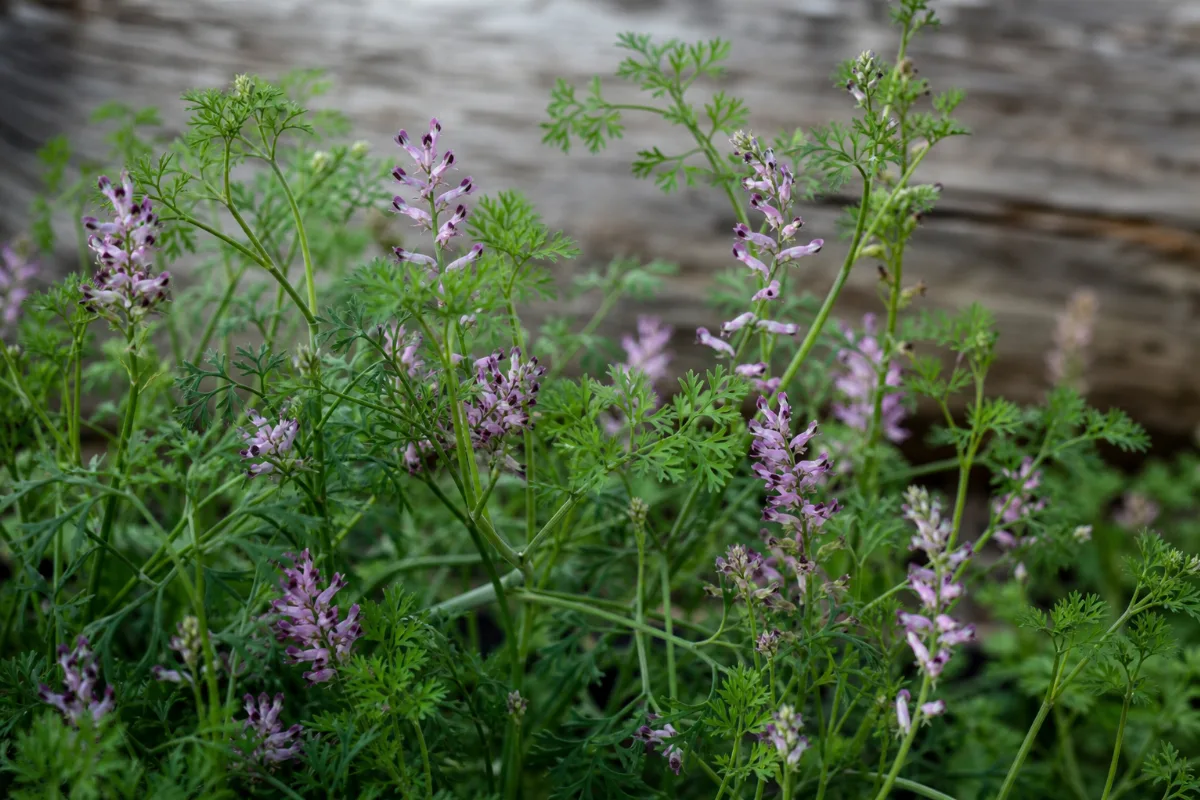
Fumitory is a small plant with grey, finely cut leaves and pink-purple flowers. The name "earth smoke" comes from its smoky look. The flowering tops are dried for tea or made into extracts.
It is not the same as greater celandine, another poppy-family herb with stronger liver warnings, or other Fumaria species used in other traditions.
What makes it distinctive
Its main active group is the isoquinoline alkaloids, especially protopine. It also has flavonoids and fumaric acid.
Animal work suggests it may raise bile flow and mildly relax gut muscle. That bile effect is also the reason for its main warning.
How strong is the evidence?
The EU regulator found eight old clinical studies (617 patients), one 30-person placebo trial and two open studies. They mostly reported good tolerability and favourable results, but they are old and poorly described.
The one modern placebo-controlled gut trial, in 106 people with irritable bowel syndrome, found no benefit. Evidence is sparse and certainty is very low.
At a glance
Traditional uses history, not proof
- Fullness, slow digestion and gas
- Bile and gallbladder complaints
- Mild diuretic and "blood purifier"
- Skin problems such as eczema (folk use)
- Eye wash for conjunctivitis (old British use)
Studied for research
- Indigestion and bile flow: old small studies, very low certainty
- Irritable bowel syndrome: one trial, no benefit
- Hot flashes: one trial of a mixed syrup with a related species
- Lab and animal work: antibacterial, antioxidant and more, not shown in people
Main compounds
- Isoquinoline alkaloids, mainly protopine
- Other alkaloids such as fumaricine and cryptopine
- Flavonoids such as rutin
- Fumaric acid and phenolic acids
Common forms
- Tea (dried flowering tops)
- Dry water extract
- Liquid extract
- Tincture
- Fresh plant juice
Research links: EU herbal monograph on Fumaria officinalis herba (EMA, 2023) · EMA assessment report on Fumaria officinalis herba (2022) · Fumitory and curcuma in IBS, randomised trial (2005) · Chicory and Fumaria parviflora syrup for hot flashes (2023) · Fumaria officinalis chemistry and pharmacology review (2025) · Acute hepatitis probably induced by Fumaria and Vitis vinifera tinctoria products (2007) · Protopine and CYP2D6 in human liver microsomes (2026) · California poppy alkaloids, CYPs and P-gp (2016) · Research Library · Genes & Biomarkers Library
The plant and its history
- Accepted scientific name
- Fumaria officinalis L.
- Naming authority
- L.
- Common names
- Fumitory (English); Common fumitory (English); Earth smoke (English); Erdrauchkraut (German); Fumeterre (French)
- Botanical family
- Papaveraceae (poppy family)
- Classification
- Plantae > Ranunculales > Papaveraceae > Fumaria > Fumaria officinalis
- Native range
- EMA calls the genus mainly Mediterranean; the plant is widespread in gardens, slopes and wasteland in Europe. Exact native range not verified.
- Habitat
- Gardens, slopes and wastelands (EMA).
- What the plant looks like
- Roots: Not described.; Stems: Low, trailing shrub-like herb.; Leaves: Grey, pointed, finely cut leaves that give a wispy, smoke-like look; no odour, bitter and salty taste.; Flowers: Pink-purple, in spring; harvested in full bloom.; Fruit: Not described.
- Cultivation
- Not verified.
- Harvest and processing
- Dried aerial parts are harvested in full bloom (Ph. Eur. 1869: at least 0.40% total alkaloids as protopine).
- Look-alikes and adulterants
- Name: Other Fumaria species, for example Fumaria parviflora; Note: Several Fumaria species exist and are used in other traditions. A trial in this file used F. parviflora. Do not treat results as interchangeable.
- Sustainability and conservation
- Not assessed here.
Traditional use and history history, not clinical proof
| Tradition or era | Documented use | Source |
|---|---|---|
| Europe, from antiquity and the Middle Ages | The name "earth smoke" comes from the smoky look of the plant or from the juice making the eyes water. Used as a digestive, diuretic and "blood purifier", for skin disease and as an eye lotion (EMA assessment report). | s-ema-ar-2022 |
| French and UK recognition | Pharmacopée Française 1908 (diuretic, depurative); recognised by French authorities in 1986 for kidney and digestive functions; on the UK General Sales List; Commission E approval, per EMA (second-hand, not verified). | s-ema-ar-2022 |
| EU traditional-use registration | HMPC monograph first adopted in 2011, revised and adopted 12 May 2023: tea and extracts for fullness, slow digestion and gas. | s-ema-mono-2023 |
Traditional use shows how a plant was used. It does not show that a supplement works or is safe today.
What is inside, and how it may work
What the plant contains and how those compounds act in cells and animals. Laboratory and animal mechanisms are not proven effects in people.
Main compounds
| Compound | Family | Where it is concentrated | Activity studied | Level of evidence |
|---|---|---|---|---|
| Protopine PubChem 4970 | isoquinoline alkaloid (protopine type) | aerial parts Total alkaloids 0.3-1% as protopine (EMA); Ph. Eur. minimum 0.40% | Main alkaloid. In animals: sedative and blood-pressure-lowering in small doses. In the lab: CYP2D6 inhibition. 3 10 9 | Laboratory research |
| Fumaricine PubChem 442236 | spirobenzylisoquinoline alkaloid | aerial parts | Listed among the plant alkaloids; activity not studied here. 3 9 | Identity only |
| Fumaric acid PubChem 444972 | organic acid | aerial parts | A plant acid. Pharmaceutical fumaric acid esters are different products. 3 9 | Identity only |
| Sanguinarine PubChem 5154 | benzophenanthridine alkaloid | aerial parts (traces) traces (EMA) | Present in traces only per EMA; a known irritant alkaloid in other poppy-family plants. 3 9 | Identity only |
| Flavonoids (quercetin glycosides such as rutin) and phenolic acids | phenolics | aerial parts | Antioxidant in lab tests. 3 8 | Laboratory research |
Mechanisms, receptors and pathways
| Target or pathway | Gene or receptor | What was found | Level |
|---|---|---|---|
| Bile flow and gut muscle | not specified | Animal and lab studies describe increased bile flow and a mild relaxing effect on smooth muscle; protopine had a contracting action on the sphincter of Oddi in animals. 3 | Animal research |
| Drug-metabolising enzymes | CYP2D6 | Isolated protopine inhibited CYP2D6 in human liver microsomes and a California poppy study. 10 7 | Laboratory research |
| Acetylcholinesterase | ACHE | Fumitory alkaloid extracts inhibited the enzyme in a lab test (second-hand via EMA). 3 | Laboratory research |
Absorption, metabolism and elimination
- Absorption
- No pharmacokinetic data on fumitory extracts were found.
- Distribution
- Not studied.
- Metabolism
- In a horse and one human volunteer given fumitory or protopine, urine contained protopine breakdown products; metabolism was similar in horse and human (EMA, summary-only).
- Elimination
- Partly in urine (as above).
- Bioavailability
- Not established.
Isolated compounds versus whole extracts
Most pharmacology is on whole water or alcohol extracts, or on isolated alkaloids. The old human studies used one type of water extract; the IBS trial used herb powder; the hot-flash trial used a mixed syrup of a different species. Findings from one form cannot be assumed for another.
Nutritional composition
Fumitory is a medicinal herb, not a nutrient. The Council of Europe lists it as a natural flavouring source with insufficient toxicity data (per EMA).
5 very low certainty2 not enough evidence1 evidence against
What is Fumitory good for?
What fumitory has been used for and how strong the evidence is. Evidence is thin and mostly old.
Benefits, one by one
Each card is a research question, not a promise. Tap a goal to filter. Open a card to see the studies, doses and limits.
Indigestion: fullness, slow digestion and gas (traditional use)
Very low certaintyIn the EU, fumitory herb is registered as a traditional herbal medicine for a feeling of fullness, slow digestion and gas. That status rests on long use, not on modern trials.
2 studiesTea, powder, dry water extract, liquid extract, tincture and fresh ju…
Studies, doses and limits
What the trials found
The EU regulator lists eight old clinical studies (617 patients), one double-blind placebo trial in 30 patients and two open studies in 63 patients. They are short, from the 1960s to 1970s, mostly on one type of water extract, and were read only as summarised by the regulator.
Results
The regulator describes mostly favourable results, especially for fullness and gas, with good tolerability. It also says the effect is only plausible, not proven, and that rigorous trials are needed.
Effect sizes as reported
No usable numbers in the summary.
Why this rating
Old, small, mostly uncontrolled studies known only through a regulator summary. No modern placebo-controlled trial for this use.
Form and dose studied
Tea, powder, dry water extract, liquid extract, tincture and fresh juice are listed in the EU monograph. Ask a doctor or pharmacist about amounts.
Who was studied
Adults. No data in children, pregnancy or breastfeeding.
Limits
Evidence quality is poor. Symptoms lasting over 2 weeks should be checked by a doctor.
Why researchers looked
It has been used for digestion and bile since the Middle Ages.
Traditional use
Dried flowering tops as a tea, plus extracts, tinctures and fresh juice. In the EU monograph it is a "traditional use" product only.
Proposed mechanism Animal research
Not proven. Animal work suggests bile-stimulating and mild muscle-relaxing effects; alkaloids such as protopine are the likely active group.
A proposed mechanism does not show that the effect happens in people.
Not recommended with bile duct blockage, gallstones, liver disease or other bile-system disease (see Safety).
Bile-system complaints (bile flow and gallbladder cramps)
Very low certaintyOld studies tested fumitory water extract in people with bile-flow problems such as biliary dyskinesia. Results were reported as positive, but the studies are old and thin.
2 studiesMostly one 4-6:1 water extract tablet in the old studies.
Studies, doses and limits
What the trials found
One double-blind placebo trial (Kopp 1979) in 30 patients with mixed bile disorders, taking a water extract for 28 days, was described as positive, especially for fullness and gas. Open studies (for example 45 patients over 16 days, 80% reported improvement) had no control group.
Results
All 30 patients in the 1979 trial were described as improved, but the summary gives no numbers or comparison. Open studies reported no adverse effects.
Effect sizes as reported
Not reported in the regulator summary.
Why this rating
Old, tiny, poorly described studies read only second-hand. The bile-flow effect is shown in animals, not clearly in people.
Form and dose studied
Mostly one 4-6:1 water extract tablet in the old studies.
Who was studied
Adults aged about 20-78 with bile disorders. Nothing on children.
Limits
The original papers were not read. The same bile effect is why EMA warns against use with bile duct blockage and gallstones.
Why researchers looked
Fumitory is traditionally called a "choleretic", a herb that raises bile flow.
Traditional use
Used in French and German folk and pharmacy practice for the liver and gallbladder area.
Proposed mechanism Animal research
Animal and lab work reports increased bile flow. In animals the alkaloid protopine had a contracting action on the sphincter of Oddi (the bile outlet).
A proposed mechanism does not show that the effect happens in people.
A herb that raises bile flow can be unsuitable if bile is blocked.
Irritable bowel syndrome
Evidence againstIn a 106-person trial, fumitory powder did not ease IBS pain or bloating any better than a dummy pill.
2 studiesHerb powder in the trial.
Studies, doses and limits
What the trials found
Brinkhaus 2005: randomised, double-blind, placebo-controlled; fumitory herb powder (n=24), Javanese turmeric (n=24) or placebo (n=58) for 18 weeks.
Results
IBS pain changed by -0.9 mm with fumitory and -0.3 mm with placebo on a 0-50 mm scale (p=0.81). Distension changed by +0.3 mm with fumitory and -2.1 mm with placebo (p=0.48). Overall symptoms and stress also did not differ. The authors did not recommend these herbs for IBS.
Effect sizes as reported
Pain: -0.9 vs -0.3 mm (p=0.81). Distension: +0.3 vs -2.1 mm (p=0.48).
Why this rating
One randomised, placebo-controlled trial found no benefit. It is small, but it is the only controlled trial of any gut use that we found.
Form and dose studied
Herb powder in the trial.
Who was studied
Adults with IBS, mean age 48, 63% women.
Limits
One trial, one preparation, small groups. It does not test the traditional bile and digestion uses.
Why researchers looked
Traditional use for gut cramps and bloating.
Traditional use
Fumitory is used in the EU for digestive discomfort, which overlaps with IBS symptoms.
Proposed mechanism Human trial
Not tested in this trial.
A proposed mechanism does not show that the effect happens in people.
No safety signal reported in the abstract.
Gut and bile muscle spasm
Very low certaintyAnimal and lab work suggests fumitory may mildly relax gut muscle. This has not been shown in a modern human trial.
1 studiesNot applicable.
Studies, doses and limits
What the trials found
No controlled human trial of cramp relief was found. The old bile studies are the only indirect human data.
Results
Animal and lab findings only, as summarised by EMA.
Effect sizes as reported
None available.
Why this rating
Animal and lab data summarised by a regulator, with contradictory hints.
Form and dose studied
Not applicable.
Who was studied
Not applicable.
Limits
Lab and animal only.
Why researchers looked
EMA calls an antispasmodic effect on the upper digestive tract "documented" for plausibility.
Traditional use
Used for cramping in the stomach and gallbladder area.
Proposed mechanism Animal research
Mild muscle-relaxing action on smooth muscle in animal and lab models. Protopine has also been reported to tighten the bile outlet muscle in animals, so the picture is not simple.
A proposed mechanism does not show that the effect happens in people.
See Safety for the bile cautions.
Hot flashes after breast cancer treatment (different species, mixed product)
Very low certaintyOne small Iranian trial gave breast cancer survivors a syrup of chicory and Fumaria parviflora (a related fumitory species) and found fewer hot flashes than placebo. Fumitory cannot be singled out.
1 studiesSyrup of chicory and Fumaria parviflora extracts.
Studies, doses and limits
What the trials found
Khosropanah 2023: 96 women randomised, syrup versus placebo for 4 weeks; 66 analysed per protocol.
Results
Daily hot flash frequency and severity fell by 57% with the syrup and 10% with placebo, a significant difference (p<0.001 and p=0.001). Adverse events were similar in both groups.
Effect sizes as reported
57% vs 10% fall; effect size ηp2 0.221 (frequency) and 0.160 (severity).
Why this rating
Single small trial, per-protocol analysis, combination product and a different Fumaria species. No repeat trial.
Form and dose studied
Syrup of chicory and Fumaria parviflora extracts.
Who was studied
Breast cancer survivors on hormone deprivation therapy. Not studied in others.
Limits
Cannot be applied to fumitory (Fumaria officinalis) tea or extracts. Women on hormone therapy should check any herb with their cancer team.
Why researchers looked
Persian medicine uses chicory and fumitory syrup for heat and "blood cleansing".
Traditional use
A traditional Persian preparation.
Proposed mechanism Human trial
Not explained.
A proposed mechanism does not show that the effect happens in people.
Do not start herbs during cancer treatment without asking the oncology team.
Traditional use for the kidneys, skin and blood "cleansing"
Not enough evidenceFumitory has been used as a diuretic and skin herb for centuries. One rat study found more urine and more salt passed after a single dose, and no human trial exists.
1 studiesNot applicable.
Studies, doses and limits
What the trials found
None found.
Results
Rat finding only (as summarised by EMA).
Effect sizes as reported
None available.
Why this rating
Tradition and one animal study only.
Form and dose studied
Not applicable.
Who was studied
Not applicable.
Limits
"Detox" and skin claims have no human evidence.
Why researchers looked
The 1908 French pharmacopoeia and French authorities in 1986 list kidney and digestive "elimination" uses.
Traditional use
Juice or tea for eczema and skin eruptions, constipation, cystitis and joint complaints (folk uses, unproven per EMA).
Proposed mechanism Animal research
In rats, a single oral dose increased urine volume and sodium and potassium excretion at 24 hours.
A proposed mechanism does not show that the effect happens in people.
Do not use in place of care for skin disease or kidney problems.
Dry mouth after radiotherapy
Not enough evidenceA 1974 French study of a fumitory water extract in people with dry mouth after radiotherapy was reported as positive. We could only see a one-line summary.
1 studiesWater extract tablets in the old study.
Studies, doses and limits
What the trials found
Bourjat 1974, as summarised by EMA; no size, control group or numbers given.
Results
"Positive" with a water extract tablet; nothing more is known.
Effect sizes as reported
None available.
Why this rating
A one-line second-hand summary of a 1974 study.
Form and dose studied
Water extract tablets in the old study.
Who was studied
Not described.
Limits
Original not read; no detail.
Why researchers looked
Listed among the old clinical studies.
Traditional use
Not a classic use.
Proposed mechanism Human trial
Unknown.
A proposed mechanism does not show that the effect happens in people.
Ask a cancer team before using herbs during radiotherapy.
Lab and animal findings: germs, antioxidants, enzymes and cancer cells
Very low certaintyIn test tubes and animals, fumitory extracts show antibacterial, antioxidant, anti-ulcer and blood-sugar effects and slow some cancer cells. None of this has been shown in people.
2 studiesLab extracts and fractions.
Studies, doses and limits
What the trials found
None.
Results
Findings from several lab and animal papers as summarised by EMA and a 2025 review. Those papers were not read.
Effect sizes as reported
For example: lowest concentration stopping Propionibacterium acnes growth 0.33 mg/mL (alkaloid extract); acetylcholinesterase IC50 0.13 mg extract/mL (both per EMA, summary-only).
Why this rating
Lab and animal only; second-hand.
Form and dose studied
Lab extracts and fractions.
Who was studied
Not applicable.
Limits
Cell and animal results rarely carry over to people. Anticoagulant action in a lab test is a reason to be careful with blood thinners.
Why researchers looked
Researchers screen the alkaloids and phenolic compounds of the plant.
Traditional use
Not applicable.
Proposed mechanism Laboratory research
Alkaloid extracts killed acne-related bacteria in dishes and blocked the enzyme acetylcholinesterase; methanol extracts mopped up free radicals and slowed blood clotting in lab tests; extracts reduced blood sugar in diabetic rats; one multi-herb syrup protected mice against induced stomach ulcers; some fractions were toxic to leukaemia and myeloma cell lines.
A proposed mechanism does not show that the effect happens in people.
Do not use fumitory to treat infection, diabetes, ulcers or cancer.
Connections to the rest of health
How Fumitory connects to the rest of our health knowledge graph. Every link says what kind of connection it is. A safety link (for example to the liver) is a warning, not a benefit. A study that merely mentions a topic never creates a benefit link.
Explore every connection: goals, body systems, organs, symptoms, genes
A. Wellness goals
| Connected to | Kind of connection | Evidence status | Context | Studies |
|---|---|---|---|---|
| Digestive Support | Traditional use | Very low certainty | Indigestion: fullness, slow digestion and gas (traditional use): In the EU, fumitory herb is registered as a traditional herbal medicine for a feeling of fullness, slow digestion and gas. That status rests on long use, not on modern trials. Bile-system complaints (bile flow and gallbladder cramps): Old studies tested fumitory water extract in people with bile-flow problems such as biliary dyskinesia. Results were reported as positive, but the studies are old and thin. | 4 3 |
| Liver Support | Traditional use | Very low certainty | Bile-system complaints (bile flow and gallbladder cramps): Old studies tested fumitory water extract in people with bile-flow problems such as biliary dyskinesia. Results were reported as positive, but the studies are old and thin. | 3 4 |
| Gut Health | Evidence against | Irritable bowel syndrome: In a 106-person trial, fumitory powder did not ease IBS pain or bloating any better than a dummy pill. | 2 3 | |
| Digestive Support | Preliminary mechanism | Very low certainty | Gut and bile muscle spasm: Animal and lab work suggests fumitory may mildly relax gut muscle. This has not been shown in a modern human trial. | 3 |
| Menopause Support | Very low certainty | Hot flashes after breast cancer treatment (different species, mixed product): One small Iranian trial gave breast cancer survivors a syrup of chicory and Fumaria parviflora (a related fumitory species) and found fewer hot flashes than placebo. Fumitory cannot be singled out. | 6 | |
| Detoxification Support | Traditional use | Not enough evidence | Traditional use for the kidneys, skin and blood "cleansing": Fumitory has been used as a diuretic and skin herb for centuries. One rat study found more urine and more salt passed after a single dose, and no human trial exists. | 3 |
| Healthy Skin | Traditional use | Not enough evidence | Traditional use for the kidneys, skin and blood "cleansing": Fumitory has been used as a diuretic and skin herb for centuries. One rat study found more urine and more salt passed after a single dose, and no human trial exists. | 3 |
| Oral Health | Traditional use | Not enough evidence | Dry mouth after radiotherapy: A 1974 French study of a fumitory water extract in people with dry mouth after radiotherapy was reported as positive. We could only see a one-line summary. | 3 |
| Cellular Health | Preliminary mechanism | Very low certainty | Lab and animal findings: germs, antioxidants, enzymes and cancer cells: In test tubes and animals, fumitory extracts show antibacterial, antioxidant, anti-ulcer and blood-sugar effects and slow some cancer cells. None of this has been shown in people. | 3 8 |
B. Body systems
| Connected to | Kind of connection | Evidence status | Context | Studies |
|---|---|---|---|---|
| Digestive System | Biological association | Very low certainty | Studied for: Indigestion: fullness, slow digestion and gas (traditional use) Studied for: Bile-system complaints (bile flow and gallbladder cramps) | 4 3 2 8 |
| Liver Gallbladder | Biological association | Very low certainty | Studied for: Bile-system complaints (bile flow and gallbladder cramps) | 3 4 |
| Hormone Health | Biological association | Very low certainty | Studied for: Hot flashes after breast cancer treatment (different species, mixed product) | 6 |
| Urinary System | Biological association | Not enough evidence | Studied for: Traditional use for the kidneys, skin and blood "cleansing" | 3 |
| Skin | Biological association | Not enough evidence | Studied for: Traditional use for the kidneys, skin and blood "cleansing" | 3 |
| Oral Health | Biological association | Not enough evidence | Studied for: Dry mouth after radiotherapy | 3 |
| Immune System | Biological association | Very low certainty | Studied for: Lab and animal findings: germs, antioxidants, enzymes and cancer cells | 3 8 |
I. Biomarkers
| Connected to | Kind of connection | Evidence status | Context | Studies |
|---|---|---|---|---|
| IBS-related pain score | Biological association | Evidence against | Measured in trials: lowered. A lab change is not the same as a health benefit. | 2 |
| IBS-related bloating (distension) score | Biological association | Evidence against | Measured in trials: lowered. A lab change is not the same as a health benefit. | 2 |
| Daily hot flash frequency | Biological association | Very low certainty | Measured in trials: lowered. A lab change is not the same as a health benefit. | 6 |
| Daily hot flash severity score | Biological association | Very low certainty | Measured in trials: lowered. A lab change is not the same as a health benefit. | 6 |
J. Genes, receptors and enzymes
L. Active compounds
| Connected to | Kind of connection | Evidence status | Context | Studies |
|---|---|---|---|---|
| Protopine | Very low certainty | Main fumitory alkaloid; CYP2D6 inhibition in the lab. Main fumitory alkaloid; blocks the liver enzyme CYP2D6 in lab tests. Preparation or compound: main alkaloid |
10 7 | |
| Protopine | Biological association | In vitro | Main alkaloid. In animals: sedative and blood-pressure-lowering in small doses. In the lab: CYP2D6 inhibition. Preparation or compound: aerial parts |
3 10 9 |
| Fumaricine | Biological association | Identity only | Listed among the plant alkaloids; activity not studied here. Preparation or compound: aerial parts |
3 9 |
| Fumaric acid | Biological association | Identity only | A plant acid. Pharmaceutical fumaric acid esters are different products. Preparation or compound: aerial parts |
3 9 |
| Sanguinarine | Biological association | Identity only | Present in traces only per EMA; a known irritant alkaloid in other poppy-family plants. Preparation or compound: aerial parts (traces) |
3 9 |
| Flavonoids (quercetin glycosides such as rutin) and phenolic acids | Biological association | In vitro | Antioxidant in lab tests. Preparation or compound: aerial parts |
3 8 |
Each connection is stored with the ingredient, the connected record, the kind of connection, the evidence status, the supporting studies, the preparation or compound involved, and a review date (last reviewed October 25, 2026).
Evidence at a glance: what changed in 4 lab markers
Tap a number to show only those markers. Counts are markers, not people.
The evidence
The research centre for Fumitory. Every record here was checked against PubMed or the publisher's page; we never list a study we have not verified.
Evidence by outcome
Bars show how many studies we found for each outcome, not how well it works. People are added up across trials only (reviews are not added, to avoid double counting).
How we rate evidence
High certainty
Several well-run trials or reviews agree; further research is unlikely to change the picture much.
Moderate certainty
Good trials point the same way, but some doubt remains.
Low certainty
Small, short or inconsistent trials. The finding could change with better research.
Very low certainty
Very little or very weak human data. Treat as a possibility only.
Mixed findings
Trials or reviews disagree with each other.
Not enough evidence
Not enough human research to say either way.
Evidence against
Good research found no benefit, or found harm.
We take the reviewers' own risk-of-bias and GRADE statements where they exist, and otherwise judge from study size, design, consistency, directness and whether a product matches what is sold. Many publications do not make evidence high. Method note: We built on our existing summary, read the EU herbal monograph and assessment report in full, read PubMed abstracts, and checked GBIF and PubChem. Old clinical studies are known only through the EU report. Two papers (a 2007 case report and a 1961 note) were read by title only.
Study library: every study we checked 10
| Study | Design | People | Product, dose, length | Result |
|---|---|---|---|---|
| Bonnet 2007 [Acute hepatitis probably induced by Fumaria and Vitis vinifera tinctoria herbal products] Gastroenterologie Clinique et Biologique · PMID 18166905 · DOI |
Case report |
1 One adult case report (letter, French) |
Herbal products containing Fumaria and Vitis vinifera tinctoria, per the title; EMA describes a combination product with dandelion, fumitory, boldo, artichoke and horsetail not stated not given here not given here · vs none |
Only the title and authors were read (no abstract in PubMed). EMA describes a 56-year-old woman who took a combination herbal product for about 7 months for high blood lipids and developed acute hepatitis. The title and the EMA description list different ingredients, so the exact product is unclear. One case of acute hepatitis judged probable with a product that included fumitory Methods, limits and fundingOutcomes: Acute hepatitis Limitations: Case report. Several herbs involved. The original letter was not read in full. Funding and conflicts: Not applicable Read: title-only |
| Brinkhaus 2005 Herbal medicine with curcuma and fumitory in the treatment of irritable bowel syndrome: a randomized, placebo-controlled, double-blind clinical trial Scandinavian Journal of Gastroenterology · PMID 16173134 · DOI |
RCT |
106 Adults with irritable bowel syndrome (mean age 48, 63% women) |
Fumaria officinalis herb powder 1500 mg daily (fumitory group, n=24); Curcuma xanthorrhiza 60 mg daily (n=24); placebo (n=58) herb powder 1500 mg daily, three times a day 18 weeks · vs placebo |
IBS pain fell by 0.9 mm (SD 11.5) with fumitory, 0.3 mm (SD 9.9) with placebo (p=0.81 across groups). Distension rose by 0.3 mm (SD 9.3) with fumitory and fell by 2.1 mm (SD 9.2) with placebo (p=0.48). Global symptoms and stress did not differ. The authors concluded neither herb showed benefit over placebo and could not be recommended for IBS. No benefit over placebo Methods, limits and fundingOutcomes: Change in IBS pain and distension on a 0-50 mm scale; global IBS symptoms; stress due to IBS Limitations: Small groups; one herb preparation (powder). The abstract gives 18 weeks, while the EMA report table says 16 days; we use the abstract. Not a test of the traditional bile and digestion uses. Funding and conflicts: Research support, non-US government (per PubMed); no industry link stated in the abstract Read: abstract |
| European Medicines Agency 2022 Assessment report on Fumaria officinalis L., herba (EMA/HMPC/367013/2021) EMA/HMPC · Source |
Authoritative guidance plant |
not applicable | Fumitory aerial parts (Fumaria officinalis herba) aerial flowering parts not given here not given here · vs none |
Read in full 2026-10-25 (draft revision). States there is a lack of rigorous clinical research. Lists eight old clinical studies in 617 patients, one double-blind placebo trial in 30 patients (Kopp 1979) and two open studies in 63 patients, mostly short, old, on water extracts, mainly reporting tolerability. Reports the 2005 IBS trial as negative. Safety: raised eye pressure and oedema reported as possible effects (Anderson and Phillipson 1986); one case of acute hepatitis with a multi-herb product (Bonnet 2007); no new safety issues in EudraVigilance/VigiLyze up to March 2022 and no causal link established. Animal findings include choleretic and mild antispasmodic effects. No pharmacokinetic data on fumitory extracts. No data on drug interactions. not applicable Methods, limits and fundingOutcomes: see results Limitations: Many original studies are 1960s-1970s and were read only as summarised by EMA. It is a draft document. Funding and conflicts: not applicable Read: full-text |
| European Medicines Agency 2023 European Union herbal monograph on Fumaria officinalis L., herba (Final, Revision 1; EMA/HMPC/367011/2021) EMA/HMPC · Source |
Authoritative guidance plant |
not applicable | Fumitory aerial parts (Fumaria officinalis herba): tea, powder, dry water extract, liquid extract, tincture, fresh juice aerial flowering parts not given here not given here · vs none |
Read in full 2026-10-25 (adopted 12 May 2023). Traditional use only: relief of digestive disturbances such as fullness, slow digestion and gas, "exclusively based upon long-standing use". Not recommended with bile duct obstruction, cholangitis, liver disease, gallstones or any other biliary disease. Not recommended in pregnancy and breastfeeding (safety not established). Not recommended in children (tea under 12; other forms under 18). Interactions: none reported. Undesirable effects: none known. Tests on reproductive toxicity and carcinogenicity have not been performed and genotoxicity tests are not adequate. Symptoms lasting over 2 weeks: see a doctor. not applicable Methods, limits and fundingOutcomes: see results Limitations: A regulator summary of old, small studies. It says the effect is plausible but not proven. Funding and conflicts: not applicable Read: full-text |
| GBIF Secretariat 2026 GBIF Backbone Taxonomy: Fumaria officinalis L. (species match) GBIF API · Source |
Database record plant |
not applicable | Fumaria officinalis L. not applicable not given here not given here · vs none |
Queried 2026-10-25. Status ACCEPTED, exact match, key 5334217. Family Papaveraceae, order Ranunculales. Identity confirmed Methods, limits and fundingOutcomes: Accepted name check Limitations: Taxonomy only. NCBI Taxonomy not checked. Funding and conflicts: not applicable Read: full-text |
| Khosropanah 2023 Effects of Chicory and Fumitory on Hot Flashes Among Breast Cancer Survivors: A Randomized, Double-Blind Placebo-Controlled Trial Journal of Integrative and Complementary Medicine · PMID 36219736 · DOI |
RCT |
96 Breast cancer survivors on hormone deprivation therapy, Tehran, Iran |
Syrup of chicory (Cichorium intybus) plus Fumaria parviflora extracts (a combination, and a different fumitory species from F. officinalis) not stated in abstract 5 mL three times a day 4 weeks · vs placebo syrup |
96 women were randomised (48 each). In the per-protocol analysis (66 analysed), mean daily hot flash frequency and severity each fell by 57% with the syrup and 10% with placebo; the group difference was significant for frequency (p<0.001) and severity (p=0.001). Serious and non-serious adverse events were similar in both groups. The authors call it preliminary evidence. Fewer and milder hot flashes versus placebo in this trial Methods, limits and fundingOutcomes: Daily hot flash frequency and severity (diaries) Limitations: Combination product with chicory, so fumitory cannot be singled out. The species is Fumaria parviflora, not F. officinalis. Per-protocol analysis with only 66 of 96 analysed. Single trial, 4 weeks. Funding and conflicts: Not stated in abstract Registration: IRCT20210226050506N1 Read: abstract |
| Manda 2016 Modulation of CYPs, P-gp, and PXR by Eschscholzia californica (California Poppy) and Its Alkaloids Planta Medica · PMID 27054913 · DOI |
Laboratory research in-vitro |
Lab enzyme and cell assays | California poppy extracts and isolated alkaloids including protopine (a different plant that shares protopine with fumitory) not stated not given here not given here · vs none |
Protopine reversibly inhibited the drug-metabolising enzyme CYP2D6 in the lab. Protopine did not activate the PXR receptor. The poppy ethanol extract and some other alkaloids strongly inhibited CYP3A4, CYP2C9 and CYP2C19. The authors suggest the extract could interact with CYP-metabolised drugs, while the tea looked safer. Lab signal for CYP2D6 inhibition by protopine Methods, limits and fundingOutcomes: Effects on CYP enzymes, P-glycoprotein and PXR Limitations: Different plant; isolated alkaloid in a dish. Fumitory itself was not tested. Not shown in people. Funding and conflicts: NIH extramural support (per PubMed) Read: abstract |
| Prokopenko 2025 Fumaria officinalis: Phytochemical complexity and its medicinal significance Fitoterapia · PMID 40763876 · DOI |
Systematic review plant |
Literature review of Fumaria officinalis chemistry and lab/animal pharmacology | Fumaria officinalis (whole plant extracts and isolated compounds) mainly aerial parts not given here not given here · vs none |
Protopine is the predominant isoquinoline alkaloid, with phenolic compounds. Reported anti-inflammatory, hepatoprotective and antioxidant activities are implicated. The authors say clinical validation is still needed. Background only; no human efficacy finding Methods, limits and fundingOutcomes: Chemistry and reported pharmacology Limitations: Abstract only read. Mostly lab and animal work; a "systematic review" of chemistry and pharmacology, not of clinical trials. Funding and conflicts: Not stated in abstract Read: abstract |
| PubChem (NCBI) 2026 PubChem compound records: protopine (CID 4970), fumaricine (CID 442236), fumaric acid (CID 444972), sanguinarine (CID 5154) PubChem PUG-REST · Source |
Database record other |
not applicable | Isolated compounds not applicable not given here not given here · vs none |
Looked up by name 2026-10-25 and titles and formulas confirmed: protopine C20H19NO5, fumaricine C21H23NO5, fumaric acid C4H4O4, sanguinarine C20H14NO4+. Identifiers confirmed Methods, limits and fundingOutcomes: Compound identifiers Limitations: Identifiers only; no activity data. Funding and conflicts: not applicable Read: full-text |
| Zhao 2026 Inhibition of human liver cytochrome P450 2D6 (CYP6D2) by tetrahydropalmatine, protopine, and dehydrocorydaline and their oxidative metabolism Xenobiotica · PMID 41876357 · DOI |
Laboratory research in-vitro |
Human liver microsomes (lab) | Isolated protopine, tetrahydropalmatine and dehydrocorydaline from Corydalis yanhusuo (a different plant) not applicable not given here not given here · vs none |
Protopine was a mixed inhibitor of CYP2D6 in human liver microsomes (Ki 0.023 microM and 0.042 microM). Its breakdown involved CYP2C19, CYP2D6 and CYP3A4. The authors say CYP2D6 is a potential target for drug interactions with protopine and tetrahydropalmatine. Lab signal for CYP2D6 inhibition by protopine Methods, limits and fundingOutcomes: CYP2D6 inhibition and metabolism Limitations: Isolated compound from another plant, in liver-cell fragments. Real-world significance with fumitory is unknown. The title prints "CYP6D2" in the original. Funding and conflicts: Not stated in abstract Read: abstract |
What we do not know yet
- No modern placebo-controlled trial for fullness, slow digestion or gas.
- Old clinical studies were read only as summarised by the regulator.
- No interaction study with fumitory itself.
- No data in pregnancy, breastfeeding or children.
- Hot flash result comes from one trial of a mixed product with a different species.
How new research is added
New studies are found by a saved PubMed search and are placed in a review queue. A person reads each one before it changes any evidence rating or safety wording.
Lab markers
What changed in blood or saliva tests during trials. A changed number is not the same as feeling or being healthier, and we give no "normal ranges".
Other 4
IBS-related pain score
Lowered in trials
Patients rated IBS pain on a 0-50 mm line; a fall means less pain.
Evidence againstResults and what it means
IBS-related bloating (distension) score
Lowered in trials
Patients rated bloating on a 0-50 mm line; a fall means less bloating.
Evidence againstResults and what it means
Why it was measured
Co-main outcome of the IBS trial.
Statistical vs. clinical meaning
No benefit over placebo.
Safety implication
None reported.
| Study | Result | People | Product |
|---|---|---|---|
| 2 | Rose by 0.3 mm with fumitory and fell by 2.1 mm with placebo; no real difference (p=0.48). | 106 adults with IBS | Fumitory herb powder, 18 weeks |
Daily hot flash frequency
Lowered in trials
Number of hot flashes per day from a diary.
Very low certaintyResults and what it means
Why it was measured
Co-primary outcome of the syrup trial.
Statistical vs. clinical meaning
Preliminary; mixed product and different species.
Safety implication
Adverse events similar to placebo.
| Study | Result | People | Product |
|---|---|---|---|
| 6 | Fell 57% with the chicory and Fumaria parviflora syrup versus 10% with placebo (p<0.001). | 66 breast cancer survivors analysed per protocol | 5 mL syrup three times a day, 4 weeks |
Daily hot flash severity score
Lowered in trials
A diary score for how strong each hot flash was.
Very low certaintyResults and what it means
Why it was measured
Co-primary outcome of the syrup trial.
Statistical vs. clinical meaning
Preliminary; mixed product and different species.
Safety implication
Adverse events similar to placebo.
| Study | Result | People | Product |
|---|---|---|---|
| 6 | Fell 57% with the syrup versus 10% with placebo (p=0.001). | 66 breast cancer survivors analysed per protocol | 5 mL syrup three times a day, 4 weeks |
Safety
What studies and official sources say about side effects, medicines and who should check first. Each point shows what kind of evidence it comes from.
Main points to know 5
- Avoid with bile duct blockage, gallstones and liver or bile disease. The EU monograph says fumitory is not recommended with bile duct obstruction, cholangitis, liver disease, gallstones or any other bile-system disease, because it may raise bile flow. Authoritative guidance 4
- Not recommended in pregnancy, breastfeeding or children. Safety has not been established, so EMA recommends against use in pregnancy and breastfeeding, and in children (tea under 12; other forms under 18). Authoritative guidance 4
- One case of liver inflammation with a multi-herb product. One published case of acute hepatitis was judged probable with a product that included fumitory. The herb cannot be singled out. EMA found no causal link in its safety databases up to March 2022. Case report 1 3
- Possible eye-pressure rise. EMA lists raised eye pressure and swelling as possible effects, citing a 1986 report that we did not read. People with glaucoma should ask their eye doctor first. Authoritative guidance 3
- Safety tests are incomplete. Tests for genotoxicity, reproductive toxicity and cancer risk have not been done adequately. Authoritative guidance 4 3
Side effects 3
| Effect | How often | Severity and recovery | Evidence |
|---|---|---|---|
| None known in the EU monograph The old trials reported good tolerability, but they were short and mostly looked at safety loosely. Absence of reports is not proof of safety. | Not established | not applicable not applicable | Authoritative guidance 4 |
| Raised eye pressure and swelling (oedema) Cited by EMA from Anderson and Phillipson 1986 (not read). A 1961 paper title also raises a link between poppy-family and Fumaria alkaloids and glaucoma (title only; abstract not available). | Not established | unknown Unknown | Authoritative guidance 3 |
| Acute hepatitis (one case, combination product) Combination herbal product; the herb was a suspect, not proven as the cause. | Not established | serious Not stated in the sources read | Case report 1 3 |
Liver
One French case report (2007) describes acute hepatitis probably caused by a herbal product containing Fumaria; EMA describes a 56-year-old woman taking a mix of dandelion, fumitory, boldo, artichoke and horsetail for about 7 months. EMA found no other cases and no causal link in EudraVigilance and VigiLyze to March 2022. We found no NIH LiverTox entry for fumitory. The monograph separately advises against use in liver and bile-system disease. The related herb greater celandine has stronger liver warnings, but those data do not transfer directly to fumitory. 1 3 4
How often. Unknown. Very rare in the sources read.
Monitoring. No official monitoring advice found. Stop and seek care for yellow skin or eyes, dark urine, pale stools or unusual tiredness.
- .
This is a safety connection. It is not evidence that Fumitory supports liver health.
Medicines and supplements 4
| With | Why it matters | Importance | Evidence | What to do |
|---|---|---|---|---|
| No interaction data for fumitory all | EMA states "none reported" in the monograph and "no data available" in the assessment report. | Unknown. Absence of data, not proof of no interaction. | Authoritative guidance Not enough evidence 4 3 | Tell your pharmacist or doctor you use it, especially with long-term medicines. |
| Drugs cleared by the liver enzyme CYP2D6 (for example some antidepressants, beta-blockers and codeine-type pain relievers) prescription | Protopine, the main fumitory alkaloid, inhibited CYP2D6 in human liver microsomes (isolated compound from Corydalis) and in a California poppy study. | Theoretical. Not tested with fumitory itself or in people. | Laboratory research Very low certainty 10 7 | Ask a pharmacist if you take medicines that depend on CYP2D6. |
| Sedatives, sleep aids and blood-pressure medicines prescription | Fumitory alkaloid preparations (mainly protopine) showed sedative, blood-pressure-lowering and slow-heart-rate effects in small animal studies. | Theoretical additive effect. Not shown in people. | Animal research Very low certainty 3 | Be cautious and ask a pharmacist. |
| Blood thinners such as warfarin prescription | A methanol fumitory extract lengthened clotting times in a lab test (prothrombin time, aPTT). | Theoretical. Lab only. | Laboratory research Very low certainty 3 | Tell the prescriber if you use blood thinners. |
Who should check first 5
| Situation | Advice | Evidence |
|---|---|---|
| Bile duct obstruction, cholangitis, liver disease, gallstones or other bile disease | Not recommended (EU monograph). | Authoritative guidance 4 |
| Allergy to the plant | Hypersensitivity to the active substance is the only formal contraindication. | Authoritative guidance 4 |
| Glaucoma or raised eye pressure | Not a formal EU contraindication, but EMA lists raised eye pressure as a possible effect. Ask an eye doctor before use. | Authoritative guidance 3 |
| Pregnancy and breastfeeding | Not recommended; safety not established and no fertility data. | Authoritative guidance 4 |
| Children and teens | Not recommended: tea under 12, other forms under 18. | Authoritative guidance 4 |
Overdose, product quality and regulators
Summary. Little toxicity work exists. The EU documents say tests for reproductive toxicity, cancer risk and (adequately) genotoxicity have not been done. No overdose case has been reported.
Animal. In rabbits given a hydroalcoholic extract for 28 days, blood creatinine rose at the higher level and some blood counts changed. What this means for people is unknown (second-hand via EMA).
Human doses studied. Not given here.
High dose or long term signals. Old trials ran for weeks to a year with good tolerability reported, but they are poorly documented.
Overdose response. No case reported (EMA).
Genotoxicity. Very limited: some lab extracts showed no genotoxicity in a bacterial test and a comet assay (per EMA); adequate tests have not been done.
Toxic plant parts. Aerial flowering parts are the medicinal part. Traces of the alkaloid sanguinarine are reported (EMA). Other parts not discussed.
No contamination or adulteration study of fumitory products was found.
Species and quality. The European Pharmacopoeia requires the dried aerial parts to have at least 0.40% total alkaloids as protopine. Other Fumaria species exist and one (Fumaria parviflora) is used in Persian medicine. 3
When to get medical help
- Yellow skin or eyes, dark urine, pale stools, or severe tiredness or itching
- Severe upper-right belly pain, fever or vomiting (possible bile blockage or gallstones)
- Eye pain, halos around lights, blurred vision or a red painful eye
- Swelling of the face or throat, rash or trouble breathing (allergy)
Stop the supplement and contact a clinician or emergency service. In the US, Poison Control is 1-800-222-1222.
General information only, not medical advice. Ask a clinician or pharmacist before use, especially with medicines, in pregnancy or with a health condition. See the Natural Remedy Safety guide.
Frequently asked questions
What is fumitory?
What is it used for in the EU?
It is a traditional herbal medicine for fullness, slow digestion and gas. The EU says this is based only on long use.
Is there good evidence that it works?
No. The old studies are small and poorly described, and the regulator says the effect is plausible but not proven. Certainty is very low.
Does it help irritable bowel syndrome?
A 106-person trial found no benefit over placebo for pain, bloating or overall symptoms.
Can fumitory harm the liver?
Who should avoid it?
Does fumitory affect the eyes?
EMA lists raised eye pressure and swelling as possible effects, based on a 1986 report we could not read. People with glaucoma should ask their eye doctor before using it.
Can it interact with medicines?
How is it different from greater celandine?
Both are poppy-family herbs rich in isoquinoline alkaloids and used for bile and digestion. Greater celandine has more serious liver warnings. They are different plants.
What is in fumitory?
Is it safe in pregnancy or for children?
Safety is not established, so the EU advises against it in pregnancy, breastfeeding and in children.
How much should I take?
We do not give amounts. Ask a doctor or pharmacist, and see one if symptoms last more than 2 weeks.
Explore by health goal
Digestive SupportLiver SupportGut HealthMenopause SupportDetoxification SupportHealthy SkinOral HealthCellular Health
Editorial transparency
- Written by
- AlternativeMed editorial team. Research compiled with AI assistance, then checked against PubMed records.
- Medical review
- None. This page has not been reviewed by a physician or pharmacist.
- First published
- 2026-10-25
- Last substantive update
- 2026-10-25
- How we research
- We built on our existing summary, read the EU herbal monograph and assessment report in full, read PubMed abstracts, and checked GBIF and PubChem. Old clinical studies are known only through the EU report. Two papers (a 2007 case report and a 1961 note) were read by title only.
- How we rate evidence
- See "How we rate evidence" in the Evidence tab.
- Independence
- No product is promoted on this page. No affiliate links are shown. If one is added later it will be labelled and kept apart from the evidence.
Sources 10
Each source was opened and checked. Where we read only the abstract, it says so. The small numbers in the text point here.
- Bonnet D, Mejdoubi S, Sommet A, Alric L. [Acute hepatitis probably induced by Fumaria and Vitis vinifera tinctoria herbal products]. Gastroenterologie Clinique et Biologique. 2007. PMID 18166905. DOI 10.1016/s0399-8320(07)78330-6. (title-only)
- Brinkhaus B, Hentschel C, Von Keudell C, Schindler G, Lindner M, Stützer H, Kohnen R, Willich SN, Lehmacher W, Hahn EG. Herbal medicine with curcuma and fumitory in the treatment of irritable bowel syndrome: a randomized, placebo-controlled, double-blind clinical trial. Scandinavian Journal of Gastroenterology. 2005. PMID 16173134. DOI 10.1080/00365520510023134. (abstract)
- European Medicines Agency, Committee on Herbal Medicinal Products (HMPC). Assessment report on Fumaria officinalis L., herba (EMA/HMPC/367013/2021). EMA/HMPC. 2022. (full-text)
- European Medicines Agency, Committee on Herbal Medicinal Products (HMPC). European Union herbal monograph on Fumaria officinalis L., herba (Final, Revision 1; EMA/HMPC/367011/2021). EMA/HMPC. 2023. (full-text)
- GBIF Secretariat. GBIF Backbone Taxonomy: Fumaria officinalis L. (species match). GBIF API. 2026. (full-text)
- Khosropanah A, Mehri Ardestani M, Rostami N, Hashemi F, Pasalar M, Hunter J, Heydarirad G. Effects of Chicory and Fumitory on Hot Flashes Among Breast Cancer Survivors: A Randomized, Double-Blind Placebo-Controlled Trial. Journal of Integrative and Complementary Medicine. 2023. PMID 36219736. DOI 10.1089/jicm.2022.0624. (abstract)
- Manda VK, Ibrahim MA, Dale OR, Kumarihamy M, Cutler SJ, Khan IA, Walker LA, Muhammad I, Khan SI. Modulation of CYPs, P-gp, and PXR by Eschscholzia californica (California Poppy) and Its Alkaloids. Planta Medica. 2016. PMID 27054913. DOI 10.1055/s-0042-103689. (abstract)
- Prokopenko Y, Surzhykov I, Golovchenko O, Mishchenko V, Georgiyants V. Fumaria officinalis: Phytochemical complexity and its medicinal significance. Fitoterapia. 2025. PMID 40763876. DOI 10.1016/j.fitote.2025.106780. (abstract)
- PubChem (NCBI). PubChem compound records: protopine (CID 4970), fumaricine (CID 442236), fumaric acid (CID 444972), sanguinarine (CID 5154). PubChem PUG-REST. 2026. (full-text)
- Zhao J, He X, Feng S, Cao S. Inhibition of human liver cytochrome P450 2D6 (CYP6D2) by tetrahydropalmatine, protopine, and dehydrocorydaline and their oxidative metabolism. Xenobiotica. 2026. PMID 41876357. DOI 10.1080/00498254.2026.2650150. (abstract)