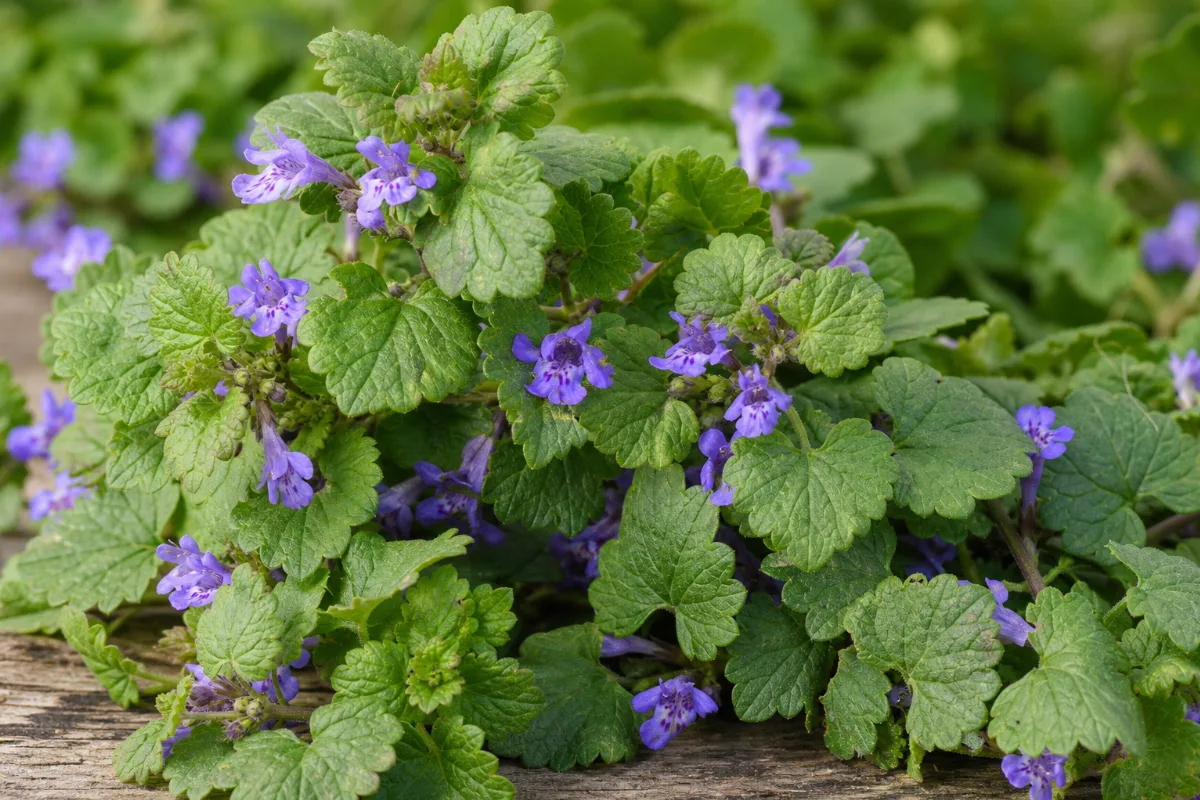
Herbs & Botanicals · Old European cough herb
Ground ivy
Glechoma hederacea · also called Alehoof, gill-over-the-ground, creeping Charlie, cat's-foot
Ground ivy is a creeping mint-family plant that Europeans drank as tea for coughs and chest complaints, and once used to flavour ale. No study in people has tested it, so we cannot say it works. Do not use it in pregnancy, and do not mix it up with English ivy.
General information, not medical advice. Last substantive update · Not medically reviewed. A named clinician has not signed off on this page. How this page is made
About Ground ivy
Ground ivy (Glechoma hederacea) is a creeping mint-family plant of Europe used as tea for coughs and chest complaints and, in the past, to flavour ale. Research is limited to lab, rat and mouse studies, and reviews say no human trials exist.
What ground ivy is
Ground ivy, also called alehoof or gill-over-the-ground, is a creeping plant in the mint family (Lamiaceae). It grows wild in Europe and is now a common lawn and garden weed in other places. The leaves and flowering stems are the parts used.
What it has been used for
In European folk medicine it was used for breathing, inflammatory and stomach complaints. In Chinese medicine it is used for gallstones, jaundice and inflammation. Before hops, it was added to ale as a flavouring, which gave it the name alehoof.
Long use is not proof that something works. We found no trial testing it for any of these uses.
What is in it
Lab analyses find rosmarinic and chlorogenic acids, flavonoids such as apigenin and rutin, and triterpenes such as ursolic acid. The essential oil is mostly sesquiterpenes. The amounts change with the harvest time, so products will not all be alike.
What the research shows
A 2026 review states that no clinical trial or human study of ground ivy has been published. What exists is test-tube work, plus rat and mouse studies on the liver and gallstones. These results show what is worth studying, but they do not show benefit for people.
Main cautions
Safety in people has not been studied. A consumer reference says to avoid ground ivy in pregnancy and breastfeeding and with liver or kidney disease. We could not confirm this in primary studies, so treat it as a precaution. Large amounts are toxic to horses. Ground ivy is not English ivy, which is a different plant.
At a glance
Traditional uses history, not proof
- European folk use for coughs, catarrh and bronchitis
- Flavouring ale before hops
- Chinese medicine use for gallstones, jaundice and inflammation
Studied for research
- Cough and chest complaints: insufficient (traditional use only)
- Liver and gallstones: insufficient (rats and mice)
- Inflammation and antioxidant effects: insufficient (lab cells)
Main compounds
- Rosmarinic and chlorogenic acids
- Flavonoids (apigenin, luteolin, rutin)
- Triterpenes such as ursolic acid
- Essential oil (mostly sesquiterpenes)
Common forms
- Fresh or dried herb
- Tea (traditional 'gill tea')
- Tinctures and extracts (content varies)
Research links: 2026 review: chemistry, activities and oral health (PubMed) · 2026 review: traditional uses and pharmacology (PubMed) · Rat study of a hot-water extract on liver injury (PubMed) · Ohio State weed guide: horse toxicity · Research Library · Genes & Biomarkers Library
The plant and its history
- Accepted scientific name
- Glechoma hederacea L.
- Naming authority
- GBIF species match read 2026-10-25: ACCEPTED, EXACT match, usageKey 2926557, confidence 99. NCBI Taxonomy not queried.
- Synonyms
- Glecoma hederacea; Nepeta hederacea (names listed by the Ohio State guide; not checked in GBIF)
- Common names
- Ground ivy (English); Alehoof (English (old)); Gill-over-the-ground (English); Creeping Charlie (English (US)); Cat's-foot (English)
- Botanical family
- Lamiaceae (the mint family).
- Classification
- Plantae > Lamiales > Lamiaceae > Glechoma > Glechoma hederacea
- Native range
- Europe, per the Ohio State guide; now widespread as a weed elsewhere.
- Habitat
- Not covered in the sources read beyond its spread as a lawn and garden weed.
- What the plant looks like
- Roots: Not covered.; Stems: Creeping stems (per the common names and cultivation papers); details not verified.; Leaves: Rounded, ivy-like leaves; the species name means 'ivy-like' (Ohio State guide).; Flowers: Not covered.; Fruit: Not covered.
- Cultivation
- A 2022 study found it can be grown under organic farming conditions without large changes in chemistry compared with wild plants.
- Harvest and processing
- Chemistry varied most with harvest period: flowering phase best for polyphenols, vegetative phase for essential oil (Sile 2022).
- Look-alikes and adulterants
- Name: English ivy (Hedera helix); Note: A different plant in the ivy family (Araliaceae), source of the cough-syrup ivy leaf. Shares an English name only.; Name: Other creeping mints and 'creeping Jenny' (Lysimachia nummularia); Note: Look-alike ground covers; 'creeping Jenny' is sometimes used as a common name for ground ivy as well. Not verified in a botanical key.
- Sustainability and conservation
- Not covered.
Traditional use and history history, not clinical proof
| Tradition or era | Documented use | Source |
|---|---|---|
| European folk medicine | Respiratory, inflammatory and digestive disorders (2026 review); recorded in Europe since antiquity (Planta Med review). | p42588900 |
| Brewing (ale) | Used to flavour beer until hops replaced it; the old name 'alehoof' comes from this (Ohio State guide). | s-osu |
| Traditional Chinese medicine | Gallstones, dropsy, abscess, diabetes, inflammation and jaundice (rat paper abstract); asthma, bronchitis, colds (East Asian variety). | p28416441 |
| EMA/HMPC | Not checked (request blocked). | s-ema |
Traditional use shows how a plant was used. It does not show that a supplement works or is safe today.
What is inside, and how it may work
What the plant contains and how those compounds act in cells and animals. Laboratory and animal mechanisms are not proven effects in people.
Main compounds
| Compound | Family | Where it is concentrated | Activity studied | Level of evidence |
|---|---|---|---|---|
| Rosmarinic acid PubChem 5281792 | phenolic acids | Aerial parts | A main phenolic acid in several analyses; credited with antioxidant and anti-inflammatory activity in lab work. 6 15 5 | Laboratory research |
| Chlorogenic acid (and neochlorogenic, cryptochlorogenic) | phenolic acids | Aerial parts | Abundant in the extracts; antioxidant in lab tests. 6 15 5 | Laboratory research |
| Apigenin (mostly as glycosides) PubChem 5280443 | flavonoids | Aerial parts 26.17 mg/g in the 85% fraction (Slawinska 2023) | Likely driver of the strong antioxidant effect of the 85% fraction in cells. 6 | Laboratory research |
| Ursolic acid PubChem 64945 | triterpenoids | Not stated | A 2026 review lists ursolic acid (and oleanolic acid) among the triterpenoids thought to add anti-inflammatory and antimicrobial activity. We did not see amounts. 1 | Laboratory research |
| Sesquiterpenes and diterpene glycosides | terpenoids | Aerial parts of var. longituba | Isolated compounds reduced nitric oxide in activated brain immune cells and two showed toxicity to certain cancer cell lines in the lab. 3 | Laboratory research |
| Essential oil (germacrene D, germacrene B, beta-ocimene, eucalyptol, beta-myrcene) PubChem 5317570 | volatile oil | Aerial parts 0.32 to 2.98 mL per kg dry weight | The oil was mostly sesquiterpenes with germacrene D dominant. Pulegone (CID 442495) was not listed in the text read, so the premise of pulegone-type oil is unconfirmed. 5 13 | Laboratory research |
Mechanisms, receptors and pathways
| Target or pathway | Gene or receptor | What was found | Level |
|---|---|---|---|
| Oxidative damage in human blood cells | Not specified | The 85% fraction reduced protein carbonylation, lipid peroxidation and DNA damage. 6 | Laboratory research |
| Macrophage inflammatory switch | M1 phenotype (mouse cells) | Extracts reduced conversion of macrophages to the pro-inflammatory M1 state. 5 | Laboratory research |
| Liver fibrosis and inflammation signalling | TGF-beta1, Smad2/3, NF-kappa-B, AP-1, HMGB1/TLR4 | A hot-water extract reduced these signals in bile-duct-blocked rats. 7 | Animal research |
Absorption, metabolism and elimination
- Absorption
- Not studied. The 2026 Planta Med authors say bioavailability studies are still needed.
- Distribution
- Not covered.
- Metabolism
- Not covered.
- Elimination
- Not covered.
- Bioavailability
- Not established.
Isolated compounds versus whole extracts
Most lab data are for solvent extracts, fractions or isolated compounds (some from an East Asian variety), not for tea or whole herb as traditionally used.
Nutritional composition
Not an essential nutrient. A Croatian analysis found fibre, protein, calcium and potassium in the plant; it is not a normal food.
7 not enough evidence
What was looked at
The 7 benefits and uses checked for Ground ivy, each with how strong the evidence is. Tap one to open it.
- Cough, catarrh and bronchitis (traditional use)Not enough evidence
- Inflammation (lab findings only)Not enough evidence
- Antioxidant activity (lab findings only)Not enough evidence
- Germs and oral health (lab findings only)Not enough evidence
- Liver, bile and gallstones (rat and mouse tests)Not enough evidence
- Stomach, urinary and diabetes uses (traditional)Not enough evidence
- Skin problems and wounds (traditional)Not enough evidence
What is Ground ivy good for?
Ground ivy has no tested benefit in people. The rows show what is claimed and how weak the evidence is.
Benefits, one by one
Each card is a research question, not a promise. Tap a goal to filter. Open a card to see the studies, doses and limits.
Cough, catarrh and bronchitis (traditional use)
Not enough evidenceIn European folk medicine, ground ivy tea has been used for coughs, catarrh and chest complaints. We found no trial in people, so we cannot say it works.
4 studiesNot applicable. No amount, preparation or form is recommended.
Studies, doses and limits
What the trials found
None. A 2026 review states that no clinical trials or human studies of ground ivy have been published.
Results
None.
Effect sizes as reported
None.
Why this rating
Traditional use only. Long use is not proof of benefit.
Form and dose studied
Not applicable. No amount, preparation or form is recommended.
Who was studied
Not applicable
Limits
Based on review statements about folk use. A cough that lasts more than a few weeks, or comes with blood, breathlessness or fever, needs a doctor.
Why researchers looked
This is the best-known European folk use, and one reason the herb has a place in old herbals.
Traditional use
The 2026 reviews describe use for breathing (respiratory) problems in European folk medicine. A study of the East Asian variety notes use for asthma, bronchitis, colds and inflammation. A consumer reference rates the evidence for coughs and mild lung problems as insufficient.
Proposed mechanism Pharmacological theory
Not shown. The plant contains eucalyptol (1,8-cineole), which is known for loosening mucus in other plants, but no study tested ground ivy on coughs.
A proposed mechanism does not show that the effect happens in people.
See the safety tab: pregnancy, liver and kidney cautions, and do not confuse it with English ivy.
Inflammation (lab findings only)
Not enough evidenceExtracts calmed inflammation signals in mouse immune cells in a dish, and some isolated compounds did the same in brain immune cells. No study in people exists.
3 studiesNot applicable. No amount, preparation or form is recommended.
Studies, doses and limits
What the trials found
None.
Results
Lab cell results only, from extracts of the aerial parts and from compounds isolated from the East Asian variety.
Effect sizes as reported
Not given as numbers in the abstract for the extracts. For isolated compounds the abstract reports nitric-oxide IC50 values of about 25 to 62 micromolar.
Why this rating
Cell studies only; they do not show benefit in people.
Form and dose studied
Not applicable. No amount, preparation or form is recommended.
Who was studied
Mouse and rodent cell lines
Limits
Cells in a dish. One of the studies used a different variety (var. longituba).
Why researchers looked
Inflammation is the usual reason scientists test plants used for chest and joint complaints.
Traditional use
Folk use for inflammation, bronchitis and colds is mentioned in the papers.
Proposed mechanism Laboratory research
In mouse bone-marrow macrophages treated with a bacterial toxin, plant extracts reduced the switch to the inflammatory (M1) state. Some purified sesquiterpene and diterpene glycosides reduced nitric-oxide production in activated brain immune cells.
A proposed mechanism does not show that the effect happens in people.
None specific.
Antioxidant activity (lab findings only)
Not enough evidenceGround ivy extracts are rich in antioxidants such as rosmarinic acid and apigenin and protected lab cells from oxidative damage. This has not been tested in people.
3 studiesNot applicable. No amount, preparation or form is recommended.
Studies, doses and limits
What the trials found
None.
Results
The 85% fraction was strongest. The same extracts also lowered blood-cell viability to as low as 65% after 24 hours in one study.
Effect sizes as reported
Not applicable
Why this rating
Test-tube results. Antioxidant tests in a dish often do not carry over to the body.
Form and dose studied
Not applicable. No amount, preparation or form is recommended.
Who was studied
Human blood plasma and cells in the lab
Limits
A second study of skin, gut and liver-type cells reported no toxicity, so the toxicity picture in cells is mixed.
Why researchers looked
The herb is rich in phenolic compounds, so researchers test antioxidant strength first.
Traditional use
Not a traditional use; a modern research interest.
Proposed mechanism Laboratory research
The 85% fraction reduced protein and fat oxidation and DNA damage in human blood cells in the lab. The authors credit apigenin as the likely main cause.
A proposed mechanism does not show that the effect happens in people.
Cell toxicity was seen in one study at the amounts tested.
Germs and oral health (lab findings only)
Not enough evidenceReviews describe germ-fighting activity in the lab and suggest ground ivy might one day be used in oral-care products. There are no tests in people's mouths.
1 studiesNot applicable. No amount, preparation or form is recommended.
Studies, doses and limits
What the trials found
None.
Results
None in people.
Effect sizes as reported
None.
Why this rating
Lab studies only, summarised in a narrative review.
Form and dose studied
Not applicable. No amount, preparation or form is recommended.
Who was studied
Not applicable
Limits
The review itself says oral-specific studies and clinical studies are still needed.
Why researchers looked
The 2026 review looks at the plant mainly for dental and oral hygiene use.
Traditional use
Not a long-standing use.
Proposed mechanism Laboratory research
Experimental antimicrobial and cytoprotective effects are reported; the review says direct oral-specific evidence is limited.
A proposed mechanism does not show that the effect happens in people.
None specific.
Liver, bile and gallstones (rat and mouse tests)
Not enough evidenceIn Chinese medicine ground ivy is used for gallstones and jaundice. Extracts protected the liver in rats and reduced gallstones in mice. Nothing has been tested in people.
4 studiesNot applicable. No amount, preparation or form is recommended.
Studies, doses and limits
What the trials found
None.
Results
Better liver blood markers and less scarring in bile-duct-blocked rats (hot water extract); fewer and smaller gallstone crystals in mice given the branded extract three times a day for 3 weeks.
Effect sizes as reported
Not given as numbers in the abstracts.
Why this rating
Animal studies only, with surgical or diet-induced models; no people.
Form and dose studied
Not applicable. No amount, preparation or form is recommended.
Who was studied
Rats and mice
Limits
Animal results often do not carry over. One study used a branded product. A consumer reference warns that ground ivy may harm the liver, so a liver benefit in animals cannot be taken as safe use in people.
Why researchers looked
Gallstones, jaundice and liver disease are among the main traditional Chinese uses.
Traditional use
The rat paper says Chinese medicine prescribes the herb for gallstones (cholelithiasis), dropsy, abscess, diabetes, inflammation and jaundice. The 2026 Planta Med review lists liver and bile diseases among traditional uses.
Proposed mechanism Animal research
In rats with a blocked bile duct, a hot-water extract lowered oxidative stress, inflammation and scarring signals (TGF-beta1, NF-kappa-B and HMGB1/TLR4 pathways). In mice fed a gallstone-forming diet, a branded extract reduced gallstone crystals, cholesterol and bile acids without changing bile flow.
A proposed mechanism does not show that the effect happens in people.
Do not use for gallstones, jaundice or liver disease without a doctor. See the liver section of the safety tab.
Stomach, urinary and diabetes uses (traditional)
Not enough evidenceTraditional uses include stomach and gut complaints, water retention, bladder and kidney stones, and diabetes. We found no trial for any of them.
3 studiesNot applicable. No amount, preparation or form is recommended.
Studies, doses and limits
What the trials found
None.
Results
None.
Effect sizes as reported
None.
Why this rating
Traditional use only.
Form and dose studied
Not applicable. No amount, preparation or form is recommended.
Who was studied
Not applicable
Limits
Summaries of folk use only. Diabetes and kidney stones need medical care.
Why researchers looked
These are among the older uses listed in the herbal literature.
Traditional use
The 2026 Planta Med review lists gastrointestinal disorders; the rat paper lists dropsy and diabetes in Chinese medicine; a consumer reference lists diarrhoea, hemorrhoids, bladder and kidney stones, all as insufficient evidence.
Proposed mechanism Pharmacological theory
Not shown. The consumer reference suggests an astringent action, but cites no study for it.
A proposed mechanism does not show that the effect happens in people.
A consumer reference says ground ivy may irritate the kidneys. Not verified in primary sources.
Skin problems and wounds (traditional)
Not enough evidenceGround ivy has been applied to wounds, ulcers and skin complaints. We found no trial, and only lab work on skin cells.
3 studiesNot applicable. No amount, preparation or form is recommended.
Studies, doses and limits
What the trials found
None.
Results
None.
Effect sizes as reported
None.
Why this rating
Traditional use plus cell tests that do not address healing.
Form and dose studied
Not applicable. No amount, preparation or form is recommended.
Who was studied
Not applicable
Limits
Not tested on wounds. Deep, infected or slow-healing wounds need medical care.
Why researchers looked
Skin disorders are listed among traditional uses.
Traditional use
The 2026 Planta Med review lists skin disorders; a consumer reference lists wounds and skin conditions as insufficient evidence.
Proposed mechanism Laboratory research
Not shown. Extracts were not toxic to a human skin-cell line in one lab study, and one abstract mentions pigment-modulating effects of extracts, but neither tests wound healing.
A proposed mechanism does not show that the effect happens in people.
None specific.
Connections to the rest of health
How Ground ivy connects to the rest of our health knowledge graph. Every link says what kind of connection it is. A safety link (for example to the liver) is a warning, not a benefit. A study that merely mentions a topic never creates a benefit link.
Explore every connection: goals, body systems, organs, symptoms, genes
A. Wellness goals
| Connected to | Kind of connection | Evidence status | Context | Studies |
|---|---|---|---|---|
| Breathing Support | Traditional use | Not enough evidence | Cough, catarrh and bronchitis (traditional use): In European folk medicine, ground ivy tea has been used for coughs, catarrh and chest complaints. We found no trial in people, so we cannot say it works. | 1 4 3 14 |
| Lung Support | Traditional use | Not enough evidence | Cough, catarrh and bronchitis (traditional use): In European folk medicine, ground ivy tea has been used for coughs, catarrh and chest complaints. We found no trial in people, so we cannot say it works. | 1 4 3 14 |
| Immune Support | Traditional use | Not enough evidence | Cough, catarrh and bronchitis (traditional use): In European folk medicine, ground ivy tea has been used for coughs, catarrh and chest complaints. We found no trial in people, so we cannot say it works. | 1 4 3 14 |
| Immune Support | Not enough evidence | Inflammation (lab findings only): Extracts calmed inflammation signals in mouse immune cells in a dish, and some isolated compounds did the same in brain immune cells. No study in people exists. Germs and oral health (lab findings only): Reviews describe germ-fighting activity in the lab and suggest ground ivy might one day be used in oral-care products. There are no tests in people's mouths. | 5 3 1 | |
| Antioxidant Support | Not enough evidence | Antioxidant activity (lab findings only): Ground ivy extracts are rich in antioxidants such as rosmarinic acid and apigenin and protected lab cells from oxidative damage. This has not been tested in people. | 6 2 15 | |
| Oral Health | Not enough evidence | Germs and oral health (lab findings only): Reviews describe germ-fighting activity in the lab and suggest ground ivy might one day be used in oral-care products. There are no tests in people's mouths. | 1 | |
| Liver Support | Traditional use | Not enough evidence | Liver, bile and gallstones (rat and mouse tests): In Chinese medicine ground ivy is used for gallstones and jaundice. Extracts protected the liver in rats and reduced gallstones in mice. Nothing has been tested in people. | 7 8 4 14 |
| Digestive Support | Traditional use | Not enough evidence | Liver, bile and gallstones (rat and mouse tests): In Chinese medicine ground ivy is used for gallstones and jaundice. Extracts protected the liver in rats and reduced gallstones in mice. Nothing has been tested in people. Stomach, urinary and diabetes uses (traditional): Traditional uses include stomach and gut complaints, water retention, bladder and kidney stones, and diabetes. We found no trial for any of them. | 7 8 4 14 |
| Urinary Support | Traditional use | Not enough evidence | Stomach, urinary and diabetes uses (traditional): Traditional uses include stomach and gut complaints, water retention, bladder and kidney stones, and diabetes. We found no trial for any of them. | 4 7 14 |
| Blood Sugar Support | Traditional use | Not enough evidence | Stomach, urinary and diabetes uses (traditional): Traditional uses include stomach and gut complaints, water retention, bladder and kidney stones, and diabetes. We found no trial for any of them. | 4 7 14 |
| Skin Health | Traditional use | Not enough evidence | Skin problems and wounds (traditional): Ground ivy has been applied to wounds, ulcers and skin complaints. We found no trial, and only lab work on skin cells. | 4 2 14 |
B. Body systems
| Connected to | Kind of connection | Evidence status | Context | Studies |
|---|---|---|---|---|
| Reproductive system | Not enough evidence | Consumer reference warns of miscarriage risk; no primary data. Preparation or compound: Ground ivy herb |
14 | |
| Liver | Not enough evidence | Consumer reference warns of liver harm; animal studies show liver protection; no human data. Preparation or compound: Ground ivy herb |
14 7 | |
| Respiratory System | Biological association | Not enough evidence | Studied for: Cough, catarrh and bronchitis (traditional use) | 1 4 3 14 |
| Immune System | Biological association | Not enough evidence | Studied for: Inflammation (lab findings only) | 5 3 1 |
| Whole Body | Biological association | Not enough evidence | Studied for: Antioxidant activity (lab findings only) | 6 2 15 |
| Oral Cavity | Biological association | Not enough evidence | Studied for: Germs and oral health (lab findings only) | 1 |
| Liver And Gallbladder | Biological association | Not enough evidence | Studied for: Liver, bile and gallstones (rat and mouse tests) | 7 8 4 14 |
| Digestive System | Biological association | Not enough evidence | Studied for: Stomach, urinary and diabetes uses (traditional) | 4 7 14 |
| Urinary System | Biological association | Not enough evidence | Studied for: Stomach, urinary and diabetes uses (traditional) | 4 7 14 |
| Skin | Biological association | Not enough evidence | Studied for: Skin problems and wounds (traditional) | 4 2 14 |
L. Active compounds
| Connected to | Kind of connection | Evidence status | Context | Studies |
|---|---|---|---|---|
| Rosmarinic acid | Biological association | In vitro | A main phenolic acid in several analyses; credited with antioxidant and anti-inflammatory activity in lab work. Preparation or compound: Aerial parts |
6 15 5 |
| Chlorogenic acid (and neochlorogenic, cryptochlorogenic) | Biological association | In vitro | Abundant in the extracts; antioxidant in lab tests. Preparation or compound: Aerial parts |
6 15 5 |
| Apigenin (mostly as glycosides) | Biological association | In vitro | Likely driver of the strong antioxidant effect of the 85% fraction in cells. Preparation or compound: Aerial parts |
6 |
| Ursolic acid | Biological association | In vitro | A 2026 review lists ursolic acid (and oleanolic acid) among the triterpenoids thought to add anti-inflammatory and antimicrobial activity. We did not see amounts. Preparation or compound: Not stated |
1 |
| Sesquiterpenes and diterpene glycosides | Biological association | In vitro | Isolated compounds reduced nitric oxide in activated brain immune cells and two showed toxicity to certain cancer cell lines in the lab. Preparation or compound: Aerial parts of var. longituba |
3 |
| Essential oil (germacrene D, germacrene B, beta-ocimene, eucalyptol, beta-myrcene) | Biological association | In vitro | The oil was mostly sesquiterpenes with germacrene D dominant. Pulegone (CID 442495) was not listed in the text read, so the premise of pulegone-type oil is unconfirmed. Preparation or compound: Aerial parts |
5 13 |
Each connection is stored with the ingredient, the connected record, the kind of connection, the evidence status, the supporting studies, the preparation or compound involved, and a review date (last reviewed October 25, 2026).
The evidence
The research centre for Ground ivy. Every record here was checked against PubMed or the publisher's page; we never list a study we have not verified.
Evidence by outcome
Bars show how many studies we found for each outcome, not how well it works. People are added up across trials only (reviews are not added, to avoid double counting).
How we rate evidence
High certainty
Several well-run trials or reviews agree; further research is unlikely to change the picture much.
Moderate certainty
Good trials point the same way, but some doubt remains.
Low certainty
Small, short or inconsistent trials. The finding could change with better research.
Very low certainty
Very little or very weak human data. Treat as a possibility only.
Mixed findings
Trials or reviews disagree with each other.
Not enough evidence
Not enough human research to say either way.
Evidence against
Good research found no benefit, or found harm.
We take the reviewers' own risk-of-bias and GRADE statements where they exist, and otherwise judge from study size, design, consistency, directness and whether a product matches what is sold. Many publications do not make evidence high. Method note: We read our existing herb summary, searched PubMed, read the abstract of each PubMed record cited, read parts of two full-text papers and two web guides, and checked names in GBIF and compounds in PubChem.
Study library: every study we checked 15
| Study | Design | People | Product, dose, length | Result |
|---|---|---|---|---|
| Bereteu-Costa 2026 Glechoma hederacea (L.): Phytochemical Profile, Biological Activities and Emerging Perspectives in Oral Health-A Review. Plants (Basel) · PMID 42588900 · DOI |
Narrative review review |
Review of lab and animal research | Not applicable (review) aerial parts Not given here Not given here · vs Not stated in the abstract |
Describes antioxidant, antimicrobial, anti-inflammatory and cytoprotective effects in experiments. The full text states that no clinical trials or human studies of ground ivy have been published, and that data on side effects, contraindications and herb-drug interactions are scarce. Not applicable Methods, limits and fundingOutcomes: Chemistry and reported biological activity; oral-health potential Limitations: A narrative review, not a systematic one. Conflicts of interest: none declared. The no-human-trials and scarce-safety-data statements come from the full text (PMC13468363), not the abstract. Read: abstract |
| Grabowska 2022 Optimization of the Extraction Procedure for the Phenolic-Rich Glechoma hederacea L. Herb and Evaluation of Its Cytotoxic and Antioxidant Potential. Plants (Basel) · PMID 36079600 · DOI |
Laboratory research in-vitro |
Human skin, gut and liver-type cell lines in the lab | Water and ethanol extracts of the dried herb aerial parts (dried herb) Not given here Not given here · vs Not stated in the abstract |
Water infusion with maceration and hot ethanol gave the richest extracts, with strong antioxidant activity. The authors report the extracts were not toxic to the normal human cells tested and conclude this indicates safe use. Not given as numbers in the abstract Methods, limits and fundingOutcomes: Phenolic content, antioxidant tests, toxicity to human cells Limitations: Cells in a dish, not people. 'Safe use' is the authors' inference from cell tests and does not replace human safety data. It also differs from the 2023 Nutrients study, which saw lower blood-cell viability. Read: abstract |
| Kim 2022 Terpenoids from Glechoma hederacea var. longituba and their biological activities. Beilstein J Org Chem · PMID 35651699 · DOI |
Laboratory research in-vitro |
Cell lines in the lab | Compounds isolated from a methanol extract aerial parts of G. hederacea var. longituba (an East Asian variety) Not given here Not given here · vs Not stated in the abstract |
Nine compounds were isolated. Four reduced nitric-oxide production in activated brain immune cells in the lab, and two showed strong toxicity to certain cancer cell lines. Not given as numbers in the abstract Methods, limits and fundingOutcomes: Structure of new sesquiterpene and diterpene glycosides; nitric-oxide production in brain immune cells; cancer-cell toxicity Limitations: Isolated compounds in cells; a variety (var. longituba), not necessarily the European plant. Not a test of the herb as people use it. Read: abstract |
| Krasocka 2026 Glechoma hederacea: A Comprehensive Insight into the Botanical Specification, Traditional Uses, Phytochemistry, Nutritional Value, Pharmacology, and Non-medicinal Applications. Planta Med · PMID 42173111 · DOI |
Narrative review review |
Review of traditional use and lab/animal research | Not applicable (review) whole plant / aerial parts Not given here Not given here · vs Not stated in the abstract |
Traditional use in Europe since antiquity for stomach and gut disorders, liver and bile disease, breathing problems and skin disorders. Crude extracts, fractions and single compounds showed liver-protective, anti-inflammatory, antioxidant, anticancer and pigment-modulating effects in experiments. The authors say animal experiments and clinical studies are still needed. Not applicable Methods, limits and fundingOutcomes: Traditional uses, chemistry, pharmacology Limitations: Only the abstract was read; the full text (which the abstract says covers safety of use) was not opened. Conflicts of interest: none declared. Read: abstract |
| Sile 2022 Wild-Grown and Cultivated Glechoma hederacea L.: Chemical Composition and Potential for Cultivation in Organic Farming Conditions. Plants (Basel) · PMID 35336701 · DOI |
Laboratory research in-vitro |
Plant samples and mouse immune cells in the lab | 70% ethanol extracts and steam-distilled essential oil aerial parts Not given here Not given here · vs Not stated in the abstract |
Main extract compounds were chlorogenic and rosmarinic acids and flavonoid glycosides. Essential oil yield ranged from 0.32 to 2.98 mL per kg dry weight. Extracts were antioxidant and anti-inflammatory in lipopolysaccharide-treated mouse bone-marrow macrophages. In the full text, the oil was mostly sesquiterpenes, with germacrene D dominant and eucalyptol (1,8-cineole) among the main parts; the text did not list pulegone. Not given as numbers in the abstract Methods, limits and fundingOutcomes: Chemical composition, antioxidant and anti-inflammatory activity in lab cells Limitations: Lab and plant-chemistry study. Cell results do not show benefit in people. Oil composition was read from the full text (PMC8949430) only in part. Read: abstract |
| Sławińska 2023 New Aspect of Composition and Biological Properties of Glechoma hederacea L. Herb: Detailed Phytochemical Analysis and Evaluation of Antioxidant, Anticoagulant Activity and Toxicity in Selected Human Cells and Plasma In Vitro. Nutrients · PMID 37049509 · DOI |
Laboratory research in-vitro |
Human blood plasma and blood cells in the lab | Extract and fractions of the herb (20, 60 and 85% fractions) aerial parts Not given here Not given here · vs Not stated in the abstract |
The herb was rich in rosmarinic, neochlorogenic and chlorogenic acids and in flavonoids (rutin and apigenin, quercetin and luteolin glycosides). The 85% fraction reduced protein and fat oxidation and DNA damage in lab cells. The extract and fractions lowered blood-cell viability to a maximum of 65% after 24 hours. Not given as numbers in the abstract Methods, limits and fundingOutcomes: Markers of oxidative damage, DNA damage, blood-clotting markers, cell viability Limitations: Test-tube study. Cell viability fell, so safety is not shown. No people were treated. The abstract gives no clotting numbers. Read: abstract |
| Wang 2017 Glechoma hederacea extracts attenuate cholestatic liver injury in a bile duct-ligated rat model. J Ethnopharmacol · PMID 28416441 · DOI |
Animal study animal |
Rats with surgically blocked bile ducts | Hot water extract of the herb aerial parts (as described in the abstract: Glechoma hederacea) Not given here Not given here · vs Not stated in the abstract |
Daily extract by stomach tube protected against liver injury in the rats: better blood markers and less oxidative stress, inflammation and scarring. Not given as numbers in the abstract Methods, limits and fundingOutcomes: Liver blood tests, scarring (fibrosis), inflammation Limitations: Rats with an artificial bile-duct blockage. No human data. Animal doses are not doses for people. Read: abstract |
| Xiao 2021 Protective effect of Glechoma hederacea extract against gallstone formation in rodent models. BMC Complement Med Ther · PMID 34261471 · DOI |
Animal study animal |
Normal rats and mice fed a gallstone-forming diet | A branded Glechoma hederacea extract (Hitrechol) not stated in the abstract Not given here Not given here · vs Not stated in the abstract |
Bile flow did not change. Three-times-daily treatment for 3 weeks reduced gallstone crystals, total cholesterol and bile acids in the mice, reduced liver cell death and fat build-up, and raised liver antioxidant enzymes. Not given as numbers in the abstract Methods, limits and fundingOutcomes: Bile flow, gallstone size and number, bile acids, liver damage and antioxidant markers Limitations: Mice and rats only, with a branded product extract; the abstract names no funder. Mouse results often do not carry over to people. Read: abstract |
| s-ema European Medicines Agency herbal medicines search for Glechoma · Source |
Search attempt n/a |
Methods, limits and fundingRead: not-read | ||
| s-gbif-gh GBIF Backbone Taxonomy: Glechoma hederacea L. (usageKey 2926557) · Source |
Reference database n/a |
Methods, limits and fundingRead: full-text | ||
| s-livertox NCBI Bookshelf / LiverTox search for Glechoma · Source |
Search attempt n/a |
Methods, limits and fundingRead: not-read | ||
| s-osu Ground-Ivy (Glechoma hederacea), weed guide, Ohio State University · Source |
Extension guide n/a |
Methods, limits and fundingRead: full-text | ||
| s-pubchem PubChem compound records: ursolic acid (CID 64945), rosmarinic acid (CID 5281792), apigenin (CID 5280443), pulegone (CID 442495), germacrene D (CID 5317570) · Source |
Reference database n/a |
Methods, limits and fundingRead: full-text | ||
| s-rxlist Ground Ivy, RxList (consumer supplement monograph) · Source |
Consumer monograph n/a |
Methods, limits and fundingRead: full-text | ||
| Šeremet 2022 Comprehensive Study of Traditional Plant Ground Ivy (Glechoma hederacea L.) Grown in Croatia in Terms of Nutritional and Bioactive Composition. Foods · PMID 35267291 · DOI |
Chemical analysis in-vitro |
Plant samples from Croatia | Heat, microwave and subcritical-water extracts aerial parts Not given here Not given here · vs Not stated in the abstract |
The plant was rich in fibre, protein, calcium and potassium. Rutin and chlorogenic, cryptochlorogenic, caffeic and rosmarinic acids were the main phenolics; apigenin and luteolin were present as glycosides. Not given as numbers in the abstract Methods, limits and fundingOutcomes: Nutritional content and phenolic compounds Limitations: Chemistry only; no biological test. Samples from one country. Read: abstract |
What we do not know yet
- No clinical trial of ground ivy in people for any use.
- No human safety, pregnancy, liver, kidney or interaction data.
- No regulator document read.
How new research is added
New studies are found by a saved PubMed search and placed in a review queue. A person reads each one before it changes any rating or safety statement.
Lab markers
What changed in blood or saliva tests during trials. A changed number is not the same as feeling or being healthier, and we give no "normal ranges".
Safety
What studies and official sources say about side effects, medicines and who should check first. Each point shows what kind of evidence it comes from.
Main points to know 5
- Safety in people has not been studied. A 2026 review says no clinical trials or human studies of ground ivy have been published, and that information on side effects, contraindications and herb-drug interactions is scarce. Cell tests gave mixed signals: one study saw lower blood-cell viability, another saw no toxicity in skin, gut and liver-type cells. Insufficient 1 6 2
- Pregnancy and breastfeeding: avoid. A consumer supplement reference says ground ivy is unsafe in pregnancy and could cause a miscarriage, and says to avoid it while breastfeeding. No primary study or agency document was found to support or test this. Treat it as a precaution. Authoritative guidance 14
- Liver and kidneys: unverified caution. The same reference says ground ivy contains substances that can damage the liver and irritate the kidneys, and advises against use with liver or kidney disease. We found no case report or study showing this in people. Authoritative guidance 14
- Toxic to horses in large amounts. An Ohio State University weed guide says large amounts, fresh or in hay, are toxic to horses, with salivation, sweating and difficulty breathing; deaths are rare and most livestock avoid the taste. This is an animal report, not a human one. Animal research 12
- Do not confuse it with English ivy. Ground ivy (Glechoma hederacea, mint family) is a different plant from English ivy (Hedera helix, ivy family), whose leaf is used in cough syrups. They share an English name only. Make sure a product names the Latin name. Authoritative guidance 10
Side effects 1
| Effect | How often | Severity and recovery | Evidence |
|---|---|---|---|
| No adverse effects reported in people in the sources read Absence of reports is not proof of safety, because no human studies exist. A consumer reference says larger amounts can irritate the stomach, gut and kidneys (unverified). | Not established | Not known Not reported | Insufficient 1 |
Liver
No human liver-injury case from ground ivy was found. A consumer reference warns that the plant contains substances that can harm the liver. In rats, extracts protected the liver in bile-duct and gallstone models, and cell tests found no toxicity to a liver-type cell line in one study. These animal and cell findings do not settle the question for people. The brief for this page expected pulegone-type oil constituents; the full text of the Sile 2022 study we read did not list pulegone and described the oil as mostly sesquiterpenes with germacrene D dominant, so we cannot report a pulegone-based liver risk. A LiverTox search could not be read, so it is not confirmed whether LiverTox has an entry. 7 2 5 14
How often. No data.
Monitoring. No agency advice found. Stop and seek care for dark urine, yellow eyes or skin, or severe stomach pain.
This is a safety connection. It is not evidence that Ground ivy supports liver health.
Medicines and supplements 2
| With | Why it matters | Importance | Evidence | What to do |
|---|---|---|---|---|
| Any medicine, supplement or herb general | No interaction study of any kind was found. The 2026 review says herb-drug interaction information is scarce. | Unknown. | Insufficient Not enough evidence 1 | Ask your doctor or pharmacist before using ground ivy if you take regular medicines, especially liver-processed medicines. |
| Blood thinners (warfarin, aspirin, clopidogrel, heparin) prescription | Theory only: a 2023 lab study looked at clotting markers in human plasma, but the abstract gives no result for them. | No human data. | Laboratory research Not enough evidence 6 | Tell your doctor or pharmacist about any ground ivy product, especially before surgery. |
Who should check first 5
| Situation | Advice | Evidence |
|---|---|---|
| Pregnancy | Avoid. A consumer reference says it may cause miscarriage; no primary data, so this is a precaution. | Authoritative guidance 14 |
| Breastfeeding | Avoid. Not enough information to know whether it is safe for a nursing infant. | Authoritative guidance 14 |
| Liver disease | Avoid unless your doctor agrees. Unverified caution from a consumer reference. | Authoritative guidance 14 |
| Kidney disease | Avoid unless your doctor agrees. Unverified caution from a consumer reference. | Authoritative guidance 14 |
| Children | No data. Do not give ground ivy to children without a doctor's advice. | Insufficient 1 |
Overdose, product quality and regulators
Summary. No human toxicity data exist. Horses can be poisoned by large amounts; cell tests are mixed.
Animal. Horses: large amounts eaten fresh or in hay are toxic, with salivation, sweating and difficulty breathing; fatalities rare (Ohio State weed guide). We could not read the second source named in our summary (The Horse, a University of Kentucky article; the page returned a block error), so this rests on one extension guide.
Human doses studied. None.
High dose or long term signals. None found in people. In one lab study, extracts lowered human blood-cell viability to as low as 65% after 24 hours.
Overdose response. Not covered. For suspected poisoning call poison control (US: 1-800-222-1222).
Genotoxicity. Not covered in the sources read.
Toxic plant parts. Not established. The horse report refers to the whole plant, fresh or in hay.
No contamination or adulteration reports for ground ivy products were found. Content varies a lot: essential oil yield ranged from 0.32 to 2.98 mL per kg between accessions and harvest times.
Natural variation in oil and phenolic content. The chemical makeup varied most with harvest period, and oil yield varied nearly tenfold between plants (Sile 2022). Herbal products are therefore unlikely to be consistent. 5
| Body | Action | Date |
|---|
When to get medical help
- Yellow skin or eyes, dark urine or severe stomach pain after using a ground ivy product: stop it and get medical care.
- Vaginal bleeding or cramping in pregnancy: contact your doctor or emergency services at once.
- Swelling of the face or lips, or difficulty breathing: emergency care.
Stop the supplement and contact a clinician or emergency service. In the US, Poison Control is 1-800-222-1222.
General information only, not medical advice. Ask a clinician or pharmacist before use, especially with medicines, in pregnancy or with a health condition. See the Natural Remedy Safety guide.
Frequently asked questions
What is ground ivy?
Does ground ivy help coughs?
Is ground ivy the same as English ivy?
No. Ground ivy is a mint-family plant. English ivy (Hedera helix) is in the ivy family and is the source of ivy leaf cough syrups. They only share a name.
Why is it called alehoof?
It was used to flavour beer before hops took over, and the old name 'alehoof' comes from that use.
Is ground ivy safe in pregnancy?
A consumer reference says it is unsafe and might cause miscarriage. We found no primary study, but because the risk is not ruled out, avoid it in pregnancy and breastfeeding.
Can ground ivy harm the liver or kidneys?
Does it contain pulegone?
We did not find pulegone listed in the oil analysis we read. That study found the oil was mostly sesquiterpenes, with germacrene D the main part. Oil makeup varies, so this is not a guarantee.
Is ground ivy poisonous to horses?
An Ohio State guide says large amounts, fresh or in hay, are toxic to horses, causing drooling, sweating and difficulty breathing. Deaths are rare, and most animals avoid it.
Is it good for the liver or gallstones?
Does it have antioxidants?
Can it interact with medicines?
No interaction study exists. A review says information is scarce. Ask a doctor or pharmacist about amounts and about your medicines before using it.
Has it been checked by regulators?
We could not read any regulator document for ground ivy. We do not know whether a European monograph exists.
Explore by health goal
Immune SupportDigestive SupportBreathing SupportLung SupportAntioxidant SupportOral HealthLiver SupportUrinary SupportBlood Sugar SupportSkin Health
Editorial transparency
- Written by
- AlternativeMed editorial team. Research compiled with AI assistance, then checked against PubMed records.
- Medical review
- None. This page has not been reviewed by a physician or pharmacist.
- First published
- 2026-10-25
- Last substantive update
- 2026-10-25
- How we research
- We read our existing herb summary, searched PubMed, read the abstract of each PubMed record cited, read parts of two full-text papers and two web guides, and checked names in GBIF and compounds in PubChem.
- How we rate evidence
- See "How we rate evidence" in the Evidence tab.
- Independence
- No product is promoted on this page. No affiliate links are shown.
Sources 15
Each source was opened and checked. Where we read only the abstract, it says so. The small numbers in the text point here.
- Bereteu-Costa AD, Pallag A, Potra Cicalau GI, et al.. Glechoma hederacea (L.): Phytochemical Profile, Biological Activities and Emerging Perspectives in Oral Health-A Review.. Plants (Basel). 2026. PMID 42588900. DOI 10.3390/plants15152396. (abstract)
- Grabowska K, Amanowicz I, Paśko P, et al.. Optimization of the Extraction Procedure for the Phenolic-Rich Glechoma hederacea L. Herb and Evaluation of Its Cytotoxic and Antioxidant Potential.. Plants (Basel). 2022. PMID 36079600. DOI 10.3390/plants11172217. (abstract)
- Kim JW, Ham SY, Khan Z, et al.. Terpenoids from Glechoma hederacea var. longituba and their biological activities.. Beilstein J Org Chem. 2022. PMID 35651699. DOI 10.3762/bjoc.18.58. (abstract)
- Krasocka W, Olszewska MA, Magiera A.. Glechoma hederacea: A Comprehensive Insight into the Botanical Specification, Traditional Uses, Phytochemistry, Nutritional Value, Pharmacology, and Non-medicinal Applications.. Planta Med. 2026. PMID 42173111. DOI 10.1055/a-2866-3799. (abstract)
- Sile I, Krizhanovska V, Nakurte I, et al.. Wild-Grown and Cultivated Glechoma hederacea L.: Chemical Composition and Potential for Cultivation in Organic Farming Conditions.. Plants (Basel). 2022. PMID 35336701. DOI 10.3390/plants11060819. (abstract)
- Sławińska N, Kluska M, Moniuszko-Szajwaj B, et al.. New Aspect of Composition and Biological Properties of Glechoma hederacea L. Herb: Detailed Phytochemical Analysis and Evaluation of Antioxidant, Anticoagulant Activity and Toxicity in Selected Human Cells and Plasma In Vitro.. Nutrients. 2023. PMID 37049509. DOI 10.3390/nu15071671. (abstract)
- Wang YY, Lin SY, Chen WY, et al.. Glechoma hederacea extracts attenuate cholestatic liver injury in a bile duct-ligated rat model.. J Ethnopharmacol. 2017. PMID 28416441. DOI 10.1016/j.jep.2017.04.011. (abstract)
- Xiao S, Yang J, Ji Y, et al.. Protective effect of Glechoma hederacea extract against gallstone formation in rodent models.. BMC Complement Med Ther. 2021. PMID 34261471. DOI 10.1186/s12906-021-03368-1. (abstract)
- . European Medicines Agency herbal medicines search for Glechoma. . . (not-read)
- . GBIF Backbone Taxonomy: Glechoma hederacea L. (usageKey 2926557). . . (full-text)
- . NCBI Bookshelf / LiverTox search for Glechoma. . . (not-read)
- . Ground-Ivy (Glechoma hederacea), weed guide, Ohio State University. . . (full-text)
- . PubChem compound records: ursolic acid (CID 64945), rosmarinic acid (CID 5281792), apigenin (CID 5280443), pulegone (CID 442495), germacrene D (CID 5317570). . . (full-text)
- . Ground Ivy, RxList (consumer supplement monograph). . . (full-text)
- Šeremet D, Jokić S, Aladić K, et al.. Comprehensive Study of Traditional Plant Ground Ivy (Glechoma hederacea L.) Grown in Croatia in Terms of Nutritional and Bioactive Composition.. Foods. 2022. PMID 35267291. DOI 10.3390/foods11050658. (abstract)