Ivy Leaf (Hedera helix): Uses, Evidence and Safety
Ivy leaf (Hedera helix) extract for chesty cough: the EU well-established use, systematic reviews that call the benefit minimal, and allergy, age and stomach cautions.
Content last updated . This page has not been medically reviewed.
Safety first. Supplements can cause side effects and interact with medicines. Read mushroom safety and interactions before you use any mushroom product.
What is Ivy leaf good for?
What the body uses it for, and how strong the evidence is. A normal job in the body is not proof that extra supplements add benefit; each card says which.
Expectorant for productive (chesty) cough
Clinically supportedThe EU herbal medicines committee accepts ivy leaf extracts as an expectorant, a medicine that helps bring up phlegm, for chesty coughs in adults and children from 2 years.
Supplements: Regulatory support applies to specific manufactured extracts, not to the garden plant or other products. Results for one extract do not transfer to another.
Acute cough in upper respiratory infection or bronchitis
Preliminary or mixedA 2021 systematic review of six randomized trials, one controlled trial and four observational studies found every study reported benefit, but the effect size was judged minimal and of uncertain clinical importance.
Supplements: Small effect at best; reporting quality low and risk of bias high.
Earlier evidence review: not convincing
Not enough evidenceA 2011 review concluded the evidence for ivy leaf in acute respiratory infections was not convincing because of serious flaws in the studies, most of which had no placebo group.
Supplements: No convincing proof of benefit from the 2011 review.
Connected topics
Open a group to see how each topic connects and how strong the evidence is.
Health goals (2)
- Breathing SupportPreliminary or mixed
Used to ease cough with phlegm; not shown to improve breathing in general. Not for children under 2 because it may worsen breathing problems.
- Lung SupportPreliminary or mixed
Used to ease chesty cough; trials show at most a minimal effect, so this is not a general lung-health supplement.
Body systems (2)
- Respiratory HealthClinically supported
Ivy leaf extracts are accepted in the EU as an expectorant for chesty cough, but a systematic review judged the benefit minimal and trial quality low.
- Respiratory SystemClinically supported
Ivy leaf extracts are accepted in the EU as an expectorant for chesty cough, but a systematic review judged the benefit minimal and trial quality low.
Body parts (1)
- LungsClinically supported
Used for chesty cough from airway infections; the effect on lung function itself has not been shown in the sources read.
Functional actions (1)
- Respiratory SupportClinically supported
Ivy leaf extracts are accepted in the EU as an expectorant for chesty cough, but a systematic review judged the benefit minimal and trial quality low.
Conditions & symptoms (6)
- Contact DermatitisDocumented risk
Touching the ivy plant can cause allergic contact dermatitis.
- Productive CoughClinically supported
EU-accepted use of ivy leaf extracts as an expectorant for chesty cough; the supporting trials are weak.
- UrticariaDocumented risk
Hives are among the allergic reactions reported with ivy leaf medicines.
- Acute BronchitisPreliminary or mixed
Studied in acute bronchitis; every study claimed benefit but the clinical importance is uncertain.
- Acute CoughPreliminary or mixed
Trials report faster cough reduction, but the effect is minimal and the studies are at high risk of bias.
- Acute Upper Respiratory InfectionPreliminary or mixed
Reviewed for cough in upper respiratory infections; evidence called not convincing in 2011 and minimal in 2021.
Documented risks and interactions (4)
- Not for children under 2 years. Ivy leaf medicines must not be given to children under 2 years, because they may worsen breathing problems. If symptoms last more than a week or get worse, see a doctor or pharmacist.
- Allergic reactions. People allergic to ivy leaf or other plants in the ivy family (Araliaceae) must not use ivy leaf medicines. Reported reactions include hives, skin rash and difficulty breathing; how often is not known.
- Stomach and gut side effects. Nausea, vomiting and diarrhoea have been reported with ivy leaf medicines; how often is not known.
- Skin allergy from the plant. The ivy plant itself can cause allergic contact dermatitis; in a Danish series 10 of 127 patients (7.9%) tested positive to falcarinol, the main ivy allergen.
Safety first: ivy leaf medicines must not be given to children under 2 years, because of the risk of worsening breathing symptoms. [1] They must not be used by people allergic to ivy leaf or other plants in the ivy family (Araliaceae). [1] Allergic reactions reported with ivy leaf medicines include hives, skin rash and difficulty breathing. [1] If breathing is difficult, call 911 (US). A cough with breathlessness, fever or pus-colored sputum needs a clinician or pharmacist. [2]
Overview
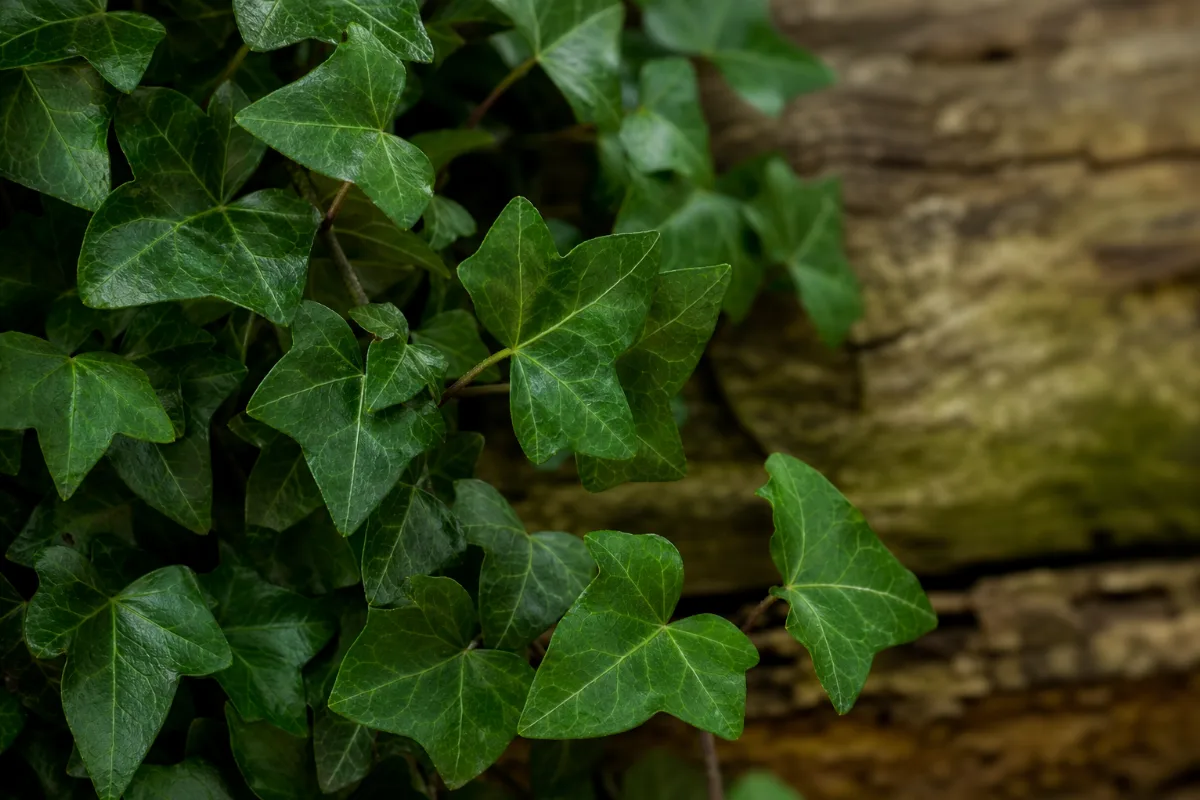
Ivy leaf cough products are made from extracts of the leaves of Hedera helix L. (English or common ivy, family Araliaceae). [1][3] The EU describes them as expectorants (medicines that help bring up phlegm) for productive, or "chesty," coughs. [1] They are made as dry, liquid or soft extracts using a solvent such as ethanol and are usually taken by mouth. [1] This page covers leaf extracts made as medicines, not the garden plant. We give no instructions for handling, preparing or eating the plant. If someone has eaten any part of an ivy plant, see plant and mushroom poisoning and call Poison Help at 1-800-222-1222 (US).Traditional use and regulator status
Traditional use of ivy leaf is not described in the sources we read, so this page rests on the regulator's assessment and on published trials. The European Medicines Agency committee (HMPC) classes ivy leaf as a "well-established use" herbal medicine for productive cough, which means bibliographic data show effectiveness and safety over at least 10 years in the EU. [1] That is a different category from "traditional use" for herbs such as mullein and marshmallow root, which rest only on long-standing use. [4] How ivy leaf works is not fully known. [1][2]What research shows
| Use | What the source found | Strength of evidence | Form and population |
|---|---|---|---|
| Acute cough from upper respiratory infection or bronchitis | An updated systematic review found six randomized trials, one controlled trial and four observational studies. All concluded ivy leaf extract was effective and safe, but the clinical significance appears minimal, reporting quality was low and risk of bias high. [5] | Promising but limited (effects minimal at best) | Ivy leaf extracts, adults and children |
| Earlier review (2011) | Only one placebo-controlled trial (an ivy and thyme combination) was found. The authors found no convincing evidence because of serious methodological flaws. [6] | Insufficient evidence | Ivy alone and ivy-thyme combinations |
| Children with acute bronchitis | The EU committee noted studies in children showing ivy leaf comparable to the medicine acetylcysteine in improving symptoms. [1] | Promising but limited | Specific extracts, children |
| Cough in asthma, whole-plant use, other uses | Proper evidence not found in the sources we read. | Insufficient evidence | n/a |
Cough research in children is product-specific: a result for one extract, one syrup and one age group does not transfer to another. See herbs for colds, flu and cough and honey for cough and sore throat.
Forms and why the form matters
The EU monograph gives different single and daily extract amounts for different extract types and age groups, including ethanol-containing products with a maximum for alcohol content. [2] One form is not for children under 6 because of its alcohol content. [2] Follow the product label and ask a pharmacist; this page gives no amounts for readers. See herbal syrups, lozenges and gummies.Safety
- Age. Contraindicated under 2. [2] A persistent or recurrent cough in children aged 2 to 4 needs a medical diagnosis before treatment. [2] See children and teens.
- Side effects. Nausea, vomiting and diarrhea have been reported, with unknown frequency. [2] Allergic reactions (hives, rash, difficulty breathing, anaphylaxis) have been reported. [2]
- Stomach. Caution is recommended in people with gastritis or stomach ulcer, according to the EU monograph. [2]
- Overdose. Overdose can cause nausea, vomiting, diarrhea and agitation; one case describes a 4-year-old with aggression and diarrhea after accidental intake of an ivy extract. [2] Keep medicines out of children's reach and use Poison Help (1-800-222-1222, US).
- Medicines. The EU monograph lists interactions as "none reported." [2] That is an absence of reports. See how interactions work.
- Pregnancy and breastfeeding. Safety has not been established and use is not recommended. [2] See pregnancy and breastfeeding.
- Skin. The plant itself can cause allergic contact dermatitis; in one Danish series, 10 of 127 patients tested positive to the main ivy allergen falcarinol. [7] Falcarinol is also found in the closely related Apiaceae family. [7]
- Liver, kidney, surgery. Not described in the sources we read. Tell the surgical team about any herb: herbs before and after surgery.
Quality
Extracts differ between makers, and the EU monograph lists several extract types. [2] See quality testing and certifications and standardized herbal extracts.Official statements
- European Medicines Agency, HMPC (EU), monograph revision 2017: ivy leaf (Hedera helix leaf) is a well-established-use expectorant for productive cough; adults, adolescents and children from 2 years; see a doctor or pharmacist if symptoms last more than one week. [1][2]
Frequently asked questions
Does ivy leaf extract stop a cough?
A systematic review found small effects of uncertain clinical importance and a high risk of bias. [5] The EU committee accepts it as an expectorant for chesty cough. [1]
Is ivy leaf cough syrup safe for children?
The EU allows leaf extracts from age 2 and contraindicates them under 2. [2] Always check the label and ask a pharmacist; persistent coughs in ages 2 to 4 need diagnosis. [2]
Can I use ivy from the garden?
We cannot advise that. Extracts are manufactured to a defined standard, and the sources we read cover those extracts only. [2] Contact dermatitis from the plant is documented. [7]
Does ivy leaf interact with medicines?
None are reported in the EU monograph. [2] Ask a pharmacist.
What is the scientific name?
Hedera helix L. is the accepted name. [3]
References
- European Medicines Agency, Hederae helicis folium - herbal medicinal product (ivy leaf). Read 2026-10-23.
- European Medicines Agency, HMPC, European Union herbal monograph on Hedera helix L., folium, Revision 2 (EMA/HMPC/325716/2017; 21 November 2017). Read 2026-10-23.
- GBIF Backbone Taxonomy, Hedera helix L.. Read 2026-10-23.
- European Medicines Agency, Verbasci flos - herbal medicinal product (mullein flower). Read 2026-10-23.
- Sierocinski E, et al. Ivy leaf (Hedera helix) for acute upper respiratory tract infections: an updated systematic review. Eur J Clin Pharmacol. 2021. Read 2026-10-23.
- Holzinger F, Chenot JF. Systematic review of clinical trials assessing the effectiveness of ivy leaf (Hedera helix) for acute upper respiratory tract infections. Evid Based Complement Alternat Med. 2011. Read 2026-10-23.
- Dermatitis from common ivy (Hedera helix L. subsp. helix) in Europe: past, present, and future. Contact Dermatitis 2010. Read 2026-10-23.