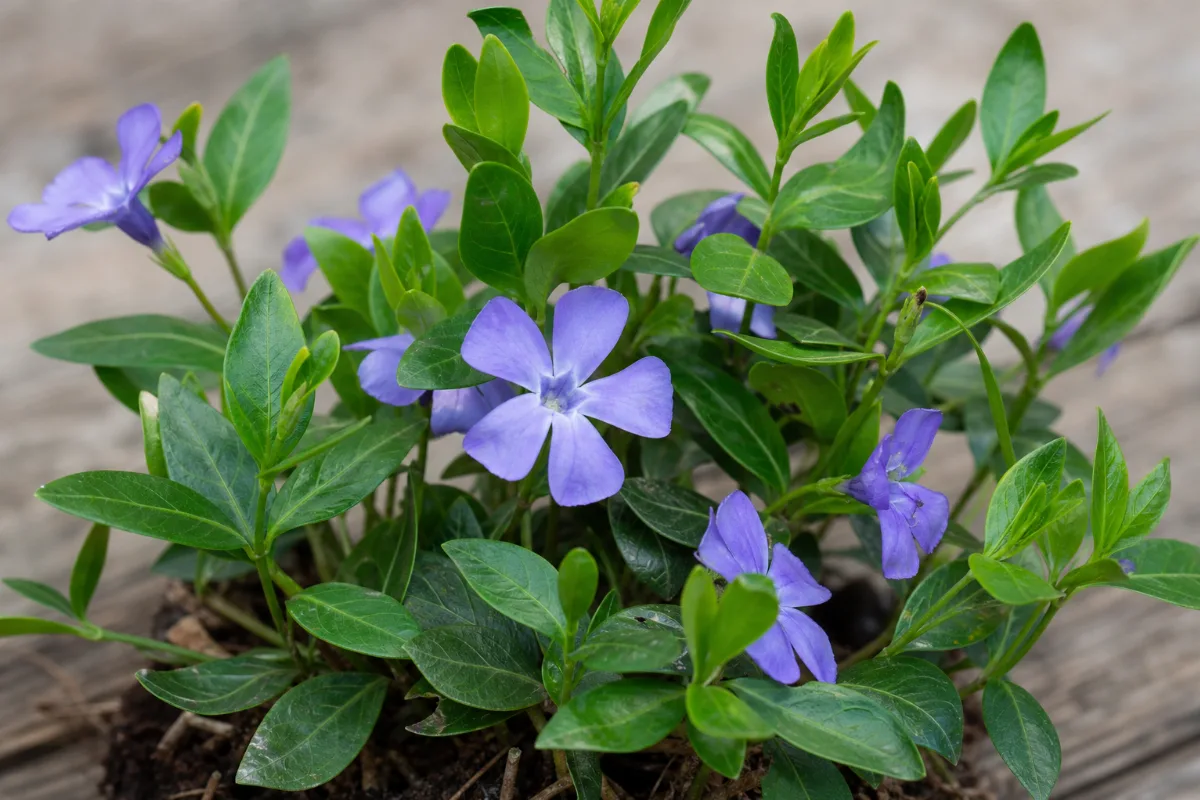
Herbs & Botanicals · Herbs · A European groundcover plant behind two brain drugs, with no human trials of the plant itself
Periwinkle (Lesser Periwinkle)
Vinca minor L. (family Apocynaceae) · also called Lesser periwinkle, common periwinkle, dwarf periwinkle, creeping myrtle, petite pervenche (French), Kleines Immergruen (German)
Lesser periwinkle is a trailing European garden plant. Its leaf contains the alkaloid vincamine, and a lab-made drug called vinpocetine is built from it. All human research is on those two drugs, not on the leaf or tea. It is not the Madagascar periwinkle that gives the vincristine and vinblastine cancer drugs.
General information, not medical advice. Last substantive update · Not medically reviewed. A named clinician has not signed off on this page. How this page is made
About Periwinkle (Lesser Periwinkle)
Lesser periwinkle (Vinca minor) is a European groundcover plant. Its leaf is the original source of the alkaloid vincamine, from which the drug vinpocetine is made in a lab. The research in people is on those drugs, mostly older trials for dementia, memory and stroke, and none of it tests the leaf or tea. The US FDA advises avoiding vinpocetine in pregnancy, and it may affect blood pressure and bleeding medicines.
What it is
Lesser periwinkle (Vinca minor) is a trailing garden plant of the dogbane family (Apocynaceae), widely grown in gardens. Its leaf contains more than 50 alkaloids, the best known being vincamine.
Vinpocetine is a lab-made (semi-synthetic) derivative of vincamine. The US FDA says it is not found in any plant. Yet supplement labels sometimes sell it as 'Vinca minor extract' or 'periwinkle extract'.
What it has been used for
Folk medicine in Europe used the plant for memory and brain complaints. In the 1970s to 1990s doctors tested vincamine and vinpocetine for dementia, stroke, poor brain circulation and hearing loss.
We found no human trial of the whole leaf or tea. Everything else on this page is about the drugs.
Not the same as Madagascar periwinkle (vincristine and vinblastine)
The chemotherapy drugs vincristine and vinblastine come from a different plant, Catharanthus roseus (Madagascar or pink periwinkle). They are given by injection by cancer specialists. Lesser periwinkle is not their source, and vinpocetine is not a chemotherapy drug.
Both plants belong to the same plant family, which is why the names are muddled. Check the Latin name: Vinca minor is lesser periwinkle; Catharanthus roseus is Madagascar periwinkle.
What the research shows
The best evidence is for vinpocetine drug trials: a Cochrane review (2003) judged the dementia evidence inconclusive, and a 2022 meta-analysis of four trials found fewer deaths or disabilities after stroke but wanted bigger trials. A small trial found no thinking boost in healthy adults.
Vincamine has one 12-week dementia trial and a handful of tiny older ones. Most abstracts give no numbers. Nothing is rated above low.
At a glance
Traditional uses history, not proof
- European folk medicine: used for cerebral and memory complaints (stated in a 2010 lab paper).
- Later in the 20th century: its alkaloid vincamine, and the derivative vinpocetine, were developed as drugs for poor brain circulation, stroke and dementia.
- Today: a secondary source says the leaf is not permitted as a herbal product and is regarded as obsolete (not verified at the source).
Studied for research
- Dementia and memory loss (vinpocetine, vincamine drugs), low
- Recovery after ischaemic stroke (vinpocetine), low
- Memory in poor brain circulation, very low
- Hearing loss, very low
- Whole leaf or tea for anything: no human trial, insufficient
- Healthy-adult focus, inflammation, cancer cells, weight: insufficient
Main compounds
- Vincamine, the main alkaloid of the leaf (CID 15376)
- Vinpocetine, a lab-made derivative (CID 443955), not found in the plant
- More than 50 other alkaloids, some like those of Madagascar periwinkle
Common forms
- Leaf and plant (no human trials)
- Vincamine drug (older European trials)
- Vinpocetine drug or supplement (the product most people mean)
- Homeopathic Vinca minor preparations (not assessed here)
Research links: US FDA page on vinpocetine in dietary supplements · Cochrane review: vinpocetine for cognitive impairment and dementia (PubMed) · Memorial Sloan Kettering patient page on vinpocetine · Research Library · Genes & Biomarkers Library
The plant and its history
- Accepted scientific name
- Vinca minor L.
- Naming authority
- L. (Linnaeus), accepted species in the GBIF backbone (key 3169707), checked by API 2026-10-25
- Synonyms
- Pervinca minor (L.) Garsault; Pervinca minor (L.) Moench; Pervinca minor (L.) Scop.; Vinca humilis Salisb.; Vinca ellipticifolia Stokes; (GBIF lists more old and variety names)
- Common names
- Lesser periwinkle (English); Common periwinkle (English); Dwarf periwinkle, creeping myrtle, running myrtle (English (GBIF)); Brusela (Spanish (GBIF)); Petite pervenche, pervenche mineure (French); Kleines Immergruen (German); Congossa, congossa-menor (Portuguese (GBIF))
- Botanical family
- Apocynaceae (the dogbane family, which also contains Catharanthus roseus).
- Classification
- Plantae > Tracheophyta > Magnoliopsida > Gentianales > Apocynaceae > Vinca > Vinca minor
- Native range
- Not verified from a source we opened. A web search summary of Kew's database gives Europe to the Caucasus; not opened.
- Habitat
- Not verified.
- What the plant looks like
- Roots: Not verified.; Stems: Not verified from a source we read.; Leaves: Not verified from a source we read.; Flowers: Not verified from a source we read.; Fruit: Not verified.
- Cultivation
- Widely grown as a garden groundcover (general knowledge, not from a source we read).
- Harvest and processing
- Not found.
- Look-alikes and adulterants
- Name: Madagascar periwinkle (Catharanthus roseus); Note: A different genus in the same family. Source of the chemotherapy drugs vincristine and vinblastine; once called Vinca rosea. Do not confuse with lesser periwinkle (GBIF lists both as separate accepted species).; Name: Greater periwinkle (Vinca major); Note: A related plant in the same genus; not covered by any source we read.; Name: Vinpocetine supplements; Note: Not a plant at all: a semi-synthetic drug sometimes labelled 'Vinca minor extract'.
- Sustainability and conservation
- Not verified.
Traditional use and history history, not clinical proof
| Tradition or era | Documented use | Source |
|---|---|---|
| European folk medicine | A 2010 lab paper says Vinca minor has long been used to treat cerebral and memory disorders in European folk medicine. | p20645762 |
| Late 1960s | The Cochrane dementia review says vinpocetine was discovered in the late 1960s and is a synthetic ethyl ester of apovincamine, a vinca alkaloid from lesser periwinkle leaves. | p12535455 |
| 1970s to 1990s | Vincamine and vinpocetine were tested as drugs for poor brain circulation, stroke, dementia and hearing loss in Europe (trials dated 1977 to 1996). | p8884757 |
| Modern regulation | Secondary encyclopedia: the leaf is no longer permitted as a herbal product and is regarded as obsolete (Commission E negative monograph; not verified at the source). | s-altmeyers-vincae-minoris |
| United States 2016 to 2019 | FDA tentatively concluded vinpocetine is not a dietary ingredient (2016) and warned about pregnancy (2019). | s-fda-vinpocetine |
Traditional use shows how a plant was used. It does not show that a supplement works or is safe today.
What is inside, and how it may work
What the plant contains and how those compounds act in cells and animals. Laboratory and animal mechanisms are not proven effects in people.
Main compounds
| Compound | Family | Where it is concentrated | Activity studied | Level of evidence |
|---|---|---|---|---|
| Vincamine PubChem 15376 | Eburnane (vinca) indole alkaloid | Leaf Not found | Main alkaloid of the plant; called a cerebral vasodilator and neuroprotector in a 2013 paper. Used as a drug. 28 14 7 | Pharmacological theory |
| Vinpocetine PubChem 443955 | Semi-synthetic derivative of vincamine | Not found in the plant (FDA) Not applicable | Made in the lab from vincamine or tabersonine; blocks phosphodiesterase, sodium channels and IKK in lab work. 29 38 18 | Laboratory research |
| Apovincaminic acid PubChem 160154 | Metabolite of vinpocetine | Not applicable | Main breakdown product of vinpocetine; reached much higher blood levels than vinpocetine in elderly volunteers; far less active than vinpocetine in a gastruloid model. 30 11 22 | Laboratory research |
| Other Vinca minor alkaloids | More than 50 alkaloids, some bisindole | Leaf and plant Not found | Alkaloid fractions slowed cancer-cell growth in a dish. 20 | Laboratory research |
| Vincristine (NOT from Vinca minor) PubChem 5978 | Bisindole vinca alkaloid | Catharanthus roseus leaf Not applicable | Chemotherapy drug from a different plant; included only to prevent confusion. 31 27 | Authoritative guidance |
| Vinblastine (NOT from Vinca minor) PubChem 13342 | Bisindole vinca alkaloid | Catharanthus roseus leaf Not applicable | Chemotherapy drug from a different plant; included only to prevent confusion. 32 27 | Authoritative guidance |
Mechanisms, receptors and pathways
| Target or pathway | Gene or receptor | What was found | Level |
|---|---|---|---|
| Inflammation switch (NF-kappaB, IKK) | IKBKB (IKK) | Vinpocetine inhibited TNF-alpha-induced NF-kappaB activation in several cell types and mouse lung inflammation by acting on IKK directly. 18 | Laboratory research |
| Phosphodiesterase (PDE1) | PDE1 | Described in the abstract as vinpocetine's well-known PDE inhibition; the paper found the anti-inflammatory effect works without it. 18 | Laboratory research |
| Sodium channels | SCN genes (voltage-gated sodium channels) | The 2021 hearing study's authors call vinpocetine a potent sodium-channel blocker and use that as the rationale for testing it in hearing loss. 12 | Pharmacological theory |
| Heart repolarisation (IKr current) | KCNH2 (hERG) | A 2023 paper says vinpocetine is reported to block IKr; the paper does not test this in adults. 35 | Pharmacological theory |
| Drug transport and breakdown | ABCB1 (P-glycoprotein), CYP3A4, CYP2D6 | Strong P-glycoprotein inhibition and moderate CYP3A4/CYP2D6 inhibition in lab enzymes. 23 | Laboratory research |
| Brain blood flow | Not applicable | Vincamine raised whole-brain blood flow in 10 patients; vinpocetine changed flow speed in 26 patients. 13 19 | Preliminary mechanism |
Absorption, metabolism and elimination
- Absorption
- Vinpocetine by mouth: peak blood level 20 to 62 ng/ml at 1 to 1.5 hours with reported absorption of 56.6 percent (1979 volunteers); in 20 elderly volunteers a 20 mg dose peaked at 2.33 hours with absolute bioavailability 6.7 percent (1989). These two studies disagree and we cannot say why. Vincamine from whole-leaf extract was absorbed about seven times better than pure vincamine in rats. No human absorption study of the whole herb or tea.
- Distribution
- Volume of distribution 2.1 l/kg after a vein dose (1979), indicating wide tissue binding.
- Metabolism
- Vinpocetine's main metabolite is apovincaminic acid, found at much higher blood levels than the parent drug in elderly volunteers.
- Elimination
- After a vein dose the second half-life was 4.83 hours; unchanged vinpocetine was not found in urine (1979).
- Bioavailability
- Unclear for vinpocetine (6.7 to 56.6 percent in two studies); unknown for the plant.
Isolated compounds versus whole extracts
Everything tested in people is an isolated alkaloid (vincamine) or a lab-made derivative (vinpocetine), never the leaf or tea. The leaf contains over 50 alkaloids. In rats the whole-leaf extract delivered vincamine about seven times better than the pure compound, so the plant may act differently from the drug; no human data exist. Many 'periwinkle' supplements are in fact synthetic vinpocetine.
Nutritional composition
Lesser periwinkle is not a food or a source of nutrients, and a nutrient table does not apply.
3 low certainty3 very low certainty5 not enough evidence
What was looked at
The 11 benefits and uses checked for Periwinkle (Lesser Periwinkle), each with how strong the evidence is. Tap one to open it.
- Memory and thinking: the whole lesser periwinkle leaf or teaNot enough evidence
- Dementia and memory loss: vinpocetine (drug)Low certainty
- Dementia: vincamine (drug)Low certainty
- Memory in poor brain circulation (multi-infarct) : vincamine and vinpocetineVery low certainty
- Recovery after ischaemic stroke: vinpocetine (drug)Low certainty
- Acute stroke: vincamine by infusion (drug)Very low certainty
- Sharper thinking in healthy people: vinpocetine (drug)Not enough evidence
- Age-related and nerve hearing loss: vincamine and vinpocetine (drugs)Very low certainty
- Inflammation: vinpocetine in cells and miceNot enough evidence
- Cancer cells in a dish: Vinca minor alkaloid fractionsNot enough evidence
- Weight loss and other supplement claimsNot enough evidence
Lab markers tracked in the studies
Death or dependency after strokeMini-Mental State Examination (MMSE)Short Cognitive Performance Test (SKT)Whole-brain blood flowSpeech audiometry (word understanding)CholesterolNF-kappaB inflammation signal
What is Periwinkle (Lesser Periwinkle) good for?
The main proposed uses and how strong the human evidence is for each. Every rated result below is for the drugs vincamine or vinpocetine, not for the plant. 'Low' means small or limited trials; 'very low' means a single small or mixed study; 'insufficient' means too little to judge.
Benefits, one by one
Each card is a research question, not a promise. Tap a goal to filter. Open a card to see the studies, doses and limits.
Memory and thinking: the whole lesser periwinkle leaf or tea
Not enough evidenceNo human trial of the whole lesser periwinkle (Vinca minor) leaf, tea or plain plant extract was found. All human research is on two drugs made from it, vincamine and vinpocetine.
3 studiesNot applicable: no whole-herb trial.
Studies, doses and limits
What the trials found
We searched PubMed for human studies of Vinca minor leaf, tea or whole-plant extract and found none. The only 'Vinca minor' human studies in PubMed are of the isolated drugs vincamine and vinpocetine, and one homeopathy skin study that does not test the herb as a medicine.
Results
Nothing to report for the whole plant in people.
Effect sizes as reported
No human data.
Why this rating
There is no human trial of the whole herb, so no certainty rating can be given beyond 'insufficient'.
Limits
Do not read the drug trials below as proof that the leaf or tea works. Vincamine and vinpocetine are isolated or semi-synthetic drugs, and the leaf contains many other alkaloids in unknown amounts.
Why researchers looked
European folk medicine used lesser periwinkle for memory and 'cerebral' complaints, and the plant is the original source of vincamine, a drug that was used for poor brain circulation.
Traditional use
A 2010 lab paper says the plant has long been used to treat cerebral and memory disorders in European folk medicine. A secondary encyclopedia (not verified at the source) says the leaf is no longer permitted as a herbal product and is regarded as obsolete and poisonous because of its alkaloids.
Proposed mechanism Animal research
Vincamine is the plant's main alkaloid. In rats, vincamine was absorbed about seven times better from a standardised whole-leaf extract than as the pure compound.
A proposed mechanism does not show that the effect happens in people.
The leaf contains a mix of alkaloids and has not been tested for safety in people. A secondary source calls the plant poisonous.
Dementia and memory loss: vinpocetine (drug)
Low certaintyA Cochrane review found vinpocetine might help people with dementia but called the evidence inconclusive and not strong enough to support clinical use. Vinpocetine is a drug made in the lab from a periwinkle alkaloid, not the plant.
2 studiesTablets of the drug at 30 to 60 mg a day in the trials. Supplement pr…
Studies, doses and limits
What the trials found
The 2003 Cochrane review included three double-blind trials (583 people with dementia, all done before the 1990s). It found benefit with 30 mg and 60 mg a day but few people were treated for 6 months or more, and the reviewers judged the evidence inconclusive. A separate 16-week trial of 203 outpatients with mild to moderate organic psychosyndromes (including dementia) found 3 x 10 mg and 3 x 20 mg a day better than placebo on global improvement and a cognitive test, with side effects similar to placebo.
Results
Positive in old trials; judged inconclusive by Cochrane.
Effect sizes as reported
Cochrane: no pooled number in the abstract. Hindmarch 1991: significant versus placebo on CGI and SKT; no group averages in the abstract.
Why this rating
Old trials (1990 and before, plus a 1991 trial), different definitions of dementia, no intention-to-treat data, and reviewers who judged the evidence inconclusive.
Form and dose studied
Tablets of the drug at 30 to 60 mg a day in the trials. Supplement products vary widely in what they contain.
Who was studied
Older adults with dementia or organic psychosyndromes.
Limits
No modern large trial; trials are decades old; the 2021 small trial found no cognitive benefit in healthy adults.
Why researchers looked
Vinpocetine has been sold as a medicine in some countries for brain circulation and memory, and as a supplement in the United States.
Traditional use
Not a traditional use of the plant. Vinpocetine was discovered in the late 1960s.
Proposed mechanism Preliminary mechanism
In lab studies vinpocetine acts on several targets, including phosphodiesterase, sodium channels and the inflammation enzyme IKK. Which of these matters in people is unclear (Cochrane).
A proposed mechanism does not show that the effect happens in people.
Safety is covered in the safety section. The US FDA advises against vinpocetine in pregnancy, and vinpocetine may affect blood pressure and bleeding medicines.
Dementia: vincamine (drug)
Low certaintyOne 12-week trial of 152 older adults found vincamine better than placebo on four dementia scales. It is a single, older trial of a drug.
1 studies30 mg twice daily of the drug.
Studies, doses and limits
What the trials found
Fischhof 1996 (152 enrolled, 142 finished; ages 50 to 85; Alzheimer-type or multi-infarct dementia): 30 mg vincamine twice daily for 12 weeks was statistically better than placebo on the Clinical Global Impression, the SCAG scale, the nurse-rated need for help and the SKT cognitive test, and the authors said responder results showed clinical relevance.
Results
Positive in one older trial.
Effect sizes as reported
Significant on all four measures; group averages are not in the abstract.
Why this rating
One older trial, no effect sizes in the abstract, no replication found, and the drug is not in wide use.
Form and dose studied
30 mg twice daily of the drug.
Who was studied
Adults aged 50 to 85 with mild to moderate dementia.
Limits
Single trial; abstract has no side-effect data or funding statement.
Why researchers looked
Vincamine is the main alkaloid of lesser periwinkle and was used as a drug for poor brain circulation.
Traditional use
The plant has a folk reputation for memory; the drug trials are modern pharmacology, not traditional use.
Proposed mechanism Preliminary mechanism
Described in a 2013 paper as a cerebral vasodilator and neuroprotector, but the exact way it works in people is not settled.
A proposed mechanism does not show that the effect happens in people.
Safety is covered in the safety section. The US FDA advises against vinpocetine in pregnancy, and vinpocetine may affect blood pressure and bleeding medicines.
Memory in poor brain circulation (multi-infarct) : vincamine and vinpocetine
Very low certaintyThree very small trials looked at memory and brain blood flow after small strokes or poor brain circulation. They hint at small gains but are too small and old to be sure.
3 studiesVincamine 4 x 20 mg/day (Hagstadius); vincamine-cromesilate (Mikus); …
Studies, doses and limits
What the trials found
Mikus 1978 (26 patients with memory loss from poor brain blood supply, crossover): mild improvement on psychometric tests, lower cholesterol, slight rise in pulsation, no side effects on muscle, heart or brain-wave recordings. Hagstadius 1984 (10 patients with multi-infarct dementia, 3 two-week periods): vincamine 4 x 20 mg a day raised whole-brain blood flow and improved a verbal memory test, but psychiatric ratings did not change. Kemeny 2005 (26 patients, vinpocetine vs placebo): lower blood-flow speed after breath-holding, and one memory test (digit span backward) did not worsen at 3 months while the placebo group worsened.
Results
Mild, mixed effects in three tiny trials.
Effect sizes as reported
No numbers in the abstracts.
Why this rating
Trials of 10 to 26 people, decades old, no numbers in the abstracts, many outcomes tested.
Form and dose studied
Vincamine 4 x 20 mg/day (Hagstadius); vincamine-cromesilate (Mikus); vinpocetine (Kemeny); doses not given in two abstracts.
Who was studied
Adults with multi-infarct dementia or cerebrovascular insufficiency.
Limits
Tiny sample sizes; only one test out of many changed in the vinpocetine trial.
Why researchers looked
Both drugs were developed to improve blood flow and metabolism in the brain.
Traditional use
Not a traditional use of the plant.
Proposed mechanism Preliminary mechanism
Vincamine raised whole-brain blood flow in one crossover trial. Vinpocetine changed blood-flow speed in brain arteries in another.
A proposed mechanism does not show that the effect happens in people.
Safety is covered in the safety section. The US FDA advises against vinpocetine in pregnancy, and vinpocetine may affect blood pressure and bleeding medicines.
Recovery after ischaemic stroke: vinpocetine (drug)
Low certaintyA 2022 meta-analysis of four trials found fewer people dead or disabled with vinpocetine, but an earlier Cochrane review of two trials found no clear difference. Larger better trials are needed.
2 studiesHospital drug treatment in the first days after a stroke; not the sam…
Studies, doses and limits
What the trials found
Cochrane 2008: two trials, 70 people; death or dependency did not differ from placebo at 1 and 3 months, with wide intervals. Panda 2022: four placebo-controlled trials (601 on vinpocetine, 236 on placebo): death or significant disability RR 0.80 (0.65 to 0.99) at 1 month and 0.67 (0.48 to 0.92) at 3 months; Mini-Mental State Exam difference 0.92 points (0.02 to 1.82). The authors said there is not enough evidence that it lowers deaths and more double-blind trials are needed. One Cochrane author took part in trials sponsored by a vinpocetine maker.
Results
Some benefit in the newer meta-analysis; unclear in the older review.
Effect sizes as reported
RR 0.80 (0.65 to 0.99) at 1 month; RR 0.67 (0.48 to 0.92) at 3 months; MMSE difference 0.92 (0.02 to 1.82).
Why this rating
Small trials, borderline confidence intervals, and the two reviews do not agree.
Form and dose studied
Hospital drug treatment in the first days after a stroke; not the same as taking a supplement.
Who was studied
Adults within about 14 days of an ischaemic stroke.
Limits
Patients in these trials were treated in hospital under medical care. Do not use a supplement instead of stroke treatment.
Why researchers looked
Vinpocetine is given as a drug for stroke in some countries.
Traditional use
Not a traditional use of the plant.
Proposed mechanism Preliminary mechanism
Proposed to protect nerve cells and improve brain blood flow; not proven in people.
A proposed mechanism does not show that the effect happens in people.
Safety is covered in the safety section. The US FDA advises against vinpocetine in pregnancy, and vinpocetine may affect blood pressure and bleeding medicines.
Acute stroke: vincamine by infusion (drug)
Very low certaintyOne 1978 trial of 20 patients found better neurological recovery with vincamine by drip. Too small and old to rely on.
1 studies60 mg a day by vein for 5 days.
Studies, doses and limits
What the trials found
Dekoninck 1978 (20 patients, double-blind): vincamine 60 mg a day by vein plus glycerol versus glycerol plus placebo for 5 days. Better neurological status with vincamine, with significant effects on limb movement (p < 0.02), cranial nerve signs and sphincter control (p < 0.05).
Results
Positive in one tiny trial.
Effect sizes as reported
p values only.
Why this rating
Twenty patients, 1978, by infusion, no numbers beyond p values.
Form and dose studied
60 mg a day by vein for 5 days.
Who was studied
Adults in the acute phase of stroke.
Limits
Not an oral supplement trial.
Why researchers looked
Vincamine was tried as a drug for the acute phase of stroke.
Traditional use
Not traditional.
Proposed mechanism Preliminary mechanism
Described as acting on oxygen-dependent glucose handling and small-vessel blood flow in the brain.
A proposed mechanism does not show that the effect happens in people.
Safety is covered in the safety section. The US FDA advises against vinpocetine in pregnancy, and vinpocetine may affect blood pressure and bleeding medicines.
Sharper thinking in healthy people: vinpocetine (drug)
Not enough evidenceA small 2021 trial found no mental boost from vinpocetine in healthy adults or in people with epilepsy, and the authors say higher doses may be needed.
1 studiesSingle oral doses of 10, 20 and 60 mg; 20 mg three times a day for a …
Studies, doses and limits
What the trials found
Meador 2021: 8 healthy adults and 8 adults with focal epilepsy; single doses of 10, 20 and 60 mg (healthy) or 20 mg (epilepsy) versus placebo, then one month open-label 20 mg three times a day in epilepsy. No significant cognitive benefit and no appreciable side effects. Blood levels were lower in people than in the mice where it worked.
Results
Null.
Effect sizes as reported
No benefit seen.
Why this rating
Only 16 people in total; very short; the authors themselves say the doses may have been too low.
Form and dose studied
Single oral doses of 10, 20 and 60 mg; 20 mg three times a day for a month.
Who was studied
Healthy adults; adults with focal epilepsy.
Limits
Tiny trial.
Why researchers looked
Vinpocetine is sold as a memory or focus supplement.
Traditional use
Not traditional.
Proposed mechanism Animal research
Memory benefits were seen in animal models.
A proposed mechanism does not show that the effect happens in people.
No appreciable side effects were reported in this trial.
Age-related and nerve hearing loss: vincamine and vinpocetine (drugs)
Very low certaintyOne 1977 trial of 30 people found better speech understanding, but not better pure-tone hearing, with vincamine; an unblinded 2021 study of vinpocetine reported a trend toward improvement. Both are weak evidence.
2 studiesVincamine 60 mg/day for 6 weeks; vinpocetine 30 mg/day for 12 months.
Studies, doses and limits
What the trials found
Reinecke 1977 (30 outpatients with presbyacusis, double-blind, 60 mg a day for 6 weeks): pure-tone audiometry did not change in either group; speech audiometry improved with vincamine (p < 0.004) and not with placebo. Gutierrez-Farfan 2021 (phase II, open label, no control group, 30 mg a day for 12 months, number not given in the abstract): hearing worsened for the first 6 months and then tended to improve between 6 and 12 months; the authors concluded decline was halted.
Results
Speech test better in one small trial; no pure-tone change.
Effect sizes as reported
p < 0.004 on speech audiometry; no numbers for the 2021 study.
Why this rating
A 1977 trial of 30 people and an uncontrolled 2021 study. Without a control group the 2021 results could be chance, learning effects or natural variation.
Form and dose studied
Vincamine 60 mg/day for 6 weeks; vinpocetine 30 mg/day for 12 months.
Who was studied
Adults with age-related or nerve hearing loss.
Limits
No placebo in the newer study.
Why researchers looked
Both drugs were tried for inner-ear nerve hearing loss.
Traditional use
Not traditional.
Proposed mechanism Preliminary mechanism
Vinpocetine blocks voltage-gated sodium channels, which the 2021 authors give as a reason to try it for ear damage; this has not been proven in people.
A proposed mechanism does not show that the effect happens in people.
Safety is covered in the safety section. The US FDA advises against vinpocetine in pregnancy, and vinpocetine may affect blood pressure and bleeding medicines.
Inflammation: vinpocetine in cells and mice
Not enough evidenceIn lab and mouse work vinpocetine reduced inflammation signals by acting on one enzyme (IKK). No human trial tested this.
1 studiesLab concentrations only.
Studies, doses and limits
What the trials found
No human trial. Jeon 2010 tested human and mouse cells and mice with TNF-alpha or LPS lung inflammation.
Results
Lab and animal results only.
Why this rating
Cells and mice only; three authors formed a start-up hoping to license this technology.
Form and dose studied
Lab concentrations only.
Limits
Cannot be translated to people.
Why researchers looked
Researchers looked for new anti-inflammatory uses of the old drug.
Traditional use
Not traditional.
Proposed mechanism Laboratory research
Vinpocetine directly blocked the enzyme IKK and so the NF-kappaB inflammation switch, and reduced white-cell build-up in the lungs of mice.
A proposed mechanism does not show that the effect happens in people.
Safety is covered in the safety section. The US FDA advises against vinpocetine in pregnancy, and vinpocetine may affect blood pressure and bleeding medicines.
Cancer cells in a dish: Vinca minor alkaloid fractions
Not enough evidenceAlkaloid fractions of Vinca minor slowed the growth of colon and breast cancer cell lines in a dish. This is not a cancer treatment and has nothing to do with the vincristine and vinblastine drugs.
3 studiesNot applicable.
Studies, doses and limits
What the trials found
No human or animal study. Khanavi 2010 tested three alkaloid fractions on HT-29, Caco-2 and T47D cancer cells and mouse NIH/3T3 cells: all slowed growth in a dose-dependent way, and the mouse cells were less affected.
Results
Lab only.
Effect sizes as reported
IC50 numbers not in the abstract.
Why this rating
Cell-line work only. Anything toxic to cancer cells can also be toxic to healthy tissue.
Limits
Do not use lesser periwinkle to treat cancer. The chemotherapy drugs come from a different plant and are given only by specialist teams.
Why researchers looked
The plant has more than 50 alkaloids, and some have a structure like those of the cancer-drug alkaloids of Catharanthus roseus.
Traditional use
Not traditional.
Proposed mechanism Laboratory research
Unknown.
A proposed mechanism does not show that the effect happens in people.
A lab result that hints at toxicity as much as benefit.
Weight loss and other supplement claims
Not enough evidenceVinpocetine supplements are marketed for memory and weight loss. In our PubMed searches we found no human trial of weight loss with vinpocetine, vincamine or lesser periwinkle.
1 studiesNot applicable.
Studies, doses and limits
What the trials found
A 2023 paper notes that vinpocetine is 'claimed' to improve memory and weight loss. A PubMed search combining vinpocetine with weight loss, obesity or body weight in humans found no relevant trial.
Results
No human data found.
Why this rating
No trial found, so there is nothing to rate.
Limits
Search was a limited PubMed search; trials in other languages or databases may exist.
Why researchers looked
Marketing claims for supplements.
Traditional use
Not traditional.
Proposed mechanism Pharmacological theory
None established.
A proposed mechanism does not show that the effect happens in people.
Safety is covered in the safety section. The US FDA advises against vinpocetine in pregnancy, and vinpocetine may affect blood pressure and bleeding medicines.
Connections to the rest of health
How Periwinkle (Lesser Periwinkle) connects to the rest of our health knowledge graph. Every link says what kind of connection it is. A safety link (for example to the liver) is a warning, not a benefit. A study that merely mentions a topic never creates a benefit link.
Explore every connection: goals, body systems, organs, symptoms, genes
A. Wellness goals
| Connected to | Kind of connection | Evidence status | Context | Studies |
|---|---|---|---|---|
| Memory Support | Traditional use | Not enough evidence | Memory and thinking: the whole lesser periwinkle leaf or tea: No human trial of the whole lesser periwinkle (Vinca minor) leaf, tea or plain plant extract was found. All human research is on two drugs made from it, vincamine and vinpocetine. | 14 20 1 |
| Brain Health | Traditional use | Not enough evidence | Memory and thinking: the whole lesser periwinkle leaf or tea: No human trial of the whole lesser periwinkle (Vinca minor) leaf, tea or plain plant extract was found. All human research is on two drugs made from it, vincamine and vinpocetine. | 14 20 1 |
| Memory Support | Potential benefit | Low certainty | Dementia and memory loss: vinpocetine (drug): A Cochrane review found vinpocetine might help people with dementia but called the evidence inconclusive and not strong enough to support clinical use. Vinpocetine is a drug made in the lab from a periwinkle alkaloid, not the plant. Dementia: vincamine (drug): One 12-week trial of 152 older adults found vincamine better than placebo on four dementia scales. It is a single, older trial of a drug. | 37 15 7 26 13 19 |
| Cognitive Performance | Potential benefit | Low certainty | Dementia and memory loss: vinpocetine (drug): A Cochrane review found vinpocetine might help people with dementia but called the evidence inconclusive and not strong enough to support clinical use. Vinpocetine is a drug made in the lab from a periwinkle alkaloid, not the plant. Dementia: vincamine (drug): One 12-week trial of 152 older adults found vincamine better than placebo on four dementia scales. It is a single, older trial of a drug. | 37 15 7 24 |
| Brain Health | Potential benefit | Low certainty | Dementia and memory loss: vinpocetine (drug): A Cochrane review found vinpocetine might help people with dementia but called the evidence inconclusive and not strong enough to support clinical use. Vinpocetine is a drug made in the lab from a periwinkle alkaloid, not the plant. Dementia: vincamine (drug): One 12-week trial of 152 older adults found vincamine better than placebo on four dementia scales. It is a single, older trial of a drug. | 37 15 7 26 13 19 3 33 6 |
| Mental Clarity | Potential benefit | Not enough evidence | Sharper thinking in healthy people: vinpocetine (drug): A small 2021 trial found no mental boost from vinpocetine in healthy adults or in people with epilepsy, and the authors say higher doses may be needed. | 24 |
| Healthy Aging | Potential benefit | Very low certainty | Age-related and nerve hearing loss: vincamine and vinpocetine (drugs): One 1977 trial of 30 people found better speech understanding, but not better pure-tone hearing, with vincamine; an unblinded 2021 study of vinpocetine reported a trend toward improvement. Both are weak evidence. | 34 12 |
| Inflammation Balance | Preliminary mechanism | Not enough evidence | Inflammation: vinpocetine in cells and mice: In lab and mouse work vinpocetine reduced inflammation signals by acting on one enzyme (IKK). No human trial tested this. | 18 |
| Weight Management | Potential benefit | Not enough evidence | Weight loss and other supplement claims: Vinpocetine supplements are marketed for memory and weight loss. In our PubMed searches we found no human trial of weight loss with vinpocetine, vincamine or lesser periwinkle. | 35 |
B. Body systems
| Connected to | Kind of connection | Evidence status | Context | Studies |
|---|---|---|---|---|
| Immune system (white blood cells) | Adverse effect or risk | Very low certainty | A reported case of agranulocytosis that resolved on stopping. Preparation or compound: Vinpocetine |
25 |
| Nervous System | Biological association | Not enough evidence | Studied for: Memory and thinking: the whole lesser periwinkle leaf or tea Studied for: Dementia and memory loss: vinpocetine (drug) | 14 20 1 37 15 7 26 13 19 3 33 6 24 34 12 |
| Cardiovascular System | Biological association | Very low certainty | Studied for: Memory in poor brain circulation (multi-infarct) : vincamine and vinpocetine Studied for: Recovery after ischaemic stroke: vinpocetine (drug) | 26 13 19 3 33 |
| Immune System | Biological association | Not enough evidence | Studied for: Inflammation: vinpocetine in cells and mice Studied for: Cancer cells in a dish: Vinca minor alkaloid fractions | 18 20 27 21 |
| Metabolism Weight | Biological association | Not enough evidence | Studied for: Weight loss and other supplement claims | 35 |
C. Body parts and organs
| Connected to | Kind of connection | Evidence status | Context | Studies |
|---|---|---|---|---|
| Heart | Drug or supplement interaction | Not enough evidence | A 2023 paper says vinpocetine is reported to block the IKr current; a link to rhythm problems in adults is not established. Reported to block a heart-rhythm current; link to adult rhythm problems not shown. Preparation or compound: Vinpocetine |
35 |
| Blood vessels | Adverse effect or risk | Very low certainty | Low blood pressure and flushing are listed on a hospital patient page. Preparation or compound: Vinpocetine |
25 |
| Reproductive organs and pregnancy | Contraindication | Low certainty | FDA advises avoiding in pregnancy; rat, rabbit and human stem-cell models show harm to development. FDA advises avoiding vinpocetine in pregnancy; animal and lab-model harm. Preparation or compound: Vinpocetine |
38 4 22 |
I. Biomarkers
| Connected to | Kind of connection | Evidence status | Context | Studies |
|---|---|---|---|---|
| Death or dependency after stroke | Biological association | Low certainty | Measured in trials: lowered. A lab change is not the same as a health benefit. | 33 3 |
| Mini-Mental State Examination (MMSE) | Biological association | Low certainty | Measured in trials: raised. A lab change is not the same as a health benefit. | 33 |
| Short Cognitive Performance Test (SKT) | Biological association | Low certainty | Measured in trials: raised. A lab change is not the same as a health benefit. | 15 7 |
| Whole-brain blood flow | Biological association | Very low certainty | Measured in trials: mixed. A lab change is not the same as a health benefit. | 13 19 |
| Speech audiometry (word understanding) | Biological association | Very low certainty | Measured in trials: raised. A lab change is not the same as a health benefit. | 34 |
| Cholesterol | Biological association | Very low certainty | Measured in trials: lowered. A lab change is not the same as a health benefit. | 26 |
| NF-kappaB inflammation signal | Biological association | Not enough evidence | Measured in trials: lowered. A lab change is not the same as a health benefit. | 18 |
J. Genes, receptors and enzymes
| Connected to | Kind of connection | Evidence status | Context | Studies |
|---|---|---|---|---|
| IKBKB (IKK-beta) / NF-kappaB pathway | Preliminary mechanism | In vitro | Inhibited by vinpocetine in cells and mice. | 18 |
| ABCB1 (P-glycoprotein) | Preliminary mechanism | In vitro | Strongly inhibited by vinpocetine in lab cells. | 23 |
| CYP3A4 and CYP2D6 | Preliminary mechanism | In vitro | Moderately inhibited by vinpocetine in lab enzymes. | 23 |
| KCNH2 (hERG, IKr current) | Preliminary mechanism | Pharmacological theory | Reported to be blocked by vinpocetine; not tested in people in the sources read. | 35 |
L. Active compounds
| Connected to | Kind of connection | Evidence status | Context | Studies |
|---|---|---|---|---|
| Vincamine | Biological association | Pharmacological theory | Main alkaloid of the plant; called a cerebral vasodilator and neuroprotector in a 2013 paper. Used as a drug. Preparation or compound: Leaf |
28 14 7 |
| Vinpocetine | Biological association | In vitro | Made in the lab from vincamine or tabersonine; blocks phosphodiesterase, sodium channels and IKK in lab work. Preparation or compound: Not found in the plant (FDA) |
29 38 18 |
| Apovincaminic acid | Biological association | In vitro | Main breakdown product of vinpocetine; reached much higher blood levels than vinpocetine in elderly volunteers; far less active than vinpocetine in a gastruloid model. | 30 11 22 |
| Other Vinca minor alkaloids | Biological association | In vitro | Alkaloid fractions slowed cancer-cell growth in a dish. Preparation or compound: Leaf and plant |
20 |
| Vincristine (NOT from Vinca minor) | Biological association | Authoritative guidance | Chemotherapy drug from a different plant; included only to prevent confusion. Preparation or compound: Catharanthus roseus leaf |
31 27 |
| Vinblastine (NOT from Vinca minor) | Biological association | Authoritative guidance | Chemotherapy drug from a different plant; included only to prevent confusion. Preparation or compound: Catharanthus roseus leaf |
32 27 |
Each connection is stored with the ingredient, the connected record, the kind of connection, the evidence status, the supporting studies, the preparation or compound involved, and a review date (last reviewed October 25, 2026).
The evidence
The research centre for Periwinkle (Lesser Periwinkle). Every record here was checked against PubMed or the publisher's page; we never list a study we have not verified.
Evidence by outcome
Bars show how many studies we found for each outcome, not how well it works. People are added up across trials only (reviews are not added, to avoid double counting).
How we rate evidence
High certainty
Several well-run trials or reviews agree; further research is unlikely to change the picture much.
Moderate certainty
Good trials point the same way, but some doubt remains.
Low certainty
Small, short or inconsistent trials. The finding could change with better research.
Very low certainty
Very little or very weak human data. Treat as a possibility only.
Mixed findings
Trials or reviews disagree with each other.
Not enough evidence
Not enough human research to say either way.
Evidence against
Good research found no benefit, or found harm.
We take the reviewers' own risk-of-bias and GRADE statements where they exist, and otherwise judge from study size, design, consistency, directness and whether a product matches what is sold. Many publications do not make evidence high. Method note: We searched PubMed, read the abstracts of every study cited, read the US FDA vinpocetine page and a hospital patient page, and checked plant names in GBIF and NCBI Taxonomy and compounds in PubChem. Not verified: no EMA, NCCIH, LiverTox, LactMed or MHRA entry was found (web searches only); the German Commission E 'negative' status and the 'poisonous' wording come from a secondary encyclopedia page and were not checked at the source; adverse-effect case reports were seen only through the hospital page. Certainty ratings are the compiler's own reading, not formal grades. No study is cited that we could not verify.
Study library: every study we checked 39
| Study | Design | People | Product, dose, length | Result |
|---|---|---|---|---|
| Altmeyers Encyclopedia Vincae minoris folium (lesser periwinkle leaf) altmeyers.org · Source |
Traditional use |
Encyclopedia page | Vinca minor leaf leaf |
Page read on 2026-10-25. It lists Commission E as a negative monograph, ESCOP and HMPC as not processed, calls the plant poisonous because of alkaloids (mainly vincamine and eburnamenine), says it is no longer permitted as a herbal product and is obsolete. NOT verified against the Commission E text, the EMA site or any legal source. Not applicable. Methods, limits and fundingOutcomes: Not a trial; a database or agency page. Limitations: Secondary encyclopedia; regulatory statements not confirmed at the source. Read: summary-only |
| Avula 2016 Identification and quantification of vinpocetine and picamilon in dietary supplements sold in the United States. Drug Test Anal · PMID 26426301 · DOI |
Other |
23 23 US supplements labelled as containing vinpocetine |
Vinpocetine in retail supplements 0.3 to 32 mg per daily serving in the 17 products that contained it |
17 of 23 contained vinpocetine (0.3 to 32 mg per recommended daily serving) and 6 contained none. The label implied vinpocetine came from lesser periwinkle in 3 products. Consumers cannot rely on labels for the presence or amount. 17/23 contained it; 6/23 none. Methods, limits and fundingOutcomes: Lab measurement of contents Limitations: US products bought at two chains around 2015; may not match today's market. Funding and conflicts: Authors include academic and hospital researchers; no industry funding stated in the abstract. Read: abstract |
| Bereczki 2008 Vinpocetine for acute ischaemic stroke. Cochrane Database Syst Rev · PMID 18253980 · DOI |
Systematic review |
70 People within 14 days of an ischaemic stroke (2 trials; data for 63 reported) |
Vinpocetine (drug) Outcomes at 1 and 3 months · vs Placebo or other reference treatment |
Death or dependency did not differ between vinpocetine and placebo at 1 and 3 months. The confidence intervals were wide and included both real benefit and real harm. No adverse effects were reported. No difference; intervals wide. (Wide; the abstract gives no numbers) Methods, limits and fundingOutcomes: Death or dependency Limitations: Only two small trials. Funding and conflicts: Both reviewers took part in trials paid for by one vinpocetine maker (Gedeon Richter); the company did not influence this review (reviewers' statement). Read: abstract |
| Catlin 2018 Embryo-fetal development studies with the dietary supplement vinpocetine in the rat and rabbit. Birth Defects Res · PMID 29460393 · DOI |
Animal research animal |
Pregnant rats (25 per group) and rabbits (8 per group) | Vinpocetine by mouth Rats 0, 5, 20, 60 mg/kg a day; rabbits 0 to 300 mg/kg a day Rats gestational days 6-20; rabbits days 7-28 · vs Vehicle only |
In rats, more pregnancy loss, more resorptions, lower fetal weights and fewer live fetuses at 60 mg/kg, with no harm to the mothers, plus more ventricular septal (heart wall) defects and extra ribs. Rabbits showed pregnancy loss and fewer live fetuses at 300 mg/kg and lower fetal weights from 75 mg/kg. The authors said this suggests a potential hazard for pregnant women taking vinpocetine. Dose-dependent harm in both species. Methods, limits and fundingOutcomes: Pregnancy loss, fetal weight, malformations Limitations: Animal study at doses higher than human supplement doses; species differ in metabolism. Funding and conflicts: US National Toxicology Program authors; no conflicts declared. Read: abstract |
| Cohen 2021 Five Unapproved Drugs Found in Cognitive Enhancement Supplements. Neurol Clin Pract · PMID 34484905 · DOI |
Other |
10 10 online-bought memory supplements |
Vinpocetine and four other unapproved drugs found in the products Up to 4.3 mg vinpocetine per serving in one product |
Among 10 products, vinpocetine was found along with omberacetam, aniracetam, phenibut and picamilon. Three-quarters of labelled drug amounts (9 of 12) were inaccurate, and several drugs found were not on labels. Label amounts inaccurate in 9 of 12 cases. Methods, limits and fundingOutcomes: Lab measurement Limitations: Only 10 products, selected by searching for other drugs. Funding and conflicts: Not stated in the abstract. Read: abstract |
| Dekoninck 1978 Comparative study of the clinical effects of vincamine + glycerol versus glycerol + placebo in the acute phase of stroke. Arzneimittelforschung · PMID 383107 |
Controlled trial |
20 People in the acute phase of stroke |
Vincamine (Pervincamine) by drip into a vein, plus glycerol 60 mg vincamine a day by infusion 5 days · vs Glycerol plus placebo |
Greater improvement in neurological status with vincamine, with significant effects on limb movement (p < 0.02), cranial nerve signs and sphincter control (p < 0.05). p values only. Methods, limits and fundingOutcomes: Neurological scale Limitations: Twenty patients; given by vein, not by mouth; 1978. Funding and conflicts: Not stated in the abstract. Read: abstract |
| Fischhof 1996 Therapeutic efficacy of vincamine in dementia. Neuropsychobiology · PMID 8884757 · DOI |
Controlled trial |
152 Adults aged 50 to 85 with Alzheimer-type or multi-infarct dementia (142 finished) |
Vincamine (drug, the main alkaloid of lesser periwinkle) 30 mg twice daily 12 weeks · vs Placebo |
Vincamine was statistically better than placebo on all four main measures, and the authors said responder results supported clinical relevance. The authors concluded vincamine beat placebo in mild to moderate dementia of both types. Significant versus placebo on all four; the abstract gives no group averages. Methods, limits and fundingOutcomes: Clinical Global Impression, SCAG scale, nurse rating of need for help (BGP), cognitive test (SKT) Limitations: The abstract does not give effect sizes, side effects or funding. A 1996 trial of a drug that is not widely used now. Funding and conflicts: Not stated in the abstract. Read: abstract |
| French 2016 Quantitative Determination of Vinpocetine in Dietary Supplements. Nat Prod Commun · PMID 27319129 |
Other |
Commercial dietary supplements | Vinpocetine in supplements 0.6 to 5.1 mg per serving across products |
A highly variable 0.6 to 5.1 mg per serving was found, and most products gave no stated amount. Highly variable. Methods, limits and fundingOutcomes: Lab measurement Limitations: Number of products not given in the abstract. Funding and conflicts: Not stated in the abstract. Read: abstract |
| GBIF Secretariat 2026 GBIF Backbone: Vinca minor L. GBIF species API (usageKey 3169707) · Source |
Authoritative guidance |
Plant name database | Vinca minor L. whole plant |
Accepted species, family Apocynaceae, genus Vinca, order Gentianales; synonyms include Pervinca minor and several old forms; English names include lesser periwinkle, common periwinkle and myrtle. Checked by API on 2026-10-25. Not applicable. Methods, limits and fundingOutcomes: Not a trial; a database or agency page. Limitations: A name database; says nothing about use or safety. Read: full-text |
| GBIF Secretariat 2026 GBIF Backbone: Catharanthus roseus (L.) G.Don GBIF species API (usageKey 3169830) · Source |
Authoritative guidance |
Plant name database | Catharanthus roseus whole plant |
Accepted species in the same family (Apocynaceae) but a different genus (Catharanthus). Checked by API on 2026-10-25. Not applicable. Methods, limits and fundingOutcomes: Not a trial; a database or agency page. Limitations: A name database. Read: full-text |
| Grandt 1989 Vinpocetine pharmacokinetics in elderly subjects. Arzneimittelforschung · PMID 2624613 |
Other |
20 20 healthy elderly volunteers |
Vinpocetine (Eusenium) and its metabolite apovincaminic acid 20 mg by mouth; 10 mg by 1-hour infusion Single doses |
After 20 mg by mouth the peak time was 2.33 hours. The absolute bioavailability of vinpocetine was reported as 6.7 percent. The main metabolite, apovincaminic acid, reached much higher levels. As stated. Methods, limits and fundingOutcomes: Blood levels Limitations: Oral absorption figure differs greatly from the 1979 study (56.6 percent). Funding and conflicts: Study done by a drug company (author affiliation Thiemann Arzneimittel). Read: abstract |
| Gutierrez-Farfan 2021 Evaluation of vinpocetine as a therapy in patients with sensorineural hearing loss: A phase II, open-label, single-center study. J Pharmacol Sci · PMID 33712282 · DOI |
Other |
Adults with acquired sensorineural hearing loss, Mexico | Vinpocetine (drug) 30 mg a day in 3 doses 12 months |
Hearing worsened from 0 to 6 months, as expected with age, then from 6 to 12 months there was a trend toward improvement. The authors concluded vinpocetine halted decline and even improved hearing. Trend described; no numbers in the abstract. Methods, limits and fundingOutcomes: Evoked potentials, otoacoustic emissions, audiometry Limitations: No control group and no placebo; number of patients not given in the abstract. Funding and conflicts: Authors declared no conflict of interest. Read: abstract |
| Hagstadius 1984 The effects of bromvincamine and vincamine on regional cerebral blood flow and mental functions in patients with multi-infarct dementia. Psychopharmacology (Berl) · PMID 6436861 · DOI |
Controlled trial |
10 Adults with multi-infarct dementia |
Vincamine and bromvincamine (drugs) 4 x 20 mg a day 3 periods of 2 weeks, crossover · vs Placebo |
Vincamine raised whole-brain blood flow and improved a verbal memory test. Bromvincamine improved two memory tests but did not change overall blood flow. No overall psychiatric ratings changed with any treatment. Significant increase in global blood flow with vincamine; no numbers in the abstract. Methods, limits and fundingOutcomes: Whole-brain blood flow (xenon-133 method), memory tests, psychiatric ratings Limitations: Only ten patients and 2-week periods. Funding and conflicts: Research support from a non-US government source. Read: abstract |
| Hasa 2013 Rationale of using Vinca minor Linne dry extract phytocomplex as a vincamine's oral bioavailability enhancer. Eur J Pharm Biopharm · PMID 23238273 · DOI |
Animal research animal |
Rats and lab dissolution tests | Standardised Vinca minor leaf dry extract versus pure vincamine leaf · vs Pure vincamine |
Vincamine given as the whole leaf extract was absorbed about seven times better by rats than pure vincamine, which the authors link to other ingredients in the extract making vincamine dissolve better. About 7-fold better oral bioavailability in rats. Methods, limits and fundingOutcomes: Dissolution and blood levels of vincamine Limitations: Rat study; no human absorption data. Funding and conflicts: Not stated in the abstract. Read: abstract |
| Hindmarch 1991 Efficacy and tolerance of vinpocetine in ambulant patients suffering from mild to moderate organic psychosyndromes. Int Clin Psychopharmacol · PMID 2071888 · DOI |
Controlled trial |
203 Outpatients with mild to moderate organic psychosyndromes, including primary dementia |
Vinpocetine tablets (drug) 3 x 10 mg or 3 x 20 mg a day 16 weeks · vs Placebo |
Both vinpocetine groups did better than placebo on global improvement and on the SKT cognitive test, and on severity of illness. No clinically relevant side effects were reported and adverse events were similar to placebo. The higher dose was not significantly better than the lower one. Statistically significant versus placebo; the abstract gives no group averages. Methods, limits and fundingOutcomes: Clinical Global Impression (CGI), cognitive performance (SKT), quality of life, depression ratings Limitations: Old trial; abstract gives no effect numbers, no dementia subtype breakdown and no funding statement. Funding and conflicts: Not stated in the abstract. Read: abstract |
| Hitzenberger 1990 Influence of vinpocetine on warfarin-induced inhibition of coagulation. Int J Clin Pharmacol Ther Toxicol · PMID 2272713 |
Other |
18 18 healthy men |
Vinpocetine (drug) with warfarin 10 mg vinpocetine from day 6 to 24; single 25 mg warfarin doses on day 1 and day 20 19 days of vinpocetine · vs Same men before vinpocetine |
The ratio of prothrombin-time AUC was within the 0.8 to 1.2 limits, so the effect was judged equivalent. The authors noted a very small shift below 1, probably without clinical meaning. Within 0.8 to 1.2. Methods, limits and fundingOutcomes: Prothrombin time, warfarin levels, factor VII clotting time Limitations: Healthy young men, one dose of warfarin, 10 mg vinpocetine, 14 days; patients on long-term warfarin were not studied. Funding and conflicts: Not stated in the abstract. Read: abstract |
| Hitzenberger 1990 Vinpocetine therapy does not change imipramine pharmacokinetics in man. Int J Clin Pharmacol Ther Toxicol · PMID 2318551 |
Other |
18 18 healthy volunteers |
Vinpocetine (drug) with imipramine 10 mg vinpocetine three times a day from day 11; imipramine 25 mg three times a day for 21 days 11 days of vinpocetine · vs Same volunteers before vinpocetine |
Imipramine blood levels were not changed by vinpocetine. No change. Methods, limits and fundingOutcomes: Imipramine blood levels (AUC) Limitations: Healthy volunteers, one medicine, short study. Funding and conflicts: Not stated in the abstract. Read: abstract |
| Jeon 2010 Vinpocetine inhibits NF-kappaB-dependent inflammation via an IKK-dependent but PDE-independent mechanism. Proc Natl Acad Sci U S A · PMID 20448200 · DOI |
Laboratory research in-vitro |
Human and mouse cells; mice with lung inflammation | Vinpocetine Lab concentrations · vs Untreated cells and mice |
Vinpocetine reduced inflammation signals in several cell types and cut white-cell build-up in the lungs of mice, by acting directly on the enzyme IKK rather than through phosphodiesterase. Dose-related lab effects. Methods, limits and fundingOutcomes: Inflammation signals (NF-kappaB, TNF-alpha, IL-1beta) Limitations: Lab and mouse work only. Funding and conflicts: Three authors formed a start-up hoping to license this technology. Read: abstract |
| Kemeny 2005 Acute and chronic effects of vinpocetine on cerebral hemodynamics and neuropsychological performance in multi-infarct patients. J Clin Pharmacol · PMID 16100299 · DOI |
Controlled trial |
26 People aged 50 to 83 with multiple old cerebral infarcts (14 vinpocetine, 12 placebo) |
Vinpocetine (drug) Acute test, then 3 months · vs Placebo |
Blood-flow speeds after breath-holding were lower with vinpocetine than placebo in the acute phase. After 3 months the vinpocetine group did not worsen on one memory test (digit span backward) while the placebo group did. No other test differed. No serious side effect was found. The authors said longer and higher-dose treatment is needed. Not given as numbers in the abstract. Methods, limits and fundingOutcomes: Blood flow speed in brain arteries (transcranial Doppler) and neuropsychological tests Limitations: Very small trial; one test out of a battery differed. Funding and conflicts: Not stated in the abstract. Read: abstract |
| Khanavi 2010 Cytotoxicity of Vinca minor. Pharm Biol · PMID 20645762 · DOI |
Laboratory research in-vitro |
Human colon (HT-29, Caco-2) and breast (T47D) cancer cells and mouse NIH/3T3 cells | Alkaloid extract of Vinca minor split into three fractions whole plant alkaloid extract (part not specified in the abstract) Dose-dependent · vs Cell lines |
All three alkaloid fractions slowed cell growth in a dose-dependent way. The mouse NIH/3T3 cells were less affected than the cancer cell lines. The paper notes the plant has more than 50 alkaloids, some like the cancer-drug alkaloids of Catharanthus roseus. Dose-dependent growth reduction; IC50 values not in abstract. Methods, limits and fundingOutcomes: Cell growth Limitations: Cells in a dish only. Nothing about a person or an animal. Funding and conflicts: Not stated in the abstract. Read: abstract |
| Kumar 2022 Catharanthus roseus (L.) G. Don: A review of its ethnobotany, phytochemistry, ethnopharmacology and toxicities. J Ethnopharmacol · PMID 34562562 · DOI |
Other |
Review | Catharanthus roseus (a different plant from Vinca minor) whole plant |
Describes Catharanthus roseus as the source of the cancer drugs vinblastine, vincristine and vindesine, and says its extracts and compounds are safe only to a certain limit, beyond which they cause adverse effects. Not applicable. Methods, limits and fundingOutcomes: Overview Limitations: Review of a different plant; used here only to separate the two plants. Funding and conflicts: Not stated in the abstract. Read: abstract |
| Maki 2026 Developmental Toxicity Evaluation of the Dietary Supplement Vinpocetine Using Mouse and Human 3D Gastruloids. Birth Defects Res · PMID 42167926 · DOI |
Laboratory research in-vitro |
Mouse and human stem-cell gastruloids (early embryo models) | Vinpocetine and its metabolite apovincaminic acid Mouse model 1 micromolar and above; human model 0.2 micromolar and above · vs Untreated |
Vinpocetine disrupted development in both models at concentrations the authors say are commonly used for the proposed brain effects. The metabolite acted only at much higher concentrations. Effects at 0.2 micromolar and above in the human model. Methods, limits and fundingOutcomes: Shape and gene-activity changes Limitations: Lab model, not a pregnancy; relation to blood levels in people is not settled. Funding and conflicts: No conflict of interest declared. Read: abstract |
| Manda 2015 Studies on Pharmacokinetic Drug Interaction Potential of Vinpocetine. Medicines (Basel) · PMID 28930203 · DOI |
Laboratory research in-vitro |
Lab enzymes and cell lines | Vinpocetine (drug) Lab concentrations |
Vinpocetine strongly blocked P-glycoprotein (EC50 8 micromolar) and moderately blocked CYP3A4 and CYP2D6 in lab enzymes (IC50 2.8 and 6.5 micromolar; weaker in human liver microsomes). It did not block CYP2C9, 2C19 or 1A2. The authors concluded that P-glycoprotein effects might matter for some medicines, but CYP effects are unlikely at expected blood levels. Lab numbers as stated. Methods, limits and fundingOutcomes: Effects on CYP enzymes, P-glycoprotein and the PXR receptor Limitations: Lab work only; no person was tested. Funding and conflicts: Authors declared no conflict of interest. Read: abstract |
| Meador 2021 Vinpocetine, cognition, and epilepsy. Epilepsy Behav · PMID 33957389 · DOI |
Controlled trial |
16 8 healthy adults and 8 adults with focal epilepsy |
Vinpocetine (drug) Single oral doses of 10, 20 and 60 mg in healthy volunteers; 20 mg once, then 20 mg three times a day for a month in epilepsy Single doses; 1 month open-label in epilepsy · vs Placebo (crossover) |
No significant cognitive benefit in healthy volunteers or in people with epilepsy. No appreciable side effects. Blood levels in people were lower than in mice given doses that worked in one animal model. No benefit seen. Methods, limits and fundingOutcomes: Computerised and paper cognitive tests; blood levels Limitations: Only 8 people per group; the authors suggest higher doses may be needed. Funding and conflicts: Not stated in the abstract. Read: abstract |
| Memorial Sloan Kettering Cancer Center 2021 Vinpocetine (About Herbs) MSK Integrative Medicine · Source |
Authoritative guidance |
Hospital patient herb database page | Vinpocetine |
Page read on 2026-10-25 (last updated 10 December 2021 on the page). It says vinpocetine is made from vincamine, an alkaloid of the common periwinkle, and must not be confused with the chemotherapy drugs vincristine and vinblastine. It lists flushing, rashes, stomach upset, low blood pressure and fewer white blood cells as adverse effects, with case reports of a skin reaction, fast heartbeat and stomach pain (in a product that also contained ginkgo) and of agranulocytosis in a 73-year-old man after 50 days that resolved on stopping. It warns of possible additive effects with blood thinners and blood-pressure medicines, and that P-glycoprotein substrates may be affected. It says do not take if pregnant, and to ask a doctor if you have low blood pressure, heart problems, a past stroke or take heart medicines. Not applicable. Methods, limits and fundingOutcomes: Not a trial; a database or agency page. Limitations: A secondary patient-information page; the underlying case reports were not opened. Read: full-text |
| Mikus 1978 Clinical, psychological and neurophysiological results of double-blind study on vincamine-cromesilate in patients with cerebro-vascular insufficiency. Arzneimittelforschung · PMID 582924 |
Controlled trial |
26 Patients with memory loss (amnestic syndrome) due to poor brain blood supply |
Vincamine-cromesilate (Vincaryl, a vincamine salt) Long-term crossover · vs Placebo |
Mild improvement on psychometric tests, lower cholesterol and a slight rise in pulsation. Muscle, heart and brain-wave recordings showed no side effects (author's report). Abstract in German with English summary. Described as mild; no numbers in the abstract. Methods, limits and fundingOutcomes: Psychometric tests, cholesterol, eye-artery pulsation (ophthalmodynamography) Limitations: Twenty-six patients; 1978; no numbers. Funding and conflicts: Not stated in the abstract. Read: abstract |
| Moudi 2013 Vinca alkaloids. Int J Prev Med · PMID 24404355 |
Other |
Review | Vinca alkaloids from Madagascar periwinkle (Catharanthus roseus) leaf (of a different plant) |
Says the vinca alkaloids used as drugs come from the pink (Madagascar) periwinkle, Catharanthus roseus. The four main ones in clinical use are vinblastine, vinorelbine, vincristine and vindesine, and they are among the most used cancer drugs. Not applicable. Methods, limits and fundingOutcomes: Overview Limitations: Short narrative review of a different plant. Funding and conflicts: Authors declared none. Read: abstract |
| NCBI PubChem 2026 PubChem compound vincamine (CID 15376) PubChem REST API · Source |
Authoritative guidance |
Chemistry database | Vincamine |
CID 15376, formula C21H26N2O3, matched by name through the PubChem API on 2026-10-25. Not applicable. Methods, limits and fundingOutcomes: Not a trial; a database or agency page. Limitations: A chemistry database; says nothing about use or safety. Read: full-text |
| NCBI PubChem 2026 PubChem compound vinpocetine (CID 443955) PubChem REST API · Source |
Authoritative guidance |
Chemistry database | Vinpocetine |
CID 443955, formula C22H26N2O2, matched by name through the PubChem API on 2026-10-25. Not applicable. Methods, limits and fundingOutcomes: Not a trial; a database or agency page. Limitations: A chemistry database; says nothing about use or safety. Read: full-text |
| NCBI PubChem 2026 PubChem compound apovincaminic acid (CID 160154) PubChem REST API · Source |
Authoritative guidance |
Chemistry database | Apovincaminic acid |
CID 160154, formula C20H22N2O2, matched by name through the PubChem API on 2026-10-25. Not applicable. Methods, limits and fundingOutcomes: Not a trial; a database or agency page. Limitations: A chemistry database; says nothing about use or safety. Read: full-text |
| NCBI PubChem 2026 PubChem compound vincristine (CID 5978) PubChem REST API · Source |
Authoritative guidance |
Chemistry database | Vincristine |
CID 5978, formula C46H56N4O10, matched by name through the PubChem API on 2026-10-25. Not applicable. Methods, limits and fundingOutcomes: Not a trial; a database or agency page. Limitations: A chemistry database; says nothing about use or safety. Read: full-text |
| NCBI PubChem 2026 PubChem compound vinblastine (CID 13342) PubChem REST API · Source |
Authoritative guidance |
Chemistry database | Vinblastine |
CID 13342, formula C46H58N4O9, matched by name through the PubChem API on 2026-10-25. Not applicable. Methods, limits and fundingOutcomes: Not a trial; a database or agency page. Limitations: A chemistry database; says nothing about use or safety. Read: full-text |
| Panda 2022 Safety and Efficacy of Vinpocetine as a Neuroprotective Agent in Acute Ischemic Stroke: A Systematic Review and Meta-Analysis. Neurocrit Care · PMID 35488169 · DOI |
Meta-analysis |
837 People with acute ischaemic stroke (4 placebo-controlled trials: 601 on vinpocetine, 236 on placebo) |
Vinpocetine (drug) Outcomes at 1 and 3 months · vs Placebo |
Fewer people on vinpocetine died or were left significantly disabled at 1 month and at 3 months. Disability scores and the Mini-Mental State Exam change were also better. The authors said there is not enough evidence that it lowers deaths, and called for larger double-blind trials. Death or significant disability: relative risk 0.80 at 1 month and 0.67 at 3 months. Mini-Mental State Exam: pooled difference 0.92 points. (RR 0.80 (95% CI 0.65 to 0.99); RR 0.67 (0.48 to 0.92); MMSE difference 0.92 (0.02 to 1.82)) Methods, limits and fundingOutcomes: Death or significant disability; degree of disability; Mini-Mental State Exam change Limitations: Small trials; the abstract does not give individual trial quality or the vinpocetine doses. Funding and conflicts: Authors declared no conflict of interest. Read: abstract |
| Reinecke 1977 Double-blind comparison of vincamine and placebo in patients with presbyacusis. Arzneimittelforschung · PMID 332191 |
Controlled trial |
30 Outpatients with age-related inner-ear hearing loss |
Vincamine (Vincapront, drug) 60 mg a day by mouth 6 weeks · vs Placebo |
Pure-tone hearing tests did not change in either group. Speech understanding (monosyllabic word test) improved with vincamine (p < 0.004) but not with placebo. Vincamine was well tolerated. Speech test p < 0.004. Methods, limits and fundingOutcomes: Pure-tone and speech audiometry Limitations: Thirty patients; 1977; some people had other illnesses and took other medicines. Funding and conflicts: Not stated in the abstract. Read: abstract |
| Ritchie 2023 Effect of vinpocetine on embryonic heart rate in vitro. Curr Res Toxicol · PMID 37753450 · DOI |
Laboratory research in-vitro |
Rat embryos in culture | Vinpocetine and apovincaminic acid Lowest effective vinpocetine level 100 nanomolar · vs Untreated |
Both compounds slowed the embryonic heart in a dose-dependent way, vinpocetine more strongly, with irregular beats at the highest levels. The authors said 100 nM is unlikely to be reached in people at typical doses, and that the FDA warning might cause undue worry, but noted that vinpocetine is reported to block the IKr heart current and that the question should be revisited if a link to heart rhythm problems in adults is established. Bradycardia from 100 nM. Methods, limits and fundingOutcomes: Embryonic heart rate Limitations: Embryos in a dish; no adult or pregnancy data. Funding and conflicts: No competing interests declared. Read: abstract |
| Storm 1994 Lack of pharmacokinetic interaction between vinpocetine and oxazepam. Br J Clin Pharmacol · PMID 7981015 · DOI |
Controlled trial |
16 16 healthy adults |
Vinpocetine (drug) with oxazepam 10 mg vinpocetine three times a day with 10 mg oxazepam three times a day Multiple doses to steady state · vs Oxazepam alone |
Oxazepam AUC was 4716 with vinpocetine and 4737 alone; vinpocetine did not change oxazepam kinetics. Ratio 95.4% to 103.7%. (95% CI for ratio of means 95.4 to 103.7%) Methods, limits and fundingOutcomes: Oxazepam blood levels (AUC) and protein binding Limitations: Healthy adults, one medicine, short study. Funding and conflicts: Not stated in the abstract. Read: abstract |
| Szatmari 2003 Vinpocetine for cognitive impairment and dementia. Cochrane Database Syst Rev · PMID 12535455 · DOI |
Systematic review |
583 People with vascular, Alzheimer's, mixed or other dementia (3 trials, all done before the 1990s) |
Vinpocetine (semi-synthetic drug made from a vincamine-type alkaloid), 30 mg or 60 mg a day 30 mg/day and 60 mg/day Mostly under 6 months; one trial 1 year · vs Placebo |
The three trials showed benefit with 30 mg and 60 mg a day versus placebo, but few people were treated for 6 months or more and adverse effects were reported inconsistently. The reviewers concluded the evidence is inconclusive and does not support clinical use. Not stated as a pooled number in the abstract. Methods, limits and fundingOutcomes: Cognitive test change, global impression, adverse effects Limitations: All trials were old, used different definitions of dementia, and no intention-to-treat data were available. Funding and conflicts: Not stated in the abstract. Read: abstract |
| US Food and Drug Administration 2023 Vinpocetine in Dietary Supplements FDA website · Source |
Authoritative guidance |
Page about vinpocetine | Vinpocetine |
Page fetched and read on 2026-10-25 (the page shows 02/22/2023 as its date). FDA says vinpocetine is synthetic: it can be made from vincamine (an alkaloid in Vinca minor) or from tabersonine (from Voacanga seeds) and is not a constituent of these plants. In September 2016 FDA tentatively concluded vinpocetine does not meet the definition of a dietary ingredient. On 3 June 2019 FDA said vinpocetine may cause miscarriage or harm fetal development and advised pregnant women and women who could become pregnant to avoid it. No final decision is stated on the page. Not applicable. Methods, limits and fundingOutcomes: Not a trial; a database or agency page. Limitations: Official statement; the animal evidence behind it is in the toxicology papers. Read: full-text |
| Vereczkey 1979 Pharmacokinetics of vinpocetine in humans. Arzneimittelforschung · PMID 582791 |
Other |
Volunteers | Vinpocetine (drug), by mouth and by vein Single doses |
After a dose by mouth the peak blood level (20 to 62 ng/ml) came 1 to 1.5 hours later. Absorption of the oral dose was reported as 56.6 +/- 8.9 percent. After a vein dose the second half-life was 4.83 hours. No unchanged vinpocetine was found in urine. As stated. Methods, limits and fundingOutcomes: Blood levels over time Limitations: Number of volunteers not given in the abstract. This oral absorption figure disagrees with the 6.7 percent figure in the 1989 elderly study. Funding and conflicts: Not stated in the abstract. Read: abstract |
What we do not know yet
- What the evidence supports: nothing is above low certainty. Dementia and stroke (drugs) are low; memory in poor circulation and hearing are very low; the whole plant, healthy-adult focus, inflammation, cancer cells and weight are insufficient.
- Missing: any human trial of the leaf or tea; modern large trials of vincamine or vinpocetine; human pregnancy data; long-term safety; heart-rhythm and blood-pressure trials; interaction trials in patients on blood thinners.
- Quality problems: old small trials, abstracts that omit numbers and funding, and supplements whose contents do not match labels.
How new research is added
New studies are found by a saved PubMed search and are placed in a review queue. A person reads each one before it changes any evidence rating or safety wording. New publications never change ratings automatically.
Lab markers
What changed in blood or saliva tests during trials. A changed number is not the same as feeling or being healthier, and we give no "normal ranges".
Metabolic 1
Cholesterol
Lowered in trials
A blood fat measured in routine health checks.
Very low certaintyResults and what it means
Why it was measured
Reported as a side finding in one trial.
Statistical vs. clinical meaning
No numbers; it was a secondary finding in a 1978 crossover trial; a lab value is not a clinical benefit.
Safety implication
Not a safety marker.
| Study | Result | People | Product |
|---|---|---|---|
| 26 | Cholesterol level was lower during vincamine-cromesilate than placebo (reported in the abstract without numbers). | 26 patients with cerebrovascular insufficiency | Vincamine-cromesilate |
Other 6
Death or dependency after stroke
Lowered in trials
The share of people who died or could not look after themselves after a stroke.
Low certaintyResults and what it means
Why it was measured
The outcome that matters most after a stroke.
Statistical vs. clinical meaning
Borderline statistics; the two reviews disagree.
Safety implication
Not a safety marker.
| Study | Result | People | Product |
|---|---|---|---|
| 33 | Fewer people died or had significant disability with vinpocetine than placebo at 1 month (RR 0.80, 95% CI 0.65 to 0.99) and 3 months (RR 0.67, 0.48 to 0.92). | Acute ischaemic stroke, 4 trials | Vinpocetine |
| 3 | No difference at 1 and 3 months; confidence intervals wide and compatible with benefit or harm. | Acute ischaemic stroke, 2 trials (70 people) | Vinpocetine |
Mini-Mental State Examination (MMSE)
Raised in trials
A 30-point quick test of memory, attention and orientation.
Low certaintyResults and what it means
Why it was measured
Common bedside test for thinking problems.
Statistical vs. clinical meaning
The interval is barely above zero; under one point is too small to notice.
Safety implication
Not a safety marker.
| Study | Result | People | Product |
|---|---|---|---|
| 33 | Change from baseline was better with vinpocetine than placebo: pooled difference 0.92 points (95% CI 0.02 to 1.82). | Acute ischaemic stroke | Vinpocetine |
Short Cognitive Performance Test (SKT)
Raised in trials
A short German-developed test of attention and memory used in dementia drug trials.
Low certaintyResults and what it means
Why it was measured
Measures thinking speed and memory in dementia trials.
Statistical vs. clinical meaning
Statistically significant in two older trials; size of the change is not in the abstracts.
Safety implication
Not a safety marker.
| Study | Result | People | Product |
|---|---|---|---|
| 15 | Significantly better than placebo with vinpocetine 3 x 10 mg and 3 x 20 mg a day after 16 weeks; no averages in the abstract. | 203 outpatients with organic psychosyndromes | Vinpocetine |
| 7 | Significantly better than placebo with vincamine 30 mg twice daily after 12 weeks; no averages in the abstract. | 142 finishers with dementia | Vincamine |
Whole-brain blood flow
Mixed results in trials
How much blood flows through the brain, measured by inhaled xenon-133 or by transcranial Doppler ultrasound.
Very low certaintyResults and what it means
Why it was measured
Both drugs are said to improve brain circulation.
Statistical vs. clinical meaning
Different measures, different directions of interpretation, tiny trials. Better blood flow numbers are not the same as better thinking or recovery.
Safety implication
Not a safety marker.
| Study | Result | People | Product |
|---|---|---|---|
| 13 | Vincamine significantly raised whole-brain blood flow; bromvincamine did not. | 10 patients with multi-infarct dementia | Vincamine 4 x 20 mg/day |
| 19 | Blood flow speed after breath-holding was lower with vinpocetine than placebo in the acute phase. | 26 patients with multiple old infarcts | Vinpocetine |
Speech audiometry (word understanding)
Raised in trials
A hearing test where you repeat words played at set loudness, showing how well you understand speech.
Very low certaintyResults and what it means
Why it was measured
Shows everyday hearing ability better than tones alone.
Statistical vs. clinical meaning
One small 1977 trial; a speech-test change without a tone change is hard to interpret.
Safety implication
Not a safety marker.
| Study | Result | People | Product |
|---|---|---|---|
| 34 | Monosyllabic word test improved with vincamine (p < 0.004); pure-tone thresholds did not change in either group. | 30 outpatients with presbyacusis | Vincamine 60 mg/day for 6 weeks |
NF-kappaB inflammation signal
Lowered in trials
A cell switch that turns on many inflammation genes.
Not enough evidenceResults and what it means
Why it was measured
Used in lab studies as a sign of inflammation.
Statistical vs. clinical meaning
Lab and mouse result only; not measured in people.
Safety implication
Not a safety marker.
| Study | Result | People | Product |
|---|---|---|---|
| 18 | Vinpocetine inhibited TNF-alpha-induced NF-kappaB activation in several cell types by acting on IKK. | Human and mouse cells | Vinpocetine in the lab |
Safety
What studies and official sources say about side effects, medicines and who should check first. Each point shows what kind of evidence it comes from.
Main points to know 5
- Vinpocetine: the US FDA advises pregnant women and women who could become pregnant to avoid it. On 3 June 2019 the FDA said vinpocetine may cause miscarriage or harm fetal development. This rests on animal work: in pregnant rats there was dose-dependent pregnancy loss, lower fetal weight and more heart-wall (ventricular septal) defects; rabbits showed pregnancy loss at high doses. A 2026 human stem-cell model also showed disrupted development at lab concentrations. No human pregnancy data were found. A 2023 embryo-culture paper argued that the lowest effective level may not be reached in people at typical doses. Authoritative guidance 38 4 22 35
- Whole lesser periwinkle leaf: no human safety data found, and one source calls it poisonous. We found no human safety study and no regulator monograph for Vinca minor leaf or tea. An encyclopedia page (not verified at the source) says it contains active alkaloids (mainly vincamine and eburnamenine), calls it poisonous, and says it is obsolete and no longer permitted as a herbal product. Garden plants have unknown alkaloid content. Traditional use 1
- Vinpocetine may lower blood pressure and may add to medicines that thin the blood. A hospital patient-information page lists low blood pressure, flushing, rashes, stomach upset and a lower white blood cell count among adverse effects, and warns of added effects with blood thinners and blood-pressure medicines. In a study of 18 healthy men, 10 mg a day for 14 days barely changed the effect of a single warfarin dose; this does not test long-term warfarin users. Authoritative guidance 25 16
- Supplements sold as vinpocetine or periwinkle extract often do not match their labels. In one US test, 17 of 23 vinpocetine products contained 0.3 to 32 mg per serving and 6 contained none. Another test found 0.6 to 5.1 mg per serving. Vinpocetine itself is semi-synthetic, yet three labels implied it came from lesser periwinkle. This matters for pregnancy and drug warnings, because you may not know what you are taking. Authoritative guidance 2 8 38
- Do not confuse lesser periwinkle with Madagascar periwinkle (vincristine and vinblastine). Vinca minor is a European groundcover plant. The chemotherapy drugs vincristine and vinblastine come from a different plant, Catharanthus roseus (Madagascar periwinkle, once called Vinca rosea). Those drugs are given by injection by cancer teams and have nothing to do with lesser periwinkle supplements. Vinpocetine is also not a chemotherapy drug. Authoritative guidance 27 25 9 10
Side effects 5
| Effect | How often | Severity and recovery | Evidence |
|---|---|---|---|
| Flushing, rash, stomach upset Listed on a hospital herb page for vinpocetine; no frequencies given there. | Not established | mild Not stated | Authoritative guidance 25 |
| Low blood pressure Listed for vinpocetine on the same page. No trial we read measured blood pressure as a main outcome. | Not established | moderate Not stated | Authoritative guidance 25 |
| Fewer white blood cells; one case of agranulocytosis The page reports agranulocytosis in a 73-year-old man after 50 days that cleared after stopping. The original case report was not opened. | Not established | severe Resolved after stopping in the one reported case | Case report 25 |
| Fast heartbeat, stomach pain, skin reaction Case reports in a product that also contained ginkgo, so the cause cannot be pinned on vinpocetine. | Not established | moderate Not stated | Case report 25 |
| Few side effects in trials In a 203-person 16-week trial, side effects were similar to placebo; no appreciable side effects in an 8+8 person trial; no adverse effects in two stroke trials. These are short trials of a drug, not of the plant, and many abstracts do not report side-effect counts. | Not established | not applicable Not applicable | Controlled trial 15 24 3 |
Liver
We found no human case of liver injury from Vinca minor, vincamine or vinpocetine and no LiverTox entry. PubMed searches for vinpocetine and liver returned mainly rat studies in which vinpocetine protected the liver from other injuries; these do not show it is safe in people. A hospital page notes a lower white-cell count, not liver effects. 25
How often. No frequency is known. Not finding a case is not proof of safety.
Monitoring. No agency monitoring advice was found. People with liver disease should ask a doctor before using any periwinkle product.
This is a safety connection. It is not evidence that Periwinkle (Lesser Periwinkle) supports liver health.
Medicines and supplements 5
| With | Why it matters | Importance | Evidence | What to do |
|---|---|---|---|---|
| Blood thinners and antiplatelet medicines (warfarin, aspirin, clopidogrel and others) prescription | Vinpocetine is reported to affect platelets and blood flow; the evidence is limited. | One 18-man study found only a minute effect on warfarin's prothrombin time after 14 days of 10 mg vinpocetine. A hospital page still warns of possible added bleeding. | Controlled trial Very low certainty 16 25 | If you take a blood thinner, do not add a vinpocetine or periwinkle product without asking your doctor or pharmacist. Tell surgeons and dentists before procedures. |
| Blood-pressure medicines prescription | Vinpocetine may lower blood pressure (a hospital page), so effects may add up. | No interaction trial was found. | Authoritative guidance Very low certainty 25 | Ask your doctor or pharmacist before combining, especially if you already get dizzy or have low blood pressure. |
| Medicines moved by P-glycoprotein or broken down by CYP3A4 or CYP2D6 prescription | Vinpocetine strongly blocked P-glycoprotein and moderately blocked CYP3A4 and CYP2D6 in lab enzymes. | Lab only. The authors think CYP effects are unlikely at blood levels seen in people; the P-glycoprotein effect is the one that might matter. Real-world effect unknown. | Laboratory research Very low certainty 23 25 | Check with a pharmacist if you take a medicine with a narrow safety margin. |
| Oxazepam (a sedative) and imipramine (an antidepressant) prescription | In two small healthy-volunteer studies vinpocetine did not change blood levels of oxazepam (16 people) or imipramine (18 people). Effects on drowsiness or mood were not tested in the abstracts. | Controlled trial Low certainty 36 17 | No change in blood levels was seen; still ask a pharmacist about other sedatives or antidepressants. | |
| Medicines that affect heart rhythm (QT-prolonging drugs) prescription | A 2023 paper says vinpocetine is reported to block the IKr heart current, which in theory could affect rhythm. | The paper itself says a link to heart rhythm problems in adults has not been established. No human QT study was found. | Pharmacological theory Not enough evidence 35 25 | If you have a heart rhythm problem or take medicines that affect it, ask your cardiologist or pharmacist first. |
Who should check first 6
| Situation | Advice | Evidence |
|---|---|---|
| Pregnancy, trying to conceive or able to become pregnant (vinpocetine) | Avoid. The FDA advises this based on animal studies and lab models. | Authoritative guidance 38 4 22 |
| Breastfeeding | No safety data found; avoid unless a doctor advises otherwise. LactMed has no entry that we could find. | Pharmacological theory 38 |
| Taking blood thinners, or before surgery | Ask your doctor first. Possible added bleeding risk (hospital page); one small warfarin study showed little effect. | Authoritative guidance 25 16 |
| Low blood pressure, heart disease or heart rhythm problems, past stroke, or heart medicines | Ask a doctor first, as the hospital page advises. | Authoritative guidance 25 |
| History of low white blood cell count or agranulocytosis | Ask a doctor first because of the reported case. | Case report 25 |
| Children | No safety data found. Do not give lesser periwinkle or vinpocetine to children. | Pharmacological theory 1 |
Overdose, product quality and regulators
Summary. There is no formal toxicity assessment of lesser periwinkle leaf from a regulator. Vinpocetine has animal pregnancy toxicity. An encyclopedia page calls the plant poisonous because of its alkaloids (not verified at the source).
Animal. Pregnant rats given vinpocetine had dose-dependent pregnancy loss at 60 mg/kg a day, with heart-wall defects and extra ribs; rabbits had pregnancy loss and fewer live fetuses at 300 mg/kg and lower fetal weights from 75 mg/kg (US National Toxicology Program study).
Human doses studied. Trials used vincamine 60 mg a day and 30 mg twice daily, and vinpocetine 30 to 60 mg a day (up to 12 months in one open-label hearing study). Supplements contained 0.3 to 32 mg per serving.
High dose or long term signals. No long-term human safety study of the plant. Vinpocetine was used for 16 weeks in one trial and 12 months in an uncontrolled study.
Overdose response. Not found.
Genotoxicity. Not found.
Toxic plant parts. The whole plant, especially leaves, contains many alkaloids (more than 50 per a lab paper). One secondary source calls the plant poisonous; we found no poisoning cases or lethal doses. Do not eat garden periwinkle.
The main risk is that supplement labels do not match contents, and that synthetic vinpocetine is sold under 'periwinkle extract' names.
Content does not match label. 17 of 23 US vinpocetine supplements contained vinpocetine (0.3 to 32 mg a serving); 6 had none; in a third test of 10 memory supplements, vinpocetine was found among five unapproved drugs and 9 of 12 label amounts were inaccurate. 2 5 8
Wrong plant name. Vinpocetine is made in the lab from vincamine or tabersonine; FDA says it is not a constituent of any plant. Labels such as 'Vinca minor extract' may hide a synthetic drug, and Catharanthus roseus (Madagascar periwinkle) is a different plant. 38 2
| Body | Action | Date |
|---|---|---|
| US Food and Drug Administration (United States) | June 2019 safety statement: vinpocetine may cause miscarriage or harm fetal development; pregnant women and women who could become pregnant should avoid it. September 2016 tentative view that vinpocetine is not a legal dietary ingredient (no final decision stated on the page). source | 2019-06-03 |
| Memorial Sloan Kettering Cancer Center (hospital information) (United States) | Patient herb page for vinpocetine: do not take if pregnant; ask a doctor if you have low blood pressure, heart problems or a past stroke. source | 2021-12-10 |
When to get medical help
- Heavy bleeding, black stools, or bruising that spreads, if you take a blood thinner and a vinpocetine product: seek urgent care.
- Fainting, severe dizziness, a pounding or very irregular heartbeat: seek urgent care.
- Fever, sore throat or mouth sores after starting vinpocetine (possible low white blood cells): see a doctor the same day.
- Vaginal bleeding or cramping in pregnancy after taking vinpocetine: contact your doctor or midwife now.
- Swelling of the face or lips, hives or trouble breathing: seek emergency care.
- Any stroke symptoms (face drooping, weak arm, speech trouble): call emergency services. Never treat them with a supplement.
Stop the supplement and contact a clinician or emergency service. In the US, Poison Control is 1-800-222-1222.
General information only, not medical advice. Ask a clinician or pharmacist before use, especially with medicines, in pregnancy or with a health condition. See the Natural Remedy Safety guide.
Frequently asked questions
Is lesser periwinkle the same as Madagascar periwinkle?
What is vinpocetine and is it the same as periwinkle?
Has periwinkle leaf or tea been tested in people?
Does periwinkle improve memory or help dementia?
Does vinpocetine help after a stroke?
Is it safe in pregnancy or breastfeeding?
Avoid it. The FDA says vinpocetine may cause miscarriage or harm fetal development, based on rat and rabbit studies and a human stem-cell model. A separate embryo-culture paper argued typical doses may not reach harmful levels, but no human pregnancy data exist. No breastfeeding data were found.
Can it interact with blood thinners or blood-pressure medicines?
Does it affect blood pressure or heart rhythm?
Is it safe for the liver?
No human liver injury case was found, and there is no LiverTox entry. Rat studies are not proof of safety in people. People with liver disease should ask their doctor.
Do supplements contain what the label says?
Is garden periwinkle safe to eat or brew?
Explore by health goal
Brain HealthMemory SupportCognitive PerformanceMental ClarityHealthy AgingInflammation BalanceWeight Management
Editorial transparency
- Written by
- AlternativeMed editorial team. Research compiled with AI assistance, then checked against PubMed records.
- Medical review
- None. This page has not been reviewed by a physician or pharmacist.
- First published
- 2026-10-25
- Last substantive update
- 2026-10-25
- How we research
- We searched PubMed, read the abstracts of every study cited, read the US FDA vinpocetine page and a hospital patient page, and checked plant names in GBIF and NCBI Taxonomy and compounds in PubChem. Not verified: no EMA, NCCIH, LiverTox, LactMed or MHRA entry was found (web searches only); the German Commission E 'negative' status and the 'poisonous' wording come from a secondary encyclopedia page and were not checked at the source; adverse-effect case reports were seen only through the hospital page. Certainty ratings are the compiler's own reading, not formal grades. No study is cited that we could not verify.
- How we rate evidence
- See "How we rate evidence" in the Evidence tab.
- Independence
- No product is promoted on this page. No affiliate links are shown. If one is added later it will be labelled and kept apart from the evidence.
Sources 39
Each source was opened and checked. Where we read only the abstract, it says so. The small numbers in the text point here.
- Altmeyers Encyclopedia. Vincae minoris folium (lesser periwinkle leaf). altmeyers.org. . (summary-only)
- Avula B, Chittiboyina AG, Sagi S, et al.. Identification and quantification of vinpocetine and picamilon in dietary supplements sold in the United States.. Drug Test Anal. 2016. PMID 26426301. DOI 10.1002/dta.1853. (abstract)
- Bereczki D, Fekete I. Vinpocetine for acute ischaemic stroke.. Cochrane Database Syst Rev. 2008. PMID 18253980. DOI 10.1002/14651858.CD000480.pub2. (abstract)
- Catlin N, Waidyanatha S, Mylchreest E, et al.. Embryo-fetal development studies with the dietary supplement vinpocetine in the rat and rabbit.. Birth Defects Res. 2018. PMID 29460393. DOI 10.1002/bdr2.1207. (abstract)
- Cohen PA, Avula B, Wang YH, et al.. Five Unapproved Drugs Found in Cognitive Enhancement Supplements.. Neurol Clin Pract. 2021. PMID 34484905. DOI 10.1212/CPJ.0000000000000960. (abstract)
- Dekoninck WJ, Jocquet P, Jacquy J, et al.. Comparative study of the clinical effects of vincamine + glycerol versus glycerol + placebo in the acute phase of stroke.. Arzneimittelforschung. 1978. PMID 383107. (abstract)
- Fischhof PK, Moslinger-Gehmayr R, Herrmann WM, et al.. Therapeutic efficacy of vincamine in dementia.. Neuropsychobiology. 1996. PMID 8884757. DOI 10.1159/000119288. (abstract)
- French JM, King MD, McDougal OM. Quantitative Determination of Vinpocetine in Dietary Supplements.. Nat Prod Commun. 2016. PMID 27319129. (abstract)
- GBIF Secretariat. GBIF Backbone: Vinca minor L.. GBIF species API (usageKey 3169707). 2026. (full-text)
- GBIF Secretariat. GBIF Backbone: Catharanthus roseus (L.) G.Don. GBIF species API (usageKey 3169830). 2026. (full-text)
- Grandt R, Beitinger H, Schaltenbrand R, et al.. Vinpocetine pharmacokinetics in elderly subjects.. Arzneimittelforschung. 1989. PMID 2624613. (abstract)
- Gutierrez-Farfan I, Reyes-Legorreta C, Solis-Olguin M, et al.. Evaluation of vinpocetine as a therapy in patients with sensorineural hearing loss: A phase II, open-label, single-center study.. J Pharmacol Sci. 2021. PMID 33712282. DOI 10.1016/j.jphs.2021.01.010. (abstract)
- Hagstadius S, Gustafson L, Risberg J. The effects of bromvincamine and vincamine on regional cerebral blood flow and mental functions in patients with multi-infarct dementia.. Psychopharmacology (Berl). 1984. PMID 6436861. DOI 10.1007/BF00428538. (abstract)
- Hasa D, Perissutti B, Dall'Acqua S, et al.. Rationale of using Vinca minor Linne dry extract phytocomplex as a vincamine's oral bioavailability enhancer.. Eur J Pharm Biopharm. 2013. PMID 23238273. DOI 10.1016/j.ejpb.2012.11.025. (abstract)
- Hindmarch I, Fuchs HH, Erzigkeit H. Efficacy and tolerance of vinpocetine in ambulant patients suffering from mild to moderate organic psychosyndromes.. Int Clin Psychopharmacol. 1991. PMID 2071888. DOI 10.1097/00004850-199100610-00005. (abstract)
- Hitzenberger G, Sommer W, Grandt R. Influence of vinpocetine on warfarin-induced inhibition of coagulation.. Int J Clin Pharmacol Ther Toxicol. 1990. PMID 2272713. (abstract)
- Hitzenberger G, Schmid R, Braun W, et al.. Vinpocetine therapy does not change imipramine pharmacokinetics in man.. Int J Clin Pharmacol Ther Toxicol. 1990. PMID 2318551. (abstract)
- Jeon KI, Xu X, Aizawa T, et al.. Vinpocetine inhibits NF-kappaB-dependent inflammation via an IKK-dependent but PDE-independent mechanism.. Proc Natl Acad Sci U S A. 2010. PMID 20448200. DOI 10.1073/pnas.0914414107. (abstract)
- Kemeny V, Molnar S, Andrejkovics M, et al.. Acute and chronic effects of vinpocetine on cerebral hemodynamics and neuropsychological performance in multi-infarct patients.. J Clin Pharmacol. 2005. PMID 16100299. DOI 10.1177/0091270005279363. (abstract)
- Khanavi M, Pourmoslemi S, Farahanikia B, et al.. Cytotoxicity of Vinca minor.. Pharm Biol. 2010. PMID 20645762. DOI 10.3109/13880200903046187. (abstract)
- Kumar S, Singh B, Singh R. Catharanthus roseus (L.) G. Don: A review of its ethnobotany, phytochemistry, ethnopharmacology and toxicities.. J Ethnopharmacol. 2022. PMID 34562562. DOI 10.1016/j.jep.2021.114647. (abstract)
- Maki A, Marikawa Y. Developmental Toxicity Evaluation of the Dietary Supplement Vinpocetine Using Mouse and Human 3D Gastruloids.. Birth Defects Res. 2026. PMID 42167926. DOI 10.1002/bdr2.70060. (abstract)
- Manda VK, Avula B, Dale OR, et al.. Studies on Pharmacokinetic Drug Interaction Potential of Vinpocetine.. Medicines (Basel). 2015. PMID 28930203. DOI 10.3390/medicines2020093. (abstract)
- Meador KJ, Leeman-Markowski B, Medina AE, et al.. Vinpocetine, cognition, and epilepsy.. Epilepsy Behav. 2021. PMID 33957389. DOI 10.1016/j.yebeh.2021.107988. (abstract)
- Memorial Sloan Kettering Cancer Center. Vinpocetine (About Herbs). MSK Integrative Medicine. 2021. (full-text)
- Mikus P. Clinical, psychological and neurophysiological results of double-blind study on vincamine-cromesilate in patients with cerebro-vascular insufficiency.. Arzneimittelforschung. 1978. PMID 582924. (abstract)
- Moudi M, Go R, Yien CY, et al.. Vinca alkaloids.. Int J Prev Med. 2013. PMID 24404355. (abstract)
- NCBI PubChem. PubChem compound vincamine (CID 15376). PubChem REST API. 2026. (full-text)
- NCBI PubChem. PubChem compound vinpocetine (CID 443955). PubChem REST API. 2026. (full-text)
- NCBI PubChem. PubChem compound apovincaminic acid (CID 160154). PubChem REST API. 2026. (full-text)
- NCBI PubChem. PubChem compound vincristine (CID 5978). PubChem REST API. 2026. (full-text)
- NCBI PubChem. PubChem compound vinblastine (CID 13342). PubChem REST API. 2026. (full-text)
- Panda PK, Ramachandran A, Panda P, et al.. Safety and Efficacy of Vinpocetine as a Neuroprotective Agent in Acute Ischemic Stroke: A Systematic Review and Meta-Analysis.. Neurocrit Care. 2022. PMID 35488169. DOI 10.1007/s12028-022-01499-y. (abstract)
- Reinecke M. Double-blind comparison of vincamine and placebo in patients with presbyacusis.. Arzneimittelforschung. 1977. PMID 332191. (abstract)
- Ritchie HE, Polson JW, Xia A, et al.. Effect of vinpocetine on embryonic heart rate in vitro.. Curr Res Toxicol. 2023. PMID 37753450. DOI 10.1016/j.crtox.2023.100125. (abstract)
- Storm G, Oosterhuis B, Sollie FA, et al.. Lack of pharmacokinetic interaction between vinpocetine and oxazepam.. Br J Clin Pharmacol. 1994. PMID 7981015. DOI 10.1111/j.1365-2125.1994.tb04338.x. (abstract)
- Szatmari SZ, Whitehouse PJ. Vinpocetine for cognitive impairment and dementia.. Cochrane Database Syst Rev. 2003. PMID 12535455. DOI 10.1002/14651858.CD003119. (abstract)
- US Food and Drug Administration. Vinpocetine in Dietary Supplements. FDA website. 2023. (full-text)
- Vereczkey L, Czira G, Tamas J, et al.. Pharmacokinetics of vinpocetine in humans.. Arzneimittelforschung. 1979. PMID 582791. (abstract)
Where to buy
Check the label first. Whatever you buy, look for these:
- The plant part and the extract type or ratio on the label
- A standardized amount of the active compounds, where relevant
- A third-party testing mark (USP, NSF or ConsumerLab)
- Interactions: ask a pharmacist if you take medicines, are pregnant or have a medical condition
Talk to a pharmacist or doctor before you start any supplement, especially if you take medicines. See the Safety tab for interactions.
Support our free guides: as an Amazon Associate we earn from qualifying purchases. Full disclosure.


