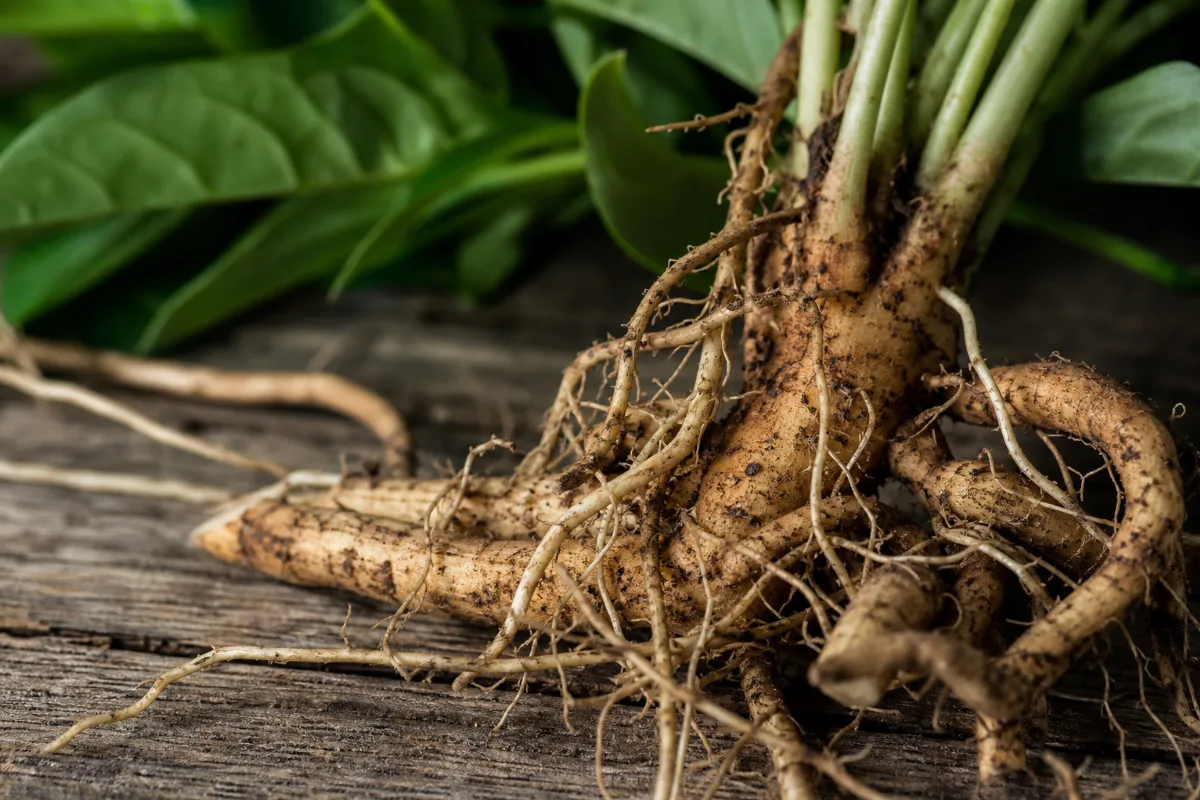
Herbs & Botanicals · Root source of a blood-pressure drug
Sarpagandha
Rauvolfia serpentina · also called Indian snakeroot, rauwolfia, sarpagandha root
Sarpagandha, or Indian snakeroot, is a root used in Ayurveda and the natural source of the drug reserpine. Trials of the purified drug showed a modest fall in blood pressure; the root itself has not been tested in good trials. Reserpine can cause low blood pressure, depression and drowsiness and interacts with many medicines, so do not use root products without a doctor.
General information, not medical advice. Last substantive update · Not medically reviewed. A named clinician has not signed off on this page. How this page is made
About Sarpagandha
Sarpagandha is the root that gave medicine the drug reserpine. The evidence is for the purified drug, not for root products, and the safety cautions are serious.
What it is
Sarpagandha, or Indian snakeroot (Rauvolfia serpentina), is a plant of tropical Asia in the dogbane family. Its root is the traditional medicine and the source of reserpine and related alkaloids.
Do not confuse it with Virginia or Canada snakeroot, which are unrelated plants. It is also described as a threatened plant in the wild.
How it may work
Reserpine lowers the release of brain and nerve chemicals such as noradrenaline. That relaxes blood vessels and slows the heart, and it also explains sedation and low mood. This comes from drug pharmacology and was not tested in the trials above.
What the research shows
Four small trials of purified reserpine showed a modest fall in systolic blood pressure. The authors asked for more trials. A separate trial of a whole-alkaloid extract was left out of the pooling.
Old trials in schizophrenia favoured chlorpromazine. We found no trial of the whole root for any use, and no reliable trial for calm or sleep.
At a glance
Traditional uses history, not proof
- Root used in Ayurveda and across the Indian subcontinent (specific uses not verified here)
- Physicians used the plant widely in India in the 1940s and worldwide in the 1950s for high blood pressure
- Reserpine from the plant became an early drug for high blood pressure and for severe mental illness
Studied for research
- High blood pressure with purified reserpine, low certainty
- High blood pressure with root products, insufficient
- Schizophrenia with reserpine (old trials), very low certainty
- Mood and depression (a risk question), mixed
- Calm, anxiety and sleep, insufficient
Main compounds
- Reserpine (PubChem CID 5770), a prescription-type alkaloid
- Ajmaline, yohimbine and ajmalicine (related alkaloids; presence in the root not verified here)
Common forms
- Dried root
- Root powder
- Root or alkaloid extract
- Ayurvedic formulations (reserpine has been found in some)
Research links: Cochrane: reserpine for primary hypertension (PubMed) · Reserpine and depression: systematic review (PubMed) · Reserpine drug label (DailyMed) · LiverTox: reserpine (PubMed) · Research Library · Genes & Biomarkers Library
The plant and its history
- Accepted scientific name
- Rauvolfia serpentina (L.) Benth. ex Kurz (GBIF: ACCEPTED, exact match, confidence 98). Often spelled Rauwolfia serpentina.
- Naming authority
- (L.) Benth. ex Kurz
- Common names
- Sarpagandha (Hindi/Sanskrit-derived); Indian snakeroot (English); Rauwolfia (English)
- Botanical family
- Apocynaceae (dogbane family)
- Classification
- Plantae > Not pulled > Not pulled > Gentianales > Apocynaceae > Rauvolfia > Rauvolfia serpentina
- Native range
- Described as a plant of Tropical Asia in a 2025 abstract; fuller range not verified.
- Habitat
- Forest understory in the Nepal study; not otherwise covered.
- What the plant looks like
- Roots: The root is the medicinal part.; Stems: Not covered in sources read.; Leaves: Not covered.; Flowers: Not covered.; Fruit: Fruit and seed traits were measured in the Nepal study; seed germination was low.; Seeds: Low germination reported.; Cultivation: Not covered in the sources read.
- Harvest and processing
- Not covered in the sources read.
- Look-alikes and adulterants
- Name: Rauvolfia tetraphylla; Note: A different accepted species in the same genus (GBIF); pharmacology not checked.; Name: Virginia snakeroot (Aristolochia serpentaria) and Canada snakeroot (Asarum canadense); Note: Unrelated plants called snakeroot; under an FDA import alert for aristolochic acid (summary-only).
- Sustainability and conservation
- A 2025 Nepal field study calls the plant threatened. Official CITES and IUCN categories were not verified.
Traditional use and history history, not clinical proof
| Tradition or era | Documented use | Source |
|---|---|---|
| 1940s to 1950s | A 2015 review says physicians used the plant widely in India in the 1940s and worldwide in the 1950s; it fell from favour when depression and cancer concerns arose. | p26770146 |
| 1940s to 1950s psychiatry | Reserpine, refined from a plant extract, began to be used for mental disorders and was one of the first antipsychotic drugs; now rarely used and withdrawn in the UK. | p27124109 |
Traditional use shows how a plant was used. It does not show that a supplement works or is safe today.
What is inside, and how it may work
What the plant contains and how those compounds act in cells and animals. Laboratory and animal mechanisms are not proven effects in people.
Main compounds
| Compound | Family | Where it is concentrated | Activity studied | Level of evidence |
|---|---|---|---|---|
| Reserpine PubChem 5770 | Indole alkaloid | Root (NOT verified in a source read) | Blood-pressure-lowering and antipsychotic drug; the main safety concern. 15 7 | Human (drug) |
| Ajmaline PubChem 6100671 | Indole alkaloid | Root (NOT verified in a source read) | Not described in a source read. 15 | Not assessed |
| Yohimbine PubChem 8969 | Indole alkaloid | Whether present in this root was NOT verified | Not described in a source read. 15 | Not assessed |
| Ajmalicine PubChem 441975 | Indole alkaloid | Root (NOT verified in a source read) | Not described in a source read. 15 | Not assessed |
Mechanisms, receptors and pathways
| Target or pathway | Gene or receptor | What was found | Level |
|---|---|---|---|
| Monoamine storage and release | Not named in the sources read | The depression review frames reserpine's role in the original monoamine hypothesis of depression. The detailed mechanism was not read in a primary source. 8 | Pharmacological theory (drug) |
Absorption, metabolism and elimination
- Absorption
- Not found.
- Distribution
- Label: reserpine crosses the blood-brain barrier and the placenta and appears in cord blood.
- Metabolism
- Label: extensively metabolised to inactive compounds.
- Elimination
- Label: slowly excreted in urine and feces.
- Bioavailability
- Not found for the root.
Isolated compounds versus whole extracts
Reserpine is one purified compound with a known strength; the Cochrane review pooled only purified reserpine trials and kept a whole-alkaloid extract (Rauwiloid) separate. Root and powder contents vary and no pooled trial supports them. Treat safety statements about the drug as relevant to the root, but do not treat the blood-pressure results as shown for the root.
Nutritional composition
Sarpagandha is not a food nutrient. No vitamin or mineral role was found.
1 mixed findings1 low certainty1 very low certainty2 not enough evidence
What is Sarpagandha good for?
The studied uses and how strong the human evidence is for each. Almost all the human research is on the purified drug reserpine, not on the root.
Benefits, one by one
Each card is a research question, not a promise. Tap a goal to filter. Open a card to see the studies, doses and limits.
Schizophrenia and severe agitation (historic use of reserpine)
Very low certaintyPurified reserpine was one of the first drugs used for severe mental illness in the 1940s and 1950s. Old trials found it helped some people but less than chlorpromazine. It is now almost obsolete. Nothing here shows that the whole root helps.
2 studiesDoses are not given in the abstract and no dose advice is given here.
Studies, doses and limits
What the trials found
A 2016 Cochrane review pooled nine randomised trials from 1955 to 1962 that compared chlorpromazine with reserpine in schizophrenia. Chlorpromazine did better on overall improvement (6 trials, 781 people, low-quality evidence). There was no clear difference on paranoid symptoms (very low quality), everyday functioning or 'toxic reaction'. Side effects were poorly reported. There was no placebo arm, so the review cannot say how reserpine compares with no treatment.
Results
Not improved: relative risk 0.75 in favour of chlorpromazine (95% CI 0.62 to 0.92).
Effect sizes as reported
RR 0.75 (95% CI 0.62 to 0.92) for 'not improved', chlorpromazine versus reserpine.
Why this rating
Old, small trials; reviewers rated the key outcomes low or very low quality; head-to-head against another drug, not against placebo. Applies to purified reserpine, not to the root.
Form and dose studied
Doses are not given in the abstract and no dose advice is given here.
Who was studied
People with schizophrenia in 1950s hospital trials.
Limits
Trials are over 60 years old; adverse events poorly reported; no root or whole-alkaloid product was tested for this use.
Why researchers looked
Reserpine was refined from this root and tried in mental illness before modern antipsychotics existed.
Traditional use
The root has been used for centuries in the Indian subcontinent; the Cochrane authors describe reserpine as refined from a plant extract used for centuries.
Proposed mechanism Pharmacological theory
Reserpine empties stores of brain chemicals such as dopamine, serotonin and noradrenaline (drug pharmacology; not tested in the trials above).
A proposed mechanism does not show that the effect happens in people.
Reserpine can cause sedation, low blood pressure and, in some people, depression or parkinsonism. See the Safety tab.
Mood and depression (a risk question, not a benefit)
Mixed findingsReserpine is widely said to cause depression, and the label tells people with a history of depression not to take it. A 2023 review found the evidence mixed and mostly low quality. Treat low mood as a real warning sign with this herb.
3 studiesNot covered; no dose advice is given.
Studies, doses and limits
What the trials found
A 2023 systematic review of 35 studies (9 randomised) found that 11 reported some depression-causing effects, 13 reported no effect, and 11 reported possible antidepressant effects. Studies that found depression were more likely to include people without psychiatric disorders at the start. 30 of 35 were at high risk of bias. A case report describes parkinsonism and depression from a herbal medicine containing reserpine that was recognised late. The US drug label lists a history of mental depression as a contraindication.
Results
Mixed: 11 studies pointed to depression, 13 to no effect, 11 to possible benefit.
Effect sizes as reported
Not pooled.
Why this rating
The reviewers themselves call the link inconsistent and limited by lack of high-quality evidence.
Form and dose studied
Not covered; no dose advice is given.
Who was studied
Adults in mostly older studies; a single patient in the case report.
Limits
Mostly high risk of bias; drug studies, not root studies; the case report is one person with an unnamed product.
Why researchers looked
Reserpine's link to depression shaped early theories of what causes depression, so it has been studied a great deal.
Traditional use
Not a traditional use; this is a modern safety question.
Proposed mechanism Pharmacological theory
Reserpine lowers brain monoamines (drug pharmacology).
A proposed mechanism does not show that the effect happens in people.
Anyone with depression, a history of depression or thoughts of self-harm should not use this herb or reserpine without a doctor. Report new low mood, loss of interest or sleep change early.
Calm, anxiety and sleep (traditional claims)
Not enough evidenceThe root is traditionally used for restlessness and sleeplessness. We found no trial in people for these uses. Its sedating effect is also a safety issue.
1 studiesNot covered.
Studies, doses and limits
What the trials found
No randomised trial of the root or of reserpine for anxiety, stress or sleep in healthy people was found in the searches done. The drug label does state that reserpine adds to the effects of other central nervous system depressants such as barbiturates and alcohol.
Results
Not measured.
Effect sizes as reported
None available.
Why this rating
No human trial found; only traditional use and drug-label warnings.
Form and dose studied
Not covered.
Who was studied
Not tested.
Limits
Absence of studies, not evidence that it fails. The searches were limited to a few targeted queries.
Why researchers looked
Sedation is a known effect of reserpine, and the root has a traditional calming reputation.
Traditional use
Traditional use for calming; not confirmed in the sources read.
Proposed mechanism Pharmacological theory
Not established for the root; any calming effect would be a drug-like action of its alkaloids (theory).
A proposed mechanism does not show that the effect happens in people.
Added drowsiness with alcohol or sedatives is documented for reserpine as a drug.
High blood pressure: purified reserpine (drug)
Low certaintyThe purified drug reserpine lowered the upper blood-pressure number by about 8 mmHg more than placebo in a Cochrane review of four small trials. This is the drug, not the root.
2 studiesThe abstract says the systolic effect was reached at 0.5 mg/day or mo…
Studies, doses and limits
What the trials found
The 2016 Cochrane review found four randomised trials (237 people). Pooled systolic pressure fell more with reserpine than placebo. Because the trials differed a lot, no clear effect on diastolic pressure, mean arterial pressure or heart rate could be shown. The review could not work out a dose-response pattern. No trial reported anyone leaving because of side effects. The authors say more trials are needed.
Results
Systolic blood pressure: weighted mean difference -7.92 mmHg versus placebo.
Effect sizes as reported
WMD -7.92 mmHg (95% CI -14.05 to -1.78).
Why this rating
Four small trials with significant heterogeneity; the abstract gives no GRADE rating; the reviewers asked for more trials.
Form and dose studied
The abstract says the systolic effect was reached at 0.5 mg/day or more; amounts are not advised here and are for a doctor or pharmacist.
Who was studied
Adults with primary hypertension.
Limits
Small number of trials; heterogeneity; purified drug only. Not a result for any root powder or extract.
Why researchers looked
Reserpine was first obtained from this root and became an early blood-pressure drug.
Traditional use
A 2015 review says physicians used the plant widely in India in the 1940s and worldwide in the 1950s, until concerns about depression and cancer reduced its use.
Proposed mechanism Pharmacological theory
Reserpine reduces the release of noradrenaline from nerve endings, relaxing blood vessels and slowing the heart (drug pharmacology; not tested in the trials).
A proposed mechanism does not show that the effect happens in people.
Low blood pressure, slow heart rate, depression and sedation are known effects of reserpine as a drug. It must not be combined with blood-pressure treatment without medical supervision.
High blood pressure: whole root or whole-alkaloid products
Not enough evidenceThere is no good controlled-trial evidence for root powders. One small trial used a different alkaloid extract (Rauwiloid) and was left out of the main pooling. A 2015 single-author review argues for low-dose root use but is an opinion-style review.
3 studiesNot covered; no dose advice is given.
Studies, doses and limits
What the trials found
The Cochrane review kept the whole-alkaloid Rauwiloid trial separate because the extract and dose were not comparable to reserpine. A 2015 narrative review by one author concludes low-dose Rauwolfia is a safe and effective adjunct for suitable patients; we read only the abstract, and it is not a systematic review. A case series describes a man with high blood pressure who was taking an Ayurvedic medicine that contained reserpine, which shows products can contain the drug without clear labelling.
Results
None pooled for root products.
Effect sizes as reported
Not available.
Why this rating
No pooled trial of root products; the supportive review is a single-author narrative; product strength is not standardised.
Form and dose studied
Not covered; no dose advice is given.
Who was studied
Adults with high blood pressure.
Limits
Product content may vary and may contain undeclared drug; the evidence cannot be carried over from the drug to the root.
Why researchers looked
Many herbal products sold as snakeroot are root or root-extract rather than the purified drug.
Traditional use
Traditional Ayurvedic use of the root.
Proposed mechanism Pharmacological theory
The alkaloid content of roots varies with plant and processing, so effects cannot be assumed to match the drug (our earlier summary; not re-verified).
A proposed mechanism does not show that the effect happens in people.
Because strength is unknown, effects on blood pressure (including too low) are hard to predict. A doctor should supervise anyone with high blood pressure.
Connections to the rest of health
How Sarpagandha connects to the rest of our health knowledge graph. Every link says what kind of connection it is. A safety link (for example to the liver) is a warning, not a benefit. A study that merely mentions a topic never creates a benefit link.
Explore every connection: goals, body systems, organs, symptoms, genes
A. Wellness goals
| Connected to | Kind of connection | Evidence status | Context | Studies |
|---|---|---|---|---|
| Mood Balance | Adverse effect or risk | Mixed findings | Mood and depression (a risk question, not a benefit): Reserpine is widely said to cause depression, and the label tells people with a history of depression not to take it. A 2023 review found the evidence mixed and mostly low quality. Treat low mood as a real warning sign with this herb. | 8 6 9 |
| Calm Relaxation | Traditional use | Not enough evidence | Calm, anxiety and sleep (traditional claims): The root is traditionally used for restlessness and sleeplessness. We found no trial in people for these uses. Its sedating effect is also a safety issue. | 9 |
| Anxiety Support | Traditional use | Not enough evidence | Calm, anxiety and sleep (traditional claims): The root is traditionally used for restlessness and sleeplessness. We found no trial in people for these uses. Its sedating effect is also a safety issue. | 9 |
| Better Sleep | Traditional use | Not enough evidence | Calm, anxiety and sleep (traditional claims): The root is traditionally used for restlessness and sleeplessness. We found no trial in people for these uses. Its sedating effect is also a safety issue. | 9 |
| Stress Reduction | Traditional use | Not enough evidence | Calm, anxiety and sleep (traditional claims): The root is traditionally used for restlessness and sleeplessness. We found no trial in people for these uses. Its sedating effect is also a safety issue. | 9 |
| Blood Pressure Support | Demonstrated clinical effect | Low certainty | High blood pressure: purified reserpine (drug): The purified drug reserpine lowered the upper blood-pressure number by about 8 mmHg more than placebo in a Cochrane review of four small trials. This is the drug, not the root. | 7 9 |
| Heart Health | Demonstrated clinical effect | Low certainty | High blood pressure: purified reserpine (drug): The purified drug reserpine lowered the upper blood-pressure number by about 8 mmHg more than placebo in a Cochrane review of four small trials. This is the drug, not the root. | 7 9 |
| Blood Pressure Support | Traditional use | Not enough evidence | High blood pressure: whole root or whole-alkaloid products: There is no good controlled-trial evidence for root powders. One small trial used a different alkaloid extract (Rauwiloid) and was left out of the main pooling. A 2015 single-author review argues for low-dose root use but is an opinion-style review. | 7 2 5 |
B. Body systems
| Connected to | Kind of connection | Evidence status | Context | Studies |
|---|---|---|---|---|
| Nervous System | Biological association | Very low certainty | Studied for: Schizophrenia and severe agitation (historic use of reserpine) Studied for: Mood and depression (a risk question, not a benefit) | 4 9 8 6 |
| Stress Mood | Biological association | Mixed findings | Studied for: Mood and depression (a risk question, not a benefit) Studied for: Calm, anxiety and sleep (traditional claims) | 8 6 9 |
| Cardiovascular System | Biological association | Low certainty | Studied for: High blood pressure: purified reserpine (drug) Studied for: High blood pressure: whole root or whole-alkaloid products | 7 9 2 5 |
| Heart Circulation | Biological association | Low certainty | Studied for: High blood pressure: purified reserpine (drug) | 7 9 |
E. Health conditions
| Connected to | Kind of connection | Evidence status | Context | Studies |
|---|---|---|---|---|
| High blood pressure | Demonstrated clinical effect | Low certainty | Cochrane: systolic fall of about 8 mmHg across 4 small trials. Systolic fall of about 8 mmHg across 4 small trials. Preparation or compound: Purified reserpine (not the whole root) |
7 |
| Depression | Adverse effect or risk | Mixed findings | Label contraindication; 2023 review inconsistent. Label contraindication; evidence inconsistent. Preparation or compound: Reserpine |
8 9 |
| Parkinsonism (drug-induced) | Adverse effect or risk | Case report | One case report; levodopa label says to avoid combination. Preparation or compound: Herbal medicine containing reserpine |
6 9 |
I. Biomarkers
| Connected to | Kind of connection | Evidence status | Context | Studies |
|---|---|---|---|---|
| Global clinical state in schizophrenia (clinician rating) | Biological association | Very low certainty | Measured in trials: mixed. A lab change is not the same as a health benefit. | 4 |
| Depressive symptoms (rating scales and clinical reports) | Biological association | Mixed findings | Measured in trials: mixed. A lab change is not the same as a health benefit. | 8 |
| Systolic blood pressure (upper number) | Biological association | Low certainty | Measured in trials: lowered. A lab change is not the same as a health benefit. | 7 |
| Diastolic pressure, mean arterial pressure and heart rate | Biological association | Low certainty | Measured in trials: no-change. A lab change is not the same as a health benefit. | 7 9 |
K. Biological pathways
| Connected to | Kind of connection | Evidence status | Context | Studies |
|---|---|---|---|---|
| Monoamine signalling | Preliminary mechanism | Pharmacological theory | Linked to reserpine's mood and movement effects (theory). | 8 |
L. Active compounds
| Connected to | Kind of connection | Evidence status | Context | Studies |
|---|---|---|---|---|
| Reserpine | Biological association | Human (drug) | Blood-pressure-lowering and antipsychotic drug; the main safety concern. Preparation or compound: Root (NOT verified in a source read) |
15 7 |
| Ajmaline | Biological association | Not assessed | Not described in a source read. Preparation or compound: Root (NOT verified in a source read) |
15 |
| Yohimbine | Biological association | Not assessed | Not described in a source read. Preparation or compound: Whether present in this root was NOT verified |
15 |
| Ajmalicine | Biological association | Not assessed | Not described in a source read. Preparation or compound: Root (NOT verified in a source read) |
15 |
Each connection is stored with the ingredient, the connected record, the kind of connection, the evidence status, the supporting studies, the preparation or compound involved, and a review date (last reviewed October 25, 2026).
Evidence at a glance: what changed in 4 lab markers
Tap a number to show only those markers. Counts are markers, not people.
The evidence
The research centre for Sarpagandha. Every record here was checked against PubMed or the publisher's page; we never list a study we have not verified.
Evidence by outcome
Bars show how many studies we found for each outcome, not how well it works. People are added up across trials only (reviews are not added, to avoid double counting).
How we rate evidence
High certainty
Several well-run trials or reviews agree; further research is unlikely to change the picture much.
Moderate certainty
Good trials point the same way, but some doubt remains.
Low certainty
Small, short or inconsistent trials. The finding could change with better research.
Very low certainty
Very little or very weak human data. Treat as a possibility only.
Mixed findings
Trials or reviews disagree with each other.
Not enough evidence
Not enough human research to say either way.
Evidence against
Good research found no benefit, or found harm.
We take the reviewers' own risk-of-bias and GRADE statements where they exist, and otherwise judge from study size, design, consistency, directness and whether a product matches what is sold. Many publications do not make evidence high. Method note: We started from our existing sarpagandha summary, re-opened the PubMed and Cochrane records it relied on, and checked the drug label, LiverTox and LactMed records.
Study library: every study we checked 16
| Study | Design | People | Product, dose, length | Result |
|---|---|---|---|---|
| Grossman 2002 Carcinogenicity of antihypertensive therapy Current Hypertension Reports · PMID 12003701 · DOI |
Narrative review |
Human studies of blood-pressure drugs | Reserpine (drug) among many blood-pressure drugs n/a (purified drug) n/a n/a · vs n/a |
Early retrospective studies linked reserpine to breast cancer. Prospective data and a meta-analysis of case-control studies showed only a weak association that, although statistically significant, was of little clinical concern. Not stated in abstract (n/a) Methods, limits and fundingOutcomes: Cancer risk with blood-pressure drugs Limitations: Narrative review from 2002; about the drug, not the root; abstract only. Funding and conflicts: Not stated in abstract Read: abstract |
| Lobay 2015 Rauwolfia in the Treatment of Hypertension Integrative Medicine (Encinitas) · PMID 26770146 |
Narrative review |
Not applicable (single-author narrative review) | Low-dose Rauwolfia serpentina (as advocated by the author) unspecified Not stated in abstract n/a · vs n/a |
The author concludes Rauwolfia is a safe and effective adjunct for suitable patients with high blood pressure, disputes the link with cancer, and recommends screening for depression risk. These are the author's conclusions. Not stated (n/a) Methods, limits and fundingOutcomes: Review of botany, chemistry, pharmacology, hypertension use, adverse effects and carcinogenicity Limitations: Single-author advocacy-style narrative review; only the abstract was read; no pooled data; its confident wording is not backed by the Cochrane review, which pooled only purified reserpine. Funding and conflicts: Not stated in abstract Read: abstract |
| Neupane 2025 Anthropogenic Disturbances and Invasion of Mikania micrantha Threaten Rauvolfia serpentina Populations in Nepal Ecology and Evolution · PMID 41438954 · DOI |
Field study n/a (plant ecology) |
Rauvolfia serpentina plants at four forest sites in eastern Nepal | n/a (field ecology) whole plant n/a n/a · vs Sites with different disturbance |
The plant was described as a threatened medicinal plant in Tropical Asia. Density fell as disturbance rose; habitat change, an invasive weed, over-harvesting and poor seed viability were the probable reasons for low regeneration. Highest density 2.53 ± 0.22 plants per 25 m2 at the undisturbed site (n/a) Methods, limits and fundingOutcomes: Plant density, regeneration, seed germination Limitations: One forest in one country. Funding and conflicts: No conflicts declared Read: abstract |
| Nur 2016 Chlorpromazine versus reserpine for schizophrenia Cochrane Database of Systematic Reviews · PMID 27124109 · DOI |
Systematic review |
781 People with schizophrenia in 9 randomised trials from 1955 to 1962 (average about 60 per trial) |
Reserpine (drug) compared with chlorpromazine n/a (purified drug) Not given in abstract Short term · vs Chlorpromazine |
Chlorpromazine did better than reserpine on global improvement (6 trials, n=781, low-quality evidence). No clear difference on paranoid distortion (very low quality), functioning, 'toxic reaction' or leaving early. Adverse events were poorly reported. The authors call reserpine almost obsolete. Not improved: RR 0.75 favouring chlorpromazine (95% CI 0.62 to 0.92) Methods, limits and fundingOutcomes: Global state, paranoid distortion, functioning, adverse events, leaving the study early Limitations: Trials are over 60 years old; low to very low quality; this compares two drugs and has no placebo arm, so it does not show that reserpine itself works; says nothing about the whole root. Funding and conflicts: Not stated in abstract Read: abstract |
| Paudyal 2019 Adverse events with ayurvedic medicines - possible adulteration and some inherent toxicities Wellcome Open Research · PMID 31641694 · DOI |
Case series |
3 Three patients in Nepal |
Ayurvedic products: one containing reserpine; others a powder with gold salt and an unknown tablet containing steroid unspecified Not given Not given · vs n/a |
A 57-year-old man with high blood pressure was taking an Ayurvedic medicine containing reserpine. Two other cases involved a liver injury worsened after an Ayurvedic powder (alkaloids suspected) and steroid adulteration. The authors say Ayurvedic products can cause harm through adulteration or their own constituents. n/a (n/a) Methods, limits and fundingOutcomes: Adverse events Limitations: Three cases; the powder in the liver case is not shown to be Rauvolfia; abstract only. Funding and conflicts: No competing interests disclosed Read: abstract |
| Rijntjes 2019 No Free Lunch With Herbal Preparations: Lessons From a Case of Parkinsonism and Depression Due to Herbal Medicine Containing Reserpine Frontiers in Neurology · PMID 31275227 · DOI |
Case report |
1 One patient (Germany) |
A herbal medicine containing reserpine (exact product not given in abstract) unspecified Not given in abstract Not given in abstract · vs n/a |
Parkinsonism, depression and an atypical scan finding were recognised late as side-effects of the herbal medicine. The authors advise doctors to ask about herbal products. n/a (n/a) Methods, limits and fundingOutcomes: Parkinsonism, depression and an abnormal dopamine-transporter scan Limitations: Single case; abstract only; product and amount not stated. Funding and conflicts: No competing interests stated in abstract Read: abstract |
| Shamon 2016 Blood pressure-lowering efficacy of reserpine for primary hypertension Cochrane Database of Systematic Reviews · PMID 27997978 · DOI |
Systematic review |
237 Adults with primary hypertension (4 randomised trials) |
Purified reserpine (drug); one trial used Rauwiloid, a different alkaloid extract of Rauwolfia serpentina, analysed separately n/a (purified drug) Abstract says 0.5 mg/day or more achieved the systolic effect; no dose advice is given here Not given in abstract · vs Placebo or no treatment |
Pooled systolic blood pressure fell more with reserpine than placebo. Significant heterogeneity meant no clear effect on diastolic pressure, mean arterial pressure or heart rate could be shown. No trial reported withdrawals due to adverse effects. The authors called for more trials. Systolic: weighted mean difference -7.92 mmHg (95% CI -14.05 to -1.78) Methods, limits and fundingOutcomes: Systolic and diastolic blood pressure, mean arterial pressure, heart rate, withdrawals due to adverse events Limitations: Only 4 small trials; heterogeneity; dose-response could not be determined; Rauwiloid (whole-alkaloid extract) trial was not pooled with the reserpine trials; the abstract gives no GRADE rating. Funding and conflicts: Authors declared nothing to declare Read: abstract |
| Strawbridge 2023 The effects of reserpine on depression: A systematic review Journal of Psychopharmacology · PMID 36000248 · DOI |
Systematic review |
Adults in 35 studies, 9 of them randomised trials | Reserpine (drug) n/a (purified drug) Varied across studies Varied · vs Untreated or other conditions |
11 studies reported some depression-causing effects, 13 no effect, and 11 possible antidepressant effects. Studies finding depression were more likely in people without psychiatric disorders at baseline. 30 of 35 studies were at high risk of bias. Not pooled (narrative synthesis) (n/a) Methods, limits and fundingOutcomes: Depressive and related symptoms (anxiety, suicidal thoughts) Limitations: Mostly low-quality evidence; inconsistent results; the authors urge nuance. This is about the purified drug, not the whole root. Funding and conflicts: Several authors report honoraria from drug companies (Lundbeck, others) Read: abstract |
| n/a 2006 Renese-R (polythiazide and reserpine) tablet, prescribing label DailyMed (US National Library of Medicine) · Source |
Authoritative guidance n/a |
n/a | Reserpine plus polythiazide combination tablet (drug label) n/a n/a n/a · vs n/a |
Label lists a history of mental depression and peptic ulcer or ulcerative colitis as contraindications for the reserpine part; says to stop one to two weeks before elective surgery because of unexpectedly low blood pressure and slow heart rate with anesthetics; to avoid levodopa and monoamine oxidase inhibitors; to use cautiously with digitalis or quinidine; that reserpine adds to the effects of beta-blockers and of CNS depressants such as barbiturates and alcohol; that reserpine crosses the placenta and appears in cord blood; and that thiazides and reserpine appear in breast milk. Reserpine was a rodent tumorigen at doses about 100 to 300 times usual human exposure. n/a (n/a) Methods, limits and fundingOutcomes: Contraindications, warnings, interactions, pregnancy and nursing statements for reserpine as a drug Limitations: A combination tablet label from an old record (page read 2026-10-25), not a single-ingredient reserpine label and not about the whole root. Funding and conflicts: n/a Read: full-text |
| n/a 2006 Reserpine (LactMed) LactMed, NLM (Bookshelf NBK501093) · PMID 30000152 |
Authoritative guidance n/a |
n/a | Reserpine (drug) n/a n/a n/a · vs n/a |
No information is available on reserpine during breastfeeding and it might adversely affect the breastfed infant, so an alternative drug is preferred, especially for a newborn or preterm infant. n/a (n/a) Methods, limits and fundingOutcomes: Use during breastfeeding Limitations: Abstract-level record read via Europe PMC; about the purified drug; no data on the root. Funding and conflicts: n/a Read: abstract |
| n/a 2018 Reserpine (LiverTox) LiverTox, NIDDK (NLM Bookshelf NBK548348) · PMID 31643670 |
Authoritative guidance n/a |
n/a | Reserpine (drug) n/a n/a n/a · vs n/a |
States that despite wide use over many years, reserpine has not been shown to cause clinically apparent liver injury. n/a (n/a) Methods, limits and fundingOutcomes: Drug-induced liver injury Limitations: Abstract-level record read via PubMed/Europe PMC (Bookshelf page itself was behind a bot check). About the purified drug only. Funding and conflicts: n/a Read: abstract |
| n/a 2020 US FDA Import Alert on aristolochic acid (Virginia snakeroot, Canada snakeroot) US FDA (via summary in our earlier notes) · Source |
Database or regulator record n/a |
n/a | n/a n/a n/a n/a · vs n/a |
Our earlier summary says Virginia snakeroot (Aristolochia serpentaria) and Canada snakeroot (Asarum canadense) are covered by an FDA import alert for aristolochic acid. n/a (n/a) Methods, limits and fundingOutcomes: Look-alike 'snakeroot' plants Limitations: Summary-only: the FDA page was not re-opened in this build (the direct FDA address checked returned 404). Funding and conflicts: n/a Read: summary-only |
| n/a 2026 GBIF species match: Rauvolfia tetraphylla GBIF API (checked 2026-10-25) · Source |
Database or regulator record n/a |
n/a | n/a n/a n/a n/a · vs n/a |
Rauvolfia tetraphylla L.: ACCEPTED, family Apocynaceae. A different species from R. serpentina; pharmacology was not checked. n/a (n/a) Methods, limits and fundingOutcomes: Identity of a related species Limitations: Name check only. Funding and conflicts: n/a Read: full-text |
| n/a 2026 Regulator and conservation pages checked, not found or not read NCCIH, EMA/HMPC, WHO, CITES, IUCN (checked 2026-10-25) · Source |
Database or regulator record n/a |
n/a | n/a n/a n/a n/a · vs n/a |
NCCIH has no page at /health/rauwolfia (404). No EMA/HMPC or WHO monograph was located. CITES and IUCN pages could not be read, so no listing is stated. n/a (n/a) Methods, limits and fundingOutcomes: Regulatory status Limitations: Absence of a page found is not evidence of absence of a statement. Funding and conflicts: n/a Read: full-text |
| n/a 2026 PubChem compound records: reserpine, ajmaline, yohimbine, ajmalicine PubChem PUG REST (checked 2026-10-25) · Source |
Database or regulator record n/a |
n/a | n/a n/a n/a n/a · vs n/a |
Reserpine CID 5770 (C33H40N2O9); (+)-ajmaline CID 6100671 (C20H26N2O2); yohimbine CID 8969 (C21H26N2O3); ajmalicine CID 441975 (C21H24N2O3). n/a (n/a) Methods, limits and fundingOutcomes: Compound identity Limitations: Identity only. Whether each compound occurs in the root, and how much, was not verified in a source read. Funding and conflicts: n/a Read: full-text |
| n/a 2026 GBIF species match: Rauvolfia serpentina GBIF API (checked 2026-10-25) · Source |
Database or regulator record n/a |
n/a | n/a n/a n/a n/a · vs n/a |
Rauvolfia serpentina (L.) Benth. ex Kurz: ACCEPTED, exact match, confidence 98, family Apocynaceae, order Gentianales, GBIF key 3169787. n/a (n/a) Methods, limits and fundingOutcomes: Identity Limitations: Taxonomy only. NCBI Taxonomy was not queried. Funding and conflicts: n/a Read: full-text |
What we do not know yet
- No controlled trial of the whole root or standardised extract for any use.
- Reserpine trials for blood pressure are few and small, with no hard outcomes such as heart attack or stroke.
- The depression question lacks high-quality trials.
- EMA/HMPC, WHO, CITES and IUCN statements were not read.
How new research is added
New studies are found by a saved PubMed search and placed in a review queue. A person reads each one before it is added.
Lab markers
What changed in blood or saliva tests during trials. A changed number is not the same as feeling or being healthier, and we give no "normal ranges".
Other 4
Global clinical state in schizophrenia (clinician rating)
Mixed results in trials
A clinician's overall rating of whether a person improved.
Very low certaintyResults and what it means
Why it was measured
The main outcome in the old trials.
Statistical vs. clinical meaning
Shows reserpine did less well than another old drug; it does not give a size of benefit against placebo.
Safety implication
Reserpine is now almost obsolete for this use.
| Study | Result | People | Product |
|---|---|---|---|
| 4 | Not improved: RR 0.75 (95% CI 0.62 to 0.92) favouring chlorpromazine over reserpine; 6 trials, n=781, low-quality evidence. | People with schizophrenia, 1955 to 1962 trials | Reserpine (drug) versus chlorpromazine |
Depressive symptoms (rating scales and clinical reports)
Mixed results in trials
Scores or clinical reports of low mood.
Mixed findingsResults and what it means
Why it was measured
Reserpine has been blamed for causing depression.
Statistical vs. clinical meaning
Inconsistent results; low-quality evidence.
Safety implication
Treat new low mood as a warning sign.
| Study | Result | People | Product |
|---|---|---|---|
| 8 | 35 studies: 11 reported depressogenic effects, 13 no effect, 11 possible antidepressant effects; 30 of 35 at high risk of bias. | Adults, mixed settings | Reserpine (drug) |
Systolic blood pressure (upper number)
Lowered in trials
Pressure in the arteries when the heart beats.
Low certaintyResults and what it means
Why it was measured
The main outcome in the blood-pressure trials.
Statistical vs. clinical meaning
A statistically significant fall in a surrogate; the review did not report heart attacks or strokes.
Safety implication
Too-low pressure is possible.
| Study | Result | People | Product |
|---|---|---|---|
| 7 | WMD -7.92 mmHg (95% CI -14.05 to -1.78) versus placebo; 4 trials, 237 people. | Adults with primary hypertension | Purified reserpine (drug) |
Diastolic pressure, mean arterial pressure and heart rate
No clear change in trials
Lower blood-pressure number, average arterial pressure and pulse.
Low certaintyResults and what it means
Why it was measured
Secondary outcomes in the review.
Statistical vs. clinical meaning
Heterogeneity prevented a clear conclusion; this is not proof of no effect.
Safety implication
Slow heart rate is a known effect of the drug (label).
| Study | Result | People | Product |
|---|---|---|---|
| 7 | No significant effect could be shown on diastolic pressure, mean arterial pressure or heart rate because of heterogeneity between trials. | Adults with primary hypertension | Purified reserpine (drug) |
Safety
What studies and official sources say about side effects, medicines and who should check first. Each point shows what kind of evidence it comes from.
Main points to know 5
- Reserpine is a prescription-type drug alkaloid. The root is the natural source of reserpine, a blood-pressure and psychiatric drug. Drug effects (low blood pressure, slow heart rate, sedation, depression, parkinsonism) are the main safety concern. Root products vary in strength and have not been shown to behave like a measured drug dose, so effects are hard to predict. Authoritative guidance 9 7 6
- Depression and low mood. The drug label lists a history of mental depression as a contraindication. A 2023 review found the depression link inconsistent and mostly low quality, so it should be treated as a real possibility. Authoritative guidance 9 8
- Many medicine interactions. The drug label says to avoid levodopa and monoamine oxidase inhibitors, to use cautiously with digitalis or quinidine, and notes added effects with beta-blockers and with alcohol and other sedatives. Other blood-pressure medicines and antidepressants are a theory-based concern. Authoritative guidance 9
- Not for pregnancy or breastfeeding. Reserpine crosses the placenta and appears in cord blood, and appears in breast milk (label). LactMed prefers an alternative drug while breastfeeding. Authoritative guidance 9 10
- Products may hide reserpine, and the plant is threatened. Case reports describe Ayurvedic and herbal medicines containing reserpine that were not recognised as such. A 2025 field study describes the plant as threatened by over-harvesting and habitat loss, which can push sourcing toward adulterated or substituted material. Case report 6 5 3
Side effects 5
| Effect | How often | Severity and recovery | Evidence |
|---|---|---|---|
| Low blood pressure and slow heart rate, especially around anesthesia Label (reserpine as a drug) advises stopping one to two weeks before elective surgery because of unexpectedly low blood pressure and slow heart rate with anesthetic agents. Root-specific surgery advice was not found. | Not established | Can be serious Label says effects can persist after stopping | Authoritative guidance 9 |
| Depression, low mood Evidence inconsistent: 11 of 35 studies found depression-causing effects, 13 no effect, 11 possible antidepressant effects. | Not established | Can be serious Not stated | Systematic review 8 9 |
| Parkinsonism (stiffness, slowness, tremor) One case with a herbal medicine containing reserpine; recognised late. | Not established | Can be serious Not stated in the abstract | Case report 6 |
| Sedation and added drowsiness with alcohol or sedatives From the drug label. | Not established | Mild to moderate Not stated | Authoritative guidance 9 |
| Increased stomach acid; appetite and weight gain Peptic ulcer and ulcerative colitis are listed as contraindications; the label says reserpine may increase appetite and weight. | Not established | Mild to moderate Not stated | Authoritative guidance 9 |
Liver
LiverTox says reserpine, the purified drug, has not been shown to cause clinically apparent liver injury. No case of liver injury from Rauvolfia root was found in the searches done. One Ayurvedic case report describes a woman whose existing liver injury worsened after an Ayurvedic powder, with alkaloids suspected; the powder was not shown to be Rauvolfia. 11 5
How often. No frequency is available.
Monitoring. No monitoring advice was found. Stop and seek care for yellow skin or eyes, dark urine or severe stomach pain.
- .
This is a safety connection. It is not evidence that Sarpagandha supports liver health.
Medicines and supplements 7
| With | Why it matters | Importance | Evidence | What to do |
|---|---|---|---|---|
| Blood-pressure medicines in general (and beta-blockers in particular) prescription | Added blood-pressure lowering and slowing of the heart. The label states reserpine may add to the effects of beta-blockers. | Could cause too-low blood pressure or dizziness. The beta-blocker statement is from the drug label; other classes are theory. | Authoritative guidance Low certainty 9 | Do not combine without a doctor. |
| Monoamine oxidase inhibitors (MAOIs) prescription | Label: excitation and high blood pressure when reserpine is added. | The label says the combination should be avoided. | Authoritative guidance Low certainty 9 | Avoid unless a doctor directs. |
| Levodopa (Parkinson's medicine) prescription | Label: reserpine reduces the response to levodopa. | The label says reserpine should be avoided with levodopa. | Authoritative guidance Low certainty 9 | Avoid unless a doctor directs. |
| Digoxin (digitalis) and quinidine (heart-rhythm medicines) prescription | Label: use cautiously together. | Heart-rhythm problems are the concern named in the label; the label text read is a combination tablet. | Authoritative guidance Low certainty 9 | Ask a doctor or pharmacist; do not combine on your own. |
| Antidepressants and other mood medicines prescription | Reserpine changes brain chemical stores that these medicines act on (theory). Reserpine may also cause depression. | No interaction study was found. The concern is theory plus the label warning on depression. | Pharmacological theory Very low certainty 8 9 | Tell the prescriber about any root product. |
| Alcohol, sedatives and sleeping medicines prescription | Label: reserpine adds to the effects of central nervous system depressants such as barbiturates and alcohol. | More drowsiness. | Authoritative guidance Low certainty 9 | Avoid combining. |
| Ephedrine and similar decongestants over-the-counter | Label: the effects of indirect-acting sympathomimetic amines such as ephedrine may be decreased. | Reduced effect of those products. | Authoritative guidance Low certainty 9 | Ask a pharmacist. |
Who should check first 7
| Situation | Advice | Evidence |
|---|---|---|
| History of depression | Do not use unless a doctor directs. | Authoritative guidance 9 8 |
| Peptic ulcer or ulcerative colitis | The label lists these as contraindications because reserpine can raise stomach acid. | Authoritative guidance 9 |
| Pregnancy | Avoid. Reserpine crosses the placenta and appears in cord blood (label). | Authoritative guidance 9 |
| Breastfeeding | Avoid. LactMed has no data and prefers an alternative drug. | Authoritative guidance 10 9 |
| Planned surgery | Tell the surgeon and anesthetist about any root product. The label advises stopping reserpine one to two weeks before elective surgery. | Authoritative guidance 9 |
| Children | The label says safety and effectiveness in children have not been established. | Authoritative guidance 9 |
| Low blood pressure, slow heart rate, heart rhythm problems or kidney impairment | Ask a doctor first. The label warns that lowered blood pressure may harm people with kidney impairment. | Authoritative guidance 9 |
Overdose, product quality and regulators
Summary. No formal toxicity assessment of the whole root was found. For the drug, rodent studies showed reserpine to be a tumorigen at doses about 100 to 300 times usual human exposure (label). A 2002 review said early human studies linked reserpine to breast cancer but later prospective data and a meta-analysis found only a weak association of little clinical concern.
Animal. Label: increased mammary fibroadenomas in female mice, malignant seminal-vesicle tumors in male mice and malignant adrenal medullary tumors in male rats at very high feed doses.
Human doses studied. Not given here; no dose advice.
High dose or long term signals. Cancer link is inconsistent; depression and parkinsonism are the practical signals.
Overdose response. Not found.
Genotoxicity. Not found in the sources read.
Toxic plant parts. The root is the medicinal part and the source of the alkaloids. Other parts were not assessed.
Products sold as herbal or Ayurvedic can contain undeclared reserpine or other drugs. Whole root differs from purified reserpine: root alkaloid content is not standardised, while the drug has a known strength. The plant is threatened in the wild, which adds substitution risk.
Undeclared reserpine. A herbal medicine containing reserpine caused parkinsonism and depression in one patient and was recognised late. An Ayurvedic medicine containing reserpine was being taken by a man with high blood pressure. 6 5
Name confusion. Virginia snakeroot (Aristolochia serpentaria) and Canada snakeroot (Asarum canadense) are different plants under an FDA import alert for aristolochic acid (summary-only). Rauvolfia tetraphylla is a related but different species. 12 13
Threatened wild plant. A 2025 Nepal field study describes the species as threatened by over-harvesting, habitat change and an invasive weed. 3
| Body | Action | Date |
|---|---|---|
| US FDA (drug label via DailyMed) (United States) | Reserpine combination tablet label lists contraindications, interactions and pregnancy and nursing statements. It is a drug label, not a statement on the root. source | 2006 |
| LiverTox (NIDDK) (United States) | Reserpine not shown to cause clinically apparent liver injury. source | 2018 |
| LactMed (NLM) (United States) | No breastfeeding data; alternative drug preferred. source | 2006 |
When to get medical help
- Fainting, severe dizziness or a very slow heartbeat
- New or worsening low mood, hopelessness or thoughts of self-harm
- New stiffness, tremor or slowed movement
- Black stools, vomiting blood or severe stomach pain
- Yellow skin or eyes or dark urine
- Pregnancy, or a newborn exposed through breast milk who is unusually drowsy or feeding poorly
Stop the supplement and contact a clinician or emergency service. In the US, Poison Control is 1-800-222-1222.
General information only, not medical advice. Ask a clinician or pharmacist before use, especially with medicines, in pregnancy or with a health condition. See the Natural Remedy Safety guide.
Frequently asked questions
What is sarpagandha?
Sarpagandha, or Indian snakeroot (Rauvolfia serpentina), is a plant whose root is a traditional medicine and the natural source of the drug reserpine.
Does it lower blood pressure?
Purified reserpine did in four small trials, by about 8 mmHg in the upper number. This was not shown for the root.
Is the root the same as reserpine?
Can it cause depression?
Which medicines does it interact with?
The label says to avoid levodopa and MAO inhibitors, use caution with digoxin or quinidine, and notes added effects with beta-blockers and with alcohol and sedatives. Tell your doctor or pharmacist about any root product.
Is it safe in pregnancy or breastfeeding?
Can it harm the liver?
Can products contain reserpine without saying so?
Does it cause cancer?
Should I stop it before surgery?
Tell the surgeon and anesthetist. The label advises stopping reserpine one to two weeks before elective surgery because anesthesia can cause low blood pressure and slow heart rate.
Is the plant endangered?
Does it help with sleep or anxiety?
We found no trial. It is sedating, and that is a safety issue, especially with alcohol.
Explore by health goal
Blood Pressure SupportMood BalanceCalm RelaxationAnxiety SupportBetter SleepStress ReductionHeart Health
Editorial transparency
- Written by
- AlternativeMed editorial team. Research compiled with AI assistance, then checked against PubMed records.
- Medical review
- None. This page has not been reviewed by a physician or pharmacist.
- First published
- 2026-10-25
- Last substantive update
- 2026-10-25
- How we research
- We started from our existing sarpagandha summary, re-opened the PubMed and Cochrane records it relied on, and checked the drug label, LiverTox and LactMed records.
- How we rate evidence
- See "How we rate evidence" in the Evidence tab.
- Independence
- No product is promoted on this page. No affiliate links are shown. Industry links are flagged where an abstract states them.
Sources 16
Each source was opened and checked. Where we read only the abstract, it says so. The small numbers in the text point here.
- Grossman E, Messerli FH, Goldbourt U. Carcinogenicity of antihypertensive therapy. Current Hypertension Reports. 2002. PMID 12003701. DOI 10.1007/s11906-002-0007-4. (abstract)
- Lobay D. Rauwolfia in the Treatment of Hypertension. Integrative Medicine (Encinitas). 2015. PMID 26770146. (abstract)
- Neupane A, Jnawali B, Ghimire SK. Anthropogenic Disturbances and Invasion of Mikania micrantha Threaten Rauvolfia serpentina Populations in Nepal. Ecology and Evolution. 2025. PMID 41438954. DOI 10.1002/ece3.72731. (abstract)
- Nur S, Adams CE. Chlorpromazine versus reserpine for schizophrenia. Cochrane Database of Systematic Reviews. 2016. PMID 27124109. DOI 10.1002/14651858.CD012122.pub2. (abstract)
- Paudyal B, Thapa A, Sigdel KR, et al.. Adverse events with ayurvedic medicines - possible adulteration and some inherent toxicities. Wellcome Open Research. 2019. PMID 31641694. DOI 10.12688/wellcomeopenres.15096.3. (abstract)
- Rijntjes M, Meyer PT. No Free Lunch With Herbal Preparations: Lessons From a Case of Parkinsonism and Depression Due to Herbal Medicine Containing Reserpine. Frontiers in Neurology. 2019. PMID 31275227. DOI 10.3389/fneur.2019.00634. (abstract)
- Shamon SD, Perez MI. Blood pressure-lowering efficacy of reserpine for primary hypertension. Cochrane Database of Systematic Reviews. 2016. PMID 27997978. DOI 10.1002/14651858.CD007655.pub3. (abstract)
- Strawbridge R, Javed RR, Cave J, et al.. The effects of reserpine on depression: A systematic review. Journal of Psychopharmacology. 2023. PMID 36000248. DOI 10.1177/02698811221115762. (abstract)
- n/a. Renese-R (polythiazide and reserpine) tablet, prescribing label. DailyMed (US National Library of Medicine). 2006. (full-text)
- n/a. Reserpine (LactMed). LactMed, NLM (Bookshelf NBK501093). 2006. PMID 30000152. (abstract)
- n/a. Reserpine (LiverTox). LiverTox, NIDDK (NLM Bookshelf NBK548348). 2018. PMID 31643670. (abstract)
- n/a. US FDA Import Alert on aristolochic acid (Virginia snakeroot, Canada snakeroot). US FDA (via summary in our earlier notes). 2020. (summary-only)
- n/a. GBIF species match: Rauvolfia tetraphylla. GBIF API (checked 2026-10-25). 2026. (full-text)
- n/a. Regulator and conservation pages checked, not found or not read. NCCIH, EMA/HMPC, WHO, CITES, IUCN (checked 2026-10-25). 2026. (full-text)
- n/a. PubChem compound records: reserpine, ajmaline, yohimbine, ajmalicine. PubChem PUG REST (checked 2026-10-25). 2026. (full-text)
- n/a. GBIF species match: Rauvolfia serpentina. GBIF API (checked 2026-10-25). 2026. (full-text)