Legumes · Legume
Cranberry Beans
Phaseolus vulgaris · also called Borlotti beans, Roman beans, frijoles borlotti (Spanish)
Cranberry beans, also called borlotti beans, are cream-coloured beans with red-pink streaks, eaten dried and cooked or canned. They give fibre, plant protein and folate. Studies of beans and pulses in general link them to a small fall in LDL cholesterol, but cranberry beans have not been tested on their own in people. The most important caution is to cook dry beans properly, because raw or undercooked beans can cause vomiting and diarrhea.
General information, not medical advice. Last substantive update · Not medically reviewed. A named clinician has not signed off on this page. How this page is made
About Cranberry Beans
Cranberry (borlotti) beans are a nutritious legume with fibre, plant protein and folate. They are a healthy food, not a proven remedy. The health findings come from studies of pulses or legumes in general, and the main safety rule is to cook dry beans properly.
What it is
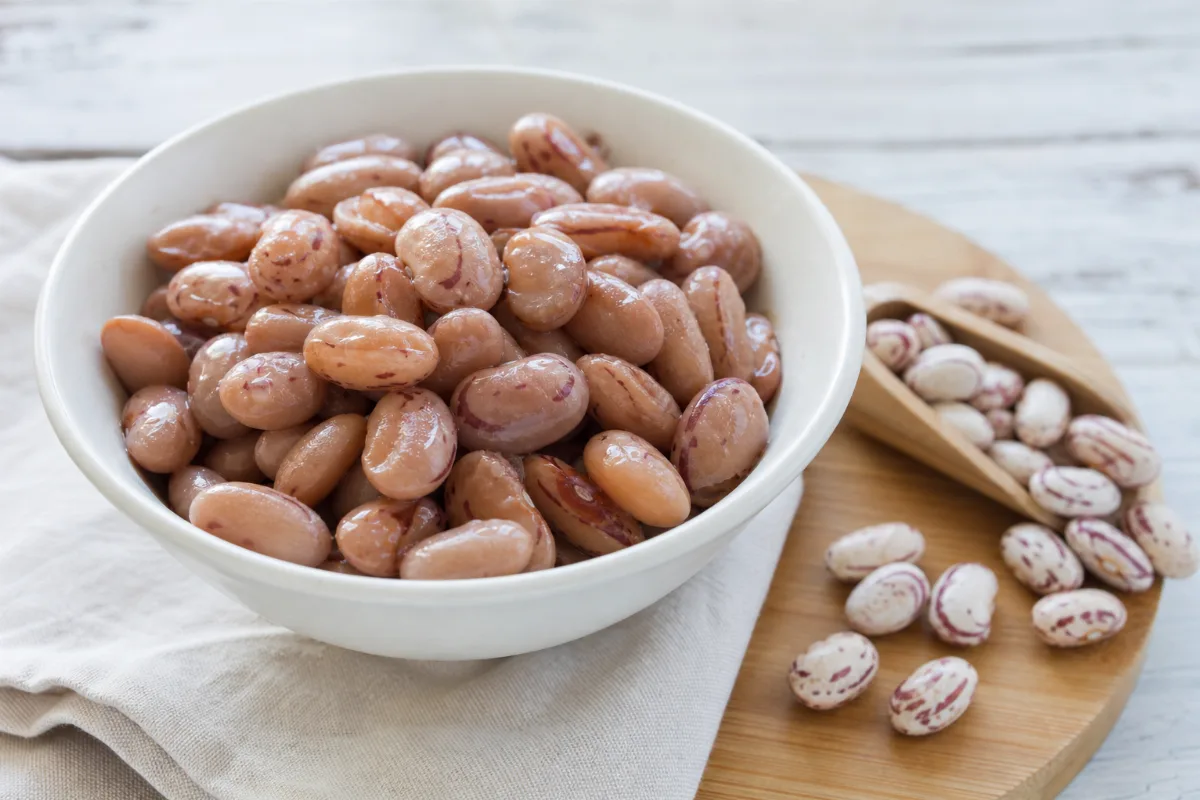
Cranberry beans are the seeds of the common bean plant, Phaseolus vulgaris, a member of the legume family. They are also sold as borlotti or Roman beans and have cream-coloured skins with red-pink streaks. They are eaten dried and cooked, or canned.
USDA values for boiled cranberry (roman) beans without salt: 136 kcal per 100 g; one cup (177 g) has about 241 kcal, 16.5 g protein, 15.2 g fibre and 366 micrograms folate. These values are carried from an earlier reading; the USDA service refused new requests today, so they were not re-opened.
What the research shows
The firmest facts are about nutrients: beans are a fibre, protein and folate food. These are not trials of cranberry beans.
Pooled trials of pulses found LDL cholesterol 0.14 to 0.17 mmol/L lower, a very small weight loss of about 0.34 kg and lower blood sugar markers. Trials of legumes on blood pressure found no clear overall change, while cohort studies link legumes to lower risk of high blood pressure and a little less cardiovascular disease. Cohort studies cannot prove cause.
Cranberry beans were not reported separately in any of these. The only cranberry-bean work found is a mouse study and a laboratory study of borlotti bean polyphenols.
Food versus extracts
The cholesterol, blood sugar and weight results come from trials of whole pulses eaten as food. The polyphenol result is from a laboratory extract. Bean extracts and supplements are different products, and we did not read human trials of them.
Amounts
This page gives no amounts to eat. Ask a doctor, pharmacist or dietitian what is right for you, especially if you have kidney disease, a sensitive gut or a food allergy.
At a glance
Traditional uses history, not proof
- Eaten dried and cooked, or canned, in soups, stews, pasta dishes and salads
- Long use as food is not proof that it treats any condition
Studied for research
- Fibre, protein and folate, high certainty for the nutrients, no bean-specific trial
- Cholesterol, moderate certainty (trials of pulses as a group)
- Blood sugar, low certainty (trials of pulses as a group)
- Blood pressure, mixed (trials mostly null, cohorts positive; legumes as a group)
- Body weight, low certainty (very small effect, pulses as a group)
- Heart disease, very low certainty (observational)
- Gut health and inflammation, insufficient (mouse and laboratory only)
Main compounds
- Fibre
- Folate
- Lectin (PHA), removed by cooking
- Polyphenols
- Galacto-oligosaccharides and resistant starch
Common forms
- Dry beans, soaked and boiled until tender
- Canned beans, already cooked
- Fresh shell beans (not covered by any source read)
- Extracts and supplements are different products and are not covered
Research links: 2026 review: whole pulses and cholesterol · 2023 review: legumes and blood pressure trials · 2021 lab study: lectin in raw and cooked borlotti beans · Research Library · Genes & Biomarkers Library
What it is and its history
- Accepted scientific name
- Phaseolus vulgaris
- Naming authority
- L. (GBIF accepted)
- Common names
- Cranberry beans (English); Borlotti beans (English); Roman beans (English); Frijoles borlotti (Spanish)
- Family or group
- Fabaceae (the legume or pea family), as given by GBIF. The existing summary calls cranberry beans the same species as kidney beans.
- Classification
- Plantae > Tracheophyta > Magnoliopsida > Fabales > Fabaceae > Phaseolus > Phaseolus vulgaris
- Native range
- Not verified from a source read.
- Habitat
- Not verified from a source read.
- What it looks like
- Roots: Not verified.; Stems: Not verified.; Leaves: Not verified.; Flowers: Not verified.; Fruit: The seeds are eaten. The existing summary describes cream-coloured skins with red-pink streaks; this description was not re-checked against a botanical source.
- Cultivation
- Not verified from a source read.
- Harvest and processing
- Sold dry, canned (already cooked) or, in some regions, fresh in the shell (existing summary). Dry beans need soaking and boiling; see Safety.
- Look-alikes and adulterants
- Name: Kidney beans; Note: The same species; a different bean with its own page. The lectin study found similar raw lectin activity in both.; Name: Pinto beans; Note: Also Phaseolus vulgaris, with a separate page and different nutrient values.; Name: Fresh shell beans; Note: Eaten fresh in some regions; no values for them were read.
- Sustainability and conservation
- Not assessed.
Photographs
What is inside, and how it may work
What it contains and how those compounds act in cells and animals. Laboratory and animal mechanisms are not proven effects in people.
Main compounds
| Compound | Family | Where it is concentrated | Activity studied | Level of evidence |
|---|---|---|---|---|
| Fibre (dietary fibre) | carbohydrate | Seed USDA (carried): 8.6 g per 100 g boiled | Adds bulk and feeds gut bacteria; beans are a fibre food. 21 16 | Human data |
| Folate (vitamin B9) | vitamin | Seed USDA (carried): 207 micrograms DFE per 100 g boiled | A B vitamin needed to make DNA and red blood cells; MedlinePlus names dried beans as a source. 21 20 | Human data |
| Lectin (phytohaemagglutinin, PHA) | protein | Seed Raw borlotti about 13,312 haemagglutination units per gram; not detected after 12 h soak and 45 min boil (laboratory) | Binds carbohydrates; raw or undercooked beans can cause vomiting and diarrhea. 1 13 | Human data |
| Polyphenols (flavonoids, flavones, hydroxycinnamic acids) | polyphenol | Seed coat and starch Laboratory digestion released 40.4 mg gallic acid equivalents per gram of cooked borlotti beans | Moderate anti-inflammatory effect in mouse immune cells (laboratory only). 7 | Laboratory research |
| Galacto-oligosaccharides (GOS) and resistant starch | carbohydrate | Seed Not given in the sources read | Fermented by gut bacteria, which causes gas and bloating in some people. 12 16 | Human data |
Mechanisms, receptors and pathways
| Target or pathway | Gene or receptor | What was found | Level |
|---|---|---|---|
| Lectin binding to carbohydrates in the gut | Not specified | Lectins bind carbohydrates. The FDA says raw or undercooked beans carry enough PHA to cause nausea, vomiting and diarrhea; cooking destroys it. 13 15 | Human data |
| Gut fermentation of oligosaccharides and resistant starch | Not specified | Bacteria ferment these carbohydrates and make gas, causing bloating and cramps in some people. Harvard adds that these carbohydrates feed beneficial bacteria. 16 | Human data |
| Inflammation markers in macrophages (cell model) | IL1 beta and iNOS messenger RNA | Extracts of cooked borlotti beans lowered these two messenger RNAs by 25% and 40% in mouse immune cells. Laboratory only. 7 | Laboratory research |
| Gut barrier and bacteria in mice | Muc1, Klf4, Relm beta, Reg3 gamma (mouse genes) | A 20% cranberry bean flour diet raised gut-barrier gene expression and short-chain fatty acids in mice. Animal only. 6 | Animal research |
Absorption, metabolism and elimination
- Absorption
- Not found for any cranberry bean nutrient. In the laboratory digestion model, starch digestion released most bean polyphenols; the authors note the model may not match the human gut.
- Distribution
- Not found.
- Metabolism
- Not found.
- Elimination
- Not found.
- Bioavailability
- Not established in people.
Isolated compounds versus whole extracts
The cholesterol, blood sugar, blood pressure and weight results come from trials of whole pulses eaten as food, not from cranberry beans on their own and not from extracts or powders. The polyphenol result is from a laboratory extract of cooked beans and does not show a benefit in people.
Nutritional composition
Nutrition from USDA FoodData Central (Beans, cranberry (roman), mature seeds, cooked, boiled, without salt, FDC 173736, SR Legacy). IMPORTANT: these numbers are carried from our existing page and summary, which recorded the USDA item as read; the USDA data service refused new requests on 2026-10-26 ("over rate limit"), so they were not re-opened today. Per 100 g boiled without salt: 136 kcal, 9.34 g protein, 0.46 g fat, 24.46 g carbohydrate, 8.6 g fibre, 207 micrograms folate (DFE), 0.231 mg copper, 0.21 mg thiamin, 0.37 mg manganese, 50 mg magnesium, 2.09 mg iron, 135 mg phosphorus, 387 mg potassium, 50 mg calcium, 1.14 mg zinc, 1 mg sodium. One cup, boiled (177 g, the USDA household portion): about 241 kcal, 16.5 g protein, 15.2 g fibre, 366 micrograms folate, 685 mg potassium, 239 mg phosphorus, 3.70 mg iron, 88.5 mg magnesium. Dry, uncooked beans (FDC 175189) per 100 g: 335 kcal, 23.03 g protein, 24.7 g fibre, 604 micrograms folate; do not compare raw and cooked values, because cooking adds water. Canned beans usually contain salt and are a different product. Values vary with variety, growing place and cooking time.
1 high certainty1 moderate certainty1 mixed findings2 low certainty1 very low certainty2 not enough evidence
What was looked at
The 8 benefits and uses checked for Cranberry Beans, each with how strong the evidence is. Tap one to open it.
- Fibre, plant protein and folate (nutrients)High certainty
- Cholesterol (pulses and beans as a group)Moderate certainty
- Blood sugar (pulses as a group)Low certainty
- Blood pressure (legumes as a group)Mixed findings
- Body weight (pulses as a group)Low certainty
- Heart disease and long-term outcomes (observational)Very low certainty
- Gut health and colitis (mouse study only)Not enough evidence
- Plant polyphenols and inflammation markers (laboratory only)Not enough evidence
Lab markers tracked in the studies
LDL cholesterolFasting blood glucoseSystolic blood pressureBody weight
What is Cranberry Beans good for?
The main studied uses and how strong the evidence is for each. Almost all results are for pulses or legumes as a group, not for cranberry beans on their own.
Benefits, one by one
Each card is a research question, not a promise. Tap a goal to filter. Open a card to see the studies, doses and limits.
Fibre, plant protein and folate (nutrients)
High certaintyCooked cranberry beans are a good food source of fibre, plant protein and folate. The USDA lists 15.2 g of fibre, 16.5 g of protein and 366 micrograms of folate (DFE) in one cup (177 g) of boiled beans without salt.
2 studiesBoiled dry beans, no salt. Canned beans are already cooked and vary i…
Studies, doses and limits
What the trials found
This is a nutrient fact from food composition data, not a trial of cranberry beans. MedlinePlus lists dried beans (pinto, navy, kidney, lima) among folate foods and says low folate is linked to birth defects such as spina bifida; it does not name cranberry beans.
Results
Cranberry beans supply these nutrients in food form. We found no trial showing that eating them corrects a deficiency.
Effect sizes as reported
USDA (as carried from an earlier reading): per 100 g boiled, 8.6 g fibre, 9.34 g protein, 207 micrograms folate (DFE); per cup (177 g) 15.2 g fibre, 16.5 g protein, 366 micrograms folate.
Why this rating
High that the nutrients are present in beans of this kind, but the exact USDA numbers were carried from an earlier reading and could not be re-opened on the day (USDA site rate-limited). Not a health-effect claim.
Form and dose studied
Boiled dry beans, no salt. Canned beans are already cooked and vary in salt.
Who was studied
General adult diet.
Limits
A nutrient fact, not a trial. Values differ with variety, growing place and cooking time.
Why researchers looked
Beans are known fibre and protein foods, so people ask what they provide.
Traditional use
Cranberry (borlotti) beans are eaten dried and cooked, or canned, in soups, stews, pasta dishes and salads. Long use as food is not proof that they treat any condition.
Proposed mechanism Authoritative guidance
Fibre adds bulk and feeds gut bacteria. Folate is a B vitamin used to make DNA and red blood cells.
A proposed mechanism does not show that the effect happens in people.
Beans can cause gas and bloating. Raw or undercooked beans can make you ill (see Safety).
Cholesterol (pulses and beans as a group)
Moderate certaintyPooled trials of eating pulses found a small fall in LDL (the so-called bad) cholesterol. Cranberry beans were not tested on their own.
2 studiesWhole pulses as food (median about 130 g a day in the trials; trial d…
Studies, doses and limits
What the trials found
A 2014 meta-analysis of 26 randomised trials (1,037 people) and a 2026 update of 38 trials (2,095 people) found diets with whole pulses lowered LDL cholesterol by about 0.14 to 0.17 mmol/L. The 2026 authors found similar results across pulse types and a larger fall for beans with higher intake.
Results
A small fall in a blood marker. It does not show fewer heart attacks.
Effect sizes as reported
LDL cholesterol -0.17 mmol/L (95% CI -0.25 to -0.09; 2014); -0.14 mmol/L (-0.19 to -0.08; 2026).
Why this rating
The 2026 authors rated the evidence moderate to high for pulses as a group. We lower it to moderate for cranberry beans because they were not reported separately (indirect evidence).
Form and dose studied
Whole pulses as food (median about 130 g a day in the trials; trial detail, not advice).
Who was studied
Adults in trials, with and without raised cholesterol.
Limits
Pulses as a group, mostly dried beans, chickpeas, lentils and peas. Short trials (median 6 weeks). The 2014 paper had a Canadian Institutes of Health Research grant.
Why researchers looked
Beans are high in fibre and low in saturated fat, so researchers ask whether eating them lowers blood cholesterol.
Traditional use
Cranberry (borlotti) beans are eaten dried and cooked, or canned, in soups, stews, pasta dishes and salads. Long use as food is not proof that they treat any condition.
Proposed mechanism Authoritative guidance
Not established in the abstracts read. Harvard says soluble fibre, oligosaccharides and plant chemicals in pulses may contribute.
A proposed mechanism does not show that the effect happens in people.
Beans can cause gas.
Blood sugar (pulses as a group)
Low certaintyPooled trials found that eating pulses lowered fasting blood sugar and insulin, and longer-term sugar markers in some diets. Cranberry beans were not separated out.
1 studiesPulses alone or in low-GI or high-fibre diets.
Studies, doses and limits
What the trials found
A 2009 meta-analysis of 41 randomised trials in people with and without diabetes found lower fasting glucose and insulin when pulses were eaten alone, and lower glycosylated proteins (HbA1c or fructosamine) when pulses were part of low-glycaemic-index or high-fibre diets.
Results
A modest benefit on blood sugar markers, with large unexplained differences between trials.
Effect sizes as reported
Fasting glucose SMD -0.82 (pulses alone); insulin -0.49; glycosylated proteins -0.28 (low-GI diets).
Why this rating
Randomised trials, but high unexplained differences between them, a 2009 search date and pulses as a group.
Form and dose studied
Pulses alone or in low-GI or high-fibre diets.
Who was studied
People with and without diabetes.
Limits
High heterogeneity; older review; no cranberry-bean trial.
Why researchers looked
Beans digest slowly, so researchers ask how they affect blood sugar.
Traditional use
Cranberry (borlotti) beans are eaten dried and cooked, or canned, in soups, stews, pasta dishes and salads. Long use as food is not proof that they treat any condition.
Proposed mechanism Unknown
Not established in the abstract.
A proposed mechanism does not show that the effect happens in people.
If you take diabetes medicine, ask your clinician before changing how much of any food you eat.
Blood pressure (legumes as a group)
Mixed findingsTrials of legumes found no clear overall change in blood pressure. Large cohort studies link eating more legumes with a lower risk of developing high blood pressure, which cannot prove cause.
2 studiesLegumes as food, some trials used powder.
Studies, doses and limits
What the trials found
A 2023 meta-analysis of 16 randomised trials (1,092 people) found no significant overall effect (certainty low); systolic pressure fell in people with overweight or obesity (-2.79 mm Hg). A 2026 meta-analysis of cohort studies found a relative risk of 0.84 for hypertension with the highest legume intake.
Results
Trials: mixed and mostly null. Cohorts: an association, not proof.
Effect sizes as reported
Trials: systolic -1.06 mm Hg (95% CI -2.57 to 0.44). Cohorts: RR 0.84 (0.77 to 0.93).
Why this rating
Randomised trials were null overall (low certainty); observational studies point the other way and cannot show cause.
Form and dose studied
Legumes as food, some trials used powder.
Who was studied
Adults.
Limits
Legumes as a group; subgroup result is secondary; observational findings may reflect other healthy habits.
Why researchers looked
Beans contain potassium, magnesium and fibre, so researchers ask about blood pressure.
Traditional use
Cranberry (borlotti) beans are eaten dried and cooked, or canned, in soups, stews, pasta dishes and salads. Long use as food is not proof that they treat any condition.
Proposed mechanism Unknown
Not established in the abstracts read.
A proposed mechanism does not show that the effect happens in people.
None specific.
Body weight (pulses as a group)
Low certaintyPooled trials found people eating pulses lost slightly more weight than people who did not. The average change was tiny.
1 studiesWhole pulses as food (median 132 g a day in the trials; trial detail,…
Studies, doses and limits
What the trials found
A 2016 meta-analysis of 21 randomised trials (940 adults, median 6 weeks) found diets with pulses gave 0.34 kg more weight loss, even when diets were not meant to cut calories.
Results
A very small average change in short trials.
Effect sizes as reported
Body weight -0.34 kg (95% CI -0.63 to -0.04), P=0.03.
Why this rating
Randomised trials but a very small, short-term effect, in pulses as a group.
Form and dose studied
Whole pulses as food (median 132 g a day in the trials; trial detail, not advice).
Who was studied
Adults.
Limits
Short trials; pulses as a group; the average change is tiny.
Why researchers looked
Pulses are filling foods rich in fibre and protein.
Traditional use
Cranberry (borlotti) beans are eaten dried and cooked, or canned, in soups, stews, pasta dishes and salads. Long use as food is not proof that they treat any condition.
Proposed mechanism Unknown
Not established in the abstract.
A proposed mechanism does not show that the effect happens in people.
None specific.
Heart disease and long-term outcomes (observational)
Very low certaintyPeople who ate the most pulses and legumes had somewhat less heart disease and high blood pressure in cohort studies. This cannot prove that beans caused the difference.
2 studiesDietary pulses with or without other legumes.
Studies, doses and limits
What the trials found
A 2019 umbrella review and update of 28 prospective cohort studies found higher intake linked to less cardiovascular disease (RR 0.92), coronary heart disease (0.90), hypertension (0.91) and obesity (0.87). No link was seen with heart attack, stroke, diabetes or deaths from cardiovascular disease, coronary heart disease or stroke. Harvard reports about 14% lower coronary artery disease risk with legumes four times a week in a mostly observational analysis.
Results
Small associations for some outcomes and none for others.
Effect sizes as reported
RR 0.92 cardiovascular disease (95% CI 0.85 to 0.99); 0.90 coronary heart disease (0.83 to 0.99).
Why this rating
The authors rated cardiovascular disease incidence low and all other outcomes very low. Observational and legumes as a group.
Form and dose studied
Dietary pulses with or without other legumes.
Who was studied
Adults in cohorts.
Limits
Cohort studies cannot show cause; healthier eaters may differ in other ways; cranberry beans were not separated.
Why researchers looked
If beans lower cholesterol a little, researchers ask whether long-term eaters have less heart disease.
Traditional use
Cranberry (borlotti) beans are eaten dried and cooked, or canned, in soups, stews, pasta dishes and salads. Long use as food is not proof that they treat any condition.
Proposed mechanism Unknown
Not established.
A proposed mechanism does not show that the effect happens in people.
None specific.
Gut health and colitis (mouse study only)
Not enough evidenceIn mice, feeding cranberry bean flour improved gut-barrier markers and lessened chemically caused colitis. This has not been tested in people.
1 studiesBean flour at 20% of mouse feed (animal detail, not advice).
Studies, doses and limits
Results
Mouse result only.
Effect sizes as reported
Not given as one number in the abstract.
Why this rating
Animal study only. No human trial.
Form and dose studied
Bean flour at 20% of mouse feed (animal detail, not advice).
Who was studied
Mice.
Limits
Chemical colitis model in mice; does not show a benefit for people.
Why researchers looked
Beans carry fermentable fibre and plant chemicals that may affect gut bacteria.
Traditional use
Cranberry (borlotti) beans are eaten dried and cooked, or canned, in soups, stews, pasta dishes and salads. Long use as food is not proof that they treat any condition.
Proposed mechanism Animal research
Mice fed a 20% cranberry bean flour diet had more short-chain fatty acids and changes in gut bacteria and gut barrier genes.
A proposed mechanism does not show that the effect happens in people.
Beans cause gas and bloating in many people; see Safety.
Plant polyphenols and inflammation markers (laboratory only)
Not enough evidenceIn a laboratory digestion model, cooked borlotti beans released many more polyphenols than home cooking alone, and bean extracts lowered two inflammation markers in mouse immune cells. This is cell work, not a result in people.
1 studiesCooked bean extracts in a laboratory.
Studies, doses and limits
Results
Laboratory and cell result only.
Effect sizes as reported
40.4 versus 2.22 mg gallic acid equivalents per gram; IL1 beta -25%, iNOS -40% (mRNA, cells).
Why this rating
Laboratory and cell work only.
Form and dose studied
Cooked bean extracts in a laboratory.
Who was studied
Mouse cells.
Limits
The lab digestion step may not match the human gut. Cells are not people.
Why researchers looked
Bean seed coats and starch hold plant chemicals (polyphenols) that may act as antioxidants.
Traditional use
Cranberry (borlotti) beans are eaten dried and cooked, or canned, in soups, stews, pasta dishes and salads. Long use as food is not proof that they treat any condition.
Proposed mechanism Laboratory research
Polyphenols embedded in starch are released by digestion; extracts lowered IL1 beta and iNOS messenger RNA in macrophages by 25% and 40%.
A proposed mechanism does not show that the effect happens in people.
None specific.
Connections to the rest of health
How Cranberry Beans connects to the rest of our health knowledge graph. Every link says what kind of connection it is. A safety link (for example to the liver) is a warning, not a benefit. A study that merely mentions a topic never creates a benefit link.
Explore every connection: goals, body systems, organs, symptoms, genes
A. Wellness goals
| Connected to | Kind of connection | Evidence status | Context | Studies |
|---|---|---|---|---|
| Digestive Support | High certainty | Fibre, plant protein and folate (nutrients): Cooked cranberry beans are a good food source of fibre, plant protein and folate. The USDA lists 15.2 g of fibre, 16.5 g of protein and 366 micrograms of folate (DFE) in one cup (177 g) of boiled beans without salt. | 21 20 | |
| Cholesterol Balance | Demonstrated clinical effect | Moderate certainty | Cholesterol (pulses and beans as a group): Pooled trials of eating pulses found a small fall in LDL (the so-called bad) cholesterol. Cranberry beans were not tested on their own. | 3 2 |
| Heart Health | Demonstrated clinical effect | Moderate certainty | Cholesterol (pulses and beans as a group): Pooled trials of eating pulses found a small fall in LDL (the so-called bad) cholesterol. Cranberry beans were not tested on their own. | 3 2 |
| Blood Sugar Balance | Low certainty | Blood sugar (pulses as a group): Pooled trials found that eating pulses lowered fasting blood sugar and insulin, and longer-term sugar markers in some diets. Cranberry beans were not separated out. | 10 | |
| Heart Health | Mixed findings | Blood pressure (legumes as a group): Trials of legumes found no clear overall change in blood pressure. Large cohort studies link eating more legumes with a lower risk of developing high blood pressure, which cannot prove cause. | 8 5 | |
| Weight Management | Low certainty | Body weight (pulses as a group): Pooled trials found people eating pulses lost slightly more weight than people who did not. The average change was tiny. | 4 | |
| Heart Health | Very low certainty | Heart disease and long-term outcomes (observational): People who ate the most pulses and legumes had somewhat less heart disease and high blood pressure in cohort studies. This cannot prove that beans caused the difference. | 11 16 | |
| Digestive Support | Not enough evidence | Gut health and colitis (mouse study only): In mice, feeding cranberry bean flour improved gut-barrier markers and lessened chemically caused colitis. This has not been tested in people. | 6 | |
| Inflammation Support | Not enough evidence | Plant polyphenols and inflammation markers (laboratory only): In a laboratory digestion model, cooked borlotti beans released many more polyphenols than home cooking alone, and bean extracts lowered two inflammation markers in mouse immune cells. This is cell work, not a result in people. | 7 |
B. Body systems
| Connected to | Kind of connection | Evidence status | Context | Studies |
|---|---|---|---|---|
| Digestive System | Biological association | High certainty | Studied for: Fibre, plant protein and folate (nutrients) Studied for: Gut health and colitis (mouse study only) | 21 20 6 |
| Cardiovascular System | Biological association | Moderate certainty | Studied for: Cholesterol (pulses and beans as a group) Studied for: Blood pressure (legumes as a group) | 3 2 8 5 11 16 |
| Metabolism Weight | Biological association | Low certainty | Studied for: Blood sugar (pulses as a group) Studied for: Body weight (pulses as a group) | 10 4 |
| Immune System | Biological association | Not enough evidence | Studied for: Plant polyphenols and inflammation markers (laboratory only) | 7 |
C. Body parts and organs
| Connected to | Kind of connection | Evidence status | Context | Studies |
|---|---|---|---|---|
| Gut | Adverse effect or risk | Documented risk | Gas and bloating in some people; beans are a main low-FODMAP trigger group. Gas and bloating from fermentable carbohydrates in beans in some people. Preparation or compound: Fermentable carbohydrates in beans |
16 12 |
E. Health conditions
| Connected to | Kind of connection | Evidence status | Context | Studies |
|---|---|---|---|---|
| Food poisoning | Adverse effect or risk | Documented risk | The FDA says PHA in raw or undercooked beans can cause nausea, severe vomiting and diarrhea. No cranberry-bean poisoning report was read. The FDA says lectin (PHA) in raw or undercooked beans can cause nausea, severe vomiting and diarrhea. Preparation or compound: Lectin (PHA) in raw or undercooked beans |
13 1 |
| Food allergy | Adverse effect or risk | Documented risk | Legume allergy is described in children in a clinic study; common bean was one of five legumes studied. Preparation or compound: Legume proteins |
9 |
I. Biomarkers
| Connected to | Kind of connection | Evidence status | Context | Studies |
|---|---|---|---|---|
| LDL cholesterol | Biological association | Moderate certainty | Measured in trials: lowered. A lab change is not the same as a health benefit. | 3 2 |
| Fasting blood glucose | Biological association | Low certainty | Measured in trials: lowered. A lab change is not the same as a health benefit. | 10 |
| Systolic blood pressure | Biological association | Low certainty | Measured in trials: no clear change. A lab change is not the same as a health benefit. | 8 |
| Body weight | Biological association | Low certainty | Measured in trials: lowered. A lab change is not the same as a health benefit. | 4 |
K. Biological pathways
L. Active compounds
| Connected to | Kind of connection | Evidence status | Context | Studies |
|---|---|---|---|---|
| Fibre (dietary fibre) | Biological association | Human | Adds bulk and feeds gut bacteria; beans are a fibre food. Preparation or compound: Seed |
21 16 |
| Folate (vitamin B9) | Biological association | Human | A B vitamin needed to make DNA and red blood cells; MedlinePlus names dried beans as a source. Preparation or compound: Seed |
21 20 |
| Lectin (phytohaemagglutinin, PHA) | Biological association | Human | Binds carbohydrates; raw or undercooked beans can cause vomiting and diarrhea. Preparation or compound: Seed |
1 13 |
| Polyphenols (flavonoids, flavones, hydroxycinnamic acids) | Biological association | In vitro | Moderate anti-inflammatory effect in mouse immune cells (laboratory only). Preparation or compound: Seed coat and starch |
7 |
| Galacto-oligosaccharides (GOS) and resistant starch | Biological association | Human | Fermented by gut bacteria, which causes gas and bloating in some people. Preparation or compound: Seed |
12 16 |
Each connection is stored with the ingredient, the connected record, the kind of connection, the evidence status, the supporting studies, the preparation or compound involved, and a review date (last reviewed October 26, 2026).
The evidence
The research centre for Cranberry Beans. Every record here was checked against PubMed or the publisher's page; we never list a study we have not verified.
Evidence by outcome
Bars show how many studies we found for each outcome, not how well it works. People are added up across trials only (reviews are not added, to avoid double counting).
How we rate evidence
High certainty
Several well-run trials or reviews agree; further research is unlikely to change the picture much.
Moderate certainty
Good trials point the same way, but some doubt remains.
Low certainty
Small, short or inconsistent trials. The finding could change with better research.
Very low certainty
Very little or very weak human data. Treat as a possibility only.
Mixed findings
Trials or reviews disagree with each other.
Not enough evidence
Not enough human research to say either way.
Evidence against
Good research found no benefit, or found harm.
We take the reviewers' own risk-of-bias and GRADE statements where they exist, and otherwise judge from study size, design, consistency, directness and whether a product matches what is sold. Many publications do not make evidence high. Method note: We started from our existing cranberry beans summary, re-read the FDA, Harvard, MedlinePlus and hospital pages, and searched PubMed for reviews, trials and bean-specific studies. Only abstracts were read for most studies. USDA nutrition values were carried from an earlier reading because the USDA service was unavailable. This is a smaller page on purpose: little research exists on this specific bean.
Study library: every study we checked 21
| Study | Design | People | Product, dose, length | Result |
|---|---|---|---|---|
| Adamcova 2021 Lectin Activity in Commonly Consumed Plant-Based Foods: Calling for Method Harmonization and Risk Assessment Foods · PMID 34829077 · DOI |
Laboratory lab |
Laboratory measurement of lectin activity in raw and processed edible plants (borlotti beans among about 60 samples) | Raw, soaked and boiled borlotti beans (Phaseolus vulgaris, bought in China) among other foods Dry beans Raw beans; for borlotti, a 12 hour soak then a 45 minute boil Laboratory test · vs Raw versus processed samples |
The abstract says lectin activity was highest in species of the pea family (Fabaceae) and that soaking and boiling lowered active lectins. The full-text table (read) gives raw borlotti beans 13,312 hemagglutination units per gram and raw kidney beans 13,214. Activity was not detected in borlotti after soaking for 12 hours and boiling for 45 minutes. Borlotti raw about 13,312 units/g (table); not detected after 12 h soak plus 45 min boil (Table value 13,312 +/- 2,822 (raw borlotti); kidney bean 13,214 +/- 2,828 (raw)) Methods, limits and fundingOutcomes: Lectin activity (haemagglutination assay) Limitations: A laboratory measurement, not a poisoning study. The authors call for agreed testing methods. One sample type and a single soaking and boiling schedule. Funding and conflicts: Funding is not stated in the abstract. Read: full-text |
| Back 2026 Effect of Different Types of Whole Dietary Pulses on Established Therapeutic Lipid Targets for Cardiovascular Risk Reduction: An Updated Systematic Review and Dose-Response Meta-Analysis of Randomized Controlled Trials J Am Heart Assoc · PMID 42132198 · DOI |
Systematic review meta analysis |
2095 2,095 people in 38 randomised trials (52 comparisons) |
Whole dietary pulses (analysed also by pulse type, including beans) Pulses as food Median 130 g/day (0.5 to 0.67 cup/day; trial detail, not advice) Median 6 weeks (at least 3 weeks) · vs Diets without pulses |
Whole pulses lowered LDL cholesterol, non-HDL cholesterol and apoB, and slightly lowered HDL cholesterol. Results were similar across pulse types. For beans, the fall in LDL grew with intake up to 1 cup a day. The authors rated the certainty of evidence moderate to high for all outcomes except apoB (very low). LDL cholesterol mean difference -0.14 mmol/L; non-HDL -0.22 mmol/L; apoB -0.08 g/L; HDL -0.03 mmol/L (LDL 95% CI -0.19 to -0.08; non-HDL -0.30 to -0.14; apoB -0.13 to -0.03; HDL -0.05 to -0.01) Methods, limits and fundingOutcomes: LDL cholesterol (primary), non-HDL cholesterol, apolipoprotein B, HDL cholesterol and other lipids Limitations: Pulses as a group, mostly dried; cranberry beans were not reported separately in the abstract. Cholesterol is a blood marker, not a heart attack count. The abstract does not describe funding. Funding and conflicts: PubMed lists the paper as Research Support, Non-U.S. Government. Funding and conflicts are not stated in the abstract. Registration: PROSPERO CRD42023432826 Read: abstract |
| Ha 2014 Effect of dietary pulse intake on established therapeutic lipid targets for cardiovascular risk reduction: a systematic review and meta-analysis of randomized controlled trials CMAJ · PMID 24710915 · DOI |
Systematic review meta analysis |
1037 1,037 people in 26 randomised trials |
Diets emphasising pulses (beans, chickpeas, lentils and peas) Pulses as food Median 130 g/day (trial detail, not advice) At least 3 weeks · vs Isocaloric diets without pulses |
Diets emphasising pulses lowered LDL cholesterol. No effect was seen on apolipoprotein B or non-HDL cholesterol. LDL cholesterol mean difference -0.17 mmol/L (95% CI -0.25 to -0.09 mmol/L) Methods, limits and fundingOutcomes: LDL cholesterol, apolipoprotein B, non-HDL cholesterol Limitations: Pulses as a group; cranberry beans were not reported separately in the abstract. The authors call for longer, higher-quality trials. Funding and conflicts: The PubMed record lists a Canadian Institutes of Health Research grant. Other funding or conflicts are not stated in the abstract. Registration: NCT01594567 Read: abstract |
| Kim 2016 Effects of dietary pulse consumption on body weight: a systematic review and meta-analysis of randomized controlled trials Am J Clin Nutr · PMID 27030531 · DOI |
Systematic review meta analysis |
940 940 adults in 21 randomised trials |
Diets containing whole dietary pulses Pulses as food Median 132 g/day (about 1 serving; trial detail, not advice) Median 6 weeks (at least 3 weeks) · vs Diets without a pulse intervention |
Diets with pulses gave a small extra weight loss compared with diets without them, with little difference between trials. Body weight -0.34 kg (95% CI -0.63 to -0.04 kg; P=0.03) Methods, limits and fundingOutcomes: Body weight, waist circumference, body fat Limitations: A very small average change over a short time. Pulses as a group, not cranberry beans. Long-term effects were not known. Funding and conflicts: Registered NCT01594567. Funding is not stated in the abstract. Registration: NCT01594567 Read: abstract |
| Metoudi 2026 Legume and soy consumption and the risk of hypertension: a systematic review and dose-response meta-analysis of prospective studies BMJ Nutr Prev Health · PMID 42539997 · DOI |
Systematic review meta analysis |
12 prospective cohort studies; 10 studies (309,853 people, 86,098 cases) for legumes | Higher versus lower legume intake (observational) Legumes as food Not an intervention; summary per 100 g/day also reported Cohort follow-up (varies) · vs Lowest intake group |
Higher legume intake was linked to lower risk of developing high blood pressure. The authors judged causality probable by World Cancer Research Fund criteria. Differences between studies were moderate to large and there was some sign of publication bias. Relative risk 0.84 for high versus low intake; 0.88 per 100 g/day (RR 0.84 (95% CI 0.77 to 0.93); per 100 g/day 0.88 (0.80 to 0.97)) Methods, limits and fundingOutcomes: Risk of developing high blood pressure Limitations: Observational: shows an association, not proof that legumes lower blood pressure. Legumes as a group, not cranberry beans. Funding and conflicts: Funding is not stated in the abstract. Read: abstract |
| Monk 2016 Diets enriched with cranberry beans alter the microbiota and mitigate colitis severity and associated inflammation J Nutr Biochem · PMID 26878790 · DOI |
Animal research mouse |
Mice, with and without chemically induced colitis | Diet with 20% cranberry bean flour (darkening and non-darkening varieties) Bean flour in mouse feed 20% of the diet (animal detail, not advice) Feeding before colitis, then 7 days of dextran sodium sulfate · vs Basal mouse diet |
Mice fed cranberry bean flour had more short-chain fatty acids and gut-barrier changes and, when colitis was induced, less severe colitis and lower inflammatory cytokines. The two bean varieties acted alike. Not given as one number in the abstract (Not given in the abstract) Methods, limits and fundingOutcomes: Gut barrier markers, gut bacteria, colitis severity, inflammatory markers Limitations: Mouse study only. Mice, a chemical colitis model and a 20% bean-flour diet do not predict what eating beans does for people with bowel disease. Funding and conflicts: Funding is not stated in the abstract. Read: abstract |
| Perez-Hernandez 2020 Starch Digestion Enhances Bioaccessibility of Anti-Inflammatory Polyphenols from Borlotti Beans (Phaseolus vulgaris) Nutrients · PMID 31978996 · DOI |
Laboratory research in-vitro |
Laboratory digestion model and mouse immune cells (macrophages) | Cooked borlotti beans (Phaseolus vulgaris) and extracts of them Cooked bean Laboratory digestion; cell exposure Laboratory test · vs Domestic processing alone versus enzyme digestion |
Laboratory digestion of cooked beans released about twenty times more polyphenols than domestic cooking and soaking alone (40.4 versus 2.22 mg gallic acid equivalents per gram). Extracts of cooked beans gave moderate anti-inflammatory effects in cells, lowering IL1 beta and iNOS messenger RNA by 25% and 40%. Polyphenols 40.4 +/- 2.5 versus 2.22 +/- 0.1 mg GAE/g; IL1 beta mRNA -25%, iNOS mRNA -40% (Not applicable) Methods, limits and fundingOutcomes: Polyphenols released; mRNA levels of IL1 beta and iNOS in macrophages Limitations: Cell and laboratory work only. It does not show any effect in people. Funding and conflicts: The PubMed record lists a grant from Consejo Nacional de Ciencia y Tecnologia (Mexico). Other funding is not stated in the abstract. Read: abstract |
| Reyneke 2023 The Effect of Non-Oil Seed Legume Intake on Blood Pressure: A Systematic Review and Meta-Analysis of Randomized Controlled Trials Adv Nutr · PMID 37031751 · DOI |
Systematic review meta analysis |
1092 1,092 people in 16 randomised trials |
Non-oil seed legumes, whole or powdered Legumes as food Weekly legume intake 450 to 3,150 g (trial detail, not advice) 4 to 52 weeks · vs Comparator diets |
No significant overall effect on blood pressure. The authors rated certainty low. In people with overweight or obesity, systolic pressure was lower. Systolic -1.06 mm Hg overall; diastolic -0.48 mm Hg overall; systolic -2.79 mm Hg in overweight/obesity subgroup (Systolic -2.57 to 0.44; diastolic -1.06 to 0.10; subgroup -4.68 to -0.90) Methods, limits and fundingOutcomes: Systolic and diastolic blood pressure Limitations: Legumes as a group, some as powder. The subgroup result is a secondary finding. The authors ask for larger, higher-quality trials. Funding and conflicts: Funding is not stated in the abstract. Registration: PROSPERO CRD42021237732 Read: abstract |
| Serra 2026 IgE-Mediated Legume Allergy in Children: Insights from a Single-Center Experience in Italy Nutrients · PMID 42280453 · DOI |
Case series |
55 55 children in one Italian clinic with allergy to at least one of pea, lentil, chickpea, common bean or soy |
Not an intervention (allergy characteristics); common bean (Phaseolus vulgaris) was one of five legumes studied Legumes as food Retrospective, January 2022 to January 2024 |
Pea (70.9%) and lentil (69.1%) allergy were most common. Most children (74.5%) were allergic to more than one legume. Anaphylaxis at the first reaction occurred in 12.7%, most often with pea. The abstract does not give a figure for common bean on its own. Multi-legume allergy 74.5%; peanut allergy as well 25.5%; anaphylaxis at onset 12.7% (Not given in the abstract) Methods, limits and fundingOutcomes: How allergy looked and was managed Limitations: One clinic, 55 children already allergic: it cannot show how common legume allergy is or how often common bean causes it. The authors call for cautious reading because of small numbers. Funding and conflicts: Funding is not stated in the abstract. Read: abstract |
| Sievenpiper 2009 Effect of non-oil-seed pulses on glycaemic control: a systematic review and meta-analysis of randomised controlled experimental trials in people with and without diabetes Diabetologia · PMID 19526214 · DOI |
Systematic review meta analysis |
41 randomised trials (39 reports) in people with and without diabetes | Non-oil-seed pulses (chickpeas, beans, peas, lentils and others), alone or inside low-glycaemic-index or high-fibre diets Pulses as food Trial detail not given in the abstract At least 7 days · vs Control diets |
Pulses alone (11 trials) lowered fasting glucose and insulin. Pulses in low-GI diets (19 trials) lowered glycosylated proteins. Pulses in high-fibre diets (11 trials) lowered fasting glucose and glycosylated proteins. Standardised mean differences: fasting glucose -0.82 (pulses alone); insulin -0.49; glycosylated proteins -0.28 (low-GI diets) (Fasting glucose -0.82 (95% CI -1.36 to -0.27); insulin -0.49 (-0.93 to -0.04); glycosylated proteins -0.28 (-0.42 to -0.14)) Methods, limits and fundingOutcomes: Fasting blood glucose, insulin, glycosylated blood proteins (HbA1c or fructosamine) Limitations: Pulses as a group, not cranberry beans. The authors report high, mostly unexplained differences between trials. Published in 2009. Funding and conflicts: Funding is not stated in the abstract; the PubMed record lists Research Support, Non-U.S. Gov't. Read: abstract |
| Viguiliouk 2019 Associations between Dietary Pulses Alone or with Other Legumes and Cardiometabolic Disease Outcomes: An Umbrella Review and Updated Systematic Review and Meta-analysis of Prospective Cohort Studies Adv Nutr · PMID 31728500 · DOI |
Systematic review meta analysis |
28 unique prospective cohort studies (summary of six reviews, updated) | Highest versus lowest intake of dietary pulses with or without other legumes (observational) Pulses and legumes as food Not an intervention Cohort follow-up (varies) · vs Lowest intake group |
Higher intake was linked to less cardiovascular disease, coronary heart disease, high blood pressure and obesity. It was not linked to heart attack, stroke or diabetes, or to deaths from cardiovascular disease, coronary heart disease or stroke. The authors rated certainty low for cardiovascular disease and very low for the other outcomes. Risk ratios: cardiovascular disease 0.92, coronary heart disease 0.90, hypertension 0.91, obesity 0.87 (CVD 0.85 to 0.99; CHD 0.83 to 0.99; hypertension 0.86 to 0.97; obesity 0.81 to 0.94) Methods, limits and fundingOutcomes: Heart and blood vessel disease, high blood pressure, diabetes, obesity, deaths Limitations: Observational, so it cannot prove cause. Pulses and legumes as a group, not cranberry beans. Funding and conflicts: The PubMed record lists a Canadian Institutes of Health Research grant. Other funding is not stated in the abstract. Registration: NCT03555734 Read: abstract |
| s-cuh-fodmap Cambridge University Hospitals NHS Foundation Trust: Low FODMAP diet: reducing fermentable carbohydrates in your diet · Source |
Health agency n/a |
Methods, limits and fundingRead: full-text | ||
| s-fda-natural-toxins FDA: Natural Toxins in Food · Source |
Health agency n/a |
Methods, limits and fundingRead: full-text | ||
| s-gbif-phaseolus-vulgaris GBIF Backbone: Phaseolus vulgaris L. (usageKey 5350452) · Source |
Reference database n/a |
Methods, limits and fundingRead: full-text | ||
| s-harvard-lectins Harvard T.H. Chan School of Public Health: Lectins (The Nutrition Source) · Source |
Health agency n/a |
Methods, limits and fundingRead: full-text | ||
| s-harvard-legumes Harvard T.H. Chan School of Public Health: Legumes and Pulses (The Nutrition Source) · Source |
Health agency n/a |
Methods, limits and fundingRead: full-text | ||
| s-hc-lectins Health Canada: Lectins in Dry Legumes · Source |
Health agency n/a |
Methods, limits and fundingRead: not-found | ||
| s-medlineplus-foodallergy MedlinePlus: Food allergy · Source |
Health agency n/a |
Methods, limits and fundingRead: full-text | ||
| s-medlineplus-potassium MedlinePlus: Potassium in diet · Source |
Health agency n/a |
Methods, limits and fundingRead: full-text | ||
| s-medlineplus-vitamins MedlinePlus: Vitamins (Medical Encyclopedia) · Source |
Health agency n/a |
Methods, limits and fundingRead: full-text | ||
| s-usda-fdc-173736 USDA FoodData Central: Beans, cranberry (roman), mature seeds, cooked, boiled, without salt (SR Legacy, FDC 173736) · Source |
Database record n/a |
Methods, limits and fundingRead: summary-only |
What we do not know yet
- No trial of eating cranberry (borlotti) beans on their own was found in people for cholesterol, blood sugar, blood pressure, weight or heart disease.
- The pooled trials and cohorts mix beans, lentils, chickpeas and peas; a cranberry-bean-only result was not in the abstracts read.
- USDA nutrition values were carried from an earlier reading and not re-opened (service rate-limited); Health Canada's lectin page could not be opened.
- Cranberry bean allergy, pregnancy, children and choking, vitamin K, oxalate, purines, heavy metals and pesticide residues were not researched.
How new research is added
New studies are found by a saved PubMed search and placed in a review queue before the page changes.
Lab markers
What changed in blood or saliva tests during trials. A changed number is not the same as feeling or being healthier, and we give no "normal ranges".
Metabolic 2
LDL cholesterol
Lowered in trials
The 'bad' cholesterol carried in the blood. Higher levels are linked to more heart disease over time.
Moderate certaintyResults and what it means
Why it was measured
It is the usual blood marker in diet trials for heart risk.
Statistical vs. clinical meaning
A small fall in a blood marker from pulses as a group. It does not show fewer heart attacks or strokes.
Safety implication
None specific.
| Study | Result | People | Product |
|---|---|---|---|
| 3 | LDL cholesterol mean difference -0.17 mmol/L (95% CI -0.25 to -0.09); no effect on apolipoprotein B or non-HDL cholesterol | 1,037 people in 26 trials | Diets emphasising pulses, median 130 g/day, at least 3 weeks |
| 2 | LDL cholesterol mean difference -0.14 mmol/L (95% CI -0.19 to -0.08); non-HDL -0.22 mmol/L | 2,095 people in 38 trials | Whole pulses, median 130 g/day, median 6 weeks |
Body weight
Lowered in trials
Weight in kilograms measured in a trial.
Low certaintyResults and what it means
Why it was measured
A basic measure used in diet trials.
Statistical vs. clinical meaning
A very small average change in short trials of pulses, not cranberry beans.
Safety implication
None specific.
| Study | Result | People | Product |
|---|---|---|---|
| 4 | Body weight -0.34 kg (95% CI -0.63 to -0.04), P=0.03, median 6 weeks | 940 adults in 21 trials | Diets with whole pulses, median 132 g/day |
Other 2
Fasting blood glucose
Lowered in trials
Blood sugar measured after a night without food.
Low certaintyResults and what it means
Why it was measured
A basic marker of blood sugar control.
Statistical vs. clinical meaning
A modest fall in a blood marker with large differences between trials.
Safety implication
People on diabetes medicine should ask their clinician about diet changes.
| Study | Result | People | Product |
|---|---|---|---|
| 10 | Pulses alone (11 trials): fasting glucose SMD -0.82 (95% CI -1.36 to -0.27); high-fibre diets (11 trials) -0.32 (-0.49 to -0.15) | 41 trials in people with and without diabetes | Pulses alone or within high-fibre diets, at least 7 days |
Systolic blood pressure
No clear change in trials
The top number of a blood pressure reading.
Low certaintyResults and what it means
Why it was measured
High blood pressure raises the risk of heart disease and stroke.
Statistical vs. clinical meaning
No clear overall effect; the subgroup result is secondary.
Safety implication
None specific.
| Study | Result | People | Product |
|---|---|---|---|
| 8 | Overall systolic -1.06 mm Hg (95% CI -2.57 to 0.44), not significant; -2.79 mm Hg (-4.68 to -0.90) in people with overweight or obesity | 1,092 people in 16 trials | Legume-based diets, 4 to 52 weeks |
Safety
What studies and official sources say about side effects, medicines and who should check first. Each point shows what kind of evidence it comes from.
Main points to know 5
- Never eat dry beans raw or only warmed through. Raw or undercooked beans contain a lectin (phytohaemagglutinin, PHA). The FDA says that at high levels in raw beans it can cause nausea, severe vomiting and diarrhea, and that soaking beans at least 5 hours then boiling them in fresh water for at least 30 minutes removes and destroys it. In one laboratory study, raw borlotti (cranberry-type) beans had about the same lectin activity as raw kidney beans (13,312 versus 13,214 units per gram) and none was detected after a 12 hour soak and a 45 minute boil. Harvard says raw beans simmered at low heat, as in a slow cooker, will not lose all their lectins. We read no poisoning report that names cranberry or borlotti beans. Authoritative guidance 13 15 1
- Canned beans are already cooked. The FDA says the low lectin levels in canned and properly cooked kidney beans will not affect you. Harvard says canned beans are cooked and low in lectins. Neither names cranberry beans. Check labels for added sodium. Authoritative guidance 13 15 16
- Gas, bloating and a temporary low-FODMAP plan. Beans contain resistant starch and oligosaccharides that gut bacteria ferment, which causes gas, bloating and cramps in some people (Harvard). A hospital leaflet lists borlotti beans among the beans and pulses to avoid in the first four to six weeks of a low-FODMAP diet, which is meant to be temporary and run with a dietitian. Authoritative guidance 16 12
- Legume allergy exists and can be severe. Cranberry beans are a legume (common bean). In an Italian clinic study of 55 children allergic to at least one of pea, lentil, chickpea, common bean or soy, 74.5% were allergic to more than one legume, and 12.7% had anaphylaxis at the first reaction. The abstract gives no figure for common bean alone. We read no source on how common cranberry bean allergy is. Observational 9 18
- Kidney disease: ask your kidney team. The USDA lists 685 mg of potassium and 239 mg of phosphorus in one cup of boiled cranberry beans (carried from an earlier reading, not re-opened today). MedlinePlus says people with kidney problems, particularly those on dialysis, should not eat too many potassium-rich foods. It does not name beans. Authoritative guidance 21 19
Side effects 3
| Effect | How often | Severity and recovery | Evidence |
|---|---|---|---|
| Nausea, severe vomiting and diarrhea from raw or undercooked beans (lectin) A food-handling risk that cooking removes. Health Canada timing and boil times could not be verified. | Not found for cranberry beans. The laboratory study found raw borlotti lectin activity similar to raw kidney beans. | Can be severe but is described as passing; no cranberry-bean case report was read Not found in the sources read | Authoritative guidance 13 1 |
| Gas, bloating and abdominal cramps Harvard says soaking dried beans at least three hours and cooking may help. | Described as occurring "in some people"; no rate found | mild to moderate Reversible | Authoritative guidance 16 12 |
| Allergic reactions to legumes, from hives to anaphylaxis A clinic study of children already allergic. It does not show how common allergy is. | In 55 allergic children, anaphylaxis at first reaction 12.7%; common bean not given separately | can be severe (anaphylaxis) Not given in the abstract | Observational 9 18 |
Liver
No liver injury from eating cranberry beans was found. A liver-safety source (such as LiverTox) was not searched for this food page.
How often. No frequency was found.
Monitoring. No agency monitoring advice was found.
This is a safety connection. It is not evidence that Cranberry Beans supports liver health.
Medicines and supplements 3
| With | Why it matters | Importance | Evidence | What to do |
|---|---|---|---|---|
| Medicines that raise blood potassium (ACE inhibitors, angiotensin receptor blockers, potassium-sparing diuretics) prescription | MedlinePlus lists these medicines among common causes of high blood potassium. Beans contain potassium (USDA via earlier reading: 685 mg per cup boiled). | No source read links eating beans to high blood potassium in people on these medicines. This is an indirect point to raise with your clinician, not a documented interaction. | Authoritative guidance Very low certainty 19 21 | If you take these medicines or have kidney disease, ask your clinician or pharmacist about potassium-rich foods. |
| Diabetes medicines prescription | Pooled trials found pulses lowered fasting glucose and insulin in some analyses. | No study or agency statement read describes a problem with eating beans and taking diabetes medicines. Not documented. | Theoretical Not enough evidence 10 | Ask your clinician before changing your diet if you use insulin or other glucose-lowering medicines. |
| Warfarin and vitamin K medicines prescription | Not assessed: the vitamin K content of cranberry beans was not read. | No source read names beans for warfarin. | Not found Not enough evidence | Keep your diet steady and ask your warfarin clinic about any large change. |
Who should check first 5
| Situation | Advice | Evidence |
|---|---|---|
| Known or suspected legume allergy (peanut, soy, lupin, chickpea, pea, lentil or bean) | Avoid cranberry beans until an allergist has advised you. For trouble breathing or swelling of the face or throat, call your local emergency number. | Observational 9 18 |
| Chronic kidney disease, especially dialysis | Ask your kidney team or dietitian about potassium and phosphorus in beans. | Authoritative guidance 19 21 |
| Irritable bowel syndrome or a low-FODMAP plan | Beans are a main source of galacto-oligosaccharides. A dietitian can help you test them after the first phase. | Authoritative guidance 12 |
| Pregnancy and breastfeeding | No cranberry-bean-specific advice was found. Cook dried beans fully. MedlinePlus says pregnant women should be sure to get enough folate. Ask your doctor. | Authoritative guidance 20 |
| Young children | Choking risk and age advice were not researched. Ask your child's doctor. | Not found |
Overdose, product quality and regulators
Summary. The documented hazard is the lectin in raw or undercooked beans. Cooking properly removes it. No toxicity from properly cooked or canned cranberry beans was found in the sources read.
Animal. The 2021 lectin paper reports in its background that a diet of 1% raw red kidney beans caused deaths in rats within two weeks (a cited earlier study; red kidney beans, not cranberry beans).
Overdose response. Not found.
Genotoxicity. Not researched.
Toxic or hazardous parts. Raw beans (the seeds) before cooking. Other plant parts were not researched.
Lectin removal by cooking is the main point read. Pesticide residues, heavy metals and canning chemicals were not researched.
Lectin removal by soaking and boiling. In a 2021 laboratory study, lectin activity in raw borlotti beans (13,312 units per gram) was not detected after soaking for 12 hours and boiling for 45 minutes. The FDA says to soak at least 5 hours and boil in fresh water for at least 30 minutes. The two schedules differ and neither is written specifically for cranberry beans. 1 13
Sodium in canned beans. Harvard advises looking at labels for added sodium in processed legume products. Canned cranberry bean salt content was not read. 16
| Body | Action | Date |
|---|---|---|
| FDA (US) (United States) | Natural Toxins in Food: PHA lectin in raw or undercooked beans can cause nausea, severe vomiting and diarrhea; soak at least 5 hours then boil in fresh water at least 30 minutes; low PHA in canned and properly cooked kidney beans will not affect you. Cranberry beans are not named. source | 2024-09-26 |
| MedlinePlus (US National Library of Medicine) (United States) | Potassium in diet: people with kidney problems, particularly those on dialysis, should not eat too many potassium-rich foods. Beans are not named. source | 2026-04-30 |
| Harvard T.H. Chan School of Public Health (United States) | Lectins: raw or undercooked kidney beans can cause nausea, vomiting and diarrhea; slow-cooker low-heat simmering of raw beans does not remove all lectins; human research on lectins in the usual diet is very limited. University source, not a regulator. source | 2022-01 |
When to get medical help
- Trouble breathing, swelling of the lips, face or throat, widespread hives, repeated vomiting, dizziness or fainting after eating beans: call your local emergency number.
- Severe or repeated vomiting and diarrhea after eating beans that may have been raw or undercooked: seek medical care, especially for children, older adults and people who are pregnant.
Stop using the product and contact a clinician or emergency service. In the US, Poison Control is 1-800-222-1222.
General information only, not medical advice. Ask a clinician or pharmacist before use, especially with medicines, in pregnancy or with a health condition. See the Natural Remedy Safety guide.
Frequently asked questions
What are cranberry beans good for?
Are cranberry beans the same as borlotti beans?
They are treated as the same bean here (Phaseolus vulgaris), also called Roman beans. That is general knowledge, not a statement from the sources read. The USDA lists the item as "cranberry (roman)" beans.
Can you eat cranberry beans raw?
How long should dried cranberry beans be soaked and boiled?
Are canned cranberry beans safe?
Can I cook raw cranberry beans in a slow cooker?
Harvard says raw beans simmered at low heat, as in a slow cooker, will not lose all their lectins. Boil dry beans first.
Do cranberry beans lower cholesterol?
Do cranberry beans help blood sugar, blood pressure or weight?
Why do beans cause gas?
Can you be allergic to cranberry beans?
Are cranberry beans OK with kidney disease?
Are cranberry beans safe in pregnancy?
No cranberry-bean-specific advice was found. MedlinePlus says pregnant women should be sure to get enough folate, and beans are a folate food. Cook dried beans fully. Ask your doctor.
Explore by health goal
Heart HealthDigestive SupportCholesterol BalanceBlood Sugar BalanceWeight ManagementInflammation Support
Editorial transparency
- Written by
- AlternativeMed editorial team. Research compiled with AI assistance, then checked against the sources listed.
- Medical review
- None. This page has not been reviewed by a physician or pharmacist.
- First published
- 2026-10-26
- Last substantive update
- 2026-10-26
- How we research
- We started from our existing cranberry beans summary, re-read the FDA, Harvard, MedlinePlus and hospital pages, and searched PubMed for reviews, trials and bean-specific studies. Only abstracts were read for most studies. USDA nutrition values were carried from an earlier reading because the USDA service was unavailable. This is a smaller page on purpose: little research exists on this specific bean.
- How we rate evidence
- See "How we rate evidence" in the Evidence tab.
- Independence
- No product is promoted on this page. No affiliate links are shown.
Sources 21
Each source was opened and checked. Where we read only the abstract, it says so. The small numbers in the text point here.
- Adamcova A, Laursen KH, Ballin NZ. Lectin Activity in Commonly Consumed Plant-Based Foods: Calling for Method Harmonization and Risk Assessment. Foods. 2021. PMID 34829077. DOI 10.3390/foods10112796. (full-text)
- Back S, Yang S, Rossi A, et al.. Effect of Different Types of Whole Dietary Pulses on Established Therapeutic Lipid Targets for Cardiovascular Risk Reduction: An Updated Systematic Review and Dose-Response Meta-Analysis of Randomized Controlled Trials. J Am Heart Assoc. 2026. PMID 42132198. DOI 10.1161/JAHA.125.046659. (abstract)
- Ha V, Sievenpiper JL, de Souza RJ, et al.. Effect of dietary pulse intake on established therapeutic lipid targets for cardiovascular risk reduction: a systematic review and meta-analysis of randomized controlled trials. CMAJ. 2014. PMID 24710915. DOI 10.1503/cmaj.131727. (abstract)
- Kim SJ, de Souza RJ, Choo VL, et al.. Effects of dietary pulse consumption on body weight: a systematic review and meta-analysis of randomized controlled trials. Am J Clin Nutr. 2016. PMID 27030531. DOI 10.3945/ajcn.115.124677. (abstract)
- Metoudi M, Sadler I, Kassam S, et al.. Legume and soy consumption and the risk of hypertension: a systematic review and dose-response meta-analysis of prospective studies. BMJ Nutr Prev Health. 2026. PMID 42539997. DOI 10.1136/bmjnph-2025-001449. (abstract)
- Monk JM, Lepp D, Zhang CP, et al.. Diets enriched with cranberry beans alter the microbiota and mitigate colitis severity and associated inflammation. J Nutr Biochem. 2016. PMID 26878790. DOI 10.1016/j.jnutbio.2015.10.014. (abstract)
- Perez-Hernandez LM, Nugraheni K, Benohoud M, et al.. Starch Digestion Enhances Bioaccessibility of Anti-Inflammatory Polyphenols from Borlotti Beans (Phaseolus vulgaris). Nutrients. 2020. PMID 31978996. DOI 10.3390/nu12020295. (abstract)
- Reyneke GL, Beck EJ, Lambert K, Neale EP. The Effect of Non-Oil Seed Legume Intake on Blood Pressure: A Systematic Review and Meta-Analysis of Randomized Controlled Trials. Adv Nutr. 2023. PMID 37031751. DOI 10.1016/j.advnut.2023.04.002. (abstract)
- Serra B, Barni S, Valleriani C, et al.. IgE-Mediated Legume Allergy in Children: Insights from a Single-Center Experience in Italy. Nutrients. 2026. PMID 42280453. DOI 10.3390/nu18111810. (abstract)
- Sievenpiper JL, Kendall CW, Esfahani A, et al.. Effect of non-oil-seed pulses on glycaemic control: a systematic review and meta-analysis of randomised controlled experimental trials in people with and without diabetes. Diabetologia. 2009. PMID 19526214. DOI 10.1007/s00125-009-1395-7. (abstract)
- Viguiliouk E, Glenn AJ, Nishi SK, et al.. Associations between Dietary Pulses Alone or with Other Legumes and Cardiometabolic Disease Outcomes: An Umbrella Review and Updated Systematic Review and Meta-analysis of Prospective Cohort Studies. Adv Nutr. 2019. PMID 31728500. DOI 10.1093/advances/nmz113. (abstract)
- . Cambridge University Hospitals NHS Foundation Trust: Low FODMAP diet: reducing fermentable carbohydrates in your diet. . . (full-text)
- . FDA: Natural Toxins in Food. . . (full-text)
- . GBIF Backbone: Phaseolus vulgaris L. (usageKey 5350452). . . (full-text)
- . Harvard T.H. Chan School of Public Health: Lectins (The Nutrition Source). . . (full-text)
- . Harvard T.H. Chan School of Public Health: Legumes and Pulses (The Nutrition Source). . . (full-text)
- . Health Canada: Lectins in Dry Legumes. . . (not-found)
- . MedlinePlus: Food allergy. . . (full-text)
- . MedlinePlus: Potassium in diet. . . (full-text)
- . MedlinePlus: Vitamins (Medical Encyclopedia). . . (full-text)
- . USDA FoodData Central: Beans, cranberry (roman), mature seeds, cooked, boiled, without salt (SR Legacy, FDC 173736). . . (summary-only)
Where to buy
Check the label first. Whatever you buy, look for these:
- A recent packed-on date: very old dried beans cook unevenly
- Organic or not, and the country of origin
- Whether you want dried or canned
- Soak and cook thoroughly; some raw beans are unsafe
Talk to a pharmacist or doctor before you start any supplement, especially if you take medicines. See the Safety tab for interactions.
Support our free guides: as an Amazon Associate we earn from qualifying purchases. Full disclosure.


