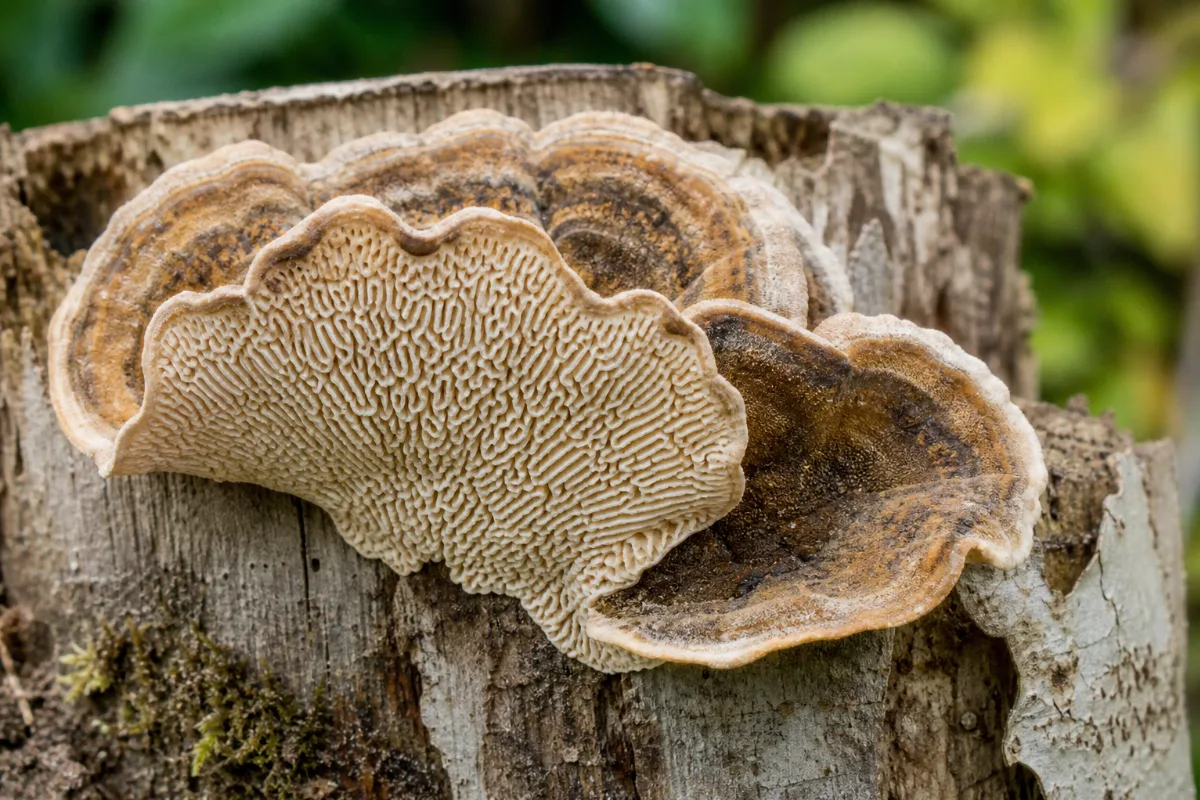
Mushrooms · Medicinal wild polypore
Birch mazegill
Lenzites betulina (accepted in GBIF as Lenzites betulinus; also called Trametes betulina) · also called Gilled polypore
Birch mazegill is a tough, woody bracket fungus that grows on wood. It is related to turkey tail. Scientists have tested its extracts on cells and germs in the lab, but no study has given it to people. The evidence is thin and all from the lab. Never eat or collect wild fungus you cannot identify, and keep it away from the eyes.
General information, not medical advice. Last substantive update · Not medically reviewed. A named clinician has not signed off on this page. How this page is made
About Birch mazegill
Birch mazegill (Lenzites betulina) is a woody bracket fungus that grows on wood. Researchers in Serbia, China, Nigeria and elsewhere have tested its extracts on cells, germs and in mice. The results are interesting lab findings, nothing more. No study in people exists and its safety is unknown.
What it is
Birch mazegill is a woody bracket fungus in the Polyporaceae family. The name used here, Lenzites betulina, is common in papers. GBIF accepts Lenzites betulinus and lists Trametes betulina as a synonym for the same fungus.
It is in the same family as turkey tail (Trametes versicolor), but it is a different mushroom with far less research.
How it differs from turkey tail
Turkey tail has trials of purified drug extracts used in cancer care in Japan. Nothing like that exists for birch mazegill. Our turkey tail page covers that evidence, and none of it applies here.
What the research shows
Every study is from the lab. Extracts reduced DNA damage in human blood cells in a dish, including cells from heart patients. One ethanol extract slowed a breast cancer cell line in a dish while other tests were weak. Some extracts held back bacteria and fungi on plates, and an ethanol extract reduced swelling in a mouse ear test.
A result in a dish or tube does not show a benefit in the body. We rate every use insufficient.
What the studies used
The studies used acetone, ethanol, water or hot-water extracts and lab-grown mycelium. These are research materials, not products. Results depend on the solvent, and many papers do not say which part of the mushroom was used. No commercial product is recommended here.
What agencies say
We found no statement about birch mazegill from regulators. We did not open their pages for this page, so this is a gap, not a clean bill of health.
At a glance
Traditional uses history, not proof
- No source we read describes a traditional or food use of this mushroom.
Studied for research
- Protecting healthy blood cells from DNA damage in a dish, insufficient
- Blood cells from heart patients in a dish, insufficient
- Cancer cell growth in a dish, insufficient
- Germ-killing activity on lab plates, insufficient
- Flu virus in the lab, insufficient
- Swelling in a mouse ear test, insufficient
- Immune cell activity of its compounds, insufficient
Main compounds
- Betulinans A and B (benzoquinones)
- Sterols such as ergosterol peroxide
- Water-soluble polysaccharides (LBPs-5, LBPs-6)
- Chlorogenic acid and quercetin (polyphenols)
Common forms
- Lab extracts (acetone, ethanol, water, hot water): research material, not products
- Lab-grown mycelium: research material
- Wild fruiting body: tough and woody, not a known food
Research links: GBIF: Lenzites betulinus · PubMed: Fungal keratitis secondary to Trametes betulina (case report) · PubMed: Anticancer and antimicrobial activities of the birch mazegill · PubMed: Lenzites betulinus extract and DNA damage in heart-patient blood cells · Research Library · Genes & Biomarkers Library
What it is and its history
- Accepted scientific name
- Lenzites betulinus
- Naming authority
- (L.) Fr. (GBIF)
- Synonyms
- Trametes betulina (L.) Pilat (listed as a synonym in GBIF); Lenzites betulina (spelling used in many papers)
- Common names
- Birch mazegill (English); Gilled polypore (English)
- Family or group
- Polyporaceae (a fungus family; bracket fungi), not a plant
- Classification
- Fungi > Basidiomycota > Agaricomycetes > Polyporales > Polyporaceae > Lenzites > Lenzites betulinus
- Native range
- Not checked.
- Habitat
- Not checked. The ecology and wood-decay papers that came up in our search describe it as a wood-rotting fungus; we did not read them.
- What it looks like
- Fruiting body: Not described in the papers we read. Do not identify it from this page.
- Cultivation
- Lab-grown mycelium was used in some studies. No commercial cultivation was checked.
- Harvest and processing
- Not checked.
- Look-alikes and adulterants
- Name: Other bracket fungi; Note: We found no source that lists look-alikes. Related bracket fungi on our site include turkey tail (Trametes versicolor), oak mazegill and mossy maze polypore. Wild fungi cannot be reliably identified from text.
- Sustainability and conservation
- Not checked.
Traditional use and history history, not clinical proof
| Tradition or era | Documented use | Source |
|---|---|---|
| Traditional or folk use | No source we read describes a traditional or food use of this mushroom. Nothing in the pages we read says it is used in Chinese, Japanese or European medicine. | s-gbif-lenzites |
| 1990s chemistry | Betulinans A and B were isolated from a methanol extract in 1996; ergosterol peroxide was found in 1994 as an immune-cell-growth-reducing component. | p8946751 |
| 2010s to 2020s lab research | Papers from Serbia, China and Nigeria tested extracts on cells and microbes. The 2026 Scientific Reports paper calls it a 'medicinally important mushroom'. | p41491410 |
Traditional use shows how it was used. It does not show that it works or is safe today.
What is inside, and how it may work
What it contains and how those compounds act in cells and animals. Laboratory and animal mechanisms are not proven effects in people.
Main compounds
| Compound | Family | Where it is concentrated | Activity studied | Level of evidence |
|---|---|---|---|---|
| Betulinans A and B | benzoquinones | Methanol extract; part not stated Not stated | Blocked lipid peroxidation in a test tube (IC50 0.46 and 2.88 ug/mL). 6 | Laboratory research |
| Ergosterol peroxide and 9(11)-dehydroergosterol peroxide | sterols | Not stated Small amounts | Reduced mouse immune-cell growth in a dish. 1 | Laboratory research |
| Sterols (five of eight isolated compounds) | sterols | Ethanol extract Not stated | Isolated; seven of the eight were new for this species. 7 | Laboratory research |
| Water-soluble polysaccharides LBPs-5 and LBPs-6 | polysaccharides (mostly glucose) | Not stated Molecular weights about 3,235 and 6,196 Da | Scavenged free radicals in test tubes. 3 | Laboratory research |
| Chlorogenic acid and quercetin | polyphenols | Acetone and ethanol extracts; water extract Named as the most abundant polyphenols | Possible basis of the antioxidant results (authors' suggestion). 14 12 | Laboratory research |
Mechanisms, receptors and pathways
| Target or pathway | Gene or receptor | What was found | Level |
|---|---|---|---|
| Free-radical scavenging | Extracts, polysaccharides and betulinans neutralised test radicals or blocked lipid peroxidation. Reported in test tubes only. 3 6 8 | Laboratory research | |
| DNA damage in blood cells | Extracts lowered hydrogen peroxide- or therapy-linked DNA damage in blood cells in a dish. Not shown in people. 15 14 12 | Laboratory research | |
| Immune cell growth | Ergosterol peroxide compounds reduced mouse lymphocyte growth in a dish. Not shown in people. 1 | Laboratory research |
Absorption, metabolism and elimination
- Absorption
- Not studied.
- Distribution
- Not studied.
- Metabolism
- Not studied.
- Elimination
- Not studied.
- Bioavailability
- Not established.
Isolated compounds versus whole extracts
The studies used different solvents. In heart-patient cells the acetone extract worked better than ethanol. In the Nigerian plate tests cold-water extracts worked better than hot-water or ethanol overall. So a result depends on how the extract was made, and none of these extracts is a product.
Nutritional composition
One 2024 paper analysed an extract. Minerals reported as most abundant: phosphorus, potassium, sodium, sulfur, calcium. Sugars: glucose, fructose, galactose, sorbitol, turanose. Amounts were not repeated. No source describes it as a food.
8 not enough evidence
What was looked at
The 8 benefits and uses checked for Birch mazegill, each with how strong the evidence is. Tap one to open it.
- Protecting healthy blood cells from DNA damage (cells in a dish)Not enough evidence
- Blood cells from heart patients, treated in a dish (laboratory only)Not enough evidence
- Cancer cell growth in a dish (laboratory only)Not enough evidence
- Germ-killing activity on lab plates (laboratory only)Not enough evidence
- Flu virus in the lab (laboratory only)Not enough evidence
- Swelling in a mouse ear test (animal)Not enough evidence
- Immune cell activity of compounds in the mushroom (laboratory only)Not enough evidence
- As a food (nutrition)Not enough evidence
Lab markers tracked in the studies
DNA damage in blood cells (comet assay, in a dish)Free-radical scavenging (test tube)Lipid peroxidation (test tube)Lowest amount that stops bacteria growing (MIC)
What is Birch mazegill good for?
The uses researchers have looked at and how strong the evidence is for each. All of it is from the lab or from animals. Nothing is proven for people. Read this together with the Safety tab.
Benefits, one by one
Each card is a research question, not a promise. Tap a goal to filter. Open a card to see the studies, doses and limits.
Protecting healthy blood cells from DNA damage (cells in a dish)
Not enough evidenceIn cells in a dish, extracts of the mushroom reduced DNA damage caused by hydrogen peroxide, and test-tube sugars from it mopped up free radicals. Nobody has given the mushroom to a person to see if the same happens. A result in a dish is not a health benefit.
6 studiesEvery result below is from a laboratory extract (acetone, ethanol, wa…
Studies, doses and limits
What the trials found
No human trial or any study in people who took the mushroom was found.
Results
Blood cells from healthy people: acetone and ethanol extracts cut hydrogen peroxide-induced DNA damage in a dose-dependent way (P < 0.0005), acetone more than ethanol. In a Serbian study an extract did not raise DNA damage in healthy cells at the amounts tested. Two water-soluble sugars (polysaccharides) from the mushroom scavenged free radicals in test tubes. Betulinans A and B, two compounds from it, blocked lipid peroxidation in a test tube. Ethanol extracts of lab-grown mycelium scavenged a test free radical twice as well as a related fungus, and adding selenium raised the effect.
Effect sizes as reported
Lab effects only. No effect size in people.
Why this rating
Every result is from cells in a dish or test tubes. No animal or human trial. Insufficient means there is nothing yet that says it does anything in the body.
Form and dose studied
Every result below is from a laboratory extract (acetone, ethanol, water or hot water) or from lab-grown mycelium. None of these is a product you can buy, and no amounts are given or advised on this page.
Who was studied
Blood cells from healthy volunteers, tested in a dish; test-tube chemistry; lab-grown mycelium
Limits
Dish and test-tube results do not show that eating or taking the mushroom would protect cells. The tough, woody bracket is not a known food. Most papers do not say which mushroom part was used. The 2026 Mutagenesis abstract gives amounts that look like a typo (mg/mL instead of micrograms per mL).
Why researchers looked
Free-radical damage to DNA is a common lab test, and the mushroom holds phenols such as chlorogenic acid and quercetin that are known to react with free radicals in the lab.
Traditional use
No source we read describes a traditional or folk use of this mushroom.
Proposed mechanism Laboratory research
The phenols and other compounds in the extracts react with free radicals in the test. This is the stated explanation in the papers; it is a hypothesis from cell and test-tube work.
A proposed mechanism does not show that the effect happens in people.
No safety data in people. See the Safety tab.
Blood cells from heart patients, treated in a dish (laboratory only)
Not enough evidenceSerbian researchers added mushroom extracts to blood cells taken from patients with a heart attack-type condition (acute coronary syndrome) or heart failure. The extracts lowered the DNA damage that those patients' own treatment had left in the cells. No patient took the mushroom.
2 studiesEvery result below is from a laboratory extract (acetone, ethanol, wa…
Studies, doses and limits
What the trials found
No human trial. The studies used blood drawn from 30 acute coronary syndrome patients and 30 healthy controls (2024), and from 30 acute coronary syndrome, 30 heart failure and 30 healthy people (2026). The blood cells were treated in a dish.
Results
2024 (acetone and ethanol extracts): less treatment-linked DNA damage in the patients' cells, P < 0.0005, acetone stronger; no rise in damage in healthy cells. 2026 (water extract): less treatment-linked DNA damage in acute coronary syndrome and heart failure cells (P < .0005); healthy cells showed a small, not statistically significant, rise in damage as the extract got stronger.
Effect sizes as reported
Lab effect only.
Why this rating
Two small cell studies from one research group, both in a dish. No one treated a patient.
Form and dose studied
Every result below is from a laboratory extract (acetone, ethanol, water or hot water) or from lab-grown mycelium. None of these is a product you can buy, and no amounts are given or advised on this page.
Who was studied
Blood cells from patients with acute coronary syndrome or heart failure, and healthy controls; cells in a dish
Limits
From one research group. Cells in a dish are not people. The abstract does not show that the mushroom is safe or useful for the heart. People with heart disease should not use it in place of medicines.
Why researchers looked
People with heart disease can carry DNA damage linked to their treatment, so one research group in Serbia looked at whether mushroom extracts change this in a dish.
Traditional use
No source we read describes a traditional or folk use of this mushroom.
Proposed mechanism Laboratory research
Possibly the phenols in the extract, mainly chlorogenic acid and quercetin. This is the authors' suggestion, not shown in people.
A proposed mechanism does not show that the effect happens in people.
Do not stop or change heart medicines for any mushroom product. Ask your doctor.
Cancer cell growth in a dish (laboratory only)
Not enough evidenceSome extracts slowed the growth of cancer cells in a dish, others did very little. This is not treatment evidence. It is only a first lab screen and a long way from a treatment.
4 studiesEvery result below is from a laboratory extract (acetone, ethanol, wa…
Studies, doses and limits
What the trials found
No human or animal cancer study was found.
Results
Ethanol extract, MDA-MB-231 breast cancer cell line: IC50 51.46 ug/mL, 83.15% inhibition at 200 ug/mL, called strong by the authors (2014). Methanol extract, HeLa and SMMC-7721 lines: only weak activity (2006). Ethanol extracts of lab-grown mycelium, HeLa and LS174 lines: low activity (2015). A 2026 paper compared extraction methods and reported cell-growth effects without numbers in the abstract.
Effect sizes as reported
IC50 51.46 ug/mL in one cell line; weak or low in others
Why this rating
Cell lines only, with mixed results depending on solvent and cell line. Insufficient: no animal or human data.
Form and dose studied
Every result below is from a laboratory extract (acetone, ethanol, water or hot water) or from lab-grown mycelium. None of these is a product you can buy, and no amounts are given or advised on this page.
Who was studied
Human cancer cell lines in a dish
Limits
The authors' wording that it 'could be a good anticancer and antibiotic agent' goes beyond a cell-dish test. A concentration that kills cells in a dish may be far above anything that reaches the body.
Why researchers looked
Mushrooms are often screened against cancer cell lines in the lab.
Traditional use
No source we read describes a traditional or folk use of this mushroom.
Proposed mechanism Laboratory research
An ethanol extract was reported to slow the growth of a breast cancer cell line; five sterols and other compounds were isolated. The mechanism was not worked out.
A proposed mechanism does not show that the effect happens in people.
Not a cancer treatment. Anyone with cancer should tell their care team about any mushroom product.
Germ-killing activity on lab plates (laboratory only)
Not enough evidenceSome extracts stopped bacteria and slowed fungi on lab plates. This is not an antibiotic. It was never tested in animals or people.
3 studiesEvery result below is from a laboratory extract (acetone, ethanol, wa…
Studies, doses and limits
What the trials found
No human or animal infection study was found.
Results
Hot-water extract of wild Trametes betulina (Nigeria, 2021): among the most effective of the extracts tested against Klebsiella pneumoniae, MIC and MBC 3.90 mg/mL; cold-water extracts worked best overall. Ethanol extract (China, 2014): moderate activity against six microbes. Ethanol extracts of lab-grown mycelium (Serbia, 2015): slowed fungi but did not kill them.
Effect sizes as reported
MIC and MBC 3.90 mg/mL in one test
Why this rating
Plate tests only, from three research groups using different extracts.
Form and dose studied
Every result below is from a laboratory extract (acetone, ethanol, water or hot water) or from lab-grown mycelium. None of these is a product you can buy, and no amounts are given or advised on this page.
Who was studied
Bacteria and fungi on lab plates
Limits
The levels that worked on plates are not levels that can be reached safely in the body. A tea or extract is not a substitute for an antibiotic.
Why researchers looked
Researchers test wood-growing fungi on plates for germ-killing activity.
Traditional use
No source we read describes a traditional or folk use of this mushroom.
Proposed mechanism Laboratory research
Not worked out. The papers suggest phenols in the extracts.
A proposed mechanism does not show that the effect happens in people.
Do not treat infections with a mushroom. Do not put mushroom material or extracts in the eye.
Flu virus in the lab (laboratory only)
Not enough evidenceA Russian lab screened water extracts of mushroom mycelium against two flu viruses. Birch mazegill was one of seven strains named as promising. No numbers for it alone were given.
1 studiesEvery result below is from a laboratory extract (acetone, ethanol, wa…
Studies, doses and limits
What the trials found
No human or animal study was found.
Results
The abstract names Lenzites betulina among seven strains it calls most promising for producing antiviral medicines, with no figures for any species.
Effect sizes as reported
Qualitative only
Why this rating
One short abstract with no numbers, in the lab only.
Form and dose studied
Every result below is from a laboratory extract (acetone, ethanol, water or hot water) or from lab-grown mycelium. None of these is a product you can buy, and no amounts are given or advised on this page.
Who was studied
Flu viruses (H5N1 and H3N2) in the lab
Limits
Mycelium water extracts, not the wild mushroom. Nothing says it helps people with flu.
Why researchers looked
Researchers in Siberia screened polypore fungi for activity against influenza viruses.
Traditional use
No source we read describes a traditional or folk use of this mushroom.
Proposed mechanism Laboratory research
Not studied.
A proposed mechanism does not show that the effect happens in people.
Do not use a mushroom in place of flu vaccination or medicines.
Swelling in a mouse ear test (animal)
Not enough evidenceIn one Nigerian study, an ethanol extract of the mushroom, along with two other mushroom extracts, reduced swelling in a mouse ear test. The extract was tested on the ear, not swallowed.
1 studiesEvery result below is from a laboratory extract (acetone, ethanol, wa…
Studies, doses and limits
What the trials found
No human study was found.
Results
Ethanol extracts of wild Lenzites betulina, Trametes versicolor and Coriolopsis polyzona lowered mouse ear swelling more than the control (P <= 0.05). The abstract pools the three mushrooms.
Effect sizes as reported
Lower ear swelling in mice
Why this rating
One small animal test, pooled for three mushrooms, in the abstract.
Form and dose studied
Every result below is from a laboratory extract (acetone, ethanol, water or hot water) or from lab-grown mycelium. None of these is a product you can buy, and no amounts are given or advised on this page.
Who was studied
Mice
Limits
The brine shrimp toxicity result in the same paper is on the Safety tab.
Why researchers looked
Mouse ear swelling is a standard quick test for anti-inflammatory activity.
Traditional use
No source we read describes a traditional or folk use of this mushroom.
Proposed mechanism Animal research
Not worked out.
A proposed mechanism does not show that the effect happens in people.
Not for use on skin or swallowing on the strength of a mouse test.
Immune cell activity of compounds in the mushroom (laboratory only)
Not enough evidenceTwo compounds from the mushroom reduced the growth of mouse immune cells in a dish. This points to a possible effect on the immune system, but in the opposite direction from a 'boost'. It has not been tested in animals or people.
1 studiesEvery result below is from a laboratory extract (acetone, ethanol, wa…
Studies, doses and limits
What the trials found
No human or animal study was found.
Results
Ergosterol peroxide and 9(11)-dehydroergosterol peroxide were isolated as active components from Lenzites betulina and the other two mushrooms and reduced mouse spleen lymphocyte growth in a dish. The abstract gives no figures for L. betulina alone.
Effect sizes as reported
Reduced lymphocyte growth in a dish
Why this rating
A single 1994 abstract, lab only.
Form and dose studied
Every result below is from a laboratory extract (acetone, ethanol, water or hot water) or from lab-grown mycelium. None of these is a product you can buy, and no amounts are given or advised on this page.
Who was studied
Mouse spleen cells in a dish
Limits
This is why mixing the mushroom with immune-suppressing medicines has not been ruled out. It is a lab observation, not a known interaction.
Why researchers looked
A Japanese team looked for compounds that damp down immune cell growth in three mushrooms.
Traditional use
No source we read describes a traditional or folk use of this mushroom.
Proposed mechanism Laboratory research
The compounds were ergosterol peroxide and 9(11)-dehydroergosterol peroxide. Their action is only known from the cell test.
A proposed mechanism does not show that the effect happens in people.
Ask a specialist before using it if you take immune medicines.
As a food (nutrition)
Not enough evidenceA tough, woody bracket that is not shown to be a food. One lab paper measured what is in it, but no one has tested it as a food.
1 studiesEvery result below is from a laboratory extract (acetone, ethanol, wa…
Studies, doses and limits
What the trials found
No human study of eating it was found.
Results
Most abundant in the extract analysis: phosphorus, potassium, sodium, sulfur and calcium among minerals; glucose, fructose, galactose, sorbitol and turanose among sugars; malic, citric and maleic acids; and trans-linoleic, oleic, palmitic, docosahexaenoic and eicosadienoic fatty acids. No amounts are repeated here.
Why this rating
A composition table from one paper; no nutrition or food-safety study.
Form and dose studied
Every result below is from a laboratory extract (acetone, ethanol, water or hot water) or from lab-grown mycelium. None of these is a product you can buy, and no amounts are given or advised on this page.
Limits
The paper calls the mushroom of high nutritional and functional value. We did not find anything showing it is safe to eat, and it is a woody bracket.
Why researchers looked
Composition was measured as part of the 2024 Serbian study.
Traditional use
No source we read describes a traditional or folk use of this mushroom.
Proposed mechanism Laboratory research
Not applicable.
A proposed mechanism does not show that the effect happens in people.
Do not eat wild fungi you cannot identify.
Connections to the rest of health
How Birch mazegill connects to the rest of our health knowledge graph. Every link says what kind of connection it is. A safety link (for example to the liver) is a warning, not a benefit. A study that merely mentions a topic never creates a benefit link.
Explore every connection: goals, body systems, organs, symptoms, genes
B. Body systems
| Connected to | Kind of connection | Evidence status | Context | Studies |
|---|---|---|---|---|
| Cardiovascular System | Biological association | Not enough evidence | Studied for: Protecting healthy blood cells from DNA damage (cells in a dish) Studied for: Blood cells from heart patients, treated in a dish (laboratory only) | 15 14 12 3 6 8 |
| Immune System | Biological association | Not enough evidence | Studied for: Cancer cell growth in a dish (laboratory only) Studied for: Germ-killing activity on lab plates (laboratory only) | 7 10 8 5 13 1 |
| Respiratory System | Biological association | Not enough evidence | Studied for: Flu virus in the lab (laboratory only) | 11 |
| Integumentary System | Biological association | Not enough evidence | Studied for: Swelling in a mouse ear test (animal) | 9 |
| Digestive System | Biological association | Not enough evidence | Studied for: As a food (nutrition) | 14 |
G. Root causes and contributing factors
| Connected to | Kind of connection | Evidence status | Context | Studies |
|---|---|---|---|---|
| Oxidative stress | Not enough evidence | Antioxidant tests in cells and test tubes only; no human data. Preparation or compound: Lab extracts |
15 14 |
I. Biomarkers
| Connected to | Kind of connection | Evidence status | Context | Studies |
|---|---|---|---|---|
| DNA damage in blood cells (comet assay, in a dish) | Biological association | Not enough evidence | Measured in trials: lowered. A lab change is not the same as a health benefit. | 15 14 12 |
| Free-radical scavenging (test tube) | Biological association | Not enough evidence | Measured in trials: raised. A lab change is not the same as a health benefit. | 3 8 6 |
| Lipid peroxidation (test tube) | Biological association | Not enough evidence | Measured in trials: lowered. A lab change is not the same as a health benefit. | 9 6 |
| Lowest amount that stops bacteria growing (MIC) | Biological association | Not enough evidence | Measured in trials: lowered. A lab change is not the same as a health benefit. | 13 |
L. Active compounds
| Connected to | Kind of connection | Evidence status | Context | Studies |
|---|---|---|---|---|
| Betulinans A and B | Biological association | In vitro | Blocked lipid peroxidation in a test tube (IC50 0.46 and 2.88 ug/mL). Preparation or compound: Methanol extract; part not stated |
6 |
| Ergosterol peroxide and 9(11)-dehydroergosterol peroxide | Biological association | In vitro | Reduced mouse immune-cell growth in a dish. | 1 |
| Sterols (five of eight isolated compounds) | Biological association | In vitro | Isolated; seven of the eight were new for this species. Preparation or compound: Ethanol extract |
7 |
| Water-soluble polysaccharides LBPs-5 and LBPs-6 | Biological association | In vitro | Scavenged free radicals in test tubes. | 3 |
| Chlorogenic acid and quercetin | Biological association | In vitro | Possible basis of the antioxidant results (authors' suggestion). Preparation or compound: Acetone and ethanol extracts; water extract |
14 12 |
Each connection is stored with the ingredient, the connected record, the kind of connection, the evidence status, the supporting studies, the preparation or compound involved, and a review date (last reviewed October 25, 2026).
Evidence at a glance: what changed in 4 lab markers
Tap a number to show only those markers. Counts are markers, not people.
The evidence
The research centre for Birch mazegill. Every record here was checked against PubMed or the publisher's page; we never list a study we have not verified.
Evidence by outcome
Bars show how many studies we found for each outcome, not how well it works. People are added up across trials only (reviews are not added, to avoid double counting).
How we rate evidence
High certainty
Several well-run trials or reviews agree; further research is unlikely to change the picture much.
Moderate certainty
Good trials point the same way, but some doubt remains.
Low certainty
Small, short or inconsistent trials. The finding could change with better research.
Very low certainty
Very little or very weak human data. Treat as a possibility only.
Mixed findings
Trials or reviews disagree with each other.
Not enough evidence
Not enough human research to say either way.
Evidence against
Good research found no benefit, or found harm.
We take the reviewers' own risk-of-bias and GRADE statements where they exist, and otherwise judge from study size, design, consistency, directness and whether a product matches what is sold. Many publications do not make evidence high. Method note: We read PubMed records and abstracts for 14 papers (12 cell, test-tube or plate studies, one mouse and brine shrimp study, one case report) and checked the species names in GBIF. Only abstracts were read, so numbers come from abstracts. Regulators and Index Fungorum were not checked. The evidence is thin, and certainty ratings are the compiler's own reading.
Study library: every study we checked 15
| Study | Design | People | Product, dose, length | Result |
|---|---|---|---|---|
| Fujimoto 1994 Isolation and characterization of immunosuppressive components of three mushrooms, Pisolithus tinctorius, Microporus flabelliformis and Lenzites betulina. Chemical and Pharmaceutical Bulletin · PMID 8004718 · DOI |
Laboratory research fungus (mouse cells in a dish) |
Mouse spleen cells in a dish | Compounds from three mushrooms; ergosterol peroxide and 9(11)-dehydroergosterol peroxide were found in Lenzites betulina Not shown here |
Ergosterol peroxide and 9(11)-dehydroergosterol peroxide were isolated as active components from Lenzites betulina and the other two mushrooms. They reduced the growth of mouse spleen lymphocytes stimulated in a dish. Lab immune-cell effect (reduced growth) (IC50 values measured; not given in abstract) Methods, limits and fundingOutcomes: Lymphocyte growth Limitations: Mouse cells in a dish. The abstract does not give figures for L. betulina alone. Funding and conflicts: Research support, non-US government (per PubMed). Read: abstract |
| GBIF Secretariat 2026 GBIF Backbone Taxonomy: Lenzites betulinus (L.) Fr. (key 5465199) and Trametes betulina (L.) Pilat (key 5954508) GBIF API · Source |
Database record n/a |
n/a | n/a Not shown here |
Lenzites betulinus (L.) Fr. is ACCEPTED (family Polyporaceae, order Polyporales, phylum Basidiomycota). Trametes betulina (L.) Pilat is listed as a SYNONYM pointing to the accepted record. The spelling Lenzites betulina matched the accepted record as a close (fuzzy) match. n/a (n/a) Methods, limits and fundingOutcomes: Accepted name and synonyms Limitations: Index Fungorum was not checked. Funding and conflicts: Not applicable Read: API record, checked 2026-10-25 |
| Guo 2021 Isolation, structure characteristics and antioxidant activity of two water-soluble polysaccharides from Lenzites betulina. BMC Chemistry · PMID 33731198 · DOI |
Laboratory research fungus (test tube) |
Test-tube chemistry | Two purified water-soluble polysaccharides (LBPs-5, LBPs-6) from Lenzites betulina Not shown here |
Both sugars were mostly glucose-based (molecular weights about 3,235 and 6,196 Da) and scavenged laboratory free radicals; LBPs-6 was stronger. Reducing power was weak. Free-radical scavenging in a test tube (not reported in abstract) Methods, limits and fundingOutcomes: Structure and free-radical scavenging Limitations: Test-tube chemistry only. Funding and conflicts: No conflict of interest stated. Read: abstract |
| Hardin 2017 Fungal Keratitis Secondary to Trametes betulina: A Case Report and Review of Literature. Mycopathologia · PMID 28324243 · DOI |
Case report human (one patient) |
1 One patient with chronic allergic conjunctivitis, entropion and a long-standing corneal ulcer |
Trametes betulina (Lenzites betulina) as an infecting fungus Not shown here Treated with voriconazole; corneal transplant 5 months after diagnosis |
The corneal fungus was identified by DNA as matching Lenzites betulina/Trametes betulina. The ulcer cleared with voriconazole, but the cornea was thinned and scarred and the patient had a corneal transplant 5 months later. Single case (not applicable) Methods, limits and fundingOutcomes: Infection, treatment response Limitations: One patient who already had eye disease. A report of infection, not of using the mushroom. Funding and conflicts: Not stated. Read: abstract |
| Karalti 2026 Phenolic content and biological activities of Lenzites betulina extracts obtained by ultrasonic-assisted optimization approaches. Scientific Reports · PMID 41491410 · DOI |
Laboratory research fungus (lab) |
Test-tube and cell-based tests | Ultrasonic-assisted extracts of Lenzites betulina made with two optimisation methods Not shown here · vs Extracts made by the other method |
The extract made by one optimisation method (RSM) held more phenols and was stronger in antioxidant, enzyme-inhibition and cell-growth tests than the one made by the other (ANN-GA). Method comparison; no human outcome (not reported in abstract) Methods, limits and fundingOutcomes: Phenols, antioxidant capacity, enzyme inhibition, cell-growth effects Limitations: The abstract gives no numbers and is mainly about extraction methods. Lab only. Funding and conflicts: No competing interests declared. Read: abstract |
| Lee 1996 Betulinans A and B, two benzoquinone compounds from Lenzites betulina. Journal of Natural Products · PMID 8946751 · DOI |
Laboratory research fungus (test tube) |
Test-tube chemistry | Two compounds isolated from a methanol extract of Lenzites betulina: betulinans A and B Not shown here |
Betulinans A and B were isolated and their structures worked out. They blocked lipid peroxidation in the test tube (IC50 0.46 and 2.88 ug/mL). Test-tube antioxidant activity (IC50 0.46 and 2.88 ug/mL) Methods, limits and fundingOutcomes: Structure; lipid peroxidation Limitations: Test-tube chemistry only. Funding and conflicts: Research support, non-US government (per PubMed). Read: abstract |
| Liu 2014 Anticancer and antimicrobial activities and chemical composition of the birch mazegill mushroom Lenzites betulina (higher Basidiomycetes). International Journal of Medicinal Mushrooms · PMID 25271861 · DOI |
Laboratory research fungus (cell line) |
MDA-MB-231 breast cancer cell line; six microbes on plates | Ethanol extract of Lenzites betulina (part not stated in abstract) Not shown here |
Eight compounds, five of them sterols, were isolated. The extract cut cancer cell growth (IC50 51.46 ug/mL; 83.15% inhibition at 200 ug/mL) and had moderate activity against the six microbes tested. Lab cell-growth effect (IC50 51.46 ug/mL) Methods, limits and fundingOutcomes: Cancer cell growth (MTT assay); antimicrobial activity; compounds isolated Limitations: Cell line and plate tests only. The abstract's wording that the mushroom 'could be a good anticancer agent' goes beyond what a lab test shows. Funding and conflicts: Research support, non-US government (per PubMed). Read: abstract |
| Milovanovic 2015 Effect of Selenium Enrichment of Lenzites betulinus and Trametes hirsuta Mycelia on Antioxidant, Antifungal and Cytostatics Potential. Current Pharmaceutical Biotechnology · PMID 26087835 · DOI |
Laboratory research fungus (lab mycelium) |
Lab-grown mycelium extracts; HeLa and LS174 cancer cell lines; fungi on plates | Ethanol extracts of Lenzites betulinus mycelium, with and without added selenium (compared with Trametes hirsuta) mycelium grown in the lab Not shown here · vs Non-enriched extracts |
L. betulinus extracts scavenged the test free radical twice as well as T. hirsuta extracts. Ethanol extracts slowed fungi on plates (fungistatic) but did not kill them. Extracts had low cytotoxic activity against HeLa and LS174 cells; T. hirsuta was more active. Selenium enrichment raised the antioxidant effect and blocked the antifungal effect in L. betulinus. Mixed lab results (not reported in abstract) Methods, limits and fundingOutcomes: Free-radical scavenging, antifungal effect, cytotoxicity to cancer cells Limitations: Lab mycelium and cell lines only. Not the wild mushroom. Funding and conflicts: Research support, non-US government (per PubMed). Read: abstract |
| Oyetayo 2012 Assessment of anti-inflammatory, lipid peroxidation and acute toxicity of extracts obtained from wild higher basidiomycetes mushrooms collected from Akure (southwest Nigeria). International Journal of Medicinal Mushrooms · PMID 23510251 · DOI |
Animal study fungus (mice, brine shrimp) |
Mice (ear swelling test); brine shrimp (Artemia salina) toxicity test; test-tube lipid peroxidation | Ethanol extracts of wild Lenzites betulina, Trametes versicolor and Coriolopsis polyzona Not shown here · vs Control |
The extracts reduced lipid peroxidation in the test tube (86.99% to 92.18% at 1000 ug/mL across the three). They reduced mouse ear swelling more than the control (P <= 0.05). Brine shrimp tolerated the extracts at 10 to 1000 ug/mL except the Lenzites and Trametes versicolor extracts, which were toxic to the shrimp at 1000 ug/mL. Reduced ear swelling in mice (the extract was tested on the ear) (P <= 0.05) Methods, limits and fundingOutcomes: Lipid peroxidation, mouse ear swelling, brine shrimp toxicity Limitations: Results are pooled for three mushrooms in the abstract. Animal and invertebrate tests only. Funding and conflicts: Not stated. Read: abstract |
| Ren 2006 Evaluation of cytotoxic activities of some medicinal polypore fungi from China. Fitoterapia · PMID 16797143 · DOI |
Laboratory research fungus (cell lines) |
HeLa and SMMC-7721 human cancer cell lines | Petrol ether, ethyl acetate and methanol extracts of eight polypores, including Lenzites betulina Not shown here · vs Quercetin |
All petrol ether and ethyl acetate extracts were cytotoxic to both cell lines. The methanol extract of Lenzites betulina showed only weak activity compared with quercetin. Weak (methanol extract) (not reported) Methods, limits and fundingOutcomes: Cytotoxicity (MTT dye assay) Limitations: Cell lines only. Results for L. betulina alone are given only in general terms. Funding and conflicts: Not stated. Read: abstract |
| Teplyakova 2012 Antiviral activity of polyporoid mushrooms (higher Basidiomycetes) from Altai Mountains (Russia). International Journal of Medicinal Mushrooms · PMID 22339706 · DOI |
Laboratory research fungus (virus in the lab) |
Influenza A viruses (H5N1 bird flu and H3N2) in the lab | Water extracts of mycelium of 11 fungus species, including Lenzites betulina mycelium Not shown here |
The abstract names Lenzites betulina among seven strains it calls most promising for antiviral medicines. It gives no numbers for any single species. Qualitative lab finding (not reported) Methods, limits and fundingOutcomes: Anti-influenza activity Limitations: The abstract gives no figures. Lab only. Funding and conflicts: Research support, non-US government (per PubMed). Read: abstract |
| Tubic Vukajlovic 2026 Phytochemical compositions and chemoprotective effect of Lenzites betulinus mushroom in mononuclear cells of patients with acute coronary syndrome and heart failure in vitro. Mutagenesis · PMID 42007559 · DOI |
Laboratory research fungus (human cells in a dish) |
90 Blood cells from 30 healthy people, 30 patients with acute coronary syndrome and 30 with heart failure, tested in a dish |
Aqueous (water) extract of Lenzites betulinus Not shown here Cells exposed in a dish (comet assay) · vs Untreated cells |
In healthy donors' cells, DNA damage rose slightly as the extract concentration rose, but not significantly. In cells of patients with acute coronary syndrome or heart failure the extract reduced treatment-linked DNA damage (P < .0005). Chlorogenic acid and quercetin were the main polyphenols. Less treatment-linked DNA damage in patients' cells in a dish (P < .0005) Methods, limits and fundingOutcomes: DNA damage (percent DNA, genetic damage index); phenolic content Limitations: Cells in a dish only. The abstract gives the extract amounts as mg/mL, which looks like a typo for micrograms per mL, so the amounts are not repeated here. Funding and conflicts: No competing interest stated in the abstract. Read: abstract |
| Udeh 2021 Antibacterial and Antioxidant Activity of Different Extracts of Some Wild Medicinal Mushrooms from Nigeria. International Journal of Medicinal Mushrooms · PMID 34595894 · DOI |
Laboratory research fungus (bacteria on plates) |
Drug-resistant Pseudomonas aeruginosa, Escherichia coli and Klebsiella pneumoniae on plates | Hot water, cold water and ethanol extracts of wild Trametes betulina (plus three other mushrooms) Not shown here · vs Standard antioxidants |
Hot-water extract of T. betulina was among the most effective at stopping and killing K. pneumoniae (MIC and MBC 3.90 mg/mL). Cold-water extracts worked better overall. Pleurotus ostreatus (oyster mushroom) was the stronger antioxidant. Plate-test activity against bacteria (MIC and MBC 3.90 mg/mL) Methods, limits and fundingOutcomes: Bacterial growth and killing (MIC, MBC); free-radical scavenging; phenolic content Limitations: Plate tests only. Not an antibiotic and not tested in animals or people. Funding and conflicts: Not stated. Read: abstract |
| Vukajlovic 2024 In vitro effect of Lenzites betulinus mushroom against therapy-induced DNA damage in peripheral blood lymphocytes of patients with acute coronary syndrome. Journal of Ethnopharmacology · PMID 39084274 · DOI |
Laboratory research fungus (human cells in a dish) |
60 Blood cells from 30 patients with acute coronary syndrome and 30 healthy people, tested in a dish |
Acetone and ethanol extracts of Lenzites betulinus Not shown here Cells exposed in a dish (comet assay) · vs Untreated cells |
Neither extract raised DNA damage in healthy cells at the amounts tested. In the patients' cells, which carried damage from their treatment, both extracts lowered DNA damage (P < 0.0005); acetone worked better. The main polyphenols found were chlorogenic acid and quercetin. Less treatment-linked DNA damage in patients' cells in a dish (P < 0.0005) Methods, limits and fundingOutcomes: DNA damage in cells; mushroom chemistry (minerals, sugars, acids, fatty acids, phenols) Limitations: Cells in a dish only. No patient took the mushroom. Funding and conflicts: No competing interest stated. Read: abstract |
| Vukajlovic 2026 Antioxidant Effect of Lenzites betulinus Mushroom (Agaricomycetes) Extract against Hydrogen Peroxide-Induced DNA Damage. International Journal of Medicinal Mushrooms · PMID 41251779 · DOI |
Laboratory research fungus (cells in a dish) |
Blood lymphocytes from healthy people, tested in a dish | Acetone and ethanol extracts of Lenzites betulinus (mushroom part not stated in the abstract) Not shown here Cells exposed in a dish (comet assay) · vs Hydrogen peroxide alone (positive control) |
Both extracts reduced hydrogen peroxide-induced DNA damage in a dose-dependent way (P < 0.0005); the acetone extract worked better than the ethanol extract. Less DNA damage in cells in a dish (P < 0.0005) Methods, limits and fundingOutcomes: DNA damage (percent DNA in comet tail, genetic damage index) Limitations: Cells in a dish only. Nothing was given to a person. The abstract does not say which part of the mushroom was used. Funding and conflicts: No competing interest stated in the abstract. Read: abstract |
What we do not know yet
- No human study of any kind, and no safety study.
- No look-alike list for this species was found.
- Allergy, pregnancy, breastfeeding, children and medicine interactions are unstudied.
- Which part of the mushroom was used is rarely stated, and extracts differ by solvent.
- Regulator pages and Index Fungorum were not checked.
How new research is added
New studies are found by a saved PubMed search and placed in a review queue. A person reads each one before it changes any evidence rating or safety wording. New publications never change ratings automatically.
Lab markers
What changed in blood or saliva tests during trials. A changed number is not the same as feeling or being healthier, and we give no "normal ranges".
Other 4
DNA damage in blood cells (comet assay, in a dish)
Lowered in trials
A lab test that shows how much of a cell's DNA has broken, reported as the percent of DNA in the comet tail and a genetic damage index. Here it is measured in cells in a dish, not in a person.
Not enough evidenceResults and what it means
Why it was measured
Used to see whether an extract protects or harms DNA.
Statistical vs. clinical meaning
A cell-dish marker. It is not a measure of health in a person.
Safety implication
None known from these studies in people, because none were done.
| Study | Result | People | Product |
|---|---|---|---|
| 15 | Acetone and ethanol extracts lowered hydrogen peroxide-induced DNA damage dose-dependently (P < 0.0005); acetone was stronger. | Lymphocytes from healthy people, in a dish | Extract added to cells (amount not repeated here) |
| 14 | Both extracts lowered treatment-linked DNA damage in patients' cells (P < 0.0005) and did not raise damage in healthy cells at the amounts tested. | Lymphocytes from 30 acute coronary syndrome patients and 30 healthy people, in a dish | Acetone and ethanol extracts |
| 12 | Water extract lowered treatment-linked DNA damage in acute coronary syndrome and heart failure cells (P < .0005); healthy cells showed a small rise that was not statistically significant. | Mononuclear cells from 30 healthy, 30 acute coronary syndrome and 30 heart failure people, in a dish | Water extract |
Free-radical scavenging (test tube)
Raised in trials
How well a material neutralises a test free radical in a tube, measured with chemical dyes (for example DPPH).
Not enough evidenceResults and what it means
Why it was measured
A common first test for antioxidant claims.
Statistical vs. clinical meaning
Test-tube chemistry. Antioxidant results in a tube do not carry over to people.
Safety implication
None known.
| Study | Result | People | Product |
|---|---|---|---|
| 3 | Two purified polysaccharides scavenged DPPH, ABTS and hydroxyl radicals; LBPs-6 was stronger than LBPs-5; reducing power was weak. | Test tube | Purified polysaccharides from Lenzites betulina |
| 8 | Ethanol extracts of L. betulinus mycelium scavenged DPPH twice as well as T. hirsuta; selenium enrichment raised phenols and the effect. | Test tube | Mycelium extracts |
Lipid peroxidation (test tube)
Lowered in trials
A chemical measure of fat damage by oxygen, used as a lab test of antioxidant effect.
Not enough evidenceResults and what it means
Why it was measured
A test-tube marker for antioxidant claims.
Statistical vs. clinical meaning
Test-tube chemistry only.
Safety implication
None known.
| Study | Result | People | Product |
|---|---|---|---|
| 9 | Ethanol extracts of three mushrooms, including Lenzites betulina, cut TBARS formation by 86.99% to 92.18% at 1000 ug/mL (pooled in the abstract). | Test tube | Ethanol extracts |
| 6 | Betulinans A and B blocked lipid peroxidation in a test tube (IC50 0.46 and 2.88 ug/mL). | Test tube | Two pure compounds from Lenzites betulina |
Lowest amount that stops bacteria growing (MIC)
Lowered in trials
The lowest extract concentration that stops visible bacterial growth on a plate.
Not enough evidenceResults and what it means
Why it was measured
Used in screening for antibacterial activity.
Statistical vs. clinical meaning
A plate result for one extract and one bacterium.
Safety implication
None known.
| Study | Result | People | Product |
|---|---|---|---|
| 13 | Hot-water extract of Trametes betulina: MIC and MBC 3.90 mg/mL against Klebsiella pneumoniae. | Bacteria on plates | Hot-water extract |
Safety
What studies and official sources say about side effects, medicines and who should check first. Each point shows what kind of evidence it comes from.
Main points to know 4
- No human safety data exist. We found no trial, no safety study and no case series of people using birch mazegill as a food or a supplement. Everything known about its safety is from cells, brine shrimp and a few animal tests. Not finding harm is not the same as safe. Gap 9 14
- Do not put it in or near the eye. Trametes betulina (Lenzites betulina) caused a fungal infection of the cornea in one patient who already had eye disease. The infection cleared with an antifungal medicine, but the cornea was scarred and needed a transplant. This is one case, not a sign that touching the mushroom is dangerous, but eye contact with fungal material is a clear no. Case report 4
- Wild collecting needs an expert. We found no source that lists look-alikes for this species. Wild fungi cannot be safely identified from a description, a photo or an app. The names Lenzites betulina, Lenzites betulinus and Trametes betulina are used for the same fungus, so labels may differ. Gap 2
- Nothing from turkey tail carries over. Birch mazegill is in the same family as turkey tail (Trametes versicolor), but the human cancer-care research on turkey tail is about its own drug extracts and does not apply here. Expert note 2
Side effects 2
| Effect | How often | Severity and recovery | Evidence |
|---|---|---|---|
| Fungal infection of the cornea (keratitis) The patient had chronic allergic conjunctivitis, entropion and a long-standing corneal ulcer. The report is about infection by the fungus, not about using it as a remedy. | One case report; no rate | serious The ulcer cleared with voriconazole, but the cornea stayed thinned and scarred and a corneal transplant was done 5 months after diagnosis | Case report 4 |
| Effects of eating or taking it No report of side effects from eating or taking birch mazegill was found. That reflects a lack of study. | Unknown | unknown Unknown | Gap |
Liver
We found no case of liver injury linked to birch mazegill in our PubMed search, which returned 39 records for the species. No one has studied it in people, so this says nothing about liver safety. We did not search LiverTox for this species.
How often. No rate can be given.
Monitoring. No agency advice was read. People with liver disease should ask a doctor before using any wild mushroom or extract. Yellow skin or eyes, dark urine, pale stools or severe itching need medical help.
This is a safety connection. It is not evidence that Birch mazegill supports liver health.
Medicines and supplements 4
| With | Why it matters | Importance | Evidence | What to do |
|---|---|---|---|---|
| Medicines that suppress the immune system (for example after a transplant or for autoimmune disease) prescription | Compounds from the mushroom reduced the growth of mouse immune cells in a dish. Whether that matters in people is unknown. | No interaction has been tested. This is a theoretical concern from one 1994 lab abstract. | Pharmacological theory Very low certainty 1 | Ask the specialist who prescribes the medicine before using it. |
| Cancer treatment (chemotherapy, radiotherapy, targeted drugs) prescription | No data. Extracts affected cancer cells in a dish, which says nothing about how they would act with treatment. | No study of any combination. | Gap Not enough evidence 7 | Tell your oncology team about any mushroom product before and during treatment. |
| Heart medicines and blood thinners prescription | Not studied. Cell studies on heart patients' blood cells did not test any medicine combination. | No interaction data. | Gap Not enough evidence 14 12 | Do not change heart medicines for a mushroom. Ask your doctor or pharmacist. |
| All other medicines and supplements prescription | No interaction studies exist for this mushroom. | Unknown. | Gap Not enough evidence | Ask a pharmacist before combining it with anything. |
Who should check first 5
| Situation | Advice | Evidence |
|---|---|---|
| Pregnancy | No safety data. It is not known to be safe, so do not treat it as safe. Ask your doctor. | Gap |
| Breastfeeding | No safety data. Ask your doctor. | Gap |
| Children | No safety data. Not suitable to try. | Gap |
| Eye disease, damaged cornea or contact-lens wear | Keep mushroom material and homemade extracts away from the eyes. One case of corneal infection is on record in a person with eye disease. | Case report 4 |
| Weakened immune system or immune-suppressing medicines | Not studied. Ask the treating specialist first. | Pharmacological theory 1 |
Overdose, product quality and regulators
Summary. No poisoning from birch mazegill was described in the sources read. It is a tough, woody bracket and not known as a food.
Animal. In a Nigerian study, ethanol extracts of Lenzites betulina and Trametes versicolor were toxic to brine shrimp (Artemia salina) at 1000 ug/mL but not at lower concentrations; the Coriolopsis polyzona extract was not. Brine shrimp are an invertebrate screen, not a prediction for people.
Human doses studied. No human use has been studied. This page gives no amounts, and none are advised.
Overdose response. No overdose description was found.
Genotoxicity. A 2024 Serbian study found that acetone and ethanol extracts did not raise DNA damage in healthy people's blood cells in a dish at the amounts tested. A 2026 study of a water extract saw a small, not statistically significant, rise in DNA damage in healthy cells as the concentration went up. Cell-dish work only.
Toxic or hazardous parts. Fungus. Fruiting body and mycelium are described in the research. No source compared toxicity between them.
We found no test of heavy metals, pesticides, mould toxins or product quality for birch mazegill. We did not look for products. Wild-collected fungus quality depends on where it grew, which we could not check.
Name mix-ups. The same fungus appears in papers as Lenzites betulina, Lenzites betulinus and Trametes betulina. GBIF accepts Lenzites betulinus and lists Trametes betulina as a synonym. A label could therefore use any of the three names, or a different species. 2
Which part and which extract. The lab papers used acetone, ethanol, water or hot-water extracts and lab-grown mycelium, and often do not state the part used. Results from one extract do not carry over to another. 14 13 8
| Body | Action | Date |
|---|
When to get medical help
- Eye pain, redness, light sensitivity or blurred vision after mushroom or fungal material gets in the eye: see an eye doctor urgently.
- Swelling of the face or throat, wheeze or trouble breathing after any mushroom product: call emergency services.
- Anyone who has eaten a wild mushroom they cannot identify and feels unwell: call poison control or emergency services at once and keep a sample.
If someone may be poisoned or in a crisis, contact a clinician or emergency service straight away. In the US, Poison Control is 1-800-222-1222.
General information only, not medical advice. Ask a clinician or pharmacist before use, especially with medicines, in pregnancy or with a health condition. See the Natural Remedy Safety guide.
Frequently asked questions
What is birch mazegill?
Birch mazegill is a woody bracket fungus, a polypore, that grows on wood. Scientists call it Lenzites betulinus. Many papers write Lenzites betulina or Trametes betulina. It belongs to the same family as turkey tail.
Why does it have three Latin names?
The same fungus is called Lenzites betulina, Lenzites betulinus and Trametes betulina in different papers. The GBIF database accepts Lenzites betulinus and lists Trametes betulina as a synonym. Index Fungorum was not checked.
Is birch mazegill a medicine?
No. It is a wild fungus that scientists have tested in the lab. We found no trial in people and no traditional medicine use in the sources we read.
Is it the same as turkey tail?
No. Turkey tail (Trametes versicolor) is a related bracket fungus with far more research, including trials of a Japanese drug extract. None of that research applies to birch mazegill. See our turkey tail page for that evidence.
Does it fight cancer?
Is it an antioxidant?
Can it help with heart disease?
Is it edible?
We found no source describing it as a food, and it is a tough, woody bracket. One paper listed its minerals and sugars but said nothing about eating it. Do not eat wild fungi you cannot identify.
Is it safe?
We do not know. No safety study in people exists. One patient with eye disease got a fungal corneal infection from this fungus. Pregnancy, breastfeeding, children, allergy and medicine interactions are all unstudied.
Can it harm the eyes?
In one reported case it infected the cornea of a person who already had eye disease. The infection cleared with antifungal medicine, but the eye was scarred and needed a transplant. Keep mushroom material and homemade extracts away from the eyes.
Can I tell it from look-alikes in the woods?
We found no source listing its look-alikes, and wild fungi cannot be safely identified from text, photos or apps. If you want to forage, go with a local expert. If someone eats a wild mushroom they cannot identify and feels unwell, call poison control or emergency services.
Does it interact with medicines?
Nothing has been tested. One 1994 lab abstract found compounds that reduced mouse immune-cell growth in a dish, so a doctor should be asked if you take immune-suppressing medicines. Ask a pharmacist about any other medicine.
Explore by health goal
Editorial transparency
- Written by
- AlternativeMed editorial team. Research compiled with AI assistance, then checked against PubMed records.
- Medical review
- None. This page has not been reviewed by a physician or pharmacist.
- First published
- 2026-10-25
- Last substantive update
- 2026-10-25
- How we research
- We read PubMed records and abstracts for 14 papers (12 cell, test-tube or plate studies, one mouse and brine shrimp study, one case report) and checked the species names in GBIF. Only abstracts were read, so numbers come from abstracts. Regulators and Index Fungorum were not checked. The evidence is thin, and certainty ratings are the compiler's own reading.
- How we rate evidence
- See "How we rate evidence" in the Evidence tab.
- Independence
- No product is promoted on this page. No affiliate links are shown. This page is information, not a recommendation to use birch mazegill.
Sources 15
Each source was opened and checked. Where we read only the abstract, it says so. The small numbers in the text point here.
- Fujimoto H, Nakayama M, Nakayama Y, Yamazaki M. Isolation and characterization of immunosuppressive components of three mushrooms, Pisolithus tinctorius, Microporus flabelliformis and Lenzites betulina.. Chemical and Pharmaceutical Bulletin. 1994. PMID 8004718. DOI 10.1248/cpb.42.694. (abstract)
- GBIF Secretariat. GBIF Backbone Taxonomy: Lenzites betulinus (L.) Fr. (key 5465199) and Trametes betulina (L.) Pilat (key 5954508). GBIF API. 2026. (API record, checked 2026-10-25)
- Guo L, Dai H, Ma J, Wang J, Hua Y, Zhou L. Isolation, structure characteristics and antioxidant activity of two water-soluble polysaccharides from Lenzites betulina.. BMC Chemistry. 2021. PMID 33731198. DOI 10.1186/s13065-021-00741-6. (abstract)
- Hardin JS, Sutton DA, Wiederhold NP, Mele J, Goyal S. Fungal Keratitis Secondary to Trametes betulina: A Case Report and Review of Literature.. Mycopathologia. 2017. PMID 28324243. DOI 10.1007/s11046-017-0128-6. (abstract)
- Karalti I. Phenolic content and biological activities of Lenzites betulina extracts obtained by ultrasonic-assisted optimization approaches.. Scientific Reports. 2026. PMID 41491410. DOI 10.1038/s41598-026-34988-7. (abstract)
- Lee IK, Yun BS, Cho SM, Kim WG, Kim JP, Ryoo IJ, Koshino H, Yoo ID. Betulinans A and B, two benzoquinone compounds from Lenzites betulina.. Journal of Natural Products. 1996. PMID 8946751. DOI 10.1021/np960253z. (abstract)
- Liu K, Wang JL, Zhao L, Wang Q. Anticancer and antimicrobial activities and chemical composition of the birch mazegill mushroom Lenzites betulina (higher Basidiomycetes).. International Journal of Medicinal Mushrooms. 2014. PMID 25271861. DOI 10.1615/intjmedmushrooms.v16.i4.30. (abstract)
- Milovanovic IN, Stanojkovic TP, Stajic MM, et al. Effect of Selenium Enrichment of Lenzites betulinus and Trametes hirsuta Mycelia on Antioxidant, Antifungal and Cytostatics Potential.. Current Pharmaceutical Biotechnology. 2015. PMID 26087835. DOI 10.2174/1389201016666150618152531. (abstract)
- Oyetayo VO, Nieto-Camacho A, Rodriguez BE, Jimenez M. Assessment of anti-inflammatory, lipid peroxidation and acute toxicity of extracts obtained from wild higher basidiomycetes mushrooms collected from Akure (southwest Nigeria).. International Journal of Medicinal Mushrooms. 2012. PMID 23510251. DOI 10.1615/intjmedmushr.v14.i6.50. (abstract)
- Ren G, Liu XY, Zhu HK, Yang SZ, Fu CX. Evaluation of cytotoxic activities of some medicinal polypore fungi from China.. Fitoterapia. 2006. PMID 16797143. DOI 10.1016/j.fitote.2006.05.004. (abstract)
- Teplyakova TV, Psurtseva NV, Kosogova TA, et al. Antiviral activity of polyporoid mushrooms (higher Basidiomycetes) from Altai Mountains (Russia).. International Journal of Medicinal Mushrooms. 2012. PMID 22339706. DOI 10.1615/intjmedmushr.v14.i1.40. (abstract)
- Tubic Vukajlovic J, Simic I, Tosti T, Djordjevic K, Poskurica M, Muric M, Milosevic-Djordjevic O. Phytochemical compositions and chemoprotective effect of Lenzites betulinus mushroom in mononuclear cells of patients with acute coronary syndrome and heart failure in vitro.. Mutagenesis. 2026. PMID 42007559. DOI 10.1093/mutage/geag017. (abstract)
- Udeh AS, Ezebialu CU, Eze EA, Engwa GA. Antibacterial and Antioxidant Activity of Different Extracts of Some Wild Medicinal Mushrooms from Nigeria.. International Journal of Medicinal Mushrooms. 2021. PMID 34595894. DOI 10.1615/IntJMedMushrooms.2021040197. (abstract)
- Vukajlovic JT, Djordjevic K, Tosti T, Simic I, Grbovic F, Milosevic-Djordjevic O. In vitro effect of Lenzites betulinus mushroom against therapy-induced DNA damage in peripheral blood lymphocytes of patients with acute coronary syndrome.. Journal of Ethnopharmacology. 2024. PMID 39084274. DOI 10.1016/j.jep.2024.118640. (abstract)
- Vukajlovic JT, Djordjevic K, Grujicic D, Milosevic-Djordjevic O. Antioxidant Effect of Lenzites betulinus Mushroom (Agaricomycetes) Extract against Hydrogen Peroxide-Induced DNA Damage.. International Journal of Medicinal Mushrooms. 2026. PMID 41251779. DOI 10.1615/IntJMedMushrooms.2025060638. (abstract)


