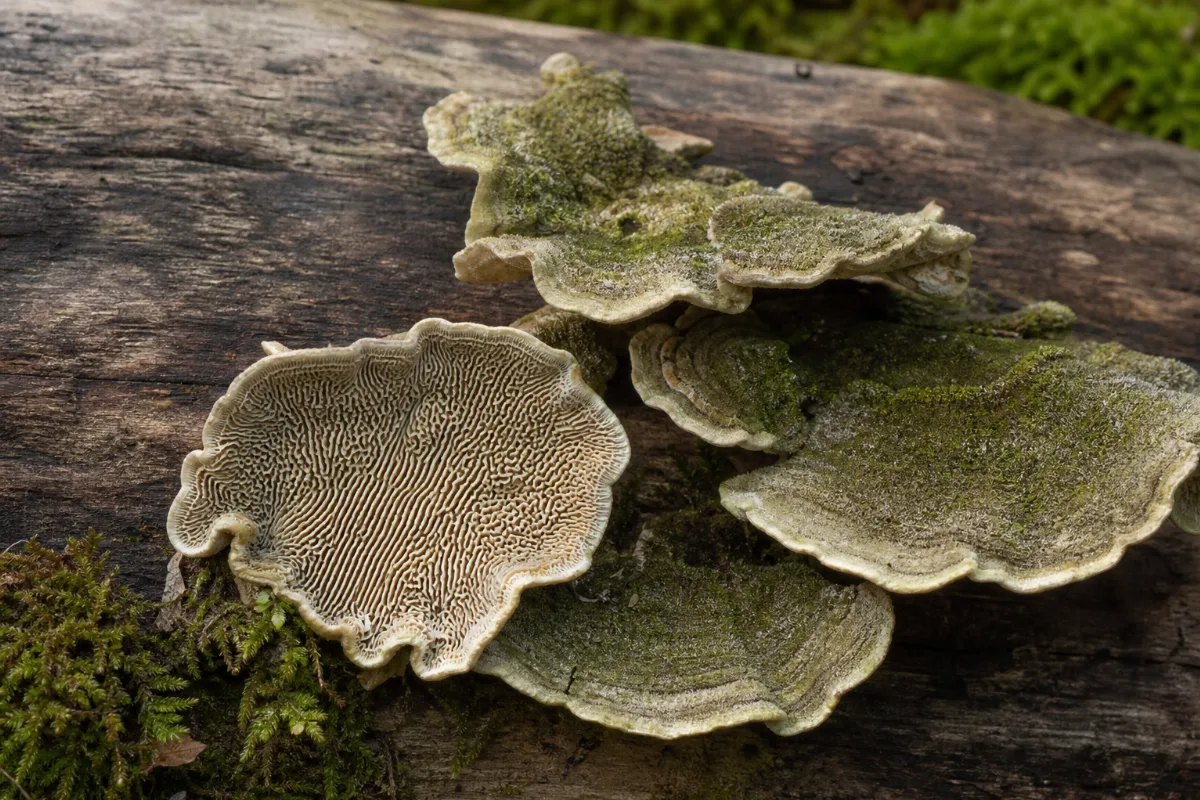
Mushrooms · Wild polypore
Mossy Maze Polypore
Cerrena unicolor · also called Mossy maze polypore
Mossy maze polypore is a tough, wood-rotting bracket fungus with maze-like pores underneath. It is known as a source of the enzyme laccase for industry. Health research is cell-dish work, plus a few rat findings reported second-hand, and no human study was found. We found no safety data either, so the safe answer is that nobody knows yet.
General information, not medical advice. Last substantive update · Not medically reviewed. A named clinician has not signed off on this page. How this page is made
About Mossy Maze Polypore
Mossy maze polypore (Cerrena unicolor) is a wood-rotting bracket fungus best known as a source of the enzyme laccase. Its health research is limited to cell dishes and a few rat results relayed in a review. No human study or safety report was found, and the safe answer is that little is known.
What it is
Cerrena unicolor is a white-rot bracket fungus in the order Polyporales, accepted in GBIF as Cerrena unicolor (Bull.) Murrill. It grows on dead hardwoods and is assumed to be parasitic on healthy trees first, according to a 2025 review. Its pores are irregular and maze-like.
It is a fungus, not a plant. It is sometimes confused in papers with turkey tail, which is a different species.
Traditional and current uses
No traditional medicinal or food use was found in the sources read. Its main use is industrial: the fungus makes laccase, an enzyme used on wood waste and dyes.
What the research shows
A Polish research group tested a laccase preparation on leukaemia cell lines and on blood cells from nine people with chronic lymphocytic leukaemia, all in a dish. The enzyme was cytotoxic at low concentrations (IC50 0.4 to 1.1 micrograms per mL). It also slowed mouse colon cancer cells and normal mouse cells at similar concentrations (3.849 versus 5.857 micrograms per mL).
Small-molecule fractions from culture liquid slowed human colon cancer cells but also slowed normal colon cells. A sugar-chain fraction made immune-type cells release TNF-alpha and IL-6, and laccase slowed herpes simplex virus 1 in cell cultures. A review repeats two rat findings, which we could not verify. All of this is lab work, and nearly all of it comes from one group.
Forms in research
The studies used liquid-culture products of laboratory strains: partly purified laccase, sugar-chain fractions and small-molecule fractions. These are not mushroom products you can buy. We found no tested product made from the wild bracket.
Rules and approval
The US National Cancer Institute says the FDA has not approved medicinal mushrooms as a treatment for cancer or any other medical condition. No regulator statement naming Cerrena unicolor was found.
At a glance
Traditional uses history, not proof
- No traditional medicinal or food use of this species was found in the sources read.
Studied for research
- Leukaemia cells in a dish, insufficient (cell dish only)
- Colon cancer cells in a dish, insufficient (normal cells also affected)
- Immune signalling in cell culture, insufficient
- Virus growth in cell culture, insufficient
- Blood sugar and liver injury in rats, insufficient (relayed by a review, unverified)
Main compounds
- Laccase, an enzyme that breaks down lignin and dyes
- Small-molecule fractions (phenolics) from culture liquid
- Mycelial sugar chains (endopolysaccharides)
Common forms
- Liquid-culture products for laboratory use (laccase, sugar chains, small-molecule fractions)
- The wild bracket itself, which is not a known food or supplement
Research links: Cell-dish study: laccase on leukaemia cells (PubMed) · Cell-dish study: colon cells (PubMed) · 2025 review of the fungus (PubMed) · Laccase production study (PubMed) · NCI: Medicinal mushrooms (PDQ) · Research Library · Genes & Biomarkers Library
What it is and its history
- Accepted scientific name
- Cerrena unicolor
- Naming authority
- (Bull.) Murrill (GBIF)
- Common names
- Mossy maze polypore (English)
- Family or group
- Cerrenaceae per GBIF (the 2025 review places it in Polyporaceae). A fungus family; bracket fungi, not a plant.
- Classification
- Fungi > Basidiomycota > Agaricomycetes > Polyporales > Cerrenaceae (GBIF) > Cerrena > Cerrena unicolor
- Native range
- The 2025 review says Cerrena occurs throughout Europe, Africa and South America. Not checked further.
- Habitat
- A wood-rotting (white rot) fungus on dead hardwoods such as ash, horse chestnut and birch; assumed to be parasitic on healthy trees before living on dead wood (2025 review).
- What it looks like
- Fruiting body: Per the 2025 review: surface hairy to nearly smooth, grey to brown, often green from algae; pores whitish then grey to brown, irregular to maze-like, 2 to 3 (4) per millimetre; spores smooth, colourless, 5 to 7 by 2.5 to 4 micrometres.
- Cultivation
- Not cultivated as a food. Laboratory tank cultures are used for enzyme work.
- Look-alikes and adulterants
- Name: Other maze-pored bracket fungi; Note: No source on look-alikes was read. Pore shape alone is not safe for identification.
- Sustainability and conservation
- Not checked.
Traditional use and history history, not clinical proof
| Tradition or era | Documented use | Source |
|---|---|---|
| Not found | No traditional medicinal or food use of this species was found in the sources read. Its research history is as a source of the enzyme laccase and, in the past decade, of cell-dish studies from a Lublin research group. | p41157106 |
Traditional use shows how it was used. It does not show that it works or is safe today.
What is inside, and how it may work
What it contains and how those compounds act in cells and animals. Laboratory and animal mechanisms are not proven effects in people.
Main compounds
| Compound | Family | Where it is concentrated | Activity studied | Level of evidence |
|---|---|---|---|---|
| Laccase (enzyme) | enzyme | Culture liquid Up to 1,373.12 plus or minus 55.93 U/L in a mixed culture (C. unicolor Han 849 with Schizophyllum commune Han 881 on Firmiana platanifolia waste). | Breaks down lignin and some dyes; killed leukaemia cells in a dish. 1 2 | Laboratory research |
| Small-molecule fractions (phenolics and others) | mixed | Culture liquid | Antioxidant in tests; slowed colon cells and worms in dishes. Individual compounds were not named in the abstracts read. 3 8 | Laboratory research |
| Mycelial sugar chains (endopolysaccharides) | polysaccharide | Mycelium | Made macrophage-type cells release TNF-alpha and IL-6 in a dish. 4 | Laboratory research |
Mechanisms, receptors and pathways
| Target or pathway | Gene or receptor | What was found | Level |
|---|---|---|---|
| Apoptosis in leukaemia and colon cells (dish) | Not identified | Laccase and small fractions caused apoptosis in cell lines. The route is not known. 2 3 | Laboratory research |
| Macrophage cytokine release (dish) | Not identified | A sugar-chain fraction raised TNF-alpha and IL-6 release. 4 | Laboratory research |
| Laccase gene regulation | Laccase genes (qPCR) | Copper, manganese and temperature changed which laccase transcripts the fungus makes. 5 | Laboratory research |
Absorption, metabolism and elimination
- Absorption
- Not studied.
- Distribution
- Not studied.
- Metabolism
- Not studied.
- Elimination
- Not studied.
- Bioavailability
- Not studied. Enzymes such as laccase are proteins and are normally broken down in digestion; this was not tested.
Isolated compounds versus whole extracts
All the health-related findings use liquid-culture fractions (purified or partly purified laccase, sugar chains or small molecules), not the mushroom body. Nothing can be said about the wild bracket.
Nutritional composition
No source describes this tough bracket fungus as food, and no nutrient table exists for it.
8 not enough evidence
What was looked at
The 8 benefits and uses checked for Mossy Maze Polypore, each with how strong the evidence is. Tap one to open it.
- Leukaemia cells in a dishNot enough evidence
- Colon cancer cells in a dishNot enough evidence
- Immune signalling in cell cultureNot enough evidence
- Antioxidant activity in chemical testsNot enough evidence
- Laccase enzyme production (industry, not a health use)Not enough evidence
- Virus growth in cell cultureNot enough evidence
- Blood sugar and liver injury in rodentsNot enough evidence
- Killing free-living worms in a dishNot enough evidence
Lab markers tracked in the studies
IC50 of laccase on leukaemia cells (dish)IC50 of laccase on cancer versus normal mouse cells (dish)Colon cancer cell growth, % of untreated cells (dish)TNF-alpha and IL-6 released by macrophage-type cells (dish)Laccase enzyme activity in culture (U per litre)
What is Mossy Maze Polypore good for?
The uses people ask about and how strong the human evidence is for each. For this fungus there is no human evidence at all. Read this together with the Safety tab.
Benefits, one by one
Each card is a research question, not a promise. Tap a goal to filter. Open a card to see the studies, doses and limits.
Leukaemia cells in a dish
Not enough evidenceLaccase, an enzyme made by this fungus in tank cultures, killed leukaemia cells in a dish at very low concentrations. No animal or human study was found, so this says nothing yet about a health effect.
2 studiesA partly purified laccase from culture liquid. Not a mushroom product.
Studies, doses and limits
Results
IC50 0.4 to 1.1 micrograms per mL across four leukaemia cell lines and cells from nine people with chronic lymphocytic leukaemia; 24-hour IC50 0.5 (HL-60) and 0.8 (K562) micrograms per mL.
Effect sizes as reported
Cell kill in a dish at low concentrations
Why this rating
Cell-dish work only, from one research group, using a partly purified enzyme. No animal or human data.
Form and dose studied
A partly purified laccase from culture liquid. Not a mushroom product.
Who was studied
Cell lines and blood cells from nine people with chronic lymphocytic leukaemia, tested in a dish
Limits
A dish is not a body. Whether the enzyme would survive digestion or reach the blood was not tested. Normal blood cells were not part of the abstract.
Why researchers looked
Laccase from this fungus is already made for industry, so a Polish group tested whether it also harms cancer cells.
Traditional use
No traditional medicinal use of this species was found in the sources read.
Proposed mechanism Laboratory research
The enzyme triggered apoptosis (programmed cell death) in leukaemia cell lines in a dish. How it does this is not settled.
A proposed mechanism does not show that the effect happens in people.
Other lab work found the same kind of enzyme also harmed normal mouse and human colon cells. See the Safety tab.
Colon cancer cells in a dish
Not enough evidenceLaccase and small-molecule fractions from culture liquid slowed colon cancer cells in a dish, but normal cells were slowed too, at similar levels.
2 studiesLaboratory fractions of culture liquid and a laccase preparation. Not…
Studies, doses and limits
Results
Small-molecule subfractions cut human HT-29 colon cancer cell growth to 47.5 to 9.2% of untreated at 200 micrograms per mL; normal colon cells fell to 54.4 to 79.4% for the best four fractions. Laccase on mouse cells: IC50 3.849 (CT-26 cancer) versus 5.857 (L929 normal) micrograms per mL.
Effect sizes as reported
Cell growth reduced in a dish, with only a small gap between cancer and normal cells
Why this rating
Cell-dish work from one research group. The cancer versus normal gap is small, and no animal or human study exists.
Form and dose studied
Laboratory fractions of culture liquid and a laccase preparation. Not a mushroom product.
Who was studied
Human and mouse cell lines in a dish
Limits
Mixed results on normal cells. Concentrations used (micrograms per mL in a dish) cannot be turned into an amount for a person.
Why researchers looked
The same group tested colon cell lines to see whether the effect was stronger on cancer cells than on healthy ones.
Traditional use
No traditional medicinal use of this species was found in the sources read.
Proposed mechanism Laboratory research
Fractions caused apoptosis (cell death) in colon cancer cells in a dish. The effect on normal cells was smaller for some fractions but not absent.
A proposed mechanism does not show that the effect happens in people.
Normal cells were also harmed in a dish. No safety study in animals or people was found.
Immune signalling in cell culture
Not enough evidenceA sugar-chain fraction from the fungus made macrophage-type cells release two inflammation signals (TNF-alpha and IL-6) in a dish. No animal or human immune study was found.
1 studiesA mycelial sugar-chain (endopolysaccharide) fraction from culture. No…
Studies, doses and limits
Results
Up to about 2000 pg/mL TNF-alpha and 400 pg/mL IL-6 released by the cells (abstract).
Effect sizes as reported
Cells released immune signals in a dish
Why this rating
One cell-line experiment. TNF-alpha and IL-6 are also signals of inflammation, so more of them is not clearly good.
Form and dose studied
A mycelial sugar-chain (endopolysaccharide) fraction from culture. Not a mushroom product.
Who was studied
A macrophage-type cell line
Limits
Abstract only was read. One group, one set of experiments.
Why researchers looked
Many bracket fungi hold sugar chains that touch immune cells, so researchers tested this one.
Traditional use
No traditional medicinal use of this species was found in the sources read.
Proposed mechanism Laboratory research
The fraction stimulated macrophage-type (THP-1 derived) cells in a dish. This is a lab signal, not proof of a health effect.
A proposed mechanism does not show that the effect happens in people.
A rise in inflammation signals could also be unwanted. Nothing is known about this in people.
Antioxidant activity in chemical tests
Not enough evidenceSmall-molecule fractions from culture liquid mopped up free radicals in laboratory tests. This does not show they protect a person.
1 studiesFractions of culture liquid, not a mushroom product.
Studies, doses and limits
Results
The paper describes the six fractions as antioxidative; the abstract gives no antioxidant numbers.
Effect sizes as reported
Radical-scavenging in test tubes
Why this rating
Test-tube chemistry only.
Form and dose studied
Fractions of culture liquid, not a mushroom product.
Limits
The abstract has no numbers for the antioxidant tests, so none are given here.
Why researchers looked
Wood-rotting fungi make strong antioxidant chemicals to cope with stress, so the group measured them.
Traditional use
No traditional medicinal use of this species was found in the sources read.
Proposed mechanism Laboratory research
Phenolic and other small molecules in culture liquid react with free radicals in test-tube assays (reported in the paper title and abstract as antioxidative preparations).
A proposed mechanism does not show that the effect happens in people.
Not applicable.
Laccase enzyme production (industry, not a health use)
Not enough evidenceThis fungus is best known as a source of laccase, an enzyme that breaks down lignin in wood and some dyes. The research here is about tanks and wood waste, not about people.
2 studiesLiquid cultures of isolates.
Studies, doses and limits
Results
Isolate Han 849 reached 1,373.12 plus or minus 55.93 U/L in a mixed culture with Schizophyllum commune Han 881 on Firmiana platanifolia waste. Copper and manganese changed laccase gene activity most.
Effect sizes as reported
Enzyme activity in a tank
Why this rating
Not a health claim, so no health certainty can be given. The studies are lab enzyme work.
Form and dose studied
Liquid cultures of isolates.
Limits
Says nothing about eating the mushroom or about health.
Why researchers looked
Industry wants cheap enzymes that work on plant waste and dyes.
Proposed mechanism Laboratory research
Laccase oxidises lignin-related molecules. Copper, manganese and temperature change how much the fungus makes.
A proposed mechanism does not show that the effect happens in people.
Not applicable.
Virus growth in cell culture
Not enough evidenceIn a dish, laccase from this fungus slowed the growth of herpes simplex virus 1 and EMCV (a mouse virus). No animal or human study was found.
1 studiesA laccase fraction from culture.
Studies, doses and limits
Results
Laccase was most active against herpes simplex virus at an early stage of replication in cultured cells (abstract; no numbers given).
Effect sizes as reported
Virus growth reduced in cultured cells
Why this rating
One cell-culture study, abstract only, no numbers.
Form and dose studied
A laccase fraction from culture.
Who was studied
Cell cultures
Limits
No animal or human data. A cell-dish result does not mean a treatment for herpes.
Why researchers looked
Fungal enzymes and sugar chains are often screened for antiviral effects.
Traditional use
No traditional use against infections was found in the sources read.
Proposed mechanism Laboratory research
Laccase acted at an early stage of herpes virus growth in cells, and before and after EMCV attached to cells (abstract). The mechanism is not known.
A proposed mechanism does not show that the effect happens in people.
Not applicable.
Blood sugar and liver injury in rodents
Not enough evidenceA 2025 review repeats two older rodent findings: a crude sugar-chain preparation from the fungus lowered blood sugar in diabetic rats and a liver-injury marker in alcohol-injured rats. We could not open the original rat papers, so these are not confirmed here.
1 studiesCrude exopolysaccharide from fungal culture.
Studies, doses and limits
Results
Per the review: serum glucose fell by 61.23% in streptozotocin-diabetic rats given crude exopolysaccharide, and ALT (a liver enzyme) fell in a rat alcohol-liver-injury model. Both relayed from papers we did not read.
Effect sizes as reported
Rat blood tests improved (relayed, unverified)
Why this rating
Animal results reported second-hand by a review written by researchers who work on this fungus. Original papers not read.
Form and dose studied
Crude exopolysaccharide from fungal culture.
Who was studied
Rats
Limits
Rat results often do not carry over to people. The original studies were not checked.
Why researchers looked
Rodent models are a usual next step after cell-dish work.
Traditional use
No traditional use for diabetes or liver was found.
Proposed mechanism Animal research
Not explained in the review text read.
A proposed mechanism does not show that the effect happens in people.
No safety data in people.
Killing free-living worms in a dish
Not enough evidenceSmall-molecule fractions from culture liquid paralysed Rhabditis worms in a dish. It is a first lab test and not a treatment for worms in people or animals.
1 studiesCulture-liquid fractions.
Studies, doses and limits
Results
Two fractions (under 10 kDa and 0.02 to 1.5 kDa) had nematicidal activity; paralysis grew with concentration. Numbers are not in the abstract.
Effect sizes as reported
Worms paralysed in a dish
Why this rating
A single in-dish test with free-living worms.
Form and dose studied
Culture-liquid fractions.
Who was studied
Worms in a dish
Limits
Free-living worms, not parasites inside a host.
Why researchers looked
People look for new natural products against gut worms.
Traditional use
No traditional use against worms was found.
Proposed mechanism Laboratory research
The fractions paralysed the back part of the worm; why is not known.
A proposed mechanism does not show that the effect happens in people.
Not applicable.
Connections to the rest of health
How Mossy Maze Polypore connects to the rest of our health knowledge graph. Every link says what kind of connection it is. A safety link (for example to the liver) is a warning, not a benefit. A study that merely mentions a topic never creates a benefit link.
Explore every connection: goals, body systems, organs, symptoms, genes
A. Wellness goals
| Connected to | Kind of connection | Evidence status | Context | Studies |
|---|---|---|---|---|
| Immune Support | Preliminary mechanism | Not enough evidence | Immune signalling in cell culture: A sugar-chain fraction from the fungus made macrophage-type cells release two inflammation signals (TNF-alpha and IL-6) in a dish. No animal or human immune study was found. | 4 |
| Gut Health | Preliminary mechanism | Not enough evidence | Killing free-living worms in a dish: Small-molecule fractions from culture liquid paralysed Rhabditis worms in a dish. It is a first lab test and not a treatment for worms in people or animals. | 8 |
B. Body systems
| Connected to | Kind of connection | Evidence status | Context | Studies |
|---|---|---|---|---|
| Immune System | Biological association | Not enough evidence | Studied for: Leukaemia cells in a dish Studied for: Immune signalling in cell culture | 2 6 4 |
| Digestive System | Biological association | Not enough evidence | Studied for: Colon cancer cells in a dish Studied for: Killing free-living worms in a dish | 3 7 8 |
| Hepatic System | Biological association | Not enough evidence | Studied for: Blood sugar and liver injury in rodents | 6 |
I. Biomarkers
| Connected to | Kind of connection | Evidence status | Context | Studies |
|---|---|---|---|---|
| IC50 of laccase on leukaemia cells (dish) | Biological association | Not enough evidence | Measured in trials: lowered. A lab change is not the same as a health benefit. | 2 |
| IC50 of laccase on cancer versus normal mouse cells (dish) | Biological association | Not enough evidence | Measured in trials: lowered. A lab change is not the same as a health benefit. | 7 |
| Colon cancer cell growth, % of untreated cells (dish) | Biological association | Not enough evidence | Measured in trials: lowered. A lab change is not the same as a health benefit. | 3 |
| TNF-alpha and IL-6 released by macrophage-type cells (dish) | Biological association | Not enough evidence | Measured in trials: raised. A lab change is not the same as a health benefit. | 4 |
| Laccase enzyme activity in culture (U per litre) | Biological association | Not enough evidence | Measured in trials: raised. A lab change is not the same as a health benefit. | 1 |
L. Active compounds
| Connected to | Kind of connection | Evidence status | Context | Studies |
|---|---|---|---|---|
| Laccase (enzyme) | Biological association | In vitro | Breaks down lignin and some dyes; killed leukaemia cells in a dish. Preparation or compound: Culture liquid |
1 2 |
| Small-molecule fractions (phenolics and others) | Biological association | In vitro | Antioxidant in tests; slowed colon cells and worms in dishes. Individual compounds were not named in the abstracts read. Preparation or compound: Culture liquid |
3 8 |
| Mycelial sugar chains (endopolysaccharides) | Biological association | In vitro | Made macrophage-type cells release TNF-alpha and IL-6 in a dish. Preparation or compound: Mycelium |
4 |
Each connection is stored with the ingredient, the connected record, the kind of connection, the evidence status, the supporting studies, the preparation or compound involved, and a review date (last reviewed October 25, 2026).
Evidence at a glance: what changed in 5 lab markers
Tap a number to show only those markers. Counts are markers, not people.
The evidence
The research centre for Mossy Maze Polypore. Every record here was checked against PubMed or the publisher's page; we never list a study we have not verified.
Evidence by outcome
Bars show how many studies we found for each outcome, not how well it works. People are added up across trials only (reviews are not added, to avoid double counting).
How we rate evidence
High certainty
Several well-run trials or reviews agree; further research is unlikely to change the picture much.
Moderate certainty
Good trials point the same way, but some doubt remains.
Low certainty
Small, short or inconsistent trials. The finding could change with better research.
Very low certainty
Very little or very weak human data. Treat as a possibility only.
Mixed findings
Trials or reviews disagree with each other.
Not enough evidence
Not enough human research to say either way.
Evidence against
Good research found no benefit, or found harm.
We take the reviewers' own risk-of-bias and GRADE statements where they exist, and otherwise judge from study size, design, consistency, directness and whether a product matches what is sold. Many publications do not make evidence high. Method note: We read PubMed records and abstracts for eight papers on Cerrena unicolor (five cell-dish studies, one enzyme-gene study, one lab fermentation study and one narrative review), the Oncol Lett, PLoS One and review full texts for numbers, checked the species name in GBIF and read the National Cancer Institute page for the regulator statement. Certainty ratings are the compiler's own reading; every item is rated insufficient because only cell-dish and second-hand animal results exist. The two rat findings come from a review and were not checked in the original papers.
Study library: every study we checked 10
| Study | Design | People | Product, dose, length | Result |
|---|---|---|---|---|
| Han 2021 Evaluation of Laccase Activities by Three Newly Isolated Fungal Species in Submerged Fermentation With Single or Mixed Lignocellulosic Wastes. Front Microbiol · PMID 34163456 · DOI |
Lab fermentation fungus |
Fungal isolates from Hebei Province, China, grown in liquid culture on wood waste | C. unicolor Han 849, alone or mixed with Schizophyllum commune Han 881 or Lenzites betulina Han 851 Liquid culture Not shown here Lab experiment · vs Single-species cultures |
C. unicolor Han 849 made the most laccase. The highest activity, 1,373.12 plus or minus 55.93 U/L, came from a mixed culture of C. unicolor Han 849 and S. commune Han 881 on Firmiana platanifolia waste (1,144.85 plus or minus 34.97 U/L with L. betulina). Mixed cultures made more laccase, faster Methods, limits and fundingOutcomes: Laccase enzyme activity (units per litre) Limitations: An industrial enzyme study, not a health study. Funding and conflicts: Funding not stated in the abstract Read: abstract |
| Matuszewska 2016 Laccase purified from Cerrena unicolor exerts antitumor activity against leukemic cells. Oncol Lett · PMID 26998114 · DOI |
Laboratory research cells |
Four human leukaemia cell lines (HL-60, Jurkat, RPMI 8226, K562) and blood cells from nine people with chronic lymphocytic leukaemia, grown in a dish | Partly purified laccase enzyme from C. unicolor liquid culture Culture liquid (not the mushroom body) Not shown here Lab experiment · vs Untreated cells |
The half-maximal inhibitory concentration (IC50) ranged from 0.4 to 1.1 micrograms per mL across the cell lines and the patient cells. In the full text, 24-hour IC50 values were 0.5 (HL-60) and 0.8 (K562) micrograms per mL. Apoptosis (programmed cell death) was seen in Jurkat and RPMI 8226 cells. Cells in a dish died at low enzyme concentrations Methods, limits and fundingOutcomes: Cell death measured with an XTT assay; apoptosis by flow cytometry and microscopy Limitations: Cell-dish work only. No normal blood cells were tested in the abstract. It does not show anything about eating the mushroom or about effects in a body. Funding and conflicts: Funded by a Medical University of Lublin grant (full text); academic authors Read: full text |
| Matuszewska 2019 Antitumor potential of new low molecular weight antioxidative preparations from the white rot fungus Cerrena unicolor against human colon cancer cells. Sci Rep · PMID 30760769 · DOI |
Laboratory research cells |
Human colon cancer cells (HT-29) and normal human colon lining cells (CCD 841 CoTr), grown in a dish | Six small-molecule subfractions from C. unicolor culture liquid Culture liquid (not the mushroom body) Not shown here Lab experiment · vs Untreated cells |
All six subfractions cut growth of the cancer cells in a dose-dependent way, down to 47.5 to 9.2% of untreated at the highest concentrations (200 micrograms per mL). The best four subfractions left the normal cells at 54.4 to 79.4% of untreated. Apoptosis reached up to 44.4% (subfraction 6) in cancer cells and under 20% in normal cells for most fractions. Slower cell growth in a dish; normal cells were affected too Methods, limits and fundingOutcomes: Cell growth (as % of untreated cells) and apoptosis Limitations: Cell-dish work only. Normal cells were also slowed (down to about half of untreated for some fractions), so the effect is not selective. Funding and conflicts: Academic authors; funding not stated in the abstract Read: abstract |
| Mizerska-Dudka 2015 Fungus Cerrena unicolor as an effective source of new antiviral, immunomodulatory, and anticancer compounds. Int J Biol Macromol · PMID 26003302 · DOI |
Laboratory research cells |
Cell lines: THP-1 macrophage-type cells, cervical cancer cells (SiHa, CaSki), human skin fibroblasts, and virus-infected cell cultures (herpes simplex virus 1 and EMCV) | Three C. unicolor fractions: laccase, mycelial sugar chains (endopolysaccharides) and small molecules Culture fractions Not shown here Lab experiment · vs Untreated cells |
Laccase was most active against herpes simplex virus at an early stage of its growth in cells. The sugar-chain fraction made macrophage-type cells release TNF-alpha and IL-6 (up to about 2000 and 400 picograms per mL). Laccase and the small-molecule fraction slowed tumour cell growth only at concentrations above 250 and 10 micrograms per mL respectively. Lab signals in cells; no animal or human data Methods, limits and fundingOutcomes: Virus growth, release of TNF-alpha and IL-6, cell growth Limitations: Cell-dish work. Abstract only was read. Funding and conflicts: Funding not stated in the abstract Read: abstract |
| Pawlik 2021 Cerrena unicolor Laccases, Genes Expression and Regulation of Activity. Biomolecules · PMID 33809926 · DOI |
Lab study fungus |
C. unicolor liquid cultures | C. unicolor culture liquid Culture liquid Not shown here Lab experiment · vs Control conditions |
Raised copper and manganese changed laccase gene activity most, and three laccase gene transcripts changed when the temperature went from 28 to 4 or 40 degrees C. Laccase production is tuned by metals and temperature Methods, limits and fundingOutcomes: Laccase isoenzymes and gene activity (qPCR) under copper, manganese and temperature changes Limitations: Enzyme biology only. Funding and conflicts: Narodowe Centrum Nauki (Polish national science grant) per the record Read: abstract |
| Pigoń-Zając 2025 Modern Pro-Health Applications of Medicinal Mushrooms: Insights into the Polyporaceae Family, with a Focus on Cerrena unicolor. Molecules · PMID 41157106 · DOI |
Narrative review fungus |
Laboratory and animal literature on C. unicolor | n/a Not shown here Lab experiment |
Describes the fungus as a wood-rotting species. States that existing work focused mostly on cell lines and calls for animal, translational and clinical studies. Reports from other papers (relayed, not re-read): crude exopolysaccharide lowered ALT in an alcohol-injured rat liver model, and serum glucose fell 61.23% in streptozotocin-diabetic rats. Says extracts need full composition and mycotoxin testing. Narrative summary; the 61.23% and ALT findings are relayed from other papers Methods, limits and fundingOutcomes: What is known about C. unicolor bioactivity and uses Limitations: A narrative review by the same Lublin group that does much of the primary work. The original rat papers were not opened. Funding and conflicts: Authors declare no conflicts of interest (full text) Read: full text |
| Sondej 2025 Is laccase from medicinal mushroom Cerrena unicolor cytotoxic to colon cancer cell line CT-26? PLoS One · PMID 40338889 · DOI |
Laboratory research cells |
Mouse colon cancer cells (CT-26) and normal mouse fibroblast cells (L929), grown in a dish | Laccase preparation from C. unicolor Culture extract Not shown here Lab experiment · vs Untreated cells |
The full text gives IC50 3.849 micrograms per mL for the cancer cells and 5.857 micrograms per mL for the normal fibroblasts (72-hour BrdU assay). The abstract says the preparation affected normal cells to a lesser extent. The enzyme hit cancer cells and normal cells at similar concentrations (3.8 versus 5.9 micrograms per mL) Methods, limits and fundingOutcomes: Cell growth (BrdU assay) and cell impedance (ECIS) Limitations: Mouse cell lines in a dish. The gap between cancer and normal cells is small, so the numbers do not show that the enzyme spares healthy cells. Funding and conflicts: Authors declare no competing interests (full text) Read: full text |
| Ziaja-Sołtys 2022 Low-Molecular-Weight Secondary Metabolites from Fungi: Cerrena unicolor as a New Proposal of an Effective Preparation against Rhabditis Nematodes. Molecules · PMID 35268762 · DOI |
Laboratory research nematode |
Rhabditis nematodes (small worms) in a dish | Two small-molecule fractions from C. unicolor culture liquid (under 10 kDa, and 0.02 to 1.5 kDa) Culture liquid Not shown here Lab experiment · vs Untreated worms |
Both fractions had nematicidal activity. They paralysed the back part of the worms, in proportion to concentration. (Specific concentrations are not in the abstract.) Worms paralysed in a dish Methods, limits and fundingOutcomes: Worm paralysis and survival Limitations: Free-living worms in a dish, not parasites in a body. Funding and conflicts: Funding not stated in the abstract Read: abstract |
| n/a 2024 National Cancer Institute (NCI): Medicinal Mushrooms (PDQ), health professional version, updated 6 November 2024 n/a · Source |
Authoritative guidance n/a |
n/a | n/a |
General statement on medicinal mushroom products; says nothing specific about this species. Methods, limits and fundingOutcomes: States that the FDA has not approved medicinal mushrooms as a treatment for cancer or any other medical condition; says supplements are regulated differently from drugs and ingredients may vary from lot to lot. Cerrena unicolor is not mentioned in the page. Limitations: A general statement; it does not cover C. unicolor at all. Funding and conflicts: Independent public information source Read: full text |
| n/a 2026 GBIF Backbone Taxonomy: Cerrena unicolor (Bull.) Murrill, species match checked 2026-10-25 n/a · Source |
Taxonomy record fungus |
n/a | n/a |
Status ACCEPTED, exact match, 100% confidence. Methods, limits and fundingOutcomes: Accepted species, kingdom Fungi, phylum Basidiomycota, class Agaricomycetes, order Polyporales, family Cerrenaceae, GBIF usage key 9070104. Limitations: Index Fungorum was not checked. GBIF lists the family as Cerrenaceae; the 2025 review calls it Polyporaceae. Funding and conflicts: Independent database Read: API record |
What we do not know yet
- No human data of any kind on safety.
- No toxicity study, no allergy report, no interaction data.
- No test of heavy metals, pesticides or mycotoxins in this species.
- No source on how to tell it from look-alikes.
- The two rat findings (blood sugar, liver enzymes) were not checked against their original papers.
How new research is added
New studies are found by a saved PubMed search and placed in a review queue. A person reads each one before it changes any evidence rating or safety wording. New publications never change ratings automatically.
Lab markers
What changed in blood or saliva tests during trials. A changed number is not the same as feeling or being healthier, and we give no "normal ranges".
Other 5
IC50 of laccase on leukaemia cells (dish)
Lowered in trials
The concentration of the enzyme that slows or kills half of the cells in a dish. A lower number means a stronger effect in the dish.
Not enough evidenceResults and what it means
Why it was measured
A standard first test for anything claimed to harm cancer cells.
Statistical vs. clinical meaning
A laboratory number only.
Safety implication
Not a safety measure.
| Study | Result | People | Product |
|---|---|---|---|
| 2 | IC50 0.4 to 1.1 micrograms per mL across four cell lines and cells from nine people with chronic lymphocytic leukaemia; 24-hour values 0.5 (HL-60) and 0.8 (K562). | Cell lines and patient cells in a dish | Partly purified C. unicolor laccase |
IC50 of laccase on cancer versus normal mouse cells (dish)
Lowered in trials
The same dish measure, compared between colon cancer cells and normal cells.
Not enough evidenceResults and what it means
Why it was measured
To see whether an effect is aimed at cancer cells or hits healthy cells too.
Statistical vs. clinical meaning
The gap between the two is small.
Safety implication
Shows normal cells were also affected.
| Study | Result | People | Product |
|---|---|---|---|
| 7 | IC50 3.849 micrograms per mL for CT-26 colon cancer cells and 5.857 micrograms per mL for normal L929 fibroblasts (72-hour BrdU assay). | Mouse cell lines in a dish | C. unicolor laccase preparation |
Colon cancer cell growth, % of untreated cells (dish)
Lowered in trials
How much the cells grew compared with untreated cells. Lower means more growth was stopped.
Not enough evidenceResults and what it means
Why it was measured
A common measure of whether a substance slows cancer cell growth in a dish.
Statistical vs. clinical meaning
Cancer cells slowed more than normal cells for some fractions, but normal cells were slowed too.
Safety implication
Normal cells were also slowed.
| Study | Result | People | Product |
|---|---|---|---|
| 3 | HT-29 growth fell to 47.5 to 9.2% of untreated cells at 200 micrograms per mL across six fractions; normal CCD 841 CoTr cells fell to 54.4 to 79.4% for the best four fractions. | Human colon cell lines in a dish | Six small-molecule subfractions from culture liquid |
TNF-alpha and IL-6 released by macrophage-type cells (dish)
Raised in trials
Two signal proteins that immune cells release when switched on.
Not enough evidenceResults and what it means
Why it was measured
Used in the lab as a sign that something stimulates immune cells.
Statistical vs. clinical meaning
A cell-dish signal; not shown to matter for health.
Safety implication
These signals also drive inflammation.
| Study | Result | People | Product |
|---|---|---|---|
| 4 | The mycelial sugar-chain fraction stimulated release of TNF-alpha up to about 2000 pg/mL and IL-6 up to about 400 pg/mL. | THP-1 derived macrophage-type cells in a dish | Endopolysaccharide fraction |
Laccase enzyme activity in culture (U per litre)
Raised in trials
How much laccase enzyme a liquid culture of the fungus makes.
Not enough evidenceResults and what it means
Why it was measured
It is the main industrial output of this fungus.
Statistical vs. clinical meaning
A lab production figure; not a health measure.
Safety implication
Not applicable.
| Study | Result | People | Product |
|---|---|---|---|
| 1 | Up to 1,373.12 plus or minus 55.93 U/L in a mixed culture of C. unicolor Han 849 and S. commune Han 881 on Firmiana platanifolia waste. | Liquid cultures | Isolate culture |
Safety
What studies and official sources say about side effects, medicines and who should check first. Each point shows what kind of evidence it comes from.
Main points to know 2
- No human safety data exist. We found no human study, no poisoning report, no allergy report and no list of side effects or drug interactions for this fungus. That is not proof it is safe. It means nobody has looked. It is a wild bracket fungus and not a known food or supplement. Absence of evidence 6
- In a dish, normal cells were harmed too. Lab fractions that slowed cancer cells also slowed normal colon cells, and laccase hit normal mouse cells at similar concentrations. This is cell-dish work only, but it is a reason for caution, not reassurance. Laboratory research 3 7
Side effects 1
| Effect | How often | Severity and recovery | Evidence |
|---|---|---|---|
| No adverse effects reported in people Absence of reports is not evidence of safety. | No human use was described in the sources read | unknown unknown | Absence of evidence 6 |
Liver
No liver injury report was found for this fungus in the sources read. A review relays a rat finding of a lower ALT in an alcohol-injured liver model; that is not a safety study. 6
This is a safety connection. It is not evidence that Mossy Maze Polypore supports liver health.
Medicines and supplements 2
| With | Why it matters | Importance | Evidence | What to do |
|---|---|---|---|---|
| Prescription medicines (any) prescription | Not studied. The fungus makes laccase, an enzyme that acts on phenolic molecules in lab tests, but no study looked at drug interactions. | Unknown. No interaction report was found. | Absence of evidence Not enough evidence 6 | Tell your doctor or pharmacist about any mushroom product you are thinking of using, particularly if you take blood thinners, immune medicines or chemotherapy. |
| Cancer treatment prescription | Cell-dish findings only. No study with chemotherapy or radiation. | Unknown. | Absence of evidence Not enough evidence 2 6 | Do not use wild or lab-derived fungus products as a stand-in for cancer treatment. Talk to your cancer team first. |
Who should check first 3
| Situation | Advice | Evidence |
|---|---|---|
| Pregnancy and breastfeeding | No data. Avoid. | Absence of evidence 6 |
| Children | No data. Do not give to children. | Absence of evidence 6 |
| Mushroom or mould allergy, asthma | No allergy data for this species. If you have a mushroom or mould allergy, or asthma, ask a doctor before any contact beyond looking. | Expert note |
Overdose, product quality and regulators
Summary. No poisoning from this species has been described in the sources read, but no toxicity study in animals or people was found either.
Animal. No animal toxicity study read. The review relays two rat studies of possible benefits only.
Human doses studied. No human use or study found.
High dose or long term signals. Unknown.
Genotoxicity. Not found.
Toxic or hazardous parts. Not studied.
No test of heavy metals, pesticides or mycotoxins in this species was found, and the 2025 review says extracts need composition and mycotoxin testing.
Extract composition and mycotoxins. The 2025 review says that before extracts are used, their full composition should be identified and they should be tested for cytotoxicity and mycotoxin contamination. 6
Look-alike wild fungi. We found no source that gives a safe way to tell this fungus from look-alikes. Wild fungi can be mistaken for one another, and some are poisonous. Do not pick and use a wild fungus without an expert on the spot.
| Body | Action | Date |
|---|---|---|
| US National Cancer Institute (PDQ, general medicinal mushroom page) (United States) | States that the FDA has not approved the use of medicinal mushrooms as a treatment for cancer or any other medical condition. The page does not mention Cerrena unicolor. source | 2024-11-06 |
When to get medical help
- Stomach pain, vomiting or diarrhoea after eating any wild fungus: seek medical help and keep a sample of the fungus if you can.
- Swelling of the face or throat, wheezing or a spreading rash after contact or eating: get emergency help now.
- Yellow skin or eyes, dark urine or severe tiredness days after eating a wild fungus: get medical help the same day.
If someone may be poisoned or in a crisis, contact a clinician or emergency service straight away. In the US, Poison Control is 1-800-222-1222.
General information only, not medical advice. Ask a clinician or pharmacist before use, especially with medicines, in pregnancy or with a health condition. See the Natural Remedy Safety guide.
Frequently asked questions
What is mossy maze polypore?
Is it the same as turkey tail?
No. Turkey tail is a different, much better studied bracket fungus. Some papers mix the names up, so check the Latin name, Cerrena unicolor, when you read about it.
Is mossy maze polypore safe to eat or use?
Does it fight cancer?
What is laccase?
Does it boost the immune system?
Not shown. In one cell-dish test, a sugar-chain fraction made immune-type cells release two inflammation signals. No animal or human immune study was found.
Does it lower blood sugar or protect the liver?
Not in people. A 2025 review repeats two rat findings, one on blood sugar and one on liver enzymes. We could not open the original papers, so treat these as unconfirmed.
Can it be used against viruses or worms?
Is it safe in pregnancy, breastfeeding or for children?
No data exist, so it is best avoided in pregnancy and breastfeeding and not given to children. Ask a doctor or pharmacist if you have questions.
Can I find or pick it safely?
Do not collect and use wild fungi without an expert. We found no source that gives a safe way to tell this one from look-alikes. It is also not known to be edible.
Does it interact with medicines?
Has the FDA approved it?
No. The US National Cancer Institute says the FDA has not approved medicinal mushrooms as a treatment for cancer or any other medical condition. That statement is general; it does not name this species.
Explore by health goal
Editorial transparency
- Written by
- AlternativeMed editorial team. Research compiled with AI assistance, then checked against PubMed records.
- Medical review
- None. This page has not been reviewed by a physician or pharmacist.
- First published
- 2026-10-25
- Last substantive update
- 2026-10-25
- How we research
- We read PubMed records and abstracts for eight papers on Cerrena unicolor (five cell-dish studies, one enzyme-gene study, one lab fermentation study and one narrative review), the Oncol Lett, PLoS One and review full texts for numbers, checked the species name in GBIF and read the National Cancer Institute page for the regulator statement. Certainty ratings are the compiler's own reading; every item is rated insufficient because only cell-dish and second-hand animal results exist. The two rat findings come from a review and were not checked in the original papers.
- How we rate evidence
- See "How we rate evidence" in the Evidence tab.
- Independence
- No product is promoted on this page. No affiliate links are shown. This page is information, not a recommendation to use this fungus.
Sources 10
Each source was opened and checked. Where we read only the abstract, it says so. The small numbers in the text point here.
- Han ML, et al. Evaluation of Laccase Activities by Three Newly Isolated Fungal Species in Submerged Fermentation With Single or Mixed Lignocellulosic Wastes.. Front Microbiol. 2021. PMID 34163456. DOI 10.3389/fmicb.2021.682679. (abstract)
- Matuszewska A, Karp M, Jaszek M, et al. Laccase purified from Cerrena unicolor exerts antitumor activity against leukemic cells.. Oncol Lett. 2016. PMID 26998114. DOI 10.3892/ol.2016.4220. (full text)
- Matuszewska A, Karp M, Jaszek M, et al. Antitumor potential of new low molecular weight antioxidative preparations from the white rot fungus Cerrena unicolor against human colon cancer cells.. Sci Rep. 2019. PMID 30760769. DOI 10.1038/s41598-018-37947-z. (abstract)
- Mizerska-Dudka M, Jaszek M, Błachowicz A, et al. Fungus Cerrena unicolor as an effective source of new antiviral, immunomodulatory, and anticancer compounds.. Int J Biol Macromol. 2015. PMID 26003302. DOI 10.1016/j.ijbiomac.2015.05.015. (abstract)
- Pawlik A, et al. Cerrena unicolor Laccases, Genes Expression and Regulation of Activity.. Biomolecules. 2021. PMID 33809926. DOI 10.3390/biom11030468. (abstract)
- Pigoń-Zając D, et al. Modern Pro-Health Applications of Medicinal Mushrooms: Insights into the Polyporaceae Family, with a Focus on Cerrena unicolor.. Molecules. 2025. PMID 41157106. DOI 10.3390/molecules30204089. (full text)
- Sondej D, Pigoń-Zając D, Jaszek M, et al. Is laccase from medicinal mushroom Cerrena unicolor cytotoxic to colon cancer cell line CT-26?. PLoS One. 2025. PMID 40338889. DOI 10.1371/journal.pone.0322211. (full text)
- Ziaja-Sołtys M, et al. Low-Molecular-Weight Secondary Metabolites from Fungi: Cerrena unicolor as a New Proposal of an Effective Preparation against Rhabditis Nematodes.. Molecules. 2022. PMID 35268762. DOI 10.3390/molecules27051660. (abstract)
- n/a. National Cancer Institute (NCI): Medicinal Mushrooms (PDQ), health professional version, updated 6 November 2024. n/a. 2024. (full text)
- n/a. GBIF Backbone Taxonomy: Cerrena unicolor (Bull.) Murrill, species match checked 2026-10-25. n/a. 2026. (API record)


