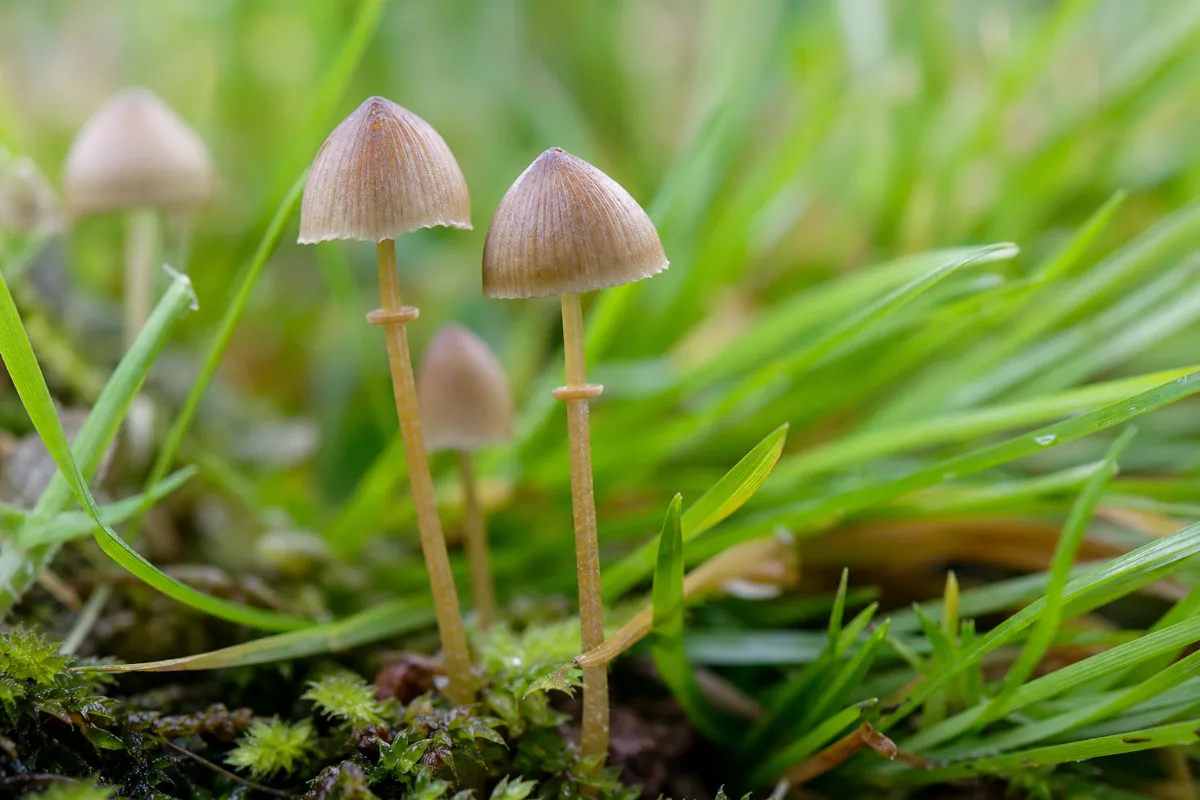
Mushrooms · Poisonous mushroom
Deadly Conocybe
Conocybe filaris (Fr.) Kuhner · also called Deadly lawn conocybe; also called Pholiotina filaris in some references
Deadly conocybe (Conocybe filaris) is a poisonous wild mushroom. Medical sources list it among mushrooms that contain amatoxins, the poisons behind most deaths from mushroom poisoning. Amatoxins can destroy the liver, and the first symptoms can come late, followed by a false recovery. It has no health use. If one may have been eaten by a person or a pet, call a poison centre now, even if everyone feels well.
General information, not medical advice. Last substantive update · Not medically reviewed. A named clinician has not signed off on this page. How this page is made
About Deadly Conocybe
Deadly conocybe (Conocybe filaris) is a poisonous mushroom. A clinical guide lists it among mushrooms with amatoxins, and a veterinary manual lists it with the death cap group. Amatoxins damage the liver after a delay. We found no human case report for this species, so the course of illness described here comes from amatoxin poisoning in general. It has no health use.
Danger first: what it is and why it poisons
Deadly conocybe is a wild mushroom. A 2023 clinical guide lists Conocybe filaris among amatoxin-containing mushrooms, and a 2003 laboratory paper states that amatoxins are present in it. A veterinary manual lists it with the death cap, destroying angels, some Lepiota and Galerina marginata as mushrooms that account for most reported mushroom deaths.
Amatoxins block an enzyme that every cell needs to make proteins. Liver cells are hit hardest. We found no measured toxin amount for this species and no human case report, so nothing can be said about how strong any one mushroom is.
Why the delay is the danger
In amatoxin poisoning in general, stomach symptoms appear after a delay and can look like ordinary gastroenteritis. Severe liver damage, liver failure and multi-organ failure can follow. A 2018 review says anyone with late stomach symptoms, with or without a false recovery, should be sent to a centre that can do liver transplants.
In animals, the veterinary manual describes a quiet period of about 6 to 12 hours, a stomach phase, an apparent recovery, then liver and kidney failure, with recovery or death 7 to 14 days after eating. Feeling better is not a sign of safety.
What happens in hospital
Reviews describe fluids, correcting salts, activated charcoal, blood-cleaning methods, medicines such as N-acetylcysteine and silibinin, and a liver transplant when the liver fails. Apart from transplant, these treatments are supportive and have not been tested in randomised trials.
In a US registry of 2224 people with acute liver failure or injury, 18 were due to amatoxin mushrooms. Of 13 in liver failure, 6 survived without a transplant, 5 survived with one and 2 died without one. The abstract does not say which mushrooms were eaten. A clinician decides on care; this page gives no home advice.
Cooking, drying and freezing do not help
A US poison centre page says cooking, canning, pickling, freezing and drying poisonous mushrooms does not remove their toxins. We found no cooking test for this species.
Eaten by mistake
A 2025 review says poisonous mushrooms cannot always be told from edible ones by their form, and a US poison centre says even very experienced gatherers can have trouble. This page gives no identification help on purpose. A photo, a name or an app is never proof that a wild mushroom is safe.
The veterinary manual says this species grows in grassy areas and on decayed logs across North America. That is a reason to keep children and pets away from any wild mushroom.
Names and what we could not find
GBIF lists Conocybe filaris as the accepted name, with Pholiotina filaris as a synonym, so sources may use either. A 2003 paper found no amatoxins in a related species. That does not make any other mushroom of the genus safe.
Only two PubMed records mention Conocybe filaris by name: the 2023 clinical guide and a 1975 paper whose title says it is a toxic mushroom. Neither is a case report.
At a glance
Traditional uses history, not proof
- No traditional or medicinal use is described in the sources we read.
- A 1975 paper's title says it was identified as a toxic mushroom (title only; the paper was not read).
- A 2023 clinical guide lists it among amatoxin-containing mushrooms (Horowitz 2023).
Studied for research
- Any health use: none; every source describes harm only
Main compounds
- Amatoxins (liver poisons); no measured amount for this species was found
Common forms
- Wild mushroom, eaten by mistake in poisonings (a US poison centre says cooking, drying and freezing do not remove poisonous mushroom toxins)
Research links: Poison Control (US): get help online or call 1-800-222-1222 · NHS (UK): Poisoning · NSW Poisons Information Centre (Australia): 13 11 26 · Amatoxin mushroom toxicity: clinical guide (StatPearls) · Amatoxin-containing mushroom poisonings: review (abstract) · Amanita phalloides liver failure and management: review (abstract) · Research Library · Genes & Biomarkers Library
What it is and its history
- Accepted scientific name
- Conocybe filaris
- Naming authority
- (Fr.) Kuhner
- Synonyms
- Pholiotina filaris (Fr.) Singer (a GBIF synonym; the veterinary manual also uses this name)
- Common names
- Deadly conocybe (English); Deadly lawn conocybe (English)
- Family or group
- Bolbitiaceae, a family of fungi (this is a mushroom, not a plant). Part concerned: the fruiting body (the mushroom).
- Classification
- Fungi > Bolbitiaceae > Conocybe > Conocybe filaris
- Native range
- The veterinary manual says it occurs across North America. Not otherwise checked.
- Habitat
- The veterinary manual says it is found in grassy areas and on decayed logs, abundant from late fall to midwinter. Given as a safety note, not an identification aid.
- What it looks like
- Part used: The fruiting body (the mushroom). This page does not describe how to recognise it, on purpose: a photo or a name is never proof that a wild mushroom is safe.
- Sustainability and conservation
- Not checked.
Traditional use and history history, not clinical proof
| Tradition or era | Documented use | Source |
|---|---|---|
| Medical and toxicology literature | A 1975 paper's title says Conocybe filaris was identified as a toxic basidiomycete (title only; the paper was not read). A 2023 clinical guide now lists it among amatoxin-containing mushrooms. No traditional or medicinal use is described in the sources we read. | Brady 1975 (title only); Horowitz 2023 |
Traditional use shows how it was used. It does not show that it works or is safe today.
What is inside, and how it may work
What it contains and how those compounds act in cells and animals. Laboratory and animal mechanisms are not proven effects in people.
Main compounds
| Compound | Family | Where it is concentrated | Activity studied | Level of evidence |
|---|---|---|---|---|
| Amatoxins (amanitins) | cyclic peptide toxins | Not reported for this species No measured amount for this species was found in an open source. | Block RNA polymerase II, stopping protein-making in cells; liver cells are hit hardest (death cap review; veterinary manual). 3 4 6 | Laboratory and review |
Mechanisms, receptors and pathways
| Target or pathway | Gene or receptor | What was found | Level |
|---|---|---|---|
| RNA polymerase II | Not applicable | Amanitins inhibit RNA polymerase II, which shuts down transcription and lowers protein synthesis. Cells with a high metabolic rate, such as liver cells, gut lining cells and kidney tubule cells, are most affected. This is described for amatoxins in general; none of the sources studied this species' toxins in people. 6 7 | Review and veterinary guidance |
Absorption, metabolism and elimination
- Absorption
- Not established for this species.
- Distribution
- Not established for this species.
- Metabolism
- The veterinary manual says amanitins are not metabolised.
- Elimination
- The veterinary manual says amanitins are mainly passed unchanged in urine, with a small amount (up to 7%) in bile.
- Bioavailability
- Not established.
Isolated compounds versus whole extracts
The whole mushroom is a poison. No health use of the mushroom or of an extract was found. We did not look at drug research on purified amatoxins, since it says nothing about this mushroom.
Nutritional composition
This mushroom is not a food or nutrient. It is poisonous.
1 not enough evidence1 evidence against
What was looked at
The 2 benefits and uses checked for Deadly Conocybe, each with how strong the evidence is. Tap one to open it.
What is Deadly Conocybe good for?
The uses people ask about and how strong the human evidence is for each. None is proven. Read every row together with the Safety tab: this is a poisonous mushroom.
Benefits, one by one
Each card is a research question, not a promise. Tap a goal to filter. Open a card to see the studies, doses and limits.
Use as a food, remedy or supplement
Evidence againstThere is no health use. Medical sources list this mushroom only as one that contains amatoxins, the poisons behind most deaths from mushroom poisoning. It is not a food or a supplement.
3 studiesNot covered. This page gives no amounts, preparation or ways of using…
Studies, doses and limits
What the trials found
No published human poisoning report for this species was found in our search of PubMed. What is known about the human course comes from reviews of amatoxin poisoning in general, mostly from the death cap.
Results
Nothing was measured as a benefit. A 2023 clinical guide lists Conocybe filaris among amatoxin-containing mushrooms, and a veterinary manual lists it among mushrooms that account for most reported mushroom deaths.
Why this rating
Every source describes harm. No trial, and none is expected.
Form and dose studied
Not covered. This page gives no amounts, preparation or ways of using the mushroom.
Who was studied
People and pets who ate it by mistake.
Limits
No case report of this species was found, so statements about how poisoning runs come from other amatoxin mushrooms.
Why researchers looked
It is studied only because it can poison people and pets. A 1975 paper title says it was identified as a toxic mushroom.
Traditional use
No traditional or medicinal use is described in the sources we read.
Proposed mechanism Review
Amatoxins in general block an enzyme (RNA polymerase II) that cells need to make proteins; liver cells are hit hardest (reviews of the death cap). No measured amatoxin amount for this species was found in an open source.
A proposed mechanism does not show that the effect happens in people.
This is a deadly poisonous mushroom. Symptoms can be delayed, so feeling well does not mean you are safe. If one may have been eaten, call a poison centre now.
Laboratory work on its poisons (not a use)
Not enough evidenceScientists have tested mushrooms of this genus for amatoxins in the laboratory. This is about identifying poisons and gives no use for the mushroom.
2 studiesNot covered. No amounts or ways of using the mushroom are given.
Studies, doses and limits
Results
The 2003 paper states that amatoxins are present in this species but gives no amount for it. A 1975 paper's title says it was identified as a toxic mushroom; its content was not read. This does not make any other mushroom of the genus safe.
Why this rating
Laboratory papers, one seen as a title only. No measured toxin amount for this species was found.
Form and dose studied
Not covered. No amounts or ways of using the mushroom are given.
Who was studied
Fungal specimens in the laboratory.
Limits
The 2003 paper is mainly about another species. It says nothing about how dangerous this species is to people.
Why researchers looked
To find which fungi make amatoxins and how the fungi are related.
Proposed mechanism Laboratory
A 2003 paper tested a related Conocybe species by HPLC and mass spectroscopy. It says amatoxins are present in Conocybe filaris, found none in the related species, and found small amounts of a different group of toxins (phallotoxins) there.
A proposed mechanism does not show that the effect happens in people.
This is a deadly poisonous mushroom. Symptoms can be delayed, so feeling well does not mean you are safe. If one may have been eaten, call a poison centre now.
Connections to the rest of health
How Deadly Conocybe connects to the rest of our health knowledge graph. Every link says what kind of connection it is. A safety link (for example to the liver) is a warning, not a benefit. A study that merely mentions a topic never creates a benefit link.
Explore every connection: goals, body systems, organs, symptoms, genes
B. Body systems
| Connected to | Kind of connection | Evidence status | Context | Studies |
|---|---|---|---|---|
| Liver and detox | Adverse effect or risk | Low certainty | Liver injury and liver failure in amatoxin poisoning in general; no case of this species found. Preparation or compound: Mushroom (amatoxins) |
5 6 |
| Digestive system | Adverse effect or risk | Low certainty | Delayed vomiting, diarrhoea and stomach pain in the first phase of amatoxin poisoning. Preparation or compound: Mushroom (amatoxins) |
6 |
| Liver Detox | Biological association | Evidence against | Studied for: Use as a food, remedy or supplement Studied for: Laboratory work on its poisons (not a use) | 4 8 2 3 1 |
K. Biological pathways
| Connected to | Kind of connection | Evidence status | Context | Studies |
|---|---|---|---|---|
| RNA polymerase II | Preliminary mechanism | Review | Target of amatoxins (reviews). | 6 |
L. Active compounds
| Connected to | Kind of connection | Evidence status | Context | Studies |
|---|---|---|---|---|
| Amatoxins (amanitins) | Biological association | Laboratory and review | Block RNA polymerase II, stopping protein-making in cells; liver cells are hit hardest (death cap review; veterinary manual). Preparation or compound: Not reported for this species |
3 4 6 |
Each connection is stored with the ingredient, the connected record, the kind of connection, the evidence status, the supporting studies, the preparation or compound involved, and a review date (last reviewed October 25, 2026).
Evidence at a glance: what the research found for 2 outcomes
Each outcome below is one thing researchers measured. Certainty is how far the evidence can be trusted, not how well it works. The full studies are on the next tab.
The evidence
The research centre for Deadly Conocybe. Every record here was checked against PubMed or the publisher's page; we never list a study we have not verified.
Evidence by outcome
Bars show how many studies we found for each outcome, not how well it works. People are added up across trials only (reviews are not added, to avoid double counting).
How we rate evidence
High certainty
Several well-run trials or reviews agree; further research is unlikely to change the picture much.
Moderate certainty
Good trials point the same way, but some doubt remains.
Low certainty
Small, short or inconsistent trials. The finding could change with better research.
Very low certainty
Very little or very weak human data. Treat as a possibility only.
Mixed findings
Trials or reviews disagree with each other.
Not enough evidence
Not enough human research to say either way.
Evidence against
Good research found no benefit, or found harm.
We take the reviewers' own risk-of-bias and GRADE statements where they exist, and otherwise judge from study size, design, consistency, directness and whether a product matches what is sold. Many publications do not make evidence high. Method note: We read the abstracts of 7 papers in PubMed (one seen as a title only), read the Poison Control, NHS, NSW Poisons Information Centre, a US state poison centre page and a veterinary manual page, and checked the scientific names in GBIF. Index Fungorum could not be opened. Where a statement could not be checked it is left out.
Study library: every study we checked 13
| Study | Design | People | Product, dose, length | Result |
|---|---|---|---|---|
| Brady 1975 Identification of Conocybe filaris as a toxic basidiomycete. Lloydia · PMID 1169671 |
Laboratory (title only) laboratory |
n/a | n/a |
PubMed holds no abstract. The title says Conocybe filaris was identified as a toxic basidiomycete (a mushroom-type fungus). Nothing else is claimed from this paper. Methods, limits and fundingOutcomes: Toxicity of Conocybe filaris Limitations: Title only; the content of the paper was not read, so it is not used as a source for any fact other than its title. Funding and conflicts: Not stated. Read: title only |
| Diaz 2018 Amatoxin-Containing Mushroom Poisonings: Species, Toxidromes, Treatments, and Outcomes. Wilderness Environ Med · PMID 29325729 · DOI |
Review |
Review of peer-reviewed reports of amatoxin mushroom poisoning | n/a |
Says amatoxins come mainly from Amanita, Lepiota and Galerina, that most mushroom poisonings are caused by unknown mushrooms, and that most fatal mushroom poisonings are caused by amatoxin mushrooms. Apart from liver transplant, treatments are supportive and not tested in randomised trials. Anyone with late-appearing stomach symptoms, with or without a false recovery, should be referred to a centre that offers liver transplant. About half of those in amatoxin liver failure will need a transplant. Methods, limits and fundingOutcomes: Species, symptom pattern, treatments, outcomes Limitations: The abstract's list of main amatoxin genera does not name Conocybe. Narrative review; no species-specific figures for Conocybe filaris. Funding and conflicts: Not stated in the abstract. Read: abstract |
| Hallen 2003 Taxonomy and toxicity of Conocybe lactea and related species. Mycol Res · PMID 14531619 · DOI |
Laboratory laboratory |
Fungal specimens examined by HPLC and mass spectroscopy; DNA comparison | n/a |
The authors say amatoxins are present in the related Conocybe filaris, and used that as the reason to test Conocybe lactea. They found no amatoxins in Conocybe lactea, only small amounts of phallotoxins, and found that species not closely related to Conocybe filaris. Methods, limits and fundingOutcomes: Presence of amatoxins and phallotoxins; relationships between species Limitations: Concerns a different species. Used here only for its statement about Conocybe filaris and for what it says about relatives; it gives no amatoxin amount for Conocybe filaris and no case of poisoning. Funding and conflicts: Research Support, Non-U.S. Gov't and U.S. Gov't, P.H.S. (per PubMed). Read: abstract |
| Horowitz 2023 Amatoxin Mushroom Toxicity. StatPearls · PMID 28613706 |
Review (study guide) |
Clinical overview of amatoxin-containing mushrooms | n/a |
Calls amatoxin mushrooms a rare but significant cause of acute fulminant liver failure. States that 95% of deaths from mushroom ingestions worldwide are from amatoxin-containing mushrooms. Its list of amatoxin-containing species includes Conocybe filaris (also Amanita, Lepiota and Galerina species). Methods, limits and fundingOutcomes: Which mushrooms contain amatoxins; share of deaths Limitations: A short clinical guide; the abstract gives no source or case numbers for Conocybe filaris specifically. Funding and conflicts: Disclosure: no relevant financial relationships (per PubMed). Read: abstract |
| Karvellas 2016 Acute liver injury and acute liver failure from mushroom poisoning in North America. Liver Int · PMID 26837055 · DOI |
Cohort study |
18 US Acute Liver Failure Study Group registry, 1998 to 2014: 2224 patients, of whom 18 (0.8%) had amatoxin-related liver failure (13) or injury (5) |
n/a |
Of 13 people with amatoxin liver failure, 6 survived without transplant (46%), 5 survived with transplant (39%) and 2 died without transplant (15%). Of 5 with liver injury, 4 recovered and 1 survived after transplant. N-acetylcysteine was used in nearly all patients. The authors say the best way to manage it is not yet settled. Methods, limits and fundingOutcomes: 21-day survival with and without liver transplant Limitations: Small numbers; the abstract does not say which mushroom species were eaten, so it is not specific to Conocybe filaris. Funding and conflicts: Not stated in the abstract. Read: abstract |
| Kayes 2024 Amanita phalloides-Associated Liver Failure: Molecular Mechanisms and Management. Int J Mol Sci · PMID 39684738 · DOI |
Review |
Review of death cap (Amanita phalloides) liver poisoning | n/a |
Describes delayed stomach symptoms that mimic gastroenteritis, followed by severe liver damage, liver failure and multi-organ failure. The main mechanism is inhibition of RNA polymerase II, with liver-cell death. Treatments named: rehydration and electrolyte correction, activated charcoal and lavage, plasmapheresis and similar blood-cleaning methods, antibiotics, N-acetylcysteine and silibinin, and liver transplant for acute liver failure with poor signs. Methods, limits and fundingOutcomes: Course, mechanism and treatment of amatoxin liver injury Limitations: About the death cap, not Conocybe filaris. It is used here only as the best description of how amatoxin poisoning generally runs. Funding and conflicts: Authors declare no conflicts of interest. Read: abstract |
| Puschner 2024 Merck Veterinary Manual: Toxin Latent Period >6 Hours After Ingestion of Mushrooms (Conocybe filaris, Amanita phalloides, A. ocreata, A. bisporigera, Lepiota spp, and Galerina marginata) Merck Veterinary Manual (professional version, last updated Sept 2024) · Source |
Authoritative guidance (veterinary) animal (dogs and others) |
Animals (mainly dogs); a veterinary reference | n/a |
Says these mushrooms account for most reported mushroom-induced deaths and are common across North America. Names Conocybe filaris (also known as Pholiotina filaris) as one of them. Says the species are abundant from late fall to midwinter in grassy areas and on decayed logs across North America. Says amanitins are mainly liver poisons but also harm other organs. In animals, the course has a quiet period of about 6 to 12 hours, a stomach phase, a false recovery, then liver and kidney failure, with recovery or death in the next 7 to 14 days. Treatment is monitoring, fluids and supportive care. The page says the 'newspaper test' should not be relied on. Methods, limits and fundingOutcomes: Which mushrooms cause delayed poisoning; clinical course in animals; treatment Limitations: A veterinary source about animals. Human care follows the same principles, but the page does not give human numbers. Read in full on 2026-10-25; the page date is the last-updated date shown. Read: full-text |
| Tuğcan 2025 Mushroom poisoning: An updated review. Turk J Emerg Med · PMID 39882097 · DOI |
Review |
Review of poisonous mushroom syndromes | n/a |
Says it is not possible to tell poisonous species from some edible species by form, so accidental eating is a public health problem. Says cyclopeptide-amatoxin mushrooms cause more than 90% of deaths from mushroom poisoning. Methods, limits and fundingOutcomes: Toxin groups, clinical syndromes, treatments Limitations: General review of mushroom poisoning; not about Conocybe filaris. Funding and conflicts: Conflict of interest: none declared (per PubMed). Read: abstract |
| n/a 2026 Poison Control (US, National Capital Poison Center): Need immediate assistance? n/a · Source |
Authoritative guidance n/a |
n/a | n/a |
The page says to get help online or call a poison center at 1-800-222-1222 (free and confidential). If the person collapses, has a seizure, has trouble breathing or cannot be awakened, call 911 immediately. Read on 2026-10-25. Methods, limits and fundingOutcomes: What to do in a suspected poisoning in the US Limitations: General poisoning advice, not specific to this mushroom. Read: full-text |
| n/a 2026 NHS (UK): Poisoning n/a · Source |
Authoritative guidance n/a |
n/a | n/a |
Lists certain plants and mushrooms among causes of poisoning. Says to call 999 or go to A&E if someone may have swallowed something harmful, has lost consciousness, has stopped breathing, has severe breathing trouble or has a seizure, and to call NHS 111 if you are not sure whether something swallowed is harmful. Read on 2026-10-25. Methods, limits and fundingOutcomes: What to do in a suspected poisoning in the UK Limitations: General poisoning advice, not specific to this mushroom. Read: full-text |
| n/a 2026 NSW Poisons Information Centre (Australia): home page n/a · Source |
Authoritative guidance n/a |
n/a | n/a |
The page says to call the centre 24/7 on 13 11 26 and not to wait for symptoms; if someone is unconscious or not breathing, call Triple Zero (000), ask for an ambulance and start CPR. Read on 2026-10-25. Methods, limits and fundingOutcomes: What to do in a suspected poisoning in Australia Limitations: General poisoning advice, not specific to this mushroom. Read: full-text |
| n/a 2026 University of Kansas Health System Poison Control Center: Poisonous Mushrooms n/a · Source |
Authoritative guidance n/a |
n/a | n/a |
Says symptoms may not develop for a couple of days, by which time serious damage may already have occurred, and that cooking, canning, pickling, freezing and drying poisonous mushrooms does not remove toxins. Says even very experienced gatherers can have trouble telling whether a mushroom is safe, and that only mushrooms bought at a store should be eaten. Lists heart, liver and kidney damage, seizures and death among effects. Read on 2026-10-25. Methods, limits and fundingOutcomes: Effects of poisonous mushrooms and what to do Limitations: A public help page, general to poisonous mushrooms and not specific to this species. Read: full-text |
| n/a 2026 GBIF Backbone Taxonomy: Conocybe filaris (key 2529789), Pholiotina filaris (key 2529792), Pholiotina rugosa (key 2529908) n/a · Source |
Database n/a |
n/a | n/a |
GBIF lists Conocybe filaris (Fr.) Kuhner as the accepted species, family Bolbitiaceae. Pholiotina filaris (Fr.) Singer is listed as its synonym. Pholiotina rugosa (Peck) Singer is listed as a synonym of a different species, Conocybe rugosa (Peck) Watling, so it is not a name for Conocybe filaris. Read through the GBIF API on 2026-10-25. Methods, limits and fundingOutcomes: Accepted name and synonyms Limitations: Index Fungorum was not opened; names follow GBIF only. Read: full-text |
What we do not know yet
- No human poisoning report for this species was found, and no measured toxin amount in an open source.
- No cooking, drying or freezing test for this species.
- No studies in pregnancy, breastfeeding or children.
- The 1975 paper identifying it as toxic has no abstract and was not read.
- Food-regulator statements were not searched.
How new research is added
New studies are found by a saved PubMed search and are placed in a review queue. A person reads each one before it changes this page.
Lab markers
What changed in blood or saliva tests during trials. A changed number is not the same as feeling or being healthier, and we give no "normal ranges".
Safety
What studies and official sources say about side effects, medicines and who should check first. Each point shows what kind of evidence it comes from.
Main points to know 7
- Danger first: it contains amatoxins, which can destroy the liver. A 2023 clinical guide lists Conocybe filaris among amatoxin-containing mushrooms, and a veterinary manual lists it with the death cap group as mushrooms that account for most reported mushroom deaths. Amatoxins are the poisons behind most fatal mushroom poisonings. No published human poisoning report for this species was found, so what follows about the course of illness comes from amatoxin poisoning in general. Review 4 7 2
- If someone has eaten it, call a poison centre now. Do not wait for symptoms. In the US call Poison Help at 1-800-222-1222 (free, confidential, 24 hours); call 911 if the person collapses, has a seizure, has trouble breathing or cannot be awakened. In the UK call NHS 111 if unsure and 999 in an emergency. In Australia call 13 11 26. A pet needs a vet or an animal poison line at once. Authoritative guidance 9 10 11 7
- The first symptoms come late, then you can seem to get better. In amatoxin poisoning in general, stomach symptoms appear after a delay and can look like ordinary gastroenteritis. Severe liver damage, liver failure and multi-organ failure follow. A 2018 review says people with late stomach symptoms, with or without a false recovery, should be sent to a centre that can do liver transplants. Feeling better is not a sign of safety. Review 6 2
- Cooking, drying or freezing does not make it safe. A US poison centre page says cooking, canning, pickling, freezing and drying poisonous mushrooms does not remove their toxins. We found no cooking test for this species. Authoritative guidance 12
- There is no simple antidote; care is in hospital. Reviews describe hospital care: fluids, charcoal, medicines such as N-acetylcysteine and silibinin, and liver transplant for liver failure with poor signs. Apart from transplant, the treatments are supportive and have not been tested in randomised trials. In a US registry, about half of the people in amatoxin liver failure survived without a transplant (6 of 13) and most of the rest needed one. Review and cohort 6 2 5
- Do not try to identify wild mushrooms from a page, photo or app. A 2025 review says poisonous mushrooms cannot always be told from edible ones by their form. A US poison centre says even very experienced gatherers can have trouble, and that only mushrooms bought at a store should be eaten. This page gives no identification help on purpose. Review 8 12
- Lawns are where children and pets can reach it. The veterinary manual says this species is found in grassy areas and on decayed logs across North America, and is abundant from late fall to midwinter. That is a reason to keep children and pets away from any wild mushroom, not a way to recognise this one. Authoritative guidance (veterinary) 7
Side effects 5
| Effect | How often | Severity and recovery | Evidence |
|---|---|---|---|
| Vomiting, stomach pain and watery diarrhoea (delayed) These symptoms mimic ordinary gastroenteritis, which is part of the danger. No timing figure for this species was found. | Described as the first phase of amatoxin poisoning in general | severe The stomach phase is not the lasting harm, but it can cause dehydration | Review 6 |
| A quiet or 'false recovery' period Not everyone shows every phase. | Described in amatoxin poisoning in general; in animals the veterinary manual gives about 24 to 48 hours | severe Not applicable | Review and veterinary guidance 2 7 |
| Liver damage and liver failure Amatoxins block RNA polymerase II and kill liver cells. | In a US registry, 18 of 2224 patients (0.8%) had amatoxin-related liver failure or injury; species not stated | severe Some recover; about half of those in liver failure survived without transplant and others needed one | Cohort study 5 6 |
| Kidney injury, bleeding problems, brain effects and multi-organ failure The veterinary manual says amanitins are mainly liver poisons but affect many organs, including the kidneys. | Not quantified in the abstracts we read | severe Can lead to death | Review 6 7 |
| Death The two sources give different percentages and do not count the same way. | Amatoxin mushrooms cause 95% of deaths from mushroom ingestion worldwide per a 2023 guide, and more than 90% per a 2025 review. No death count for this species was found. | life-threatening Not applicable | Review 4 8 |
Liver
Amatoxins are mainly liver poisons. In reviews of amatoxin mushroom poisoning, stomach symptoms are followed by liver injury, and some people go on to acute liver failure. In a US registry of 2224 patients with acute liver failure or injury, 18 were due to amatoxin mushrooms. Of the 13 in liver failure, 6 survived without a transplant, 5 survived after a transplant and 2 died without one. No liver-test data for this species were found. 5 6 2
How often. Not known for this species.
Monitoring. A clinician decides on tests. Tell the team exactly what was eaten and when.
- US Acute Liver Failure Study Group registry, 1998 to 2014 (species not stated). 13 with liver failure and 5 with liver injury; 4 of the 5 with injury recovered. 5
This is a safety connection. It is not evidence that Deadly Conocybe supports liver health.
Medicines and supplements 2
| With | Why it matters | Importance | Evidence | What to do |
|---|---|---|---|---|
| Medicines, alcohol and other liver-affecting substances prescription and non-prescription | Not studied. Poisoning can damage the liver, which clears many medicines, so clinicians may need to adjust other medicines. | No interaction study was found. | Theory Not enough evidence | Tell the emergency team about every medicine and supplement taken. |
| Hospital medicines used for amatoxin poisoning (for example silibinin, N-acetylcysteine, penicillin) treatment | These are given by clinicians in hospital, as the reviews describe. | Not for home use. This is not an interaction to manage yourself. | Review Low certainty 6 | Do not take any of these as a home remedy. |
Who should check first 4
| Situation | Advice | Evidence |
|---|---|---|
| Everyone, including children, pregnant or breastfeeding women, older adults and people with liver or kidney disease | Do not eat it. There is no benefit to weigh against the danger, and no preparation makes it safe. | Authoritative guidance 12 4 |
| Pregnancy and breastfeeding | No study of poisoning by this species in pregnancy or breastfeeding was found. Anyone pregnant or breastfeeding who may have eaten a wild mushroom should call a poison centre at once. | Gap |
| Children and pets | No species-specific study was found. The veterinary manual says animals poisoned by these mushrooms can die, and that puppies or dogs that eat a lot can die within 24 hours. Keep children and pets away from wild mushrooms. | Veterinary guidance 7 |
| Allergy | Not studied. The danger here is poisoning, not allergy. | Gap |
Overdose, product quality and regulators
Summary. Amatoxins block RNA polymerase II, which shuts down protein-making in cells. Liver cells, gut lining cells and kidney tubule cells are most affected (veterinary manual; death cap review).
Amounts. No safe amount is established, and no measured amatoxin amount for this species was found in an open source. Nothing can be said about how strong any one mushroom is.
Onset and course. In general amatoxin poisoning, stomach symptoms follow a delay, then a possible false recovery, then liver failure; in animals the veterinary manual describes recovery or death 7 to 14 days after eating. No timing for people eating this species was found.
Animal data. The veterinary manual describes this group in dogs and other animals: a quiet period, stomach illness, apparent recovery, then liver and kidney failure. It says severe low blood sugar can occur; in one study half of the dogs given lethal amounts of amanitins or pieces of death cap died of low blood sugar 1 to 2 days later.
Toxic parts. Not reported for this species.
Not read. Measured toxin content of this species, any human case report for it, effects of cooking on its toxins and the 1975 paper identifying it as toxic (title only) were not available to read.
This is not a product. No tested product was found, and no product is recommended or linked here.
| Body | Action | Date |
|---|---|---|
| Poison centres and health services (US, UK, Australia) (United States, United Kingdom, Australia) | The three pages say to contact poison services or emergency services in a suspected poisoning, without waiting for symptoms, and give the numbers quoted above. None is about this mushroom specifically. source | 2026-10-25 |
When to get medical help
- If this mushroom, or any wild mushroom, may have been eaten by a person or a pet, call a poison centre right away, even if everyone feels fine. Do not wait for symptoms. In the US call Poison Help at 1-800-222-1222 (free and confidential); call 911 if the person collapses, has a seizure, has trouble breathing or cannot be awakened (Poison Control). In the UK call NHS 111 if unsure and 999 in an emergency (NHS). In Australia call 13 11 26 (NSW Poisons Information Centre). For a pet, call a vet or an animal poison line at once.
- Seek medical help for vomiting, watery diarrhoea or stomach pain starting hours to a day or two after eating a wild mushroom, even if it settles. A quiet spell can follow before liver damage shows (Diaz 2018; Kayes 2024).
- Seek urgent help for yellow skin or eyes, dark urine, bleeding, confusion or unusual drowsiness in the days after eating a wild mushroom. These are signs of liver failure in amatoxin poisoning generally.
- Tell staff exactly what was eaten, when, and who ate it. Keep a piece of the mushroom if you can do so safely (Kansas poison centre).
If someone may be poisoned or in a crisis, contact a clinician or emergency service straight away. In the US, Poison Control is 1-800-222-1222.
General information only, not medical advice. Ask a clinician or pharmacist before use, especially with medicines, in pregnancy or with a health condition. See the Natural Remedy Safety guide.
Frequently asked questions
Is deadly conocybe poisonous?
Yes. A 2023 clinical guide lists Conocybe filaris among mushrooms that contain amatoxins, and a veterinary manual lists it with the death cap group, whose members account for most reported mushroom deaths. We found no human case report for this species, so the details of illness come from amatoxin poisoning in general.
What should I do if someone has eaten it?
Call a poison centre right away, even if the person feels fine. In the US call Poison Help at 1-800-222-1222 (free, confidential, 24 hours). Call 911 if the person collapses, has a seizure, has trouble breathing or cannot be awakened. In the UK call NHS 111 if you are unsure, or 999 in an emergency. In Australia call 13 11 26. Keep a piece of the mushroom if you can do so safely.
Why do the symptoms start so late?
In amatoxin poisoning in general, stomach symptoms appear after a delay and can look like ordinary gastroenteritis, then liver damage follows. In animals the veterinary manual describes a quiet period of about 6 to 12 hours. A US poison centre says serious damage may already have occurred by the time symptoms appear.
Can you seem to recover and still be in danger?
Can it kill?
Is there an antidote?
Does cooking make it safe?
No. A US poison centre page says cooking, canning, pickling, freezing and drying poisonous mushrooms does not remove their toxins. We found no cooking test for this species.
Can I tell it from safe mushrooms myself?
Has it been used as a medicine?
What do the other names mean?
Can children, pregnant women or pets be affected?
Explore by health goal
Editorial transparency
- Written by
- AlternativeMed editorial team. Research compiled with AI assistance, then checked against PubMed records and poison-centre pages.
- Medical review
- None. This page has not been reviewed by a physician or pharmacist.
- First published
- 2026-10-25
- Last substantive update
- 2026-10-25
- How we research
- We read the abstracts of 7 papers in PubMed (one seen as a title only), read the Poison Control, NHS, NSW Poisons Information Centre, a US state poison centre page and a veterinary manual page, and checked the scientific names in GBIF. Index Fungorum could not be opened. Where a statement could not be checked it is left out.
- How we rate evidence
- See "How we rate evidence" in the Evidence tab.
- Independence
- No product is promoted on this page. No affiliate links are shown. This page gives no dose, preparation, identification, picking or sourcing advice.
Sources 13
Each source was opened and checked. Where we read only the abstract, it says so. The small numbers in the text point here.
- Brady LR, Benedict RG, Tyler VE, Stuntz DE, Malone MH. Identification of Conocybe filaris as a toxic basidiomycete.. Lloydia. 1975. PMID 1169671. (title only)
- Diaz JH. Amatoxin-Containing Mushroom Poisonings: Species, Toxidromes, Treatments, and Outcomes.. Wilderness Environ Med. 2018. PMID 29325729. DOI 10.1016/j.wem.2017.10.002. (abstract)
- Hallen HE, Watling R, Adams GC. Taxonomy and toxicity of Conocybe lactea and related species.. Mycol Res. 2003. PMID 14531619. DOI 10.1017/s0953756203008190. (abstract)
- Horowitz BZ, Moss MJ. Amatoxin Mushroom Toxicity.. StatPearls. 2023. PMID 28613706. (abstract)
- Karvellas CJ, Tillman H, Leung AA, Lee WM, Schilsky ML, Hameed B, et al.. Acute liver injury and acute liver failure from mushroom poisoning in North America.. Liver Int. 2016. PMID 26837055. DOI 10.1111/liv.13080. (abstract)
- Kayes T, Ho V. Amanita phalloides-Associated Liver Failure: Molecular Mechanisms and Management.. Int J Mol Sci. 2024. PMID 39684738. DOI 10.3390/ijms252313028. (abstract)
- Puschner B. Merck Veterinary Manual: Toxin Latent Period >6 Hours After Ingestion of Mushrooms (Conocybe filaris, Amanita phalloides, A. ocreata, A. bisporigera, Lepiota spp, and Galerina marginata). Merck Veterinary Manual (professional version, last updated Sept 2024). 2024. (full-text)
- Tuğcan MO, Akpınar AA. Mushroom poisoning: An updated review.. Turk J Emerg Med. 2025. PMID 39882097. DOI 10.4103/tjem.tjem_129_24. (abstract)
- n/a. Poison Control (US, National Capital Poison Center): Need immediate assistance?. n/a. 2026. (full-text)
- n/a. NHS (UK): Poisoning. n/a. 2026. (full-text)
- n/a. NSW Poisons Information Centre (Australia): home page. n/a. 2026. (full-text)
- n/a. University of Kansas Health System Poison Control Center: Poisonous Mushrooms. n/a. 2026. (full-text)
- n/a. GBIF Backbone Taxonomy: Conocybe filaris (key 2529789), Pholiotina filaris (key 2529792), Pholiotina rugosa (key 2529908). n/a. 2026. (full-text)


