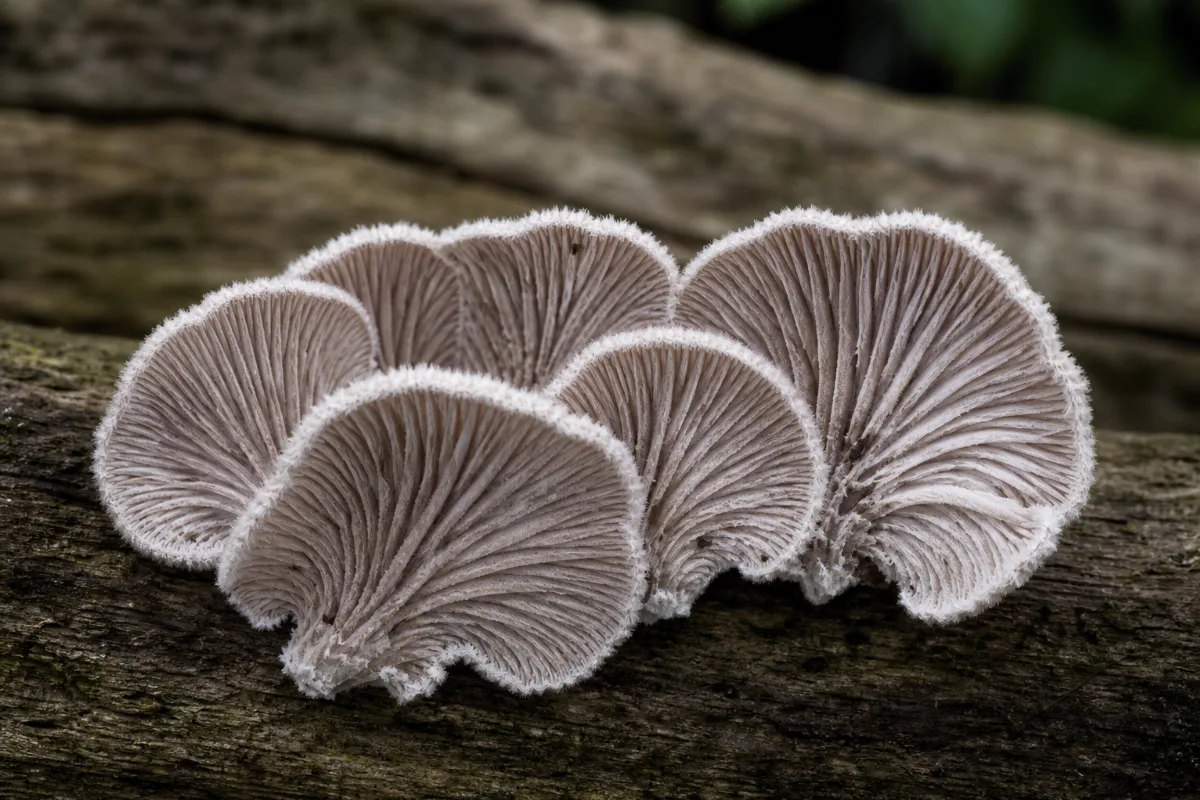
Mushrooms · Wild fungus
Split gill
Schizophyllum commune · also called Common split gill; Spaltblättling (German); Kulat kodop (Malay, Sabah)
Split gill is a small, tough wood fungus found nearly everywhere and eaten in parts of the tropics. Safety first: its spores can rarely cause lung and sinus infection or allergic lung disease, including in people with weak immunity, asthma or lung problems. Cancer trials used a purified injected drug made from it (schizophyllan), not the mushroom. The mushroom itself has no human trial.
General information, not medical advice. Last substantive update · Not medically reviewed. A named clinician has not signed off on this page. How this page is made
About Split gill
Split gill is a small, tough, fan-shaped fungus that grows on dead wood almost everywhere in the world. In parts of the tropics it is eaten fresh or dried. Safety comes first: its spores can, rarely, cause lung or sinus infection and allergic lung disease, including in people with weak immunity, asthma or lung problems. The cancer-trial research is on a purified injected drug made from it, called schizophyllan, not on the mushroom. No trial of the mushroom itself in people was found.
What it is
Split gill, Schizophyllum commune, is a fungus (not a plant) in the family Schizophyllaceae. GBIF accepts the name. A 2025 review describes a small, stalkless, fan-shaped fruiting body with a hairy upper side and gill-like folds that split down the middle. It says the fungus lives on deadwood on every continent except Antarctica.
Opinions on eating it differ. The review says people eat it in Thailand, China, Vietnam, Malaysia, India, the Congo and Mexican markets, and describes it as chewy. It also notes an older author called it inedible because it is small and leathery.
What the research shows
The human trials are about a drug, not the mushroom. Schizophyllan (also written sizofiran or sizofilan) is a purified sugar chain taken from the fungus. In Japan and Italy it was given by injection, as an add-on to radiotherapy or chemotherapy. A 1992 trial in cervical cancer found more complete responses with the drug; a 1993 ovarian cancer trial and a 1989 stomach cancer trial reported better survival in some groups; a 1997 trial in head and neck cancer found no clear difference. These trials are old and often small.
For the mushroom itself, all the health findings are from cells, rats or mice: lower blood sugar in diabetic rats, less diet-induced obesity in mice, and immune and tumour findings in the lab. They cannot show a health effect in people.
How strong is the evidence?
For the injected drug it is low to very low: a few randomised trials from the 1990s, small groups, subgroup results and abstracts only. For the mushroom as a food or supplement it is insufficient: no human trial exists. The safety evidence is stronger than the benefit evidence, but it is case reports, so it shows the types of harm and not how often they happen.
Forms and quality
Three very different things share the name: the fresh or dried fruiting body eaten as a regional food, mushroom powders or mycelium grown on grain, and the purified injected drug. Only the drug has been tested in people. We found no testing of supplement products. A lab study of one strain showed that cadmium builds up in the fungus, and the authors warn of heavy-metal risk in edible fungi, but nobody has tested metals in foods sold.
A 2026 study of 113 isolates confirmed the species by DNA sequencing and mass spectrometry, which shows identity checks need laboratory methods.
Legal and regulatory status
The US National Cancer Institute says the FDA has not approved medicinal mushrooms as a treatment for cancer or any other medical condition, and that supplement ingredients can vary from lot to lot. It does not mention split gill. We did not search other regulators. Rules differ by country and change.
At a glance
Traditional uses history, not proof
- Eaten fresh or dried in tropical Asia, Africa and Mexico, where it is described as chewy (2025 review).
- Cooked with fish, pork, chicken or in curry in some regions, and sold in local markets.
- Reported use as chewing gum in the Dutch East Indies and Madagascar (2025 review; original source not opened).
- An older author called it inedible because it is small and leathery.
Studied for research
- Cervical cancer with radiotherapy (injected drug), low
- Ovarian cancer and stomach cancer with chemotherapy (injected drug), very low
- Head and neck cancer (injected drug), insufficient
- Blood sugar in rats, insufficient
- Weight in mice, insufficient
Main compounds
- Schizophyllan, a beta-glucan sugar chain (the injected drug)
- Other polysaccharides
- Flavonoids, saponins and ergosterol (lab)
Common forms
- Fresh or dried fruiting body (regional food)
- Powders or extracts (no human trials)
- Mycelium on grain (no human trials)
- Purified injected schizophyllan (a drug, not a food)
Research links: Allergic lung disease from split gill, Japan (abstract) · 71 reported infections (abstract) · Brain abscess case, 1996 (abstract) · Cervical cancer trial of the injected drug (abstract) · Split gill review, 2025 · US NCI on medicinal mushrooms · Research Library · Genes & Biomarkers Library
What it is and its history
- Accepted scientific name
- Schizophyllum commune Fr.
- Naming authority
- Fr. (GBIF)
- Synonyms
- Agaricus alneus L.; Daedalea commune (Fr.) P.Kumm.; Merulius communis (Fr.) Spirin & Zmitr. (homotypic synonym); Apus alneus (L.) Gray; Merulius alneus (L.) J.F.Gmel.
- Common names
- Split gill (English); Common split gill (English); Common porecrust, split gill fungus (English (GBIF)); Spaltblättling (German (GBIF)); Schizophylle commun (French (GBIF)); Abanico, chiquito, nanacate (Spanish (GBIF)); Kulat kodop (Malay (Sabah, Malaysia, per a 2025 review))
- Family or group
- Schizophyllaceae (a fungus family), not a plant
- Classification
- Fungi > Basidiomycota > Agaricomycetes > Agaricales > Schizophyllaceae > Schizophyllum > Schizophyllum commune
- Native range
- A 2025 review says it is seen on every continent except Antarctica.
- Habitat
- The review says it grows on deadwood from at least 150 plant genera, usually as a white rot, and is described as saprophytic.
- What it looks like
- Fruiting body: A 2025 review describes a small, stalkless, fan-shaped fruiting body with a tough, leathery, pale flesh, a hairy, dry upper surface and gill-like folds that are split down the middle. Spores are white, very small (3 to 4 by 1 to 1.5 micrometres), smooth. This is background, not identification advice.
- Cultivation
- The 2025 review discusses alternative cultivation so that people need not depend on wild fruiting bodies; details were not checked.
- Harvest and processing
- Not checked.
- Look-alikes and adulterants
- Name: Other small bracket fungi on dead wood; Note: Not researched. We give no identification help; wild fungi cannot be safely identified from text.
- Sustainability and conservation
- Not checked.
Traditional use and history history, not clinical proof
| Tradition or era | Documented use | Source |
|---|---|---|
| Early naming (Europe) | A 2025 review says Elias Magnus Fries carried out the naming of split gill fungi in 1815. | s-dasgupta-2025 |
| Tropical Asia, Africa and Mexico | The same review says people eat it fresh or dried, for example in Thailand, China, Vietnam, Malaysia, India (Manipur, with fish or pork), the Congo and Mexican markets, and describes its texture as chewy. It also notes an older author called it inedible because it is small and leathery. | s-dasgupta-2025 |
| Chewing gum use (reported) | The review says people in the Dutch East Indies and Madagascar used it as chewing gum. We did not open the original source. | s-dasgupta-2025 |
| Modern drug research (Japan) | Purified schizophyllan (sizofiran) was tested in cancer trials in Japan and elsewhere between 1989 and 1997 in the papers we read. | p1573785 |
| Medical reports | Infections were reported from the 1990s (a 1996 brain abscess paper); a 2013 review counted 71 cases worldwide, 33 of them in Japan. | p22524529 |
Traditional use shows how it was used. It does not show that it works or is safe today.
What is inside, and how it may work
What it contains and how those compounds act in cells and animals. Laboratory and animal mechanisms are not proven effects in people.
Main compounds
| Compound | Family | Where it is concentrated | Activity studied | Level of evidence |
|---|---|---|---|---|
| Schizophyllan (sizofiran, sizofilan, SPG) | polysaccharide (beta-glucan) | Fruiting body and culture broth | A (1,3)-beta-D-glucan, described in a 2025 review as the best-studied compound of the fungus. In trials it was given as an injected purified drug; in the lab and in animals it stimulates immune cells. 20 11 | Human trial (purified drug) |
| Other polysaccharide fractions | polysaccharide | Fruiting body | Water or alkali extracts studied in rats and mice for blood sugar and weight. 9 18 | Animal research |
| Flavonoids, saponins and ergosterol | mixed | Fruiting body | Listed in a 2025 review as contributors to antioxidant and anti-inflammatory properties in lab tests. 6 | Laboratory research |
| Lectin and other small molecules (schizocommunin, diketopiperazines) | protein and small molecules | Not stated | Listed in a 2025 review with lab activities; not studied in people. 20 | Laboratory research |
Mechanisms, receptors and pathways
| Target or pathway | Gene or receptor | What was found | Level |
|---|---|---|---|
| Immune cell activation | Schizophyllan is described in a 2025 review as stimulating immune cells in the lab and animals. The 1997 head and neck trial found few immune changes in people given the injected drug. 20 8 | In vitro / human trial | |
| Gut bacteria and fat metabolism | Faecalibaculum rodentium; indole-3-lactic acid; AMPK, PGC-1 alpha, PPAR gamma | In mice, the polysaccharide raised a gut bacterium and indole-3-lactic acid, and moved lipid-metabolism genes; gut-bacteria transfer carried the effect to other mice. 18 | Animal research |
| Pancreatic insulin and glucose transport | GLUT2 | In diabetic rats the higher amount of extract raised insulin and GLUT2 in the pancreas and lowered malondialdehyde. 9 | Animal research |
| How the fungus causes disease | Inhaled spores can cause infection or allergic (type I and type III) reactions in the airways; the fungus does not sporulate in the lab, which complicates testing. 12 14 | Human case reports |
Absorption, metabolism and elimination
- Absorption
- Not found in the sources read.
- Distribution
- Not found in the sources read.
- Metabolism
- Not found in the sources read.
- Elimination
- Not found in the sources read.
- Bioavailability
- Not established.
Isolated compounds versus whole extracts
Almost all human trials are of purified, injected schizophyllan, given as a cancer add-on. Almost all lab and animal work uses polysaccharide extracts. No human study tests the whole mushroom, so findings on one form cannot be carried over to another or to a meal. Separately, the infections and allergy reports are linked to the living fungus and its spores, not to the drug.
Nutritional composition
Split gill is a regional wild food, not a reliable nutrient source. A 2025 review says it has a balanced mix of protein, carbohydrate and fat and contains minerals and vitamins, with figures that differ by strain and growing method. No nutrition claim is made here.
1 low certainty2 very low certainty5 not enough evidence
What was looked at
The 8 benefits and uses checked for Split gill, each with how strong the evidence is. Tap one to open it.
- Cervical cancer with radiotherapy (injected schizophyllan drug)Low certainty
- Ovarian cancer with chemotherapy (injected schizophyllan drug)Very low certainty
- Advanced stomach cancer with chemotherapy (injected schizophyllan drug)Very low certainty
- Head and neck cancer with chemotherapy (injected schizophyllan drug)Not enough evidence
- Food value (what the mushroom contains)Not enough evidence
- Blood sugar (rats with induced diabetes)Not enough evidence
- Body weight on a high-fat diet (mice and cells)Not enough evidence
- Immune and anti-cancer findings (lab and animal reviews)Not enough evidence
Lab markers tracked in the studies
Complete response rate (cervical cancer)Lymphocyte count after radiotherapySurvival (ovarian and stomach cancer)Blood glucose (diabetic rats)Diet-induced obesity (mice)
What is Split gill good for?
The uses people ask about and how strong the human evidence is for each. The first four rows are about a purified injected drug made from the fungus, not the mushroom. Read this with the Safety tab.
Benefits, one by one
Each card is a research question, not a promise. Tap a goal to filter. Open a card to see the studies, doses and limits.
Cervical cancer with radiotherapy (injected schizophyllan drug)
Low certaintyA 1992 Japanese trial added the injected drug schizophyllan to radiotherapy for stage II or III cervical cancer. More women in the drug group had a complete response to treatment. The trial is old, and this is the purified drug, not the mushroom.
1 studiesInjected into muscle in the trial. Not a food or supplement. No amoun…
Studies, doses and limits
What the trials found
A randomised trial in 52 Japanese institutions enrolled 315 women with stage II or III cervical cancer; 292 were analysed. All had radiotherapy; some were also given injected schizophyllan. This is the purified, injected drug schizophyllan (also written sizofiran or sizofilan), a sugar chain taken from the fungus. It is not the mushroom, a powder or an extract, and it says nothing about eating the mushroom.
Results
Complete response: stage II 91.0% with the drug versus 79.1% with radiotherapy alone; stage III 77.9% versus 61.2% (reported as significant for stage III). Lymphocyte counts recovered faster in the drug group (P < 0.05). Side effects probably linked to the drug: 11 cases (5.2%).
Effect sizes as reported
Higher complete-response rate at both stages of disease; the abstract does not report survival.
Why this rating
A randomised trial with a clear difference in stage III, but it is from 1992, 23 of 315 women were left out of the analysis, the groups were uneven in size, and the abstract reports no survival result. We found no recent confirmation.
Form and dose studied
Injected into muscle in the trial. Not a food or supplement. No amounts are given on this page.
Who was studied
Women with stage II or III cervical cancer in Japan
Limits
The abstract does not say who paid for the trial. Complete response is a tumour measure, not proof of longer life.
Why researchers looked
Schizophyllan is a beta-glucan sugar chain from the fungus. It was developed as an immune-boosting add-on to cancer treatment, mostly in Japan.
Traditional use
Not a traditional use. This is modern drug research.
Proposed mechanism Human trial
Believed to stimulate immune cells. The trial abstract reports a faster return of lymphocyte counts after radiotherapy.
A proposed mechanism does not show that the effect happens in people.
The injected drug was reported as generally well tolerated in these trials. Separately, the fungus itself can cause lung and sinus infection and allergic lung disease when its spores are breathed in (see the Safety tab). Anyone with cancer should talk to their cancer team before using any fungus product.
Ovarian cancer with chemotherapy (injected schizophyllan drug)
Very low certaintyA small 1993 Japanese trial of 68 women with ovarian cancer found better survival when the injected drug was added to chemotherapy in some groups. The result is borderline in the groups reported.
1 studiesRoute not stated in the abstract (the drug was injected in the other …
Studies, doses and limits
What the trials found
68 women were randomly given chemotherapy (cisplatin, adriamycin and cyclophosphamide) alone or with the injected drug after surgery. This is the purified, injected drug schizophyllan (also written sizofiran or sizofilan), a sugar chain taken from the fungus. It is not the mushroom, a powder or an extract, and it says nothing about eating the mushroom.
Results
Survival was higher with chemotherapy plus the drug in women with stage Ic, II or III disease. In those who had four or more chemotherapy cycles, the outcome was better with the drug (Cox-Mantel p = 0.074; generalized Kruskal-Wallis p = 0.032). No side effects attributable to the drug were recorded.
Effect sizes as reported
Survival difference in subgroups; no survival figures in the abstract.
Why this rating
Only 68 women, subgroup findings, and one of the two statistical tests did not reach the usual p < 0.05 threshold. The abstract gives no survival numbers.
Form and dose studied
Route not stated in the abstract (the drug was injected in the other trials). Not a food or supplement. No amounts are given on this page.
Who was studied
Women with ovarian cancer after surgery, Japan
Limits
Subgroup results from a small trial. Funding is not stated in the abstract.
Why researchers looked
Same drug and same reason as above: tested as an immune add-on to chemotherapy.
Traditional use
Not a traditional use.
Proposed mechanism Human trial
Believed to stimulate immune cells; the abstract does not test a mechanism.
A proposed mechanism does not show that the effect happens in people.
The injected drug was reported as generally well tolerated in these trials. Separately, the fungus itself can cause lung and sinus infection and allergic lung disease when its spores are breathed in (see the Safety tab).
Advanced stomach cancer with chemotherapy (injected schizophyllan drug)
Very low certaintyA 1989 Japanese trial reported longer survival when the injected drug was added to chemotherapy in people whose stomach cancer could not be removed. We only read the abstract, which is in English but the paper is in Japanese.
1 studiesInjected. Not a food or supplement. No amounts are given on this page.
Studies, doses and limits
What the trials found
People with unresectable or resectable stomach cancer were randomly given chemotherapy with or without the injected drug. This is the purified, injected drug schizophyllan (also written sizofiran or sizofilan), a sugar chain taken from the fungus. It is not the mushroom, a powder or an extract, and it says nothing about eating the mushroom.
Results
Unresectable cancer: the drug group survived longer (p = 0.009 with one chemotherapy regimen and p = 0.003 with another). Resectable cancer: overall 5-year survival did not differ; for stage III the drug group had better 5-year survival (p = 0.0105).
Effect sizes as reported
Survival differences reported as p values only; numbers of patients and survival figures are not in the abstract.
Why this rating
Only a short abstract was read, the number of patients is not given, the trial is from 1989, and overall survival did not differ in the resectable group.
Form and dose studied
Injected. Not a food or supplement. No amounts are given on this page.
Who was studied
People with advanced stomach cancer in Japan
Limits
Original paper not read. Funding and design details are not in the abstract.
Why researchers looked
Same drug, tested as an add-on to chemotherapy for stomach cancer.
Traditional use
Not a traditional use.
Proposed mechanism Human trial
Not tested in the abstract.
A proposed mechanism does not show that the effect happens in people.
The injected drug was reported as generally well tolerated in these trials. Separately, the fungus itself can cause lung and sinus infection and allergic lung disease when its spores are breathed in (see the Safety tab).
Head and neck cancer with chemotherapy (injected schizophyllan drug)
Not enough evidenceA small 1997 Italian trial found no clear gain from adding the injected drug to chemotherapy before surgery for head and neck cancer. Only 22 people could be analysed.
1 studiesInjected into muscle. Not a food or supplement. No amounts are given …
Studies, doses and limits
What the trials found
A phase II randomised trial in Italy enrolled 26 people with locally advanced head and neck squamous cell cancer; 22 were analysed (13 with the drug plus chemotherapy, 9 with chemotherapy alone). This is the purified, injected drug schizophyllan (also written sizofiran or sizofilan), a sugar chain taken from the fungus. It is not the mushroom, a powder or an extract, and it says nothing about eating the mushroom.
Results
Overall response rate was 92.3% with the drug versus 100% without it (not significantly different), with more complete responses in the drug arm (3 people, 23.1%). The drug did not appear to change the immune markers much; CD8 lymphocytes fell in the drug group and rose in the controls, and some interleukin levels differed. The authors judged the drug safe and well tolerated.
Effect sizes as reported
No clear difference in response; very small groups.
Why this rating
Only 22 people, a phase II trial, and no difference in overall response. This does not show benefit or harm.
Form and dose studied
Injected into muscle. Not a food or supplement. No amounts are given on this page.
Who was studied
Adults with locally advanced head and neck cancer, Italy
Limits
Tiny groups; the authors say advanced cancer and chemotherapy may have masked any immune effect.
Why researchers looked
Same drug, tested as an immune add-on to chemotherapy.
Traditional use
Not a traditional use.
Proposed mechanism Human trial
The trial measured immune markers to see whether the drug changed them.
A proposed mechanism does not show that the effect happens in people.
The injected drug was reported as generally well tolerated in these trials. Separately, the fungus itself can cause lung and sinus infection and allergic lung disease when its spores are breathed in (see the Safety tab).
Food value (what the mushroom contains)
Not enough evidenceSplit gill is eaten fresh or dried in parts of tropical Asia, Africa and Mexico. Reviews describe it as a source of protein, carbohydrate and minerals. This describes a food, not a health benefit.
2 studiesFresh or dried fruiting body as a regional food. No amounts are given…
Studies, doses and limits
What the trials found
No trial in people was found for this use. A 2025 review says wild and cultivated split gill have a balanced mix of protein, carbohydrate and fat and contain minerals and vitamins, with tables drawn from earlier papers we did not open.
Results
No health outcome measured.
Why this rating
Composition tables come from several earlier papers that vary by strain and growing method, and a composition table does not show a health effect.
Form and dose studied
Fresh or dried fruiting body as a regional food. No amounts are given on this page.
Limits
Nothing in the sources we read tests whether eating it is safe for people with weak immunity or lung disease. See the Safety tab.
Why researchers looked
It is a regional wild food, and researchers have measured what it contains.
Traditional use
A 2025 review says people in Thailand, China, Vietnam, Malaysia, India (Manipur), Mexico and parts of Africa eat it, and that its texture is chewy. It also records an older view that it is too small and leathery to be worth eating.
Proposed mechanism Composition
Not applicable; this is composition, not an effect in the body.
A proposed mechanism does not show that the effect happens in people.
A 2025 review states the mushroom is safe to eat with no toxicity at high doses, but that statement is not backed in the abstract by a human study. The spore infections described on the Safety tab come from breathing in spores, not from eating the mushroom.
Blood sugar (rats with induced diabetes)
Not enough evidenceIn rats made diabetic with a high-fat diet and a drug, a polysaccharide extract of split gill at the higher amount lowered blood sugar and raised insulin. No person has been tested.
1 studiesPolysaccharide extract given to rats; not a form sold as a food. No a…
Studies, doses and limits
What the trials found
No trial in people was found for this use.
Results
In the group given the higher amount of extract, blood sugar was lower and pancreas insulin and GLUT2 were higher than in untreated diabetic rats, and malondialdehyde was lower. The lower amount did not show the same effect.
Effect sizes as reported
No numbers in the abstract.
Why this rating
One rat study. Rat results often do not carry over to people, and the extract is a lab-made polysaccharide fraction, not the whole mushroom.
Form and dose studied
Polysaccharide extract given to rats; not a form sold as a food. No amounts are given on this page.
Who was studied
Rats (animal study)
Limits
The authors call it an alternative for treating diabetes, which goes beyond what a rat study shows. Nobody with diabetes was studied.
Why researchers looked
Researchers looked for blood-sugar effects of the sugar chains in this mushroom.
Proposed mechanism Animal research
The authors report more insulin and a glucose transporter (GLUT2) in the pancreas of treated rats, and less of a stress marker (malondialdehyde).
A proposed mechanism does not show that the effect happens in people.
Do not use a mushroom product in place of diabetes medicine. People with diabetes who are on treatment should ask a doctor first. Uncontrolled diabetes was a risk factor in a reported case of a split gill lung infection (see Safety).
Body weight on a high-fat diet (mice and cells)
Not enough evidenceA polysaccharide from split gill reduced fat-cell development in a dish and eased diet-induced obesity in mice. No person has been tested.
1 studiesPurified polysaccharide in mice and cells. No amounts are given on th…
Studies, doses and limits
What the trials found
No trial in people was found for this use.
Results
The polysaccharide stopped 3T3-L1 fat precursor cells from developing in the lab and alleviated obesity in mice fed a high-fat diet.
Effect sizes as reported
No numbers in the abstract.
Why this rating
Cell and mouse work with a purified polysaccharide; no human data.
Form and dose studied
Purified polysaccharide in mice and cells. No amounts are given on this page.
Who was studied
Mice and cultured cells
Limits
Mouse obesity models differ from human weight problems.
Why researchers looked
Gut bacteria and fat metabolism are active research areas for mushroom sugar chains.
Proposed mechanism Animal research
The authors link the effect to a gut bacterium (Faecalibaculum rodentium), a gut chemical (indole-3-lactic acid) and some small RNA molecules, and show that transferring gut bacteria to other mice carried the effect.
A proposed mechanism does not show that the effect happens in people.
No safety data in people.
Immune and anti-cancer findings (lab and animal reviews)
Not enough evidenceReviews report that schizophyllan and other sugar chains from split gill stimulate immune cells and slow tumour growth in cells and animals. These are lab findings, not results in people eating the mushroom.
2 studiesPurified compounds and extracts in the lab. No amounts are given on t…
Studies, doses and limits
What the trials found
No trial of the whole mushroom was found. Human trials exist only for the injected drug, covered on the other benefits tab.
Results
Summaries in two reviews; we did not open the original lab and animal papers.
Effect sizes as reported
Not given.
Why this rating
Review-level statements about cells and animals, mostly with purified compounds.
Form and dose studied
Purified compounds and extracts in the lab. No amounts are given on this page.
Who was studied
Cells and animals
Limits
Lab results with purified compounds cannot show that eating the mushroom boosts immunity. The fungus itself can cause infection and allergy (see Safety).
Why researchers looked
The sugar chain schizophyllan is the best-known compound of the fungus.
Proposed mechanism Laboratory research
Beta-glucans are thought to act on immune cells. A 2025 review also lists lab and animal results with the purified compound, for example higher survival in virus-infected mice.
A proposed mechanism does not show that the effect happens in people.
Anyone with a weak immune system should ask a doctor before using a split gill product.
Connections to the rest of health
How Split gill connects to the rest of our health knowledge graph. Every link says what kind of connection it is. A safety link (for example to the liver) is a warning, not a benefit. A study that merely mentions a topic never creates a benefit link.
Explore every connection: goals, body systems, organs, symptoms, genes
B. Body systems
| Connected to | Kind of connection | Evidence status | Context | Studies |
|---|---|---|---|---|
| Immune system | Low certainty | Case reports of infection in these situations. Infections reported after steroids, CAR T-cell therapy and with diabetes. Preparation or compound: Weak immunity (transplant, steroids, CAR T-cell therapy, diabetes) |
15 10 1 | |
| Reproductive System | Biological association | Low certainty | Studied for: Cervical cancer with radiotherapy (injected schizophyllan drug) Studied for: Ovarian cancer with chemotherapy (injected schizophyllan drug) | 11 5 |
| Immune System | Biological association | Low certainty | Studied for: Cervical cancer with radiotherapy (injected schizophyllan drug) Studied for: Ovarian cancer with chemotherapy (injected schizophyllan drug) | 11 5 4 8 20 6 |
| Digestive System | Biological association | Very low certainty | Studied for: Advanced stomach cancer with chemotherapy (injected schizophyllan drug) Studied for: Food value (what the mushroom contains) | 4 20 6 18 |
| Endocrine System | Biological association | Not enough evidence | Studied for: Blood sugar (rats with induced diabetes) Studied for: Body weight on a high-fat diet (mice and cells) | 9 18 |
C. Body parts and organs
| Connected to | Kind of connection | Evidence status | Context | Studies |
|---|---|---|---|---|
| Lungs | Adverse effect or risk | Low certainty | Pneumonia, fungus ball and allergic bronchopulmonary mycosis in case reports and one 30-patient Japanese series. Pneumonia, fungus ball and allergic bronchopulmonary mycosis in case reports and a 30-patient series. Preparation or compound: Inhaled spores of the fungus (not eating) |
2 12 17 |
| Sinuses | Adverse effect or risk | Low certainty | 22 of 71 reported infections up to 2013 were sinus infections. 22 of 71 reported infections were sinus infections. Preparation or compound: Inhaled spores of the fungus |
2 |
| Brain | Adverse effect or risk | Low certainty | A fatal brain abscess in a person on steroid treatment (1996) and other rare cases. Preparation or compound: Spread from lung or sinus infection |
15 2 |
E. Health conditions
| Connected to | Kind of connection | Evidence status | Context | Studies |
|---|---|---|---|---|
| Allergic bronchopulmonary mycosis | Adverse effect or risk | Low certainty | Split gill is one of the most common non-Aspergillus causes; 30 patients described in Japan. One of the most common non-Aspergillus causes in Japan. Preparation or compound: Inhaled spores |
12 |
I. Biomarkers
| Connected to | Kind of connection | Evidence status | Context | Studies |
|---|---|---|---|---|
| Complete response rate (cervical cancer) | Biological association | Low certainty | Measured in trials: raised. A lab change is not the same as a health benefit. | 11 |
| Lymphocyte count after radiotherapy | Biological association | Low certainty | Measured in trials: raised. A lab change is not the same as a health benefit. | 11 |
| Survival (ovarian and stomach cancer) | Biological association | Very low certainty | Measured in trials: raised. A lab change is not the same as a health benefit. | 5 4 |
| Blood glucose (diabetic rats) | Biological association | Not enough evidence | Measured in trials: lowered. A lab change is not the same as a health benefit. | 9 |
| Diet-induced obesity (mice) | Biological association | Not enough evidence | Measured in trials: lowered. A lab change is not the same as a health benefit. | 18 |
K. Biological pathways
L. Active compounds
| Connected to | Kind of connection | Evidence status | Context | Studies |
|---|---|---|---|---|
| Schizophyllan (sizofiran, sizofilan, SPG) | Biological association | Human trial (purified drug) | A (1,3)-beta-D-glucan, described in a 2025 review as the best-studied compound of the fungus. In trials it was given as an injected purified drug; in the lab and in animals it stimulates immune cells. Preparation or compound: Fruiting body and culture broth |
20 11 |
| Other polysaccharide fractions | Biological association | Animal | Water or alkali extracts studied in rats and mice for blood sugar and weight. Preparation or compound: Fruiting body |
9 18 |
| Flavonoids, saponins and ergosterol | Biological association | In vitro | Listed in a 2025 review as contributors to antioxidant and anti-inflammatory properties in lab tests. Preparation or compound: Fruiting body |
6 |
| Lectin and other small molecules (schizocommunin, diketopiperazines) | Biological association | In vitro | Listed in a 2025 review with lab activities; not studied in people. | 20 |
Each connection is stored with the ingredient, the connected record, the kind of connection, the evidence status, the supporting studies, the preparation or compound involved, and a review date (last reviewed October 25, 2026).
Evidence at a glance: what changed in 5 lab markers
Tap a number to show only those markers. Counts are markers, not people.
The evidence
The research centre for Split gill. Every record here was checked against PubMed or the publisher's page; we never list a study we have not verified.
Evidence by outcome
Bars show how many studies we found for each outcome, not how well it works. People are added up across trials only (reviews are not added, to avoid double counting).
How we rate evidence
High certainty
Several well-run trials or reviews agree; further research is unlikely to change the picture much.
Moderate certainty
Good trials point the same way, but some doubt remains.
Low certainty
Small, short or inconsistent trials. The finding could change with better research.
Very low certainty
Very little or very weak human data. Treat as a possibility only.
Mixed findings
Trials or reviews disagree with each other.
Not enough evidence
Not enough human research to say either way.
Evidence against
Good research found no benefit, or found harm.
We take the reviewers' own risk-of-bias and GRADE statements where they exist, and otherwise judge from study size, design, consistency, directness and whether a product matches what is sold. Many publications do not make evidence high. Method note: We read PubMed records and abstracts for 18 papers (four trials of the injected drug, two animal studies, a review, nine case reports or case series and lab studies of infection, one lab study of cadmium and one case of a blood-test effect), the National Cancer Institute page in full, the GBIF record, and parts of a 2025 open-access review. The original papers behind lab findings quoted in reviews were not opened.
Study library: every study we checked 21
| Study | Design | People | Product, dose, length | Result |
|---|---|---|---|---|
| Chen 2023 Pneumonia caused by Schizophyllum commune in a patient with diabetes: A case report and comprehensive literature review. Medicine (Baltimore) · PMID 37266650 · DOI |
Case report |
1 A 55-year-old man with poorly controlled diabetes |
S. commune (pneumonia) Spores Not shown here |
Cough and sputum, raised eosinophils and IgE, mucus plugs and consolidation; cultures grew S. commune; improved after voriconazole with inhaled budesonide and formoterol. The authors say infection should be considered especially in people with weak immunity. Case report (Not applicable) Methods, limits and fundingOutcomes: Diagnosis and outcome Limitations: Single case plus literature review. Funding and conflicts: No conflicts declared Read: abstract |
| Chowdhary 2013 Schizophyllum commune as an emerging fungal pathogen: a review and report of two cases. Mycoses · PMID 22524529 · DOI |
Review |
71 71 reported human cases worldwide up to 2013, plus two new cases (ABPM and fungus ball) |
Schizophyllum commune (infection) Spores and fungal growth in tissue Not shown here |
Of 71 cases, 45 (63%) were in the lungs, 22 (31%) sinus and 4 elsewhere; respiratory tract 94%; Japan 33 cases (46%), Iran 7, USA 6. The authors say the burden is probably underestimated. Respiratory tract is the main target (Not applicable) Methods, limits and fundingOutcomes: Where infections occurred and which organs were affected Limitations: Review of reported cases; reporting differs by country and awareness. Funding and conflicts: No conflicts reported in the abstract record Read: abstract |
| Chowdhary 2013 Molecular characterization and in vitro antifungal susceptibility profile of Schizophyllum commune, an emerging basidiomycete in bronchopulmonary mycoses. Antimicrob Agents Chemother · PMID 23507274 · DOI |
Lab fungus |
30 clinical isolates; 8 allergic bronchopulmonary mycosis patients treated with itraconazole; one invasive lung case and one fungus ball | Schizophyllum commune isolates (antifungal testing); itraconazole and voriconazole treatment Not shown here 6 to 24 months follow-up |
Lowest MICs for isavuconazole, itraconazole, voriconazole and amphotericin B; high for fluconazole and flucytosine. Five of 8 ABPM cases treated with itraconazole had no recurrence over 6 to 24 months. Invasive lung and fungus-ball cases were treated successfully. Antifungal sensitivity profile (Not applicable) Methods, limits and fundingOutcomes: Antifungal susceptibility; treatment outcomes Limitations: Small case group; lab susceptibility is not the same as treatment results. Funding and conflicts: Not stated in the abstract Read: abstract |
| Fujimoto 1989 [Clinical efficacies of schizophyllan (SPG) on advanced gastric cancer]. Nihon Geka Gakkai Zasshi · PMID 2531270 |
Controlled trial |
People with unresectable or resectable gastric cancer, Japan (number not stated in the abstract) | Sizofiran (schizophyllan, SPG), injected, plus tegafur or 5-FU with MMC Purified beta-glucan drug from the fungus (not the mushroom) Not shown here · vs Chemotherapy alone |
Unresectable cancer: longer survival with the drug (p = 0.009 and p = 0.003 for two regimens). Resectable: no difference in overall 5-year survival; stage III 5-year survival better with the drug (p = 0.0105). Longer survival in unresectable cancer (Not given) Methods, limits and fundingOutcomes: Survival Limitations: Abstract only (the paper is in Japanese); patient numbers and design details not in the abstract; 1989. Funding and conflicts: Not stated in the abstract Read: abstract (Japanese-language paper, English abstract) |
| Inoue 1993 Improvement of long-term prognosis in patients with ovarian cancers by adjuvant sizofiran immunotherapy: a prospective randomized controlled study. Biotherapy · PMID 8507540 · DOI |
Controlled trial |
68 68 women with ovarian cancer after surgery, Japan |
Sizofiran (schizophyllan, SPG), injected, plus PAC chemotherapy Purified beta-glucan drug from the fungus (not the mushroom) Not shown here Long-term (not stated in the abstract) · vs PAC chemotherapy alone |
Survival was higher with chemotherapy plus the drug in stage Ic, II or III disease; in those with 4 or more cycles, Cox-Mantel p = 0.074 and generalized Kruskal-Wallis p = 0.032. No side effects attributed to the drug. Better survival in subgroups (Not given) Methods, limits and fundingOutcomes: Survival; side effects Limitations: Small trial; subgroup analyses; one of the two tests above 0.05; no survival numbers in the abstract. Funding and conflicts: Not stated in the abstract Read: abstract |
| Kumar 2025 Bioactive compounds, health benefits, and practical applications of edible mushroom Schizophyllum commune Fr.: A decade-long critical review. Food Chem · PMID 40701086 · DOI |
Review review |
Review of research from the last decade on split gill | Schizophyllum commune (mushroom and extracts) Fruiting body and extracts Not shown here |
Reports polysaccharides, flavonoids, saponins and ergosterol, with antioxidant, antibacterial, antiviral, anti-inflammatory and immune effects in the lab; says it is safe to eat with no toxicity at high doses; describes protective effects against environmental toxins such as bisphenol A in lab work. Narrative review of mostly lab findings (Not applicable) Methods, limits and fundingOutcomes: Bioactive compounds, health benefits, applications Limitations: Abstract only; narrative review; no human trial of the mushroom; the safety statement is not tied to a study in the abstract. Funding and conflicts: No conflicts declared Read: abstract |
| Li 2025 Nitric Oxide-Mediated Regulation of Chitinase Activity and Cadmium Sequestration in the Response of Schizophyllum commune to Cadmium Stress. Microorganisms · PMID 40142363 · DOI |
Lab fungus |
One S. commune strain (20R-7-F01) grown in cadmium-supplemented medium | S. commune mycelium Mycelium Not shown here · vs Medium without cadmium |
Cadmium slowed growth and built up in the mycelium cell wall; nitric oxide increased chitinase activity and cadmium sequestration. The authors say heavy-metal pollution poses health risks for edible fungi. Cadmium accumulates in cell walls in the lab (Not applicable) Methods, limits and fundingOutcomes: Growth, nitric oxide, chitinase, cadmium accumulation Limitations: Lab study of one strain; not a test of foods sold. Funding and conflicts: No conflicts declared Read: abstract |
| Mantovani 1997 Clinical and immunological evaluation of schizophyllan (SPG) in combination with standard chemotherapy in patients with head and neck squamous cell carcinoma. Int J Oncol · PMID 21533366 · DOI |
Controlled trial |
22 22 evaluable adults (of 26 enrolled) with locally advanced head and neck squamous cell carcinoma, Italy |
Schizophyllan (SPG), injected, plus cisplatin-based chemotherapy Purified beta-glucan drug from the fungus (not the mushroom) Not shown here About 4 months · vs Chemotherapy alone |
Overall response 92.3% with the drug (13 people) versus 100% without (9 people), not significantly different; more complete responses with the drug (3, 23.1%); few immune differences; judged safe and well tolerated. No clear difference in response (Not given) Methods, limits and fundingOutcomes: Response rate, immune markers, tolerability Limitations: Phase II trial with 22 evaluable people; advanced cancer and chemotherapy may mask immune effects. Funding and conflicts: Not stated in the abstract Read: abstract |
| Matsathit 2025 Glucan-rich polysaccharides obtained from split gill mushroom [Schizophyllum commune (Fr.)] ameliorate hyperglycemia by enhancing insulin and GLUT2 pancreas in type 2 diabetic rats. Histol Histopathol · PMID 38988254 · DOI |
Animal research rat |
Rats with type 2 diabetes induced by a low dose of streptozotocin plus a high-fat diet (six groups) | Polysaccharide extract from split gill (Schizophyllum commune), two amounts Fruiting body polysaccharide extract Not shown here · vs Untreated diabetic rats; metformin-treated diabetic rats; healthy controls |
Blood sugar was lower, and insulin and GLUT2 higher, in the higher-amount group and the metformin group than in untreated diabetic rats; malondialdehyde was lower. The lower-amount group still showed pathology. Lower blood sugar in the higher-amount group (Not given) Methods, limits and fundingOutcomes: Blood sugar, pancreatic insulin and GLUT2, malondialdehyde, islet structure Limitations: Rat study; no numbers in the abstract; conclusion about treating diabetes goes beyond animal data. Funding and conflicts: Not stated in the abstract Read: abstract |
| Nishiyama 2025 Schizophyllum commune infection following chimeric antigen receptor T-cell therapy in a patient with lymphoma. J Clin Exp Hematop · PMID 41016810 · DOI |
Case report |
1 A 71-year-old woman with large B-cell lymphoma after CAR T-cell therapy |
S. commune (ABPM-like infection) Spores Not shown here 4 months of oral voriconazole |
Six months after CAR T-cell therapy she developed lung collapse with high-attenuation mucus; S. commune confirmed. Blood antibody tests were negative. Symptoms and scans resolved after 4 months of voriconazole. Case report (Not applicable) Methods, limits and fundingOutcomes: Diagnosis and outcome Limitations: Single case; the authors report the first known case after CAR T-cell therapy. Funding and conflicts: Several authors report honoraria and research funding from drug companies (unrelated to the case) Read: abstract |
| Noda 1992 Clinical effect of sizofiran combined with irradiation in cervical cancer patients: a randomized controlled study. Cooperative Study Group on SPG for Gynecological Cancer. Jpn J Clin Oncol · PMID 1573785 |
Controlled trial |
292 292 analysed women (of 315 enrolled) with stage II or III cervical cancer, 52 institutions in Japan |
Sizofiran (schizophyllan, SPG), injected, plus radiotherapy Purified beta-glucan drug from the fungus (not the mushroom) Not shown here During radiotherapy (weeks) · vs Radiotherapy alone |
Complete response was higher with the drug at both stages (stage II 91.0% vs 79.1%; stage III 77.9% vs 61.2%, significant); lymphocyte counts recovered faster (P < 0.05); drug-linked side effects in 11 cases (5.2%). Higher complete-response rate (Not given in the abstract) Methods, limits and fundingOutcomes: Complete response rate, lymphocyte recovery, side effects Limitations: 23 of 315 enrolled women were excluded from analysis; groups were uneven in size; no survival result in the abstract; 1992 trial. Funding and conflicts: Not stated in the abstract Read: abstract |
| Oguma 2024 Clinical characteristics of allergic bronchopulmonary mycosis caused by Schizophyllum commune. Clin Transl Allergy · PMID 38282191 · DOI |
Case series |
30 30 patients with ABPM caused by S. commune and 46 with ABPA (Aspergillus), Japan |
S. commune (allergic disease) Spores Not shown here · vs ABPA patients |
ABPM from S. commune had less severe asthma and better lung function than ABPA; central bronchiectasis more common; A. fumigatus-specific IgE negative in 10 (34%). Differences in disease pattern (Not applicable) Methods, limits and fundingOutcomes: Clinical features Limitations: Observational series from a national survey and cohorts; no rate in the general population. Funding and conflicts: No conflicts declared Read: abstract |
| Ohkoshi 2026 Allergic bronchopulmonary mycosis caused by Schizophyllum commune in a patient with severe food allergy and asthma. IDCases · PMID 42824988 · DOI |
Case report |
1 A 46-year-old woman with severe food allergies, asthma and anaphylaxis |
S. commune (ABPM) Spores Not shown here About 10 months of itraconazole and 7.5 months of prednisolone |
Atelectasis and bronchiectasis in the left lower lobe; ABPM diagnosed after 7 of 10 criteria were met and S. commune identified in lavage fluid; treated with itraconazole and prednisolone. Case report (Not applicable) Methods, limits and fundingOutcomes: Diagnosis and treatment Limitations: Single case; the authors note clamp connections were not seen. Funding and conflicts: No conflicts declared Read: abstract |
| Pasquier 2026 Antifungal susceptibility and molecular characterization of clinical and environmental isolates of Schizophyllum commune. J Clin Microbiol · PMID 41705855 · DOI |
Lab fungus |
113 S. commune isolates (31 environmental, 74 French clinical, 8 collection strains) | S. commune isolates Not shown here |
All isolates were S. commune and not S. radiatum. Amphotericin B and voriconazole had the lowest MICs; terbinafine was ineffective (MIC above 8 micrograms per mL). The authors say the species is increasingly linked to respiratory infection and spreads by inhaled spores. Antifungal profile (Not applicable) Methods, limits and fundingOutcomes: Identity confirmation and antifungal susceptibility Limitations: Lab susceptibility only; the authors note guidelines for treatment are lacking. Funding and conflicts: No conflicts declared Read: abstract |
| Rihs 1996 Brain abscess caused by Schizophyllum commune: an emerging basidiomycete pathogen. J Clin Microbiol · PMID 8784558 · DOI |
Case report |
1 A 58-year-old patient on empiric corticosteroid therapy |
S. commune (lung infection with brain spread) Spores Not shown here Hospital course |
Lung infection spread to the brain, with ring-enhancing masses on MRI; the isolate was susceptible to amphotericin B and fluconazole; despite treatment the patient developed pulmonary failure and bacterial sepsis and died. Fatal case (Not applicable) Methods, limits and fundingOutcomes: Case description Limitations: Single case from 1996. Funding and conflicts: Not stated in the abstract Read: abstract |
| Tokuyasu 2010 High plasma concentration of beta-D-glucan after administration of sizofiran for cervical cancer. Int J Gen Med · PMID 21042427 · DOI |
Case report |
1 A 69-year-old woman with past cervical cancer |
Sizofiran given 18 years earlier (drug) Purified beta-glucan drug Not shown here |
Plasma (1,3)-beta-D-glucan was very high and the authors attributed it to sizofiran given for cervical cancer 18 years earlier; they advise checking whether sizofiran was given before interpreting this test. Test result raised by the drug (Not applicable) Methods, limits and fundingOutcomes: Plasma (1,3)-beta-D-glucan level Limitations: Single case. Funding and conflicts: Not stated in the abstract Read: abstract |
| Wu 2026 Schizophyllum commune-associated allergic bronchopulmonary mycosis in a postoperative lung cancer patient: A case report and comprehensive literature review. Medicine (Baltimore) · PMID 41686546 · DOI |
Case report |
1 A 71-year-old woman with prior lung cancer surgery and fungal sinus infection, plus a literature review |
S. commune (ABPM) Spores Not shown here |
Recurrent breathlessness, cough and chest tightness; elevated total IgE and S. commune-specific IgE; improved after 1 month of voriconazole and inhaled steroid treatment, sustained over 3 months. The authors say it is increasingly recognised as a cause of ABPM, including in people without weak immunity. Case report (Not applicable) Methods, limits and fundingOutcomes: Diagnosis and response to treatment Limitations: Single case plus review. Funding and conflicts: No funding or conflicts Read: abstract |
| Yin 2026 Schizophyllum commune polysaccharide ameliorates diet-induced obesity by regulating the Faecalibaculum rodentium/indole-3-lactic acid/microRNA axis. Carbohydr Polym · PMID 41198290 · DOI |
Animal research mouse |
Mice on a high-fat diet; 3T3-L1 preadipocyte cells | Polysaccharide from Schizophyllum commune (SCP) Polysaccharide fraction Not shown here · vs High-fat-diet mice without the polysaccharide |
SCP inhibited fat precursor cell development in vitro and alleviated obesity in high-fat-diet mice; it raised Faecalibaculum rodentium and indole-3-lactic acid and some lipid-metabolism genes; gut-bacteria transfer carried the effect to other mice. Less obesity in mice (Not given) Methods, limits and fundingOutcomes: Fat cell development, obesity, gut bacteria, indole-3-lactic acid, small RNA, lipid-metabolism genes Limitations: Cell and mouse study; no numbers in the abstract. Funding and conflicts: No conflicts stated in the record Read: abstract |
| n/a 2024 National Cancer Institute (NCI): Medicinal Mushrooms (PDQ), Health Professional Version (updated 6 November 2024) n/a · Source |
Authoritative guidance n/a |
n/a | n/a |
States that the FDA has not approved the use of medicinal mushrooms as a treatment for cancer or any other medical condition and that supplement ingredients may vary from lot to lot. Does not mention split gill or schizophyllan. Methods, limits and fundingOutcomes: States that the FDA has not approved the use of medicinal mushrooms as a treatment for cancer or any other medical condition and that supplement ingredients may vary from lot to lot. Does not mention split gill or schizophyllan. Limitations: Summary for health professionals; does not cover split gill. Funding and conflicts: Independent public or academic information source Read: full text |
| n/a 2025 Dasgupta D, Basu P, Paul A, Acharya K, Chakraborty N. Schizophyllum commune, an underrated edible and medicinal mushroom: farm to industry. Studies in Fungi 10: e004 (2025) n/a · Source |
Review fungus |
n/a | n/a |
Open-access review of edibility, composition, schizophyllan, immune modulators and cultivation; describes the fungus as edible in tropical and subtropical regions and wild in many regions; draws on older papers. Methods, limits and fundingOutcomes: Open-access review of edibility, composition, schizophyllan, immune modulators and cultivation; describes the fungus as edible in tropical and subtropical regions and wild in many regions; draws on older papers. Limitations: Not indexed in PubMed; read in part (introduction, edibility, compounds and tables). Original papers behind its statements were not opened. Written by botanists; promotional in places ('underrated'). Funding and conflicts: Independent public or academic information source Read: partial full text |
| n/a 2026 GBIF Backbone Taxonomy: Schizophyllum commune Fr. (key 5241128) n/a · Source |
Taxonomy record fungus |
n/a | n/a |
Accepted name Schizophyllum commune Fr., family Schizophyllaceae, order Agaricales, class Agaricomycetes, status ACCEPTED; synonyms and vernacular names as listed. Methods, limits and fundingOutcomes: Accepted name Schizophyllum commune Fr., family Schizophyllaceae, order Agaricales, class Agaricomycetes, status ACCEPTED; synonyms and vernacular names as listed. Limitations: Database record; it does not say anything about safety or uses. Funding and conflicts: Independent public or academic information source Read: API record |
What we do not know yet
- No human trial of split gill mushroom, powder or extract.
- The drug trials are old (1989 to 1997), small and mostly known from abstracts.
- No safety study of eating it, and no information on pregnancy, breastfeeding or children.
- Infection numbers are from case reports, so how often they happen is unknown.
- No testing of products for species, metals or contamination.
How new research is added
New studies are found by a saved PubMed search and placed in a review queue. A person reads each one before it changes any evidence rating or safety wording. New publications never change ratings automatically.
Lab markers
What changed in blood or saliva tests during trials. A changed number is not the same as feeling or being healthier, and we give no "normal ranges".
Other 5
Complete response rate (cervical cancer)
Raised in trials
The share of tumours that disappear on scans and examination after treatment.
Low certaintyResults and what it means
Why it was measured
A standard way to judge whether cancer treatment shrank the tumour.
Statistical vs. clinical meaning
Higher in the drug group, mainly stage III; from one 1992 trial.
Safety implication
Drug-linked side effects in 11 cases (5.2%) in the abstract.
| Study | Result | People | Product |
|---|---|---|---|
| 11 | Stage II: 91.0% with the drug plus radiotherapy versus 79.1% with radiotherapy alone. Stage III: 77.9% versus 61.2% (significant). | 292 analysed women with stage II or III cervical cancer | Injected schizophyllan plus radiotherapy versus radiotherapy alone |
Lymphocyte count after radiotherapy
Raised in trials
Lymphocytes are a type of white blood cell. Radiotherapy often lowers them.
Low certaintyResults and what it means
Why it was measured
Used as a stand-in for how well the immune system recovers.
Statistical vs. clinical meaning
A lab measure; the abstract does not link it to fewer infections.
Safety implication
None described.
| Study | Result | People | Product |
|---|---|---|---|
| 11 | Faster recovery from the radiotherapy-related fall in lymphocyte counts in the drug group (P < 0.05). | Women with stage II or III cervical cancer | Injected schizophyllan plus radiotherapy |
Survival (ovarian and stomach cancer)
Raised in trials
The share of patients still alive after a set time.
Very low certaintyResults and what it means
Why it was measured
The outcome that matters most in cancer research.
Statistical vs. clinical meaning
Small or old trials, subgroup results and abstract-only reading.
Safety implication
No drug-linked side effects recorded in the ovarian trial.
| Study | Result | People | Product |
|---|---|---|---|
| 5 | Higher survival with chemotherapy plus the drug in stage Ic, II or III ovarian cancer; subgroup p values 0.074 and 0.032. | 68 women with ovarian cancer | Chemotherapy with or without injected schizophyllan |
| 4 | Longer survival with the drug in unresectable stomach cancer (p = 0.009 and p = 0.003 for two regimens); no overall 5-year difference in resectable cancer. | People with advanced stomach cancer | Chemotherapy with or without injected schizophyllan |
Blood glucose (diabetic rats)
Lowered in trials
The amount of sugar in the blood.
Not enough evidenceResults and what it means
Why it was measured
The standard marker for diabetes control.
Statistical vs. clinical meaning
Animal study; the abstract gives no numbers.
Safety implication
Nothing known for people.
| Study | Result | People | Product |
|---|---|---|---|
| 9 | Lower blood sugar and higher pancreas insulin and GLUT2 in diabetic rats given the higher amount of polysaccharide extract than in untreated diabetic rats; malondialdehyde was lower. | Rats with diabetes induced by a high-fat diet plus streptozotocin | Polysaccharide extract from split gill, compared with no treatment and with metformin |
Diet-induced obesity (mice)
Lowered in trials
Weight and fat gain in mice fed a high-fat diet, used as a model of obesity.
Not enough evidenceResults and what it means
Why it was measured
A common animal model for weight research.
Statistical vs. clinical meaning
Animal and cell work only.
Safety implication
Nothing known for people.
| Study | Result | People | Product |
|---|---|---|---|
| 18 | The polysaccharide alleviated obesity in high-fat-diet mice and blocked fat precursor cell development in the lab. | Mice and 3T3-L1 cells | Split gill polysaccharide (SCP) |
Safety
What studies and official sources say about side effects, medicines and who should check first. Each point shows what kind of evidence it comes from.
Main points to know 5
- Breathed-in spores can cause lung and sinus infection, rarely in healthy people too. Split gill is one of the few mushroom fungi known to infect people. A 2013 review counted 71 reported infections worldwide: 45 (63%) in the lungs and airways, 22 (31%) in the sinuses and 4 elsewhere in the body. A fatal case in 1996 began in the lungs of a 58-year-old patient treated with steroid medicine and spread to the brain. Newer case reports describe infection after CAR T-cell cancer treatment, in a person with poorly controlled diabetes, and in a woman who had had part of a lung removed. A 2026 case report says the fungus is increasingly recognised as a cause of lung disease, including in people without weak immunity. These are rare events. They come from breathing in spores, and none of the sources we read describes infection from eating the mushroom. Case report 2 15 10 1 17
- It can trigger allergic lung disease (allergic bronchopulmonary mycosis). In a Japanese study of 30 people with allergic bronchopulmonary mycosis (ABPM) caused by split gill, asthma was less severe and lung function better than in the same illness caused by Aspergillus, and 10 of them (34%) had no Aspergillus-specific allergy antibodies. A 2024 paper calls split gill one of the most common causes of ABPM not due to Aspergillus. Case reports describe cough, breathlessness and chest tightness, treated by doctors with antifungal medicine and steroids. Case series 12 17 13
- We found no safety study of eating it. A 2025 review says the mushroom is eaten fresh or dried in several tropical countries and states it is safe with no toxicity at high doses, but the abstract gives no human study behind that claim. The same review notes an older field-guide view that it is too small and leathery to be worth eating. Nothing we read says whether eating it is safe for people with weak immunity, asthma, lung disease or chronic sinus disease. If you are in one of those groups, ask your doctor before eating it or using a product. Insufficient 6 20
- The injected drug schizophyllan is a different thing. Trials of purified schizophyllan (sizofiran) given by injection reported few side effects. That tells you about a purified drug given under medical care, not about a mushroom or a powder. One case report found that a blood test for fungal infection, the (1,3)-beta-D-glucan test, was very high in a woman who had been given the drug 18 years earlier, which could be mistaken for a fungal infection. Controlled trial 11 5 8 16
- Wild mushrooms cannot be safely identified from words or photos. This page gives no identification help, because wild fungi cannot be safely identified from text. Split gill is a small wild fungus that grows on dead wood. If you pick wild mushrooms, use a local expert. Editorial caution
Side effects 6
| Effect | How often | Severity and recovery | Evidence |
|---|---|---|---|
| Cough, breathlessness, chest tightness (allergic lung disease) Caused by breathing in spores. The mushroom was not eaten in the cases we read. | Not a rate; 30 patients in one Japanese study and many case reports | moderate to serious Case reports describe improvement over weeks to months with antifungal and steroid treatment, with some people needing months of treatment | Case series 12 17 13 |
| Lung infection (pneumonia, fungus ball, invasive disease) Often in people with weak immunity, diabetes or damaged lungs, but not only them. | 45 of 71 reported infections up to 2013 were in the lungs and airways; no rate in the population | serious; one 1996 case was fatal Some cases improved with antifungal medicine | Case report 2 3 15 1 |
| Sinus infection Reported spread to the brain in some cases (see below). | 22 of 71 reported infections up to 2013 | moderate to serious Not described in the abstract | Case report 2 |
| Brain abscess (spread from lung or sinus infection) The 1996 abstract describes a person on steroid treatment. | Very rare; a few case reports | life-threatening The 1996 patient died | Case report 15 2 |
| Side effects of injected schizophyllan (drug) Applies to the injected drug, not to the mushroom. | 11 cases (5.2%) probably linked to the drug in a 292-woman cervical cancer trial; none recorded in the ovarian trial | not described in the abstracts Not described | Controlled trial 11 5 8 |
| Effects of eating the mushroom We found no poison-centre series, case report or trial of eating split gill. Absence of reports is not proof of safety. | No data | Unknown Unknown | Insufficient 6 |
Liver
We found no report of liver injury from split gill in the sources we read. The documented harms are lung, sinus and brain infection and allergic lung disease from breathed-in spores. 2
How often. No data.
Monitoring. No monitoring advice applies. People with the lung symptoms listed under urgent signs should see a doctor.
This is a safety connection. It is not evidence that Split gill supports liver health.
Medicines and supplements 3
| With | Why it matters | Importance | Evidence | What to do |
|---|---|---|---|---|
| Immune-suppressing treatments (steroids, transplant medicines, CAR T-cell therapy, chemotherapy) prescription | Not an interaction in the usual sense. A weak immune system makes it easier for inhaled spores to cause infection, as shown in case reports. | Infections were reported after steroid treatment (1996), CAR T-cell therapy (2025) and in people with diabetes (2023). | Case report Low certainty 15 10 1 | If you take immune-suppressing medicine, ask your doctor before eating split gill or using a product made from it. |
| The (1,3)-beta-D-glucan blood test used to look for fungal infection lab-test | Schizophyllan is a (1,3)-beta-D-glucan, the kind of sugar chain this blood test detects. | In one case report a woman had very high levels of this test 18 years after receiving injected sizofiran, and the authors advise checking whether the drug was ever given before interpreting the test. | Case report Very low certainty 16 | If you have ever received injected schizophyllan (sizofiran), tell the doctor ordering a fungal blood test. We found no study of whether eating the mushroom does the same. |
| Any medicine, herb or supplement (eating split gill) prescription | Not studied. | We found no study or case report of a drug interaction with eating split gill. | Insufficient Not enough evidence 6 | Ask a pharmacist if you take regular medicines and plan to use a split gill product. |
Who should check first 5
| Situation | Advice | Evidence |
|---|---|---|
| Weak immune system (organ or stem cell transplant, steroids, CAR T-cell therapy, chemotherapy, poorly controlled diabetes) | Case reports link split gill infection to these situations. We found no source on whether eating it is safe for you. Ask your doctor first. | Case report 15 10 1 |
| Asthma, allergic lung disease, chronic sinus disease, lung surgery or damaged airways | These were common backgrounds in allergic and infectious cases. Ask your doctor before using it. | Case report 17 13 12 |
| Pregnancy and breastfeeding | We found no information. Ask a doctor or midwife before using a product. | Insufficient 6 |
| Children | We found no information on children eating or using it. | Insufficient 6 |
| Instead of cancer treatment | Only a purified injected drug has been tested, as an add-on, in trials from the 1990s. The mushroom has not been shown to treat cancer. Talk to your cancer team before using any fungus product. | Controlled trial 11 8 |
Overdose, product quality and regulators
Summary. No poisoning from eating split gill is described in the sources we read, but we also found no safety study of eating it. The documented harm is infection and allergy from breathing in spores.
Animal. A 2025 review states split gill has no toxicity at high doses in tests, but the abstract does not say which tests. Original toxicity studies were not opened.
Human doses studied. No human study of the mushroom. Trials of the injected drug are described on the benefits tabs. This page gives no amounts and none are advised.
High dose or long term signals. Not studied.
Overdose response. No overdose description was found. For severe breathing trouble, chest pain, confusion or a severe headache, seek emergency care.
Genotoxicity. Not read.
Toxic or hazardous parts. Fungus: the fruiting body is the food. The spores are what caused infections and allergy in case reports. A 2025 review lists a spore size of about 3 to 4 by 1 to 1.5 micrometres, very small; we found no source on how many spores a person might breathe in from handling or eating the mushroom.
Little is known about the quality of split gill products. We found no testing of supplements or food products. Identity, metals and growing material are open questions.
Species identity. A 2026 French study of 113 isolates (74 from patients, 31 from the environment, 8 from collections) confirmed all were Schizophyllum commune and not the related species S. radiatum, using DNA sequencing and mass spectrometry. The authors note the fungus does not form spores in the lab, which makes testing harder. So identity checks need laboratory methods. 14
Cadmium. A 2025 lab paper grew one strain of the fungus in cadmium-spiked medium. Cadmium slowed its growth and built up in the mycelium cell walls. The authors say heavy-metal pollution poses health risks for edible fungi. This was not a test of mushrooms sold for food, and we found no metal analysis of market products. 7
Forms in products. A purified drug (schizophyllan), a fruiting-body powder and mycelium grown on grain are very different. The human trials are of the purified injected drug only. We found no product testing for the powders. 11 20
| Body | Action | Date |
|---|---|---|
| US National Cancer Institute (PDQ) (United States) | States that the FDA has not approved the use of medicinal mushrooms as a treatment for cancer or any other medical condition, and that supplements are not reviewed every year for consistency, so ingredients may vary from lot to lot. The same page says medicinal mushrooms have been approved adjuncts to standard cancer treatments in Japan and China for more than 30 years; it does not name split gill or schizophyllan. source | 2024-11-06 |
When to get medical help
- A cough, wheeze, chest tightness or breathlessness that does not go away or keeps coming back, especially if you have asthma, lung disease or a weak immune system: see a doctor soon and mention any contact with fungi.
- Severe breathing trouble, chest pain, new confusion or a severe headache: get emergency care now.
- Long-lasting blocked nose, facial pain or discharge that does not clear, or a swollen or painful eye, in someone with a weak immune system: see a doctor promptly.
- Vomiting or diarrhoea after a wild mushroom meal that is severe, gets worse or comes back after you felt better: call a poison centre or emergency number (US: Poison Help 1-800-222-1222).
If someone may be poisoned or in a crisis, contact a clinician or emergency service straight away. In the US, Poison Control is 1-800-222-1222.
General information only, not medical advice. Ask a clinician or pharmacist before use, especially with medicines, in pregnancy or with a health condition. See the Natural Remedy Safety guide.
Frequently asked questions
What is split gill mushroom?
Is split gill safe to eat?
Can split gill make you ill?
Who is most at risk of infection from it?
What is allergic bronchopulmonary mycosis?
What is schizophyllan?
Does it treat or cure cancer?
Does it lower blood sugar or help weight loss?
Is it safe in pregnancy, breastfeeding or for children?
We found no information, so ask a doctor or midwife before using a product.
Does it interact with medicines or tests?
Can I pick split gill in the wild?
This page gives no identification help, because wild fungi cannot be safely identified from text. If you pick wild mushrooms, use a local expert.
Explore by health goal
Editorial transparency
- Written by
- AlternativeMed editorial team. Research compiled with AI assistance, then checked against PubMed records.
- Medical review
- None. This page has not been reviewed by a physician or pharmacist.
- First published
- 2026-10-25
- Last substantive update
- 2026-10-25
- How we research
- We read PubMed records and abstracts for 18 papers (four trials of the injected drug, two animal studies, a review, nine case reports or case series and lab studies of infection, one lab study of cadmium and one case of a blood-test effect), the National Cancer Institute page in full, the GBIF record, and parts of a 2025 open-access review. The original papers behind lab findings quoted in reviews were not opened.
- How we rate evidence
- See "How we rate evidence" in the Evidence tab.
- Independence
- No product is promoted on this page. No affiliate links are shown. This page is information, not a recommendation to eat any wild mushroom.
Sources 21
Each source was opened and checked. Where we read only the abstract, it says so. The small numbers in the text point here.
- Chen X, Sun J, Chen Y, et al. Pneumonia caused by Schizophyllum commune in a patient with diabetes: A case report and comprehensive literature review.. Medicine (Baltimore). 2023. PMID 37266650. DOI 10.1097/MD.0000000000033773. (abstract)
- Chowdhary A, Randhawa HS, Gaur SN, et al. Schizophyllum commune as an emerging fungal pathogen: a review and report of two cases.. Mycoses. 2013. PMID 22524529. DOI 10.1111/j.1439-0507.2012.02190.x. (abstract)
- Chowdhary A, Kathuria S, Singh PK, et al. Molecular characterization and in vitro antifungal susceptibility profile of Schizophyllum commune, an emerging basidiomycete in bronchopulmonary mycoses.. Antimicrob Agents Chemother. 2013. PMID 23507274. DOI 10.1128/AAC.02619-12. (abstract)
- Fujimoto S. [Clinical efficacies of schizophyllan (SPG) on advanced gastric cancer].. Nihon Geka Gakkai Zasshi. 1989. PMID 2531270. (abstract (Japanese-language paper, English abstract))
- Inoue M, Tanaka Y, Sugita N, et al. Improvement of long-term prognosis in patients with ovarian cancers by adjuvant sizofiran immunotherapy: a prospective randomized controlled study.. Biotherapy. 1993. PMID 8507540. DOI 10.1007/BF01877381. (abstract)
- Kumar Y, Xu B. Bioactive compounds, health benefits, and practical applications of edible mushroom Schizophyllum commune Fr.: A decade-long critical review.. Food Chem. 2025. PMID 40701086. DOI 10.1016/j.foodchem.2025.145583. (abstract)
- Li D, Chu C, Zhao M, et al. Nitric Oxide-Mediated Regulation of Chitinase Activity and Cadmium Sequestration in the Response of Schizophyllum commune to Cadmium Stress.. Microorganisms. 2025. PMID 40142363. DOI 10.3390/microorganisms13030470. (abstract)
- Mantovani G, Bianchi A, Curreli L, et al. Clinical and immunological evaluation of schizophyllan (SPG) in combination with standard chemotherapy in patients with head and neck squamous cell carcinoma.. Int J Oncol. 1997. PMID 21533366. DOI 10.3892/ijo.10.1.213. (abstract)
- Matsathit U, Sermwittayawong D, Komolkriengkrai M, et al. Glucan-rich polysaccharides obtained from split gill mushroom [Schizophyllum commune (Fr.)] ameliorate hyperglycemia by enhancing insulin and GLUT2 pancreas in type 2 diabetic rats.. Histol Histopathol. 2025. PMID 38988254. DOI 10.14670/HH-18-784. (abstract)
- Nishiyama R, Makita S, Shiotsuka M, et al. Schizophyllum commune infection following chimeric antigen receptor T-cell therapy in a patient with lymphoma.. J Clin Exp Hematop. 2025. PMID 41016810. DOI 10.3960/jslrt.25043. (abstract)
- Noda K, Takeuchi S, Yajima A, et al. Clinical effect of sizofiran combined with irradiation in cervical cancer patients: a randomized controlled study. Cooperative Study Group on SPG for Gynecological Cancer.. Jpn J Clin Oncol. 1992. PMID 1573785. (abstract)
- Oguma T, Ishiguro T, Kamei K, et al. Clinical characteristics of allergic bronchopulmonary mycosis caused by Schizophyllum commune.. Clin Transl Allergy. 2024. PMID 38282191. DOI 10.1002/clt2.12327. (abstract)
- Ohkoshi Y, Murabayashi H, Sakai K, et al. Allergic bronchopulmonary mycosis caused by Schizophyllum commune in a patient with severe food allergy and asthma.. IDCases. 2026. PMID 42824988. DOI 10.1016/j.idcr.2026.e02769. (abstract)
- Pasquier G, Harmand P-O, Le Feur L, et al. Antifungal susceptibility and molecular characterization of clinical and environmental isolates of Schizophyllum commune.. J Clin Microbiol. 2026. PMID 41705855. DOI 10.1128/jcm.01442-25. (abstract)
- Rihs JD, Padhye AA, Good CB. Brain abscess caused by Schizophyllum commune: an emerging basidiomycete pathogen.. J Clin Microbiol. 1996. PMID 8784558. DOI 10.1128/JCM.34.7.1628-1632.1996. (abstract)
- Tokuyasu H, Takeda K, Kawasaki Y, et al. High plasma concentration of beta-D-glucan after administration of sizofiran for cervical cancer.. Int J Gen Med. 2010. PMID 21042427. DOI 10.2147/IJGM.S12319. (abstract)
- Wu N, Liang Y, Yan Q. Schizophyllum commune-associated allergic bronchopulmonary mycosis in a postoperative lung cancer patient: A case report and comprehensive literature review.. Medicine (Baltimore). 2026. PMID 41686546. DOI 10.1097/MD.0000000000047480. (abstract)
- Yin C, Li C, Fan X, et al. Schizophyllum commune polysaccharide ameliorates diet-induced obesity by regulating the Faecalibaculum rodentium/indole-3-lactic acid/microRNA axis.. Carbohydr Polym. 2026. PMID 41198290. DOI 10.1016/j.carbpol.2025.124436. (abstract)
- n/a. National Cancer Institute (NCI): Medicinal Mushrooms (PDQ), Health Professional Version (updated 6 November 2024). n/a. 2024. (full text)
- n/a. Dasgupta D, Basu P, Paul A, Acharya K, Chakraborty N. Schizophyllum commune, an underrated edible and medicinal mushroom: farm to industry. Studies in Fungi 10: e004 (2025). n/a. 2025. (partial full text)
- n/a. GBIF Backbone Taxonomy: Schizophyllum commune Fr. (key 5241128). n/a. 2026. (API record)


