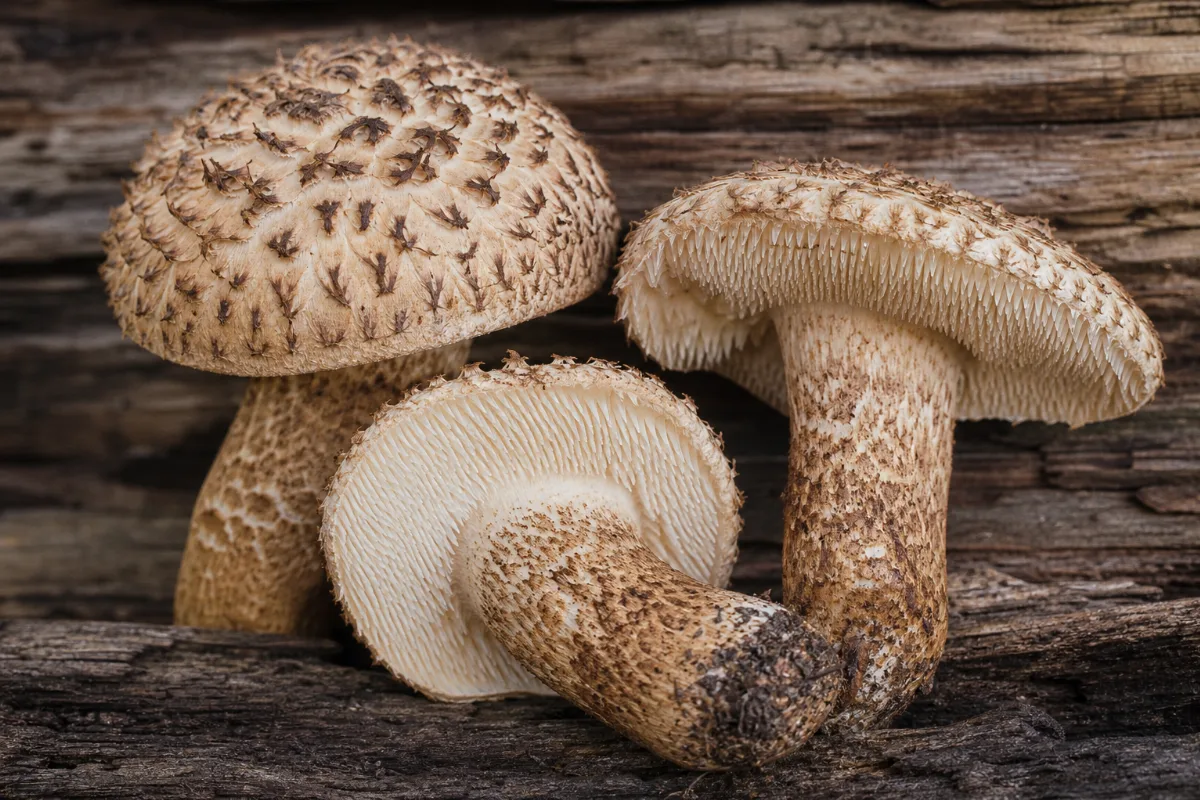
Mushrooms · Wild mushroom
Tiger sawgill
Lentinus tigrinus (Panus tigrinus) · also called Tiger sawgill; older name Panus tigrinus
Tiger sawgill is a tough, wood-growing mushroom described in papers as a gourmet and culinary-medicinal species. The research is lab and mouse work only: one mouse study lowered blood sugar and some extracts slowed germs in dishes. No human trial was found, so we do not know if it helps anyone. Never eat a wild mushroom on a guess; if one may have been eaten, call a poison centre.
General information, not medical advice. Last substantive update · Not medically reviewed. A named clinician has not signed off on this page. How this page is made
About Tiger sawgill
Tiger sawgill (Lentinus tigrinus, once called Panus tigrinus) is a wood-rotting fungus with leathery flesh and a strong aroma, described in papers as a gourmet mushroom. It is food first and a very thinly studied supplement. We found no human trial, only measured nutrition values and lab or mouse findings.
What it is
GBIF accepts Lentinus tigrinus (Bull.) Fr., a fungus in the family Polyporaceae, and lists Panus tigrinus as an old name, so papers under either name describe the same species. It is not a plant. It is not the tiger milk mushroom (a different fungus), and results from other mushrooms such as shiitake do not carry over.
As a food: what was measured
Two studies measured the nutrition of fruiting bodies. In the Philippines the cap held 25.9% protein and 142.1 kcal per 100 g, and the stalk was mostly carbohydrate, 63.0% of it dietary fibre. An Iranian strain held, per dry weight, 13.4% fibre and 74.84% total carbohydrate. The fibre figures differ a lot because the part, strain and method differ. Dry-weight percentages are not what a fresh serving holds.
What the research shows
Everything is lab or mouse work: a blood-sugar result in diabetic mice, germs slowed in dishes, antioxidant chemistry, a liver result with lab-made proteins in mice, cancer cell lines and a test-tube HIV enzyme result. Results often depend on the extract and strain; for example one study found an extract that acted on one bacterium and another found a different extract did not. Several studies used mycelium or purified parts, which are not the mushroom as eaten.
At a glance
Traditional uses history, not proof
- No specific traditional medicinal use was found in the sources read. Papers describe it as a culinary-medicinal and gourmet mushroom.
Studied for research
- Blood sugar, very-low (one mouse study)
- Bacteria and yeasts in dishes, insufficient (lab only)
- Antioxidant chemistry, insufficient (test tube only)
- Liver protection by lab-made proteins, very-low (mice)
- Cancer cell lines, insufficient (cell dishes only)
- HIV enzyme test, insufficient (test tube only)
Main compounds
- Phenols (antioxidant chemistry)
- Fungal immunomodulatory proteins Fip-lti1 and Fip-lti2
- A laccase enzyme (from mycelium broth)
- Mellein and related small molecules (from culture filtrate)
Common forms
- Described in papers as a food mushroom. The studies used lab extracts, purified proteins and mycelium broth, not products. No amounts are given or advised.
Research links: Poison Help (US) · Poison-centre guidance on poisonous mushrooms · Mouse safety and nutrition study (Iran, 2020) · Nutrition and blood-sugar mouse study (Philippines, 2014) · Research Library · Genes & Biomarkers Library
What it is and its history
- Accepted scientific name
- Lentinus tigrinus
- Naming authority
- (Bull.) Fr. (GBIF)
- Synonyms
- Panus tigrinus (Bull.) Singer (a synonym in GBIF; still used in some papers)
- Common names
- Tiger sawgill (English)
- Family or group
- Polyporaceae (a fungus family), not a plant
- Classification
- Fungi > Basidiomycota > Agaricomycetes > Polyporales > Polyporaceae > Lentinus > Lentinus tigrinus
- Native range
- Not checked beyond the papers read (Philippines, Iran, Turkey, India, China).
- Habitat
- A Turkish paper's introduction describes a wood-rotting fungus seen on fallen logs in the forest from May to September.
- What it looks like
- Fruiting body: Not described here on purpose: this page gives no identification help. One paper's introduction calls the flesh leathery with a strong aroma and taste.
- Look-alikes and adulterants
- Name: Other wild wood-growing mushrooms; Note: Poison centres say wild-mushroom poisonings follow wrong identification. We read no look-alike source for this species, so none is named and no identification detail is given.
- Sustainability and conservation
- Not checked.
Traditional use and history history, not clinical proof
| Tradition or era | Documented use | Source |
|---|---|---|
| Culinary use (as described in modern papers) | Papers call it a culinary-medicinal mushroom and a gourmet mushroom with leathery flesh. We found no pharmacopoeia, health-agency or ethnobotanical record of a specific traditional medical use. | p30515206 |
Traditional use shows how it was used. It does not show that it works or is safe today.
What is inside, and how it may work
What it contains and how those compounds act in cells and animals. Laboratory and animal mechanisms are not proven effects in people.
Main compounds
| Compound | Family | Where it is concentrated | Activity studied | Level of evidence |
|---|---|---|---|---|
| Total phenols | plant-type antioxidants, measured as a total | Fruiting body 4.16 mg GAE/g dry weight (Iranian strain); 5.83 mg GAE/g in an acetone extract | Antioxidant chemistry in tubes. 4 9 | Laboratory research |
| Fip-lti1 and Fip-lti2 | fungal immunomodulatory proteins | Identified in the mushroom; tested as lab-made proteins | Reduced liver injury markers in mice given concanavalin A. 3 | Animal research |
| Laccase (59 kDa) | enzyme | Mycelium culture broth | Inhibited HIV-1 reverse transcriptase in a tube (IC50 2.4 micromolar). 8 | Laboratory research |
| (R)-mellein and four derivatives | isocoumarin-type small molecules | Culture filtrate | Slowed plant-disease fungi and bacteria in dishes. 1 | Laboratory research |
| Dietary fibre and carbohydrate | nutrients | Fruiting body Stalk 63.0% fibre (Philippines); whole dry mushroom 13.4% fibre (Iran) | Nutrition values; not health effects. 2 4 | Measurement |
Mechanisms, receptors and pathways
| Target or pathway | Gene or receptor | What was found | Level |
|---|---|---|---|
| Nrf2 / NF-kB / NLRP3 / IL-1 beta signalling (liver, mice) | Nrf2, NF-kB p65, NLRP3 | The authors report that the two proteins raised Nrf2 activity and lowered NLRP3/NF-kB signalling in mice with concanavalin A liver injury. 3 | Animal research |
| HIV-1 reverse transcriptase (enzyme) | Not applicable | A purified laccase inhibited the enzyme in a tube. 8 | Laboratory research |
Absorption, metabolism and elimination
- Absorption
- Not found.
- Distribution
- Not found.
- Metabolism
- Not found.
- Elimination
- Not found.
- Bioavailability
- Not established.
Isolated compounds versus whole extracts
Most findings use solvent extracts, purified proteins or enzymes, mycelium broth or a nanoparticle mixture, not the cooked mushroom. Mycelium and fruiting body also differ in antioxidant chemistry. None of these results can be turned into an amount for people.
Nutritional composition
No USDA entry was checked for this mushroom. Two studies measured the nutrition of fruiting bodies: Philippines, cap 25.9% protein, 2.1% fat, 7.4% ash, 142.1 kcal per 100 g, stalk 67.7% carbohydrate of which 63.0% dietary fibre (basis not stated in the abstract); Iran, dry weight 7.53% ash, 4.23% lipid, 13.4% fibre, 74.84% total carbohydrate, with lysine the most abundant amino acid in the soluble protein and high uptake of potassium, phosphorus, sulfur and magnesium from the substrate. The fibre figures differ between studies because the part, strain and method differ. Dry-weight percentages are not what a fresh serving holds.
2 very low certainty4 not enough evidence
What was looked at
The 6 benefits and uses checked for Tiger sawgill, each with how strong the evidence is. Tap one to open it.
- Blood sugar (diabetic mice only)Very low certainty
- Bacteria and yeasts in the lab (dishes only)Not enough evidence
- Antioxidant chemistry (test tube only)Not enough evidence
- Liver protection by two lab-made proteins (mice)Very low certainty
- Cancer cell lines (cell dishes only)Not enough evidence
- HIV enzyme test (test tube only)Not enough evidence
Lab markers tracked in the studies
Blood glucose (diabetic mice)Bacterial growth inhibition (lab test)Liver enzymes AST and ALT (mice)Total antioxidant status and oxidative stress index (kit)
What is Tiger sawgill good for?
The uses researchers have looked at, and how strong the evidence is. All of it is lab or mouse work; none is a reason to take it for health.
Benefits, one by one
Each card is a research question, not a promise. Tap a goal to filter. Open a card to see the studies, doses and limits.
Blood sugar (diabetic mice only)
Very low certaintyIn one mouse study, a freeze-dried hot-water extract of tiger sawgill lowered blood sugar in diabetic mice. No human trial exists, so we do not know if it does anything in people.
1 studiesLaboratory extract given to mice; not a product. No amounts are given…
Studies, doses and limits
What the trials found
No human study was found.
Results
Philippine fruiting body, freeze-dried hot-water extract at 100 and 250 mg/kg in diabetic mice: glucose down 26.9% in the third week, similar to glibenclamide.
Effect sizes as reported
26.9% lower glucose at week 3 (mice).
Why this rating
One mouse study, read as an abstract. Mouse results often do not carry over to people.
Form and dose studied
Laboratory extract given to mice; not a product. No amounts are given or advised for people.
Who was studied
Diabetic mice
Limits
A single study; the abstract gives no sample size. Not repeated by anyone we found.
Why researchers looked
Researchers screen edible mushrooms for blood-sugar effects because some contain fibre and other compounds that act on sugar in the gut.
Traditional use
No traditional medicinal use was found in the sources read.
Proposed mechanism Animal study
The abstract does not explain how the extract lowered glucose. The authors compared it with the drug glibenclamide.
A proposed mechanism does not show that the effect happens in people.
Do not change any diabetes medicine because of a mouse result. Ask a doctor or pharmacist.
Bacteria and yeasts in the lab (dishes only)
Not enough evidenceExtracts of tiger sawgill slowed some bacteria and yeasts in dishes. Results depended on the extract and strain, and no animal or human infection was tested.
4 studiesSolvent extracts and a nanoparticle mixture made in laboratories; not…
Studies, doses and limits
What the trials found
No human or animal infection study was found.
Results
Acetone extract of an Iranian strain: stopped Bacillus cereus at 31.25 ug/mL but had no effect on E. coli or S. aureus at 10,000 ug/mL. Philippine ethanol extract: acted on S. aureus but not E. coli. Turkish extracts: more activity against three Candida yeasts than against bacteria. A silver-nanoparticle mixture made with the extract was more active against three bacteria than the nanoparticles alone.
Effect sizes as reported
Dish measurements only; no effect sizes in people.
Why this rating
Dish work only, with results that disagree between extracts and strains. Lab results of this kind very often fail to carry over to people.
Form and dose studied
Solvent extracts and a nanoparticle mixture made in laboratories; not products. No amounts are given or advised.
Who was studied
Bacterial and yeast cultures
Limits
Something that slows germs in a dish can also harm human cells. The S. aureus results disagree between studies.
Why researchers looked
Mushrooms are screened for new germ-fighting substances, and one study looked at a food-poisoning bacterium (Bacillus cereus).
Traditional use
No traditional medicinal use was found in the sources read.
Proposed mechanism Laboratory research
An acetone extract changed the shape of Bacillus cereus cells under the microscope. Which compounds did this is not known. These are lab findings.
A proposed mechanism does not show that the effect happens in people.
Not a treatment for infection. See a clinician for infections.
Antioxidant chemistry (test tube only)
Not enough evidenceTests in tubes show tiger sawgill extracts hold phenols and mop up free radicals. That is chemistry, not a health effect.
3 studiesLaboratory extracts; not products. No amounts are given or advised.
Studies, doses and limits
What the trials found
No human study was found.
Results
Turkish extracts: total antioxidant status 1.748, oxidative stress index 1.106 (kit units). Across 16 mushrooms including this one, fruiting bodies scavenged radicals better than cultured mycelia. Iranian fruiting body: 4.16 mg GAE/g total phenol (dry weight).
Effect sizes as reported
Chemistry scores only.
Why this rating
Cell-free chemistry. These scores do not show an effect in the body.
Form and dose studied
Laboratory extracts; not products. No amounts are given or advised.
Who was studied
Test-tube assays
Limits
The 16-mushroom abstract does not give the L. tigrinus fruiting-body figures.
Why researchers looked
Antioxidant scores are cheap to measure, so they are reported for many mushrooms.
Traditional use
No traditional medicinal use was found in the sources read.
Proposed mechanism Laboratory research
Phenols and other compounds react with test chemicals. Whether this matters inside the body is not shown.
A proposed mechanism does not show that the effect happens in people.
None specific.
Liver protection by two lab-made proteins (mice)
Very low certaintyTwo immune-active proteins identified in tiger sawgill reduced liver damage in mice that had been given a liver-injuring chemical. This tested purified proteins, not the mushroom you would eat.
1 studiesPurified proteins made in the lab; not the mushroom and not a product…
Studies, doses and limits
What the trials found
No human study was found.
Results
Fip-lti1 and Fip-lti2 given before concanavalin A: lower AST and ALT, better liver tissue, lower TNF-alpha, IL-1 beta and IL-6.
Effect sizes as reported
Not given in the abstract.
Why this rating
One mouse study of purified proteins; the injury was artificial.
Form and dose studied
Purified proteins made in the lab; not the mushroom and not a product. No amounts are given or advised.
Who was studied
Mice with concanavalin A liver injury
Limits
Does not show that eating the mushroom protects the liver.
Why researchers looked
Fungal immunomodulatory proteins are studied for calming inflammation.
Traditional use
No traditional medicinal use was found in the sources read.
Proposed mechanism Animal study
The authors report raised Nrf2 activity and lower NF-kB/NLRP3 signalling in the mice. This is animal work.
A proposed mechanism does not show that the effect happens in people.
People with liver disease should ask a doctor before using any mushroom product.
Cancer cell lines (cell dishes only)
Not enough evidenceAn extract killed about 70% of two cancer cell lines in dishes at a high level. It was selective for only one of them. This is not a cancer treatment.
2 studiesLaboratory extracts; not products. No amounts are given or advised.
Studies, doses and limits
What the trials found
No animal-tumour or human study was found.
Results
Iranian strain extract at 250 ug/mL: 70% of PC3 and MCF-7 cancer cells killed; normal human and mouse cells were unaffected; selective only against MCF-7. A second study tested L. tigrinus on liver cancer (HepG2) cells, but the abstract reports its strongest cell-killing for a different mushroom and gives no L. tigrinus figure.
Effect sizes as reported
70% kill at 250 ug/mL (cells).
Why this rating
Cell-dish work only.
Form and dose studied
Laboratory extracts; not products. No amounts are given or advised.
Who was studied
Human cancer cell lines (PC3, MCF-7, HepG2) and normal cells
Limits
Cells in a dish are not a person with cancer. Killing cells in a dish rarely turns into a treatment.
Why researchers looked
Mushroom extracts are often screened on cancer cells.
Traditional use
No traditional medicinal use was found in the sources read.
Proposed mechanism Laboratory research
Not described in the abstracts read.
A proposed mechanism does not show that the effect happens in people.
Do not use a mushroom in place of cancer care.
HIV enzyme test (test tube only)
Not enough evidenceA purified enzyme from the liquid in which tiger sawgill mycelium was grown blocked an HIV enzyme in a tube. This is not an HIV treatment.
1 studiesA purified enzyme from a lab culture; not a product. No amounts are g…
Studies, doses and limits
What the trials found
No human or animal study was found.
Results
Laccase purified from mycelium culture broth: IC50 2.4 micromolar against the enzyme.
Effect sizes as reported
IC50 2.4 micromolar (enzyme).
Why this rating
An enzyme assay only.
Form and dose studied
A purified enzyme from a lab culture; not a product. No amounts are given or advised.
Who was studied
Enzyme assay
Limits
No test on virus in cells, animals or people.
Why researchers looked
Mushroom enzymes and proteins are screened against a viral enzyme, reverse transcriptase.
Traditional use
No traditional medicinal use was found in the sources read.
Proposed mechanism Laboratory research
A 59 kDa laccase inhibited HIV-1 reverse transcriptase in a test-tube assay (IC50 2.4 micromolar).
A proposed mechanism does not show that the effect happens in people.
Not a treatment for HIV. People with HIV should not use mushrooms in place of prescribed medicines.
Connections to the rest of health
How Tiger sawgill connects to the rest of our health knowledge graph. Every link says what kind of connection it is. A safety link (for example to the liver) is a warning, not a benefit. A study that merely mentions a topic never creates a benefit link.
Explore every connection: goals, body systems, organs, symptoms, genes
B. Body systems
| Connected to | Kind of connection | Evidence status | Context | Studies |
|---|---|---|---|---|
| Endocrine System | Preliminary mechanism | Very low certainty | Lowered glucose in diabetic mice in one study. Preparation or compound: Hot-water extract (mice) |
2 |
I. Biomarkers
| Connected to | Kind of connection | Evidence status | Context | Studies |
|---|---|---|---|---|
| Blood glucose (diabetic mice) | Biological association | Very low certainty | Measured in trials: lowered. A lab change is not the same as a health benefit. | 2 |
| Bacterial growth inhibition (lab test) | Biological association | Not enough evidence | Measured in trials: raised. A lab change is not the same as a health benefit. | 9 |
| Liver enzymes AST and ALT (mice) | Biological association | Very low certainty | Measured in trials: lowered. A lab change is not the same as a health benefit. | 3 |
| Total antioxidant status and oxidative stress index (kit) | Biological association | Not enough evidence | Measured in trials: raised. A lab change is not the same as a health benefit. | 7 |
J. Genes, receptors and enzymes
| Connected to | Kind of connection | Evidence status | Context | Studies |
|---|---|---|---|---|
| Nrf2 | Preliminary mechanism | Animal | Raised in mouse liver by the Fip-lti proteins. | 3 |
L. Active compounds
| Connected to | Kind of connection | Evidence status | Context | Studies |
|---|---|---|---|---|
| Total phenols | Biological association | In vitro | Antioxidant chemistry in tubes. Preparation or compound: Fruiting body |
4 9 |
| Fip-lti1 and Fip-lti2 | Biological association | Animal | Reduced liver injury markers in mice given concanavalin A. Preparation or compound: Identified in the mushroom; tested as lab-made proteins |
3 |
| Laccase (59 kDa) | Biological association | In vitro | Inhibited HIV-1 reverse transcriptase in a tube (IC50 2.4 micromolar). Preparation or compound: Mycelium culture broth |
8 |
| (R)-mellein and four derivatives | Biological association | In vitro | Slowed plant-disease fungi and bacteria in dishes. Preparation or compound: Culture filtrate |
1 |
| Dietary fibre and carbohydrate | Biological association | Measurement | Nutrition values; not health effects. Preparation or compound: Fruiting body |
2 4 |
Each connection is stored with the ingredient, the connected record, the kind of connection, the evidence status, the supporting studies, the preparation or compound involved, and a review date (last reviewed October 25, 2026).
Evidence at a glance: what changed in 4 lab markers
Tap a number to show only those markers. Counts are markers, not people.
The evidence
The research centre for Tiger sawgill. Every record here was checked against PubMed or the publisher's page; we never list a study we have not verified.
Evidence by outcome
Bars show how many studies we found for each outcome, not how well it works. People are added up across trials only (reviews are not added, to avoid double counting).
How we rate evidence
High certainty
Several well-run trials or reviews agree; further research is unlikely to change the picture much.
Moderate certainty
Good trials point the same way, but some doubt remains.
Low certainty
Small, short or inconsistent trials. The finding could change with better research.
Very low certainty
Very little or very weak human data. Treat as a possibility only.
Mixed findings
Trials or reviews disagree with each other.
Not enough evidence
Not enough human research to say either way.
Evidence against
Good research found no benefit, or found harm.
We take the reviewers' own risk-of-bias and GRADE statements where they exist, and otherwise judge from study size, design, consistency, directness and whether a product matches what is sold. Many publications do not make evidence high. Method note: We read PubMed records and abstracts for 10 papers (mostly lab studies and 3 mouse studies; the Turkish paper's introduction and methods were also read), two poison-centre pages, and checked the names in GBIF. Index Fungorum, regulators and LiverTox were not searched in depth. Certainty ratings are the compiler's own reading.
Study library: every study we checked 13
| Study | Design | People | Product, dose, length | Result |
|---|---|---|---|---|
| Cabutaje 2025 Mellein and its derivatives isolated from the basidiomycete mushroom Lentinus tigrinus exhibit inhibitory activity against plant pathogenic microorganisms. Journal of Applied Microbiology · PMID 41183482 · DOI |
Laboratory research in-vitro |
Four plant-disease fungi and four plant-disease bacteria in dishes; rice blast in plants | Five compounds ((R)-mellein and four derivatives) from culture filtrate culture filtrate Not shown here |
Five compounds were isolated and tested. One slowed spore germination of the rice blast fungus (IC50 30.2 micromolar) and another suppressed rice blast lesions in plants; all were more effective against fungi than bacteria. Plant-pathogen effects Methods, limits and fundingOutcomes: Growth of plant pathogens Limitations: Agricultural research on plant diseases; says nothing about human health. Funding and conflicts: Not stated in the abstract Read: abstract |
| Dulay 2014 Proximate composition and functionality of the culinary-medicinal tiger sawgill mushroom, Lentinus tigrinus (higher Basidiomycetes), from the Philippines. International Journal of Medicinal Mushrooms · PMID 24940907 · DOI |
Animal study mouse |
Fruiting body from the Philippines; ICR mice (one-dose safety test; diabetic mice for blood sugar); bacteria in dishes | Freeze-dried hot-water extract (blood sugar); ethanol extract (germs); fruiting body (nutrition) fruiting body Not shown here |
Cap held 25.9% protein, 2.1% fat, 7.4% ash and 142.1 kcal per 100 g; stalk held 67.7% carbohydrate (63.0% dietary fibre). A single oral dose in mice was found toxicologically safe. A freeze-dried hot-water extract at 100 and 250 mg/kg lowered glucose by 26.9% in the third week in diabetic mice, comparable to glibenclamide. Ethanol extract acted on Staphylococcus aureus but not Escherichia coli in dishes. Glucose down 26.9% (third week, diabetic mice) Methods, limits and fundingOutcomes: Nutrition; one-dose oral safety in mice; blood glucose in diabetic mice; germ growth in dishes Limitations: Mice and dishes only. The abstract does not say whether nutrition percentages are dry weight. One-dose safety test, not a long-term test. Funding and conflicts: Not stated in the abstract (research-support grant listed) Read: abstract |
| Gao 2019 Protective Function of Novel Fungal Immunomodulatory Proteins Fip-lti1 and Fip-lti2 from Lentinus tigrinus in Concanavalin A-Induced Liver Oxidative Injury. Oxidative Medicine and Cellular Longevity · PMID 31198490 · DOI |
Animal study mouse |
Mice given concanavalin A to injure the liver | Two lab-made fungal immunomodulatory proteins (Fip-lti1, Fip-lti2) identified in the mushroom purified proteins Not shown here |
Both proteins protected the livers from concanavalin A-induced damage: lower AST and ALT, better liver tissue, and lower TNF-alpha, IL-1 beta, IL-6 and oxidative-stress markers. The abstract gives the mechanism as the Nrf2/NF-kB/NLRP3/IL-1 beta pathway. Lower liver-injury markers in mice Methods, limits and fundingOutcomes: Liver enzymes, liver tissue, inflammation markers Limitations: Purified proteins, not the mushroom as eaten. Mice with an artificial liver injury. Funding and conflicts: Not stated in the abstract Read: abstract |
| Pourianfar 2020 Toxicity and Nutritional Assessment of Extracts of Medicinal Tiger Sawgill Mushroom, Lentinus tigrinus (Agaricomycetes), a Newly Domesticated in Iran. International Journal of Medicinal Mushrooms · PMID 33426839 · DOI |
Animal study mouse |
Cultivated Iranian native strain; normal human and mouse cells; two cancer cell lines (PC3, MCF-7); mice | Extract (not described further in the abstract); dried whole fruiting body for nutrition fruiting body Not shown here |
Dry weight: 7.53% ash, 4.23% lipid, 13.4% fibre, 74.84% total carbohydrate, 4.16 mg GAE/g total phenol. Neither substrate nor mushroom held toxic elements beyond FAO/WHO standards. Normal human and mouse cells were not affected up to 250 ug/mL, while 70% of PC3 and MCF-7 cancer cells were killed; selective against MCF-7 only. The extract did not affect mice given it by mouth or into the abdomen; injection into a vein caused some deaths (LD50 47.19 mg/mL, as printed). IV injection LD50 47.19 mg/mL (as printed) Methods, limits and fundingOutcomes: Nutrition, elements, cell toxicity, mouse toxicity Limitations: Cells and mice. The abstract calls earlier safety information limited and controversial. Intravenous injection is not how anyone eats a mushroom. The authors conclude it is "much less likely to have detrimental effects on humans at low serving levels", which is their opinion, not a human finding. Funding and conflicts: Not stated in the abstract Read: abstract |
| Prasad 2015 Antioxidant Capacity and Total Phenolics Content of the Fruiting Bodies and Submerged Cultured Mycelia of Sixteen Higher Basidiomycetes Mushrooms from India. International Journal of Medicinal Mushrooms · PMID 26756185 · DOI |
Laboratory research in-vitro |
16 16 mushroom species including Lentinus tigrinus |
Methanol-water extracts of freeze-dried fruiting bodies and cultured mycelia fruiting body and mycelium Not shown here |
Across all 16 species the fruiting bodies scavenged radicals better than the cultured mycelia (EC50 0.56-1.24 vs 2.51-8.39 mg/mL). L. tigrinus mycelium was one of five with the highest phenols in mycelia (11.00 mg GAE/g) and a low EC50 (2.51 mg/mL). Figures for L. tigrinus fruiting bodies are not given in the abstract. Mycelium: 11.00 mg GAE/g; EC50 2.51 mg/mL Methods, limits and fundingOutcomes: Radical scavenging (DPPH), total phenols Limitations: Chemistry in a tube. Not specific to this species in the abstract. Funding and conflicts: Not stated in the abstract Read: abstract |
| Sadi 2015 Cytotoxicity of some edible mushrooms extracts over liver hepatocellular carcinoma cells in conjunction with their antioxidant and antibacterial properties. Pharmacognosy Magazine · PMID 26109775 · DOI |
Laboratory research in-vitro |
4 Four edible mushrooms including Lentinus tigrinus; HepG2 liver cancer cells; bacteria |
Water, methanol, acetone, n-hexane and chloroform extracts fruiting body Not shown here |
The strongest cell-killing came from another mushroom (Coprinus comatus). For L. tigrinus the abstract reports only that its n-hexane extract had the highest flavonoid content (3.67 ug/mg) and was among the most active against the bacteria tested; no cell-killing figure for L. tigrinus is given. No L. tigrinus cell figure in abstract Methods, limits and fundingOutcomes: Cell growth, antioxidant and antibacterial tests Limitations: Dishes only; the L. tigrinus-specific cancer-cell result was not stated in the abstract. Funding and conflicts: Conflict of interest: none declared Read: abstract |
| Sevindik 2018 Investigation of Antioxidant/Oxidant Status and Antimicrobial Activities of Lentinus tigrinus. Advances in Pharmacological Sciences · PMID 30515206 · DOI |
Laboratory research in-vitro |
Mushrooms collected in Gaziantep, Turkey; 5 samples in 5 replicates; 9 bacterial and fungal strains | Ethanol, methanol and dichloromethane extracts of dried, ground fruiting body fruiting body Not shown here |
TAS 1.748, TOS 19.294, OSI 1.106 (kit units). Extracts generally acted more on three Candida yeasts than on bacteria. Kit scores; yeast growth slowed in dishes Methods, limits and fundingOutcomes: Total antioxidant status, total oxidant status, oxidative stress index; germ growth Limitations: Chemistry kits and dishes only. Scores are not health effects. Introduction (read in full text) describes the mushroom as a wood-rotting fungus with leathery flesh and a strong aroma, used in gourmet cooking, citing other papers. Funding and conflicts: Not stated in the abstract Read: abstract + introduction/methods |
| Xu 2012 A laccase with HIV-1 reverse transcriptase inhibitory activity from the broth of mycelial culture of the mushroom Lentinus tigrinus. Journal of Biomedicine and Biotechnology · PMID 22536022 · DOI |
Laboratory research in-vitro |
Enzyme assay in a tube | A 59 kDa laccase purified from the liquid broth of a mycelial culture mycelium culture broth Not shown here |
The purified laccase inhibited HIV-1 reverse transcriptase with an IC50 of 2.4 micromolar. IC50 2.4 micromolar (enzyme) Methods, limits and fundingOutcomes: Inhibition of HIV-1 reverse transcriptase (an enzyme) Limitations: A test-tube enzyme assay with a purified enzyme from a culture broth. No virus-in-cells, animal or human data. Funding and conflicts: Not stated in the abstract Read: abstract |
| Yazdi 2023 Antibacterial Activity of Culinary-Medicinal Polypore Mushroom Lentinus tigrinus (Agaricomycetes). International Journal of Medicinal Mushrooms · PMID 37522530 · DOI |
Laboratory research in-vitro |
Fruiting bodies of an authenticated Iranian native strain; bacteria in dishes | Acetone, methanol-ethyl acetate and hot-water extracts fruiting body Not shown here |
Acetone extract stopped Bacillus cereus growth at concentrations as low as 31.25 ug/mL, but had no effect on E. coli or S. aureus even at 10,000 ug/mL. Other extracts were weaker. Total phenols in the acetone extract were 5.83 mg GAE/g (dry weight). B. cereus inhibited at 31.25 ug/mL; no effect on 2 other bacteria Methods, limits and fundingOutcomes: Growth of Bacillus cereus, E. coli and S. aureus Limitations: Dishes only. The S. aureus result differs from the Philippine ethanol-extract result, so extract type and strain matter. Funding and conflicts: Not stated in the abstract Read: abstract |
| Yazdi 2026 Strong Synergistic Antibacterial Effects of Biosynthesized Silver Nanoparticles and Extracts of the Mushroom Lentinus tigrinus. Indian Journal of Microbiology · PMID 41710242 · DOI |
Laboratory research in-vitro |
Bacteria in dishes | Silver nanoparticles made with a hot-water extract, combined with the acetone extract fruiting body Not shown here |
The nanoparticles alone were active only against Pseudomonas aeruginosa at under 1000 ug/mL. Combined with the acetone extract, the lowest effective concentration fell to 31.25 ug/mL; inhibition of E. coli, S. aureus and B. cereus at 500 ug/mL rose by 306%, 380% and 900% against the nanoparticles alone. Combination effect in dishes Methods, limits and fundingOutcomes: Antibacterial effect of silver nanoparticles with and without mushroom acetone extract Limitations: A silver-nanoparticle product made in a lab, not the mushroom as eaten. Dishes only. Funding and conflicts: Not stated in the abstract Read: abstract |
| n/a 2026 University of Kansas Health System Poison Control Center: Poisonous mushrooms kansaspoisoncenter.com · Source |
Regulator guidance n/a |
n/a | n/a Not shown here |
Says even very experienced gatherers can find it hard to tell whether a mushroom is safe to eat; symptoms may not appear for days; cooking, canning, pickling, freezing and drying do not remove toxins from poisonous mushrooms; if someone eats a wild mushroom, call immediately and save a piece if possible. It does not mention tiger sawgill. Methods, limits and fundingOutcomes: n/a Limitations: General advice only. Funding and conflicts: n/a Read: page read 2026-10-25 |
| n/a 2026 Poison Help (America's Poison Centers) poisonhelp.org · Source |
Regulator guidance n/a |
n/a | n/a Not shown here |
Gives the free US emergency line 1-800-222-1222 for poisonings. A general page; it does not mention tiger sawgill. Methods, limits and fundingOutcomes: n/a Limitations: General advice only. Funding and conflicts: n/a Read: page loaded (HTTP 200) 2026-10-25 |
| n/a 2026 GBIF Backbone Taxonomy: Lentinus tigrinus GBIF · Source |
Taxonomy record n/a |
n/a | Lentinus tigrinus (Bull.) Fr. fruiting body Not shown here |
GBIF accepts Lentinus tigrinus (Bull.) Fr. (key 9154166), family Polyporaceae, order Polyporales, class Agaricomycetes, phylum Basidiomycota. GBIF lists Panus tigrinus (Bull.) Singer (key 5246175) as a synonym. A search for Neolentinus tigrinus returned only the genus Neolentinus (family Gloeophyllaceae), so that name is not a species record in GBIF. Methods, limits and fundingOutcomes: n/a Limitations: GBIF is a database, not a mycology authority. Index Fungorum was not checked. Funding and conflicts: Not a funded study; GBIF Read: full record via API |
What we do not know yet
- No human trial, case report or allergy report for tiger sawgill.
- No repeat of the mouse blood-sugar result.
- No long-term toxicity study, and no data on medicines, pregnancy, breastfeeding or children.
- No open measured values for beta-glucan, ergothioneine, vitamin D or lovastatin.
How new research is added
New studies are found by a saved PubMed search and placed in a review queue. A person reads each one before it changes any evidence rating or safety wording.
Lab markers
What changed in blood or saliva tests during trials. A changed number is not the same as feeling or being healthier, and we give no "normal ranges".
Other 4
Blood glucose (diabetic mice)
Lowered in trials
The amount of sugar in the blood.
Very low certaintyResults and what it means
Why it was measured
To see whether an extract changes blood sugar in an animal model of diabetes.
Statistical vs. clinical meaning
A mouse measurement.
Safety implication
Does not show an effect in people. Do not change diabetes medicines on this basis.
| Study | Result | People | Product |
|---|---|---|---|
| 2 | Glucose was 26.9% lower in the third week with freeze-dried hot-water extract at 100 and 250 mg/kg, comparable to glibenclamide. | Diabetic mice | Hot-water extract of the Philippine fruiting body |
Bacterial growth inhibition (lab test)
Raised in trials
A lab measure of how much a substance slows the growth of bacteria in a dish.
Not enough evidenceResults and what it means
Why it was measured
A first screen for substances that might become antibiotics.
Statistical vs. clinical meaning
A dish measurement.
Safety implication
Does not show an antibacterial effect in a person.
| Study | Result | People | Product |
|---|---|---|---|
| 9 | Acetone extract inhibited Bacillus cereus at concentrations as low as 31.25 ug/mL; no effect on E. coli or S. aureus at 10,000 ug/mL. | Bacteria in dishes | Acetone extract of the fruiting body |
Liver enzymes AST and ALT (mice)
Lowered in trials
Blood enzymes that rise when liver cells are damaged.
Very low certaintyResults and what it means
Why it was measured
To see whether a substance reduces liver injury in an animal model.
Statistical vs. clinical meaning
A mouse measurement of an artificial injury.
Safety implication
Does not show liver protection in people.
| Study | Result | People | Product |
|---|---|---|---|
| 3 | Both proteins lowered AST and ALT in mice given concanavalin A; numbers are not given in the abstract. | Mice with concanavalin A liver injury | Purified Fip-lti1 or Fip-lti2 |
Total antioxidant status and oxidative stress index (kit)
Raised in trials
Chemistry-kit scores of how well an extract resists oxidation.
Not enough evidenceResults and what it means
Why it was measured
A quick screen of antioxidant chemistry.
Statistical vs. clinical meaning
A test-tube score.
Safety implication
Not a health outcome.
| Study | Result | People | Product |
|---|---|---|---|
| 7 | TAS 1.748, TOS 19.294, OSI 1.106 (kit units). | Extracts of dried mushroom from 5 samples | Ethanol, methanol and dichloromethane extracts |
Safety
What studies and official sources say about side effects, medicines and who should check first. Each point shows what kind of evidence it comes from.
Main points to know 3
- No human safety data. We found no human trial, case report, poisoning report or allergy report for tiger sawgill in PubMed. That is absence of evidence, not proof of safety. The Iranian authors describe earlier safety information on the species as limited and controversial. Gap 4
- Mouse studies: no harm by mouth, deaths by vein. In the Philippine study, a single oral dose in mice was found toxicologically safe. In the Iranian study, an extract did not affect mice given it by mouth or into the abdomen, but injection into a vein caused some deaths (LD50 47.19 mg/mL, as printed). Nobody eats a mushroom by vein, so this mainly shows that a concentrated extract is not harmless at very high exposure. It cannot be turned into a human amount. Animal study 2 4
- Wild mushrooms: do not eat on a guess. Poison centres say even very experienced gatherers can find it hard to tell safe from poisonous mushrooms, that symptoms can take days, and that cooking, canning, pickling, freezing and drying do not remove the toxins of poisonous mushrooms. If a wild mushroom may have been eaten, call a poison centre now and keep a piece if you can. This page gives no help to identify mushrooms. Poison centre guidance 11 12
Side effects 2
| Effect | How often | Severity and recovery | Evidence |
|---|---|---|---|
| Allergy or food intolerance Allergy to other mushrooms is documented, so a reaction cannot be ruled out. | No report for this species was found. | unknown Not described. | Gap |
| Deaths in mice after injection into a vein A route and concentration unrelated to eating the mushroom. | Some mortality; LD50 47.19 mg/mL as printed. | severe (mice) Not applicable. | Animal study 4 |
Liver
No liver injury report for tiger sawgill was found. The mouse liver study tested purified proteins in an artificially injured liver and found less damage, not more. LiverTox was not searched for this species. 3
How often. No data.
Monitoring. No monitoring advice was read.
This is a safety connection. It is not evidence that Tiger sawgill supports liver health.
Medicines and supplements 3
| With | Why it matters | Importance | Evidence | What to do |
|---|---|---|---|---|
| Diabetes medicines prescription | A mouse extract lowered blood glucose; any effect in people is unknown. | Theoretical only. | Theoretical Not enough evidence 2 | Do not change any diabetes medicine because of this research. Ask a doctor or pharmacist. |
| Blood thinners and immune-suppressing medicines prescription | Not studied for this species. | No interaction data were found. | Gap Not enough evidence | Silence in the research is not a sign of safety. Ask a doctor or pharmacist before using any mushroom product. |
| Alcohol and herbal supplements substance | Not studied | No data found. | Gap Not enough evidence | Ask a doctor or pharmacist. |
Who should check first 3
| Situation | Advice | Evidence |
|---|---|---|
| Pregnancy and breastfeeding | No data were found. Ask a doctor or midwife. | Gap |
| Children, older people, people with liver, kidney or immune disease | No data were found. Ask a doctor before using any mushroom product. | Gap |
| Anyone unsure what a wild mushroom is | Do not eat wild mushrooms you cannot have identified in person by an expert. Photos, apps and text are not enough. | Poison centre guidance 11 |
Overdose, product quality and regulators
Summary. The only toxicity data are two mouse studies and one cell study. By mouth or into the abdomen, no effect in mice; into a vein, some deaths. Normal human and mouse cells were not affected up to 250 ug/mL.
Animal. Philippine study: one oral dose in mice, found toxicologically safe. Iranian study: no effect by mouth or into the abdomen; some deaths by vein (LD50 47.19 mg/mL, as printed).
Human doses studied. No dose studies in people. No amounts are given or advised.
High dose or long term signals. Long-term toxicity was not studied.
Overdose response. Not described. If a wild mushroom may have been eaten and you are unwell, call a poison centre or emergency number.
Genotoxicity. Not read.
Toxic or hazardous parts. Fungus: fruiting body. No toxic part was identified in the sources read.
In the Iranian study, neither the growing substrate nor the cultivated mushroom held toxic elements beyond joint FAO/WHO standards (no numbers in the abstract). Wild mushrooms can take up metals and other pollutants from where they grow, and several paper titles in the search describe this fungus being tested for breaking down pollutants (titles only; not read), which is a reason to doubt any wild specimen from polluted ground.
Metals in one cultivated strain. No toxic elements beyond FAO/WHO standards in the substrate or the mushroom (one strain, one substrate). 4
Wild mushrooms in general. Poison-centre guidance says only mushrooms bought at a shop should be eaten, and that cooking does not remove toxins from poisonous mushrooms. 11
Fruiting body versus mycelium. Some studies used mycelium grown in liquid or the broth around it, which is a different material from the fruiting body. No supplement product of this species was found, so no product testing was read. 8 5
| Body | Action | Date |
|---|---|---|
| America's Poison Centers (Poison Help) (United States) | Gives the free emergency line 1-800-222-1222 for poisonings. A general page; it does not name tiger sawgill. source | 2026-10-25 |
| University of Kansas Health System Poison Control Center (United States) | Advises calling immediately after any wild mushroom is eaten, saving a piece, and not waiting for symptoms. Does not name tiger sawgill. source | 2026-10-25 |
When to get medical help
- Any wild mushroom that may have been eaten: call a poison centre now (US 1-800-222-1222) or your local poison centre or emergency number, even if the person feels fine
- Collapse, a seizure, trouble breathing, swelling of the face or throat, or cannot be woken: call 911 or your emergency number
- Hives, itching or wheeze after eating any mushroom
- Vomiting or diarrhoea that does not stop, or signs of dehydration
- Children and pets: treat any possible taste of a wild mushroom as an emergency call
If someone may be poisoned or in a crisis, contact a clinician or emergency service straight away. In the US, Poison Control is 1-800-222-1222.
General information only, not medical advice. Ask a clinician or pharmacist before use, especially with medicines, in pregnancy or with a health condition. See the Natural Remedy Safety guide.
Frequently asked questions
What is tiger sawgill?
Is tiger sawgill good for you?
Is it safe?
Does it lower blood sugar?
Only in diabetic mice given a hot-water extract in one study. No human result exists. Do not change diabetes medicine because of it.
Does it fight cancer?
Does it fight infections?
Can it treat HIV?
No. A purified enzyme from mycelium broth blocked an HIV enzyme in a test tube. That is not a treatment.
Is it the same as Panus tigrinus?
Yes. GBIF lists Panus tigrinus as an old name for Lentinus tigrinus.
Is it the same as tiger milk mushroom?
No. Tiger milk mushroom is a different fungus, so results do not transfer.
Can allergy happen?
We found no allergy report for this species. Allergy to other mushrooms is documented, so a reaction cannot be ruled out.
Can I pick it in the wild?
Explore by health goal
Editorial transparency
- Written by
- AlternativeMed editorial team. Research compiled with AI assistance, then checked against PubMed records.
- Medical review
- None. This page has not been reviewed by a physician or pharmacist.
- First published
- 2026-10-25
- Last substantive update
- 2026-10-25
- How we research
- We read PubMed records and abstracts for 10 papers (mostly lab studies and 3 mouse studies; the Turkish paper's introduction and methods were also read), two poison-centre pages, and checked the names in GBIF. Index Fungorum, regulators and LiverTox were not searched in depth. Certainty ratings are the compiler's own reading.
- How we rate evidence
- See "How we rate evidence" in the Evidence tab.
- Independence
- No product is promoted on this page. No affiliate links are shown.
Sources 13
Each source was opened and checked. Where we read only the abstract, it says so. The small numbers in the text point here.
- Cabutaje EM, Bungihan ME, De Leon AM, Pecundo MH, Osaki-Oka K, Kido K, Kodama M, Arie T, Ueno K, Dela Cruz TEE, Ishihara A. Mellein and its derivatives isolated from the basidiomycete mushroom Lentinus tigrinus exhibit inhibitory activity against plant pathogenic microorganisms.. Journal of Applied Microbiology. 2025. PMID 41183482. DOI 10.1093/jambio/lxaf270. (abstract)
- Dulay RM, Arenas MC, Kalaw SP, Reyes RG, Cabrera EC. Proximate composition and functionality of the culinary-medicinal tiger sawgill mushroom, Lentinus tigrinus (higher Basidiomycetes), from the Philippines.. International Journal of Medicinal Mushrooms. 2014. PMID 24940907. DOI 10.1615/intjmedmushr.v16.i1.80. (abstract)
- Gao Y, Wang Y, Wang Y, Wu Y, Chen H, Yang R, Bao D. Protective Function of Novel Fungal Immunomodulatory Proteins Fip-lti1 and Fip-lti2 from Lentinus tigrinus in Concanavalin A-Induced Liver Oxidative Injury.. Oxidative Medicine and Cellular Longevity. 2019. PMID 31198490. DOI 10.1155/2019/3139689. (abstract)
- Pourianfar HR, Mohammadnejad S, Shahtahmasebi S, Ansari AM, Zibaei S, Ghadirian R, Rezaeian S, Dowom SA. Toxicity and Nutritional Assessment of Extracts of Medicinal Tiger Sawgill Mushroom, Lentinus tigrinus (Agaricomycetes), a Newly Domesticated in Iran.. International Journal of Medicinal Mushrooms. 2020. PMID 33426839. DOI 10.1615/IntJMedMushrooms.2020036681. (abstract)
- Prasad R, Varshney VK, Harsh NS, Kumar M. Antioxidant Capacity and Total Phenolics Content of the Fruiting Bodies and Submerged Cultured Mycelia of Sixteen Higher Basidiomycetes Mushrooms from India.. International Journal of Medicinal Mushrooms. 2015. PMID 26756185. DOI 10.1615/intjmedmushrooms.v17.i10.30. (abstract)
- Sadi G, Emsen B, Kaya A, Kocabas A, Cinar S, Kartal DI. Cytotoxicity of some edible mushrooms extracts over liver hepatocellular carcinoma cells in conjunction with their antioxidant and antibacterial properties.. Pharmacognosy Magazine. 2015. PMID 26109775. DOI 10.4103/0973-1296.157665. (abstract)
- Sevindik M. Investigation of Antioxidant/Oxidant Status and Antimicrobial Activities of Lentinus tigrinus.. Advances in Pharmacological Sciences. 2018. PMID 30515206. DOI 10.1155/2018/1718025. (abstract + introduction/methods)
- Xu L, Wang H, Ng T. A laccase with HIV-1 reverse transcriptase inhibitory activity from the broth of mycelial culture of the mushroom Lentinus tigrinus.. Journal of Biomedicine and Biotechnology. 2012. PMID 22536022. DOI 10.1155/2012/536725. (abstract)
- Yazdi Y, Rezaei MR, Pourianfar HR. Antibacterial Activity of Culinary-Medicinal Polypore Mushroom Lentinus tigrinus (Agaricomycetes).. International Journal of Medicinal Mushrooms. 2023. PMID 37522530. DOI 10.1615/IntJMedMushrooms.2023048172. (abstract)
- Yazdi Y, Rezaei MR, Pourianfar HR. Strong Synergistic Antibacterial Effects of Biosynthesized Silver Nanoparticles and Extracts of the Mushroom Lentinus tigrinus.. Indian Journal of Microbiology. 2026. PMID 41710242. DOI 10.1007/s12088-025-01481-0. (abstract)
- n/a. University of Kansas Health System Poison Control Center: Poisonous mushrooms. kansaspoisoncenter.com. 2026. (page read 2026-10-25)
- n/a. Poison Help (America's Poison Centers). poisonhelp.org. 2026. (page loaded (HTTP 200) 2026-10-25)
- n/a. GBIF Backbone Taxonomy: Lentinus tigrinus. GBIF. 2026. (full record via API)


