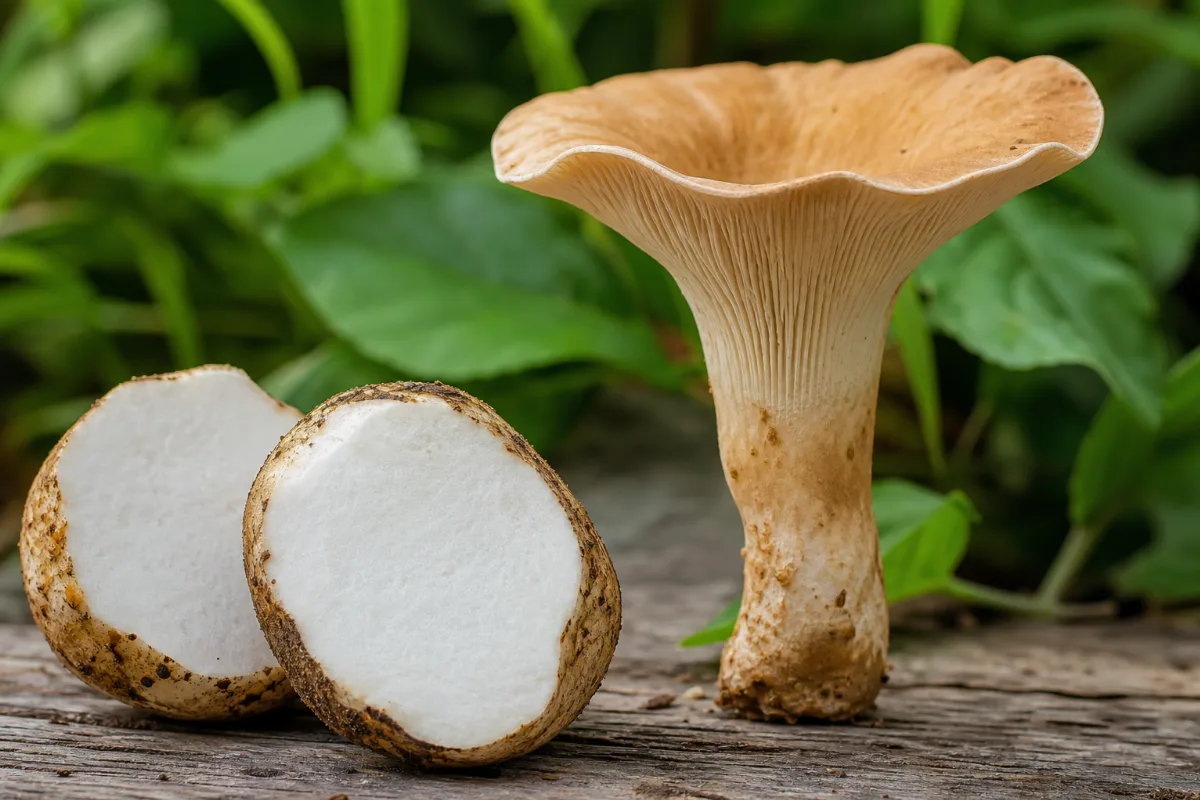
Mushrooms · Medicinal mushroom
Tiger Milk Mushroom
Lignosus rhinocerus (also spelled Lignosus rhinocerotis) · also called Tiger's milk mushroom, cendawan susu rimau (Malay), hurulingzhi (Chinese)
Tiger milk mushroom is a fungus from Malaysia and nearby regions. The part used is a hard tuber-like lump called a sclerotium. It is used traditionally for cough and asthma. Human research is small and mostly one branded product, so no benefit is proven. Do not use it instead of asthma medicine.
General information, not medical advice. Last substantive update · Not medically reviewed. A named clinician has not signed off on this page. The cultural wording about Malaysian traditional use has not been reviewed by a cultural expert. How this page is made
About Tiger Milk Mushroom
Tiger milk mushroom (Lignosus rhinocerus) is a Southeast Asian fungus whose sclerotium is used traditionally for cough and asthma. Human research is a handful of small studies, many of one branded product, so it is not proven for any condition.
What it is
It is a fungus in the family Polyporaceae. The sclerotium is a hard, tuber-like mass. Malaysian indigenous communities have used it for cough and asthma, as the sources state.
Products differ: sclerotium powder, cold- or hot-water extracts and fermented mycelium are different materials. Related species such as Lignosus cameronensis are separate species.
What the research shows
Mouse studies show less airway inflammation. Human studies are small: one open-label study of 50 volunteers, a 108-person hay fever trial, a 52-woman breast cancer remission trial and a 21-person mouth-ulcer pilot. No large independent trial exists.
Several trials test the branded TM02 product developed by a Malaysian research group, so independent repeats are needed.
At a glance
Traditional uses history, not proof
- Malaysian indigenous communities seek the sclerotium for cough, asthma, stamina and to stave off hunger (review abstract).
- Used in Malaysia, China and Hong Kong for fever, cough, asthma, cancer and as a tonic or soup ingredient (toxicity paper abstracts).
Studied for research
- Breathing and asthma markers, very low
- Hay fever symptoms (one trial), very low
- Immune markers, insufficient
- Fatigue after breast cancer treatment, insufficient
- No added benefit for exercise training, against
Main compounds
- Beta-glucans and other polysaccharides
- Mycelium powder is mostly carbohydrate
Common forms
- Sclerotium powder
- Cold-water or hot-water extracts
- Fermented mycelium powder
- Extract gel (mouth ulcer pilot)
Research links: PubMed: asthma systematic review (2026) · PubMed: hay fever trial (2026) · PubMed: breast cancer remission trial (2025) · Research Library · Genes & Biomarkers Library
What it is and its history
- Accepted scientific name
- Lignosus rhinocerus
- Naming authority
- (Cooke) Ryvarden (GBIF)
- Synonyms
- Lignosus rhinocerotis (common spelling in papers); Polyporus rhinocerus (old name, per our earlier summary)
- Common names
- Tiger milk mushroom (English); Cendawan susu rimau (Malay); Hurulingzhi (Chinese)
- Family or group
- Polyporaceae (a fungus family), not a plant
- Classification
- Fungi > Basidiomycota > Agaricomycetes > Polyporales > Polyporaceae > Lignosus > Lignosus rhinocerus
- Native range
- The review abstract says it is found in Malaysia and other regions of South East Asia; a toxicity paper lists south China, Thailand, Malaysia, Indonesia, the Philippines and Papua New Guinea.
- Habitat
- Not checked in the sources read.
- What it looks like
- Fruiting body: The medicinal part is the sclerotium, a hard tuber-like mass (per the toxicity paper abstracts).
- Cultivation
- The 2013 toxicity paper says the mushroom has been successfully cultivated; TM02 is a cultivated strain.
- Harvest and processing
- Not checked.
- Look-alikes and adulterants
- Name: Lignosus cameronensis and Lignosus tigris; Note: Separate accepted species in GBIF (keys 8214898 and 7678736); safety data for one do not transfer to the other.
- Sustainability and conservation
- Not checked.
Traditional use and history history, not clinical proof
| Tradition or era | Documented use | Source |
|---|---|---|
| Malaysian indigenous communities | The review abstract says the sclerotium is highly sought after by native communities in Malaysia to stave off hunger, relieve cough and asthma and give stamina. The name comes from a story that it grows where a tigress drips milk. | p29379443 |
| Malaysia, China and Hong Kong | Toxicity-paper abstracts describe use for fever, cough, asthma, cancer and food poisoning, as a tonic and as a soup ingredient in Malaysia and Hong Kong, and in China for liver cancer, chronic hepatitis and gastric ulcers. | p23458920 |
Traditional use shows how it was used. It does not show that it works or is safe today.
What is inside, and how it may work
What it contains and how those compounds act in cells and animals. Laboratory and animal mechanisms are not proven effects in people.
Main compounds
| Compound | Family | Where it is concentrated | Activity studied | Level of evidence |
|---|---|---|---|---|
| Beta-glucans and other glucans | polysaccharide | Sclerotium A review table (summary-only, not re-opened) reports about 34.9 mg beta-glucan per g in a cold-water extract and 38.9 mg per g in a hot-water extract of cultivated sclerotium (TM02). | Considered immune-active in lab work. 12 | Laboratory research |
| Carbohydrate, protein and fat of mycelium powder | proximate composition | Mycelium Mycelium powder: 79.3% carbohydrate, 8.4% protein, 1.6% fat, 1.9% ash, 9.0% moisture (one study). | Not a significant source of nutrition. 10 | Analysis |
Mechanisms, receptors and pathways
| Target or pathway | Gene or receptor | What was found | Level |
|---|---|---|---|
| Allergic Th2 signalling | IL-4, IL-5, IL-13, IgE | Extract lowered these in allergic mice. 11 | Animal research |
| Airway muscle relaxation | Calcium channels | Cell studies showed airway relaxation linked to calcium channel modulation. 13 | Laboratory research |
| IL-5 and symptom change | IL-5 | IL-5 change was associated with symptom change in the hay fever trial. 15 | Human association |
Absorption, metabolism and elimination
- Absorption
- Not found in the sources read.
- Distribution
- Not found.
- Metabolism
- Not found.
- Elimination
- Not found.
- Bioavailability
- Not established.
Isolated compounds versus whole extracts
Cold-water, hot-water and ethanol extracts, sclerotium powder and mycelium differ in chemistry and in toxicity and cell results. They cannot be treated as the same product.
Nutritional composition
Tiger milk mushroom is a hard tuber used as a medicine, not a food or nutrient source. No nutrition claim is made.
1 low certainty2 very low certainty6 not enough evidence
What was looked at
The 9 benefits and uses checked for Tiger Milk Mushroom, each with how strong the evidence is. Tap one to open it.
- Breathing and asthmaVery low certainty
- Hay fever (allergic rhinitis) symptomsVery low certainty
- Immune system markersNot enough evidence
- Fatigue and quality of life after breast cancer treatmentNot enough evidence
- Minor mouth ulcers (gel on the ulcer)Not enough evidence
- Muscle strength and fitness with trainingLow certainty
- Blood pressure (animal work only)Not enough evidence
- Cancer cells in the labNot enough evidence
- Nerve cells and memory (cell and worm work only)Not enough evidence
Lab markers tracked in the studies
Total Nasal Symptom Score (TNSS)Interleukin-5 (IL-5)IL-1 beta, IL-8 and MDALung function and respiratory symptomsFACIT-Fatigue scalePain score (visual analog scale)Systolic blood pressure (rats)
What is Tiger Milk Mushroom good for?
The uses people ask about and how strong the human evidence is for each. None is proven. Read this together with the Safety tab.
Benefits, one by one
Each card is a research question, not a promise. Tap a goal to filter. Open a card to see the studies, doses and limits.
Breathing and asthma
Very low certaintyTiger milk mushroom is traditionally used for cough and asthma. Mouse studies show less airway inflammation. In people there is one small open-label study with no control group. It does not show the mushroom treats asthma.
4 studiesDifferent products have been tested (sclerotium extracts, mycelium). …
Studies, doses and limits
What the trials found
A 2026 systematic review found animal and cell evidence and a single human study. That study, an open-label study of 50 volunteers over 3 months, reported lower IL-1 beta, IL-8 and MDA, fewer respiratory symptoms and better lung function. It had no control group.
Results
Open-label study: IL-1 beta, IL-8, MDA and symptoms lower; IgA, antioxidant capacity and lung function higher (all p < 0.05), with no comparison group.
Effect sizes as reported
Before-and-after changes only; size not reliable
Why this rating
One uncontrolled study in people; the rest is mouse and cell work. Without a placebo group the changes cannot be put down to the mushroom.
Form and dose studied
Different products have been tested (sclerotium extracts, mycelium). The amounts are not repeated on this page.
Who was studied
Volunteers in Malaysia; mice
Limits
The review calls the evidence largely preclinical. Nothing shows it treats asthma or cough.
Why researchers looked
Traditional use for cough and asthma led researchers to test extracts on allergic airway models.
Traditional use
Malaysian indigenous communities have used the sclerotium for cough and asthma, as the review abstracts and toxicity papers state (our earlier summary names the Orang Asli; the abstracts say 'native' or 'indigenous' communities).
Proposed mechanism Animal research
In mice with egg-protein asthma, an extract lowered Th2 cytokines, IgE and eosinophils; cell work shows airway relaxation linked to calcium channels.
A proposed mechanism does not show that the effect happens in people.
Do not use it in place of prescribed inhalers or asthma medicine. See the Safety tab.
Hay fever (allergic rhinitis) symptoms
Very low certaintyOne randomised trial of a cultivated sclerotium product (TM02) found lower nose-symptom scores over 30 days. Only 56 of the 108 people enrolled were in the main analysis, and allergy blood markers did not change.
1 studiesTM02 is a cultivated sclerotium preparation; amounts not repeated her…
Studies, doses and limits
What the trials found
In 108 adults with allergic rhinitis (25 TM02 and 31 placebo analysed) over 30 days, nasal symptom scores and a control-test score favoured TM02. IgE and cytokines did not change significantly overall.
Results
TNSS 12 hours beta -3.70 (p < 0.001); TNSS 2 weeks beta -4.44 (p < 0.001); ARCT beta 3.89 (p = 0.017).
Effect sizes as reported
Lower symptom scores
Why this rating
One trial, many people left out of the main analysis, 30 days only, a branded product. Needs repeating by an independent group.
Form and dose studied
TM02 is a cultivated sclerotium preparation; amounts not repeated here.
Who was studied
Adults with allergic rhinitis, Malaysia
Limits
Blood allergy markers were not significantly different. No independent repeat.
Why researchers looked
Animal work points to less allergic airway inflammation, so a trial was run in people with hay fever.
Traditional use
Traditional use for respiratory complaints.
Proposed mechanism Human association
Lower IL-5 was linked to symptom change; lab and animal work points to calmer Th2 allergy signals.
A proposed mechanism does not show that the effect happens in people.
No significant difference in side effects was reported. Tell a doctor if you have allergies to mushrooms.
Immune system markers
Not enough evidenceCell and animal studies show tiger milk mushroom extracts can activate immune cells. In people, the only signals are before-and-after blood changes in one uncontrolled study and unchanged blood counts in a training trial. No trial shows fewer infections.
3 studiesDifferent products and amounts were used.
Studies, doses and limits
What the trials found
The open-label study reported higher IgA. In a controlled trial in young men the mushroom added no benefit to training, and immune counts rose in the training-only group.
Results
Open-label study: higher IgA (p < 0.05), no comparison group. Training trial: no additive benefit.
Effect sizes as reported
No clear human effect
Why this rating
Human data are uncontrolled or null, and immune markers are not the same as fewer infections.
Form and dose studied
Different products and amounts were used.
Who was studied
Healthy young men; volunteers
Limits
No trial measured infections.
Why researchers looked
Beta-glucan-rich water extracts were expected to act on immune cells.
Traditional use
Malaysian indigenous communities have used the sclerotium for cough and asthma, as the review abstracts and toxicity papers state (our earlier summary names the Orang Asli; the abstracts say 'native' or 'indigenous' communities).
Proposed mechanism Laboratory research
Water extracts and polysaccharide complexes activated immune cells in dishes and mice (review summary).
A proposed mechanism does not show that the effect happens in people.
Immune effects could matter for people on immune-suppressing medicine; ask a doctor.
Fatigue and quality of life after breast cancer treatment
Not enough evidenceIn 52 women who had finished breast cancer treatment, the mushroom product showed a trend towards less fatigue and better physical functioning. The abstract does not report a clear difference from placebo.
1 studiesTM02 sclerotium; amounts not repeated.
Studies, doses and limits
What the trials found
A phase II placebo-controlled trial (26 per group, 6 months, TM02) reported trends and no significant difference in side effects.
Results
Trend towards better physical functioning and lower fatigue; Global Health Status changed across visits within patients.
Effect sizes as reported
Trend only
Why this rating
Small, per-protocol analysis, retrospectively registered; no clear between-group difference.
Form and dose studied
TM02 sclerotium; amounts not repeated.
Who was studied
Women in remission after surgery and chemotherapy
Limits
Not a cancer treatment. It does not show any effect on the cancer.
Why researchers looked
Tested because of tonic use and hoped-for immune support.
Traditional use
Used as a general tonic.
Proposed mechanism None
Not established.
A proposed mechanism does not show that the effect happens in people.
Anyone with cancer should ask their cancer team before using any mushroom product.
Minor mouth ulcers (gel on the ulcer)
Not enough evidenceA very small trial of 21 adults found the extract gel was not clearly better than placebo, and a steroid paste did best.
1 studiesGel made from a TM02 cold-water extract.
Studies, doses and limits
What the trials found
21 adults, 7 days: pain scores 3.10 (extract), 3.93 (placebo), 2.40 (steroid); healing 5.4, 6.8 and 6.0 days; differences for the extract were not significant. No adverse events.
Results
Favourable trend, not significant
Effect sizes as reported
Not significant
Why this rating
Seven people in the extract group.
Form and dose studied
Gel made from a TM02 cold-water extract.
Who was studied
Adults 20 to 50 with minor mouth ulcers
Limits
Pilot only.
Why researchers looked
Traditional wound-healing use.
Traditional use
Traditional use for wounds is stated in the review abstracts.
Proposed mechanism None
Not established.
A proposed mechanism does not show that the effect happens in people.
Mouth ulcers lasting over two weeks need a clinician.
Muscle strength and fitness with training
Low certaintyA controlled trial in young men found the mushroom added nothing to the benefit of resistance training.
1 studiesNot repeated here.
Studies, doses and limits
What the trials found
Four-group trial over 8 weeks: strength and fitness rose with training; supplementation gave no additive benefit.
Results
No added benefit
Effect sizes as reported
against
Why this rating
Small trial; sample size not in the abstract.
Form and dose studied
Not repeated here.
Who was studied
Young men
Limits
Evidence goes against an added benefit for training results.
Why researchers looked
Tonic and stamina use.
Traditional use
The review says the sclerotium is sought for stamina.
Proposed mechanism None
Not established.
A proposed mechanism does not show that the effect happens in people.
None specific.
Blood pressure (animal work only)
Not enough evidenceRats with high blood pressure had smaller rises with a TM02 preparation. No human blood pressure trial was found.
1 studiesTM02 in rats.
Studies, doses and limits
Results
Rat study: lower systolic blood pressure rise over 8 weeks.
Effect sizes as reported
Rats only
Why this rating
Rat study only.
Form and dose studied
TM02 in rats.
Who was studied
Spontaneously hypertensive rats
Limits
Cannot be applied to people.
Why researchers looked
Lab interest in blood vessel effects.
Proposed mechanism Animal research
Less vessel oxidative stress and more nitric oxide in rat arteries.
A proposed mechanism does not show that the effect happens in people.
Anyone on blood pressure medicine should not change it because of this.
Cancer cells in the lab
Not enough evidenceExtracts affected cancer cells and grafted tumours in dishes and chick embryos, with big differences between cold-water and hot-water extracts. There is no human cancer outcome.
2 studiesHot-water and cold-water sclerotium extracts.
Studies, doses and limits
Results
Chick-embryo study: hot-water extract gave smaller grafted tumours and fewer vessels.
Effect sizes as reported
Lab and egg only
Why this rating
Not people.
Form and dose studied
Hot-water and cold-water sclerotium extracts.
Who was studied
Cells and chick embryos
Limits
Not a cancer treatment.
Why researchers looked
Traditional use for cancer is reported in the sources.
Traditional use
Reported use for cancer in Malaysia and China (toxicity paper abstracts).
Proposed mechanism In vivo nonmammal
Hot-water extract reduced blood-vessel growth around a grafted tumour in chick embryos; cold-water extract was toxic to embryos.
A proposed mechanism does not show that the effect happens in people.
Do not delay or replace cancer care.
Nerve cells and memory (cell and worm work only)
Not enough evidenceAn ethanol extract protected nerve cells and worms in lab models. No human memory study was found.
1 studiesEthanol extract.
Studies, doses and limits
Results
Only the ethanol extract protected cells in the dish; water extracts did not.
Effect sizes as reported
Cells and worms only
Why this rating
Not people.
Form and dose studied
Ethanol extract.
Who was studied
Mouse cells, worms
Limits
No human outcome.
Why researchers looked
Interest from cell work.
Proposed mechanism Laboratory research
Lower oxidative stress and higher antioxidant genes in mouse nerve cells.
A proposed mechanism does not show that the effect happens in people.
None specific.
Connections to the rest of health
How Tiger Milk Mushroom connects to the rest of our health knowledge graph. Every link says what kind of connection it is. A safety link (for example to the liver) is a warning, not a benefit. A study that merely mentions a topic never creates a benefit link.
Explore every connection: goals, body systems, organs, symptoms, genes
A. Wellness goals
| Connected to | Kind of connection | Evidence status | Context | Studies |
|---|---|---|---|---|
| Breathing Support | Preliminary mechanism | Very low certainty | Breathing and asthma: Tiger milk mushroom is traditionally used for cough and asthma. Mouse studies show less airway inflammation. In people there is one small open-label study with no control group. It does not show the mushroom treats asthma. | 13 14 11 12 |
| Lung Support | Preliminary mechanism | Very low certainty | Breathing and asthma: Tiger milk mushroom is traditionally used for cough and asthma. Mouse studies show less airway inflammation. In people there is one small open-label study with no control group. It does not show the mushroom treats asthma. | 13 14 11 12 |
| Immune Support | Potential benefit | Very low certainty | Hay fever (allergic rhinitis) symptoms: One randomised trial of a cultivated sclerotium product (TM02) found lower nose-symptom scores over 30 days. Only 56 of the 108 people enrolled were in the main analysis, and allergy blood markers did not change. | 15 |
| Immune Support | Preliminary mechanism | Not enough evidence | Immune system markers: Cell and animal studies show tiger milk mushroom extracts can activate immune cells. In people, the only signals are before-and-after blood changes in one uncontrolled study and unchanged blood counts in a training trial. No trial shows fewer infections. | 14 3 12 |
| Reduce Fatigue | Not enough evidence | Fatigue and quality of life after breast cancer treatment: In 52 women who had finished breast cancer treatment, the mushroom product showed a trend towards less fatigue and better physical functioning. The abstract does not report a clear difference from placebo. | 4 | |
| Blood Pressure Support | Preliminary mechanism | Not enough evidence | Blood pressure (animal work only): Rats with high blood pressure had smaller rises with a TM02 preparation. No human blood pressure trial was found. | 16 |
| Brain Health | Preliminary mechanism | Not enough evidence | Nerve cells and memory (cell and worm work only): An ethanol extract protected nerve cells and worms in lab models. No human memory study was found. | 6 |
B. Body systems
| Connected to | Kind of connection | Evidence status | Context | Studies |
|---|---|---|---|---|
| Blood clotting | Drug or supplement interaction | Very low certainty | Anti-coagulation listed in a review; no human data. Preparation or compound: Extracts and a protease (lab) |
12 |
| Airways | Low certainty | Do not replace asthma treatment. Preparation or compound: Whole product |
13 | |
| Airways | Traditional use | Very low certainty | Traditional use for asthma; mouse work and one uncontrolled human study. Preparation or compound: Sclerotium extracts |
13 14 |
| Respiratory System | Biological association | Very low certainty | Studied for: Breathing and asthma Studied for: Hay fever (allergic rhinitis) symptoms | 13 14 11 12 15 |
| Immune System | Biological association | Very low certainty | Studied for: Hay fever (allergic rhinitis) symptoms Studied for: Immune system markers | 15 14 3 12 4 18 |
| Digestive System | Biological association | Not enough evidence | Studied for: Minor mouth ulcers (gel on the ulcer) | 2 |
| Musculoskeletal System | Biological association | Low certainty | Studied for: Muscle strength and fitness with training | 3 |
| Cardiovascular System | Biological association | Not enough evidence | Studied for: Blood pressure (animal work only) | 16 |
| Nervous System | Biological association | Not enough evidence | Studied for: Nerve cells and memory (cell and worm work only) | 6 |
I. Biomarkers
| Connected to | Kind of connection | Evidence status | Context | Studies |
|---|---|---|---|---|
| Total Nasal Symptom Score (TNSS) | Biological association | Very low certainty | Measured in trials: lowered. A lab change is not the same as a health benefit. | 15 |
| Interleukin-5 (IL-5) | Biological association | Very low certainty | Measured in trials: not clear. A lab change is not the same as a health benefit. | 15 |
| IL-1 beta, IL-8 and MDA | Biological association | Very low certainty | Measured in trials: lowered. A lab change is not the same as a health benefit. | 14 |
| Lung function and respiratory symptoms | Biological association | Very low certainty | Measured in trials: improved. A lab change is not the same as a health benefit. | 14 |
| FACIT-Fatigue scale | Biological association | Not enough evidence | Measured in trials: lowered. A lab change is not the same as a health benefit. | 4 |
| Pain score (visual analog scale) | Biological association | Not enough evidence | Measured in trials: lowered. A lab change is not the same as a health benefit. | 2 |
| Systolic blood pressure (rats) | Biological association | Not enough evidence | Measured in trials: lowered. A lab change is not the same as a health benefit. | 16 |
K. Biological pathways
| Connected to | Kind of connection | Evidence status | Context | Studies |
|---|---|---|---|---|
| Interleukin-5 (IL-5) | Preliminary mechanism | Human association | Linked to symptom change in one hay fever trial. | 15 |
L. Active compounds
| Connected to | Kind of connection | Evidence status | Context | Studies |
|---|---|---|---|---|
| Beta-glucans and other glucans | Biological association | In vitro | Considered immune-active in lab work. Preparation or compound: Sclerotium |
12 |
| Carbohydrate, protein and fat of mycelium powder | Biological association | Analysis | Not a significant source of nutrition. Preparation or compound: Mycelium |
10 |
Each connection is stored with the ingredient, the connected record, the kind of connection, the evidence status, the supporting studies, the preparation or compound involved, and a review date (last reviewed October 25, 2026).
Evidence at a glance: what changed in 5 lab markers
Tap a number to show only those markers. Counts are markers, not people.
The evidence
The research centre for Tiger Milk Mushroom. Every record here was checked against PubMed or the publisher's page; we never list a study we have not verified.
Evidence by outcome
Bars show how many studies we found for each outcome, not how well it works. People are added up across trials only (reviews are not added, to avoid double counting).
How we rate evidence
High certainty
Several well-run trials or reviews agree; further research is unlikely to change the picture much.
Moderate certainty
Good trials point the same way, but some doubt remains.
Low certainty
Small, short or inconsistent trials. The finding could change with better research.
Very low certainty
Very little or very weak human data. Treat as a possibility only.
Mixed findings
Trials or reviews disagree with each other.
Not enough evidence
Not enough human research to say either way.
Evidence against
Good research found no benefit, or found harm.
We take the reviewers' own risk-of-bias and GRADE statements where they exist, and otherwise judge from study size, design, consistency, directness and whether a product matches what is sold. Many publications do not make evidence high. Method note: We read PubMed records and abstracts for 19 papers (a systematic review, four human studies, animal toxicity studies, lab studies) and checked the species name in GBIF. Abstracts only; full texts were not re-opened.
Study library: every study we checked 19
| Study | Design | People | Product, dose, length | Result |
|---|---|---|---|---|
| Abd Rashid 2022 Differential toxicity and teratogenic effects of the hot water and cold water extracts of Lignosus rhinocerus (Cooke) Ryvarden sclerotium on zebrafish (Danio rerio) embryos. Journal of Ethnopharmacology · PMID 34756971 · DOI |
Lab study zebrafish |
Zebrafish embryos | Hot-water and cold-water extracts of wild and cultivated sclerotium sclerotium Not repeated on this page 72 hours · vs Untreated embryos |
Hot-water extracts were non-toxic (LC50 over 500 ug/mL). Cold-water extracts delayed hatching, were slightly toxic (LC50 398.4 and 428.3 ug/mL) and caused mild fast heart rate. Fluid swelling appeared with all extracts at high strengths; bent tails only with wild-sclerotium cold-water extract. Cold-water extracts more toxic than hot-water in fish embryos Methods, limits and fundingOutcomes: Hatching, deaths, heart rate, body shape Limitations: Fish embryos; concentrations in the dish are not comparable with human use. Funding and conflicts: Funder not stated in the abstract Read: abstract |
| Azlan 2026 Assessment of a Tiger Milk Medicinal Mushroom (Lignosus rhinocerus TM02)-Based Oral Gel for Pain Reduction and Healing in Minor Aphthous Stomatitis. International Journal of Medicinal Mushrooms · PMID 42868544 · DOI |
Controlled trial |
21 21 adults aged 20 to 50 with minor mouth ulcers |
TM02 cold-water extract (xLr) gel sclerotium Not repeated on this page 7 days · vs Placebo gel (n = 6) and triamcinolone 0.1% paste (n = 5) |
The steroid paste gave the largest drop in pain and ulcer size. The extract gel (n = 7) had mean pain score 3.10, placebo 3.93, steroid 2.40. Healing (epithelialisation) took 5.4 days with the extract gel, 6.8 with placebo and 6.0 with the steroid, but differences between groups were not significant. No adverse events. Favourable trends, not significant Methods, limits and fundingOutcomes: Pain (VAS), ulcer diameter, epithelialisation Limitations: Very small groups; applied to the mouth, not swallowed. Funding and conflicts: Funder and conflicts not stated in the abstract Read: abstract |
| Chen 2016 Combined Effects of Lignosus rhinocerotis Supplementation and Resistance Training on Isokinetic Muscular Strength and Power, Anaerobic and Aerobic Fitness Level, and Immune Parameters in Young Males. International Journal of Preventive Medicine · PMID 27833721 · DOI |
Controlled trial |
Young men in four groups: control, mushroom, training, training plus mushroom | Lignosus rhinocerotis (LRS) Not repeated on this page 8 weeks · vs Control and training-only groups |
Strength, power and fitness rose with resistance training. The authors conclude supplementation during training did not provide additive benefits. Immune cell counts (CD3, CD4, CD19) rose in the training-only group. No added benefit over training alone Methods, limits and fundingOutcomes: Muscle strength and power, anaerobic and aerobic fitness, immune cell counts Limitations: Sample size not in the abstract. Funding and conflicts: Funder and conflicts not stated in the abstract Read: abstract |
| Eng 2025 Efficacy and safety of Lignosus rhinocerus (Cooke) Ryvarden TM02 supplementation for immune-challenged patients with localised breast cancer in remission: a randomised controlled trial. BMC Complementary Medicine and Therapies · PMID 40450240 · DOI |
Controlled trial |
52 52 women who had finished surgery and chemotherapy for localised breast cancer (Malaysia) |
TM02 (cultivated L. rhinocerus sclerotium) sclerotium Not repeated on this page 6 months · vs Placebo |
The abstract reports a trend towards better physical functioning and lower fatigue with TM02, with no significant differences in side effects between groups. A significant change in Global Health Status was seen across visits within patients. Trend only; not a clear difference from placebo Methods, limits and fundingOutcomes: Quality of life (EORTC QLQ-C30, QLQ-BR23), fatigue (FACIT-Fatigue), safety Limitations: Phase II, 26 per group, per-protocol analysis, retrospectively registered (ITMCTR2025000237). The abstract does not report a significant between-group difference. Funding and conflicts: Authors declare no competing interests Read: abstract |
| Jhou 2017 Oral reproductive and developmental toxicity of Lignosus rhinocerotis mycelium in rat. Journal of Ethnopharmacology · PMID 28663148 · DOI |
Animal toxicity rat |
80 80 pregnant rats |
L. rhinocerotis mycelium mycelium Not repeated on this page Through pregnancy · vs Water |
No mushroom-related deaths, maternal changes, or fetal changes (external, organ and skeletal). No harm to pregnancy or fetuses in rats Methods, limits and fundingOutcomes: Maternal weight, implantation, litter size, fetal examination Limitations: Rats, mycelium. Does not show safety in human pregnancy. Funding and conflicts: Funder not stated in the abstract Read: abstract |
| Kittimongkolsuk 2021 Neuroprotective Effects of Extracts from Tiger Milk Mushroom Lignosus rhinocerus Against Glutamate-Induced Toxicity in HT22 Hippocampal Neuronal Cells and Neurodegenerative Diseases in Caenorhabditis elegans. Biology (Basel) · PMID 33466350 · DOI |
Lab study cell and worm |
Mouse nerve cells and C. elegans worms | Ethanol, cold-water and hot-water extracts Not repeated on this page · vs Untreated cells and worms |
Only the ethanol extract reduced cell death and oxidative stress in nerve cells and improved worm behaviour in Alzheimer-type and Huntington-type worm models. Protection in cells and worms only Methods, limits and fundingOutcomes: Cell death, oxidative stress, antioxidant genes, worm behaviour Limitations: No mammal or human memory outcome. Funding and conflicts: No conflict declared Read: abstract |
| Lee 2011 Evaluation of the sub-acute toxicity of the sclerotium of Lignosus rhinocerus (Cooke), the Tiger Milk mushroom. Journal of Ethnopharmacology · PMID 21930194 · DOI |
Animal toxicity rat |
Sprague-Dawley rats, 5 per group per sex | TM02, TM03 and wild-type sclerotial powder sclerotium Not repeated on this page 28 days · vs Control |
No treatment-related toxicity for cultivated or wild-type sclerotium in 28 days. No toxicity in rats Methods, limits and fundingOutcomes: Growth, blood, liver and kidney tests, tissue Limitations: Short, small groups, rats only. Funding and conflicts: Funder not stated in the abstract Read: abstract |
| Lee 2013 Preclinical toxicological evaluations of the sclerotium of Lignosus rhinocerus (Cooke), the Tiger Milk mushroom. Journal of Ethnopharmacology · PMID 23458920 · DOI |
Animal toxicity rat |
Sprague-Dawley rats, 10 per group per sex | TM02 sclerotial powder sclerotium Not repeated on this page 180 days · vs Control |
No adverse effect over 180 days of feeding, no effect on fertility or offspring at the dose tested, and no gene mutations in the Ames test. No toxicity or mutation signal in rats and bacteria Methods, limits and fundingOutcomes: Blood, chemistry, urine, organ weights and tissue; fertility and offspring; Ames gene-mutation test Limitations: Rats and bacteria, not people. The fertility test used a lower dose than the 180-day test. Funding and conflicts: Funder not stated in the abstract Read: abstract |
| Lee 2017 Safety Evaluation of Sclerotium from a Medicinal Mushroom, Lignosus cameronensis (Cultivar): Preclinical Toxicology Studies. Frontiers in Pharmacology · PMID 28919858 · DOI |
Animal toxicity rat |
Rats, 5 per group per sex | Sclerotial powder of Lignosus cameronensis (a different species) sclerotium Not repeated on this page 28 days · vs Water |
No treatment-related changes in 28 days. No toxicity in rats Methods, limits and fundingOutcomes: Behaviour, weight, blood, chemistry, tissue Limitations: A different species from L. rhinocerus. Short study. Funding and conflicts: Funder not stated in the abstract Read: abstract |
| Li 2021 Nutritional and 13-Week Subchronic Toxicological Evaluation of Lignosus rhinocerotis Mycelium in Sprague-Dawley Rats. International Journal of Environmental Research and Public Health · PMID 33572641 · DOI |
Animal toxicity rat |
96 96 rats (12 male and 12 female per group) |
L. rhinocerotis mycelium powder (submerged fermentation) mycelium Not repeated on this page 13 weeks · vs Water |
All animals survived. No treatment-related changes in clinical signs, body weight, eyes, urine, blood tests or organ examination. The no-observed-adverse-effect level was above the highest dose tested. Powder was 79.3% carbohydrate, 8.4% protein, 1.6% fat, 1.9% ash. No toxicity seen in rats Methods, limits and fundingOutcomes: Clinical signs, weight, eyes, urine, blood, chemistry, organs Limitations: Rats, mycelium (not sclerotium). The abstract and conclusion word the safe level slightly differently. Funding and conflicts: Authors declare no relevant conflicts Read: abstract |
| Muhamad 2023 Lignosus rhinocerotis extract ameliorates airway inflammation and remodelling via attenuation of TGF-beta1 and Activin A in a prolonged induced allergic asthma model. Scientific Reports · PMID 37891170 · DOI |
Animal study mouse |
Female BALB/c mice with egg-protein (ovalbumin) induced allergic asthma | L. rhinocerotis extract sclerotium Not repeated on this page Up to 10 weeks of challenge · vs Untreated allergic mice |
The extract lowered inflammatory cells, Th2 cytokines and IgE and reduced eosinophils, mucus-cell overgrowth and airway muscle thickness in the mouse lungs. Less airway inflammation and remodelling in mice Methods, limits and fundingOutcomes: Inflammatory cells, Th2 cytokines (IL-4, IL-5, IL-13), IgE, eosinophils, goblet cells, airway muscle thickness, TGF-beta1, Activin A Limitations: Mouse study only. It does not show the same effect in people. Funding and conflicts: Authors declare no competing interests Read: abstract |
| Nallathamby 2018 A Status Review of the Bioactive Activities of Tiger Milk Mushroom Lignosus rhinocerotis (Cooke) Ryvarden. Frontiers in Pharmacology · PMID 29379443 · DOI |
Narrative review n/a |
Review of laboratory, animal and a few human studies of L. rhinocerotis | Lignosus rhinocerotis sclerotium and extracts sclerotium Not repeated on this page |
The abstract says native communities in Malaysia seek the sclerotium to stave off hunger, relieve cough and asthma and give stamina. It names a paucity of validation studies including human clinical trials. Methods, limits and fundingOutcomes: Reported properties: cognitive function, neuroprotection, immune modulation, anti-asthmatic, anti-coagulation, anti-inflammatory, anti-microbial, anti-obesity, anti-cancer and antioxidant Limitations: Narrative review; mostly cell and animal work. Only the abstract was re-read on 2026-10-25; details beyond the abstract come from our earlier reading of the full text and were not re-opened. Funding and conflicts: Not stated in the abstract Read: abstract |
| Paneerselvam 2026 Effectiveness of tiger milk mushroom (Lignosus rhinocerus) on asthma: a systematic review. BMC Pulmonary Medicine · PMID 41877083 · DOI |
Systematic review mixed (animal, cell, human) |
Animal, cell and human studies of L. rhinocerus in asthma | Lignosus rhinocerus Not repeated on this page |
Animal studies showed less eosinophil infiltration, lower Th2 cytokines (IL-4, IL-5, IL-13) and IgE and less airway remodelling. Cell studies showed airway relaxation linked to calcium channels. A single human study reported lower IL-1 beta, IL-8 and MDA, better lung function and quality of life. The authors call the evidence largely preclinical. Evidence largely preclinical; one human study Methods, limits and fundingOutcomes: Eosinophils, Th2 cytokines, IgE, airway remodelling, bronchorelaxation; one human study Limitations: Only one human study; abstract does not give how many studies were found or their quality. Funding and conflicts: Authors declare no competing interests Read: abstract |
| Tan 2021 Effect of tiger milk mushroom (Lignosus rhinocerus) supplementation on respiratory health, immunity and antioxidant status: an open-label prospective study. Scientific Reports · PMID 34083710 · DOI |
Open label uncontrolled |
50 50 volunteers (Malaysia) |
Tiger milk mushroom supplement (L. rhinocerus) Not repeated on this page 3 months |
Over 3 months, IL-1 beta, IL-8, MDA and respiratory symptoms were lower (p < 0.05), and IgA, total antioxidant capacity and lung function were higher (p < 0.05). Sex and BMI influenced antioxidant results. Before-and-after changes in blood markers, symptoms and lung function Methods, limits and fundingOutcomes: IL-1 beta, IL-8, IgA, total antioxidant capacity, MDA, 3-nitrotyrosine, 8-OHdG, lung function, respiratory symptoms Limitations: No placebo or control group, so changes cannot be credited to the mushroom. Not blinded. The abstract does not say what health problem the volunteers had. Funding and conflicts: Authors declare no competing interests Read: abstract |
| Tan 2026 Clinical Efficacy of TM02 in Allergic Rhinitis: Significant Symptom Alleviation Associated with IL-5 Downregulation and Reduced Allergic Inflammation. Current Issues in Molecular Biology · PMID 42793253 · DOI |
Controlled trial |
108 108 adults with allergic rhinitis enrolled; 25 (mushroom) and 31 (placebo) analysed |
TM02 (cultivated L. rhinocerus sclerotium) sclerotium Not repeated on this page 30 days · vs Placebo |
In the modified per-protocol analysis, TNSS 12 hours (beta -3.70, p < 0.001), TNSS 2 weeks (beta -4.44, p < 0.001) and ARCT (beta 3.89, p = 0.017) favoured TM02. Blood allergy markers did not change significantly. A link was seen between 2-week symptom score and IL-5 change (beta 14.94, p = 0.003). No significant differences in adverse events or blood safety tests. Lower nasal symptom scores over 30 days; allergy blood markers unchanged Methods, limits and fundingOutcomes: Total Nasal Symptom Score (TNSS, past 12 hours and 2 weeks), Allergic Rhinitis Control Test (ARCT); IgE, IFN-gamma, IL-4, IL-5, IL-13; adverse events and blood counts Limitations: Only 56 of 108 people were in the main analysis. Single trial, 30 days. TM02 is a branded commercial cultivar. Funding and conflicts: Authors declare no conflicts of interest; funder not stated in the abstract Read: abstract |
| Wong 2024 Medicinal Tiger Milk Mushroom Lignosus rhinocerus TM02 (Agaricomycetes) Sclerotia Supplementation Mitigates Hypertension and Alleviates Vascular Dysfunction Partly through Oxidative Stress Modulation in Spontaneously Hypertensive Rats. International Journal of Medicinal Mushrooms · PMID 39241161 · DOI |
Animal study rat |
Spontaneously hypertensive rats | TM02 sclerotia sclerotium Not repeated on this page 8 weeks · vs Untreated hypertensive rats; normal-pressure rats |
Treatment attenuated the rise in systolic blood pressure and improved vessel function in the rats. Lower blood pressure rise in rats Methods, limits and fundingOutcomes: Systolic blood pressure, blood-vessel function, oxidative stress, TNF-alpha, nitric oxide Limitations: Rats only. No human blood pressure trial was found. Funding and conflicts: Authors include the group that developed TM02; maker ties not confirmed from the abstract; no conflict statement in abstract Read: abstract |
| Yap 2025 Assessment of Acute Dermal Toxicity of Lignosus rhinocerus TM02 Sclerotium and Its Potent Cold Water Extract (xLr). International Journal of Medicinal Mushrooms · PMID 40460405 · DOI |
Animal toxicity rat |
Female Sprague-Dawley rats | TM02 sclerotium and cold-water extract, on the skin sclerotium Not repeated on this page Acute · vs Saline |
No deaths or abnormalities; skin and organs normal. Classified Category 5/Unclassified under GHS. No acute skin toxicity in rats Methods, limits and fundingOutcomes: Deaths, behaviour, weights, blood, tissue Limitations: Rats; acute only. Authors say chronic skin exposure needs study. Funding and conflicts: Authors include the group behind TM02; no conflict statement in abstract Read: abstract |
| Yong 2024 Anti-angiogenic and anti-tumour activities of Lignosus rhinocerus (Cooke) Ryvarden water extracts on HCT116 human colorectal carcinoma cells implanted in chick embryos. Journal of Ethnopharmacology · PMID 38636576 · DOI |
Lab study chick embryo |
Human colon cancer cells grafted onto chick embryos | Hot-water and cold-water sclerotium extracts sclerotium Not repeated on this page 24 h and longer · vs Saline-treated embryos |
Cold-water extracts were strongly toxic to the embryos (LC50 1.2 to 37.7 ug/mL); hot-water extracts were not toxic up to 670 ug/mL. Hot-water extracts reduced capillary diameter by 44.0 +/- 17.7% and gave smaller tumours with fewer vessels. Smaller grafted tumours in chick embryos Methods, limits and fundingOutcomes: Embryo toxicity, blood-vessel growth, tumour size Limitations: Chick-embryo and cell work only; says nothing about cancer in people. Funding and conflicts: No competing interests declared Read: abstract |
| n/a 2026 GBIF Backbone Taxonomy: Lignosus rhinocerus (Cooke) Ryvarden (usage key 2545866) GBIF API · Source |
Taxonomy record fungus |
n/a | n/a |
Lignosus rhinocerus is ACCEPTED, family Polyporaceae, order Polyporales. A search for the spelling rhinocerotis gave a fuzzy match to the same record. L. cameronensis (key 8214898) and L. tigris (key 7678736) are separate accepted species. Methods, limits and fundingOutcomes: Accepted name, family, order Limitations: Index Fungorum was not queried; the spelling rhinocerotis is common in papers but GBIF treats it as a variant. Funding and conflicts: Independent public database Read: API record, checked 2026-10-25 |
What we do not know yet
- No placebo-controlled trial in asthma or cough.
- The hay fever trial has not been repeated independently.
- Long-term human safety, pregnancy and interactions are unstudied.
- No contamination testing of products was found.
How new research is added
New studies are found by a saved PubMed search and placed in a review queue. A person reads each one before it changes any evidence rating on this page.
Lab markers
What changed in blood or saliva tests during trials. A changed number is not the same as feeling or being healthier, and we give no "normal ranges".
Other 7
Total Nasal Symptom Score (TNSS)
Lowered in trials
A questionnaire score of nose symptoms such as sneezing, runny and blocked nose; lower is better.
Very low certaintyResults and what it means
Why it was measured
Standard way to measure hay fever symptoms.
Statistical vs. clinical meaning
Statistically significant, but 56 of 108 enrolled were analysed.
Safety implication
A symptom score, not a blood test.
| Study | Result | People | Product |
|---|---|---|---|
| 15 | TNSS 12 hours beta -3.70 (p < 0.001) and 2 weeks beta -4.44 (p < 0.001) with TM02 versus placebo | 25 TM02 and 31 placebo adults with allergic rhinitis analysed | TM02 versus placebo, 30 days |
Interleukin-5 (IL-5)
Not clear in trials
A signalling protein that drives allergy-type (eosinophil) inflammation.
Very low certaintyResults and what it means
Why it was measured
Linked to allergic inflammation.
Statistical vs. clinical meaning
An association, not proof of how it works.
Safety implication
None specific.
| Study | Result | People | Product |
|---|---|---|---|
| 15 | IL-5 did not change significantly overall, but its change was associated with the 2-week symptom score (beta 14.94, p = 0.003) | Adults with allergic rhinitis | TM02 versus placebo |
IL-1 beta, IL-8 and MDA
Lowered in trials
IL-1 beta and IL-8 are inflammation signals; MDA is a marker of oxidative damage to fats.
Very low certaintyResults and what it means
Why it was measured
Used as stand-ins for airway inflammation and oxidative stress.
Statistical vs. clinical meaning
Before-and-after change with no control group.
Safety implication
None specific.
| Study | Result | People | Product |
|---|---|---|---|
| 14 | IL-1 beta, IL-8 and MDA were lower after 3 months (p < 0.05) | 50 volunteers in an open-label study | Tiger milk mushroom supplement, no control group |
Lung function and respiratory symptoms
Improved in trials
Breathing tests and symptom reports.
Very low certaintyResults and what it means
Why it was measured
The practical outcome people care about.
Statistical vs. clinical meaning
No control group; the abstract does not describe the health problem of the volunteers.
Safety implication
Do not stop prescribed breathing medicine.
| Study | Result | People | Product |
|---|---|---|---|
| 14 | Lung function higher and respiratory symptoms lower after 3 months (p < 0.05) | 50 volunteers | Supplement, no control group |
FACIT-Fatigue scale
Lowered in trials
A questionnaire score of tiredness.
Not enough evidenceResults and what it means
Why it was measured
Fatigue is common after cancer treatment.
Statistical vs. clinical meaning
Trend only.
Safety implication
None specific.
| Study | Result | People | Product |
|---|---|---|---|
| 4 | A trend towards lower fatigue with TM02; no clear between-group difference in the abstract | 52 women in remission from breast cancer | TM02 versus placebo, 6 months |
Pain score (visual analog scale)
Lowered in trials
A 0 to 10 mark for pain.
Not enough evidenceResults and what it means
Systolic blood pressure (rats)
Lowered in trials
The top number of a blood pressure reading.
Not enough evidenceSafety
What studies and official sources say about side effects, medicines and who should check first. Each point shows what kind of evidence it comes from.
Main points to know 4
- Human safety data are thin. Only a few small human studies exist (52, 108, 50 and 21 people). They report few side effects, but they were short and small. Most safety data come from rats, so rare or long-term harms in people are unknown. Trial report 4 15 2
- Do not use it instead of asthma medicine. Evidence for asthma is mostly mouse and cell work plus one uncontrolled human study. Stopping a prescribed inhaler or controller medicine because of a mushroom product can make asthma worse. Authoritative guidance 13
- It may thin the blood (lab finding). The 2018 review lists anti-coagulation among the properties found in lab work. No study in people has tested bleeding or medicine interactions, so people on blood thinners should ask a pharmacist first. Laboratory research 12
- Products and species differ. Sclerotium, extracts and mycelium are different materials, and relatives such as Lignosus cameronensis are different species. Most safety data are from rats and cannot be carried across to every product. Authoritative guidance 10 9
Side effects 4
| Effect | How often | Severity and recovery | Evidence |
|---|---|---|---|
| No significant difference in side effects versus placebo Reported in a 52-person breast cancer trial and a 108-person hay fever trial. | No rates in the abstracts | not stated Not described as lasting | Controlled trial 4 15 |
| Gut discomfort or mild stomach inflammation (gastritis) Summary-only: our earlier summary lists one mild gastritis case and gut discomfort in the hay fever trial; the abstracts read on 2026-10-25 only say adverse events did not differ between groups. | Single cases; counts not read | mild Not described as lasting | Trial report 15 |
| No adverse events in a mouth-ulcer gel pilot Very small trial. | None among 21 people in 7 days | none reported n/a | Controlled trial 2 |
| Skin reactions A rat study found no acute skin toxicity; no human skin-reaction study was found. | No data found for people | unknown unknown | Insufficient 17 |
Liver
No case reports of liver injury linked to Lignosus were found in the papers read. Rat studies of up to 180 days found no liver changes. This is not proof of safety in people. 8 10 7
How often. Unknown. No human liver data beyond blood safety tests in small trials.
Monitoring. No monitoring advice from an agency was read. People with liver disease should ask a doctor before using any mushroom supplement.
This is a safety connection. It is not evidence that Tiger Milk Mushroom supports liver health.
Medicines and supplements 4
| With | Why it matters | Importance | Evidence | What to do |
|---|---|---|---|---|
| Blood thinners (warfarin-type) and antiplatelet medicines prescription | Extracts and a protein from the mushroom slowed clotting or dissolved fibrin in lab work (per the review's list of properties). | No human bleeding or INR study was found. The risk is theoretical. | Laboratory research Very low certainty 12 | Tell your prescriber or pharmacist before using it. |
| Asthma inhalers and controller medicines prescription | Not studied; the concern is stopping them. | Replacing asthma medicine with a mushroom can allow asthma to worsen. | Authoritative guidance Low certainty 13 | Keep taking prescribed asthma medicine and talk to your doctor. |
| Immune-suppressing medicines and autoimmune conditions prescription | Immune-cell activation in lab and animal work. | No human interaction study was found. Treated as a precaution. | Laboratory research Very low certainty 12 | Ask a doctor first. |
| Allergy medicines prescription | Not studied. | No interaction data found. | Insufficient Not enough evidence 15 | Ask a pharmacist if you take antihistamines or nasal steroids. |
Who should check first 6
| Situation | Advice | Evidence |
|---|---|---|
| People taking blood thinners or facing surgery | Ask a doctor first because of the lab clotting finding. | Laboratory research 12 |
| Asthma | Do not stop prescribed medicine. Get urgent help for breathing trouble. | Authoritative guidance 13 |
| Pregnancy and breastfeeding | No human safety data. Avoid unless a doctor agrees. | Insufficient 5 8 |
| Children | No studies in children were found. | Insufficient 13 |
| Mushroom or mould allergy | No Lignosus allergy reports were found, but stop and seek help if hives, swelling or breathing trouble follow. | Insufficient 15 |
| Cancer treatment | Tell your cancer team before using any mushroom product. | Trial report 4 |
Overdose, product quality and regulators
Summary. In rats, no toxicity was seen with sclerotium for 28 days and 180 days, with mycelium for 13 weeks, or with skin application. Cold-water extracts were more toxic than hot-water in fish and chick embryo tests.
Animal. Rat studies: no harm at the highest doses tested for sclerotium (180 days), mycelium (13 weeks) and skin use. A bacteria test found no gene mutations. Embryo tests: cold-water extracts delayed hatching and caused slight toxicity in zebrafish, and were strongly toxic in chick embryos, while hot-water extracts were not.
Human doses studied. Trials ran from 7 days to 6 months. This page gives no amounts and none are advised.
High dose or long term signals. Long-term human safety beyond 6 months is not known.
Overdose response. No overdose description was found.
Genotoxicity. One bacterial gene-mutation test (Ames) of sclerotial powder was negative; nothing for people.
Toxic or hazardous parts. Fungus. The sclerotium and the mycelium are the parts used. Embryo studies suggest the extraction method matters.
No heavy-metal, pesticide or allergen testing of Lignosus products was found. Quality questions are about identity and part used.
Which species and part is inside. Related species (L. cameronensis, L. tigris) are separate accepted species, and papers spell the name rhinocerus or rhinocerotis. Products may contain sclerotium, extract or fermented mycelium, which are not the same. 19
Contaminants. No heavy-metal or pesticide data for Lignosus products were found. 10
| Body | Action | Date |
|---|
When to get medical help
- Wheezing, a tight chest or trouble breathing (use your prescribed rescue medicine and call emergency services if it does not settle).
- Hives, swelling of the face or lips, or throat tightness after taking it.
- Unusual bleeding or bruising, especially if you take blood thinners.
- Yellow skin or eyes, dark urine or severe belly pain.
If someone may be poisoned or in a crisis, contact a clinician or emergency service straight away. In the US, Poison Control is 1-800-222-1222.
General information only, not medical advice. Ask a clinician or pharmacist before use, especially with medicines, in pregnancy or with a health condition. See the Natural Remedy Safety guide.
Frequently asked questions
What is tiger milk mushroom?
Why is it called tiger milk?
The review abstract says it can be found where a tigress drips milk while feeding, so the name comes from a legend.
Does it treat asthma?
No. A 2026 review found the evidence mostly from animals and cells, with one human study. Keep using prescribed asthma medicine.
Does it help hay fever?
One trial of a branded product reported lower symptom scores over 30 days, but only 56 of 108 people were analysed and allergy blood markers did not change. It needs repeating.
Does it help with cancer?
Is it safe?
Can it be used in pregnancy or while breastfeeding?
Does it interact with medicines?
No human interaction studies were found. Lab work suggests it may slow clotting, so ask a pharmacist if you take blood thinners.
Is the sclerotium the same as the mycelium?
Are the studies independent?
Is it a nutritious food?
No. It is a hard tuber used as a medicine. Mycelium powder is mostly carbohydrate.
Is Lignosus rhinocerus the same as Lignosus rhinocerotis?
Papers use both spellings. GBIF lists Lignosus rhinocerus as the accepted name.
Explore by health goal
Immune SupportBreathing SupportLung SupportReduce FatigueBlood Pressure SupportBrain Health
Editorial transparency
- Written by
- AlternativeMed editorial team. Research compiled with AI assistance, then checked against PubMed records.
- Medical review
- None. This page has not been reviewed by a physician or pharmacist.
- First published
- 2026-10-25
- Last substantive update
- 2026-10-25
- How we research
- We read PubMed records and abstracts for 19 papers (a systematic review, four human studies, animal toxicity studies, lab studies) and checked the species name in GBIF. Abstracts only; full texts were not re-opened.
- How we rate evidence
- See "How we rate evidence" in the Evidence tab.
- Independence
- No product is promoted on this page. No affiliate links are shown. Several trials test a branded product developed by the researchers' group.
Sources 19
Each source was opened and checked. Where we read only the abstract, it says so. The small numbers in the text point here.
- Abd Rashid NA, Lau BF, Kue CS. Differential toxicity and teratogenic effects of the hot water and cold water extracts of Lignosus rhinocerus (Cooke) Ryvarden sclerotium on zebrafish (Danio rerio) embryos.. Journal of Ethnopharmacology. 2022. PMID 34756971. DOI 10.1016/j.jep.2021.114787. (abstract)
- Azlan ANS, Leong ET, Chai JP, et al. Assessment of a Tiger Milk Medicinal Mushroom (Lignosus rhinocerus TM02)-Based Oral Gel for Pain Reduction and Healing in Minor Aphthous Stomatitis.. International Journal of Medicinal Mushrooms. 2026. PMID 42868544. DOI 10.1615/IntJMedMushrooms.2026064928. (abstract)
- Chen CK, Hamdan NF, Ooi FK, et al. Combined Effects of Lignosus rhinocerotis Supplementation and Resistance Training on Isokinetic Muscular Strength and Power, Anaerobic and Aerobic Fitness Level, and Immune Parameters in Young Males.. International Journal of Preventive Medicine. 2016. PMID 27833721. DOI 10.4103/2008-7802.190604. (abstract)
- Eng JY, Ooi PL, Zafirah M, et al. Efficacy and safety of Lignosus rhinocerus (Cooke) Ryvarden TM02 supplementation for immune-challenged patients with localised breast cancer in remission: a randomised controlled trial.. BMC Complementary Medicine and Therapies. 2025. PMID 40450240. DOI 10.1186/s12906-025-04919-6. (abstract)
- Jhou BY, Liu HH, Yeh SH, et al. Oral reproductive and developmental toxicity of Lignosus rhinocerotis mycelium in rat.. Journal of Ethnopharmacology. 2017. PMID 28663148. DOI 10.1016/j.jep.2017.06.029. (abstract)
- Kittimongkolsuk P, Pattarachotanant N, Chuchawankul S, et al. Neuroprotective Effects of Extracts from Tiger Milk Mushroom Lignosus rhinocerus Against Glutamate-Induced Toxicity in HT22 Hippocampal Neuronal Cells and Neurodegenerative Diseases in Caenorhabditis elegans.. Biology (Basel). 2021. PMID 33466350. DOI 10.3390/biology10010030. (abstract)
- Lee SS, Tan NH, Fung SY, et al. Evaluation of the sub-acute toxicity of the sclerotium of Lignosus rhinocerus (Cooke), the Tiger Milk mushroom.. Journal of Ethnopharmacology. 2011. PMID 21930194. DOI 10.1016/j.jep.2011.09.004. (abstract)
- Lee SS, Enchang FK, Tan NH, et al. Preclinical toxicological evaluations of the sclerotium of Lignosus rhinocerus (Cooke), the Tiger Milk mushroom.. Journal of Ethnopharmacology. 2013. PMID 23458920. DOI 10.1016/j.jep.2013.02.027. (abstract)
- Lee SS, Tan NH, Pailoor J, et al. Safety Evaluation of Sclerotium from a Medicinal Mushroom, Lignosus cameronensis (Cultivar): Preclinical Toxicology Studies.. Frontiers in Pharmacology. 2017. PMID 28919858. DOI 10.3389/fphar.2017.00594. (abstract)
- Li IC, Yang BH, Lin JY, et al. Nutritional and 13-Week Subchronic Toxicological Evaluation of Lignosus rhinocerotis Mycelium in Sprague-Dawley Rats.. International Journal of Environmental Research and Public Health. 2021. PMID 33572641. DOI 10.3390/ijerph18031271. (abstract)
- Muhamad SA, Safuan S, Stanslas J, et al. Lignosus rhinocerotis extract ameliorates airway inflammation and remodelling via attenuation of TGF-beta1 and Activin A in a prolonged induced allergic asthma model.. Scientific Reports. 2023. PMID 37891170. DOI 10.1038/s41598-023-45640-z. (abstract)
- Nallathamby N, Phan CW, Seow SL, et al. A Status Review of the Bioactive Activities of Tiger Milk Mushroom Lignosus rhinocerotis (Cooke) Ryvarden.. Frontiers in Pharmacology. 2018. PMID 29379443. DOI 10.3389/fphar.2017.00998. (abstract)
- Paneerselvam GS, Al Ani S, Kalusalingam A, et al. Effectiveness of tiger milk mushroom (Lignosus rhinocerus) on asthma: a systematic review.. BMC Pulmonary Medicine. 2026. PMID 41877083. DOI 10.1186/s12890-026-04190-6. (abstract)
- Tan ESS, Leo TK, Tan CK. Effect of tiger milk mushroom (Lignosus rhinocerus) supplementation on respiratory health, immunity and antioxidant status: an open-label prospective study.. Scientific Reports. 2021. PMID 34083710. DOI 10.1038/s41598-021-91256-6. (abstract)
- Tan HD, Tan SH, Kong BH, et al. Clinical Efficacy of TM02 in Allergic Rhinitis: Significant Symptom Alleviation Associated with IL-5 Downregulation and Reduced Allergic Inflammation.. Current Issues in Molecular Biology. 2026. PMID 42793253. DOI 10.3390/cimb48090898. (abstract)
- Wong YE, Razif MFM, Ng ST, et al. Medicinal Tiger Milk Mushroom Lignosus rhinocerus TM02 (Agaricomycetes) Sclerotia Supplementation Mitigates Hypertension and Alleviates Vascular Dysfunction Partly through Oxidative Stress Modulation in Spontaneously Hypertensive Rats.. International Journal of Medicinal Mushrooms. 2024. PMID 39241161. DOI 10.1615/IntJMedMushrooms.2024055061. (abstract)
- Yap YH, Fung SY, Ng ST, et al. Assessment of Acute Dermal Toxicity of Lignosus rhinocerus TM02 Sclerotium and Its Potent Cold Water Extract (xLr).. International Journal of Medicinal Mushrooms. 2025. PMID 40460405. DOI 10.1615/IntJMedMushrooms.2025058984. (abstract)
- Yong GY, Muniandy N, Beishenaliev A, et al. Anti-angiogenic and anti-tumour activities of Lignosus rhinocerus (Cooke) Ryvarden water extracts on HCT116 human colorectal carcinoma cells implanted in chick embryos.. Journal of Ethnopharmacology. 2024. PMID 38636576. DOI 10.1016/j.jep.2024.118213. (abstract)
- n/a. GBIF Backbone Taxonomy: Lignosus rhinocerus (Cooke) Ryvarden (usage key 2545866). GBIF API. 2026. (API record, checked 2026-10-25)
Where to buy
Check the label first. Whatever you buy, look for these:
- Fruiting body versus mycelium on grain: the label should say which
- The extract type and the beta-glucan amount, if stated
- A third-party testing mark
- Interactions: ask a pharmacist if you take medicines or blood thinners
Talk to a pharmacist or doctor before you start any supplement, especially if you take medicines. See the Safety tab for interactions.
Support our free guides: as an Amazon Associate we earn from qualifying purchases. Full disclosure.


