Gut & Digestive Health
Manage Loose Stools & Diarrhea
A short bout of loose stools is common and usually settles by itself, and the main job is to replace the fluid you lose and recover comfortably. This page is about short-term loose stools and diarrhea; long-lasting bowel changes, bloating, constipation and food triggers have their own pages.
General information, not medical advice. Last updated October 31, 2026. Written by the AlternativeMed editorial team. Not medically reviewed.
Start here
- Drink fluids little and often, and use an oral rehydration solution from a pharmacy if you are losing a lot or feel dry, dizzy or very thirsty.
- Eat normally as soon as you feel like it. You do not need to fast or live on a special diet, but fatty, spicy and very sugary foods, alcohol and caffeine can make loose stools worse for a few days.
- Wash your hands with soap and water after the toilet and before food, and stay off work or school until 2 days after the last loose stool.
Be careful with
- Babies, young children, people over 65, people who are pregnant and people with a weak immune system or long-term illness can become dehydrated quickly. Contact a doctor, nurse or pharmacist early rather than waiting it out.
- Do not give children medicine to stop diarrhea, and do not use such medicines yourself if there is blood in the stool or a fever. Ask a pharmacist first, and do not use them for more than a couple of days.
- Herbal drinks, charcoal, clay and "cleanse" products have not been shown to treat acute diarrhea in the sources reviewed here. Do not use them instead of fluids, and never stop a prescribed medicine on your own because of diarrhea; ask your prescriber.
Get help when
- Signs of dehydration: extreme thirst or dry mouth, passing much less urine or dark urine, tiredness, dizziness or light-headedness. In babies and young children also no wet diapers for 3 hours or more, no tears, a sunken soft spot or unusual drowsiness.
- Blood in the stool, black and tarry stool, severe tummy or rectal pain, a high fever, frequent vomiting or you cannot keep fluids down, or confusion or unusual irritability. Seek urgent care for these.
- Diarrhea lasting more than 2 days in an adult, more than a day in a child, or six or more loose stools in a day (NIDDK), and any bowel change that lasts weeks, comes with unexplained weight loss, tiredness or breathlessness, or follows antibiotics. The NHS advises seeing a GP about changes in bowel habit.
About Manage Loose Stools & Diarrhea
What this goal means
This goal is about getting through an episode of loose or watery stools safely and comfortably: staying hydrated, eating sensibly, avoiding the things that make it worse and knowing when it is more than a passing upset. The WHO defines diarrhoea as three or more loose or liquid stools a day, or more often than is normal for you.
Most short bouts are caused by a stomach bug and the NHS says diarrhoea usually stops within 5 to 7 days. Longer-lasting loose stools (WHO uses 14 days or more for persistent diarrhoea) are a reason to get checked, and are covered by the condition pages linked below rather than here.
1,2What it can feel like
Common experiences are urgent trips to the toilet, cramping, gurgling, feeling washed out, loss of appetite and sometimes nausea or vomiting. People often worry about whether to eat, what to drink and how long to stay home.
Tiredness and thirst are partly about fluid and salt loss, which is why replacing fluids is the first priority.
3,2Common contributing factors
NIDDK lists viral gastroenteritis, food poisoning and medicine side effects as the usual causes of acute diarrhea, including antibiotics, magnesium-containing antacids and sugar alcohols in some liquid medicines. Food intolerances such as lactose or fructose, and conditions such as celiac disease, Crohn's disease, ulcerative colitis and irritable bowel syndrome, are more often behind loose stools that last or keep coming back.
Travel to places where food and water are less safe is another common trigger.
3,4Conditions to rule out when it lasts
If loose stools keep returning or last for weeks, they are no longer a short-term problem. Irritable bowel syndrome, inflammatory bowel disease, celiac disease and lactose intolerance can all cause them, and only a clinician can tell them apart. This page does not diagnose; see the condition pages linked at the end.
3,5Realistic expectations
Self-care does not stop an infection; it keeps you hydrated and comfortable while your body clears it. Expect improvement over a few days, not hours. Natural products have not been shown to speed recovery in adults, except for a few probiotic and zinc findings described in the Remedies tab, which apply to specific situations.
2,6Who this applies to
This page is written for otherwise healthy adults with a short bout of loose stools, and includes safety notes for children, older adults and pregnancy. If you are caring for a baby or toddler, use the warning signs and talk to a doctor, nurse or pharmacist early.
3,7Related conditions and symptoms
Diarrhea: causes, dehydration and when to get help → Irritable bowel syndrome → Inflammatory bowel disease → Celiac disease → Lactose intolerance and food intolerances → Indigestion, functional dyspepsia and nausea →
A manageable starting plan
An educational starting point, not a personal prescription. Adjust it to your own situation and any advice from your clinician.
Your first actions
- Sip fluids steadily through the day, and use oral rehydration solution if you are losing a lot.
- Eat small plain meals when ready and return to normal food as your appetite comes back.
- Wash hands with soap and water, rest at home, and stay off work or school until 2 days after the last loose stool.
- Check each day for the warning signs in When to get help.
Optional additions
- Limit caffeine, alcohol, fatty and fried foods and sugary drinks for a few days.
- Reintroduce dairy slowly if it seems to bring symptoms back.
- If you are about to start antibiotics and often get loose stools, ask a pharmacist about probiotic evidence.
What to track
- How many loose stools a day and for how many days.
- Fluids drunk and the colour and amount of urine.
- Any blood, black stool, fever, vomiting or severe pain.
- New medicines, foods or travel before it started.
When to reassess
Expect improvement within a few days; the NHS says most diarrhoea stops within 5 to 7 days. If an adult has diarrhea beyond 2 days, a child beyond a day, any warning sign, or you are not improving, speak to a doctor or pharmacist. Loose stools lasting weeks need a medical check.
When to seek professional support
- Pharmacist for rehydration and medicine advice.
- GP, nurse or urgent care if warning signs appear.
- Condition pages for long-lasting or recurring loose stools.
What helps
Ordered by how well the research supports each step. Evidence strength is shown on every card; precautions sit next to the advice.
Start here
Drink fluids little and often
High certaintyAddresses: Replaces the water and salts lost in loose stools
Why it may help: The WHO calls dehydration the most serious threat of diarrhoeal disease, because fluid and electrolytes are lost faster than they are replaced. NIDDK advises plenty of water and electrolyte-containing liquids such as broths, and the NHS says the key is to have lots of fluids, in small sips if you feel sick.
How to apply it: Sip steadily through the day. Water, clear broth and oral rehydration solution all suit. Keep going after the stools settle. Add more if you also have a fever, vomiting or hot weather.
Who it may suit: Anyone with loose stools.
Precautions: Older adults and people with diabetes, kidney disease, heart problems or a weak immune system should check with their doctor about what to drink and how much.
1,6,2Use an oral rehydration solution when losing a lot
High certaintyAddresses: Better replacement of fluid and salts than water alone
Why it may help: Oral rehydration solutions contain glucose and electrolytes. The WHO describes ORS as the treatment for dehydration, and the European paediatric guideline says oral rehydration with a low-osmolarity solution is the major treatment and should start as soon as possible. NIDDK says ORS can be bought or made at home, and the NHS says a pharmacist can advise on oral rehydration powder.
How to apply it: Buy sachets from a pharmacy and mix them exactly as the packet says with clean water. Do not add extra salt or sugar yourself.
Who it may suit: Adults with frequent loose stools, vomiting or signs of dehydration; children and older people often benefit most.
Precautions: Ask a doctor before giving ORS to an infant. Correct mixing matters, so follow the packet. Severe dehydration needs urgent medical care and sometimes intravenous fluids.
1,7,6,2Go back to normal eating when your appetite returns
Moderate certaintyAddresses: Keeps energy up and avoids needless restriction
Why it may help: NIDDK says that when your appetite returns you can usually go back to your normal diet, even if diarrhea continues, and that most experts do not recommend fasting or a restricted diet. The European paediatric guideline says regular feeding should continue with no dietary changes and breastfeeding should not be interrupted.
How to apply it: Start with small, plain meals if you feel queasy. Add normal foods as you feel able, while limiting the foods listed under What to Avoid.
Who it may suit: Most people with a short bout.
Precautions: If you cannot keep food or fluids down, or you have other health conditions, seek advice.
6,8,7Rest and good hand hygiene
High certaintyAddresses: Helps recovery and stops it spreading
Why it may help: The NHS advises staying at home, washing hands often with soap and water, washing soiled clothing and bedding on a hot wash, cleaning toilets and handles daily, and not preparing food for others. It advises staying off school or work until at least 2 days after the last symptoms and not using a swimming pool for 48 hours.
How to apply it: Wash hands after the toilet, before eating and before preparing food. Do not share towels.
Who it may suit: Everyone, especially households with young children or older people.
Precautions: Follow the NHS handwashing advice.
2,1Additional options
Limit caffeine, alcohol, fatty foods and sugary drinks for a few days
Moderate certaintyAddresses: May reduce cramping and keep stools from loosening further
Why it may help: NIDDK lists caffeine, milk products containing lactose, fatty or fried foods, fruit juice and sugary drinks, sugar alcohols in sugar-free gum and sweets, and alcohol among foods and drinks to avoid with acute diarrhea. The NHS suggests avoiding fruit juice and fizzy drinks, which can make diarrhoea worse, and considering avoiding fatty or spicy foods.
How to apply it: Choose water, broth and plain foods for a few days, then bring things back gradually.
Who it may suit: Most adults with a short bout.
Precautions: This advice is based on agency guidance rather than trials in people with gastroenteritis. Children should keep their usual age-appropriate diet.
8,2Reintroduce dairy carefully
Low certaintyAddresses: Avoids a lingering lactose problem
Why it may help: NIDDK notes some people have trouble digesting lactose for a month or more after recovering from diarrhea, so milk products can bring symptoms back.
How to apply it: Try small amounts of yogurt or lactose-free milk first. If loose stools return, leave dairy for a little longer and see the lactose intolerance page.
Who it may suit: Adults who notice loose stools after dairy post-illness.
Precautions: This is a possible cause, not a diagnosis. A clinician can advise if it lasts.
8Check your medicines and sweeteners as a cause
Moderate certaintyAddresses: Removes a hidden trigger
Why it may help: NIDDK lists antibiotics, magnesium antacids, some cancer medicines and sugar alcohols in liquid medicines among causes of acute diarrhea.
How to apply it: Notice whether loose stools began after a new medicine or sugar-free product and tell your pharmacist or prescriber.
Who it may suit: Anyone whose loose stools started after a new medicine or product.
Precautions: Never stop a prescribed medicine on your own. Ask the prescriber or pharmacist first.
3Still being studied
Probiotics to prevent antibiotic-associated diarrhea
Moderate certaintyAddresses: May lower the chance of loose stools while taking antibiotics
Why it may help: A Cochrane review of 33 trials (6352 children) found the incidence of antibiotic-associated diarrhea was 8% with probiotics versus 19% with controls (moderate certainty). A meta-analysis of 21 trials (4780 people) found Saccharomyces boulardii cut the risk from 18.7% to 8.5% in children and adults. These tested prevention taken alongside antibiotics, using specific strains.
How to apply it: Talk to a pharmacist or doctor about which product and timing. Results apply to the strains tested, not to probiotics in general.
Who it may suit: People starting a course of antibiotics who often get loose stools.
Precautions: Probiotics can cause infections in rare cases in people with weak immune systems or serious illness; ask a clinician first. Trials had varied definitions of diarrhea and some had high risk of bias.
9,10Probiotics to treat an acute stomach bug in children
Low certaintyAddresses: Possibly shortens diarrhea, but evidence is weak
Why it may help: The ESPGHAN working group could not find two high-quality trials for any strain in treating acute gastroenteritis in children. It made only weak recommendations for some strains, with low to very low certainty of evidence, and a strong recommendation against one combination.
How to apply it: Not a first step. Rehydration comes first; ask a paediatrician before giving any probiotic.
Who it may suit: Children, only on a clinician's advice.
Precautions: Evidence is from children; do not assume it applies to adults. Avoid in children who are seriously ill or have a weak immune system unless a doctor advises.
11,7Zinc for children with diarrhea in low-income settings
Moderate certaintyAddresses: May shorten diarrhea in children over six months
Why it may help: A Cochrane review of 33 trials (10,841 children) found zinc may shorten diarrhea by about half a day in children over six months (low certainty), with a larger effect in children with signs of malnutrition (high certainty), and no clear effect in children under six months. The WHO lists a 10 to 14 day zinc course in its treatment advice for children.
How to apply it: Only on advice from a clinician or health worker; this is not a self-treatment for adults.
Who it may suit: Children aged 6 months to 5 years, mainly where zinc deficiency is common.
Precautions: Most trials were in Asia. Not relevant to well-nourished adults.
12,1Food & nutrition
What to drink
Fluids are the priority. NIDDK lists water, broths and electrolyte-containing drinks, and oral rehydration solutions, which contain glucose and electrolytes. The NHS advises small, frequent sips and avoiding fruit juice and fizzy drinks.
- Water
- Clear broth
- Oral rehydration solution made exactly as the packet says
What to eat
When your appetite returns you can usually go back to your normal diet. If you feel queasy, plain, small meals are easier. There is no need to restrict your diet for days.
Foods most often listed as worth limiting for a few days are caffeine, alcohol, fatty and fried foods, very sugary foods and drinks, sugar alcohols and milk products containing lactose.
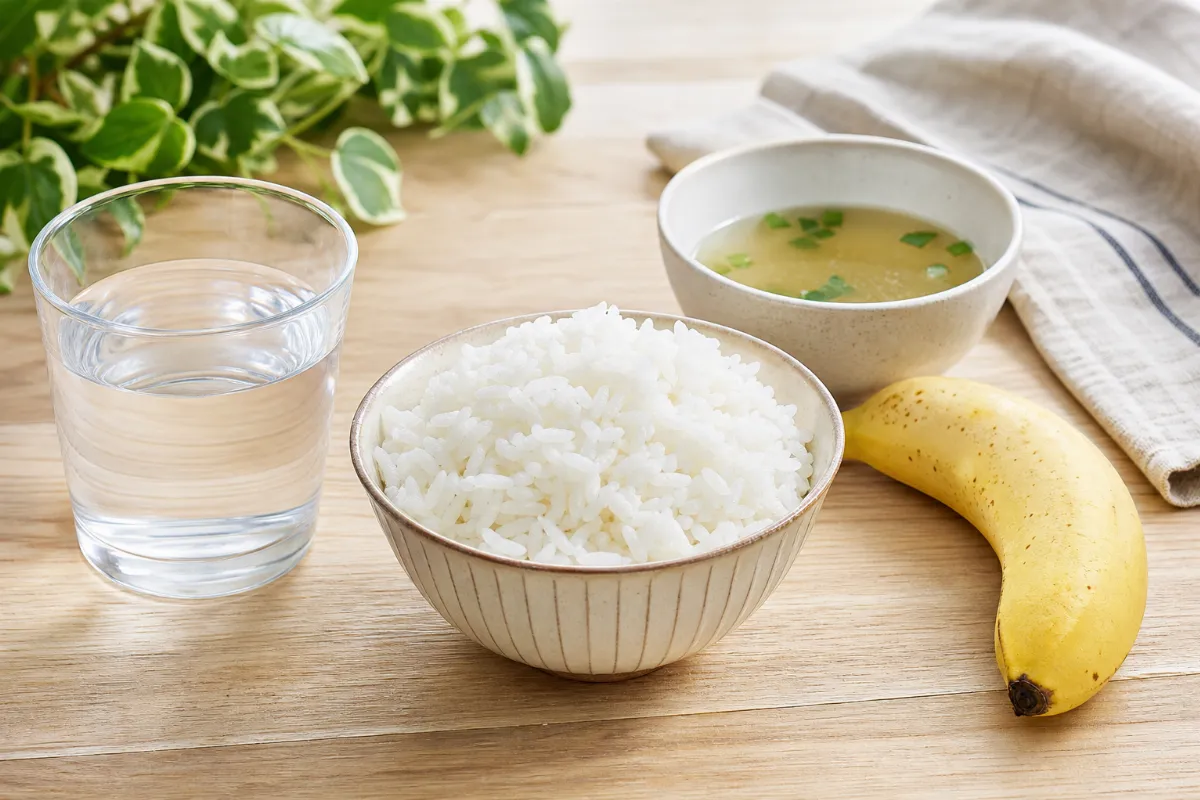
- Small, plain meals such as rice, bread, potato or soup
- Normal foods again as you feel able
- Limit fried and fatty foods, spicy food and sugary drinks for a few days
Foods and breastfeeding for babies and children
The European guideline says breastfeeding should not be interrupted and regular feeding should continue. The NHS says to keep breast or bottle feeding and not to dilute formula; if a baby is sick, offer smaller feeds more often.
7,2After you recover
Once stools are back to normal, rebuild with a varied diet. If loose stools keep returning after certain foods, a food and symptom diary may help you and your clinician see a pattern.
- Fibre, dairy and other foods can be reintroduced gradually
Remedies & supplements
Traditional use, laboratory findings and human trials are kept apart. "Natural" does not mean safe.
Oral rehydration solution
High certaintyStudied form and route: Powder sachets mixed with clean water, or ready-made drinks
Intended outcome: Replaces fluid, sugar and salts
Human evidence: The European paediatric guideline says oral rehydration with a hypoosmolar solution is the major treatment for gastroenteritis in children. The WHO describes ORS as made of clean water, salt and sugar and as the core treatment for dehydration.
Traditional use: No traditional use is described in the sources reviewed.
Laboratory findings: No lab findings relevant to this goal were reviewed.
Limits: ORS treats dehydration, not the infection. Correct mixing matters.
Interactions and precautions: Ask a doctor before giving to infants. Older adults and people with diabetes, kidney disease or other conditions should check first (NIDDK).
7,1,6Probiotics for antibiotic-associated diarrhea
Moderate certaintyStudied form and route: Capsules, powders or yogurt-type products with specific strains
Intended outcome: May lower the chance of loose stools while on antibiotics
Human evidence: A Cochrane review of 33 trials in children and a meta-analysis of 21 trials of Saccharomyces boulardii in children and adults found lower rates of antibiotic-associated diarrhea with probiotics.
Traditional use: Fermented foods are traditional in many cultures; no traditional-use claims are made here.
Laboratory findings: No lab findings relevant to this goal were reviewed.
Limits: Results apply to the strains tested, definitions of diarrhea varied and many trials had risk of bias. For treating acute infectious diarrhea the evidence is weak.
Interactions and precautions: Ask a clinician before use if you are pregnant, seriously ill or have a weakened immune system. Tell your prescriber you are taking them.
9,10,11Zinc (children)
Moderate certaintyStudied form and route: Zinc supplement as directed by a health professional
Intended outcome: May shorten diarrhea in children over six months
Human evidence: A Cochrane review of 33 trials (10,841 children) found it may shorten diarrhea by about half a day, with a larger effect where children were malnourished and no clear effect under six months. The WHO lists zinc in its treatment advice for children.
Traditional use: No traditional use is described in the sources reviewed.
Laboratory findings: No lab findings relevant to this goal were reviewed.
Limits: Mostly trials in Asian settings with high zinc deficiency risk. This is not a recommendation for adults.
Interactions and precautions: Only on the advice of a clinician or health worker.
12,1Herbal teas and plant supplements
Not enough evidenceStudied form and route: Teas, capsules, extracts
Intended outcome: No proven benefit for acute diarrhea found
Human evidence: No human trials for acute diarrhea were reviewed for this page, and the NIDDK, NHS and WHO pages read do not recommend herbal products for it.
Traditional use: Many cultures use herbal teas for stomach upsets; this is traditional use, not proof.
Laboratory findings: No lab findings relevant to this goal were reviewed.
Limits: Absence of evidence in the sources read is not proof of harm or of safety.
Interactions and precautions: Some herbal products can interact with medicines, and their safety in pregnancy is often unknown. Ask a pharmacist, and avoid in pregnancy, breastfeeding and children unless advised.
6,2Therapies & care
Established care for acute diarrhea is mainly fluids and rehydration solutions, normal eating, rest and hygiene, with medical assessment if there are warning signs. A pharmacist can advise on options that suit your age and health. Guidelines for adults and children are summarised in general terms only; this page does not recommend medicines, and you should not stop a prescribed medicine on your own.
Pharmacist advice
High certaintyProfessional advice A pharmacist can advise on oral rehydration powder and whether a medicine to slow the diarrhoea is suitable, and can check whether a medicine you take is causing it.
Who it may suit: Adults and older children with ordinary loose stools, and anyone unsure what to use.
Precautions: Tell them about pregnancy, other medicines, kidney or heart conditions. Medicines to slow diarrhea are not for children under 12 (NHS).
2,6GP or nurse assessment
High certaintyMedical care A clinician can check for dehydration, look for causes with history, examination and sometimes stool or blood tests, and decide whether further care is needed. Guidelines say investigations are generally not needed for most children with gastroenteritis.
Who it may suit: Anyone with warning signs, diarrhea lasting beyond a few days, blood in the stool, or high-risk groups.
Precautions: Bring a list of medicines and supplements.
3,7,4Urgent or hospital care
High certaintyEmergency care Severe dehydration may need intravenous fluids, sometimes in hospital. The NHS lists vomiting blood, severe headache or tummy ache, blue or grey skin, breathing difficulty and confusion as reasons to call emergency services.
Who it may suit: Anyone with severe dehydration or the warning signs listed.
Precautions: Do not drive yourself.
2,6Care for ongoing or recurring loose stools
High certaintyMedical evaluation If loose stools persist or return, a clinician can consider irritable bowel syndrome, inflammatory bowel disease, celiac disease, food intolerances and infections, using tests rather than guesswork.
Who it may suit: Anyone with loose stools lasting weeks.
Precautions: Do not start a gluten-free diet before testing, because it can affect results (see the red flags guide).
3,5Irritable bowel syndrome → Inflammatory bowel disease → Celiac disease →
What to avoid
Habits, products and claims that can get in the way. Never stop a prescribed medicine without talking to the professional who prescribed it.
Risks that apply to most people
Waiting too long to rehydrate
High certaintyWhy: Loose stools remove fluid and electrolytes. The WHO calls dehydration the most serious threat, and NIDDK lists thirst, little urine, dizziness and tiredness as signs.
Who it applies to: Everyone, especially children and older adults.
Try instead: Start sipping fluids at the first loose stool and use ORS if you are losing a lot.
1,3Going to work or school, or preparing food for others, while ill
High certaintyWhy: The NHS advises staying off until you have had no diarrhoea or sickness for at least 2 days, and avoiding preparing food for others, to stop spreading it.
Who it applies to: Anyone with an infectious stomach bug.
Try instead: Rest at home, wash hands often and stay off until 2 days after the last symptoms.
2Fasting or a very restricted diet for days
Moderate certaintyWhy: NIDDK says most experts do not recommend fasting or a restricted diet for acute diarrhea, and that normal eating can resume when appetite returns.
Who it applies to: Adults and children.
Try instead: Eat small, plain meals and widen the diet as you recover.
8,7Personal triggers to check
Caffeine, alcohol, fatty and fried foods
Moderate certaintyWhy: NIDDK lists these among things to avoid during acute diarrhea; the NHS suggests avoiding fatty or spicy foods.
Who it applies to: Adults with active loose stools.
Try instead: Choose water, clear broth and plain foods for a few days.
8,2Fruit juice, fizzy drinks and sugar alcohols
Moderate certaintyWhy: The NHS says fruit juice and fizzy drinks can make diarrhoea worse. NIDDK lists sugary drinks and sugar alcohols in sugar-free gum and sweets.
Who it applies to: Anyone with loose stools.
Try instead: Use water or ORS; save juices and sugar-free products for after recovery.
2,8Milk products in the first days
Low certaintyWhy: NIDDK lists milk products with lactose as something to avoid, and says some people stay lactose-sensitive for a month or more.
Who it applies to: Adults. Infants and children should keep breast milk, formula or their usual diet.
Try instead: Try small amounts later; see the lactose intolerance page if it persists.
8,7Products that need caution
Anti-diarrhea medicine for children, or with blood or fever
High certaintyWhy: The NHS says not to give children under 12 medicine to stop diarrhoea. NIDDK says doctors advise against over-the-counter diarrhea medicines for infants, children and people with bloody stools or fever, and to see a doctor if diarrhea worsens or lasts more than 2 days while using them.
Who it applies to: Children, and adults with blood in the stool or fever.
Try instead: Talk to a pharmacist. For adults, replacing fluids matters more than stopping the stools.
2,6Herbal teas, charcoal, clay or "detox" products as a treatment
Not enough evidenceWhy: In the NIDDK, NHS and WHO pages reviewed for this page, none recommend herbal or detox products for acute diarrhea, and they are not a substitute for fluids. Some can interact with medicines.
Who it applies to: Anyone considering them.
Try instead: Use ORS and normal food; ask a pharmacist before any supplement, especially in pregnancy or for children.
6,2Unsupported claims
"Starve it out" or "flush it out with laxative teas"
Evidence againstWhy: Fasting is not recommended by NIDDK, and no source reviewed supports laxative-type teas or products for diarrhea.
Who it applies to: Anyone.
Try instead: Keep drinking and eating as you can tolerate.
8"Diarrhea always needs antibiotics or a probiotic"
Moderate certaintyWhy: Most acute diarrhea is viral and resolves without treatment, and probiotic evidence is limited to specific situations.
Who it applies to: Anyone.
Try instead: See your doctor if it is bloody, severe or lasting; do not self-treat with leftover antibiotics.
3,11,4Common mistakes
Treating weeks of loose stools as a passing bug
High certaintyWhy: The WHO uses 14 days or more as persistent diarrhoea, and the NHS lists looser stools or a change in bowel habit among bowel cancer symptoms, though many causes are minor.
Who it applies to: Anyone with ongoing symptoms.
Try instead: Book an appointment rather than waiting.
1,5Drinking only plain water when you are losing a lot
Moderate certaintyWhy: Water does not replace salts. NIDDK lists broths and electrolyte drinks, and the WHO describes ORS made of water, salt and sugar.
Who it applies to: Anyone with heavy or repeated loose stools.
Try instead: Alternate water with ORS or clear broth.
6,1Evidence & safety
What the research shows
Strong, consistent guidance from the WHO, NHS and NIDDK supports replacing fluids, using oral rehydration solution when losing a lot, returning to normal eating early and practising hand hygiene. Evidence is weaker for avoiding particular foods, which rests on agency guidance rather than trials. Probiotics have moderate-certainty evidence for preventing antibiotic-associated diarrhea but only weak evidence for treating acute infectious diarrhea, and zinc helps some young children in settings with zinc deficiency. No herbal or detox product was found with reliable evidence for acute diarrhea in the sources reviewed.
Limits of the evidence
- Most food and drink advice comes from agency guidance, not randomized trials in people with gastroenteritis.
- Probiotic results are strain-specific and many trials had high risk of bias or differing definitions of diarrhea.
- The zinc trials were mostly in children in low-income settings and do not apply to well-nourished adults.
- This page did not review the full text of studies and read only the abstracts of those cited.
Precautions and interactions
- Pregnancy: NIDDK says pregnant people with diarrhea should stay in touch with a doctor. Talk to a doctor or midwife before taking any supplement or herbal remedy.
- Breastfeeding: keep breastfeeding; ask a clinician before using any remedy.
- Older adults and people with chronic illness: dehydration can come on fast; check with a doctor about fluids and medicines.
- Medicines: laxative or antacid overuse and some antibiotics can cause diarrhea; never stop a prescribed medicine without asking the prescriber.
- Anti-diarrhea medicines should not be used with blood in the stool or fever, and not in young children.
Life-stage considerations
- Babies and young children can become dehydrated within a day or two: call a doctor early (NIDDK).
- Children: keep breast milk, formula or their usual diet; do not give medicine to stop the diarrhea (NHS).
- Pregnancy and breastfeeding: stay in touch with a doctor or midwife.
- Older adults (over 65): higher risk of dehydration and complications; contact a doctor sooner.
Warning signs
- Signs of dehydration: extreme thirst, dry mouth, little or dark urine, dizziness, tiredness, sunken eyes; in young children no wet diapers for 3 hours, no tears, sunken soft spot, drowsiness.
- Blood in the stool, black or tarry stool, or stool with pus.
- Severe tummy or rectal pain, a high fever, frequent vomiting or being unable to keep fluids down.
- A change in mental state such as confusion or unusual irritability or low energy.
- Diarrhea lasting more than 2 days in adults or more than a day in children, six or more loose stools a day, or bowel changes lasting weeks.
- Unexplained weight loss, tiredness or breathlessness with bowel changes.
Claim checks
You should stop eating until the diarrhea stops
Moderate certaintyNot supported. NIDDK says most experts do not recommend fasting or restricted diets, and normal eating can resume when appetite returns.
8,6Sports drinks are the same as oral rehydration solution
Low certaintyNot the same. NIDDK lists sports drinks among liquids with electrolytes, but ORS is formulated with glucose and electrolytes to replace losses; the WHO treatment is ORS.
6,1A probiotic will cure an infectious stomach bug
Low certaintyNot shown. In children the ESPGHAN group found only weak, low-certainty evidence for some strains, while probiotics taken alongside antibiotics do reduce antibiotic-associated diarrhea in trials.
11,9Herbal or detox products can treat diarrhea
Not enough evidenceNo reliable human evidence was found in the sources reviewed, and they do not replace fluids.
6Questions people ask
How long should loose stools last before I worry?
The NHS says diarrhoea usually stops within 5 to 7 days. NIDDK advises talking to a doctor right away if an adult has diarrhea for more than 2 days, or a child for more than a day, and the NHS suggests calling 111 if it lasts more than 7 days. Loose stools that last weeks should be checked.
What is the best thing to drink?
Water, clear broth and oral rehydration solution, taken in small frequent sips. Oral rehydration solution replaces salts as well as water. The NHS advises avoiding fruit juice and fizzy drinks.
Should I eat or fast?
Eat when you feel able. NIDDK says you can usually return to normal eating when your appetite comes back, and most experts do not recommend fasting or restricted diets.
Is it okay to drink coffee or alcohol?
Better to limit them for a few days. NIDDK lists caffeine and alcohol among things to avoid with acute diarrhea.
Can I take something to stop the diarrhea?
For some adults a pharmacist can advise on a medicine that stops diarrhoea for a few hours, but not for children under 12, and not with blood in the stool or fever. Fluids matter most.
Do probiotics help?
Possibly in one situation: taking certain probiotics alongside antibiotics lowered the chance of antibiotic-associated diarrhea in trials. For treating an ordinary stomach bug the evidence is weak.
When is diarrhea an emergency?
Seek urgent help for signs of severe dehydration, blood or black stool, severe pain, a change in mental state, or if you cannot keep fluids down. Call emergency services for the symptoms listed on the NHS page, such as vomiting blood or confusion.
How do I avoid passing it on?
Wash hands with soap and water, do not prepare food for others, wash soiled bedding on a hot wash, clean toilets and handles, and stay home until 2 days after your last symptoms (NHS).
Why do I get loose stools after antibiotics?
Antibiotics are a listed cause of diarrhea (NIDDK). Tell your prescriber if it is severe, bloody or lasts; do not stop the antibiotic without advice.
Is diarrhea in pregnancy a concern?
NIDDK says pregnant people should stay in touch with a doctor when they have diarrhea, as dehydration matters more. Ask a doctor or midwife before using any remedy.
When might loose stools be something else?
Loose stools that keep coming back or last weeks can be due to conditions such as irritable bowel syndrome, inflammatory bowel disease, celiac disease or food intolerance. A clinician can test; see the linked condition pages.
Can children use the same remedies as adults?
No. Keep their usual feeding, use rehydration solution on advice, do not give medicines to stop diarrhea, and call early if they seem unwell.
References
- World Health Organization. Diarrhoeal disease (fact sheet). Dated 7 March 2024. Read 2026-10-31. source
- NHS. Diarrhoea and vomiting. Page last reviewed 21 December 2023. Read 2026-10-31. source
- NIDDK. Symptoms & Causes of Diarrhea. Page last reviewed September 2024. Read 2026-10-31. source
- Riddle MS, DuPont HL, Connor BA. ACG Clinical Guideline: Diagnosis, Treatment, and Prevention of Acute Diarrheal Infections in Adults. Am J Gastroenterol. 2016;111(5):602-22. PMID 27068718. source
- NHS. Bowel cancer: symptoms. Page last reviewed 4 September 2026. Read 2026-10-31. source
- NIDDK. Treatment for Diarrhea. Page last reviewed September 2024. Read 2026-10-31. source
- Guarino A, Ashkenazi S, Gendrel D, et al. ESPGHAN/ESPID evidence-based guidelines for the management of acute gastroenteritis in children in Europe: update 2014. J Pediatr Gastroenterol Nutr. 2014;59(1):132-52. PMID 24739189. source
- NIDDK. Eating, Diet & Nutrition for Diarrhea. Page last reviewed September 2024. Read 2026-10-31. source
- Guo Q, et al. Probiotics for the prevention of pediatric antibiotic-associated diarrhea. Cochrane Database Syst Rev. 2019 Apr 30. PMID 31039287. source
- Szajewska H, et al. Systematic review with meta-analysis: Saccharomyces boulardii in the prevention of antibiotic-associated diarrhoea. Aliment Pharmacol Ther. 2015. PMID 26216624. source
- Szajewska H, Guarino A, Hojsak I, et al. Use of probiotics for the management of acute gastroenteritis in children: an update. J Pediatr Gastroenterol Nutr. 2020;71(2):261-269. PMID 32349041. source
- Lazzerini M, Wanzira H. Oral zinc for treating diarrhoea in children. Cochrane Database Syst Rev. 2016;12:CD005436. PMID 27996088. source
Related on AlternativeMed
Related goals
Ease Occasional Constipation → Improve Bowel Regularity → Understand Your Food Triggers → Manage Nausea & Stomach Discomfort → Manage Stress-Related Digestive Discomfort → Support a Healthy Gut Microbiome → Stay Hydrated for Daily Wellbeing →
Ingredients, foods and supplements
Psyllium, ginger and peppermint for digestion →
Research, safety and claim-check resources
Digestive symptoms: red flags and when to get help → Gut and digestive health research and evidence → Leaky gut, cleanses and gut tests: claim check →