Honey & Bee Products · Bee product
Bee Pollen
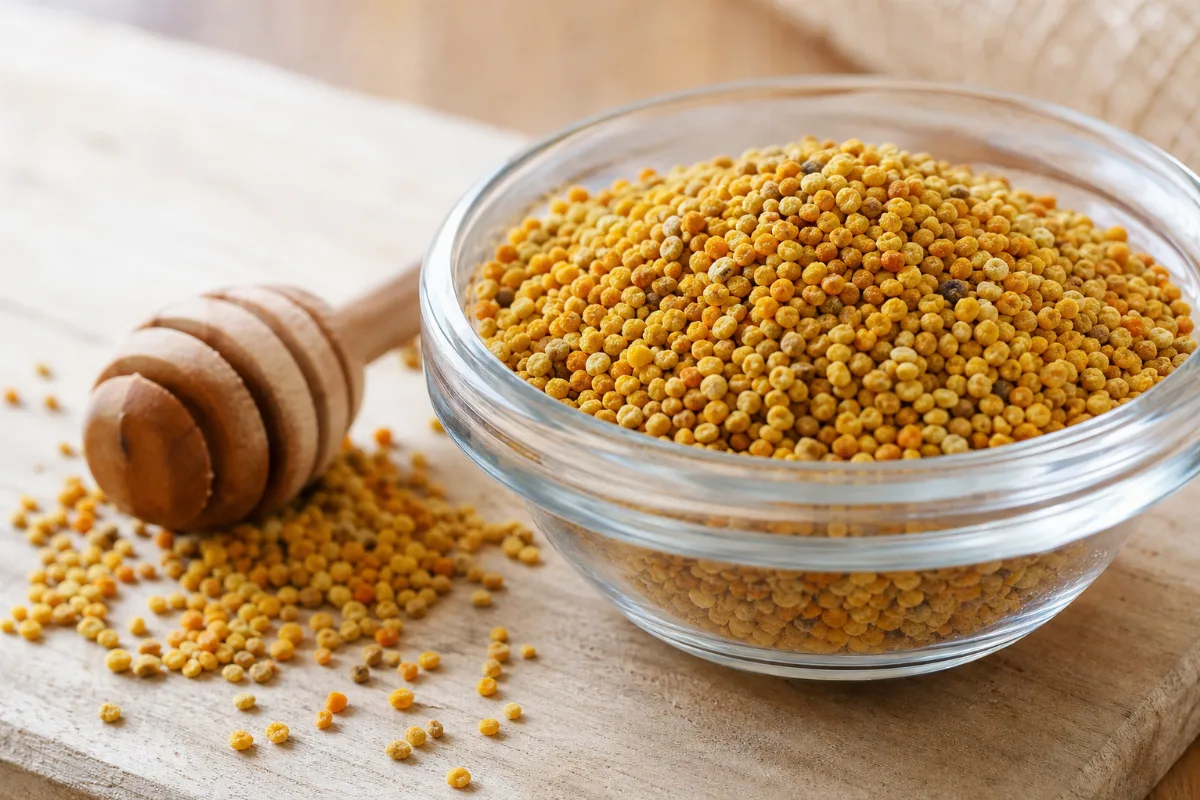
Pollen granules gathered by the honey bee Apis mellifera · also called Bee-collected pollen, honeybee pollen, pollen pellets, polen de abeja
Bee pollen is pollen that honey bees pack into granules with nectar and bee secretions. It can cause serious allergic reactions, including anaphylaxis, especially in people with pollen allergy or asthma. Some weight-loss products sold as bee pollen were found by the FDA to hide drugs. Evidence that it helps any health problem is very weak.
General information, not medical advice. Last substantive update · Not medically reviewed. A named clinician has not signed off on this page. How this page is made
About Bee Pollen
Bee pollen is pollen that honey bees pack into granules with nectar and bee secretions. Safety first: it can cause anaphylaxis and allergic asthma, and some weight-loss products sold as bee pollen were found to contain hidden drugs. Evidence that it helps any condition is very weak.
What it is
Bee pollen is a mix of flower pollen, nectar, enzymes and bee secretions that honey bees pack into granules. Reviews list proteins, amino acids, lipids, carbohydrates, minerals, vitamins and polyphenols in it. What is in a batch depends on the plants the bees visited, as the pollen analysis in the skin-test study and the anaphylaxis case show.
It is a different product from honey, propolis, royal jelly and bee bread, though all come from bees.
What the research shows
The one trial we read was in 46 women with breast cancer on antihormonal treatment. About 71% reported improvement with a pollen-honey mix and about 68% with honey used as the placebo, a non-significant difference. Because honey did as well, the trial cannot show the pollen helped.
A 2019 umbrella review found support for grass pollen extracts in an enlarged prostate and chronic prostatitis, and said evidence regarding bee pollen is too limited to conclude. A 2024 review says bee pollen and bee bread lowered blood glucose and body weight, but its abstract does not separate human trials from cell and animal work. Antioxidant and antimicrobial findings are from lab and animal work.
Quality and contamination
Bee pollen is not standardised. Pesticide residues were found in 33% (seven samples) from commercial apiaries in one Brazilian study. A 2026 review says mould toxins occur frequently in bee pollen, occasionally above safe intakes. A Polish study calculated an increased cancer risk from regular intake of bee pollen and bee bread because of PAHs. That was a calculation from samples, not a finding in people.
A 2026 safety review also reports pollen-based supplements adulterated with illicit drugs. Words such as natural, raw or pure are not safety claims.
At a glance
Traditional uses history, not proof
- Reviews describe bee pollen as a food and tonic used for centuries in traditional medicine and nutrition, with the Bible and ancient Egyptian texts cited by the authors. Long use is not proof that it works.
Studied for research
- Menopausal symptoms after breast cancer treatment (one small trial, honey as comparison), very low
- Prostate and other non-allergic conditions (grass pollen extracts studied; bee pollen too limited), insufficient
- Allergy (no benefit shown; allergic reactions reported), insufficient
- Blood sugar and body weight (review of mostly cell and animal work), insufficient
- Antioxidant and antimicrobial activity (lab), very low
- Nutrient content (composition only), insufficient
Main compounds
- Proteins and amino acids
- Carbohydrates and lipids
- Minerals and vitamins
- Polyphenols and flavonoids
- Pollen allergens (proteins)
Common forms
- Granules
- Powder
- Capsules and other supplements
- Mixes with honey (results do not apply to bee pollen alone)
Research links: Bee pollen anaphylaxis case report, 2015 (abstract) · Bee pollen anaphylaxis and allergic asthma case report, 2026 (abstract) · FDA: Weight Loss Product Notifications · Warfarin and bee pollen case report (abstract) · Menopausal symptoms trial, breast cancer patients (abstract) · Umbrella review of oral pollen (abstract) · Research Library · Genes & Biomarkers Library
What it is and its history
- Accepted scientific name
- Bee pollen: pollen granules that honey bees pack with nectar and bee secretions
- Naming authority
- Made by the honey bee Apis mellifera Linnaeus, 1758 (GBIF accepted name)
- Synonyms
- Bee-collected pollen; Honeybee pollen; Pollen pellets
- Common names
- Bee pollen (English); Polen de abeja (Spanish); Bee-collected pollen (English)
- Family or group
- Made by honey bees (family Apidae). A bee product, not a plant or fungus.
- Classification
- Animalia (the bee that makes it) > Arthropoda > Insecta > Hymenoptera > Apidae > Apis > Apis mellifera
- Habitat
- Collected from hive entrance traps.
- What it looks like
- Flowers: Made from pollen of many flowers; the mix depends on what the bees visited.
- Harvest and processing
- The sources read do not describe harvesting; products are sold as granules, powder or capsules and are not standardised.
- Look-alikes and adulterants
- Name: Bee bread (perga); Note: Pollen that bees have stored and fermented in comb. A different product.; Name: Single-plant pollen or grass pollen extracts; Note: Extracts of grass pollen (used in prostate studies) are not the same as bee pollen granules.; Name: Weight-loss products sold as bee pollen; Note: Some contained hidden drugs, so the name on the label did not describe the contents.
Photographs
Traditional use and history history, not clinical proof
| Tradition or era | Documented use | Source |
|---|---|---|
| Traditional medicine and nutrition (general) | A 2021 review says the Bible and ancient Egyptian texts are documented proof of its use in public health, and a 2019 umbrella review says pollen has been used for centuries as a tonic and multipurpose remedy. These are the authors' statements, and long use is not proof that it works. | p34072636 |
Traditional use shows how it was used. It does not show that it works or is safe today.
What is inside, and how it may work
What it contains and how those compounds act in cells and animals. Laboratory and animal mechanisms are not proven effects in people.
Main compounds
| Compound | Family | Where it is concentrated | Activity studied | Level of evidence |
|---|---|---|---|---|
| Proteins and amino acids | nutrients | Bee pollen | Nutritional content; effect in people not tested. 9 | Lab analysis |
| Carbohydrates, lipids, minerals and vitamins | nutrients | Bee pollen | Listed as components in reviews; amounts not read. 9 15 | Lab analysis |
| Polyphenols and flavonoids | polyphenols | Bee pollen | Reported antioxidant activity in lab tests. 15 9 | Laboratory research |
| Pollen allergens (proteins) | allergens | Pollen grains In one case, IgE bound proteins at about 28 to 34, 45 and 52 kDa. | Trigger IgE-mediated reactions in sensitised people. 4 13 | Human case lab |
Mechanisms, receptors and pathways
| Target or pathway | Gene or receptor | What was found | Level |
|---|---|---|---|
| IgE-mediated allergy | In one anaphylaxis case, IgE to ragweed, chrysanthemum and dandelion pollen and to bee pollen extract was found, and a test showed that chrysanthemum and dandelion pollen inhibited IgE binding to the bee pollen by more than 90%, and ragweed about 40%. This suggests cross-reactivity with weed pollens. 4 | Human case lab | |
| Skin reactivity in atopic people | Skin-prick reactions to bee pollen extracts correlated strongly with reactions to olive, grass and mugwort pollen. 13 | Human skin test | |
| Antioxidant and anti-inflammatory activity | Reviews report these activities, attributed by the authors to phenolic compounds, from lab and animal work. 15 9 | Laboratory research | |
| Warfarin interaction | The mechanism is not known; only a case report describes a rise in INR. 8 | Case report |
Absorption, metabolism and elimination
- Absorption
- Not described in the sources read.
- Distribution
- Not described.
- Metabolism
- Not described.
- Elimination
- Not described.
- Bioavailability
- Not described.
Isolated compounds versus whole extracts
Bee pollen is a mixed product whose make-up depends on the flowers the bees visited. Grass pollen extracts used in some prostate studies are a different product, and results for them do not apply to bee pollen granules.
Nutritional composition
Reviews describe bee pollen as containing protein, amino acids, lipids, carbohydrates, minerals, vitamins and polyphenols. No amounts were read, and amounts vary with the flowers visited.
2 very low certainty4 not enough evidence
What was looked at
The 6 benefits and uses checked for Bee Pollen, each with how strong the evidence is. Tap one to open it.
- Menopausal symptoms after breast cancer treatmentVery low certainty
- Prostate and other non-allergic conditionsNot enough evidence
- Allergy symptomsNot enough evidence
- Blood sugar and body weightNot enough evidence
- Antioxidant, anti-inflammatory and antimicrobial activity (lab)Very low certainty
- Nutrient contentNot enough evidence
Lab markers tracked in the studies
Menopause Rating Scale (MRS) scoreBlood glucoseBody weight
What is Bee Pollen good for?
The uses people ask about and how strong the evidence is for each. None is proven, and all must be read with the Safety tab.
Benefits, one by one
Each card is a research question, not a promise. Tap a goal to filter. Open a card to see the studies, doses and limits.
Menopausal symptoms after breast cancer treatment
Very low certaintyOne small trial of 46 women found most felt better on a pollen-honey mix, but they felt about as much better on plain honey. It cannot show that the pollen did anything.
1 studiesPollen-honey mixture compared with honey; amounts not given in the ab…
Studies, doses and limits
What the trials found
One randomised crossover trial, 46 patients recruited.
Results
Self-reported improvement was 70.9% (22/31) with pollen and 68.3% (28/41) with honey, a non-significant difference. Scores on the Menopause Rating Scale improved in both groups.
Effect sizes as reported
About 71% against 68% reporting improvement; no difference between pollen-honey and honey.
Why this rating
One small trial; the comparison was honey rather than an inert placebo, and results are self-reported.
Form and dose studied
Pollen-honey mixture compared with honey; amounts not given in the abstract.
Who was studied
46 women with breast cancer on antihormonal therapy.
Limits
Small, a single study, and honey was not an inert placebo. Not tested in other groups.
Why researchers looked
Women taking tamoxifen or aromatase inhibitors for breast cancer often have hot flushes, night sweats, poor sleep and mood problems.
Traditional use
The authors cite hot flushes and related symptoms as common problems after antihormonal treatment; no traditional use is described in the abstract.
Proposed mechanism Pharmacological theory
Not established. The abstract gives no mechanism.
A proposed mechanism does not show that the effect happens in people.
Anaphylaxis is a risk with bee pollen. Women with breast cancer should ask their cancer team before taking any supplement.
Prostate and other non-allergic conditions
Not enough evidenceReviews support pollen extracts made from grass for an enlarged prostate and for chronic prostatitis. For bee pollen itself, a 2019 umbrella review says the evidence is too limited to conclude anything.
2 studiesGrass pollen extracts (a different product) in the reviews; bee polle…
Studies, doses and limits
What the trials found
Five systematic reviews were summarised in an umbrella review; the support was for grass pollen extracts, not bee pollen.
Results
Evidence on bee pollen was judged too limited to draw any conclusion on its clinical efficacy. A 2022 review notes trials for prostate illnesses but the abstract gives no results.
Effect sizes as reported
No effect sizes for bee pollen.
Why this rating
The one umbrella review that looked at the question says bee pollen evidence is too limited.
Form and dose studied
Grass pollen extracts (a different product) in the reviews; bee pollen amounts not given.
Who was studied
Men with prostate conditions (mostly grass pollen extract studies).
Limits
Different products (extracts versus granules). Only the abstracts were read.
Why researchers looked
Pollen products have been used for centuries as a tonic and for many complaints, and extracts are studied for prostate problems.
Traditional use
The 2019 umbrella review says pollen has been used for centuries as a tonic and a multipurpose remedy in traditional medicine. Long use is not proof that it works.
Proposed mechanism Pharmacological theory
Not established.
A proposed mechanism does not show that the effect happens in people.
Bee pollen can cause allergic reactions; a prostate problem needs a doctor.
Allergy symptoms
Not enough evidenceBee pollen is sometimes promoted for hay fever, but the evidence goes the other way for safety: it can set off allergic reactions in people with pollen allergy. No source we read shows that it protects against allergy.
4 studiesNot described.
Studies, doses and limits
What the trials found
No trial result was read. Case reports and skin tests show allergic reactions.
Results
A skin-prick study of 202 people found strong reactions to bee pollen extracts in atopic people. Case reports describe anaphylaxis.
Effect sizes as reported
No benefit measured.
Why this rating
No result showing benefit was found in the abstracts read; reports of harm exist.
Form and dose studied
Not described.
Who was studied
People with pollen allergy (who are the ones at risk).
Limits
Allergy trials in the 2022 review were not read.
Why researchers looked
It is sometimes promoted on the idea that eating small amounts of pollen might build tolerance.
Traditional use
A 2022 review says bee pollen has been applied in clinical trials for allergies, but the abstract gives no results.
Proposed mechanism Pharmacological theory
The idea of building tolerance is theory; the sources read describe the opposite risk, sensitisation and reactions.
A proposed mechanism does not show that the effect happens in people.
Do not try bee pollen to treat a pollen allergy. See the Safety tab.
Blood sugar and body weight
Not enough evidenceA 2024 review says bee pollen and bee bread lowered blood sugar and body weight in the studies it covered. The abstract gives no numbers and mixes cells, animals and people. Weight-loss products sold under a bee pollen name have been found to hide drugs.
3 studiesBee pollen and bee bread together; no amounts.
Studies, doses and limits
What the trials found
The review says clinical trials were included but the abstract does not name or count them.
Results
Described as decreased blood glucose and body weight, with no figures.
Effect sizes as reported
No figures in the abstract.
Why this rating
Human results cannot be separated from cell and animal results in the abstract read.
Form and dose studied
Bee pollen and bee bread together; no amounts.
Limits
Only the abstract was read. Bee bread is grouped with bee pollen.
Why researchers looked
Bee pollen is promoted for diabetes and weight control.
Traditional use
A 2024 review describes bee pollen and bee bread as having a long history of use in traditional medicine and supplemental nutrition.
Proposed mechanism In vitro animal
The authors suggest polyphenols and other compounds may improve insulin sensitivity, reduce oxidative stress and affect appetite hormones. This comes mostly from cell and animal work.
A proposed mechanism does not show that the effect happens in people.
Do not use bee pollen for weight loss. Several weight-loss products sold as bee pollen contained hidden drugs. Bee pollen also contains carbohydrates.
Antioxidant, anti-inflammatory and antimicrobial activity (lab)
Very low certaintyReviews report that bee pollen shows antioxidant, anti-inflammatory and antimicrobial activity in lab tests. These tests do not show an effect in people.
2 studiesNot applicable.
Studies, doses and limits
What the trials found
No human result in the abstracts read.
Results
Reported antioxidant, anti-inflammatory, antimicrobial, antifungal, antiviral and anticancer properties, mostly from laboratory and animal work.
Why this rating
Lab and animal findings only; reviewers say sources are hard to compare.
Limits
Content varies with the flowers the bees visited, so results from one batch may not apply to another.
Why researchers looked
Researchers look for natural compounds against oxidative stress.
Traditional use
A 2021 review cites the Bible and ancient Egyptian texts as proof of use. That is the authors' claim, and use over time is not evidence that it works.
Proposed mechanism In vitro animal
Plant compounds such as flavonoids and phenolic acids are thought to be responsible, from lab work.
A proposed mechanism does not show that the effect happens in people.
Not a treatment for any condition.
Nutrient content
Not enough evidenceBee pollen contains protein, amino acids, fats, sugars, minerals, vitamins and plant compounds. These measure what is in the product, not a benefit in people, and amounts vary by batch.
3 studiesNot applicable.
Studies, doses and limits
What the trials found
No human trial of a nutrition effect was read.
Results
A 2021 review lists proteins, amino acids, lipids, carbohydrates, minerals, vitamins and polyphenols. No amounts were read.
Why this rating
Composition only; no study of a health effect from the nutrients.
Limits
The pollen analysis in a skin-test study found content depends on the plants visited.
Why researchers looked
It is sold as a nutritious food supplement.
Traditional use
Described as a functional food in the reviews read.
Proposed mechanism Composition
Not applicable (composition).
A proposed mechanism does not show that the effect happens in people.
Nutrients in a food do not make it a safe choice for allergic people.
Connections to the rest of health
How Bee Pollen connects to the rest of our health knowledge graph. Every link says what kind of connection it is. A safety link (for example to the liver) is a warning, not a benefit. A study that merely mentions a topic never creates a benefit link.
Explore every connection: goals, body systems, organs, symptoms, genes
B. Body systems
| Connected to | Kind of connection | Evidence status | Context | Studies |
|---|---|---|---|---|
| Immune system | Adverse effect or risk | Low certainty | Allergic reactions, including anaphylaxis and allergic asthma; higher risk in atopic people. Allergic reactions including anaphylaxis and allergic asthma; higher risk in atopic people. Preparation or compound: Bee pollen granules or supplements (pollen proteins) |
4 6 13 10 |
| Endocrine System | Biological association | Very low certainty | Studied for: Menopausal symptoms after breast cancer treatment Studied for: Blood sugar and body weight | 12 7 9 2 |
| Reproductive System | Biological association | Not enough evidence | Studied for: Prostate and other non-allergic conditions | 3 2 |
| Immune System | Biological association | Not enough evidence | Studied for: Allergy symptoms Studied for: Antioxidant, anti-inflammatory and antimicrobial activity (lab) | 2 13 4 10 15 9 |
| Metabolic System | Biological association | Not enough evidence | Studied for: Blood sugar and body weight | 7 9 2 |
| Digestive System | Biological association | Not enough evidence | Studied for: Nutrient content | 9 15 13 |
G. Root causes and contributing factors
| Connected to | Kind of connection | Evidence status | Context | Studies |
|---|---|---|---|---|
| Environmental toxins | Adverse effect or risk | Low certainty | Residues measured; harm in people not measured. Preparation or compound: Pesticides, mycotoxins and PAHs in bee pollen |
18 5 16 |
I. Biomarkers
| Connected to | Kind of connection | Evidence status | Context | Studies |
|---|---|---|---|---|
| Menopause Rating Scale (MRS) score | Biological association | Very low certainty | Measured in trials: improved. A lab change is not the same as a health benefit. | 12 |
| Blood glucose | Biological association | Not enough evidence | Measured in trials: lowered. A lab change is not the same as a health benefit. | 7 |
| Body weight | Biological association | Not enough evidence | Measured in trials: lowered. A lab change is not the same as a health benefit. | 7 |
L. Active compounds
| Connected to | Kind of connection | Evidence status | Context | Studies |
|---|---|---|---|---|
| Proteins and amino acids | Biological association | Lab analysis | Nutritional content; effect in people not tested. Preparation or compound: Bee pollen |
9 |
| Carbohydrates, lipids, minerals and vitamins | Biological association | Lab analysis | Listed as components in reviews; amounts not read. Preparation or compound: Bee pollen |
9 15 |
| Polyphenols and flavonoids | Biological association | In vitro | Reported antioxidant activity in lab tests. Preparation or compound: Bee pollen |
15 9 |
| Pollen allergens (proteins) | Biological association | Human case lab | Trigger IgE-mediated reactions in sensitised people. Preparation or compound: Pollen grains |
4 13 |
Each connection is stored with the ingredient, the connected record, the kind of connection, the evidence status, the supporting studies, the preparation or compound involved, and a review date (last reviewed October 30, 2026).
Evidence at a glance: what changed in 2 lab markers
Tap a number to show only those markers. Counts are markers, not people.
The evidence
The research centre for Bee Pollen. Every record here was checked against PubMed or the publisher's page; we never list a study we have not verified.
Evidence by outcome
Bars show how many studies we found for each outcome, not how well it works. People are added up across trials only (reviews are not added, to avoid double counting).
How we rate evidence
High certainty
Several well-run trials or reviews agree; further research is unlikely to change the picture much.
Moderate certainty
Good trials point the same way, but some doubt remains.
Low certainty
Small, short or inconsistent trials. The finding could change with better research.
Very low certainty
Very little or very weak human data. Treat as a possibility only.
Mixed findings
Trials or reviews disagree with each other.
Not enough evidence
Not enough human research to say either way.
Evidence against
Good research found no benefit, or found harm.
We take the reviewers' own risk-of-bias and GRADE statements where they exist, and otherwise judge from study size, design, consistency, directness and whether a product matches what is sold. Many publications do not make evidence high. Method note: We read the abstracts of 19 PubMed papers, read the FDA weight-loss notification list and two product notices through a page-fetch tool, and checked the bee name in GBIF. Certainty ratings are the compiler's own reading. Only abstracts were read for reviews, so their full text may say more.
Study library: every study we checked 21
| Study | Design | People | Product, dose, length | Result |
|---|---|---|---|---|
| Akiyasu 2010 A case report of acute renal failure associated with bee pollen contained in nutritional supplements. Therapeutic Apheresis and Dialysis · PMID 20438524 · DOI |
Case report Human |
1 One 49-year-old man |
Nutritional supplement containing bee pollen Bee pollen granules |
After taking a nutritional supplement containing bee pollen for more than five months, a man had breathing difficulty, no urine, a 20 kg weight gain from fluid and poor appetite. A kidney biopsy showed interstitial nephritis with eosinophils, suggesting a drug-induced cause. He stopped the supplement, had several hemodialysis sessions and improved. The authors say information on adverse effects of bee pollen is not very robust. Acute kidney failure in one person after a bee pollen-containing supplement Methods, limits and fundingOutcomes: Kidney failure Limitations: A supplement with other ingredients. A single case. Cannot show bee pollen was the cause. Funding and conflicts: Not stated. Read: abstract |
| Algethami 2022 Bee Pollen: Clinical Trials and Patent Applications. Nutrients · PMID 35889814 · DOI |
Narrative review Human |
Literature on bee pollen | Bee pollen (review of the literature) Bee pollen granules |
Describes bee pollen as a mix of nectar, flower pollen, enzymes and bee secretions, commonly promoted as a functional food. The abstract says it has been applied in clinical trials for allergies and prostate conditions, with a few investigations on cancer and skin problems. It gives no effect sizes. No effect sizes in the abstract Methods, limits and fundingOutcomes: Clinical trials and patents involving bee pollen Limitations: Only the abstract was read; the individual trials were not read. The abstract language on protection against disease is promotional and not backed by figures there. Funding and conflicts: No conflict of interest declared. Read: abstract |
| Antonelli 2019 Therapeutic efficacy of orally administered pollen for nonallergic diseases: An umbrella review. Phytotherapy Research · PMID 31435975 · DOI |
Umbrella review Human |
Five systematic reviews of oral pollen products for non-allergic conditions | Oral pollen products, mainly grass pollen extracts Pollen extracts |
The reviews support grass pollen extracts for symptomatic benign prostatic hyperplasia and chronic prostatitis, with preliminary evidence for vasomotor symptoms in women. The authors say evidence regarding bee pollen is too limited to draw any conclusion on its clinical efficacy. Grass pollen extracts: some support. Bee pollen: too limited to conclude Methods, limits and fundingOutcomes: Benign prostatic hyperplasia, chronic prostatitis, vasomotor symptoms Limitations: Grass pollen extracts are a different product from bee pollen. Only the abstract was read. Funding and conflicts: Not stated in the abstract. Read: abstract |
| Choi 2015 Bee Pollen-Induced Anaphylaxis: A Case Report and Literature Review. Allergy Asthma Immunol Res · PMID 25749764 · DOI |
Case report Human |
1 One 40-year-old man with seasonal allergic rhinitis |
Bee pollen (pollen granules gathered by honey bees) Bee pollen granules One tablespoon, as reported in the case (not advice) Single exposure |
About 1 hour after eating one tablespoon of bee pollen he had hives, facial swelling, trouble breathing, nausea, vomiting, abdominal pain and diarrhoea; oxygen saturation was 91%. Symptoms settled after epinephrine, chlorpheniramine and dexamethasone. The pollen contained Japanese hop, chrysanthemum, ragweed and dandelion pollens. Skin-prick with bee pollen extract was positive, and blood tests found IgE to ragweed, chrysanthemum, dandelion and bee pollen extract. The authors warn of severe allergic reactions to bee pollen, especially in people with pollen allergy. Anaphylaxis after one serving; IgE against weed pollens in the product Methods, limits and fundingOutcomes: Reaction after eating bee pollen; skin-prick and IgE tests on the pollen Limitations: One person. Cannot say how often it happens. Funding and conflicts: No conflict of interest declared. Read: abstract |
| Draca 2026 An Update on Mycotoxins in Bee Pollen. Toxins · PMID 42188609 · DOI |
Narrative review Human |
Published measurements of mould toxins in bee pollen | Bee pollen (review) Bee pollen granules |
The authors say mycotoxins occur frequently in bee pollen, occasionally at levels above safe intakes, and that few studies exist. The abstract gives no figures. Frequent presence; sometimes above safe intakes (as stated) Methods, limits and fundingOutcomes: Presence and types of mycotoxins Limitations: Only the abstract was read. No figures or toxin names in the abstract. Funding and conflicts: No competing interests declared. Read: abstract |
| Eickholt 2026 Supplemental Bee Pollen Ingestion With Resultant Anaphylaxis and Allergic Asthma: Case Report. Case Reports in Immunology · PMID 42368776 · DOI |
Case report Human |
1 One 26-year-old woman with seasonal allergic rhinitis and past exercise-induced asthma |
Bee pollen dietary supplement Bee pollen granules |
Four hours after taking bee pollen she had lip and tongue swelling, trouble breathing, nausea, abdominal pain and itching, and was treated in an emergency department. One month later, at peak autumn pollen season, she had breathlessness and wheeze. Total IgE was 189 kU/L with raised IgE to ragweed, mugwort and cocklebur; the authors diagnosed allergic asthma secondary to bee pollen. They call for more testing and fuller label warnings. Anaphylaxis, then allergic asthma, after a supplement Methods, limits and fundingOutcomes: Anaphylaxis, later allergic asthma Limitations: One person; the link to asthma rests on timing and the exclusion of other causes by the authors. Funding and conflicts: No conflicts declared. Read: abstract |
| El-Seedi 2024 Natural Remedies and Health; A Review of Bee Pollen and Bee Bread Impact on Combating Diabetes and Obesity. Current Nutrition Reports · PMID 39302593 · DOI |
Narrative review Human |
Cell, animal and clinical studies of bee pollen and bee bread | Bee pollen and bee bread (review of the literature) Bee pollen granules |
The authors say the studies they covered (cells, animals and clinical trials) show promising results: bee pollen and bee bread decreased blood glucose and body weight, and are linked with better insulin sensitivity, less oxidative stress, appetite regulation and changed obesity hormones. They call them promising candidates for further research. The abstract does not separate the human trials, give numbers or name any trial. No figures in the abstract Methods, limits and fundingOutcomes: Blood sugar and body weight Limitations: Only the abstract was read. Bee pollen and bee bread are grouped together and cell, animal and human work are mixed. Funding and conflicts: Not stated in the abstract. Read: abstract |
| Hurren 2010 Probable interaction between warfarin and bee pollen. American Journal of Health-System Pharmacy · PMID 21098375 · DOI |
Case report Human |
1 One 71-year-old man taking warfarin and other medicines |
Bee pollen (pollen granules gathered by honey bees) Bee pollen granules A teaspoon, twice daily, as reported (not advice) One month before the clinic visit |
A man on stable warfarin for nine months began taking bee pollen granules and one month later had an INR of 7.1 (target 2.0 to 3.0). Warfarin was held and the dose later lowered by 11%; with the bee pollen continued, INR stayed in or near range for seven months. The authors rate the interaction as probable on the Drug Interaction Probability Scale. INR 7.1 against a 2.0 to 3.0 target in one person Methods, limits and fundingOutcomes: INR (blood clotting test) Limitations: One case, several other medicines and products. A probable link, not proof. Funding and conflicts: Not stated. Read: abstract |
| Khalifa 2021 Bee Pollen: Current Status and Therapeutic Potential. Nutrients · PMID 34072636 · DOI |
Narrative review Human |
Literature on bee pollen | Bee pollen (review) Bee pollen granules |
Says bee pollen is a combination of plant pollen, honeybee secretions and nectar, that the Bible and ancient Egyptian texts are documented proof of its use in public health, and that it contains proteins, amino acids, lipids, carbohydrates, minerals, vitamins and polyphenols. It is marketed as a functional food. No effect figures; a composition and promotional overview Methods, limits and fundingOutcomes: Composition, health properties, history Limitations: Only the abstract was read. Strong promotional wording. The historical claim is the authors own. Funding and conflicts: No conflict declared. Read: abstract |
| Matuszewska-Mach 2025 Ensuring the Safe Use of Bee Products: A Review of Allergic Risks and Management. International Journal of Molecular Sciences · PMID 41465502 · DOI |
Narrative review Human |
Literature on allergic reactions to honey, bee pollen, bee bread, royal jelly, propolis, beeswax and bee brood | Bee products including bee pollen (review) Bee pollen granules |
Bee products can cause reactions from local dermatitis to life-threatening anaphylaxis, though relatively rarely, by IgE (type I) and T-cell (type IV) mechanisms, through primary sensitisation or cross-reactivity. People with atopy and beekeepers are at heightened risk of anaphylaxis. Management is avoidance, education and clearer labels that list allergen content. Rare but can be severe; atopic people at higher risk Methods, limits and fundingOutcomes: Allergic reactions, mechanisms, at-risk groups Limitations: A narrative review; the abstract has no counts for bee pollen alone. Funding and conflicts: No conflicts declared. Read: abstract |
| Menniti-Ippolito 2008 Surveillance of suspected adverse reactions to natural health products: the case of propolis. Drug Safety · PMID 18422383 · DOI |
Surveillance report Human |
18 18 suspected adverse reactions reported to the Italian national surveillance system (all propolis products) |
Propolis-containing products (not bee pollen) Bee pollen granules |
All 18 reports concerned propolis. In the discussion the authors say products with bee derivatives (bee pollen, royal jelly or propolis) are sold as food supplements in Italy, that no label warned of reactions, and that atopic and asthmatic people may be at increased risk. They call for a warning on the packaging. Bee pollen not itself reported on; general statement about bee-derived products Methods, limits and fundingOutcomes: Suspected adverse reactions Limitations: The reports were about propolis, not bee pollen. Use only for the general statement. Funding and conflicts: Not stated. Read: abstract |
| Munstedt 2015 Bee pollen and honey for the alleviation of hot flushes and other menopausal symptoms in breast cancer patients. Molecular and Clinical Oncology · PMID 26171198 · DOI |
Randomised crossover trial Human |
46 46 women with breast cancer taking antihormonal treatment (tamoxifen or aromatase inhibitors) |
Pollen-honey mixture Bee pollen with honey · vs Pure honey, used as the placebo |
Of the patients who reported, 68.3% (28/41) said their symptoms improved on honey and 70.9% (22/31) on pollen, a non-significant difference. Both groups improved on the Menopause Rating Scale before and after. The authors say the honey meant as a placebo worked as well as the pollen, and both did better than the usual placebo effect of about 25%. Improvement about 70% with pollen-honey and about 68% with honey; no difference between them Methods, limits and fundingOutcomes: Menopause Rating Scale (MRS) symptom scores Limitations: Small. The comparison was honey, which may itself have an effect, so the study cannot show pollen added anything. Based on self-reported improvement. Funding and conflicts: Not stated in the abstract. Read: abstract |
| Pitsios 2006 Bee pollen sensitivity in airborne pollen allergic individuals. Annals of Allergy, Asthma & Immunology · PMID 17165283 · DOI |
Cross sectional skin test Human |
202 202 volunteers: 145 atopic with respiratory allergy and 57 healthy or non-atopic controls |
Five bee pollen extracts made for skin-prick testing Bee pollen Skin-prick test extracts (not eaten) · vs 57 non-atopic controls |
All samples held large amounts of Oleaceae (olive family) pollen, with small amounts of daisy-family and goosefoot-family pollen in some. Reactions to the bee pollen extracts correlated strongly with reactions to olive, grass and mugwort. The authors say bee pollen keeps its allergenic potential, with strong skin reactions in atopic people compared with non-atopic people, and that the safety of eating large amounts in pollen-allergic people needs study. Strong skin reactions in atopic people; correlation with olive, grasses and mugwort Methods, limits and fundingOutcomes: Skin reactions to bee pollen extracts; pollen content of the samples Limitations: Skin tests, not eating the pollen. Exact reaction counts were not in the abstract. Funding and conflicts: Not stated in the abstract (the record lists NIH extramural support). Read: abstract |
| Rocha Filho 2026 Pharmacovigilance and toxicological risks associated with apitherapeutic products: a systematic overview. Archives of Toxicology · PMID 41071287 · DOI |
Systematic review Human |
Literature and pharmacovigilance databases on honey, bee venom, propolis, royal jelly, bee pollen and beeswax | Bee products including bee pollen (review) Bee pollen granules |
Allergic reactions were the commonest adverse event, particularly in atopic people. Reported cases included adulteration of pollen-based supplements with illicit pharmacological substances. The authors say the products are not free from risk and call for better labelling and surveillance. Allergy most common; adulteration reported Methods, limits and fundingOutcomes: Adverse effects and toxicological risks Limitations: The abstract mixes all bee products; it does not give bee pollen counts. Funding and conflicts: No conflict declared. Read: abstract |
| Rodriguez-Polit 2023 Chemical Properties and Biological Activity of Bee Pollen. Molecules · PMID 38067498 · DOI |
Narrative review Human |
Literature on bee pollen composition and activity | Bee pollen (review) Bee pollen granules |
Says bee pollen is a source of many bioactive compounds with reported antioxidant, anti-inflammatory, antimicrobial and antifungal effects and potential antiviral and anticancer applications, and that sources are hard to compare, so standardisation and more work are needed. Reported activities; no human results in the abstract Methods, limits and fundingOutcomes: Bioactive compounds and biological activity Limitations: Only the abstract was read; mostly lab work. Funding and conflicts: No conflict declared. Read: abstract |
| Sawicki 2023 Characteristics of contaminants in the polish-origin bee products and cancer risk assessment. Food and Chemical Toxicology · PMID 36849088 · DOI |
Laboratory analysis Laboratory analysis of samples |
Polish honey, bee pollen and bee bread samples | Bee pollen, bee bread and honey (samples) Bee pollen |
Total PAHs ranged from 324.0 to 866.4 ug/kg across the bee products. The authors calculated an acceptable cancer risk for PAHs from honey but an increased risk for bee bread and bee pollen. Because of the high PAH levels and the high recommended consumption amounts, they say regular consumption of bee bread and pollen may pose a severe threat to health and should be strictly limited. Calculated increased cancer risk for bee pollen and bee bread (a calculation, not a finding in people) Methods, limits and fundingOutcomes: HMF, furfural, PAHs, pesticides; calculated cancer risk Limitations: A risk calculation from samples; no people were studied. The abstract does not give the pollen-only PAH range. Funding and conflicts: No conflict declared. Read: abstract |
| Vermersch 2020 Sebotropic drug eruption after ingestion of bee pollen (French-language report). Annales de Dermatologie et de Venereologie · PMID 31831216 · DOI |
Case report Human |
1 One 37-year-old man |
Bee pollen (pollen granules gathered by honey bees) Bee pollen granules Three weeks before the rash began |
Three weeks after starting bee pollen granules he developed a rash of the face, upper trunk and shoulders with eosinophilia (1.4 G/l). A skin biopsy showed damage to the oil glands with many eosinophils. The rash cleared within 3 weeks of stopping. Patch tests with bee pollen and propolis were negative. The authors call it the first reported sebotropic drug reaction after eating bee pollen. A drug-type skin reaction; resolved on stopping Methods, limits and fundingOutcomes: Skin rash Limitations: One person. Funding and conflicts: Not stated. Read: abstract |
| de Oliveira 2016 Bee pollen as a bioindicator of environmental pesticide contamination. Chemosphere · PMID 27567152 · DOI |
Laboratory analysis Laboratory analysis of samples |
145 pollen samples from ten hives in one Brazilian experimental apiary, plus samples from commercial apiaries | Bee pollen (samples) Bee pollen |
Two pesticides (bioallethrin and pendimethalin) were found below the method limit in the experimental apiary samples. Pesticide residues were detected in seven samples (33%) from commercial apiaries. The authors say pollen is a useful marker of pesticides in the environment. Residues found in 33% of commercial apiary samples (7 samples) Methods, limits and fundingOutcomes: Pesticide residues (26 pesticides tested) Limitations: Brazilian samples only. Levels were not compared with a safety limit in the abstract. Funding and conflicts: Not stated. Read: abstract |
| n/a 2012 FDA public notification: Zi Xiu Tang Bee Pollen Capsules contains hidden drug ingredient (24 October 2012) n/a · Source |
Authoritative guidance n/a |
n/a | n/a |
Says sibutramine is known to substantially increase blood pressure or pulse rate in some patients and may pose a significant risk to people with coronary artery disease, heart failure, arrhythmia or stroke history, and that the product may interact dangerously with other medicines. Methods, limits and fundingOutcomes: FDA laboratory analysis found sibutramine, a controlled substance withdrawn from the US market in October 2010. Limitations: A single product notice from 2012; the product may no longer be sold. Read through a page-fetch tool. Read: page-text |
| n/a 2015 FDA public notification: Evolve Bee Pollen contains hidden drug ingredients (18 December 2015) n/a · Source |
Authoritative guidance n/a |
n/a | n/a |
The notice repeats the sibutramine blood pressure and heart warnings, says the product may interact in life-threatening ways with other medicines, and says studies indicate phenolphthalein carries a cancer-causing risk. Methods, limits and fundingOutcomes: FDA notice names sibutramine and phenolphthalein as hidden ingredients. Limitations: A single product notice from 2015. Read through a page-fetch tool. Read: page-text |
| n/a 2026 FDA: Weight Loss Product Notifications (page current as of 27 October 2026) n/a · Source |
Authoritative guidance n/a |
n/a | n/a |
Says these products pose a serious health risk and can lead to severe health issues and hospitalisation, that the list covers only a small fraction of contaminated products, and that a product not on the list is not necessarily safe. Advises talking to a health care professional. Methods, limits and fundingOutcomes: Lists weight-loss products with hidden drug ingredients. Bee pollen names on the list: Zi Xiu Tang Bee Pollen Capsules (24 Oct 2012), Asset Bee Pollen (12 May 2014), and Evolve, Oasis and Prime Bee Pollen (18 Dec 2015). Limitations: The list page does not name the hidden ingredients; they are in each notice. The page was read through a page-fetch tool. Read: page-text |
What we do not know yet
- No placebo-controlled trial of bee pollen granules for any condition was found in the sources read.
- No study counted how often bee pollen causes allergic reactions.
- No source on bee pollen in pregnancy, breastfeeding or children.
- No interaction data beyond one warfarin case report.
- The FDA notices on bee pollen weight-loss products date from 2012 to 2015.
How new research is added
New studies are found by a saved PubMed search and are placed in a review queue. A person reads each one before it is added.
Lab markers
What changed in blood or saliva tests during trials. A changed number is not the same as feeling or being healthier, and we give no "normal ranges".
Metabolic 2
Blood glucose
Lowered in trials
The amount of sugar in the blood.
Not enough evidenceResults and what it means
Why it was measured
To see whether bee pollen changes blood sugar.
Statistical vs. clinical meaning
Cannot be separated from animal and cell results.
Safety implication
People who manage blood sugar should ask a doctor or pharmacist before adding bee pollen.
| Study | Result | People | Product |
|---|---|---|---|
| 7 | Described in the review as decreased with bee pollen and bee bread; no numbers in the abstract. | Cell, animal and clinical studies (not separated) | Bee pollen and bee bread |
Body weight
Lowered in trials
The weight of the body.
Not enough evidenceResults and what it means
Why it was measured
To see whether bee pollen changes body weight.
Statistical vs. clinical meaning
Cannot be separated from animal and cell results.
Safety implication
Weight-loss products sold as bee pollen have contained hidden drugs.
| Study | Result | People | Product |
|---|---|---|---|
| 7 | Described in the review as decreased; no numbers in the abstract. | Cell, animal and clinical studies (not separated) | Bee pollen and bee bread |
Other 1
Menopause Rating Scale (MRS) score
Improved in trials
A questionnaire that scores hot flushes, mood, sleep, joint and sexual symptoms of menopause.
Very low certaintyResults and what it means
Why it was measured
To see whether the pollen-honey mix changed menopausal symptoms.
Statistical vs. clinical meaning
Improvement was seen with honey as well, so it cannot be credited to pollen.
Safety implication
Not tested in people with pollen allergy.
| Study | Result | People | Product |
|---|---|---|---|
| 12 | Scores improved before and after in both the pollen and the honey groups; the two did not differ. | 46 breast cancer patients on antihormonal treatment | Pollen-honey mixture versus honey |
Safety
What studies and official sources say about side effects, medicines and who should check first. Each point shows what kind of evidence it comes from.
Main points to know 6
- Allergy and anaphylaxis. Bee pollen is pollen, and it can cause serious allergic reactions. One man had hives, facial swelling, trouble breathing and low oxygen about an hour after one serving. A woman had lip and tongue swelling and breathing trouble four hours after a supplement, and later developed allergic asthma. In a skin-prick study, people with respiratory allergy reacted strongly to bee pollen extracts. Reviews list people with atopy (an allergic tendency) and asthma as higher risk. If you have pollen allergy, hay fever, asthma or any bee product allergy, ask an allergist first. For trouble breathing, swelling of the face or throat, or collapse, call emergency services now. Case report 4 6 13 10 11 14
- Weight-loss products sold as bee pollen can hide drugs. The US FDA lists several weight-loss products sold under a bee pollen name as containing hidden drug ingredients: Zi Xiu Tang Bee Pollen Capsules (2012), Asset Bee Pollen (2014) and Evolve, Oasis and Prime Bee Pollen (2015). FDA notices say lab tests found sibutramine, a drug withdrawn from the US market in 2010 that can raise blood pressure and pulse and may be dangerous in people with heart disease, and, in one notice, phenolphthalein. The FDA says such products can lead to severe health problems and hospitalisation and that a product not on its list is not necessarily safe. A label that says bee pollen is not a guarantee of what is inside. Regulatory 21 19 20 14
- Warfarin and other blood thinners. One case report describes a man on a stable warfarin dose whose clotting test (INR) rose to 7.1 a month after he started bee pollen; the authors rate the link as probable. One case is not proof, but anyone on warfarin should talk to their prescriber or pharmacist before taking bee pollen. Case report 8
- Kidney and skin reactions (single cases). One case report links a supplement containing bee pollen to acute kidney failure (interstitial nephritis) needing dialysis; the supplement had other ingredients and it is one person. Another describes a drug-type skin rash with eosinophilia three weeks after starting bee pollen that cleared on stopping. Case report 1 17
- Contamination and quality. Bee pollen carries what the bees collected. Reviews and lab studies report pesticide residues, mould toxins (sometimes above safe intakes, as the authors state) and PAHs, which a Polish study used to calculate an increased cancer risk from regular use. Products are not standardised. Laboratory analysis 18 5 16
- Pregnancy, breastfeeding, children and medicines. No source we read describes bee pollen in pregnancy, breastfeeding or children, or tests it with most medicines. A lack of information is not proof of safety. Ask a doctor or pharmacist. No data 14
Side effects 5
| Effect | How often | Severity and recovery | Evidence |
|---|---|---|---|
| Allergic reaction including anaphylaxis Hives, swelling of lips, tongue or face, trouble breathing, vomiting. Higher risk with atopy, asthma or pollen allergy. | Rare in reports; not counted in the sources read | Can be life-threatening Resolved with emergency treatment in the cases read | Case report 4 6 10 |
| New allergic asthma Breathlessness and wheeze began a month after the anaphylaxis, in pollen season. | One case report | Moderate Not stated | Case report 6 |
| Skin rash (sebotropic drug eruption) Rash of the face, upper trunk and shoulders with eosinophilia. | One case report | Moderate Cleared within 3 weeks of stopping | Case report 17 |
| Acute kidney failure (interstitial nephritis) A supplement containing bee pollen plus other ingredients; cause not proven. | One case report | Severe Improved after dialysis | Case report 1 |
| Raised INR in a person taking warfarin Rated probable by the authors. | One case report | Potentially severe (bleeding risk) INR returned to range after warfarin was held and the dose lowered | Case report 8 |
Liver
We did not find a published case of liver injury from bee pollen in the sources read. That is not proof that it cannot happen.
How often. No data.
Monitoring. No monitoring advice found.
This is a safety connection. It is not evidence that Bee Pollen supports liver health.
Medicines and supplements 4
| With | Why it matters | Importance | Evidence | What to do |
|---|---|---|---|---|
| Warfarin prescription | Not known. A case report describes a rise in INR after a man started bee pollen. | Potentially serious because a high INR increases bleeding risk. | Case report Very low certainty 8 | Ask your prescriber or pharmacist before taking bee pollen if you take warfarin. |
| Hidden drugs in weight-loss products sold as bee pollen (such as sibutramine) prescription | FDA says products containing sibutramine may interact in life-threatening ways with other medicines and can raise blood pressure and pulse. | Serious for people with heart disease or taking other medicines. | Regulatory Moderate certainty 19 20 | Do not use weight-loss products sold as bee pollen. Ask a pharmacist. |
| Allergy and asthma medicines prescription | No interaction study was read. Antihistamines and epinephrine were used to treat the reactions in one case. | Not assessed. | No data Not enough evidence 4 | Ask your doctor or pharmacist if you take allergy or asthma medicines. |
| Other medicines, herbs and supplements other | No interaction studies were read. | Unknown. | No data Not enough evidence 14 | Show your pharmacist the full list of everything you take, including supplements. |
Who should check first 6
| Situation | Advice | Evidence |
|---|---|---|
| Pollen allergy, hay fever, asthma, atopy or bee product allergy | Ask an allergist before using; avoid if you have ever reacted. | Case report 4 6 13 10 |
| Taking warfarin or another blood thinner | Ask your prescriber or pharmacist first; clotting tests may need closer checking. | Case report 8 |
| Kidney disease | Ask a kidney doctor. One case links a bee pollen supplement to kidney failure. | Case report 1 |
| Taking weight-loss products | Do not use weight-loss products sold as bee pollen; some contained hidden drugs. | Regulatory 21 19 20 |
| Pregnancy and breastfeeding | No source read describes safety. Ask a doctor or midwife first. | No data 14 |
| Babies and children | No source read describes safety in children. Skip it unless a paediatrician says otherwise. | No data 14 |
Overdose, product quality and regulators
Summary. No safe amount has been established in the sources read. Allergic reactions do not depend on a high amount, as one case followed a single serving.
Animal. Many hits in PubMed were animal feeding studies in poultry, rabbits and rats. They were not used to judge safety in people.
High dose or long term signals. A Polish study calculated an increased cancer risk from regular intake because of PAHs (a calculation from samples, not a finding in people). One kidney case followed more than five months of a supplement containing bee pollen.
Overdose response. Not described.
Genotoxicity. Not assessed in the sources read.
Bee pollen is not standardised. Pesticides, mould toxins and PAHs have been reported, and some weight-loss products sold under the name were adulterated with drugs.
Pesticides. In a Brazilian study, pesticide residues were detected in seven samples (33%) from commercial apiaries, and the authors suggest pollen as an environmental marker. 18
Mould toxins. A 2026 review says mycotoxins occur frequently in bee pollen, occasionally above safe intakes, with few studies available. 5
PAHs and calculated cancer risk. A Polish study measured total PAHs of 324.0 to 866.4 ug/kg across bee products and calculated an increased cancer risk from bee pollen and bee bread, saying regular use should be strictly limited. 16
Illicit drugs in pollen-based supplements. A 2026 systematic overview reports adulteration of pollen-based supplements with illicit pharmacological substances. The FDA names sibutramine in Zi Xiu Tang Bee Pollen Capsules and sibutramine plus phenolphthalein in Evolve Bee Pollen. 14 19 20
Allergen content varies. Pollen content depends on the plants visited. In the skin-test study every sample held large amounts of olive-family pollen. 13
| Body | Action | Date |
|---|---|---|
| US Food and Drug Administration (United States) | Weight Loss Product Notifications list: Zi Xiu Tang Bee Pollen Capsules (hidden drug ingredient, 24 Oct 2012), Asset Bee Pollen (12 May 2014), Evolve, Oasis and Prime Bee Pollen (hidden drug ingredients, 18 Dec 2015). The page says these products pose a serious health risk and the list covers only a fraction of contaminated products. source | 2026-10-27 |
| US Food and Drug Administration (United States) | Public notification: Zi Xiu Tang Bee Pollen Capsules contains sibutramine (24 Oct 2012). source | 2012-10-24 |
| US Food and Drug Administration (United States) | Public notification: Evolve Bee Pollen contains sibutramine and phenolphthalein (18 Dec 2015). source | 2015-12-18 |
| Italian National Health Institute surveillance (published report) (Italy) | Authors state bee derivatives including bee pollen are sold as supplements without label warnings and call for a warning. The 18 reports were about propolis. source | 2008 |
When to get medical help
- Trouble breathing, wheeze, swelling of the face, lips, tongue or throat, widespread hives, vomiting or fainting after bee pollen: call emergency services now.
- Very little or no urine, sudden swelling or fast weight gain: get urgent medical care.
- Unusual bruising, bleeding, black stools or blood in urine if you take warfarin: get urgent medical care.
- A fast heartbeat, chest pain, severe headache or a very high blood pressure after a weight-loss product: seek urgent care and keep the package.
Stop using the product and contact a clinician or emergency service. In the US, Poison Control is 1-800-222-1222.
General information only, not medical advice. Ask a clinician or pharmacist before use, especially with medicines, in pregnancy or with a health condition. See the Natural Remedy Safety guide.
Frequently asked questions
Can bee pollen cause anaphylaxis?
Who should avoid bee pollen?
Does bee pollen help with weight loss?
What hidden drugs were found in bee pollen weight-loss products?
FDA notices say sibutramine was found in Zi Xiu Tang Bee Pollen Capsules (2012) and in Evolve Bee Pollen (2015), the latter also with phenolphthalein. Sibutramine was withdrawn from the US market in 2010 and can raise blood pressure and pulse. These are old notices and the products may no longer be sold.
Is bee pollen the same as honey?
Can bee pollen interact with medicines?
Does bee pollen help hay fever or allergies?
Does bee pollen help menopause symptoms?
One small trial of 46 breast cancer patients found about 71% improved with a pollen-honey mix and about 68% with honey. The difference was not significant, so it does not show pollen helped.
Is bee pollen good for the prostate?
Is bee pollen safe in pregnancy, breastfeeding or for children?
No source we read describes bee pollen in pregnancy, breastfeeding or children, and a lack of information is not proof of safety. Ask a doctor, midwife or paediatrician first.
Can bee pollen products be contaminated?
Is bee pollen a medicine?
No. It is a hive food or supplement. A 2019 review says evidence on its clinical efficacy is too limited to conclude. Do not use it instead of care for allergy, prostate problems, menopausal symptoms, diabetes or any illness.
Explore by health goal
Editorial transparency
- Written by
- AlternativeMed editorial team. Research compiled with AI assistance, then checked against PubMed records.
- Medical review
- None. This page has not been reviewed by a physician or pharmacist.
- First published
- 2026-10-30
- Last substantive update
- 2026-10-30
- How we research
- We read the abstracts of 19 PubMed papers, read the FDA weight-loss notification list and two product notices through a page-fetch tool, and checked the bee name in GBIF. Certainty ratings are the compiler's own reading. Only abstracts were read for reviews, so their full text may say more.
- How we rate evidence
- See "How we rate evidence" in the Evidence tab.
- Independence
- No product is promoted on this page. No affiliate links are shown.
Sources 21
Each source was opened and checked. Where we read only the abstract, it says so. The small numbers in the text point here.
- Akiyasu T, Paudyal B, Paudyal P, et al. A case report of acute renal failure associated with bee pollen contained in nutritional supplements.. Therapeutic Apheresis and Dialysis. 2010. PMID 20438524. DOI 10.1111/j.1744-9987.2009.00707.x. (abstract)
- Algethami JS, El-Wahed AAA, Elashal MH, et al. Bee Pollen: Clinical Trials and Patent Applications.. Nutrients. 2022. PMID 35889814. DOI 10.3390/nu14142858. (abstract)
- Antonelli M, Donelli D, Firenzuoli F. Therapeutic efficacy of orally administered pollen for nonallergic diseases: An umbrella review.. Phytotherapy Research. 2019. PMID 31435975. DOI 10.1002/ptr.6484. (abstract)
- Choi JH, Jang YS, Oh JW, et al. Bee Pollen-Induced Anaphylaxis: A Case Report and Literature Review.. Allergy Asthma Immunol Res. 2015. PMID 25749764. DOI 10.4168/aair.2015.7.5.513. (abstract)
- Draca N, Vcelik S, Krska R, et al. An Update on Mycotoxins in Bee Pollen.. Toxins. 2026. PMID 42188609. DOI 10.3390/toxins18050207. (abstract)
- Eickholt E, Norelli V, Martin K, et al. Supplemental Bee Pollen Ingestion With Resultant Anaphylaxis and Allergic Asthma: Case Report.. Case Reports in Immunology. 2026. PMID 42368776. DOI 10.1155/crii/9583906. (abstract)
- El-Seedi HR, El-Wahed AAA, Salama S, et al. Natural Remedies and Health; A Review of Bee Pollen and Bee Bread Impact on Combating Diabetes and Obesity.. Current Nutrition Reports. 2024. PMID 39302593. DOI 10.1007/s13668-024-00567-3. (abstract)
- Hurren KM, Lewis CL. Probable interaction between warfarin and bee pollen.. American Journal of Health-System Pharmacy. 2010. PMID 21098375. DOI 10.2146/ajhp090489. (abstract)
- Khalifa SAM, Elashal MH, Yosri N, et al. Bee Pollen: Current Status and Therapeutic Potential.. Nutrients. 2021. PMID 34072636. DOI 10.3390/nu13061876. (abstract)
- Matuszewska-Mach E, Borysewicz P, Krolak J, et al. Ensuring the Safe Use of Bee Products: A Review of Allergic Risks and Management.. International Journal of Molecular Sciences. 2025. PMID 41465502. DOI 10.3390/ijms262412074. (abstract)
- Menniti-Ippolito F, Mazzanti G, Vitalone A, et al. Surveillance of suspected adverse reactions to natural health products: the case of propolis.. Drug Safety. 2008. PMID 18422383. DOI 10.2165/00002018-200831050-00007. (abstract)
- Munstedt K, Voss B, Kullmer U, et al. Bee pollen and honey for the alleviation of hot flushes and other menopausal symptoms in breast cancer patients.. Molecular and Clinical Oncology. 2015. PMID 26171198. DOI 10.3892/mco.2015.559. (abstract)
- Pitsios C, Chliva C, Mikos N, et al. Bee pollen sensitivity in airborne pollen allergic individuals.. Annals of Allergy, Asthma & Immunology. 2006. PMID 17165283. DOI 10.1016/S1081-1206(10)61104-0. (abstract)
- Rocha Filho LKA, Silva GI, Silva MS. Pharmacovigilance and toxicological risks associated with apitherapeutic products: a systematic overview.. Archives of Toxicology. 2026. PMID 41071287. DOI 10.1007/s00204-025-04218-6. (abstract)
- Rodriguez-Polit C, Gonzalez-Pastor R, Heredia-Moya J, et al. Chemical Properties and Biological Activity of Bee Pollen.. Molecules. 2023. PMID 38067498. DOI 10.3390/molecules28237768. (abstract)
- Sawicki T, Surma M, Sadowska-Rociek A. Characteristics of contaminants in the polish-origin bee products and cancer risk assessment.. Food and Chemical Toxicology. 2023. PMID 36849088. DOI 10.1016/j.fct.2023.113693. (abstract)
- Vermersch C, Kerdraon R, Armingaud P, et al. Sebotropic drug eruption after ingestion of bee pollen (French-language report).. Annales de Dermatologie et de Venereologie. 2020. PMID 31831216. DOI 10.1016/j.annder.2019.09.605. (abstract)
- de Oliveira RC, Queiroz SCDN, da Luz CFP, et al. Bee pollen as a bioindicator of environmental pesticide contamination.. Chemosphere. 2016. PMID 27567152. DOI 10.1016/j.chemosphere.2016.08.022. (abstract)
- n/a. FDA public notification: Zi Xiu Tang Bee Pollen Capsules contains hidden drug ingredient (24 October 2012). n/a. 2012. (page-text)
- n/a. FDA public notification: Evolve Bee Pollen contains hidden drug ingredients (18 December 2015). n/a. 2015. (page-text)
- n/a. FDA: Weight Loss Product Notifications (page current as of 27 October 2026). n/a. 2026. (page-text)
Where to buy
Check the label first. Whatever you buy, look for these:
- Raw or pasteurized, and the single flower source if stated
- Origin and any lab testing the seller shares
- Not for infants under 12 months
- A sealed jar with a packed-on date
Talk to a pharmacist or doctor before you start any supplement, especially if you take medicines. See the Safety tab for interactions.
Support our free guides: as an Amazon Associate we earn from qualifying purchases. Full disclosure.


