Honey & Bee Products · Bee product
Bee Bread
Perga: pollen fermented in comb cells by the honey bee Apis mellifera · also called Perga, beebread, fermented bee pollen
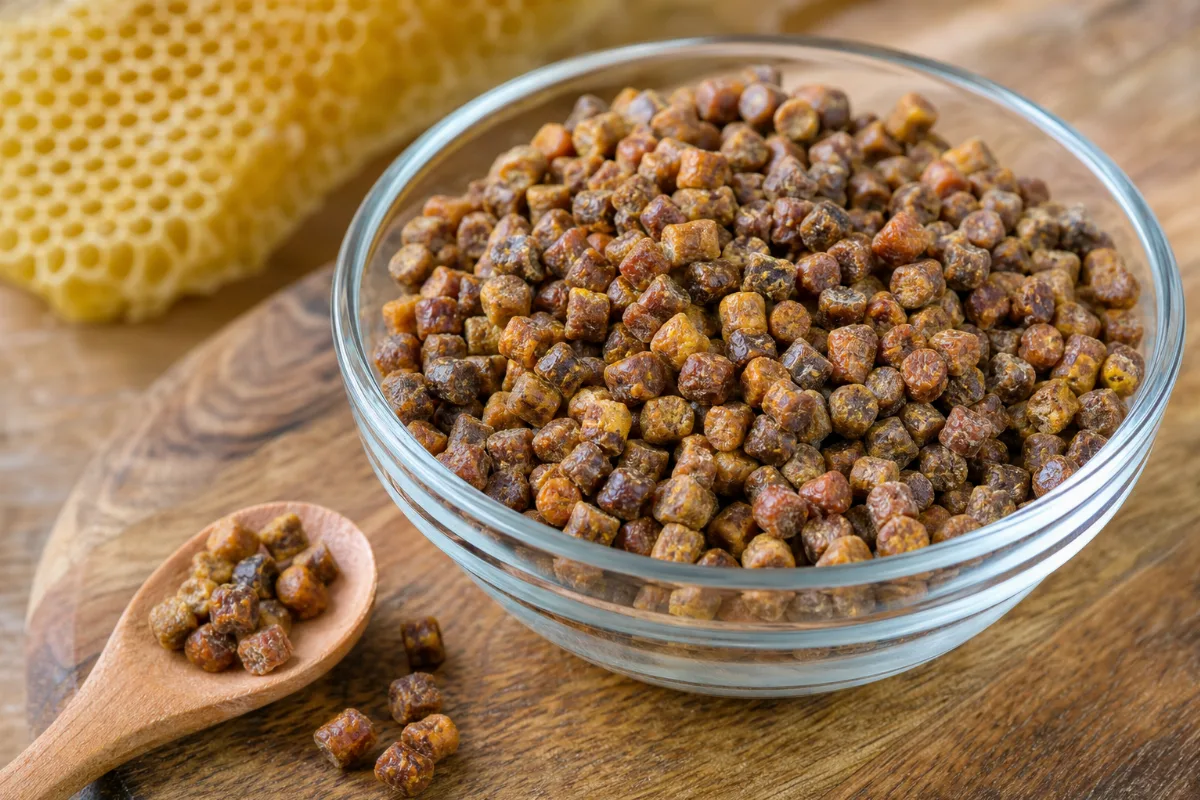
Bee bread is pollen that honey bees pack into honeycomb cells, mix with nectar or honey and seal. It ferments there. The only human report is one old, unclear study of cholesterol. The rest is lab and animal work. It can cause allergy because it is made from pollen, and it can carry pesticide residues. Keep it away from babies under 12 months.
General information, not medical advice. Last substantive update · Not medically reviewed. A named clinician has not signed off on this page. How this page is made
About Bee Bread
Bee bread (perga) is pollen that honey bees store in comb cells and ferment. Safety first: it can cause allergic reactions because it is made from pollen, it can carry pesticide residues and other contaminants, and it should be kept away from babies under 12 months. Human evidence is one old report on cholesterol. Other findings come from the lab and animals.
What it is
Bees pack pollen into comb cells, mix it with nectar or honey and bee saliva, and seal it. Lactic acid bacteria and yeasts ferment it. It is food for the bees and their young. A Croatian study found bees filled two thirds to three quarters of each cell with it, and that it held more water and different carbohydrates than fresh pollen.
People take it out of the comb and sell it fresh, dried or in capsules. Its content depends on the flowers, the season and the place. Pollen fermented in the lab is similar but not identical.
What the research shows
Human evidence is one report from 2011 in 157 adults with unhealthy blood fats. Total cholesterol fell about 15.7% in the bee bread group. The abstract does not describe random assignment, a placebo or funding, and the authors tie gains in heavier people to weight loss.
Reviews and rat studies report antioxidant, antimicrobial, blood sugar and inflammation effects of extracts, plus reproductive findings for stingless-bee bread in animals. These do not show effects in people. A 2026 review says most hive products lack standardised clinical trials.
Reviews often group bee pollen and bee bread, so a result for one may not apply to the other.
Quality and buying
Contents and contaminants vary by colony, place and season, and bee bread is not standardised. Pesticides, PAHs, plant toxins, mould toxins and HMF have been reported in bee products. A safety review also reports pollen-based supplements adulterated with illicit drugs.
Words such as natural or raw are not safety claims. No regulator statement on bee bread was read, so nothing is said here about its legal status.
At a glance
Traditional uses history, not proof
- Described as a hive product used in apitherapy and as a functional food; no detailed history of use is given in the sources read.
- A 2024 review says bee pollen and bee bread have a long history in traditional medicine and supplemental nutrition. Long use is not proof that they work.
Studied for research
- Blood fats (one old human report, unclear design), very low
- Blood sugar and body weight (reviews, mostly lab and animal), insufficient
- Inflammation signals (rats), very low
- Antioxidant activity (lab), very low
- Antimicrobial and antitumour activity (lab), very low
- Reproductive health (stingless-bee bread, animals), insufficient
- Nutrient content (composition only), insufficient
Main compounds
- Protein and amino acids
- Sugars, mainly fructose
- Polyphenols and flavonoids, including gallic acid
- Organic acids such as succinic and lactic acid
Common forms
- Fresh bee bread in the comb
- Dried granules or powder
- Capsules
- Laboratory-fermented pollen (similar, not identical)
- Blends with honey or royal jelly (results do not apply to bee bread alone)
Research links: Allergic risks of bee products, review (abstract) · Pesticide residues in bee bread, review (abstract) · Bee bread and blood fats, 2011 report (abstract) · Bee bread as a promising source of bioactive molecules, review (abstract) · Bee pollen anaphylaxis case report (abstract) · WHO: Botulism · Research Library · Genes & Biomarkers Library
What it is and its history
- Accepted scientific name
- Bee bread (perga): pollen packed in comb cells and fermented by lactic bacteria and yeasts
- Naming authority
- Made by the honey bee Apis mellifera Linnaeus, 1758 (GBIF accepted name)
- Synonyms
- Perga; Beebread; Fermented bee pollen
- Common names
- Bee bread (English); Perga (English); Beebread (English)
- Family or group
- Made by honey bees (family Apidae). It is a bee product, not a plant or fungus.
- Classification
- Animalia (the bee that makes it) > Arthropoda > Insecta > Hymenoptera > Apidae > Apis > Apis mellifera
- Habitat
- Honeycomb cells inside the hive.
- What it looks like
- Flowers: Made from pollen collected from many flowers.
- Harvest and processing
- Taken out of the comb by hand (a Croatian study did this two weeks after collecting pollen); sold fresh in comb, dried as granules or powder, or in capsules. Processing is not standardised (existing summary and 2026 review).
- Look-alikes and adulterants
- Name: Fresh bee pollen; Note: Fresh granules the bees carry, not yet stored and fermented. Bee bread has more water and altered carbohydrates.; Name: Laboratory-fermented pollen; Note: Pollen fermented with a starter culture to imitate bee bread. A 2023 lab study found it similar but not identical.; Name: Honey, royal jelly and mixed bee products; Note: Blends with other bee products tell you little about bee bread alone.
Photographs
Traditional use and history history, not clinical proof
| Tradition or era | Documented use | Source |
|---|---|---|
| Traditional medicine and supplemental nutrition (general) | A 2024 review describes bee pollen and bee bread as two bee products with a long history in traditional medicine and supplemental nutrition. A 2026 review groups bee bread among hive products used as natural remedies. No source read gives a detailed history of bee bread specifically. Long use is not proof that it works. | p39302593 |
Traditional use shows how it was used. It does not show that it works or is safe today.
What is inside, and how it may work
What it contains and how those compounds act in cells and animals. Laboratory and animal mechanisms are not proven effects in people.
Main compounds
| Compound | Family | Where it is concentrated | Activity studied | Level of evidence |
|---|---|---|---|---|
| Protein and amino acids | nutrients | Bee bread (pollen origin) 22.57 g protein per 100 g in one sample; all essential amino acids except tryptophan in Turkish samples. | Nutritional content; effect in people not tested. 7 2 | Lab analysis |
| Sugars (mainly fructose) | sugars | Bee bread 26.78 g per 100 g in one sample; fructose highest in Turkish samples. | Energy; relevant to blood sugar. 7 2 | Lab analysis |
| Gallic acid PubChem 370 | phenolic acid | Bee bread Highest phenolic measured, 39.97 (units given as 'micro per g' in the abstract). | Antioxidant in lab tests. 2 24 | Laboratory research |
| Succinic acid PubChem 1110 | organic acid | Bee bread 73.63 mg/g, the highest organic acid in Turkish samples. | Composition marker. 2 25 | Lab analysis |
| Total phenolics and flavonoids | polyphenols | Bee bread Up to 18.35 mg GAE/g phenolics and 2.82 mg QE/g flavonoids in Turkish samples. | Antioxidant activity in lab tests; more bioaccessible than in pollen in a digestion model. 2 8 | Laboratory research |
| Lactic acid | fermentation product | Bee bread Not given in the abstracts. | Made by the bacteria that ferment pollen; linked by authors to keeping quality. 5 14 | Lab analysis |
Mechanisms, receptors and pathways
| Target or pathway | Gene or receptor | What was found | Level |
|---|---|---|---|
| Antioxidant activity | Extracts showed antioxidant activity in lab tests; the polyphenols involved are linked by authors to this. 4 2 | Laboratory research | |
| Enzyme inhibition (alpha-amylase, angiotensin I-converting enzyme) | Bee bread extracts inhibited both enzymes in vitro. 4 | Laboratory research | |
| Inflammation signals (IL-6, TNF-alpha, IL-1beta, IL-4, IL-10, IL-1RA) | IL6, TNF, IL1B, IL4, IL10, IL1RN | Bee bread changed these signals in rats. 12 | In vivo animal |
| Reduced allergenicity through fermentation (proposed) | The 2025 review suggests lactic fermentation may break down allergenic proteins. This is the authors' suggestion, not tested. 13 | Hypothesis |
Absorption, metabolism and elimination
- Absorption
- Not studied in people. A digestion model found polyphenols more bioaccessible in bee bread than pollen.
- Distribution
- Not studied.
- Metabolism
- Not studied.
- Elimination
- Not studied.
- Bioavailability
- Not studied.
Isolated compounds versus whole extracts
Bee bread is a whole hive product that varies by flowers, season and place. Results for single compounds, bee pollen, lab-fermented pollen, stingless-bee bread or honey blends do not carry over to hive bee bread.
Nutritional composition
Per 100 g, one sample had 22.57 g protein and 26.78 g sugar, but a real portion is far smaller than 100 g, and the nutrient figures vary with the flowers, season and place.
5 very low certainty3 not enough evidence
What was looked at
The 8 benefits and uses checked for Bee Bread, each with how strong the evidence is. Tap one to open it.
- Blood fats (cholesterol)Very low certainty
- Blood sugar and body weightNot enough evidence
- Inflammation (signals in rats)Very low certainty
- Antioxidant activity (lab)Very low certainty
- Antimicrobial and antitumour activity (lab)Very low certainty
- Reproductive health (stingless bee bread, animals)Not enough evidence
- Nutrient contentNot enough evidence
- Fermentation and polyphenol releaseVery low certainty
Lab markers tracked in the studies
Total cholesterolLDLP cholesterolIL-6 and TNF-alpha (inflammation signals)DPPH antioxidant valueAlpha-amylase and angiotensin I-converting enzyme (in vitro)Polyphenol bioaccessibility
What is Bee Bread good for?
The uses people ask about and how strong the evidence is for each. None is proven, and all must be read with the Safety tab.
Benefits, one by one
Each card is a research question, not a promise. Tap a goal to filter. Open a card to see the studies, doses and limits.
Blood fats (cholesterol)
Very low certaintyOne old Russian-language report of 157 adults found lower cholesterol with bee bread plus a diet. The abstract does not say people were randomly assigned or that a placebo was used. It cannot show bee bread caused the change.
1 studiesBee bread (form not described) with a diet; amount not stated in the …
Studies, doses and limits
What the trials found
One clinical report, 157 adults aged 39 to 72 in four groups (diet only; diet plus honey or pollen; bee bread; diet plus honey plus pollen).
Results
In the abstract, total cholesterol fell 15.7% and LDLP cholesterol 20.5% in the bee bread group. Honey plus pollen did slightly better (18.3% and 23.9%). The authors say that in overweight and obese people the improvement happened only when body weight fell.
Effect sizes as reported
About 16% lower total cholesterol and 21% lower LDLP cholesterol in the bee bread group, as reported.
Why this rating
A single report from 2011 with no stated randomisation, placebo, group sizes or funding, and no later trial to confirm it. The authors themselves tie gains in heavier people to weight loss.
Form and dose studied
Bee bread (form not described) with a diet; amount not stated in the abstract.
Who was studied
Adults 39 to 72 with atherogenic dyslipidemia, no allergy to honey, pollen or bee bread.
Limits
Old, Russian-language, design unclear. The diet-only comparison is not in the abstract. Bee bread was in a separate group from honey and pollen, so it was not tested alongside a matching placebo.
Why researchers looked
People with an unhealthy blood fat pattern (atherogenic dyslipidemia) were given bee products alongside a cholesterol-lowering diet.
Traditional use
Sources describe bee bread as a hive product used in apitherapy and as a functional food; none gives a detailed traditional use for blood fats.
Proposed mechanism Pharmacological theory
Not established. Reviews suggest polyphenols and other compounds may play a role, but this is theory.
A proposed mechanism does not show that the effect happens in people.
Check allergy first: see the Safety tab. Not for babies under 12 months. Do not use it in place of cholesterol treatment from a doctor.
Blood sugar and body weight
Not enough evidenceA 2024 review says bee pollen and bee bread decreased blood sugar and body weight in the studies it covered, mostly cell and animal work. Its abstract does not separate bee bread from pollen or name a human trial of bee bread. Bee bread is also a sugary product.
3 studiesNot applicable (review level). Bee bread forms vary.
Studies, doses and limits
What the trials found
No human trial of bee bread for blood sugar or weight was found in the sources read. The reviews cover cells, animals and some clinical work on pollen and bee bread together.
Results
The 2024 review reports decreases in blood glucose and body weight, improved insulin sensitivity and less oxidative stress, without separating the products or study types in its abstract. The 2022 review reports relief of high blood sugar in animal studies.
Effect sizes as reported
Not given as numbers in the abstracts.
Why this rating
Reviews are narrative, mix animal and clinical work, and are authored by groups in bee product research. A bee bread sample was 26.78 g sugar per 100 g in one analysis, so it is not a low-sugar food.
Who was studied
Animals and cells; clinical work not described for bee bread alone.
Limits
No separate human result for bee bread. Abstract gives no numbers.
Why researchers looked
Reviews ask whether bee bread compounds could affect blood sugar or appetite.
Traditional use
El-Seedi 2024 describes bee pollen and bee bread as having a long history in traditional medicine and supplemental nutrition.
Proposed mechanism Laboratory research
In the lab, bee bread extracts blocked the enzyme alpha-amylase, which helps break down starch. This is a lab finding.
A proposed mechanism does not show that the effect happens in people.
People who manage blood sugar should ask a doctor or pharmacist. Check allergy first: see the Safety tab. Not for babies under 12 months.
Inflammation (signals in rats)
Very low certaintyIn one rat experiment, bee bread lowered inflammation signals in the blood. This does not show it calms inflammation in people.
2 studies500 mg per kg per day in rats; not a human amount.
Studies, doses and limits
What the trials found
No human trial found.
Results
In 48 rats with cotton-pellet inflammation, a week of oral bee bread lowered pro-inflammatory signals and raised anti-inflammatory ones. Pollen did best, then bee bread and propolis.
Effect sizes as reported
Significant changes versus control (p < 0.001), no size given in the abstract.
Why this rating
Rats, one week, one group of rats. Animal findings often do not carry over to people.
Form and dose studied
500 mg per kg per day in rats; not a human amount.
Who was studied
Female Sprague Dawley rats.
Limits
Rats only. No human data.
Why researchers looked
Researchers compared bee products for chronic inflammation because they contain polyphenols and other compounds.
Traditional use
No traditional use specific to inflammation is described in the sources read.
Proposed mechanism In vivo animal
Rats given bee bread had lower IL-6, TNF-alpha and IL-1beta and higher IL-4, IL-10 and IL-1RA. These are animal findings.
A proposed mechanism does not show that the effect happens in people.
Not applicable to people. Check allergy first: see the Safety tab. Not for babies under 12 months.
Antioxidant activity (lab)
Very low certaintyIn lab tests, bee bread extracts showed antioxidant activity. Lab tests do not show an effect in the body.
4 studiesNot applicable.
Studies, doses and limits
What the trials found
No human trial found.
Results
Samples from Ardahan, Turkiye reached 18.35 mg GAE/g total phenolics and 2.82 mg QE/g flavonoids. In an in vitro digestion model, polyphenols were more bioaccessible in bee bread than in pollen from the same apiary. Lab-fermented pollen had similar antioxidant activity to natural bee bread.
Effect sizes as reported
Lab measures only.
Why this rating
Test-tube and yeast-model results. Content varies by place, season and colony.
Who was studied
Lab samples.
Limits
No measurement in people.
Why researchers looked
Bee bread contains polyphenols and other compounds that can mop up free radicals in a test tube.
Traditional use
No traditional link to antioxidants is described in the sources read.
Proposed mechanism Laboratory research
Polyphenols such as gallic acid are linked by authors to antioxidant action in vitro.
A proposed mechanism does not show that the effect happens in people.
Not a safety claim. Check allergy first: see the Safety tab. Not for babies under 12 months.
Antimicrobial and antitumour activity (lab)
Very low certaintyA review says bee bread extracts were antifungal, antibacterial and antitumour in lab tests. These are not treatments.
2 studiesNot applicable.
Studies, doses and limits
What the trials found
No human trial found.
Results
The 2022 review states that extracts (water, ethanol, methanol, diethyl ether, ethyl acetate) were shown to have antifungal, antibacterial and antitumoral activity in vitro. A 2026 review of seven hive products says the strongest antimicrobial evidence is for propolis and bee venom, not bee bread.
Effect sizes as reported
No numbers given in the abstract.
Why this rating
Lab only; the later review ranks other hive products higher.
Who was studied
Cells and microbes.
Limits
No clinical use shown.
Why researchers looked
Researchers screen hive products for activity against microbes and cancer cells in dishes.
Traditional use
No traditional use specific to infection or cancer is described in the sources read.
Proposed mechanism Laboratory research
Extracts acted on microbes and tumour cells in vitro. Mechanism not detailed in the abstract.
A proposed mechanism does not show that the effect happens in people.
Do not use bee bread to treat an infection or cancer. See a clinician.
Reproductive health (stingless bee bread, animals)
Not enough evidenceA 2026 review of animal studies says bee bread from stingless bees showed promising effects on male and female reproductive function. It is a different product from honeybee bee bread, and no human trials exist.
1 studiesNot applicable.
Studies, doses and limits
What the trials found
No human trial found. The authors call well-designed randomised trials necessary.
Results
Animal studies showed effects on reproductive function and pregnancy outcomes; no numbers in the abstract.
Effect sizes as reported
Not given.
Why this rating
Animal studies only, and stingless-bee bread.
Who was studied
Animals.
Limits
The abstract says bee bread is one of the least explored bee products for reproduction. Safety in pregnancy is unknown.
Why researchers looked
Antioxidant and hormone-supporting compounds led researchers to test bee bread in animals.
Traditional use
No traditional use for fertility is described in the sources read.
Proposed mechanism In vivo animal
Authors suggest antioxidant action, support of sperm production and hormone synthesis, and effects on inflammation. Animal level.
A proposed mechanism does not show that the effect happens in people.
Safety in pregnancy and breastfeeding has not been studied in people. Ask a doctor or midwife first.
Nutrient content
Not enough evidenceBee bread contains protein, sugars, amino acids, minerals and acids. These are measurements of the product, not proof of a health effect, and amounts vary.
3 studiesNot applicable.
Studies, doses and limits
What the trials found
No human trial of nutrient benefit found.
Results
In one sample, 22.57 g protein and 26.78 g sugar per 100 g, and iron the authors say could cover 198.5% of the daily value per 100 g. Samples from Turkiye had all essential amino acids except tryptophan. More than 300 compounds have been listed worldwide.
Effect sizes as reported
Composition per 100 g; a portion is far smaller.
Why this rating
One sample and one lab for the nutrient figures; a real portion would be much smaller than 100 g.
Limits
Composition does not show how well the body absorbs nutrients.
Why researchers looked
Bee bread is the food bees store for their young, so researchers measure what is in it.
Traditional use
Sources call it a hive food and a functional food.
Proposed mechanism Lab analysis
Not applicable (composition).
A proposed mechanism does not show that the effect happens in people.
It is a sugary food. See the Safety tab.
Fermentation and polyphenol release
Very low certaintyBee bread is pollen changed by lactic fermentation in the comb. A lab digestion model found its polyphenols were released more easily than from pollen. Lab-fermented pollen is similar but not identical.
4 studiesNot applicable.
Studies, doses and limits
What the trials found
No human study.
Results
Bee bread had more water and altered carbohydrates than pollen. Polyphenols were more bioaccessible in bee bread. Pollen fermented in the lab at 25 C was more bee-bread-like.
Effect sizes as reported
Lab measures only.
Why this rating
Lab models; one apiary or few colonies.
Limits
Does not show a health effect.
Why researchers looked
Researchers want to know how fermentation changes pollen and whether the lab can copy it.
Traditional use
Not described in the sources read.
Proposed mechanism Laboratory research
Lactic acid bacteria and yeasts (Lactobacillus kunkeei, Leuconostoc pseudomesenteroides, Candida magnoliae) drive the change.
A proposed mechanism does not show that the effect happens in people.
A lab-fermented pollen product is not the same as hive bee bread.
Connections to the rest of health
How Bee Bread connects to the rest of our health knowledge graph. Every link says what kind of connection it is. A safety link (for example to the liver) is a warning, not a benefit. A study that merely mentions a topic never creates a benefit link.
Explore every connection: goals, body systems, organs, symptoms, genes
B. Body systems
| Connected to | Kind of connection | Evidence status | Context | Studies |
|---|---|---|---|---|
| Immune system | Adverse effect or risk | Low certainty | Allergic reactions, rare but can be severe; bee bread appears less allergenic. Preparation or compound: Bee bread and other bee products (pollen proteins) |
13 16 9 |
| Cardiovascular System | Biological association | Very low certainty | Studied for: Blood fats (cholesterol) | 11 |
| Endocrine System | Biological association | Not enough evidence | Studied for: Blood sugar and body weight | 10 4 7 |
| Immune System | Biological association | Very low certainty | Studied for: Inflammation (signals in rats) Studied for: Antioxidant activity (lab) | 12 4 2 8 14 15 |
| Reproductive System | Biological association | Not enough evidence | Studied for: Reproductive health (stingless bee bread, animals) | 6 |
| Digestive System | Biological association | Not enough evidence | Studied for: Nutrient content Studied for: Fermentation and polyphenol release | 7 2 4 19 8 5 14 |
G. Root causes and contributing factors
| Connected to | Kind of connection | Evidence status | Context | Studies |
|---|---|---|---|---|
| Environmental toxins | Adverse effect or risk | Moderate certainty | Residues measured in bee bread; harm in people not measured. Preparation or compound: Pesticides, mite-control chemicals and PAHs in bee bread |
20 18 17 |
I. Biomarkers
| Connected to | Kind of connection | Evidence status | Context | Studies |
|---|---|---|---|---|
| Total cholesterol | Very low certainty | A possible fall in one old report; unclear design. Preparation or compound: Bee bread with a diet |
11 | |
| Total cholesterol | Biological association | Very low certainty | Measured in trials: lowered. A lab change is not the same as a health benefit. | 11 |
| LDLP cholesterol | Biological association | Very low certainty | Measured in trials: lowered. A lab change is not the same as a health benefit. | 11 |
| IL-6 and TNF-alpha (inflammation signals) | Biological association | Very low certainty | Measured in trials: lowered. A lab change is not the same as a health benefit. | 12 |
| DPPH antioxidant value | Biological association | Very low certainty | Measured in trials: raised. A lab change is not the same as a health benefit. | 2 |
| Alpha-amylase and angiotensin I-converting enzyme (in vitro) | Biological association | Very low certainty | Measured in trials: lowered. A lab change is not the same as a health benefit. | 4 |
| Polyphenol bioaccessibility | Biological association | Very low certainty | Measured in trials: raised. A lab change is not the same as a health benefit. | 8 |
J. Genes, receptors and enzymes
| Connected to | Kind of connection | Evidence status | Context | Studies |
|---|---|---|---|---|
| IL6, TNF, IL1B, IL4, IL10, IL1RN (cytokines) | Preliminary mechanism | In vivo animal | Changed in rats given bee bread. | 12 |
L. Active compounds
| Connected to | Kind of connection | Evidence status | Context | Studies |
|---|---|---|---|---|
| Protein and amino acids | Biological association | Lab analysis | Nutritional content; effect in people not tested. Preparation or compound: Bee bread (pollen origin) |
7 2 |
| Sugars (mainly fructose) | Biological association | Lab analysis | Energy; relevant to blood sugar. Preparation or compound: Bee bread |
7 2 |
| Gallic acid | Biological association | In vitro | Antioxidant in lab tests. Preparation or compound: Bee bread |
2 24 |
| Succinic acid | Biological association | Lab analysis | Composition marker. Preparation or compound: Bee bread |
2 25 |
| Total phenolics and flavonoids | Biological association | In vitro | Antioxidant activity in lab tests; more bioaccessible than in pollen in a digestion model. Preparation or compound: Bee bread |
2 8 |
| Lactic acid | Biological association | Lab analysis | Made by the bacteria that ferment pollen; linked by authors to keeping quality. Preparation or compound: Bee bread |
5 14 |
Each connection is stored with the ingredient, the connected record, the kind of connection, the evidence status, the supporting studies, the preparation or compound involved, and a review date (last reviewed October 25, 2026).
The evidence
The research centre for Bee Bread. Every record here was checked against PubMed or the publisher's page; we never list a study we have not verified.
Evidence by outcome
Bars show how many studies we found for each outcome, not how well it works. People are added up across trials only (reviews are not added, to avoid double counting).
How we rate evidence
High certainty
Several well-run trials or reviews agree; further research is unlikely to change the picture much.
Moderate certainty
Good trials point the same way, but some doubt remains.
Low certainty
Small, short or inconsistent trials. The finding could change with better research.
Very low certainty
Very little or very weak human data. Treat as a possibility only.
Mixed findings
Trials or reviews disagree with each other.
Not enough evidence
Not enough human research to say either way.
Evidence against
Good research found no benefit, or found harm.
We take the reviewers' own risk-of-bias and GRADE statements where they exist, and otherwise judge from study size, design, consistency, directness and whether a product matches what is sold. Many publications do not make evidence high. Method note: We read the abstracts of 21 PubMed papers, the WHO and NHS botulism pages in full, and checked the bee name in GBIF and two compounds in PubChem. Certainty ratings are the compiler's own reading unless a review gives its own. No regulator page on bee bread was found.
Study library: every study we checked 25
| Study | Design | People | Product, dose, length | Result |
|---|---|---|---|---|
| Ahsan 2026 Mycotoxins as an Underestimated Honeybee Stressor: Aflatoxin, Contaminated Pollen, and Colony-Level Risk. Biology (Basel) · PMID 42450575 · DOI |
Narrative review mixed |
Studies of mycotoxins in bee-collected pollen and bee bread, and their effects on bees | Bee bread and other bee products (review of the literature) bee bread (pollen fermented in comb) |
Mycotoxins (aflatoxin B1, ochratoxin A, deoxynivalenol, zearalenone, T-2 toxin) occur in bee-collected pollen and bee bread, and lab studies show sublethal effects on bees (survival, gland development, immunity, gut microbes). The abstract is about bee health and does not describe human exposure from eating bee bread. Mycotoxins are present; human risk not described Methods, limits and fundingOutcomes: Mycotoxin presence and effects on honeybee colonies Limitations: Focus is bees, not people. Shown only to say mould toxins are possible contaminants. Funding and conflicts: No competing interests declared in the abstract record. Read: abstract |
| Aksoy 2024 Bee Bread as a Functional Product: Phenolic Compounds, Amino Acid, Sugar, and Organic Acid Profiles. Foods · PMID 38472908 · DOI |
Lab analysis lab |
Bee bread samples from Ardahan province, Turkiye (number of samples not given in the abstract) | Laboratory analysis of bee bread bee bread |
Highest total phenolics 18.35 mg GAE/g, flavonoids 2.82 mg QE/g and DPPH 3.90 mg TEAC/g. Gallic acid was the top phenolic (39.97, written as micro-units per g in the abstract). All essential amino acids except tryptophan were found. Fructose was the main sugar and succinic acid the main organic acid (73.63 mg/g). Samples grouped by district. Contents differ by district Methods, limits and fundingOutcomes: Phenolic, flavonoid, antioxidant (DPPH), amino acid, sugar and organic acid content Limitations: Lab measurement of one province's samples. It does not test any effect on health. Funding and conflicts: No competing interests declared. Read: abstract |
| Aricò 2026 Infant Botulism and Honey Exposure: Global Epidemiology, Prevention Policies, and Communication Strategies. Acta Paediatrica · PMID 41964486 · DOI |
Narrative review |
Surveillance reports, agency documents and papers on infant botulism from 1976 to 2024 | Honey exposure in infants honey (types not stated) |
Cases were rare, but honey was the only consistently confirmed dietary source. Median age at onset was 3 to 4 months. Mortality was below 1% when infants received intensive care and human botulism immune globulin. The USA had about 130 cases a year in a global review; Europe, Canada, Japan and Australia reported markedly lower rates. Health authorities uniformly advised against honey before 12 months, but warning labels were voluntary in many regions and caregiver awareness varied. Rare but serious; honey is the only consistently confirmed food source Methods, limits and fundingOutcomes: Epidemiology, mortality, prevention policy Limitations: Narrative review about honey. It does not test bee bread. Funding and conflicts: Not read in the abstract. Read: abstract |
| Bakour 2022 Bee Bread as a Promising Source of Bioactive Molecules and Functional Properties: An Up-To-Date Review. Antibiotics (Basel) · PMID 35203806 · DOI |
Narrative review lab-animal |
Laboratory and animal studies of bee bread (in vitro and in vivo) | Bee bread and other bee products (review of the literature) bee bread (pollen fermented in comb) |
Bee bread extracts showed antioxidant, antifungal, antibacterial and antitumour activity and blocked alpha-amylase and angiotensin I-converting enzyme in vitro. More than 300 compounds have been identified in bee bread from different countries. Animal (in vivo) studies reported relief of high blood sugar, high blood fats, inflammation and oxidative stress. Lab and animal findings; no human trials summarised in the abstract Methods, limits and fundingOutcomes: Antioxidant, antifungal, antibacterial, antitumour and enzyme-blocking activity in the lab; effects on blood sugar, blood fats, inflammation and oxidative stress in animals Limitations: Review of lab and animal work. Extracts differed (water, ethanol, methanol and others). Not evidence of effects in people. Funding and conflicts: No competing interests declared in the abstract record. Read: abstract |
| Barta 2022 Biotechnological Processes Simulating the Natural Fermentation Process of Bee Bread and Therapeutic Properties-An Overview. Frontiers in Nutrition · PMID 35571893 · DOI |
Narrative review mixed |
Literature on bee bread fermentation and lab-made fermented pollen | Bee bread and other bee products (review of the literature) bee bread (pollen fermented in comb) |
Bee bread is the lactic fermentation of bee pollen in honeycomb. The review says its keeping quality is tied to lactic acid and other bacterial products, and that starter cultures can improve the digestibility of pollen compounds. Describes the fermentation; no human effect Methods, limits and fundingOutcomes: How bee pollen turns into bee bread; use of starter cultures Limitations: Overview of processes. Claims of health benefit are not tested in people here. Funding and conflicts: No competing interests declared in the abstract record. Read: abstract |
| Bashah 2026 Potential Health Benefits of Bee Bread from Stingless Bees on Reproductive Health: A Review. International Journal of Molecular Sciences · PMID 42353224 · DOI |
Narrative review animal |
Animal studies of bee bread from stingless bees on male and female reproductive function | Bee bread and other bee products (review of the literature) bee bread (pollen fermented in comb) |
Animal studies showed promising effects on reproductive function, possibly through antioxidant action, support of sperm production and hormone synthesis, better pregnancy outcomes, better ovarian function and effects on inflammation and metabolism. The authors say well-designed randomised trials are needed for effect, best amount, safety and long-term outcomes. Animal evidence only; stingless-bee bread Methods, limits and fundingOutcomes: Reproductive function (sperm production, hormones, ovarian function, pregnancy outcomes) Limitations: Stingless bee bread is a different product from honeybee bee bread. No human trials reviewed. The abstract says bee bread is one of the least explored bee products for reproduction. Funding and conflicts: No competing interests declared in the abstract record. Read: abstract |
| Darwish 2022 Chemical Profiling and Nutritional Evaluation of Bee Pollen, Bee Bread, and Royal Jelly and Their Role in Functional Fermented Dairy Products. Molecules · PMID 36615421 · DOI |
Lab analysis lab |
Bee pollen, bee bread and royal jelly samples (number not given in the abstract) | Laboratory analysis; also used in fermented dairy products bee bread |
Bee bread had the highest protein and sugar of the three (22.57 and 26.78 g per 100 g). The authors say 100 g of bee bread could cover 198.5% of the daily value for iron. Molecular networking found 46 compounds across the three products. Composition only Methods, limits and fundingOutcomes: Protein, sugar, iron and antioxidant content Limitations: Composition per 100 g, far more than a real portion. Not a test of health effects. Funding and conflicts: No competing interests declared. Read: abstract |
| Degirmenci 2024 The process of pollen transformation into bee bread: changes in bioactivity, bioaccessibility, and microbial dynamics. Food & Function · PMID 38348773 · DOI |
Lab analysis lab |
Pollen and bee bread from the same apiary over a harvest timeline | In vitro digestion model of pollen and bee bread bee bread and pollen Over a harvesting period · vs Pollen |
Polyphenols were more bioaccessible in bee bread than in pollen from the same apiary in the digestion model. Lactic acid bacteria and yeasts included Lactobacillus kunkeei, Leuconostoc pseudomesenteroides and Candida magnoliae. More polyphenol release in a lab digestion model Methods, limits and fundingOutcomes: Microbes, antioxidant activity, polyphenol and soluble protein bioaccessibility Limitations: Lab digestion model, one apiary. Not a study in people. One author is linked to a company (Okta Natural R&D) per the author list. Funding and conflicts: Author affiliation with a private R&D company listed. Read: abstract |
| Eickholt 2026 Supplemental Bee Pollen Ingestion With Resultant Anaphylaxis and Allergic Asthma: Case Report. Case Reports in Immunology · PMID 42368776 · DOI |
Case report |
1 A 26-year-old woman with seasonal allergic rhinitis and past exercise-induced asthma |
Bee pollen dietary supplement (not bee bread) bee pollen Single ingestion |
About 4 hours after swallowing bee pollen she had lip and tongue swelling, breathlessness, nausea, belly pain and itching, and was treated in an emergency department for anaphylaxis. A month later she had wheeze and breathlessness in the fall pollen season. Tests showed total IgE of 189 kU/L and specific IgE to ragweed, mugwort and cocklebur. She was diagnosed with allergic asthma secondary to bee pollen ingestion. The authors say anaphylaxis to bee pollen is rare but increasingly reported. One person; bee pollen, not bee bread Methods, limits and fundingOutcomes: Reaction after bee pollen Limitations: One case. This is bee pollen, the raw material of bee bread, and is shown here only to explain the pollen-allergy concern; no case of anaphylaxis to bee bread itself was found. Funding and conflicts: No conflicts declared. Read: abstract |
| El-Seedi 2024 Natural Remedies and Health; A Review of Bee Pollen and Bee Bread Impact on Combating Diabetes and Obesity. Current Nutrition Reports · PMID 39302593 · DOI |
Narrative review mixed |
Cell, animal and clinical studies of bee pollen and bee bread on diabetes and obesity (number of studies not stated in the abstract) | Bee bread and other bee products (review of the literature) bee bread (pollen fermented in comb) |
The authors say bee pollen and bee bread decreased blood glucose and body weight and improved insulin sensitivity in the studies they reviewed, and call them promising candidates for further research. The abstract does not separate bee bread from bee pollen or say how many human trials there were. Promising but not separated by product or study type in the abstract Methods, limits and fundingOutcomes: Blood glucose, body weight, insulin sensitivity, oxidative stress, appetite Limitations: Narrative review. The abstract mixes cell, animal and clinical work and does not name any bee bread trial in people. Several authors work in bee product research groups. Funding and conflicts: No competing interests declared in the abstract record. Read: abstract |
| Kas'ianenko 2011 Correction of atherogenic dyslipidemia with honey, pollen and bee bread in patients with different body mass [Russian]. Terapevticheskii Arkhiv · PMID 21961335 |
Clinical trial unclear design |
157 157 adults aged 39 to 72 (64 men, 93 women, mean age 61.7) with atherogenic dyslipidemia (an unhealthy blood fat pattern) |
Honey, pollen or bee bread plus a cholesterol-lowering diet bee bread (form not described in the abstract) · vs Four groups: diet only; diet plus honey or pollen; bee bread; diet plus honey plus pollen |
In the abstract, total cholesterol fell 15.7% and LDLP cholesterol 20.5% in the bee bread group, and 18.3% and 23.9% in the honey plus pollen group. The authors say gains in overweight and obese patients happened only with loss of body weight. Total cholesterol about 15.7% lower, LDLP cholesterol about 20.5% lower in the bee bread group (as reported) Methods, limits and fundingOutcomes: Blood fat measures (total cholesterol and LDLP cholesterol) Limitations: Russian-language abstract. It does not describe random assignment, a placebo, who paid or exact groups sizes. Products were given only to people without allergy. The diet group's result is not in the abstract. Very weak evidence. Funding and conflicts: Not stated in the abstract. Read: abstract |
| Kosedag 2023 Pollen and bee bread expressed highest anti-inflammatory activities among bee products in chronic inflammation: an experimental study with cotton pellet granuloma model in rats. Inflammopharmacology · PMID 36918444 · DOI |
Animal study rat |
48 48 female Sprague Dawley rats with chronic inflammation made by the cotton pellet method (groups: healthy, control, honey, propolis, pollen, royal jelly, bee bread) |
Bee bread by oral gavage (500 mg/kg/day); other bee products in other groups bee bread 500 mg per kg of body weight per day (rats) 7 days · vs Untreated control rats |
All five bee products lowered pro-inflammatory cytokines (p < 0.001). Pollen, bee bread and propolis raised IL-4, IL-10 and IL-1RA the most and lowered IL-6 and TNF-alpha the most. The highest effect was with pollen, then bee bread and propolis. Anti-inflammatory signals in rats Methods, limits and fundingOutcomes: Blood levels of pro- and anti-inflammatory cytokines Limitations: Rats, not people. One week. The abstract gives no funding statement. Funding and conflicts: Not stated in the abstract. Read: abstract |
| Matuszewska-Mach 2025 Ensuring the Safe Use of Bee Products: A Review of Allergic Risks and Management. International Journal of Molecular Sciences · PMID 41465502 · DOI |
Narrative review mixed |
Literature on allergic reactions to honey, bee pollen, bee bread, royal jelly, propolis, beeswax and bee brood | Bee bread and other bee products (review of the literature) bee bread (pollen fermented in comb) |
Bee products can cause reactions from local dermatitis to life-threatening anaphylaxis, though relatively rarely, through type I (IgE) and type IV (T-cell) mechanisms. Bee bread appears less allergenic than other bee products, possibly because lactic fermentation can degrade allergenic proteins. Severe reactions after bee bread have not been reported to date. People with atopy and beekeepers are at heightened risk of anaphylaxis. Management is avoidance. Rare allergy; bee bread appears less allergenic, but this is a suggestion Methods, limits and fundingOutcomes: Allergic reactions, allergens, mechanisms, at-risk groups Limitations: Narrative review. The lower-allergenicity idea is the authors' suggestion, not a tested guarantee. A lack of reports is not proof of safety. Funding and conflicts: No competing interests declared in the abstract record. Read: abstract |
| Milek 2023 Chemical Composition and Bioactivity of Laboratory-Fermented Bee Pollen in Comparison with Natural Bee Bread. Biomolecules · PMID 37509061 · DOI |
Lab analysis lab |
Pollen fermented in the lab with Lactobacillus rhamnosus, compared with natural bee bread | Laboratory-fermented bee pollen versus natural bee bread bee bread and lab-fermented pollen · vs Natural bee bread and original pollen |
Fermented pollen had lower pH and more lactic acid. Compared with natural bee bread it had more polyphenols and similar antioxidant activity. Fermenting at 25 C gave a more bee-bread-like product; ultrasound and the starter culture did not help. Lab-fermented pollen is similar but not identical to natural bee bread Methods, limits and fundingOutcomes: Composition and antioxidant activity in a yeast model Limitations: Yeast and chemistry only, no people. Funding and conflicts: Not stated in the abstract (government research support noted). Read: abstract |
| Ranzato 2026 Beehive Products: A Review on their Nutritional and Therapeutic Potential. Current Pharmaceutical Biotechnology · PMID 41787999 · DOI |
Narrative review mixed |
Literature on seven beehive products: honey, propolis, pollen, bee bread, royal jelly, beeswax, bee venom | Bee bread and other bee products (review of the literature) bee bread (pollen fermented in comb) |
The review says the strongest evidence for antioxidant, anti-inflammatory and antimicrobial effects is for propolis and bee venom, not bee bread. Health effects depend on botanical origin and processing. It names inconsistent methods and a lack of standardised clinical trials for most beehive products, with many studies in vitro or animal. Evidence for most hive products, bee bread included, is mostly lab or animal Methods, limits and fundingOutcomes: Antioxidant, anti-inflammatory and antimicrobial properties; evidence level Limitations: Narrative review of seven products. Not specific to bee bread. Funding and conflicts: No competing interests declared in the abstract record. Read: abstract |
| Rocha Filho 2026 Pharmacovigilance and toxicological risks associated with apitherapeutic products: a systematic review. Archives of Toxicology · PMID 41071287 · DOI |
Systematic review mixed |
Literature and pharmacovigilance databases (Notivisa, EudraVigilance, FDA/MedWatch, TGA and others) on honey, bee venom, propolis, royal jelly, bee pollen and beeswax | Bee bread and other bee products (review of the literature) bee bread (pollen fermented in comb) |
Reports included infant botulism and grayanotoxin poisoning linked to honey, anaphylaxis and deaths after bee venom therapy, propolis dermatitis, severe asthma attacks after royal jelly, adulteration of pollen-based supplements with illicit drugs, and allergic reactions to beeswax. Allergic responses were the most common adverse event, especially in atopic people. Bee bread is not among the six products listed in the abstract. Allergy is the most common adverse event across bee products Methods, limits and fundingOutcomes: Adverse effects and toxicological risks Limitations: Review across six bee products; bee bread not named in the abstract. Adulterated pollen supplements are a quality warning for pollen-type products. Funding and conflicts: No competing interests declared in the abstract record. Read: abstract |
| Sawicki 2023 Characteristics of contaminants in the polish-origin bee products and cancer risk assessment. Food and Chemical Toxicology · PMID 36849088 · DOI |
Lab analysis lab |
Polish honey, bee pollen and bee bread samples (number not given in the abstract) | Chemical analysis plus a calculated cancer risk bee bread, bee pollen, honey · vs Honey |
Bee bread from northeast Poland had the highest furfural and higher HMF. Total PAHs ranged from 324.0 to 866.4 micrograms per kg across the products. Imidacloprid and acetamiprid were found only in northeast bee bread. The calculated cancer risk was acceptable for honey but increased for bee bread and bee pollen. The authors conclude that because of the high PAH levels and the high recommended consumption, regular consumption of bee bread and pollen may pose a severe threat and should be strictly limited. Calculated (not observed) cancer risk raised for bee bread and pollen Methods, limits and fundingOutcomes: HMF, furfural, PAHs, pesticides, neonicotinoids and calculated cancer risk Limitations: The cancer risk is a model calculation from measured samples and an assumed recommended intake, not a study of people. Sample number is not in the abstract. Funding and conflicts: No competing interests declared. Read: abstract |
| Schaad 2023 Quantitation of pesticides in bee bread collected from honey bee colonies in an agricultural environment in Switzerland. Environmental Science and Pollution Research · PMID 36917390 · DOI |
Lab analysis lab |
60 60 bee bread samples taken biweekly in 2022 from five colonies at one Swiss apiary in farmland |
Chemical analysis for 51 pesticides bee bread Spring to autumn 2022 |
30 pesticides were detected and 26 quantified. Each colony had 11 to 19 pesticides. Most common were two neonicotinoid insecticides (acetamiprid and thiacloprid), seven fungicides and two herbicides; the highest single level was cyprodinil at 1965 micrograms per kg. Levels differed strongly between colonies at the same site and date. Many pesticides present, variable by colony Methods, limits and fundingOutcomes: Pesticides found in bee bread Limitations: One farmland apiary in Switzerland. Detection is not the same as a health risk, which the study did not assess. Funding and conflicts: No competing interests declared. Read: abstract |
| Svecnjak 2023 Metric and Spectral Insight into Bee-Pollen-to-Bee-Bread Transformation Process. Foods · PMID 38002206 · DOI |
Lab analysis lab |
3 Three Apis mellifera carnica colonies |
Infrared spectroscopy of pollen and bee bread bee bread and pollen Samples taken two weeks apart · vs Fresh pollen |
Cells averaged 11.0 mm deep and bees stored bee bread up to 7.85 mm, filling two thirds to three quarters (71.4%) of the cell. Bee bread had more water and a changed carbohydrate fraction (and slightly changed lipid fraction) compared with pollen. Bee bread has more water and different carbohydrates than pollen Methods, limits and fundingOutcomes: Cell depth, how full cells are, chemical changes Limitations: Three colonies. No health outcome. Funding and conflicts: No competing interests declared. Read: abstract |
| Vegh 2023 Pesticide residues in bee bread, propolis, beeswax and royal jelly - A review of the literature and dietary risk assessment. Food and Chemical Toxicology · PMID 37121430 · DOI |
Narrative review lab |
Studies on pesticide contamination of bee bread, propolis, beeswax and royal jelly | Bee bread and other bee products (review of the literature) bee bread (pollen fermented in comb) |
A wide range of pesticide residues, especially acaricides (mite-control chemicals), may build up in bee bread, propolis and beeswax, up to concentrations of more than a thousand micrograms per kilogram. Tau-fluvalinate, coumaphos, chlorfenvinphos, chlorpyrifos and amitraz were commonly found. The authors estimate that coumaphos and chlorfenvinphos in beeswax may pose a health risk to people eating comb honey. Their abstract does not give a risk finding for bee bread. Residues are common in bee bread; a risk was estimated for beeswax, not bee bread, in the abstract Methods, limits and fundingOutcomes: Pesticide residues and estimated dietary risk Limitations: Review that calculates exposure from published concentrations and recommended intake values; it does not measure harm in people. Funding and conflicts: No competing interests declared in the abstract record. Read: abstract |
| Vegh 2024 Underexplored food safety hazards of beekeeping products: Key knowledge gaps and suggestions for mitigation strategies. Comprehensive Reviews in Food Science and Food Safety · PMID 39136999 · DOI |
Narrative review mixed |
Literature on lesser-studied food safety hazards in honey, bee bread, royal jelly, propolis and beeswax | Bee bread and other bee products (review of the literature) bee bread (pollen fermented in comb) |
Bee products from certain plants can contain plant toxins such as pyrrolizidine alkaloids. Bee products can cause allergic responses from mild to potentially lethal anaphylaxis. High heat or long storage can form 5-hydroxymethylfurfural (HMF). Persistent pollutants, radionuclides and microplastics can reach bee products, and poor beekeeping can lead to contamination with microbes and mycotoxins. Several possible hazards; key knowledge gaps Methods, limits and fundingOutcomes: Phytotoxins, allergens, HMF, pollutants, microbes, mycotoxins Limitations: Review of hazards across five products; it does not give bee-bread-specific rates. Funding and conflicts: No competing interests declared in the abstract record. Read: abstract |
| n/a 2023 WHO: Botulism (fact sheet, 25 September 2023) n/a · Source |
Authoritative guidance n/a |
n/a | n/a |
Infant botulism symptoms listed: constipation, loss of appetite, weakness, an altered cry and a striking loss of head control. Honey is not to be fed before age 1 year. Methods, limits and fundingOutcomes: Describes infant botulism: it mostly affects infants under 6 months; spores swallowed by an infant can grow in the gut and release toxin; spore-contaminated honey has been associated with a number of cases; parents and caregivers are warned not to feed honey to infants before 1 year. Spores are heat-resistant. Limitations: A regulator's fact sheet about botulism and honey. It does not mention bee bread. Read: full-text |
| n/a 2026 NHS: Botulism (page last reviewed 4 March 2026) n/a · Source |
Authoritative guidance n/a |
n/a | n/a |
Advice: no honey under 12 months; urgent help for a limp or floppy child. Methods, limits and fundingOutcomes: Says not to give honey to babies younger than 12 months because honey can contain the bacteria that cause botulism. Lists baby symptoms: a weak cry, difficulty feeding, being quieter or sleepier than usual, a limp or floppy head, neck, arms or legs. Says to call emergency services if a child is limp or floppy or may have botulism symptoms. Limitations: UK health service page about honey. It does not mention bee bread. Read: full-text |
| n/a 2026 PubChem compound record: Gallic Acid (CID 370), retrieved 2026-10-25 n/a · Source |
Database n/a |
n/a | n/a |
Gallic Acid, formula C7H6O5, CID 370. Methods, limits and fundingOutcomes: Compound identity check. Limitations: Database record only. Read: api-record |
| n/a 2026 PubChem compound record: Succinic Acid (CID 1110), retrieved 2026-10-25 n/a · Source |
Database n/a |
n/a | n/a |
Succinic Acid, formula C4H6O4, CID 1110. Methods, limits and fundingOutcomes: Compound identity check. Limitations: Database record only. Read: api-record |
What we do not know yet
- No randomised, placebo-controlled trial of bee bread in people was found.
- The one human report (2011) has an unclear design and no stated funding.
- No study tested bee bread for botulism spores.
- No source on bee bread in pregnancy, breastfeeding, children or with medicines.
- No regulator statement specific to bee bread was read.
How new research is added
New studies are found by a saved PubMed search and are placed in a review queue. A person reads each one before it is added.
Lab markers
What changed in blood or saliva tests during trials. A changed number is not the same as feeling or being healthier, and we give no "normal ranges".
Metabolic 1
Total cholesterol
Lowered in trials
The total amount of cholesterol in the blood.
Very low certaintyResults and what it means
Why it was measured
To see whether bee bread changes blood fats.
Statistical vs. clinical meaning
A possible fall in one old report with an unclear design.
Safety implication
The authors link gains in heavier people to weight loss.
| Study | Result | People | Product |
|---|---|---|---|
| 11 | Fell about 15.7% in the bee bread group (as reported). | 157 adults aged 39 to 72 with atherogenic dyslipidemia, four groups | Bee bread with a diet |
Other 5
LDLP cholesterol
Lowered in trials
An LDL-type cholesterol fraction named LDLP in the Russian abstract.
Very low certaintyResults and what it means
Why it was measured
Same study as above.
Statistical vs. clinical meaning
A possible fall in one old report; no confirmation.
Safety implication
See total cholesterol.
| Study | Result | People | Product |
|---|---|---|---|
| 11 | Fell about 20.5% in the bee bread group (as reported). | 157 adults aged 39 to 72 with atherogenic dyslipidemia, four groups | Bee bread with a diet |
IL-6 and TNF-alpha (inflammation signals)
Lowered in trials
Blood proteins that rise when the body is inflamed.
Very low certaintyResults and what it means
Why it was measured
To see whether bee bread calms inflammation in an animal model.
Statistical vs. clinical meaning
Animal result only.
Safety implication
Not applicable to people.
| Study | Result | People | Product |
|---|---|---|---|
| 12 | Bee bread lowered IL-6 and TNF-alpha, among the most of five bee products tested (rats). | 48 rats with cotton-pellet inflammation | Bee bread 500 mg/kg/day for 7 days |
DPPH antioxidant value
Raised in trials
A lab colour test of how well a sample neutralises a test radical.
Very low certaintyResults and what it means
Why it was measured
To compare antioxidant strength of bee bread samples in the lab.
Statistical vs. clinical meaning
A lab measure of the product, not of the body.
Safety implication
Not applicable.
| Study | Result | People | Product |
|---|---|---|---|
| 2 | Highest value 3.90 mg TEAC/g in bee bread samples from Ardahan, Turkiye. | Bee bread samples (lab) | Laboratory analysis |
Alpha-amylase and angiotensin I-converting enzyme (in vitro)
Lowered in trials
Enzymes involved in starch digestion and blood pressure control.
Very low certaintyResults and what it means
Why it was measured
To see whether bee bread extracts act on enzymes related to blood sugar and blood pressure.
Statistical vs. clinical meaning
Lab only.
Safety implication
Not applicable to people.
| Study | Result | People | Product |
|---|---|---|---|
| 4 | Bee bread extracts inhibited both enzymes in vitro (no numbers in the abstract). | Lab studies | Bee bread extracts |
Polyphenol bioaccessibility
Raised in trials
How much polyphenol is released in a digestion model.
Very low certaintyResults and what it means
Why it was measured
To see whether fermentation makes polyphenols more available.
Statistical vs. clinical meaning
Lab model, not absorption in people.
Safety implication
Not applicable.
| Study | Result | People | Product |
|---|---|---|---|
| 8 | Greater bioaccessibility in bee bread than pollen from the same apiary. | Pollen and bee bread from one apiary | In vitro digestion model |
Safety
What studies and official sources say about side effects, medicines and who should check first. Each point shows what kind of evidence it comes from.
Main points to know 6
- Pollen allergy and anaphylaxis. Bee bread is made from pollen. Bee products can cause allergic reactions from skin rashes to life-threatening anaphylaxis. A 2025 review says bee bread appears less allergenic than other bee products, possibly because fermentation breaks down allergenic proteins, and that severe reactions to bee bread have not been reported to date. That is the authors' suggestion, not a tested guarantee, and a lack of reports is not proof of safety. People with atopy (an allergic tendency) and beekeepers are at higher risk. A 2026 case report describes a woman who developed anaphylaxis and later allergic asthma after taking bee pollen (not bee bread). If you are allergic to pollen, honey or bee products, ask an allergist before trying it. Review 13 16 9 21
- Keep it away from babies under 12 months. WHO and the NHS say not to give honey to babies under 12 months because of infant botulism. Bee bread is described in the sources as pollen mixed with nectar or honey and bee saliva. We found no source that tested bee bread for botulism spores, so we cannot say it is safe, and the safe choice is to keep it away from infants. This is a precaution, not a finding about bee bread. A 2026 review found honey was the only consistently confirmed food source of infant botulism. Authoritative guidance 22 23 3 4 6
- Pesticides and mite-control chemicals. A review says pesticide residues, especially mite-control chemicals used in hives, can build up in bee bread, up to concentrations of more than a thousand micrograms per kilogram. A Swiss study of 60 samples from five colonies found 30 pesticides, 11 to 19 per colony. Levels vary strongly between colonies. Detection is not the same as proven harm, and these studies did not assess harm in people. Lab analysis 20 18
- Combustion chemicals (PAHs) and a calculated cancer risk. A Polish study measured PAHs (chemicals from combustion) in bee products. Its authors calculated an increased cancer risk for bee bread and bee pollen, but not for honey, and said that regular consumption should be strictly limited. This is a calculation from a set of samples and an assumed recommended intake. It is not a finding in people. Lab analysis 17
- Other contamination and quality problems. Reviews list possible plant toxins (such as pyrrolizidine alkaloids), HMF formed by heat or long storage, pollutants, microplastics, microbes and mycotoxins in bee products. Mycotoxins have been found in bee-collected pollen and bee bread, but the review is about bee health and does not describe human exposure. A safety review also reports adulteration of pollen-based supplements with illicit drugs, and bee bread is not standardised. Review 21 1 16 15
- It is not a medicine. The human evidence is one old report with an unclear design. Do not use bee bread instead of care for high cholesterol, diabetes, infection or any illness. Clinical report 11 15
Side effects 4
| Effect | How often | Severity and recovery | Evidence |
|---|---|---|---|
| Allergic reactions (rash, swelling, wheeze, anaphylaxis) Higher risk in people with atopy and in beekeepers. Bee pollen has caused anaphylaxis in a case report. | Relatively rare for bee products; no rate in the abstracts. Severe reactions to bee bread itself have not been reported to date (2025 review). | mild to severe Varies; anaphylaxis is an emergency | Review 13 16 |
| Allergic asthma after bee pollen (case report) This was bee pollen, not bee bread. | One case | moderate to severe Not stated | Case report 9 |
| Exposure to pesticide residues Harm in people was not measured. | Not stated as a rate; 11 to 19 pesticides per colony in the Swiss samples | unclear Not applicable | Lab analysis 18 20 |
| Infant botulism (honey; bee bread not tested) Applies to honey. Bee bread was not tested; keep it from infants as a precaution. | Rare; about 130 cases a year in the USA in one global review of honey | severe Mortality below 1% with intensive care and specific treatment | Review 22 3 |
Liver
No report of liver injury from bee bread was found in the sources read. No LiverTox entry for bee bread was checked.
How often. No rate could be found.
Monitoring. No agency monitoring advice was read.
This is a safety connection. It is not evidence that Bee Bread supports liver health.
Medicines and supplements 3
| With | Why it matters | Importance | Evidence | What to do |
|---|---|---|---|---|
| Glucose-lowering medicines and insulin prescription | Bee bread contains sugar (26.78 g per 100 g in one sample) and bee bread extracts blocked alpha-amylase in vitro. Neither shows an interaction in people. | No interaction study was read. | Pharmacological theory Not enough evidence 7 4 | Ask a doctor or pharmacist if you take glucose-lowering medicines. |
| Other bee pollen, honey or bee product supplements supplement | Each contains pollen or bee proteins that can trigger allergy. | Combining products may add to allergic exposure; reasoning only. | Pharmacological theory Not enough evidence 13 | If you react to one, stop and ask an allergist before using others. |
| Medicines in general prescription | No study of bee bread with any medicine was found. A lack of data is not proof of safety. | Insufficient Not enough evidence | Tell your doctor or pharmacist about any bee product you take. |
Who should check first 7
| Situation | Advice | Evidence |
|---|---|---|
| Known allergy to pollen, honey or bee products, or atopy with a history of severe reactions | Avoid unless an allergist advises otherwise. Seek urgent care for breathing trouble or swelling. | Review 13 16 9 |
| Babies under 12 months | Do not give it. Honey is not given before 12 months and bee bread has not been tested for spores. | Authoritative guidance 22 23 |
| Pregnancy and breastfeeding | No source read describes bee bread in pregnancy or breastfeeding, and a lack of information is not proof of safety. Ask a doctor or midwife. | Insufficient 6 |
| Children over 12 months | No source read describes bee bread in children. Ask a doctor, and check for allergy first. | Insufficient |
| Diabetes or other blood sugar problems | It is a sugary food. Ask a doctor or pharmacist first. | Lab analysis 7 |
| Asthma or a history of severe allergic reactions | Take extra care and ask an allergist. Bee pollen has caused allergic asthma in a case report. | Case report 9 13 |
| Before surgery, or with kidney or liver disease | Not described in the sources read. Ask a doctor. | Insufficient |
Overdose, product quality and regulators
Summary. No source read reports toxicity from bee bread as a food. Hazards reported for bee products in general include allergy, pesticide residues, PAHs, plant toxins, HMF and mycotoxins.
Animal. The rat inflammation study did not report toxicity in its abstract.
Human doses studied. Not given as advice here.
High dose or long term signals. The Polish authors say that regular consumption of bee bread and pollen may pose a severe threat because of PAH levels and the recommended intake used in their calculation. This is a calculated risk.
Overdose response. Not described in the sources read.
Genotoxicity. Not described.
Bee bread contents and contaminants vary by place, season and colony. Pesticides, mite-control chemicals, PAHs, mould toxins and plant toxins have been reported.
Pesticide residues. Residues, especially acaricides, can reach more than a thousand micrograms per kg in bee bread. A Swiss farmland apiary had 30 pesticides detected, with the highest single level 1965 micrograms per kg (cyprodinil). 20 18
PAHs and furfural/HMF. Polish bee bread had PAHs, and bee bread from the northeast had the highest furfural and higher HMF. PAH4 was at most 21.0 micrograms per kg, and the authors calculated an increased cancer risk for bee bread and pollen. 17
Mycotoxins and plant toxins. Mycotoxins have been found in bee-collected pollen and bee bread; human exposure is not described. Some bee products can carry plant toxins such as pyrrolizidine alkaloids. 1 21
Not standardised. A 2026 review says methods and clinical trials are not standardised for most beehive products; contents depend on origin and processing. 15
Adulterated pollen supplements. A 2026 safety review reports adulteration of pollen-based supplements with illicit pharmacological substances. Bee bread itself is not named in this finding. 16
| Body | Action | Date |
|---|---|---|
| World Health Organization (International) | Botulism fact sheet: parents and caregivers are warned not to feed honey to infants before 1 year; spores are heat-resistant. It does not mention bee bread. source | 2023-09-25 |
| NHS (England) (United Kingdom) | Do not give honey to babies younger than 12 months. Call emergency services if a child is limp or floppy. It does not mention bee bread. source | 2026-03-04 |
When to get medical help
- Trouble breathing, swelling of the face, lips, tongue or throat, hives, vomiting or fainting after eating bee bread, pollen or honey: call emergency services. This can be anaphylaxis.
- A baby under 12 months who has had honey or bee bread and has constipation, a weak cry, poor feeding, is unusually sleepy, or has a floppy head, neck, arms or legs: get emergency medical help now.
- New wheeze or asthma symptoms after taking a bee product: stop and see a doctor.
Stop using the product and contact a clinician or emergency service. In the US, Poison Control is 1-800-222-1222.
General information only, not medical advice. Ask a clinician or pharmacist before use, especially with medicines, in pregnancy or with a health condition. See the Natural Remedy Safety guide.
Frequently asked questions
What is bee bread?
How is bee bread different from bee pollen?
Bee pollen is the fresh granules bees carry. Bee bread is pollen that has been stored and fermented. It has more water and different carbohydrates, and in a lab digestion model its polyphenols were released more easily. The 2025 allergy review says it appears less allergenic, which is the authors' suggestion.
Can bee bread cause allergy or anaphylaxis?
Yes, bee products can. They can cause reactions from rashes to life-threatening anaphylaxis. A 2025 review says bee bread appears less allergenic and that severe reactions to it have not been reported to date, but this is not proof of safety. Bee pollen has caused anaphylaxis and allergic asthma in a case report. If you have a pollen, honey or bee product allergy, or atopy, ask an allergist first.
Is bee bread safe for babies?
Does bee bread lower cholesterol?
Not proven. One old Russian report of 157 adults found lower cholesterol in a bee bread group, but the design is unclear and the authors link gains in heavier people to weight loss. No trial has confirmed it.
Is bee bread good for diabetes or blood sugar?
Does bee bread contain pesticides?
Is there a cancer risk from bee bread?
A Polish study calculated a higher cancer risk from regular intake of bee bread and bee pollen because of PAHs and said consumption should be strictly limited. This was a calculation from a set of samples, not a finding in people.
Is bee bread safe in pregnancy or while breastfeeding?
No source we read describes bee bread in pregnancy or breastfeeding, and a lack of information is not proof of safety. Ask a doctor or midwife first.
Does bee bread reduce inflammation?
In one rat study, bee bread lowered inflammation signals in the blood. No human trial was found, so it is not shown to calm inflammation in people.
Is lab-fermented pollen the same as bee bread?
No. A 2023 lab study found fermented pollen had more polyphenols and similar antioxidant activity, but it is a different product made with a starter culture. Do not assume it behaves like hive bee bread.
Explore by health goal
Editorial transparency
- Written by
- AlternativeMed editorial team. Research compiled with AI assistance, then checked against PubMed records.
- Medical review
- None. This page has not been reviewed by a physician or pharmacist.
- First published
- 2026-10-25
- Last substantive update
- 2026-10-25
- How we research
- We read the abstracts of 21 PubMed papers, the WHO and NHS botulism pages in full, and checked the bee name in GBIF and two compounds in PubChem. Certainty ratings are the compiler's own reading unless a review gives its own. No regulator page on bee bread was found.
- How we rate evidence
- See "How we rate evidence" in the Evidence tab.
- Independence
- No product is promoted on this page. No affiliate links are shown.
Sources 25
Each source was opened and checked. Where we read only the abstract, it says so. The small numbers in the text point here.
- Ahsan Z, Rejili M, Wang K. Mycotoxins as an Underestimated Honeybee Stressor: Aflatoxin, Contaminated Pollen, and Colony-Level Risk.. Biology (Basel). 2026. PMID 42450575. DOI 10.3390/biology15131027. (abstract)
- Aksoy A, Altunatmaz SS, Aksu F, et al. Bee Bread as a Functional Product: Phenolic Compounds, Amino Acid, Sugar, and Organic Acid Profiles.. Foods. 2024. PMID 38472908. DOI 10.3390/foods13050795. (abstract)
- Aricò MO, Caselli D, Stefanizzi P, et al. Infant Botulism and Honey Exposure: Global Epidemiology, Prevention Policies, and Communication Strategies.. Acta Paediatrica. 2026. PMID 41964486. DOI 10.1111/apa.70538. (abstract)
- Bakour M, Laaroussi H, Ousaaid D, et al. Bee Bread as a Promising Source of Bioactive Molecules and Functional Properties: An Up-To-Date Review.. Antibiotics (Basel). 2022. PMID 35203806. DOI 10.3390/antibiotics11020203. (abstract)
- Barta DG, Cornea-Cipcigan M, Margaoan R, Vodnar DC. Biotechnological Processes Simulating the Natural Fermentation Process of Bee Bread and Therapeutic Properties-An Overview.. Frontiers in Nutrition. 2022. PMID 35571893. DOI 10.3389/fnut.2022.871896. (abstract)
- Bashah NAK, Hamid AA, Jaffar FHF, et al. Potential Health Benefits of Bee Bread from Stingless Bees on Reproductive Health: A Review.. International Journal of Molecular Sciences. 2026. PMID 42353224. DOI 10.3390/ijms27125511. (abstract)
- Darwish AMG, Abd El-Wahed AA, Shehata MG, et al. Chemical Profiling and Nutritional Evaluation of Bee Pollen, Bee Bread, and Royal Jelly and Their Role in Functional Fermented Dairy Products.. Molecules. 2022. PMID 36615421. DOI 10.3390/molecules28010227. (abstract)
- Degirmenci A, Yildiz O, Boyraci GM, et al. The process of pollen transformation into bee bread: changes in bioactivity, bioaccessibility, and microbial dynamics.. Food & Function. 2024. PMID 38348773. DOI 10.1039/d3fo04466a. (abstract)
- Eickholt E, Norelli V, Martin K, Diioia M. Supplemental Bee Pollen Ingestion With Resultant Anaphylaxis and Allergic Asthma: Case Report.. Case Reports in Immunology. 2026. PMID 42368776. DOI 10.1155/crii/9583906. (abstract)
- El-Seedi HR, El-Wahed AAA, Salama S, et al. Natural Remedies and Health; A Review of Bee Pollen and Bee Bread Impact on Combating Diabetes and Obesity.. Current Nutrition Reports. 2024. PMID 39302593. DOI 10.1007/s13668-024-00567-3. (abstract)
- Kas'ianenko VI, Komisarenko IA, Dubtsova EA. Correction of atherogenic dyslipidemia with honey, pollen and bee bread in patients with different body mass [Russian].. Terapevticheskii Arkhiv. 2011. PMID 21961335. (abstract)
- Kosedag M, Gulaboglu M. Pollen and bee bread expressed highest anti-inflammatory activities among bee products in chronic inflammation: an experimental study with cotton pellet granuloma model in rats.. Inflammopharmacology. 2023. PMID 36918444. DOI 10.1007/s10787-023-01182-4. (abstract)
- Matuszewska-Mach E, Borysewicz P, Krolak J, et al. Ensuring the Safe Use of Bee Products: A Review of Allergic Risks and Management.. International Journal of Molecular Sciences. 2025. PMID 41465502. DOI 10.3390/ijms262412074. (abstract)
- Milek M, Molon M, Kula-Maximenko M, et al. Chemical Composition and Bioactivity of Laboratory-Fermented Bee Pollen in Comparison with Natural Bee Bread.. Biomolecules. 2023. PMID 37509061. DOI 10.3390/biom13071025. (abstract)
- Ranzato E, Bonsignore G, Garau A, Martinotti S. Beehive Products: A Review on their Nutritional and Therapeutic Potential.. Current Pharmaceutical Biotechnology. 2026. PMID 41787999. DOI 10.2174/0113892010422270251126045757. (abstract)
- Rocha Filho LKA, Silva GI, Silva MS, et al. Pharmacovigilance and toxicological risks associated with apitherapeutic products: a systematic review.. Archives of Toxicology. 2026. PMID 41071287. DOI 10.1007/s00204-025-04218-6. (abstract)
- Sawicki T, Surma M, Sadowska-Rociek A, et al. Characteristics of contaminants in the polish-origin bee products and cancer risk assessment.. Food and Chemical Toxicology. 2023. PMID 36849088. DOI 10.1016/j.fct.2023.113693. (abstract)
- Schaad E, Fracheboud M, Droz B, Kast C. Quantitation of pesticides in bee bread collected from honey bee colonies in an agricultural environment in Switzerland.. Environmental Science and Pollution Research. 2023. PMID 36917390. DOI 10.1007/s11356-023-26268-y. (abstract)
- Svecnjak L, Boskovic K, Prdun S, et al. Metric and Spectral Insight into Bee-Pollen-to-Bee-Bread Transformation Process.. Foods. 2023. PMID 38002206. DOI 10.3390/foods12224149. (abstract)
- Vegh R, Csoka M, Mednyanszky Z, Sipos L. Pesticide residues in bee bread, propolis, beeswax and royal jelly - A review of the literature and dietary risk assessment.. Food and Chemical Toxicology. 2023. PMID 37121430. DOI 10.1016/j.fct.2023.113806. (abstract)
- Vegh R, Csoka M, Soros C, et al. Underexplored food safety hazards of beekeeping products: Key knowledge gaps and suggestions for mitigation strategies.. Comprehensive Reviews in Food Science and Food Safety. 2024. PMID 39136999. DOI 10.1111/1541-4337.13404. (abstract)
- n/a. WHO: Botulism (fact sheet, 25 September 2023). n/a. 2023. (full-text)
- n/a. NHS: Botulism (page last reviewed 4 March 2026). n/a. 2026. (full-text)
- n/a. PubChem compound record: Gallic Acid (CID 370), retrieved 2026-10-25. n/a. 2026. (api-record)
- n/a. PubChem compound record: Succinic Acid (CID 1110), retrieved 2026-10-25. n/a. 2026. (api-record)
Where to buy
Check the label first. Whatever you buy, look for these:
- Raw or pasteurized, and the single flower source if stated
- Origin and any lab testing the seller shares
- Not for infants under 12 months
- A sealed jar with a packed-on date
Talk to a pharmacist or doctor before you start any supplement, especially if you take medicines. See the Safety tab for interactions.
Support our free guides: as an Amazon Associate we earn from qualifying purchases. Full disclosure.


