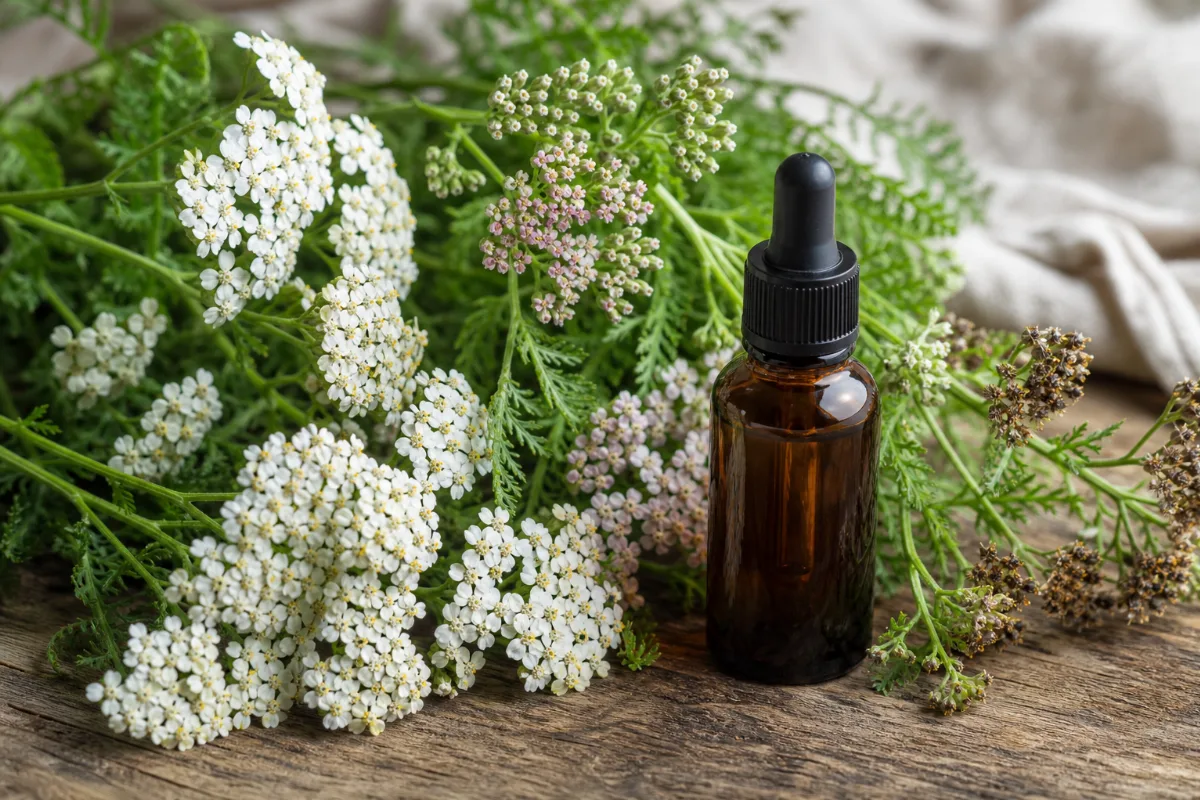
Essential Oils & Aromatherapy · Essential oil
Yarrow Oil
Achillea millefolium L. · also called Yarrow essential oil, common yarrow oil, milfoil oil
Yarrow oil is a strong-smelling essential oil from the flowering tops of a daisy-family plant. It is sold for scent and for diluted skin blends. We found no human study of the oil, only lab, animal and insect work. The main caution: yarrow is a known skin sensitiser, the oil must not be swallowed, and some oils are rich in thujone or camphor.
General information, not medical advice. Last substantive update · Not medically reviewed. A named clinician has not signed off on this page. How this page is made
About Yarrow Oil
Yarrow oil is a strong-smelling essential oil from the flowering tops of a daisy-family plant. It is sold for scent and for diluted skin blends. No human study of the oil was found. The research is lab and animal work, plus one herb-capsule trial that did not use the oil. Safety comes first: yarrow is a known skin sensitiser, the oil should not be swallowed, and some oils are rich in thujone or camphor.
What yarrow oil is
The oil comes from Achillea millefolium, a plant in the daisy family (Asteraceae, per GBIF). The papers made the oil from flowers, herb, or flower heads.
The oil is a mixture. Papers name beta-pinene, 1,8-cineole, camphor, sabinene, bornyl acetate, caryophyllene, germacrene D, thujones and chamazulene among its compounds. Chamazulene is the compound linked to a blue colour, and it was a main part of some samples (about 10% and 42%) and little in others.
Tea, tinctures, extracts and capsules of the herb are different products from the oil. The EU committee's conclusions are about the herb.
What people use it for, and how strong the evidence is
No human study of yarrow oil was found. For wounds, one rat study found faster closing with a 1% or 2% oil ointment, and lab dishes show some bacteria are slowed. Neither shows it helps a wound on a person, and a safety source says not to use essential oils on damaged skin.
Mice and rats with chemically caused bowel or stomach damage did better when given the oil by mouth. Mouse and human immune cells in dishes responded in different directions. In lab tests the oil killed one tick species and repelled nymphs for up to 30 minutes.
The one human trial found used capsules of yarrow herb in 60 adults with type 2 diabetes. Liver enzymes and blood fats were lower in the yarrow group after 90 days. It did not test the oil.
The research in one view
Everything on the oil comes from lab dishes, animals or insects, and one herb trial. Mouse and rat doses are not a guide for people. No large independent trial, no human study of the oil and no meta-analysis was found.
The herb, the oil and different samples are different things
The EU committee accepts yarrow herb teas and extracts for four mild uses on tradition alone. That does not carry across to the essential oil. Within the oil, samples differ so much (chamazulene-rich, thujone-rich, camphor-rich) that a result for one may not hold for another. Poison Control says it can be hard to know the species, strength and contaminants in a bottle.
What regulators say
The European Medicines Agency's herbal committee adopted a yarrow herb monograph in 2020 for traditional use. It lists allergy to yarrow or other daisy-family plants as a contraindication, does not recommend use in pregnancy or breastfeeding, has not established use under 12, and reports no interactions. It does not cover essential oil.
We did not find or read a statement about yarrow oil from IFRA, the EU cosmetics regulator, FDA, NCCIH or LiverTox.
At a glance
Traditional uses history, not proof
- Yarrow herb teas and extracts are accepted in the EU for appetite, mild gut spasm, minor period cramps and small wounds, on long use only (EMA). This is about the herb, not the oil.
- A 2025 review says yarrow has been used in traditional medicine for about three millennia; it did not check the underlying sources.
- We found no traditional use specific to the essential oil in the sources read, so none is claimed.
Studied for research
- Wound healing in rats (ointment), very-low
- Bowel inflammation in mice and rats, very-low
- Alcohol stomach ulcers in rats, very-low
- Germs linked to wounds in the lab, insufficient
- Inflammation signals in cells, insufficient
- Skin pigment in cells, insufficient
- Tick and beetle repellent in the lab, insufficient
- Liver enzymes and blood fats in type 2 diabetes (herb capsules, not oil), very-low
Main compounds
- Chamazulene, the blue compound, in some samples
- 1,8-Cineole, found in several samples
- Camphor, 3% to 13% in samples read
- Alpha- and beta-thujone, about 32% in one sample and 96% in another
- Linalyl acetate, in one sample
Common forms
- Essential oil (from flowering herb or flower heads)
- Scent from a diffuser
- Diluted skin and cosmetic products
- Not the same as yarrow tea, tincture or capsules
Research links: Poison Control: Essential oils · EMA: yarrow herb monograph (herb, not oil) · Pet Poison Helpline: Essential oils · Asteraceae allergy review (open access) · Maternal reproductive toxicity of essential oils, review · Yarrow oil wound study in rats (abstract) · Yarrow herb capsule trial in type 2 diabetes (abstract) · GBIF: Achillea millefolium · Research Library · Genes & Biomarkers Library
What it is and its history
- Accepted scientific name
- Achillea millefolium
- Naming authority
- L.
- Common names
- Yarrow (English); Common yarrow (English); Milfoil (English); Milenrama (Spanish)
- Family or group
- Asteraceae (the daisy family; also called Compositae), per GBIF and the EMA monograph.
- Classification
- Plantae > Asterales > Asteraceae > Achillea > Achillea millefolium
- Native range
- A 2025 review says it originates from Europe and western Asia.
- Habitat
- Not checked in a source read.
- What it looks like
- Part used: Oil from the flowering herb or flower heads is what the papers analysed (flowers and herb in Poland, flower heads in Montana, flowers and leaves in Canada). This page does not describe how to recognise the plant.
- Look-alikes and adulterants
- Name: Other Achillea species, for example green yarrow (Achillea nobilis); Note: Different plants with their own oils. A review lists green yarrow oil as an abortifacient; results do not carry between species.
- Sustainability and conservation
- Not checked (no IUCN or CITES source read).
Photographs
Traditional use and history history, not clinical proof
| Tradition or era | Documented use | Source |
|---|---|---|
| European traditional herbal medicine | The EU herbal committee accepts yarrow herb preparations for loss of appetite, mild gut spasm, minor menstrual spasm and small wounds on the basis of at least 30 years of use, including 15 within the EU. This concerns the herb, not the oil. | EMA/HMPC summary and monograph, 2020 |
| Traditional and alternative medicine (review statement) | A 2025 review says yarrow has been a prominent herb in traditional and alternative medicine for three millennia and that yarrow tea is used for digestive complaints. This is the review authors' statement; the underlying sources were not checked. | Klucevsek and Kreft 2025 (open full text) |
| Use in medicine and cosmetics | A 2023 composition paper says yarrow herb and flowers have high biological activity and are used in medicine and cosmetics. | Konarska et al 2023 |
Traditional use shows how it was used. It does not show that it works or is safe today.
What is inside, and how it may work
What it contains and how those compounds act in cells and animals. Laboratory and animal mechanisms are not proven effects in people.
Main compounds
| Compound | Family | Where it is concentrated | Activity studied | Level of evidence |
|---|---|---|---|---|
| Chamazulene PubChem 10719 | sesquiterpene (azulene) | Essential oil (forms during distillation) About 10% in a 2026 sample, about 42% in a 2009 sample, little or none in many oils. Varies. | A chamazulene-rich oil raised a marker of genetic change in a mould. No effect in people was read. 20 2 24 | Laboratory |
| Camphor PubChem 2537 | monoterpene ketone | Essential oil 11.64% in one sample, 13.0% in a Montana sample, 9.9% and 3.0% in two Canadian flower oils; named among main compounds in a Polish sample. Varies. | Camphor products have caused seizures in toddlers. No yarrow oil case was read. 20 3 21 18 13 | Case and review |
| Alpha-thujone and beta-thujone PubChem 261491 | monoterpene ketones | Essential oil 17.1% alpha and 14.9% beta in a Montana sample; 96.2% beta in a Chilean sample; named among main compounds in European samples; not a main part in some. PubChem CID 91456 for beta-thujone. | Alpha-thujone blocks GABA-A receptors in lab work and can cause seizures at higher doses. Neither thujone activated human neutrophils in a lab test. 20 21 23 22 15 | Laboratory |
| 1,8-Cineole (eucalyptol) PubChem 2758 | monoterpene ether | Essential oil 10.15% in one sample, 17.0% in a Montana sample, and a main compound in a Polish sample. | No activity read for this compound in yarrow. 20 3 21 12 | Composition only |
| Linalyl acetate PubChem 8294 | monoterpene ester | Essential oil 11.51% in one sample. | Named the main active part in a melanoma-cell pigment study. No effect in people was read. 20 3 16 | Laboratory |
| Alpha-peroxyachifolid (sesquiterpene lactone) | sesquiterpene lactone | Plant (herb); presence in the oil was not shown Not given. | Named as the main contact sensitiser of yarrow and rated a strong sensitiser in a guinea pig test (review). 11 | Review statement |
Mechanisms, receptors and pathways
| Target or pathway | Gene or receptor | What was found | Level |
|---|---|---|---|
| GABA-A receptors (alpha-thujone) | GABA-A receptors | Pure alpha-thujone reduced inhibitory signals in cultured rat neurons, which fits its seizure-causing action at higher doses. This is about thujone, not a yarrow oil. 22 | Laboratory research |
| NF-kB and PPAR-gamma (mouse colitis) | NF-kB, PPAR-gamma, TGF-beta | Yarrow oil lowered NF-kB and raised PPAR-gamma and TGF-beta in mice with colitis. 14 | Animal research |
| Nrf2/HO-1 antioxidant pathway (rat stomach) | Nrf2, HO-1 | Yarrow oil raised Nrf2 and HO-1 in rats with alcohol-induced stomach injury. 1 | Animal research |
| Inflammation enzymes and cytokines (mouse macrophages) | iNOS, COX-2, TNF-alpha, IL-6, HO-1 | Yarrow oil lowered these signals in toxin-stimulated mouse macrophages. 3 | Laboratory research |
| JNK and ERK signals, tyrosinase (melanoma cells) | JNK, ERK, tyrosinase | Yarrow oil lowered tyrosinase activity and melanin through these signals in pigment cells. 16 | Laboratory research |
| Calcium signal in human neutrophils | Not specified | A yarrow flower-head oil sample activated human neutrophils to some degree; thujones alone did not. 21 | Laboratory research |
Absorption, metabolism and elimination
- Absorption
- Not established in the sources read.
- Distribution
- Not established.
- Metabolism
- The pregnancy review states that CYP2A6, then CYP3A4 and CYP2B6, break down alpha-thujone to hydroxythujones in humans (lab work cited by the review). Not shown for yarrow oil itself.
- Elimination
- Not established.
- Bioavailability
- Not established.
Isolated compounds versus whole extracts
The oil is a mixture whose makeup changes with country, plant part and sample. Samples have ranged from chamazulene-rich, to rich in oxygenated monoterpenes, to rich in thujones or camphor. A result for one sample may not hold for another, and a result for one pure compound does not describe the oil.
Nutritional composition
Yarrow oil is not a nutrient and is not an ingredient to swallow for health. The EU herbal committee's traditional-use conclusions are for herb teas, tinctures and extracts, not essential oil.
4 very low certainty5 not enough evidence
What was looked at
The 9 benefits and uses checked for Yarrow Oil, each with how strong the evidence is. Tap one to open it.
- Wound healing (yarrow oil ointment on rat wounds)Very low certainty
- Germs linked to wound infections (yarrow oil in the lab)Not enough evidence
- Skin colour (melanin) in cellsNot enough evidence
- Yarrow herb (tea, extracts) for appetite, digestion, period cramps and small wounds - the herb, not the oilNot enough evidence
- Bowel inflammation (colitis) in mice and ratsVery low certainty
- Stomach ulcers caused by alcohol in ratsVery low certainty
- Inflammation signals in immune cells (test tube)Not enough evidence
- Repelling or killing ticks and a pest beetle (lab)Not enough evidence
- Liver enzymes and blood fats in type 2 diabetes (capsules of yarrow herb, not the oil)Very low certainty
Lab markers tracked in the studies
Wound closure and tissue hydroxyproline (rats)Growth-stopping amounts of oil against germs (MIC)Colitis disease signs and colon length (animals)Liver enzymes and blood fats (ALT, AST, TG, LDL, total cholesterol) in type 2 diabetesCalcium signal in human white blood cells (neutrophils)
What is Yarrow Oil good for?
The uses people ask about and how strong the evidence is for each. Read the certainty label first: nothing here is better than very low, and no row is a human test of the oil.
Benefits, one by one
Each card is a research question, not a promise. Tap a goal to filter. Open a card to see the studies, doses and limits.
Wound healing (yarrow oil ointment on rat wounds)
Very low certaintyIn rats with open back wounds, ointments with 1% or 2% yarrow oil closed wounds faster than no treatment, and the wound tissue looked healthier under the microscope. No person has been studied. A safety source says not to put essential oils on damaged skin.
1 studiesNot covered. This page gives no amounts and no way to use the oil.
Studies, doses and limits
Results
Rats: wound closure was higher with the 1% and 2% oil ointments than with no treatment (p < 0.05), tissue hydroxyproline (a collagen marker) was higher (p < 0.01), and slides showed more collagen and less swelling. The 3% ointment is not named in the abstract result.
Effect sizes as reported
Group sizes and exact percentages are not in the abstract.
Why this rating
One rat experiment. It cannot show the same happens in people, and a plain ointment base also helps wounds.
Form and dose studied
Not covered. This page gives no amounts and no way to use the oil.
Who was studied
Rats with 2 cm by 2 cm wounds. Not people.
Limits
The authors say the oil may be a safe and effective wound healer. Animal wounds do not support that for people, and a different source says essential oils should not go on damaged skin.
Why researchers looked
Yarrow herb has a long folk use on cuts and small wounds, so researchers tried the oil on animal wounds.
Traditional use
The EU herbal committee accepts yarrow herb (not the oil) for small superficial wounds on the basis of long-standing use only.
Proposed mechanism Preliminary mechanism
Not established. The authors point to antibacterial action and more collagen in the healing tissue.
A proposed mechanism does not show that the effect happens in people.
Yarrow is a daisy-family skin sensitiser (see Safety). Wounds are the place where a sensitiser or a strong oil is most likely to cause harm.
Germs linked to wound infections (yarrow oil in the lab)
Not enough evidenceIn test tubes, yarrow oil slowed the growth of some bacteria, such as Staphylococcus aureus and Pseudomonas aeruginosa. Some bacteria were more sensitive than others, and a mix with St. John's wort oil worked better against one of them. None of this was tested on skin or in people.
2 studiesNot covered. This page gives no amounts and no way to use the oil.
Studies, doses and limits
Results
The oil slowed S. aureus and P. aeruginosa in broth. In a second study, Gram-positive bacteria were the most sensitive (MIC as low as 0.56 microlitre per mL for oil mixes); the combined effect with St. John's wort oil was seen only for S. epidermidis and mostly in mixes rich in St. John's wort oil.
Effect sizes as reported
No effect sizes in people. Lab MIC values only.
Why this rating
Laboratory work only. A germ-slowing effect in a dish does not show that an oil clears or prevents infection on skin.
Form and dose studied
Not covered. This page gives no amounts and no way to use the oil.
Who was studied
Bacteria and one yeast (Candida albicans) in the lab.
Limits
The combined effect needed another oil. Amounts that work in a dish may not be safe on skin.
Why researchers looked
Wound infections are hard to treat, so researchers look for plant oils that slow germs.
Traditional use
Yarrow herb is used traditionally on small wounds (EMA, herb only).
Proposed mechanism Preliminary mechanism
Not established. The lab papers describe growth being slowed; how is not shown.
A proposed mechanism does not show that the effect happens in people.
Strong oil on a wound can irritate or sensitise; see Safety.
Skin colour (melanin) in cells
Not enough evidenceIn cancer-type pigment cells in a dish, yarrow oil lowered melanin production. The authors suggest it might one day help with dark patches. That is a lab idea only. No person has been tested.
1 studiesNot covered. This page gives no amounts and no way to use the oil.
Studies, doses and limits
Results
Melanin and tyrosinase activity fell in alpha-MSH-stimulated melanoma cells treated with the oil.
Effect sizes as reported
No numbers in the abstract.
Why this rating
Cell-dish work only, one lab group.
Form and dose studied
Not covered. This page gives no amounts and no way to use the oil.
Who was studied
Mouse-type melanoma cells.
Limits
Does not show any effect on healthy human skin and says nothing about safety on skin.
Why researchers looked
Skin-lightening is a common cosmetic interest.
Traditional use
No traditional use for this was found in the sources read.
Proposed mechanism Preliminary mechanism
Lower tyrosinase activity through the JNK and ERK signals and less oxidative stress; linalyl acetate was named as the main active part.
A proposed mechanism does not show that the effect happens in people.
Not applicable to this lab result; see Safety for skin allergy.
Yarrow herb (tea, extracts) for appetite, digestion, period cramps and small wounds - the herb, not the oil
Not enough evidenceThe EU herbal committee accepts yarrow herb teas and extracts for loss of appetite, mild gut spasm with bloating, minor period cramps and small wounds. It does so on long use only, because clinical trial evidence is not enough. This is about the herb. It does not describe or support the essential oil.
2 studiesNot covered. This page gives no amounts and no way to use the oil.
Studies, doses and limits
What the trials found
The committee says clinical evidence is insufficient.
Results
Accepted as a traditional herbal medicine for four mild uses. Not shown to work in trials.
Effect sizes as reported
No effect sizes.
Why this rating
Traditional-use status is a plausibility and long-use finding, not proof of effect. It is a different product from the oil.
Form and dose studied
Not covered. This page gives no amounts and no way to use the oil.
Who was studied
Adults and adolescents over 12, herb tea or extract.
Limits
Does not carry across to the oil, whose chemistry is different and which is not made to be swallowed.
Why researchers looked
Yarrow herb has been used for generations in Europe.
Traditional use
EMA/HMPC: traditional use for at least 30 years, including 15 within the EU. Adults and adolescents over 12 only.
Proposed mechanism Preliminary mechanism
Lab studies cited by the committee showed antibacterial, spasm-reducing and anti-inflammatory effects of herb preparations.
A proposed mechanism does not show that the effect happens in people.
The same committee says yarrow herb medicines must not be taken by people allergic to yarrow or other daisy-family plants.
Bowel inflammation (colitis) in mice and rats
Very low certaintyIn mice and rats with colitis caused by chemicals, yarrow oil by mouth lowered disease signs. That is an animal result. No one has tested yarrow oil for bowel disease, and swallowing essential oil is not advised.
2 studiesNot covered. This page gives no amounts and no way to use the oil.
Studies, doses and limits
Results
Mice (21, DSS colitis, 9 days): fewer disease signs and more colon length kept. Rats (acetic-acid colitis, 5 days): ulcer and colitis indexes, colon weight/length ratio, weight gain and malondialdehyde improved at the two higher oil doses; myeloperoxidase fell only with the extract, not the oil.
Effect sizes as reported
No effect sizes given in the abstracts.
Why this rating
Two small animal experiments in different species. They agree in direction, but animal colitis models rarely predict human results.
Form and dose studied
Not covered. This page gives no amounts and no way to use the oil.
Who was studied
Female mice and male rats.
Limits
The oil was swallowed by animals at doses not translated to people. The authors of the mouse study say clinical studies are needed.
Why researchers looked
Yarrow herb is traditionally used for gut complaints, so researchers tested the oil in animal colitis.
Traditional use
EMA accepts the herb (not the oil) for mild gut spasm and bloating on traditional use.
Proposed mechanism Preliminary mechanism
In mice: lower NF-kB, higher PPAR-gamma and TGF-beta, normal TNF-alpha, restored IL-10, lower IL-6. These are inflammation signals in a single mouse experiment.
A proposed mechanism does not show that the effect happens in people.
Swallowing essential oil is hazardous (see Safety). Nothing here supports it.
Stomach ulcers caused by alcohol in rats
Very low certaintyIn rats given alcohol to injure the stomach, yarrow oil given beforehand left less damage. This was in six-rat groups. It is not a test in people.
1 studiesNot covered. This page gives no amounts and no way to use the oil.
Studies, doses and limits
Results
Pre-treated rats had smaller ulcer area, fewer slide changes, and lower inflammation, cell-death and fat-damage markers than alcohol-only rats.
Effect sizes as reported
No effect sizes in the abstract.
Why this rating
One small rat experiment from one lab; oil given before the injury.
Form and dose studied
Not covered. This page gives no amounts and no way to use the oil.
Who was studied
Rats, five groups of six.
Limits
Prevention in rats is not treatment of an existing ulcer, and nothing shows a safe swallowed amount for people.
Why researchers looked
Alcohol ulcers are a standard test for stomach-protecting plants.
Traditional use
Yarrow herb is traditionally used for gut complaints (herb, not oil).
Proposed mechanism Preliminary mechanism
Raised Nrf2 and HO-1 (antioxidant defence signals), with lower inflammation and cell-death markers.
A proposed mechanism does not show that the effect happens in people.
Swallowing essential oil is hazardous (see Safety).
Inflammation signals in immune cells (test tube)
Not enough evidenceIn mouse immune cells treated with a bacterial toxin, yarrow oil lowered several inflammation signals. In human white blood cells, a different study found that yarrow oil switched them on. These are dish results that point in different directions and do not describe what the oil does in a body.
2 studiesNot covered. This page gives no amounts and no way to use the oil.
Studies, doses and limits
Results
Mouse macrophages: lower nitric oxide, superoxide and lipid peroxidation. Human neutrophils: yarrow oil from Montana activated them to some degree; the thujones were inactive.
Effect sizes as reported
No effect sizes in the abstracts.
Why this rating
Two cell-dish studies with opposite-looking readouts, using oils of different makeup.
Form and dose studied
Not covered. This page gives no amounts and no way to use the oil.
Who was studied
Mouse cell line and human white blood cells in a dish.
Limits
The oils differed (one led by artemisia ketone and camphor, the other by thujones), which shows how much the product varies.
Why researchers looked
Researchers screen plant oils for effects on inflammation signals.
Traditional use
EMA lists lab anti-inflammatory effects of herb preparations as part of its assessment (herb, not oil).
Proposed mechanism Preliminary mechanism
Lower iNOS, COX-2, TNF-alpha, IL-6 and HO-1 in mouse macrophages; calcium signals raised in human neutrophils by the whole oil sample, but not by alpha- or beta-thujone alone.
A proposed mechanism does not show that the effect happens in people.
Not applicable.
Repelling or killing ticks and a pest beetle (lab)
Not enough evidenceIn lab tests, yarrow oil killed some ticks and kept nymphs away for up to 30 minutes, and it repelled a pest beetle. It did not work on one tick species. Nobody tested it on human skin, and the effect faded quickly.
2 studiesNot covered. This page gives no amounts and no way to use the oil.
Studies, doses and limits
Results
I. scapularis adult ticks: best LD50 2.4% v/v at 24 h; no effect on D. variabilis adults; nymph repellency full for up to 30 minutes, then falling.
Effect sizes as reported
LD50 in ticks only.
Why this rating
Lab tests on small animals. Nothing was tested on people or outdoors.
Form and dose studied
Not covered. This page gives no amounts and no way to use the oil.
Who was studied
Ticks and a beetle.
Limits
Putting essential oil on skin to keep ticks away has not been tested here and carries skin risks (see Safety). Ask a pharmacist about tick protection.
Why researchers looked
People look for plant-based tick repellents.
Traditional use
No traditional use for this was found in the sources read.
Proposed mechanism Preliminary mechanism
Not established; the beetle paper names beta-thujone (96.2% of that oil) as the likely active part.
A proposed mechanism does not show that the effect happens in people.
Skin sensitisation and the thujone and camphor content (see Safety).
Liver enzymes and blood fats in type 2 diabetes (capsules of yarrow herb, not the oil)
Very low certaintyOne small trial of 60 adults with type 2 diabetes gave capsules of yarrow herb or a placebo for 90 days. Liver enzymes (ALT, AST), triglycerides, LDL and total cholesterol were lower in the yarrow group. This tested a herb capsule. It says nothing about yarrow essential oil.
1 studiesNot covered. This page gives no amounts and no way to use the oil.
Studies, doses and limits
What the trials found
One randomised, double-blind, placebo-controlled trial of 60 people, Iran, registered IRCT20230612058459N1.
Results
ALT 28.79 to 24.41 (p = 0.017); AST 24.28 to 18.76 (p = 0.007); TG 161.7 to 147.3 (p = 0.045); LDL 98.90 to 80.86 (p = 0.001); total cholesterol 168.3 to 150.1 (p = 0.006); HDL not different. After the 90 days all values except HDL differed between groups (p < 0.05). Within-group falls in the yarrow group.
Effect sizes as reported
Only the yarrow-group change is given in the abstract; the placebo values are not.
Why this rating
One small, short, single-country trial. The abstract gives no side-effect data, no plant part and no funding statement.
Form and dose studied
Not covered. This page gives no amounts and no way to use the oil.
Who was studied
Adults with type 2 diabetes.
Limits
A different product (dried herb capsules), a different route and different chemistry from the essential oil.
Why researchers looked
Diabetes often comes with liver and blood-fat changes.
Traditional use
No traditional use for this is part of the EMA listing.
Proposed mechanism Preliminary mechanism
Not established in the abstract.
A proposed mechanism does not show that the effect happens in people.
Liver enzymes fell here, but the abstract reports no safety data. No liver injury from yarrow oil was found in the sources read; LiverTox was not checked.
Connections to the rest of health
How Yarrow Oil connects to the rest of our health knowledge graph. Every link says what kind of connection it is. A safety link (for example to the liver) is a warning, not a benefit. A study that merely mentions a topic never creates a benefit link.
Explore every connection: goals, body systems, organs, symptoms, genes
A. Wellness goals
| Connected to | Kind of connection | Evidence status | Context | Studies |
|---|---|---|---|---|
| Healthy Skin | Very low certainty | Wound healing (yarrow oil ointment on rat wounds): In rats with open back wounds, ointments with 1% or 2% yarrow oil closed wounds faster than no treatment, and the wound tissue looked healthier under the microscope. No person has been studied. A safety source says not to put essential oils on damaged skin. | 9 | |
| Healthy Skin | Not enough evidence | Germs linked to wound infections (yarrow oil in the lab): In test tubes, yarrow oil slowed the growth of some bacteria, such as Staphylococcus aureus and Pseudomonas aeruginosa. Some bacteria were more sensitive than others, and a mix with St. John's wort oil worked better against one of them. None of this was tested on skin or in people. Skin colour (melanin) in cells: In cancer-type pigment cells in a dish, yarrow oil lowered melanin production. The authors suggest it might one day help with dark patches. That is a lab idea only. No person has been tested. | 2 9 16 | |
| Immune Support | Not enough evidence | Germs linked to wound infections (yarrow oil in the lab): In test tubes, yarrow oil slowed the growth of some bacteria, such as Staphylococcus aureus and Pseudomonas aeruginosa. Some bacteria were more sensitive than others, and a mix with St. John's wort oil worked better against one of them. None of this was tested on skin or in people. | 2 9 | |
| Digestive Support | Traditional use | Not enough evidence | Yarrow herb (tea, extracts) for appetite, digestion, period cramps and small wounds - the herb, not the oil: The EU herbal committee accepts yarrow herb teas and extracts for loss of appetite, mild gut spasm with bloating, minor period cramps and small wounds. It does so on long use only, because clinical trial evidence is not enough. This is about the herb. It does not describe or support the essential oil. | 6 7 |
| Womens Wellness | Traditional use | Not enough evidence | Yarrow herb (tea, extracts) for appetite, digestion, period cramps and small wounds - the herb, not the oil: The EU herbal committee accepts yarrow herb teas and extracts for loss of appetite, mild gut spasm with bloating, minor period cramps and small wounds. It does so on long use only, because clinical trial evidence is not enough. This is about the herb. It does not describe or support the essential oil. | 6 7 |
| Healthy Skin | Traditional use | Not enough evidence | Yarrow herb (tea, extracts) for appetite, digestion, period cramps and small wounds - the herb, not the oil: The EU herbal committee accepts yarrow herb teas and extracts for loss of appetite, mild gut spasm with bloating, minor period cramps and small wounds. It does so on long use only, because clinical trial evidence is not enough. This is about the herb. It does not describe or support the essential oil. | 6 7 |
| Digestive Support | Very low certainty | Bowel inflammation (colitis) in mice and rats: In mice and rats with colitis caused by chemicals, yarrow oil by mouth lowered disease signs. That is an animal result. No one has tested yarrow oil for bowel disease, and swallowing essential oil is not advised. Stomach ulcers caused by alcohol in rats: In rats given alcohol to injure the stomach, yarrow oil given beforehand left less damage. This was in six-rat groups. It is not a test in people. | 14 10 1 | |
| Inflammation Balance | Very low certainty | Bowel inflammation (colitis) in mice and rats: In mice and rats with colitis caused by chemicals, yarrow oil by mouth lowered disease signs. That is an animal result. No one has tested yarrow oil for bowel disease, and swallowing essential oil is not advised. | 14 10 | |
| Cellular Protection | Very low certainty | Stomach ulcers caused by alcohol in rats: In rats given alcohol to injure the stomach, yarrow oil given beforehand left less damage. This was in six-rat groups. It is not a test in people. | 1 | |
| Inflammation Balance | Not enough evidence | Inflammation signals in immune cells (test tube): In mouse immune cells treated with a bacterial toxin, yarrow oil lowered several inflammation signals. In human white blood cells, a different study found that yarrow oil switched them on. These are dish results that point in different directions and do not describe what the oil does in a body. | 3 21 | |
| Cellular Protection | Not enough evidence | Inflammation signals in immune cells (test tube): In mouse immune cells treated with a bacterial toxin, yarrow oil lowered several inflammation signals. In human white blood cells, a different study found that yarrow oil switched them on. These are dish results that point in different directions and do not describe what the oil does in a body. | 3 21 | |
| Insect Protection | Not enough evidence | Repelling or killing ticks and a pest beetle (lab): In lab tests, yarrow oil killed some ticks and kept nymphs away for up to 30 minutes, and it repelled a pest beetle. It did not work on one tick species. Nobody tested it on human skin, and the effect faded quickly. | 18 23 | |
| Metabolic Health | Very low certainty | Liver enzymes and blood fats in type 2 diabetes (capsules of yarrow herb, not the oil): One small trial of 60 adults with type 2 diabetes gave capsules of yarrow herb or a placebo for 90 days. Liver enzymes (ALT, AST), triglycerides, LDL and total cholesterol were lower in the yarrow group. This tested a herb capsule. It says nothing about yarrow essential oil. | 4 | |
| Cholesterol Balance | Very low certainty | Liver enzymes and blood fats in type 2 diabetes (capsules of yarrow herb, not the oil): One small trial of 60 adults with type 2 diabetes gave capsules of yarrow herb or a placebo for 90 days. Liver enzymes (ALT, AST), triglycerides, LDL and total cholesterol were lower in the yarrow group. This tested a herb capsule. It says nothing about yarrow essential oil. | 4 |
B. Body systems
| Connected to | Kind of connection | Evidence status | Context | Studies |
|---|---|---|---|---|
| Integumentary System | Biological association | Very low certainty | Studied for: Wound healing (yarrow oil ointment on rat wounds) Studied for: Germs linked to wound infections (yarrow oil in the lab) | 9 2 16 6 7 18 23 |
| Immune System | Biological association | Not enough evidence | Studied for: Germs linked to wound infections (yarrow oil in the lab) Studied for: Inflammation signals in immune cells (test tube) | 2 9 3 21 |
| Digestive System | Biological association | Not enough evidence | Studied for: Yarrow herb (tea, extracts) for appetite, digestion, period cramps and small wounds - the herb, not the oil Studied for: Bowel inflammation (colitis) in mice and rats | 6 7 14 10 1 |
| Reproductive System | Biological association | Not enough evidence | Studied for: Yarrow herb (tea, extracts) for appetite, digestion, period cramps and small wounds - the herb, not the oil | 6 7 |
| Pain Inflammation | Biological association | Very low certainty | Studied for: Bowel inflammation (colitis) in mice and rats Studied for: Inflammation signals in immune cells (test tube) | 14 10 3 21 |
| Metabolic System | Biological association | Very low certainty | Studied for: Liver enzymes and blood fats in type 2 diabetes (capsules of yarrow herb, not the oil) | 4 |
| Hepatic System | Biological association | Very low certainty | Studied for: Liver enzymes and blood fats in type 2 diabetes (capsules of yarrow herb, not the oil) | 4 |
E. Health conditions
| Connected to | Kind of connection | Evidence status | Context | Studies |
|---|---|---|---|---|
| Contact dermatitis | Adverse effect or risk | Documented risk | Yarrow is a known contact sensitiser (review); skin hypersensitivity is reported with herb medicines (EMA). The oil itself was not patch-tested in the sources read. Preparation or compound: Yarrow plant, herb extracts and possibly the oil |
11 7 |
| Daisy-family (Asteraceae) allergy | Contraindication | Documented risk | EMA: people allergic to yarrow or other Asteraceae plants must not take yarrow herb medicines. The review describes cross-reactions within the family. Preparation or compound: Yarrow herb preparations |
7 11 |
I. Biomarkers
| Connected to | Kind of connection | Evidence status | Context | Studies |
|---|---|---|---|---|
| Wound closure and tissue hydroxyproline (rats) | Biological association | Very low certainty | Measured in trials: increase (closure, collagen). A lab change is not the same as a health benefit. | 9 |
| Growth-stopping amounts of oil against germs (MIC) | Biological association | Not enough evidence | Measured in trials: decrease (lower MIC = more sensitive germ). A lab change is not the same as a health benefit. | 2 9 |
| Colitis disease signs and colon length (animals) | Biological association | Very low certainty | Measured in trials: decrease (disease signs); increase (colon length kept). A lab change is not the same as a health benefit. | 14 10 |
| Liver enzymes and blood fats (ALT, AST, TG, LDL, total cholesterol) in type 2 diabetes | Biological association | Very low certainty | Measured in trials: decrease. A lab change is not the same as a health benefit. | 4 |
| Calcium signal in human white blood cells (neutrophils) | Biological association | Not enough evidence | Measured in trials: increase (cell activation). A lab change is not the same as a health benefit. | 21 |
L. Active compounds
| Connected to | Kind of connection | Evidence status | Context | Studies |
|---|---|---|---|---|
| Chamazulene | Biological association | Laboratory | A chamazulene-rich oil raised a marker of genetic change in a mould. No effect in people was read. Preparation or compound: Essential oil (forms during distillation) |
20 2 24 |
| Camphor | Biological association | Case and review | Camphor products have caused seizures in toddlers. No yarrow oil case was read. Preparation or compound: Essential oil |
20 3 21 18 13 |
| Alpha-thujone and beta-thujone | Biological association | Laboratory | Alpha-thujone blocks GABA-A receptors in lab work and can cause seizures at higher doses. Neither thujone activated human neutrophils in a lab test. Preparation or compound: Essential oil |
20 21 23 22 15 |
| 1,8-Cineole (eucalyptol) | Biological association | Composition only | No activity read for this compound in yarrow. Preparation or compound: Essential oil |
20 3 21 12 |
| Linalyl acetate | Biological association | Laboratory | Named the main active part in a melanoma-cell pigment study. No effect in people was read. Preparation or compound: Essential oil |
20 3 16 |
| Alpha-peroxyachifolid (sesquiterpene lactone) | Biological association | Review statement | Named as the main contact sensitiser of yarrow and rated a strong sensitiser in a guinea pig test (review). Preparation or compound: Plant (herb); presence in the oil was not shown |
11 |
Each connection is stored with the ingredient, the connected record, the kind of connection, the evidence status, the supporting studies, the preparation or compound involved, and a review date (last reviewed October 25, 2026).
Evidence at a glance: what the research found for 9 outcomes
Each outcome below is one thing researchers measured. Certainty is how far the evidence can be trusted, not how well it works. The full studies are on the next tab.
The evidence
The research centre for Yarrow Oil. Every record here was checked against PubMed or the publisher's page; we never list a study we have not verified.
Evidence by outcome
Bars show how many studies we found for each outcome, not how well it works. People are added up across trials only (reviews are not added, to avoid double counting).
How we rate evidence
High certainty
Several well-run trials or reviews agree; further research is unlikely to change the picture much.
Moderate certainty
Good trials point the same way, but some doubt remains.
Low certainty
Small, short or inconsistent trials. The finding could change with better research.
Very low certainty
Very little or very weak human data. Treat as a possibility only.
Mixed findings
Trials or reviews disagree with each other.
Not enough evidence
Not enough human research to say either way.
Evidence against
Good research found no benefit, or found harm.
We take the reviewers' own risk-of-bias and GRADE statements where they exist, and otherwise judge from study size, design, consistency, directness and whether a product matches what is sold. Many publications do not make evidence high. Method note: We read the abstracts of 19 PubMed records (one gave only its scope; two were also read in open full text), the EMA yarrow monograph and summary, the Poison Control and Pet Poison Helpline pages, and checked the plant name in GBIF and six compounds in PubChem. We did not find or read a LiverTox, LactMed, IFRA or FDA statement.
Study library: every study we checked 24
| Study | Design | People | Product, dose, length | Result |
|---|---|---|---|---|
| Alomair 2022 Achillea millefolium Essential Oil Mitigates Peptic Ulcer in Rats through Nrf2/HO-1 Pathway. Molecules · PMID 36432009 · DOI |
Animal study (rats) animal |
30 Rats given alcohol to cause stomach ulcers (5 groups of 6) |
Yarrow essential oil by mouth for two weeks before the alcohol (two animal doses) Animal doses not repeated here 2 weeks before ulcer was caused · vs Alcohol-only group; lansoprazole group; untreated control |
Rats given the oil beforehand had fewer visible and slide-level stomach changes, smaller ulcer area, and lower inflammation, cell-death and lipid-damage markers than the alcohol-only group. Nrf2 and HO-1 rose further. The authors suggest yarrow oil may protect the stomach lining. Methods, limits and fundingOutcomes: Ulcer area, stomach slides, inflammation and cell-death markers, oxidant and antioxidant enzymes, Nrf2 and HO-1 Limitations: Six rats per group, one lab, alcohol-induced ulcers only, oil given before the injury. Not a test of treating an existing ulcer and not a human result. Funding and conflicts: Not stated in the abstract Read: abstract |
| Bordea 2026 Chemical Composition and Synergistic Antimicrobial Activity of Hypericum perforatum and Achillea millefolium Essential Oils Against Wound-Associated Microorganisms. Molecules · PMID 42197148 · DOI |
Laboratory study (test tube) in vitro |
Wound-associated bacteria and Candida albicans in the lab | Yarrow (A. millefolium) essential oil, alone and in fixed mixes with St. John's wort (H. perforatum) oil Not reported here · vs Each oil alone against the mixes |
Yarrow oil was led by aromadendrene (19.12%), caryophyllene (12.97%) and chamazulene (10.13%). Gram-positive bacteria, especially S. epidermidis, were the most sensitive, with MIC values as low as 0.56 microlitre per mL in oil mixes. A combined (synergistic) effect was seen only for S. epidermidis and only in mixes rich in St. John's wort oil (60:40 and 70:30). Gram-negative bacteria and Candida mostly showed no combined effect. Methods, limits and fundingOutcomes: Oil makeup (GC-MS), growth-stopping amounts (MIC, MBC/MFC), combined effect (FICI) Limitations: Test-tube work only. The combined effect needed St. John's wort oil, so it cannot be credited to yarrow oil alone. No test on skin or in people. Funding and conflicts: Not stated in the abstract Read: abstract |
| Chou 2013 Achillea millefolium L. essential oil inhibits LPS-induced oxidative stress and nitric oxide production in RAW 264.7 Macrophages. Int J Mol Sci · PMID 23797659 · DOI |
Cell study (test tube) in vitro |
Mouse macrophage cells (RAW 264.7) stimulated with LPS | Yarrow (A. millefolium) essential oil Not reported here · vs Untreated stimulated cells |
The oil had 19 identified compounds; the main ones were artemisia ketone (14.92%), camphor (11.64%), linalyl acetate (11.51%) and 1,8-cineole (10.15%). It lowered nitric oxide, superoxide and lipid peroxidation in the stimulated cells and lowered iNOS, COX-2, TNF-alpha, IL-6 and HO-1 expression. Methods, limits and fundingOutcomes: Nitric oxide, superoxide, lipid peroxidation, glutathione, iNOS, COX-2, TNF-alpha, IL-6, HO-1 Limitations: Mouse cells in a dish. Amounts used are not in the abstract. This is a mechanism clue, not evidence of an effect in a person. Funding and conflicts: Research support from a non-US government body; no conflict statement in the abstract Read: abstract |
| Daneshvar-Ghahfarokhi 2025 Achillea millefolium capsule improved liver enzymes and lipid profile compared to placebo in patients with type 2 diabetes: a double-blind randomized clinical trial. BMC Nutr · PMID 39856724 · DOI |
Randomised double blind placebo controlled trial |
60 60 adults with type 2 diabetes (30 and 30), Iran |
Capsules of yarrow (A. millefolium) herb by mouth. This is NOT the essential oil. Herb (capsules); plant part not specified in the abstract Not repeated here 90 days · vs Placebo capsules |
In the yarrow group, ALT fell from 28.79 to 24.41 (p = 0.017), AST from 24.28 to 18.76 (p = 0.007), triglycerides from 161.7 to 147.3 (p = 0.045), LDL from 98.90 to 80.86 (p = 0.001) and total cholesterol from 168.3 to 150.1 (p = 0.006). After the 90 days, all measured values except HDL differed between the two groups (p < 0.05). The abstract does not give the placebo group's figures. Methods, limits and fundingOutcomes: ALT, AST, triglycerides, LDL, total cholesterol, HDL Limitations: Small, one country, short. The abstract does not report side effects, the plant part, the product make-up or who funded it. It tested capsules of herb, so it says nothing about the essential oil, whose chemistry is different. Funding and conflicts: Not stated in the abstract. Registered: IRCT20230612058459N1. Registration: IRCT20230612058459N1 Read: abstract |
| Dosoky 2021 Maternal Reproductive Toxicity of Some Essential Oils and Their Constituents. Int J Mol Sci · PMID 33673548 · DOI |
Narrative review review |
Essential oils and constituents studied for pregnancy harm | Essential oils and compounds including camphor and thujone; yarrow (A. millefolium) is not tabulated, a different species (A. nobilis) is Not reported here |
The abstract says using herbs and essential oils in pregnancy is "questionable" and lists camphor and thujone among the compounds of concern. In the open full text, the authors say thujone-rich oils should be avoided in pregnancy, say alpha-thujone is more neurotoxic than beta-thujone and can cause convulsions by blocking GABA-A receptors, and list green yarrow (Achillea nobilis) oil as an abortifacient. A. millefolium is not in their table. Methods, limits and fundingOutcomes: Abortion, hormone effects, maternal toxicity, malformations, harm to the fetus Limitations: The review is by authors at an aromatic-plant research centre and relies on animal and lab work plus traditional reports; it states there is little human clinical evidence. Funding and conflicts: Not stated in the abstract Read: full-text (open access, PMC7956842) |
| European Medicines Agency (HMPC) 2020 Millefolii herba - herbal medicinal product (summary for the public) EMA · Source |
Regulatory summary (herb, not oil) regulatory document |
Yarrow herb medicines for adults and adolescents over 12 | Yarrow herb preparations, not the essential oil Above-ground herb Not reported here |
The HMPC says yarrow herb preparations may be used on the basis of long-standing use (at least 30 years, including 15 within the EU) because clinical trial evidence is insufficient. It considered lab studies showing antibacterial, spasm-reducing and anti-inflammatory effects. Skin allergy has been reported, frequency not known; people allergic to yarrow or other Asteraceae plants must not take these medicines. Summary first published 03/12/2020. Methods, limits and fundingOutcomes: HMPC conclusions Limitations: About herb preparations, not essential oil. Funding and conflicts: Regulator document Read: full web page |
| European Medicines Agency 2020 European Union herbal monograph on Achillea millefolium L., herba (Final, Revision 1), EMA/HMPC/376416/2019 EMA · Source |
Regulatory monograph (herb, not oil) regulatory document |
Yarrow herb preparations (tea, juice, extracts, tinctures) for traditional use | Yarrow herb preparations, not the essential oil Above-ground herb (herba) Not repeated here |
Adopted 23 September 2020. Traditional use only: loss of appetite, mild spasmodic gut complaints with bloating, minor menstrual spasm and small superficial wounds, based on long-standing use. Contraindicated in hypersensitivity to yarrow and other Asteraceae plants. Not established under 12 years. In pregnancy and breastfeeding: not recommended because safety has not been established. No fertility data. No interactions reported. No overdose reported. Skin hypersensitivity has been reported, frequency not known. A dry water extract was not mutagenic in the Ames test; reproductive toxicity and carcinogenicity tests were not done. Methods, limits and fundingOutcomes: Uses, contraindications, pregnancy, interactions, side effects Limitations: About herb preparations, not essential oil. The text says nothing about the oil, so none of it can be carried across. Funding and conflicts: Regulator document Read: full text (PDF read in full) |
| GBIF 2026 GBIF Backbone Taxonomy: Achillea millefolium L. (match API read 2026-10-25) n/a · Source |
Registry or database n/a |
n/a | n/a |
Accepted species name Achillea millefolium L., key 3120060, status ACCEPTED, family Asteraceae, order Asterales, confidence 99. Methods, limits and fundingOutcomes: Accepted name and family Limitations: Synonyms were not read. Read: full API response |
| Ghasemi 2023 In vitro Antibacterial Activity and Wound Healing Effects of Achillea millefolium Essential Oil in Rat. J Pharmacopuncture · PMID 37405118 · DOI |
Animal study plus test tube bacteria animal |
Rats with 2 cm x 2 cm full-thickness back wounds; S. aureus and P. aeruginosa in the lab | Yarrow (A. millefolium) essential oil in ointment (1%, 2%, 3% w/w) put on wounds twice a day Not reported here Wound measured every 3 days; tissue checked on days 7 and 14 · vs Eucerin vehicle ointment; untreated group |
The oil slowed growth of S. aureus and P. aeruginosa in broth (bacteriostatic). Wound closure was higher in rats treated with the 1% and 2% ointments than in untreated rats (p < 0.05), and tissue hydroxyproline was higher (p < 0.01). Slides showed more collagen fibres, less swelling and inflammation, and new skin appendages in the 1% and 2% groups. The abstract does not give group sizes or the oil composition. Methods, limits and fundingOutcomes: Wound closure %, hydroxyproline in tissue, tissue slides, bacterial growth in broth Limitations: Rats, not people. The abstract gives no group sizes, no oil composition and no comparison to the vehicle ointment alone in its numbers. The authors call the oil potentially safe and effective, which goes further than rat wounds can show. Funding and conflicts: Not stated in the abstract Read: abstract |
| Hadavi-Siahboomi 2022 Ulcer-Healing Effect of Hydroalcoholic Extract and Essential Oil of Achillea millefolium L. on Murine Model of Colitis. Int J Prev Med · PMID 36911006 · DOI |
Animal study (rats) animal |
Male Wistar rats with acetic-acid colitis, six groups | Yarrow essential oil (3 animal doses) and a separate hydroalcoholic yarrow extract Animal doses not repeated here 5 days · vs Untreated controls; dexamethasone; mesalazine |
Ulcer index, colitis index, colon weight/length ratio, weight gain and malondialdehyde improved compared with controls in the two higher oil groups (and in the two higher extract groups). Myeloperoxidase fell only in the extract groups, not the oil groups. Methods, limits and fundingOutcomes: Ulcer index, total colitis index, colon weight to length ratio, weight gain, malondialdehyde, myeloperoxidase Limitations: Rats, short experiment, group sizes not in the abstract. The oil and the extract were tested together, so read the oil rows only. Funding and conflicts: Not stated in the abstract Read: abstract |
| Klucevsek 2025 Allergic Potential of Medicinal Plants From the Asteraceae Family. Health Sci Rep · PMID 39995792 · DOI |
Narrative review review |
Medicinal plants of the daisy family (Asteraceae), including yarrow | Asteraceae plants, including yarrow herb and extracts (not specifically the essential oil) Various Not reported here |
The abstract says Asteraceae plants are important sensitisers, that sesquiterpene lactones can cause skin irritation and inflammation, and that sensitised people can react systemically after eating them. In the open full text, the yarrow section says yarrow has been known as a contact sensitiser for over a century, that in two older studies 52% and 40% of Asteraceae-sensitised patients were also sensitised to yarrow, that alpha-peroxyachifolid is its main sensitiser and was rated strong in a guinea pig test, that allergic contact dermatitis was reported in atopic children, and that one case of work-related asthma was linked to dried yarrow and safflower flowers. Methods, limits and fundingOutcomes: Allergy and sensitisation evidence Limitations: A review of mostly plant material, extracts and patch-test data. It does not report a rate for yarrow essential oil, and the percentages come from older studies the review cites. Funding and conflicts: Not stated in the abstract Read: full-text (open access, PMC11847717) |
| Konarska 2023 Herb and Flowers of Achillea millefolium subsp. millefolium L.: Structure and Histochemistry of Secretory Tissues and Phytochemistry of Essential Oils. Molecules · PMID 38067521 · DOI |
Plant and composition study plant material |
Dried yarrow herb and flowers from Poland | Essential oil made from yarrow flowers and from yarrow herb (A. millefolium subsp. millefolium) Flowers and herb Not reported here · vs Flowers compared with herb |
Flowers gave over 2.5 times more oil (6.1 mL per kg) than the herb (2.4 mL per kg). Both oils shared main compounds: beta-pinene, bornyl acetate, (E)-nerolidol, 1,8-cineole, borneol, sabinene, camphor and alpha-pinene. Monoterpenes outweighed sesquiterpenes in both. The herb oil had more oxygenated monoterpenes and oxygenated sesquiterpenoids than the flower oil. Methods, limits and fundingOutcomes: Oil yield and makeup (GC-MS), plant microscopy Limitations: Composition and plant structure only; no health outcome. One Polish source. The abstract does not mention chamazulene, so this sample should not be taken as a blue oil. Funding and conflicts: Not stated in the abstract Read: abstract |
| Love 2004 Are one or two dangerous? Camphor exposure in toddlers. J Emerg Med · PMID 15219304 |
Narrative review review |
Young children exposed to camphor-containing products | Camphor-containing over-the-counter products (not yarrow oil) Not reported here |
The review says serious toxicity in children has followed small exposures to camphor products, that seizures and deaths have been reported, that camphor "remains a common source of pediatric exposures" in US poison centre data, and that small doses are dangerous. It says children under 6 who have swallowed camphor need rapid medical triage. Methods, limits and fundingOutcomes: Camphor poisoning in children Limitations: About camphor products, not yarrow oil. How much camphor a yarrow oil carries varies and was not measured against these risks. Funding and conflicts: Not stated in the abstract Read: abstract |
| Mohamed 2021 Yarrow oil ameliorates ulcerative colitis in mice model via regulating the NF-kB and PPAR-gamma pathways. Intest Res · PMID 32819032 · DOI |
Animal study (mice) animal |
21 Female C57BL/6 mice given DSS in drinking water for 9 days to cause colitis |
Yarrow oil by mouth (animal dose not repeated here) Not repeated here 9 days · vs Colitis group with no oil; healthy control group |
The oil group had lower disease signs and kept more colon length than the colitis group. NF-kB fell, PPAR-gamma and TGF-beta rose, TNF-alpha returned to normal, IL-10 was restored and IL-6 fell. The authors say clinical studies are needed before any use in people. Methods, limits and fundingOutcomes: Body weight, stool, bleeding, disease activity, colon length, NF-kB, PPAR-gamma, TGF-beta, TNF-alpha, IL-10, IL-6 Limitations: 21 mice in 3 groups, one lab, one 9-day experiment. Mouse colitis does not predict what happens in people. The abstract does not say how the oil was made or what was in it. Funding and conflicts: Not stated in the abstract Read: abstract |
| Orav 2006 Phytochemical analysis of the essential oil of Achillea millefolium L. from various European Countries. Nat Prod Res · PMID 17127661 |
Composition survey plant material |
Yarrow samples from Estonia and other European countries | Yarrow (A. millefolium) herb essential oils from several countries Herb (Millefolii herba) Not reported here · vs Between countries |
Oil yields were 0.9 to 9.5 mL per kg and 102 components were identified, including sabinene, beta-pinene, 1,8-cineole, artemisia ketone, linalool, alpha-thujone, beta-thujone, camphor, borneol, bornyl acetate, caryophyllene, germacrene D and chamazulene. Estonia, Hungary, Greece, Moldavia, Latvia, Lithuania and Germany samples had high monoterpenes and chamazulene. Oils from France, Belgium, Russia, Armenia, Spain and Italy were rich in oxygenated monoterpenes with little chamazulene. Some samples were richer in sesquiterpenes. Methods, limits and fundingOutcomes: Oil yield and makeup (GC-MS) Limitations: An old survey of composition only; no safety or health outcome. It shows how much the oil varies by origin, not how common any one type is on the market. Funding and conflicts: Research support from a non-US government body; no conflict statement in the abstract Read: abstract |
| Peng 2014 The melanogenesis alteration effects of Achillea millefolium L. essential oil and linalyl acetate: involvement of oxidative stress and the JNK and ERK signaling pathways in melanoma cells. PLoS One · PMID 24743745 · DOI |
Cell study (test tube) in vitro |
Mouse-type melanoma cells stimulated with alpha-MSH | Yarrow (A. millefolium) essential oil and its component linalyl acetate Not reported here · vs Untreated cells |
The oil lowered melanin production by lowering tyrosinase activity, through the JNK and ERK signals, and this was linked to lower reactive oxygen species. Linalyl acetate was named the main active component. The authors propose the oil may one day treat too much pigment. Methods, limits and fundingOutcomes: Melanin production, tyrosinase activity, oxidative stress, JNK and ERK signals Limitations: Cancer cells in a dish. Nothing on human skin was tested, and the abstract does not say which cell type or what amounts were used. Funding and conflicts: Research support from a non-US government body; no conflict statement in the abstract Read: abstract |
| Pet Poison Helpline 2026 Essential Oils petpoisonhelpline.com · Source |
Veterinary poison centre guidance guidance |
Pets (cats, dogs, birds) | Essential oils in general |
Essential oil poisoning can affect all species, but cats and birds are at the greatest risk. Common signs include drooling, vomiting, tiredness, loss of appetite and irritation of the skin, airways and gums; oral exposure is the highest-risk route, then skin, then breathing in. Signs usually appear within 6 to 8 hours. Its list of oils that can cause poisoning names, among others, wormwood, tansy, thuja, sage, hyssop and eucalyptus; yarrow is not on it. Do not induce vomiting. Owners are told to call the helpline for any suspected exposure. Methods, limits and fundingOutcomes: Pet poisoning Limitations: The list is "a list of common essential oils that can cause poisoning", not a list of safe oils. Yarrow not being named is not proof of safety. Funding and conflicts: Commercial veterinary poison service Read: full web page |
| Pickett 2023 Common yarrow (Achillea millefolium) essential oil and main components as potential repellents and acaricides against Ixodes scapularis and Dermacentor variabilis (Acari: Ixodidae) ticks. Exp Appl Acarol · PMID 36905473 · DOI |
Laboratory study (ticks) arthropod (lab) |
Adult and nymph ticks (Ixodes scapularis, Dermacentor variabilis) in the lab | Yarrow (A. millefolium) essential oil from flowers and leaves collected at two sites in Nova Scotia, Canada, plus four single compounds Flowers and leaves Not reported here Up to 7 days · vs Single compounds from the oil |
Both oils were rich in germacrene D (21.5% and 25.5%). Camphor was 9.9% in one flower oil and 3.0% in the other. The oil killed I. scapularis adults (best LD50 2.4% v/v at 24 hours) but had no significant effect on D. variabilis adults. One flower oil repelled I. scapularis nymphs fully for up to 30 minutes, then repellency fell over time. Methods, limits and fundingOutcomes: Tick deaths (LD50), tick repellency, oil makeup (GC-MS) Limitations: Ticks in a lab dish or on a test surface. No test on skin, clothing or outdoors, and the effect faded quickly. Funding and conflicts: Not stated in the abstract Read: abstract |
| Poison Control (National Capital Poison Center) 2026 Essential oils: Poisonous when misused poison.org · Source |
Poison centre guidance guidance |
General public; all essential oils | Essential oils in general (yarrow oil is not named) |
Many essential oils can cause rashes and some are poisonous if swallowed or absorbed; swallowed pennyroyal oil is highly poisonous to the liver; oil that enters the lungs can cause pneumonia. Children have thin skin and immature livers and may be more susceptible. Oils may interact with medicines. Do not use essential oils on damaged skin. If a rash appears, stop and wash it off; an allergic reaction with difficulty breathing is an emergency. Products are not well regulated, so species, strength and contaminants can be unclear. Two child cases are described: a toddler who ate camphor had a seizure for over an hour, and a toddler who swallowed lavender extract became very drowsy and confused. Methods, limits and fundingOutcomes: Poisoning, skin, allergy, children, medicines Limitations: General guidance; it does not mention yarrow oil. The page is undated. Funding and conflicts: Non-profit poison centre Read: full web page |
| PubChem (NCBI) 2026 PubChem compound records for chamazulene (CID 10719), camphor (2537), alpha-thujone (261491), beta-thujone (91456), 1,8-cineole (2758), linalyl acetate (8294) n/a · Source |
Registry or database n/a |
n/a | n/a |
CIDs, formulas and names matched by name search on 2026-10-25: chamazulene C14H16 (CID 10719); camphor C10H16O (2537); alpha-thujone C10H16O (261491); beta-thujone C10H16O (91456); 1,8-cineole (eucalyptol) C10H18O (2758); linalyl acetate C12H20O2 (8294). Methods, limits and fundingOutcomes: Compound identity Limitations: Identity only; says nothing about activity. Read: API response |
| Schepetkin 2023 Composition and Biological Activity of the Essential Oils from Wild Horsemint, Yarrow, and Yampah from Subalpine Meadows in Southwestern Montana: Immunomodulatory Activity of Dillapiole. Plants (Basel) · PMID 37514257 · DOI |
Laboratory study (human cells in a dish) in vitro |
Human neutrophils (white blood cells) in the lab; oils from wild plants in Montana, USA | Essential oil from the flower heads (inflorescence) of wild yarrow (A. millefolium), plus oils from two other plants Flower heads (inflorescence) Not reported here · vs Other oils; single compounds |
The yarrow oil sample was high in alpha-thujone (17.1%), beta-thujone (14.9%), 1,8-cineole (17.0%) and camphor (13.0%), with sabinene (7.0%) and terpinen-4-ol (2.5%). All three plant oils could activate human neutrophils to different degrees. Alpha- and beta-thujone were inactive in that test. The paper then focused on dillapiole from the yampah oil, not from yarrow. Methods, limits and fundingOutcomes: Oil makeup (GC-MS); calcium signal in neutrophils; effect on a later chemical trigger Limitations: White blood cells in a dish. The paper's main finding is about dillapiole from a different plant. Only one yarrow sample was analysed, and the abstract does not give the yarrow oil's own neutrophil numbers. Funding and conflicts: Not stated in the abstract Read: abstract |
| Szczot 2012 Modulation of GABAergic synaptic currents and current responses by alpha-thujone and dihydroumbellulone. J Nat Prod · PMID 22364543 · DOI |
Laboratory study (rat brain cells) in vitro |
Cultured hippocampal neurons | Alpha-thujone (a compound found in some yarrow oils), compared with a look-alike compound Test-tube concentrations only · vs Dihydroumbellulone |
The abstract says alpha-thujone, found in wormwood, can at higher doses cause seizures and block GABA-A receptors. In the neurons it reduced the size and frequency of inhibitory signals, and the look-alike compound barely did, which the authors take to mean a specific action on GABA-A receptors. It says the thujone content of absinthe is too low for such effects. Methods, limits and fundingOutcomes: GABA-type inhibitory currents in neurons Limitations: Rat brain cells in a dish with one pure compound. It does not say how much thujone is in any yarrow oil or whether a yarrow oil could reach a harmful amount. Funding and conflicts: Research support from a non-US government body; no conflict statement in the abstract Read: abstract |
| Tampe 2015 Repellent Effect and Metabolite Volatile Profile of the Essential Oil of Achillea millefolium Against Aegorhinus nodipennis (Hope) (Coleoptera: Curculionidae). Neotrop Entomol · PMID 26013273 · DOI |
Laboratory study (beetles) insect (lab) |
A hazelnut pest beetle (Aegorhinus nodipennis) in Chile, in a smell-choice test | Yarrow (A. millefolium) essential oil and its main compound Not reported here · vs Other doses |
The oil sample had 11 compounds, and beta-thujone made up 96.2% of it. Alpha-thujone, 1,8-cineole, p-cymene and 4-terpineol were each below 1%. The oil and thujone repelled the beetle at the highest dose tested. Methods, limits and fundingOutcomes: Behaviour in an olfactometer; oil makeup (GC-MS) Limitations: A pest beetle in a smell test. Shown here mainly because it proves that one yarrow oil sample can be almost all beta-thujone. Funding and conflicts: Research support from a non-US government body; no conflict statement in the abstract Read: abstract |
| de Sant'anna 2009 Genotoxicity of Achillea millefolium essential oil in diploid cells of Aspergillus nidulans. Phytother Res · PMID 18803228 · DOI |
Laboratory study (fungus) fungus (lab) |
A diploid strain of the mould Aspergillus nidulans | Yarrow (A. millefolium) essential oil (at three test-tube concentrations) Test-tube concentrations only · vs Untreated cells |
The oil was led by chamazulene (42.15%) and sabinene (19.72%), with terpinen-4-ol (5.22%), beta-caryophyllene (4.44%) and eucalyptol (3.10%). The two higher concentrations raised the number of yellow and white recombinants, which the authors link to mitotic non-disjunction or crossing-over. Methods, limits and fundingOutcomes: Mitotic recombinants (a sign of genetic change) per colony; oil makeup Limitations: A mould, not human cells. It is a lab signal that the oil can change genetic material in that system; it was not tested in animals or people, and one chamazulene-rich sample was used. Funding and conflicts: Not stated in the abstract Read: abstract |
What we do not know yet
- What the evidence supports: nothing in people. Every benefit result is lab, animal or insect work (very-low or insufficient) or comes from a herb-capsule trial.
- No patch-test rate, asthma data or sun-sensitivity data for yarrow essential oil were found.
- No study of yarrow oil in pregnancy, breastfeeding, children or pets.
- No test of whether any yarrow oil reaches harmful thujone or camphor amounts.
- No LiverTox, LactMed, IFRA, SCCS, FDA or NCCIH statement for yarrow oil was read.
How new research is added
New studies are found by a saved PubMed search and are placed in a review queue. A person reads each one before it is added.
Lab markers
What changed in blood or saliva tests during trials. A changed number is not the same as feeling or being healthier, and we give no "normal ranges".
Other 5
Wound closure and tissue hydroxyproline (rats)
Increase (closure, collagen) in trials
The share of a wound that has closed, and a chemical marker of collagen in the healing tissue.
Very low certaintyResults and what it means
Why it was measured
The main outcomes of the rat wound study.
Statistical vs. clinical meaning
Animal measure. It does not show faster healing in people.
Safety implication
A faster closing wound does not show the oil is safe on broken skin.
| Study | Result | People | Product |
|---|---|---|---|
| 9 | Higher closure and hydroxyproline with the 1% and 2% oil ointments than with no treatment. |
Growth-stopping amounts of oil against germs (MIC)
Decrease (lower MIC = more sensitive germ) in trials
The smallest amount of oil that stops visible germ growth in a dish.
Not enough evidenceResults and what it means
Why it was measured
The main outcome of the lab germ studies.
Statistical vs. clinical meaning
Dish results; the amount that stops germs in a dish says little about skin.
Safety implication
Amounts that stop germs may also irritate skin.
Colitis disease signs and colon length (animals)
Decrease (disease signs); increase (colon length kept) in trials
Scores for weight loss, stool changes and bleeding, and the length of the colon after injury.
Very low certaintyResults and what it means
Why it was measured
The main outcomes of the colitis studies.
Statistical vs. clinical meaning
Animal measures only.
Safety implication
None for people.
Liver enzymes and blood fats (ALT, AST, TG, LDL, total cholesterol) in type 2 diabetes
Decrease in trials
Blood tests for liver cell stress and for fats in the blood.
Very low certaintyResults and what it means
Why it was measured
Outcomes of the herb capsule trial.
Statistical vs. clinical meaning
Surrogate (lab) markers in one small trial of a herb capsule, not the oil.
Safety implication
Falling enzymes do not show the product is safe for the liver.
| Study | Result | People | Product |
|---|---|---|---|
| 4 | Lower ALT, AST, TG, LDL and total cholesterol in the yarrow group after 90 days; HDL not different between groups. |
Calcium signal in human white blood cells (neutrophils)
Increase (cell activation) in trials
A lab measure of whether a white blood cell is being switched on.
Not enough evidenceResults and what it means
Why it was measured
The main outcome of the Montana oils study.
Statistical vs. clinical meaning
Cells in a dish; it does not show an immune effect in a person.
Safety implication
None.
| Study | Result | People | Product |
|---|---|---|---|
| 21 | Yarrow inflorescence oil activated human neutrophils to some degree; alpha- and beta-thujone alone did not. |
Safety
What studies and official sources say about side effects, medicines and who should check first. Each point shows what kind of evidence it comes from.
Main points to know 6
- Daisy-family allergy: yarrow is a known skin sensitiser.. Yarrow is in the daisy family (Asteraceae). A 2025 review says it has been known as a contact sensitiser for more than a century, that in two older studies 52% and 40% of people sensitised to daisy-family plants were also sensitised to yarrow, and that it was rated a strong sensitiser in a guinea pig test. The EU herbal committee says skin allergy has been reported with yarrow herb medicines and that people allergic to yarrow or other daisy-family plants must not take them. No patch-test study of yarrow essential oil itself was found, so no rate can be given for the oil. Narrative review 11 7
- Do not swallow it.. Poison Control says some essential oils are poisonous if swallowed or absorbed, that oil entering the lungs can cause pneumonia, and that children may be more susceptible. No source supports swallowing yarrow oil. No yarrow oil poisoning case was found, and no safe amount is known. Authoritative guidance 19
- The makeup of the oil varies, and some oils are rich in thujone or camphor.. One Montana sample had about 32% thujones (alpha 17.1%, beta 14.9%) and 13.0% camphor. One Chilean sample was 96.2% beta-thujone. Other samples had no thujone named as a main part and led with other compounds, and some were rich in chamazulene (about 10% in one study, 42% in another). In lab work, alpha-thujone can block GABA-A receptors and at higher doses cause seizures; a review of camphor in children says small amounts of camphor products have caused seizures and deaths. No study measured whether any yarrow oil reaches a harmful amount of either, and no yarrow-oil seizure case was found. Because the label on a bottle may not say, treat the chemistry as unknown. Laboratory 21 23 22 13 15 2 24
- Pregnancy and breastfeeding: not shown to be safe.. The EU herbal committee does not recommend yarrow herb medicines in pregnancy or breastfeeding because safety has not been established, and it notes that no fertility data exist and reproductive toxicity tests were not done. A review says oils rich in thujone should be avoided in pregnancy, and lists a different plant, green yarrow (Achillea nobilis), oil as an abortifacient. Yarrow (A. millefolium) oil was not in that review table. No study of yarrow oil in pregnancy was found. Authoritative guidance 7 5
- Keep it away from children and pets.. Poison Control says children have thin skin and immature livers and may be more susceptible. Pet Poison Helpline says cats and birds are at greatest risk from essential oils. Its list of oils that can poison pets includes wormwood, thuja and sage (which the pregnancy review lists as thujone-rich), tansy and hyssop; yarrow is not on that list, which is not proof that it is safe. Authoritative guidance 19 17
- Herb findings are not oil findings.. The EU committee's conclusions are about yarrow herb teas, tinctures and extracts. The single human trial found used herb capsules. Neither tells you anything about the essential oil, which is a different concentrated mixture. Authoritative guidance 7 4
Side effects 5
| Effect | How often | Severity and recovery | Evidence |
|---|---|---|---|
| Skin irritation and allergic skin reaction (contact dermatitis) The yarrow sensitiser named in the review (alpha-peroxyachifolid) is a sesquiterpene lactone; whether it is present in the distilled oil was not shown in the sources read. | Not known for the oil. For yarrow herb medicines the EU committee says the frequency is not known. | Not graded for yarrow oil Poison Control says to stop using an oil and wash it off if a rash appears. An allergy itself can last. | Narrative review 11 7 19 |
| Asthma or breathing reaction from dried yarrow flowers (one case) The review describes one case of work-related asthma with IgE antibodies to dried yarrow and safflower flowers. It was about flowers, not the oil, and the review calls it the only reported IgE-mediated allergy to yarrow. | One reported case | Not given in the sources read Not described | Case report 11 |
| Poisoning if swallowed or absorbed General guidance for essential oils. Aspirating oil into the lungs can cause pneumonia. | No yarrow oil case found | Can be serious for some essential oils (Poison Control) Not described for yarrow oil | Authoritative guidance 19 |
| Seizures (from thujone or camphor at higher doses) Alpha-thujone can cause seizures at higher doses and block GABA-A receptors in lab work; camphor products have caused seizures in toddlers. These are properties of those compounds. How much a given yarrow oil carries varies and was not tested against these risks. | No yarrow oil case found | Serious Not described | Laboratory 22 13 |
| Genetic change in a mould (lab signal) A chamazulene-rich yarrow oil raised a marker of genetic change in Aspergillus nidulans at two test-tube concentrations. Not tested in human cells or animals; it is a flag, not a finding about people. | Not applicable | Not applicable Not applicable | Laboratory 24 |
Liver
No liver injury linked to yarrow essential oil was described in the sources read. LiverTox was not checked for this page. A small trial of yarrow herb capsules reported lower liver enzymes, but the abstract gives no safety data and it did not test the oil. 4
How often. Not established.
This is a safety connection. It is not evidence that Yarrow Oil supports liver health.
Medicines and supplements 3
| With | Why it matters | Importance | Evidence | What to do |
|---|---|---|---|---|
| Other daisy-family (Asteraceae) plants: ragweed, chamomile, arnica, tansy, chrysanthemum, feverfew, marigold and others allergy | Shared plant allergens and sesquiterpene lactones; the review describes cross-reactivity within the family and a group of chrysanthemum-allergic patients who also reacted to tansy, yarrow and chamomile. | If you react to daisy-family plants, you may react to yarrow. Not measured for the oil. | Narrative review Low certainty 11 7 | Avoid yarrow oil if you have a daisy-family allergy, and ask a pharmacist or allergist if unsure. |
| Medicines (any) herb-drug | Not studied for yarrow oil. Poison Control says essential oils may interact with medicines in general. | Authoritative guidance Not enough evidence 7 19 | Tell a pharmacist or doctor about any essential oil you use if you take medicines. | |
| Seizure disorders (epilepsy) condition | Thujone and camphor can cause seizures at higher doses in lab and case reports; yarrow oil content of either varies. | No yarrow oil seizure report was found. This is a caution from the compounds, not from a yarrow case. | Theoretical Very low certainty 22 13 21 | Ask a doctor before using any essential oil if you have a seizure disorder. |
Who should check first 6
| Situation | Advice | Evidence |
|---|---|---|
| Allergy to yarrow or other daisy-family plants, or past reactions to essential oils or fragrances | Avoid. | Authoritative guidance 7 11 |
| Pregnancy and breastfeeding | Avoid. Safety is not established, and thujone-rich oils are advised against in pregnancy. | Authoritative guidance 7 5 |
| Babies and children | Keep away. Poison Control says children may be more susceptible, and the EU committee has not established use under 12 for the herb. | Authoritative guidance 19 7 |
| Seizure disorders | Ask a doctor first. | Theoretical 22 13 |
| Broken or damaged skin, including wounds | Poison Control says not to use essential oils on damaged skin. The rat wound findings are not advice to put the oil on a wound. | Authoritative guidance 19 9 |
| Swallowing the oil | Do not. No source supports it. | Authoritative guidance 19 |
Overdose, product quality and regulators
Summary. No toxic or lethal amount for yarrow oil is given in the sources read, and none is stated here. Poison Control says some essential oils are poisonous if swallowed or absorbed.
Amounts. No safe amount is established, and this page gives none.
Onset and course. Not described for yarrow oil. For pets, Pet Poison Helpline says signs usually start within 6 to 8 hours.
Repeated use. Repeated skin exposure is the route linked to allergy in daisy-family plants. No data on repeated use of the oil.
Animal data. Animal studies in the benefit files used the oil by mouth in mice and rats without reporting toxicity in the abstracts. They are not safety studies. A chamazulene-rich oil raised a marker of genetic change in a mould.
Toxic parts. The oil is a concentrate of the flowering herb. The sensitiser alpha-peroxyachifolid was named for the plant; whether it is in the oil was not shown. Thujones and camphor vary by sample.
Not read. LiverTox, LactMed, IFRA and EU cosmetic allergen lists, Tisserand safety data, FDA and NCCIH pages for yarrow oil, and the full EMA assessment report.
What is in a bottle can differ from the label, and yarrow oil itself varies a lot by origin and plant part.
Unknown species, strength and contaminants. Poison Control says essential oil products are not well regulated and it can be hard to know the species, the strength or whether there are contaminants. 19
Natural variation. European samples ranged from chamazulene-rich oils to oils rich in oxygenated monoterpenes with little chamazulene; flower oil and herb oil differed in yield and makeup; thujone ranged from about 32% in one sample to 96% in another and was not a main part in some. 15 12 21 23
Look-alike species. A different plant, green yarrow (A. nobilis), is listed as an abortifacient oil in a review. Check the Latin name. 5
| Body | Action | Date |
|---|---|---|
| European Medicines Agency (HMPC) (European Union) | Final EU herbal monograph (Revision 1) on yarrow herb, adopted 23 September 2020: traditional use for loss of appetite, mild gut spasm, minor menstrual spasm and small wounds. Contraindicated in hypersensitivity to yarrow or other daisy-family plants; not recommended in pregnancy and breastfeeding; use under 12 not established; no interactions reported. It covers herb preparations, not essential oil. source | 2020-09-23 |
| European Medicines Agency (HMPC), summary for the public (European Union) | Summary of the same conclusions; says yarrow herb medicines are for adults and adolescents over 12 and that skin allergy has been reported. source | 2020-12-03 |
| Poison Control (National Capital Poison Center) (United States) | General guidance: essential oils can poison if swallowed or absorbed; children may be more susceptible; stop and wash off after a skin reaction; not on damaged skin; call for help after a swallowing. source | undated |
| Pet Poison Helpline (United States) | General guidance on essential oils and pets; cats and birds at greatest risk; yarrow not named on its list of oils that can cause poisoning. source | undated |
When to get medical help
- If a child or pet may have swallowed any essential oil, call poison control (US: 1-800-222-1222) or your local emergency number right away. For pets, call a pet poison helpline or a vet.
- A seizure, severe drowsiness or confusion, trouble breathing, or repeated vomiting after any essential oil exposure is an emergency.
- A spreading rash, swelling of the face or lips, or wheeze after skin contact or breathing in the oil needs urgent care.
- Stop using the oil and wash it off if a rash appears (Poison Control).
Stop using the product and contact a clinician or emergency service. In the US, Poison Control is 1-800-222-1222.
General information only, not medical advice. Ask a clinician or pharmacist before use, especially with medicines, in pregnancy or with a health condition. See the Natural Remedy Safety guide.
Frequently asked questions
Is yarrow oil safe to swallow?
No. Do not swallow essential oil. Poison Control warns that some oils are poisonous if swallowed or absorbed and that oil reaching the lungs can cause pneumonia. We found no yarrow oil case and no safe amount is known. If a child or pet may have swallowed any essential oil, call poison control (US: 1-800-222-1222) or your emergency number.
Can I use yarrow oil if I am allergic to ragweed or chamomile?
Can yarrow oil cause a skin reaction?
Is yarrow oil proven to help anything?
Why is yarrow oil sometimes blue and sometimes not?
What are thujone and camphor, and why do they matter?
They are natural compounds found in some yarrow oils. Alpha-thujone can cause seizures at higher doses in lab work, and camphor products have caused seizures in small children. How much a given yarrow oil carries varies (one sample was 96% beta-thujone, others little), and no yarrow oil seizure case was found.
Is yarrow oil safe in pregnancy or breastfeeding?
Is yarrow oil safe around children?
Keep it out of reach. Poison Control says children have thin skin and immature livers and may be more susceptible to essential oils. No study of yarrow oil in children was found.
Is yarrow oil safe for cats, dogs and birds?
No source says so. Pet Poison Helpline says cats and birds are at greatest risk from essential oils. Yarrow is not on its list of oils that can poison pets, but it says that list is not a list of safe oils. Call a vet or pet poison helpline if a pet is exposed.
Does yarrow oil heal wounds?
Is yarrow oil the same as yarrow tea or extract?
Explore by health goal
Healthy SkinDigestive SupportInflammation BalanceCellular ProtectionImmune SupportWomens WellnessInsect ProtectionMetabolic HealthCholesterol Balance
Editorial transparency
- Written by
- AlternativeMed editorial team. Research compiled with AI assistance, then checked against PubMed records.
- Medical review
- None. This page has not been reviewed by a physician or pharmacist.
- First published
- 2026-10-25
- Last substantive update
- 2026-10-25
- How we research
- We read the abstracts of 19 PubMed records (one gave only its scope; two were also read in open full text), the EMA yarrow monograph and summary, the Poison Control and Pet Poison Helpline pages, and checked the plant name in GBIF and six compounds in PubChem. We did not find or read a LiverTox, LactMed, IFRA or FDA statement.
- How we rate evidence
- See "How we rate evidence" in the Evidence tab.
- Independence
- No product is promoted on this page. No affiliate links are shown. Funding is labelled where the abstract gave it; most abstracts did not.
Sources 24
Each source was opened and checked. Where we read only the abstract, it says so. The small numbers in the text point here.
- Alomair MK, Alabduladheem LS, Almajed MA, et al. Achillea millefolium Essential Oil Mitigates Peptic Ulcer in Rats through Nrf2/HO-1 Pathway.. Molecules. 2022. PMID 36432009. DOI 10.3390/molecules27227908. (abstract)
- Bordea D, Nistor AL, Salanta LC, et al. Chemical Composition and Synergistic Antimicrobial Activity of Hypericum perforatum and Achillea millefolium Essential Oils Against Wound-Associated Microorganisms.. Molecules. 2026. PMID 42197148. DOI 10.3390/molecules31101594. (abstract)
- Chou ST, Peng HY, Hsu JC, et al. Achillea millefolium L. essential oil inhibits LPS-induced oxidative stress and nitric oxide production in RAW 264.7 Macrophages.. Int J Mol Sci. 2013. PMID 23797659. DOI 10.3390/ijms140712978. (abstract)
- Daneshvar-Ghahfarokhi S, Ahmadinia H, Sadeghi T, et al. Achillea millefolium capsule improved liver enzymes and lipid profile compared to placebo in patients with type 2 diabetes: a double-blind randomized clinical trial.. BMC Nutr. 2025. PMID 39856724. DOI 10.1186/s40795-025-01005-5. (abstract)
- Dosoky NS, Setzer WN. Maternal Reproductive Toxicity of Some Essential Oils and Their Constituents.. Int J Mol Sci. 2021. PMID 33673548. DOI 10.3390/ijms22052380. (full-text (open access, PMC7956842))
- European Medicines Agency (HMPC). Millefolii herba - herbal medicinal product (summary for the public). EMA. 2020. (full web page)
- European Medicines Agency, Committee on Herbal Medicinal Products (HMPC). European Union herbal monograph on Achillea millefolium L., herba (Final, Revision 1), EMA/HMPC/376416/2019. EMA. 2020. (full text (PDF read in full))
- GBIF. GBIF Backbone Taxonomy: Achillea millefolium L. (match API read 2026-10-25). n/a. 2026. (full API response)
- Ghasemi MR, Ranjbar A, Tamri P, et al. In vitro Antibacterial Activity and Wound Healing Effects of Achillea millefolium Essential Oil in Rat.. J Pharmacopuncture. 2023. PMID 37405118. DOI 10.3831/KPI.2023.26.2.167. (abstract)
- Hadavi-Siahboomi M, Yegdaneh A, Talebi A, et al. Ulcer-Healing Effect of Hydroalcoholic Extract and Essential Oil of Achillea millefolium L. on Murine Model of Colitis.. Int J Prev Med. 2022. PMID 36911006. DOI 10.4103/ijpvm.ijpvm_50_22. (abstract)
- Klucevsek T, Kreft S. Allergic Potential of Medicinal Plants From the Asteraceae Family.. Health Sci Rep. 2025. PMID 39995792. DOI 10.1002/hsr2.70398. (full-text (open access, PMC11847717))
- Konarska A, Weryszko-Chmielewska E, Sulborska-Rozycka A, et al. Herb and Flowers of Achillea millefolium subsp. millefolium L.: Structure and Histochemistry of Secretory Tissues and Phytochemistry of Essential Oils.. Molecules. 2023. PMID 38067521. DOI 10.3390/molecules28237791. (abstract)
- Love JN, Sammon M, Smereck J. Are one or two dangerous? Camphor exposure in toddlers.. J Emerg Med. 2004. PMID 15219304. (abstract)
- Mohamed ME, Elsayed SA, Madkor HR, et al. Yarrow oil ameliorates ulcerative colitis in mice model via regulating the NF-kB and PPAR-gamma pathways.. Intest Res. 2021. PMID 32819032. DOI 10.5217/ir.2020.00021. (abstract)
- Orav A, Arak E, Raal A. Phytochemical analysis of the essential oil of Achillea millefolium L. from various European Countries.. Nat Prod Res. 2006. PMID 17127661. (abstract)
- Peng HY, Lin CC, Wang HY, et al. The melanogenesis alteration effects of Achillea millefolium L. essential oil and linalyl acetate: involvement of oxidative stress and the JNK and ERK signaling pathways in melanoma cells.. PLoS One. 2014. PMID 24743745. DOI 10.1371/journal.pone.0095186. (abstract)
- Pet Poison Helpline. Essential Oils. petpoisonhelpline.com. 2026. (full web page)
- Pickett LJ, Amiro M, Hawboldt C, et al. Common yarrow (Achillea millefolium) essential oil and main components as potential repellents and acaricides against Ixodes scapularis and Dermacentor variabilis (Acari: Ixodidae) ticks.. Exp Appl Acarol. 2023. PMID 36905473. DOI 10.1007/s10493-023-00782-7. (abstract)
- Poison Control (National Capital Poison Center). Essential oils: Poisonous when misused. poison.org. 2026. (full web page)
- PubChem (NCBI). PubChem compound records for chamazulene (CID 10719), camphor (2537), alpha-thujone (261491), beta-thujone (91456), 1,8-cineole (2758), linalyl acetate (8294). n/a. 2026. (API response)
- Schepetkin IA, Ozek G, Ozek T, et al. Composition and Biological Activity of the Essential Oils from Wild Horsemint, Yarrow, and Yampah from Subalpine Meadows in Southwestern Montana: Immunomodulatory Activity of Dillapiole.. Plants (Basel). 2023. PMID 37514257. DOI 10.3390/plants12142643. (abstract)
- Szczot M, Czyzewska MM, Appendino G, et al. Modulation of GABAergic synaptic currents and current responses by alpha-thujone and dihydroumbellulone.. J Nat Prod. 2012. PMID 22364543. DOI 10.1021/np200863q. (abstract)
- Tampe J, Parra L, Huaiquil K, et al. Repellent Effect and Metabolite Volatile Profile of the Essential Oil of Achillea millefolium Against Aegorhinus nodipennis (Hope) (Coleoptera: Curculionidae).. Neotrop Entomol. 2015. PMID 26013273. DOI 10.1007/s13744-015-0278-5. (abstract)
- de Sant'anna JR, Franco CC, Miyamoto CT, et al. Genotoxicity of Achillea millefolium essential oil in diploid cells of Aspergillus nidulans.. Phytother Res. 2009. PMID 18803228. DOI 10.1002/ptr.2596. (abstract)
Where to buy
Check the label first. Whatever you buy, look for these:
- The botanical (Latin) name on the label and 100% pure oil
- A dark glass bottle and a batch number
- Essential oils are strong: dilute for skin, and do not swallow unless a qualified professional directs it
- Keep away from children and pets
Talk to a pharmacist or doctor before you start any supplement, especially if you take medicines. See the Safety tab for interactions.
Support our free guides: as an Amazon Associate we earn from qualifying purchases. Full disclosure.


