Fruits · Fruit
Peaches
Prunus persica · also called Peach, durazno (Spanish)
The peach is a juicy stone fruit. It is a light, low-calorie fruit with a little vitamin C, potassium and fibre. Large studies link fruit overall with better health, but none show that peaches in particular prevent or treat any illness. The main cautions are peach allergy, which can be serious, and never eating the pit or its seed.
General information, not medical advice. Last substantive update · Not medically reviewed. A named clinician has not signed off on this page. How this page is made
About Peaches
The peach is a sweet, juicy fruit that is light on calories and gives a little vitamin C, potassium and fibre. It is a nice food, not a proven remedy. The best-supported health ideas are about eating fruit overall.
What it is and what is in it
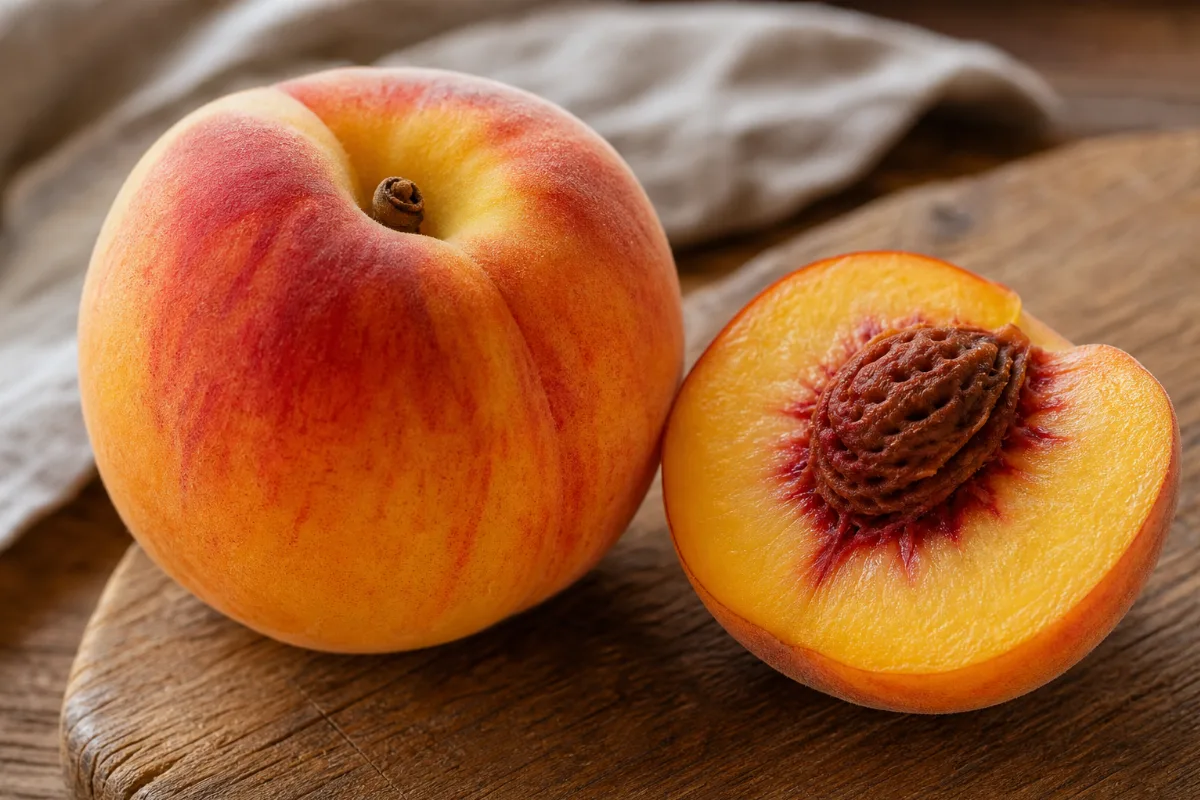
The peach (Prunus persica) is a stone fruit in the rose family. People eat the soft flesh. The hard pit holds a seed that should not be eaten.
USDA values for raw yellow peach: 39 kcal per 100 g. One medium peach (150 g) has about 59 kcal, 2.3 g fibre, 12.6 g natural sugars, 9.9 mg vitamin C, 285 mg potassium and small amounts of copper, vitamin A and vitamin K. About 89 percent is water. Amounts vary with variety and ripeness.
What the research shows
Most studies look at fruit and vegetables together. They link more fruit with lower heart disease and early death, but they cannot prove cause and they did not single out peaches.
In three large US cohorts, peaches, plums and apricots together showed no clear link with type 2 diabetes. In one small meal trial, a peach shake raised blood sugar less than a plain sugar drink. Findings for inflammation markers come from a genetic study, rats and the lab, so they are weak evidence.
Fruit, juice, shake and seed products
The human evidence is for whole fruit in cohorts and for a peach shake at one meal. Rat work used juice and the lab work used fermented puree. Peach seed products are a different thing from the fruit flesh. Results for one form do not carry over to another.
Amounts
This page gives no amounts to eat. Ask a doctor, pharmacist or dietitian what is right for you, especially if you have an allergy, kidney disease or diabetes.
At a glance
Traditional uses history, not proof
- Eaten fresh, cooked, canned or dried as a sweet fruit
- Peach seed (Persicae semen) is used in traditional Chinese medicine; long use is not proof it works, and it has caused serious side effects
Studied for research
- Vitamin C, high certainty for the nutrient, a peach is a small source
- Fruit and vegetables overall and heart disease, low certainty (not peach alone)
- Type 2 diabetes risk, low certainty, no clear link for peaches, plums and apricots
- Blood sugar and inflammation after one peach shake, low certainty (healthy people)
- Inflammation marker CRP, very low certainty (genetic study)
Main compounds
- Vitamin C (ascorbic acid)
- Carotenoids (USDA)
- Phenols (measured in the lab)
- Pru p 3, the main peach allergen
- Amygdalin, in the seed
Common forms
- Fresh fruit
- A peach shake (used in one meal trial)
- Fermented peach puree and juice (lab study only)
- Peach seed or kernel (a safety concern, not a food)
Research links: USDA FoodData Central: peaches · Meta-analysis: fruit and vegetable intake and death (2017) · Cohort study: individual fruits and type 2 diabetes (2013) · Research Library · Genes & Biomarkers Library
What it is and its history
- Accepted scientific name
- Prunus persica
- Naming authority
- (L.) Stokes (GBIF accepted; usageKey 8149923)
- Synonyms
- Name: Prunus persica var. nucipersica; Status: synonym in GBIF; this is the nectarine
- Common names
- Peach (English); Durazno / melocoton (Spanish)
- Family or group
- Rosaceae (the rose family), which also includes apricots, plums, cherries, almonds and apples.
- Classification
- Plantae > Tracheophyta > Magnoliopsida > Rosales > Rosaceae > Prunus > Prunus persica
- Native range
- Not verified from a source read.
- Habitat
- Not verified from a source read.
- What it looks like
- Roots: Not verified.; Stems: Not verified.; Leaves: Not verified.; Flowers: Not verified.; Fruit: A stone fruit: soft flesh around one hard pit with a seed inside. USDA household portion: medium peach 150 g (2-2/3 inch), cup of slices 154 g.
- Cultivation
- Not verified from a source read.
- Harvest and processing
- Eaten fresh, frozen, canned, dried or as juice. A canning study found washing, cutting and canning lowered pesticide residues.
- Look-alikes and adulterants
- Name: Nectarine; Note: GBIF lists nectarine (var. nucipersica) as a synonym of the same species; it has smooth skin.; Name: Peach palm; Note: Unrelated tropical palm fruit with a similar name; research on it is not peach research.
- Sustainability and conservation
- Not assessed.
Photographs
Traditional use and history history, not clinical proof
| Tradition or era | Documented use | Source |
|---|---|---|
| Chinese medicine | Peach seed (Persicae semen) is listed among medicinal and edible seeds in a 2026 safety review. | p41322721 |
| Culinary use | Eaten as a sweet fruit (general knowledge; no historical source was read). | Not verified |
Traditional use shows how it was used. It does not show that it works or is safe today.
What is inside, and how it may work
What it contains and how those compounds act in cells and animals. Laboratory and animal mechanisms are not proven effects in people.
Main compounds
| Compound | Family | Where it is concentrated | Activity studied | Level of evidence |
|---|---|---|---|---|
| Ascorbic acid (vitamin C) | vitamin | Flesh USDA: 6.6 mg per 100 g; about 9.9 mg per medium peach | Essential nutrient; lack causes scurvy (NHS). 22 21 | Human data |
| Carotenoids (beta-carotene, beta-cryptoxanthin, lutein plus zeaxanthin) | carotenoid | Flesh USDA per 100 g: beta-carotene 162 ug, beta-cryptoxanthin 67 ug, lutein plus zeaxanthin 91 ug | Composition only; no peach trial of these. 22 | Composition only |
| Phenols | polyphenol | Peel and flesh 145.20 ug/mL in fermented puree with peel (lab) | Antioxidant activity measured in the lab only. 6 | Laboratory research |
| Pru p 3 (lipid transfer protein) | allergen protein | Mainly peel | Major peach allergen; resists heat and digestion. 3 15 | Human data |
| Amygdalin | cyanogenic glycoside | Seed (kernel) | Can release cyanide; cyanide was measured in peach seeds (1984). 7 18 | Composition only |
Mechanisms, receptors and pathways
| Target or pathway | Gene or receptor | What was found | Level |
|---|---|---|---|
| Vitamin C | Not specified | Needed every day; lack causes scurvy (NHS). 21 | Human data |
| Allergy to Pru p 3 | IgE | Pru p 3 is the central peach allergen, heat and digestion stable, found mainly in the peel. 15 3 | Human data |
| Cyanide release from amygdalin | Not applicable | Cyanide measured in peach seeds; poisoning described for apricot kernels. 7 16 | Human data |
| Polyphenols and PPAR-gamma | PPAR-gamma | The rat study authors suggest peach and plum polyphenols may act as PPAR-gamma agonists. Animal interpretation. 12 | Animal research |
Absorption, metabolism and elimination
- Absorption
- Not studied for peach beyond a rise in blood salicylic acid after a peach shake.
- Distribution
- Not found.
- Metabolism
- Not found.
- Elimination
- Not found.
- Bioavailability
- Not established.
Isolated compounds versus whole extracts
Human results come from three kinds of evidence: cohorts of whole fruit, one meal trial with a peach shake, and genetic data. Rat results used juice and lab results used fermented puree. Peach seed products are a different thing from the fruit flesh. Results from one form do not carry over to another.
Nutritional composition
Nutrition from USDA FoodData Central (Peaches, yellow, raw, SR Legacy FDC 169928, updated 4/1/2019, read 2026-10-25). Per 100 g: 39 kcal, 88.9 g water, 0.91 g protein, 0.25 g fat, 9.54 g carbohydrate, 1.5 g fibre, 8.39 g total sugars (4.76 g sucrose, 1.95 g glucose, 1.53 g fructose), 6.6 mg vitamin C, 190 mg potassium, 6 mg calcium, 0.25 mg iron, 0.068 mg copper, 0.806 mg niacin, 0.73 mg vitamin E, 16 ug vitamin A (RAE), 2.6 ug vitamin K, 4 ug folate. One medium peach (150 g): about 59 kcal, 2.3 g fibre, 12.6 g sugars, 9.9 mg vitamin C, 285 mg potassium, 0.10 mg copper, 24 ug vitamin A (RAE), 3.9 ug vitamin K, 6 ug folate. A peach is a light fruit with small amounts of many nutrients; vitamin C is about a quarter of the NHS adult figure of 40 mg. Values vary with variety and ripeness.
1 high certainty4 low certainty1 very low certainty3 not enough evidence
What was looked at
The 9 benefits and uses checked for Peaches, each with how strong the evidence is. Tap one to open it.
- Vitamin C intake and preventing scurvyHigh certainty
- Fruit and vegetables overall: heart disease, cancer and early deathLow certainty
- Developing type 2 diabetesLow certainty
- Death risk in people who already have type 2 diabetesLow certainty
- Inflammation marker C-reactive protein (genetic study)Very low certainty
- Blood sugar and inflammation after one peach mealLow certainty
- Obesity-linked blood sugar and blood fat problems (rats)Not enough evidence
- Antioxidant plant compounds (lab)Not enough evidence
- Peach seed, kernel or extract products as medicineNot enough evidence
Lab markers tracked in the studies
C-reactive protein (CRP)Blood glucose after a mealInterleukin-6
What is Peaches good for?
The main studied uses and how strong the evidence is for each. Almost all of it is about fruit overall, not peaches alone.
Benefits, one by one
Each card is a research question, not a promise. Tap a goal to filter. Open a card to see the studies, doses and limits.
Vitamin C intake and preventing scurvy
High certaintyA medium peach gives about 10 mg of vitamin C. The NHS says adults need 40 mg a day and that a lack of vitamin C can lead to scurvy. A peach is a modest source, not a rich one. No trial has tested peaches for scurvy.
2 studiesRaw yellow peach as food.
Studies, doses and limits
What the trials found
USDA lists 6.6 mg vitamin C per 100 g of raw yellow peach, so about 9.9 mg in a medium peach (150 g), roughly a quarter of the 40 mg a day the NHS gives for adults 19 to 64. The NHS says lack of vitamin C can lead to scurvy and that a varied diet should supply what you need.
Results
Peaches contribute a little vitamin C to the day. No peach-specific scurvy study was found.
Effect sizes as reported
USDA: 6.6 mg per 100 g; about 9.9 mg per medium peach (150 g). NHS: 40 mg a day for adults 19 to 64.
Why this rating
High for the nutrient fact (agency statements and USDA data). Nothing was tested in peaches, and a peach is a small source compared with citrus or peppers.
Form and dose studied
Raw yellow peach as food.
Who was studied
Anyone eating fruit; scurvy risk is mainly in people with very limited diets.
Limits
Composition and agency statements, not a trial of peaches. Values vary with variety and ripeness.
Why researchers looked
Fruit is a main source of vitamin C, so people ask how much a peach adds.
Traditional use
Peaches have long been eaten fresh and cooked as a sweet fruit; long use is not proof that they treat any condition.
Proposed mechanism Authoritative guidance
Vitamin C (ascorbic acid) is an essential nutrient the body cannot store. Peaches contain 6.6 mg per 100 g (USDA).
A proposed mechanism does not show that the effect happens in people.
Bleeding gums, easy bruising and joint pain with a very limited diet need a doctor, not food alone.
Fruit and vegetables overall: heart disease, cancer and early death
Low certaintyLarge studies that followed people over time link more fruit and vegetables with lower risk of heart disease and early death. These studies grouped all fruit and vegetables together. They did not single out peaches, and they cannot prove cause.
1 studiesWhole fruit and vegetables eaten as food.
Studies, doses and limits
What the trials found
A systematic review of 95 prospective studies found that for fruit and vegetables combined, each 200 g a day was linked with lower risk: heart disease RR 0.92, stroke 0.84, all cause death 0.90. Apples and pears and citrus fruits were named as linked with lower cardiovascular and all-cause death risk. Peaches were not named in the abstract.
Results
A consistent link for fruit and vegetables together. Nothing specific to peaches.
Effect sizes as reported
All-cause mortality RR 0.90 (0.87 to 0.93) per 200 g/day; heart disease RR 0.92 (0.90 to 0.94).
Why this rating
Observational studies, high variation for death (I2 83%), and fruit and vegetables combined. People who eat more fruit often differ in exercise, smoking and income.
Form and dose studied
Whole fruit and vegetables eaten as food.
Who was studied
Adults followed in cohort studies.
Limits
Cannot prove that fruit caused the lower risk. Not a peach study.
Why researchers looked
Peaches are one of the fruits that make up the fruit intake counted in these studies.
Traditional use
Peaches have long been eaten fresh and cooked as a sweet fruit; long use is not proof that they treat any condition.
Proposed mechanism Preliminary mechanism
Not established. Possible reasons include fibre, potassium and plant compounds, but the review does not test them.
A proposed mechanism does not show that the effect happens in people.
None specific.
Developing type 2 diabetes
Low certaintyIn three large US studies, eating more peaches, plums and apricots together was not clearly linked with a lower or higher chance of type 2 diabetes. Some other fruits, such as blueberries, grapes and apples, were linked with lower risk. Fruit juice was linked with higher risk.
1 studiesWhole fruit; the group was peaches, plums and apricots.
Studies, doses and limits
What the trials found
In the Nurses' Health Study, Nurses' Health Study II and Health Professionals Follow-up Study (187,382 people, 12,198 cases of type 2 diabetes), peaches, plums and apricots were counted as one group. The hazard ratio per 3 servings a week was 0.97 (0.92 to 1.02), which is not significantly different from no link. Blueberries were 0.74, grapes and raisins 0.88, apples and pears 0.93. Fruit juice was 1.08.
Results
No clear link for peaches, plums and apricots as a group.
Effect sizes as reported
HR 0.97 (0.92 to 1.02) per 3 servings a week.
Why this rating
Large cohorts but observational, food questionnaires, mostly health professionals, and peaches grouped with two other fruits.
Form and dose studied
Whole fruit; the group was peaches, plums and apricots.
Who was studied
US health professionals, men and women.
Limits
Peaches could not be separated from plums and apricots. Cannot show cause.
Why researchers looked
Readers ask whether the sugar in fruit raises diabetes risk.
Traditional use
Peaches have long been eaten fresh and cooked as a sweet fruit; long use is not proof that they treat any condition.
Proposed mechanism Preliminary mechanism
Not tested in this study.
A proposed mechanism does not show that the effect happens in people.
None specific. People managing diabetes can ask their care team how fruit fits their plan.
Death risk in people who already have type 2 diabetes
Low certaintyA 2025 review of nine cohort studies found that people with type 2 diabetes who ate the most fruit had a lower risk of dying than those who ate the least. Fruit was counted as a whole. Peaches were not looked at on their own.
1 studiesWhole fruit.
Studies, doses and limits
What the trials found
Nine prospective cohorts (75,082 adults with type 2 diabetes, 7,590 deaths): highest versus lowest fruit intake was linked with HR 0.82 (0.75 to 0.90) for all-cause death and 0.90 (0.84 to 0.97) for cardiovascular death.
Results
Lower death risk with higher fruit intake overall, observational.
Effect sizes as reported
All-cause HR 0.82 (0.75 to 0.90); cardiovascular HR 0.90 (0.84 to 0.97).
Why this rating
Observational and fruit overall. The abstract does not name peaches.
Form and dose studied
Whole fruit.
Who was studied
Adults with type 2 diabetes.
Limits
Cannot prove cause; not a peach study.
Why researchers looked
People with diabetes ask whether fruit is helpful or harmful.
Traditional use
Peaches have long been eaten fresh and cooked as a sweet fruit; long use is not proof that they treat any condition.
Proposed mechanism Preliminary mechanism
Not tested.
A proposed mechanism does not show that the effect happens in people.
People with diabetes should ask their care team about fruit in their plan.
Inflammation marker C-reactive protein (genetic study)
Very low certaintyA 2024 genetic study linked higher peach or nectarine intake with lower C-reactive protein, a blood marker of inflammation. This design is suggestive, not proof, and peaches and nectarines were counted together.
1 studiesWhole fruit intake (genetically predicted).
Studies, doses and limits
What the trials found
A two-sample Mendelian randomisation study of 28 fruits and vegetables reported that peach/nectarine consumption was associated with lower CRP (OR 0.913, p=0.010). Total fruit intake was associated with lower LDL cholesterol and CRP.
Results
A single suggestive association for a marker, not a health outcome.
Effect sizes as reported
CRP OR 0.913 (p=0.010) for peach/nectarine.
Why this rating
Genetic proxy design, peaches grouped with nectarines, many foods tested at once, marker not outcome.
Form and dose studied
Whole fruit intake (genetically predicted).
Who was studied
Genetic data from large databases.
Limits
No trial confirmed it, and the assumptions of this method cannot all be checked.
Why researchers looked
Peach polyphenols are often said to calm inflammation, so researchers looked for evidence in people.
Traditional use
Peaches have long been eaten fresh and cooked as a sweet fruit; long use is not proof that they treat any condition.
Proposed mechanism Preliminary mechanism
Not tested. Mendelian randomisation uses genes that predict intake.
A proposed mechanism does not show that the effect happens in people.
None specific.
Blood sugar and inflammation after one peach meal
Low certaintyIn a small crossover trial in 26 healthy adults, a peach shake raised blood sugar less quickly than a plain sugar drink with the same sugars, and interleukin-6, an inflammation marker, rose less. It was one meal, in healthy people.
1 studiesPeach shake.
Studies, doses and limits
What the trials found
A randomised crossover study gave 26 healthy people a peach shake or a sugar drink with the same sugars. After the peach shake glucose rose less at 15 minutes (p<0.01), the average glucose rise was lower (p<0.05), free fatty acids fell more (p<0.01) and interleukin-6 rose less (p<0.05). Blood salicylic acid rose and peaked at 90 minutes.
Results
Smaller short-term glucose and inflammation responses compared with plain sugar, one meal.
Effect sizes as reported
Glucose 15 min p<0.01; average excursion p<0.05; IL-6 p<0.05.
Why this rating
Randomised crossover but only 26 healthy people, one meal, a shake not a whole peach, short-term markers.
Form and dose studied
Peach shake.
Who was studied
Healthy adults.
Limits
Does not show any long-term effect or benefit in people with diabetes.
Why researchers looked
People ask whether fruit sugar acts differently from plain sugar.
Traditional use
Peaches have long been eaten fresh and cooked as a sweet fruit; long use is not proof that they treat any condition.
Proposed mechanism Preliminary mechanism
The authors suggest non-sugar compounds in fruit such as salicylic acid may change the response. This is their interpretation.
A proposed mechanism does not show that the effect happens in people.
People with diabetes can ask their care team how fruit fits their plan.
Obesity-linked blood sugar and blood fat problems (rats)
Not enough evidenceRats fed peach juice (and plum juice) were protected from several obesity-related problems. This is animal work only. We found no equivalent human trial.
1 studiesPeach juice fed to rats.
Studies, doses and limits
What the trials found
In obese Zucker rats, peach and plum juice protected against high blood sugar, insulin and leptin resistance and abnormal blood fats, with lower inflammation markers in plasma and heart tissue. Only plum juice prevented weight gain, which the authors link to its higher polyphenol content.
Results
Animal result; no human equivalent found.
Why this rating
Animal study only. Rat results often do not carry over to people.
Form and dose studied
Peach juice fed to rats.
Who was studied
Rats.
Limits
Not human evidence.
Why researchers looked
Peach juice is rich in polyphenols, so it was tested in obese rats.
Traditional use
Peaches have long been eaten fresh and cooked as a sweet fruit; long use is not proof that they treat any condition.
Proposed mechanism In vivo
The authors suggest polyphenols may act on the PPAR-gamma pathway. Animal data.
A proposed mechanism does not show that the effect happens in people.
None.
Antioxidant plant compounds (lab)
Not enough evidenceLab tests show peach purees contain phenols and carotenoids. Tests in the lab do not show a benefit in people, and we found no human trial.
1 studiesFermented peach puree and juice.
Studies, doses and limits
What the trials found
A 2025 lab study of Lactobacillus-fermented peach purees and juice measured phenols and carotenoids: puree made with peel had the most phenols (145.20 ug/mL) and puree made without peel the most carotenoids (1575.33 ug/100 mL). No people were studied.
Results
A composition result, not a health result.
Effect sizes as reported
Phenols 145.20 ug/mL; carotenoids 1575.33 ug/100 mL (fermented purees).
Why this rating
Laboratory work on fermented products, not fresh fruit and not people.
Form and dose studied
Fermented peach puree and juice.
Limits
No health effect shown.
Why researchers looked
Peaches contain coloured and bitter plant compounds that act as antioxidants in the test tube.
Traditional use
Peaches have long been eaten fresh and cooked as a sweet fruit; long use is not proof that they treat any condition.
Proposed mechanism Laboratory research
Phenols and carotenoids measured by chemical tests.
A proposed mechanism does not show that the effect happens in people.
None.
Peach seed, kernel or extract products as medicine
Not enough evidenceNo good human evidence that peach seed or kernel products help any condition. The seed (a Chinese medicine called Persicae semen) was linked to serious side effects in a safety review.
1 studiesPeach seed (Persicae semen).
Studies, doses and limits
What the trials found
A 2026 systematic review of safety reports found 4 serious adverse events from Persicae semen (peach seed), among 703 seed-related adverse events across eight seeds. No benefit trial was found in the sources read.
Results
No benefit shown; safety concerns reported.
Effect sizes as reported
4 serious events (Persicae semen).
Why this rating
No human trial of benefit found; safety evidence is from reports.
Form and dose studied
Peach seed (Persicae semen).
Who was studied
People using traditional medicine.
Limits
Not about the fruit flesh. See the Safety tab.
Why researchers looked
Peach seed is used in some traditional medicine systems.
Traditional use
Peaches have long been eaten fresh and cooked as a sweet fruit; long use is not proof that they treat any condition.
Proposed mechanism Preliminary mechanism
Peach seeds contain amygdalin, a cyanogenic glycoside (see Safety).
A proposed mechanism does not show that the effect happens in people.
Do not eat the pit or kernel. See Safety.
Connections to the rest of health
How Peaches connects to the rest of our health knowledge graph. Every link says what kind of connection it is. A safety link (for example to the liver) is a warning, not a benefit. A study that merely mentions a topic never creates a benefit link.
Explore every connection: goals, body systems, organs, symptoms, genes
B. Body systems
| Connected to | Kind of connection | Evidence status | Context | Studies |
|---|---|---|---|---|
| Immune system | Adverse effect or risk | Documented risk | Food allergy from mild mouth symptoms to anaphylaxis. Peach allergy through Pru p 3, from mouth itching to anaphylaxis. Preparation or compound: Peach protein Pru p 3 (mainly peel) |
15 2 |
| Immune System | Biological association | High certainty | Studied for: Vitamin C intake and preventing scurvy Studied for: Inflammation marker C-reactive protein (genetic study) | 22 21 17 6 |
| Integumentary System | Biological association | High certainty | Studied for: Vitamin C intake and preventing scurvy | 22 21 |
| Cardiovascular System | Biological association | Low certainty | Studied for: Fruit and vegetables overall: heart disease, cancer and early death | 1 |
| Endocrine System | Biological association | Low certainty | Studied for: Developing type 2 diabetes Studied for: Death risk in people who already have type 2 diabetes | 11 5 13 12 |
| Digestive System | Biological association | Not enough evidence | Studied for: Peach seed, kernel or extract products as medicine | 18 |
I. Biomarkers
| Connected to | Kind of connection | Evidence status | Context | Studies |
|---|---|---|---|---|
| C-reactive protein (CRP) | Biological association | Very low certainty | Measured in trials: lower. A lab change is not the same as a health benefit. | 17 |
| Blood glucose after a meal | Biological association | Low certainty | Measured in trials: lower. A lab change is not the same as a health benefit. | 13 |
| Interleukin-6 | Biological association | Low certainty | Measured in trials: lower. A lab change is not the same as a health benefit. | 13 |
K. Biological pathways
L. Active compounds
| Connected to | Kind of connection | Evidence status | Context | Studies |
|---|---|---|---|---|
| Amygdalin | Adverse effect or risk | Documented risk | Seeds contain a cyanide-releasing compound; do not eat the pit. Preparation or compound: Peach seed (kernel) |
18 7 |
| Ascorbic acid (vitamin C) | Biological association | Human | Essential nutrient; lack causes scurvy (NHS). Preparation or compound: Flesh |
22 21 |
| Carotenoids (beta-carotene, beta-cryptoxanthin, lutein plus zeaxanthin) | Biological association | Composition only | Composition only; no peach trial of these. Preparation or compound: Flesh |
22 |
| Phenols | Biological association | In vitro | Antioxidant activity measured in the lab only. Preparation or compound: Peel and flesh |
6 |
| Pru p 3 (lipid transfer protein) | Biological association | Human | Major peach allergen; resists heat and digestion. Preparation or compound: Mainly peel |
3 15 |
| Amygdalin | Biological association | Composition only | Can release cyanide; cyanide was measured in peach seeds (1984). Preparation or compound: Seed (kernel) |
7 18 |
Each connection is stored with the ingredient, the connected record, the kind of connection, the evidence status, the supporting studies, the preparation or compound involved, and a review date (last reviewed October 25, 2026).
Evidence at a glance: what the research found for 9 outcomes
Each outcome below is one thing researchers measured. Certainty is how far the evidence can be trusted, not how well it works. The full studies are on the next tab.
The evidence
The research centre for Peaches. Every record here was checked against PubMed or the publisher's page; we never list a study we have not verified.
Evidence by outcome
Bars show how many studies we found for each outcome, not how well it works. People are added up across trials only (reviews are not added, to avoid double counting).
How we rate evidence
High certainty
Several well-run trials or reviews agree; further research is unlikely to change the picture much.
Moderate certainty
Good trials point the same way, but some doubt remains.
Low certainty
Small, short or inconsistent trials. The finding could change with better research.
Very low certainty
Very little or very weak human data. Treat as a possibility only.
Mixed findings
Trials or reviews disagree with each other.
Not enough evidence
Not enough human research to say either way.
Evidence against
Good research found no benefit, or found harm.
We take the reviewers' own risk-of-bias and GRADE statements where they exist, and otherwise judge from study size, design, consistency, directness and whether a product matches what is sold. Many publications do not make evidence high. Method note: We started from our existing peach summary, re-read nutrition from USDA FoodData Central, and searched PubMed for human trials, reviews, allergy and safety evidence. Only abstracts were read for studies. Items we could not verify are flagged in the research gaps.
Study library: every study we checked 22
| Study | Design | People | Product, dose, length | Result |
|---|---|---|---|---|
| Aune 2017 Fruit and vegetable intake and the risk of cardiovascular disease, total cancer and all-cause mortality-a systematic review and dose-response meta-analysis of prospective studies. Int J Epidemiol · PMID 28338764 · DOI |
Meta-analysis |
95 prospective studies (142 publications) of fruit and vegetable intake | Fruit and vegetables combined (not peaches alone) Whole foods Per 200 g/day (an association, not advice) Varied · vs Lowest intake |
Per 200 g/day of fruit and vegetables: coronary heart disease RR 0.92, stroke 0.84, cardiovascular disease 0.92, total cancer 0.97, all-cause mortality 0.90. Apples and pears and citrus fruits were singled out; peaches were not named in the abstract. All-cause mortality RR 0.90 per 200 g/day (95% CI 0.87-0.93; I2 83%) Methods, limits and fundingOutcomes: Coronary heart disease, stroke, cardiovascular disease, cancer, all-cause death Limitations: Observational; fruit and vegetables combined; high heterogeneity for mortality; cannot prove cause. Funding and conflicts: Not stated in the abstract. Read: abstract |
| Ben Nejma 2026 The molecular landscape of peach allergy in Tunisia: new insights. Front Immunol · PMID 41853255 · DOI |
Retrospective cohort |
49 49 patients referred for suspected peach allergy; 38 (77.5%) confirmed allergic, median age 10 years |
Peach allergy testing Fruit or seed as stated |
Among the 38 allergic patients: urticaria 86.6%, angioedema 39.4%, rhinitis 42.1%, bronchospasm 23.6%, oral allergy syndrome 32.4%, anaphylaxis 10.5%. Pru p 3 was the predominant sensitisation. Anaphylaxis 10.5% of allergic patients Methods, limits and fundingOutcomes: As in results Limitations: Retrospective; one referral centre; patients were referred because allergy was suspected. Funding and conflicts: The authors declare no commercial relationships. Read: abstract |
| Boyano-Martinez 2013 Peach allergy in Spanish children: tolerance to the pulp and molecular sensitization profile. Pediatr Allergy Immunol · PMID 23506291 · DOI |
Other |
57 57 Spanish children (median age 7.4 years) with reactions after eating or touching peach |
Oral food challenge with peach pulp Fruit or seed as stated |
Pru p 3 was the major allergen and is found mainly in the peel. Oral challenge with peach pulp was negative in 52 (93%) of the children tested; more than 90% tolerated peeled peach. 93% negative challenge Methods, limits and fundingOutcomes: As in results Limitations: Selected children under specialist supervision; challenges were done in a clinic. Not advice to eat peeled peach. Funding and conflicts: Not stated in the abstract. Read: abstract |
| Camara 2020 Removal residues of pesticides in apricot, peach and orange processed and dietary exposure assessment. Food Chem · PMID 32387933 · DOI |
Other n/a |
Canned apricots and peaches and orange juice | Washing, cutting, squeezing and canning Fruit or seed as stated |
Processing lowered residues of 16 pesticides; washing/cutting, squeezing and hot-pack canning removed more than 55%. The risk to consumers was practically negligible. More than 55% lost Methods, limits and fundingOutcomes: As in results Limitations: Laboratory processing study. Funding and conflicts: The authors declare no competing interests. Read: abstract |
| Geravand 2025 Fruit and Vegetable Consumption and Risk of All-Cause and Cause-Specific Mortality in Individuals With Type 2 Diabetes: A Systematic Review and Dose-Response Meta-analysis of Prospective Cohort Studies. Nutr Rev · PMID 40105674 · DOI |
Meta-analysis |
75082 9 prospective cohorts, 75,082 adults with type 2 diabetes, 7,590 deaths |
Fruit and vegetables overall (not peaches alone) Whole foods Highest versus lowest intake Varied · vs Lowest intake |
Highest fruit intake: all-cause death HR 0.82 (0.75 to 0.90), cardiovascular death HR 0.90 (0.84 to 0.97). The abstract does not name peaches. All-cause death HR 0.82 for highest fruit intake (95% CI 0.75 to 0.90) Methods, limits and fundingOutcomes: All-cause and cardiovascular death Limitations: Observational; fruit overall; people who eat more fruit may differ in other ways. Funding and conflicts: Not stated in the abstract. PROSPERO CRD42024571094. Registration: CRD42024571094 Read: abstract |
| Han 2025 Effects of Different Pretreatments on the Nutrition, Flavor and Sensory Evaluation of Lactobacilli-Fermented Peach Beverages. Foods · PMID 41465009 · DOI |
Other in-vitro |
Lab-made fermented peach purees and juice | Peach puree with and without peel, and juice, fermented with Lactobacillus Fruit puree/juice Lab fermentation · vs Different pretreatments |
Fermented puree made with peel had the highest total phenols (145.20 ug/mL); puree without peel was rich in carotenoids (1575.33 ug/100 mL). No people were studied. Lab measurements only Methods, limits and fundingOutcomes: Phenols, antioxidant activity, carotenoids, aroma compounds Limitations: Laboratory study of fermented drinks, not people and not fresh fruit. Funding and conflicts: The authors declare no conflicts. Read: abstract |
| Holzbecher 1984 The cyanide content of laetrile preparations, apricot, peach and apple seeds. J Toxicol Clin Toxicol · PMID 6098693 · DOI |
Other n/a |
Laetrile preparations and seeds | Apricot, peach and apple seeds Fruit or seed as stated |
Cyanide was measured in laetrile preparations and in apricot, peach and apple seeds. The abstract gives no numbers. Methods, limits and fundingOutcomes: As in results Limitations: 1984 laboratory paper; the abstract has no figures. Funding and conflicts: Not stated. Read: abstract |
| Li 2018 A monitoring survey and dietary risk assessment for pesticide residues on peaches in China. Regul Toxicol Pharmacol · PMID 29909271 · DOI |
Other n/a |
Peach samples in China | Pesticide residues Fruit or seed as stated |
39 pesticides detected; 92.3% of samples had one or more residues; residues of eight pesticides in 3.2% of samples exceeded limits. Chronic risk was extremely low for adults and children. In worst-case scenarios acute risks for children from some pesticides exceeded the acceptable level. 92.3% of samples with residue Methods, limits and fundingOutcomes: As in results Limitations: Chinese market; regulations differ elsewhere. Funding and conflicts: Not stated in the abstract. Read: abstract |
| Marzec 2026 Pollen-Food Allergy Syndrome in Children: Global Prevalence and Pathogenesis. Nutrients · PMID 42514315 · DOI |
Narrative review |
Review of pollen-food allergy syndrome in children | Raw plant foods that cross-react with pollen (peach is not singled out in the abstract) Fruit or seed as stated |
PFAS usually causes rapid itching, burning and swelling in the mouth and throat; systemic reactions and rarely anaphylaxis may occur. Prevalence ranges from a few percent in general child populations to 50-80% of atopic children. Methods, limits and fundingOutcomes: As in results Limitations: Narrative review; the abstract does not name peach. Funding and conflicts: The authors declare no conflicts. Read: abstract |
| Muir 2009 Measurement of short-chain carbohydrates in common Australian vegetables and fruits by high-performance liquid chromatography (HPLC). J Agric Food Chem · PMID 19123815 · DOI |
Other n/a |
45 vegetables and 41 fruits | Clingstone peach among others Fruit or seed as stated |
Clingstone peach, apple, pear, mango and watermelon contained fructose in excess of glucose. Sorbitol was measured in 15 fruits (0.53 to 5.99 g per 100 g); the abstract does not say which. Methods, limits and fundingOutcomes: As in results Limitations: Composition analysis; no people; the abstract does not give a peach sorbitol figure. Funding and conflicts: Not stated. Read: abstract |
| Muraki 2013 Fruit consumption and risk of type 2 diabetes: results from three prospective longitudinal cohort studies. BMJ · PMID 23990623 · DOI |
Prospective cohort |
187382 66,105 women (Nurses' Health Study), 85,104 women (NHS II) and 36,173 men (Health Professionals Follow-up Study); 12,198 developed type 2 diabetes |
Whole fruits, with peaches, plums and apricots counted together Whole fruit Per 3 servings a week (an association, not advice) Up to 24 years of follow-up · vs Lowest intake |
Peaches, plums and apricots together: HR 0.97 per 3 servings a week (0.92 to 1.02), not significantly different from 1. Blueberries 0.74, grapes and raisins 0.88, apples and pears 0.93. Fruit juice 1.08 (higher risk). HR 0.97 for peaches, plums and apricots (95% CI 0.92 to 1.02) Methods, limits and fundingOutcomes: Incident type 2 diabetes Limitations: Food questionnaires; mostly health professionals in the US; peaches grouped with plums and apricots; observational. Funding and conflicts: The authors declare no support from any organisation for the submitted work. Read: abstract |
| Noratto 2015 Consumption of polyphenol-rich peach and plum juice prevents risk factors for obesity-related metabolic disorders and cardiovascular disease in Zucker rats. J Nutr Biochem · PMID 25801980 · DOI |
Animal research rat |
Obese Zucker rats and lean rats | Peach juice and plum juice Juice Ad libitum · vs Placebo |
Peach and plum juice protected rats against obesity-linked high blood sugar, insulin and leptin resistance and abnormal blood fats. Only plum juice prevented weight gain. Animal result only Methods, limits and fundingOutcomes: Weight gain, blood sugar, blood fats, inflammation markers Limitations: Rats, not people. Juice is not the whole fruit. Funding and conflicts: Not stated in the abstract. Read: abstract |
| Rinelli 2012 Circulating salicylic acid and metabolic and inflammatory responses after fruit ingestion. Plant Foods Hum Nutr · PMID 22392497 · DOI |
Controlled trial |
26 26 healthy adults (16 abstained from fruit and vegetables the evening before, 10 ate as usual) |
Peach shake meal versus a sugar solution with the same sugars Fruit (peach shake) Single meal; amount not stated in the abstract Single meal, crossover · vs Mixed sugar drink with the same sugars |
Salicylic acid in blood rose and peaked at 90 minutes. After the peach shake, glucose rose less at 15 minutes (p<0.01), average glucose excursion was lower (p<0.05), free fatty acids fell more (p<0.01) and interleukin-6 rose less (p<0.05) than after the sugar drink. Lower glucose excursion and smaller interleukin-6 rise versus sugar drink after one meal (p values as stated) Methods, limits and fundingOutcomes: Blood salicylic acid, glucose, insulin, free fatty acids, interleukin-6 Limitations: Single meal in healthy people; 26 participants; a shake, not a whole peach; effects on health outcomes not tested. Funding and conflicts: Not stated in the abstract. Read: abstract |
| Rossi 2023 Immunotherapy with Pru p 3 for food allergy to peach and non-specific lipid transfer protein: a systematic review. Clin Mol Allergy · PMID 37259099 · DOI |
Systematic review |
Nine studies of Pru p 3 immunotherapy | Pru p 3 immunotherapy Fruit or seed as stated |
Pru p 3 is the primary nsLTP sensitiser and this allergy is usually persistent. Immunotherapy appeared effective and well tolerated in the studies, but is not yet routine clinical practice and larger studies are needed. Methods, limits and fundingOutcomes: As in results Limitations: Small studies; not routine care. Funding and conflicts: None to disclose. Read: abstract |
| Rydzynska 2026 Lipid Transfer Protein Allergens: A Comprehensive Overview of Current Knowledge. Int J Mol Sci · PMID 41828357 · DOI |
Narrative review |
Review of nsLTP allergens | Pru p 3 (peach lipid transfer protein) Fruit or seed as stated |
nsLTPs resist heat and digestion, so reactions range from mild local symptoms to severe anaphylaxis. Pru p 3 is the central, most studied allergen and a frequent first sensitiser with wide cross-reactivity to other plants. Methods, limits and fundingOutcomes: As in results Limitations: Narrative review. Funding and conflicts: The authors declare no conflicts. Read: abstract |
| Sauer 2015 Severe cyanide poisoning from an alternative medicine treatment with amygdalin and apricot kernels in a 4-year-old child. Wien Med Wochenschr · PMID 25605411 · DOI |
Case report |
1 A 4-year-old boy |
Amygdalin and apricot kernels (not peach) Fruit or seed as stated |
Severe cyanide poisoning with coma and lactic acidosis, followed by recovery after treatment. The case was apricot kernel and amygdalin, not peach. Single case Methods, limits and fundingOutcomes: As in results Limitations: One case; apricot kernel, not peach. Funding and conflicts: Not stated. Read: abstract |
| Yang 2024 Identifying atheroprotective fruits and vegetables by Mendelian Randomization analysis. Front Nutr · PMID 39469330 · DOI |
Other |
Genetic data (GWAS) for 28 fruits and vegetables, LDL cholesterol, triglycerides and CRP | Peach/nectarine intake (genetically predicted) Whole fruit |
Peach/nectarine consumption was associated with lower C-reactive protein (OR 0.913, p=0.010). Total fruit intake was linked with lower LDL-C (OR 0.911) and CRP (OR 0.868). The abstract reports no peach finding for LDL or triglycerides. CRP OR 0.913 for peach/nectarine (p=0.010) Methods, limits and fundingOutcomes: LDL cholesterol, triglycerides, C-reactive protein, atherosclerosis Limitations: Mendelian randomisation uses genes linked to self-reported intake; peaches and nectarines are grouped; assumptions can fail; many foods were tested. Funding and conflicts: Authors declare no commercial or financial relationships. Read: abstract |
| Yuan 2026 Safety of medicinal and edible herbs from seed sources for human consumption: A systematic review. Integr Med Res · PMID 41322721 · DOI |
Systematic review |
703 adverse events reported after eating 8 of 21 medicinal and edible seeds | Seeds including Persicae semen (peach seed) Seed |
Persicae semen caused 4 serious adverse events. Across seeds, 70.8% of events were in children and 68.9% linked to excessive intake. Across all the seeds, the serious events included 15 deaths; the abstract does not say which seeds they came from. Persicae semen: 4 serious events Methods, limits and fundingOutcomes: Adverse events and their causes Limitations: The abstract does not give peach-specific numbers beyond the 4 serious events; peach seed here is a medicine, not the fruit flesh. Funding and conflicts: Not stated in the abstract. PROSPERO CRD42023426497. Registration: CRD42023426497 Read: abstract |
| s-fda-produce FDA: Selecting and Serving Produce Safely · Source |
Health agency n/a |
Methods, limits and fundingRead: full-text | ||
| s-gbif-prunus-persica GBIF species match: Prunus persica · Source |
Database n/a |
Methods, limits and fundingRead: api | ||
| s-nhs-vitc NHS: Vitamin C · Source |
Health agency n/a |
Methods, limits and fundingRead: full-text | ||
| s-usda-fdc-169928 USDA FoodData Central: Peaches, yellow, raw (SR Legacy, FDC 169928) · Source |
Food composition database n/a |
Methods, limits and fundingRead: full-data |
What we do not know yet
- No human trial of eating whole peaches for blood pressure, cholesterol, gut health, weight or any illness was found.
- Peaches could not be separated from plums and apricots in the diabetes cohort.
- Pregnancy, breastfeeding, children and choking were not researched beyond what is stated.
- No peach-specific medicine interaction search was done in interaction databases.
- Dried and canned peach nutrition was not looked up.
How new research is added
New studies are found by a saved PubMed search and placed in a review queue before the page changes.
Lab markers
What changed in blood or saliva tests during trials. A changed number is not the same as feeling or being healthier, and we give no "normal ranges".
Other 3
C-reactive protein (CRP)
Lower in trials
A blood marker that rises with inflammation in the body.
Very low certaintyResults and what it means
Why it was measured
Used as a general marker of inflammation and heart-disease risk.
Statistical vs. clinical meaning
A genetic study linked peach/nectarine intake with lower CRP. A marker is not the same as fewer illnesses.
Safety implication
None specific.
| Study | Result | People | Product |
|---|---|---|---|
| 17 | Lower CRP with peach/nectarine intake (OR 0.913, p=0.010) | Genetic data from large databases | Genetically predicted peach/nectarine intake |
Blood glucose after a meal
Lower in trials
How much blood sugar rises in the hours after eating.
Low certaintyResults and what it means
Why it was measured
Spikes after meals matter for people managing blood sugar.
Statistical vs. clinical meaning
One small crossover trial; peach shake against a plain sugar drink.
Safety implication
None specific.
| Study | Result | People | Product |
|---|---|---|---|
| 13 | Smaller rise at 15 minutes (p<0.01) and lower average excursion (p<0.05) after the peach shake | 26 healthy adults | Peach shake versus sugar drink, single meal |
Interleukin-6
Lower in trials
A signalling protein that rises with inflammation.
Low certaintyResults and what it means
Why it was measured
Used as a short-term inflammation marker.
Statistical vs. clinical meaning
Rose less after the peach shake than after the sugar drink in one meal test.
Safety implication
None specific.
| Study | Result | People | Product |
|---|---|---|---|
| 13 | Rose less after the peach shake (p<0.05) | 26 healthy adults | Peach shake versus sugar drink |
Safety
What studies and official sources say about side effects, medicines and who should check first. Each point shows what kind of evidence it comes from.
Main points to know 4
- Peach allergy can be serious. Peach allergy is a recognised food allergy, mainly through a protein called Pru p 3 that resists heat and digestion. In one Tunisian clinic study of 38 allergic patients, hives affected 86.6% and anaphylaxis 10.5%. Swelling of the face or throat or trouble breathing needs emergency help. Observational 15 2 14
- Itchy mouth from raw fruit if you have hay fever. Pollen-food allergy syndrome is a cross-reaction between pollen and raw plant foods. It usually causes itching and swelling in the mouth and throat. A review gives its frequency as a few percent of children in general and 50-80% of atopic children. The review does not name peach, so how often peach is involved was not found. Narrative review 9
- Never eat the pit or its seed (kernel). Peach seeds contain a cyanide-releasing compound (amygdalin). A 1984 lab paper measured cyanide in peach seeds. A 2026 safety review found 4 serious events with peach seed used as medicine; children and excessive intake were common across all seeds. A child was seriously poisoned by apricot kernel and amygdalin, not peach. This is not about the flesh of the fruit. Systematic review 18 7 16
- Wash the fruit. Washing under running water removes dirt and germs. Peach samples in China often had pesticide residues (92.3%), and chronic risk was extremely low, but children's acute risk for a few pesticides exceeded the acceptable level in a worst case. Washing, cutting and canning removed more than 55% of residues of 16 pesticides in a lab study. Observational 19 8 4
Side effects 3
| Effect | How often | Severity and recovery | Evidence |
|---|---|---|---|
| Allergic reaction: hives, swelling, breathing symptoms, anaphylaxis Patients were referred to a clinic because allergy was suspected, so these shares do not apply to everyone. | Among 38 peach-allergic Tunisian patients: urticaria 86.6%, angioedema 39.4%, bronchospasm 23.6%, anaphylaxis 10.5% | mild to severe Not stated | Observational 2 15 |
| Itching or swelling of the mouth and throat from raw fruit (pollen-food allergy syndrome) The review does not say how often peach is involved. | Not established | usually mild Not stated in the abstract | Narrative review 9 |
| Cyanide poisoning from peach seed or kernel 4 serious events with peach seed used as medicine. The poisoning case read was apricot kernel. | Not established | serious Not stated for peach | Systematic review 18 7 16 |
Liver
No liver injury from eating peach was found in the sources read. LiverTox was not checked.
This is a safety connection. It is not evidence that Peaches supports liver health.
Medicines and supplements 1
| With | Why it matters | Importance | Evidence | What to do |
|---|---|---|---|---|
| Medicines prescription | No peach-specific medicine interaction was described in the sources read. | Not an all-clear. We did not search interaction databases for peach. | None found Not enough evidence | Ask a pharmacist if you have a medicine question about fruit. |
Who should check first 3
| Situation | Advice | Evidence |
|---|---|---|
| Known peach allergy, or allergy to other fruits with the same lipid transfer protein | Avoid what triggers symptoms and see an allergy specialist. Call emergency services for trouble breathing or swelling of the face or throat. | Observational 2 15 14 |
| Told to limit potassium or manage blood sugar | A medium peach has about 285 mg potassium and 12.6 g natural sugars (USDA). Ask your care team how fruit fits your plan. | Composition database 22 |
| People whose gut reacts to FODMAP sugars | A lab study found fructose in excess of glucose in clingstone peach, and sorbitol in some fruits. Ask a dietitian if fruit upsets your gut. | Composition analysis 10 |
Overdose, product quality and regulators
Summary. The fruit flesh is a food. The concern is the seed, which contains amygdalin that can release cyanide.
Animal. Not reviewed.
High dose or long term signals. Excessive intake and use in children were the main causes of seed-related events across seeds (2026 review).
Overdose response. Not found for peach.
Genotoxicity. Not researched.
Toxic or hazardous parts. Seed (kernel) inside the pit: cyanide measured in peach seeds (1984 lab paper); 4 serious events with peach seed as medicine.
Pesticide residues are common on fruit, but the one peach survey read found chronic risk extremely low. Washing lowers residues and surface germs.
Pesticide residues. In a Chinese survey, 92.3% of peach samples had one or more residues and 3.2% exceeded limits. Chronic risk was extremely low; acute risk for children exceeded the acceptable level for some pesticides only in worst-case scenarios. 8
Washing and processing. A lab study found washing and cutting, juicing and canning removed more than 55% of the residues of 16 pesticides studied. 4
Food safety handling. The FDA says to wash all produce under running water even if you will peel it, not to use soap or produce wash, to dry it, and to keep cut produce at 40 F or below. 19
| Body | Action | Date |
|---|---|---|
| FDA (US Food and Drug Administration) (United States) | Produce safety guidance: wash, dry, refrigerate cut produce source | |
| NHS (UK) (United Kingdom) | Vitamin C page: adults 19 to 64 need 40 mg a day; over 1,000 mg a day of supplements can cause stomach pain, diarrhoea and wind source | 2020-08-03 |
When to get medical help
- Trouble breathing, swelling of the lips, face or throat, widespread hives or faintness after eating peach
- Vomiting, confusion, fast breathing or collapse after a child or adult swallows peach pits or kernels (call emergency services or poison control)
- Itching limited to the mouth that spreads or comes with breathing trouble
Stop using the product and contact a clinician or emergency service. In the US, Poison Control is 1-800-222-1222.
General information only, not medical advice. Ask a clinician or pharmacist before use, especially with medicines, in pregnancy or with a health condition. See the Natural Remedy Safety guide.
Frequently asked questions
Are peaches good for you?
Do peaches have a lot of vitamin C?
Do peaches lower the risk of type 2 diabetes?
Not shown. In three large cohorts, peaches, plums and apricots together had no clear link with type 2 diabetes (HR 0.97, 0.92 to 1.02).
Is peach sugar bad for blood sugar?
In one small trial in 26 healthy adults, a peach shake raised blood sugar less than a plain sugar drink with the same sugars. That was one meal. People with diabetes can ask their care team.
Do peaches reduce inflammation?
Are peaches good for the heart?
Studies link fruit and vegetables combined with lower heart disease risk. They do not single out peaches and cannot prove cause.
Can you be allergic to peaches?
Why does raw peach make my mouth itch?
This may be pollen-food allergy syndrome, a cross-reaction with pollen that usually affects the mouth and throat. See an allergy specialist if you are unsure.
Is cooked peach safe for peach allergy?
Is the peach pit or kernel poisonous?
Should I worry about pesticides on peaches?
Do peaches interact with medicines?
No peach-specific interaction was described in the sources read, which is not an all-clear. Ask a pharmacist if you take medicine.
Explore by health goal
Editorial transparency
- Written by
- AlternativeMed editorial team. Research compiled with AI assistance, then checked against the sources listed.
- Medical review
- None. This page has not been reviewed by a physician or pharmacist.
- First published
- 2026-10-25
- Last substantive update
- 2026-10-25
- How we research
- We started from our existing peach summary, re-read nutrition from USDA FoodData Central, and searched PubMed for human trials, reviews, allergy and safety evidence. Only abstracts were read for studies. Items we could not verify are flagged in the research gaps.
- How we rate evidence
- See "How we rate evidence" in the Evidence tab.
- Independence
- No product is promoted on this page. No affiliate links are shown.
Sources 22
Each source was opened and checked. Where we read only the abstract, it says so. The small numbers in the text point here.
- Aune D, Giovannucci E, Boffetta P, et al.. Fruit and vegetable intake and the risk of cardiovascular disease, total cancer and all-cause mortality-a systematic review and dose-response meta-analysis of prospective studies.. Int J Epidemiol. 2017. PMID 28338764. DOI 10.1093/ije/dyw319. (abstract)
- Ben Nejma N, Krir D, Galai Y, et al.. The molecular landscape of peach allergy in Tunisia: new insights.. Front Immunol. 2026. PMID 41853255. DOI 10.3389/fimmu.2026.1696481. (abstract)
- Boyano-Martinez T, Pedrosa M, Belver T, et al.. Peach allergy in Spanish children: tolerance to the pulp and molecular sensitization profile.. Pediatr Allergy Immunol. 2013. PMID 23506291. DOI 10.1111/pai.12037. (abstract)
- Camara MA, Cermeno S, Martinez G, Oliva J.. Removal residues of pesticides in apricot, peach and orange processed and dietary exposure assessment.. Food Chem. 2020. PMID 32387933. DOI 10.1016/j.foodchem.2020.126936. (abstract)
- Geravand F, Montazer M, Mousavi SM, Azadbakht L.. Fruit and Vegetable Consumption and Risk of All-Cause and Cause-Specific Mortality in Individuals With Type 2 Diabetes: A Systematic Review and Dose-Response Meta-analysis of Prospective Cohort Studies.. Nutr Rev. 2025. PMID 40105674. DOI 10.1093/nutrit/nuaf013. (abstract)
- Han Q, Liu J, Liu H, et al.. Effects of Different Pretreatments on the Nutrition, Flavor and Sensory Evaluation of Lactobacilli-Fermented Peach Beverages.. Foods. 2025. PMID 41465009. DOI 10.3390/foods14244303. (abstract)
- Holzbecher MD, Moss MA, Ellenberger HA.. The cyanide content of laetrile preparations, apricot, peach and apple seeds.. J Toxicol Clin Toxicol. 1984. PMID 6098693. DOI 10.3109/15563658408992565. (abstract)
- Li Z, Nie J, Yan Z, et al.. A monitoring survey and dietary risk assessment for pesticide residues on peaches in China.. Regul Toxicol Pharmacol. 2018. PMID 29909271. DOI 10.1016/j.yrtph.2018.06.007. (abstract)
- Marzec A, Mysiorska D, Mlynska J, et al.. Pollen-Food Allergy Syndrome in Children: Global Prevalence and Pathogenesis.. Nutrients. 2026. PMID 42514315. DOI 10.3390/nu18142246. (abstract)
- Muir JG, Rose R, Rosella O, et al.. Measurement of short-chain carbohydrates in common Australian vegetables and fruits by high-performance liquid chromatography (HPLC).. J Agric Food Chem. 2009. PMID 19123815. DOI 10.1021/jf802700e. (abstract)
- Muraki I, Imamura F, Manson JE, et al.. Fruit consumption and risk of type 2 diabetes: results from three prospective longitudinal cohort studies.. BMJ. 2013. PMID 23990623. DOI 10.1136/bmj.f5001. (abstract)
- Noratto G, Martino HS, Simbo S, et al.. Consumption of polyphenol-rich peach and plum juice prevents risk factors for obesity-related metabolic disorders and cardiovascular disease in Zucker rats.. J Nutr Biochem. 2015. PMID 25801980. DOI 10.1016/j.jnutbio.2014.12.014. (abstract)
- Rinelli S, Spadafranca A, Fiorillo G, et al.. Circulating salicylic acid and metabolic and inflammatory responses after fruit ingestion.. Plant Foods Hum Nutr. 2012. PMID 22392497. DOI 10.1007/s11130-012-0282-4. (abstract)
- Rossi CM, Lenti MV, Merli S, et al.. Immunotherapy with Pru p 3 for food allergy to peach and non-specific lipid transfer protein: a systematic review.. Clin Mol Allergy. 2023. PMID 37259099. DOI 10.1186/s12948-023-00184-5. (abstract)
- Rydzynska M, Rosada T, Kosztulska B, et al.. Lipid Transfer Protein Allergens: A Comprehensive Overview of Current Knowledge.. Int J Mol Sci. 2026. PMID 41828357. DOI 10.3390/ijms27052132. (abstract)
- Sauer H, Wollny C, Oster I, et al.. Severe cyanide poisoning from an alternative medicine treatment with amygdalin and apricot kernels in a 4-year-old child.. Wien Med Wochenschr. 2015. PMID 25605411. DOI 10.1007/s10354-014-0340-7. (abstract)
- Yang S, Cao Z, Liu H, et al.. Identifying atheroprotective fruits and vegetables by Mendelian Randomization analysis.. Front Nutr. 2024. PMID 39469330. DOI 10.3389/fnut.2024.1426763. (abstract)
- Yuan L, Shu B, Zhou J, et al.. Safety of medicinal and edible herbs from seed sources for human consumption: A systematic review.. Integr Med Res. 2026. PMID 41322721. DOI 10.1016/j.imr.2025.101263. (abstract)
- . FDA: Selecting and Serving Produce Safely. . . (full-text)
- . GBIF species match: Prunus persica. . . (api)
- . NHS: Vitamin C. . . (full-text)
- . USDA FoodData Central: Peaches, yellow, raw (SR Legacy, FDC 169928). . . (full-data)
Where to buy
Check the label first. Whatever you buy, look for these:
- Unsweetened with no added sugar, if you want the fruit alone
- Sulfur dioxide (sulfites) listed on the label: some people react
- A best-by date and a resealable bag
- Dried fruit is high in sugar and calories, so watch portions
Talk to a pharmacist or doctor before you start any supplement, especially if you take medicines. See the Safety tab for interactions.
Support our free guides: as an Amazon Associate we earn from qualifying purchases. Full disclosure.


