Fruits · Fruit
Plums
Prunus domestica · also called Plum, European plum, prune (dried plum), ciruela (Spanish)
Plums are juicy stone fruit, eaten fresh or dried as prunes. Nearly all the research is on prunes, not fresh plums. Prunes helped some bowel measures in small trials, but a 2025 guideline found no difference from psyllium fibre on stool consistency or straining. Bone, cholesterol and weight results are mixed or weak. The main cautions are peach-related allergy and the seed inside the stone, which contains cyanide-releasing compounds.
General information, not medical advice. Last substantive update · Not medically reviewed. A named clinician has not signed off on this page. How this page is made
About Plums
The plum is a juicy stone fruit, and the prune is the dried plum. Plums are a food, not a proven remedy. Most research is on prunes, and results for constipation, bones and cholesterol are mixed or weak.
What it is
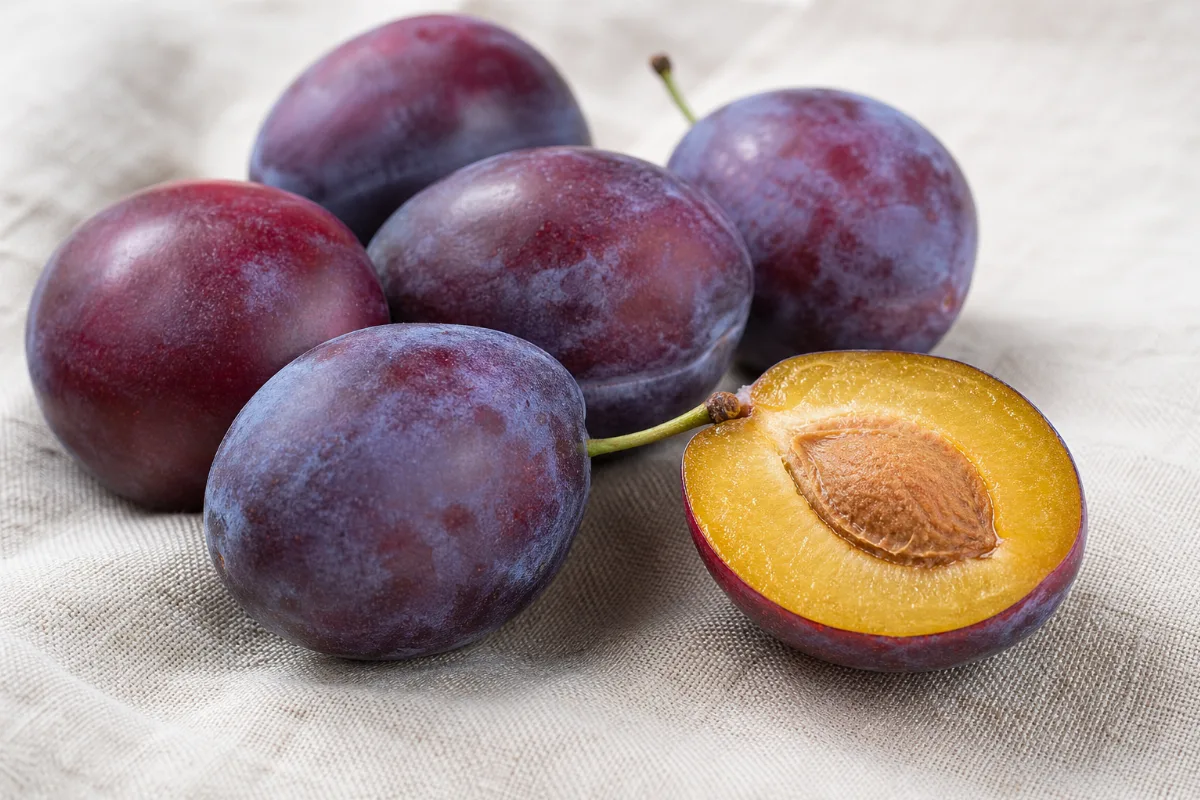
The plum (Prunus domestica) is the fruit of a tree in the rose family, the same family as peaches, cherries and apricots. It has a soft, juicy flesh around a single hard stone. Dried plums are sold as prunes.
USDA data for raw plums: 46 kcal per 100 g. One plum (66 g) has about 30 kcal, 0.9 g fibre, 6.5 g sugars, 6 mg vitamin C and 104 mg potassium. One cup of slices (165 g) has about 76 kcal and 2.3 g fibre. Dried plums are much more concentrated: 240 kcal, 7.1 g fibre, 38.1 g sugars and 732 mg potassium per 100 g, and almost no vitamin C. Plums also contain sorbitol, a sugar alcohol, and plant pigments called anthocyanins.
What the research shows
Bowel health is the best-studied use, and the trials gave dried plums, not fresh ones. One crossover trial in 40 people found more complete bowel movements a week with prunes than with psyllium. The 2025 British Dietetic Association guideline pooled two prune trials and found no difference from psyllium on stool consistency or straining, with very low certainty. The guideline also says these trials cannot show prunes work as well as psyllium.
For bones, a 12-month trial in 235 postmenopausal women found prunes kept the density of the shin bone from falling. A 2026 meta-analysis of 11 studies found only a borderline effect at the lower spine, and a one-year trial in 59 older men found no change.
A 2024 meta-analysis found lower LDL cholesterol with plum products, but a 12-month trial found no change in blood fats. Prunes lowered body weight in a 2025 meta-analysis but did not change blood pressure. Plum pigments have been measured in the lab only.
Prunes, juice and fresh plums
Nearly all trials used dried plums, and one used a specific prune juice. Fresh plums were not tested for bowel, bone or cholesterol outcomes, and no plum supplement trial was found. A 2017 commentary notes that food boards fund much research on dried plums and warns of bias toward benefit.
Amounts
This page gives no amounts to eat. Ask a doctor, pharmacist or dietitian what is right for you, especially if you take medicine, have kidney disease or manage blood sugar.
At a glance
Traditional uses history, not proof
- Eaten fresh, stewed and as juice
- Prunes (dried plums) eaten for bowel regularity; long use is not proof that it works
Studied for research
- Constipation, mixed (prunes, mostly small trials)
- Bowel problems after rectal cancer surgery, insufficient (one open trial)
- Bone density after menopause, mixed (prunes)
- Bone density in older men, insufficient (one trial, no change)
- LDL cholesterol, mixed (plum products)
- Blood sugar, body weight and blood pressure, low certainty
Main compounds
- Sorbitol (a sugar alcohol)
- Fibre
- Anthocyanins and other phenolics (measured in the lab)
- Vitamin C (modest in fresh plum, almost none in prunes)
- Potassium
- Amygdalin-type compounds in the seed
Common forms
- Fresh plums
- Dried plums (prunes), used in most trials
- Prune juice (one trial, industry-linked)
- Stewed or canned plums (not studied)
Research links: British Dietetic Association guideline on chronic constipation (2025) · Randomised trial: dried plums vs psyllium (2011) · Meta-analysis: prunes and bone density (2026) · USDA FoodData Central: raw plums · Research Library · Genes & Biomarkers Library
What it is and its history
- Accepted scientific name
- Prunus domestica
- Naming authority
- L. (GBIF accepted; usageKey 7931731)
- Common names
- Plum (English); European plum (English); Prune (dried plum) (English); Ciruela (Spanish)
- Family or group
- Rosaceae (the rose family), which also includes peaches, cherries, apricots, almonds and apples.
- Classification
- Plantae > Tracheophyta > Magnoliopsida > Rosales > Rosaceae > Prunus > Prunus domestica
- Native range
- Not verified from a source read.
- Habitat
- Not verified from a source read.
- What it looks like
- Roots: Not verified.; Stems: Not verified.; Leaves: Not verified.; Flowers: Not verified.; Fruit: A soft, juicy fruit with a single hard stone. USDA lists a raw plum (2-1/8 inch across) as 66 g.
- Cultivation
- Not verified from a source read.
- Harvest and processing
- Eaten fresh, or dried and sold as prunes (dried plums), or pressed into prune juice. Trials used dried plums and prune juice; lab studies used fresh fruit.
- Look-alikes and adulterants
- Name: Cherry plum or myrobalan (Prunus cerasifera); Note: A different species, studied in a 2026 lab paper on processing. Its results should not be assumed for the common plum.; Name: Peach, apricot and cherry; Note: Related Prunus fruits that share allergen proteins with plum.
- Sustainability and conservation
- Not assessed.
Photographs
Traditional use and history history, not clinical proof
| Tradition or era | Documented use | Source |
|---|---|---|
| Prunes for bowel regularity | A 2011 trial paper says dried plums (prunes) have been used traditionally for constipation. A 2017 commentary says research by the California Dried Plum Board has looked at bowel health and age-related bone loss. | p21323688; p28216794 |
| Culinary use | Plums are eaten fresh, dried, stewed and as juice (general knowledge; no historical source was read). | Not verified |
Traditional use shows how it was used. It does not show that it works or is safe today.
What is inside, and how it may work
What it contains and how those compounds act in cells and animals. Laboratory and animal mechanisms are not proven effects in people.
Main compounds
| Compound | Family | Where it is concentrated | Activity studied | Level of evidence |
|---|---|---|---|---|
| Sorbitol PubChem 5780 | sugar alcohol | Fruit flesh Higher in plums than in peaches and nectarines (lab analysis); no content figure in the abstract | A poorly absorbed sugar alcohol. The NHS lists fruit containing sorbitol among foods that soften stool. 25 8 22 | Composition and health agency |
| Anthocyanins (for example cyanidin glycosides) | plant pigments | Skin and flesh Higher in plums than peaches and nectarines in one lab study | Antioxidant in the test tube. No human trial read shows a health effect from eating them in plums. 8 17 | Composition only |
| Chlorogenic-type acids and other phenolics | polyphenols | Flesh Neochlorogenic acid and quercetin glycosides were distinctive in plums (lab) | Measured in the lab; no clinical claim is made. 8 | Composition only |
| Vitamin C (ascorbic acid) PubChem 54670067 | vitamin | Flesh USDA: 9.5 mg per 100 g raw plum; 0.6 mg per 100 g dried plum | Essential nutrient. Raw plum is a modest source; dried plum has almost none. 24 27 26 | Composition only |
| Cyanogenic glycosides (amygdalin-type) PubChem 656516 | toxic seed compounds | Seed (kernel) inside the stone Varies widely (review) | Release hydrogen cyanide if the seed is damaged. The flesh is the food. 23 13 | Review |
Mechanisms, receptors and pathways
| Target or pathway | Gene or receptor | What was found | Level |
|---|---|---|---|
| Bowel water and stool softening | Not specified | Researchers link prunes' effect on the bowel to fibre, sorbitol and plant compounds. The trials read did not test which part works. Stool weight rose in one trial of non-constipated people. 14 22 | Hypothesis |
| Bone turnover | Not specified | Bone breakdown and formation markers did not differ in the 2026 meta-analysis; in older men some markers differed but did not match bone density. No mechanism is established. 19 15 | Human biomarker |
| Heat destroys plum pigments | Not applicable | In a cherry plum (Prunus cerasifera) lab study, high-heat jam and concentrate making destroyed more than 90% of heat-sensitive phenolics; freeze-drying kept far more. This does not show a health effect. 17 | Laboratory research |
Absorption, metabolism and elimination
- Absorption
- Not studied for plums.
- Distribution
- Not found.
- Metabolism
- Not found.
- Elimination
- Not found.
- Bioavailability
- Not established for plum compounds.
Isolated compounds versus whole extracts
Nearly all human trials used dried plums (50 g to 100 g a day) or one prune juice. Fresh plums were not tested for bowel or bone outcomes, and no plum extract or supplement trial was found. Results for dried plums do not automatically apply to fresh plums, juice or supplements. A 2017 commentary notes that commodity boards fund much food research and warns of bias toward benefit and of selective publication.
Nutritional composition
Nutrition from USDA FoodData Central (read 2026-10-25, SR Legacy, last updated 4/1/2019). Raw plums (FDC 169949, scientific name listed as Prunus spp.), per 100 g: 46 kcal, 87.2 g water, 1.4 g fibre, 9.92 g total sugars (5.07 g glucose, 3.07 g fructose, 1.57 g sucrose), 0.7 g protein, 0.28 g fat, 9.5 mg vitamin C, 157 mg potassium, 6 mg calcium, 7 mg magnesium, 6.4 micrograms vitamin K, 17 micrograms vitamin A (RAE), 190 micrograms beta-carotene, 0.26 mg vitamin E, 5 micrograms folate, 0.057 mg copper. One plum (2-1/8 inch, 66 g): about 30 kcal, 0.9 g fibre, 6.5 g sugars, 6 mg vitamin C, 104 mg potassium, 4 micrograms vitamin K. One cup sliced (165 g): about 76 kcal, 2.3 g fibre, 16.4 g sugars, 16 mg vitamin C, 259 mg potassium, 11 micrograms vitamin K. Dried plums (prunes, FDC 168162), per 100 g: 240 kcal, 30.9 g water, 7.1 g fibre, 38.1 g total sugars, 732 mg potassium, 59.5 micrograms vitamin K, 0.281 mg copper and only 0.6 mg vitamin C. One pitted prune (9.5 g): about 23 kcal, 3.6 g sugars, 70 mg potassium. Dried plums are far more concentrated per gram than fresh ones. Values vary with variety and ripeness. The raw record does not list sorbitol.
3 mixed findings4 low certainty4 not enough evidence
What was looked at
The 11 benefits and uses checked for Plums, each with how strong the evidence is. Tap one to open it.
- Constipation: prunes compared with psylliumMixed findings
- Constipation: prune juiceLow certainty
- Constipation and quality of life in older womenLow certainty
- Stool softness and weight in people without constipationNot enough evidence
- Bowel problems after rectal cancer surgery (low anterior resection syndrome)Not enough evidence
- Bone health after menopause (prunes)Mixed findings
- Bone health in older men (prunes)Not enough evidence
- Blood cholesterol (plum products)Mixed findings
- Blood sugar markers (prunes)Low certainty
- Body weight, belly fat and blood pressure (prunes)Low certainty
- Plant pigments and antioxidant activity (lab only)Not enough evidence
Lab markers tracked in the studies
Complete spontaneous bowel movements per weekStool consistency (Bristol Stool Form Scale)Low anterior resection syndrome (bowel problems after rectal surgery)Bone mineral densityLDL cholesterolBody weightSystolic blood pressure
What is Plums good for?
The main studied uses and how strong the human evidence is for each. Almost all results are for dried plums (prunes), not fresh plums.
Benefits, one by one
Each card is a research question, not a promise. Tap a goal to filter. Open a card to see the studies, doses and limits.
Constipation: prunes compared with psyllium
Mixed findingsPrunes (dried plums) are the plum product with the most constipation trials. One small trial found more complete bowel movements a week with prunes than with psyllium fibre. A 2025 British dietitians' guideline looked at two prune trials and found no difference from psyllium on stool consistency or straining, on very low certainty evidence. All of this is about dried plums, not fresh ones.
4 studiesDried plums (prunes) eaten as food. Fresh plums were not tested.
Studies, doses and limits
What the trials found
In an 8-week crossover trial of 40 adults with chronic constipation, dried plums gave more complete spontaneous bowel movements a week and better stool consistency than psyllium (P<0.05), with no difference in straining or global symptoms. A 2014 systematic review of four trials judged prunes better than psyllium for stool frequency and consistency in constipation but called the evidence for other outcomes weak. A US exploratory trial (75 people with complete data) found similar responder rates for prunes, kiwifruit and psyllium. The 2025 British Dietetic Association guideline pooled two prune trials and found no difference from psyllium on stool consistency (+0.45 points, 95% CI -0.24 to 1.14) or straining (SMD -0.13, 95% CI -0.69 to 0.43), both very low certainty, and notes the trials were not designed to prove prunes are as good as psyllium.
Results
Mixed. Prunes helped some bowel measures in small trials, and the guideline pooled data show no difference from psyllium on others.
Effect sizes as reported
Trial: more complete spontaneous bowel movements a week and better stool consistency than psyllium (P<0.05). Review: 3.5 vs 2.8 movements a week (P=0.006). Guideline: no difference on consistency or straining.
Why this rating
Trials are small and short, often single-blind, with 100 g or 50 g twice a day of dried plums. The guideline rates its prune statements very low certainty. No trial tested fresh plums.
Form and dose studied
Dried plums (prunes) eaten as food. Fresh plums were not tested.
Who was studied
Adults with chronic or mild to moderate constipation, mostly women.
Limits
Small trials; funding unclear in the abstracts; the constipation guideline says prunes cannot be called equal to psyllium. See the Safety tab for loose stools and sorbitol.
Why researchers looked
Prunes are the best-known food for loosening the bowel, so researchers compared them with psyllium, a standard fibre treatment.
Traditional use
Plums, and especially prunes (dried plums), have long been eaten to keep the bowel regular; long use is not proof that it works.
Proposed mechanism Hypothesis
Prunes contain fibre and sorbitol, a sugar alcohol that is poorly absorbed. Researchers suggest these and plant compounds may soften stool. This is a suggestion; the trials read did not test which part of the prune does the work.
A proposed mechanism does not show that the effect happens in people.
Constipation that lasts, blood in the stool or weight loss without trying needs a doctor (NHS).
Constipation: prune juice
Low certaintyIn a Japanese placebo-controlled trial, prune juice cut hard stools and raised normal stools in people with chronic constipation without more loose stools. It was funded by the juice maker and the abstract gives no head count. This is juice, not whole fruit.
1 studiesA specific prune juice, not the whole fruit and not fresh plums.
Studies, doses and limits
What the trials found
A double-blind, randomised, placebo-controlled trial in Japanese adults with chronic constipation found that prune juice containing sorbitol, pectin and polyphenols decreased hard and lumpy stools and increased normal stools without increasing loose or watery stools. It eased subjective complaints without changing flatulence, diarrhoea or urgency. No adverse events or liver or kidney laboratory changes were reported.
Results
Fewer hard stools and more normal stools than placebo.
Effect sizes as reported
Counts not given in the abstract.
Why this rating
One short report, number of people not given in the abstract, partly funded by the maker of the juice (two authors work for that company).
Form and dose studied
A specific prune juice, not the whole fruit and not fresh plums.
Who was studied
Japanese adults with chronic constipation.
Limits
Industry-linked. The result may not apply to other juices or to the fruit.
Why researchers looked
Prune juice is a common home remedy, so it was tested against a placebo drink.
Traditional use
Plums, and especially prunes (dried plums), have long been eaten to keep the bowel regular; long use is not proof that it works.
Proposed mechanism Hypothesis
Prunes contain fibre and sorbitol, a sugar alcohol that is poorly absorbed. Researchers suggest these and plant compounds may soften stool. This is a suggestion; the trials read did not test which part of the prune does the work.
A proposed mechanism does not show that the effect happens in people.
None reported in the abstract.
Constipation and quality of life in older women
Low certaintyIn 105 older women, Thai abdominal massage eased constipation symptoms more than prunes eaten twice a week. The prune group still showed the biggest gain in quality of life. So prunes were not the stronger treatment in this trial.
1 studiesPrunes eaten twice a week for 8 weeks.
Studies, doses and limits
What the trials found
An 8-week single-blind randomised trial in Iran compared Thai abdominal massage, prunes (50 g twice a week) and no treatment (35 women each). Massage reduced constipation severity (-6.71), pain (-5.55) and improved stool consistency (-2.03) more than prunes or no treatment. Prunes gave the largest quality-of-life improvement (+0.75). Group-by-time effects were significant for all outcomes.
Results
Massage did better on symptoms; prunes did better on quality of life.
Effect sizes as reported
Quality of life +0.75 with prunes; symptom changes were larger with massage.
Why this rating
One single-blind trial in one region, women only, and the prunes were eaten only twice a week.
Form and dose studied
Prunes eaten twice a week for 8 weeks.
Who was studied
Older women with functional constipation.
Limits
Small; limited eating schedule.
Why researchers looked
Older adults often have constipation, and researchers wanted a low-cost non-drug option to compare.
Traditional use
Plums, and especially prunes (dried plums), have long been eaten to keep the bowel regular; long use is not proof that it works.
Proposed mechanism Hypothesis
Prunes contain fibre and sorbitol, a sugar alcohol that is poorly absorbed. Researchers suggest these and plant compounds may soften stool. This is a suggestion; the trials read did not test which part of the prune does the work.
A proposed mechanism does not show that the effect happens in people.
None reported in the abstract.
Stool softness and weight in people without constipation
Not enough evidenceIn two small trials in people without constipation, prunes softened stool in one and raised stool weight in another. The review found no difference in gut symptoms. Evidence is thin.
1 studiesDried plums (prunes).
Studies, doses and limits
What the trials found
A 2014 systematic review (four trials, three in people without constipation) reported that prunes softened stool consistency in one trial and increased wet stool weight (628 g vs 514 g over 72 hours, P=0.001) in another compared with control. No trial found differences in gut symptoms between prunes and the comparator. The authors call the evidence weak and ask for further research.
Results
Softer, heavier stool in single trials; no change in symptoms.
Effect sizes as reported
Stool weight 628 g vs 514 g over 72 hours (P=0.001).
Why this rating
Three small trials, results not pooled by the authors because the trials were too different.
Form and dose studied
Dried plums (prunes).
Who was studied
Adults without constipation.
Limits
Few trials; one with unclear risk of bias.
Why researchers looked
People without constipation also eat prunes to stay regular, so researchers checked what happens in healthy people.
Traditional use
Plums, and especially prunes (dried plums), have long been eaten to keep the bowel regular; long use is not proof that it works.
Proposed mechanism Hypothesis
Prunes contain fibre and sorbitol, a sugar alcohol that is poorly absorbed. Researchers suggest these and plant compounds may soften stool. This is a suggestion; the trials read did not test which part of the prune does the work.
A proposed mechanism does not show that the effect happens in people.
None reported in the abstract.
Bowel problems after rectal cancer surgery (low anterior resection syndrome)
Not enough evidenceIn one open trial of 118 people who had surgery for rectal cancer, those who ate prunes daily for 2 weeks were less likely to have low anterior resection syndrome (27.3%) than those who ate none (74.6%). It is a single unblinded trial in a very specific group.
1 studiesPrunes eaten daily for 2 weeks after surgery.
Studies, doses and limits
What the trials found
In a non-blinded randomised trial at one centre, 130 patients were randomised after low anterior resection and 118 completed it. Low anterior resection syndrome was found in 15 of 55 (27.3%) on prunes versus 47 of 63 (74.6%) without. Major syndrome was 18.2% vs 61.9%. The prune group also had better emotional scores and lower scores for constipation, sleep disturbance and appetite loss.
Results
Much lower rate of the syndrome with prunes in this one trial.
Effect sizes as reported
27.3% vs 74.6% (P<0.001); major 18.2% vs 61.9%.
Why this rating
One non-blinded trial at a single centre in a very specific group.
Form and dose studied
Prunes eaten daily for 2 weeks after surgery.
Who was studied
People after surgery for rectal cancer.
Limits
Not blinded; 12 of 130 did not complete; not applicable to other people.
Why researchers looked
After this operation, many people have bowel urgency and constipation, so a simple food was tested.
Traditional use
Plums, and especially prunes (dried plums), have long been eaten to keep the bowel regular; long use is not proof that it works.
Proposed mechanism Hypothesis
Prunes contain fibre and sorbitol, a sugar alcohol that is poorly absorbed. Researchers suggest these and plant compounds may soften stool. This is a suggestion; the trials read did not test which part of the prune does the work.
A proposed mechanism does not show that the effect happens in people.
People after bowel surgery should follow their surgical team's advice.
Bone health after menopause (prunes)
Mixed findingsA 12-month trial in 235 postmenopausal women found that prunes kept the hard outer part of the shin bone from losing density, while the no-prune group lost some. A 2026 review of 11 studies found only a borderline effect at the lower spine and nothing clear elsewhere. Results are mixed and all about dried plums.
3 studiesDried plums, 50 g to 100 g a day in the studies. These are trial amou…
Studies, doses and limits
What the trials found
The Prune Study randomised 235 postmenopausal women (average age 62) to no prunes, 50 g or 100 g of prunes a day for 12 months. At the shin bone, cortical bone density and estimated bone strength fell in the control group and did not change in the pooled prune group (p=0.012 and p=0.024). A 2026 meta-analysis of 11 randomised studies (747 people) found a borderline effect at the lumbar spine (SMD 1.30, 95% CI -0.03 to 2.63, very high variation) and no significant differences at other sites or in bone formation and breakdown markers.
Results
Mixed: a helpful result in one trial at one bone site, and a borderline pooled result.
Effect sizes as reported
Shin bone: control declined, prune groups did not change. Lumbar spine pooled SMD 1.30 (-0.03 to 2.63).
Why this rating
Authors of the review call the evidence preliminary and limited. Results differ by bone site and vary a lot between studies.
Form and dose studied
Dried plums, 50 g to 100 g a day in the studies. These are trial amounts, not advice.
Who was studied
Postmenopausal women.
Limits
Fractures were not counted. A 2017 commentary says the California Dried Plum Board has funded research on bowel and bone health; funding is not stated in these abstracts.
Why researchers looked
Bone loss speeds up after menopause, and prunes became a food of interest for bone health.
Traditional use
Plums, and especially prunes (dried plums), have long been eaten to keep the bowel regular; long use is not proof that it works.
Proposed mechanism Hypothesis
Researchers suggest plant compounds in prunes may slow bone breakdown. This is proposed and not established.
A proposed mechanism does not show that the effect happens in people.
People with osteoporosis should follow their doctor's plan.
Bone health in older men (prunes)
Not enough evidenceIn 59 men aged 55 to 80, a year of prunes did not change total or lower-spine bone density. Some blood markers shifted, but the authors say these are exploratory and did not match any change in bone.
1 studiesDried plums, 50 g or 100 g a day in the trial; not advice.
Studies, doses and limits
What the trials found
In a one-year randomised trial, 59 men with or at risk of low bone density received 100 g prunes, 50 g prunes or none daily, with all groups also taking calcium and vitamin D. There were no significant changes in total or lumbar spine bone mineral density, and CRP did not change. OPG and TRAP5b differed between groups, but the authors describe these as exploratory.
Results
No bone density change.
Why this rating
One small trial (59 men) is not enough to judge. All men also took calcium and vitamin D.
Form and dose studied
Dried plums, 50 g or 100 g a day in the trial; not advice.
Who was studied
Men aged 55 to 80.
Limits
Small; exploratory markers.
Why researchers looked
Most prune bone research is in women, so men were tested separately.
Traditional use
Plums, and especially prunes (dried plums), have long been eaten to keep the bowel regular; long use is not proof that it works.
Proposed mechanism Unknown
Not established.
A proposed mechanism does not show that the effect happens in people.
None reported in the abstract.
Blood cholesterol (plum products)
Mixed findingsA 2024 meta-analysis found plum products lowered LDL ('bad') cholesterol by about 12.5 mg/dL, but total cholesterol, triglycerides and HDL did not change significantly. The authors rate the evidence very low to moderate. A separate 12-month prune trial found no change in blood lipids.
2 studiesPlum products including dried plums; the abstract does not describe e…
Studies, doses and limits
What the trials found
The 2024 meta-analysis of plum products (searched to November 2022) found a lower LDL (weighted mean difference -12.50 mg/dL, 95% CI -22.06 to -2.94) but no significant change in triglycerides (+0.56), total cholesterol (-12.35, CI -25.05 to 0.37) or HDL (-0.39). In subgroups, dried plums lowered total cholesterol in unhealthy subjects. In the 12-month Prune Study in 183 postmenopausal women, prunes at 50 g or 100 g a day did not change blood lipids compared with control (all P>0.05).
Results
Mixed: lower LDL in the pooled data, no change in the largest single trial.
Effect sizes as reported
LDL -12.50 mg/dL (-22.06 to -2.94).
Why this rating
Different forms and groups were pooled, and the authors rate quality very low to moderate. The single long trial found no change.
Form and dose studied
Plum products including dried plums; the abstract does not describe every form.
Who was studied
Adults, including people with high blood fats.
Limits
Mixed product types. LDL is a marker, not a heart-attack outcome.
Why researchers looked
Fibre and plant compounds in fruit are thought to affect blood fats, so plum trials measured cholesterol.
Traditional use
Plums, and especially prunes (dried plums), have long been eaten to keep the bowel regular; long use is not proof that it works.
Proposed mechanism Unknown
Not established.
A proposed mechanism does not show that the effect happens in people.
People on cholesterol medicine should keep taking it unless their doctor says otherwise.
Blood sugar markers (prunes)
Low certaintyA 12-month trial in postmenopausal women found no change in blood sugar markers with 50 g or 100 g of prunes a day. Prunes are a concentrated source of sugar, and this is one exploratory result.
1 studiesDried plums, 50 g or 100 g a day in the trial; not advice.
Studies, doses and limits
What the trials found
In an exploratory secondary analysis of the Prune Study (183 women completed), prunes did not alter markers of glycemic control after 12 months compared with control (all P>0.05).
Results
No change in blood sugar markers.
Why this rating
One exploratory analysis in postmenopausal women; people with diabetes were not the focus.
Form and dose studied
Dried plums, 50 g or 100 g a day in the trial; not advice.
Who was studied
Postmenopausal women.
Limits
Exploratory outcomes in one trial.
Why researchers looked
Dried fruit is sweet, so researchers checked whether it moves blood sugar markers.
Traditional use
Plums, and especially prunes (dried plums), have long been eaten to keep the bowel regular; long use is not proof that it works.
Proposed mechanism Unknown
Not established.
A proposed mechanism does not show that the effect happens in people.
People with diabetes should ask their care team how dried fruit fits their plan.
Body weight, belly fat and blood pressure (prunes)
Low certaintyA 2025 meta-analysis of 14 trials found prunes lowered body weight but did not change BMI, waist size, fat mass or blood pressure. In the 12-month Prune Study, belly-area mass rose in the control group but not in the 100 g prune group (exploratory).
2 studiesPrune products, mostly dried plums.
Studies, doses and limits
What the trials found
A 2025 systematic review of 14 randomised studies reported a significant fall in body weight with prune products (p<0.001) and no significant change in BMI (p=0.267), waist circumference (p=0.562), fat mass (p=0.840), systolic blood pressure (p=0.338) or diastolic blood pressure (p=0.233). In the Prune Study, android (belly-area) total mass rose 3.19% in the control group and fell 0.02% in the 100 g prune group (P<0.01), an exploratory outcome.
Results
Small weight fall in the pooled data; no blood pressure change.
Effect sizes as reported
Weight: p<0.001 (size not in abstract). Blood pressure: not significant.
Why this rating
The abstract gives p values only. The belly-area result is exploratory and from one trial.
Form and dose studied
Prune products, mostly dried plums.
Who was studied
Adults.
Limits
Mixed products and study lengths.
Why researchers looked
Fibre makes fruit filling, and prunes also contain potassium, so weight and blood pressure were measured.
Traditional use
Plums, and especially prunes (dried plums), have long been eaten to keep the bowel regular; long use is not proof that it works.
Proposed mechanism Unknown
Not established.
A proposed mechanism does not show that the effect happens in people.
None reported in the abstracts.
Plant pigments and antioxidant activity (lab only)
Not enough evidencePlums contain anthocyanins and other plant compounds, and in lab tests they measured higher than peaches and nectarines. No human trial read shows that this prevents any disease. Lab antioxidant tests are not proof of a health effect.
2 studiesFresh fruit and processed products analysed in the lab.
Studies, doses and limits
What the trials found
A 2026 analysis of 26 Florida-grown Prunus cultivars (18 peaches, 4 nectarines, 4 plums) found plums had higher anthocyanins, total phenolics and antioxidant activity and more sorbitol than peaches and nectarines. A 2026 study of Georgian cherry plum (Prunus cerasifera, not the common plum) found that high-heat processing such as jam destroyed more than 90% of heat-sensitive phenolics, while freeze-drying kept far more.
Results
Lab measurements only.
Why this rating
No human outcome was measured. One study is on a different plum species.
Form and dose studied
Fresh fruit and processed products analysed in the lab.
Limits
Lab only.
Why researchers looked
Plums are dark-skinned and rich in colour, so chemists measured their pigments.
Traditional use
Plums, and especially prunes (dried plums), have long been eaten to keep the bowel regular; long use is not proof that it works.
Proposed mechanism Laboratory research
Anthocyanins and phenolic compounds are antioxidants in a test tube. What they do in the human body from a plum is not established.
A proposed mechanism does not show that the effect happens in people.
None.
Connections to the rest of health
How Plums connects to the rest of our health knowledge graph. Every link says what kind of connection it is. A safety link (for example to the liver) is a warning, not a benefit. A study that merely mentions a topic never creates a benefit link.
Explore every connection: goals, body systems, organs, symptoms, genes
A. Wellness goals
| Connected to | Kind of connection | Evidence status | Context | Studies |
|---|---|---|---|---|
| Digestive Support | Mixed findings | Constipation: prunes compared with psyllium: Prunes (dried plums) are the plum product with the most constipation trials. One small trial found more complete bowel movements a week with prunes than with psyllium fibre. A 2025 British dietitians' guideline looked at two prune trials and found no difference from psyllium on stool consistency or straining, on very low certainty evidence. All of this is about dried plums, not fresh ones. | 2 14 4 6 | |
| Gut Health | Mixed findings | Constipation: prunes compared with psyllium: Prunes (dried plums) are the plum product with the most constipation trials. One small trial found more complete bowel movements a week with prunes than with psyllium fibre. A 2025 British dietitians' guideline looked at two prune trials and found no difference from psyllium on stool consistency or straining, on very low certainty evidence. All of this is about dried plums, not fresh ones. | 2 14 4 6 | |
| Digestive Support | Low certainty | Constipation: prune juice: In a Japanese placebo-controlled trial, prune juice cut hard stools and raised normal stools in people with chronic constipation without more loose stools. It was funded by the juice maker and the abstract gives no head count. This is juice, not whole fruit. Constipation and quality of life in older women: In 105 older women, Thai abdominal massage eased constipation symptoms more than prunes eaten twice a week. The prune group still showed the biggest gain in quality of life. So prunes were not the stronger treatment in this trial. | 12 1 18 | |
| Healthy Aging | Low certainty | Constipation and quality of life in older women: In 105 older women, Thai abdominal massage eased constipation symptoms more than prunes eaten twice a week. The prune group still showed the biggest gain in quality of life. So prunes were not the stronger treatment in this trial. | 1 | |
| Digestive Support | Not enough evidence | Stool softness and weight in people without constipation: In two small trials in people without constipation, prunes softened stool in one and raised stool weight in another. The review found no difference in gut symptoms. Evidence is thin. | 14 | |
| Joint Support | Mixed findings | Bone health after menopause (prunes): A 12-month trial in 235 postmenopausal women found that prunes kept the hard outer part of the shin bone from losing density, while the no-prune group lost some. A 2026 review of 11 studies found only a borderline effect at the lower spine and nothing clear elsewhere. Results are mixed and all about dried plums. | 11 19 3 | |
| Menopause Support | Mixed findings | Bone health after menopause (prunes): A 12-month trial in 235 postmenopausal women found that prunes kept the hard outer part of the shin bone from losing density, while the no-prune group lost some. A 2026 review of 11 studies found only a borderline effect at the lower spine and nothing clear elsewhere. Results are mixed and all about dried plums. | 11 19 3 | |
| Healthy Aging | Mixed findings | Bone health after menopause (prunes): A 12-month trial in 235 postmenopausal women found that prunes kept the hard outer part of the shin bone from losing density, while the no-prune group lost some. A 2026 review of 11 studies found only a borderline effect at the lower spine and nothing clear elsewhere. Results are mixed and all about dried plums. | 11 19 3 | |
| Joint Support | Not enough evidence | Bone health in older men (prunes): In 59 men aged 55 to 80, a year of prunes did not change total or lower-spine bone density. Some blood markers shifted, but the authors say these are exploratory and did not match any change in bone. | 15 | |
| Healthy Aging | Not enough evidence | Bone health in older men (prunes): In 59 men aged 55 to 80, a year of prunes did not change total or lower-spine bone density. Some blood markers shifted, but the authors say these are exploratory and did not match any change in bone. | 15 | |
| Cholesterol Balance | Mixed findings | Blood cholesterol (plum products): A 2024 meta-analysis found plum products lowered LDL ('bad') cholesterol by about 12.5 mg/dL, but total cholesterol, triglycerides and HDL did not change significantly. The authors rate the evidence very low to moderate. A separate 12-month prune trial found no change in blood lipids. | 9 5 | |
| Heart Health | Mixed findings | Blood cholesterol (plum products): A 2024 meta-analysis found plum products lowered LDL ('bad') cholesterol by about 12.5 mg/dL, but total cholesterol, triglycerides and HDL did not change significantly. The authors rate the evidence very low to moderate. A separate 12-month prune trial found no change in blood lipids. | 9 5 | |
| Blood Sugar Balance | Low certainty | Blood sugar markers (prunes): A 12-month trial in postmenopausal women found no change in blood sugar markers with 50 g or 100 g of prunes a day. Prunes are a concentrated source of sugar, and this is one exploratory result. | 5 | |
| Metabolic Health | Low certainty | Blood sugar markers (prunes): A 12-month trial in postmenopausal women found no change in blood sugar markers with 50 g or 100 g of prunes a day. Prunes are a concentrated source of sugar, and this is one exploratory result. | 5 | |
| Weight Management | Low certainty | Body weight, belly fat and blood pressure (prunes): A 2025 meta-analysis of 14 trials found prunes lowered body weight but did not change BMI, waist size, fat mass or blood pressure. In the 12-month Prune Study, belly-area mass rose in the control group but not in the 100 g prune group (exploratory). | 10 5 | |
| Blood Pressure Support | Low certainty | Body weight, belly fat and blood pressure (prunes): A 2025 meta-analysis of 14 trials found prunes lowered body weight but did not change BMI, waist size, fat mass or blood pressure. In the 12-month Prune Study, belly-area mass rose in the control group but not in the 100 g prune group (exploratory). | 10 5 |
B. Body systems
| Connected to | Kind of connection | Evidence status | Context | Studies |
|---|---|---|---|---|
| Digestive System | Biological association | Mixed findings | Studied for: Constipation: prunes compared with psyllium Studied for: Constipation: prune juice | 2 14 4 6 12 1 18 |
| Musculoskeletal System | Biological association | Mixed findings | Studied for: Bone health after menopause (prunes) Studied for: Bone health in older men (prunes) | 11 19 3 15 |
| Cardiovascular System | Biological association | Mixed findings | Studied for: Blood cholesterol (plum products) Studied for: Body weight, belly fat and blood pressure (prunes) | 9 5 10 8 17 |
| Endocrine System | Biological association | Low certainty | Studied for: Blood sugar markers (prunes) | 5 |
| Metabolic System | Biological association | Low certainty | Studied for: Body weight, belly fat and blood pressure (prunes) | 10 5 |
C. Body parts and organs
| Connected to | Kind of connection | Evidence status | Context | Studies |
|---|---|---|---|---|
| Digestive system | Adverse effect or risk | Possible, not measured | Sorbitol may loosen stool; trials read called prunes well tolerated. Preparation or compound: Dried plums and sorbitol |
2 12 8 |
E. Health conditions
| Connected to | Kind of connection | Evidence status | Context | Studies |
|---|---|---|---|---|
| Oral allergy syndrome (fruit allergy) | Adverse effect or risk | Cross reactivity shown | Peach, apricot, plum and cherry share a major allergen protein. Preparation or compound: Plum fruit |
16 7 |
| Constipation | Mixed findings | Prunes (dried plums) were compared with psyllium in small trials; the 2025 guideline found no difference on two measures. Preparation or compound: Dried plums (prunes) |
2 6 |
I. Biomarkers
| Connected to | Kind of connection | Evidence status | Context | Studies |
|---|---|---|---|---|
| Complete spontaneous bowel movements per week | Biological association | Mixed findings | Measured in trials: mixed. A lab change is not the same as a health benefit. | 2 14 4 |
| Stool consistency (Bristol Stool Form Scale) | Biological association | Low certainty | Measured in trials: mixed. A lab change is not the same as a health benefit. | 6 12 |
| Low anterior resection syndrome (bowel problems after rectal surgery) | Biological association | Not enough evidence | Measured in trials: decrease. A lab change is not the same as a health benefit. | 18 |
| Bone mineral density | Biological association | Mixed findings | Measured in trials: mixed. A lab change is not the same as a health benefit. | 11 19 15 |
| LDL cholesterol | Biological association | Mixed findings | Measured in trials: mixed. A lab change is not the same as a health benefit. | 9 5 |
| Body weight | Biological association | Low certainty | Measured in trials: decrease. A lab change is not the same as a health benefit. | 10 |
| Systolic blood pressure | Biological association | Low certainty | Measured in trials: no-change. A lab change is not the same as a health benefit. | 10 |
K. Biological pathways
| Connected to | Kind of connection | Evidence status | Context | Studies |
|---|---|---|---|---|
| Dietary fibre | Preliminary mechanism | Composition | Prunes contain 7.1 g fibre per 100 g (USDA) and trials gave about 6 g a day of fibre from dried plums in the first comparison with psyllium. | 26 2 |
| Potassium | Preliminary mechanism | Composition | Plums supply potassium (157 mg per 100 g raw; 732 mg dried). | 27 26 |
L. Active compounds
| Connected to | Kind of connection | Evidence status | Context | Studies |
|---|---|---|---|---|
| Cyanogenic glycosides (amygdalin-type) | Adverse effect or risk | Review | Seeds release hydrogen cyanide when damaged. Preparation or compound: Plum seed (kernel) |
13 |
| Sorbitol | Biological association | Composition and health agency | A poorly absorbed sugar alcohol. The NHS lists fruit containing sorbitol among foods that soften stool. Preparation or compound: Fruit flesh |
25 8 22 |
| Anthocyanins (for example cyanidin glycosides) | Biological association | Composition only | Antioxidant in the test tube. No human trial read shows a health effect from eating them in plums. Preparation or compound: Skin and flesh |
8 17 |
| Chlorogenic-type acids and other phenolics | Biological association | Composition only | Measured in the lab; no clinical claim is made. Preparation or compound: Flesh |
8 |
| Vitamin C (ascorbic acid) | Biological association | Composition only | Essential nutrient. Raw plum is a modest source; dried plum has almost none. Preparation or compound: Flesh |
24 27 26 |
| Cyanogenic glycosides (amygdalin-type) | Biological association | Review | Release hydrogen cyanide if the seed is damaged. The flesh is the food. Preparation or compound: Seed (kernel) inside the stone |
23 13 |
Each connection is stored with the ingredient, the connected record, the kind of connection, the evidence status, the supporting studies, the preparation or compound involved, and a review date (last reviewed October 25, 2026).
Evidence at a glance: what changed in 5 lab markers
Tap a number to show only those markers. Counts are markers, not people.
The evidence
The research centre for Plums. Every record here was checked against PubMed or the publisher's page; we never list a study we have not verified.
Evidence by outcome
Bars show how many studies we found for each outcome, not how well it works. People are added up across trials only (reviews are not added, to avoid double counting).
How we rate evidence
High certainty
Several well-run trials or reviews agree; further research is unlikely to change the picture much.
Moderate certainty
Good trials point the same way, but some doubt remains.
Low certainty
Small, short or inconsistent trials. The finding could change with better research.
Very low certainty
Very little or very weak human data. Treat as a possibility only.
Mixed findings
Trials or reviews disagree with each other.
Not enough evidence
Not enough human research to say either way.
Evidence against
Good research found no benefit, or found harm.
We take the reviewers' own risk-of-bias and GRADE statements where they exist, and otherwise judge from study size, design, consistency, directness and whether a product matches what is sold. Many publications do not make evidence high. Method note: We started from our existing plum summary, re-checked nutrition at USDA FoodData Central, read the 2025 constipation guideline in full for its prune statements, and searched PubMed for human trials, reviews and allergy and seed-safety evidence. Only abstracts were read for most studies. Items we could not verify are flagged in the research gaps.
Study library: every study we checked 27
| Study | Design | People | Product, dose, length | Result |
|---|---|---|---|---|
| Assadollahzadeh 2025 Comparative effects of traditional Thai abdominal massage versus prune consumption on constipation and quality of life in elderly women: A randomized controlled trial. Aging Clin Exp Res · PMID 41288808 · DOI |
Randomised controlled trial |
105 105 older women with functional constipation in Iran |
Prunes Dried fruit 50 g twice a week; trial detail, not advice 8 weeks · vs Thai abdominal massage, or no treatment (35 people in each group) |
Thai massage reduced constipation severity (-6.71), pain (-5.55) and improved stool consistency (-2.03) more than prunes or no treatment. Prune consumption gave the biggest improvement in quality of life (+0.75). Group-by-time effects were significant for all outcomes. Prunes gave the largest quality-of-life gain; massage did better on symptoms (Quality of life +0.75 with prunes (SD 0.44)) Methods, limits and fundingOutcomes: Constipation severity, stool consistency, pain, quality of life Limitations: Single-blind; prunes were eaten twice a week only; one region in Iran; women only. Funding and conflicts: The authors declare no competing interests. Read: abstract |
| Attaluri 2011 Randomised clinical trial: dried plums (prunes) vs. psyllium for constipation. Aliment Pharmacol Ther · PMID 21323688 · DOI |
Randomised crossover trial |
40 40 adults with chronic constipation (3 men, 37 women, mean age 38); mild to moderate constipation |
Dried plums (prunes) Dried fruit 50 g twice a day (6 g fibre a day); trial detail, not advice 3 weeks each, 1-week washout (8 weeks in all) · vs Psyllium 11 g twice a day (same fibre) |
Complete spontaneous bowel movements per week and stool consistency improved more with dried plums than with psyllium (P<0.05). Straining and global constipation symptoms did not differ. Both were rated equally palatable and were safe and well tolerated. More complete spontaneous bowel movements per week and better stool consistency than psyllium; no difference in straining or global symptoms (Not given in the abstract) Methods, limits and fundingOutcomes: Complete spontaneous bowel movements per week, global relief, stool consistency, straining, tolerability, taste Limitations: Small, single-blind, short, and 37 of 40 people were women. Several published comments followed the paper. Funding is not stated in the abstract. Funding and conflicts: Funding and conflicts are not stated in the abstract (the record is tagged as non-US-government research support). Read: abstract |
| Bowen PE. 2017 Role of Commodity Boards in Advancing the Understanding of the Health Benefits of Whole Foods: California Dried Plums. Nutr Today · PMID 28216794 · DOI |
Commentary n/a |
Commentary on research funded by commodity boards, including the California Dried Plum Board | Not applicable |
The commentary says commodity boards are now important funders of nutrition research and lists cautions: bias toward health benefits, failure to publish negative results, and aggressive promotion of single studies. It says California Dried Plum Board research looked at bowel health and age-related bone loss. Context on funding (Not applicable) Methods, limits and fundingOutcomes: Benefits and cautions of commodity-board funded nutrition research Limitations: Commentary, not a trial. Funding and conflicts: Not stated in the abstract. Read: abstract |
| Chey 2021 Exploratory Comparative Effectiveness Trial of Green Kiwifruit, Psyllium, or Prunes in US Patients With Chronic Constipation. Am J Gastroenterol · PMID 34074830 · DOI |
Partially randomised trial |
79 79 adults with chronic constipation (87% women) at a US medical centre; 75 had complete data (24 on prunes) |
Prunes (dried plums) Dried fruit 100 g a day; trial detail, not advice 4 weeks · vs Green kiwifruit (2 a day) and psyllium (12 g a day) |
The share of responders was similar across kiwifruit, prunes and psyllium. All three raised weekly complete spontaneous bowel movements (P at or below 0.003). Stool consistency improved with prunes (P=0.049) and kiwifruit (P=0.01), and straining improved with prunes (P<0.001), kiwifruit and psyllium. Adverse events were most common with psyllium. Fewer people were dissatisfied with kiwifruit than with prunes or psyllium (P=0.02). Prunes improved weekly bowel movements, consistency (P=0.049) and straining (P<0.001) compared with their own baseline (Not given in the abstract) Methods, limits and fundingOutcomes: Share with at least one more complete spontaneous bowel movement a week, stool frequency, consistency, straining, adverse events, satisfaction Limitations: The authors call it exploratory and partially randomised, with no placebo arm and small groups. The comparisons are against each person's own starting point. Funding and conflicts: Funding not stated in the abstract (record tagged as non-US-government research support). Read: abstract |
| Damani 2024 Effects of Prune (Dried Plum) Supplementation on Cardiometabolic Health in Postmenopausal Women: An Ancillary Analysis of a 12-Month Randomized Controlled Trial, The Prune Study. J Nutr · PMID 38490532 · DOI |
Randomised controlled trial (secondary analysis) Funding and conflicts are not stated in the abstract (record tagged as US government and non-government research support). |
183 183 postmenopausal women who completed the 12-month trial (control 70, 50 g prunes 67, 100 g prunes 46) |
Prunes Dried fruit 50 g or 100 g a day; not advice 12 months · vs No prunes |
Prunes did not change blood sugar markers or blood lipids compared with control (all P>0.05). Fat around the gynoid area and visceral fat did not differ. Android (belly area) total mass rose 3.19% in the control group and fell 0.02% in the 100 g prune group (P<0.01). The authors say prunes may prevent unfavourable changes in central body fat. No change in glucose or lipids; less rise in belly-area mass at the highest amount (Android mass +3.19% (control) vs -0.02% (100 g)) Methods, limits and fundingOutcomes: Blood sugar markers, blood lipids, body composition (all exploratory) Limitations: Not given in the abstract Funding and conflicts: Exploratory (secondary) outcomes; only 46 women finished in the 100 g group. Registration: NCT02822378 Read: abstract |
| Dimidi 2025 British Dietetic Association Guidelines for the Dietary Management of Chronic Constipation in Adults. Neurogastroenterol Motil · PMID 41081381 · DOI |
Practice guideline |
Adults with chronic constipation; 75 randomised trials in all, two of them on prunes (86 people for stool consistency, 89 people for straining) | Prunes (dried plums) Dried fruit Varied · vs Psyllium |
Statement 25: there is no difference between prunes and psyllium on stool consistency (Bristol scale difference +0.45, 95% CI -0.24 to 1.14; very low certainty; qualified recommendation). Statement 27: no difference between prunes and psyllium on straining (SMD -0.13, 95% CI -0.69 to 0.43; very low certainty; qualified recommendation). The guideline adds that these trials were not equivalence trials, so it is not possible to conclude that prunes work as well as psyllium. No difference from psyllium on stool consistency or straining (very low certainty) (Consistency +0.45 (-0.24 to 1.14); straining SMD -0.13 (-0.69 to 0.43)) Methods, limits and fundingOutcomes: Stool consistency and severity of straining Limitations: Very low certainty, downgraded for high risk of bias and imprecision. Prune data come from a small number of trials. Read from the open-access full text for the prune statements. Funding and conflicts: Funding and conflicts were not checked. Read: full-text (open access) |
| Gangemi 2026 The Role of Nut Sensitization in Pru p 3-Sensitized Patients: A XGBoost and Generalized Linear Model Application. Int J Mol Sci · PMID 41683649 · DOI |
Observational patient study |
Patients sensitised to the peach allergen Pru p 3 with symptoms to peach and/or nuts (number not given in the abstract) | Not applicable (allergy testing) |
The abstract states that Pru p 3 is a lipid transfer protein allergen of peach that shows high sequence similarity with proteins in other Rosaceae fruits and in nuts and pollens, which complicates diagnosis. The study itself is about nut sensitisation, not plums. Background statement on cross-reactivity (Not applicable) Methods, limits and fundingOutcomes: Sensitisation patterns to nuts and their link to symptoms and severity Limitations: Does not test plum. Used only for the statement about similar allergen proteins. Funding and conflicts: The authors declare no conflicts of interest. Read: abstract |
| Habibi 2026 Hydroxycinnamoyl compounds, flavonols, anthocyanins, sugar profiles, and antioxidant activity of low-chill peach, nectarine, and plum cultivars grown in Florida, USA. Food Chem · PMID 41785763 · DOI |
Laboratory composition analysis n/a (food chemistry) |
26 Florida-grown Prunus cultivars: 18 peaches, 4 nectarines, 4 plums (two seasons) | Fresh fruit analysed in the lab Fruit Two seasons · vs Peaches and nectarines |
Plums had higher sorbitol, glucose and fructose than peaches and nectarines, and higher total anthocyanins, total phenolics and antioxidant activity. Distinct compounds included neochlorogenic acid, quercetin glycosides and cyanidin glycosides. Lab measurements only (Not applicable) Methods, limits and fundingOutcomes: Sugars, acids, phenolic compounds, anthocyanins, antioxidant activity (measured in the lab) Limitations: Four plum cultivars grown in Florida; lab antioxidant tests do not show a health effect in people. Funding and conflicts: The authors declare no competing financial interests. Read: abstract |
| Heydarian 2024 The effects of plum products consumption on lipid profile in adults: A systematic review and dose-response meta-analysis. Food Sci Nutr · PMID 38726435 · DOI |
Systematic review meta analysis The authors declare no conflicts of interest. |
Adult trials of plum products, searched to November 2022 (number of trials and people not given in the abstract) | Plum products (fresh, dried and other forms; the abstract names dried plums in subgroup results) Fruit and products Varied Varied · vs Control groups |
Plum products lowered LDL cholesterol (weighted mean difference -12.50 mg/dL, 95% CI -22.06 to -2.94, p=.010). Triglycerides (+0.56), total cholesterol (-12.35, CI -25.05 to 0.37, p=.057) and HDL (-0.39) did not change significantly. In subgroups, dried plums lowered total cholesterol in unhealthy subjects. The authors rate the evidence very low to moderate quality. LDL -12.50 mg/dL; other lipids not significant overall (WMD -12.50) Methods, limits and fundingOutcomes: LDL, total cholesterol, triglycerides, HDL Limitations: -22.06 to -2.94 Funding and conflicts: Mixed product types; very low to moderate quality evidence per the authors. Read: abstract |
| Heydarian 2025 The effects of prune products consumption on anthropometric measurements and blood pressure in adults: A systematic review and dose-response meta-analysis. Diabetes Metab Syndr · PMID 39721492 · DOI |
Systematic review meta analysis |
14 randomised studies in adults (searched to August 2024) | Prune products Dried fruit and products Varied Varied · vs Control groups |
Prunes lowered body weight (p<0.001) but did not significantly change BMI (p=0.267), waist circumference (p=0.562), fat mass (p=0.840), systolic blood pressure (p=0.338) or diastolic blood pressure (p=0.233). Body weight lower; blood pressure and other body measures unchanged; size of the weight change not given in the abstract (Not given in the abstract) Methods, limits and fundingOutcomes: Body weight, BMI, waist, fat mass, systolic and diastolic blood pressure Limitations: The abstract gives p values only. Mixed prune products and study lengths. Funding and conflicts: The authors declare no conflicts of interest. Read: abstract |
| Koltun 2024 Prunes preserve cortical density and estimated strength of the tibia in a 12-month randomized controlled trial in postmenopausal women: The Prune Study. Osteoporos Int · PMID 38349471 · DOI |
Randomised controlled trial |
235 235 postmenopausal women (average age 62), randomised to control (78), 50 g prunes (79) or 100 g prunes (78) |
Prunes Dried fruit 50 g or 100 g a day; trial detail, not advice 12 months · vs No prunes |
At the shin bone, cortical bone density and estimated bone strength fell in the control group and did not change in the pooled prune groups (p=0.012 and p=0.024 for the group-by-time effect). Control group declined; pooled prune group did not change (Not given in the abstract) Methods, limits and fundingOutcomes: Bone density and estimated strength of the forearm and shin bone by CT scan Limitations: Single centre. The clearest effect was at one site (the shin) and in the pooled prune groups. Funding is not given in the abstract. Funding and conflicts: Funding and conflicts are not stated in the abstract. Registration: NCT02822378 Read: abstract |
| Koyama 2022 Prune Juice Containing Sorbitol, Pectin, and Polyphenol Ameliorates Subjective Complaints and Hard Feces While Normalizing Stool in Chronic Constipation: A Randomized Placebo-Controlled Trial. Am J Gastroenterol · PMID 35971232 · DOI |
Randomised placebo controlled trial |
Japanese adults with chronic constipation (number not given in the abstract) | Prune juice (a specific commercial juice) Juice Not given in the abstract Not given in the abstract · vs Placebo drink |
Prune juice decreased hard and lumpy stools and increased normal stool without increasing loose or watery stools. It eased constipation complaints without changing flatulence, diarrhoea or urgency. No adverse events or liver or kidney laboratory changes were reported. Fewer hard stools and more normal stools than placebo (Not given in the abstract) Methods, limits and fundingOutcomes: Stool type, constipation complaints, loose stools, flatulence, laboratory safety Limitations: A short research letter; the number of people is not in the abstract. This is juice, not the whole fruit. Funding and conflicts: Partly funded by MIKI Corporation; two authors are employees of MIKI Corporation and others received company grants. The company says it did not control interpretation or publication. Industry-linked. Read: abstract |
| Kristl 2024 Dynamics of cyanogenic glycosides in apple and plum fruits, products, and byproducts: A concise review. J Food Sci · PMID 39349973 · DOI |
Narrative review n/a (food chemistry) |
Review of apple and plum (Prunus domestica) fruit, products and by-products | Plum fruit, seeds and by-products Fruit and seed |
The seeds are rich in cyanogenic glycosides, which release toxic hydrogen cyanide when the plant cell is damaged. Content varies widely. Plum-stone distillates should be monitored because hydrogen cyanide can rise over time in storage. Seed removal, soaking and microwave heating reduce cyanide in processing. Seeds contain cyanide-releasing compounds (Not applicable) Methods, limits and fundingOutcomes: Cyanogenic glycoside content in different parts and after processing Limitations: A review of content, not a poisoning study; no amounts causing harm are given in the abstract. Funding and conflicts: Not stated in the abstract. Read: abstract |
| Lever 2014 Systematic review: the effect of prunes on gastrointestinal function. Aliment Pharmacol Ther · PMID 25109788 · DOI |
Systematic review |
Four randomised trials: one in constipation and three in people without constipation | Prunes (dried plums) Dried fruit 100 g a day in the constipation trial; trial detail, not advice 3 weeks in the constipation trial · vs Psyllium 22 g a day (constipation trial); other comparators in the other trials |
In constipation, 3 weeks of prunes improved stool frequency (3.5 vs 2.8 complete spontaneous bowel movements a week, P=0.006) and stool consistency (3.2 vs 2.8 on the Bristol scale, P=0.02) compared with psyllium. In people without constipation, prunes softened stool in one trial and raised wet stool weight (628 g vs 514 g over 72 hours, P=0.001) in another. No trial found a difference in gut symptoms between prunes and the comparator. Prunes better than psyllium for stool frequency and consistency in one constipation trial (Not given in the abstract) Methods, limits and fundingOutcomes: Stool frequency, stool consistency, stool weight, gut symptoms Limitations: Only four trials, one in constipation. The authors judged two trials as having unclear risk of bias and did not pool the results because the trials were too different. Funding and conflicts: Not stated in the abstract. Read: abstract |
| Ormsbee 2026 Prune Consumption and Bone Health in Older Men: A One-Year Randomized Controlled Trial. Nutrients · PMID 42356242 · DOI |
Randomised controlled trial |
59 59 men aged 55 to 80 with or at risk of low bone density |
Prunes Dried fruit 100 g or 50 g a day, or none; all groups also took calcium and vitamin D; not advice 12 months · vs No prunes (multivitamin with calcium and vitamin D only) |
No significant change in total or lumbar spine bone density over one year. CRP did not change. Some blood markers (OPG, TRAP5b) differed between groups, but the authors say these are exploratory and did not match any change in bone density. No change in bone density (Not given in the abstract) Methods, limits and fundingOutcomes: Total and lumbar spine bone mineral density by DXA; bone blood markers; CRP Limitations: Small trial; men only; all groups took calcium and vitamin D, which may mask an extra effect. Funding and conflicts: The authors declare no conflicts of interest. Read: abstract |
| Pastorello 1994 Allergenic cross-reactivity among peach, apricot, plum, and cherry in patients with oral allergy syndrome: an in vivo and in vitro study. J Allergy Clin Immunol · PMID 7930303 · DOI |
Allergy cross reactivity study |
23 23 patients with oral allergy syndrome to peach who also had positive skin or blood tests to other Prunoideae fruits |
Fresh peach, cherry, apricot and plum Fresh fruit |
A 13 kilodalton protein was the only major allergen shared by all the fruits of this subfamily (peach, cherry, apricot and plum). Lab tests showed wide cross-reactivity among these fruits. The authors conclude that clinical cross-reactivity is essentially due to this shared protein. Cross-reactivity among peach, apricot, plum and cherry (Not applicable) Methods, limits and fundingOutcomes: Skin prick tests, food challenges with fresh fruits, and lab tests of the proteins that cause the reaction Limitations: Old (1994), 23 patients, all already allergic to peach. How often peach-allergic people react to plum is not given in the abstract. Funding and conflicts: Not stated in the abstract. Read: abstract |
| Putkaradze 2026 Traditional and Innovative Processing of Georgian Myrobalan Plum (P. cerasifera Ehrh): Effects on Phytochemical Content. Food Sci Nutr · PMID 41607642 · DOI |
Laboratory composition analysis n/a (food chemistry) |
Georgian cherry plum (Prunus cerasifera, not the common plum Prunus domestica) | Fruit and processed products analysed in the lab Fruit · vs Different processing methods |
Thirty-four phenolic compounds were identified. High-heat methods (jam, open-pan concentrate) destroyed more than 90% of heat-sensitive phenolics and anthocyanins, while freeze-drying and vacuum concentration kept up to ninefold more anthocyanins. The fruit had high potassium. Lab measurements only (Not applicable) Methods, limits and fundingOutcomes: Phenolic compounds, anthocyanins, organic acids and antioxidant capacity (lab) Limitations: A different plum species; lab only; no health outcome measured. Funding and conflicts: The authors declare no conflicts of interest. Read: abstract |
| Pyo 2025 Effects of prune consumption on the incidence of low anterior resection syndrome: a randomized controlled trial. Ann Coloproctol · PMID 41382254 · DOI |
Randomised controlled trial (non blinded) |
130 130 people randomised after low anterior resection surgery for rectal cancer; 118 completed (55 prunes, 63 no prunes) |
Prunes Dried fruit Daily; amount not given in the abstract 2 weeks of prunes, outcome at 3 weeks after surgery · vs No prunes |
Low anterior resection syndrome occurred in 15 of 55 (27.3%) with prunes and 47 of 63 (74.6%) without (P<0.001). Major LARS was 18.2% vs 61.9% (P<0.001). The prune group scored better on emotional function, constipation, sleep disturbance and loss of appetite. 27.3% vs 74.6% with the syndrome (Not given in the abstract) Methods, limits and fundingOutcomes: Low anterior resection syndrome (bowel problems after surgery), quality of life Limitations: Non-blinded, single centre, a very specific group of surgical patients, and 12 of 130 people dropped out before the end. Applies only to this situation. Funding and conflicts: No conflict of interest reported. Registration: CRIS KCT0006085 Read: abstract |
| Treister-Goltzman 2026 Effects of Prunes on Bone Density in Humans: A Systematic Review and Meta-Analysis of Randomized Controlled Trials. Nutrients · PMID 42123941 · DOI |
Systematic review meta analysis Authors are employed by Clalit Health Services, a non-profit; no other conflicts stated in the record. |
747 11 randomised studies with 747 people; mostly postmenopausal women |
Prunes Dried fruit 50 to 100 g a day in the studies; not advice Varied · vs Control groups |
In postmenopausal women the effect at the lumbar spine was borderline (SMD 1.30, 95% CI -0.03 to 2.63; heterogeneity I2 = 98%). No significant differences at other sites. Bone formation and breakdown markers did not differ. The authors call the evidence preliminary and limited, and rate risk of bias as low. Borderline at the lumbar spine only; nothing clear elsewhere (SMD 1.30) Methods, limits and fundingOutcomes: Bone mineral density at several sites, bone formation and breakdown markers Limitations: -0.03 to 2.63 Funding and conflicts: Very high variation between studies (I2 98%). Authors call the body of research limited. Read: abstract |
| s-fda-produce FDA: Selecting and Serving Produce Safely · Source |
Regulator n/a |
Methods, limits and fundingRead: full-text | ||
| s-gbif-prunus-domestica GBIF Backbone: Prunus domestica L. (usageKey 7931731) · Source |
Reference database n/a |
Methods, limits and fundingRead: full-text | ||
| s-nhs-constipation NHS: Constipation · Source |
Health agency n/a |
Methods, limits and fundingRead: full-text | ||
| s-pubchem-amygdalin PubChem: Amygdalin (CID 656516) · Source |
Reference database n/a |
Methods, limits and fundingRead: full-text | ||
| s-pubchem-ascorbic-acid PubChem: Ascorbic acid (CID 54670067) · Source |
Reference database n/a |
Methods, limits and fundingRead: full-text | ||
| s-pubchem-sorbitol PubChem: Sorbitol (CID 5780) · Source |
Reference database n/a |
Methods, limits and fundingRead: full-text | ||
| s-usda-fdc-168162 USDA FoodData Central: Plums, dried (prunes), uncooked (FDC 168162) · Source |
Reference database n/a |
Methods, limits and fundingRead: full-text | ||
| s-usda-fdc-169949 USDA FoodData Central: Plums, raw (FDC 169949) · Source |
Reference database n/a |
Methods, limits and fundingRead: full-text |
What we do not know yet
- Fresh plums were not tested for constipation, bone, cholesterol or weight outcomes; nearly all trials used dried plums.
- The guideline rates its prune statements very low certainty, and the trials are small.
- No fracture outcomes and no plum extract or supplement trials were found.
- How often people allergic to peach react to plum was not found.
- Sulphites in dried fruit, pesticide residues, heavy metals, children's choking risk and breastfeeding were not researched.
How new research is added
New studies are found by a saved PubMed search and placed in a review queue before the page changes.
Lab markers
What changed in blood or saliva tests during trials. A changed number is not the same as feeling or being healthier, and we give no "normal ranges".
Metabolic 1
Body weight
Decrease in trials
Weight in kilograms.
Low certaintyResults and what it means
Other 6
Complete spontaneous bowel movements per week
Mixed results in trials
The number of bowel movements per week that happen without a laxative and feel complete.
Mixed findingsResults and what it means
Why it was measured
It is the main way constipation trials count whether the bowel is working better.
Statistical vs. clinical meaning
The bowel counts rose in each trial, but the trials do not agree on whether prunes beat psyllium.
Safety implication
None specific.
| Study | Result | People | Product |
|---|---|---|---|
| 2 | Improved more with dried plums than psyllium (P<0.05) | 40 adults with chronic constipation | Dried plums, crossover, 3 weeks each |
| 14 | 3.5 vs 2.8 a week with prunes vs psyllium (P=0.006) | Constipated adults in one trial | Prunes, 3 weeks |
| 4 | Rose with prunes, kiwifruit and psyllium alike (P at or below 0.003 for all) | 75 adults with chronic constipation | Prunes, kiwifruit or psyllium, 4 weeks |
Stool consistency (Bristol Stool Form Scale)
Mixed results in trials
A scale that grades stool from hard lumps to watery.
Low certaintyResults and what it means
Why it was measured
Hard stool is a main complaint in constipation.
Statistical vs. clinical meaning
Different trials, different comparators, different answers.
Safety implication
None specific.
Low anterior resection syndrome (bowel problems after rectal surgery)
Decrease in trials
A group of bowel symptoms (urgency, frequent stools, constipation) after rectal cancer surgery.
Not enough evidenceBone mineral density
Mixed results in trials
A scan measure of how much mineral is packed into bone.
Mixed findingsResults and what it means
Why it was measured
It is used as a stand-in for fracture risk.
Statistical vs. clinical meaning
A change in bone density is not the same as fewer fractures; none of these studies counted fractures.
Safety implication
None specific.
| Study | Result | People | Product |
|---|---|---|---|
| 11 | Shin bone cortical density fell in control, no change with prunes (p=0.012) | 235 postmenopausal women | Prunes 50 g or 100 g daily, 12 months |
| 19 | Borderline at lumbar spine (SMD 1.30, -0.03 to 2.63); nothing at other sites | 747 people in 11 studies | Prunes |
| 15 | No change in total or lumbar spine density | 59 older men | Prunes 50 g or 100 g daily, 12 months |
LDL cholesterol
Mixed results in trials
The blood fat carried in low-density particles, often called 'bad' cholesterol.
Mixed findingsResults and what it means
Why it was measured
High LDL raises the long-term risk of heart disease.
Statistical vs. clinical meaning
The pooled result and the long trial disagree.
Safety implication
None specific.
Systolic blood pressure
No clear change in trials
The top number in a blood pressure reading.
Low certaintySafety
What studies and official sources say about side effects, medicines and who should check first. Each point shows what kind of evidence it comes from.
Main points to know 4
- Allergy: people allergic to peach may also react to plum. A 1994 study of 23 people with oral allergy syndrome to peach found one shared major allergen protein in peach, cherry, apricot and plum, and wide cross-reactivity among them. A 2026 paper states that the peach allergen Pru p 3 closely resembles proteins in other rose-family fruits. Neither abstract says how often peach-allergic people react to plum. Reactions can be an itchy mouth or, rarely, a severe reaction. Laboratory and clinical study 16 7
- Plum stones: the seed inside contains cyanide-releasing compounds. A 2024 review says plum seeds are rich in cyanogenic glycosides, which release toxic hydrogen cyanide when the plant cell is damaged. The fruit flesh is the food. Do not crack and eat the seed from inside the stone. The review does not give amounts that cause harm. Review 13
- Prunes and sorbitol can loosen the bowel. Plums contain sorbitol, a sugar alcohol, and prunes are eaten to loosen the bowel. In the trials read, prunes were described as safe and well tolerated, and one placebo-controlled trial of prune juice found no increase in loose stools. Still, looser stools or wind are possible for people who are sensitive to sorbitol or who eat much more than usual. No source read measured how common this is. Trial and composition 2 12 8 14
- Dried plums are concentrated: more sugar and potassium per gram. USDA lists raw plums at 9.92 g sugars and 157 mg potassium per 100 g. Dried plums (prunes) have 38.1 g sugars and 732 mg potassium per 100 g. People who must limit potassium (for example with kidney disease) or who manage blood sugar should ask their care team how prunes fit. Nutrient database 27 26
Side effects 3
| Effect | How often | Severity and recovery | Evidence |
|---|---|---|---|
| Allergic reaction to plum, including oral allergy syndrome in people allergic to peach Cross-reactivity is shown; how often plum causes symptoms in peach-allergic people is not given in the abstracts. | Not established | mild to severe Not stated in the abstracts | Laboratory and clinical study 16 7 |
| Looser stools or wind from sorbitol Trials read did not report this as a problem. Not measured as a main outcome. | Not established | mild Not stated | Composition and trials 8 2 14 |
| Cyanide-releasing compounds in the seed inside the stone Applies to the seed, not the flesh. | Not established | not stated Not stated | Review 13 |
Liver
No liver injury from eating plums was found in the sources read. A prune juice trial reported no abnormal liver or kidney laboratory results. LiverTox was not checked for plum. 12
How often. No frequency was found.
Monitoring. No agency monitoring advice was found.
This is a safety connection. It is not evidence that Plums supports liver health.
Medicines and supplements 3
| With | Why it matters | Importance | Evidence | What to do |
|---|---|---|---|---|
| Warfarin and other vitamin K sensitive medicines prescription | Dried plums contain vitamin K (59.5 micrograms per 100 g, USDA); raw plums contain 6.4 micrograms per 100 g. Vitamin K affects how warfarin works. | No source read links plum or prune intake to a change in warfarin control. The vitamin K figure is a food composition fact only. | Nutrient database Not enough evidence 27 26 | People on warfarin are usually told to keep vitamin K intake steady; ask your clinician about prunes. |
| Potassium-raising or potassium-lowering medicines and kidney disease prescription | Dried plums contain 732 mg potassium per 100 g (USDA). | No source read describes a plum-medicine interaction. The potassium figure is a food composition fact. | Nutrient database Not enough evidence 26 | People on a potassium-limited diet should ask their care team about prunes. |
| Other laxatives and medicines taken by mouth prescription | Prunes may speed the bowel. Whether this changes how a medicine is absorbed has not been studied in the sources read. | Not studied. The trials compared prunes with psyllium and did not combine them. | Theoretical Not enough evidence 2 14 | Ask a pharmacist if timing of a medicine matters. |
Who should check first 3
| Situation | Advice | Evidence |
|---|---|---|
| Known allergy to peach, cherry, apricot or plum | Avoid the food that triggers symptoms and ask an allergist. Call emergency services for trouble breathing or swelling of the face or throat. | Laboratory and clinical study 16 7 |
| Potassium-restricted diet or kidney disease | Ask your care team about dried plums, which are rich in potassium per gram. | Nutrient database 26 |
| Constipation that does not improve, comes with blood in the stool, weight loss or new bowel changes | See a doctor; the NHS lists these as reasons to see a GP. | Health agency 22 |
Overdose, product quality and regulators
Summary. No toxicity from the flesh of plums as ordinary food was found in the sources read. The concern is the seed inside the stone, which contains cyanide-releasing compounds.
Animal. Not reviewed.
Human doses studied. Trials gave 50 g to 100 g of dried plums a day for 3 weeks up to 12 months, or prune juice. The abstracts describe the prunes as safe and well tolerated; adverse events were not the main outcome.
Overdose response. Not found.
Genotoxicity. Not researched.
Toxic or hazardous parts. The seed (kernel) inside the stone contains cyanogenic glycosides per a 2024 review.
Washing produce reduces dirt and germs. Pesticide residues, sulphite preservatives in dried fruit and heavy metals in plums were not researched.
Food safety handling. The FDA says to wash produce thoroughly under running water, cut away bruised areas, and refrigerate perishable fresh produce at 40 F (4 C) or below. 20
| Body | Action | Date |
|---|---|---|
| NHS (UK) (United Kingdom) | Constipation page: diet changes are safe to try in pregnancy; lists fruit containing sorbitol such as apples, apricots and grapes among foods that soften stool; lists signs to see a GP. Plums and prunes are not named in the page text read. source | 2023-10-26 |
| FDA (US Food and Drug Administration) (United States) | Produce safety guidance: wash under running water, cut away bruised parts, refrigerate perishable produce source | 2024-03-05 |
| USDA FoodData Central (United States) | Nutrient values for raw plums (FDC 169949) and dried plums (FDC 168162) source | 2019-04-01 |
When to get medical help
- Trouble breathing, swelling of the lips, face or throat, or widespread hives after eating plum or a related fruit
- Blood in the stool, weight loss without trying, new changes in bowel habit or tummy pain (NHS lists these as reasons to see a GP)
- Constipation that is not getting better with treatment (NHS)
- Someone who has swallowed or chewed crushed plum seeds and feels unwell: call poison help or emergency services
Stop using the product and contact a clinician or emergency service. In the US, Poison Control is 1-800-222-1222.
General information only, not medical advice. Ask a clinician or pharmacist before use, especially with medicines, in pregnancy or with a health condition. See the Natural Remedy Safety guide.
Frequently asked questions
What are plums good for?
Do prunes help with constipation?
Do fresh plums work like prunes?
Does prune juice work?
One placebo-controlled trial found fewer hard stools with a specific prune juice. It was partly funded by the juice maker.
Do prunes protect bones?
Do plums lower cholesterol?
Do prunes help with weight loss or blood pressure?
A meta-analysis found lower body weight but no change in BMI, waist, fat mass or blood pressure.
Do plums lower blood sugar?
Can plums cause loose stools or wind?
Can I be allergic to plums?
Is the plum seed safe?
No source supports eating it. A 2024 review says plum seeds are rich in compounds that release toxic hydrogen cyanide.
Are plums safe in pregnancy?
No source read warns about plums as food. The NHS says diet changes for constipation are safe to try in pregnancy. Ask your midwife or doctor.
Explore by health goal
Digestive SupportHealthy AgingJoint SupportGut HealthMenopause SupportCholesterol BalanceHeart HealthBlood Sugar BalanceMetabolic HealthWeight ManagementBlood Pressure Support
Editorial transparency
- Written by
- AlternativeMed editorial team. Research compiled with AI assistance, then checked against the sources listed.
- Medical review
- None. This page has not been reviewed by a physician or pharmacist.
- First published
- 2026-10-25
- Last substantive update
- 2026-10-25
- How we research
- We started from our existing plum summary, re-checked nutrition at USDA FoodData Central, read the 2025 constipation guideline in full for its prune statements, and searched PubMed for human trials, reviews and allergy and seed-safety evidence. Only abstracts were read for most studies. Items we could not verify are flagged in the research gaps.
- How we rate evidence
- See "How we rate evidence" in the Evidence tab.
- Independence
- No product is promoted on this page. No affiliate links are shown.
Sources 27
Each source was opened and checked. Where we read only the abstract, it says so. The small numbers in the text point here.
- Assadollahzadeh A, Ravari A, Assadollahi Z, Mirzaei T.. Comparative effects of traditional Thai abdominal massage versus prune consumption on constipation and quality of life in elderly women: A randomized controlled trial.. Aging Clin Exp Res. 2025. PMID 41288808. DOI 10.1007/s40520-025-03227-w. (abstract)
- Attaluri A, Donahoe R, Valestin J, Brown K, Rao SS.. Randomised clinical trial: dried plums (prunes) vs. psyllium for constipation.. Aliment Pharmacol Ther. 2011. PMID 21323688. DOI 10.1111/j.1365-2036.2011.04594.x. (abstract)
- Bowen PE.. Role of Commodity Boards in Advancing the Understanding of the Health Benefits of Whole Foods: California Dried Plums.. Nutr Today. 2017. PMID 28216794. DOI 10.1097/NT.0000000000000187. (abstract)
- Chey SW, Chey WD, Jackson K, Eswaran S.. Exploratory Comparative Effectiveness Trial of Green Kiwifruit, Psyllium, or Prunes in US Patients With Chronic Constipation.. Am J Gastroenterol. 2021. PMID 34074830. DOI 10.14309/ajg.0000000000001149. (abstract)
- Damani JJ, Rogers CJ, Lee H, Strock NC, Koltun KJ, Williams NI, Weaver C, Ferruzzi MG, Nakatsu CH, De Souza MJ.. Effects of Prune (Dried Plum) Supplementation on Cardiometabolic Health in Postmenopausal Women: An Ancillary Analysis of a 12-Month Randomized Controlled Trial, The Prune Study.. J Nutr. 2024. PMID 38490532. DOI 10.1016/j.tjnut.2024.03.012. (abstract)
- Dimidi E, van der Schoot A, Barrett K, Farmer AD, Lomer MC, Scott SM, Whelan K.. British Dietetic Association Guidelines for the Dietary Management of Chronic Constipation in Adults.. Neurogastroenterol Motil. 2025. PMID 41081381. DOI 10.1111/nmo.70173. (full-text (open access))
- Gangemi S, Caristi G, Alessandrello C, Dimasi F, Nuccio F, Morabito M, Minciullo PL.. The Role of Nut Sensitization in Pru p 3-Sensitized Patients: A XGBoost and Generalized Linear Model Application.. Int J Mol Sci. 2026. PMID 41683649. DOI 10.3390/ijms27031223. (abstract)
- Habibi F, Jacobson T, Voiniciuc C, Lin M, Kim J, Sarkhosh A.. Hydroxycinnamoyl compounds, flavonols, anthocyanins, sugar profiles, and antioxidant activity of low-chill peach, nectarine, and plum cultivars grown in Florida, USA.. Food Chem. 2026. PMID 41785763. DOI 10.1016/j.foodchem.2026.148670. (abstract)
- Heydarian A, Tahvilian N, Asbaghi O, Cheshmeh S, Nadery M, Aryaeian N.. The effects of plum products consumption on lipid profile in adults: A systematic review and dose-response meta-analysis.. Food Sci Nutr. 2024. PMID 38726435. DOI 10.1002/fsn3.4000. (abstract)
- Heydarian A, Moradi S, Asbaghi O, Tahvilian N, Cheshmeh S, Nadery M, Aryaeian N.. The effects of prune products consumption on anthropometric measurements and blood pressure in adults: A systematic review and dose-response meta-analysis.. Diabetes Metab Syndr. 2025. PMID 39721492. DOI 10.1016/j.dsx.2024.103173. (abstract)
- Koltun KJ, Strock NCA, Weaver C, Lee H, Williams NI, Rogers CJ, Damani J, Ferruzzi MG, Nakatsu CH, De Souza MJ.. Prunes preserve cortical density and estimated strength of the tibia in a 12-month randomized controlled trial in postmenopausal women: The Prune Study.. Osteoporos Int. 2024. PMID 38349471. DOI 10.1007/s00198-024-07031-6. (abstract)
- Koyama T, Nagata N, Nishiura K, Miura N, Kawai T, Yamamoto H.. Prune Juice Containing Sorbitol, Pectin, and Polyphenol Ameliorates Subjective Complaints and Hard Feces While Normalizing Stool in Chronic Constipation: A Randomized Placebo-Controlled Trial.. Am J Gastroenterol. 2022. PMID 35971232. DOI 10.14309/ajg.0000000000001931. (abstract)
- Kristl J, Golenac LP, Sem V.. Dynamics of cyanogenic glycosides in apple and plum fruits, products, and byproducts: A concise review.. J Food Sci. 2024. PMID 39349973. DOI 10.1111/1750-3841.17377. (abstract)
- Lever E, Cole J, Scott SM, Emery PW, Whelan K.. Systematic review: the effect of prunes on gastrointestinal function.. Aliment Pharmacol Ther. 2014. PMID 25109788. DOI 10.1111/apt.12913. (abstract)
- Ormsbee LT, Akhavan NS, Munoz J, Mullins A, George KS, Dawkins KE, Singar S, Clarke H, Benton S, Ledermann T, Kim JS, Sweeney M, Basiri R, Hickner RC, Zhang Y, Arjmandi BH.. Prune Consumption and Bone Health in Older Men: A One-Year Randomized Controlled Trial.. Nutrients. 2026. PMID 42356242. DOI 10.3390/nu18121854. (abstract)
- Pastorello EA, Ortolani C, Farioli L, Pravettoni V, Ispano M, Borga A, Bengtsson A, Incorvaia C, Berti C, Zanussi C.. Allergenic cross-reactivity among peach, apricot, plum, and cherry in patients with oral allergy syndrome: an in vivo and in vitro study.. J Allergy Clin Immunol. 1994. PMID 7930303. DOI 10.1016/0091-6749(94)90177-5. (abstract)
- Putkaradze J, Vanidze M, Ghoghoberidze S, Davitadze R, Kalandia A.. Traditional and Innovative Processing of Georgian Myrobalan Plum (P. cerasifera Ehrh): Effects on Phytochemical Content.. Food Sci Nutr. 2026. PMID 41607642. DOI 10.1002/fsn3.71458. (abstract)
- Pyo DH, Shin JK, Huh JW, Kim HC, Yun SH, Lee WY, Park Y, Cho YB.. Effects of prune consumption on the incidence of low anterior resection syndrome: a randomized controlled trial.. Ann Coloproctol. 2025. PMID 41382254. DOI 10.3393/ac.2025.00514.0073. (abstract)
- Treister-Goltzman Y, Peleg R.. Effects of Prunes on Bone Density in Humans: A Systematic Review and Meta-Analysis of Randomized Controlled Trials.. Nutrients. 2026. PMID 42123941. DOI 10.3390/nu18091338. (abstract)
- . FDA: Selecting and Serving Produce Safely. . . (full-text)
- . GBIF Backbone: Prunus domestica L. (usageKey 7931731). . . (full-text)
- . NHS: Constipation. . . (full-text)
- . PubChem: Amygdalin (CID 656516). . . (full-text)
- . PubChem: Ascorbic acid (CID 54670067). . . (full-text)
- . PubChem: Sorbitol (CID 5780). . . (full-text)
- . USDA FoodData Central: Plums, dried (prunes), uncooked (FDC 168162). . . (full-text)
- . USDA FoodData Central: Plums, raw (FDC 169949). . . (full-text)
Where to buy
Check the label first. Whatever you buy, look for these:
- Unsweetened with no added sugar, if you want the fruit alone
- Sulfur dioxide (sulfites) listed on the label: some people react
- A best-by date and a resealable bag
- Dried fruit is high in sugar and calories, so watch portions
Talk to a pharmacist or doctor before you start any supplement, especially if you take medicines. See the Safety tab for interactions.
Support our free guides: as an Amazon Associate we earn from qualifying purchases. Full disclosure.


