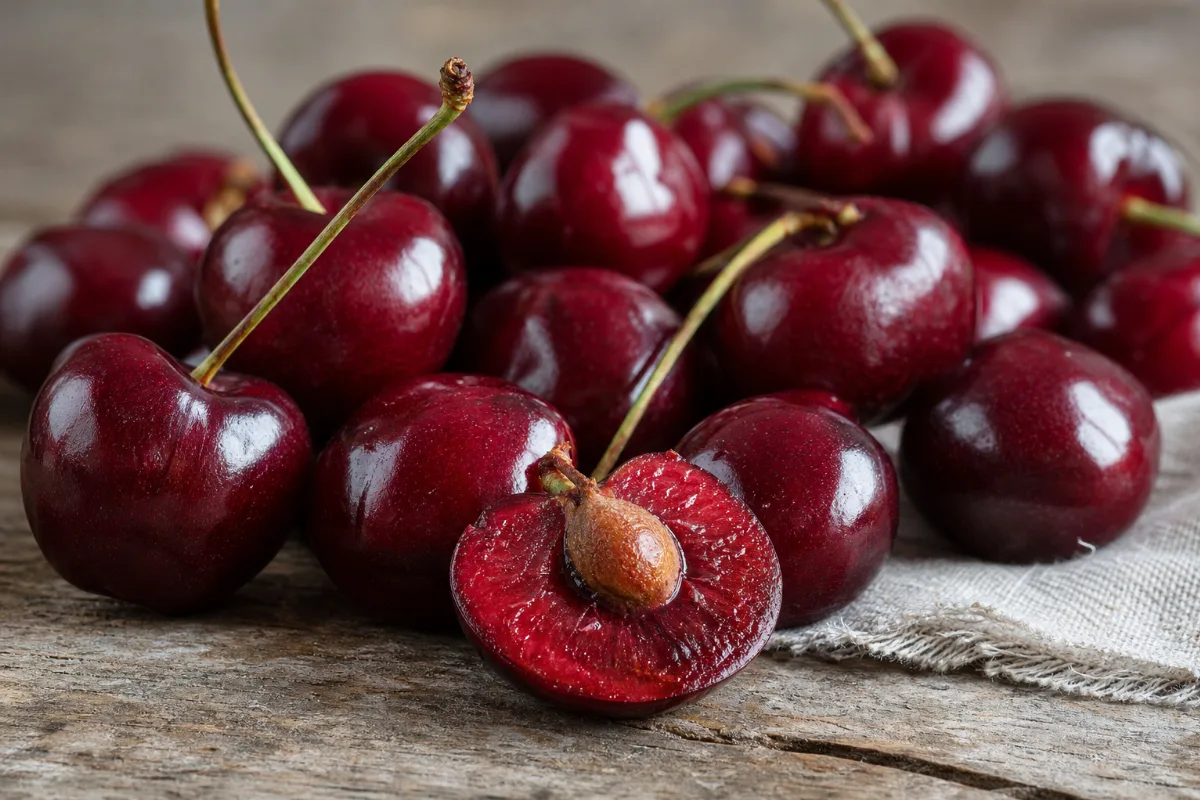
Fruits · Fruit
Sweet Cherries
Prunus avium · also called Sweet cherry, wild cherry, cereza (Spanish)
The sweet cherry is a stone fruit in the rose family: juicy flesh around one hard pit. A cup without pits has about 97 calories and 3.2 g of fibre. People ask about gout and blood pressure, but the evidence is thin: a self-reported link with fewer gout attacks, and mixed blood pressure results. Most cherry research is on tart cherries or drinks, not fresh sweet cherries. The main cautions are cherry allergy and not swallowing the pits.
General information, not medical advice. Last substantive update · Not medically reviewed. A named clinician has not signed off on this page. How this page is made
About Sweet Cherries
The sweet cherry is a juicy, fibre-containing stone fruit. Research on cherries is mostly observational, on tart cherries, or on a drink made with cherry powder, so it is best seen as a pleasant food rather than a proven remedy.
What it is
The sweet cherry (Prunus avium) is a stone fruit in the rose family, which also includes apples, peaches, plums and apricots. We eat the flesh and not the pit.
A cup of raw cherries without pits (154 g) has about 97 calories, 3.2 g of fibre and 19.7 g of natural sugars, plus 10.8 mg of vitamin C and 342 mg of potassium (USDA). It is a modest source of fibre and vitamin C and a small source of most other nutrients.
What the research shows
A 2012 online study of people with gout linked cherry intake with fewer attacks. People reported their own intake, so this cannot show cause.
A pooled analysis of seven trials found no clear blood pressure fall with cherries. One small trial of a sweet cherry juice-and-powder drink found lower pressure, better working memory on two tests and changes in gut bacteria, but all in 40 adults with obesity over 30 days.
Large studies link fruit and vegetables overall with better health. They do not single out cherries.
Fresh cherries versus drinks, extracts and tart cherries
The sweet cherry trials gave a drink made from juice and cherry powder. The gout study counted cherries and cherry extract together. Results for one form do not carry over to another.
Most cherry research, including sleep and exercise recovery, is on tart cherries, a different fruit.
At a glance
Traditional uses history, not proof
- Eaten fresh, frozen, canned, dried or as juice
- A popular reputation for gout; no source we read documents its origin
Studied for research
- Gout attacks in an observational study, low certainty
- Blood pressure, mixed results
- Heart disease in fruit-rich diets, low certainty
- Working memory with a cherry drink, very low certainty
- Gut bacteria with a cherry drink, very low certainty
Main compounds
- Dietary fibre (about 3.2 g in a cup)
- Vitamin C and potassium
- Polyphenols, a large family of plant compounds
- Amygdalin, a cyanide-releasing compound in the family's seeds
Common forms
- Fresh sweet cherries without pits (the form the nutrition figures describe)
- Frozen, canned or dried cherries
- Cherry juice
- Cherry powder or extract (not the same as the fruit)
Research links: NHS: Food allergy · Cherry intake and gout attacks (Arthritis and Rheumatism, 2012) · Cherries and blood pressure, meta-analysis (2022) · USDA FoodData Central: sweet cherries, raw · Research Library · Genes & Biomarkers Library
What it is and its history
- Accepted scientific name
- Prunus avium
- Naming authority
- (L.) L. (GBIF accepted, usageKey 3020791)
- Common names
- Sweet cherry (English); Wild cherry (English); Cereza (Spanish)
- Family or group
- Rosaceae (rose family), which also includes apple, peach, plum and apricot.
- Classification
- Plantae > Tracheophyta > Magnoliopsida > Rosales > Rosaceae > Prunus > Prunus avium
- Native range
- Not verified from a source read.
- Habitat
- Not verified.
- What it looks like
- Roots: Not verified.; Stems: Not verified.; Leaves: Not verified.; Flowers: Not verified.; Fruit: A stone fruit: juicy flesh around a single hard pit (existing site summary; not re-sourced).
- Cultivation
- Not verified from a source read.
- Harvest and processing
- Eaten fresh, frozen, canned, dried or as juice (existing site summary).
- Look-alikes and adulterants
- Name: Tart (sour) cherry (Prunus cerasus); Note: A different fruit. Most 'cherry' research, including sleep, exercise and many gout claims, is on tart cherries, so evidence for one is not evidence for the other.
- Sustainability and conservation
- Not assessed.
Photographs
Traditional use and history history, not clinical proof
| Tradition or era | Documented use | Source |
|---|---|---|
| Gout folk remedy | Cherries have a popular reputation for gout. No source read documents its origin. | NOT verified (no source read) |
Traditional use shows how it was used. It does not show that it works or is safe today.
What is inside, and how it may work
What it contains and how those compounds act in cells and animals. Laboratory and animal mechanisms are not proven effects in people.
Main compounds
| Compound | Family | Where it is concentrated | Activity studied | Level of evidence |
|---|---|---|---|---|
| Dietary fibre | carbohydrate | Flesh 2.1 g per 100 g; about 3.2 g in a cup without pits (USDA) | Provides fibre in the diet. Not tested here as a treatment. 18 | Composition data |
| Vitamin C | vitamin | Flesh 7.0 mg per 100 g; about 10.8 mg in a cup (USDA) | Essential nutrient; cherries are a modest source. 18 | Composition data |
| Potassium | mineral | Flesh 222 mg per 100 g; about 342 mg in a cup (USDA) | Provides potassium in the diet. 18 | Composition data |
| Polyphenols (including pigments) | plant compounds | Flesh and skin Not stated: no source read measured named compounds in cherries as sold | Described by a review as antioxidant and anti-inflammatory in lab and mixed studies. 6 | Lab and mixed |
| Amygdalin | cyanogenic glycoside | Seeds and kernels of Rosaceae plants (cherry not named in the source) Not found for cherry | Breaks down to hydrogen cyanide after eating (review of lab and animal work). 7 | Review |
Mechanisms, receptors and pathways
| Target or pathway | Gene or receptor | What was found | Level |
|---|---|---|---|
| Antioxidant and anti-inflammatory actions of sweet cherry polyphenols | Described by a review as likely routes behind possible benefits; the abstract does not separate lab, animal and human evidence. 6 | Lab and mixed | |
| Inflammation marker interferon-gamma | IFNG | Lower with a sweet cherry drink than placebo in one small trial; it correlated with systolic blood pressure change. 1 | Small human trial |
Absorption, metabolism and elimination
- Absorption
- Not researched.
- Distribution
- Not found.
- Metabolism
- Amygdalin is broken down to benzaldehyde and hydrogen cyanide after oral intake (review).
- Elimination
- Not found.
- Bioavailability
- Not established.
Isolated compounds versus whole extracts
The sweet cherry trials used a juice-and-powder drink, not fresh fruit. The gout study counted cherries and cherry extract together. Results for one form do not carry over to another, and most cherry research is on tart cherries.
Nutritional composition
Per 100 g of raw sweet cherries (USDA FoodData Central, SR Legacy): 63 kcal, 82.25 g water, 1.06 g protein, 0.2 g fat, 16.01 g carbohydrate of which 12.82 g are sugars, and 2.1 g fibre. A cup without pits (154 g) gives about 97 kcal, 3.2 g fibre and 19.7 g sugars. One cherry (8.2 g) is about 5 kcal. Small amounts of vitamin C (10.8 mg per cup), potassium (342 mg), copper, manganese, vitamin B6 and magnesium. Cherries are a modest source of fibre and vitamin C and a small source of most other nutrients. Per-portion figures are calculated from the per-100 g values. Values vary with variety, ripeness and storage. USDA data here are for raw cherries only; we did not find a source on how cooking changes them.
1 mixed findings2 low certainty2 very low certainty2 not enough evidence
What was looked at
The 7 benefits and uses checked for Sweet Cherries, each with how strong the evidence is. Tap one to open it.
- Gout attacks (cherries and cherry extract, observational)Low certainty
- Blood pressure (cherries and a sweet cherry drink)Mixed findings
- Heart disease and early death (diets rich in fruit and vegetables)Low certainty
- Memory and concentration (sweet cherry drink)Very low certainty
- Gut bacteria and gut lining (sweet cherry drink)Very low certainty
- Sleep and melatoninNot enough evidence
- Antioxidant, anti-inflammatory, cancer, skin, weight and exercise-recovery claimsNot enough evidence
Lab markers tracked in the studies
Systolic blood pressureDiastolic blood pressureInterferon-gamma (an inflammation marker)Blood fats, blood sugar and liver enzymesDigit-span tests (working memory)MelatoninGut-lining leakiness markers
What is Sweet Cherries good for?
The main studied uses and how strong the human evidence is for each. Most results are links seen in eating habits, or small trials of a cherry drink, not proof that sweet cherries prevent or treat a disease.
Benefits, one by one
Each card is a research question, not a promise. Tap a goal to filter. Open a card to see the studies, doses and limits.
Gout attacks (cherries and cherry extract, observational)
Low certaintyIn 633 people with gout who were followed online for a year, eating cherries in the two days before an attack went with a 35% lower chance of an attack than eating none. This is a link seen in self-reported data, not proof that cherries prevent attacks.
2 studiesCherries and cherry extract, type not separated. The result does not …
Studies, doses and limits
What the trials found
A 2012 case-crossover study (Zhang et al.) compared each person's own attack periods with their control periods.
Results
Fewer attacks in the days after cherry or cherry-extract intake. The link held in subgroups, including people using gout medicines.
Effect sizes as reported
Cherries: OR 0.65 (95% CI 0.50-0.85). Cherry extract: OR 0.55 (0.30-0.98). Cherries with allopurinol: OR 0.25 (0.15-0.42) compared with neither.
Why this rating
Observational and self-reported, so it cannot show cause. It did not separate sweet from tart cherries or cherries from extract in the abstract, and it is from 2012. Many gout trials of cherries are not part of the evidence read here.
Form and dose studied
Cherries and cherry extract, type not separated. The result does not describe sweet cherries alone.
Who was studied
Adults with gout.
Limits
Association only. Cherry type and amount not isolated. No trial of sweet cherries for gout was read.
Why researchers looked
Cherries have long been talked about as a gout food, so researchers asked whether eating them lines up with fewer attacks.
Traditional use
Popular belief; no source read documents its origin.
Proposed mechanism Unknown
Not established in this study. Lab ideas about antioxidant compounds are untested here.
A proposed mechanism does not show that the effect happens in people.
Gout needs a clinician. The NHS says to see a GP for first-time symptoms or when usual treatments are not helping, and to seek urgent help for a hot, painful joint with fever, which could be a joint infection. Cherries do not replace gout medicine.
Blood pressure (cherries and a sweet cherry drink)
Mixed findingsA pooled analysis of seven trials of cherries found no clear fall in blood pressure. One small trial of a dark sweet cherry drink in adults with obesity found lower blood pressure than placebo after 30 days. So the picture is mixed.
2 studiesTart and sweet cherries and supplements pooled in the meta-analysis; …
Studies, doses and limits
What the trials found
A 2022 meta-analysis of 7 randomised trials (201 people) of tart and sweet cherries, and a 2023 single-blind trial of 40 adults with obesity given a dark sweet cherry juice-and-powder drink.
Results
The pooled analysis found no significant fall in systolic or diastolic pressure. The small sweet cherry drink trial found systolic p = 0.05 and diastolic p = 0.04 versus placebo.
Effect sizes as reported
Meta-analysis: no significant change (no figures in the abstract). Small trial: P values only in the abstract.
Why this rating
The larger pooled analysis found no effect. The one sweet cherry trial is small, single-blind, short, and used a juice-and-powder drink in adults with obesity.
Form and dose studied
Tart and sweet cherries and supplements pooled in the meta-analysis; juice plus cherry powder in the trial.
Who was studied
Adults, including adults with obesity.
Limits
Small trials, 30 days, drink not fresh fruit. The meta-analysis mixed tart and sweet cherries.
Why researchers looked
Cherries contain fibre, potassium and plant pigments, and people ask if they help blood pressure.
Proposed mechanism Preliminary mechanism
Suggested links with a lower inflammation marker (interferon-gamma) in one small trial. Not shown to be the cause.
A proposed mechanism does not show that the effect happens in people.
People taking blood pressure medicine should keep taking it as advised and ask their care team before changing anything.
Heart disease and early death (diets rich in fruit and vegetables)
Low certaintyIn large groups of people followed over time, those who ate more fruit and vegetables had lower rates of heart disease and early death. Cherries were not singled out. This is a link across whole diets, not proof that sweet cherries protect the heart.
1 studiesUsual diet.
Studies, doses and limits
What the trials found
A 2017 review of 95 prospective studies found lower cardiovascular disease and early death with more fruit and vegetables combined.
Results
Lower risk in people who ate more fruit and vegetables. Cherries were not isolated.
Effect sizes as reported
Per 200 g a day of fruit and vegetables combined: cardiovascular disease RR 0.92 (0.90-0.95); all-cause mortality RR 0.90 (0.87-0.93).
Why this rating
Observational data only. People who eat more fruit may differ in other ways, and the figures are for fruit and vegetables together.
Form and dose studied
Usual diet.
Who was studied
Adults in cohort studies.
Limits
Association, not cause. No cherry-specific figure.
Why researchers looked
Fruit-rich diets are linked with better health, and cherries are one fruit.
Proposed mechanism Preliminary mechanism
Possible routes include fibre, potassium and plant compounds. Untested for cherries.
A proposed mechanism does not show that the effect happens in people.
None specific.
Memory and concentration (sweet cherry drink)
Very low certaintyIn one small trial of 40 adults with obesity, a dark sweet cherry drink improved scores on two working-memory tests, but not on tests of processing speed, attention or visual skills. The authors say more trials are needed.
1 studiesJuice with 3 g of cherry powder, twice a day, as studied (not advice)…
Studies, doses and limits
What the trials found
A 2025 single-blind randomised trial (Arbizu et al.) of 19 people on the cherry drink and 21 on placebo for 30 days.
Results
Digit-span forward (p = 0.006) and backward (p = 0.01) scores were higher with the cherry drink. Trail-making, digit-symbol and a visual task showed no difference.
Effect sizes as reported
P values only in the abstract; no score differences given.
Why this rating
One small single-blind trial, 30 days, many outcomes tested, a drink made with cherry powder in adults with obesity.
Form and dose studied
Juice with 3 g of cherry powder, twice a day, as studied (not advice). Not fresh fruit.
Who was studied
Adults aged over 18 with BMI 30-40 and no chronic disease.
Limits
Small, single-blind, not repeated by other groups in the sources read.
Why researchers looked
Plant pigments in dark cherries have been proposed to help the brain, and obesity is linked with a higher risk of cognitive problems.
Proposed mechanism Unknown
Not shown. The trial also measured neuropeptides and hormones, with no clear explanation of the memory result.
A proposed mechanism does not show that the effect happens in people.
None specific.
Gut bacteria and gut lining (sweet cherry drink)
Very low certaintyIn the same small trial, the cherry drink changed the amounts of some gut bacteria. Markers of gut-lining leakiness did not change. Nobody measured symptoms, so it is not known if this matters.
1 studiesJuice with 3 g of cherry powder, twice a day, as studied (not advice).
Studies, doses and limits
What the trials found
A 2024 single-blind randomised trial of 40 adults with obesity, 30 days.
Results
Some bacteria rose and some fell versus placebo. The lactulose/mannitol ratio, REG4, IL-22 mRNA and LBP did not change.
Effect sizes as reported
Bacterial abundance changes with p values; permeability markers unchanged.
Why this rating
Changes in bacteria counts only; small, single-blind, and a drink with powder.
Form and dose studied
Juice with 3 g of cherry powder, twice a day, as studied (not advice).
Who was studied
Adults with obesity.
Limits
No symptom or health outcome. Not fresh cherries.
Why researchers looked
Fibre and polyphenols reach the gut and may change gut bacteria.
Proposed mechanism Preliminary mechanism
Plant compounds may feed or inhibit certain bacteria. Not tested directly here.
A proposed mechanism does not show that the effect happens in people.
None specific.
Sleep and melatonin
Not enough evidenceA 2024 review says sweet cherries may influence sleep patterns. We did not read any trial of sweet cherries for sleep. In the 2025 trial, melatonin rose in both the cherry and placebo groups, and the rise was significant only in the placebo group.
2 studiesn/a
Studies, doses and limits
What the trials found
A 2024 narrative review and the melatonin result in the 2025 trial.
Results
No sweet cherry sleep trial was read. The only melatonin data came from a trial not designed around sleep.
Why this rating
No sleep outcome was tested in a sweet cherry trial we read.
Limits
Review is narrative; trial result does not favour cherry.
Why researchers looked
Cherries are often discussed for sleep, mostly tart cherries, which are a different fruit.
Proposed mechanism Unknown
Not established for sweet cherries.
A proposed mechanism does not show that the effect happens in people.
None specific.
Antioxidant, anti-inflammatory, cancer, skin, weight and exercise-recovery claims
Not enough evidenceA 2024 review lists many possible benefits of sweet cherry compounds, but the abstract does not separate human evidence from cell and animal work. These are not shown benefits of eating the fruit.
1 studiesCompounds, fruit and extracts, not separated.
Studies, doses and limits
What the trials found
A 2024 narrative review (Goncalves et al.).
Results
Possible benefits reported without figures in the abstract.
Effect sizes as reported
Qualitative.
Why this rating
A narrative review mixing lab, animal and human work.
Form and dose studied
Compounds, fruit and extracts, not separated.
Limits
Cannot show benefit from eating the fruit.
Why researchers looked
Sweet cherries contain polyphenols and vitamins that show antioxidant activity in the lab.
Proposed mechanism Preliminary mechanism
Antioxidant and anti-inflammatory activity described mostly from lab and mixed studies.
A proposed mechanism does not show that the effect happens in people.
None specific.
Connections to the rest of health
How Sweet Cherries connects to the rest of our health knowledge graph. Every link says what kind of connection it is. A safety link (for example to the liver) is a warning, not a benefit. A study that merely mentions a topic never creates a benefit link.
Explore every connection: goals, body systems, organs, symptoms, genes
A. Wellness goals
| Connected to | Kind of connection | Evidence status | Context | Studies |
|---|---|---|---|---|
| Joint Health | Potential benefit | Low certainty | Gout attacks (cherries and cherry extract, observational): In 633 people with gout who were followed online for a year, eating cherries in the two days before an attack went with a 35% lower chance of an attack than eating none. This is a link seen in self-reported data, not proof that cherries prevent attacks. | 12 16 |
| Blood Pressure Support | Potential benefit | Mixed findings | Blood pressure (cherries and a sweet cherry drink): A pooled analysis of seven trials of cherries found no clear fall in blood pressure. One small trial of a dark sweet cherry drink in adults with obesity found lower blood pressure than placebo after 30 days. So the picture is mixed. | 5 1 |
| Heart Health | Potential benefit | Low certainty | Heart disease and early death (diets rich in fruit and vegetables): In large groups of people followed over time, those who ate more fruit and vegetables had lower rates of heart disease and early death. Cherries were not singled out. This is a link across whole diets, not proof that sweet cherries protect the heart. | 4 |
| Focus Memory | Potential benefit | Very low certainty | Memory and concentration (sweet cherry drink): In one small trial of 40 adults with obesity, a dark sweet cherry drink improved scores on two working-memory tests, but not on tests of processing speed, attention or visual skills. The authors say more trials are needed. | 3 |
| Gut Digestive Health | Potential benefit | Very low certainty | Gut bacteria and gut lining (sweet cherry drink): In the same small trial, the cherry drink changed the amounts of some gut bacteria. Markers of gut-lining leakiness did not change. Nobody measured symptoms, so it is not known if this matters. | 2 |
| Better Sleep | Not enough evidence | Sleep and melatonin: A 2024 review says sweet cherries may influence sleep patterns. We did not read any trial of sweet cherries for sleep. In the 2025 trial, melatonin rose in both the cherry and placebo groups, and the rise was significant only in the placebo group. | 6 3 | |
| Healthy Aging | Not enough evidence | Antioxidant, anti-inflammatory, cancer, skin, weight and exercise-recovery claims: A 2024 review lists many possible benefits of sweet cherry compounds, but the abstract does not separate human evidence from cell and animal work. These are not shown benefits of eating the fruit. | 6 |
B. Body systems
| Connected to | Kind of connection | Evidence status | Context | Studies |
|---|---|---|---|---|
| Musculoskeletal System | Biological association | Low certainty | Studied for: Gout attacks (cherries and cherry extract, observational) | 12 16 |
| Cardiovascular System | Biological association | Mixed findings | Studied for: Blood pressure (cherries and a sweet cherry drink) Studied for: Heart disease and early death (diets rich in fruit and vegetables) | 5 1 4 6 |
| Nervous System | Biological association | Very low certainty | Studied for: Memory and concentration (sweet cherry drink) Studied for: Sleep and melatonin | 3 6 |
| Digestive System | Biological association | Very low certainty | Studied for: Gut bacteria and gut lining (sweet cherry drink) | 2 |
E. Health conditions
| Connected to | Kind of connection | Evidence status | Context | Studies |
|---|---|---|---|---|
| Food allergy | Adverse effect or risk | Documented risk | Cherry allergy ranges from itchy mouth to whole-body reactions. Preparation or compound: Raw sweet cherry |
10 15 |
| Gout | Potential benefit | Observational link | Lower attack risk in a self-reported study; cannot prove cause. Preparation or compound: Cherries or cherry extract |
12 |
I. Biomarkers
| Connected to | Kind of connection | Evidence status | Context | Studies |
|---|---|---|---|---|
| Systolic blood pressure | Biological association | Mixed findings | Measured in trials: mixed: lower with a sweet cherry drink in one small trial, no significant change in pooled trials. A lab change is not the same as a health benefit. | 1 5 |
| Diastolic blood pressure | Biological association | Mixed findings | Measured in trials: mixed: lower in one small trial, no significant change in pooled trials. A lab change is not the same as a health benefit. | 1 5 |
| Interferon-gamma (an inflammation marker) | Biological association | Very low certainty | Measured in trials: lowered in one small trial. A lab change is not the same as a health benefit. | 1 |
| Blood fats, blood sugar and liver enzymes | Biological association | Very low certainty | Measured in trials: no significant difference. A lab change is not the same as a health benefit. | 1 |
| Digit-span tests (working memory) | Biological association | Very low certainty | Measured in trials: higher with the cherry drink. A lab change is not the same as a health benefit. | 3 |
| Melatonin | Biological association | Not enough evidence | Measured in trials: rose in both groups. A lab change is not the same as a health benefit. | 3 |
| Gut-lining leakiness markers | Biological association | Very low certainty | Measured in trials: unchanged. A lab change is not the same as a health benefit. | 2 |
J. Genes, receptors and enzymes
| Connected to | Kind of connection | Evidence status | Context | Studies |
|---|---|---|---|---|
| Preliminary mechanism | Lower with a sweet cherry drink in one trial. | 1 |
L. Active compounds
| Connected to | Kind of connection | Evidence status | Context | Studies |
|---|---|---|---|---|
| Dietary fibre | Biological association | Composition data | Provides fibre in the diet. Not tested here as a treatment. Preparation or compound: Flesh |
18 |
| Vitamin C | Biological association | Composition data | Essential nutrient; cherries are a modest source. Preparation or compound: Flesh |
18 |
| Potassium | Biological association | Composition data | Provides potassium in the diet. Preparation or compound: Flesh |
18 |
| Polyphenols (including pigments) | Biological association | Lab and mixed | Described by a review as antioxidant and anti-inflammatory in lab and mixed studies. Preparation or compound: Flesh and skin |
6 |
| Amygdalin | Biological association | Review | Breaks down to hydrogen cyanide after eating (review of lab and animal work). Preparation or compound: Seeds and kernels of Rosaceae plants (cherry not named in the source) |
7 |
Each connection is stored with the ingredient, the connected record, the kind of connection, the evidence status, the supporting studies, the preparation or compound involved, and a review date (last reviewed October 25, 2026).
Evidence at a glance: what the research found for 7 outcomes
Each outcome below is one thing researchers measured. Certainty is how far the evidence can be trusted, not how well it works. The full studies are on the next tab.
The evidence
The research centre for Sweet Cherries. Every record here was checked against PubMed or the publisher's page; we never list a study we have not verified.
Evidence by outcome
Bars show how many studies we found for each outcome, not how well it works. People are added up across trials only (reviews are not added, to avoid double counting).
How we rate evidence
High certainty
Several well-run trials or reviews agree; further research is unlikely to change the picture much.
Moderate certainty
Good trials point the same way, but some doubt remains.
Low certainty
Small, short or inconsistent trials. The finding could change with better research.
Very low certainty
Very little or very weak human data. Treat as a possibility only.
Mixed findings
Trials or reviews disagree with each other.
Not enough evidence
Not enough human research to say either way.
Evidence against
Good research found no benefit, or found harm.
We take the reviewers' own risk-of-bias and GRADE statements where they exist, and otherwise judge from study size, design, consistency, directness and whether a product matches what is sold. Many publications do not make evidence high. Method note: We started from our existing sweet cherry summary, re-read the USDA FoodData Central record, and read PubMed abstracts and the NHS and FDA pages. Only abstracts were read for studies. Items we could not verify are flagged in the research gaps.
Study library: every study we checked 18
| Study | Design | People | Product, dose, length | Result |
|---|---|---|---|---|
| Arbizu 2023 Dark Sweet Cherry (Prunus avium) Supplementation Reduced Blood Pressure and Pro-Inflammatory Interferon Gamma (IFNgamma) in Obese Adults without Affecting Lipid Profile, Glucose Levels and Liver Enzymes. Nutrients · PMID 36771387 · DOI |
Single blind randomised placebo controlled trial |
40 Adults over 18 with BMI 30-40 (19 cherry, 21 placebo) |
Dark sweet cherry drink: 200 mL juice supplemented with dark sweet cherry powder, twice a day juice plus fruit powder (not fresh fruit) 200 mL twice a day (as studied; not advice) 30 days · vs Placebo drink |
The cherry drink lowered systolic blood pressure (p = 0.05) and diastolic blood pressure (p = 0.04) compared with placebo, with a larger systolic fall in people with BMI over 35 (p = 0.008). Interferon-gamma, a pro-inflammatory marker, was lower (p = 0.001). No significant between-group differences in blood lipids, glucose or liver enzymes. P values only in the abstract; no blood pressure figures given Methods, limits and fundingOutcomes: Blood pressure, inflammation markers, lipids, glucose, liver enzymes Limitations: Small, single-blind, 30 days, adults with obesity, a juice-and-powder drink rather than fresh cherries. Borderline systolic p value (0.05). Funding and conflicts: Authors declared no conflicts of interest; who supplied the cherry product was not stated in the abstract Read: abstract |
| Arbizu 2024 Effect of dark sweet cherry (Prunus avium) supplementation on the fecal microbiota, metabolic endotoxemia, and intestinal permeability in obese subjects: a single-blind randomized trial. Food Funct · PMID 39228354 · DOI |
Single blind randomised placebo controlled trial |
40 Adults over 18 with BMI 30-40 (19 cherry, 21 placebo) |
Dark sweet cherry juice with 3 g of cherry powder, twice a day (200 mL) juice plus fruit powder (not fresh fruit) 200 mL twice a day (as studied; not advice) 30 days · vs Placebo drink |
The cherry drink changed the abundance of several gut bacteria compared with placebo (for example less Anaerostipes hadrus and Blautia, more Roseburia intestinalis and Bacteroides vulgatus). Markers of gut-lining leakiness and endotoxin (LBP, lactulose/mannitol ratio, REG4, IL-22 mRNA) did not change in either group. Bacterial abundance changes with p values; gut permeability markers unchanged Methods, limits and fundingOutcomes: Gut bacteria in stool, endotoxin marker (LBP), intestinal permeability Limitations: Changes in bacteria counts, not in symptoms or health outcomes. Small, single-blind, adults with obesity, drink with powder. Funding and conflicts: Authors' conflict statement not shown in the abstract read Read: abstract |
| Arbizu 2025 Assessing the Role of Dark Sweet Cherry (Prunus avium L.) Consumption on Cognitive Function, Neuropeptides, and Circadian Rhythm in Obesity: Results from a Randomized Controlled Trial. Nutrients · PMID 40077655 · DOI |
Single blind randomised controlled trial |
40 Adults over 18 with BMI 30-40, no chronic disease (19 cherry, 21 placebo) |
Dark sweet cherry drink: 200 mL with 3 g cherry powder, twice a day juice plus fruit powder (not fresh fruit) 200 mL twice a day (as studied; not advice) 30 days · vs Isocaloric placebo drink |
Working memory and concentration improved on two digit-span tests (forward p = 0.006, backward p = 0.01). Processing speed, sustained attention, visual-spatial skills and a visual task showed no significant difference. Melatonin rose in both groups, and the rise was significant only in the placebo group (p = 0.02). P values only; no scores in the abstract Methods, limits and fundingOutcomes: Cognitive tests, neuropeptides, melatonin and cortisol Limitations: Small, single-blind, 30 days, adults with obesity, drink with powder. Many outcomes were tested. The authors say more trials are needed. Funding and conflicts: Authors declared no conflicts of interest; product supply not stated in the abstract Read: abstract |
| Aune 2017 Fruit and vegetable intake and the risk of cardiovascular disease, total cancer and all-cause mortality-a systematic review and dose-response meta-analysis of prospective studies. Int J Epidemiol · PMID 28338764 · DOI |
Systematic review and meta analysis (observational cohort studies) |
95 prospective studies (142 publications) of fruit and vegetable intake in adults | Usual dietary intake of fruit and vegetables (cherries not named in the abstract) fruit and vegetables Follow-up varied by study · vs Lower intake |
For fruits and vegetables combined, each 200 g a day went with lower risk: relative risk 0.92 for coronary heart disease, 0.84 for stroke, 0.92 for cardiovascular disease, 0.97 for total cancer and 0.90 for all-cause death. Inverse associations were named for apples and pears, citrus fruits, green leafy vegetables, cruciferous vegetables and salads. Sweet cherries are not named in the abstract. Per 200 g/day, fruit and vegetables combined: cardiovascular disease RR 0.92; all-cause mortality RR 0.90 (CVD 0.90-0.95; all-cause mortality 0.87-0.93) Methods, limits and fundingOutcomes: Cardiovascular disease, total cancer, all-cause mortality Limitations: Observational: shows an association, not cause. Fruit and vegetables are combined; sweet cherries are not singled out. Heterogeneity was high for some outcomes (I2 up to 83%). Funding and conflicts: Not stated in the abstract read Read: abstract |
| Eslami 2022 Effect of cherry consumption on blood pressure: a systematic review and meta-analysis of randomized controlled trials. Diabetes Metab Syndr · PMID 35108661 · DOI |
Systematic review and meta analysis of RCTs |
201 7 randomised trials, 201 participants |
Tart and sweet cherries (cherry supplementation), pooled fruit, juice and supplements (not itemised in the abstract) Not given in the abstract Not given in the abstract · vs Control groups in each trial |
Cherry supplementation did not lead to a significant fall in systolic or diastolic blood pressure. No significant effect (the abstract gives no figures) Methods, limits and fundingOutcomes: Systolic and diastolic blood pressure Limitations: Small trials; tart and sweet cherries and different products pooled, so it says little about eating fresh sweet cherries. No numbers in the abstract read. Funding and conflicts: Authors declared no conflicts of interest Read: abstract |
| Goncalves 2024 From Orchard to Wellness: Unveiling the Health Effects of Sweet Cherry Nutrients. Nutrients · PMID 39519493 · DOI |
Narrative review mixed |
Literature on sweet cherry compounds; human, cell and animal work mixed | Sweet cherry fruit compounds (antioxidants, polyphenols, vitamins, minerals) fruit Varied Varied · vs Varied |
The review says sweet cherry nutrients may help against several chronic conditions through antioxidant and anti-inflammatory effects, and mentions gut health, exercise recovery, sleep and anti-cancer properties. The abstract does not separate human evidence from cell and animal evidence or give figures. Qualitative Methods, limits and fundingOutcomes: Heart and metabolic health, gut, exercise recovery, sleep, cancer, weight, skin Limitations: A narrative review, so no systematic search or grading in the abstract. It mixes lab, animal and human work and cannot show benefit from eating the fruit. Funding and conflicts: Authors declared no conflicts of interest Read: abstract |
| He 2020 Amygdalin - A pharmacological and toxicological review. J Ethnopharmacol · PMID 32114166 · DOI |
Narrative review of 110 lab and animal papers mixed |
In vitro and in vivo studies on amygdalin | Amygdalin seeds and kernels of Rosaceae plants |
Amygdalin is found in Rosaceae plants such as peach, plum, loquat, apple and bayberry, mostly in seeds. After oral intake it breaks down to benzaldehyde and hydrogen cyanide, which causes its toxicity. Sweet cherry is not named in the abstract. Qualitative Methods, limits and fundingOutcomes: Pharmacology and toxicity of amygdalin Limitations: The abstract does not mention cherry or give a figure for cherry pits. Funding and conflicts: No conflicts declared Read: abstract |
| Oruqaj 2024 Adenomatous hyperplasia induced by chronic cherry pit retention mimicking an endobronchial tumor-case series and systematic review of literature. Front Med (Lausanne) · PMID 39086956 · DOI |
Case series (two patients) with literature review |
2 Two elderly patients with recurrent pneumonia |
Cherry pit retained in the airway cherry pit Chronic |
In both patients, who recalled no choking, a cherry pit was found in the airway at bronchoscopy, surrounded by pus and blocking part or all of a lung branch. The pit was removed with a flexible cryoprobe. Two case reports Methods, limits and fundingOutcomes: Airway blockage and recurrent pneumonia Limitations: Two cases cannot show how common this is. Funding and conflicts: No conflicts declared Read: abstract |
| Pastorello 1994 Allergenic cross-reactivity among peach, apricot, plum, and cherry in patients with oral allergy syndrome: an in vivo and in vitro study. J Allergy Clin Immunol · PMID 7930303 · DOI |
In vivo and in vitro cross reactivity study |
23 23 patients with oral allergy syndrome to peach |
Skin prick tests, open food challenges with fresh fruits, and lab tests fresh fruits (peach, cherry, apricot, plum) |
Lab tests showed wide cross-reactivity within peach, cherry, apricot and plum. A 13 kd component was the only major allergen common to all of them and seems to explain most clinical cross-reactivity. 13 kd shared allergen Methods, limits and fundingOutcomes: Cross-reactivity between stone fruits Limitations: Small study from 1994 in people already allergic to peach. Funding and conflicts: Not stated in the abstract read Read: abstract |
| Reuter 2006 A critical assessment of allergen component-based in vitro diagnosis in cherry allergy across Europe. Clin Exp Allergy · PMID 16776683 · DOI |
Diagnostic comparison study in cherry allergic people |
186 186 people from central Europe and Spain |
Blood IgE tests with cherry allergens compared with cherry extract and skin prick test fresh cherry allergens · vs Extract-based test and skin prick test |
Food allergy to cherry occurs throughout Europe: usually mouth-only reactions in central and northern Europe, but frequent whole-body reactions in the Mediterranean region. Spanish patients sensitised to a protein called Pru av 3 had significantly more whole-body reactions, while German patients sensitised only to that protein had oral allergy syndrome. The authors say whole-body reactions seem to need at least one more factor. Test sensitivity 95% for the allergen mix versus 65% for extract (central Europe) Methods, limits and fundingOutcomes: Test accuracy and how often reactions affect the whole body Limitations: A study of allergy testing, not of how common cherry allergy is. Participants were already allergic. Funding and conflicts: Not stated in the abstract read Read: abstract |
| Skypala 2022 BSACI guideline for the diagnosis and management of pollen food syndrome in the UK. Clin Exp Allergy · PMID 35975576 · DOI |
Clinical guideline (SIGN method; the authors note the evidence is not high quality) |
Pollen-sensitised children and adults | n/a |
Pollen food syndrome causes allergic symptoms when eating raw plant foods because food proteins resemble pollen proteins. Symptoms are typically mild but severe reactions can occur. Management is by avoiding known trigger foods. The guideline does not name cherry in the abstract. Guideline statements Methods, limits and fundingOutcomes: Diagnosis and management of pollen food syndrome Limitations: Recommendations are built on limited evidence, as the authors say. Cherry is not named in the abstract. Funding and conflicts: Not stated in the abstract read Read: abstract |
| Zhang 2012 Cherry consumption and decreased risk of recurrent gout attacks. Arthritis Rheum · PMID 23023818 · DOI |
Case crossover study (observational, online, self reported) |
633 People with gout followed online for 1 year |
Cherry intake and cherry extract intake in the 2 days before an attack, compared with control periods fresh cherries and cherry extract (type of cherry not separated in the abstract) Any intake in a 2-day window (not advice) 1 year · vs Periods without cherry intake |
Cherry intake over a 2-day period went with a 35% lower risk of gout attacks than no intake. Cherry extract showed a similar link. The link held across groups by sex, obesity, purine intake, alcohol, diuretic use and gout medicine use. Cherry intake together with allopurinol went with a 75% lower risk than periods with neither. Cherries: OR 0.65; cherry extract: OR 0.55; cherries plus allopurinol: OR 0.25 (Cherries 0.50-0.85; extract 0.30-0.98; with allopurinol 0.15-0.42) Methods, limits and fundingOutcomes: Recurrent gout attacks Limitations: Observational and self-reported, so it cannot prove cherries caused fewer attacks. Cherry type is not separated, and extract is mixed in. Amount eaten was not the question. Funding and conflicts: Research support from the US National Institutes of Health (extramural); no industry funding noted in the abstract Read: abstract |
| s-fda-produce-safely FDA: Selecting and serving produce safely · Source |
Official food safety guidance n/a |
Methods, limits and fundingRead: full-text | ||
| s-gbif-prunus-avium GBIF Backbone: Prunus avium (L.) L. · Source |
Reference database n/a |
Methods, limits and fundingRead: full-text | ||
| s-nhs-food-allergy NHS: Food allergy · Source |
Official health guidance n/a |
Methods, limits and fundingRead: full-text | ||
| s-nhs-gout NHS: Gout · Source |
Official health guidance n/a |
Methods, limits and fundingRead: full-text | ||
| s-nhs-potassium NHS: Others - vitamins and minerals (potassium section) · Source |
Official health guidance n/a |
Methods, limits and fundingRead: full-text | ||
| s-usda-fdc-171719 USDA FoodData Central: Cherries, sweet, raw (FDC 171719, SR Legacy) · Source |
Food composition database n/a |
Methods, limits and fundingRead: full-text |
What we do not know yet
- No trial has tested fresh sweet cherries for gout, blood pressure or heart disease.
- The gout study did not separate sweet from tart cherries or fruit from extract.
- The three sweet cherry trials come from one research group and the same 40 adults.
- Pregnancy, breastfeeding, young children, bloating (sorbitol, FODMAP) and pesticide residues were not researched.
- The cyanide content of cherry pits was not found.
How new research is added
New studies are found by a saved PubMed search and placed in a review queue before the page changes.
Lab markers
What changed in blood or saliva tests during trials. A changed number is not the same as feeling or being healthier, and we give no "normal ranges".
Hormonal 1
Melatonin
Rose in both groups in trials
A hormone that helps time sleep.
Not enough evidenceResults and what it means
Why it was measured
A marker of body-clock rhythm.
Statistical vs. clinical meaning
Does not support a cherry effect on melatonin.
Safety implication
None specific.
| Study | Result | People | Product |
|---|---|---|---|
| 3 | Rose in both groups; significant only in the placebo group (p = 0.02) | 40 adults with obesity | Dark sweet cherry drink with powder, 30 days |
Other 6
Systolic blood pressure
Mixed: lower with a sweet cherry drink in one small trial, no significant change in pooled trials in trials
The upper blood pressure number.
Mixed findingsResults and what it means
Why it was measured
A common heart and stroke risk marker.
Statistical vs. clinical meaning
A small, uncertain change that the larger pooled analysis did not confirm.
Safety implication
None specific.
Diastolic blood pressure
Mixed: lower in one small trial, no significant change in pooled trials in trials
The lower blood pressure number.
Mixed findingsResults and what it means
Why it was measured
A common heart risk marker.
Statistical vs. clinical meaning
Same picture as systolic pressure.
Safety implication
None specific.
Interferon-gamma (an inflammation marker)
Lowered in one small trial in trials
A signalling protein that the immune system makes during inflammation.
Very low certaintyResults and what it means
Why it was measured
Used as a marker of inflammation.
Statistical vs. clinical meaning
A change in a lab marker from one small trial. Its meaning for health is unknown.
Safety implication
None specific.
| Study | Result | People | Product |
|---|---|---|---|
| 1 | Lower with the cherry drink than placebo (p = 0.001) | 40 adults with obesity | Dark sweet cherry juice plus powder drink, 30 days |
Blood fats, blood sugar and liver enzymes
No significant difference in trials
Standard blood tests for cholesterol and triglycerides, glucose and liver function.
Very low certaintyResults and what it means
Why it was measured
Routine metabolic and liver safety checks.
Statistical vs. clinical meaning
The drink did not change these markers in this small trial. It also gave no sign of liver enzyme harm.
Safety implication
No liver enzyme signal in this small trial.
| Study | Result | People | Product |
|---|---|---|---|
| 1 | No significant between-group differences | 40 adults with obesity | Dark sweet cherry juice plus powder drink, 30 days |
Digit-span tests (working memory)
Higher with the cherry drink in trials
Tests where a person repeats lists of numbers forwards or backwards.
Very low certaintyResults and what it means
Why it was measured
Measures short-term working memory.
Statistical vs. clinical meaning
Two tests improved while others did not. One small trial.
Safety implication
None specific.
| Study | Result | People | Product |
|---|---|---|---|
| 3 | Forward p = 0.006; backward p = 0.01 versus placebo | 40 adults with obesity | Dark sweet cherry drink with powder, 30 days |
Gut-lining leakiness markers
Unchanged in trials
Lab measures (lactulose/mannitol ratio, REG4, IL-22 mRNA, LBP) of how leaky the gut lining is.
Very low certaintySafety
What studies and official sources say about side effects, medicines and who should check first. Each point shows what kind of evidence it comes from.
Main points to know 4
- Cherry allergy is real, and a serious reaction is an emergency. Food allergy to cherry occurs across Europe. In central and northern Europe it usually causes mouth symptoms; in the Mediterranean region whole-body reactions are more common, especially in people sensitised to a protein called Pru av 3. Swelling of the lips, face, tongue or throat, fast breathing, trouble breathing or a tight throat needs emergency help. Call 999 in the UK or 911 in the US. Use an adrenaline auto-injector if you have been prescribed one. Authoritative guidance 10 15
- Raw cherries can cause an itchy mouth in people with hay fever. Many people with pollen allergy get an itchy mouth and throat from raw fruit. The NHS calls this oral allergy syndrome (pollen food syndrome): it is not usually serious, and well-cooked fruit helps. A UK guideline says symptoms are typically mild but severe reactions can occur. Authoritative guidance 15 11
- If you react to one stone fruit, ask about the others. A 1994 study of 23 people with oral allergy syndrome to peach found wide cross-reactivity within peach, cherry, apricot and plum, mainly due to one shared protein. An allergy specialist can advise on which fruits to avoid. Observational 9
- Do not swallow cherry pits. Two elderly patients had cherry pits stuck in the airway, causing repeated pneumonia. The pit also belongs to a plant family whose seeds contain amygdalin, which breaks down to cyanide. The sources read do not say how much cyanide is in cherry pits, so no figure is given. The safe course is not to eat or crush the pits. Case report 8 7
Side effects 4
| Effect | How often | Severity and recovery | Evidence |
|---|---|---|---|
| Itchy mouth and throat after raw cherry (pollen-food allergy) No frequency for cherry was in the sources read. | Not established | mild, usually Usually settles quickly; the NHS says well-cooked fruit helps. | Authoritative guidance 15 11 |
| Whole-body allergic reaction to cherry More often reported in Mediterranean patients sensitised to Pru av 3; the authors say it seems to need an extra factor. | Not established | severe Needs emergency treatment. | Clinical study 10 15 |
| Airway blockage from a swallowed or inhaled cherry pit Two cases only; how common this is was not found. | Not established | severe Pit removed at bronchoscopy in two reported patients. | Case report 8 |
| Stomach upset, bloating or loose stools No source read covered sorbitol, FODMAPs or bloating from sweet cherries. A clinician or dietitian can help if cherries upset your stomach. | Not established | not known Not known | None found |
Liver
No liver injury linked to eating sweet cherries was found in the sources read. In one small trial of a sweet cherry drink, liver enzymes did not differ from placebo. 1
How often. No frequency found.
This is a safety connection. It is not evidence that Sweet Cherries supports liver health.
Medicines and supplements 3
| With | Why it matters | Importance | Evidence | What to do |
|---|---|---|---|---|
| Prescription and over-the-counter medicines prescription | No source read describes a medicine interaction with eating sweet cherries. | None found Not enough evidence | A pharmacist can check your own medicines. Ask before relying on cherries for any health purpose. | |
| Allopurinol (gout medicine) prescription | Not studied as an interaction. | In one observational study the lower gout-attack risk with cherry intake was seen both with and without allopurinol, and was lowest with both. This is not a finding that cherries replace the medicine. | Observational Low certainty 12 | Keep taking gout medicine as prescribed and talk to your care team. |
| Potassium-restricting diets or kidney disease condition | Cherries contain potassium: 222 mg per 100 g, about 342 mg in a cup without pits (USDA). | The NHS says older people may be more at risk from potassium supplements because their kidneys may remove it less well. It does not speak about potassium in food. | Authoritative guidance Not enough evidence 18 17 | People told to limit potassium should ask their care team how fruit fits their plan. |
Who should check first 1
Overdose, product quality and regulators
Summary. The flesh is an ordinary food. The concern is the pit, a choking and airway risk, and possibly a source of cyanide-releasing amygdalin that the sources read do not quantify for cherry.
Animal. Not reviewed.
Human doses studied. Trials used a juice-and-powder drink for 30 days; no serious adverse events were stated in the abstracts read.
Overdose response. Not found.
Genotoxicity. Not reviewed.
Toxic or hazardous parts. Pits (kernels): the amygdalin review names peach, plum, apple and other Rosaceae but not cherry in its abstract.
Like any raw produce, cherries can carry dirt and bacteria. The sources read gave no cherry-specific pesticide or metal figures.
Washing and storing produce. FDA says to choose produce that is not bruised or damaged, throw away rotten produce, wash under running water without soap or produce wash, and keep pre-cut produce at 40 F (about 4 C) or below. 13
| Body | Action | Date |
|---|---|---|
| NHS (UK) (United Kingdom) | Oral allergy syndrome is not usually serious; call 999 for sudden swelling of lips, mouth, throat or tongue, or trouble breathing. source | Page last reviewed 20 August 2026 |
| FDA (US Food and Drug Administration) (United States) | Wash produce under running water without soap; refrigerate pre-cut produce at 40 F or below. source | Not shown in the text read |
| NHS (UK) (United Kingdom) | Gout: see a GP for first symptoms or when treatment is not helping; urgent help for a painful hot joint with fever. source | Not captured |
When to get medical help
- Swelling of the lips, face, tongue or throat
- Trouble breathing, wheezing or a tight throat
- Fainting or dizziness after eating cherries
- A hot, painful joint with fever, chills or feeling sick (possible joint infection)
- Repeated chest infections or a long cough after a swallowed pit
Stop using the product and contact a clinician or emergency service. In the US, Poison Control is 1-800-222-1222.
General information only, not medical advice. Ask a clinician or pharmacist before use, especially with medicines, in pregnancy or with a health condition. See the Natural Remedy Safety guide.
Frequently asked questions
What are sweet cherries good for?
Do cherries help gout?
Do cherries lower blood pressure?
Do sweet cherries help memory?
One small single-blind trial of a sweet cherry drink found better scores on two working-memory tests but no change in attention or speed. More trials are needed.
Do cherries help you sleep?
How many calories and how much fibre are in cherries?
USDA lists a cup of raw sweet cherries without pits (154 g) at about 97 calories, 3.2 g of fibre and 19.7 g of natural sugars. One cherry is about 5 calories.
Are sweet cherries different from tart cherries?
Why does raw cherry make my mouth itch?
Can I be allergic to cherries and other stone fruits?
When is a cherry reaction an emergency?
Are cherry pits dangerous?
Do cherries interact with medicines?
We found no source describing a medicine interaction with eating sweet cherries. A pharmacist can check your own medicines.
Explore by health goal
Joint HealthBlood Pressure SupportHeart HealthFocus MemoryGut Digestive HealthBetter SleepHealthy Aging
Editorial transparency
- Written by
- AlternativeMed editorial team. Research compiled with AI assistance, then checked against the sources listed.
- Medical review
- None. This page has not been reviewed by a physician or pharmacist.
- First published
- 2026-10-25
- Last substantive update
- 2026-10-25
- How we research
- We started from our existing sweet cherry summary, re-read the USDA FoodData Central record, and read PubMed abstracts and the NHS and FDA pages. Only abstracts were read for studies. Items we could not verify are flagged in the research gaps.
- How we rate evidence
- See "How we rate evidence" in the Evidence tab.
- Independence
- No product is promoted on this page. No affiliate links are shown.
Sources 18
Each source was opened and checked. Where we read only the abstract, it says so. The small numbers in the text point here.
- Arbizu S, Mertens-Talcott SU, Talcott S, Noratto GD. Dark Sweet Cherry (Prunus avium) Supplementation Reduced Blood Pressure and Pro-Inflammatory Interferon Gamma (IFNgamma) in Obese Adults without Affecting Lipid Profile, Glucose Levels and Liver Enzymes.. Nutrients. 2023. PMID 36771387. DOI 10.3390/nu15030681. (abstract)
- Arbizu S, Mertens-Talcott SU, Talcott S, Noratto GD. Effect of dark sweet cherry (Prunus avium) supplementation on the fecal microbiota, metabolic endotoxemia, and intestinal permeability in obese subjects: a single-blind randomized trial.. Food Funct. 2024. PMID 39228354. DOI 10.1039/d4fo01650e. (abstract)
- Arbizu S, Mertens-Talcott SU, Talcott S, et al.. Assessing the Role of Dark Sweet Cherry (Prunus avium L.) Consumption on Cognitive Function, Neuropeptides, and Circadian Rhythm in Obesity: Results from a Randomized Controlled Trial.. Nutrients. 2025. PMID 40077655. DOI 10.3390/nu17050784. (abstract)
- Aune D, Giovannucci E, Boffetta P, et al.. Fruit and vegetable intake and the risk of cardiovascular disease, total cancer and all-cause mortality-a systematic review and dose-response meta-analysis of prospective studies.. Int J Epidemiol. 2017. PMID 28338764. DOI 10.1093/ije/dyw319. (abstract)
- Eslami O, Khorramrouz F, Ghavami A, et al.. Effect of cherry consumption on blood pressure: a systematic review and meta-analysis of randomized controlled trials.. Diabetes Metab Syndr. 2022. PMID 35108661. DOI 10.1016/j.dsx.2022.102409. (abstract)
- Goncalves B, Aires A, Oliveira I, et al.. From Orchard to Wellness: Unveiling the Health Effects of Sweet Cherry Nutrients.. Nutrients. 2024. PMID 39519493. DOI 10.3390/nu16213660. (abstract)
- He XY, Wu LJ, Wang WX, et al.. Amygdalin - A pharmacological and toxicological review.. J Ethnopharmacol. 2020. PMID 32114166. DOI 10.1016/j.jep.2020.112717. (abstract)
- Oruqaj G, Krombach G, Gattenloehner S, et al.. Adenomatous hyperplasia induced by chronic cherry pit retention mimicking an endobronchial tumor-case series and systematic review of literature.. Front Med (Lausanne). 2024. PMID 39086956. DOI 10.3389/fmed.2024.1404951. (abstract)
- Pastorello EA, Ortolani C, Farioli L, et al.. Allergenic cross-reactivity among peach, apricot, plum, and cherry in patients with oral allergy syndrome: an in vivo and in vitro study.. J Allergy Clin Immunol. 1994. PMID 7930303. DOI 10.1016/0091-6749(94)90177-5. (abstract)
- Reuter A, Lidholm J, Andersson K, et al.. A critical assessment of allergen component-based in vitro diagnosis in cherry allergy across Europe.. Clin Exp Allergy. 2006. PMID 16776683. DOI 10.1111/j.1365-2222.2006.2492.x. (abstract)
- Skypala IJ, Hunter H, Krishna MT, et al.. BSACI guideline for the diagnosis and management of pollen food syndrome in the UK.. Clin Exp Allergy. 2022. PMID 35975576. DOI 10.1111/cea.14208. (abstract)
- Zhang Y, Neogi T, Chen C, et al.. Cherry consumption and decreased risk of recurrent gout attacks.. Arthritis Rheum. 2012. PMID 23023818. DOI 10.1002/art.34677. (abstract)
- . FDA: Selecting and serving produce safely. . . (full-text)
- . GBIF Backbone: Prunus avium (L.) L.. . . (full-text)
- . NHS: Food allergy. . . (full-text)
- . NHS: Gout. . . (full-text)
- . NHS: Others - vitamins and minerals (potassium section). . . (full-text)
- . USDA FoodData Central: Cherries, sweet, raw (FDC 171719, SR Legacy). . . (full-text)
Where to buy
Check the label first. Whatever you buy, look for these:
- Unsweetened with no added sugar, if you want the fruit alone
- Sulfur dioxide (sulfites) listed on the label: some people react
- A best-by date and a resealable bag
- Dried fruit is high in sugar and calories, so watch portions
Talk to a pharmacist or doctor before you start any supplement, especially if you take medicines. See the Safety tab for interactions.
Support our free guides: as an Amazon Associate we earn from qualifying purchases. Full disclosure.


