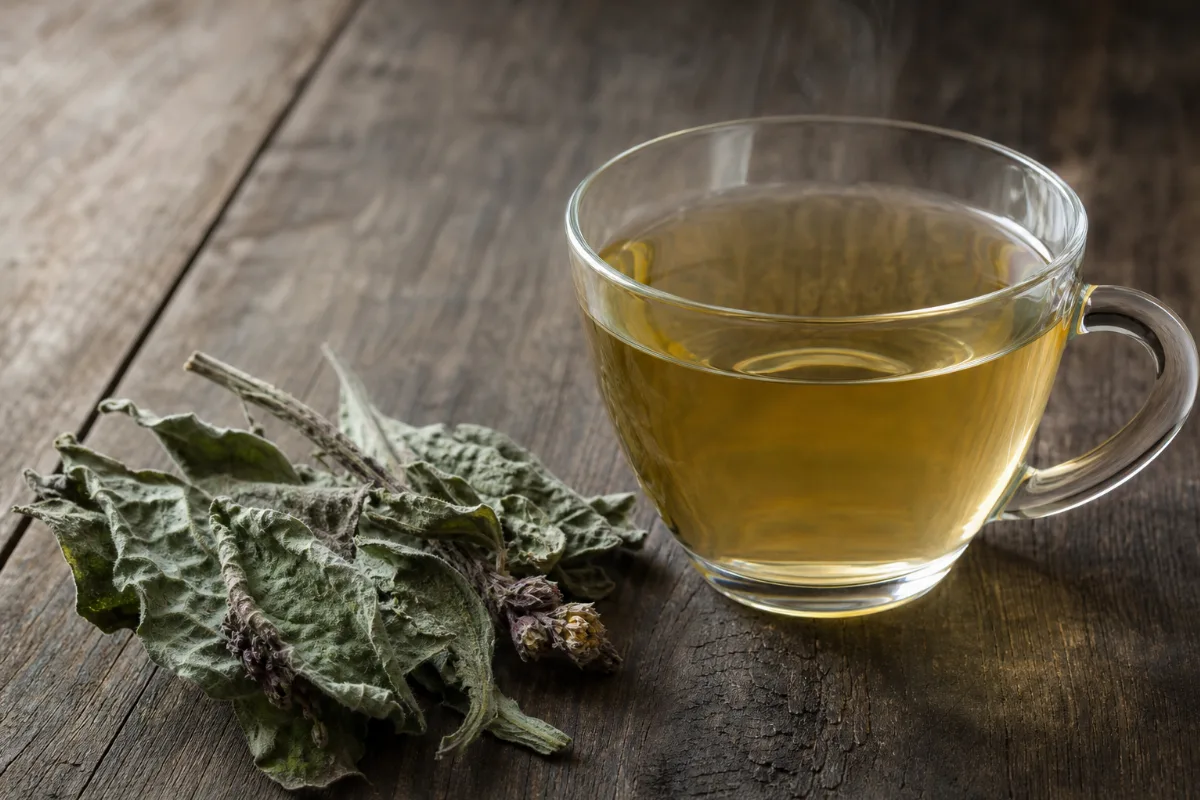
Herbal Teas & Extracts · Herbal tea (dangerous)
Comfrey and Coltsfoot Teas
Symphytum officinale L. (comfrey) and Tussilago farfara L. (coltsfoot) · also called Comfrey tea, coltsfoot tea, knitbone (comfrey); PA teas, pyrrolizidine alkaloid teas
Comfrey and coltsfoot are plants that contain pyrrolizidine alkaloids (PAs), natural chemicals that can damage the liver. Case reports link PA teas and swallowed comfrey to blocked liver veins and some deaths. The US FDA called comfrey supplements a serious hazard, and European regulators set tiny limits for PAs. No human trial shows any benefit from drinking either tea. This page puts the danger first.
General information, not medical advice. Last substantive update · Not medically reviewed. A named clinician has not signed off on this page. How this page is made
About Comfrey and Coltsfoot Teas
Comfrey (Symphytum officinale) and coltsfoot (Tussilago farfara) are traditional herbal tea plants that contain pyrrolizidine alkaloids, which the liver turns into chemicals that damage liver veins and DNA. Case reports link PA teas and swallowed comfrey to liver veno-occlusive disease and some deaths; rats fed coltsfoot flowers developed liver tumours. The FDA warns against swallowed comfrey, and EU, German and EFSA documents set tiny limits and flag long-term use. No human trial shows any benefit from either tea. Pregnant and breastfeeding women and children are named as at risk.
What regulators say
FDA (2001): comfrey and other PA sources in supplements are a serious health hazard when swallowed, and it recommended removing them from the market. The EU herbal committee accepts comfrey root only as a skin product for adults on unbroken skin, for no more than 10 days.
EMA (2014): PA exposure should be as low as practically achievable; for short-term medicines the limit is 0.35 micrograms a day for an adult for at most 14 days. The German BfR (2013) found 0 to 3.4 mg of PAs per kg in 221 teas, judged short-term intake improbable to harm but long-term heavy use of high-PA teas a risk, especially for children, pregnant and breastfeeding women, and describes German medicine limits. EFSA (2017) saw a possible concern for frequent and high consumers of herbal infusions. EU food-law maximum levels were not read for this page.
Pregnancy, breastfeeding and children
The EMA names children, pregnant women and breastfeeding women as sensitive to PAs and cites a fatal fetal liver case linked to a mother's daily PA intake. An 18-month-old boy had veno-occlusive disease from a tea made with a coltsfoot look-alike and recovered after it was stopped. The EU comfrey monograph says use in pregnancy, breastfeeding and under 18 is not recommended.
Comfrey cream is a different use
Comfrey creams and ointments on the skin have been tested in trials for knee osteoarthritis, back pain, ankle sprain and scrapes. Lab skin tests suggest little alkaloid crosses the skin, but no human blood-level study exists. Most trials come from one product family. The EU limits skin use to unbroken skin, adults and 10 days. None of this applies to drinking the tea.
What the plants are
Comfrey is a leafy plant of the borage family with a thick root. Coltsfoot is a daisy-family plant whose flower buds are used in Chinese medicine as Kuandonghua. Both make PAs, as do borage and butterbur. Allantoin and rosmarinic acid in comfrey root are discussed in lab work for skin products; for coltsfoot, tussilagone and caffeoylquinic acids are studied in the lab and in mice.
At a glance
Traditional uses history, not proof
- Comfrey was used as a tea, vegetable and remedy, and on the skin for wounds, sprains and broken bones ("knitbone"), according to reviews.
- Coltsfoot was taken for coughs, bronchitis and asthma in European and Chinese medicine; the dried flower bud is Kuandonghua (reviews).
- These are traditional uses, not tested uses. Regulators now advise against swallowing comfrey.
Studied for research
- Any benefit from drinking either tea: no human trial, insufficient
- Comfrey ointment on the skin for knee osteoarthritis pain (a different use), moderate
- Comfrey on the skin for back pain and ankle sprain (a different use), low
- Comfrey cream on scrapes and bruises (a different use), low
- Coltsfoot for cough: traditional use and mouse studies only, insufficient
Main compounds
- Pyrrolizidine alkaloids, the cause of the liver risk: lycopsamine and intermedine (comfrey), senkirkine and a trace of senecionine (coltsfoot)
- Allantoin and rosmarinic acid in comfrey root, discussed for skin products
- Tussilagone and caffeoylquinic acids in coltsfoot flower bud, studied in the lab
Common forms
- Tea bags and loose-leaf teas of the leaf or flower
- Capsules, powders and juices of the plants
- Skin creams and ointments of comfrey (a separate, limited use)
- Herbal tea mixtures where a PA plant may be an unlisted ingredient
Research links: FDA letter on comfrey supplements, 2001 (archived copy) · EMA public statement on PAs, 2014 · BfR opinion on PAs in herbal teas, 2013 · EFSA opinion on PAs in honey, tea and herbal infusions, 2017 (abstract) · Herbal tea veno-occlusive disease case series, 1985 (abstract) · Review of comfrey, coltsfoot and borage case reports, 2020 (abstract) · Research Library · Genes & Biomarkers Library
What it is and its history
- Accepted scientific name
- Symphytum officinale L. (comfrey) and Tussilago farfara L. (coltsfoot)
- Naming authority
- Comfrey: Boraginaceae (GBIF key 7558421, accepted). Coltsfoot: Asteraceae (GBIF key 3149879, accepted).
- Synonyms
- Not listed in the GBIF match read; not verified.
- Common names
- Comfrey; common comfrey; boneset; knitbone (folk name) (English); Grande consoude; consoude officinale (French); Beinwell; Arznei-Beinwell (German); Consuelda mayor (Spanish); Coltsfoot; Kuandonghua (flower bud, Chinese) (English; Chinese (pinyin))
- Family or group
- Comfrey: Boraginaceae (borage family). Coltsfoot: Asteraceae (daisy family). Both make pyrrolizidine alkaloids, as do borage and butterbur.
- Classification
- Plantae > Tracheophyta > Magnoliopsida > Boraginales > Boraginaceae > Symphytum > Symphytum officinale
- Native range
- Not verified from a primary botanical source in this file.
- Habitat
- Not verified from a primary source.
- What it looks like
- Roots: Root is the traditional medicinal part in the EU monograph (comfrey root, Symphyti radix).; Stems: Not verified.; Leaves: Leaves are used in herb creams (aerial parts) and in teas.; Flowers: Flowers contain PAs; a rat study tested flower extracts.; Fruit: Not verified.
- Cultivation
- Not verified. Trial herb creams used fresh cultivated Symphytum x uplandicum (Russian comfrey).
- Harvest and processing
- The EU preparation is a liquid extract made with 65% ethanol (2:1). The Czech trial cream used a 2.5:1 aqueous-ethanol pressed concentrate of fresh herb.
- Look-alikes and adulterants
- Name: Adenostyles alliariae (Alpendost); Note: A different plant easily confused with coltsfoot after flowering; gathered by mistake for an infant's tea that contained seneciphylline-type PAs. GBIF lists Adenostyles alliariae (Gouan) A.Kern. as an accepted name.; Name: Butterbur (Petasites species); Note: A different daisy-family genus with its own PAs and its own page; coltsfoot and butterbur are not the same plant or product.
- Sustainability and conservation
- Not verified.
Photographs
Traditional use and history history, not clinical proof
| Tradition or era | Documented use | Source |
|---|---|---|
| Traditional European use | Comfrey was used on wounds and bones and as a tea or vegetable; coltsfoot as a cough remedy and in Chinese medicine the dried flower bud (Kuandonghua) for cough and bronchitis. Reviews describe this as long traditional use, not tested use. | p33069788 |
| 1985-1990 | Case reports of liver veno-occlusive disease after swallowed comfrey and after a PA-containing herbal tea. | p3965360 |
| 1992 (Germany) | Limits on PAs in medicines, as described in the BfR 2013 opinion; including 10 micrograms a day for coltsfoot leaf as an infusion. | s-bfr-pa-teas-2013 |
| 2001 | US FDA letter advising makers to remove comfrey supplements from the market. | s-fda-comfrey-letter-2001 |
| 2013-2017 | BfR opinion on PAs in teas (2013), EMA public statement on PAs (2014) and EFSA opinion (2017). | s-ema-hmpc-pa-statement-2014 |
Traditional use shows how it was used. It does not show that it works or is safe today.
What is inside, and how it may work
What it contains and how those compounds act in cells and animals. Laboratory and animal mechanisms are not proven effects in people.
Main compounds
| Compound | Family | Where it is concentrated | Activity studied | Level of evidence |
|---|---|---|---|---|
| Allantoin PubChem 204 | purine-derived compound (ureide) | Root | Discussed with rosmarinic acid as a pharmacologically active principle of comfrey root (Benedek 2010). A 2026 review attributes anti-inflammatory and tissue-repair effects to it; not shown in people. 6 35 39 | Laboratory research |
| Lycopsamine and intermedine PubChem 107938 | pyrrolizidine alkaloids (monoesters) | Root, leaf Total PA 0.07% in one Polish commercial root sample (Brauchli 1982) | Toxic to the liver after being changed by liver enzymes; major comfrey PAs. The crude alkaloid extract was more toxic than purified lycopsamine or intermedine in chicks. 8 9 39 | Animal research |
| Tussilagone PubChem 13919185 | sesquiterpene | flower bud | A characteristic bud compound; broken down partly by CYP3A4 in test-tube work. 54 40 | Laboratory research |
| Senkirkine PubChem 5281752 | pyrrolizidine alkaloid (otonecine type) | flower bud and flowers; more in stalk and rhizome impurities | Liver-toxic; blamed for liver tumours in rats. 23 25 33 40 | Animal research |
| Senecionine PubChem 5280906 | pyrrolizidine alkaloid | trace amounts | Liver-toxic PA found as a trace in coltsfoot. 25 12 40 | Laboratory research |
Mechanisms, receptors and pathways
| Target or pathway | Gene or receptor | What was found | Level |
|---|---|---|---|
| Liver activation of PAs to DNA-damaging pyrroles | Liver cytochrome enzymes (microsomal); DNA | PAs are changed by liver enzymes into reactive chemicals that bind DNA (DHP-derived adducts) in liver cells; comfrey and the PA riddelliine gave similar adduct patterns and mutations. 37 49 36 | Animal research |
| PA metabolic activation (toxicity) | liver cytochrome P450 enzymes | PAs are activated in the liver into reactive pyrrole compounds that bind proteins and DNA and injure liver vessel lining cells. 22 52 | Human data |
Absorption, metabolism and elimination
- Absorption
- No human blood-level data for tea. A 2017 paper abstract describes oral absorption of PAs as good. For comfrey on skin, human skin tests suggest little crosses (see the comfrey skin studies); that does not apply to tea.
- Distribution
- Not studied in people.
- Metabolism
- PAs are changed by liver enzymes into reactive pyrroles. On human skin, microbes (ex vivo, ten donors) broke PA derivatives into deacetylated and de-esterified forms without forming free alkaloids.
- Elimination
- In rats, PA N-oxides were excreted in urine within 2 days. Not studied in people.
- Bioavailability
- Oral bioavailability of PAs is described as good in a 2017 paper abstract (confirmed good absorption from the gut); no human figure was found.
Isolated compounds versus whole extracts
In chicks, a crude comfrey alkaloid extract was more toxic than purified lycopsamine or intermedine, so limits based on single compounds may understate the toxicity of the whole plant. A PA-free root extract used in some skin products is not the same as raw comfrey or tea.
Nutritional composition
Neither tea is a source of nutrients worth noting. The concern is the alkaloids, not nutrition.
1 moderate certainty5 low certainty3 not enough evidence
What was looked at
The 9 benefits and uses checked for Comfrey and Coltsfoot Teas, each with how strong the evidence is. Tap one to open it.
- Any health benefit from drinking comfrey or coltsfoot teaNot enough evidence
- Knee osteoarthritis: comfrey root extract ointment (Kytta-Salbe f)Moderate certainty
- Acute back pain: comfrey root extract ointment (Kytta-Salbe f)Low certainty
- Ankle sprain: comfrey root extract ointment versus placeboLow certainty
- Fresh scrapes and abrasions: comfrey herb cream, 10% versus 1%Low certainty
- Children's scrapes: comfrey herb cream, 10% versus 1%Low certainty
- Bruises from enoxaparin (blood-thinner) injections: comfrey ointmentLow certainty
- Coughs and sore throat: coltsfoot, traditional use onlyNot enough evidence
- Cough and phlegm in miceNot enough evidence
Lab markers tracked in the studies
Pain score (visual scale and WOMAC pain)Ankle swelling (figure-of-eight measurement)Time to heal a scrapeBruise size and colour
What is Comfrey and Coltsfoot Teas good for?
The uses people ask about and how strong the human evidence is for each. Read this with the safety section: nothing here makes the teas safe.
Benefits, one by one
Each card is a research question, not a promise. Tap a goal to filter. Open a card to see the studies, doses and limits.
Any health benefit from drinking comfrey or coltsfoot tea
Not enough evidenceNo human trial of comfrey tea or coltsfoot tea for any condition was found. Regulators advise against swallowing comfrey, and the only human reports of the teas or similar pyrrolizidine teas are cases of liver harm.
3 studiesNot covered. No safe amount of comfrey or coltsfoot tea has been esta…
Studies, doses and limits
What the trials found
We found no controlled trial, cohort or even a case series reporting a benefit from comfrey or coltsfoot tea. Our searches returned only toxicology, lab analysis and case reports of harm.
Results
Nothing to report. The US FDA (2001) advises that comfrey in swallowed supplements is a serious hazard, and the EU herbal committee accepts comfrey root only as a skin product.
Why this rating
No human evidence of benefit exists. Absence of trials is not proof of safety: the safety evidence points the other way.
Form and dose studied
Not covered. No safe amount of comfrey or coltsfoot tea has been established by the sources read.
Limits
Whatever a tea might do, it carries unmeasured pyrrolizidine alkaloid content.
Why researchers looked
Comfrey and coltsfoot have a long folk history as drinks and remedies, so people ask whether the tea does anything.
Traditional use
Comfrey was long used as a tea, vegetable and remedy; coltsfoot leaf and flower were taken as a tea or smoked for coughs. Reviews describe this as traditional use, not tested use.
Proposed mechanism Preliminary mechanism
None shown. The plants also contain pyrrolizidine alkaloids, which the liver turns into reactive chemicals that damage liver cells and DNA.
A proposed mechanism does not show that the effect happens in people.
See the Safety tab first. Do not swallow comfrey. Ask a doctor or pharmacist before using coltsfoot.
Knee osteoarthritis: comfrey root extract ointment (Kytta-Salbe f)
Moderate certaintySkin use, not tea: One 3-week trial of 220 people found a comfrey root ointment cut knee pain far more than a placebo ointment. The Cochrane review rates this as moderate-certainty evidence, but it rests on one trial.
3 studiesComfrey root extract ointment on the knee in a 3-week trial (skin use…
Studies, doses and limits
What the trials found
Grube 2007: 220 adults with painful knee osteoarthritis (average age 57.9, complaints for 6.5 years on average) used comfrey root extract ointment or placebo on the knee for 3 weeks. The Cochrane review of topical herbs for osteoarthritis (Cameron 2013) found this single comfrey trial and rated it moderate quality.
Results
Pain on a 100 mm scale fell 51.6 mm (54.7%) with comfrey and 10.1 mm (10.7%) with placebo. WOMAC total fell 58.0% against 14.1%. Quality of life, knee movement and global ratings also favoured comfrey. Adverse events in the Cochrane summary: 6% with comfrey and 14% with placebo.
Effect sizes as reported
Pain difference 41.5 mm (95% CI 34.8 to 48.2); WOMAC difference 45.7 mm (95% CI 37.1 to 54.3). Cochrane: mean difference -41.5 (95% CI -48 to -34); adverse events RR 0.47 (95% CI 0.20 to 1.10).
Why this rating
The Cochrane review rated the evidence moderate. It is a single trial, only 3 weeks long, and the author list is linked to the maker of the product (Merck Selbstmedikation GmbH).
Form and dose studied
Comfrey root extract ointment on the knee in a 3-week trial (skin use only; amounts are not given here). A separate paper describes this product's extract as PA-free. Raw comfrey and comfrey tea are not the same thing.
Who was studied
Adults with painful knee osteoarthritis.
Limits
One trial; short; industry-linked; no long-term follow-up.
Why researchers looked
Knee osteoarthritis causes long-term pain and stiffness, and people look for creams with fewer side effects than painkiller pills.
Traditional use
Comfrey has been used on the skin for sprains, bruises, sore joints and broken bones ("knitbone") in Europe for a very long time. The EU lists comfrey root ointment as a traditional medicine for minor sprains and bruises.
Proposed mechanism Preliminary mechanism
Lab and animal work suggests comfrey root compounds such as allantoin and rosmarinic acid have anti-inflammatory and tissue-repair effects (for example on NF-kappa B and MAPK signalling), but no study shows how comfrey works in people.
A proposed mechanism does not show that the effect happens in people.
Comfrey must not be swallowed and has strict skin-use limits (not on broken skin, short courses only). See the safety section.
Acute back pain: comfrey root extract ointment (Kytta-Salbe f)
Low certaintySkin use, not tea: One 5-day trial of 120 people found a comfrey root ointment reduced pain on movement far more than a placebo ointment. The Cochrane back-pain review rates it low-quality evidence for short-term pain.
3 studiesComfrey root extract ointment on the skin for 5 days in a trial (skin…
Studies, doses and limits
What the trials found
Giannetti 2010: 120 adults (average age 36.9) with acute upper or lower back pain used comfrey root extract ointment or placebo on the skin for 5 days. Cochrane reviews of herbal medicine for low-back pain (Oltean 2014; Gagnier 2016) counted this trial and rated the evidence low quality.
Results
Pain on standardised movement fell by about 95.2% (median) with comfrey and 37.8% with placebo, with consistent results on the secondary measures, and an effect reported after 1 hour. The Cochrane review found no significant adverse events in the herbal back-pain trials.
Effect sizes as reported
Group difference was significant; no confidence interval in the abstract.
Why this rating
Cochrane graded it low quality (one trial, 120 people, 5 days). The result is large, but one industry-linked trial is not enough for more.
Form and dose studied
Comfrey root extract ointment on the skin for 5 days in a trial (skin use only; amounts are not given here).
Who was studied
Adults with acute back pain, average age about 37.
Limits
Single, short trial; no long follow-up; industry-linked.
Why researchers looked
Sudden back pain is common and short courses of rubs are widely used.
Traditional use
Comfrey has been used on the skin for sprains, bruises, sore joints and broken bones ("knitbone") in Europe for a very long time. The EU lists comfrey root ointment as a traditional medicine for minor sprains and bruises.
Proposed mechanism Preliminary mechanism
Lab and animal work suggests comfrey root compounds such as allantoin and rosmarinic acid have anti-inflammatory and tissue-repair effects (for example on NF-kappa B and MAPK signalling), but no study shows how comfrey works in people.
A proposed mechanism does not show that the effect happens in people.
Comfrey must not be swallowed and has strict skin-use limits (not on broken skin, short courses only). See the safety section.
Ankle sprain: comfrey root extract ointment versus placebo
Low certaintySkin use, not tea: In an 8-day trial of 142 people with sprained ankles, a comfrey root ointment beat placebo for pain on pressure and swelling.
1 studiesComfrey root extract ointment on the skin for 8 days in a trial (skin…
Studies, doses and limits
What the trials found
Koll 2004: 142 adults (average age 31.8, 78.9% men) with an acute one-sided ankle sprain used Kytta-Salbe f comfrey root ointment or placebo on the skin for 8 days.
Results
Comfrey was better than placebo for pain on pressure (p < 0.0001) and ankle swelling (p = 0.0001). Ankle mobility and global ratings also favoured comfrey. No adverse drug reactions were reported on comfrey.
Effect sizes as reported
p-values only in the abstract.
Why this rating
One placebo-controlled trial, short, industry-linked (first author with Merck Selbstmedikation GmbH); no effect sizes in the abstract.
Form and dose studied
Comfrey root extract ointment on the skin for 8 days in a trial (skin use only; amounts are not given here).
Who was studied
Adults with acute ankle sprain; mostly men.
Limits
Single trial; short.
Why researchers looked
Sprains are common sports and everyday injuries, and the EU listing for comfrey root is for minor sprains and bruises.
Traditional use
Comfrey has been used on the skin for sprains, bruises, sore joints and broken bones ("knitbone") in Europe for a very long time. The EU lists comfrey root ointment as a traditional medicine for minor sprains and bruises.
Proposed mechanism Preliminary mechanism
Lab and animal work suggests comfrey root compounds such as allantoin and rosmarinic acid have anti-inflammatory and tissue-repair effects (for example on NF-kappa B and MAPK signalling), but no study shows how comfrey works in people.
A proposed mechanism does not show that the effect happens in people.
Comfrey must not be swallowed and has strict skin-use limits (not on broken skin, short courses only). See the safety section.
Fresh scrapes and abrasions: comfrey herb cream, 10% versus 1%
Low certaintySkin use, not tea: In a trial of 278 people with fresh scrapes, a 10% comfrey herb cream healed wounds about 3 days sooner than a 1% version of the same cream. It is not a placebo comparison, and the EU advises against putting comfrey root products on broken skin.
4 studiesComfrey herb cream (10% concentrate), amount not stated in the abstra…
Studies, doses and limits
What the trials found
Barna 2007 (article in German, abstract read): 278 patients with fresh abrasions (64 aged up to 20) used Traumaplant cream (10% concentrate from comfrey aerial parts, Symphytum x uplandicum, n=137) or the same cream at 1% (n=141); 10-day follow-up.
Results
Wound size fell by 49 +/- 19% per day with the 10% cream and 29 +/- 13% per day with the 1% cream. Time to complete healing was estimated at 4.08 against 7.05 days (2.97 days faster). Physicians rated efficacy good to very good in 93.4% against 61.7%. No skin reactions or adverse effects were reported.
Effect sizes as reported
Healing 2.97 days faster (4.08 vs 7.05 days); no confidence interval in the abstract.
Why this rating
Comparison against a weak cream rather than placebo; one research group; no independent replication; the trial treated broken skin, which the EU monograph for comfrey root says not to do. A 2023 review of paediatric skin studies also says comfrey appears to help wounds but many studies were low quality.
Form and dose studied
Comfrey herb cream (10% concentrate), amount not stated in the abstract (trial form only). Not the same as comfrey root ointments.
Who was studied
People with fresh abrasions.
Limits
Not placebo-controlled; broken skin; PA content not stated.
Why researchers looked
Comfrey has a long history on wounds.
Traditional use
Used on wounds and bruises across Europe for centuries.
Proposed mechanism Preliminary mechanism
Lab and animal work suggests allantoin and plant phenolics may speed cell repair, but this is not shown in people.
A proposed mechanism does not show that the effect happens in people.
Broken skin is where the EU advises against comfrey root products, and the 2001 FTC injunction cited by FDA covered marketing comfrey for open wounds. Ask a doctor or pharmacist before putting any comfrey product on a wound.
Children's scrapes: comfrey herb cream, 10% versus 1%
Low certaintySkin use, not tea: In 108 children aged 3 to 12 with fresh scrapes, a 10% comfrey herb cream healed faster than a 1% version. The EU does not recommend comfrey root products under 18.
3 studiesComfrey herb cream (10% concentrate) (trial form only).
Studies, doses and limits
What the trials found
Barna 2012: 108 children aged 3 to 12 (54 per group) with fresh abrasions used Traumaplant cream (10% concentrate from comfrey aerial parts, Symphytum x uplandicum) or the same cream at 1%.
Results
50% healing came 0.9 days sooner with the 10% cream. Healing rate 0.38 +/- 0.18 per day with 10% against 0.26 +/- 0.14 per day with 1% (p = 0.0002). Physicians rated efficacy good or very good in 90.7% and 92.6% (at 2-3 and 7-9 days) against 55.6% and 74.0%. No adverse effects or irritation were reported.
Effect sizes as reported
Rate 0.38 vs 0.26 per day; 95% CI for rate 0.33 to 0.4 and 0.222 to 0.297.
Why this rating
Dose comparison against a weak cream, not placebo; one research group; funding not stated.
Form and dose studied
Comfrey herb cream (10% concentrate) (trial form only).
Who was studied
Children aged 3 to 12.
Limits
Not placebo-controlled; PAs not measured; the EU says safety in under-18s is not established.
Why researchers looked
Children get many scrapes, and parents look for gentle remedies.
Traditional use
Used on wounds and bruises for centuries.
Proposed mechanism Preliminary mechanism
Lab and animal work only; see the adult wound entry.
A proposed mechanism does not show that the effect happens in people.
The EU monograph says use under 18 is not recommended and not to use on broken skin. Do not use comfrey on a child without asking a doctor.
Bruises from enoxaparin (blood-thinner) injections: comfrey ointment
Low certaintySkin use, not tea: In 80 heart patients, a comfrey ointment on injection-site bruises made them smaller and fade sooner than a placebo ointment. The abstract gives no numbers.
2 studiesComfrey ointment (strength and plant part not stated).
Studies, doses and limits
What the trials found
Bagheri 2021: 80 patients with acute coronary syndrome were randomised to comfrey ointment or placebo for bruises from enoxaparin injections (40 per group); size and colour were recorded daily. Iran, one site.
Results
Bruises were smaller in the comfrey group on days 2 to 5, and bruise colour changed faster. Both groups improved over time.
Effect sizes as reported
Significant differences reported; no numbers in the abstract.
Why this rating
Small, one site, no numbers in the abstract, product and strength not stated.
Form and dose studied
Comfrey ointment (strength and plant part not stated).
Who was studied
Adults with acute coronary syndrome on enoxaparin.
Limits
Small; abstract only.
Why researchers looked
Blood-thinner injections often leave bruises.
Traditional use
Comfrey has been used on bruises for centuries (EU: minor sprains and bruises).
Proposed mechanism Preliminary mechanism
Lab and animal work suggests comfrey root compounds such as allantoin and rosmarinic acid have anti-inflammatory and tissue-repair effects (for example on NF-kappa B and MAPK signalling), but no study shows how comfrey works in people.
A proposed mechanism does not show that the effect happens in people.
Used on intact skin around injection sites. Patients on blood thinners should still ask their care team before using any skin product.
Coughs and sore throat: coltsfoot, traditional use only
Not enough evidencePeople have used coltsfoot leaf and flower bud for coughs for a very long time. No human trial of it was found, so we cannot say whether it works.
2 studiesNot covered: no human study of any form or amount was found.
Studies, doses and limits
What the trials found
The 2021 and 2020 reviews describe traditional use and lab and animal findings; neither reports a human trial in the abstract. Our PubMed searches for coltsfoot clinical trials returned no human trials.
Results
No human results exist in the sources read.
Why this rating
Traditional use plus animal data only. Nothing in people.
Form and dose studied
Not covered: no human study of any form or amount was found.
Limits
Absence of trials means unknown, not proven useless. Not safe to assume because it is natural.
Why researchers looked
It is one of the best-known traditional cough plants in Europe and in Chinese medicine, where the flower bud is called Kuandonghua.
Traditional use
Reviews say coltsfoot (and in China the dried flower buds) has long been used for coughs, bronchitis and asthma, and in some places eaten as a vegetable.
Proposed mechanism Pharmacological theory
The leaf and bud contain a pectin-type polysaccharide (a gummy fibre), caffeoylquinic acids and a compound called tussilagone. Whether any of these soothes a cough in people has not been tested.
A proposed mechanism does not show that the effect happens in people.
Coltsfoot can contain liver-toxic pyrrolizidine alkaloids (PAs). See the Safety tab first: this use should not be tried without a doctor's advice.
Cough and phlegm in mice
Not enough evidenceIn mice, extracts or isolated compounds from the flower bud reduced induced coughing and increased airway fluid. This is an early lab clue and not proof for people.
2 studiesMouse experiments with isolated compounds or lab extracts; they canno…
Studies, doses and limits
What the trials found
No human data. Two mouse studies: one with four isolated caffeoylquinic acids and one with water extracts of flower bud versus flower stalk.
Results
The mixture of four caffeoylquinic acids cut ammonia-induced cough frequency by 61.7%; the best single compound cut it by 58.0%. Expectorant sign (phenol red output) rose up to 35.7% with the best single compound. In the second study the flower bud extract worked and the stalk (rachis) did not.
Effect sizes as reported
Cough frequency down 61.7% (mixture) and 58.0% (4,5-dicaffeoylquinic acid) vs control in mice.
Why this rating
Animal evidence only; mouse cough models do not predict human results.
Form and dose studied
Mouse experiments with isolated compounds or lab extracts; they cannot be compared with a tea.
Who was studied
Mice only.
Limits
Short 3-day mouse tests; no human test. Plant part matters: the stalk was inactive and counts as an adulterant.
Why researchers looked
Researchers tested the flower bud in mice to see which parts of the plant explain the traditional cough use.
Traditional use
Matches the traditional cough use of the flower bud.
Proposed mechanism Animal research
Caffeoylquinic acids from the flower bud acted together; the mixture worked better than any single one in mice.
A proposed mechanism does not show that the effect happens in people.
Coltsfoot can contain liver-toxic pyrrolizidine alkaloids (PAs). See the Safety tab first: this use should not be tried without a doctor's advice.
Connections to the rest of health
How Comfrey and Coltsfoot Teas connects to the rest of our health knowledge graph. Every link says what kind of connection it is. A safety link (for example to the liver) is a warning, not a benefit. A study that merely mentions a topic never creates a benefit link.
Explore every connection: goals, body systems, organs, symptoms, genes
A. Wellness goals
| Connected to | Kind of connection | Evidence status | Context | Studies |
|---|---|---|---|---|
| Joint Support | Demonstrated clinical effect | Moderate certainty | Knee osteoarthritis: comfrey root extract ointment (Kytta-Salbe f): Skin use, not tea: One 3-week trial of 220 people found a comfrey root ointment cut knee pain far more than a placebo ointment. The Cochrane review rates this as moderate-certainty evidence, but it rests on one trial. | 21 10 15 |
| Muscle Recovery | Potential benefit | Low certainty | Acute back pain: comfrey root extract ointment (Kytta-Salbe f): Skin use, not tea: One 5-day trial of 120 people found a comfrey root ointment reduced pain on movement far more than a placebo ointment. The Cochrane back-pain review rates it low-quality evidence for short-term pain. Ankle sprain: comfrey root extract ointment versus placebo: Skin use, not tea: In an 8-day trial of 142 people with sprained ankles, a comfrey root ointment beat placebo for pain on pressure and swelling. | 20 42 18 27 |
| Joint Support | Potential benefit | Low certainty | Acute back pain: comfrey root extract ointment (Kytta-Salbe f): Skin use, not tea: One 5-day trial of 120 people found a comfrey root ointment reduced pain on movement far more than a placebo ointment. The Cochrane back-pain review rates it low-quality evidence for short-term pain. Ankle sprain: comfrey root extract ointment versus placebo: Skin use, not tea: In an 8-day trial of 142 people with sprained ankles, a comfrey root ointment beat placebo for pain on pressure and swelling. | 20 42 18 27 |
| Healthy Skin | Potential benefit | Low certainty | Fresh scrapes and abrasions: comfrey herb cream, 10% versus 1%: Skin use, not tea: In a trial of 278 people with fresh scrapes, a 10% comfrey herb cream healed wounds about 3 days sooner than a 1% version of the same cream. It is not a placebo comparison, and the EU advises against putting comfrey root products on broken skin. Children's scrapes: comfrey herb cream, 10% versus 1%: Skin use, not tea: In 108 children aged 3 to 12 with fresh scrapes, a 10% comfrey herb cream healed faster than a 1% version. The EU does not recommend comfrey root products under 18. | 4 26 15 50 5 3 |
B. Body systems
| Connected to | Kind of connection | Evidence status | Context | Studies |
|---|---|---|---|---|
| Digestive System | Biological association | Not enough evidence | Studied for: Any health benefit from drinking comfrey or coltsfoot tea | 50 15 2 |
| Musculoskeletal System | Biological association | Moderate certainty | Studied for: Knee osteoarthritis: comfrey root extract ointment (Kytta-Salbe f) Studied for: Acute back pain: comfrey root extract ointment (Kytta-Salbe f) | 21 10 15 20 42 18 27 |
| Integumentary System | Biological association | Low certainty | Studied for: Fresh scrapes and abrasions: comfrey herb cream, 10% versus 1% Studied for: Children's scrapes: comfrey herb cream, 10% versus 1% | 4 26 15 50 5 3 |
| Respiratory System | Biological association | Not enough evidence | Studied for: Coughs and sore throat: coltsfoot, traditional use only Studied for: Cough and phlegm in mice | 11 34 51 32 |
C. Body parts and organs
| Connected to | Kind of connection | Evidence status | Context | Studies |
|---|---|---|---|---|
| Liver | Adverse effect or risk | Low certainty | Veno-occlusive disease in case reports after comfrey and PA teas; supported by animal toxicology and regulators. Veno-occlusive disease in case reports after comfrey and PA teas; supported by animal toxicology and regulator statements. Preparation or compound: Comfrey and coltsfoot teas; pyrrolizidine alkaloids |
53 31 50 |
I. Biomarkers
| Connected to | Kind of connection | Evidence status | Context | Studies |
|---|---|---|---|---|
| Pain score (visual scale and WOMAC pain) | Biological association | Low certainty | Measured in trials: lowered. A lab change is not the same as a health benefit. | 21 47 20 29 |
| Ankle swelling (figure-of-eight measurement) | Biological association | Low certainty | Measured in trials: lowered. A lab change is not the same as a health benefit. | 27 28 |
| Time to heal a scrape | Biological association | Low certainty | Measured in trials: lowered. A lab change is not the same as a health benefit. | 4 5 |
| Bruise size and colour | Biological association | Low certainty | Measured in trials: lowered. A lab change is not the same as a health benefit. | 3 |
K. Biological pathways
L. Active compounds
| Connected to | Kind of connection | Evidence status | Context | Studies |
|---|---|---|---|---|
| Allantoin | Biological association | In vitro | Discussed with rosmarinic acid as a pharmacologically active principle of comfrey root (Benedek 2010). A 2026 review attributes anti-inflammatory and tissue-repair effects to it; not shown in people. Preparation or compound: Root |
6 35 39 |
| Lycopsamine and intermedine | Biological association | Animal | Toxic to the liver after being changed by liver enzymes; major comfrey PAs. The crude alkaloid extract was more toxic than purified lycopsamine or intermedine in chicks. Preparation or compound: Root, leaf |
8 9 39 |
| Tussilagone | Biological association | In vitro | A characteristic bud compound; broken down partly by CYP3A4 in test-tube work. Preparation or compound: flower bud |
54 40 |
| Senkirkine | Biological association | Animal | Liver-toxic; blamed for liver tumours in rats. Preparation or compound: flower bud and flowers; more in stalk and rhizome impurities |
23 25 33 40 |
| Senecionine | Biological association | In vitro | Liver-toxic PA found as a trace in coltsfoot. Preparation or compound: trace amounts |
25 12 40 |
Each connection is stored with the ingredient, the connected record, the kind of connection, the evidence status, the supporting studies, the preparation or compound involved, and a review date (last reviewed October 25, 2026).
Evidence at a glance: what changed in 4 lab markers
Tap a number to show only those markers. Counts are markers, not people.
The evidence
The research centre for Comfrey and Coltsfoot Teas. Every record here was checked against PubMed or the publisher's page; we never list a study we have not verified.
Evidence by outcome
Bars show how many studies we found for each outcome, not how well it works. People are added up across trials only (reviews are not added, to avoid double counting).
How we rate evidence
High certainty
Several well-run trials or reviews agree; further research is unlikely to change the picture much.
Moderate certainty
Good trials point the same way, but some doubt remains.
Low certainty
Small, short or inconsistent trials. The finding could change with better research.
Very low certainty
Very little or very weak human data. Treat as a possibility only.
Mixed findings
Trials or reviews disagree with each other.
Not enough evidence
Not enough human research to say either way.
Evidence against
Good research found no benefit, or found harm.
We take the reviewers' own risk-of-bias and GRADE statements where they exist, and otherwise judge from study size, design, consistency, directness and whether a product matches what is sold. Many publications do not make evidence high. Method note: We read the FDA 2001 comfrey letter (archived copy), the EMA public statement on pyrrolizidine alkaloids, the EU comfrey root monograph and the German BfR opinion on PAs in teas in full, and looked up each cited study in PubMed and read its abstract. Certainty ratings are ours, using plain categories.
Study library: every study we checked 54
| Study | Design | People | Product, dose, length | Result |
|---|---|---|---|---|
| Altamirano 2005 Investigation of pyrrolizidine alkaloids and their N-oxides in commercial comfrey-containing products and botanical materials by liquid chromatography electrospray ionization mass spectrometry. J AOAC Int · PMID 15859063 |
Laboratory analysis of products in-vitro |
Ten herbal remedies and botanical materials | Commercial comfrey-containing products various |
All products labelled as containing comfrey had measurable PAs. The paper notes PAs may cause acute liver failure, cirrhosis, lung disease, and are carcinogenic in animals. Every comfrey-labelled product tested contained PAs Methods, limits and fundingOutcomes: Presence of PAs and N-oxides Limitations: Ten products tested in the US around 2005; may not reflect today. Funding and conflicts: Authors work at the US FDA. Read: abstract |
| Avila 2020 A systematic review and quality assessment of case reports of adverse events for borage (Borago officinalis), coltsfoot (Tussilago farfara) and comfrey (Symphytum officinale). Fitoterapia · PMID 32105669 · DOI |
Systematic review |
11 case reports (none involved borage) about comfrey, coltsfoot or borage | Comfrey, coltsfoot and borage preparations unspecified |
Nine of 11 reports were assessed for causality and showed some degree of association between the herb and the harm. Poor identification of the species swallowed was a major source of uncertainty, with three levels of identity confusion: substitution of the whole herb, no proper botanical identification, and blaming one PA on comfrey or coltsfoot when other toxic plants also contain it. The authors conclude the cases are an unreliable base for judging the oral safety of comfrey and coltsfoot and suggest toxicology studies of whole preparations are more informative. Case reports of coltsfoot harm are weak evidence either way. Methods, limits and fundingOutcomes: Reliability of PA-related harm case reports Limitations: Funded by the UK National Institute of Medical Herbalists, a practitioner body (the authors say it had no role). The conclusion that case reports are unreliable does not mean the plant is safe: PA content and animal cancer data still stand. Abstract only read. Funding and conflicts: Funding by National Institute of Medical Herbalists (UK); authors declare no conflict Read: abstract |
| Bagheri 2021 The Effect of Comfrey on Enoxaparin-Induced Bruise in Patients with Acute Coronary Syndrome: A Randomised Clinical Trial. J Pharmacopuncture · PMID 35028171 · DOI |
Rct (double blind, placebo controlled) |
80 80 patients with acute coronary syndrome who developed bruises after enoxaparin injections |
Comfrey ointment (Symphytum officinale); strength and plant part not stated in the abstract not given here (skin product in a trial; not advice) · vs placebo ointment |
Bruise size was smaller in the comfrey group than the placebo group on days 2 to 5. Bruise colour differed significantly between groups, with a shorter healing course with comfrey. Comfrey ointment shortened bruise healing in this small trial Methods, limits and fundingOutcomes: Bruise size and colour recorded daily Limitations: Abstract gives no numbers. Small, one site. Product and PA content not stated. Applied to intact skin around injection sites. Funding and conflicts: Authors declared no conflict of interest. Read: abstract |
| Barna 2007 [Wound healing effects of a Symphytum herb extract cream (Symphytum x uplandicum NYMAN: ): results of a randomized, controlled double-blind study]. Wien Med Wochenschr · PMID 18157595 · DOI |
Rct (double blind, dose comparison) |
278 278 patients with fresh skin abrasions (64 aged up to 20) |
Traumaplant cream: 10% concentrate from the aerial parts of comfrey (Symphytum x uplandicum Nyman) herb (aerial parts) not given here (skin product in a trial; not advice) 10-day observation · vs the same cream at 1% (n=141); 10% group n=137 |
Wound size fell by 49 +/- 19% per day with the 10% cream and 29 +/- 13% with the 1% cream (p < 5x10^-21). Estimated time to complete healing was 4.08 days with 10% and 7.05 days with 1% (2.97 days faster). Physicians rated efficacy good to very good in 93.4% against 61.7%. No adverse effects or skin reactions were reported. Higher-strength cream healed fresh abrasions about 3 days sooner than the 1% version Methods, limits and fundingOutcomes: Wound size reduction in the first 2-3 days, time to full healing (from regression), physician and patient ratings Limitations: Compared with a 1% cream, not an inert placebo. The trial treated fresh broken skin, which the EU comfrey root monograph says not to do. P-values are extremely small and no confidence interval is given. Article is in German; abstract read. Funding and conflicts: Funding not stated in the abstract. Cream is a commercial product. Read: abstract |
| Barna 2012 Randomized double-blind study: wound-healing effects of a Symphytum herb extract cream (Symphytum×uplandicum Nyman) in children. Arzneimittelforschung · PMID 22549241 · DOI |
Rct (double blind, dose comparison) |
108 108 children aged 3 to 12 with fresh abrasions (54 per group) |
Traumaplant cream: 10% concentrate from the aerial parts of comfrey (Symphytum x uplandicum Nyman) herb (aerial parts) not given here (skin product in a trial; not advice) · vs the same cream at 1% |
50% healing was reached 0.9 days earlier with the 10% cream. Healing rate was 0.38 +/- 0.18 per day with 10% against 0.26 +/- 0.14 per day with 1% (p = 0.0002). Physicians rated efficacy good or very good in 90.7% and 92.6% (after 2-3 and 7-9 days) against 55.6% and 74.0%. No adverse effects or irritation were reported. Higher-strength cream healed children's abrasions faster than a 1% version (95% CI for rate 0.33 to 0.4 (10%) and 0.222 to 0.297 (1%)) Methods, limits and fundingOutcomes: Time to 50% healing, healing rate, physician and parent/child ratings Limitations: Compared with a 1% cream, not an inert placebo. The EU comfrey root monograph does not recommend use under 18 and says not to use on broken skin, so this trial used the herb in exactly the situations the EU advises against. Funding and conflicts: Funding not stated in the abstract. Read: abstract |
| Benedek 2010 Absence of mutagenic effects of a particular Symphytum officinale L. liquid extract in the bacterial reverse mutation assay. Phytother Res · PMID 19827020 · DOI |
In vitro mutation test (Ames test) in-vitro |
Salmonella typhimurium strains with and without liver enzymes | PA-free liquid extract of comfrey root used in Kytta-Salbe f and Kytta-Plasma f root lab assay · vs reference mutagens |
No biologically relevant rise in revertant colonies in any of the five strains, with or without liver enzymes. The PA-free extract was not mutagenic in this bacterial test Methods, limits and fundingOutcomes: Gene mutations in bacteria Limitations: Bacterial test only. It does not cover cancer in animals or people. Authors are from PhytoLab, which tests plant products. Funding and conflicts: Funding not stated in the abstract. The authors are from PhytoLab GmbH, and the extract tested is the one used in the Kytta products, so treat as industry-linked. Read: abstract |
| Betz 1994 Determination of pyrrolizidine alkaloids in commercial comfrey products (Symphytum sp.). J Pharm Sci · PMID 8071814 · DOI |
Laboratory analysis of products in-vitro |
11 11 comfrey-containing products bought in Washington, DC in May-June 1989 |
Commercial comfrey products root, leaf, mixtures |
Nine of 11 products had measurable PAs, from 0.1 to 400.0 ppm. Highest levels were in bulk comfrey root, then bulk leaf. Leaf mixed with other ingredients had the lowest levels. Comfrey products had very different PA levels Methods, limits and fundingOutcomes: PA content Limitations: Old (1989) market sample. Funding and conflicts: Authors work at the US FDA. Read: abstract |
| Brauchli 1982 Pyrrolizidine alkaloids from Symphytum officinale L. and their percutaneous absorption in rats. Experientia · PMID 7128756 · DOI |
Animal study (rats) animal |
Rats given a comfrey root extract on the skin or by mouth | Crude alcoholic extract of Polish comfrey root (total PA 0.07%), 194 mg PA N-oxides per kg body weight root 194 mg PA N-oxides/kg on the skin 2 days urine collection · vs oral dosing for comparison |
After skin application, 0.1 to 0.4% of the dose appeared in urine in 2 days. Oral dosing led to 20 to 50 times higher urinary excretion of N-oxides and free alkaloids. Little N-oxide was converted to free alkaloid. Skin absorption in rats was low compared with oral Methods, limits and fundingOutcomes: PA N-oxides in urine Limitations: Rat study from 1982; a very high dose; not a measure of safety in people. Funding and conflicts: Funding and conflicts of interest not stated in the abstract. Read: abstract |
| Brown 2016 The comparative toxicity of a reduced, crude comfrey (Symphytum officinale) alkaloid extract and the pure, comfrey-derived pyrrolizidine alkaloids, lycopsamine and intermedine in chicks (Gallus gallus domesticus). J Appl Toxicol · PMID 26177929 · DOI |
Animal study (chicks) animal |
Male chicks fed comfrey alkaloid extract or purified PAs for 10 days | Reduced crude comfrey alkaloid extract versus purified lycopsamine and intermedine whole plant extract daily doses of 0.04 to 1.04 mmol per kg for 10 days 10 days plus 7 days · vs purified PAs |
The crude extract was more toxic than the purified lycopsamine or intermedine. The authors say this suggests greater-than-additive toxicity and that safety limits based on purified compounds may underestimate comfrey's toxicity. Whole alkaloid extract more toxic than single PAs in chicks Methods, limits and fundingOutcomes: Clinical signs, blood tests and tissue damage Limitations: Chick study; oral doses. Funding and conflicts: US government laboratory; no conflict stated in the abstract. Read: abstract |
| Cameron 2013 Topical herbal therapies for treating osteoarthritis. Cochrane Database Syst Rev · PMID 23728701 · DOI |
Systematic review (Cochrane) |
785 Seven trials, 785 people, topical herbal products for osteoarthritis; one comfrey trial of 220 people with knee osteoarthritis |
Comfrey extract gel (as described by the review; the trial it covers is the 220-person Kytta-Salbe f trial) root not given here (skin product in a trial; not advice) 3 weeks · vs placebo |
The review rated the single comfrey trial as moderate-quality evidence. Pain at 3 weeks: placebo group 83.5 on a 100-point scale; comfrey reduced pain by a further 41.5 points. Function was not reported. Adverse events: 6% (7/110) with comfrey and 14% (15/110) with placebo. Overall the review says the quality and quantity of current studies are insufficient. Comfrey extract gel probably improves pain (moderate certainty, one trial) (Pain mean difference -41.5 (95% CI -48 to -34); adverse events RR 0.47 (95% CI 0.20 to 1.10)) Methods, limits and fundingOutcomes: Pain and function in osteoarthritis Limitations: Only one comfrey trial, with a high baseline pain level; the review calls for larger high-quality studies. Funding and conflicts: Conflict of interest statement: none known. Read: abstract |
| Chen 2021 A review of the ethnobotanical value, phytochemistry, pharmacology, toxicity and quality control of Tussilago farfara L. (coltsfoot) J Ethnopharmacol · PMID 33069788 · DOI |
Review |
Narrative review of traditional use, chemistry, lab and animal studies, toxicity and quality control | Coltsfoot (Tussilago farfara) leaves and buds leaf+flower bud |
Says coltsfoot has long been used for respiratory and inflammatory complaints and eaten as a vegetable. Many traditional uses are supported by cell or animal work (anti-inflammatory, nerve-protective, anti-diabetic, antioxidant). Over 150 chemicals found, including pyrrolizidine alkaloids. Adverse events followed collection of the wrong plant. Calls for strict botanical identification and quality control, and for well-designed studies to ensure safety before clinical use. Narrative review; no human trial results are reported in the abstract. Methods, limits and fundingOutcomes: Traditional uses, pharmacology, toxicity, quality control Limitations: Narrative review, methods not systematic, abstract only read; the review's human-clinical section was not checked. Read: abstract |
| Cheng 2018 Screening and identification of metabolites of two kinds of main active ingredients and hepatotoxic pyrrolizidine alkaloids in rat after lavage Farfarae Flos extract by UHPLC-Q-TOF-MS mass spectrometry. Biomed Chromatogr · PMID 28702943 · DOI |
Animal study animal |
Rats given Farfarae Flos extract by stomach tube | Farfarae Flos (flower bud) extract flower bud |
Found 35, 37, 18 and 9 metabolites of tussilagone, methyl-butyric acid tussilagin ester, senkirkine and senecionine. Senkirkine and senecionine were mainly demethylated, N-methylated, oxidised and reduced. Shows how rats process the active compounds and the two PAs. Methods, limits and fundingOutcomes: Metabolites of tussilagone, a tussilagin ester, senkirkine and senecionine Limitations: Rat data; human handling not studied here. Read: abstract |
| EFSA CONTAM Panel; Knutsen 2017 Risks for human health related to the presence of pyrrolizidine alkaloids in honey, tea, herbal infusions and food supplements. EFSA J · PMID 32625569 · DOI |
Authoritative guidance |
General population, food and supplement exposure | Pyrrolizidine alkaloids in tea, herbal infusions, honey, supplements unspecified |
Set a reference point of 237 micrograms per kg body weight per day for cancer risk. Concluded there is a possible concern for human health, particularly for frequent and high consumers of tea and herbal infusions. Food supplements based on PA-producing plants could give exposure less than 100 times lower than doses known to cause severe short-term toxicity. Listed 17 PAs to monitor. Possible health concern for frequent high consumers of PA-containing herbal infusions. Methods, limits and fundingOutcomes: Risk characterisation Limitations: General food opinion; coltsfoot is not named in the abstract read. Abstract read through PubMed. Read: abstract |
| EMA Committee on Herbal Medicinal Products (HMPC); document EMA/HMPC/893108/2011 2014 Public statement on the use of herbal medicinal products containing toxic, unsaturated pyrrolizidine alkaloids (PAs) EMA (ema.europa.eu), adopted 24 November 2014 (final) · Source |
Authoritative guidance |
Regulators and makers of herbal medicines | Herbal medicinal products with toxic unsaturated PAs unspecified |
Full text read (PDF text extracted locally on 2026-10-25). Says hepatotoxicity from toxic unsaturated PAs is established, the dose-effect relationship is unclear, and susceptibility varies widely; exposure should be kept as low as practically achievable. Recommends for oral herbal medicines no more than 0.35 micrograms of toxic unsaturated PAs a day for adults (50 kg) for at most 14 days (0.007 micrograms per kg body weight), and 0.14 micrograms a day for a 20 kg child. Pregnant and breastfeeding women are said to be covered by the same limit with suitable label wording. Reports Germany 1992 limits (1 microgram a day for at most 6 weeks a year, or 0.1 microgram a day without time limit), Belgium (no internal PA medicines marketed), Austria (must show no PA in the final product), the FDA 2001 advice to remove comfrey and other PA-containing supplements, and Food Standards Australia New Zealand's provisional 1 microgram per kg per day (2001). Quotes IARC: sufficient or limited animal evidence of carcinogenicity for senkirkine and for extracts of Tussilago farfara, but not classifiable as carcinogenic to humans. Cites a fatal liver injury in a child born to a woman who consumed 20 to 30 micrograms of PAs a day in pregnancy, and notes P450 enzyme induction by herbal products could enhance PA toxicity. It is a general PA statement: it is not a coltsfoot monograph. Methods, limits and fundingLimitations: General statement on PAs; literature cut-off July 2011. Country rules and the FDA, IARC and FSANZ points are as reported inside this EMA text and were not read in their own primary documents. Read: full-text |
| European Medicines Agency 2024 European Union herbal monograph on Symphytum officinale L., radix (EMA/HMPC/572846/2009 Corr 1) EMA · Source |
Authoritative guidance (regulatory monograph) |
Adults, skin use | Liquid extract of comfrey root (ethanol 65%, drug-extract ratio 2:1) in semi-solid forms for the skin root |
Traditional herbal medicine for relief of minor sprains and bruises. 10% liquid extract, a thin layer twice a day, not for more than 10 days. Not for broken or irritated skin; avoid eyes and mucous membranes. Under 18 not recommended. Pregnancy and breastfeeding not recommended. Hypersensitivity is the only contraindication listed. Interactions: none reported. Undesirable effects: none known. PA daily exposure to be limited to below 1 microgram a day for adults. Adequate tests on reproductive toxicity, genotoxicity and carcinogenicity have not been performed. Skin use only, short and adult only Methods, limits and fundingOutcomes: Traditional use, safety limits Limitations: Corrected version of 31 January 2024 read as text. The EMA product web page summary I read separately quoted a 0.35 microgram figure; the monograph text I read says 1 microgram; the difference is not resolved here. Read: full-text |
| GBIF Secretariat 2026 GBIF Backbone Taxonomy: Symphytum officinale L. GBIF API · Source |
Database record |
Plant name | Symphytum officinale L. |
GBIF species match: Symphytum officinale L., key 7558421, rank species, status accepted, exact match, confidence 99; family Boraginaceae, order Boraginales, class Magnoliopsida, phylum Tracheophyta, kingdom Plantae. English names include common comfrey; French: consoude officinale, grande consoude; German: Beinwell. Accepted species Methods, limits and fundingOutcomes: Accepted name check Limitations: Read through the GBIF API on 2026-10-25. Read: full-text |
| GBIF Secretariat 2026 GBIF backbone: Tussilago farfara L. GBIF species API (api.gbif.org), retrieved 2026-10-25 · Source |
Database record |
Plant taxonomy | Tussilago farfara unspecified |
Accepted species, key 3149879, authority L., family Asteraceae, order Asterales, genus Tussilago. Methods, limits and fundingLimitations: Database record. Read: full-text |
| Gagnier 2016 Herbal Medicine for Low Back Pain: A Cochrane Review. Spine (Phila Pa 1976) · PMID 26630428 · DOI |
Systematic review (Cochrane, journal version) |
2050 14 trials, 2050 adults with non-specific low-back pain |
Herbal medicines including comfrey (Symphytum officinale) topical various not given here (skin product in a trial; not advice) · vs placebo or active |
Capsicum reduced pain more than placebo. Devil's claw, willow bark, comfrey, Brazilian arnica and lavender oil also seemed to reduce pain more than placebo, but evidence was of moderate quality at best. No significant adverse events were noted in the trials. Herbal topicals possibly better than placebo; evidence moderate at best Methods, limits and fundingOutcomes: Pain and function in low-back pain Limitations: Same review as the Cochrane report; reporting in trials was poor. Funding and conflicts: Not stated in the abstract. Read: abstract |
| German Federal Institute for Risk Assessment (BfR) 2013 Pyrrolizidine alkaloids in herbal teas and teas (BfR Opinion No. 018/2013 of 5 July 2013) BfR (bfr.bund.de) · Source |
Authoritative guidance |
221 Consumers of herbal teas and teas in Germany; 221 tea and herbal-drug samples analysed |
Herbal teas and teas with 1,2-unsaturated pyrrolizidine alkaloids various |
In 221 samples, total PAs ranged from 0 to 3.4 mg per kg of dry product. BfR judged that short-term intake (up to 14 days) is improbable to be a health risk for adults and children, but that regular heavy drinkers of highly contaminated teas had exposure well below the margin considered safe for genotoxic carcinogens, so longer use of products with high PA content is a risk, particularly for children, pregnant women and breastfeeding mothers. BfR advised not offering children herbal teas exclusively, asked makers to cut PA contents, and noted that Germany has limited PAs in medicines since 1992 (for example 1 microgram a day for internal use, 10 micrograms a day for coltsfoot leaf as a tea infusion, no non-topical use in pregnancy or nursing). Not read Methods, limits and fundingOutcomes: Risk assessment of pyrrolizidine alkaloids in teas Limitations: A 2013 opinion on early data from non-representative samples; limits quoted from the opinion as of 2013 and not re-checked against current German law. Mostly about PAs as contaminants in ordinary teas, not about drinking comfrey or coltsfoot on purpose. Read: full-text |
| Giannetti 2010 Efficacy and safety of comfrey root extract ointment in the treatment of acute upper or lower back pain: results of a double-blind, randomised, placebo controlled, multicentre trial. Br J Sports Med · PMID 19460762 · DOI |
Rct (double blind, placebo controlled, several centres) |
120 120 adults, average age 36.9, with acute upper or lower back pain |
Comfrey root extract ointment (Kytta-Salbe f) root not given here (skin product in a trial; not advice) 5 days (SD 1) · vs placebo ointment |
Pain on active movement fell by about 95.2% (median) with comfrey and 37.8% with placebo. The abstract says results were consistent across primary and secondary measures and reports an effect after 1 hour. Significant difference favouring comfrey over placebo Methods, limits and fundingOutcomes: Pain on standardised movement (area under the curve of a visual scale, primary), pain at rest, pressure pain, analgesic use, Oswestry disability Limitations: Short (5 days). The abstract gives no confidence interval. The authors call the effect remarkably potent, which is stronger language than a single trial can carry. Funding and conflicts: Not stated in the abstract. Co-author Staiger and the Kytta product series are linked to Merck Selbstmedikation GmbH on related papers; treat as industry-linked. Read: abstract |
| Grube 2007 Efficacy of a comfrey root (Symphyti offic. radix) extract ointment in the treatment of patients with painful osteoarthritis of the knee: results of a double-blind, randomised, bicenter, placebo-controlled trial. Phytomedicine · PMID 17169543 · DOI |
Rct (double blind, placebo controlled, two centres) |
220 220 adults with painful knee osteoarthritis, average age 57.9, complaints for 6.5 years on average |
Comfrey root extract ointment (Kytta-Salbe f) root not given here (skin product in a trial; not advice) 3 weeks · vs placebo ointment |
Pain score fell 51.6 mm (54.7%) with comfrey and 10.1 mm (10.7%) with placebo. Group difference 41.5 mm. WOMAC total fell 60.4 mm (58.0%) with comfrey and 14.7 mm (14.1%) with placebo. Quality of life, knee angle and global ratings also favoured comfrey. Comfrey ointment clearly better than placebo for pain over 3 weeks (95% CI 34.8 to 48.2 mm for pain; 37.1 to 54.3 mm for WOMAC) Methods, limits and fundingOutcomes: Pain on a 0-100 mm visual scale (primary), WOMAC total score, quality of life, knee mobility Limitations: Only 3 weeks. The extract is PA-free according to a separate paper (Benedek 2010), but this abstract does not say so. Authors link to the product maker. Funding and conflicts: Not stated in the abstract. The first author is listed with Merck Selbstmedikation GmbH, and the test product (Kytta-Salbe f) is a branded product, so treat this as industry-linked. Read: abstract |
| He 2021 Metabolism-mediated cytotoxicity and genotoxicity of pyrrolizidine alkaloids. Arch Toxicol · PMID 34003343 · DOI |
Review |
Review of cell, animal and human PA toxicity | Pyrrolizidine alkaloids and PA N-oxides unspecified |
PAs must be activated by the body's metabolism into compounds that bind to proteins and DNA, which causes cell damage and gene damage. Different PAs differ in how strongly they are activated, so toxic strength differs between PAs. Mechanism review. Methods, limits and fundingOutcomes: Mechanism of toxicity Limitations: General PA review; not specific to coltsfoot. Read: abstract |
| Hirono 1976 Carcinogenic activity of coltsfoot, Tussilago farfara L. Gan · PMID 1269853 |
Animal study animal |
Inbred ACI rats; groups of 10-12 | Young, pre-blooming coltsfoot flowers mixed into the diet flower bud 32% of diet for 4 days then 16% (group I); 8% (group II); 4% (group III) Group I to end of experiment; groups II and III 600 days · vs Normal diet |
8 of 12 rats on the highest diet developed hemangioendothelial sarcoma of the liver; 1 of 10 on the 8% diet; none on the 4% diet. The authors' chemical work suggested the cause was most probably senkirkine, a liver-toxic pyrrolizidine alkaloid. Dose-related liver tumours in rats at high diet levels; none at 4%. Methods, limits and fundingOutcomes: Liver tumours (hemangioendothelial sarcoma) Limitations: Animal study, 1976, diets of many percent of the animals' food, so not comparable to a human cup of tea. Shows the plant's flowers can cause cancer in rats; it does not give a human risk figure. Abstract only read. Read: abstract |
| Jedlinszki 2017 Penetration of lycopsamine from a comfrey ointment through human epidermis. Regul Toxicol Pharmacol · PMID 27840092 · DOI |
In vitro skin absorption study in-vitro |
Human epidermis and a synthetic membrane in diffusion cells | Lycopsamine from a comfrey (Symphytum) product 24 hours |
Through a synthetic membrane 0.11 to 0.72% of lycopsamine diffused in 24 h; through human epidermis only 0.04 to 0.22%. Low penetration of lycopsamine through human epidermis in the lab Methods, limits and fundingOutcomes: Diffusion of lycopsamine Limitations: Lab study; one PA; intact skin; the authors say limits on external use are not supported by data, which is their view. Funding and conflicts: Funding and conflicts of interest not stated in the abstract. Read: abstract |
| Jiang 2009 Determination of senkirkine and senecionine in Tussilago farfara using microwave-assisted extraction and pressurized hot water extraction with liquid chromatography tandem mass spectrometry. Talanta · PMID 19559918 · DOI |
Lab analysis in-vitro |
Tussilago farfara (Kuan Donghua) plant material | Tussilago farfara plant material and extracts unspecified |
Reports that the herb contains toxic pyrrolizidine alkaloids, mainly senkirkine and traces of senecionine, and develops a lab method to measure them. Identifies the main PAs in coltsfoot. Methods, limits and fundingOutcomes: Method to measure PAs Limitations: Method paper; the abstract gives no PA amounts per gram of herb. Read: abstract |
| Kloter 2023 Phytotherapy in paediatric skin disorders - A systematic literature review. Complement Ther Med · PMID 36958415 · DOI |
Systematic review |
2358 17 studies, 2358 children and adolescents, herbal medicines for atopic dermatitis, diaper rash and wounds; comfrey was one of 13 herbs |
Herbal preparations including comfrey various not given here (skin product in a trial; not advice) · vs various |
Eight of 17 studies were low quality (Jadad score). The authors found some indication that evening primrose oil may help atopic dermatitis and that comfrey appears to have a positive effect on wound healing. Comfrey wound-healing effect suggested; many studies low quality Methods, limits and fundingOutcomes: Efficacy of herbal medicines for paediatric skin disorders Limitations: Which comfrey trials were counted is not stated in the abstract. Funding and conflicts: Not stated in the abstract. Read: abstract |
| Koll 2004 Efficacy and tolerance of a comfrey root extract (Extr. Rad. Symphyti) in the treatment of ankle distorsions: results of a multicenter, randomized, placebo-controlled, double-blind study. Phytomedicine · PMID 15500257 · DOI |
Rct (double blind, placebo controlled, several centres) |
142 142 adults with acute one-sided ankle sprain, average age 31.8, 78.9% men |
Comfrey root extract ointment (Kytta-Salbe f) root not given here (skin product in a trial; not advice) 8 days · vs placebo ointment |
Comfrey was clearly better than placebo for pain on pressure (p < 0.0001) and ankle swelling (p = 0.0001). Movement and global ratings also favoured comfrey. No adverse drug reactions were reported on the active treatment. Comfrey ointment better than placebo for pain and swelling over 8 days Methods, limits and fundingOutcomes: Pain on pressure measured with a tonometer (primary), ankle swelling (figure-of-eight), movement, global rating Limitations: No effect sizes in the abstract. Short follow-up. Funding and conflicts: Not stated in the abstract. The first author is listed with Merck Selbstmedikation GmbH, and the test product (Kytta-Salbe f) is a branded product, so treat this as industry-linked. Read: abstract |
| Kucera 2004 Efficacy and safety of topically applied Symphytum herb extract cream in the treatment of ankle distortion: results of a randomized controlled clinical double blind study. Wien Med Wochenschr · PMID 15638067 · DOI |
Rct (double blind, dose comparison, several centres) |
203 203 patients with acute ankle sprain |
Traumaplant cream: 10% of a 2.5:1 aqueous-ethanol pressed juice of fresh comfrey herb (Symphytum x uplandicum Nyman), equal to 25 g fresh herb per 100 g cream herb (aerial parts) not given here (skin product in a trial; not advice) · vs 1% version of the same cream (n=99); 10% group n=104 |
The 10% cream gave a clearly larger fall in pain on movement, pain at rest and loss of function on days 3-4 and day 7 (p < 0.001). Swelling was lower on days 3-4 (p < 0.01). Efficacy was rated good to excellent in 85.6% with the 10% cream and 65.7% with the 1% cream on days 3-4. Tolerability was excellent. Higher-strength cream better than a low-strength version Methods, limits and fundingOutcomes: Pain on movement, pain at rest, function, swelling, efficacy rating Limitations: The comparison is 10% against 1% of the same cream, not an inert placebo. Different plant part (herb, not root). PA content is not stated in the abstract. Funding and conflicts: Funding and conflicts of interest not stated in the abstract. Read: abstract |
| Kucera 2005 Topical symphytum herb concentrate cream against myalgia: a randomized controlled double-blind clinical study. Adv Ther · PMID 16510384 · DOI |
Rct (double blind, reference controlled, several centres) |
215 215 adults with pain in the lower and upper back (myalgia) |
Traumaplant cream: 10% of a 2.5:1 aqueous-ethanol pressed concentrate of fresh comfrey herb (Symphytum x uplandicum Nyman), equal to 25 g fresh herb per 100 g cream herb (aerial parts) not given here (skin product in a trial; not advice) · vs the same cream at 1% (2.5 g fresh herb per 100 g), not an inert placebo |
The 10% cream beat the 1% cream for pain on movement (P < 5 x 10^-9), pain at rest (P < .001) and pain on pressing (P = 5 x 10^-5). The number needed to treat was calculated as 3.2. Global efficacy and speed of onset also favoured the 10% cream. Higher-strength cream better than a low-strength version of the same cream (number needed to treat 3.2 (no interval in the abstract)) Methods, limits and fundingOutcomes: Pain on active movement (primary), pain at rest, pain on pressing, function Limitations: The comparison is 10% against 1%, not against placebo, so it shows a dose-related difference, not proof against an inert cream. Different plant part (herb, not root). PA content is not stated in the abstract. Funding and conflicts: The manufacturer (Harras Pharma Curarina) is named in the abstract; funding not stated. Treat as industry-linked. Read: abstract |
| Kuchta 2020 Safety of medicinal comfrey cream preparations (Symphytum officinale s.l.): The pyrrolizidine alkaloid lycopsamine is poorly absorbed through human skin. Regul Toxicol Pharmacol · PMID 32941922 · DOI |
In vitro skin absorption study in-vitro |
Human abdominal skin from donors in diffusion cells | Comfrey cream spiked with lycopsamine (a main PA) 24 hours |
In five of six cells there was no lycopsamine in the skin and 0.6 +/- 0.4% of the applied dose in the receptor fluid after 24 h. The worst-case calculation gave 4.9%, mostly because the method assumed PAs at the detection limit. The unspiked cream had no detectable PAs (limit 8 micrograms per kg). The authors say current PA guidelines overestimate topical risk. Very little lycopsamine crossed human skin in the lab Methods, limits and fundingOutcomes: Amount of lycopsamine passing through the skin Limitations: Lab test on excised skin, one PA, intact skin, a single 24-hour exposure. Not a blood test in people. The authors argue against current limits, which is an opinion. Funding and conflicts: Funding and conflicts of interest not stated in the abstract. Read: abstract |
| Kumana 1985 Herbal tea induced hepatic veno-occlusive disease: quantification of toxic alkaloid exposure in adults. Gut · PMID 3965360 · DOI |
Case series |
4 Four young Chinese women who drank an unidentified "Indian" herbal tea daily for psoriasis |
Unidentified herbal tea containing pyrrolizidine alkaloids (not shown to be comfrey or coltsfoot) leaf |
Three of the four women developed fluid in the belly, an enlarged liver and abnormal liver tests within 19 to 45 days, and one of them died. The fourth stopped after 21 days because of a rash. Two had raised pressure in the liver veins. All four had liver biopsy changes of veno-occlusive disease. Pyrrolizidine alkaloids were found in the brewed tea and in the chopped leaves. The authors estimated the cumulative alkaloid dose before symptoms at about 18 mg per kg of body weight (15 mg per kg in the woman with only biopsy changes). Not read Methods, limits and fundingOutcomes: Liver injury; alkaloid exposure Limitations: Small case series. The plant in the tea was not identified in the abstract, so it shows what PA teas can do, not that comfrey or coltsfoot caused it. Read: abstract |
| Li 2012 Metabolomic profiling of the flower bud and rachis of Tussilago farfara with antitussive and expectorant effects on mice. J Ethnopharmacol · PMID 22210102 · DOI |
Animal study animal |
Mice | Water extracts of flower bud and of rachis (flower stalk) flower bud vs rachis oral water extract (amount not read) · vs control |
Flower bud extract lengthened the time before coughing, reduced cough frequency and raised tracheal phenol red output; the rachis did not. The authors conclude only the flower bud should be used and that the stalk is an adulterant to be removed. Flower bud, not stalk, reduced coughing in mice. Methods, limits and fundingOutcomes: Ammonia-induced cough; phenol red output in the trachea Limitations: Mouse study; shows plant-part differences matter. No human data. Read: abstract |
| Li 2022 Effect of Adulteration on Quality and Preliminary Risk Assessment of the Decoction Pieces of Farfarae Flos Based on the Determination of Hepatotoxic Pyrrolizidine Alkaloids by UHPLC-MS/MS. J AOAC Int · PMID 35866688 · DOI |
Lab analysis in-vitro |
20 20 batches of Farfarae Flos decoction pieces from different habitats |
Farfarae Flos (flower bud) decoction pieces, with pedicel and rhizome impurities flower bud |
Impurities (mainly pedicel and rhizome) made up 17.51% to 41.27% of the pieces. PA content in the impurities was significantly higher than in the flower bud. Estimated daily intake was 5.34 to 16.59 micrograms per kg per day, far above the 0.007 micrograms per kg per day safety reference. The authors concluded that at least 80% of samples had safety risks, and that the more adulterated the batch, the worse the exposure. Adulteration with non-bud plant parts raised PA exposure. Methods, limits and fundingOutcomes: PA content, estimated daily intake, margin of exposure Limitations: Chinese pharmacy decoction pieces, not Western tea; exposure was estimated from the standard traditional daily amount, which this page does not repeat. Abstract only read. Read: abstract |
| Liu 2020 Farfarae Flos: A review of botany, traditional uses, phytochemistry, pharmacology, and toxicology. J Ethnopharmacol · PMID 32526340 · DOI |
Review |
Narrative review of the dried flower buds used in traditional Chinese medicine (Kuandonghua) | Farfarae Flos (dried flower buds of Tussilago farfara) flower bud |
Flower buds long used in traditional Chinese medicine for cough, asthma and bronchitis. About 175 compounds isolated. Reported effects on the respiratory, cardiovascular and digestive systems, plus antioxidant, anti-inflammatory and nerve-protective activity (lab and animal). The authors say the herb is safe in the traditional dose range, but that is their opinion from the lab and animal literature: no human safety study supports it, and it conflicts with the regulator statements on this page. They also say the toxicity of the pyrrolizidine alkaloids needs more attention. No human trial results in the abstract. Methods, limits and fundingOutcomes: Traditional uses, chemistry, pharmacology, toxicology Limitations: Narrative review. The 'safe in the traditional dose range' statement is the authors' view and is not backed by human safety data in the abstract. Abstract only read. Read: abstract |
| Liu 2026 Ethnopharmacological insights into Symphytum officinale L.: traditional uses, phytochemical composition, therapeutic potential, and clinical-toxicological implications. Front Pharmacol · PMID 41993578 · DOI |
Narrative review (PRISMA style) |
Literature on comfrey: traditional use, chemistry, trials and toxicity | Comfrey (Symphytum officinale) root and herb |
The review says traditional use goes back more than 2,000 years, that allantoin, rosmarinic acid, polysaccharides and lignans act on NF-kappa B and MAPK pathways, that trials show topical comfrey beats placebo in back pain, knee osteoarthritis, ankle sprain and myalgia and is non-inferior to diclofenac, and that hepatotoxic PAs (intermedine, lycopsamine) strictly limit internal use. Supportive review; repeats trial findings Methods, limits and fundingOutcomes: Overview of traditional use, compounds, trials and safety Limitations: A narrative review that mostly restates the trials above; mechanism claims come from lab and animal work. Funding and conflicts: Authors declared no commercial or financial relationships. Read: abstract |
| Mei 2005 Mutagenicity of comfrey (Symphytum Officinale) in rat liver. Br J Cancer · PMID 15726100 · DOI |
Animal study (transgenic rats) animal |
Big Blue transgenic rats fed comfrey | Comfrey (plant material given in the diet) · vs untreated rats |
Comfrey was mutagenic in rat liver, and the kinds of mutations suggest tumour formation comes from the plant's pyrrolizidine alkaloids. Mutagenic in rat liver Methods, limits and fundingOutcomes: Mutations in rat liver Limitations: Rat study; doses not given in the abstract. Funding and conflicts: Authors work at the US FDA National Center for Toxicological Research. Read: abstract |
| Mei 2010 Metabolism, genotoxicity, and carcinogenicity of comfrey. J Toxicol Environ Health B Crit Rev · PMID 21170807 · DOI |
Narrative review (US FDA toxicology centre) |
Comfrey metabolism and toxicity in rodents and people | Comfrey and its pyrrolizidine alkaloids whole plant |
Comfrey produces liver toxicity in livestock and people and cancer in experimental animals. It contains as many as 14 PAs (including echimidine, lycopsamine, intermedine, lasiocarpine, symphytine, symlandine). The review concludes comfrey is mutagenic in liver and that its PAs appear responsible for the toxicity and tumours. Comfrey PAs damage DNA in liver cells Methods, limits and fundingOutcomes: Genotoxicity and carcinogenicity of comfrey Limitations: Mostly rodent and cell data; no human cancer figures. Funding and conflicts: Authors work at the US FDA National Center for Toxicological Research. Read: abstract |
| Melnyk 2024 Skin microbiota metabolism of natural products from comfrey root (Symphytum officinale L.). J Ethnopharmacol · PMID 37506778 · DOI |
Laboratory study (human skin microbes) in-vitro |
Skin microbes from ten healthy donors incubated with comfrey root extract | Hydroethanolic comfrey root extract root lab incubation |
Skin microbes broke down extract compounds, mainly modifying PA derivatives into deacetylated and de-esterified forms. They did not turn them into free alkaloids. The authors suggest occasional external use is unlikely to pose a substantial risk. Skin microbes changed PA derivatives but did not make free alkaloids in the lab Methods, limits and fundingOutcomes: How skin microbes change the extract Limitations: Lab study; the safety conclusion is the authors' suggestion. Funding and conflicts: Funding and conflicts of interest not stated in the abstract. Read: abstract |
| NCBI PubChem 2026 PubChem compound records checked for comfrey constituents PubChem PUG REST · Source |
Database record |
Chemistry | Allantoin, rosmarinic acid, lycopsamine, intermedine, symphytine, echimidine, lasiocarpine, 7-acetyllycopsamine, symlandine |
CIDs returned by name search: allantoin 204; rosmarinic acid 5281792; lycopsamine 107938; intermedine 114843; symphytine 5281754; echimidine 5281729; lasiocarpine 5281735; 7-acetyllycopsamine 156006; symlandine 5281753. CIDs confirmed Methods, limits and fundingOutcomes: CID check Limitations: A name search returns the compound the database matches to the name; the plant content of each compound comes from the papers cited, not from PubChem. Read: full-text |
| NCBI PubChem 2026 PubChem compound records for tussilagone, senkirkine, senecionine, chlorogenic acid, 3,5-dicaffeoylquinic acid and rutin PubChem PUG REST (pubchem.ncbi.nlm.nih.gov), retrieved 2026-10-25 · Source |
Database record in-vitro |
Chemistry | Named compounds unspecified |
CIDs confirmed by name lookup: tussilagone 13919185 (C23H34O5); senkirkine 5281752 (C19H27NO6); senecionine 5280906 (C18H25NO5); chlorogenic acid 1794427; 3,5-dicaffeoylquinic acid 6474310; rutin 5280805; seneciphylline 5281750 (C18H23NO5). Methods, limits and fundingLimitations: Database lookups confirm names and formulas only; whether each compound occurs in coltsfoot comes from the papers cited. Read: full-text |
| Oberlies 2004 Analysis of herbal teas made from the leaves of comfrey (Symphytum officinale): reduction of N-oxides results in order of magnitude increases in the measurable concentration of pyrrolizidine alkaloids. Public Health Nutr · PMID 15482618 · DOI |
Laboratory analysis of products in-vitro |
Teas made from comfrey leaf bought from three suppliers | Comfrey leaf tea leaf prepared the way consumers do |
Levels varied a lot between suppliers. Symphytine measured much higher when N-oxides were chemically reduced before testing, so earlier tests could understate PA content. The authors say teas from comfrey leaves may be ill-advised. Comfrey leaf tea contained hepatotoxic PAs, varying by supplier Methods, limits and fundingOutcomes: Levels of symphytine and echimidine Limitations: Three samples; lab study. Funding and conflicts: Funding and conflicts of interest not stated in the abstract. Read: abstract |
| Oltean 2014 Herbal medicine for low-back pain. Cochrane Database Syst Rev · PMID 25536022 · DOI |
Systematic review (Cochrane) |
2050 14 trials, 2050 adults with non-specific low-back pain; one comfrey trial of 120 people |
Comfrey root extract ointment (Kytta-Salbe), as covered by the review root not given here (skin product in a trial; not advice) 5 days · vs placebo ointment |
The review found low-quality evidence from one trial (120 people) that Kytta-Salbe comfrey extract ointment is better than placebo ointment for short-term pain. No significant adverse events were noted within the included trials. Capsicum cream had the strongest evidence among the herbs; comfrey, devil's claw, willow bark and others were rated moderate at best. Comfrey ointment better than placebo for short-term back pain (low-quality evidence) Methods, limits and fundingOutcomes: Pain and function in low-back pain Limitations: One trial. The review notes that reporting in these trials was poor. Funding and conflicts: Senior author previously worked at a company that produced ingredients covered in the review; Cochrane says this does not look like a conflict. Read: abstract |
| Plaza 2022 Support for Regulatory Assessment of Percutaneous Absorption of Retronecine-type Pyrrolizidine Alkaloids through Human Skin. Planta Med · PMID 34116569 · DOI |
In vitro skin absorption study in-vitro |
Human skin model, OECD-guideline test | Comfrey root formulation spiked with three retronecine-type PAs root |
Measured penetration of all three PAs was low and compared favourably with existing in-vitro data. Low skin penetration of PAs in the lab Methods, limits and fundingOutcomes: Percutaneous absorption of three PAs Limitations: Lab study. Three of the authors work for Procter & Gamble, which makes a comfrey root cream: industry-linked. Funding and conflicts: Employees of Procter & Gamble (comfrey root cream maker) and Charles River Laboratories. Read: abstract |
| Rasenack 2003 Veno-occlusive disease in a fetus caused by pyrrolizidine alkaloids of food origin. Fetal Diagn Ther · PMID 12835579 · DOI |
Case report |
1 One preterm baby delivered by caesarean section; mother's household used a herbal mixture for cooking |
Herbal cooking mixture with high pyrrolizidine alkaloid content (plant not named in the abstract) unspecified |
The baby had an enlarged liver and fluid in the belly and died soon after birth. Post-mortem showed veno-occlusive disease typical of PA poisoning and PAs were found in the liver. The herbal mixture used for cooking at home had high PA levels. The EMA statement, citing this report, says the mother had taken 20 to 30 micrograms of PAs a day in pregnancy. Fatal fetal liver damage linked to PAs in a herb mixture. Methods, limits and fundingOutcomes: Fetal liver disease Limitations: Single case. The abstract does not say coltsfoot was involved, so it shows the pregnancy danger of PAs in general, not of coltsfoot itself. Read: abstract |
| Ridker 1985 Hepatic venocclusive disease associated with the consumption of pyrrolizidine-containing dietary supplements. Gastroenterology · PMID 3972224 · DOI |
Case report with chemical analysis |
1 A 49-year-old woman with hepatic veno-occlusive disease |
Dietary supplements, including a powder said to contain ground comfrey root (Symphytum sp.) root at least 85 mg PAs over 6 months (about 15 micrograms per kg a day), calculated by the authors 6 months before admission |
Biopsy showed obliterated small liver veins and centrilobular necrosis. Analysis of the supplements found pyrrolizidine alkaloids, mainly in the comfrey root powder. The authors conclude low-level, long exposure can cause veno-occlusive disease. Case linking long-term oral comfrey root powder to liver disease Methods, limits and fundingOutcomes: Liver biopsy and supplement analysis Limitations: Single case; other supplements were also taken; the dose is the authors' estimate. Funding and conflicts: Funding and conflicts of interest not stated in the abstract. Read: abstract |
| Roulet 1988 Hepatic veno-occlusive disease in newborn infant of a woman drinking herbal tea. J Pediatr · PMID 3346784 · DOI |
Case report |
1 One newborn whose mother drank herbal tea |
Herbal tea (contents not stated in the record read) unspecified |
PubMed holds no abstract for this paper. Only the title was read: it reports veno-occlusive disease in a newborn infant of a woman who drank herbal tea. Whether coltsfoot was in the tea was NOT verified here. Not read Methods, limits and fundingOutcomes: Liver disease in a newborn Limitations: Title only; the plant, dose and outcome were not read. Listed as a possible newborn case; do not treat as proven for coltsfoot. Read: title-only |
| Smith 2011 Effect of a blend of comfrey root extract (Symphytum officinale L.) and tannic acid creams in the treatment of osteoarthritis of the knee: randomized, placebo-controlled, double-blind, multiclinical trials. J Chiropr Med · PMID 22014903 · DOI |
Rct (double blind, placebo controlled, several clinics) |
43 43 adults aged 45 to 83 with primary knee osteoarthritis |
Cream with 10% or 20% comfrey root extract, blended with tannic acid and eucalyptus root not given here (skin product in a trial; not advice) 6 weeks · vs reference cream with eucalyptus only |
Both comfrey creams were better than the reference cream on pain, stiffness and daily function (each P < .01). Two people in each comfrey group had a minor skin rash or itching that settled. Both strengths beat the reference cream Methods, limits and fundingOutcomes: WOMAC pain, stiffness and daily function Limitations: Small trial (43 people). It is a blend with tannic acid and eucalyptus, so the comfrey effect cannot be separated out. Whether the extract was PA-free is not stated in the abstract. Funding and conflicts: Funding and conflicts of interest not stated in the abstract. Read: abstract |
| Sperl 1995 Reversible hepatic veno-occlusive disease in an infant after consumption of pyrrolizidine-containing herbal tea. Eur J Pediatr · PMID 7720737 · DOI |
Case report |
1 One boy, 18 months old, who drank a herbal tea mixture from age 3 months |
Peppermint plus a plant the mother thought was coltsfoot; analysis found seneciphylline PAs leaf Estimated at least 60 micrograms per kg body weight per day of the PA mixture 15 months |
The boy developed portal hypertension and severe ascites; liver biopsy showed veno-occlusive disease without cirrhosis. The tea had high PA levels. Leaf analysis showed the parents had gathered Adenostyles alliariae (Alpendost) instead of coltsfoot; the two plants are easily confused after flowering. He recovered fully within 2 months on conservative treatment. Case report: PA tea poisoning in an infant, probably from a look-alike plant and not from coltsfoot. Methods, limits and fundingOutcomes: Liver disease Limitations: Single case. The plant was the wrong species, so this case shows the danger of PA teas and plant mix-ups, not of true coltsfoot. Read: abstract |
| Stickel 2000 The efficacy and safety of comfrey. Public Health Nutr · PMID 11276298 · DOI |
Narrative review |
Comfrey and pyrrolizidine alkaloid liver injury | Comfrey leaf and root products leaf and root |
The review says comfrey leaf use was recognised as a health hazard with liver toxicity in people and cancer-causing potential in rodents, blamed on pyrrolizidine alkaloids and their N-oxides. The main liver injury is veno-occlusive disease (blocked small liver veins leading to cirrhosis and liver failure). The authors note the ban on distributing comfrey in Germany and Canada. Warns against oral comfrey Methods, limits and fundingOutcomes: Efficacy and safety of comfrey Limitations: A review from 2000 summarising case reports and animal work; regulatory statements are the authors' account, not primary documents. Funding and conflicts: Funding and conflicts of interest not stated in the abstract. Read: abstract |
| US Food and Drug Administration 2001 FDA Advises Dietary Supplement Manufacturers to Remove Comfrey Products From the Market (letter, 6 July 2001) FDA (archived page) · Source |
Authoritative guidance (regulatory letter) |
US dietary supplement makers | Comfrey (Symphytum officinale, S. asperum, S. x uplandicum) dietary supplements whole plant |
FDA says comfrey and other pyrrolizidine alkaloid sources are a serious health hazard when ingested, are established liver toxins in animals, are linked to veno-occlusive disease, and that there is evidence they are carcinogens. It says no exposure level known to be harmless could be determined. FDA believes dietary supplements containing comfrey or any other source of PAs are adulterated and strongly recommends removal from the market. It notes an FTC injunction prohibiting marketing of comfrey products intended for internal use or use on open wounds and requiring a warning on products for external use. FDA 2001: supplements with comfrey should be taken off the market Methods, limits and fundingOutcomes: Safety advisory Limitations: The letter is about dietary supplements (things swallowed). It states that cause-and-effect between comfrey and human cases was not firmly established. Read on an archived copy. Read: full-text |
| Wu 2016 Antitussive, expectorant, and anti-inflammatory activities of four caffeoylquinic acids isolated from Tussilago farfara. Pharm Biol · PMID 26439905 · DOI |
Animal study animal |
Mice | Four caffeoylquinic acids isolated from flower bud extract, and their mixture flower bud 10 and 20 mg/kg by mouth once daily 3 days · vs untreated/control |
All four compounds cut cough; the 4,5-dicaffeoylquinic acid cut cough frequency by 58.0%, and the mixture by 61.7%. All raised phenol red secretion (expectorant sign); 3,5-dicaffeoylquinic acid by 35.7%. Compound 4 cut airway white cells by 49.7%. Mouse cough reduced by up to 61.7% with the mixture of compounds. Methods, limits and fundingOutcomes: Ammonia-induced cough frequency; phenol red secretion in the airway; white cells in airway wash fluid Limitations: Mouse study with isolated compounds, not a tea. No human data. Read: abstract |
| Yang 2019 Pyrrolizidine alkaloids-induced hepatic sinusoidal obstruction syndrome: Pathogenesis, clinical manifestations, diagnosis, treatment, and outcomes. World J Gastroenterol · PMID 31391770 · DOI |
Review |
Review of PA-induced liver sinusoidal obstruction syndrome (veno-occlusive disease) | Pyrrolizidine alkaloids unspecified |
Reactive PA breakdown products damage the liver's small blood-vessel lining cells. It typically shows as painful enlarged liver, fluid in the belly (ascites) and jaundice; most patients have abnormal liver tests. Treatments used include fluid management, blood thinners, steroids, a shunt procedure and liver transplantation. Clinical description of the syndrome. Methods, limits and fundingOutcomes: Clinical picture of PA liver injury Limitations: General PA review; no coltsfoot-specific data in the abstract. Read: abstract |
| Yeong 1990 Hepatic veno-occlusive disease associated with comfrey ingestion. J Gastroenterol Hepatol · PMID 2103401 · DOI |
Case report |
1 A 23-year-old man with a mostly vegetarian diet who took comfrey leaves |
Comfrey leaves taken by mouth (amount not stated in the abstract) leaf |
He developed hepatic veno-occlusive disease with severe portal hypertension and died of liver failure. Other known causes were excluded. The authors suggest a possible causal link and say only two other human cases had been documented. Possible link between comfrey leaf and fatal liver disease Methods, limits and fundingOutcomes: Liver disease course Limitations: Single case; the exact product and the PA dose are unknown. Funding and conflicts: Funding and conflicts of interest not stated in the abstract. Read: abstract |
| Zhang 2015 Comparative metabolism of tussilagone in rat and human liver microsomes using ultra-high-performance liquid chromatography coupled with high-resolution LTQ-Orbitrap mass spectrometry. Rapid Commun Mass Spectrom · PMID 26467116 · DOI |
Lab analysis in-vitro |
Rat and human liver microsomes and recombinant CYP enzymes | Tussilagone (pure compound) flower bud |
Nine metabolites in rat and human liver microsomes; eight appeared only in the human preparation. The liver enzyme CYP3A4 had an important role in adding hydroxyl groups to tussilagone in the test tube. Tussilagone is broken down partly by CYP3A4 in vitro. Methods, limits and fundingOutcomes: Metabolites and enzymes involved Limitations: Test-tube study; no human blood levels or drug-interaction data. Read: abstract |
What we do not know yet
- What the evidence shows: case reports, lab and animal work and regulator statements agree on a liver and cancer hazard from pyrrolizidine alkaloids; no human trial shows any benefit from either tea.
- What is uncertain: how often these teas cause liver injury, because case reports often misidentify the plant, and the PA content of real products.
- Not read: LiverTox, LactMed, NCCIH, MHRA, TGA, Health Canada and EU food-law maximum levels; the 1988 newborn case was read by title only; German limits are as stated in the 2013 BfR opinion.
How new research is added
New studies are found by a saved PubMed search and are placed in a review queue. A person reads each one before it changes any evidence rating or safety wording. New publications never change ratings automatically.
Lab markers
What changed in blood or saliva tests during trials. A changed number is not the same as feeling or being healthier, and we give no "normal ranges".
Other 4
Pain score (visual scale and WOMAC pain)
Lowered in trials
How much pain a person reports on a scale from none to worst.
Low certaintyResults and what it means
Why it was measured
The main thing people want a rub to improve.
Statistical vs. clinical meaning
Large drops in small, short, mostly industry-linked trials. Pain is reported by the person, and no long-term follow-up exists.
Safety implication
Pain is a symptom, not a safety signal.
| Study | Result | People | Product |
|---|---|---|---|
| 21 | Knee: pain fell 51.6 mm with comfrey and 10.1 mm with placebo (difference 41.5 mm, 95% CI 34.8 to 48.2). | 220 adults, knee osteoarthritis | Comfrey root extract ointment vs placebo, 3 weeks |
| 47 | Knee: WOMAC pain lower with 10% and 20% comfrey creams than reference cream (P < .01). | 43 adults, knee osteoarthritis | Comfrey root extract cream with tannic acid and eucalyptus, 6 weeks |
| 20 | Back: pain on movement fell about 95.2% (median) with comfrey and 37.8% with placebo. | 120 adults, acute back pain | Comfrey root extract ointment vs placebo, 5 days |
| 29 | Back: 10% herb cream beat 1% cream for pain on movement (P < 5 x 10^-9); NNT 3.2. | 215 adults, back pain | Comfrey herb cream 10% vs 1% |
Ankle swelling (figure-of-eight measurement)
Lowered in trials
The distance around the ankle and foot, measured with a tape in a figure-of-eight, as a measure of swelling.
Low certaintyResults and what it means
Why it was measured
Swelling is a core sign of sprains.
Statistical vs. clinical meaning
Two small trials; one without a placebo group.
Safety implication
Not a safety signal.
| Study | Result | People | Product |
|---|---|---|---|
| 27 | Ankle swelling was lower with comfrey than placebo (p = 0.0001). | 142 adults, ankle sprain | Comfrey root extract ointment vs placebo, 8 days |
| 28 | Swelling was lower with the 10% herb cream than the 1% cream on days 3-4 (p < 0.01). | 203 patients, ankle sprain | Comfrey herb cream 10% vs 1% |
Time to heal a scrape
Lowered in trials
How many days a fresh scrape takes to heal fully or half-way.
Low certaintyResults and what it means
Why it was measured
The main aim of a wound cream.
Statistical vs. clinical meaning
Two linked trials against a weak cream, not placebo.
Safety implication
Not a safety signal.
| Study | Result | People | Product |
|---|---|---|---|
| 4 | Estimated time to complete healing 4.08 days with 10% cream against 7.05 days with 1% cream. | 278 patients, fresh abrasions | Comfrey herb cream 10% vs 1% |
| 5 | 50% healing 0.9 days sooner with the 10% cream; healing rate 0.38 vs 0.26 per day. | 108 children, fresh abrasions | Comfrey herb cream 10% vs 1% |
Bruise size and colour
Lowered in trials
How big a bruise is and how quickly its colour fades.
Low certaintyResults and what it means
Why it was measured
Tracks how quickly a bruise clears.
Statistical vs. clinical meaning
One small trial, abstract without numbers.
Safety implication
Not a safety signal.
| Study | Result | People | Product |
|---|---|---|---|
| 3 | Bruises were smaller on days 2 to 5 and colour changed faster with comfrey ointment than placebo; no numbers in the abstract. | 80 patients on enoxaparin | Comfrey ointment vs placebo |
Safety
What studies and official sources say about side effects, medicines and who should check first. Each point shows what kind of evidence it comes from.
Main points to know 7
- Comfrey and coltsfoot are plants that make liver-toxic pyrrolizidine alkaloids (PAs). Tea is a way to swallow them.. Both plants contain pyrrolizidine alkaloids that the liver turns into reactive chemicals. Regulators treat swallowed comfrey as unsafe: the US FDA said in 2001 that supplements with comfrey are a serious health hazard and should be removed from the market, and the EU herbal committee accepts comfrey root only as a skin product. No human trial shows any benefit from either tea. You cannot see, smell or taste the PA content, and it differs between plants and suppliers. Authoritative guidance 50 15 14
- Liver veno-occlusive disease and deaths have been reported after PA teas and swallowed comfrey.. Veno-occlusive disease means the small veins of the liver become blocked, causing fluid in the belly, an enlarged liver and sometimes liver failure. A 23-year-old man died of liver failure after taking comfrey leaves (1990). A woman developed it after supplements that included comfrey root powder (1985). Four women who drank an unidentified PA-containing herbal tea daily for psoriasis developed liver disease within 19 to 45 days and one died; alkaloids were found in the brewed tea (1985, plant not identified). An 18-month-old boy recovered after a tea made with a coltsfoot look-alike (1995), and a preterm baby who died soon after birth had liver disease linked to a household herbal cooking mixture (2003). Case report 53 45 31 48 44 52
- A 2020 review found these case reports unreliable on which plant was swallowed. That is not reassurance.. A systematic review of 11 case reports on comfrey, coltsfoot and borage found that the plant was often not identified properly, so harm could not be firmly pinned on the named herb. The authors say this makes case reports an unreliable base for judging oral safety. It does not show the plants are safe: they do contain PAs, and animal and cell work support the liver risk. Systematic review 2 49
- The alkaloids damage DNA and caused liver tumours in animals. Human cancer risk is not measured.. Young coltsfoot flowers in the diet caused liver tumours in 8 of 12 rats on the highest diet in a 1976 study. Comfrey was mutagenic in rat liver, and an FDA research-centre review says comfrey is mutagenic and causes cancer in experimental animals. The EMA quotes IARC as finding sufficient or limited animal evidence for senkirkine and coltsfoot extracts but not classifying them as carcinogenic to humans. No human cancer figure for either tea was found. Animal research 23 37 36 14
- Regulators set tiny limits for PAs, and they differ in scope.. EMA (2014): as low as practically achievable; for short-term oral use in medicines, no more than 0.35 micrograms a day for an adult for at most 14 days. The German BfR (2013) describes Germany's 1992 limits for medicines (for example 1 microgram a day internal, and 10 micrograms a day for coltsfoot leaf taken as an infusion) and asked tea makers to cut PA levels. EFSA (2017) saw a possible concern for frequent and high consumers of tea and herbal infusions. These are limits for medicines and contaminants, not a safe amount of comfrey or coltsfoot tea. Authoritative guidance 14 19 13
- Pregnancy, breastfeeding and children: avoid.. The EMA names children, pregnant women and breastfeeding women as sensitive groups for PAs. It cites a fatal fetal liver case linked to a mother's daily PA intake in pregnancy, and the BfR names children, pregnant and breastfeeding women as at particular risk from long-term intake of high-PA teas. The EU comfrey root monograph says use in pregnancy, breastfeeding and under 18 is not recommended. Authoritative guidance 14 19 44 15
- Comfrey creams on the skin are a different use with their own limits.. The EU monograph covers only a comfrey root extract on unbroken skin, for adults, for no more than 10 days, with a daily PA exposure below 1 microgram. Skin-cream trials found benefit for some pain and sprains, and lab tests found little alkaloid crosses skin, but no human blood-level study exists. None of this applies to drinking the tea. Authoritative guidance 15 30
Side effects 5
| Effect | How often | Severity and recovery | Evidence |
|---|---|---|---|
| Liver injury: veno-occlusive disease (blocked small liver veins), fluid in the belly, portal hypertension, cirrhosis and liver failure No frequency is known. The EMA calls PA poisoning an under-recognised 'iceberg disease'; symptoms can appear days or months later and be blamed on something else. | Not established | severe Can end in liver failure and death. An infant recovered within 2 months after stopping a PA tea; the EMA says a single episode or long low-level exposure may lead to cirrhosis. | Case report 53 45 31 48 52 |
| Cancer risk from PAs (liver tumours in rats) Animal data. Human risk is not quantified. | Not established | severe Not applicable | Animal research 23 37 36 |
| Harm to a baby before or just after birth The 2003 case involved a household herbal mixture (plant not named in the abstract); the 1988 newborn case (mother drank herbal tea) was read by title only. | Not established | severe One reported death | Case report 44 46 |
| Lung and other organ harm from PAs The FDA letter says PAs are toxic to tissues other than liver. | Not established | severe Not stated | Authoritative guidance 50 1 |
| Other common side effects of the teas (stomach upset, allergy) No human trial of either tea exists, so no rates are available. | Not established | unknown unknown | Insufficient |
Liver
Liver injury is the main danger. Pyrrolizidine alkaloids are changed by liver enzymes into reactive chemicals that damage the lining of small liver veins. This causes veno-occlusive disease (also called sinusoidal obstruction syndrome). Case reports link it to swallowed comfrey and to PA-containing herbal teas, and the EMA and the FDA treat PAs as established liver toxins. Case reports have limits: a 2020 review found plant identification unreliable. LiverTox could not be read. 53 45 31 48 2 52 14
How often. No rate of liver injury from comfrey or coltsfoot tea was found.
Monitoring. No agency monitoring advice for these teas was found. A person who drank them and has belly swelling, jaundice or unexplained liver tests should tell a doctor about the tea.
This is a safety connection. It is not evidence that Comfrey and Coltsfoot Teas supports liver health.
Medicines and supplements 4
| With | Why it matters | Importance | Evidence | What to do |
|---|---|---|---|---|
| Other PA-containing plants or products swallowed (borage, unprocessed butterbur, other herbal teas, some honey) herb | PA exposure adds up from all sources; the same liver-toxic chemistry is involved. | The EMA and EFSA look at total PA intake. No interaction study was found. | Authoritative guidance Moderate certainty 14 13 50 | Do not combine PA-containing herbs. Ask a doctor or pharmacist. |
| Medicines or herbs that switch on liver P450 enzymes prescription | PAs need P450 activation to become toxic; the EMA says induction could significantly enhance PA toxicity. | Theory. No study tested this with either tea. | Pharmacological theory Very low certainty 14 22 | Ask a doctor or pharmacist before combining. |
| Alcohol and other liver-stressing drugs or herbs (for example high-dose paracetamol) prescription | Added strain on an organ PAs can already damage; the EMA notes PA liver damage can be mistaken for alcohol damage. | Plausible, not studied. | Pharmacological theory Very low certainty 14 | Avoid combining; ask a doctor. |
| Other medicines (blood thinners, diabetes, blood pressure, cough and asthma medicines) prescription | No human interaction study of either tea was found. Absence of reports is not evidence of safety. | Insufficient Not enough evidence | Ask a doctor or pharmacist before use. |
Who should check first 7
| Situation | Advice | Evidence |
|---|---|---|
| Comfrey swallowed in any form (tea, capsule, powder, juice, eating leaves or root) | Avoid. FDA says supplements with comfrey should not be marketed; the EU accepts comfrey root only as a skin product. | Authoritative guidance 50 15 |
| Coltsfoot tea | Avoid unless a doctor advises otherwise. The plant contains PAs, caused rat liver tumours, and no tea trial exists. No safe level of PA intake has been established by the sources read. | Authoritative guidance 14 23 |
| Pregnancy | Avoid. PAs can reach the baby: a fatal fetal liver case followed maternal PA intake, according to the EMA. | Case report 44 14 |
| Breastfeeding | Avoid. The EMA names breastfeeding women as a sensitive group; no data on PAs in human milk from these teas were found. | Authoritative guidance 14 19 |
| Children and infants | Do not give. The EMA says children are particularly vulnerable; the BfR advises parents not to give children herbal teas exclusively. | Authoritative guidance 14 19 48 |
| Liver disease, heavy alcohol use, or liver-toxic medicines | Avoid. The liver is the organ PAs damage. | Pharmacological theory 14 52 |
| Long-term or frequent use | Avoid. WHO (1988, as cited by the BfR) says PA toxic effects are cumulative, and EFSA flags frequent high consumers of herbal infusions. | Authoritative guidance 19 13 |
Overdose, product quality and regulators
Summary. All parts of comfrey contain PAs (root generally more than leaf, but amounts vary a lot). Coltsfoot flower buds and flowers contain senkirkine, with traces of senecionine. PA toxicity depends on liver activation to reactive pyrroles that bind proteins and DNA.
Animal. Coltsfoot: rats fed young flowers developed liver sarcomas at higher diets (8 of 12 on the highest, 1 of 10 on a lower one, none on the lowest). Comfrey: mutagenic in rat liver; a crude comfrey alkaloid extract was more toxic in chicks than purified single alkaloids.
Human doses studied. No human trial of either tea exists. The sources give case-report exposure estimates of a few micrograms to milligrams of PA per kg body weight; these describe harm that happened, not a safe amount.
High dose or long term signals. WHO (1988, via the BfR) calls PA effects cumulative. In one comfrey case, intake of about 15 micrograms of PAs per kg a day over about six months was estimated to have caused disease (BfR text and Ridker 1985); that estimate is uncertain because other sources of PAs were involved.
Overdose response. No overdose data for either tea were found. Signs of liver injury are in the urgent-signs list.
Genotoxicity. PAs form DNA adducts after liver activation and are described as genotoxic; the EMA says some could be possible human carcinogens.
Toxic or hazardous parts. Comfrey: root, leaf and flower all contain PAs. Coltsfoot: flower buds and flowers; in a test of flower-bud pieces, stalk and rhizome impurities had more PAs than the bud.
The PA content of a comfrey or coltsfoot tea cannot be told by looking, and plant mix-ups happen. PAs also turn up in other herbal teas as contaminants.
Comfrey leaf tea varies by supplier. PA levels in teas made from comfrey leaves from three suppliers differed a lot, and measured much higher once N-oxides were counted, so earlier tests may understate PAs. The authors say comfrey leaf teas may be ill-advised. 41
Comfrey products. In 11 US comfrey products bought in 1989, 9 had measurable PAs (0.1 to 400 ppm). A later FDA lab paper found all 10 comfrey-labelled remedies it tested contained PAs. 7 1
Coltsfoot plant mix-ups. An infant's tea contained a coltsfoot look-alike (Adenostyles alliariae) with PAs; the plants are easily confused after flowering. 48
Adulterated coltsfoot flower-bud pieces. In 20 batches of Chinese flower-bud pieces, 17.51% to 41.27% was stalk and rhizome impurities carrying more PAs; the authors judged at least 80% of samples risky by their margin-of-exposure calculation. 33
PAs in ordinary teas. The BfR found total PAs from 0 to 3.4 mg per kg in 221 tea and herbal-tea samples (not representative). It judged short-term intake improbable to harm, but longer intake of high-PA teas a risk, particularly for children, pregnant and breastfeeding women. 19 13
| Body | Action | Date |
|---|---|---|
| US Food and Drug Administration (United States) | Letter of 6 July 2001: comfrey (Symphytum officinale, S. asperum, S. x uplandicum) and other PA sources in dietary supplements are a serious hazard when ingested; FDA believes such supplements are adulterated and strongly recommends removal from the market. Notes an FTC injunction against marketing comfrey for internal use or open wounds. source | 2001-07-06 |
| EMA Committee on Herbal Medicinal Products (HMPC) - comfrey root (European Union) | Final EU monograph on Symphytum officinale radix: traditional herbal medicine for minor sprains and bruises; skin products only; adults; not more than 10 days; not on broken skin; under 18, pregnancy and breastfeeding not recommended; daily PA exposure below 1 microgram. source | 2015-05-05; corrected 2024-01-31 |
| EMA HMPC - public statement on toxic unsaturated PAs (European Union) | Final statement (EMA/HMPC/893108/2011): exposure as low as practically achievable; short-term oral limit 0.35 micrograms a day for adults (50 kg), at most 14 days; 0.14 micrograms a day for a 20 kg child. A general PA statement, not a coltsfoot monograph; none was found. source | 2014-11-24 |
| BfR (German Federal Institute for Risk Assessment) (Germany) | Opinion 018/2013 on PAs in herbal teas and teas: short-term intake (up to 14 days) improbable to be a risk; regular heavy consumption of highly contaminated tea a risk, particularly for children, pregnant and breastfeeding women; makers should minimise PAs. Describes the 1992 German limits for medicines (1 microgram a day internal; 10 micrograms a day for coltsfoot leaf as an infusion; 100 micrograms external; no non-topical use in pregnancy or nursing). source | 2013-07-05 |
| EFSA CONTAM Panel (European Union) | 2017 opinion: possible concern for frequent and high consumers of tea and herbal infusions; supplements from PA plants may give exposure within 100-fold of doses causing severe short-term toxicity. source | 2017-07 |
When to get medical help
- Yellow skin or eyes, dark urine or pale stools after drinking or swallowing comfrey, coltsfoot or any unlabelled herbal tea: stop it and get medical care.
- A swollen or painful belly (especially upper right), rapid weight gain from fluid, or vomiting blood: urgent medical help.
- Severe tiredness, vomiting or confusion after such a tea.
- In a baby or child: swollen belly, poor feeding or yellow skin after any herbal tea. Seek urgent care and tell the doctor about the tea.
- If you are pregnant or breastfeeding and drank one of these teas, tell your midwife or doctor.
- If you swallowed comfrey or coltsfoot, call poison control or a doctor and tell them which plant and how much.
Stop using the product and contact a clinician or emergency service. In the US, Poison Control is 1-800-222-1222.
General information only, not medical advice. Ask a clinician or pharmacist before use, especially with medicines, in pregnancy or with a health condition. See the Natural Remedy Safety guide.
Frequently asked questions
Is comfrey tea safe?
No. Comfrey contains pyrrolizidine alkaloids that can damage the liver and cause tumours in animals. The US FDA said in 2001 that comfrey supplements are a serious hazard when swallowed, and the EU herbal committee accepts comfrey root only as a skin product. No human trial shows a benefit from the tea.
Is coltsfoot tea safe?
What liver disease do these teas cause?
Have people died from these teas?
Case reports describe deaths: a 23-year-old man after comfrey leaves, one of four women after an unidentified PA-containing tea, and a preterm baby linked to a household herbal mixture. A 2020 review judged such case reports unreliable on the plant identity, so they show the PA danger more than blame one herb.
Do pyrrolizidine alkaloids cause cancer?
What do the FDA, EMA, BfR and EFSA say?
FDA (2001): comfrey supplements are a serious hazard and should be removed. EMA (2014): PA exposure should be as low as practically achievable, with a 0.35 microgram a day limit for short-term medicines. BfR (2013): long-term heavy use of high-PA teas is a risk, especially for children and pregnant or breastfeeding women. EFSA (2017): possible concern for frequent and high tea consumers.
Are these teas safe in pregnancy or for children?
Can I tell how much alkaloid is in a tea?
Is comfrey cream the same as comfrey tea?
Does coltsfoot tea help a cough?
What are the warning signs of liver trouble?
Where can I get personal advice?
Ask a doctor or pharmacist, especially if you are pregnant, breastfeeding, have liver disease, drink alcohol heavily or take medicines. If you already drank one of these teas and feel unwell, seek medical help.
Explore by health goal
Editorial transparency
- Written by
- AlternativeMed editorial team. Research compiled with AI assistance, then checked against PubMed records.
- Medical review
- None. This page has not been reviewed by a physician or pharmacist.
- First published
- 2026-10-25
- Last substantive update
- 2026-10-25
- How we research
- We read the FDA 2001 comfrey letter (archived copy), the EMA public statement on pyrrolizidine alkaloids, the EU comfrey root monograph and the German BfR opinion on PAs in teas in full, and looked up each cited study in PubMed and read its abstract. Certainty ratings are ours, using plain categories.
- How we rate evidence
- See "How we rate evidence" in the Evidence tab.
- Independence
- No product is promoted on this page. No affiliate links are shown. If one is added later it will be labelled and kept apart from the evidence.
Sources 54
Each source was opened and checked. Where we read only the abstract, it says so. The small numbers in the text point here.
- Altamirano JC, Gratz SR, Wolnik KA. Investigation of pyrrolizidine alkaloids and their N-oxides in commercial comfrey-containing products and botanical materials by liquid chromatography electrospray ionization mass spectrometry.. J AOAC Int. 2005. PMID 15859063. (abstract)
- Avila C, Breakspear I, Hawrelak J, et al.. A systematic review and quality assessment of case reports of adverse events for borage (Borago officinalis), coltsfoot (Tussilago farfara) and comfrey (Symphytum officinale).. Fitoterapia. 2020. PMID 32105669. DOI 10.1016/j.fitote.2020.104519. (abstract)
- Bagheri Z, Azizi A, Oshvandi K et al.. The Effect of Comfrey on Enoxaparin-Induced Bruise in Patients with Acute Coronary Syndrome: A Randomised Clinical Trial.. J Pharmacopuncture. 2021. PMID 35028171. DOI 10.3831/KPI.2021.24.4.196. (abstract)
- Barna M, Kucera A, Hladícova M et al.. [Wound healing effects of a Symphytum herb extract cream (Symphytum x uplandicum NYMAN: ): results of a randomized, controlled double-blind study].. Wien Med Wochenschr. 2007. PMID 18157595. DOI 10.1007/s10354-007-0474-y. (abstract)
- Barna M, Kucera A, Hladíkova M et al.. Randomized double-blind study: wound-healing effects of a Symphytum herb extract cream (Symphytum×uplandicum Nyman) in children.. Arzneimittelforschung. 2012. PMID 22549241. DOI 10.1055/s-0032-1308981. (abstract)
- Benedek B, Ziegler A, Ottersbach P. Absence of mutagenic effects of a particular Symphytum officinale L. liquid extract in the bacterial reverse mutation assay.. Phytother Res. 2010. PMID 19827020. DOI 10.1002/ptr.3000. (abstract)
- Betz JM, Eppley RM, Taylor WC et al.. Determination of pyrrolizidine alkaloids in commercial comfrey products (Symphytum sp.).. J Pharm Sci. 1994. PMID 8071814. DOI 10.1002/jps.2600830511. (abstract)
- Brauchli J, Lüthy J, Zweifel U et al.. Pyrrolizidine alkaloids from Symphytum officinale L. and their percutaneous absorption in rats.. Experientia. 1982. PMID 7128756. DOI 10.1007/BF01955382. (abstract)
- Brown AW, Stegelmeier BL, Colegate SM et al.. The comparative toxicity of a reduced, crude comfrey (Symphytum officinale) alkaloid extract and the pure, comfrey-derived pyrrolizidine alkaloids, lycopsamine and intermedine in chicks (Gallus gallus domesticus).. J Appl Toxicol. 2016. PMID 26177929. DOI 10.1002/jat.3205. (abstract)
- Cameron M, Chrubasik S. Topical herbal therapies for treating osteoarthritis.. Cochrane Database Syst Rev. 2013. PMID 23728701. DOI 10.1002/14651858.CD010538. (abstract)
- Chen S, Dong L, Quan H, et al.. A review of the ethnobotanical value, phytochemistry, pharmacology, toxicity and quality control of Tussilago farfara L. (coltsfoot). J Ethnopharmacol. 2021. PMID 33069788. DOI 10.1016/j.jep.2020.113478. (abstract)
- Cheng X, Liao M, Diao X, et al.. Screening and identification of metabolites of two kinds of main active ingredients and hepatotoxic pyrrolizidine alkaloids in rat after lavage Farfarae Flos extract by UHPLC-Q-TOF-MS mass spectrometry.. Biomed Chromatogr. 2018. PMID 28702943. DOI 10.1002/bmc.4047. (abstract)
- EFSA CONTAM Panel; Knutsen HK, Alexander J, et al.. Risks for human health related to the presence of pyrrolizidine alkaloids in honey, tea, herbal infusions and food supplements.. EFSA J. 2017. PMID 32625569. DOI 10.2903/j.efsa.2017.4908. (abstract)
- EMA Committee on Herbal Medicinal Products (HMPC); document EMA/HMPC/893108/2011. Public statement on the use of herbal medicinal products containing toxic, unsaturated pyrrolizidine alkaloids (PAs). EMA (ema.europa.eu), adopted 24 November 2014 (final). 2014. (full-text)
- European Medicines Agency, HMPC. European Union herbal monograph on Symphytum officinale L., radix (EMA/HMPC/572846/2009 Corr 1). EMA. 2024. (full-text)
- GBIF Secretariat. GBIF Backbone Taxonomy: Symphytum officinale L.. GBIF API. 2026. (full-text)
- GBIF Secretariat. GBIF backbone: Tussilago farfara L.. GBIF species API (api.gbif.org), retrieved 2026-10-25. 2026. (full-text)
- Gagnier JJ, Oltean H, van Tulder MW et al.. Herbal Medicine for Low Back Pain: A Cochrane Review.. Spine (Phila Pa 1976). 2016. PMID 26630428. DOI 10.1097/BRS.0000000000001310. (abstract)
- German Federal Institute for Risk Assessment (BfR). Pyrrolizidine alkaloids in herbal teas and teas (BfR Opinion No. 018/2013 of 5 July 2013). BfR (bfr.bund.de). 2013. (full-text)
- Giannetti BM, Staiger C, Bulitta M et al.. Efficacy and safety of comfrey root extract ointment in the treatment of acute upper or lower back pain: results of a double-blind, randomised, placebo controlled, multicentre trial.. Br J Sports Med. 2010. PMID 19460762. DOI 10.1136/bjsm.2009.058677. (abstract)
- Grube B, Grünwald J, Krug L et al.. Efficacy of a comfrey root (Symphyti offic. radix) extract ointment in the treatment of patients with painful osteoarthritis of the knee: results of a double-blind, randomised, bicenter, placebo-controlled trial.. Phytomedicine. 2007. PMID 17169543. DOI 10.1016/j.phymed.2006.11.006. (abstract)
- He Y, Zhu L, Ma J, et al.. Metabolism-mediated cytotoxicity and genotoxicity of pyrrolizidine alkaloids.. Arch Toxicol. 2021. PMID 34003343. DOI 10.1007/s00204-021-03060-w. (abstract)
- Hirono I, Mori H, Culvenor CC. Carcinogenic activity of coltsfoot, Tussilago farfara L.. Gan. 1976. PMID 1269853. (abstract)
- Jedlinszki N, Balázs B, Csányi E et al.. Penetration of lycopsamine from a comfrey ointment through human epidermis.. Regul Toxicol Pharmacol. 2017. PMID 27840092. DOI 10.1016/j.yrtph.2016.11.015. (abstract)
- Jiang Z, Liu F, Goh JJ, et al.. Determination of senkirkine and senecionine in Tussilago farfara using microwave-assisted extraction and pressurized hot water extraction with liquid chromatography tandem mass spectrometry.. Talanta. 2009. PMID 19559918. DOI 10.1016/j.talanta.2009.04.028. (abstract)
- Kloter E, Albanese F, Schweighoffer R et al.. Phytotherapy in paediatric skin disorders - A systematic literature review.. Complement Ther Med. 2023. PMID 36958415. DOI 10.1016/j.ctim.2023.102942. (abstract)
- Koll R, Buhr M, Dieter R et al.. Efficacy and tolerance of a comfrey root extract (Extr. Rad. Symphyti) in the treatment of ankle distorsions: results of a multicenter, randomized, placebo-controlled, double-blind study.. Phytomedicine. 2004. PMID 15500257. DOI 10.1016/j.phymed.2004.02.001. (abstract)
- Kucera M, Barna M, Horácek O et al.. Efficacy and safety of topically applied Symphytum herb extract cream in the treatment of ankle distortion: results of a randomized controlled clinical double blind study.. Wien Med Wochenschr. 2004. PMID 15638067. DOI 10.1007/s10354-004-0114-8. (abstract)
- Kucera M, Barna M, Horàcek O et al.. Topical symphytum herb concentrate cream against myalgia: a randomized controlled double-blind clinical study.. Adv Ther. 2005. PMID 16510384. DOI 10.1007/BF02849961. (abstract)
- Kuchta K, Schmidt M. Safety of medicinal comfrey cream preparations (Symphytum officinale s.l.): The pyrrolizidine alkaloid lycopsamine is poorly absorbed through human skin.. Regul Toxicol Pharmacol. 2020. PMID 32941922. DOI 10.1016/j.yrtph.2020.104784. (abstract)
- Kumana CR, Ng M, Lin HJ, et al.. Herbal tea induced hepatic veno-occlusive disease: quantification of toxic alkaloid exposure in adults.. Gut. 1985. PMID 3965360. DOI 10.1136/gut.26.1.101. (abstract)
- Li ZY, Zhi HJ, Xue SY, et al.. Metabolomic profiling of the flower bud and rachis of Tussilago farfara with antitussive and expectorant effects on mice.. J Ethnopharmacol. 2012. PMID 22210102. DOI 10.1016/j.jep.2011.12.027. (abstract)
- Li AP, Shi YP. Effect of Adulteration on Quality and Preliminary Risk Assessment of the Decoction Pieces of Farfarae Flos Based on the Determination of Hepatotoxic Pyrrolizidine Alkaloids by UHPLC-MS/MS.. J AOAC Int. 2022. PMID 35866688. DOI 10.1093/jaoacint/qsac088. (abstract)
- Liu C, Wu H, Wang L, et al.. Farfarae Flos: A review of botany, traditional uses, phytochemistry, pharmacology, and toxicology.. J Ethnopharmacol. 2020. PMID 32526340. DOI 10.1016/j.jep.2020.113038. (abstract)
- Liu X, Huang X, Song X. Ethnopharmacological insights into Symphytum officinale L.: traditional uses, phytochemical composition, therapeutic potential, and clinical-toxicological implications.. Front Pharmacol. 2026. PMID 41993578. DOI 10.3389/fphar.2026.1793084. (abstract)
- Mei N, Guo L, Fu PP et al.. Mutagenicity of comfrey (Symphytum Officinale) in rat liver.. Br J Cancer. 2005. PMID 15726100. DOI 10.1038/sj.bjc.6602420. (abstract)
- Mei N, Guo L, Fu PP et al.. Metabolism, genotoxicity, and carcinogenicity of comfrey.. J Toxicol Environ Health B Crit Rev. 2010. PMID 21170807. DOI 10.1080/10937404.2010.509013. (abstract)
- Melnyk N, Popowski D, Strawa JW et al.. Skin microbiota metabolism of natural products from comfrey root (Symphytum officinale L.).. J Ethnopharmacol. 2024. PMID 37506778. DOI 10.1016/j.jep.2023.116968. (abstract)
- NCBI PubChem. PubChem compound records checked for comfrey constituents. PubChem PUG REST. 2026. (full-text)
- NCBI PubChem. PubChem compound records for tussilagone, senkirkine, senecionine, chlorogenic acid, 3,5-dicaffeoylquinic acid and rutin. PubChem PUG REST (pubchem.ncbi.nlm.nih.gov), retrieved 2026-10-25. 2026. (full-text)
- Oberlies NH, Kim NC, Brine DR et al.. Analysis of herbal teas made from the leaves of comfrey (Symphytum officinale): reduction of N-oxides results in order of magnitude increases in the measurable concentration of pyrrolizidine alkaloids.. Public Health Nutr. 2004. PMID 15482618. DOI 10.1079/phn2004624. (abstract)
- Oltean H, Robbins C, van Tulder MW et al.. Herbal medicine for low-back pain.. Cochrane Database Syst Rev. 2014. PMID 25536022. DOI 10.1002/14651858.CD004504.pub4. (abstract)
- Plaza A, Toner F, Harris J et al.. Support for Regulatory Assessment of Percutaneous Absorption of Retronecine-type Pyrrolizidine Alkaloids through Human Skin.. Planta Med. 2022. PMID 34116569. DOI 10.1055/a-1505-8524. (abstract)
- Rasenack R, Müller C, Kleinschmidt M, et al.. Veno-occlusive disease in a fetus caused by pyrrolizidine alkaloids of food origin.. Fetal Diagn Ther. 2003. PMID 12835579. DOI 10.1159/000070799. (abstract)
- Ridker PM, Ohkuma S, McDermott WV et al.. Hepatic venocclusive disease associated with the consumption of pyrrolizidine-containing dietary supplements.. Gastroenterology. 1985. PMID 3972224. DOI 10.1016/s0016-5085(85)80027-5. (abstract)
- Roulet M, Laurini R, Rivier L, et al.. Hepatic veno-occlusive disease in newborn infant of a woman drinking herbal tea.. J Pediatr. 1988. PMID 3346784. DOI 10.1016/s0022-3476(88)80330-5. (title-only)
- Smith DB, Jacobson BH. Effect of a blend of comfrey root extract (Symphytum officinale L.) and tannic acid creams in the treatment of osteoarthritis of the knee: randomized, placebo-controlled, double-blind, multiclinical trials.. J Chiropr Med. 2011. PMID 22014903. DOI 10.1016/j.jcm.2011.01.003. (abstract)
- Sperl W, Stuppner H, Gassner I, et al.. Reversible hepatic veno-occlusive disease in an infant after consumption of pyrrolizidine-containing herbal tea.. Eur J Pediatr. 1995. PMID 7720737. DOI 10.1007/BF01991912. (abstract)
- Stickel F, Seitz HK. The efficacy and safety of comfrey.. Public Health Nutr. 2000. PMID 11276298. DOI 10.1017/s1368980000000586. (abstract)
- US Food and Drug Administration, Office of Nutritional Products, Labeling, and Dietary Supplements. FDA Advises Dietary Supplement Manufacturers to Remove Comfrey Products From the Market (letter, 6 July 2001). FDA (archived page). 2001. (full-text)
- Wu QZ, Zhao DX, Xiang J, et al.. Antitussive, expectorant, and anti-inflammatory activities of four caffeoylquinic acids isolated from Tussilago farfara.. Pharm Biol. 2016. PMID 26439905. DOI 10.3109/13880209.2015.1075048. (abstract)
- Yang XQ, Ye J, Li X, et al.. Pyrrolizidine alkaloids-induced hepatic sinusoidal obstruction syndrome: Pathogenesis, clinical manifestations, diagnosis, treatment, and outcomes.. World J Gastroenterol. 2019. PMID 31391770. DOI 10.3748/wjg.v25.i28.3753. (abstract)
- Yeong ML, Swinburn B, Kennedy M et al.. Hepatic veno-occlusive disease associated with comfrey ingestion.. J Gastroenterol Hepatol. 1990. PMID 2103401. DOI 10.1111/j.1440-1746.1990.tb01827.x. (abstract)
- Zhang XS, Ren W, Bian BL, et al.. Comparative metabolism of tussilagone in rat and human liver microsomes using ultra-high-performance liquid chromatography coupled with high-resolution LTQ-Orbitrap mass spectrometry.. Rapid Commun Mass Spectrom. 2015. PMID 26467116. DOI 10.1002/rcm.7262. (abstract)


