Herbal Teas & Extracts · Herbal tea
Mullein Tea
Verbascum thapsus L. and V. densiflorum Bertol. (family Scrophulariaceae) · also called Common mullein, great mullein, mullein flower; gordolobo (Spanish, a name shared with other plants); bouillon blanc (French)
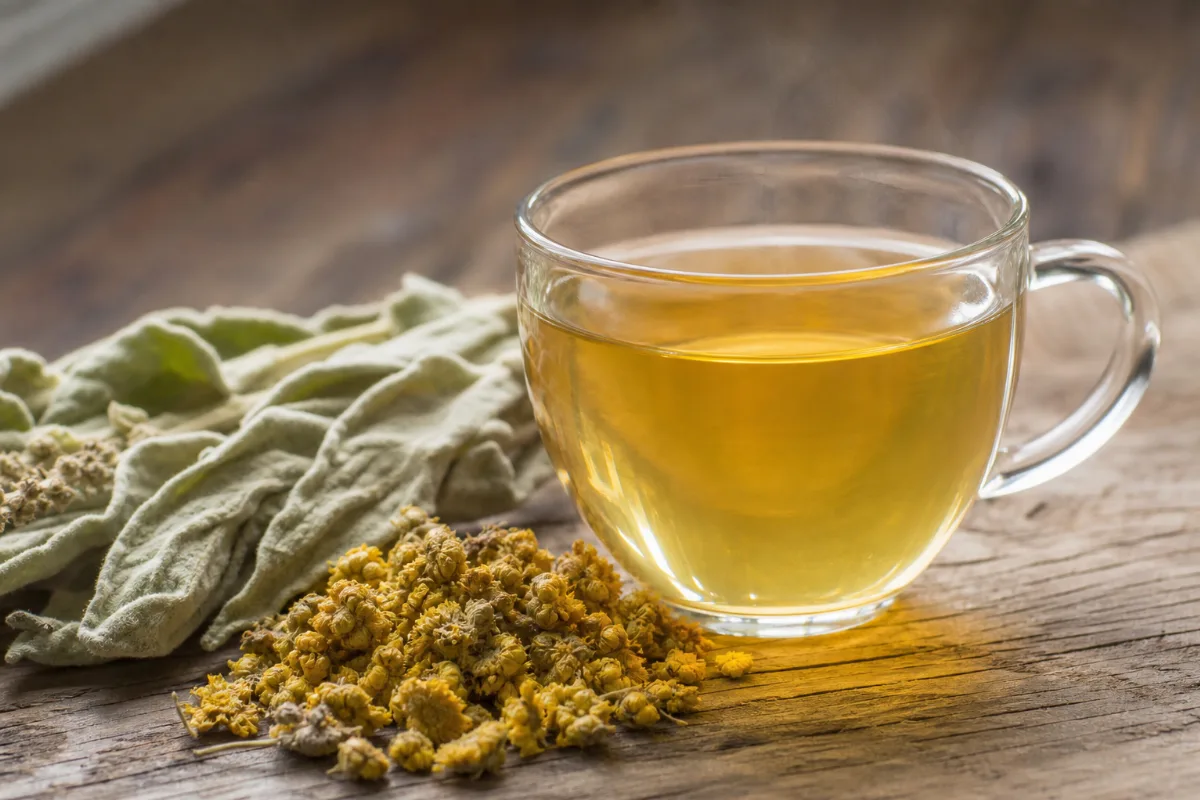
Mullein tea is a herbal infusion of the flower (sometimes the leaf) of a tall woolly plant, Verbascum thapsus. The EU accepts the flower tea as a traditional medicine for sore throat with dry cough and cold, based on long use, not trials. No trial of the tea itself was found; the few human trials tested an ear oil and a cream, which are different products. The fine hairs can irritate, skin allergy has been reported, and it is not recommended in pregnancy, breastfeeding or under age 12.
General information, not medical advice. Last substantive update · Not medically reviewed. A named clinician has not signed off on this page. How this page is made
About Mullein Tea
Mullein tea is made from the flower (sometimes the leaf) of Verbascum thapsus and relatives. The EU accepts the flower tea on long use alone, and no clinical trial of the tea was found. The human trials that exist tested a multi-herb ear oil and a cream, not tea. Fine hairs can irritate, skin allergy has been reported, and it is not recommended in pregnancy, breastfeeding or under 12. Interaction and long-term data are missing.
What it is
Mullein is a tall, woolly plant of the Verbascum genus. The medicinal part in Europe is the dried flower of Verbascum thapsus, V. densiflorum or V. phlomoides. Leaves and flower oil are also used traditionally.
Mullein is not from the tea plant (Camellia sinensis). No source we read reports caffeine in mullein, so we do not give a caffeine amount. Check blends for added tea or other ingredients.
Results from one species or part do not carry over to the others, to seeds, or to plants sold as gordolobo.
What makes it distinctive
The flower contains mucilage (a slippery gel), iridoids such as aucubin and catalpol, verbascoside, flavonoids and saponins. The mucilage is the traditional explanation for a soothing effect on the throat.
The fine hairs can irritate skin and the mouth, so old tea recipes strain it.
Traditional and current uses
Mullein has been used since ancient times for lung and skin problems, ear and piles oil, and as a tea for catarrh. The EU lists the flower tea as a traditional medicine for sore throat with dry cough and cold, for people from age 12.
In the lab and in animals, extracts show anti-inflammatory and germ-slowing effects, but these tests do not show benefit in people.
Tea, oil, cream and extract are different
The tea is the dried flower or leaf infused in water. The ear oil (flowers steeped in olive oil), the cream and any tincture or capsule are different products, and so are the lab extracts. Results from one should not be assumed for another, and no study compared their safety. For amounts, ask a doctor or pharmacist.
What the research shows
Human research is very small and none of it tested the tea. Two trials of a multi-herb ear oil in children found pain improved, but mullein was one of several herbs and there was no placebo group. One trial of a mullein cream on childbirth wounds found a better healing score on day 10.
No trial of mullein tea for cough, sore throat, asthma or bronchitis was found. No studies of mood, sleep or brain health were found.
At a glance
Traditional uses history, not proof
- Flower tea for catarrh, cough and sore throat; EU traditional use for sore throat with dry cough and cold
- Flower oil in olive oil for earache and piles (German folk use cited in the EU report)
- Poultices, baths and powders on skin irritation and chapped skin (EU report)
- Given to tuberculosis patients in the 19th century (EU report)
- Seeds used historically to stun fish; not a medicinal use
Studied for research
- Ear pain in children (multi-herb ear oil, not tea), very low certainty
- Wound healing (cream, not tea), low certainty
- Cough, sore throat and colds: traditional use only, insufficient evidence
- Asthma and bronchitis: insufficient
- Inflammation, germ-fighting, allergy, liver and anti-cancer claims: lab or animal only
Main compounds
- Mucilage polysaccharides (2-3% in the flower, per the EU report)
- Iridoids (aucubin, catalpol) and verbascoside
- Flavonoids (e.g. quercetin) and saponins
- Coumarin named in a review; rotenoid content not found in sources read
Common forms
- Flower tea (EU traditional use)
- Leaf tea, described on consumer sites; not covered by the EU monograph
- Flower oil in olive oil, multi-herb ear oils and creams: different products, not tea
- Tinctures, capsules and extracts: different products; no trials of these were read
Research links: EU herbal monograph on mullein flower (EMA, 2018) · EU herbal medicine page: Verbasci flos (EMA) · Ear-drop trial in children, Pediatrics 2003 · Episiotomy cream trial, BMC Complement Med Ther 2021 · Review: Verbascum thapsus health potential (Phytother Res 2022) · Research Library · Genes & Biomarkers Library
What it is and its history
- Accepted scientific name
- Verbascum thapsus L.
- Naming authority
- L. (Linnaeus)
- Synonyms
- Verbascum thapsiforme Schrad. (used in the EU monograph as a name for V. densiflorum; the EU report says ITIS does not accept it as a synonym, and GBIF returned only a genus-level match)
- Common names
- Common mullein, great mullein, mullein flower (English); Gordolobo (Spanish (also used for other plants)); Bouillon blanc (fleur de) (French); Wollblumen (German (from the EU list))
- Family or group
- Scrophulariaceae
- Classification
- Plantae > Tracheophyta > Magnoliopsida > Lamiales > Scrophulariaceae > Verbascum > Verbascum thapsus
- Native range
- Per the EU assessment report: mullein flower is native to central, eastern and southern Europe, Asia Minor, northern Africa and Ethiopia; V. thapsus is found throughout Europe and is abundantly naturalised in the USA. Commercial flower comes mainly from cultivated plants imported from Egypt, Bulgaria and Russia (citing Wichtl 2004).
- Habitat
- Reviews describe common mullein on roadsides, meadows and pasture land (Turker and Gurel 2005 abstract).
- What it looks like
- Roots: The root is mentioned by some old references but its medicinal use is not described in the handbooks (EU report).; Stems: Dried stems have been used; stems dipped in suet or wax made torches (old source quoted in the EU report). Not verified in the sources read.; Leaves: Leaves covered in woolly hairs; leaves have been used more than flowers on inflamed mucosa in older sources (EU report). Fine hairs can irritate.; Flowers: The medicinal flower is the dried corolla and androecium (stamens) without the calyx (Ph. Eur., as quoted in the EU report). Pharmacopoeia tests include a swelling index of at least 9 (Ph. Eur. 6.0) and a limit of 5% calyces and brown flowers (German standard).; Fruit: Seeds were used historically to stun fish; they are not a medicinal part.
- Cultivation
- Commercial flower comes largely from cultivated plants (EU report). Other details not verified in the sources read.
- Harvest and processing
- The flower is dried; EU preparations are herbal tea. Oils made by steeping flowers in olive oil are traditional in Germany (EU report, citing older sources).
- Look-alikes and adulterants
- Name: Gordolobo (Gnaphalium and Senecio plants); Note: The Spanish common name gordolobo is shared by plants from at least three genera: Verbascum, Gnaphalium and Senecio (EU report). A product labelled only gordolobo may not be mullein.; Name: Other Verbascum species; Note: Many lab studies use other species such as V. phlomoides, V. mucronatum, V. xanthophoeniceum and V. sinaiticum. Their results may not apply to V. thapsus or V. densiflorum.
- Sustainability and conservation
- Not verified in the sources read. The plant is described as abundantly naturalised in the USA (EU report).
Photographs
Traditional use and history history, not clinical proof
| Tradition or era | Documented use | Source |
|---|---|---|
| Ancient times and the Middle Ages, Europe | The EU report says the traditional use of mullein goes back to ancient times. Mullein preparations were used in the Middle Ages for skin and lung disease in cattle and people. Lonicerus (1564) praised it as an expectorant, a heart and fever medicine and a remedy for warts (as quoted in the EU report from Madaus 1938). | EU assessment report EMEA/HMPC/395206/2007 Corr (2008) |
| 19th century, Europe, UK and USA | Mullein was given to tuberculosis patients, and eclectic physicians used it for inflammatory diseases of the airways, urinary tract and ear canal. A sweetened infusion strained to remove the rough hairs was a domestic remedy for mild catarrh and colic. | EU assessment report (2008), citing Blumenthal 2000, Ellingwood 1983, Grieve 1974 |
| Germany, olive-oil flower preparation | Flowers were steeped in olive oil, and the oil was used for ear infections, piles, frostbite and bruises. | EU assessment report (2008), citing Chevallier 1996 and Grieve 1974 |
| Fishing, northern and central Europe | Mullein seeds were used to stun fish; plant-poison fishing was banned in Spain by a royal edict of 1255 (mullein is named among the plants in later laws). | Svanberg and Locker 2020, J Ethnobiol Ethnomed |
| Spanish folk medicine | Ten Verbascum species are listed in the Spanish inventory of traditional knowledge, for muscle, bone, circulation, digestion, breathing, infection and sense-organ complaints. | Blanco-Salas 2021, Biology |
| Modern EU status | HMPC adopted a monograph for the flower in 2008 and revised it on 27 March 2018: a traditional herbal medicine to relieve sore throat associated with dry cough and cold, as a herbal tea. | EU monograph EMA/HMPC/611537/2016 |
Traditional use shows how it was used. It does not show that it works or is safe today.
What is inside, and how it may work
What it contains and how those compounds act in cells and animals. Laboratory and animal mechanisms are not proven effects in people.
Main compounds
| Compound | Family | Where it is concentrated | Activity studied | Level of evidence |
|---|---|---|---|---|
| Mucilage polysaccharides (arabinogalactan, xyloglucan) | polysaccharides | flower 2-3% (Bradley 2006, as quoted in the EU report); the Ph. Eur. swelling-index test is at least 9 | Forms a slippery, swelling gel in water; thought to coat irritated throat tissue. A demulcent (soothing) effect is the traditional explanation, not shown in a trial. 6 | Pharmacological theory |
| Aucubin PubChem 91458 | iridoid glycosides | flower Iridoid glycosides in total 0.56% in V. phlomoides flower and 0.13% in V. densiflorum flower; V. densiflorum has about 10 times less aucubin but twice as much catalpol than V. phlomoides (EU report) | Cell and animal studies cited in the EU report: lowered paw swelling in rats and suppressed hepatitis B virus DNA in cell culture only after enzyme conversion; also found in the cited work to protect dogs from mushroom poisoning by injection. None of these are human results. 6 1 | Animal research |
| Catalpol PubChem 91520 | iridoid glycosides | flower See aucubin line | An iridoid found with aucubin; isolated from V. mucronatum along with aucubin, which showed anti-inflammatory and wound-healing activity as a mixed extract in mice and rats. 6 1 | Animal research |
| Verbascoside (acteoside) PubChem 5281800 | phenylethanoid glycosides | flower About 0.6% in V. densiflorum flower but only traces in V. phlomoides (EU report) | In animals, by mouth, showed wound-healing, pain-lowering and anti-inflammatory activity (V. mucronatum). Antioxidant and 5-lipoxygenase effects in cells (EU report). Not detected in the V. phlomoides water extract in one study. 1 6 11 | Animal research |
| Verbascosaponin, thapsuins and related saponins | triterpene saponins | flower (V. phlomoides, V. thapsus) Saponin content is poorly measured: a handbook value of 0.007% for V. phlomoides flower is based on an old method (EU report). No saponins confirmed in V. densiflorum flower. | Saponins can break red blood cells in the lab and are the traditional explanation for a mild expectorant effect; a lab report attributed the antibacterial activity of a mullein flower oil to saponins. Bench tests found saponins toxic to brine shrimp at low concentration. 6 22 | Laboratory research |
| Quercetin PubChem 5280343 | flavonoids | flower 17.29 mg/g in a V. phlomoides flower water extract after butanol partition (as reported) | Antioxidant and anti-inflammatory in the lab; a review links many traditional uses to quercetin using computer modelling. 11 2 | Pharmacological theory |
| Hesperidin PubChem 10621 | flavonoids | flower (reported) Not measured | A 2022 review lists it among the most valuable constituents of V. thapsus, but the EU report says the reported presence of hesperidin in V. phlomoides flower was not confirmed in a later investigation. 12 6 | Pharmacological theory |
| Coumarin PubChem 323 | coumarins | not stated Not measured | Named by a 2022 review as one of the most valuable constituents of V. thapsus. No source read gives the amount or a human effect. 12 | Pharmacological theory |
| Rosmarinic acid PubChem 5281792 | phenolic acids | flower 14.93 mg/g in a V. phlomoides flower water extract after butanol partition (as reported) | Antioxidant in the lab. 11 | Laboratory research |
| Caffeic acid and ferulic acid PubChem 689043 | phenolic acids | flower Caffeic acid 39.96 mg/g and ferulic acid 29.61 mg/g in the same extract (as reported) | Antioxidant in the lab. 11 | Laboratory research |
| 2',3'-Dihydroxypuberulin | isolated phenolic compound | not stated Not measured | Lowered the allergy receptor FcεRI on mast cells in cell culture. 20 | Laboratory research |
Mechanisms, receptors and pathways
| Target or pathway | Gene or receptor | What was found | Level |
|---|---|---|---|
| Cell adhesion signal in blood-vessel lining cells | ICAM-1 (ICAM1) | A V. phlomoides flower water extract cut TNF-alpha-triggered ICAM-1 by 55-58.8% at 100-200 microgram/mL in human umbilical vein cells, but did not reduce rat paw swelling. Lab result in cells; negative in the animal test. 11 | Laboratory research |
| Inflammation signals in macrophages and complement | IL-6, TNF-alpha, nitric oxide, COX-1; alternative complement pathway | Compounds of V. xanthophoeniceum (a different species) lowered IL-6, nitric oxide and TNF-alpha in mouse macrophages, and the crude extract reduced venom-factor swelling in mice together with lower complement activity. 4 | Animal research |
| Allergy cell receptor | FcεRI (IgE receptor) beta chain | 2',3'-Dihydroxypuberulin lowered the beta-chain mRNA of FcεRI on mast cells. 20 | Laboratory research |
| Herpes simplex virus type 1 in cell culture | Not identified | A V. thapsus methanol extract showed antiviral activity against HSV-1 at non-toxic doses in a 100-extract screen. 13 | Laboratory research |
| Bacterial growth | Not identified | Water extracts of common mullein slowed Klebsiella pneumoniae, Staphylococcus aureus, S. epidermidis and E. coli in bench tests. 22 | Laboratory research |
| Mucus transport in airways | Not identified | In an old frog-oesophagus tissue test cited by the EU report, a water extract of mullein flower had no effect on the speed of mucus transport, unlike fennel and anise. The authors said saponins might act in other ways. This does not support a mucus-moving effect in people. 6 | Laboratory research |
| Wound repair | Not identified | Verbascoside from V. mucronatum flower had wound-healing activity in mice and rats. 1 | Animal research |
Absorption, metabolism and elimination
- Absorption
- No data. The EU assessment report lists pharmacokinetics as no data available.
- Distribution
- No data.
- Metabolism
- No data. The EU monograph says pharmacokinetic studies are not required for traditional-use products.
- Elimination
- No data.
- Bioavailability
- No data in people or animals found for mullein compounds in the sources read.
Isolated compounds versus whole extracts
Mullein is used as a whole flower (tea, oil) or as cream. Researchers have also studied single compounds (verbascoside, aucubin, 2',3'-dihydroxypuberulin) and extracts of other species in cells and animals. No study compares whole mullein with a single compound in people. The cream and ear-oil trials used mixtures, so the active part is unknown.
Nutritional composition
Mullein is used as a herbal medicine, not a food. The flower tea is taken for its traditional effect, and no vitamin or mineral role was established in the sources read.
1 low certainty1 very low certainty10 not enough evidence
What was looked at
The 12 benefits and uses checked for Mullein Tea, each with how strong the evidence is. Tap one to open it.
- Ear pain with a middle-ear infection in children: a four- to six-herb ear-drop oil that contains mulleinVery low certainty
- Ear pain: mullein oil on its ownNot enough evidence
- Sore throat with dry cough and colds (traditional use as a tea)Not enough evidence
- Asthma, bronchitis and other lung complaints (folk use)Not enough evidence
- Fighting germs: virus and bacteria effects in the labNot enough evidence
- Wound healing: mullein cream on a childbirth (episiotomy) woundLow certainty
- Skin problems, burns, eczema and piles (traditional topical use)Not enough evidence
- Inflammation and pain: cell and animal resultsNot enough evidence
- Allergy: a mullein compound in mast-cell testsNot enough evidence
- Liver protection in poisoned mice (a different species)Not enough evidence
- Digestive complaints and diarrhoea (traditional use)Not enough evidence
- Anti-cancer claims: bench tests onlyNot enough evidence
Lab markers tracked in the studies
Ear pain score (visual analogue scale)ICAM-1 on blood-vessel lining cells (lab marker)REEDA wound-healing scoreAST (a liver enzyme) in miceNitric oxide and inflammatory cytokines (lab markers)
What is Mullein Tea good for?
Human research on mullein tea is very small: no trial of the tea itself was found. Here is each studied use and how strong the evidence is. Where a trial tested an ear oil or cream, that is said plainly. Many lab studies used other mullein species.
Benefits, one by one
Each card is a research question, not a promise. Tap a goal to filter. Open a card to see the studies, doses and limits.
Ear pain with a middle-ear infection in children: a four- to six-herb ear-drop oil that contains mullein
Very low certaintyTwo trials in Israeli children used olive-oil ear drops that held garlic, mullein, calendula, St John's wort (and in one trial lavender and vitamin E). Pain improved in every group. The drops did about as well as numbing ear drops. Mullein was only one ingredient, so these trials cannot show what mullein does alone.
3 studiesOlive-oil ear drops with several herbs (Otikon in 2001; a similar her…
Studies, doses and limits
What the trials found
Trial 1 (2001): 103 children aged 6 to 18 with ear pain from acute otitis media got either Otikon (garlic, mullein, calendula and St John's wort in olive oil) or anaesthetic ear drops. The groups were similar and pain scores improved over 3 days. The authors concluded the herbal drops were as effective as the anaesthetic drops. Trial 2 (2003): 171 children aged 5 to 18 were randomised to the herbal drops (garlic, mullein, calendula, St John's wort, lavender, vitamin E) or anaesthetic drops, with or without amoxicillin. Every group improved. Drops alone did better than drops plus amoxicillin, and results were better in the herbal-drop group than in the controls. The authors also wrote that the pain was mostly (80%) self-limited and could be explained by the time elapsed, and that the best group explained only 7.3% of the total pain reduction. No trial tested mullein oil on its own, and no trial had a placebo group.
Results
Pain scores fell in all groups over 3 days. The herbal combination was as good as anaesthetic drops (2001) and better than the control drops (2003). Most of the improvement was natural recovery according to the 2003 authors.
Effect sizes as reported
Not reported with numbers in the abstracts. 2001: improvement in ear pain over the study period, P = .007 (within-group over time). 2003: 7.3% of total pain reduction explained by the best-responding treatment group, as stated by the authors.
Why this rating
Both trials tested a combination, not mullein alone. Neither had a placebo group. Both were by the same lead clinician, the 2001 product was a commercial one, and the abstracts give no effect sizes or confidence intervals. The authors themselves say most of the pain relief was natural recovery.
Form and dose studied
Olive-oil ear drops with several herbs (Otikon in 2001; a similar herbal extract ear-drop mix in 2003). Different product: not a tea.
Who was studied
Children aged 5 to 18 with ear pain and middle-ear infection. Nothing in adults or in children under 5 was found.
Limits
Combination product; no placebo; short follow-up (3 days); pain scores rated on visual scales; one clinic group; funding not stated in the abstracts; the 2003 abstract also says there are no documented side effects, which is not a safety study.
Why researchers looked
Ear pain from acute middle-ear infection is common in children, and most episodes settle without antibiotics. Herbal oils in the ear are an old home remedy, so a clinic group tested a ready-made oil against numbing drops.
Traditional use
Nineteenth-century eclectic doctors used mullein for inflammation of the ear canal, and in Germany mullein flowers steeped in olive oil are used as an ear remedy, according to the EU assessment report.
Proposed mechanism Preliminary mechanism
Lab work suggests mullein flower chemicals such as verbascoside and iridoids have anti-inflammatory effects, and garlic and St John's wort oils have antibacterial properties in the lab. None of this has been shown to be why the drops helped in children.
A proposed mechanism does not show that the effect happens in people.
Do not put any drops in the ear if the eardrum may be perforated (a doctor must check). See the safety tab. Garlic, St John's wort and calendula in the mix add their own allergy and interaction issues.
Ear pain: mullein oil on its own
Not enough evidenceNo human trial of plain mullein flower oil for earache was found. It is used at home, but its use is based on tradition, not on trial results.
1 studiesNot applicable.
Studies, doses and limits
Results
No data.
Why this rating
No human study of mullein alone for ear pain.
Limits
No trials.
Why researchers looked
Mullein flower oil is a well-known home ear remedy in parts of Europe and in the United States.
Traditional use
The EU assessment report notes that in Germany the flowers are steeped in olive oil and the oil is used as an ear remedy, and that nineteenth-century eclectic doctors used mullein for the ear canal.
Proposed mechanism Pharmacological theory
Not studied. Lab studies of the flower's chemicals suggest anti-inflammatory activity, which has not been tested for ear pain.
A proposed mechanism does not show that the effect happens in people.
Never put oil in an ear with a ruptured eardrum, or with discharge, without a doctor's advice.
Sore throat with dry cough and colds (traditional use as a tea)
Not enough evidenceThe EU accepts mullein flower tea as a traditional herbal medicine to relieve sore throat with dry cough and cold. That approval rests on long use, not on trials. The EU report says no clinical studies of mullein flower were available.
3 studiesHerbal tea from the flower (EU monograph: traditional use). Ask a doc…
Studies, doses and limits
What the trials found
No clinical trial of mullein flower or leaf for cough, sore throat or colds was found in PubMed, and the EU assessment report says there are no clinical investigations available on mullein flower. The EU monograph (2018) lists traditional use only, for adults and adolescents from 12 years, with a doctor to be consulted if symptoms last longer than 1 week.
Results
No trial results.
Why this rating
Traditional use and regulatory acceptance, but no controlled human data. The EU explicitly accepts it only as traditional use.
Form and dose studied
Herbal tea from the flower (EU monograph: traditional use). Ask a doctor or pharmacist about amounts.
Who was studied
Adults and adolescents from 12 years in the EU monograph. Not recommended under 12.
Limits
No clinical studies; EU safety review notes missing genotoxicity, carcinogenicity and reproductive-toxicity tests.
Why researchers looked
Mullein has been used for centuries for coughs and chest complaints. The flower contains mucilage (a slippery plant gum) that may coat the throat, plus saponins that may thin phlegm.
Traditional use
Used during the Middle Ages for lung disease in people and cattle, and by the 19th century given in Europe, the UK and the USA to tuberculosis patients. A sweetened infusion, strained to remove the rough hairs, was a domestic remedy for mild catarrh. The EU lists the traditional use as relief of sore throat associated with dry cough and cold, by herbal tea, for adults, adolescents and the elderly.
Proposed mechanism Pharmacological theory
The EU assessment report describes the mucilage as a soothing coating for irritated throat tissue and the saponins as a possible mild expectorant. One older frog-tissue study cited in the report found that a water extract of mullein flower did NOT speed mucus transport (while fennel and anise did); the authors said saponins might act in other ways. These explanations come from handbooks and lab work, not from human trials.
A proposed mechanism does not show that the effect happens in people.
Sources say the fine hairs can irritate the mouth and throat, and old recipes strain the tea. See the safety tab.
Asthma, bronchitis and other lung complaints (folk use)
Not enough evidenceReviews list mullein as a folk remedy for asthma, spasmodic cough and lung problems in many countries. No trial in people was found. Lab tests of extracts show some anti-inflammatory and anti-germ effects, which are a long way from proof of benefit in a person with asthma.
4 studiesNot established.
Studies, doses and limits
Results
No trial results.
Why this rating
Folk use and lab or computer work only.
Form and dose studied
Not established.
Limits
No human data. Do not use mullein in place of prescribed asthma treatment.
Why researchers looked
Mullein is one of the most widely used folk plants for the chest across Europe, Asia and the Americas.
Traditional use
Reviews report use for asthma, spasmodic cough, pulmonary problems and migraine, and an Indian-medicine use of leaves, flowers and flower oil. Spanish folk medicine uses mullein for muscle, bone, circulation, digestive and respiratory complaints.
Proposed mechanism Pharmacological theory
A review of Spanish folk uses links many of them to anti-inflammatory plant chemicals such as quercetin, with computer modelling. Lab studies of other mullein species show reduced inflammatory signals in cells and mice.
A proposed mechanism does not show that the effect happens in people.
Asthma can become serious quickly. Do not delay medical care because of a herbal tea.
Fighting germs: virus and bacteria effects in the lab
Not enough evidenceIn test tubes, common mullein extracts slowed several bacteria and stopped herpes simplex virus type 1 in cell culture. No study has tested this in people, so it does not show that mullein treats or prevents infections.
3 studiesLab extracts, not comparable to tea.
Studies, doses and limits
Results
Water, ethanol and methanol extracts of common mullein slowed Klebsiella pneumoniae, Staphylococcus aureus, Staphylococcus epidermidis and Escherichia coli in bench tests, with the water extract the most active. A methanol extract of V. thapsus was one of nine plant extracts with activity against herpes simplex virus 1 in cell culture at non-toxic doses. The bacterial tests also found toxicity to brine shrimp and radish seeds at higher concentrations.
Effect sizes as reported
Not given in the abstracts.
Why this rating
Test-tube data only. Activity in cells often fails in people.
Form and dose studied
Lab extracts, not comparable to tea.
Limits
Cell and bench tests; no numbers in abstracts; high-dose toxicity in the same tests.
Why researchers looked
Mullein is traditionally used for infections of the airways, so labs have tested extracts against germs.
Traditional use
See cough and sore throat above.
Proposed mechanism Laboratory research
Not worked out. Iridoids and other chemicals may play a part; one older cited study reported an aucubin-related antiviral effect against hepatitis B virus in cell culture only after enzyme treatment.
A proposed mechanism does not show that the effect happens in people.
Do not use mullein instead of antiviral or antibiotic treatment.
Wound healing: mullein cream on a childbirth (episiotomy) wound
Low certaintyOne double-blind, placebo-controlled trial in 93 first-time mothers found that a Verbascum thapsus cream healed episiotomy wounds better than placebo cream by day 10. Earlier checks, on days 1 and 3, showed no clear difference.
3 studiesA Verbascum thapsus cream (strength not stated in the abstract) appli…
Studies, doses and limits
What the trials found
Ninety-three first-time mothers in Saveh, Iran were randomly given a Verbascum thapsus cream or a placebo cream, double-blind. They put the cream on the wound for 10 days. Healing was scored on the REEDA scale (redness, swelling, bruising, discharge, closeness of edges) before the cream and on days 1, 3 and 10. Scores on days 1 and 3 favoured mullein but not by a statistically significant amount. On day 10 the REEDA score was significantly better with mullein (p = 0.01). The trial was registered (IRCT201404073106N15) and the authors declared no competing interests.
Results
Better REEDA score with mullein cream than placebo on day 10 (p = 0.01); no significant difference on days 1 and 3.
Effect sizes as reported
p = 0.01 on day 10. Mean scores and confidence intervals are not in the abstract.
Why this rating
One small, registered, placebo-controlled trial with a positive result on the last day only. Plant part and cream strength are not stated in the abstract, and it has not been repeated by an independent group that we found.
Form and dose studied
A Verbascum thapsus cream (strength not stated in the abstract) applied for 10 days. Creams sold today may differ.
Who was studied
Healthy first-time mothers with an episiotomy at one hospital, Iran.
Limits
Single site; the trial ran in 2015 and was published in 2021; the abstract does not give the plant part, strength or mean scores; REEDA is a clinician score, not pain or infection rates.
Why researchers looked
Mullein has been used on wounds since ancient times, and the authors wanted a clinical test for the painful cut made during childbirth.
Traditional use
Folk and eclectic use on wounds, ulcers, burns, chapped skin, frostbite and bruises is recorded in the EU assessment report. The French listing mentions soothing and itch-relieving local use for skin complaints.
Proposed mechanism Animal research
In mice and rats, the mullein-family compound verbascoside (from a different species, V. mucronatum) showed wound-healing and anti-inflammatory activity. Whether this explains the cream result is not known.
A proposed mechanism does not show that the effect happens in people.
Skin reactions to mullein have been reported in case reports; test a small area first. Do not put any herbal product on a wound that looks infected. Ask your midwife or doctor first after childbirth.
Skin problems, burns, eczema and piles (traditional topical use)
Not enough evidenceMullein leaf and flower oils or poultices are traditional for skin irritation, chapped skin, eczema of the outer ear, piles, frostbite and bruises. Apart from the episiotomy cream trial, no human trial was found.
3 studiesNot established.
Studies, doses and limits
Results
No trial results.
Why this rating
Traditional use only.
Form and dose studied
Not established.
Limits
No human trials. The plant parts used in the old sources are not always clear.
Why researchers looked
A long folk tradition across Europe, Turkey and Spain.
Traditional use
The EU assessment report records: flower oil in olive oil for piles and other inflamed mucous membranes, frostbite and bruises in German country districts; mullein oil for eczema of the ear canal; a bath for skin irritation, and dry flower powder on chapped skin (Latvia); leaves used more than flowers on inflamed mucosa. A Spanish review notes rubbing with hairy leaves on affected areas.
Proposed mechanism Pharmacological theory
Mucilage is thought to form a soothing film, and iridoids and verbascoside have anti-inflammatory activity in animals. A Turkish study of a related mullein species found wound-healing and pain-lowering activity in mice and rats.
A proposed mechanism does not show that the effect happens in people.
Fine hairs and allergy can cause skin reactions. See the safety tab.
Inflammation and pain: cell and animal results
Not enough evidenceExtracts and compounds from mullein species lowered inflammation signals in cells and swelling in mice and rats. Results were mixed: one extract of mullein flower failed to reduce swelling in rats. None of this has been tested in people for pain or arthritis.
4 studiesLab extracts, not comparable to tea or oil.
Studies, doses and limits
Results
V. phlomoides flower water extract reduced TNF-alpha-triggered ICAM-1 in human vein cells by 55-58.8% but did not reduce rat paw swelling, and the authors called the effect weak. V. xanthophoeniceum extract reduced venom-factor swelling in mice, and isolated compounds cut IL-6, nitric oxide and TNF-alpha in mouse macrophages. V. mucronatum flower extracts were anti-inflammatory and pain-lowering in mice and rats. Two of these three studies used species other than the three EU species.
Effect sizes as reported
55-58.8% ICAM-1 inhibition in cells (V. phlomoides); other studies give no numbers in their abstracts.
Why this rating
Cell and animal data only, mixed results, mostly other species.
Form and dose studied
Lab extracts, not comparable to tea or oil.
Limits
Different species and extract types; no human trial; one negative animal result.
Why researchers looked
Many traditional uses of mullein are for inflammatory conditions, so labs have tested its extracts and chemicals.
Traditional use
Folk use for arthrosis, rheumatism, otitis and respiratory inflammation in Spanish medicine.
Proposed mechanism Animal research
Candidate compounds are verbascoside (acteoside), iridoids such as aucubin, flavonoids such as quercetin and some saponins. Reported targets include nitric oxide, TNF-alpha, IL-6, COX enzymes and complement activity in cells and animals.
A proposed mechanism does not show that the effect happens in people.
Do not use mullein instead of medicine for arthritis or other inflammatory disease.
Allergy: a mullein compound in mast-cell tests
Not enough evidenceA single compound isolated from Verbascum thapsus lowered an allergy receptor on mast cells in cell culture. That is a drug-discovery lead, not a result for mullein tea. Mullein can also cause skin allergy in some people.
1 studiesNot applicable.
Studies, doses and limits
Results
Active in cell culture; analogue studies found the structure needed for activity.
Effect sizes as reported
Not given in the abstract.
Why this rating
Isolated compound, cells only.
Limits
Not a herbal product; source plant described only as a South American medicinal plant.
Why researchers looked
A Japanese group looked for natural compounds that lower the IgE receptor (FcεRI) on allergy cells.
Proposed mechanism Laboratory research
2',3'-dihydroxypuberulin lowered the mRNA of the beta chain of FcεRI on mast cells.
A proposed mechanism does not show that the effect happens in people.
Allergy to mullein has also been reported; see the safety tab.
Liver protection in poisoned mice (a different species)
Not enough evidenceA hydro-alcoholic extract of a different mullein species, Verbascum sinaiticum, lowered the liver enzyme AST in mice poisoned with carbon tetrachloride. This is an animal result for another species and does not show that mullein protects or harms the human liver.
1 studiesNot applicable.
Studies, doses and limits
Results
AST significantly lower with the V. sinaiticum extract than in poisoned controls (P < 0.05).
Effect sizes as reported
P < 0.05 for AST; ALT result significant only for the other plant.
Why this rating
One mouse study on a different species.
Who was studied
Mice.
Limits
Different species; no human data.
Why researchers looked
V. sinaiticum is used in Ethiopian folk medicine for liver disease.
Traditional use
Ethiopian traditional medicine (other species).
Proposed mechanism Animal research
The authors suggest partly an antioxidant action; the extract scavenged free radicals in a test-tube assay.
A proposed mechanism does not show that the effect happens in people.
Liver safety in people is covered on the safety tab: no liver injury reports were found, but the data are very limited.
Digestive complaints and diarrhoea (traditional use)
Not enough evidenceSome countries list mullein for colic, painful functional gut problems, diarrhoea and irritable bowel. No human trial was found.
2 studiesNot established.
Studies, doses and limits
Results
No data.
Why this rating
Traditional use only.
Form and dose studied
Not established.
Limits
No trials.
Why researchers looked
Part of the long folk tradition.
Traditional use
France lists mullein flower as traditionally used as an adjuvant for the painful part of functional digestive disorders; Latvia lists folk use for irritable bowel; Grieve's old text lists a sweetened infusion for mild catarrh and colic; reviews list diarrhoea.
Proposed mechanism Pharmacological theory
Not studied.
A proposed mechanism does not show that the effect happens in people.
Ongoing gut symptoms, blood in stool or weight loss need a doctor.
Anti-cancer claims: bench tests only
Not enough evidenceReviews list anticancer effects of mullein, based on cell and plant-tissue tests. No human trial exists, and none of this should be read as a cancer treatment.
3 studiesNot applicable.
Studies, doses and limits
Results
Water, ethanol and methanol extracts of common mullein inhibited Agrobacterium-induced tumours in potato discs; extracts were also toxic to brine shrimp at higher concentrations.
Effect sizes as reported
Not given in the abstract.
Why this rating
Bench tests only.
Limits
Potato-disc tumours are not human cancer. Toxicity in the same tests means activity may simply be general toxicity.
Why researchers looked
Some extracts blocked tumour formation in a potato-disc test and cancer cell growth in dishes.
Proposed mechanism Laboratory research
An older cited study reported that a saponin-rich fraction of V. densiflorum flower blocked protein making in rat liver preparations.
A proposed mechanism does not show that the effect happens in people.
Never use mullein in place of cancer care.
Connections to the rest of health
How Mullein Tea connects to the rest of our health knowledge graph. Every link says what kind of connection it is. A safety link (for example to the liver) is a warning, not a benefit. A study that merely mentions a topic never creates a benefit link.
Explore every connection: goals, body systems, organs, symptoms, genes
A. Wellness goals
| Connected to | Kind of connection | Evidence status | Context | Studies |
|---|---|---|---|---|
| Immune Support | Traditional use | Not enough evidence | Sore throat with dry cough and colds (traditional use as a tea): The EU accepts mullein flower tea as a traditional herbal medicine to relieve sore throat with dry cough and cold. That approval rests on long use, not on trials. The EU report says no clinical studies of mullein flower were available. Asthma, bronchitis and other lung complaints (folk use): Reviews list mullein as a folk remedy for asthma, spasmodic cough and lung problems in many countries. No trial in people was found. Lab tests of extracts show some anti-inflammatory and anti-germ effects, which are a long way from proof of benefit in a person with asthma. | 7 6 23 12 2 4 |
| Immune Support | Preliminary mechanism | Not enough evidence | Fighting germs: virus and bacteria effects in the lab: In test tubes, common mullein extracts slowed several bacteria and stopped herpes simplex virus type 1 in cell culture. No study has tested this in people, so it does not show that mullein treats or prevents infections. Allergy: a mullein compound in mast-cell tests: A single compound isolated from Verbascum thapsus lowered an allergy receptor on mast cells in cell culture. That is a drug-discovery lead, not a result for mullein tea. Mullein can also cause skin allergy in some people. | 22 13 6 20 |
| Healthy Skin | Demonstrated clinical effect | Low certainty | Wound healing: mullein cream on a childbirth (episiotomy) wound: One double-blind, placebo-controlled trial in 93 first-time mothers found that a Verbascum thapsus cream healed episiotomy wounds better than placebo cream by day 10. Earlier checks, on days 1 and 3, showed no clear difference. | 19 1 6 |
| Healthy Skin | Traditional use | Not enough evidence | Skin problems, burns, eczema and piles (traditional topical use): Mullein leaf and flower oils or poultices are traditional for skin irritation, chapped skin, eczema of the outer ear, piles, frostbite and bruises. Apart from the episiotomy cream trial, no human trial was found. | 6 2 1 |
| Inflammation Balance | Preliminary mechanism | Not enough evidence | Inflammation and pain: cell and animal results: Extracts and compounds from mullein species lowered inflammation signals in cells and swelling in mice and rats. Results were mixed: one extract of mullein flower failed to reduce swelling in rats. None of this has been tested in people for pain or arthritis. | 11 4 1 2 |
| Liver Support | Biological association | Not enough evidence | Liver protection in poisoned mice (a different species): A hydro-alcoholic extract of a different mullein species, Verbascum sinaiticum, lowered the liver enzyme AST in mice poisoned with carbon tetrachloride. This is an animal result for another species and does not show that mullein protects or harms the human liver. | 24 |
| Digestive Support | Traditional use | Not enough evidence | Digestive complaints and diarrhoea (traditional use): Some countries list mullein for colic, painful functional gut problems, diarrhoea and irritable bowel. No human trial was found. | 6 23 |
B. Body systems
| Connected to | Kind of connection | Evidence status | Context | Studies |
|---|---|---|---|---|
| Skin | Adverse effect or risk | Not enough evidence | Contact dermatitis case reports and irritation from woolly hairs. Preparation or compound: Mullein plant, leaf or flower, contact |
9 3 6 |
| Pregnancy and breastfeeding | Contraindication | Not enough evidence | Not recommended in pregnancy or breastfeeding because safety has not been established (EU). Preparation or compound: Mullein flower tea |
7 |
| Liver | Biological association | Not enough evidence | Lowered AST in poisoned mice; no human liver data and no liver injury reports found. Preparation or compound: V. sinaiticum extract in mice |
24 6 |
| Respiratory system | Traditional use | Not enough evidence | EU traditional use for sore throat with dry cough and cold; no clinical trials. EU traditional use for sore throat with dry cough and cold; no clinical trials found. Preparation or compound: Mullein flower tea |
7 6 |
| Skin | Potential benefit | Low certainty | Better wound-healing score than placebo on day 10 in 93 women with episiotomy wounds; one small trial. Preparation or compound: Verbascum thapsus cream |
19 |
| Respiratory System | Biological association | Not enough evidence | Studied for: Sore throat with dry cough and colds (traditional use as a tea) Studied for: Asthma, bronchitis and other lung complaints (folk use) | 7 6 23 12 2 4 |
| Immune System | Biological association | Not enough evidence | Studied for: Fighting germs: virus and bacteria effects in the lab Studied for: Inflammation and pain: cell and animal results | 22 13 6 11 4 1 2 20 |
| Integumentary System | Biological association | Low certainty | Studied for: Wound healing: mullein cream on a childbirth (episiotomy) wound Studied for: Skin problems, burns, eczema and piles (traditional topical use) | 19 1 6 2 |
| Hepatic System | Biological association | Not enough evidence | Studied for: Liver protection in poisoned mice (a different species) | 24 |
| Digestive System | Biological association | Not enough evidence | Studied for: Digestive complaints and diarrhoea (traditional use) | 6 23 |
I. Biomarkers
| Connected to | Kind of connection | Evidence status | Context | Studies |
|---|---|---|---|---|
| Ear pain score (visual analogue scale) | Biological association | Very low certainty | Measured in trials: lowered. A lab change is not the same as a health benefit. | 16 17 |
| ICAM-1 on blood-vessel lining cells (lab marker) | Biological association | Very low certainty | Measured in trials: lowered. A lab change is not the same as a health benefit. | 11 |
| REEDA wound-healing score | Biological association | Low certainty | Measured in trials: lowered. A lab change is not the same as a health benefit. | 19 |
| AST (a liver enzyme) in mice | Biological association | Not enough evidence | Measured in trials: lowered. A lab change is not the same as a health benefit. | 24 |
| Nitric oxide and inflammatory cytokines (lab markers) | Biological association | Not enough evidence | Measured in trials: lowered. A lab change is not the same as a health benefit. | 4 |
J. Genes, receptors and enzymes
| Connected to | Kind of connection | Evidence status | Context | Studies |
|---|---|---|---|---|
| ICAM1 (intercellular adhesion molecule 1) | Preliminary mechanism | In vitro | Lower expression in stimulated human vein cells with a V. phlomoides flower extract. | 11 |
| TNF and IL6 (inflammatory cytokines) | Preliminary mechanism | Animal | Compounds of a related species lowered these signals in mouse macrophages. | 4 |
| FCER1B / MS4A2 (FcεRI beta chain) | Preliminary mechanism | In vitro | mRNA of the IgE receptor beta chain lowered by an isolated compound in mast cells. Gene name given by the compiler for the beta chain; the abstract does not name the gene. | 20 |
K. Biological pathways
| Connected to | Kind of connection | Evidence status | Context | Studies |
|---|---|---|---|---|
| Complement alternative pathway | Preliminary mechanism | Animal | Reduced activity in mice given a V. xanthophoeniceum extract. | 4 |
L. Active compounds
| Connected to | Kind of connection | Evidence status | Context | Studies |
|---|---|---|---|---|
| Mucilage polysaccharides (arabinogalactan, xyloglucan) | Biological association | Pharmacological theory | Forms a slippery, swelling gel in water; thought to coat irritated throat tissue. A demulcent (soothing) effect is the traditional explanation, not shown in a trial. Preparation or compound: flower |
6 |
| Aucubin | Biological association | Animal | Cell and animal studies cited in the EU report: lowered paw swelling in rats and suppressed hepatitis B virus DNA in cell culture only after enzyme conversion; also found in the cited work to protect dogs from mushroom poisoning by injection. None of these are human results. Preparation or compound: flower |
6 1 |
| Catalpol | Biological association | Animal | An iridoid found with aucubin; isolated from V. mucronatum along with aucubin, which showed anti-inflammatory and wound-healing activity as a mixed extract in mice and rats. Preparation or compound: flower |
6 1 |
| Verbascoside (acteoside) | Biological association | Animal | In animals, by mouth, showed wound-healing, pain-lowering and anti-inflammatory activity (V. mucronatum). Antioxidant and 5-lipoxygenase effects in cells (EU report). Not detected in the V. phlomoides water extract in one study. Preparation or compound: flower |
1 6 11 |
| Verbascosaponin, thapsuins and related saponins | Biological association | In vitro | Saponins can break red blood cells in the lab and are the traditional explanation for a mild expectorant effect; a lab report attributed the antibacterial activity of a mullein flower oil to saponins. Bench tests found saponins toxic to brine shrimp at low concentration. Preparation or compound: flower (V. phlomoides, V. thapsus) |
6 22 |
| Quercetin | Biological association | Pharmacological theory | Antioxidant and anti-inflammatory in the lab; a review links many traditional uses to quercetin using computer modelling. Preparation or compound: flower |
11 2 |
| Hesperidin | Biological association | Pharmacological theory | A 2022 review lists it among the most valuable constituents of V. thapsus, but the EU report says the reported presence of hesperidin in V. phlomoides flower was not confirmed in a later investigation. Preparation or compound: flower (reported) |
12 6 |
| Coumarin | Biological association | Pharmacological theory | Named by a 2022 review as one of the most valuable constituents of V. thapsus. No source read gives the amount or a human effect. | 12 |
| Rosmarinic acid | Biological association | In vitro | Antioxidant in the lab. Preparation or compound: flower |
11 |
| Caffeic acid and ferulic acid | Biological association | In vitro | Antioxidant in the lab. Preparation or compound: flower |
11 |
| 2',3'-Dihydroxypuberulin | Biological association | In vitro | Lowered the allergy receptor FcεRI on mast cells in cell culture. | 20 |
Each connection is stored with the ingredient, the connected record, the kind of connection, the evidence status, the supporting studies, the preparation or compound involved, and a review date (last reviewed October 25, 2026).
Evidence at a glance: what changed in 5 lab markers
Tap a number to show only those markers. Counts are markers, not people.
The evidence
The research centre for Mullein Tea. Every record here was checked against PubMed or the publisher's page; we never list a study we have not verified.
Evidence by outcome
Bars show how many studies we found for each outcome, not how well it works. People are added up across trials only (reviews are not added, to avoid double counting).
How we rate evidence
High certainty
Several well-run trials or reviews agree; further research is unlikely to change the picture much.
Moderate certainty
Good trials point the same way, but some doubt remains.
Low certainty
Small, short or inconsistent trials. The finding could change with better research.
Very low certainty
Very little or very weak human data. Treat as a possibility only.
Mixed findings
Trials or reviews disagree with each other.
Not enough evidence
Not enough human research to say either way.
Evidence against
Good research found no benefit, or found harm.
We take the reviewers' own risk-of-bias and GRADE statements where they exist, and otherwise judge from study size, design, consistency, directness and whether a product matches what is sold. Many publications do not make evidence high. Method note: We searched PubMed and read the EU herbal monograph on mullein flower (2018) in full and the older EU assessment report (2008, marked superseded) selectively. For most studies only the abstract was read; two case reports had no abstract and were read by title only. NCCIH has no page at the address tried, LiverTox and LactMed have no entry found, and the FDA, Commission E, ESCOP and WHO positions are marked not verified. Certainty ratings are the compiler's own reading. No study is cited that we could not verify.
Study library: every study we checked 24
| Study | Design | People | Product, dose, length | Result |
|---|---|---|---|---|
| Akdemir 2011 Bioassay-guided isolation of anti-inflammatory, antinociceptive and wound healer glycosides from the flowers of Verbascum mucronatum Lam. J Ethnopharmacol · PMID 20621642 · DOI |
Animal research animal |
Flowers of Verbascum mucronatum (a different species) tested in mice and rats | Extracts and isolated glycosides of V. mucronatum flowers flower |
Extracts showed anti-inflammatory, pain-lowering and wound-healing activity in mouse and rat models. Of the isolated compounds, verbascoside was found to have significant wound-healing, antinociceptive and anti-inflammatory activity by mouth without obvious acute toxicity or gastric damage. Methods, limits and fundingLimitations: A different species (V. mucronatum). Animal work only. Doses not in the abstract. Read: abstract |
| Blanco-Salas 2021 Searching for Scientific Explanations for the Uses of Spanish Folk Medicine: A Review on the Case of Mullein (Verbascum, Scrophulariaceae). Biology (Basel) · PMID 34356473 · DOI |
Narrative review pharmacological-theory |
Review of 10 Verbascum species in Spanish folk medicine, plus computer (in silico) modelling | The authors link the traditional uses to anti-inflammatory plant chemicals such as quercetin. They say most traditional uses could rest on an anti-inflammatory action. The modelling shows predicted molecular fits only. Methods, limits and fundingLimitations: A review plus computer models, not a clinical test. It supports a possible reason for the uses; it does not show they work in people. Read: abstract | |
| Castro 2006 Occupational airborne dermatitis from gordolobo (Verbascum densiflorum). Contact Dermatitis · PMID 17026698 · DOI |
Case report |
1 Case report (Burgos, Spain), occupational exposure |
Contact with Verbascum plant material |
Only the title was available in PubMed (no abstract), so the details of this case are not known to us. The title says airborne skin inflammation at work was caused by gordolobo (Verbascum densiflorum). Methods, limits and fundingOutcomes: Skin reaction Limitations: No abstract available. Single case report, so it shows that a reaction can happen, not how often. Read: summary-only |
| Dimitrova 2012 Antiinflammatory properties of extracts and compounds isolated from Verbascum xanthophoeniceum Griseb. Phytother Res · PMID 22389249 · DOI |
Animal research animal |
Extracts and compounds of Verbascum xanthophoeniceum (a different Balkan species) in mice and mouse cells | Methanol extract and isolated compounds of V. xanthophoeniceum |
The crude methanol extract reduced paw swelling caused by cobra venom factor in mice, linked to lower complement activity. Nigroside VI cut IL-6 and nitric oxide, and forsythoside B cut TNF-alpha, in mouse macrophages. Methods, limits and fundingLimitations: A different species (not one of the three EU species). Mouse and cell work only. Read: abstract |
| Escobar 2011 Genotoxic evaluation of a methanolic extract of Verbascum thapsus using micronucleus test in mouse bone marrow. Nat Prod Commun · PMID 21834240 |
Animal research animal |
Mice given a methanol extract of Verbascum thapsus, bone marrow checked for chromosome damage (micronucleus test) | Methanol extract of Verbascum thapsus |
At 100, 300 and 500 mg per kg the extract did not raise the number of damaged cells and did not change the ratio of young to mature red cells compared with controls. Methods, limits and fundingLimitations: One mouse test, with one extract type; the authors' wording that this "provides security" overstates it. No human data. The EU report says other genotoxicity tests are missing. Read: abstract |
| European Medicines Agency 2008 Assessment report on Verbascum thapsus L., V. densiflorum Bertol., V. phlomoides L., flos, traditional use (EMEA/HMPC/395206/2007 Corr; marked superseded) · Source |
Authoritative guidance |
Methods, limits and fundingRead: full-text | ||
| European Medicines Agency 2018 European Union herbal monograph on Verbascum thapsus L., V. densiflorum Bertol. (V. thapsiforme Schrad) and V. phlomoides L., flos (EMA/HMPC/611537/2016) · Source |
Authoritative guidance |
Methods, limits and fundingRead: full-text | ||
| European Medicines Agency herbal medicine page; page loads (HTTP 200) and is titled Verbasci flos; used only to confirm the page exists. Verbasci flos - herbal medicinal product (EMA web page) · Source |
Authoritative guidance |
Methods, limits and fundingRead: summary-only | ||
| Flores Echaiz 2017 Simultaneous contact dermatitis caused by Asteraceae and Verbascum thapsus. Contact Dermatitis · PMID 28386973 · DOI |
Case report |
1 Case report (McGill University Health Centre, Montreal) |
Contact with Verbascum plant material |
Only the title was available in PubMed (no abstract), so the details of this case are not known to us. The title says contact dermatitis from Asteraceae plants and Verbascum thapsus occurred together in one report. Methods, limits and fundingOutcomes: Skin reaction Limitations: No abstract available. Single case report, so it shows that a reaction can happen, not how often. Read: summary-only |
| GBIF backbone: ACCEPTED GBIF species match: Verbascum thapsus L. · Source |
Authoritative guidance |
Methods, limits and fundingRead: full-text | ||
| Grigore 2013 Correlation between polyphenol content and anti-inflammatory activity of Verbascum phlomoides (mullein). Pharm Biol · PMID 23627472 · DOI |
Animal research animal |
Water extract of dried mullein flowers (Verbascum phlomoides) tested in human umbilical vein endothelial cells and in rats | Water extract of dried flowers, then n-butanol fraction flower |
The extract contained 4.18% total polyphenols and had antioxidant activity in a test-tube assay. At 100 and 200 microgram/mL it cut TNF-alpha-triggered ICAM-1 by 55-58.8% in human cells. It did not reduce egg-white-induced paw swelling in rats. The authors call the anti-inflammatory effect weak. Methods, limits and fundingLimitations: Different species (V. phlomoides, one of the three species in the EU monograph). Cell and rat work only. One of two anti-inflammatory tests was negative. Read: abstract |
| Gupta 2022 Health-promoting and disease-mitigating potential of Verbascum thapsus L. (common mullein): A review. Phytother Res · PMID 35088467 · DOI |
Narrative review mixed |
Review of the health uses and experimental research on Verbascum thapsus | Lists the plant as used traditionally for lung, skin and throat disorders. Names flavonoids, iridoid, phenylethanoid and phenylpropanoid glycosides and saponins, and says coumarin and hesperidin are among the most valuable constituents. Reports antiviral, antioxidant, analgesic, sedative, anti-inflammatory, hypnotic, antibacterial, antifungal and anticancer properties from experimental studies. Methods, limits and fundingLimitations: Narrative review. The abstract describes experimental (lab and animal) findings and gives no human trial results. Full text not read. Read: abstract | |
| McCutcheon 1995 Antiviral screening of British Columbian medicinal plants. J Ethnopharmacol · PMID 8847882 · DOI |
Laboratory research in-vitro |
100 methanol extracts of British Columbian plants tested against seven viruses in cell cultures | Methanol extract of Verbascum thapsus |
Verbascum thapsus was one of nine extracts that showed activity against herpes simplex virus type 1 at non-toxic doses in cell culture. Methods, limits and fundingLimitations: Cell-culture screening only; part of the plant and strength are not given in the abstract. No human result. Read: abstract |
| NCBI Taxonomy search returned taxid 39388 for Verbascum thapsus and 1534716 for Verbascum densiflorum. Lineage details were not read beyond the ids. NCBI Taxonomy: Verbascum thapsus and Verbascum densiflorum · Source |
Authoritative guidance |
Methods, limits and fundingRead: summary-only | ||
| PubChem name lookup returned CIDs 91458 PubChem compound records (aucubin, catalpol, verbascoside/acteoside, quercetin, hesperidin, coumarin, rosmarinic acid, caffeic acid, ferulic acid) · Source |
Authoritative guidance |
Methods, limits and fundingRead: full-text | ||
| Sarrell 2001 Efficacy of naturopathic extracts in the management of ear pain associated with acute otitis media. Arch Pediatr Adolesc Med · PMID 11434846 · DOI |
Controlled trial |
103 Children aged 6 to 18 years with ear pain from acute otitis media |
Otikon Otic Solution: ear drops containing garlic (Allium sativum), mullein (Verbascum thapsus), calendula flowers and St John's wort (Hypericum perforatum) in olive oil. A four-herb combination. mullein part not stated in abstract Drops into the outer ear canal; amount not stated in abstract 3 days · vs Anaesthetic ear drops (ametocaine and phenazone in glycerin) |
The two groups were comparable in pain scores at the start and at each use. Pain improved over the 3 days (P = .007). The authors concluded the herbal drops were as effective as the anaesthetic drops. No difference between the herbal combination and anaesthetic drops reported; no effect size in the abstract Methods, limits and fundingOutcomes: Ear pain on two visual scales over 3 days Limitations: Mullein was one of four herbs, so no effect can be given to mullein alone. No placebo group, so natural recovery cannot be separated out. The abstract gives no amounts or confidence intervals. Funding and conflicts: Product of Healthy-On Ltd; funding and conflicts not stated in the abstract (PubMed lists non-US government research support). Read: abstract |
| Sarrell 2003 Naturopathic treatment for ear pain in children. Pediatrics · PMID 12728112 · DOI |
Controlled trial |
171 Children aged 5 to 18 years with ear pain and signs of middle-ear infection |
Naturopathic Herbal Extract Ear Drops (NHED): garlic, mullein (Verbascum thapsus), calendula, St John's wort, lavender and vitamin E in olive oil. A multi-herb combination. mullein part not stated in abstract Multi-herb ear drops into the ear (not a tea) 3 days · vs Anaesthetic ear drops (amethocaine and phenazone), with or without oral amoxicillin |
Every group improved over 3 days. Drops alone did better than drops plus amoxicillin. Results were better in the herbal-drop group than in the controls. The authors also state that the pain was mostly (80%) self-limited and could be explained by time passing, and that the best-responding group explained only 7.3% of the total pain reduction. Better pain scores with the herbal drops than controls; no numbers in the abstract Methods, limits and fundingOutcomes: Ear pain on a visual analogue scale over 3 days Limitations: Mullein was one of five or six ingredients, so nothing can be said about mullein alone. The authors themselves say most of the improvement was natural recovery. The abstract gives no p-values or confidence intervals for the group comparison. Funding and conflicts: Funding and conflicts not stated in the abstract. Read: abstract |
| Svanberg 2020 Ethnoichthyology of freshwater fish in Europe: a review of vanishing traditional fisheries and their cultural significance in changing landscapes from the later medieval period with a focus on northern Europe. J Ethnobiol Ethnomed · PMID 33121508 · DOI |
Narrative review |
Review of traditional freshwater fishing in Europe from the later medieval period | Mullein seeds used as a fish-stunning plant poison (historical use) seed |
The full text (via Europe PMC) says seeds from mullein were used in northern and central Europe to stun fish, and that Spanish law banned plant poisons, including mullein, in fishing from 1255. It does not give any chemistry or human toxicity data. Methods, limits and fundingOutcomes: Historical use Limitations: Historical record only. Does not measure toxicity to people. Read: full-text |
| Taleb 2021 The effect of the Verbascum Thapsus on episiotomy wound healing in nulliparous women: a randomized controlled trial. BMC Complement Med Ther · PMID 34103042 · DOI |
Controlled trial |
93 First-time mothers (primiparous) with an episiotomy wound after childbirth, Saveh, Iran |
Verbascum thapsus cream (the abstract does not say which plant part or what strength) Cream on the wound (not a tea) 10 days · vs Placebo cream |
Scores on days 1 and 3 were better with mullein but not by a statistically significant amount. On day 10 the REEDA score was significantly better with mullein than with placebo (p = 0.01). p = 0.01 on day 10; no mean scores in the abstract Methods, limits and fundingOutcomes: Wound healing on the REEDA scale (redness, swelling, bruising, discharge, edge closeness) on days 1, 3 and 10 Limitations: Single hospital, trial run in 2015 and published in 2021. Plant part and cream strength not stated in the abstract. Only the REEDA score was reported there. Funding and conflicts: Authors declared no competing interests. Registration: Iranian Registry of Clinical Trials IRCT201404073106N15 Read: abstract |
| Tamura 2018 Inhibitor for FcεRI expression on mast cell from Verbasucum thapsus L. Bioorg Med Chem Lett · PMID 30217416 · DOI |
Laboratory research in-vitro |
Compound isolated from Verbascum thapsus and tested on mast cells (allergy cells) | 2',3'-dihydroxypuberulin from Verbascum thapsus |
The compound 2',3'-dihydroxypuberulin lowered expression of the IgE receptor FcεRI on mast cells and was reported as a candidate lead for anti-allergy drugs; it lowered the mRNA of the receptor beta chain. Methods, limits and fundingLimitations: Isolated compound in cells; a drug-discovery lead, not a tested herbal product. Source plant described as South American. Read: abstract |
| The address tried returned HTTP 404 on 2026-10-25. NCCIH status: not found. NCCIH: no mullein page found · Source |
Authoritative guidance |
Methods, limits and fundingRead: summary-only | ||
| Turker 2002 Biological activity of common mullein, a medicinal plant. J Ethnopharmacol · PMID 12241986 · DOI |
Laboratory research in-vitro |
Bench-top tests of common mullein (V. thapsus) extracts and commercial mullein products | Water, ethanol and methanol extracts of common mullein; commercial products plant (parts not stated in abstract) |
Water, ethanol and methanol extracts, especially the water extract, slowed growth of Klebsiella pneumoniae, Staphylococcus aureus, Staphylococcus epidermidis and Escherichia coli. All extracts inhibited tumours caused by Agrobacterium in potato discs. At higher concentrations the extracts were toxic to brine shrimp and to radish seed germination and growth. Methods, limits and fundingLimitations: Test-tube and plant-tissue tests only. The abstract gives no numbers. Does not show an effect in people. Read: abstract |
| Turker 2005 Common mullein (Verbascum thapsus L.): recent advances in research. Phytother Res · PMID 16222647 · DOI |
Narrative review mixed |
Review of research on common mullein (Verbascum thapsus L.), including tissue cultures and biological properties | States that the plant has been used for lung problems, inflammatory disease, asthma, spasmodic cough, diarrhoea and migraine, and that dried leaves, flowers, capsules, alcohol extracts and flower oil are sold in US health stores. Says research increasingly supports the folk uses. Methods, limits and fundingLimitations: An older narrative review (2005). The abstract does not report any human trial results. Read: abstract | |
| Umer 2010 Hepatoprotective activities of two Ethiopian medicinal plants. Pharm Biol · PMID 20645727 · DOI |
Animal research animal |
Mice with carbon-tetrachloride liver injury given extracts of Verbascum sinaiticum (a different species) and Justicia schimperiana | Hydro-alcoholic extract of Verbascum sinaiticum |
The Verbascum sinaiticum hydro-alcoholic extract significantly lowered the liver enzyme AST (P < 0.05) compared with the poisoned control, and the methanol extract had antioxidant activity in a test-tube assay. Methods, limits and fundingLimitations: A different species (V. sinaiticum). Mouse work only. Protective effect in poisoned mice does not show benefit or safety in people. Read: abstract |
What we do not know yet
- No trial of mullein tea for cough, sore throat, asthma or bronchitis was found.
- The ear-oil trials tested herb mixtures with no placebo group, and the authors said most pain relief was natural recovery.
- The one cream trial (low certainty) is not a tea result and has not been repeated.
- What is missing: any trial of mullein tea for cough, sore throat, asthma or bronchitis; trials of mullein oil alone; interaction studies.
- Rotenoid and coumarin content and amounts in tea were not found in the sources read.
- Pregnancy, breastfeeding and child safety data for the tea are missing; genotoxicity, reproductive toxicity and carcinogenicity tests were not done on the flower (EU).
- No mind, mood or sleep studies exist.
- No source read measures caffeine in mullein.
How new research is added
New studies are found by a saved PubMed search and are placed in a review queue. A person reads each one before it changes any evidence rating or safety wording. New publications never change ratings automatically.
Lab markers
What changed in blood or saliva tests during trials. A changed number is not the same as feeling or being healthier, and we give no "normal ranges".
Organ function 1
AST (a liver enzyme) in mice
Lowered in trials
Aspartate aminotransferase leaks from damaged liver cells; high blood levels point to liver injury.
Not enough evidenceResults and what it means
Why it was measured
Used to test whether an extract protects the liver in poisoned animals.
Statistical vs. clinical meaning
An animal protection signal in a different species; not a human benefit and not a safety test.
Safety implication
Not a measure of liver safety in people.
| Study | Result | People | Product |
|---|---|---|---|
| 24 | Plasma AST significantly lower (P < 0.05) with Verbascum sinaiticum extract than carbon-tetrachloride controls. | Swiss albino mice with CCl4 liver injury | Hydro-alcoholic extract of V. sinaiticum before the poison |
Other 4
Ear pain score (visual analogue scale)
Lowered in trials
A scale where a child or doctor marks pain from none to the worst possible, using numbers, colours or faces.
Very low certaintyResults and what it means
Why it was measured
Pain relief is the main goal in ear-infection treatment while the infection settles.
Statistical vs. clinical meaning
Pain scores fell in all groups, including those with no herbal drops, and the authors say most of the fall was natural recovery. The scores are self-rated and the herbs are a combination.
Safety implication
None; a symptom score.
| Study | Result | People | Product |
|---|---|---|---|
| 16 | Pain scores improved over the 3 days (P = .007) and were similar to anaesthetic drops; numbers not in the abstract. | 103 children aged 6 to 18 with ear pain from acute otitis media | Four-herb olive-oil ear drops vs anaesthetic ear drops, 3 days |
| 17 | All groups improved; herbal drops did better than controls according to the abstract, but the authors say most pain was self-limited and the best group explained 7.3% of the pain reduction. | 171 children aged 5 to 18 with otalgia and middle-ear infection | Multi-herb ear drops, with or without anaesthetic drops or amoxicillin, 3 days |
ICAM-1 on blood-vessel lining cells (lab marker)
Lowered in trials
A protein on cells lining blood vessels that helps white blood cells stick during inflammation.
Very low certaintyResults and what it means
Why it was measured
Used in the lab as a sign of anti-inflammatory activity.
Statistical vs. clinical meaning
A cell-culture marker, with a negative result in the rat test, so not a clinical benefit.
Safety implication
None.
| Study | Result | People | Product |
|---|---|---|---|
| 11 | TNF-alpha-triggered ICAM-1 fell by 55-58.8% at 100 and 200 microgram/mL, but the extract did not reduce egg-white paw swelling in rats. | Human umbilical vein endothelial cells and rats (V. phlomoides flower water extract) | Extract added to cells; extract given to rats |
REEDA wound-healing score
Lowered in trials
A clinician's score for five signs of a healing wound: redness, oedema (swelling), ecchymosis (bruising), discharge and approximation (how well the edges meet). Lower is better.
Low certaintyResults and what it means
Why it was measured
Standard way to compare healing of an episiotomy or perineal tear.
Statistical vs. clinical meaning
A clinician-rated healing score, significant at one time point of three. Whether a lower score matters to mothers (pain, infection, return of function) was not reported in the abstract.
Safety implication
None; efficacy score.
| Study | Result | People | Product |
|---|---|---|---|
| 19 | Day 10 mean REEDA score significantly better with Verbascum cream than placebo (p = 0.01); day 1 and 3 scores better but not significantly. Mean values not in the abstract. | 93 first-time mothers with episiotomy | Verbascum thapsus cream vs placebo cream, twice daily for 10 days |
Nitric oxide and inflammatory cytokines (lab markers)
Lowered in trials
Signals that cells release during inflammation (nitric oxide, IL-6, TNF-alpha).
Not enough evidenceResults and what it means
Why it was measured
Used to screen plant compounds for anti-inflammatory activity.
Statistical vs. clinical meaning
Cell markers from a different species; not clinical.
Safety implication
None.
| Study | Result | People | Product |
|---|---|---|---|
| 4 | Nigroside VI cut IL-6 and nitric oxide, forsythoside B cut TNF-alpha, leucosceptoside B lowered nitric oxide release, in mouse macrophages. | Mouse macrophages and mice | Compounds from Verbascum xanthophoeniceum (a different species) |
Safety
What studies and official sources say about side effects, medicines and who should check first. Each point shows what kind of evidence it comes from.
Main points to know 6
- Fine hairs: sources describe straining the tea. The leaves and flowers are covered in woolly hairs. The EU assessment report quotes an old source that the hairs are sometimes irritant to the skin of sensitive people, and an old domestic recipe strains the sweetened infusion to remove the rough hairs. The hairs can tickle and irritate the mouth and throat if they stay in the cup. Old recipes strain it to remove the hairs. No modern study measured hair irritation from tea. Authoritative guidance 6
- Skin allergy and contact dermatitis. Two case reports link Verbascum to skin disease: one of contact dermatitis from Asteraceae plants and Verbascum thapsus together, and one of airborne dermatitis from gordolobo (Verbascum densiflorum) in a worker. Only the titles were available, so the details are not known. The EU monograph lists hypersensitivity to the plant as a contraindication. How common allergy is has not been measured. Case report 9 3 7
- Pregnancy and breastfeeding: not recommended. The EU says safety in pregnancy and breastfeeding has not been established and, without enough data, use is not recommended. No fertility data are available. This is lack of data, not a proven harm. Authoritative guidance 7 6
- Children under 12: not recommended for the tea. The EU monograph does not recommend the flower tea under age 12 because of a lack of adequate data. The ear-drop trials in children used multi-herb oil in the ear in ages 5 to 18, which is a different product and route. Authoritative guidance 7 17
- Coumarin, rotenoids and seeds: what the sources say and what they do not. A 2022 review says the most valuable compounds in Verbascum thapsus include coumarin and hesperidin. Mullein seeds were historically used in Europe to stun fish, and the EU assessment report calls the seeds a fish poison (piscicide). We did not find any source we could read that gives the rotenoid content of mullein or a harm from rotenoids in people, so rotenoid content is NOT verified here. Seeds are not part of any EU preparation and should not be eaten. No liver injury, bleeding or poisoning report was found for flower tea. Authoritative guidance 12 18 6
- Ear drops: only with an intact eardrum. In the ear trials the children were first diagnosed by a doctor. Putting oil in an ear with a ruptured eardrum or discharge can be harmful, and this is a general medical caution rather than a mullein finding. See a doctor for ear pain with fever, discharge, or if it lasts more than a couple of days. Pharmacological theory 17
Side effects 4
| Effect | How often | Severity and recovery | Evidence |
|---|---|---|---|
| Skin reaction (contact dermatitis, itching, rash) Frequency unknown. Titles only; one report was an occupational airborne case. | Not established | mild to moderate Not stated in the sources read | Case report 9 3 |
| Irritation of the mouth, throat or skin from the plant's fine hairs From an old source quoted by the EU report. Old recipes strain the tea. | Not established | mild Expected to settle once the hairs are removed (not studied) | Authoritative guidance 6 |
| Cough, swollen abdomen or dermatitis reported with plants sold as gordolobo The EU report notes these are single-patient reports with missing dose and diagnosis details, and that at least three plant genera (Verbascum, Gnaphalium, Senecio) share the name gordolobo, so the plant is uncertain. | Not established | not stated not stated | Case report 6 |
| No adverse effects known (EU 2018 monograph) The EU lists undesirable effects as none known, and the 2008 report found no adverse reactions reported by Member States and no safety-concern case reports in PubMed. This reflects limited use and study, not proven absence of harm. | Not established | not applicable not applicable | Authoritative guidance 7 |
Liver
No case of liver injury from mullein flower or leaf was found in the EU reports or in our PubMed searches (a Verbascum + liver injury search returned only a mouse study of a different species that protected liver). LiverTox has no mullein entry that we could find. 6 24
How often. Not known. Absence of reports is not proof of safety, because few people have been studied.
Monitoring. No routine blood tests are recommended in the sources read.
This is a safety connection. It is not evidence that Mullein Tea supports liver health.
Medicines and supplements 4
| With | Why it matters | Importance | Evidence | What to do |
|---|---|---|---|---|
| Prescription and over-the-counter medicines in general drug | The EU monograph and report list interactions as none reported and no data for pharmacokinetic or pharmacodynamic interactions. No human interaction study exists. | Authoritative guidance Not enough evidence 7 6 | Tell your doctor or pharmacist you use mullein, especially before surgery or if you take regular medicines. | |
| Blood thinners such as warfarin (coumarin-type drugs) drug | Mullein is said to contain coumarin, a plant compound. Plain coumarin is not the same as warfarin, and no source we read shows mullein affecting clotting. | Not known. No case report or study found. | Pharmacological theory Not enough evidence 12 | If you take a blood thinner, ask your pharmacist before starting mullein. |
| Sedatives and sleep medicines drug | A 2022 review lists sedative and hypnotic effects of V. thapsus from experimental work. | No human data; the effect, if any, in tea is not known. | Animal research Not enough evidence 12 | Be careful when combining with sedating medicines until more is known. |
| Other herbs in multi-herb ear oils (garlic, St John's wort, calendula, lavender) herb | Allergy to any ingredient is possible. | In the ear trials the effect of mullein cannot be separated from the other herbs. | Controlled trial Very low certainty 16 17 | Read the label and avoid products containing plants you are allergic to. |
Who should check first 5
| Situation | Advice | Evidence |
|---|---|---|
| Allergy to mullein (Verbascum) or related plants | Do not use. EU contraindication (hypersensitivity). | Authoritative guidance 7 |
| Pregnancy and breastfeeding | Not recommended: safety not established. | Authoritative guidance 7 |
| Children under 12 (tea) | Not recommended by the EU; ask a doctor. | Authoritative guidance 7 |
| Ear drops with a perforated eardrum, ear discharge or ear surgery | Do not use without a doctor's examination. | Pharmacological theory 17 |
| Open or infected wounds | Do not rely on mullein cream; see a clinician. The cream trial used it on a clean, fresh episiotomy wound under care. | Pharmacological theory 19 |
Overdose, product quality and regulators
Summary. Mullein flower tea has a long history with no serious harm reported in the EU reports, but formal safety testing is thin. The EU says tests for reproductive toxicity, genotoxicity and carcinogenicity have not been performed on the flower.
Animal. Mice given a methanol extract of V. thapsus at three test levels showed no increase in micronucleated bone-marrow cells and no marrow toxicity. This is one genotoxicity test only.
Human doses studied. Ear trials: 3 days of multi-herb drops. Cream trial: twice daily for 10 days. EU monograph tea: traditional use for up to 1 week before seeing a doctor.
Overdose response. No case of overdose has been reported (EU monograph).
Genotoxicity. Adequate tests on reproductive toxicity, genotoxicity and carcinogenicity have not been performed (EU 2018). The 2008 report said the missing Ames test was why inclusion in the EU list of traditional herbal substances could not be recommended.
Toxic or hazardous parts. Seeds: used historically as a fish-stunning poison in Europe; do not eat. Leaf: bench tests found extracts toxic to brine shrimp and radish seeds at higher concentrations, saponins at low concentrations, and a decoction more toxic than an infusion. These are not human data.
No survey of pesticides, heavy metals or adulteration in mullein products was found.
Plants sold as gordolobo. The Spanish name gordolobo is used for Verbascum, Gnaphalium and Senecio plants. We did not verify the contents of those other plants from the sources read, but a wrong plant means the safety record of mullein does not apply. (Some Senecio plants are known to contain liver-toxic pyrrolizidine alkaloids; this is general knowledge not checked in the sources read.) 6
Different species and plant parts. The EU monograph covers the dried flower of V. thapsus, V. densiflorum and V. phlomoides to the European Pharmacopoeia standard. Leaf, root, seed and other Verbascum species are not covered, and most lab studies used other species. 7 6
Alcohol, oils and multi-herb mixes. Ear oils combine several herbs; the effects and risks of the whole mix are not those of mullein alone. 16 17
| Body | Action | Date |
|---|---|---|
| European Medicines Agency, HMPC (European Union) | EU herbal monograph (traditional use): flower tea for relief of sore throat associated with dry cough and cold; adults, adolescents and elderly; not under 12; not in pregnancy or breastfeeding; contraindication hypersensitivity; interactions and undesirable effects none known/reported source | 2018-03-27 |
| European Medicines Agency, HMPC (older assessment report) (European Union) | Assessment report with traditional use: no clinical investigations available; no signals of harm; genotoxicity (Ames) data missing; GRAS status in the USA and Commission E acceptance quoted from secondary sources. This report is marked superseded. source | 2008-07-03 |
| European Medicines Agency herbal page (European Union) | Verbasci flos herbal medicine page source | |
| NCCIH (US) (United States) | No mullein page found source |
When to get medical help
- Swelling of the face, lips or throat, wheezing or trouble breathing after using mullein (possible severe allergy): call emergency services.
- A spreading rash, blisters or severe itching after skin or ear use: stop and seek care.
- Shortness of breath, fever or pus-coloured phlegm during a cough or cold (the EU advises seeing a doctor).
- Cough or sore throat lasting more than 1 week or getting worse (EU advice).
- Ear pain with high fever, ear discharge, swelling behind the ear, stiff neck or weakness of the face: see a doctor urgently.
- An infected-looking wound (spreading redness, pus, fever): do not treat at home with herbs.
Stop using the product and contact a clinician or emergency service. In the US, Poison Control is 1-800-222-1222.
General information only, not medical advice. Ask a clinician or pharmacist before use, especially with medicines, in pregnancy or with a health condition. See the Natural Remedy Safety guide.
Frequently asked questions
Does mullein tea work for cough or sore throat?
Nobody knows from trials. The EU accepts the flower tea as a traditional medicine for sore throat with dry cough and cold, but only because it has been used for a long time. No clinical trial of mullein flower for cough was found. If a cough lasts more than a week, or you have fever, breathlessness or pus-coloured phlegm, see a doctor.
Does mullein ear oil (not tea) help earache in children?
Two trials of a multi-herb oil (garlic, mullein, calendula, St John's wort and others) found pain improved, about as well as numbing drops. But mullein was one of several herbs, nobody got a placebo, and the authors said most of the pain relief was natural recovery. No trial tested mullein oil alone. Children with ear pain should be seen by a doctor, and nothing should go in an ear that may have a ruptured eardrum.
Is mullein tea caffeine-free?
Can the hairs in mullein tea irritate?
Can mullein tea cause allergy?
Possibly. Two case reports describe contact dermatitis, one from a worker exposed to airborne gordolobo (Verbascum densiflorum). How common allergy is has not been measured. The EU says not to use it if you are hypersensitive to the plant. Stop and get urgent help for swelling of the face or throat or trouble breathing.
Is mullein tea safe in pregnancy or breastfeeding?
Is mullein tea safe for children?
Does mullein tea interact with medicines?
The EU says no interactions have been reported, but no interaction studies exist. A review names coumarin as a constituent, but no source we read links mullein to blood thinners. A review also lists sedative effects from experiments. Tell your pharmacist you use it, especially if you take blood thinners or sedatives.
Is mullein tea bad for the liver?
What about mullein seeds, rotenone and coumarin?
Mullein seeds were historically used in Europe to stun fish and should not be eaten. A review names coumarin among the constituents of the plant. We could not find a source we could read that gives the rotenoid content of mullein, so we do not claim one. The EU flower tea does not use seeds, and no poisoning from the flower tea has been reported.
Are different mullein species interchangeable?
What do the health agencies say?
Explore by health goal
Immune SupportHealthy SkinInflammation BalanceLiver SupportDigestive Support
Editorial transparency
- Written by
- AlternativeMed editorial team. Research compiled with AI assistance, then checked against PubMed records.
- Medical review
- None. This page has not been reviewed by a physician or pharmacist.
- First published
- 2026-10-25
- Last substantive update
- 2026-10-25
- How we research
- We searched PubMed and read the EU herbal monograph on mullein flower (2018) in full and the older EU assessment report (2008, marked superseded) selectively. For most studies only the abstract was read; two case reports had no abstract and were read by title only. NCCIH has no page at the address tried, LiverTox and LactMed have no entry found, and the FDA, Commission E, ESCOP and WHO positions are marked not verified. Certainty ratings are the compiler's own reading. No study is cited that we could not verify.
- How we rate evidence
- See "How we rate evidence" in the Evidence tab.
- Independence
- No product is promoted on this page. No affiliate links are shown. If one is added later it will be labelled and kept apart from the evidence. Industry links of trials are flagged in the study records.
Sources 24
Each source was opened and checked. Where we read only the abstract, it says so. The small numbers in the text point here.
- Akdemir Z, Kahraman C, Tatlı II, et al.. Bioassay-guided isolation of anti-inflammatory, antinociceptive and wound healer glycosides from the flowers of Verbascum mucronatum Lam.. J Ethnopharmacol. 2011. PMID 20621642. DOI 10.1016/j.jep.2010.05.059. (abstract)
- Blanco-Salas J, Hortigón-Vinagre MP, Morales-Jadán D, et al.. Searching for Scientific Explanations for the Uses of Spanish Folk Medicine: A Review on the Case of Mullein (Verbascum, Scrophulariaceae).. Biology (Basel). 2021. PMID 34356473. DOI 10.3390/biology10070618. (abstract)
- Castro AI, Carmona JB, Gonzales FG, et al.. Occupational airborne dermatitis from gordolobo (Verbascum densiflorum).. Contact Dermatitis. 2006. PMID 17026698. DOI 10.1111/j.1600-0536.2006.00923.x. (summary-only)
- Dimitrova P, Kostadinova E, Milanova V, et al.. Antiinflammatory properties of extracts and compounds isolated from Verbascum xanthophoeniceum Griseb.. Phytother Res. 2012. PMID 22389249. DOI 10.1002/ptr.4641. (abstract)
- Escobar FM, Sabini MC, Zanon SM, et al.. Genotoxic evaluation of a methanolic extract of Verbascum thapsus using micronucleus test in mouse bone marrow.. Nat Prod Commun. 2011. PMID 21834240. (abstract)
- European Medicines Agency, HMPC, 3 July 2008. This is the older, superseded report; the 2018 report was not read. Text extracted by software and read selectively (history, constituents, toxicology, clinical safety).. Assessment report on Verbascum thapsus L., V. densiflorum Bertol., V. phlomoides L., flos, traditional use (EMEA/HMPC/395206/2007 Corr; marked superseded). . 2008. (full-text)
- European Medicines Agency, Committee on Herbal Medicinal Products (HMPC). Adopted 27 March 2018. Read in full (6 pages).. European Union herbal monograph on Verbascum thapsus L., V. densiflorum Bertol. (V. thapsiforme Schrad) and V. phlomoides L., flos (EMA/HMPC/611537/2016). . 2018. (full-text)
- European Medicines Agency herbal medicine page; page loads (HTTP 200) and is titled Verbasci flos; used only to confirm the page exists.. Verbasci flos - herbal medicinal product (EMA web page). . . (summary-only)
- Flores Echaiz C, Al Ali A, Cao AQ, et al.. Simultaneous contact dermatitis caused by Asteraceae and Verbascum thapsus.. Contact Dermatitis. 2017. PMID 28386973. DOI 10.1111/cod.12710. (summary-only)
- GBIF backbone: ACCEPTED, exact match, usage key 3171949, family Scrophulariaceae. Also exact accepted matches for V. densiflorum Bertol. (3171939) and V. phlomoides L. (3171948). "Verbascum thapsiforme" returned only a genus-level match.. GBIF species match: Verbascum thapsus L.. . . (full-text)
- Grigore A, Colceru-Mihul S, Litescu S, et al.. Correlation between polyphenol content and anti-inflammatory activity of Verbascum phlomoides (mullein).. Pharm Biol. 2013. PMID 23627472. DOI 10.3109/13880209.2013.767361. (abstract)
- Gupta A, Atkinson AN, Pandey AK, et al.. Health-promoting and disease-mitigating potential of Verbascum thapsus L. (common mullein): A review.. Phytother Res. 2022. PMID 35088467. DOI 10.1002/ptr.7393. (abstract)
- McCutcheon AR, Roberts TE, Gibbons E, et al.. Antiviral screening of British Columbian medicinal plants.. J Ethnopharmacol. 1995. PMID 8847882. DOI 10.1016/0378-8741(95)90037-3. (abstract)
- NCBI Taxonomy search returned taxid 39388 for Verbascum thapsus and 1534716 for Verbascum densiflorum. Lineage details were not read beyond the ids.. NCBI Taxonomy: Verbascum thapsus and Verbascum densiflorum. . . (summary-only)
- PubChem name lookup returned CIDs 91458, 91520, 5281800, 5280343, 10621, 323, 5281792, 689043, 445858 with formulas.. PubChem compound records (aucubin, catalpol, verbascoside/acteoside, quercetin, hesperidin, coumarin, rosmarinic acid, caffeic acid, ferulic acid). . . (full-text)
- Sarrell EM, Mandelberg A, Cohen HA. Efficacy of naturopathic extracts in the management of ear pain associated with acute otitis media.. Arch Pediatr Adolesc Med. 2001. PMID 11434846. DOI 10.1001/archpedi.155.7.796. (abstract)
- Sarrell EM, Cohen HA, Kahan E. Naturopathic treatment for ear pain in children.. Pediatrics. 2003. PMID 12728112. DOI 10.1542/peds.111.5.e574. (abstract)
- Svanberg I, Locker A. Ethnoichthyology of freshwater fish in Europe: a review of vanishing traditional fisheries and their cultural significance in changing landscapes from the later medieval period with a focus on northern Europe.. J Ethnobiol Ethnomed. 2020. PMID 33121508. DOI 10.1186/s13002-020-00410-3. (full-text)
- Taleb S, Saeedi M. The effect of the Verbascum Thapsus on episiotomy wound healing in nulliparous women: a randomized controlled trial.. BMC Complement Med Ther. 2021. PMID 34103042. DOI 10.1186/s12906-021-03339-6. (abstract)
- Tamura S, Yoshihira K, Kawano T, et al.. Inhibitor for FcεRI expression on mast cell from Verbasucum thapsus L.. Bioorg Med Chem Lett. 2018. PMID 30217416. DOI 10.1016/j.bmcl.2018.09.007. (abstract)
- The address tried returned HTTP 404 on 2026-10-25. NCCIH status: not found.. NCCIH: no mullein page found. . . (summary-only)
- Turker AU, Camper ND. Biological activity of common mullein, a medicinal plant.. J Ethnopharmacol. 2002. PMID 12241986. DOI 10.1016/s0378-8741(02)00186-1. (abstract)
- Turker AU, Gurel E. Common mullein (Verbascum thapsus L.): recent advances in research.. Phytother Res. 2005. PMID 16222647. DOI 10.1002/ptr.1653. (abstract)
- Umer S, Asres K, Veeresham C. Hepatoprotective activities of two Ethiopian medicinal plants.. Pharm Biol. 2010. PMID 20645727. DOI 10.3109/13880200903173593. (abstract)
Where to buy
Check the label first. Whatever you buy, look for these:
- The herb is the first or only ingredient
- Organic or lab-tested if that matters to you
- Loose leaf or tea bags, and how long they have been stored
- If you take medicines or are pregnant, ask a pharmacist about the herb first
Talk to a pharmacist or doctor before you start any supplement, especially if you take medicines. See the Safety tab for interactions.
Support our free guides: as an Amazon Associate we earn from qualifying purchases. Full disclosure.


