Herbal Teas & Extracts · Herbal tea
Kuding Tea (Bitter Tea)
Ilex kudingcha and Ilex latifolia (large-leaved kuding) · also called Kuding, kudingcha, ku ding cha, bitter tea, Chinese bitter tea
Kuding tea is a very bitter Chinese herbal tea made from the leaves of holly-family trees, mainly Ilex kudingcha and Ilex latifolia. The human evidence is a set of small Chinese trials on cholesterol that compared it with drugs and were poorly reported. Weight and blood sugar claims rest on mouse studies. Main cautions: its caffeine content is unclear, a high-dose extract caused liver signs in mice, and it should not replace cholesterol, blood pressure or diabetes medicine.
General information, not medical advice. Last substantive update · Not medically reviewed. A named clinician has not signed off on this page. How this page is made
About Kuding Tea (Bitter Tea)
Kuding tea is a bitter Chinese leaf tea from holly-family trees. Human research is limited to short, poorly reported Chinese trials on cholesterol; its caffeine content is unclear, and a high-dose extract raised liver fat in mice.
What it is
Kuding (also written kudingcha or ku ding cha, 'bitter tea') is a tea from the leaves of holly-family trees. The large-leaved kind comes from Ilex kudingcha and Ilex latifolia, found in southern and eastern China including Hainan. A 2020 review says the word 'ku' means bitter.
About 12 plants from up to six families are sold as kuding. The small-leaved kind is made from Ligustrum, an olive-family plant, and is a different product. In the plant database GBIF, Ilex kudingcha is listed as a synonym of Ilex kaushue, though research papers still use the older name. Check the Latin name on any pack.
What the research shows
The main human study is a 2022 meta-analysis of eight trials, all in China, with 716 people and treatment lasting 2 to 8 weeks. The kuding groups had lower total cholesterol, triglycerides and LDL than the comparison groups, with no clear change in HDL overall. But every comparison group got a medicine (a statin, a blood pressure drug or metformin), the text does not make clear whether kuding was taken alone or added, blinding was unclear, and results differed a lot between trials. The authors themselves say the evidence is limited and that kuding should never replace statins.
Reviews credit kuding with weight, blood sugar, antioxidant and anticancer effects, but these come from dishes and mice, as the 2020 review states plainly. We found no human trial of those uses and no study of heart attacks or strokes.
Does it contain caffeine?
This is unclear. A 2018 review of Ilex drinks says caffeine and theobromine are the main alkaloids of large-leaved kuding, though total alkaloids are low, and repeats figures of 3% to 6% caffeine whose basis is not stated. A 2020 review of kuding safety does not mention caffeine. We found no measurement of a prepared cup, and could not trace claims that kuding is caffeine-free to a source we could read. If caffeine matters to you, treat kuding as possibly caffeinated.
Tea, extract and concentrate
The tea is the dried leaf infused in water. Research also uses alcohol and water extracts, saponin fractions, extracts in a cyclodextrin capsule, and nanoparticles. These are much more concentrated than a cup. The one safety signal we found, fatty liver signs in mice, came from a concentrated capsule extract. The lipid trials do not clearly say which form they used. Findings for one form should not be assumed for another. Any amounts are a question for your doctor or pharmacist.
Where it comes from
Kuding has a long history as a drink in China and is used in traditional Chinese medicine, according to a 2020 review, for example to counteract heat and toxins and to manage high blood pressure, high blood fats and obesity. A 2025 review calls it a food and medicine homology product. We did not read the old Chinese texts, so the history is credited to those reviews and no dates are given.
What is in it
Reviews name triterpene saponins (kudinosides) and polyphenols (dicaffeoylquinic acids) as the main active-looking compounds, with ursolic acid and small amounts of caffeine and theobromine. Content varies a lot between species and even within one province. How these compounds act in the human body has not been measured.
At a glance
Traditional uses history, not proof
- China: a 2020 review says kuding is a bitter herbal tea used in traditional Chinese medicine, including to counteract heat and toxins and to manage high blood pressure, high blood fats and obesity
- A 2025 review calls it a long-recognised 'food and medicine homology' product (an everyday food that is also used as medicine in China)
- Today: sold as a bitter tea, granules and extracts. We did not read the original Chinese texts, so dates are not verified
Studied for research
- Cholesterol and blood fats, very low (eight small Chinese trials, poor reporting, drug comparisons)
- Heart attacks, strokes and deaths, insufficient (never measured)
- Weight and fat gain, insufficient (mouse studies)
- Blood sugar, insufficient (mouse studies)
- Blood pressure, insufficient (traditional use only; not measured)
- Antioxidant, anti-inflammatory and anticancer activity, insufficient (lab and animal only)
Main compounds
- Triterpene saponins such as kudinosides
- Dicaffeoylquinic acids (polyphenols) such as isochlorogenic acid A
- Ursolic acid
- Caffeine and theobromine, amounts unclear
Common forms
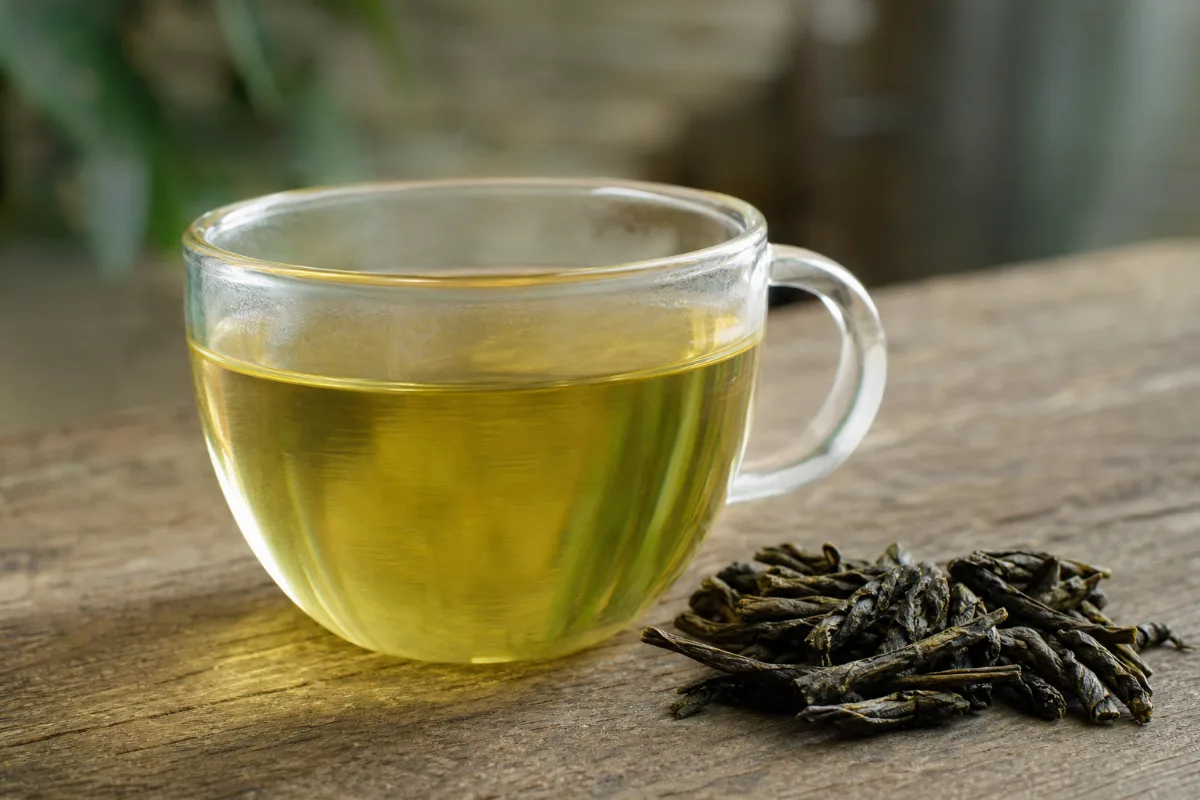
- Dried leaf, rolled or twisted, as tea
- Tea bags or granules
- Extracts, encapsulated extracts and nanoparticles used in research (not the same as tea)
- Small-leaved kuding from other plants (Ligustrum), a different product
Research links: Lipid-lowering efficacy of kuding tea: systematic review and meta-analysis (2022) · Chemical composition, bioactivity and safety aspects of kuding tea (2020 review) · High dietary kuding tea extract and liver enzymes in mice (2019) · Health benefits of bioactive compounds from the genus Ilex (2018 review, caffeine) · Kuding tea comprehensive review (2025) · Research Library · Genes & Biomarkers Library
What it is and its history
- Accepted scientific name
- Ilex latifolia Thunb. (accepted in GBIF). Ilex kudingcha C.J.Tseng is listed in GBIF as a synonym of Ilex kaushue S.Y.Hu.
- Naming authority
- Thunb.; ACCEPTED in the GBIF backbone (usageKey 7315699), checked 2026-10-25. Ilex kudingcha C.J.Tseng (usageKey 5533682) is a SYNONYM of Ilex kaushue S.Y.Hu (usageKey 5533846).
- Synonyms
- Ilex kudingcha C.J.Tseng (synonym of Ilex kaushue S.Y.Hu in GBIF); Ilex kaushue S.Y.Hu (a 2020 review says it appears to be the same species as I. kudingcha)
- Common names
- Kuding tea (English); Kudingcha / Ku Ding Cha (Chinese (pinyin)); Bitter tea / Chinese bitter tea (English); Large-leaved kudingcha (English (the Ilex kinds))
- Family or group
- Aquifoliaceae (the holly family).
- Classification
- Plantae > Aquifoliales > Aquifoliaceae > Ilex > Ilex latifolia (and Ilex kudingcha, see synonyms)
- Native range
- A 2020 review says Ilex kudingcha is mainly found in Fujian, Guangxi, Guangdong, Hainan, Hunan, Hubei and Jiangxi, and Ilex latifolia in Hainan, Jiangxi, Jiangsu and Zhejiang (provinces of China).
- Habitat
- Not verified from a botanical source read.
- What it looks like
- Roots: Not verified.; Stems: Not verified.; Leaves: Large leaves; the dried leaf is rolled or twisted into strips for the tea (Wupper 2020 shows dried and brewed leaves). A 2020 review says the two Ilex species have very similar botanical characteristics.; Flowers: Not verified.; Fruit: Not verified.
- Cultivation
- Not verified in detail.
- Harvest and processing
- Content of phenolic acids and triterpenoids varies a lot between and within species, even among samples from one province (Wupper 2020).
- Look-alikes and adulterants
- Name: Small-leaved kuding (Ligustrum species, e.g. Ligustrum robustum); Note: A different plant (olive family, Oleaceae) also sold as kuding; chemistry and studies differ.; Name: Ilex cornuta ('Gougucha'); Note: A 2020 review says it is now known by that name and was removed from the kuding classification.; Name: Other plants sold as kuding; Note: About 12 species from up to six families are called kuding; the meta-analysis lists Ilex, Ligustrum, Osmanthus, Cratoxylum and Itea species.; Name: Yerba mate and other Ilex drinks; Note: Related holly-genus drinks with better-documented caffeine; not the same plant.; Name: Extracts, granules and capsules; Note: Concentrated products; not the same as a cup of tea.
- Sustainability and conservation
- Not verified.
Photographs
Traditional use and history history, not clinical proof
| Tradition or era | Documented use | Source |
|---|---|---|
| Traditional Chinese medicine and everyday drink in China | A 2020 review says kuding is a bitter herbal tea commonly used in traditional Chinese medicine, and that it has been used to counteract heat and toxins in the body and to manage high blood pressure, high blood fats and obesity. A 2025 review calls it a long-recognised 'food and medicine homology' product. | p32932672 |
| Modern popularity | The 2020 review says kuding has gained importance and popularity worldwide over the last decade and that extracts, encapsulated forms and nanoparticles are now made. | p32932672 |
Traditional use shows how it was used. It does not show that it works or is safe today.
What is inside, and how it may work
What it contains and how those compounds act in cells and animals. Laboratory and animal mechanisms are not proven effects in people.
Main compounds
| Compound | Family | Where it is concentrated | Activity studied | Level of evidence |
|---|---|---|---|---|
| Triterpene saponins (kudinosides, latifolosides) | Triterpenoid saponin | Leaf | Reviews name kudinosides A, D and F among major saponins; lab and mouse work links them with lipid effects. Content varies between species. 13 | Animal research |
| Dicaffeoylquinic acids (for example isochlorogenic acid A) PubChem 6474310 | Phenolic acid (polyphenol) | Leaf | Main polyphenol class studied; lab and mouse antioxidant and anti-obesity findings. 13 9 | Animal research |
| Ursolic acid PubChem 64945 | Pentacyclic triterpenoid | Leaf | The extract diet in the mouse safety study supplied 0.15% ursolic acid. Fed alone at that level it raised liver CYP3A mRNA about 5-fold in mice. 12 9 | Animal research |
| Caffeine PubChem 2519 | Methylxanthine alkaloid | Leaf | A 2018 review names caffeine as the main alkaloid of large-leaved kuding with low alkaloid content; the percentages it repeats have no stated basis and no per-cup measurement exists. 3 9 | Other |
| Theobromine PubChem 5429 | Methylxanthine alkaloid | Leaf | Reported as a minor alkaloid (0.1%) in the same 2018 review. 3 9 | Other |
Mechanisms, receptors and pathways
| Target or pathway | Gene or receptor | What was found | Level |
|---|---|---|---|
| Liver drug-handling enzymes (CYP3A, GSTA1) and transporter Abcc3 | Cyp3a / Gsta1 / Abcc3 | A high-dose encapsulated extract raised their levels in mouse liver. 12 | Animal research |
| Liver X receptor beta | LXRB (NR1H2) | An ethanol extract of Ilex kudingcha inhibited LXR beta activity in a cell assay and lowered weight gain and lipids in mice. 1 | Laboratory research |
| Inflammation signalling in fat tissue (p38 MAPK, NF-kB) | MAPK14 / RELA | An Ilex latifolia supplement reduced these signals in mouse fat tissue. 11 | Animal research |
| Gut microbiota | Not applicable | A review says kuding extract shaped the gut microbiota in mouse feeding studies. 13 | Animal research |
Absorption, metabolism and elimination
- Absorption
- No human absorption study of kuding compounds was found.
- Distribution
- Not found.
- Metabolism
- A review says dicaffeoylquinic acids stayed intact in simulated saliva, stomach and pancreatic fluids and were broken down to simpler acids only during fermentation with human gut bacteria in a dish.
- Elimination
- Not found.
- Bioavailability
- Not measured in people.
Isolated compounds versus whole extracts
The tea is the leaf infused in water. Much research uses ethanol or water extracts, saponin fractions, encapsulated extracts, nanoparticles or single compounds, which are more concentrated than a cup of tea. The human lipid trials do not clearly say which form they used. Results from one form cannot be assumed for another, and no study compared their safety. Any amounts are a question for your doctor or pharmacist.
Nutritional composition
Kuding is a drink, not a food source of vitamins or minerals; none were measured in the sources we read.
1 very low certainty6 not enough evidence
What was looked at
The 7 benefits and uses checked for Kuding Tea (Bitter Tea), each with how strong the evidence is. Tap one to open it.
- Cholesterol and blood fatsVery low certainty
- Heart attacks, strokes and deathsNot enough evidence
- Body weight and fat gainNot enough evidence
- Blood sugarNot enough evidence
- Blood pressureNot enough evidence
- Antioxidant, anti-inflammatory and anticancer activity (lab)Not enough evidence
- Gut bacteriaNot enough evidence
Lab markers tracked in the studies
Total cholesterolTriglyceridesLDL cholesterolHDL cholesterolBody weightFasting blood glucose
What is Kuding Tea (Bitter Tea) good for?
The studied uses of kuding tea and how strong the evidence is. 'Very low' means weak, poorly reported trials; 'insufficient' means no usable human data, only lab or animal work. Many results come from extracts, which are stronger than tea; this is stated where it applies.
Benefits, one by one
Each card is a research question, not a promise. Tap a goal to filter. Open a card to see the studies, doses and limits.
Cholesterol and blood fats
Very low certaintyA 2022 pooling of eight small Chinese trials found lower total cholesterol, triglycerides and LDL cholesterol in the kuding groups than in the comparison groups. The trials were short, poorly reported and compared kuding with drugs, so the result is weak.
1 studiesThe review does not say which form each trial used; amounts varied ve…
Studies, doses and limits
What the trials found
Jiang and colleagues pooled eight trials with 716 people. Compared with the control groups, the kuding groups had lower total cholesterol (-0.56 mmol/L), triglycerides (-0.30) and LDL (-0.29). HDL did not change overall (+0.07, not significant), though trials longer than 4 and up to 8 weeks showed a rise of 0.19. Every control group was given a medicine (statins, blood pressure drugs or metformin), and the text does not make clear whether kuding was taken alone or added to the drug. Randomisation was described, but blinding and allocation concealment were unclear, and results varied a lot between trials (I2 57% to 94%).
Results
Lower total cholesterol, triglycerides and LDL than in drug-treated comparison groups; no clear HDL change.
Effect sizes as reported
Total cholesterol -0.56 mmol/L (95% CI -0.64 to -0.47); triglycerides -0.30 (-0.35 to -0.24); LDL -0.29 (-0.37 to -0.21); HDL +0.07 (-0.02 to 0.16).
Why this rating
All trials were in China, short (2 to 8 weeks) and poorly reported. Every comparison group was given a drug, forms and amounts varied widely, and results were very inconsistent. The pooled figures should be read with great caution. This is our rating; the authors did not give a GRADE.
Form and dose studied
The review does not say which form each trial used; amounts varied very widely.
Who was studied
Adults in China with high blood fats, high blood pressure, metabolic syndrome or type 2 diabetes.
Limits
Blood fats are risk markers, not heart attacks. No trial outside China. Studies were not against a dummy treatment.
Why researchers looked
Kuding has long been drunk in China for what traditional use calls heat and toxins, and for high blood fats, high blood pressure and weight, so Chinese hospital teams tested blood fats.
Traditional use
A 2020 review says kuding is a bitter herbal tea used in traditional Chinese medicine, including to manage high blood pressure, high blood fats and obesity. We did not read the original Chinese texts.
Proposed mechanism Preliminary mechanism
Mouse work suggests saponins and polyphenols from kuding may change how fat is handled in the liver and gut. This is not shown in people.
A proposed mechanism does not show that the effect happens in people.
Do not replace cholesterol or blood pressure medicine with this tea. The review authors say the same. See the safety tab.
Heart attacks, strokes and deaths
Not enough evidenceNo study of kuding has measured heart attacks, strokes or deaths. Only blood fats were measured.
1 studiesNot applicable.
Studies, doses and limits
What the trials found
The meta-analysis looked only at blood fat numbers. We found no human trial of kuding with a heart outcome.
Results
No data.
Effect sizes as reported
Not available.
Why this rating
No human trial measured a heart outcome.
Limits
Absence of evidence is not evidence of no effect or of harm.
Why researchers looked
Better blood fats are a stand-in for lower heart risk, so a real heart outcome is the question that matters.
Traditional use
See the cholesterol entry.
Proposed mechanism Preliminary mechanism
None shown in people.
A proposed mechanism does not show that the effect happens in people.
See the safety tab.
Body weight and fat gain
Not enough evidenceIn mice fed a high-fat diet, kuding extracts reduced weight gain and fat. No trial of kuding tea for weight in people was found.
3 studiesExtracts and supplements in mice, not tea.
Studies, doses and limits
What the trials found
Two mouse studies (an alcohol extract of Ilex kudingcha and a supplement of Ilex latifolia) found less weight gain, smaller fat cells, less fatty liver and better insulin sensitivity on a high-fat diet. A 2020 review says the benefits described are mainly from lab and animal studies and that their relevance in people is unclear. We found no human trial of kuding for weight.
Results
Less weight gain in mice; no human data.
Effect sizes as reported
Not available in people.
Why this rating
Animal and lab data only; no human trial.
Form and dose studied
Extracts and supplements in mice, not tea.
Who was studied
Mice.
Limits
Mouse extracts are far more concentrated than a cup of tea.
Why researchers looked
Kuding is traditionally linked with obesity, so researchers tested extracts in obese mice.
Traditional use
See the cholesterol entry on the About and Benefits tabs: the traditional uses named in the reviews we read include high blood pressure, high blood fats and obesity.
Proposed mechanism Animal mechanism
In mice, an extract blocked a liver and fat-tissue receptor (liver X receptor beta) and calmed inflammation signals. Not shown in people.
A proposed mechanism does not show that the effect happens in people.
Do not replace a weight-loss or diabetes plan from your doctor with tea.
Blood sugar
Not enough evidenceKuding extracts lowered blood glucose in mice. No human trial of kuding for blood sugar was found; one of the lipid trials was in people with type 2 diabetes but did not report blood sugar in the abstract.
4 studiesExtracts in mice.
Studies, doses and limits
What the trials found
In mice on a high-fat diet, an ethanol extract of Ilex kudingcha lowered fasting glucose and improved glucose tolerance, and an Ilex latifolia supplement improved insulin sensitivity. The 2020 review lists blood-glucose lowering as a potential property from in vitro and animal work. The eight-trial lipid meta-analysis included one trial in type 2 diabetes (comparison drug: metformin) but its outcome was blood fats.
Results
Lower glucose in mice; no human blood-sugar result.
Effect sizes as reported
Not available in people.
Why this rating
Animal data only; no human blood-sugar outcome found.
Form and dose studied
Extracts in mice.
Who was studied
Mice.
Limits
Not shown in people.
Why researchers looked
Reviews list blood-sugar lowering among the traditional and studied properties of kuding.
Traditional use
See the cholesterol entry on the About and Benefits tabs: the traditional uses named in the reviews we read include high blood pressure, high blood fats and obesity.
Proposed mechanism Animal mechanism
Mouse data point to changes in fat metabolism and insulin sensitivity. Not shown in people.
A proposed mechanism does not show that the effect happens in people.
If you take medicine for diabetes, ask your doctor or pharmacist before drinking kuding regularly. Any blood-sugar effect in people is unknown.
Blood pressure
Not enough evidenceKuding is traditionally used for high blood pressure, but we found no study that measured blood pressure in people drinking it.
2 studiesNot applicable.
Studies, doses and limits
What the trials found
Two of the eight trials in the lipid meta-analysis enrolled people with high blood pressure, but they reported blood fats, not blood pressure, in that review. No other human blood pressure data were found.
Results
No data.
Effect sizes as reported
Not available in people.
Why this rating
No human blood-pressure result found.
Limits
The tradition is not evidence of an effect.
Why researchers looked
A 2020 review says kuding is used in traditional Chinese medicine to manage high blood pressure.
Traditional use
See the cholesterol entry on the About and Benefits tabs: the traditional uses named in the reviews we read include high blood pressure, high blood fats and obesity.
Proposed mechanism Preliminary mechanism
No mechanism shown in people.
A proposed mechanism does not show that the effect happens in people.
If you take blood pressure medicine, tell your doctor or pharmacist before drinking kuding regularly.
Antioxidant, anti-inflammatory and anticancer activity (lab)
Not enough evidenceLab and animal studies report antioxidant, anti-inflammatory and anticancer activity. Nothing like this has been shown in people.
2 studiesExtracts and isolated compounds, not tea.
Studies, doses and limits
What the trials found
The 2020 review summarises dish studies on human cancer cell lines and mouse studies, and states that the physiological relevance in humans remains unclear. The 2025 review calls kuding promising for many activities, again from non-clinical work. No human trial of anticancer or anti-inflammatory effects was found.
Results
Lab and animal findings only.
Effect sizes as reported
Not available in people.
Why this rating
Cell and animal studies only.
Form and dose studied
Extracts and isolated compounds, not tea.
Who was studied
Cells and mice.
Limits
Dish results rarely carry over to people.
Why researchers looked
Kuding is rich in polyphenols and triterpene saponins, which show these effects in dishes and animals.
Traditional use
See the cholesterol entry on the About and Benefits tabs: the traditional uses named in the reviews we read include high blood pressure, high blood fats and obesity.
Proposed mechanism Laboratory research
Polyphenols and saponins affected cell signalling in cultured cancer cells and mice.
A proposed mechanism does not show that the effect happens in people.
Do not use kuding tea as a cancer treatment.
Gut bacteria
Not enough evidenceReviews say kuding extracts changed gut bacteria in animals. This has not been tested in people.
1 studiesExtracts in mice.
Studies, doses and limits
What the trials found
The 2020 review reports that kuding extract shaped the gut microbiota in mouse feeding studies and says anti-obesity effects may partly work this way. No human gut study was found.
Results
Mouse findings only.
Effect sizes as reported
Not available in people.
Why this rating
Animal data only.
Form and dose studied
Extracts in mice.
Who was studied
Mice.
Limits
Not tested in people.
Why researchers looked
Polyphenols that reach the gut can change which bacteria grow.
Traditional use
See the cholesterol entry on the About and Benefits tabs: the traditional uses named in the reviews we read include high blood pressure, high blood fats and obesity.
Proposed mechanism Animal mechanism
A review says kuding may act partly through the gut microbiota. Animal work only.
A proposed mechanism does not show that the effect happens in people.
None specific.
Connections to the rest of health
How Kuding Tea (Bitter Tea) connects to the rest of our health knowledge graph. Every link says what kind of connection it is. A safety link (for example to the liver) is a warning, not a benefit. A study that merely mentions a topic never creates a benefit link.
Explore every connection: goals, body systems, organs, symptoms, genes
A. Wellness goals
| Connected to | Kind of connection | Evidence status | Context | Studies |
|---|---|---|---|---|
| Cholesterol Balance | Potential benefit | Very low certainty | Cholesterol and blood fats: A 2022 pooling of eight small Chinese trials found lower total cholesterol, triglycerides and LDL cholesterol in the kuding groups than in the comparison groups. The trials were short, poorly reported and compared kuding with drugs, so the result is weak. | 4 |
| Heart Health | Potential benefit | Very low certainty | Cholesterol and blood fats: A 2022 pooling of eight small Chinese trials found lower total cholesterol, triglycerides and LDL cholesterol in the kuding groups than in the comparison groups. The trials were short, poorly reported and compared kuding with drugs, so the result is weak. Heart attacks, strokes and deaths: No study of kuding has measured heart attacks, strokes or deaths. Only blood fats were measured. | 4 |
| Weight Management | Potential benefit | Not enough evidence | Body weight and fat gain: In mice fed a high-fat diet, kuding extracts reduced weight gain and fat. No trial of kuding tea for weight in people was found. | 1 11 13 |
| Blood Sugar Balance | Potential benefit | Not enough evidence | Blood sugar: Kuding extracts lowered blood glucose in mice. No human trial of kuding for blood sugar was found; one of the lipid trials was in people with type 2 diabetes but did not report blood sugar in the abstract. | 1 11 13 4 |
| Blood Pressure Support | Potential benefit | Not enough evidence | Blood pressure: Kuding is traditionally used for high blood pressure, but we found no study that measured blood pressure in people drinking it. | 13 4 |
| Cellular Protection | Potential benefit | Not enough evidence | Antioxidant, anti-inflammatory and anticancer activity (lab): Lab and animal studies report antioxidant, anti-inflammatory and anticancer activity. Nothing like this has been shown in people. | 13 5 |
| Gut Health | Potential benefit | Not enough evidence | Gut bacteria: Reviews say kuding extracts changed gut bacteria in animals. This has not been tested in people. | 13 |
B. Body systems
| Connected to | Kind of connection | Evidence status | Context | Studies |
|---|---|---|---|---|
| Cardiovascular system | Potential benefit | Very low certainty | Eight small Chinese trials on blood fats, drug-controlled. Preparation or compound: Kuding tea or related supplement |
4 |
| Cardiovascular System | Biological association | Very low certainty | Studied for: Cholesterol and blood fats Studied for: Heart attacks, strokes and deaths | 4 |
| Metabolism Weight | Biological association | Not enough evidence | Studied for: Body weight and fat gain | 1 11 13 |
| Blood Sugar Support | Biological association | Not enough evidence | Studied for: Blood sugar | 1 11 13 4 |
| Heart Circulation | Biological association | Not enough evidence | Studied for: Blood pressure | 13 4 |
| Whole Body Balance | Biological association | Not enough evidence | Studied for: Antioxidant, anti-inflammatory and anticancer activity (lab) | 13 5 |
| Gut Health | Biological association | Not enough evidence | Studied for: Gut bacteria | 13 |
C. Body parts and organs
| Connected to | Kind of connection | Evidence status | Context | Studies |
|---|---|---|---|---|
| Liver | Adverse effect or risk | Not enough evidence | Fatty liver signs and raised drug-handling enzymes in mice; no human case found. Fatty liver signs in mice; no human case found. Preparation or compound: High-dose kuding extract in cyclodextrin |
12 |
I. Biomarkers
| Connected to | Kind of connection | Evidence status | Context | Studies |
|---|---|---|---|---|
| LDL cholesterol | Potential benefit | Very low certainty | Pooled difference -0.29 mmol/L versus drug comparison groups. Preparation or compound: Kuding tea or related supplement |
4 |
| Total cholesterol | Biological association | Very low certainty | Measured in trials: lowered. A lab change is not the same as a health benefit. | 4 |
| Triglycerides | Biological association | Very low certainty | Measured in trials: lowered. A lab change is not the same as a health benefit. | 4 |
| LDL cholesterol | Biological association | Very low certainty | Measured in trials: lowered. A lab change is not the same as a health benefit. | 4 |
| HDL cholesterol | Biological association | Mixed findings | Measured in trials: no-change. A lab change is not the same as a health benefit. | 4 |
| Body weight | Biological association | Not enough evidence | Measured in trials: lowered. A lab change is not the same as a health benefit. | 1 11 |
| Fasting blood glucose | Biological association | Not enough evidence | Measured in trials: lowered. A lab change is not the same as a health benefit. | 1 |
J. Genes, receptors and enzymes
| Connected to | Kind of connection | Evidence status | Context | Studies |
|---|---|---|---|---|
| CYP3A drug-handling enzyme | Drug or supplement interaction | Not enough evidence | Raised in mouse liver; effect on drugs in people unknown. Preparation or compound: High-dose kuding extract |
12 |
| CYP3A (drug-handling enzyme) | Preliminary mechanism | Animal | Raised in mouse liver by a high-dose extract. | 12 |
| LXR beta (NR1H2) | Preliminary mechanism | In vitro | Inhibited by a kuding extract in a cell assay. | 1 |
L. Active compounds
| Connected to | Kind of connection | Evidence status | Context | Studies |
|---|---|---|---|---|
| Triterpene saponins (kudinosides, latifolosides) | Biological association | Animal | Reviews name kudinosides A, D and F among major saponins; lab and mouse work links them with lipid effects. Content varies between species. Preparation or compound: Leaf |
13 |
| Dicaffeoylquinic acids (for example isochlorogenic acid A) | Biological association | Animal | Main polyphenol class studied; lab and mouse antioxidant and anti-obesity findings. Preparation or compound: Leaf |
13 9 |
| Ursolic acid | Biological association | Animal | The extract diet in the mouse safety study supplied 0.15% ursolic acid. Fed alone at that level it raised liver CYP3A mRNA about 5-fold in mice. Preparation or compound: Leaf |
12 9 |
| Caffeine | Biological association | Other | A 2018 review names caffeine as the main alkaloid of large-leaved kuding with low alkaloid content; the percentages it repeats have no stated basis and no per-cup measurement exists. Preparation or compound: Leaf |
3 9 |
| Theobromine | Biological association | Other | Reported as a minor alkaloid (0.1%) in the same 2018 review. Preparation or compound: Leaf |
3 9 |
Each connection is stored with the ingredient, the connected record, the kind of connection, the evidence status, the supporting studies, the preparation or compound involved, and a review date (last reviewed October 25, 2026).
Evidence at a glance: what changed in 6 lab markers
Tap a number to show only those markers. Counts are markers, not people.
The evidence
The research centre for Kuding Tea (Bitter Tea). Every record here was checked against PubMed or the publisher's page; we never list a study we have not verified.
Evidence by outcome
Bars show how many studies we found for each outcome, not how well it works. People are added up across trials only (reviews are not added, to avoid double counting).
How we rate evidence
High certainty
Several well-run trials or reviews agree; further research is unlikely to change the picture much.
Moderate certainty
Good trials point the same way, but some doubt remains.
Low certainty
Small, short or inconsistent trials. The finding could change with better research.
Very low certainty
Very little or very weak human data. Treat as a possibility only.
Mixed findings
Trials or reviews disagree with each other.
Not enough evidence
Not enough human research to say either way.
Evidence against
Good research found no benefit, or found harm.
We take the reviewers' own risk-of-bias and GRADE statements where they exist, and otherwise judge from study size, design, consistency, directness and whether a product matches what is sold. Many publications do not make evidence high. Method note: We searched PubMed, read every abstract directly and the full text of three reviews, checked names through GBIF and NCBI, and looked for Memorial Sloan Kettering, NCCIH, LiverTox and LactMed entries and found none. EMA, EFSA, FDA and EU Novel Food were not searched.
Study library: every study we checked 13
| Study | Design | People | Product, dose, length | Result |
|---|---|---|---|---|
| Fan 2012 Extract of Kuding tea prevents high-fat diet-induced metabolic disorders in C57BL/6 mice via liver X receptor (LXR) beta antagonism. PLoS One · PMID 23226556 · DOI |
Animal research animal |
C57BL/6 mice fed a high-fat diet | Ethanol extract of Ilex kudingcha leaf (not tea) leaf extract mixed into feed; extract by gavage in the treatment arm (amounts not repeated) 5 weeks (prevention); 2 weeks after 3 months of high-fat diet (treatment) · vs High-fat diet without extract |
The extract blocked weight gain, reduced fat cell size and lowered triglycerides, cholesterol, LDL and fasting glucose in the prevention arm; in obese mice it reduced fat cell size, triglycerides and fasting glucose. In a cell assay it inhibited liver X receptor beta. Lower weight gain, lipids and glucose in mice Methods, limits and fundingOutcomes: Body weight, fat cell size, blood fats, fasting blood glucose, glucose tolerance Limitations: Mouse study of an alcohol extract: results cannot be assumed for tea or for people. Abstract read, not the full paper. Funding and conflicts: Chinese university research funds; authors declare no competing interests. Read: abstract |
| GBIF Secretariat 2026 GBIF species match: Ilex kudingcha and Ilex latifolia GBIF backbone taxonomy API · Source |
Taxonomy database |
not applicable | Kuding tea (Ilex kudingcha / Ilex latifolia) leaf |
Ilex latifolia Thunb. is ACCEPTED (usageKey 7315699, family Aquifoliaceae). Ilex kudingcha C.J.Tseng (usageKey 5533682) is a SYNONYM whose accepted name is Ilex kaushue S.Y.Hu (usageKey 5533846). Checked 2026-10-25. Reference check Methods, limits and fundingOutcomes: Reference or database check Limitations: Backbone status can change; research papers still use the name Ilex kudingcha. Funding and conflicts: Not applicable (reference source). Read: full-text |
| Gan 2018 Health Benefits of Bioactive Compounds from the Genus Ilex, a Source of Traditional Caffeinated Beverages. Nutrients · PMID 30400635 · DOI |
Narrative review |
Review of Ilex drinks: large-leaved kudingcha, yerba mate, yaupon, guayusa | Ilex leaf drinks including large-leaved kudingcha leaf |
States that methylxanthines, mainly caffeine and theobromine, are the main alkaloids in large-leaved kudingcha, but that alkaloid content is relatively low. It repeats an earlier report that total methylxanthines were around 7% to 9%, of which caffeine was 3% to 6% and theobromine 0.1%. The basis for these percentages (dry weight, extract or other) is not stated in the text we read, and the review does not give a per-cup measurement. Caffeine present as the main alkaloid, amount unclear Methods, limits and fundingOutcomes: Composition and health effects, including alkaloids Limitations: Narrative review; the caffeine percentages are repeated from an earlier paper we did not read, with no stated basis; no measurement in a prepared drink. Funding and conflicts: Authors declare no conflict of interest. Read: full-text |
| Jiang 2022 Lipid-Lowering Efficacy of Kuding Tea in Patients With Metabolic Disorders: A Systematic Review and Meta-Analysis of Randomized Controlled Trials. Front Nutr · PMID 35571915 · DOI |
Meta-analysis |
716 Eight Chinese trials (54 to 120 people each): hyperlipidaemia (4), senile systolic hypertension (1), menopausal women with hypertension (1), metabolic syndrome (1), type 2 diabetes (1) |
Kuding tea or related supplements; the form (tea, granules, extract) is not clear per trial in the text we read leaf amounts varied very widely between trials (not repeated here) 2 to 8 weeks · vs A drug in every trial (atorvastatin x2, simvastatin x2, enalapril, perindopril, metformin x2); the text read does not say clearly whether kuding was given alone or on top of the drug |
Pooled difference versus control: total cholesterol -0.56 mmol/L, triglycerides -0.30, LDL -0.29; HDL +0.07, not significant. In a subgroup of trials lasting over 4 and up to 8 weeks, HDL rose 0.19. Heterogeneity was high (I2 57% to 94%). Total cholesterol WMD -0.56 mmol/L; triglycerides -0.30; LDL -0.29; HDL 0.07 (P = 0.12); HDL in 4-8 week subgroup 0.19 (TC -0.64 to -0.47; TG -0.35 to -0.24; LDL -0.37 to -0.21; HDL -0.02 to 0.16) Methods, limits and fundingOutcomes: Total cholesterol, triglycerides, LDL and HDL cholesterol Limitations: All eight trials were done in China and were short. Every control group received a drug, so the pooled gap is hard to interpret. All described how people were randomised, but allocation concealment, blinding and selective reporting were unclear. The authors say the evidence is limited and that kuding should never replace statins or other drugs. Funding and conflicts: Chinese government science and traditional-medicine funds; the authors declare no commercial conflicts. Registration: PROSPERO CRD42020221850 Read: full-text |
| Liu 2025 Chemical components, health-promoting effects and industrial application of a Chinese bitter tea (Kuding tea): A comprehensive review. Food Chem · PMID 40086389 · DOI |
Narrative review |
Review of kuding chemistry, effects and industry uses | Kuding tea leaf |
Calls kuding a traditional Chinese bitter tea long recognised as a 'food and medicine homology' product, with polyphenols, triterpenoids, phenylethanoids and polysaccharides that show antioxidant, anti-obesity, anti-diabetic, anti-inflammatory, neuroprotective and anti-cancer activities. Abstract only was read; it does not say which of these are from human studies. Promising non-clinical activities listed Methods, limits and fundingOutcomes: Components and health-promoting effects Limitations: Abstract only; promotional wording ('promising and cost-effective'); activities are not shown in people from the abstract. Funding and conflicts: Authors declare no competing interests. Read: abstract |
| Memorial Sloan Kettering Cancer Center 2026 Memorial Sloan Kettering herb page for kuding tea (not found) MSK Integrative Medicine herb database · Source |
Regulatory search |
not applicable | Kuding tea (Ilex kudingcha / Ilex latifolia) leaf |
A guessed address for a kuding tea page returned 404 on 2026-10-25. No MSK entry was found. Reference check Methods, limits and fundingOutcomes: Reference or database check Limitations: Absence of a page is not proof that nothing exists. Funding and conflicts: Not applicable (reference source). Read: summary-only |
| NCBI 2026 NCBI Taxonomy: Ilex latifolia and Ilex kudingcha NCBI Taxonomy · Source |
Taxonomy database |
not applicable | Kuding tea (Ilex kudingcha / Ilex latifolia) leaf |
Both names return one record each (Ilex latifolia taxid 53205; Ilex kudingcha taxid 1006183). Checked 2026-10-25. Reference check Methods, limits and fundingOutcomes: Reference or database check Limitations: Name search only; records not opened in full. Funding and conflicts: Not applicable (reference source). Read: summary-only |
| NCBI Bookshelf 2026 NCBI Bookshelf search for kuding in LiverTox and LactMed (no hits) NCBI Bookshelf index · Source |
Regulatory search |
not applicable | Kuding tea (Ilex kudingcha / Ilex latifolia) leaf |
A search of the Bookshelf index for kuding, kudingcha and Ilex latifolia returned 0 records on 2026-10-25, so no LiverTox or LactMed entry was found. Reference check Methods, limits and fundingOutcomes: Reference or database check Limitations: Index search only; LiverTox and LactMed pages themselves were not opened. Funding and conflicts: Not applicable (reference source). Read: summary-only |
| NCBI PubChem 2026 PubChem compound lookups: ursolic acid, caffeine, theobromine, isochlorogenic acid A PubChem PUG REST · Source |
Chemistry database |
not applicable | Kuding tea (Ilex kudingcha / Ilex latifolia) leaf |
Ursolic acid CID 64945 (C30H48O3); caffeine CID 2519; theobromine CID 5429; isochlorogenic acid A (3,5-dicaffeoylquinic acid) CID 6474310 (C25H24O12). Matched by name on 2026-10-25. Reference check Methods, limits and fundingOutcomes: Reference or database check Limitations: Identity check by name only. Funding and conflicts: Not applicable (reference source). Read: full-text |
| NCCIH (US) 2026 NCCIH fact sheet for kuding tea (not found) NCCIH · Source |
Regulatory search |
not applicable | Kuding tea (Ilex kudingcha / Ilex latifolia) leaf |
A guessed address returned 404 on 2026-10-25. No NCCIH document was found. Reference check Methods, limits and fundingOutcomes: Reference or database check Limitations: Absence of a page is not proof that nothing exists. Funding and conflicts: Not applicable (reference source). Read: summary-only |
| Wu 2017 Ilex latifolia Thunb protects mice from HFD-induced body weight gain. Sci Rep · PMID 29116160 · DOI |
Animal research animal |
Male mice on a high-fat diet | Ilex latifolia supplement (form not stated in the abstract) leaf not given in the abstract 14 weeks · vs High-fat diet without supplement |
Treated mice resisted weight gain and fatty liver, had better insulin sensitivity and lower inflammation markers, with changes in p38 MAPK and NF-kB signalling in fat tissue. Less weight gain and better insulin sensitivity in mice Methods, limits and fundingOutcomes: Body weight, fatty liver, insulin sensitivity, inflammation markers Limitations: Mouse study; the preparation is not described in the abstract. Not shown in people. Funding and conflicts: Authors declare no competing interests. Read: abstract |
| Wupper 2019 High Dietary Kuding Tea Extract Supplementation Induces Hepatic Xenobiotic-Metabolizing Enzymes-A 6-Week Feeding Study in Mice. Nutrients · PMID 31877869 · DOI |
Animal research animal |
Male C57BL/6 mice on a high-fat, high-fructose diet; also liver cells (HepG2) in a dish | Kuding tea extract (KTE) encapsulated in gamma-cyclodextrin, versus cyclodextrin alone or the ursolic acid it contains leaf a high dietary amount (7.12% of the diet as extract); not a cup of tea 6 weeks · vs Same diet with cyclodextrin only |
The encapsulated extract raised liver weight and liver fat, increased plasma cholesterol, and strongly raised the liver enzymes CYP3A and GSTA1 that handle drugs; ursolic acid alone caused a smaller rise. In liver cells the extract was increasingly toxic with higher concentration. Food intake, body weight and body composition did not change. Fatty liver signal and drug-enzyme induction at a high extract intake in mice Methods, limits and fundingOutcomes: Liver weight and fat, liver drug-handling enzymes, blood cholesterol, liver-cell toxicity Limitations: Mouse study of a concentrated extract in a special capsule at a high feed share. Not tea and not shown in people. Authors say the data may contribute to safety assessment and that the enzymes involved handle drugs. Funding and conflicts: Industry link: several authors work for CycloChem Bio Co., Ltd., a cyclodextrin company, and its president is a co-author (conflict statement). Read: abstract |
| Wupper 2020 Chemical Composition, Bioactivity and Safety Aspects of Kuding Tea-From Beverage to Herbal Extract. Nutrients · PMID 32932672 · DOI |
Narrative review |
Review of lab, animal and some human-relevant literature on large-leaved kuding (Ilex latifolia, Ilex kudingcha) | Kuding tea and its extracts leaf |
Calls kuding a bitter herbal tea used in traditional Chinese medicine and says the traditional beverage has a long history of consumption and is generally considered safe (citing an earlier review). Says high extract supplementation can adversely affect liver metabolism and that safety of extracts as supplements needs re-evaluating. Says the benefits reviewed come mainly from in vitro and animal studies, so the relevance for people is unclear. Notes chemistry differs a lot between and within species. Tea long drunk and considered safe; extracts at high amounts need safety checks Methods, limits and fundingOutcomes: Composition, bioactivity and safety Limitations: Narrative review, not systematic. 'Generally considered safe' rests on tradition and an earlier review, not on a human safety trial. Authors include the team that ran the mouse extract study. Funding and conflicts: Authors declare no conflict of interest. Read: full-text |
What we do not know yet
- No trial outside China, and none against a dummy drink, was found.
- No human trial measured heart attacks, blood pressure, weight or blood sugar for kuding tea.
- No measurement of caffeine in a prepared cup exists; the percentages in one review have no stated basis.
- No human safety trial or side-effect count was found, and no study of kuding with medicines.
- No pregnancy, breastfeeding, children's or kidney data were found.
- MSK, NCCIH, LiverTox and LactMed had no entry we could find; EMA, EFSA, FDA and EU Novel Food were not searched.
- The old Chinese texts were not read; history is credited to reviews.
How new research is added
New studies are found by a saved PubMed search and placed in a review queue. A person checks each one before it is added.
Lab markers
What changed in blood or saliva tests during trials. A changed number is not the same as feeling or being healthier, and we give no "normal ranges".
Metabolic 6
Total cholesterol
Lowered in trials
All cholesterol carried in the blood.
Very low certaintyResults and what it means
Why it was measured
A general marker of heart risk.
Statistical vs. clinical meaning
A modest drop in a weak, drug-controlled set of trials; not a heart outcome.
Safety implication
None reported in the review.
| Study | Result | People | Product |
|---|---|---|---|
| 4 | -0.56 mmol/L versus control (95% CI -0.64 to -0.47); 8 trials | 8 Chinese trials, 716 people with high blood fats, high blood pressure, metabolic syndrome or diabetes | Kuding tea or related supplement versus a drug comparator |
Triglycerides
Lowered in trials
The main fat carried in the blood.
Very low certaintyResults and what it means
Why it was measured
High levels go with heart and metabolic risk.
Statistical vs. clinical meaning
Very inconsistent between trials; not a heart outcome.
Safety implication
None reported in the review.
| Study | Result | People | Product |
|---|---|---|---|
| 4 | -0.30 mmol/L versus control (95% CI -0.35 to -0.24); I2 88.6% | 8 Chinese trials, 716 people with high blood fats, high blood pressure, metabolic syndrome or diabetes | Kuding tea or related supplement versus a drug comparator |
LDL cholesterol
Lowered in trials
The 'bad' cholesterol carried in the blood.
Very low certaintyResults and what it means
Why it was measured
A main marker of heart risk.
Statistical vs. clinical meaning
A small drop; statins in the comparison groups lower LDL a lot, so the pooled gap is hard to read.
Safety implication
None reported in the review.
| Study | Result | People | Product |
|---|---|---|---|
| 4 | -0.29 mmol/L versus control (95% CI -0.37 to -0.21); 5 trials; I2 89.4% | 8 Chinese trials, 716 people with high blood fats, high blood pressure, metabolic syndrome or diabetes | Kuding tea or related supplement versus a drug comparator |
HDL cholesterol
No clear change in trials
The 'good' cholesterol carried in the blood.
Mixed findingsResults and what it means
Why it was measured
Higher levels go with lower heart risk.
Statistical vs. clinical meaning
The overall result is null; a subgroup rose. Subgroup findings are weaker than the main result.
Safety implication
None reported in the review.
| Study | Result | People | Product |
|---|---|---|---|
| 4 | +0.07 mmol/L overall, not significant (95% CI -0.02 to 0.16); trials longer than 4 and up to 8 weeks +0.19 (0.13 to 0.25) | 8 Chinese trials, 716 people with high blood fats, high blood pressure, metabolic syndrome or diabetes | Kuding tea or related supplement versus a drug comparator |
Body weight
Lowered in trials
How heavy a body is.
Not enough evidenceResults and what it means
Why it was measured
A basic obesity outcome.
Statistical vs. clinical meaning
Animal result only.
Safety implication
Not applicable.
Fasting blood glucose
Lowered in trials
Blood sugar after fasting.
Not enough evidenceResults and what it means
Why it was measured
A standard sign of how blood sugar is controlled.
Statistical vs. clinical meaning
Animal result only; no human trial.
Safety implication
Not applicable.
| Study | Result | People | Product |
|---|---|---|---|
| 1 | Lower fasting glucose and better glucose tolerance in prevention arm; lower fasting glucose in obese mice | Mice | Ethanol extract of Ilex kudingcha |
Safety
What studies and official sources say about side effects, medicines and who should check first. Each point shows what kind of evidence it comes from.
Main points to know 5
- High-dose kuding extract caused fatty liver signs in mice; this was an extract, not tea. In a 6-week mouse study, a concentrated kuding extract in a cyclodextrin capsule, fed at a high share of the diet, raised liver weight and liver fat and strongly raised the liver enzymes that handle drugs (CYP3A and GSTA1). In liver cells in a dish it became more toxic as the concentration rose. The authors say this may help safety assessment and that the extract might interfere with how the body handles drugs. We found no human liver report. Industry link: authors from a cyclodextrin company. Animal research 12 13
- Caffeine content is unclear. One 2018 review of Ilex drinks says caffeine and theobromine are the main alkaloids of large-leaved kuding but that overall alkaloid content is low, repeating figures of 3% to 6% caffeine whose basis is unclear. Another review of kuding safety does not mention caffeine. We found no measurement of a prepared cup. Until one exists, treat caffeine as possible but unmeasured if you are sensitive, pregnant or avoiding it. A web claim that kuding is caffeine-free could not be traced to a source we could read. Other 3 13
- 'Kuding' covers about 12 plants, so the label matters. Reviews say about 12 species from up to six plant families are sold as kuding. The large-leaved kind (Ilex kudingcha, Ilex latifolia) differs from the small-leaved kind (Ligustrum, an olive-family plant). Chemistry varies even within one species and province. Results for one kind cannot be assumed for another. Other 13 4
- No human safety trial or side-effect count was found. Reviews say kuding tea has a long history as a drink and is generally considered safe, but that rests on tradition. The meta-analysis of eight Chinese trials does not report side effects in its abstract, and we found no study that set out to measure harm in people. Other 13 4
- It should not replace cholesterol, blood pressure or diabetes medicines. Every trial in the lipid meta-analysis used a medicine as the comparison (statins, blood pressure drugs or metformin). The authors write that kuding supplements should never replace statins or other drugs. No study tested kuding together with these medicines for safety. Authoritative guidance 4
Side effects 4
| Effect | How often | Severity and recovery | Evidence |
|---|---|---|---|
| Fatty liver and raised liver weight (mice, high extract intake) Concentrated extract in cyclodextrin; not tea; not shown in people. Industry-linked authors. | Not applicable; animal study | unknown in people Not studied | Animal research 12 |
| Toxicity to liver cells in a dish at higher concentrations The authors say it may be partly due to ursolic acid. | Not applicable; lab study | unknown in people Not studied | Laboratory research 12 |
| Bitter taste The name 'kuding' means bitter; this is a description, not a harm. | Typical of the tea | mild Not applicable | Other 13 |
| Possible caffeine effects (sleep, jitters, racing heart) A precaution because the caffeine content is unclear; no kuding-specific report of these effects was found. | Unknown; caffeine amount in a cup not measured | unknown Usually reversible with caffeine | Other 3 |
Liver
We found no human case report or trial of liver injury from kuding tea. The concern comes from a mouse study of a high-dose extract (fatty liver signs, strong rise in drug-handling enzymes) and liver-cell tests. Whether a normal cup of tea affects the liver in people is not known. 12 13 8
How often. No frequency can be given; no human cases were found.
Monitoring. No official monitoring advice was found. If you have liver disease or take liver-tested medicines, ask your doctor before regular use, and ask before using any concentrated extract.
This is a safety connection. It is not evidence that Kuding Tea (Bitter Tea) supports liver health.
Medicines and supplements 5
| With | Why it matters | Importance | Evidence | What to do |
|---|---|---|---|---|
| Medicines broken down by liver enzymes such as CYP3A (many common drugs) drug | In mice, a high-dose extract strongly raised CYP3A, GSTA1 and a drug transporter (Abcc3). More of these enzymes can speed up how fast some drugs are cleared. | Unknown in people; the authors say it may interfere with drug handling. Evidence is a mouse study of an extract. | Animal research Not enough evidence 12 13 | Ask your pharmacist before regular use if you take medicine with a narrow safe range, such as transplant or blood-thinning drugs. Extracts are the bigger question than tea. |
| Cholesterol medicines (statins) prescription | Not studied. Kuding was compared against statins in four trials, not combined. | Unknown. The meta-analysis authors say kuding should never replace statins. | Authoritative guidance Not enough evidence 4 | Do not stop or swap a statin for kuding. Tell your doctor if you drink it regularly. |
| Blood pressure medicines (enalapril, perindopril were comparators) prescription | Not studied. Two trials used these drugs as the comparison; no blood pressure result is reported in the review we read. | Unknown. A tea traditionally used for high blood pressure could in theory add to a drug, but this is not shown. | Other Not enough evidence 4 13 | Tell your doctor or pharmacist if you drink it regularly and take blood pressure medicine. |
| Diabetes medicines (metformin was a comparator) prescription | Not studied in people. Mouse extracts lowered glucose. | Unknown. Whether kuding changes blood sugar in people was not found. | Animal research Not enough evidence 4 1 | If you take diabetes medicine, check with your doctor or pharmacist before regular use and do not replace treatment. |
| Caffeine from other sources, and stimulants other | If kuding contains caffeine (the sources are unclear), effects could add to coffee, tea or stimulant medicines. | Unknown; caffeine in a cup has not been measured. | Other Not enough evidence 3 | If you are caffeine-sensitive, treat it as possibly caffeinated. |
Who should check first 7
| Situation | Advice | Evidence |
|---|---|---|
| Liver disease or unexplained liver test changes | Ask a doctor before regular use. Avoid concentrated extracts. | Animal research 12 |
| Kidney disease | No source on kuding and the kidneys was found. Ask a doctor; this is absence of evidence, not a known harm or a clearance. | Other |
| Taking medicine for blood pressure, cholesterol or diabetes | Do not replace it with kuding. Tell your doctor or pharmacist about regular use. | Authoritative guidance 4 |
| Pregnancy and breastfeeding | No human data and no LactMed or regulator entry found. Because caffeine content is unclear, ask a doctor or midwife. This is absence of evidence, not a known harm. | Other 8 3 |
| Children | No safety guidance for children was found. Ask a doctor. | Other |
| Caffeine sensitivity, heart rhythm problems, trouble sleeping | Caffeine content is unclear; ask a doctor. | Other 3 |
| Known allergy to holly (Ilex) plants or olive-family plants | No kuding allergy report was found, so the risk is unquantified. | Other |
Overdose, product quality and regulators
Summary. The tea has a long history as a drink and reviews call it generally considered safe, but that is tradition, not a safety trial. Safety signals come from a mouse study of a high-dose extract.
Animal. Mice on a high-fat, high-fructose diet fed a high share of kuding extract in cyclodextrin for six weeks had higher liver weight, more liver fat, higher plasma cholesterol and strongly raised CYP3A and GSTA1. A review also says kudingcha nanoparticles did not kill half of rats at very high amounts over 14 days.
Human doses studied. Trials in the meta-analysis lasted 2 to 8 weeks; the review does not say clearly which form each used and amounts varied very widely. Side effects are not reported in the abstract.
High dose or long term signals. The mouse liver signals were at a high extract intake over 6 weeks. No long-term human study was found.
Overdose response. No overdose syndrome was found in the sources.
Genotoxicity. Not covered in the sources read.
Toxic or hazardous parts. No toxic plant part was named in the sources read; the leaf is used.
We found no kuding-specific study of heavy metals, pesticides or adulteration. The clearest quality issue is the many plants sold under one name.
Several plants sold as kuding. Reviews say about 12 species from up to six families are called kuding, including large-leaved Ilex kinds and small-leaved Ligustrum kinds. The meta-analysis lists Ilex, Ligustrum, Osmanthus, Cratoxylum and Itea species. Chemistry differs between and within species. 13 4
Heavy metals and pesticides. No study of metals or pesticides in kuding tea was found in our searches.
Extracts and nanoparticle products. Extracts, encapsulated forms and nanoparticles exist in research. They are more concentrated than tea and were tested separately. 13 12
| Body | Action | Date |
|---|
When to get medical help
- Yellow skin or eyes, dark urine, pale stools or severe belly pain while using kuding, especially a concentrated extract: stop and see a doctor.
- Racing heart, chest pain, severe shakiness or inability to sleep after drinking it: stop and ask a doctor (caffeine content is unclear).
- Swelling of the lips or throat, hives or trouble breathing: emergency care (no kuding allergy report was found, but any allergy can be serious).
- If you take transplant, blood-thinning or other narrow-range medicines, tell your prescriber before regular use.
Stop using the product and contact a clinician or emergency service. In the US, Poison Control is 1-800-222-1222.
General information only, not medical advice. Ask a clinician or pharmacist before use, especially with medicines, in pregnancy or with a health condition. See the Natural Remedy Safety guide.
Frequently asked questions
What is kuding tea?
Is kuding the same as green tea?
Does kuding tea lower cholesterol?
Possibly a little, but the evidence is very weak. Eight small Chinese trials pooled to lower cholesterol, but every comparison group got a drug and the trials were poorly reported. Do not replace cholesterol medicine with it.
Does kuding tea contain caffeine?
Does kuding tea lower blood pressure?
Does kuding tea help with diabetes or blood sugar?
Can kuding tea help with weight loss?
Is kuding tea bad for the liver?
No human liver case was found. A mouse study of a high-dose concentrated extract (with industry-linked authors) found fatty liver signs and raised drug-handling enzymes, and liver cells in a dish were harmed at higher concentrations. That was an extract, not tea. Stop and see a doctor if you turn yellow or have dark urine.
Can I drink kuding tea if I take medicine?
Is kuding tea safe in pregnancy or while breastfeeding?
What is the difference between kuding tea and kuding extract?
Explore by health goal
Heart HealthCholesterol BalanceWeight ManagementBlood Sugar BalanceBlood Pressure SupportCellular ProtectionGut Health
Editorial transparency
- Written by
- AlternativeMed editorial team. Research compiled with AI assistance, then checked against the original sources.
- Medical review
- None. This page has not been reviewed by a physician or pharmacist.
- First published
- 2026-10-25
- Last substantive update
- 2026-10-25
- How we research
- We searched PubMed, read every abstract directly and the full text of three reviews, checked names through GBIF and NCBI, and looked for Memorial Sloan Kettering, NCCIH, LiverTox and LactMed entries and found none. EMA, EFSA, FDA and EU Novel Food were not searched.
- How we rate evidence
- See "How we rate evidence" in the Evidence tab.
- Independence
- No product is promoted on this page. No affiliate links are shown. The mouse extract study has authors from a cyclodextrin company, which is noted. Funding of the Chinese trials is not stated.
Sources 13
Each source was opened and checked. Where we read only the abstract, it says so. The small numbers in the text point here.
- Fan S, Zhang Y, Hu N, et al.. Extract of Kuding tea prevents high-fat diet-induced metabolic disorders in C57BL/6 mice via liver X receptor (LXR) beta antagonism.. PLoS One. 2012. PMID 23226556. DOI 10.1371/journal.pone.0051007. (abstract)
- GBIF Secretariat. GBIF species match: Ilex kudingcha and Ilex latifolia. GBIF backbone taxonomy API. 2026. (full-text)
- Gan RY, Zhang D, Wang M, et al.. Health Benefits of Bioactive Compounds from the Genus Ilex, a Source of Traditional Caffeinated Beverages.. Nutrients. 2018. PMID 30400635. DOI 10.3390/nu10111682. (full-text)
- Jiang Z, Lu Z, Wang T, et al.. Lipid-Lowering Efficacy of Kuding Tea in Patients With Metabolic Disorders: A Systematic Review and Meta-Analysis of Randomized Controlled Trials.. Front Nutr. 2022. PMID 35571915. DOI 10.3389/fnut.2022.802687. (full-text)
- Liu X, Lin X, Fei T, et al.. Chemical components, health-promoting effects and industrial application of a Chinese bitter tea (Kuding tea): A comprehensive review.. Food Chem. 2025. PMID 40086389. DOI 10.1016/j.foodchem.2025.143792. (abstract)
- Memorial Sloan Kettering Cancer Center. Memorial Sloan Kettering herb page for kuding tea (not found). MSK Integrative Medicine herb database. 2026. (summary-only)
- NCBI. NCBI Taxonomy: Ilex latifolia and Ilex kudingcha. NCBI Taxonomy. 2026. (summary-only)
- NCBI Bookshelf. NCBI Bookshelf search for kuding in LiverTox and LactMed (no hits). NCBI Bookshelf index. 2026. (summary-only)
- NCBI PubChem. PubChem compound lookups: ursolic acid, caffeine, theobromine, isochlorogenic acid A. PubChem PUG REST. 2026. (full-text)
- NCCIH (US). NCCIH fact sheet for kuding tea (not found). NCCIH. 2026. (summary-only)
- Wu H, Chen YL, Yu Y, et al.. Ilex latifolia Thunb protects mice from HFD-induced body weight gain.. Sci Rep. 2017. PMID 29116160. DOI 10.1038/s41598-017-15292-x. (abstract)
- Wupper S, Fischer A, Luersen K, et al.. High Dietary Kuding Tea Extract Supplementation Induces Hepatic Xenobiotic-Metabolizing Enzymes-A 6-Week Feeding Study in Mice.. Nutrients. 2019. PMID 31877869. DOI 10.3390/nu12010040. (abstract)
- Wupper S, Luersen K, Rimbach G. Chemical Composition, Bioactivity and Safety Aspects of Kuding Tea-From Beverage to Herbal Extract.. Nutrients. 2020. PMID 32932672. DOI 10.3390/nu12092796. (full-text)
Where to buy
Check the label first. Whatever you buy, look for these:
- The herb is the first or only ingredient
- Organic or lab-tested if that matters to you
- Loose leaf or tea bags, and how long they have been stored
- If you take medicines or are pregnant, ask a pharmacist about the herb first
Talk to a pharmacist or doctor before you start any supplement, especially if you take medicines. See the Safety tab for interactions.
Support our free guides: as an Amazon Associate we earn from qualifying purchases. Full disclosure.


