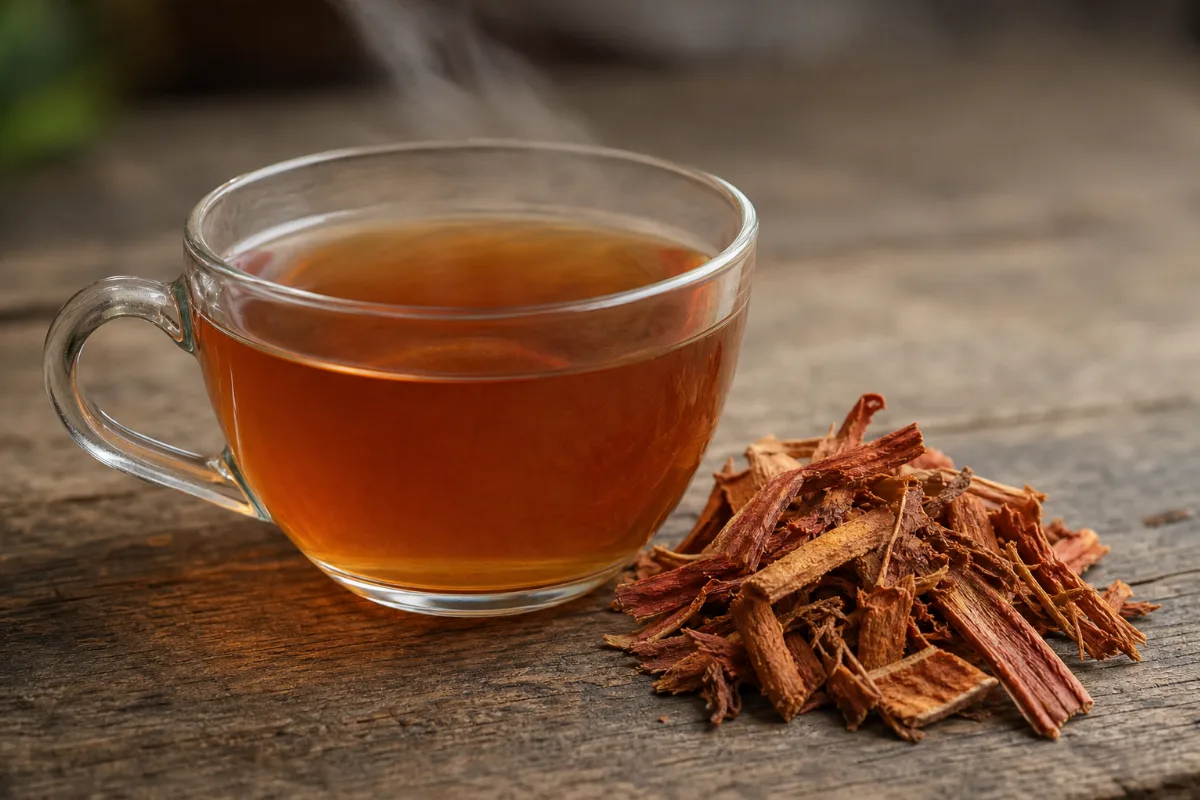
Herbal Teas & Extracts · Herbal tea
Lapacho (Pau d'Arco) Tea
Handroanthus impetiginosus (syn. Tabebuia impetiginosa, Tabebuia avellanedae) · also called Pau d'arco tea, lapacho, red lapacho, taheebo, ipe roxo, trumpet bush.
Lapacho tea is made from the inner bark of a South American tree, and it has been used as a traditional remedy for a very long time. Nobody has tested the tea in people. Most of the research is lab work or drug trials of single chemicals, and one of those chemicals, lapachol, works against vitamin K like a blood thinner. Anyone on blood thinners, pregnant, breastfeeding or having cancer treatment should ask a doctor first.
General information, not medical advice. Last substantive update · Not medically reviewed. A named clinician has not signed off on this page. How this page is made
About Lapacho (Pau d'Arco) Tea
Lapacho tea is a drink made from the inner bark of a South American tree, also called pau d'arco or taheebo. People use it for infections, inflammation and cancer, but no human trial of the tea exists, and most research is lab work or drug trials of single chemicals. The main cautions are bleeding and blood-thinner interactions (the bark chemical lapachol works against vitamin K), pregnancy and breastfeeding, children, and never using it in place of cancer treatment.
Safety first
Lapachol, a chemical in the bark, blocks vitamin K enzymes in rat liver in a way that resembles warfarin-type blood thinners. A 2009 review lists this as one of the most important interactions, and Memorial Sloan Kettering says pau d'arco may add to the effect of anticoagulant and antiplatelet drugs, with unknown clinical relevance. People on blood thinners, with bleeding problems or facing surgery should talk to a doctor or pharmacist first.
Memorial Sloan Kettering lists nausea, vomiting and urine discoloration from a lapachol study, and animal findings of anaemia, fetotoxic effects and chromosomal changes. No safety study of the tea was found. Avoid in pregnancy and breastfeeding, and do not give to children.
What it is
Lapacho tea is a decoction (a water-based drink made from bark) of the inner bark of Handroanthus impetiginosus, a canopy tree of the Amazon and other parts of South America. Several related Tabebuia trees are sold under the same names, so the species in a product can be unclear. The tree is in the trumpet-tree family, not the tea plant (Camellia sinensis). We found no measurement of caffeine in lapacho tea.
The tea is the traditional form. Modern supplements are mostly tablets, capsules and tinctures (Memorial Sloan Kettering).
Tea, capsule and isolated chemical are not the same thing
A cup of tea, a bark capsule, an alcohol extract and a drug made from one chemical are different products. The two best-known chemicals, lapachol and beta-lapachone, were tried as drugs. In one mouse study a bark extract had no detectable beta-lapachone, so the bark cannot be assumed to act like the drug. One health library (summary-only) says the key compounds dissolve poorly in water, so tea may deliver less than other forms. Memorial Sloan Kettering says the effects are hard to predict because of species, plant part, extraction method and the other factors.
A 2009 review says bark material on the market varies in quality and make-up. A secondary web source describes tests in which few products held much lapachol; we could not trace that to the original paper. In short, a tea may carry little lapachol, or an unknown amount, and a label usually cannot tell you.
History and respect for its origins
The inner bark has long been used by local and traditional healers in South America. The scientific reviews we read describe this use but do not name the Indigenous or local peoples who developed it, so we cannot credit any people by name here. The knowledge belongs to those communities.
In 1967 Brazilian press reports of cancer cures brought wide attention, and in the 1960s and 1970s the US National Cancer Institute studied the plant and tested lapachol. The reports of cures were not borne out in the studies we could read.
What the research shows
Human evidence is small: one 12-woman capsule trial for period pain and one 40-person study of a lapacho-based mouth solution, neither with a comparison group, and neither using tea. Everything else is lab, animal or traditional. A 2025 review of lab studies says Tabebuia extracts hold promise for finding new molecules, which is a step before any treatment.
A lab study of a water extract, the nearest model to tea, switched on a protective cell pathway (Nrf2). That is a cell finding, and its authors work for a drug company.
The tree and where the bark comes from
The tea comes from the inner bark of a large rainforest tree. None of the sources we read measured how much bark is taken or whether wild trees are at risk, so we cannot say. If you buy bark, a seller who names the species, the part and where it was grown or harvested is easier to trust than one that does not.
At a glance
Traditional uses history, not proof
- A decoction of the inner bark, taken in South American traditional medicine for infections, fever, malaria and stomach and bladder complaints (2009 review). The sources do not name the peoples who developed this use; the knowledge belongs to those communities.
- Press reports of cancer cures in Brazil in 1967 made it famous; this is publicity, not proof (2009 review).
- Today tablets and capsules are the usual supplement forms; the tea is the traditional form (Memorial Sloan Kettering).
Studied for research
- The tea itself, insufficient (no human study found)
- Period pain, very low (one 12-woman capsule trial with no comparison group)
- Mouth sores during head and neck radiotherapy, insufficient (one 40-person study of a lapacho-based product, not tea)
- Cancer: lab and drug research on isolated chemicals only; lapachol gave no clinical improvement in leukemia (1974, as Memorial Sloan Kettering reports it)
- Inflammation, immunity, infections, blood fats: lab, animal or traditional only
Main compounds
- Lapachol (CID 3884), a naphthoquinone that blocks vitamin K enzymes in lab tests
- Beta-lapachone (CID 3885), the basis of cancer drug analogues
- Other phenolic compounds found in a water extract in one cell study
Common forms
- Inner-bark tea or decoction (the traditional form)
- Bark powder in capsules or tablets (used in the one period-pain trial)
- Tinctures (alcohol extracts)
- Isolated lapachol or beta-lapachone (drug research, not the same as the bark)
Research links: Memorial Sloan Kettering: Pau D'Arco · Red lapacho review (2009) · Lapachol and vitamin K enzymes (1984) · Early-stage (phase I) trial of the drug analogue ARQ 761 (2018) · Pau d'arco capsules for period pain (2022) · Research Library · Genes & Biomarkers Library
What it is and its history
- Accepted scientific name
- Handroanthus impetiginosum (Mart. ex DC.) Mattos
- Naming authority
- Mart. ex DC. / Mattos
- Synonyms
- Tabebuia avellanedae Lorentz ex Griseb.; Tabebuia impetiginosa (Mart. ex DC.) Standl.
- Common names
- Pau d'arco (Portuguese/English); Lapacho (red lapacho) (Spanish/English); Ipe roxo (Portuguese); Taheebo (English trade name); Trumpet bush (English (Memorial Sloan Kettering))
- Family or group
- Bignoniaceae (trumpet-tree family). It is not the tea plant (Camellia sinensis).
- Classification
- Plantae > Tracheophyta > Magnoliopsida > Lamiales > Bignoniaceae > Handroanthus > Handroanthus impetiginosum
- Native range
- Amazon rainforest and other parts of South America (2009 and 2020 reviews).
- Habitat
- A canopy tree (2009 review); further detail not verified.
- What it looks like
- Roots: Not described in sources read; Stems: Not described in sources read; Leaves: Not described in sources read; Flowers: Not described in sources read; Fruit: Not described in sources read
- Cultivation
- Not covered.
- Harvest and processing
- The inner bark is used, traditionally as a decoction (2009 review). Further detail not verified.
- Look-alikes and adulterants
- Name: Other Tabebuia/Handroanthus species; Note: Several species are sold as pau d'arco or lapacho; Memorial Sloan Kettering says several Tabebuia species are used, so product identity can be unclear.
- Sustainability and conservation
- Not covered by the sources read: nothing measured how much bark is taken or whether wild trees are at risk. This is a gap, not reassurance.
Photographs
Traditional use and history history, not clinical proof
| Tradition or era | Documented use | Source |
|---|---|---|
| South American traditional medicine | The inner bark has long been taken as a decoction by local and traditional healers for bacterial and fungal infections, fever, syphilis, malaria, trypanosomiasis, and stomach and bladder disorders. The sources do not name particular peoples, and this knowledge belongs to the communities who kept it. | p18992801 |
| 1873 onward | Biomedical uses of red lapacho were reported as early as 1873. | p18992801 |
| 1960s | After Brazilian press reports of cancer cures in 1967, the US National Cancer Institute studied the plant and isolated lapachol and beta-lapachone. | p18992801 |
| 1974 | An early clinical study of lapachol (NSC-11905) was reported; Memorial Sloan Kettering says lapachol gave no clinical improvement in chronic myelocytic leukemia. | s-msk-pau-darco |
Traditional use shows how it was used. It does not show that it works or is safe today.
What is inside, and how it may work
What it contains and how those compounds act in cells and animals. Laboratory and animal mechanisms are not proven effects in people.
Main compounds
| Compound | Family | Where it is concentrated | Activity studied | Level of evidence |
|---|---|---|---|---|
| Lapachol PubChem 3884 | Naphthoquinone | Inner bark / wood | Blocks vitamin K enzymes in rat liver microsomes (warfarin-like); studied as a drug and as a cosmetic ingredient 16 13 | Laboratory research |
| Beta-lapachone PubChem 3885 | Ortho-naphthoquinone | Heartwood (originally isolated); can be made from lapachol | Inhibits topoisomerase I and induces NQO1; the basis of drug analogues such as ARQ 761 6 4 14 | Human (drug analogue) |
| Water-extract fractions (benzene triols / tetraols) | Phenolic compounds | Not stated | Found in the active fractions of a water extract that switched on Nrf2 in cells 18 | Laboratory research |
Mechanisms, receptors and pathways
| Target or pathway | Gene or receptor | What was found | Level |
|---|---|---|---|
| Vitamin K cycle (vitamin K epoxide reductase and quinone reductase) | VKOR | Lapachol inhibits both enzymes in rat liver microsomes, resembling coumarins; absent in warfarin-resistant rat microsomes. 16 | Laboratory research |
| NQO1 bioactivation | NQO1 | ARQ 761, a beta-lapachone analogue, exploits high NQO1 in tumours; a trend to better effect in NQO1-high tumours was reported (P=0.06). 4 | Human (drug analogue) |
| Nrf2 protective pathway | NFE2L2 (Nrf2), MEK/ERK | A water extract of pau d'arco switched on Nrf2-dependent gene expression in cells and raised Nrf2-target genes in the gut in vivo. 18 | In vitro / animal |
| Aromatase and cell cycle | CYP19A1 (aromatase) | Bark powder inhibited aromatase activity and slowed colony formation in cultured breast cancer cells. 19 | Laboratory research |
| Pancreatic lipase | Lipase | Bark ethanol extract delayed after-meal triglycerides in rats; lapachol was not the cause. 8 | Animal research |
| Anti-inflammatory signalling | Not specified in the abstract | A 2020 review describes anti-inflammatory activity as the strongest; exact targets unknown. 21 | In vitro / animal |
Absorption, metabolism and elimination
- Absorption
- No human absorption data for bark tea or capsules were found in the sources read.
- Distribution
- Not found.
- Metabolism
- Not found for the bark.
- Elimination
- Not found.
- Bioavailability
- Not found. A health library (summary-only) says the key compounds dissolve poorly in water.
Isolated compounds versus whole extracts
Bark tea or powder, isolated lapachol, and beta-lapachone (and analogues such as ARQ 761) are different things. In mice a bark extract extended survival like beta-lapachone yet had no detectable beta-lapachone, so the bark cannot be assumed to act as the drug. Drug trials of the isolated compounds (modest activity, anaemia) should not be read as results for tea; likewise the lab effect of the bark on triglycerides was not due to lapachol. Memorial Sloan Kettering adds that clinical effects are hard to predict because of species, plant part, extraction method and bioavailability.
Nutritional composition
No nutrient data for the inner bark were read. It is not a food source of vitamins; its vitamin K link is an anti-vitamin K effect of lapachol.
4 very low certainty5 not enough evidence
What was looked at
The 9 benefits and uses checked for Lapacho (Pau d'Arco) Tea, each with how strong the evidence is. Tap one to open it.
- A cup of lapacho tea itself, for any useNot enough evidence
- Period pain (primary dysmenorrhea), capsules not teaVery low certainty
- Mouth sores during head and neck radiotherapy (a lapacho-based product)Not enough evidence
- Cancer: the isolated drugs lapachol and a beta-lapachone drug (not tea)Very low certainty
- Inflammation and immune effects (lab and animal; one water extract)Not enough evidence
- Bacterial, fungal and other infections (traditional use)Not enough evidence
- Cancer cells and animals (lab only)Not enough evidence
- Fat absorption and blood fats (rat study)Very low certainty
- Facial redness (lapachol cream, skin use only)Very low certainty
Lab markers tracked in the studies
Pain intensity (visual analogue scale)Haemoglobin / anaemiaTriglycerides after a fatty meal (rats)Facial redness (colorimeter)
What is Lapacho (Pau d'Arco) Tea good for?
The studied uses and how strong the human evidence is for each. "Very low" is the best rating found for any benefit, and most are lower. No row comes from a trial of tea. Each row says what was actually tested. Lapacho tea is not a replacement for medicine.
Benefits, one by one
Each card is a research question, not a promise. Tap a goal to filter. Open a card to see the studies, doses and limits.
A cup of lapacho tea itself, for any use
Not enough evidenceNobody has tested lapacho tea in people. The only human studies used capsules or a lapacho-based product, and the famous lab chemicals were tried as drugs. A cup of tea cannot be assumed to do the same.
3 studiesTea (decoction of inner bark) is the traditional form; no tested amou…
Studies, doses and limits
What the trials found
No trial of lapacho tea was found in the PubMed records, reviews or health pages read. Memorial Sloan Kettering says the tea is used in traditional medicine and that tablets and capsules are the modern supplement forms.
Results
No results exist for the tea.
Why this rating
No human study of the tea. A 2009 review calls the bioscientific evidence for products from this tree insufficient, and market material varies in quality and make-up.
Form and dose studied
Tea (decoction of inner bark) is the traditional form; no tested amount for tea.
Limits
Results from capsules, extracts and isolated chemicals do not carry over to a cup. One health library (summary-only) says the key compounds dissolve poorly in water, which would make tea different again.
Why researchers looked
The tea (a decoction of the inner bark) is the traditional form, so the first question is whether it has been tested.
Traditional use
The inner bark is traditionally taken as a decoction in South American traditional medicine for infections, fever and other conditions (2009 review).
Proposed mechanism Pharmacological theory
Not applicable: no human study of the tea.
A proposed mechanism does not show that the effect happens in people.
Bleeding and blood-thinner cautions apply; see Safety.
Period pain (primary dysmenorrhea), capsules not tea
Very low certaintyOne small trial with no comparison group saw lower pain scores in women taking pau d'arco bark capsules for 8 weeks. It cannot show the bark works, and it was not tea.
2 studiesPowdered bark in capsules, not tea.
Studies, doses and limits
What the trials found
One open-label trial: twelve women aged 18-45 took encapsulated Tabebuia avellanedae for 8 weeks. Nine finished.
Results
Pain scores were lower than at the start after the first dose, at 4 weeks and at 8 weeks (all p<.01). Quality of life, pain interference and sexual function scores improved but not significantly. Nine of 12 reported an adverse event, mostly mild.
Effect sizes as reported
Pain scores lower than baseline (p<.01); no effect sizes in the abstract
Why this rating
One 12-person trial, no control or placebo group, a quarter dropped out, and the main aim was safety.
Form and dose studied
Powdered bark in capsules, not tea.
Who was studied
Generally healthy women aged 18-45 with period pain.
Limits
Without a placebo group, falling pain scores cannot be credited to the bark. Never repeated.
Why researchers looked
A research group tested safety in women with period pain and also tracked pain.
Traditional use
The sources read do not describe a traditional use for period pain.
Proposed mechanism Preliminary mechanism
No mechanism for period pain was shown; lab work suggests general anti-inflammatory effects.
A proposed mechanism does not show that the effect happens in people.
Blood clotting time was measured in the trial, but the abstract does not give the result. See Safety.
Mouth sores during head and neck radiotherapy (a lapacho-based product)
Not enough evidenceA small study with no comparison group gave a lapacho-based swallowable solution to 40 radiotherapy patients. Most had no or mild mouth sores, but with no control group nobody can say the product caused that. It was not tea.
2 studiesA branded lapacho-based swallowable solution, not tea.
Studies, doses and limits
What the trials found
One single-arm phase II study in Florence (40 adults). Memorial Sloan Kettering calls the findings preliminary.
Results
11 patients (27.5%) had grade 2 and 4 (10%) grade 3 oral mucositis; none had grade 4; no one stopped radiotherapy because of mouth sores. The authors called the data encouraging and said a larger phase III study is needed.
Effect sizes as reported
27.5% grade 2, 10% grade 3 (no comparison group)
Why this rating
Single-arm, no control, and a branded product (Orasol Plus) of unknown full contents, not plain bark or tea.
Form and dose studied
A branded lapacho-based swallowable solution, not tea.
Who was studied
Adults having head and neck radiotherapy.
Limits
Cannot be compared with usual mouth care; the product may contain other ingredients; no independent repeat seen.
Why researchers looked
Mouth sores are common and painful in head and neck radiotherapy, and a lapacho-based product was tried as support.
Traditional use
Not described in the sources read.
Proposed mechanism Pharmacological theory
Not established in the abstract.
A proposed mechanism does not show that the effect happens in people.
People having radiotherapy or chemotherapy should only use any supplement after their cancer team agrees.
Cancer: the isolated drugs lapachol and a beta-lapachone drug (not tea)
Very low certaintyThe two best-known bark chemicals were tried as drugs in people. Lapachol gave no clinical improvement in one kind of leukemia, as Memorial Sloan Kettering reports a 1974 study. A beta-lapachone drug analogue showed modest activity but caused serious anaemia in an early-stage trial. None of this shows the tea treats cancer.
5 studiesIsolated drugs or an injected drug analogue; not comparable with bark…
Studies, doses and limits
What the trials found
1974: an early clinical study of lapachol was reported (the PubMed record has no abstract; we read only Memorial Sloan Kettering's account of it). 2018: an early-stage (phase I) dose-escalation trial of the injected beta-lapachone analogue ARQ 761 in 42 people with advanced solid tumours.
Results
ARQ 761: best response was stable disease in 12 of 32 evaluable patients, with 6 showing tumour shrinkage; the dose-limiting side effect was anaemia (79%), and 26% had a short-lived drop in blood oxygen. No trial shows pau d'arco bark or tea shrinks any cancer.
Effect sizes as reported
ARQ 761: stable disease 12/32, shrinkage 6; anaemia 79%
Why this rating
Early-phase drug research in people with advanced cancer; the 1974 paper was not read; no trial used bark or tea; the ARQ 761 trial had company-linked authors.
Form and dose studied
Isolated drugs or an injected drug analogue; not comparable with bark tea.
Who was studied
Adults with advanced solid tumours (ARQ 761); chronic myelocytic leukemia (lapachol, per Memorial Sloan Kettering).
Limits
The story that the NCI lapachol work was stopped because of toxicity was not confirmed by any source read. In one mouse study a bark extract had no detectable beta-lapachone.
Why researchers looked
After Brazilian press reports of cancer cures in 1967, the US National Cancer Institute studied the plant and tested lapachol.
Traditional use
The 2009 review says the plant was acclaimed in the 1960s as a wonder drug for cancer; that is publicity, not proof.
Proposed mechanism Preliminary mechanism
Beta-lapachone is switched on by the enzyme NQO1 in some tumour cells (drug research on an analogue called ARQ 761).
A proposed mechanism does not show that the effect happens in people.
Do not use lapacho tea in place of cancer treatment. Tell the cancer team about any supplement. See Safety.
Inflammation and immune effects (lab and animal; one water extract)
Not enough evidenceLab and animal studies keep reporting anti-inflammatory and immune effects of lapacho extracts. A water extract, the closest lab model to tea, switched on a protective cell pathway. No human trial was found.
2 studiesExtracts and compounds in lab models, including one water extract.
Studies, doses and limits
What the trials found
No human trial of anti-inflammatory or immune effects was found.
Results
Reviews describe anti-inflammatory, anti-allergic and anti-autoimmune effects in models only. The Nrf2 study found activation by an aqueous extract in vitro and higher Nrf2-target gene expression in the intestine in vivo.
Why this rating
Cell and animal work only; the Nrf2 study is by drug-company authors.
Form and dose studied
Extracts and compounds in lab models, including one water extract.
Limits
A lab extract is not a cup of tea; cell results are not proof of benefit in people.
Why researchers looked
A 2020 review found the strongest laboratory effect was anti-inflammatory.
Traditional use
Traditional use for fever and skin disease (2020 review).
Proposed mechanism Laboratory research
A water extract raised Nrf2-dependent gene activity in cells and in the gut of animals; the exact protein targets of the bark are not known according to the 2020 review authors.
A proposed mechanism does not show that the effect happens in people.
Do not rely on it for inflammatory or autoimmune disease; see Safety for bleeding concerns.
Bacterial, fungal and other infections (traditional use)
Not enough evidenceThe inner bark is traditionally taken as a decoction for infections and fever. Lab tests show antibacterial and antifungal activity, but no human trial shows it treats an infection.
3 studiesTraditional bark decoction (the review's wording).
Studies, doses and limits
What the trials found
No clinical trial for any infection was found.
Why this rating
Tradition and lab findings only.
Form and dose studied
Traditional bark decoction (the review's wording).
Limits
Tradition does not show effect. The 2009 review says the bioscientific evidence is insufficient.
Why researchers looked
Long traditional use in South America.
Traditional use
The bark is traditionally taken as a decoction for bacterial and fungal infections, fever, syphilis, malaria, trypanosomiasis and stomach and bladder disorders (2009 review).
Proposed mechanism Laboratory research
Lab activity of bark compounds is described in reviews; no human mechanism shown.
A proposed mechanism does not show that the effect happens in people.
Do not use instead of medical treatment for infection, especially fever, malaria or syphilis.
Cancer cells and animals (lab only)
Not enough evidenceIn dishes and in animals, lapacho extracts and the chemicals in them slowed cancer cells. Cells and animals do not predict what tea does in a person, and the amounts used in the lab may not be safe.
4 studiesBark powders and extracts, and isolated beta-lapachone, in lab models.
Studies, doses and limits
Results
A 2025 systematic review of lab studies says Tabebuia extracts hold potential for finding new anticancer molecules. A bark powder slowed breast cancer cells in a dish and blocked aromatase. In tumour-bearing mice, a bark extract and beta-lapachone each reversed tumour-related blood-cell changes and lengthened survival, and higher beta-lapachone doses were toxic. The bark extract used had no detectable beta-lapachone.
Why this rating
Cell culture and mouse work only.
Form and dose studied
Bark powders and extracts, and isolated beta-lapachone, in lab models.
Who was studied
Cultured cells and mice.
Limits
Does not show it works in the body. Possible hormone effects are untested in people.
Why researchers looked
The 1960s cancer publicity led to decades of lab work on the bark and on beta-lapachone.
Traditional use
The bark is traditionally said to be used for cancer; the sources read give no human proof.
Proposed mechanism Laboratory research
Reviews list cell-cycle arrest, cell-death signals and enzyme effects (for example aromatase in one cell study) for bark powders and beta-lapachone.
A proposed mechanism does not show that the effect happens in people.
Do not use instead of cancer treatment. If you take hormone-blocking cancer drugs, ask your cancer team first.
Fat absorption and blood fats (rat study)
Very low certaintyA rat study found an alcohol extract of the bark delayed the rise of blood triglycerides after a fatty meal. It has not been tested in people.
1 studiesEthanol (alcohol) extract of the bark. The paper is titled "lapacho t…
Studies, doses and limits
What the trials found
No human study.
Results
A significant delay of postprandial (after-meal) triglycerides in rats given the bark extract.
Why this rating
One rat study.
Form and dose studied
Ethanol (alcohol) extract of the bark. The paper is titled "lapacho tea extract" but the abstract says ethanolic extracts, so it is not a water tea.
Who was studied
Rats.
Limits
Not tested in people; alcohol extract, not a decoction.
Why researchers looked
Researchers screened plant extracts for blocking the fat-digesting enzyme lipase.
Traditional use
Not described.
Proposed mechanism Animal research
The extract blocked pancreatic lipase in the lab; lapachol did not, so another compound is responsible.
A proposed mechanism does not show that the effect happens in people.
No safety data in people for this use.
Facial redness (lapachol cream, skin use only)
Very low certaintyA small uncontrolled study of a cream containing isolated lapachol saw less facial redness over 8 weeks. It is a skin cream, not bark and not tea.
1 studiesLapachol cream on the face, not swallowed.
Studies, doses and limits
What the trials found
One 25-person single-site study with no control group.
Results
Investigators rated a 44% and subjects a 40% decrease in redness at week 8; the colorimeter showed 26% (week 4) and 31% (week 8) less redness.
Effect sizes as reported
44% and 40% decrease at week 8 (no control)
Why this rating
No control group; funding not stated in the abstract.
Form and dose studied
Lapachol cream on the face, not swallowed.
Who was studied
Adults with mild redness from acne, rosacea or sun-ageing.
Limits
Not tested against a placebo cream; says nothing about drinking bark tea.
Why researchers looked
Lapachol was tested as an anti-redness ingredient.
Traditional use
Not described.
Proposed mechanism Pharmacological theory
Not stated.
A proposed mechanism does not show that the effect happens in people.
No tolerability problems reported in 25 users over 8 weeks. Swallowed lapachol has bleeding concerns (see Safety).
Connections to the rest of health
How Lapacho (Pau d'Arco) Tea connects to the rest of our health knowledge graph. Every link says what kind of connection it is. A safety link (for example to the liver) is a warning, not a benefit. A study that merely mentions a topic never creates a benefit link.
Explore every connection: goals, body systems, organs, symptoms, genes
A. Wellness goals
| Connected to | Kind of connection | Evidence status | Context | Studies |
|---|---|---|---|---|
| Immune Support | Traditional use | Not enough evidence | A cup of lapacho tea itself, for any use: Nobody has tested lapacho tea in people. The only human studies used capsules or a lapacho-based product, and the famous lab chemicals were tried as drugs. A cup of tea cannot be assumed to do the same. Bacterial, fungal and other infections (traditional use): The inner bark is traditionally taken as a decoction for infections and fever. Lab tests show antibacterial and antifungal activity, but no human trial shows it treats an infection. | 7 11 15 21 |
| Womens Wellness | Potential benefit | Very low certainty | Period pain (primary dysmenorrhea), capsules not tea: One small trial with no comparison group saw lower pain scores in women taking pau d'arco bark capsules for 8 weeks. It cannot show the bark works, and it was not tea. | 9 11 |
| Immune Support | Potential benefit | Not enough evidence | Mouth sores during head and neck radiotherapy (a lapacho-based product): A small study with no comparison group gave a lapacho-based swallowable solution to 40 radiotherapy patients. Most had no or mild mouth sores, but with no control group nobody can say the product caused that. It was not tea. | 5 11 |
| Inflammation Balance | Preliminary mechanism | Not enough evidence | Inflammation and immune effects (lab and animal; one water extract): Lab and animal studies keep reporting anti-inflammatory and immune effects of lapacho extracts. A water extract, the closest lab model to tea, switched on a protective cell pathway. No human trial was found. | 21 18 |
| Immune Support | Preliminary mechanism | Not enough evidence | Inflammation and immune effects (lab and animal; one water extract): Lab and animal studies keep reporting anti-inflammatory and immune effects of lapacho extracts. A water extract, the closest lab model to tea, switched on a protective cell pathway. No human trial was found. | 21 18 |
| Metabolic Health | Preliminary mechanism | Very low certainty | Fat absorption and blood fats (rat study): A rat study found an alcohol extract of the bark delayed the rise of blood triglycerides after a fatty meal. It has not been tested in people. | 8 |
| Healthy Skin | Potential benefit | Very low certainty | Facial redness (lapachol cream, skin use only): A small uncontrolled study of a cream containing isolated lapachol saw less facial redness over 8 weeks. It is a skin cream, not bark and not tea. | 2 |
B. Body systems
| Connected to | Kind of connection | Evidence status | Context | Studies |
|---|---|---|---|---|
| Pregnancy and breastfeeding | Contraindication | Not enough evidence | Animal fetotoxicity; no human data. Preparation or compound: Bark and lapachol |
11 |
| Immune system | Potential benefit | Not enough evidence | Lab and animal findings only. Preparation or compound: Extracts in lab models; tea not tested |
21 18 |
| Immune System | Biological association | Not enough evidence | Studied for: A cup of lapacho tea itself, for any use Studied for: Mouth sores during head and neck radiotherapy (a lapacho-based product) | 7 11 15 5 1 4 20 21 18 12 19 17 6 |
| Reproductive System | Biological association | Very low certainty | Studied for: Period pain (primary dysmenorrhea), capsules not tea | 9 11 |
| Digestive System | Biological association | Not enough evidence | Studied for: Mouth sores during head and neck radiotherapy (a lapacho-based product) | 5 11 |
| Metabolism Weight | Biological association | Very low certainty | Studied for: Fat absorption and blood fats (rat study) | 8 |
| Integumentary System | Biological association | Very low certainty | Studied for: Facial redness (lapachol cream, skin use only) | 2 |
E. Health conditions
| Connected to | Kind of connection | Evidence status | Context | Studies |
|---|---|---|---|---|
| Pregnancy and breastfeeding | Contraindication | Not enough evidence | Animal fetotoxicity; no human data. Preparation or compound: Bark and lapachol |
11 |
| Anaemia | Adverse effect or risk | Low certainty | Dose-limiting in a drug trial; not shown for tea. Preparation or compound: Beta-lapachone analogue (drug); lapachol in animals |
4 11 |
I. Biomarkers
| Connected to | Kind of connection | Evidence status | Context | Studies |
|---|---|---|---|---|
| Pain intensity (visual analogue scale) | Biological association | Very low certainty | Measured in trials: lowered. A lab change is not the same as a health benefit. | 9 |
| Haemoglobin / anaemia | Biological association | Low certainty | Measured in trials: mixed. A lab change is not the same as a health benefit. | 4 9 |
| Triglycerides after a fatty meal (rats) | Biological association | Very low certainty | Measured in trials: lowered. A lab change is not the same as a health benefit. | 8 |
| Facial redness (colorimeter) | Biological association | Very low certainty | Measured in trials: lowered. A lab change is not the same as a health benefit. | 2 |
J. Genes, receptors and enzymes
| Connected to | Kind of connection | Evidence status | Context | Studies |
|---|---|---|---|---|
| NQO1 | Preliminary mechanism | Human (drug analogue) | Activates beta-lapachone and ARQ 761 in tumour cells. | 4 |
| VKORC1 / vitamin K epoxide reductase | Preliminary mechanism | In vitro | Inhibited by lapachol in rat liver microsomes. | 16 |
| CYP19A1 (aromatase) | Preliminary mechanism | In vitro | Inhibited by a bark powder in cultured cells. | 19 |
L. Active compounds
| Connected to | Kind of connection | Evidence status | Context | Studies |
|---|---|---|---|---|
| Lapachol | Biological association | In vitro | Blocks vitamin K enzymes in rat liver microsomes (warfarin-like); studied as a drug and as a cosmetic ingredient Preparation or compound: Inner bark / wood |
16 13 |
| Beta-lapachone | Biological association | Human (drug analogue) | Inhibits topoisomerase I and induces NQO1; the basis of drug analogues such as ARQ 761 Preparation or compound: Heartwood (originally isolated); can be made from lapachol |
6 4 14 |
| Water-extract fractions (benzene triols / tetraols) | Biological association | In vitro | Found in the active fractions of a water extract that switched on Nrf2 in cells | 18 |
Each connection is stored with the ingredient, the connected record, the kind of connection, the evidence status, the supporting studies, the preparation or compound involved, and a review date (last reviewed October 25, 2026).
Evidence at a glance: what changed in 4 lab markers
Tap a number to show only those markers. Counts are markers, not people.
The evidence
The research centre for Lapacho (Pau d'Arco) Tea. Every record here was checked against PubMed or the publisher's page; we never list a study we have not verified.
Evidence by outcome
Bars show how many studies we found for each outcome, not how well it works. People are added up across trials only (reviews are not added, to avoid double counting).
How we rate evidence
High certainty
Several well-run trials or reviews agree; further research is unlikely to change the picture much.
Moderate certainty
Good trials point the same way, but some doubt remains.
Low certainty
Small, short or inconsistent trials. The finding could change with better research.
Very low certainty
Very little or very weak human data. Treat as a possibility only.
Mixed findings
Trials or reviews disagree with each other.
Not enough evidence
Not enough human research to say either way.
Evidence against
Good research found no benefit, or found harm.
We take the reviewers' own risk-of-bias and GRADE statements where they exist, and otherwise judge from study size, design, consistency, directness and whether a product matches what is sold. Many publications do not make evidence high. Method note: We built this page from our pau d'arco herb profile and re-checked every PubMed record used against PubMed (title, authors, year and abstract) on 2026-10-25. The Memorial Sloan Kettering page was re-read. The PeaceHealth page could not be re-opened and is marked summary-only. LiverTox, LactMed, EMA and NCCIH were not read and are marked not verified. Certainty ratings are the compiler's own reading, not formal grades, unless a review's own conclusion is quoted.
Study library: every study we checked 21
| Study | Design | People | Product, dose, length | Result |
|---|---|---|---|---|
| Block 1974 Early clinical studies with lapachol (NSC-11905) Cancer Chemother Rep 2 · PMID 4614904 |
Early clinical study of isolated lapachol |
Cancer patients (details not available) | Isolated lapachol (NCI drug number NSC-11905) isolated compound not shown here (study amount, not advice) not available · vs not available |
The PubMed record has no abstract. Memorial Sloan Kettering's page, citing this 1974 study, says lapachol produced no clinical improvement in people with chronic myelocytic leukemia. This page does NOT confirm from the paper itself that the trial was stopped for toxicity, how many people took part, or what doses were used. No clinical improvement (as reported by MSK) Methods, limits and fundingOutcomes: Not available (PubMed record has no abstract) Limitations: Paper itself not read; only the citation was checked in PubMed. Details of toxicity, doses and numbers are unverified. Funding and conflicts: Not stated Read: summary-only |
| Draelos ZD. 2024 The Clinical Efficacy of Lapachol in Facial Redness Reduction J Cosmet Dermatol · PMID 39328086 · DOI |
Single site monadic (uncontrolled) cosmetic study |
25 25 adults aged 35-65 with mild-to-moderate facial redness from acne, rosacea or photoaging |
Lapachol in a moisturizer cream (isolated compound, applied to skin) isolated compound not shown here (study amount, not advice) 8 weeks |
25 of 25 completed without tolerability issues. Investigators rated a 44% decrease in redness and subjects 40% at week 8; colorimeter showed 26% (week 4) and 31% (week 8) less redness. About 30-44% less redness, no control group Methods, limits and fundingOutcomes: Investigator and subject ratings, colorimeter redness Limitations: No control group or placebo; cosmetic product testing; funding not stated in the abstract and may be industry-linked; skin cream, not a swallowed bark product. Funding and conflicts: Not stated in abstract (possible industry link, not verified) Read: abstract |
| GBIF Secretariat 2026 GBIF Backbone Taxonomy: Handroanthus impetiginosum (Mart. ex DC.) Mattos GBIF API · Source |
Database record |
Taxonomic record | Not applicable not shown here (study amount, not advice) |
GBIF accepts Handroanthus impetiginosum (Mart. ex DC.) Mattos (key 4092242), family Bignoniaceae, order Lamiales. Tabebuia avellanedae Lorentz ex Griseb. (key 7298296) is a synonym of it. Identity record Methods, limits and fundingOutcomes: Accepted name and synonyms Limitations: GBIF spells the epithet impetiginosum; the request used impetiginosus (same name, different gender ending). Funding and conflicts: None Read: summary-only |
| Gerber 2018 Phase I study of ARQ 761, a beta-lapachone analogue that promotes NQO1-mediated programmed cancer cell necrosis Br J Cancer · PMID 30318513 · DOI |
Early dose escalation trial (drug research) |
42 42 patients with refractory advanced solid tumours |
ARQ 761, an intravenous beta-lapachone analogue (a drug, not the bark) synthetic drug (not a plant preparation) not shown here (study amount, not advice) 3 schedules (weekly, every other week, 2 of 3 weeks) |
Dose-limiting toxicity was anaemia. Most common treatment-related events: anaemia 79%, fatigue 45%, hypoxia 33%, nausea 17%, vomiting 17%. Transient grade 3 hypoxia, possibly methemoglobinaemia, in 26%. Best response was stable disease in 12 of 32 evaluable patients; 6 had tumour shrinkage. Modest single-agent activity. Modest activity; anaemia was the main toxicity Methods, limits and fundingOutcomes: Safety, maximum tolerated dose, response Limitations: This is an injected drug analogue given to cancer patients, not pau d'arco bark or tea. It cannot be used to say what the bark does. Funding and conflicts: Industry-linked: research funding from ArQule to one author; another author is an ArQule employee Read: abstract |
| Giacomelli 2015 Oral Lapacho-Based Medication: An Easy, Safe, and Feasible Support to Prevent and/or Reduce Oral Mucositis During Radiotherapy for Head and Neck Cancer Nutr Cancer · PMID 26451712 · DOI |
Single arm phase II study |
40 40 consecutive adults with head and neck cancer having radiotherapy (University of Florence) |
Orasol Plus, a swallowable lapacho-based nutritional solution (exact composition not in the abstract) not shown here (study amount, not advice) From first day to end of radiotherapy |
Nearly all patients used it to the end without interruption. 11 of 40 (27.5%) had grade 2 oral mucositis and 4 (10%) grade 3; none had grade 4; no one stopped radiotherapy because of mucositis. The authors called the data encouraging and said a phase III study is needed. 27.5% grade 2 and 10% grade 3 mucositis, with no comparison group Methods, limits and fundingOutcomes: Primary: tolerance and safety. Secondary: treatment discontinuation. Mucositis grades reported Limitations: No control group, so the mucositis rates cannot be compared with usual care. The product is a combination or branded product, not plain bark. Funding and the product's contents are not stated in the abstract. Funding and conflicts: Not stated in abstract Read: abstract |
| Gomes 2021 Beta-lapachone: Natural occurrence, physicochemical properties, biological activities, toxicity and synthesis Phytochemistry · PMID 33667813 · DOI |
Narrative review in-vitro |
Review of beta-lapachone | Isolated beta-lapachone compound originally isolated from heartwood of Handroanthus impetiginosus not shown here (study amount, not advice) |
Beta-lapachone is an ortho-naphthoquinone that inhibits topoisomerase I and induces NQO1; phase II trials for pancreatic cancer were described as ongoing at the time. The review reports activity against several tumour types and says it shows low toxicity in some cell types (macrophages, fibroblasts, hepatocytes, kidney cells). Lab and early drug research Methods, limits and fundingOutcomes: Chemistry, activities, toxicity Limitations: The 'low toxicity' statement is about cultured cells and conflicts with the dose-limiting anaemia in the human ARQ 761 trial and with toxic signs in mice at higher doses; abstract only. Funding and conflicts: Not stated in abstract Read: abstract |
| Gomez Castellanos 2009 Red Lapacho (Tabebuia impetiginosa)--a global ethnopharmacological commodity? J Ethnopharmacol · PMID 18992801 · DOI |
Narrative review |
Review of red lapacho: tradition, chemistry, pharmacology, safety, quality | Tabebuia impetiginosa (syn. T. avellanedae) inner-bark decoction and its compounds lapachol and beta-lapachone inner bark not shown here (study amount, not advice) |
The review says the inner bark is traditionally taken as a decoction, that the drug appears generally safe, and that one of the most important interactions is interference with the vitamin K cycle. It says material on international markets is of varying quality and composition, and that bioscientific evidence for lapacho products is insufficient. Evidence insufficient; quality varies Methods, limits and fundingOutcomes: Traditional use, main compounds, safety, interactions, product quality Limitations: Narrative review, not systematic; abstract read only; the 'generally safe' statement is the authors' view of the evidence they found, not a human safety trial. Funding and conflicts: None stated in abstract Read: abstract |
| Kiage-Mokua 2012 Lapacho tea (Tabebuia impetiginosa) extract inhibits pancreatic lipase and delays postprandial triglyceride increase in rats Phytother Res · PMID 22431070 · DOI |
Animal study animal |
Rats given a fatty meal | Ethanolic extract of Tabebuia impetiginosa bark, compared with orlistat bark (ethanol extract) not shown here (study amount, not advice) 4 hours after a test meal · vs orlistat and ethanol |
Of all extracts tested, the Tabebuia impetiginosa bark extract significantly delayed the rise of blood triglycerides after a fatty meal in rats. Lapachol had no lipase-inhibiting effect in vitro, so it did not seem to explain the effect. Delayed triglyceride rise in rats Methods, limits and fundingOutcomes: Postprandial plasma triglycerides, lipase inhibition Limitations: Rat study with an alcohol extract, not tea; effect not shown in people. Funding and conflicts: Not stated in abstract Read: abstract |
| McClure 2022 Safety and tolerability of Pau d' Arco (Tabebuia avellanedae) for primary dysmenorrhea: A single-arm, open-label trial on adults ages 18-45 Adv Integr Med · PMID 36960315 · DOI |
Single arm open label trial |
12 Generally healthy women aged 18-45 with primary dysmenorrhea |
Encapsulated Tabebuia avellanedae (pau d'arco) bark (capsule; exact part not stated in abstract) not shown here (study amount, not advice) 8 weeks |
12 women enrolled, 9 completed (75%). 9 of 12 reported an adverse event, mostly mild; none was an FDA serious adverse event. Most lab markers stayed in the normal range with a few mild abnormalities. Pain intensity fell versus baseline after the first dose, at 4 weeks and at 8 weeks (all p<.01). Pain interference, quality of life and sexual function scores improved non-significantly; hs-CRP fell non-significantly. Lower pain scores versus baseline (p<.01); no comparison group Methods, limits and fundingOutcomes: Safety and tolerability (adverse events, lab markers, prothrombin times, anaemia); pain intensity (VAS); PROMIS 29; hs-CRP Limitations: Open-label, no control or placebo, 12 people, a quarter dropped out, primary aim was safety; pain results cannot be separated from placebo or natural change. Prothrombin time results are not given in the abstract. Funding and conflicts: None declared (abstract) Read: abstract |
| MedicineNet (medically reviewed by J. Begum 2026 What Is Pau D'arco Used for and Are There Side Effects? MedicineNet · Source |
Authoritative guidance |
General readers / patients | Pau d'arco (Tabebuia) bark products, lapachol inner bark not shown here (study amount, not advice) |
Reviewed 15 May 2026. Consumer page. Says nausea, diarrhea, dizziness and discolored urine can occur; high amounts may cause serious bleeding and vomiting; animal studies reported anaemia, reproductive abnormalities and chromosome changes. Says do not give to children; not enough data for pregnancy or breastfeeding. Lists warfarin, clopidogrel, NSAIDs and some herbs (celery, chamomile, garlic, ginger, clove, turmeric) as not to be combined. Says tell the care team before surgery. Says supplements are not regulated like drugs so potency varies, and that it names a daily lapachol limit (not traced to a primary source; amount not repeated here). Does not discuss chemotherapy. Guidance, not a trial Methods, limits and fundingOutcomes: Safety, interactions, evidence status Limitations: Consumer-health site; the interaction list and the lapachol-amount figure are NOT traced to primary studies and are treated as unverified guidance. Funding and conflicts: None found Read: summary-only |
| Memorial Sloan Kettering Cancer Center 2023 Pau D'Arco (About Herbs) MSK Integrative Medicine · Source |
Authoritative guidance |
General readers / patients | Pau d'arco (Tabebuia) bark products, lapachol inner bark not shown here (study amount, not advice) |
Last updated 13 April 2023; page re-read 2026-10-25. Says pau d'arco is derived from the inner bark of several Tabebuia trees native to South America and is used as a tea in traditional medicine. Lab studies show antibacterial, antifungal, anti-inflammatory, antidepressant and anticancer properties; human data are limited and safety and effectiveness for cancer remain unclear. Small studies of a lapacho-based preparation for mouth sores in head and neck radiotherapy; lapachol gave no clinical improvement in chronic myelocytic leukemia. Side effects: nausea, vomiting, urine discoloration; animal studies reported anaemia and reproductive and chromosomal abnormalities (large chronic lapachol dosing; fetotoxic effects). Do not take with anticoagulant or antiplatelet drugs: may raise bleeding risk, clinical relevance not known. Says clinical effects are hard to predict because of species, plant part, extraction method and bioavailability. Guidance, not a trial Methods, limits and fundingOutcomes: Safety, interactions, evidence status Limitations: Secondary summary page; read through a web summary tool, not line by line. Funding and conflicts: None found Read: full-text |
| Mosquera-Morales 2025 In Vitro Antiproliferative Activity in Plants of the Genus Tabebuia: A Systematic Review Molecules · PMID 40509203 · DOI |
Systematic review of lab studies in vitro |
Cell and lab studies of Tabebuia plant extracts and isolated molecules | Extracts and isolated molecules from Tabebuia plants various |
The review says Tabebuia extracts show potential for finding new anticancer molecules; beta-lapachone is the most studied, and other groups of molecules were also reported. It also covers changes made to the molecules to make them more potent. Methods, limits and fundingOutcomes: Antiproliferative (cell-growth-slowing) activity in vitro Limitations: Lab and cell work; a review of the genus, not only one species. Says nothing about a cup of tea in people. Funding and conflicts: No conflicts declared (abstract) Read: abstract |
| NCBI PubChem 2026 PubChem: lapachol (CID 3884) PubChem · Source |
Database record in-vitro |
Chemical record | Lapachol isolated compound not shown here (study amount, not advice) |
Lapachol, C15H14O3, 4-hydroxy-3-(3-methylbut-2-enyl)naphthalene-1,2-dione per PubChem's name for this record; CID 3884. Identity record Methods, limits and fundingOutcomes: Identity Limitations: Record checked by API for name, formula and CID only. Funding and conflicts: None Read: summary-only |
| NCBI PubChem 2026 PubChem: beta-lapachone (CID 3885) PubChem · Source |
Database record in-vitro |
Chemical record | beta-Lapachone isolated compound not shown here (study amount, not advice) |
Beta-lapachone, C15H14O3, 2,2-dimethyl-3,4-dihydrobenzo[h]chromene-5,6-dione; CID 3885. Identity record Methods, limits and fundingOutcomes: Identity Limitations: Record checked by API for name, formula and CID only. Funding and conflicts: None Read: summary-only |
| PeaceHealth (Healthwise) 2015 Pau D'Arco (PeaceHealth / Healthwise health library) · Source |
Authoritative guidance n/a |
Inner bark tea or decoction inner bark |
Per our earlier source notes: describes the traditional decoction of the inner bark and says the main compounds are poorly extracted in water; PeaceHealth found no reported medicine interactions while Memorial Sloan Kettering warns about blood thinners. The page returned an access block on 2026-10-25, so these points are summary-only and were not re-opened. Methods, limits and fundingOutcomes: Traditional use, forms, safety notes Limitations: Not re-opened in this build; treat as secondary. Read: summary-only | |
| Preusch 1984 Lapachol inhibition of vitamin K epoxide reductase and vitamin K quinone reductase Arch Biochem Biophys · PMID 6497379 · DOI |
Laboratory enzyme study in-vitro |
Rat liver microsomes in vitro | Isolated lapachol isolated compound not shown here (study amount, not advice) · vs warfarin-resistant rat liver microsomes |
Lapachol was a potent inhibitor of both enzymes in rat liver microsomes. The authors say this explains the anticoagulant activity of lapachol previously seen in rats and humans. Inhibition resembled coumarin anticoagulants and was seen in normal but not warfarin-resistant rat microsomes. Warfarin-like enzyme inhibition in the lab Methods, limits and fundingOutcomes: Inhibition of vitamin K epoxide reductase and vitamin K quinone reductase Limitations: Test-tube study with the isolated compound; says nothing about how much lapachol reaches the blood from bark or tea. The earlier human anticoagulant observation is mentioned but not described in this abstract. Funding and conflicts: Not stated Read: abstract |
| Queiroz 2008 Comparative studies of the effects of Tabebuia avellanedae bark extract and beta-lapachone on the hematopoietic response of tumour-bearing mice J Ethnopharmacol · PMID 18343063 · DOI |
Animal study animal |
Tumour-bearing mice | Tabebuia avellanedae bark extract (TACE) compared with beta-lapachone bark extract not shown here (study amount, not advice) · vs each other |
Both treatments reversed tumour-related blood-cell changes dose-dependently and extended survival at the best doses tested (amounts not shown here). Higher beta-lapachone doses produced toxic manifestations in normal and tumour-bearing mice. The extract doses used contained no detectable beta-lapachone by TLC and HPLC. Longer survival in mice Methods, limits and fundingOutcomes: Blood-cell progenitor growth, survival Limitations: Mouse study; shows the bark extract behaved like the isolated drug without containing detectable beta-lapachone, so the two should not be treated as the same thing. Not tested in people. Funding and conflicts: Not stated in abstract Read: abstract |
| Richter 2014 Pau d'arco activates Nrf2-dependent gene expression via the MEK/ERK-pathway J Toxicol Sci · PMID 24646717 · DOI |
Cell and animal laboratory study in vitro / animal |
Cell cultures and animals (abstract says "in vivo", species not given in the abstract) | Aqueous (water) extract of pau d'arco |
A water extract switched on Nrf2-dependent gene expression in cells and raised Nrf2-target genes in the intestine in vivo. The authors suggest this could mediate benefits, particularly in the intestine. Active fractions held benzene triol or tetraol compounds. Methods, limits and fundingOutcomes: Nrf2 (a protective cell switch) activity and related signalling Limitations: Not a trial in people. Water extract is the nearest lab model to tea but its strength is not a cup of tea. Authors work for a drug company (Sanofi-Aventis). Funding and conflicts: Author affiliation: Sanofi-Aventis (industry-linked) Read: abstract |
| Telang 2019 Growth inhibitory efficacy and anti-aromatase activity of Tabebuia avellanedae in a model for post-menopausal Luminal A breast cancer Biomed Rep · PMID 31632670 · DOI |
Cell culture study in-vitro |
MCF-7 breast cancer cells engineered to make aromatase | Taheebo-NFD-Marugoto, a finely ground inner-bark powder product inner bark not shown here (study amount, not advice) cell assays · vs letrozole and exemestane |
The powder reduced colony formation, caused S-phase arrest and inhibited aromatase activity in the cells; the authors say per-NFD-content inhibition was superior to letrozole and exemestane in this model. Cancer cell growth slowed in a dish Methods, limits and fundingOutcomes: Colony formation, cell cycle, apoptosis markers, aromatase activity Limitations: Cultured cells only; no animal or human data; authors' comparison with breast cancer drugs is a lab result and does not mean the powder works like them. Funding and conflicts: Not stated in abstract Read: abstract |
| US National Library of Medicine 2026 ClinicalTrials.gov search: beta-lapachone and lapachol ClinicalTrials.gov API · Source |
Registry search |
Registry search by API | Beta-lapachone or analogues (ARQ 501, ARQ 761, MB12066) synthetic drugs not shown here (study amount, not advice) |
A search for 'lapachol' returned no registered studies. A search for 'beta-lapachone' returned drug-development trials (for example NCT00310518, ARQ 501 in leiomyosarcoma, phase II, completed; NCT02338856, MB12066 in healthy men, early-stage trial, completed; NCT02029586, MB12066 in fatty liver disease, phase 2, terminated). Only titles and status were read. No registered trial of pau d'arco bark or tea was seen in the first results. Registry check Methods, limits and fundingOutcomes: Registered trials Limitations: Only the first few results and their titles were read; this is not an exhaustive registry review. Funding and conflicts: None Read: summary-only |
| Zhang 2020 Tabebuia impetiginosa: A Comprehensive Review on Traditional Uses, Phytochemistry, and Immunopharmacological Properties Molecules · PMID 32962180 · DOI |
Narrative review in-vitro |
Review of published literature to June 2020 on T. impetiginosa | Tabebuia impetiginosa extracts and isolated compounds bark and other parts, varies by study not shown here (study amount, not advice) varies · vs varies |
Traditional use for fever, malaria, bacterial and fungal infections and skin disease. Pharmacological activity was studied in various models, with the strongest effect described for anti-inflammatory activity. The authors say further evidence is required for clinical trials on its immunopharmacological effects and safety. A full-text read (first 100,000 characters) found no human trial of lapachol or whole extracts and said clinical applications are poorly researched. Lab and animal findings only Methods, limits and fundingOutcomes: Traditional uses, chemistry, anti-inflammatory, anti-allergic, anti-autoimmune and anticancer effects in models Limitations: Narrative review of mostly cell and animal work; search method is described only loosely; abstract plus most of the full text read through a summary tool. Funding and conflicts: No conflict of interest declared Read: full-text |
What we do not know yet
- No trial of lapacho tea in people was found for any use.
- No chemical analysis of what a cup of lapacho tea carries (lapachol and other compounds) was found.
- No placebo-controlled trial of bark capsules or any lapacho product was found.
- The only human studies are one 12-woman capsule trial and one 40-person study of a branded product, neither with a comparison group.
- No safety study of the tea; safety data come from isolated compounds, animals and one small capsule trial.
- No human study shows how much lapachol reaches the blood from a tea or capsule.
- No interaction study with warfarin or other blood thinners in people.
- The 1974 NCI lapachol paper could not be read in full, and why that work ended was not confirmed.
- No verified primary study of lapachol content in commercial teas.
- No source measures whether harvesting the bark is sustainable.
- LiverTox, LactMed, EMA and NCCIH entries could not be read or found.
- The traditional-use history needs review by Indigenous and cultural experts.
How new research is added
New studies are found by a saved PubMed search and placed in a review queue. A person reads each one before it changes any evidence rating or safety wording.
Lab markers
What changed in blood or saliva tests during trials. A changed number is not the same as feeling or being healthier, and we give no "normal ranges".
Metabolic 1
Triglycerides after a fatty meal (rats)
Lowered in trials
Blood fat after eating.
Very low certaintyResults and what it means
Organ function 1
Haemoglobin / anaemia
Mixed results in trials
A blood measure of oxygen-carrying capacity.
Low certaintyResults and what it means
Why it was measured
Anaemia was a safety signal in animals and in drug trials of beta-lapachone analogues.
Statistical vs. clinical meaning
The anaemia comes from an injected drug; the bark-capsule trial abstract reports no anaemia finding. Different products, so the two cannot be merged.
Safety implication
A reason to monitor blood counts in trials of concentrated compounds.
| Study | Result | People | Product |
|---|---|---|---|
| 4 | Anaemia in 79% and dose-limiting; transient grade 3 low oxygen, possibly methemoglobinaemia, in 26% | 42 cancer patients | ARQ 761 infusion (drug analogue, not bark) |
| 9 | Anaemia was checked; the abstract says only that most lab markers stayed within normal limits with a few mild abnormalities | 12 women | Pau d'arco capsules (not tea) |
Other 2
Pain intensity (visual analogue scale)
Lowered in trials
A self-rated pain score on a line from none to worst.
Very low certaintyResults and what it means
Why it was measured
It is the main way period pain is tracked.
Statistical vs. clinical meaning
A self-rated score in an open-label trial with no placebo; lower scores may reflect expectation or natural cycle change.
Safety implication
No safety link.
| Study | Result | People | Product |
|---|---|---|---|
| 9 | Lower than baseline at first dose, week 4 and week 8 (p<.01); numbers not given in the abstract | 12 women with primary dysmenorrhea (9 finished) | Encapsulated pau d'arco bark, 8 weeks (not tea) |
Facial redness (colorimeter)
Lowered in trials
A measured amount of redness in skin colour.
Very low certaintySafety
What studies and official sources say about side effects, medicines and who should check first. Each point shows what kind of evidence it comes from.
Main points to know 5
- Lapachol works against vitamin K like a blood thinner: bleeding and anticoagulant interaction come first. In rat liver preparations lapachol strongly blocks two vitamin K enzymes in a way that resembles warfarin-type drugs, and the authors say this explains the anticoagulant activity seen earlier in rats and humans. A 2009 review lists interference with vitamin K as one of the most important interactions. Memorial Sloan Kettering says pau d'arco may increase the effects of anticoagulant and antiplatelet drugs and lists them under 'Do not take if'; clinical relevance is not known. How much lapachol reaches the blood from a cup of tea is not known. Laboratory research 16 7 11
- Isolated lapachol and beta-lapachone are drug-level exposures, not the same as bark tea. Early human work with lapachol and with a beta-lapachone analogue (ARQ 761, injected) reported side effects including nausea, vomiting and urine discoloration (Memorial Sloan Kettering, lapachol), and anaemia and low blood oxygen from possible methemoglobinaemia (ARQ 761). The US National Cancer Institute tested lapachol in the 1970s; why that work ended was not confirmed from any source read. Do not read drug-trial toxicity as tea toxicity, or the reverse. Authoritative guidance 11 4 1 17
- Most commercial products may hold little lapachol, so strength is unpredictable. A 2009 review says bark material on international markets is of varying quality and composition. In one mouse study a bark extract had no detectable beta-lapachone. A consumer health site says potency differs between brands and batches. A secondary web source describes a 1987 analysis in which few products contained lapachol; we could not trace that to the original paper and do not rely on it. The result is that a tea could carry very little lapachol, or an unknown amount, and the label cannot tell you. Authoritative guidance 7 17 10
- Almost no human safety data exist, and none for tea. The only human trial of the bark in capsules was 12 women over 8 weeks with no comparison group. Nine finished, nine reported an adverse event (mostly mild, none an FDA serious adverse event), and the authors called tolerability moderate. That is too small to rule out rarer harms. No safety study of the tea was found. Controlled trial 9
- Avoid in pregnancy, breastfeeding and for children unless a clinician says otherwise. No human pregnancy or breastfeeding data were found. Memorial Sloan Kettering lists fetotoxic effects of lapachol among animal findings; a consumer site says there is not enough data and advises against use in pregnancy, breastfeeding and children. Authoritative guidance 11 10
Side effects 5
| Effect | How often | Severity and recovery | Evidence |
|---|---|---|---|
| Nausea, vomiting, discolored urine Memorial Sloan Kettering describes these from a human study of lapachol (isolated compound). Consumer sources add diarrhea and dizziness; not traced to primary data. | Not established | mild to moderate not stated | Authoritative guidance 11 |
| Any adverse event in a small capsule trial Single-arm trial of bark capsules for 8 weeks; the types of events are not listed in the abstract. | 9 of 12 women (75%), mostly mild; 3 of 12 did not finish | mostly mild; none an FDA serious adverse event not stated | Controlled trial 9 |
| Anaemia Seen with an injected drug analogue and in animals; not shown for tea. | 79% with the ARQ 761 drug analogue; animals: large long-term lapachol doses | dose-limiting in the drug trial not stated | Animal research 4 11 |
| Low blood oxygen / possible methemoglobinaemia Drug analogue only. | 26% (grade 3) with ARQ 761 | transient grade 3 transient | Controlled trial 4 |
| Bleeding Based on the vitamin K enzyme effect of lapachol and a consumer-site statement; no case report of bleeding from the bark or tea was verified. | Not established | possibly serious at high amounts not stated | Pharmacological theory 16 10 |
Liver
NIH LiverTox could not be opened (blocked), so no liver rating is given. Neither the capsule-trial abstract nor the other sources read describe liver injury; the trial reports a few mild lab abnormalities. A liver failure report from a patient-information site involving a mixed product was not verified and is not relied on. 9
How often. No frequency of liver injury was found.
Monitoring. No monitoring advice was found. Yellow skin or eyes, dark urine or severe itching after any supplement is a reason to stop and seek care.
This is a safety connection. It is not evidence that Lapacho (Pau d'Arco) Tea supports liver health.
Medicines and supplements 6
| With | Why it matters | Importance | Evidence | What to do |
|---|---|---|---|---|
| Warfarin and other vitamin K antagonists prescription | Lapachol blocks vitamin K enzymes in rat liver in the lab, like coumarins; Memorial Sloan Kettering says pau d'arco may increase anticoagulant effects. | No interaction study in people was found; clinical significance is unknown. Product lapachol content varies, so the size of any effect is unpredictable. | Pharmacological theory Low certainty 16 11 | Do not combine without your prescriber. Anyone on warfarin who starts or stops it needs checks arranged by their clinician. |
| Antiplatelet drugs and other anticoagulants (clopidogrel, aspirin, DOACs, heparin) prescription | Memorial Sloan Kettering lists anticoagulant and antiplatelet drugs among possible interactions; a consumer site says not to combine. | No study found; clinical significance unknown. | Authoritative guidance Not enough evidence 11 10 | Ask your prescriber or pharmacist before use. |
| NSAIDs and bleeding-prone supplements (garlic, ginger, clove, turmeric) prescription / herbal | A theoretical added bleeding effect, listed by one consumer site. | Listed on one consumer page that could not be traced to primary data. | Pharmacological theory Not enough evidence 10 | Be cautious; mention all products to your pharmacist. |
| Chemotherapy and radiotherapy prescription | No interaction study found. Concentrated beta-lapachone analogues cause anaemia in people, and chemotherapy can too; this is a theoretical overlap, not a measured interaction. | Unknown. | Pharmacological theory Not enough evidence 4 11 | Tell your cancer team before taking lapacho tea; do not use it instead of treatment. |
| Aromatase inhibitors and other hormone treatments prescription | A cell study found an inner-bark powder inhibited aromatase in cultured cells. | Cell data only; nobody has tested whether this matters in people. | Laboratory research Not enough evidence 19 | If you take hormone therapy for breast cancer, ask your cancer team first. |
| Liver-metabolised drugs (CYP enzymes) prescription | No CYP interaction data for pau d'arco were found. | Not studied. | Pharmacological theory Not enough evidence | No specific advice; mention it to your pharmacist. |
Who should check first 6
| Situation | Advice | Evidence |
|---|---|---|
| Taking warfarin, other anticoagulants or antiplatelet drugs | Do not combine without your prescriber. | Pharmacological theory 16 11 |
| Bleeding disorders, low platelets or recent bleeding | Avoid unless a clinician agrees; the lapachol vitamin K effect could add to bleeding risk. | Pharmacological theory 16 |
| Planned surgery or dental surgery | Tell the surgical team. No source read gives a stop-date, so ask your surgeon. | Authoritative guidance 10 |
| Pregnancy and breastfeeding | Avoid; fetotoxic effects among animal findings (Memorial Sloan Kettering) and no human safety data. A breastfeeding database entry was not found. | Animal research 11 10 |
| Infants and children | Do not give; no safety data (consumer-site advice). | Authoritative guidance 10 |
| Having chemotherapy, radiotherapy or hormone therapy for cancer | Only use after discussing with the cancer team. | Authoritative guidance 11 5 |
Overdose, product quality and regulators
Summary. No poisoning or overdose data for bark tea were found. Toxicity findings are for isolated compounds or animals.
Animal. Memorial Sloan Kettering reports anaemia with large chronic lapachol dosing, reduced seminal vesicle weight in mice, fetotoxic effects and chromosomal abnormalities in mice. In tumour-bearing mice higher beta-lapachone doses produced toxic signs, though the bark extract used had no detectable beta-lapachone.
Human doses studied. Bark capsules for 8 weeks in 12 women (moderate tolerability); a lapacho-based oral solution in 40 radiotherapy patients; injected ARQ 761 (a drug, not bark). Amounts are deliberately not given here.
High dose or long term signals. High amounts may cause serious bleeding and vomiting according to a consumer site (not traced to primary data).
Overdose response. No overdose data found. Seek urgent care for bleeding.
Genotoxicity. Memorial Sloan Kettering reports chromosomal abnormalities in mice after oral lapachol; the primary study was not read.
Toxic or hazardous parts. No toxic plant part is named in the sources read. Products are made from inner bark; beta-lapachone was originally isolated from the heartwood (2021 review).
Identity and strength are the main concerns. No heavy-metal, pesticide or microbial survey of lapacho teas was read.
Variable quality and composition. A 2009 review says material on international markets is of varying quality and composition. A consumer site says supplements are not regulated like drugs, so potency varies. 7 10
Low lapachol content or none. In a mouse study a bark extract had no detectable beta-lapachone. A secondary web source describes a 1987 Canadian analysis in which few of 12 products held lapachol; this is not verified from the original paper. 17
Species confusion. Handroanthus impetiginosum, Tabebuia avellanedae and other Tabebuia species are sold as pau d'arco or lapacho, and the 2020 review notes many synonyms, so products may not be the same species. 21 11
| Body | Action | Date |
|---|---|---|
| Memorial Sloan Kettering Cancer Center (US) | Says human evidence is limited, safety and effectiveness for cancer are unclear, and lists anticoagulant and antiplatelet drugs under "Do not take if". source | 2023-04-13 |
When to get medical help
- Black or bloody stools, blood in vomit, blood in urine, nosebleeds that will not stop, large unexplained bruises or any heavy bleeding: get medical care.
- Blue or grey lips, breathlessness or unusual tiredness (low oxygen or anaemia were described with drug analogues): get medical care.
- Repeated vomiting or being unable to keep fluids down.
- Yellow skin or eyes with dark urine.
Stop using the product and contact a clinician or emergency service. In the US, Poison Control is 1-800-222-1222.
General information only, not medical advice. Ask a clinician or pharmacist before use, especially with medicines, in pregnancy or with a health condition. See the Natural Remedy Safety guide.
Frequently asked questions
Is lapacho tea safe?
Not enough is known to call it safe. No safety study of the tea exists. The bark chemical lapachol works against vitamin K like a blood thinner, so bleeding is the main worry, especially with warfarin or other blood thinners. It is also best avoided in pregnancy, breastfeeding and childhood. Ask a doctor or pharmacist before use.
Can lapacho tea interact with blood thinners?
It may. In rat liver tests lapachol blocks the same kind of vitamin K enzymes as warfarin-type drugs, and Memorial Sloan Kettering says pau d'arco may increase the effect of anticoagulant and antiplatelet drugs, with unknown clinical relevance. No study in people has measured this. Do not combine without your prescriber.
Does lapacho tea treat or cure cancer?
No. There is no trial showing it does. The idea comes from 1960s press reports and from lab work on cells and animals. The isolated chemical lapachol gave no clinical improvement in one kind of leukemia, and a beta-lapachone drug analogue showed modest activity with serious anaemia. Do not use the tea in place of cancer treatment, and tell your cancer team about any supplement.
What was the 1970s cancer trial of lapachol?
The US National Cancer Institute tested lapachol, one chemical from the bark, in the early 1970s. Memorial Sloan Kettering reports that it gave no clinical improvement in chronic myelocytic leukemia. The paper has no abstract on PubMed. We could not confirm the popular story that the work stopped because of toxicity.
Is there lapachol in lapacho tea?
Unknown. A 2009 review says bark material on the market varies in quality and make-up, and in one mouse study a bark extract had no detectable beta-lapachone. A health library (summary-only) says the key compounds dissolve poorly in water. A secondary web source describes tests where few products held lapachol, but we could not trace it to the original paper. Most products probably hold little, but nobody has measured teas properly.
Is lapacho tea the same as pau d'arco capsules or extract?
Is lapacho tea safe in pregnancy or breastfeeding?
Can children drink lapacho tea?
No safety data exist for children, and a consumer health site advises not to give it to them. Ask a paediatrician.
Does lapacho tea help infections or inflammation?
Does it help with period pain?
One small trial of bark capsules in 12 women, with no comparison group, saw lower pain scores, but nine had a side effect and only nine finished. It cannot show the bark works, and it did not test tea.
What are the signs I should get medical help?
Is the tree at risk from harvesting?
We could not find a source that measures this. The bark comes from a large rainforest tree, and nobody in the sources we read assessed how much is harvested. Seller information on species and origin is the best clue available.
Explore by health goal
Immune SupportWomens WellnessInflammation BalanceMetabolic HealthHealthy Skin
Editorial transparency
- Written by
- AlternativeMed editorial team. Research compiled with AI assistance, then checked against PubMed records.
- Medical review
- None. This page has not been reviewed by a physician or pharmacist.
- First published
- 2026-10-25
- Last substantive update
- 2026-10-25
- How we research
- We built this page from our pau d'arco herb profile and re-checked every PubMed record used against PubMed (title, authors, year and abstract) on 2026-10-25. The Memorial Sloan Kettering page was re-read. The PeaceHealth page could not be re-opened and is marked summary-only. LiverTox, LactMed, EMA and NCCIH were not read and are marked not verified. Certainty ratings are the compiler's own reading, not formal grades, unless a review's own conclusion is quoted.
- How we rate evidence
- See "How we rate evidence" in the Evidence tab.
- Independence
- No product is promoted on this page. No affiliate links are shown.
Sources 21
Each source was opened and checked. Where we read only the abstract, it says so. The small numbers in the text point here.
- Block JB, Serpick AA, Miller W, Wiernik PH.. Early clinical studies with lapachol (NSC-11905). Cancer Chemother Rep 2. 1974. PMID 4614904. (summary-only)
- Draelos ZD.. The Clinical Efficacy of Lapachol in Facial Redness Reduction. J Cosmet Dermatol. 2024. PMID 39328086. DOI 10.1111/jocd.16602. (abstract)
- GBIF Secretariat. GBIF Backbone Taxonomy: Handroanthus impetiginosum (Mart. ex DC.) Mattos. GBIF API. 2026. (summary-only)
- Gerber DE, Beg MS, Fattah F, et al.. Phase I study of ARQ 761, a beta-lapachone analogue that promotes NQO1-mediated programmed cancer cell necrosis. Br J Cancer. 2018. PMID 30318513. DOI 10.1038/s41416-018-0278-4. (abstract)
- Giacomelli I, Scartoni D, Fiammetta M, et al.. Oral Lapacho-Based Medication: An Easy, Safe, and Feasible Support to Prevent and/or Reduce Oral Mucositis During Radiotherapy for Head and Neck Cancer. Nutr Cancer. 2015. PMID 26451712. DOI 10.1080/01635581.2015.1082114. (abstract)
- Gomes CL, de Albuquerque Wanderley Sales V, Gomes de Melo C, et al.. Beta-lapachone: Natural occurrence, physicochemical properties, biological activities, toxicity and synthesis. Phytochemistry. 2021. PMID 33667813. DOI 10.1016/j.phytochem.2021.112713. (abstract)
- Gomez Castellanos JR, Prieto JM, Heinrich M.. Red Lapacho (Tabebuia impetiginosa)--a global ethnopharmacological commodity?. J Ethnopharmacol. 2009. PMID 18992801. DOI 10.1016/j.jep.2008.10.004. (abstract)
- Kiage-Mokua BN, Roos N, Schrezenmeir J.. Lapacho tea (Tabebuia impetiginosa) extract inhibits pancreatic lipase and delays postprandial triglyceride increase in rats. Phytother Res. 2012. PMID 22431070. DOI 10.1002/ptr.4659. (abstract)
- McClure C, Bollen M, Buttolph L, et al.. Safety and tolerability of Pau d' Arco (Tabebuia avellanedae) for primary dysmenorrhea: A single-arm, open-label trial on adults ages 18-45. Adv Integr Med. 2022. PMID 36960315. DOI 10.1016/j.aimed.2022.04.003. (abstract)
- MedicineNet (medically reviewed by J. Begum, MD). What Is Pau D'arco Used for and Are There Side Effects?. MedicineNet. 2026. (summary-only)
- Memorial Sloan Kettering Cancer Center. Pau D'Arco (About Herbs). MSK Integrative Medicine. 2023. (full-text)
- Mosquera-Morales L, Orozco LM, Veloza LA, et al.. In Vitro Antiproliferative Activity in Plants of the Genus Tabebuia: A Systematic Review. Molecules. 2025. PMID 40509203. DOI 10.3390/molecules30112315. (abstract)
- NCBI PubChem. PubChem: lapachol (CID 3884). PubChem. 2026. (summary-only)
- NCBI PubChem. PubChem: beta-lapachone (CID 3885). PubChem. 2026. (summary-only)
- PeaceHealth (Healthwise). Pau D'Arco (PeaceHealth / Healthwise health library). . 2015. (summary-only)
- Preusch PC, Suttie JW.. Lapachol inhibition of vitamin K epoxide reductase and vitamin K quinone reductase. Arch Biochem Biophys. 1984. PMID 6497379. DOI 10.1016/0003-9861(84)90286-8. (abstract)
- Queiroz ML, Valadares MC, Torello CO, et al.. Comparative studies of the effects of Tabebuia avellanedae bark extract and beta-lapachone on the hematopoietic response of tumour-bearing mice. J Ethnopharmacol. 2008. PMID 18343063. DOI 10.1016/j.jep.2008.01.034. (abstract)
- Richter M, Winkel AF, Schummer D, et al.. Pau d'arco activates Nrf2-dependent gene expression via the MEK/ERK-pathway. J Toxicol Sci. 2014. PMID 24646717. DOI 10.2131/jts.39.353. (abstract)
- Telang N, Nair HB, Wong GYC.. Growth inhibitory efficacy and anti-aromatase activity of Tabebuia avellanedae in a model for post-menopausal Luminal A breast cancer. Biomed Rep. 2019. PMID 31632670. DOI 10.3892/br.2019.1244. (abstract)
- US National Library of Medicine. ClinicalTrials.gov search: beta-lapachone and lapachol. ClinicalTrials.gov API. 2026. (summary-only)
- Zhang J, Hunto ST, Yang Y, et al.. Tabebuia impetiginosa: A Comprehensive Review on Traditional Uses, Phytochemistry, and Immunopharmacological Properties. Molecules. 2020. PMID 32962180. DOI 10.3390/molecules25184294. (full-text)
Where to buy
Check the label first. Whatever you buy, look for these:
- The herb is the first or only ingredient
- Organic or lab-tested if that matters to you
- Loose leaf or tea bags, and how long they have been stored
- If you take medicines or are pregnant, ask a pharmacist about the herb first
Talk to a pharmacist or doctor before you start any supplement, especially if you take medicines. See the Safety tab for interactions.
Support our free guides: as an Amazon Associate we earn from qualifying purchases. Full disclosure.


