Herbal Teas & Extracts · Herbal tea
Motherwort Tea
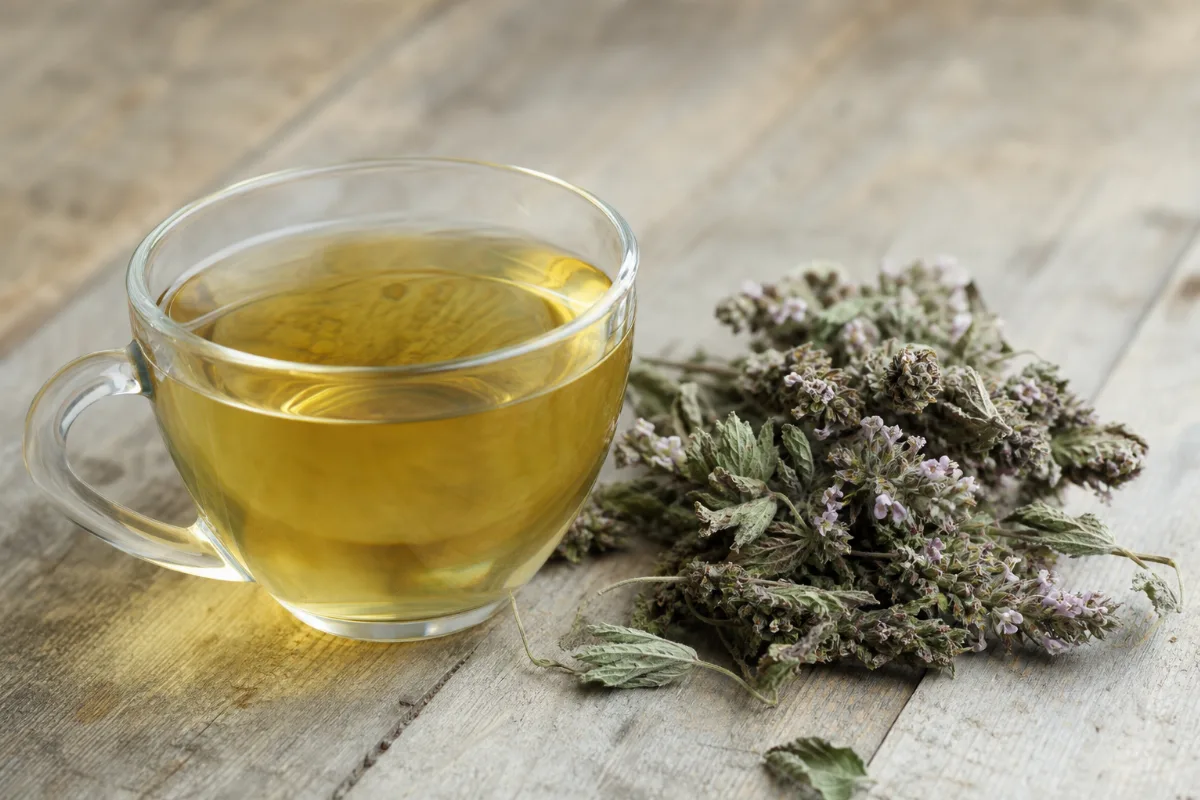
Leonurus cardiaca · also called Motherwort herb tea, common motherwort tea, agripalma (Spanish), Herzgespanntee (German). Not the same as Chinese motherwort (yi mu cao).
Motherwort tea is a drink made from the flowering tops of motherwort, a European plant of the mint family. People use it for nervous tension and for nerve-related heart flutters. The EU accepts this only as a traditional use, which means long use, not proof. No human trial of the tea itself was found. It must not be used in pregnancy, and it may add to heart, blood pressure, blood-thinning and sedative medicines.
General information, not medical advice. Last substantive update · Not medically reviewed. A named clinician has not signed off on this page. How this page is made
About Motherwort Tea
Motherwort tea is a hot-water drink made from the flowering tops of Leonurus cardiaca, a European plant of the mint family. No human trial of the tea was found, and the little human research on other forms is very low in certainty. Safety comes first: it is contraindicated in pregnancy, it may make you drowsy, and it may add to heart rhythm, blood pressure, blood-thinning and sedative medicines.
What it is
Motherwort tea comes from Leonurus cardiaca, a tall perennial of the mint family. The part used is the flowering top. A 2013 review says it grows from central Europe and Scandinavia to central Asia and has spread to North America.
Do not confuse it with Chinese motherwort (Leonurus japonicus, yi mu cao) or Siberian motherwort (Leonurus sibiricus). They are different plants with different chemistry, and many studies sold as motherwort research are about them.
Tea, tincture, extract or injection?
A cup of tea is a weak water extract of the dried herb. The EU monograph lists herbal tea, powder, tinctures and liquid extract as separate forms. Tinctures contain alcohol. The only human study of European motherwort used an oil extract, and the injection trials used a hospital product made from a different plant. Do not carry results from one form over to another.
A 2026 lab study found that water infusions of motherwort contain chlorogenic acid and other plant phenols, and that the way the infusion was prepared changed the amounts. It tested no health effect.
What the research shows
Tea: no human trial found. Other forms: a 28-day study of 50 adults with raised blood pressure, anxiety and sleep problems took a motherwort oil extract, with no placebo group. Doctors rated anxiety and low mood as improved in most, and blood pressure fell. A Russian abstract compared a tincture with melatonin in anxious young adults without giving numbers. A combination tablet was tested once. None of this shows that motherwort works, and the EU found no clinical data that could support a conclusion.
Studies of a Chinese motherwort injection after childbirth or abortion found less bleeding, but that is another plant and a hospital product. Lab and animal findings on heart currents, calming brain receptors, platelets and pain are not results in people.
Quality and look-alikes
The main quality problem is identity. Several Leonurus species are used and mixed up, and a 2017 paper gives microscope and chemical fingerprints to tell them apart. Many sources name leonurine as motherwort's active compound, but a 2012 analysis found none in four samples of European motherwort. A product that lists leonurine may be the Asian species. Check the label for Leonurus cardiaca and the part used.
No survey of heavy metals or pesticides in motherwort tea was found, so quality is unknown, not shown good. The EU report mentions older work on metals extracted by tea infusions of herbs in general.
Regulators and status
EU (EMA/HMPC, 2010): traditional herbal medicine for nervous tension and nervous heart complaints, adults only, with a herbal tea among the listed forms, for up to 4 weeks before seeing a doctor. Contraindicated in pregnancy; no interactions reported; may impair driving. The 2019 review of 74 new references found none that justified a change.
US: no NCCIH page on motherwort was found, and no LiverTox or LactMed entry. No FDA action was found, though this was not searched in detail. The German Commission E listing is known only second-hand through the EU report.
At a glance
Traditional uses history, not proof
- European herbals from the 1600s, quoted second-hand by the EU assessment report, list motherwort for heart complaints and spasms. The old books themselves were not checked.
- The EU report says continuous use of the herbal tea is documented for nearly 400 years, and that tea made from the cut herb has been sold in Germany and Poland for decades.
- The EU herbal committee accepted it in 2010 as a traditional herbal medicine, including as a herbal tea, for nervous tension and nervous heart complaints such as palpitations, in adults, after a doctor has ruled out serious conditions.
- Older books also list it for women's complaints and, in German practice, as an add-on for an overactive thyroid. The EU did not accept the thyroid use.
Studied for research
- Motherwort tea itself in people: no trial found, insufficient
- Nervous tension and anxiety (oil extract and tincture, not tea), very low
- Sleep problems, very low
- Nervous heart flutter or palpitations (traditional use only), insufficient
- Blood pressure (one 50-person uncontrolled extract study), very low
- Bleeding after childbirth or abortion (Chinese injection of a different species), very low
- Periods, menopause, thyroid, clotting and lab findings, insufficient
Main compounds
- Stachydrine
- Lavandulifolioside
- Chlorogenic acid and flavonoids such as hyperoside
Common forms
- Herbal tea from the dried flowering tops
- Tea bags (check the label for Leonurus cardiaca)
- Tinctures and liquid extracts (contain alcohol, different from tea)
- Oil extracts and capsules (the only human study used an oil extract)
Research links: EU herbal monograph on motherwort (European Medicines Agency) · EU assessment report on motherwort (European Medicines Agency) · EU review of the monograph, 2019 (European Medicines Agency) · EU plain-language summary on motherwort (European Medicines Agency) · Uncontrolled 50-person oil-extract study (abstract) · Water infusion composition study, 2026 (abstract) · Research Library · Genes & Biomarkers Library
What it is and its history
- Accepted scientific name
- Leonurus cardiaca L.
- Naming authority
- L.; published in Species Plantarum, page 584 (1753) (GBIF)
- Synonyms
- Cardiaca vulgaris Moench; Cardiaca trilobata Lam.; Lamium cardiaca (L.) Baill.; Leonurus cardiaca subsp. vulgaris (Moench) Briq.; Leonurus cardiaca var. villosus (Desf. ex Spreng.) Benth.; Leonurus crispus Murray
- Common names
- Motherwort (English); Common motherwort (English); Agripalma (partes aéreas floridas) (Spanish (EU monograph name)); Agripaume (French (EU monograph name)); Herzgespannkraut (German (EU monograph name)); Cardiaca comune (Italian (EU monograph name)); Ziele serdecznika (Polish (EU monograph name))
- Family or group
- Lamiaceae (mint family), which also includes lemon balm, sage, lavender and the Asian Leonurus species.
- Classification
- Plantae > Tracheophyta > Magnoliopsida > Lamiales > Lamiaceae > Leonurus > Leonurus cardiaca
- Native range
- A 2013 review says it is indigenous to central Europe and Scandinavia and found from temperate Russia to central Asia, and has been introduced to North America where it grows wild locally. A 2019 review says native to Asia and south-eastern Europe. The two sources differ, so the exact native range is not settled here.
- Habitat
- Not verified from a primary botanical source for this file.
- What it looks like
- Roots: Not verified.; Stems: Not verified. A 2017 paper says the three Leonurus species can be separated by stem and leaf hairs (trichomes), flower shape and fingerprints.; Leaves: Not verified in detail; leaves are part of the medicinal aerial parts.; Flowers: The Ph.Eur. herb is the aerial parts gathered in flowering, dried at 35 degrees C (2013 review). Species differ in the shape and length ratio of the upper and lower lip of the flower (2017 paper).; Fruit: Fruits contain stachydrine (about 0.2%); fruits of L. cardiaca are not the medicinal part.
- Cultivation
- Not verified from a primary source.
- Harvest and processing
- Per a 2013 review: aerial parts collected in flowering and dried at 35 degrees C; Ph.Eur. requires at least 0.2% flavonoids expressed as hyperoside.
- Look-alikes and adulterants
- Name: Leonurus japonicus Houtt. (Chinese motherwort, yi mu cao); Note: A different species, used in Chinese medicine and the source of the 'motherwort injection' in Chinese hospital trials. It contains leonurine and is a stronger womb stimulant in tradition. Do not mix up the two.; Name: Leonurus sibiricus L. (Siberian motherwort); Note: Often confused with L. japonicus in the literature. The EU report used its 90-day rat study as a safety data source.; Name: Leonotis leonurus (L.) R.Br. (South African relative); Note: A different genus. Kuchta found no leonurine and 0.3% stachydrine in its aerial parts.; Name: Other labiate herbs; Note: Not assessed here.
- Sustainability and conservation
- Not verified. No IUCN assessment was retrieved.
Photographs
Traditional use and history history, not clinical proof
| Tradition or era | Documented use | Source |
|---|---|---|
| 16th to 17th century European herbals | The EU assessment report lists Mattiolus (1626) for spasms and Lonicerus (1679) for cardiac pain, cardiac blood flow, cardiac irregularities and angina; Schröder (1685) for heart complaints, including in children. These are secondary citations, not checked against the old books. | s-ema-ar-motherwort |
| Europe, continuous use | The EU report says continuous use of the herbal tea is documented for nearly 400 years, the herb has been distributed in the EU for more than 30 years and is in official pharmacopoeias for more than 50 years. The 'cardiaca' name may itself reflect the heart use. | s-ema-ar-motherwort |
| 19th century US eclectic medicine | Infusions for 'hysterical affections', sleeplessness, delirium and uterine pain and disorders (Hatfield 1886, as quoted by the EU report). | s-ema-ar-motherwort |
| German and Eastern European phytotherapy (20th century) | As a calming herb in 'nervous heart' complaints, in climacteric complaints, amenorrhoea and as an adjuvant in overactive thyroid (Commission E 1986; Wichtl; Hoppe 1957 as quoted by the EU report). The EU did not accept the thyroid use. | s-ema-ar-motherwort |
| China (related species L. japonicus) | The first reported use, to expel dead fetus and retained placenta, is in the Tang Peng Ts'ao (659 AD) per the EU report, citing Blancafort 1977; today used to promote uterine recovery after delivery. This is another species. | s-ema-ar-motherwort |
| European Union regulation | HMPC adopted the traditional-use monograph on 16 September 2010. The 2019 review decided no change was needed. | s-ema-hmpc-motherwort |
Traditional use shows how it was used. It does not show that it works or is safe today.
What is inside, and how it may work
What it contains and how those compounds act in cells and animals. Laboratory and animal mechanisms are not proven effects in people.
Main compounds
| Compound | Family | Where it is concentrated | Activity studied | Level of evidence |
|---|---|---|---|---|
| Stachydrine PubChem 115244 | pyrrolidine betaine (alkaloid-like) | Aerial parts and fruits 0.6 to 1.5% (w/w) of L. cardiaca aerial parts; 6.7% in a refined antiarrhythmic extract (Kuchta 2013) | In Chinese studies of L. japonicus, stachydrine raised calcium in human womb muscle cells and acted on platelets and heart cells in lab models. Effects in L. cardiaca itself in people are unknown. 13 3 2 | Laboratory research |
| Leonurine PubChem 161464 | guanidine alkaloid | Aerial parts of L. japonicus Not detected in any of 4 samples of L. cardiaca aerial parts (Kuchta 2012); 0.001 to 0.049% in L. japonicus drug samples | Womb stimulation, heart and nerve protection in lab work with L. japonicus. NOT found in L. cardiaca, so findings on leonurine do not apply to European motherwort. 12 16 23 | Laboratory research |
| Lavandulifolioside PubChem 44429861 | phenylethanoid glycoside | Aerial parts Measured in a hydroethanolic extract (Pereira 2019), not in tea | Slowed heart rate and lowered blood pressure in rats; did not explain the whole herb's effects. 17 20 | Animal research |
| Chlorogenic acid PubChem 1794427 | hydroxycinnamic acid | Aerial parts Measured in water infusions; the amount changed with how the infusion was prepared (Przybylska 2026) | Antioxidant in the lab; reduced mitochondrial free radicals in rat heart tissue. 22 1 | Laboratory research |
| Hyperoside and rutin (flavonoids) PubChem 5281643 | flavonol glycosides | Aerial parts The Ph.Eur. requires at least 0.2% flavonoids as hyperoside (2013 review). Rutin CID 5280805 (C27H30O16). | Uncoupled respiration in rat heart mitochondria in the lab, with chlorogenic acid, orientin and quercetin. 1 29 | Laboratory research |
| Prehispanolone PubChem 196854 | labdane diterpene (furan type) | Related species (L. heterophyllus = L. japonicus), per EU report Not given | Blocked the platelet-activating factor receptor in rabbit platelets (Lee 1991, EU report). Found in an Asian species, not shown for L. cardiaca. 6 | Laboratory research |
Mechanisms, receptors and pathways
| Target or pathway | Gene or receptor | What was found | Level |
|---|---|---|---|
| GABA-A receptor (calming brain receptor), GABA binding site | GABRA/GABRB/GABRG gene family | L. cardiaca extract bound the GABA site in rat brain tissue, with much weaker binding at the benzodiazepine site. L. cardiaca has no leonurine, so the compound responsible is unknown. Evidence level: lab (test tube). 23 | Laboratory research |
| Heart ion channels: L-type calcium current, IKr potassium current, If pacemaker current | CACNA1C, KCNH2 (HERG), HCN family | A refined extract blocked L-type calcium current, reduced IKr and lengthened action potential in animal heart cells and isolated rabbit hearts at high lab concentrations. Evidence level: lab and animal. 25 | Animal research |
| Mitochondria in heart cells | not specified | Components of an ethanol extract partly uncoupled and inhibited respiration in rat heart mitochondria and reduced free-radical release. Evidence level: lab. 1 | Laboratory research |
| Platelets: GP IIb/IIIa and arachidonic-acid pathway; platelet-activating factor | ITGA2B / ITGB3 | Extract reduced platelet aggregation and GP IIb/IIIa expression, increased nitric oxide in vein-lining cells. Evidence level: lab. 26 27 | Laboratory research |
| Womb muscle contraction via MEK/ERK (L. japonicus injection) | MAP2K1 / MAPK1 | Chinese motherwort injection and stachydrine raised calcium in human womb muscle cells; the effect depended on MEK/ERK. Evidence level: lab and animal (rat); for L. japonicus, not L. cardiaca. 2 | Animal research |
| Staphylococcus aureus stickiness | not applicable | Low concentrations of extract reduced bacterial adhesion in an atomic force microscope model. Evidence level: lab. 27 | Laboratory research |
| Anxiety-like behaviour in animals | not specified | Modified dry extracts with certain amino acids reduced anxiety in animals. Evidence level: animal. 11 | Animal research |
Absorption, metabolism and elimination
- Absorption
- No pharmacokinetic study of European motherwort in people or animals was found; the EU says kinetic studies are not required because no constituent with known therapeutic activity is established.
- Distribution
- Not known for L. cardiaca.
- Metabolism
- Not known for L. cardiaca. Water extracts of Korean Leonuri herb (L. sibiricus or L. japonicus) weakly inhibited CYP enzymes in human liver microsomes.
- Elimination
- Not known for L. cardiaca.
- Bioavailability
- Unknown. Reviews of stachydrine and leonurine pharmacokinetics concern L. japonicus compounds, and leonurine is not found in L. cardiaca.
Isolated compounds versus whole extracts
No single compound explains motherwort's effects. Lavandulifolioside slowed the heart in rats but did not explain the whole herb, and the compound responsible for GABA binding by L. cardiaca is unknown because leonurine is absent. A refined extract rich in stachydrine (6.7%) had the strongest heart effects in rabbit hearts. Effects of whole tea or tincture on the heart have not been tested in people.
Nutritional composition
A nutrient table does not apply to motherwort as a medicine: the herb is used in small amounts as tea, tincture or extract, and no food composition data were found. The compounds that matter are plant chemicals, not vitamins or minerals.
4 very low certainty7 not enough evidence
What was looked at
The 11 benefits and uses checked for Motherwort Tea, each with how strong the evidence is. Tap one to open it.
- Nervous tension and anxietyVery low certainty
- Sleep problemsVery low certainty
- Low mood and depression-type symptomsNot enough evidence
- Nervous heart symptoms such as palpitationsNot enough evidence
- Blood pressureVery low certainty
- Bleeding after childbirth or abortion (Chinese motherwort injection, a different species)Very low certainty
- Periods, menopause and 'women's complaints'Not enough evidence
- Fast heartbeat linked to an overactive thyroidNot enough evidence
- Blood clotting and plateletsNot enough evidence
- Antioxidant and germ-fighting effects seen in the labNot enough evidence
- Pain relief seen in miceNot enough evidence
Lab markers tracked in the studies
Systolic blood pressureDiastolic blood pressureHeart rateClinical Global Impression (CGI) rating of anxiety and depression symptomsBlood loss after childbirth or abortionPlatelet aggregation (in the lab)
What is Motherwort Tea good for?
The uses people ask about and how strong the human evidence is for each. No human trial of the tea itself was found, so every rating below comes from other products (oil extract, tincture, injection) or from tradition, and is labelled that way. 'Very low' means one small or unclear study. 'Insufficient' means not enough to judge. Nothing is rated above very low.
Benefits, one by one
Each card is a research question, not a promise. Tap a goal to filter. Open a card to see the studies, doses and limits.
Nervous tension and anxiety
Very low certaintyMotherwort has been used for centuries in Europe to calm nervous tension, and the EU recognises that traditional use. No proper placebo-controlled trial has tested it for anxiety. Two small human studies exist, and both have big gaps, so we cannot say it works.
8 studiesShikov: soybean-oil extract of aerial parts (not a tea). Ovanesov: ti…
Studies, doses and limits
What the trials found
Two small human studies, and neither tested a tea. (1) Ovanesov 2006, a Russian paper: in young anxious people, motherwort tincture was compared with melatonin taken at night for 10 days. Melatonin improved emotional state and eye light-sensitivity; motherwort tincture gave similar changes that were less pronounced. The abstract gives no numbers, group sizes or tincture strength. (2) Shikov 2011 (below): 50 adults with raised blood pressure and anxiety took a motherwort oil extract for 28 days, with no placebo group; doctors rated anxiety and depression symptoms improved in most of them. A 2026 narrative review of anxiety and low-mood plants says the evidence for motherwort comes mainly from lab studies and traditional use. The EU committee set the oil-extract trial aside in its 2019 review because that oil is not one of the preparations covered by the EU monograph.
Results
Positive but weak. In Shikov 2011, by the doctor's Clinical Global Impression scale, anxiety and depression symptoms improved significantly in 32% of patients, moderately in 48% and weakly in 8%; 12% did not respond. Side effects were reported as minimal. With no placebo group, some of this improvement could be expected anyway.
Effect sizes as reported
Shikov 2011: 32%, 48%, 8% and 12% of 50 people in the four response groups (the abstract gives these as percentages). Ovanesov 2006: no numbers in the abstract.
Why this rating
Only two small studies in people. One had no control group (Shikov), the other is a short Russian abstract without numbers (Ovanesov). The EU committee judged the use as plausible and traditional, not proven. Lab and animal results do not show benefit in people.
Form and dose studied
Shikov: soybean-oil extract of aerial parts (not a tea). Ovanesov: tincture (strength not given in the abstract). Products differ widely, so results cannot be moved from one to another or to tea.
Who was studied
Shikov: adults with stage 1 or 2 high blood pressure plus anxiety and sleep problems. Ovanesov: young anxious volunteers.
Limits
No placebo group in either study; very short (10 to 28 days); tiny; no numbers in one abstract. Mood and sleep were measured by rating scales, not by lab tests.
Why researchers looked
Old European herbals describe motherwort as a calming herb, especially for nervousness that shows up in the heart.
Traditional use
The EU assessment report lists use as a calming herb in neurogenic and functional heart complaints, in nervous irritability and in non-organic sleep problems, in tradition going back to the 1600s. It is a traditional use, not proof.
Proposed mechanism Laboratory research
Lab tests: motherwort extract and one of its compounds can attach to a calming receptor in the brain (the GABA-A receptor) in rat brain tissue. Animal tests of modified extracts reduced anxiety-like behaviour in animals.
A proposed mechanism does not show that the effect happens in people.
Safety is covered in the safety section. Motherwort must not be used in pregnancy. It may cause drowsiness, so the EU monograph says affected people should not drive.
Sleep problems
Very low certaintyMotherwort is an old folk remedy for restless nights. The only human data are symptom scores in one small uncontrolled study and a combination-tablet study where motherwort cannot be separated from the other herbs.
3 studiesOil extract (Shikov) and a combination tablet that contained motherwo…
Studies, doses and limits
What the trials found
Two sources, both weak. (1) Shikov 2011: in 50 adults with raised blood pressure, anxiety and sleep problems, symptom scores for sleeping improved over 28 days on a motherwort oil extract (reported in the EU assessment report; no control group). (2) The EU assessment report also describes a 1997 crossover study of 50 men who misused alcohol, given tablets with valerian root, hop cones, lemon balm leaf and motherwort herb versus a placebo, over 2 nights. The combination improved sleep quality and reduced night waking, but the report says nothing can be said about motherwort's share.
Results
Improvement on symptom scores in the uncontrolled study; improvement with the 4-herb combination over two nights. Neither tells us what motherwort alone does.
Effect sizes as reported
Numbers for the sleep scores were not in the sources we read.
Why this rating
No placebo-controlled test of motherwort alone. The only controlled result is for a four-herb combination, which cannot be credited to motherwort.
Form and dose studied
Oil extract (Shikov) and a combination tablet that contained motherwort herb among other ingredients (1997 study, per the EU report). No tea was tested.
Who was studied
Adults with high blood pressure and anxiety (Shikov); men who misused alcohol with sleep trouble (1997 study).
Limits
Small, short, uncontrolled or combination-based. Second study is known only through the EU assessment report, which we read in full; the original paper was not read.
Why researchers looked
Traditional books use motherwort as a calming herb for non-organic sleep problems.
Traditional use
Cited in EU sources as a traditional calming herb for nervous sleeplessness.
Proposed mechanism Pharmacological theory
Not worked out. Lab findings of calming-receptor binding exist but no study links them to sleep in people.
A proposed mechanism does not show that the effect happens in people.
Safety is covered in the safety section. Motherwort must not be used in pregnancy. Sedation can add to sleeping tablets and alcohol (see interactions).
Low mood and depression-type symptoms
Not enough evidenceThere is no trial of motherwort in people diagnosed with depression. The one human study that touched on low mood was uncontrolled, and the animal work is early.
3 studiesNot applicable.
Studies, doses and limits
What the trials found
Shikov 2011 recorded anxiety and depression together on one rating scale, so low mood cannot be separated. The 2026 review of plants for anxiety and depression says motherwort evidence is mostly lab and traditional use.
Results
Not separable from the anxiety result in the only study.
Effect sizes as reported
No separate numbers.
Why this rating
No study in people with a depression diagnosis, and no placebo-controlled study of any kind on mood.
Who was studied
Not tested.
Limits
No trial exists.
Why researchers looked
Eastern European plant lists include motherwort for anxiety and depression, and one study scored depression symptoms as well as anxiety.
Traditional use
Used in traditional systems for 'hysterical' states and nervous exhaustion; the EU report lists use in several traditions for nervousness and calming.
Proposed mechanism Animal research
Not established. Animal tests of modified motherwort extracts showed anxiety-reducing effects; nothing tests depression in people.
A proposed mechanism does not show that the effect happens in people.
Safety is covered in the safety section. Motherwort must not be used in pregnancy. Do not replace prescribed antidepressants with motherwort; no study has tested that.
Nervous heart symptoms such as palpitations
Not enough evidenceThis is the use the EU recognises (traditional use only): a pounding or fluttering heartbeat linked to nervousness, once a doctor has ruled out serious causes. No human trial has tested whether motherwort calms palpitations. Lab studies show effects on heart cells and rabbit hearts at high concentrations, and their meaning for tea or tincture is unclear.
8 studiesTraditional forms in the EU monograph: herbal tea, powder, tincture a…
Studies, doses and limits
What the trials found
No controlled trial and no trial on palpitations. The EU report's only clinical data are the 50-person uncontrolled blood-pressure study (heart rate did not change significantly). A 2017 review of cardiotonic plants found very few human studies on Leonurus. A 2013 review says mild slowing of heart rate, lower blood pressure and sedation can be attributed to the herb, and that sedative and blood-pressure-lowering effects have been shown in clinical trials; the human studies behind that statement are the two small ones above.
Results
No change in heart rate in Shikov 2011. Lab: high concentrations of a refined extract changed rabbit-heart readings.
Effect sizes as reported
Lab only (Ritter 2010, high concentrations in isolated hearts). No human numbers.
Why this rating
Traditional use is accepted by the EU, but there is no human trial of palpitations or heart rhythm. Lab findings are at high concentrations and do not show benefit or safety in people.
Form and dose studied
Traditional forms in the EU monograph: herbal tea, powder, tincture and liquid extract. No trial of any form exists for palpitations.
Who was studied
Adults with 'nervous' palpitations whose doctor has ruled out serious causes (EU wording). People with heart disease, rhythm disorders or an overactive thyroid should not self-treat.
Limits
No human trial. Lab work used isolated hearts and cells, mostly from other species.
Why researchers looked
The plant's species name, cardiaca, and its German name Herzgespann point to its use for the heart; the EU report says the cardiac use may even be reflected in the plant's name.
Traditional use
The EU assessment report documents continuous use of the herbal tea for nearly 400 years, with 17th-century herbals citing it for cardiac complaints. Europe's herbal committee accepted use for nervous heart complaints such as palpitations 'after serious conditions have been excluded by a medical doctor' (traditional use, 2010).
Proposed mechanism Laboratory research
Lab only. A refined extract in isolated rabbit hearts lengthened the electrical PQ interval and acted on calcium, potassium and pacemaker-type currents (Ritter 2010). A compound, lavandulifolioside, slowed heart rate in rat hearts and lowered blood pressure at a high amount (Milkowska-Leyck 2002). Extract components also reduced free-radical release in rat heart mitochondria (Bernatoniene 2014). The EU report says the relevance of these high-concentration findings to oral tea or tincture is highly questionable.
A proposed mechanism does not show that the effect happens in people.
Palpitations can come from serious heart or thyroid problems. See a doctor first. Lab data suggest motherwort can act on heart electrical currents, so ask a doctor before combining it with heart-rhythm medicines (see interactions). Safety is covered in the safety section. Motherwort must not be used in pregnancy.
Blood pressure
Very low certaintyIn one uncontrolled study of 50 people with mild or moderate high blood pressure, blood pressure was lower after four weeks on a motherwort oil extract. Without a comparison group we cannot say motherwort caused the drop.
4 studiesSoybean-oil extract of aerial parts, 28 days. Trial product only; not…
Studies, doses and limits
What the trials found
Shikov 2011, an uncontrolled 28-day study of 50 adults with stage 1 (22 people) or stage 2 (28 people) high blood pressure and anxiety or sleep problems. Blood pressure fell from baseline in both groups. EU experts said the study was too short and had no control group, so no conclusion on effect can be drawn.
Results
Stage 1: systolic 144.5 to 129.4 mm Hg and diastolic 96.1 to 85.9. Stage 2: systolic 153.3 to 141.6 and diastolic 102.7 to 91.9 (figures from the EU assessment report). No significant change in heart rate. Stage 1 patients responded about a week sooner than stage 2.
Effect sizes as reported
Baseline to day 28, with no placebo group and no confidence intervals given in the sources read.
Why this rating
One uncontrolled study. Regression to the mean, changes in routine and the placebo effect can all lower blood pressure over four weeks.
Form and dose studied
Soybean-oil extract of aerial parts, 28 days. Trial product only; not the same as tea or tincture.
Who was studied
Adults with stage 1 or stage 2 high blood pressure and anxiety or sleep problems. Whether they were on other treatment is not stated in the abstract.
Limits
No control group, short follow-up, a single research group, and an oil extract that the EU does not cover.
Why researchers looked
Motherwort is listed in reference books as having mild blood-pressure-lowering and calming effects.
Traditional use
The EU assessment report lists motherwort in older handbooks as sedative, cardiotonic and hypotensive (lowering blood pressure) (Bradley 1992).
Proposed mechanism Animal research
Not established. A compound in the plant lowered blood pressure in anaesthetised rats at a high amount.
A proposed mechanism does not show that the effect happens in people.
Anyone on blood pressure medicine should speak to a doctor first: effects could add up. Do not stop prescribed medicine. Safety is covered in the safety section. Motherwort must not be used in pregnancy.
Bleeding after childbirth or abortion (Chinese motherwort injection, a different species)
Very low certaintyHospital trials in China found that an injected motherwort product (yi mu cao), given with or after oxytocin, reduced blood loss after caesarean section or abortion. This is an injection used by doctors. Two of the reviews name the plant as Leonurus japonicus, a different plant from European motherwort. It does not apply to European motherwort tea or tincture.
6 studiesInjection of purified motherwort (Leonurus japonicus is stated in two…
Studies, doses and limits
What the trials found
Human trials come from China and use injections, not European tea or tincture. (1) Xia 2020: 408 women randomised after induced abortion to an intramuscular motherwort injection (207) or no treatment (201); bleeding amount and duration were lower in the injection group (P < 0.001). (2) Liu 2016: 165 first-time mothers having caesarean section, oxytocin plus motherwort injection (83) versus oxytocin alone (82); blood loss from the end of the operation to 2 hours (P = 0.03) and from 2 to 24 hours (P = 0.01) was lower with the combination; mild transient side effects were more common with the combination. (3) A 2022 meta-analysis of 9 trials (1,675 women) after abortion found less blood loss and shorter bleeding with the injection, but the authors rate most results very low quality. (4) A 2022 registry study (22,519 caesarean births, 586 given the injection) and a 2025 study with a meta-analysis of the injection plus oxytocin found less bleeding than oxytocin alone. These last two are observational or mixed designs.
Results
Less bleeding and a shorter bleeding time in most studies, with mostly mild side effects. In the 2022 meta-analysis, injection plus oxytocin versus oxytocin: blood loss within 2 hours mean difference -50.00 (95% CI -62.92 to -37.08, very low quality); duration of bleeding MD -2.62 (-3.02 to -2.22, very low quality). Injection alone did not differ from oxytocin for blood loss at 24, 48 or 72 hours. In the 2025 study, injection plus oxytocin cut 2-hour blood loss by 40.95 (95% CI 23.86 to 58.04) and the relative risk of postpartum haemorrhage was 0.49 (0.41 to 0.59).
Effect sizes as reported
Meta-analysis (2022, very low to low GRADE by its authors): MD -50.00 (95% CI -62.92 to -37.08). 2025: RR 0.49 (0.41 to 0.59) for postpartum haemorrhage. 2022 registry study: odds ratio 0.25 (0.18 to 0.32) versus intramuscular oxytocin. The same -50.00 value is printed for both the 2-hour and 24-hour outcomes in the 2022 abstract.
Why this rating
The reviewers' own GRADE is very low or low. Trials were Chinese hospital trials with a no-treatment group or an add-on design, and the plant species is not named in some abstracts. The result applies only to a medical injection used with oxytocin.
Form and dose studied
Injection of purified motherwort (Leonurus japonicus is stated in two of the reviews), given in hospital. Not tea, tincture or capsules.
Who was studied
Women after induced abortion or caesarean section in China.
Limits
Different species, different product, hospital use, mostly low-quality evidence; none of this applies to European motherwort bought as a supplement.
Why researchers looked
Chinese medicine has used its motherwort (yi mu cao) for women after childbirth for centuries, and a purified injection is now widely used in Chinese hospitals.
Traditional use
The EU assessment report notes that Leonurus japonicus has been used in China since the 7th century to expel the afterbirth and, today, to promote recovery of the womb after delivery. It also lists the European plant as a traditional emmenagogue (to bring on periods).
Proposed mechanism Animal research
Lab and animal: the injection and its compound stachydrine make womb muscle contract (rat model, human womb muscle cells; MEK/ERK pathway). This uterine-stimulating effect is also the reason European motherwort is not for pregnancy.
A proposed mechanism does not show that the effect happens in people.
It makes the womb contract. Never use motherwort during pregnancy. Mild redness and allergic reactions were reported in some trials.
Periods, menopause and 'women's complaints'
Not enough evidenceMotherwort has a long traditional use for missed periods, period pain and menopause symptoms such as flushes and nervous palpitations. No trial in women with these problems was found for European motherwort.
3 studiesTraditional tea or tincture.
Studies, doses and limits
Results
No human data.
Why this rating
Traditional use only; no human data.
Form and dose studied
Traditional tea or tincture.
Who was studied
Not tested.
Limits
No trial.
Why researchers looked
Old herbals and several folk traditions (including Unani medicine) use it for menstrual and menopausal complaints.
Traditional use
The EU assessment report lists traditional use to bring on periods ('emmenagogue'), in absent periods, in climacteric complaints and premenstrual tension. A 2019 review says it was historically used for amenorrhoea, painful periods, menopausal anxiety and postpartum depression.
Proposed mechanism Animal research
Not established. An old animal report quoted by the EU for an Asian species found lower oestrogen levels in pigs and rats on long use. A yeast test found no oestrogen-like or anti-oestrogen activity in one extract of an Asian species.
A proposed mechanism does not show that the effect happens in people.
Safety is covered in the safety section. Motherwort must not be used in pregnancy. Because it stimulates the womb, do not use it if you could be pregnant or have unexplained bleeding.
Fast heartbeat linked to an overactive thyroid
Not enough evidenceGerman herbal practice traditionally used motherwort as an add-on for a racing heartbeat caused by an overactive thyroid. The EU says this is not supported by any clinical data, and a palpitation needs a doctor's check.
2 studiesNot applicable.
Studies, doses and limits
Results
No human data.
Why this rating
Only traditional claims and old references; the EU report found no clinical support. The Commission E monograph itself was not read.
Who was studied
Not tested.
Limits
No trial.
Why researchers looked
Listed in the German Commission E (1986) and in handbooks as an adjunct for overactive thyroid.
Traditional use
Per the EU report, German references (Commission E 1986, Wichtl) list it as an adjuvant in overactive thyroid and for fast heartbeat from thyroid over-activity, but another cited text says motherwort has no thyroid-suppressing action.
Proposed mechanism Pharmacological theory
No mechanism shown; the EU report cites a source saying L. cardiaca has no thyroid-suppressing (thyreostatic) activity.
A proposed mechanism does not show that the effect happens in people.
Palpitations with weight loss, heat intolerance or tremor need a doctor. Do not treat a thyroid problem with motherwort alone.
Blood clotting and platelets
Not enough evidenceIn test tubes, motherwort extracts make blood platelets less sticky, and some compounds from other Leonurus species do the same. No trial has measured clotting or bleeding in people taking European motherwort.
3 studiesPolyphenol-rich extract, in vitro.
Studies, doses and limits
Results
Lab only: reduced platelet aggregation in vitro.
Effect sizes as reported
Lab only: the extract reduced aggregation in a platelet test (Sadowska 2017).
Why this rating
Test-tube studies only, at concentrations that may not be reached in people.
Form and dose studied
Polyphenol-rich extract, in vitro.
Who was studied
Not tested.
Limits
No human study.
Why researchers looked
Chinese research on Leonurus japonicus found anti-clotting effects, which led to questions about interactions.
Traditional use
Not part of European tradition.
Proposed mechanism Laboratory research
Lab. L. cardiaca extract reduced platelet clumping in the presence of arachidonic acid and lowered a platelet surface protein (GP IIb/IIIa) needed to bind fibrinogen. It increased nitric oxide in cultured vein-lining cells.
A proposed mechanism does not show that the effect happens in people.
If you take blood thinners or antiplatelet drugs, or have surgery planned, ask your doctor or pharmacist before using motherwort (see interactions).
Antioxidant and germ-fighting effects seen in the lab
Not enough evidenceIn the lab, motherwort extracts act as antioxidants and make a common germ (Staphylococcus aureus) stick less to surfaces. These are test-tube findings only and do not show a health benefit.
3 studiesExtracts in vitro.
Studies, doses and limits
Results
No human results.
Why this rating
Test-tube studies only. Antioxidant tests in a dish do not show antioxidant effects in the body.
Form and dose studied
Extracts in vitro.
Who was studied
Not tested.
Limits
No human data.
Why researchers looked
Several lab groups study motherwort as a polyphenol-rich plant.
Traditional use
Not a traditional use.
Proposed mechanism Laboratory research
Lab. Low concentrations of an extract reduced S. aureus stickiness (atomic force microscopy).
A proposed mechanism does not show that the effect happens in people.
A 2019 lab paper warns that motherwort may work against cationic antibiotics; see interactions.
Pain relief seen in mice
Not enough evidenceAn alcohol extract of motherwort reduced pain responses in mice when injected. No human pain study exists.
1 studiesMice only.
Studies, doses and limits
Results
No human results.
Effect sizes as reported
Animal injection study in mice; not comparable to human use.
Why this rating
One animal study.
Form and dose studied
Mice only.
Who was studied
Not tested.
Limits
Animal study only.
Why researchers looked
Listed among the plant's lab properties in reviews.
Traditional use
Not a documented European use except in older lists.
Proposed mechanism Animal research
Mouse tests suggested effects on both central and peripheral pain pathways; mechanism not established.
A proposed mechanism does not show that the effect happens in people.
No safety data from this work.
Connections to the rest of health
How Motherwort Tea connects to the rest of our health knowledge graph. Every link says what kind of connection it is. A safety link (for example to the liver) is a warning, not a benefit. A study that merely mentions a topic never creates a benefit link.
Explore every connection: goals, body systems, organs, symptoms, genes
A. Wellness goals
| Connected to | Kind of connection | Evidence status | Context | Studies |
|---|---|---|---|---|
| Anxiety Support | Traditional use | Very low certainty | Nervous tension and anxiety: Motherwort has been used for centuries in Europe to calm nervous tension, and the EU recognises that traditional use. No proper placebo-controlled trial has tested it for anxiety. Two small human studies exist, and both have big gaps, so we cannot say it works. | 28 19 23 11 9 4 6 5 |
| Calm Relaxation | Traditional use | Very low certainty | Nervous tension and anxiety: Motherwort has been used for centuries in Europe to calm nervous tension, and the EU recognises that traditional use. No proper placebo-controlled trial has tested it for anxiety. Two small human studies exist, and both have big gaps, so we cannot say it works. Nervous heart symptoms such as palpitations: This is the use the EU recognises (traditional use only): a pounding or fluttering heartbeat linked to nervousness, once a doctor has ruled out serious causes. No human trial has tested whether motherwort calms palpitations. Lab studies show effects on heart cells and rabbit hearts at high concentrations, and their meaning for tea or tincture is unclear. | 28 19 23 11 9 4 6 5 7 25 17 1 29 18 |
| Stress Reduction | Traditional use | Very low certainty | Nervous tension and anxiety: Motherwort has been used for centuries in Europe to calm nervous tension, and the EU recognises that traditional use. No proper placebo-controlled trial has tested it for anxiety. Two small human studies exist, and both have big gaps, so we cannot say it works. | 28 19 23 11 9 4 6 5 |
| Better Sleep | Traditional use | Very low certainty | Sleep problems: Motherwort is an old folk remedy for restless nights. The only human data are symptom scores in one small uncontrolled study and a combination-tablet study where motherwort cannot be separated from the other herbs. | 28 6 4 |
| Sleep Quality | Traditional use | Very low certainty | Sleep problems: Motherwort is an old folk remedy for restless nights. The only human data are symptom scores in one small uncontrolled study and a combination-tablet study where motherwort cannot be separated from the other herbs. | 28 6 4 |
| Mood Balance | Traditional use | Not enough evidence | Low mood and depression-type symptoms: There is no trial of motherwort in people diagnosed with depression. The one human study that touched on low mood was uncontrolled, and the animal work is early. | 28 9 11 |
| Heart Health | Traditional use | Not enough evidence | Nervous heart symptoms such as palpitations: This is the use the EU recognises (traditional use only): a pounding or fluttering heartbeat linked to nervousness, once a doctor has ruled out serious causes. No human trial has tested whether motherwort calms palpitations. Lab studies show effects on heart cells and rabbit hearts at high concentrations, and their meaning for tea or tincture is unclear. Fast heartbeat linked to an overactive thyroid: German herbal practice traditionally used motherwort as an add-on for a racing heartbeat caused by an overactive thyroid. The EU says this is not supported by any clinical data, and a palpitation needs a doctor's check. | 4 6 7 25 17 1 29 18 |
| Blood Pressure Support | Potential benefit | Very low certainty | Blood pressure: In one uncontrolled study of 50 people with mild or moderate high blood pressure, blood pressure was lower after four weeks on a motherwort oil extract. Without a comparison group we cannot say motherwort caused the drop. | 28 6 7 17 |
| Heart Health | Potential benefit | Very low certainty | Blood pressure: In one uncontrolled study of 50 people with mild or moderate high blood pressure, blood pressure was lower after four weeks on a motherwort oil extract. Without a comparison group we cannot say motherwort caused the drop. | 28 6 7 17 |
| Womens Wellness | Potential benefit | Very low certainty | Bleeding after childbirth or abortion (Chinese motherwort injection, a different species): Hospital trials in China found that an injected motherwort product (yi mu cao), given with or after oxytocin, reduced blood loss after caesarean section or abortion. This is an injection used by doctors. Two of the reviews name the plant as Leonurus japonicus, a different plant from European motherwort. It does not apply to European motherwort tea or tincture. | 30 15 31 14 2 6 |
| Womens Wellness | Traditional use | Not enough evidence | Periods, menopause and 'women's complaints': Motherwort has a long traditional use for missed periods, period pain and menopause symptoms such as flushes and nervous palpitations. No trial in women with these problems was found for European motherwort. | 6 8 29 |
| Menopause Support | Traditional use | Not enough evidence | Periods, menopause and 'women's complaints': Motherwort has a long traditional use for missed periods, period pain and menopause symptoms such as flushes and nervous palpitations. No trial in women with these problems was found for European motherwort. | 6 8 29 |
| Thyroid Support | Traditional use | Not enough evidence | Fast heartbeat linked to an overactive thyroid: German herbal practice traditionally used motherwort as an add-on for a racing heartbeat caused by an overactive thyroid. The EU says this is not supported by any clinical data, and a palpitation needs a doctor's check. | 6 4 |
| Heart Health | Preliminary mechanism | Not enough evidence | Blood clotting and platelets: In test tubes, motherwort extracts make blood platelets less sticky, and some compounds from other Leonurus species do the same. No trial has measured clotting or bleeding in people taking European motherwort. | 26 27 6 |
| Inflammation Balance | Preliminary mechanism | Not enough evidence | Antioxidant and germ-fighting effects seen in the lab: In the lab, motherwort extracts act as antioxidants and make a common germ (Staphylococcus aureus) stick less to surfaces. These are test-tube findings only and do not show a health benefit. Pain relief seen in mice: An alcohol extract of motherwort reduced pain responses in mice when injected. No human pain study exists. | 27 26 5 24 |
B. Body systems
| Connected to | Kind of connection | Evidence status | Context | Studies |
|---|---|---|---|---|
| Cardiovascular system | Drug or supplement interaction | Very low certainty | Blood pressure lowered in an uncontrolled study; possible added effect with blood pressure medicines. Preparation or compound: L. cardiaca oil extract |
28 6 |
| Nervous System | Biological association | Very low certainty | Studied for: Nervous tension and anxiety Studied for: Sleep problems | 28 19 23 11 9 4 6 5 7 25 17 1 29 18 24 |
| Sleep Recovery | Biological association | Very low certainty | Studied for: Sleep problems | 28 6 4 |
| Stress Mood | Biological association | Not enough evidence | Studied for: Low mood and depression-type symptoms | 28 9 11 |
| Cardiovascular System | Biological association | Not enough evidence | Studied for: Nervous heart symptoms such as palpitations Studied for: Blood pressure | 4 6 7 25 17 1 29 18 28 26 27 |
| Reproductive System | Biological association | Very low certainty | Studied for: Bleeding after childbirth or abortion (Chinese motherwort injection, a different species) Studied for: Periods, menopause and 'women's complaints' | 30 15 31 14 2 6 8 29 |
| Endocrine System | Biological association | Not enough evidence | Studied for: Fast heartbeat linked to an overactive thyroid | 6 4 |
| Immune System | Biological association | Not enough evidence | Studied for: Antioxidant and germ-fighting effects seen in the lab | 27 26 5 |
C. Body parts and organs
| Connected to | Kind of connection | Evidence status | Context | Studies |
|---|---|---|---|---|
| Heart | Drug or supplement interaction | Very low certainty | Heart-electrical effects seen in isolated rabbit hearts and rat hearts at high concentrations; possible interaction with heart rhythm medicines (theory). Preparation or compound: L. cardiaca refined extract; lavandulifolioside |
25 17 |
| Reproductive organs (womb) | Contraindication | Moderate certainty | Uterine stimulant in tradition and lab; contraindicated in pregnancy (EU monograph). Preparation or compound: L. cardiaca herb; stachydrine; Asian motherwort injection |
4 6 2 |
| Blood vessels and platelets | Drug or supplement interaction | Very low certainty | Platelet stickiness reduced in test tubes; possible added bleeding risk with blood thinners (theory). Preparation or compound: L. cardiaca extract |
26 27 |
| Brain | Adverse effect or risk | Very low certainty | Drowsiness and possible added sedation; may impair driving (EU monograph). Preparation or compound: L. cardiaca herb |
4 |
I. Biomarkers
| Connected to | Kind of connection | Evidence status | Context | Studies |
|---|---|---|---|---|
| Systolic blood pressure | Biological association | Very low certainty | Measured in trials: lowered. A lab change is not the same as a health benefit. | 28 6 |
| Diastolic blood pressure | Biological association | Very low certainty | Measured in trials: lowered. A lab change is not the same as a health benefit. | 28 6 |
| Heart rate | Biological association | Very low certainty | Measured in trials: no-change. A lab change is not the same as a health benefit. | 28 6 25 |
| Clinical Global Impression (CGI) rating of anxiety and depression symptoms | Biological association | Very low certainty | Measured in trials: raised. A lab change is not the same as a health benefit. | 28 |
| Blood loss after childbirth or abortion | Biological association | Very low certainty | Measured in trials: lowered. A lab change is not the same as a health benefit. | 30 15 31 14 2 |
| Platelet aggregation (in the lab) | Biological association | Not enough evidence | Measured in trials: lowered. A lab change is not the same as a health benefit. | 26 27 |
J. Genes, receptors and enzymes
| Connected to | Kind of connection | Evidence status | Context | Studies |
|---|---|---|---|---|
| GABA-A receptor genes (GABRA, GABRB, GABRG) | Preliminary mechanism | In vitro | GABA site binding by L. cardiaca extract in rat brain tissue. | 23 |
| CACNA1C (L-type calcium channel) | Preliminary mechanism | Animal | L-type calcium current blocked by a refined extract in animal heart cells. | 25 |
| KCNH2 (HERG, IKr potassium channel) | Preliminary mechanism | In vitro | IKr reduced in HERG-transfected cells. | 25 |
| ITGA2B and ITGB3 (platelet GP IIb/IIIa) | Preliminary mechanism | In vitro | GP IIb/IIIa expression on platelets lowered by extract. | 27 |
K. Biological pathways
| Connected to | Kind of connection | Evidence status | Context | Studies |
|---|---|---|---|---|
| MEK/ERK (MAPK) signalling | Preliminary mechanism | Animal | Womb muscle contraction by Chinese motherwort injection depends on this pathway. | 2 |
L. Active compounds
| Connected to | Kind of connection | Evidence status | Context | Studies |
|---|---|---|---|---|
| Stachydrine | Biological association | In vitro | In Chinese studies of L. japonicus, stachydrine raised calcium in human womb muscle cells and acted on platelets and heart cells in lab models. Effects in L. cardiaca itself in people are unknown. Preparation or compound: Aerial parts and fruits |
13 3 2 |
| Leonurine | Biological association | In vitro | Womb stimulation, heart and nerve protection in lab work with L. japonicus. NOT found in L. cardiaca, so findings on leonurine do not apply to European motherwort. Preparation or compound: Aerial parts of L. japonicus |
12 16 23 |
| Lavandulifolioside | Biological association | Animal | Slowed heart rate and lowered blood pressure in rats; did not explain the whole herb's effects. Preparation or compound: Aerial parts |
17 20 |
| Chlorogenic acid | Biological association | In vitro | Antioxidant in the lab; reduced mitochondrial free radicals in rat heart tissue. Preparation or compound: Aerial parts |
22 1 |
| Hyperoside and rutin (flavonoids) | Biological association | In vitro | Uncoupled respiration in rat heart mitochondria in the lab, with chlorogenic acid, orientin and quercetin. Preparation or compound: Aerial parts |
1 29 |
| Prehispanolone | Biological association | In vitro | Blocked the platelet-activating factor receptor in rabbit platelets (Lee 1991, EU report). Found in an Asian species, not shown for L. cardiaca. Preparation or compound: Related species (L. heterophyllus = L. japonicus), per EU report |
6 |
Each connection is stored with the ingredient, the connected record, the kind of connection, the evidence status, the supporting studies, the preparation or compound involved, and a review date (last reviewed October 25, 2026).
Evidence at a glance: what changed in 6 lab markers
Tap a number to show only those markers. Counts are markers, not people.
The evidence
The research centre for Motherwort Tea. Every record here was checked against PubMed or the publisher's page; we never list a study we have not verified.
Evidence by outcome
Bars show how many studies we found for each outcome, not how well it works. People are added up across trials only (reviews are not added, to avoid double counting).
How we rate evidence
High certainty
Several well-run trials or reviews agree; further research is unlikely to change the picture much.
Moderate certainty
Good trials point the same way, but some doubt remains.
Low certainty
Small, short or inconsistent trials. The finding could change with better research.
Very low certainty
Very little or very weak human data. Treat as a possibility only.
Mixed findings
Trials or reviews disagree with each other.
Not enough evidence
Not enough human research to say either way.
Evidence against
Good research found no benefit, or found harm.
We take the reviewers' own risk-of-bias and GRADE statements where they exist, and otherwise judge from study size, design, consistency, directness and whether a product matches what is sold. Many publications do not make evidence high. Method note: We searched PubMed for motherwort or Leonurus cardiaca with tea or infusion and with trials, and found no human trial of the tea. The 26 PubMed records cited were re-checked in PubMed (record and abstract), and none is retracted. The EU monograph and the 2019 review were downloaded again and matched the copies read earlier; the assessment report and public summary were read earlier in full. Plant names were checked in GBIF and NCBI, compounds in PubChem. Only abstracts were read for nearly all papers. Not verified: no NCCIH page, LiverTox or LactMed entry could be found; the German Commission E listing and old handbook statements are known only through the EU report; the Pharmacopoeia text was not read; the Russian study was read only through its English abstract. Certainty ratings are the compiler's own reading, not formal grades. No study is cited that we could not verify.
Study library: every study we checked 31
| Study | Design | People | Product, dose, length | Result |
|---|---|---|---|---|
| Bernatoniene 2014 The effect of Leonurus cardiaca herb extract and some of its flavonoids on mitochondrial oxidative phosphorylation in the heart. Planta Med · PMID 24841965 · DOI |
Laboratory research in-vitro |
Isolated rat heart mitochondria | L. cardiaca ethanol extract and five of its flavonoid and phenolic constituents aerial parts |
Constituents (chlorogenic acid, orientin, quercetin, hyperoside, rutin) uncoupled mitochondrial respiration by 20 to 90% and cut free-radical formation. 20 to 90% uncoupling; about 40% respiratory-chain inhibition Methods, limits and fundingOutcomes: Mitochondrial oxygen use and free-radical formation Limitations: Test-tube study; benefits and harms for people unknown. Read: abstract |
| Chen 2025 Motherwort synergized with oxytocin for postpartum hemorrhage prevention: Integrated clinical efficacy and mechanism exploration. Phytomedicine · PMID 40527062 · DOI |
Meta-analysis |
51312 Women at a Chinese referral hospital, plus animal and cell work |
Motherwort injection (Leonurus japonicus Houtt.) plus oxytocin unspecified Not given in the abstract Not given · vs Oxytocin alone |
88.71% of caesarean deliveries used the combination. Combination lowered blood loss at 2 h and 24 h and halved haemorrhage risk. In rats and cells, stachydrine raised calcium in womb muscle cells and the effect depended on MEK/ERK. 2 h WMD -40.95 (95% CI -58.04 to -23.86); 24 h WMD -54.80 (-72.09 to -37.51); RR 0.49 (0.41 to 0.59) Methods, limits and fundingOutcomes: Blood loss and haemorrhage risk; mechanism in rats and human womb cells Limitations: Mixed design (hospital records, meta-analysis, animal and lab); not a pure randomised trial. Read: abstract |
| Cheng 2020 A review of pharmacological and pharmacokinetic properties of stachydrine. Pharmacol Res · PMID 32173585 · DOI |
Systematic review |
Review of stachydrine pharmacology and pharmacokinetics | Stachydrine from L. japonicus leaf |
Stachydrine has shown many lab bioactivities (fibrosis, heart, uterus, brain); PK discussed. Not quantified Methods, limits and fundingOutcomes: Activities and PK Limitations: Abstract only; compound from L. japonicus. Read: abstract |
| EMA Committee on Herbal Medicinal Products (HMPC) 2010 Community herbal monograph on Leonurus cardiaca L., herba (EMA/HMPC/127428/2010) EMA/HMPC/127428/2010 · Source |
Authoritative guidance |
Adults; traditional use only | Leonurus cardiaca L. herb (aerial parts) aerial parts |
Traditional use only: relief of symptoms of nervous tension, and of nervous cardiac complaints such as palpitations after serious conditions are excluded by a doctor. Not for pregnancy. Not established for under 18s. No interactions reported, no side effects known, no overdose reported. Adequate reproductive toxicity tests not done; genotoxicity and carcinogenicity not tested. Methods, limits and fundingOutcomes: Indications, contraindications, interactions, pregnancy and lactation, side effects, overdose Limitations: Traditional-use document: it does not prove that motherwort works. Read: full-text |
| EMA Committee on Herbal Medicinal Products (HMPC); rapporteur I Chinou 2019 Addendum to assessment report on Leonurus cardiaca L., herba (EMA/HMPC/553980/2018) EMA/HMPC/553980/2018 · Source |
Authoritative guidance |
Periodic review of the 2010 monograph, 2010 to 2018 | Leonurus cardiaca L. herb (aerial parts) aerial parts |
Of 74 new references, 24 were relevant. None justified changing the monograph. They were mostly chemistry and lab studies. No new safety concerns. A soybean-oil extract trial was set aside because that preparation is not in the monograph. Methods, limits and fundingOutcomes: New data since 2010 Limitations: Review of literature, not a new trial. Read: full-text |
| EMA Committee on Herbal Medicinal Products (HMPC); rapporteur K Keller 2010 Assessment report on Leonurus cardiaca L., herba (EMA/HMPC/127430/2010) EMA/HMPC/127430/2010 · Source |
Authoritative guidance |
Review of traditional use, lab data and the few human studies | Leonurus cardiaca L. herb (aerial parts) aerial parts |
No efficacy studies of single-ingredient motherwort were found. One uncontrolled study of an oil extract in 50 people and a combination-product study were described. Safety section covers a single case report, handbook warnings, interactions and pregnancy. Lab data on Asian Leonurus species are listed separately. Methods, limits and fundingOutcomes: History, constituents, lab pharmacology, clinical data, safety, interactions, pregnancy Limitations: Secondary source: it quotes many older papers that were not re-read here. Read: full-text |
| European Medicines Agency 2010 Leonuri cardiacae herba - herbal medicinal product (EMA public summary page) EMA website · Source |
Authoritative guidance |
General public summary | Leonurus cardiaca L. herb (aerial parts) aerial parts |
Plain-language summary: traditional use for nervous tension and nervous heart complaints such as palpitations, adults only, see a doctor if symptoms last over 4 weeks, must not be taken in pregnancy. The one clinical study (blood pressure, anxiety and sleep) was too short and had no comparison treatment for firm conclusions. Methods, limits and fundingOutcomes: Uses, evidence, risks Limitations: Summary page only. Read: full-text |
| Fierascu 2019 Leonurus cardiaca L. as a Source of Bioactive Compounds: An Update of the European Medicines Agency Assessment Report (2010). Biomed Res Int · PMID 31119169 · DOI |
Narrative review |
Review updating the EU assessment report 2010 | Leonurus cardiaca aerial parts |
Describes historic use as cardiotonic and for amenorrhoea, painful periods, menopausal anxiety and postpartum depression; calls for further research. Not quantified Methods, limits and fundingOutcomes: Traditional use, chemistry and new evidence 2010 to 2018 Limitations: Narrative review; abstract only. Read: abstract |
| Frenț 2026 Wild Flora Species from Romania with Anxiolytic and Antidepressant Potential: A Global Perspective-Narrative Review. Biomedicines · PMID 42193346 · DOI |
Narrative review |
Narrative review of seven Romanian wild plants (motherwort included) for anxiety and low mood | Leonurus cardiaca L. among seven species aerial parts |
Only St John's wort and lemon balm have relatively robust clinical data; for the other species, including motherwort, evidence is mainly preclinical or traditional. Not quantified Methods, limits and fundingOutcomes: Anxiolytic and antidepressant evidence Limitations: Narrative review without a stated search method in the abstract; only the abstract was read. Read: abstract |
| GBIF Secretariat 2026 GBIF Backbone Taxonomy: Leonurus cardiaca L. (usage key 5341389) GBIF API · Source |
Authoritative guidance plant |
Plant name | Leonurus cardiaca L. herb (aerial parts) aerial parts |
Accepted species. Authority L., published Sp. Pl.: 584 (1753). Family Lamiaceae. Methods, limits and fundingOutcomes: Accepted name, synonyms, family Limitations: Names database; no health information. Read: full-text |
| Koshovyi 2021 Phytochemical and Psychotropic Research of Motherwort (Leonurus cardiaca L.) Modified Dry Extracts. Plants (Basel) · PMID 33503956 · DOI |
Animal research animal |
Animal anxiety models | Modified dry extracts of Leonurus cardiaca tincture with added amino acids aerial parts |
Extracts with glycine, valine and arginine were most effective in reducing anxiety in animals. 15 phenolic compounds were found. Not quantified in the abstract Methods, limits and fundingOutcomes: Anxiety-like behaviour Limitations: Animal work with modified, laboratory-designed extracts that are not sold products. Read: abstract |
| Kuchta 2012 Leonurus japonicus, Leonurus cardiaca, Leonotis leonurus: a novel HPLC study on the occurrence and content of the pharmacologically active guanidino derivative leonurine. Pharmazie · PMID 23346757 |
Chemical analysis plant |
Plant samples: 9 L. japonicus aerial parts, 4 L. cardiaca aerial parts, others | L. cardiaca vs L. japonicus aerial parts aerial parts |
No leonurine in any L. cardiaca sample; 0.001 to 0.049% in L. japonicus drug samples from China and Japan, at least 0.1% in cultivated L. japonicus. Percentages stated Methods, limits and fundingOutcomes: Leonurine content by HPLC Limitations: Small number of samples. Read: abstract |
| Kuchta 2013 Stachydrine in Leonurus cardiaca, Leonurus japonicus, Leonotis leonurus: detection and quantification by instrumental HPTLC and 1H-qNMR analyses. Pharmazie · PMID 23923634 |
Chemical analysis plant |
12 drug samples | Leonurus and Leonotis species aerial parts and fruit |
0.6 to 1.5% (w/w) in L. cardiaca aerial parts; 0.2 to 1.0% in L. japonicus; 6.7% in a refined extract. Percentages stated in abstract Methods, limits and fundingOutcomes: Stachydrine by HPTLC and qNMR Limitations: Small sample. Read: abstract |
| Li 2022 Effects of Motherwort Injection Versus Intramuscular Oxytocin for Preventing Postpartum Hemorrhage Among Women Who Underwent Cesarean Section. Front Pharmacol · PMID 35401190 · DOI |
Cohort study |
22519 Women having caesarean section who received intravenous oxytocin, West China registry |
Intramuscular motherwort injection vs intramuscular oxytocin (species not named in the abstract) unspecified Not given in the abstract Third stage of labour · vs Intramuscular oxytocin |
586 received the injection. After propensity matching, lower risk of haemorrhage (OR 0.25, 95% CI 0.18 to 0.32) and severe haemorrhage (OR 0.39, 0.20 to 0.71). OR 0.25 (0.18 to 0.32); OR 0.39 (0.20 to 0.71) Methods, limits and fundingOutcomes: Postpartum haemorrhage and severe haemorrhage (blood-loss thresholds as defined in the reviewed trials) Limitations: Observational registry, not randomised; only 2.6% received the injection; confounding by choice of drug is possible. Read: abstract |
| Liu 2016 Combination of motherwort injection and oxytocin for the prevention of postpartum hemorrhage after cesarean section. J Matern Fetal Neonatal Med · PMID 26414626 · DOI |
Controlled trial |
165 First-time mothers having caesarean section, Harbin, China |
Motherwort injection plus oxytocin (species not named in the abstract) unspecified Not given in the abstract Surgery to 24 hours after · vs Oxytocin alone |
Blood loss in the first period was similar (P = 0.58); lower with the combination from end of operation to 2 h (P = 0.03) and 2 to 24 h (P = 0.01). Mild transient side effects were more frequent with the combination. P-values only Methods, limits and fundingOutcomes: Blood loss in three periods, vital signs Limitations: Single hospital; add-on design; side effects were more common in the combination group. Read: abstract |
| Liu 2024 Leonurine: a comprehensive review of pharmacokinetics, pharmacodynamics, and toxicology. Front Pharmacol · PMID 39101131 · DOI |
Narrative review |
Review of leonurine pharmacokinetics, pharmacodynamics and toxicology | Leonurine Leonurus genus |
Leonurine is an alkaloid unique to the Leonurus genus; the authors call for more safety and PK work. Not quantified Methods, limits and fundingOutcomes: PK, PD, toxicology Limitations: Abstract only; refers to L. japonicus chemistry. Read: abstract |
| Miłkowska-Leyck 2002 Pharmacological effects of lavandulifolioside from Leonurus cardiaca. J Ethnopharmacol · PMID 11891090 · DOI |
Animal research animal |
Rat hearts and anaesthetised rats | Lavandulifolioside isolated from L. cardiaca aerial parts (butanolic extract) aerial parts |
Slowed heart rate, lengthened P-Q, Q-T and QRS intervals and lowered blood pressure. Did not reduce movement, unlike the whole extract. Authors concluded it does not explain the effects of the whole herb. Not given in abstract Methods, limits and fundingOutcomes: Heart rate, ECG intervals, blood pressure, movement Limitations: Animal study of one isolated compound given by injection. Read: abstract |
| Orhan 2017 Adonis sp., Convallaria sp., Strophanthus sp., Thevetia sp., and Leonurus sp. - Cardiotonic Plants with Known Traditional Use and a Few Preclinical and Clinical Studies. Curr Pharm Des · PMID 27748195 · DOI |
Narrative review |
Review of five cardiotonic plant groups including Leonurus | Leonurus species aerial parts |
Found few studies on the source plants; searches covered Scopus, Web of Science and PubMed. Not quantified Methods, limits and fundingOutcomes: In-vitro, in-vivo and human cardiac data Limitations: Narrative review; the abstract does not describe Leonurus findings. Read: abstract |
| Ovanesov 2006 [Effects of melatonin and motherwort tincture on the emotional state and visual functions in anxious subjects]. Eksp Klin Farmakol · PMID 17209457 |
Clinical trial |
Young anxious volunteers, Russia | Motherwort (Leonurus cardiaca) tincture; melatonin comparison aerial parts (presumed; not stated) Not given in the abstract 10 days (melatonin arm) · vs Melatonin; no placebo stated |
Melatonin lowered thresholds of retinal brightness sensitivity and improved emotional state; similar but less pronounced changes after motherwort tincture. Not quantified in the abstract Methods, limits and fundingOutcomes: Emotional state, retinal brightness sensitivity Limitations: Russian-language paper; only the English abstract was read; no numbers, no group sizes, no tincture strength, no placebo. Measures were physiological, not validated anxiety scales. Read: abstract |
| Pereira 2019 Hepatoprotection of Mentha aquatica L., Lavandula dentata L. and Leonurus cardiaca L. Antioxidants (Basel) · PMID 31382408 · DOI |
Laboratory research in-vitro |
Human liver cells in the lab | Hydroethanolic extract of L. cardiaca (organic cultivation) aerial parts |
Rich in lavandulifolioside; moderate biological effects. Content stated Methods, limits and fundingOutcomes: Phenolic composition and antioxidant and liver-cell protection Limitations: Test tube. Read: abstract |
| Pitschmann 2017 Microscopic and Phytochemical Comparison of the Three Leonurus Species L. cardiaca, L. japonicus, and L. sibiricus. Planta Med · PMID 28837995 · DOI |
Chemical analysis plant |
Reference and commercial plant samples | Three Leonurus species aerial parts |
Gives anatomical and HPTLC features to separate the three species; names L. sibiricus and L. japonicus are often confused. Not applicable Methods, limits and fundingOutcomes: Identification by microscopy and HPTLC Limitations: Abstract only. Read: abstract |
| Przybylska 2026 Water Infusions of Motherwort (Leonurus cardiaca) as a Source of Chlorogenic Acid and Antioxidant Properties. Foods · PMID 42279633 · DOI |
Chemical analysis plant |
Four ways of making water infusions of dried motherwort | L. cardiaca water infusions aerial parts |
Chlorogenic acid and phenols measured in water infusions; the way the infusion was prepared changed the amounts of both. Antioxidant results did not change significantly. No health outcome tested. Values stated Methods, limits and fundingOutcomes: Chlorogenic acid, phenols and antioxidant activity Limitations: Lab analysis. Read: abstract |
| Rauwald 2015 GABAA Receptor Binding Assays of Standardized Leonurus cardiaca and Leonurus japonicus Extracts as Well as Their Isolated Constituents. Planta Med · PMID 26218338 · DOI |
Laboratory research in-vitro |
Rat brain tissue (receptor binding) | Standardised extracts of L. cardiaca and L. japonicus, and isolated constituents aerial parts · vs Control ligands |
L. cardiaca extract bound the GABA site in rat brain tissue (L. japonicus extract and leonurine bound more strongly). Binding at the benzodiazepine site was much weaker. L. cardiaca does not contain leonurine, so its active principle is unknown. IC50 values as stated Methods, limits and fundingOutcomes: Binding to GABA-A receptor sites Limitations: Test-tube binding; not proof of any effect in people. Active compound for L. cardiaca still unknown. Read: abstract |
| Rezaee-Asl 2014 The Study of Analgesic Effects of Leonurus cardiaca L. in Mice by Formalin, Tail Flick and Hot Plate Tests. Int Sch Res Notices · PMID 27433501 · DOI |
Animal research animal |
Mice | Alcoholic extract of L. cardiaca aerial parts aerial parts Injected into the abdomen of mice Single dose |
Reduced pain responses in the formalin, hot plate and tail flick tests in mice (injected, at high amounts). Not quantified in the abstract Methods, limits and fundingOutcomes: Pain tests (formalin, tail flick, hot plate) Limitations: Mouse study; injected, not swallowed. Read: abstract |
| Ritter 2010 Cardiac and electrophysiological effects of primary and refined extracts from Leonurus cardiaca L. (Ph.Eur.). Planta Med · PMID 19918711 · DOI |
Laboratory research animal |
Isolated rabbit hearts and isolated animal heart cells | Leonurus cardiaca refined extract (Ph.Eur. herb) after bioassay-guided fractionation aerial parts High lab concentrations (isolated hearts) |
Reduced left ventricular pressure, raised coronary flow, lengthened PQ interval and activation-recovery interval. Blocked L-type calcium current, reduced the IKr potassium current, lengthened action potentials; sodium current not affected; weak effect on the pacemaker (If) current. Concentrations as stated Methods, limits and fundingOutcomes: Heart pressure, coronary flow, electrical intervals and ion currents Limitations: Isolated animal tissue at high concentrations; the EU report says relevance to oral use is highly questionable. Refined extract, not a product. Read: abstract |
| Sadowska 2017 The immunomodulatory potential of Leonurus cardiaca extract in relation to endothelial cells and platelets. Innate Immun · PMID 28142301 · DOI |
Laboratory research in-vitro |
Cultured human vein-lining cells and platelets | Leonurus cardiaca polyphenol-rich extract aerial parts Lab concentrations (platelet test) |
Increased nitric oxide, blocked platelet-activating factor release, reduced platelet aggregation with arachidonic acid. Not toxic to cells at the highest lab concentration tested. Concentration stated Methods, limits and fundingOutcomes: Nitric oxide, platelet-activating factor, platelet aggregation Limitations: Lab study only. Read: abstract |
| Sadowska 2019 Molecular Mechanisms of Leonurus Cardiaca L. Extract Activity in Prevention of Staphylococcal Endocarditis-Study on in Vitro and ex Vivo Models. Molecules · PMID 31547303 · DOI |
Laboratory research in-vitro |
Staphylococcus aureus and human platelets, in the lab | Leonurus cardiaca extract (LCE) aerial parts Subinhibitory concentrations |
Reduced S. aureus stickiness and reduced GP IIb/IIIa on platelets. The authors say cationic antibiotics should be excluded from treatment when motherwort herb is taken as a dietary addition. Not quantified in the abstract Methods, limits and fundingOutcomes: Bacterial stickiness, platelet surface proteins Limitations: Lab only; the antibiotic warning is the authors' inference. Read: abstract |
| Shikov 2011 Effect of Leonurus cardiaca oil extract in patients with arterial hypertension accompanied by anxiety and sleep disorders. Phytother Res · PMID 20839214 · DOI |
Uncontrolled clinical study |
50 Adults with stage 1 (n=22) or stage 2 (n=28) high blood pressure with anxiety and sleep problems (EU assessment report); St Petersburg, Russia |
Leonurus cardiaca oil extract (soybean oil, 1:10) aerial parts Not given here (oil extract capsules) 28 days |
Doctor-rated improvement in anxiety and depression symptoms: significant 32%, moderate 48%, weak 8%, none 12%. Effects on mood and blood pressure appeared about a week earlier in stage 1. Side effects minimal. Blood pressure fell (EU report: stage 1 144.5/96.1 to 129.4/85.9; stage 2 153.3/102.7 to 141.6/91.9). Heart rate unchanged. CGI percentages as above; BP values from the EU assessment report Methods, limits and fundingOutcomes: Blood pressure, heart rate, Clinical Global Impression of anxiety and depression, side effects Limitations: No control group, 28 days, one research group, no statistics shown in the abstract. The EU committee said no conclusion on efficacy could be drawn. The EU committee later set this oil extract aside because it is not a preparation covered by its monograph. Read: abstract + EU assessment report |
| Wojtyniak 2013 Leonurus cardiaca L. (motherwort): a review of its phytochemistry and pharmacology. Phytother Res · PMID 23042598 · DOI |
Narrative review |
Review of phytochemistry and pharmacology | Leonurus cardiaca aerial parts |
Notes Ph.Eur. standard of at least 0.2% flavonoids as hyperoside; traditional use for nervous heart conditions and digestive disorders, also asthma, menopause symptoms and amenorrhoea. States mild negative chronotropic, hypotonic and sedative effects and that sedative and hypotensive activity were shown in clinical trials. Not quantified Methods, limits and fundingOutcomes: Phytochemistry, traditional uses, pharmacology Limitations: Narrative review; the abstract does not name the clinical trials. Read: abstract |
| Xia 2020 Motherwort injection in preventing post-abortion hemorrhage after induced abortion: A multi-center, prospective, randomized controlled trial. Explore (NY) · PMID 31492552 · DOI |
Controlled trial |
408 Women of childbearing age after induced abortion, China, multi-centre |
Motherwort injection (yi mu cao; species not named in the abstract) unspecified Intramuscular injection; amount not given in the abstract Course after abortion · vs No treatment |
Bleeding amount and duration were lower with the injection (P < 0.001) and the uterus was smaller. One case of mild transient erythema. Efficacy analysis was on 366 women. P < 0.001 (values not in abstract) Methods, limits and fundingOutcomes: Vaginal bleeding volume and duration, uterine size, safety Limitations: No placebo or blinding (no-treatment control); species and amount not stated; Chinese hospitals only. Read: abstract |
| Xinyu 2022 Motherwort Injection for Preventing Uterine Hemorrhage in Women With Induced Abortion: A Systematic Review and Meta-Analysis of Randomized Evidence. Front Pharmacol · PMID 35935833 · DOI |
Meta-analysis |
1675 Women after induced abortion; 9 randomised trials |
Motherwort injection (Leonurus japonicus Houtt.) with or without oxytocin unspecified Not given in the abstract Varied · vs Oxytocin or no intervention |
Lower blood loss within 2 hours with injection plus oxytocin (MD -50.00); shorter bleeding duration; quality very low to low by GRADE. Adverse events: 3 in the injection group, 5 abortion-related events with injection plus oxytocin, 29 in the oxytocin group (7 of 9 trials reported). MD -50.00 (95% CI -62.92 to -37.08, very low); duration MD -2.62 (-3.02 to -2.22, very low) Methods, limits and fundingOutcomes: Blood loss, bleeding duration, return of periods, adverse events Limitations: Authors say high-quality studies are needed. The abstract prints identical numbers for 2-hour and 24-hour blood loss. Registration: PROSPERO CRD42021274153 Read: abstract |
What we do not know yet
- What the evidence supports: nothing is above very low certainty. Nervous tension, sleep and blood pressure rest on one uncontrolled extract study and a Russian abstract; palpitations, periods, menopause and thyroid are insufficient; bleeding after childbirth comes from a different plant's injection.
- What is uncertain: no human trial of motherwort tea exists, and no placebo-controlled trial of any form. The leonurine claim is contradicted by chemical analysis, so much 'motherwort' pharmacology may not apply to the European plant.
- No safety trial exists. Reproductive toxicity, cancer and gene damage tests were never done; there are no breastfeeding or children's data; interaction warnings come from lab work, handbooks and a single case report.
- Sun sensitivity: online claims could not be traced to a primary source. The US NCCIH has no motherwort page, and no LiverTox or LactMed entry was found.
How new research is added
New studies are found by a saved PubMed search and placed in a review queue. A person reads each one before it changes any evidence rating or safety wording. New publications never change ratings automatically.
Lab markers
What changed in blood or saliva tests during trials. A changed number is not the same as feeling or being healthier, and we give no "normal ranges".
Other 6
Systolic blood pressure
Lowered in trials
The higher number in a blood pressure reading, the pressure in the arteries when the heart beats.
Very low certaintyResults and what it means
Why it was measured
Used to diagnose and track high blood pressure.
Statistical vs. clinical meaning
Fell on average, but with no control group and no statistics in the sources we read.
Safety implication
A drop in blood pressure could add to blood-pressure medicine. Do not self-treat high blood pressure.
| Study | Result | People | Product |
|---|---|---|---|
| 28 | Stage 1: 144.5 to 129.4 mm Hg. Stage 2: 153.3 to 141.6 mm Hg (EU assessment report figures for the 28-day study). | 50 adults with stage 1 or 2 high blood pressure, anxiety or sleep problems | Motherwort soybean-oil extract (not tea), 28 days, no control |
Diastolic blood pressure
Lowered in trials
The lower number in a blood pressure reading, the pressure between heartbeats.
Very low certaintyResults and what it means
Why it was measured
Used to diagnose and track high blood pressure.
Statistical vs. clinical meaning
Same limits as systolic.
Safety implication
As for systolic.
| Study | Result | People | Product |
|---|---|---|---|
| 28 | Stage 1: 96.1 to 85.9 mm Hg. Stage 2: 102.7 to 91.9 mm Hg (EU assessment report figures). | 50 adults with stage 1 or 2 high blood pressure, anxiety or sleep problems | Motherwort soybean-oil extract (not tea), 28 days, no control |
Heart rate
No clear change in trials
Number of heartbeats per minute at rest.
Very low certaintyResults and what it means
Why it was measured
A way to see whether a herb slows or speeds the heart, which matters for palpitations and drug interactions.
Statistical vs. clinical meaning
One uncontrolled study. Does not rule out effects in other people. Lab work shows slowing in isolated hearts at high concentrations.
Safety implication
Lab data suggest motherwort could slow conduction; ask a doctor about combining with heart-rate-lowering drugs.
| Study | Result | People | Product |
|---|---|---|---|
| 28 | No significant effect on heart rate (EU assessment report summary). | 50 adults with high blood pressure | Motherwort soybean-oil extract, 28 days |
Clinical Global Impression (CGI) rating of anxiety and depression symptoms
Raised in trials
A doctor's overall rating of how much a patient has improved.
Very low certaintyResults and what it means
Why it was measured
A quick, subjective rating often used in small psychiatric studies.
Statistical vs. clinical meaning
A doctor's rating without a placebo group can reflect hope as much as effect.
Safety implication
None identified from this measure.
| Study | Result | People | Product |
|---|---|---|---|
| 28 | Significant improvement in 32%, moderate in 48%, weak in 8%; 12% did not respond. | 50 adults with high blood pressure, anxiety and sleep problems | Motherwort soybean-oil extract (not tea), 28 days |
Blood loss after childbirth or abortion
Lowered in trials
Volume of bleeding measured in millilitres in the hours after delivery, or the duration of bleeding after abortion.
Very low certaintyResults and what it means
Why it was measured
A direct measure of the main complication (haemorrhage) the injection is meant to reduce.
Statistical vs. clinical meaning
Statistically clear in most studies but rated very low to low quality by the authors; the injection is a medical product, probably of a different species.
Safety implication
Uterine contraction effect means it must not be used in pregnancy.
| Study | Result | People | Product |
|---|---|---|---|
| 31 | Injection plus oxytocin versus oxytocin: lower blood loss within 2 hours, MD -50.00 (95% CI -62.92 to -37.08, very low quality) and shorter duration of bleeding, MD -2.62 (-3.02 to -2.22, very low quality). | 9 trials, 1,675 women after abortion | Motherwort injection (Leonurus japonicus) with or without oxytocin |
| 15 | Lower blood loss from end of caesarean section to 2 hours (P = 0.03) and 2 to 24 hours (P = 0.01); similar blood loss during the operation (P = 0.58). | 165 first-time mothers, caesarean section | Motherwort injection plus oxytocin vs oxytocin |
| 2 | Blood loss at 2 hours WMD -40.95 (95% CI -58.04 to -23.86); at 24 hours -54.80 (-72.09 to -37.51); RR of postpartum haemorrhage 0.49 (0.41 to 0.59). | Meta-analysis plus hospital data on 51,312 pregnancies | Motherwort injection plus oxytocin vs oxytocin |
Platelet aggregation (in the lab)
Lowered in trials
How strongly blood platelets clump together in a test tube.
Not enough evidenceResults and what it means
Why it was measured
A lab measure linked to clotting risk and to interactions with blood thinners.
Statistical vs. clinical meaning
Test-tube only; no effect on bleeding in people has been shown.
Safety implication
Possible added bleeding risk with blood thinners is a theory, not a documented harm.
| Study | Result | People | Product |
|---|---|---|---|
| 26 | Extract significantly reduced platelet aggregation in the presence of arachidonic acid (lab test). | Human blood platelets in vitro | Leonurus cardiaca polyphenol-rich extract |
| 27 | Reduced GP IIb/IIIa expression on blood platelets (flow cytometry). | Blood platelets in vitro | Leonurus cardiaca extract |
Safety
What studies and official sources say about side effects, medicines and who should check first. Each point shows what kind of evidence it comes from.
Main points to know 9
- Do not use motherwort in pregnancy. The EU herbal monograph says motherwort is contraindicated in pregnancy. Handbooks quoted by the EU assessment report call it a uterine stimulant and a plant that brings on periods. The EU also says no reproductive toxicity tests of the plant were done, so the risk is not measured, but the EU judged the warning well founded. The Asian motherwort injection used in Chinese hospitals makes the womb contract, which supports the warning. Avoid motherwort if you could be pregnant. Authoritative guidance 4 6 2
- Not for children under 18, and not proven safe while breastfeeding. The EU monograph says use under 18 is not recommended because there is not enough data, and safety in breastfeeding is not established. The assessment report cites a handbook saying to avoid it in pregnancy and breastfeeding. Authoritative guidance 4 6
- Palpitations need a doctor first. The EU use is only for nervous palpitations after a doctor has ruled out serious conditions such as a rhythm disorder, an overactive thyroid or heart disease. See a doctor if symptoms last more than 4 weeks or get worse. Authoritative guidance 4 7
- Possible effects on heart rhythm medicines: unproven, ask first. In isolated rabbit hearts and animal heart cells, a refined motherwort extract lengthened the PQ interval, blocked calcium current and slowed a potassium current, at high concentrations. The EU says this is of highly doubtful relevance to tea or tincture, and that it found no digoxin-like glycosides. There is one old case report of a heart block in a 94-year-old who took a combination product, and no similar reports were found. If you take any heart rhythm medicine, digoxin, a beta blocker or a calcium channel blocker, ask your doctor or pharmacist before using motherwort. Pharmacological theory 25 6
- Possible added bleeding risk with blood thinners: theory only. Test-tube studies show motherwort extracts reduce platelet stickiness. The EU report says handbook warnings that motherwort contains blood-thinning coumarins are based on a mistake, but it still says the potential for an interaction with warfarin deserves careful consideration. No case reports of bleeding were found. Ask your doctor or pharmacist if you take warfarin or other blood thinners, or have an operation planned. Laboratory research 26 27 6
- Can make you drowsy; may add to sedatives and alcohol. The EU monograph says motherwort may impair the ability to drive and use machines. The assessment report records a general statement from a handbook that it boosts the effect of sleeping pills and painkillers, but no case reports were found. Authoritative guidance 4 6
- Blood pressure effects: possible, uncontrolled evidence. In a 50-person uncontrolled study, blood pressure fell after 4 weeks on a motherwort oil extract. If you take blood pressure medicine, the effects could add up. Do not replace medicine with motherwort. Authoritative guidance 28 6
- Skin sensitivity to sunlight: not documented in the sources read. Some online consumer pages say motherwort may make skin more sensitive to sun. We looked in the EU monograph, EU assessment report, 2019 addendum and PubMed and found no report of photosensitivity from European motherwort, and the EU found no case of contact allergy. We could not trace the online claim to a primary source, so we cannot confirm or rule it out. Sun-sensitive skin after taking motherwort would be a reason to stop and ask a doctor. Authoritative guidance 6 4
- Safety data are thin. 'No side effects known' in the EU monograph reflects the lack of reports and of trials, not proof of safety. No safety trial of any European motherwort preparation exists. Authoritative guidance 4 6 5
Side effects 7
| Effect | How often | Severity and recovery | Evidence |
|---|---|---|---|
| Drowsiness or reduced alertness The monograph says 'may impair ability to drive and use machines' although no studies were done. | Not established | mild to moderate Not stated | Authoritative guidance 4 |
| Stomach upset, nausea, diarrhoea Listed on the label of a tincture sold in Lithuania and Latvia as very rare; the company reported no adverse events in its 2003 to 2009 safety update. The EU suggests tannins or the bitter taste could cause stomach complaints, but did not add a warning because no cases were reported. | very rare (label wording; no figure given) | mild Not stated | Authoritative guidance 6 |
| Allergic reaction The monograph lists hypersensitivity as a contraindication. The EU found no published case of allergic reaction, including contact allergy. | Not established | unknown Not stated | Authoritative guidance 4 6 |
| Diarrhoea, stomach irritation or uterine bleeding with high amounts of dry extract A handbook (Balch 2002, via the EU report) says a high daily amount of solid extract in capsule or tablet form is likely to cause these; details of the extract are not recorded; originally from a 1986 reference. Not confirmed by trials, and not about tea. | Not established | unknown Not stated | Traditional use 6 |
| Slow heartbeat and heart block (one case) A 94-year-old woman with heart failure took a combination product containing motherwort plus spironolactone for 3 days and was admitted with complete AV block, long QT and extra beats. The authors suspected the combination may have contributed; the EU found no similar cases in French reports. Cause not proven. | Not established | serious Conduction disturbance persisted after stopping the product | Case report 6 |
| Mild redness or allergic reaction after Chinese motherwort injection One mild transient redness in an abortion trial and two allergic reactions in a caesarean trial (reported in the EU report). This is an injection of an Asian species used in hospitals. | Not established | mild Transient | Controlled trial 30 15 |
| Skin sensitivity to sunlight (photosensitivity) Not found in the EU monograph, assessment report or addendum, or in PubMed. Some consumer websites mention it; we could not trace a primary source. | Not established | unknown Not applicable | Not documented 6 |
Liver
No published case of liver injury from European motherwort (Leonurus cardiaca) was found, and the EU assessment report lists no laboratory findings in humans. In animals, rats fed large amounts of powdered Siberian motherwort (Leonurus sibiricus, a different species) for 90 days showed signs of kidney and liver strain (raised creatinine and liver enzymes) at the medium and high amounts. The EU judged this not relevant to tea or tincture used for up to 4 weeks, but said the reason for these effects is unknown and that the furan-containing diterpenes in Leonurus may deserve further study. Furan-containing diterpenes of a different kind (in Teucrium) are known to harm the liver; the EU says these are not present in Leonurus. 6
How often. No frequency is known. Not finding case reports is not proof that liver injury never happens.
Monitoring. No agency monitoring advice was found. People with liver or kidney disease should ask a doctor first, because no study has tested motherwort in them. No LiverTox entry for motherwort was found.
This is a safety connection. It is not evidence that Motherwort Tea supports liver health.
Medicines and supplements 6
| With | Why it matters | Importance | Evidence | What to do |
|---|---|---|---|---|
| Heart rhythm medicines (antiarrhythmics), digoxin, beta blockers, calcium channel blockers, drugs that lengthen the QT interval prescription | Theory from lab work: a refined extract blocked L-type calcium current, reduced IKr and lengthened the action potential in animal heart tissue at high concentrations. Separately, one case report involved a combination product and the authors suspected glycosides cross-reacting with a digoxin test. | Not documented in people. The EU monograph says no interactions have been reported and the EU report says the digoxin-glycoside worry has no scientific basis because no digitalis-like glycosides were found. Because motherwort is sold for heart symptoms, someone on rhythm medicine may take both. | Pharmacological theory Very low certainty 25 6 4 | If you take heart rhythm medicine or digoxin, ask your doctor or pharmacist before using motherwort. Tell the doctor if you do, as it can matter for blood tests and ECGs. |
| Warfarin and other blood thinners; aspirin, clopidogrel and other antiplatelet drugs; NSAIDs prescription | Test-tube studies show reduced platelet clumping with a motherwort extract. Handbook claims that motherwort contains coumarins were judged a mistake by the EU. | No case reports found. The EU says the potential for an interaction with warfarin 'deserves careful consideration'. | Laboratory research Very low certainty 26 27 6 | Ask your doctor or pharmacist if you take blood thinners or have an operation planned. Report unusual bruising or bleeding. |
| Sleeping pills, sedatives, anxiety medicines, alcohol and strong painkillers prescription | Possible added sedation (theory); lab studies show binding to the calming GABA-A receptor in rat brain tissue. | A handbook (Krylow 1993, via the EU report) says motherwort strengthens hypnotics and analgesics. No case reports. The EU monograph lists no interactions. | Pharmacological theory Very low certainty 6 23 | Avoid combining with sedatives or alcohol unless a doctor agrees. Do not drive if drowsy. |
| Blood pressure medicines prescription | Blood pressure fell in an uncontrolled study; a compound lowered blood pressure in rats at a high amount. | Not studied in combination. Effects could add up. | Pharmacological theory Very low certainty 28 17 | Check with your doctor before using motherwort, and check your blood pressure if you do. Never stop prescribed medicine. |
| Cationic antibiotics (as named by the authors) prescription | Lab finding: motherwort extract changed S. aureus bacteria and platelets, and the authors recommended excluding cationic antibiotics when motherwort herb is taken as part of the diet. | Authors' inference from lab work; no clinical report. | Laboratory research Very low certainty 27 | If you are on antibiotics, tell your doctor or pharmacist about any motherwort. |
| Medicines broken down by liver enzymes (CYP) prescription | Water extracts of Korean Leonuri herb (species not specified: L. sibiricus or L. japonicus) weakly inhibited several CYP enzymes in human liver microsomes (IC50 hundreds of micrograms per mL). | Considered weak; not tested for L. cardiaca. | Laboratory research Very low certainty 6 | No action beyond telling your pharmacist what you take. |
Who should check first 7
| Situation | Advice | Evidence |
|---|---|---|
| Pregnancy | Do not use. The EU monograph lists this as a contraindication. | Authoritative guidance 4 6 |
| Allergy to motherwort or to its preparation | Do not use. | Authoritative guidance 4 |
| Children and teenagers under 18 | Use is not recommended because there is not enough data. | Authoritative guidance 4 |
| Breastfeeding | Safety has not been established; one handbook says to avoid it. | Authoritative guidance 4 6 |
| Heart rhythm disorder, heart disease or overactive thyroid not yet checked | Do not use motherwort to treat palpitations until a doctor has ruled out serious causes. The EU use is only after that. | Authoritative guidance 4 6 |
| Bleeding disorder, blood thinner use, or surgery coming up | Ask a doctor first. This is a theory-based caution; no case of bleeding was found. | Pharmacological theory 6 26 |
| Heavy or unexplained vaginal bleeding | Ask a doctor first. Uterine stimulation is documented for the plant and an old handbook mentions uterine bleeding with high amounts. | Pharmacological theory 6 |
Overdose, product quality and regulators
Summary. We found no human poisoning from European motherwort herb. The EU report says no overdose has been reported. Animal data show low acute toxicity of extracts. The main reasons for caution are pregnancy, heart effects seen in the lab, and the lack of long-term studies. Tinctures contain alcohol.
Animal. EU report: in mice, a water extract of L. cardiaca var. villosus had low acute toxicity by injection into the abdomen (Racz 1989); a butanol fraction was more toxic by intravenous injection and much less toxic by mouth (Milkowska-Leyck 2002). A 90-day rat study of Leonurus sibiricus powder showed kidney and liver strain at the higher amounts.
Human doses studied. The only human study of a European motherwort extract used an oil extract for 28 days and reported minimal side effects (EU report; abstract). Traditional preparations in the EU monograph are herbal tea, powder, tinctures and liquid extract, limited to 4 weeks without a doctor.
High dose or long term signals. A handbook says a high daily amount of a solid extract may cause diarrhoea, stomach irritation or uterine bleeding. The EU limited use to 4 weeks partly because of unclear animal signals at higher amounts and longer use.
Genotoxicity. Not tested. The EU monograph says tests on genotoxicity and carcinogenicity have not been performed and that adequate reproductive toxicity tests have not been done.
Toxic or hazardous parts. The aerial parts (flowering herb) are the part used. We found no toxic part identified for L. cardiaca. Fruits (seeds) of the Asian L. japonicus have shown toxicity at 20 to 30 g, but that is a different species and part.
Quality problems are mainly about identity: several Leonurus species are used and often confused, and chemistry claims for one species are wrongly applied to another.
Species mix-ups. Leonurus japonicus and L. sibiricus names are often used as synonyms, and some studies may use wrongly identified plants. A 2017 paper gives microscope and HPTLC fingerprints to tell L. cardiaca, L. japonicus and L. sibiricus apart. 21
Leonurine claim. Many sources name leonurine as the active compound of motherwort. A 2012 HPLC study found no leonurine in any of 4 samples of L. cardiaca aerial parts (nor in one of fruits), while Asian L. japonicus aerial parts contained between 0.001% and 0.049% (Chinese and Japanese drug) and at least 0.1% in cultivated plants. A product that lists leonurine may be a different species or may be mislabelled. 12
Alcohol in tinctures and extracts. The EU monograph requires an alcohol warning on tinctures and liquid extracts (ethanol). 4
Heavy metals and contaminants. No contamination study of motherwort products was read for this file. The EU monograph says the material should meet the European Pharmacopoeia monograph. 4
| Body | Action | Date |
|---|---|---|
| European Medicines Agency, Committee on Herbal Medicinal Products (HMPC) (European Union) | Community herbal monograph on Leonurus cardiaca L., herba (EMA/HMPC/127428/2010): traditional use to relieve nervous tension and nervous cardiac complaints such as palpitations, adults only, up to 4 weeks, contraindicated in pregnancy, no interactions reported. source | 2010-09-16 |
| European Medicines Agency, HMPC (European Union) | Periodic review of the monograph (EMA/HMPC/553980/2018): 74 new references, 24 relevant, none justified a change; no new safety concerns. source | 2019-01-16 |
When to get medical help
- Fainting, a very slow or irregular heartbeat, chest pain or severe breathlessness
- Any vaginal bleeding or cramping if you are pregnant, or heavy unexplained bleeding
- Unusual bruising, nosebleeds that do not stop, black stools or blood in urine (especially if you take blood thinners)
- Swelling of the face or lips, hives, trouble breathing (serious allergy)
- Severe drowsiness or confusion
Stop using the product and contact a clinician or emergency service. In the US, Poison Control is 1-800-222-1222.
General information only, not medical advice. Ask a clinician or pharmacist before use, especially with medicines, in pregnancy or with a health condition. See the Natural Remedy Safety guide.
Frequently asked questions
What is motherwort tea?
What is motherwort tea used for?
Is motherwort tea safe in pregnancy?
No. The EU monograph lists pregnancy as a contraindication, and older handbooks quoted by the EU report call motherwort a uterine stimulant. The EU says no reproductive toxicity tests were done, but it judged the warning well founded. Avoid it if you could be pregnant. It is also not proven safe while breastfeeding.
Does motherwort tea help anxiety?
Does motherwort tea help heart palpitations?
The EU accepts it for nervous palpitations based on traditional use, but no human trial has tested whether it works. See a doctor first, because palpitations can signal a rhythm disorder, thyroid disease or heart disease. Call emergency services for chest pain, fainting or severe breathlessness.
Can I drink motherwort tea with heart or blood pressure medicine?
Can I take it with blood thinners?
Will motherwort tea make me sleepy?
Does motherwort tea make skin sensitive to the sun?
Is motherwort the same as Chinese motherwort (yi mu cao)?
Does motherwort contain leonurine?
Many sources say so, but a 2012 analysis found no leonurine in four samples of European motherwort aerial parts. Leonurine is found in Leonurus japonicus. A product that lists leonurine may be the Asian species.
Can motherwort tea treat an overactive thyroid or bring on a period?
Explore by health goal
Heart HealthCalm RelaxationWomens WellnessInflammation BalanceAnxiety SupportStress ReductionBetter SleepSleep QualityMood BalanceBlood Pressure SupportMenopause SupportThyroid Support
Editorial transparency
- Written by
- AlternativeMed editorial team. Research compiled with AI assistance, then checked against PubMed records.
- Medical review
- None. This page has not been reviewed by a physician or pharmacist.
- First published
- 2026-10-25
- Last substantive update
- 2026-10-25
- How we research
- We searched PubMed for motherwort or Leonurus cardiaca with tea or infusion and with trials, and found no human trial of the tea. The 26 PubMed records cited were re-checked in PubMed (record and abstract), and none is retracted. The EU monograph and the 2019 review were downloaded again and matched the copies read earlier; the assessment report and public summary were read earlier in full. Plant names were checked in GBIF and NCBI, compounds in PubChem. Only abstracts were read for nearly all papers. Not verified: no NCCIH page, LiverTox or LactMed entry could be found; the German Commission E listing and old handbook statements are known only through the EU report; the Pharmacopoeia text was not read; the Russian study was read only through its English abstract. Certainty ratings are the compiler's own reading, not formal grades. No study is cited that we could not verify.
- How we rate evidence
- See "How we rate evidence" in the Evidence tab.
- Independence
- No product is promoted on this page. No affiliate links are shown. This page is information, not a recommendation to drink or take anything.
Sources 31
Each source was opened and checked. Where we read only the abstract, it says so. The small numbers in the text point here.
- Bernatoniene J, Kopustinskiene DM, Jakstas V, et al.. The effect of Leonurus cardiaca herb extract and some of its flavonoids on mitochondrial oxidative phosphorylation in the heart.. Planta Med. 2014. PMID 24841965. DOI 10.1055/s-0034-1368426. (abstract)
- Chen C, Liu Q, Lu Y, et al.. Motherwort synergized with oxytocin for postpartum hemorrhage prevention: Integrated clinical efficacy and mechanism exploration.. Phytomedicine. 2025. PMID 40527062. DOI 10.1016/j.phymed.2025.156951. (abstract)
- Cheng F, Zhou Y, Wang M, et al.. A review of pharmacological and pharmacokinetic properties of stachydrine.. Pharmacol Res. 2020. PMID 32173585. DOI 10.1016/j.phrs.2020.104755. (abstract)
- EMA Committee on Herbal Medicinal Products (HMPC). Community herbal monograph on Leonurus cardiaca L., herba (EMA/HMPC/127428/2010). EMA/HMPC/127428/2010. 2010. (full-text)
- EMA Committee on Herbal Medicinal Products (HMPC); rapporteur I Chinou. Addendum to assessment report on Leonurus cardiaca L., herba (EMA/HMPC/553980/2018). EMA/HMPC/553980/2018. 2019. (full-text)
- EMA Committee on Herbal Medicinal Products (HMPC); rapporteur K Keller. Assessment report on Leonurus cardiaca L., herba (EMA/HMPC/127430/2010). EMA/HMPC/127430/2010. 2010. (full-text)
- European Medicines Agency. Leonuri cardiacae herba - herbal medicinal product (EMA public summary page). EMA website. 2010. (full-text)
- Fierascu RC, Fierascu I, Ortan A, et al.. Leonurus cardiaca L. as a Source of Bioactive Compounds: An Update of the European Medicines Agency Assessment Report (2010).. Biomed Res Int. 2019. PMID 31119169. DOI 10.1155/2019/4303215. (abstract)
- Frenț OD, Marian E, Vicaș LG, et al.. Wild Flora Species from Romania with Anxiolytic and Antidepressant Potential: A Global Perspective-Narrative Review.. Biomedicines. 2026. PMID 42193346. DOI 10.3390/biomedicines14051019. (abstract)
- GBIF Secretariat. GBIF Backbone Taxonomy: Leonurus cardiaca L. (usage key 5341389). GBIF API. 2026. (full-text)
- Koshovyi O, Raal A, Kireyev I, et al.. Phytochemical and Psychotropic Research of Motherwort (Leonurus cardiaca L.) Modified Dry Extracts.. Plants (Basel). 2021. PMID 33503956. DOI 10.3390/plants10020230. (abstract)
- Kuchta K, Ortwein J, Rauwald HW. Leonurus japonicus, Leonurus cardiaca, Leonotis leonurus: a novel HPLC study on the occurrence and content of the pharmacologically active guanidino derivative leonurine.. Pharmazie. 2012. PMID 23346757. (abstract)
- Kuchta K, Volk RB, Rauwald HW. Stachydrine in Leonurus cardiaca, Leonurus japonicus, Leonotis leonurus: detection and quantification by instrumental HPTLC and 1H-qNMR analyses.. Pharmazie. 2013. PMID 23923634. (abstract)
- Li MX, Liu CR, Chen M, et al.. Effects of Motherwort Injection Versus Intramuscular Oxytocin for Preventing Postpartum Hemorrhage Among Women Who Underwent Cesarean Section.. Front Pharmacol. 2022. PMID 35401190. DOI 10.3389/fphar.2022.859495. (abstract)
- Liu W, Ma S, Pan W, et al.. Combination of motherwort injection and oxytocin for the prevention of postpartum hemorrhage after cesarean section.. J Matern Fetal Neonatal Med. 2016. PMID 26414626. DOI 10.3109/14767058.2015.1090425. (abstract)
- Liu S, Sun C, Tang H, et al.. Leonurine: a comprehensive review of pharmacokinetics, pharmacodynamics, and toxicology.. Front Pharmacol. 2024. PMID 39101131. DOI 10.3389/fphar.2024.1428406. (abstract)
- Miłkowska-Leyck K, Filipek B, Strzelecka H. Pharmacological effects of lavandulifolioside from Leonurus cardiaca.. J Ethnopharmacol. 2002. PMID 11891090. DOI 10.1016/s0378-8741(02)00016-8. (abstract)
- Orhan IE, Gokbulut A, Senol FS. Adonis sp., Convallaria sp., Strophanthus sp., Thevetia sp., and Leonurus sp. - Cardiotonic Plants with Known Traditional Use and a Few Preclinical and Clinical Studies.. Curr Pharm Des. 2017. PMID 27748195. DOI 10.2174/1381612822666161010104548. (abstract)
- Ovanesov KB, Ovanesova IM, Arushanian EB. [Effects of melatonin and motherwort tincture on the emotional state and visual functions in anxious subjects].. Eksp Klin Farmakol. 2006. PMID 17209457. (abstract)
- Pereira OR, Macias RIR, Domingues MRM, et al.. Hepatoprotection of Mentha aquatica L., Lavandula dentata L. and Leonurus cardiaca L.. Antioxidants (Basel). 2019. PMID 31382408. DOI 10.3390/antiox8080267. (abstract)
- Pitschmann A, Waschulin C, Sykora C, et al.. Microscopic and Phytochemical Comparison of the Three Leonurus Species L. cardiaca, L. japonicus, and L. sibiricus.. Planta Med. 2017. PMID 28837995. DOI 10.1055/s-0043-118034. (abstract)
- Przybylska A, Proszowska AM, Koba M, et al.. Water Infusions of Motherwort (Leonurus cardiaca) as a Source of Chlorogenic Acid and Antioxidant Properties.. Foods. 2026. PMID 42279633. DOI 10.3390/foods15111846. (abstract)
- Rauwald HW, Savtschenko A, Merten A, et al.. GABAA Receptor Binding Assays of Standardized Leonurus cardiaca and Leonurus japonicus Extracts as Well as Their Isolated Constituents.. Planta Med. 2015. PMID 26218338. DOI 10.1055/s-0035-1546234. (abstract)
- Rezaee-Asl M, Sabour M, Nikoui V, et al.. The Study of Analgesic Effects of Leonurus cardiaca L. in Mice by Formalin, Tail Flick and Hot Plate Tests.. Int Sch Res Notices. 2014. PMID 27433501. DOI 10.1155/2014/687697. (abstract)
- Ritter M, Melichar K, Strahler S, et al.. Cardiac and electrophysiological effects of primary and refined extracts from Leonurus cardiaca L. (Ph.Eur.).. Planta Med. 2010. PMID 19918711. DOI 10.1055/s-0029-1240602. (abstract)
- Sadowska B, Micota B, Różalski M, et al.. The immunomodulatory potential of Leonurus cardiaca extract in relation to endothelial cells and platelets.. Innate Immun. 2017. PMID 28142301. DOI 10.1177/1753425917691116. (abstract)
- Sadowska B, Laskowski D, Bernat P, et al.. Molecular Mechanisms of Leonurus Cardiaca L. Extract Activity in Prevention of Staphylococcal Endocarditis-Study on in Vitro and ex Vivo Models.. Molecules. 2019. PMID 31547303. DOI 10.3390/molecules24183318. (abstract)
- Shikov AN, Pozharitskaya ON, Makarov VG, et al.. Effect of Leonurus cardiaca oil extract in patients with arterial hypertension accompanied by anxiety and sleep disorders.. Phytother Res. 2011. PMID 20839214. DOI 10.1002/ptr.3292. (abstract + EU assessment report)
- Wojtyniak K, Szymański M, Matławska I. Leonurus cardiaca L. (motherwort): a review of its phytochemistry and pharmacology.. Phytother Res. 2013. PMID 23042598. DOI 10.1002/ptr.4850. (abstract)
- Xia WT, Zhou H, Wang Y, et al.. Motherwort injection in preventing post-abortion hemorrhage after induced abortion: A multi-center, prospective, randomized controlled trial.. Explore (NY). 2020. PMID 31492552. DOI 10.1016/j.explore.2019.08.004. (abstract)
- Xinyu X, Xintong T, Youping L, et al.. Motherwort Injection for Preventing Uterine Hemorrhage in Women With Induced Abortion: A Systematic Review and Meta-Analysis of Randomized Evidence.. Front Pharmacol. 2022. PMID 35935833. DOI 10.3389/fphar.2022.916665. (abstract)
Where to buy
Check the label first. Whatever you buy, look for these:
- The herb is the first or only ingredient
- Organic or lab-tested if that matters to you
- Loose leaf or tea bags, and how long they have been stored
- If you take medicines or are pregnant, ask a pharmacist about the herb first
Talk to a pharmacist or doctor before you start any supplement, especially if you take medicines. See the Safety tab for interactions.
Support our free guides: as an Amazon Associate we earn from qualifying purchases. Full disclosure.


