Herbs & Botanicals · Chinese digestive rhizome herb
Atractylodes
Atractylodes macrocephala (bai zhu); A. lancea (cang zhu) is a different species · also called Bai zhu, baizhu, white atractylodes, largehead atractylodes, Atractylodis macrocephalae rhizoma
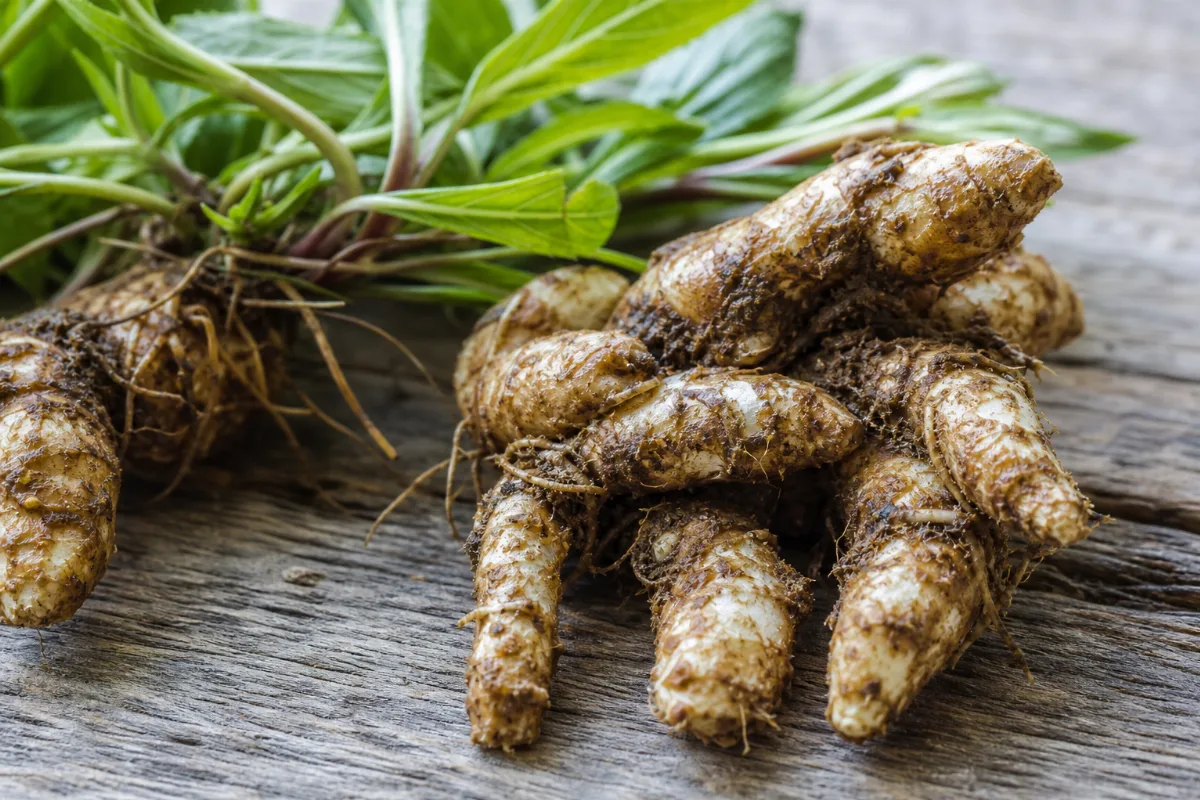
Atractylodes is a root-like underground stem used in Chinese medicine, mostly bai zhu, for weak digestion, bloating and loose stools. Most studies test formulas that mix it with other herbs, or one purified compound, so what the plain herb does is unproven. Pregnancy safety is unknown, and lab work suggests caution with blood thinners.
General information, not medical advice. Last substantive update · Not medically reviewed. A named clinician has not signed off on this page. How this page is made
About Atractylodes
Atractylodes (bai zhu) is a rhizome used in Chinese medicine, mostly for digestion. Almost all research is on combination formulas or a purified compound, not the plain herb, and certainty is low. Pregnancy safety is unknown, and interactions are theoretical.
What it is
Bai zhu is the dried rhizome of Atractylodes macrocephala, a plant in the daisy family. Cang zhu is Atractylodes lancea, a different species with different traditional uses. The accepted names were checked in GBIF.
Traditional and current uses
In Chinese medicine bai zhu strengthens the spleen and eases bloating, diarrhoea and swelling, and is used for threatened miscarriage. Si Jun Zi Tang and Yu Ping Feng San are combinations that contain it. Modern trials test these formulas, not bai zhu alone.
What is in it and how it works
Its main compounds include the atractylenolides (I, II and III) and atractylon, plus polysaccharides. Findings on gut movement, platelets and the liver come from lab and animal work. Purified atractylenolide I is not the same as the whole herb.
What the research shows
Pooled trials of formulas report benefit in indigestion, asthma and children's infections, and with chemotherapy for stomach cancer, at low or very low certainty. Two small old trials of purified atractylenolide I found better appetite in cancer cachexia. No trial of bai zhu alone was found, including for constipation.
At a glance
Traditional uses history, not proof
- Weak digestion, bloating, diarrhoea, swelling and sweating in Chinese medicine (2021 review)
- Traditionally used to stop slight bleeding in pregnancy and prevent miscarriage (2021 review; no human safety trial)
- Ingredient in Si Jun Zi Tang and Yu Ping Feng San (combinations)
Studied for research
- Stomach cancer chemotherapy support (formulas), low certainty
- Indigestion: Xiangsha Liujunzi formula, low certainty
- Asthma and children's infections: Yupingfeng, low certainty
- Cancer cachexia appetite (purified atractylenolide I), very low certainty
- Plain bai zhu for any use: no trial found
Main compounds
- Atractylenolide I (PubChem 5321018)
- Atractylenolide II (14448070)
- Atractylenolide III (155948)
- Atractylon (3080635)
Common forms
- Dried sliced rhizome, raw or stir-fried, steamed or soil-fried
- Decoction, granules or capsules
- Multi-herb formulas such as Si Jun Zi Tang and Yu Ping Feng San (combinations)
- Purified atractylenolide extracts are a separate product
Research links: PubMed: bai zhu comprehensive review (2021) · PubMed: bai zhu formulas with chemotherapy in gastric cancer (2024) · RxList: Atractylodes · Research Library · Genes & Biomarkers Library
The plant and its history
- Accepted scientific name
- Atractylodes macrocephala
- Naming authority
- Koidz.
- Common names
- Bai zhu (zh); White atractylodes (en); Largehead atractylodes (en)
- Botanical family
- Asteraceae (daisy family)
- Classification
- Plantae > Not read > Not read > Not read > Asteraceae > Atractylodes > Atractylodes macrocephala
- Native range
- Not verified in the sources read. The 2021 review lists Chinese growing provinces.
- Habitat
- Not read.
- What the plant looks like
- Roots: The dried rhizome is the medicinal part (review).; Stems: Not read.; Leaves: Not read.; Flowers: Not read.; Fruit: Not read.
- Cultivation
- Not read.
- Harvest and processing
- The review describes stir-fried, steamed and soil-fried processing; details not re-opened.
- Look-alikes and adulterants
- Name: Atractylodes lancea (cang zhu); Note: Accepted separate species (GBIF 3122433; NCBI taxid 41486). Different traditional uses and main compounds (atractylodin, beta-eudesmol). Bai zhu vs cang zhu: do not mix their evidence.; Name: Other Atractylodes (A. chinensis, A. japonica); Note: Named in reviews; not examined.
- Sustainability and conservation
- Not verified; no conservation record read.
Traditional use and history history, not clinical proof
| Tradition or era | Documented use | Source |
|---|---|---|
| Traditional Chinese medicine (listed in Shen Nong's Herbal Classic, Han dynasty, per the 2021 review) | Strengthen the spleen, replenish qi, dry dampness, ease bloating, diarrhoea, oedema and sweating; also used for threatened miscarriage. | Yang et al. 2021 (PMID 34803677) |
| Classic formulas | Bai zhu is an ingredient in combinations such as Si Jun Zi Tang (four gentlemen) and Yu Ping Feng San (jade windscreen). These are combinations; their results belong to the whole formula. | PMID 34803677; PMID 40103588; PMID 42147341 |
Traditional use shows how a plant was used. It does not show that a supplement works or is safe today.
What is inside, and how it may work
What the plant contains and how those compounds act in cells and animals. Laboratory and animal mechanisms are not proven effects in people.
Main compounds
| Compound | Family | Where it is concentrated | Activity studied | Level of evidence |
|---|---|---|---|---|
| Atractylenolide I PubChem 5321018 | Sesquiterpene lactone | rhizome | Studied in cachexia pilots (purified); lab anti-inflammatory and anti-cancer; toxic to zebrafish liver at lab doses. 8 3 6 | Human data |
| Atractylenolide II PubChem 14448070 | Sesquiterpene lactone | rhizome | Lab: reduced platelet clumping; lab anti-cancer. 2 3 | Laboratory research |
| Atractylenolide III PubChem 155948 | Sesquiterpene lactone | rhizome | Lab: reduced platelet clumping, anti-inflammatory; not toxic to zebrafish in one study. 2 6 | Laboratory research |
| Atractylon PubChem 3080635 | Sesquiterpene (volatile oil) | rhizome | Named in the brief as a bai zhu volatile compound; no source on atractylon was read for this build. 23 | Laboratory research |
| Polysaccharides, polyacetylenes and other sesquiterpenoids | Mixed | rhizome | The review names sesquiterpenoids, polysaccharides and polyacetylenes as the main components. 16 | Laboratory research |
Mechanisms, receptors and pathways
| Target or pathway | Gene or receptor | What was found | Level |
|---|---|---|---|
| Gut movement, gut bacteria and short-chain fatty acids | 5-HT4 receptor | A 2025 Chinese review proposes bai zhu acts on gut bacteria, short-chain fatty acids and 5-HT4 signalling to help constipation. Lab and animal findings. 4 | Animal research |
| Platelet activation (Akt and p38 signalling) | Akt, p38 MAPK | Atractylenolide II and III reduced platelet clumping and lengthened bleeding time in mice. 2 | Animal research |
| Drug-metabolising enzymes | CYP3A4, CYP2C19 | Cang zhu compounds weakly inhibit human CYP enzymes in the lab; atractylenolides also inhibit metabolic enzymes (review). 13 3 | Laboratory research |
| Cancer cachexia inflammation signals and PIF | TNF-alpha, IL-1, PIF | In two small trials atractylenolide I lowered inflammatory messengers and PIF versus a fish-oil supplement. 8 7 | Human data |
Absorption, metabolism and elimination
- Absorption
- Atractylenolides are rapidly absorbed but slowly metabolised in animals (review). Human absorption data for whole bai zhu were not read.
- Distribution
- The 2021 review reports rapid tissue distribution in mice after injection.
- Metabolism
- Atractylenolides inhibit metabolic enzymes (review). Beta-eudesmol from cang zhu is processed by CYP2C19 and CYP3A4 in lab studies.
- Elimination
- The 2021 review reports a long elimination half-life in mice; not read in detail.
- Bioavailability
- Low bioavailability is named as a challenge for Atractylodis Rhizoma compounds (2026 review).
Isolated compounds versus whole extracts
The only human trials of a bai zhu component used purified atractylenolide I (small, old, no placebo). Most other human trials test multi-herb formulas. Atractylenolide I and II were toxic to zebrafish embryos while III was not, so compounds differ from each other and from the whole herb.
Nutritional composition
No vitamin or mineral role for bai zhu was found. It is used for its sesquiterpenes and polysaccharides.
4 low certainty3 very low certainty4 not enough evidence
What is Atractylodes good for?
The main proposed uses and how strong the human evidence is for each. "Low" means small or inconsistent studies, and "insufficient" means there is not enough to judge. Most rows describe formulas or a purified compound, not the plain herb.
Benefits, one by one
Each card is a research question, not a promise. Tap a goal to filter. Open a card to see the studies, doses and limits.
Advanced stomach cancer: bai zhu formulas added to chemotherapy
Low certaintyPooled Chinese trials of herbal formulas containing bai zhu, given with chemotherapy, reported better tumour response and fewer side effects than chemotherapy alone. The formulas contain several herbs, so bai zhu's own part is unknown.
2 studiesSeveral different multi-herb formulas, given by mouth; recipes and am…
Studies, doses and limits
What the trials found
A 2024 meta-analysis of trials of bai zhu-containing formulas with neoadjuvant chemotherapy in advanced gastric cancer found higher response and disease-control rates, better quality-of-life scores, higher T-cell counts and fewer adverse reactions than chemotherapy alone. The authors say more high-quality randomised trials are needed.
Results
Higher tumour response, disease control, quality of life and T-cell markers; fewer adverse reactions.
Effect sizes as reported
Response RR 1.41 (95% CI 1.27 to 1.57); disease control RR 1.20 (1.13 to 1.27); quality of life RR 1.43 (1.30 to 1.57), MD 8.47 (7.16 to 9.77).
Why this rating
Pooled trials show benefit, but the formulas differ, bai zhu cannot be separated, the abstract gives no GRADE ratings or trial count, and the authors ask for better trials.
Form and dose studied
Several different multi-herb formulas, given by mouth; recipes and amounts not given in the abstract.
Who was studied
Adults with advanced gastric cancer having chemotherapy; trials in China
Limits
Not bai zhu alone. Study quality unclear. Results may not apply outside China or to other chemotherapy plans. No survival data in the abstract.
Why researchers looked
Bai zhu is a standard ingredient in formulas used in China to support the stomach and strength of people having cancer treatment.
Traditional use
Bai zhu is traditionally used to strengthen the spleen and stomach in Chinese medicine (review).
Proposed mechanism Preliminary mechanism
Not established. Lab work suggests immune and anti-tumour effects, but this does not show benefit in people.
A proposed mechanism does not show that the effect happens in people.
Talk to the cancer team before taking any herb during chemotherapy; herbs can interact with cancer drugs (theory; see Safety).
Cancer cachexia (loss of appetite and muscle): purified atractylenolide I
Very low certaintyTwo small trials from one group in China gave purified atractylenolide I, a compound from bai zhu, to people with cancer cachexia. Appetite improved more than with a fish-oil supplement. This is a purified compound, not the herb you would buy.
3 studiesAtractylenolide I extract; the pilot used 1.32 g per day for 7 weeks …
Studies, doses and limits
What the trials found
A 2008 randomised pilot (22 people, not blinded) compared atractylenolide I 1.32 g a day with a fish-oil nutritional supplement for 7 weeks. Both improved arm muscle size and weight; atractylenolide I did better for appetite and performance status. A 2005 Chinese trial of 64 patients reported better appetite and arm muscle with lactone I, lower IL-1 and TNF-alpha and lower urine PIF, with no difference in weight or IL-6.
Results
Better appetite, performance status and arm muscle than the comparison supplement; no difference in body weight in the larger trial.
Effect sizes as reported
Pilot: significant for appetite, Karnofsky status and PIF-positive rate (P < 0.05); no CI in the abstract. 2005 trial: no effect sizes in the abstract.
Why this rating
Small, partly unblinded trials from one group, 2005 and 2008; the comparator was a different supplement, not placebo; purified compound; effect sizes not reported in the abstracts.
Form and dose studied
Atractylenolide I extract; the pilot used 1.32 g per day for 7 weeks (dose in the trial, not advice).
Who was studied
People with gastric or other cancers with cachexia, China
Limits
Not the whole herb. No placebo. Old, small trials. The two papers may overlap in patients (not stated).
Why researchers looked
Cachexia is loss of appetite, weight and muscle in advanced cancer. Atractylenolide I lowered inflammation signals and a muscle-breakdown factor in lab work.
Traditional use
Not a traditional use as such; bai zhu is traditionally used to improve appetite and strengthen digestion (review).
Proposed mechanism Preliminary mechanism
Lab work links atractylenolide I to lower inflammatory messengers and a muscle-breakdown factor. The trials measured these markers.
A proposed mechanism does not show that the effect happens in people.
Slight nausea (3 of 11) and dry mouth (1 of 11) in the pilot.
Chemotherapy nausea, poor appetite and bloating: Jianpi Yiwei granules
Not enough evidenceA 136-person placebo-controlled trial tested a formula containing bai zhu and codonopsis for stomach side effects of lung-cancer chemotherapy. The abstract reports its design but no results, so the result is not known from what was read.
1 studiesMulti-herb granules; amounts not given in the abstract.
Studies, doses and limits
What the trials found
A 2026 randomised double-blind placebo-controlled trial of Jianpi Yiwei granules plus standard anti-sickness drugs in 136 people with lung cancer. The abstract states aims and design and says preliminary observations confirmed safety; no outcome numbers are given.
Results
Not reported in the abstract.
Effect sizes as reported
Not available.
Why this rating
Result numbers were not in the abstract, so no judgement is possible. Formula, not bai zhu alone.
Form and dose studied
Multi-herb granules; amounts not given in the abstract.
Who was studied
Adults with non-small cell lung cancer having carboplatin chemotherapy
Limits
Only the abstract was read. The trial's stated aim is to show the formula helps.
Why researchers looked
Nausea, poor appetite and bloating are common with carboplatin-based chemotherapy.
Traditional use
Bai zhu is traditionally used to support the spleen and stomach (review).
Proposed mechanism Preliminary mechanism
The authors propose anti-inflammatory and gut-movement effects, which is theory.
A proposed mechanism does not show that the effect happens in people.
Safety was described as confirmed in preliminary observations; no figures given.
Immune cells after stomach or bowel cancer surgery: Sijunzi decoction
Very low certaintyPooled Chinese trials of Sijunzi decoction, a classic formula that includes bai zhu, reported more helper T-cells in people after surgery for digestive cancers. These are blood-test changes, and the authors rate the evidence low to very low.
2 studiesSijunzi decoction, a multi-herb combination; amounts varied.
Studies, doses and limits
What the trials found
A 2025 meta-analysis of 13 randomised trials (1,010 people) found that adding Sijunzi decoction to conventional therapy raised CD3+ and CD4+ T-cells and the CD4+/CD8+ ratio and lowered CD8+ cells.
Results
Higher CD3+ and CD4+ T-cells, higher CD4+/CD8+ ratio, lower CD8+ cells.
Effect sizes as reported
CD3+ MD 5.73 (2.07 to 9.39); CD4+ MD 5.86 (3.90 to 7.82); CD4+/CD8+ MD 0.29 (0.15 to 0.43); CD8+ MD -2.44 (-4.03 to -0.85).
Why this rating
The authors graded CD4+, CD8+ and the ratio as low quality and the rest as very low, with likely publication bias. Blood markers, not infections or survival.
Form and dose studied
Sijunzi decoction, a multi-herb combination; amounts varied.
Who was studied
Adults after surgery for gastrointestinal cancer
Limits
Formula, not bai zhu alone. A lab-marker change is not a proven health benefit.
Why researchers looked
Surgery for digestive cancers can lower immune cell counts.
Traditional use
Sijunzi decoction (four gentlemen decoction) is a classic Chinese formula to strengthen digestion and energy.
Proposed mechanism Pharmacological theory
The authors used network pharmacology (computer prediction) to suggest immune pathways; this is theory.
A proposed mechanism does not show that the effect happens in people.
No safety figures in the abstract.
Functional dyspepsia (indigestion, fullness after meals): Xiangsha Liujunzi formula
Low certaintyA 216-person placebo-controlled trial and a pooled analysis of 23 studies found a bai zhu-based formula helped indigestion symptoms. It is a multi-herb formula and the pooled studies were low quality.
3 studiesXiangsha Liujunzi granules or decoction, a combination formula.
Studies, doses and limits
What the trials found
A 2017 three-centre randomised double-blind placebo-controlled trial (216 adults, 4 weeks) found improvement in postprandial discomfort, global impression, anxiety/depression score, symptom score, quality of life and stomach emptying versus placebo. A 2024 meta-analysis of 23 studies (2,101 people) found a higher effectiveness rate than controls; the authors called the studies low quality.
Results
Better symptom scores and stomach emptying than placebo; higher effectiveness rate than control treatments.
Effect sizes as reported
Meta-analysis effectiveness RR 1.27 (95% CI 1.21 to 1.33); adverse events RR 0.67 (0.16 to 2.76). Trial effect sizes not given in the abstract.
Why this rating
One good-looking placebo-controlled trial plus pooled low-quality studies; formula, not bai zhu alone; short follow-up.
Form and dose studied
Xiangsha Liujunzi granules or decoction, a combination formula.
Who was studied
Adults with functional dyspepsia, China
Limits
The abstract does not list the ingredients; the 2021 review says bai zhu is the dominant herb. Bai zhu alone has not been tested for dyspepsia.
Why researchers looked
Bai zhu is the main herb in Xiangsha Liujunzi decoction, used in China for fullness, poor appetite and indigestion (review).
Traditional use
Traditionally used to strengthen the spleen and ease bloating (review).
Proposed mechanism Preliminary mechanism
Lab work suggests effects on gut movement; this does not show benefit in people.
A proposed mechanism does not show that the effect happens in people.
No clear difference in adverse events versus controls in the pooled analysis.
Constipation, loose stools and bloating (traditional use)
Not enough evidenceBai zhu is traditionally used both for loose stools and for constipation. A 2025 Chinese review proposes how it might work, but it describes lab and animal work, and no human trial of bai zhu alone was found.
3 studiesDecoctions of sliced rhizome or formulas in tradition; no tested amou…
Studies, doses and limits
What the trials found
No randomised trial of bai zhu alone for constipation or diarrhoea was found. A 2021 review lists small clinical reports for constipation, functional dyspepsia and ulcerative colitis but details are limited. The consumer reference RxList rates the evidence for indigestion, stomachache, bloating and diarrhoea as insufficient.
Results
No reliable result.
Effect sizes as reported
None.
Why this rating
Only traditional use, lab and animal work, and small unclear clinical reports.
Form and dose studied
Decoctions of sliced rhizome or formulas in tradition; no tested amounts.
Who was studied
None specific
Limits
Evidence is mostly lab and animal.
Why researchers looked
Bai zhu is called a core herb for strengthening the spleen and regulating the bowel (review in Chinese).
Traditional use
Traditional texts use bai zhu for diarrhoea, bloating and, in decoctions, constipation (review).
Proposed mechanism Preliminary mechanism
Proposed effects on gut bacteria, short-chain fatty acids, gut-muscle movement and water content, from lab and animal studies.
A proposed mechanism does not show that the effect happens in people.
See Safety.
Adult asthma: Yupingfeng powder added to usual treatment
Low certaintyPooled trials of Yupingfeng powder (astragalus, bai zhu and saposhnikovia) added to usual asthma treatment reported better response and lung-function scores. It is a three-herb combination and was tested as an add-on, not alone.
2 studiesYupingfeng powder (combination), amounts varied.
Studies, doses and limits
What the trials found
A 2026 meta-analysis of 20 randomised trials (1,896 adults) found that adding Yupingfeng to conventional asthma treatment gave a higher response rate and better lung function and asthma control scores. Only two studies reported adverse events, which were mild.
Results
Higher response rate and better lung function when added to usual care.
Effect sizes as reported
Response RR 1.20 (95% CI 1.16 to 1.25), 86.8% vs 72.3%; FEV1 SMD 1.32 (as reported).
Why this rating
Moderate trial quality per the authors, trials from China, open-label designs, little adverse-event data.
Form and dose studied
Yupingfeng powder (combination), amounts varied.
Who was studied
Adults with bronchial asthma
Limits
Not bai zhu alone. Add-on to medicines; not a replacement. Asthma needs medical care.
Why researchers looked
Yupingfeng powder (Jade Windscreen) is a classic formula for people who catch colds easily or have wheeze.
Traditional use
Traditional formula for weak defences against colds (the review lists it for colds, chronic bronchitis and allergy).
Proposed mechanism Preliminary mechanism
Not established.
A proposed mechanism does not show that the effect happens in people.
Mild stomach discomfort and dry mouth reported in two studies.
Recurrent chest and throat infections in children: Yupingfeng granules
Low certaintyA pooled analysis of 17 trials found children given Yupingfeng granules alongside usual care had better clinical response and higher antibody levels. Results varied greatly between trials, and the product is a combination.
1 studiesYupingfeng granules (combination), amounts varied.
Studies, doses and limits
What the trials found
A 2022 meta-analysis of 17 randomised trials in children with recurrent respiratory tract infections found a higher clinical response rate and higher IgA, IgM and IgG with the add-on, and lower TNF-alpha. Heterogeneity was high (I-squared 84 to 95 percent) for the blood markers. The authors say effectiveness and safety remain to be verified.
Results
Higher response rate; higher antibody levels; lower TNF-alpha.
Effect sizes as reported
Response RR 1.18 (1.12 to 1.24); IgA SMD 1.23 (0.68 to 1.78); IgM SMD 0.85 (0.35 to 1.35); IgG SMD 1.06 (0.65 to 1.47); TNF-alpha SMD -1.03 (-1.55 to -0.51).
Why this rating
High heterogeneity, open trials from China, blood markers; combination product.
Form and dose studied
Yupingfeng granules (combination), amounts varied.
Who was studied
Children with recurrent respiratory tract infections, China
Limits
Not bai zhu alone. Number of children not read. Not a reason to give an herb to a child without a doctor.
Why researchers looked
Yupingfeng is used in China to try to reduce repeat infections.
Traditional use
Traditional formula for people prone to colds.
Proposed mechanism Preliminary mechanism
Not established.
A proposed mechanism does not show that the effect happens in people.
Safety not confirmed by the authors.
Allergic rhinitis (hay fever): Yupingfeng powder with acupuncture
Very low certaintyNine studies tested Yupingfeng powder together with acupuncture and found a higher effective rate. Because acupuncture was part of the treatment, the powder's own effect cannot be separated.
1 studiesYupingfeng powder (combination) plus acupuncture
Studies, doses and limits
What the trials found
A 2025 meta-analysis of 9 studies (686 people) found a higher effective rate with Yupingfeng plus acupuncture than other treatments, and a higher follow-up effective rate. The abstract says recurrence was lower.
Results
Higher effective rate than other treatments.
Effect sizes as reported
Effective rate RR 2.52 (1.80 to 3.54); follow-up RR 2.03 (1.32 to 3.13).
Why this rating
Powder plus acupuncture together; control treatments varied; only the abstract was read.
Form and dose studied
Yupingfeng powder (combination) plus acupuncture
Who was studied
People with allergic rhinitis, China
Limits
Cannot attribute any effect to bai zhu.
Why researchers looked
Yupingfeng is used in China for allergy-prone people.
Traditional use
Traditional formula for weak defences.
Proposed mechanism Preliminary mechanism
Not established.
A proposed mechanism does not show that the effect happens in people.
Not described in the abstract.
Blood pressure: a bai zhu-based formula (single small trial)
Not enough evidenceOne 88-person Chinese trial cited by a 2021 review compared a bai zhu-based formula with the blood pressure drug captopril. That trial was not read, so it cannot be judged here.
1 studiesBanxia Baizhu Tianma decoction (combination)
Studies, doses and limits
What the trials found
The 2021 review reports that in 88 people the formula group had lower angiotensin II, renin and aldosterone and a better blood pressure effect than captopril. This is a summary of a primary paper (Miao 2017) that was not opened.
Results
Reported as better than captopril in the review summary.
Effect sizes as reported
Not available.
Why this rating
Single small trial known only from a review summary; a multi-herb formula; compared with a drug, not placebo.
Form and dose studied
Banxia Baizhu Tianma decoction (combination)
Who was studied
Adults with high blood pressure, China
Limits
The original paper was not read (summary-only).
Why researchers looked
Banxia Baizhu Tianma decoction is used in China for dizziness and high blood pressure (review).
Traditional use
Traditional use for dizziness (review).
Proposed mechanism Preliminary mechanism
Not established.
A proposed mechanism does not show that the effect happens in people.
If taking blood pressure medicine, do not add herbs without asking a doctor.
Liver, blood sugar, platelets and other findings (lab and animal only)
Not enough evidenceCell and animal work reports many effects of bai zhu and atractylenolides on the liver, blood sugar, platelets, fat metabolism and inflammation. None of this shows benefit in people.
3 studiesNot applicable.
Studies, doses and limits
What the trials found
No human trial was found for these effects. A 2026 liver review states clinical evidence remains limited.
Results
No human result.
Effect sizes as reported
None.
Why this rating
Laboratory and animal evidence only.
Form and dose studied
Not applicable.
Who was studied
Not applicable.
Limits
Lab effects often do not carry over to people.
Why researchers looked
These findings generate ideas for research.
Traditional use
Not applicable.
Proposed mechanism Animal research
Lab and animal results, for example on SIRT1/AMPK, NF-kB and platelet signalling.
A proposed mechanism does not show that the effect happens in people.
Some lab findings point to possible risks; see Safety.
Connections to the rest of health
How Atractylodes connects to the rest of our health knowledge graph. Every link says what kind of connection it is. A safety link (for example to the liver) is a warning, not a benefit. A study that merely mentions a topic never creates a benefit link.
Explore every connection: goals, body systems, organs, symptoms, genes
A. Wellness goals
| Connected to | Kind of connection | Evidence status | Context | Studies |
|---|---|---|---|---|
| Immune Support | Demonstrated clinical effect | Low certainty | Advanced stomach cancer: bai zhu formulas added to chemotherapy: Pooled Chinese trials of herbal formulas containing bai zhu, given with chemotherapy, reported better tumour response and fewer side effects than chemotherapy alone. The formulas contain several herbs, so bai zhu's own part is unknown. Adult asthma: Yupingfeng powder added to usual treatment: Pooled trials of Yupingfeng powder (astragalus, bai zhu and saposhnikovia) added to usual asthma treatment reported better response and lung-function scores. It is a three-herb combination and was tested as an add-on, not alone. | 10 16 19 18 |
| Digestive Support | Potential benefit | Very low certainty | Cancer cachexia (loss of appetite and muscle): purified atractylenolide I: Two small trials from one group in China gave purified atractylenolide I, a compound from bai zhu, to people with cancer cachexia. Appetite improved more than with a fish-oil supplement. This is a purified compound, not the herb you would buy. | 8 7 24 |
| Digestive Support | Traditional use | Not enough evidence | Chemotherapy nausea, poor appetite and bloating: Jianpi Yiwei granules: A 136-person placebo-controlled trial tested a formula containing bai zhu and codonopsis for stomach side effects of lung-cancer chemotherapy. The abstract reports its design but no results, so the result is not known from what was read. Constipation, loose stools and bloating (traditional use): Bai zhu is traditionally used both for loose stools and for constipation. A 2025 Chinese review proposes how it might work, but it describes lab and animal work, and no human trial of bai zhu alone was found. | 1 4 16 24 |
| Immune Support | Potential benefit | Very low certainty | Immune cells after stomach or bowel cancer surgery: Sijunzi decoction: Pooled Chinese trials of Sijunzi decoction, a classic formula that includes bai zhu, reported more helper T-cells in people after surgery for digestive cancers. These are blood-test changes, and the authors rate the evidence low to very low. Allergic rhinitis (hay fever): Yupingfeng powder with acupuncture: Nine studies tested Yupingfeng powder together with acupuncture and found a higher effective rate. Because acupuncture was part of the treatment, the powder's own effect cannot be separated. | 15 17 5 |
| Digestive Support | Demonstrated clinical effect | Low certainty | Functional dyspepsia (indigestion, fullness after meals): Xiangsha Liujunzi formula: A 216-person placebo-controlled trial and a pooled analysis of 23 studies found a bai zhu-based formula helped indigestion symptoms. It is a multi-herb formula and the pooled studies were low quality. | 9 14 16 |
| Gut Health | Traditional use | Not enough evidence | Constipation, loose stools and bloating (traditional use): Bai zhu is traditionally used both for loose stools and for constipation. A 2025 Chinese review proposes how it might work, but it describes lab and animal work, and no human trial of bai zhu alone was found. | 4 16 24 |
| Blood Pressure Support | Traditional use | Not enough evidence | Blood pressure: a bai zhu-based formula (single small trial): One 88-person Chinese trial cited by a 2021 review compared a bai zhu-based formula with the blood pressure drug captopril. That trial was not read, so it cannot be judged here. | 16 |
| Liver Support | Preliminary mechanism | Not enough evidence | Liver, blood sugar, platelets and other findings (lab and animal only): Cell and animal work reports many effects of bai zhu and atractylenolides on the liver, blood sugar, platelets, fat metabolism and inflammation. None of this shows benefit in people. | 11 3 16 |
| Blood Sugar Balance | Preliminary mechanism | Not enough evidence | Liver, blood sugar, platelets and other findings (lab and animal only): Cell and animal work reports many effects of bai zhu and atractylenolides on the liver, blood sugar, platelets, fat metabolism and inflammation. None of this shows benefit in people. | 11 3 16 |
B. Body systems
| Connected to | Kind of connection | Evidence status | Context | Studies |
|---|---|---|---|---|
| Digestive System | Biological association | Low certainty | Studied for: Advanced stomach cancer: bai zhu formulas added to chemotherapy Studied for: Cancer cachexia (loss of appetite and muscle): purified atractylenolide I | 10 16 8 7 24 1 15 17 9 14 4 |
| Immune System | Biological association | Low certainty | Studied for: Advanced stomach cancer: bai zhu formulas added to chemotherapy Studied for: Immune cells after stomach or bowel cancer surgery: Sijunzi decoction | 10 16 15 17 18 5 |
| Metabolism Weight | Biological association | Very low certainty | Studied for: Cancer cachexia (loss of appetite and muscle): purified atractylenolide I | 8 7 24 |
| Respiratory System | Biological association | Low certainty | Studied for: Adult asthma: Yupingfeng powder added to usual treatment Studied for: Recurrent chest and throat infections in children: Yupingfeng granules | 19 16 18 5 |
| Cardiovascular System | Biological association | Not enough evidence | Studied for: Blood pressure: a bai zhu-based formula (single small trial) | 16 |
| Hepatic System | Biological association | Not enough evidence | Studied for: Liver, blood sugar, platelets and other findings (lab and animal only) | 11 3 16 |
| Endocrine System | Biological association | Not enough evidence | Studied for: Liver, blood sugar, platelets and other findings (lab and animal only) | 11 3 16 |
E. Health conditions
| Connected to | Kind of connection | Evidence status | Context | Studies |
|---|---|---|---|---|
| Pregnancy | Contraindication | Not enough evidence | Traditional anti-miscarriage use versus guidance to avoid; no human safety trial. Traditional protective use versus guidance to avoid; no human safety trial. Preparation or compound: Bai zhu rhizome |
16 24 |
| Functional dyspepsia | Demonstrated clinical effect | Low certainty | A bai zhu-based combination formula beat placebo in one trial. Preparation or compound: Xiangsha Liujunzi formula |
9 14 |
I. Biomarkers
| Connected to | Kind of connection | Evidence status | Context | Studies |
|---|---|---|---|---|
| CD4+ T-cells (helper immune cells) | Biological association | Very low certainty | Measured in trials: raised. A lab change is not the same as a health benefit. | 15 10 |
| Proteolysis-inducing factor (PIF), a muscle-breakdown signal | Biological association | Very low certainty | Measured in trials: lowered. A lab change is not the same as a health benefit. | 8 7 |
| TNF-alpha and IL-1 (inflammation signals) | Biological association | Very low certainty | Measured in trials: mixed. A lab change is not the same as a health benefit. | 7 8 |
| Stomach emptying rate | Biological association | Low certainty | Measured in trials: raised. A lab change is not the same as a health benefit. | 9 |
| FEV1 (lung function) | Biological association | Low certainty | Measured in trials: raised. A lab change is not the same as a health benefit. | 19 |
| Antibodies IgA, IgM and IgG | Biological association | Low certainty | Measured in trials: raised. A lab change is not the same as a health benefit. | 18 |
J. Genes, receptors and enzymes
| Connected to | Kind of connection | Evidence status | Context | Studies |
|---|---|---|---|---|
| CYP3A4 | Biological association | Very low certainty | Weak inhibition in the lab; lower liver enzyme expression in mice after 14+ days. Preparation or compound: Cang zhu compounds atractylodin and beta-eudesmol |
13 |
| CYP3A4 | Preliminary mechanism | In vitro | Weakly inhibited by cang zhu compounds in the lab; atractylenolides inhibit metabolic enzymes. | 13 3 |
K. Biological pathways
| Connected to | Kind of connection | Evidence status | Context | Studies |
|---|---|---|---|---|
| AMPK/SIRT1 signalling | Preliminary mechanism | Animal | Proposed in lab liver models; not tested in people. | 11 |
L. Active compounds
| Connected to | Kind of connection | Evidence status | Context | Studies |
|---|---|---|---|---|
| Atractylenolide I | Biological association | Human | Studied in cachexia pilots (purified); lab anti-inflammatory and anti-cancer; toxic to zebrafish liver at lab doses. Preparation or compound: rhizome |
8 3 6 |
| Atractylenolide II | Biological association | In vitro | Lab: reduced platelet clumping; lab anti-cancer. Preparation or compound: rhizome |
2 3 |
| Atractylenolide III | Biological association | In vitro | Lab: reduced platelet clumping, anti-inflammatory; not toxic to zebrafish in one study. Preparation or compound: rhizome |
2 6 |
| Atractylon | Biological association | In vitro | Named in the brief as a bai zhu volatile compound; no source on atractylon was read for this build. Preparation or compound: rhizome |
23 |
| Polysaccharides, polyacetylenes and other sesquiterpenoids | Biological association | In vitro | The review names sesquiterpenoids, polysaccharides and polyacetylenes as the main components. Preparation or compound: rhizome |
16 |
Each connection is stored with the ingredient, the connected record, the kind of connection, the evidence status, the supporting studies, the preparation or compound involved, and a review date (last reviewed October 25, 2026).
Evidence at a glance: what changed in 6 lab markers
Tap a number to show only those markers. Counts are markers, not people.
The evidence
The research centre for Atractylodes. Every record here was checked against PubMed or the publisher's page; we never list a study we have not verified.
Evidence by outcome
Bars show how many studies we found for each outcome, not how well it works. People are added up across trials only (reviews are not added, to avoid double counting).
How we rate evidence
High certainty
Several well-run trials or reviews agree; further research is unlikely to change the picture much.
Moderate certainty
Good trials point the same way, but some doubt remains.
Low certainty
Small, short or inconsistent trials. The finding could change with better research.
Very low certainty
Very little or very weak human data. Treat as a possibility only.
Mixed findings
Trials or reviews disagree with each other.
Not enough evidence
Not enough human research to say either way.
Evidence against
Good research found no benefit, or found harm.
We take the reviewers' own risk-of-bias and GRADE statements where they exist, and otherwise judge from study size, design, consistency, directness and whether a product matches what is sold. Many publications do not make evidence high. Method note: We built from our existing atractylodes summary and re-read PubMed abstracts for the studies cited, checked plant names in GBIF and NCBI, compounds in PubChem, and read RxList. An EMA monograph and an NCCIH page were not found; LiverTox and LactMed were not checked.
Study library: every study we checked 24
| Study | Design | People | Product, dose, length | Result |
|---|---|---|---|---|
| Cai 2026 Jianpi Yiwei Granules for Chemotherapy-Induced Gastrointestinal Reactions: A Randomized Double-Blind Placebo-Controlled Trial Anticancer Agents Med Chem · PMID 41114481 · DOI |
Controlled trial |
136 People with non-small cell lung cancer having carboplatin-based chemotherapy |
Jianpi Yiwei granules (a multi-herb formula that contains Codonopsis pilosula and Atractylodes macrocephala) plus standard anti-sickness drugs not stated not given in abstract not given in abstract · vs Placebo plus standard anti-sickness drugs |
The abstract describes the aims and says preliminary observations confirmed safety, but it reports no outcome numbers or between-group results. No results given in the abstract (not given) Methods, limits and fundingOutcomes: Nausea and vomiting control, appetite, bloating, constipation, quality of life, fatigue Limitations: Only the abstract was read and it contains no results. Formula, not bai zhu alone. Funding and conflicts: Not stated in the abstract. Read: abstract |
| Chen 2017 Atractylodes lactone compounds inhibit platelet activation Platelets · PMID 27560602 · DOI |
Laboratory research animal |
Human platelets in the lab and mice | Atractylenolide I, II and III (purified) rhizome compounds not applicable not applicable · vs Aspirin used as a comparison in the lab |
Atractylenolide II and III, but not I, reduced platelet clumping in the lab, similar to aspirin in response to agonists. They delayed artery blockage and lengthened bleeding time in mice. Lab and mouse findings only (not applicable) Methods, limits and fundingOutcomes: Platelet aggregation, clot retraction, artery clotting and bleeding time in mice Limitations: No human data. Purified compounds, not the herb. Funding and conflicts: No conflict stated. Read: abstract |
| Deng 2021 Atractylenolides (I, II, and III): a review of their pharmacology and pharmacokinetics Arch Pharm Res · PMID 34269984 · DOI |
Narrative review in-vitro |
Review of the three atractylenolides from bai zhu | Atractylenolides I, II, III (purified) rhizome compounds not applicable not applicable · vs not applicable |
Lab findings: anti-cancer, anti-inflammatory, anti-platelet, nerve-protecting, blood-sugar and blood-fat effects. Atractylenolides are rapidly absorbed but slowly metabolised, and inhibit metabolic enzymes, so the authors advise attention to side effects when combined with other drugs. Clinical research is recommended. Not applicable (not applicable) Methods, limits and fundingOutcomes: Pharmacology and pharmacokinetics Limitations: Mostly lab and animal evidence; no human trial pooling. Funding and conflicts: No conflict stated. Read: abstract |
| Li 2025 Research progress on mechanism of Atractylodis Macrocephalae Rhizoma and its combinations in treating constipation Zhongguo Zhong Yao Za Zhi · PMID 41508168 · DOI |
Narrative review animal |
Review (in Chinese) of bai zhu for constipation | Bai zhu and combinations rhizome not applicable not applicable · vs not applicable |
Describes proposed effects on gut bacteria, short-chain fatty acids, gut movement through 5-HT4 signalling, mucus and water content. The abstract describes mechanisms from lab and animal work and gives no human trial results. Not applicable (not applicable) Methods, limits and fundingOutcomes: Proposed mechanisms in constipation Limitations: Chinese-language mechanism review; only the English-language abstract text was read; no human trial data given. Funding and conflicts: No conflict stated. Read: abstract (Chinese review) |
| Li 2025 Analysis of the efficacy of Yupingfeng powder combined with acupuncture on allergic rhinitis: systematic review and meta analysis Allergol Immunopathol (Madr) · PMID 41229058 · DOI |
Meta-analysis |
686 People with allergic rhinitis (9 studies, China) |
Yupingfeng powder plus acupuncture not stated varied varied · vs Other treatments |
Yupingfeng plus acupuncture was more effective than other treatments, with a higher follow-up effective rate and lower recurrence. The combination with acupuncture means the powder's own effect cannot be isolated. Effective rate RR 2.52; follow-up RR 2.03 (Effective 1.80 to 3.54; follow-up 1.32 to 3.13) Methods, limits and fundingOutcomes: Effective rate, follow-up effective rate, recurrence Limitations: Powder plus acupuncture versus other treatments; cannot show the powder works alone. Only the abstract was read. Funding and conflicts: No conflict declared. Read: abstract |
| Li 2026 Differential toxic phenotypes and liver injury induced by Atractylenolides (I, II, and III): Insights from zebrafish (Danio rerio) models and network toxicology Comp Biochem Physiol C Toxicol Pharmacol · PMID 40997982 · DOI |
Animal research animal |
Zebrafish embryos | Atractylenolides I, II, III (purified) rhizome compounds LC50 81.64, 138.40 and 151.90 micromolar embryo exposure · vs Unexposed embryos |
Atractylenolide I and II caused developmental abnormalities and liver damage signs (smaller liver, higher AST and ALT); atractylenolide III did not. Silybin partly reversed the liver injury. Lab values only (not applicable) Methods, limits and fundingOutcomes: Developmental toxicity, liver size and enzymes, drug-metabolising genes Limitations: Zebrafish embryos, purified compounds; not evidence of liver injury in people. Funding and conflicts: No conflict stated. Read: abstract |
| Liu 2005 Effects of lactone I from Atractylodes macrocephala Koidz on cytokines and proteolysis-inducing factors in cachectic cancer patients Di Yi Jun Yi Da Xue Xue Bao · PMID 16234118 |
Controlled trial |
64 People with cancer cachexia (China) |
Lactone I (atractylenolide I) from bai zhu rhizome extract compound not given in abstract 3 and 7 weeks · vs Fish-oil-enriched nutritional supplement |
Appetite and arm muscle size were better with the lactone. Serum IL-1 and TNF-alpha and urine PIF were lower than with the supplement. Body weight and IL-6 did not differ. Better appetite and arm muscle; lower IL-1, TNF-alpha, urine PIF; no difference in weight or IL-6 (not given) Methods, limits and fundingOutcomes: Appetite, weight, mid-arm muscle circumference, Karnofsky score, IL-1, IL-6, TNF-alpha, proteolysis-inducing factor Limitations: Chinese-language paper; only the English abstract was read. Purified compound. Dose and blinding not stated; may overlap with the same group's 2008 pilot. Funding and conflicts: Not stated. Read: abstract (Chinese paper, English abstract) |
| Liu 2008 A randomized pilot study of atractylenolide I on gastric cancer cachexia patients Evid Based Complement Alternat Med · PMID 18830451 · DOI |
Controlled trial |
22 People with gastric cancer cachexia (China) |
Atractylenolide I extracted from bai zhu (a purified compound) rhizome extract compound 1.32 g per day 7 weeks · vs Fish-oil-enriched nutritional supplement 3.6 g per day |
Both groups improved arm muscle size and body weight. Atractylenolide I did better than the supplement for appetite and Karnofsky status and lowered the proportion positive for proteolysis-inducing factor. Slight nausea (3 of 11) and dry mouth (1 of 11) occurred in the atractylenolide group. Appetite, Karnofsky status and PIF-positive rate better with atractylenolide I (P < 0.05) (not given in abstract) Methods, limits and fundingOutcomes: Appetite, body weight, mid-arm muscle circumference, Karnofsky status, TNF-alpha, IL-1, IL-6, proteolysis-inducing factor Limitations: Pilot, 11 per group, not blinded, 7 weeks. A purified compound, not the whole herb. Authors say a proper randomised design is needed. Funding and conflicts: Not stated in the abstract. Read: abstract |
| Lv 2017 Efficacy and safety of Xiangsha Liujunzi granules for functional dyspepsia: A multi-center randomized double-blind placebo-controlled clinical study World J Gastroenterol · PMID 28852318 · DOI |
Controlled trial |
216 Adults with functional dyspepsia (Rome III) with a spleen-deficiency and qi-stagnation pattern, three centres in China |
Xiangsha Liujunzi granules (a multi-herb formula; bai zhu is its main herb according to a 2021 review, but the abstract does not list ingredients) not stated 130 mL dissolved granules three times a day 4 weeks · vs Placebo (2:1 randomisation) |
The formula improved the postprandial discomfort score, global impression, anxiety/depression score, symptom score, quality of life and stomach emptying compared with placebo. Significant improvement over placebo (P < 0.05 or < 0.01); effect sizes not given in abstract (not given in abstract) Methods, limits and fundingOutcomes: Postprandial discomfort score, global impression, anxiety and depression score, symptom score, quality of life, gastric emptying Limitations: A formula, not bai zhu alone. Only 4 weeks. Abstract gives no effect sizes or adverse-event numbers. Funding and conflicts: Authors declare no competing interests; neither funder nor outside body had a role in design or manuscript. Read: abstract |
| Niu 2024 Efficacy and safety of Atractylodes macrocephala-containing traditional Chinese medicine combined with neoadjuvant chemotherapy in the treatment of advanced gastric cancer: a systematic evaluation and meta-analysis Front Oncol · PMID 39479020 · DOI |
Meta-analysis |
Adults with advanced gastric cancer having neoadjuvant chemotherapy (trials in China) | Multi-herb TCM formulas that contain bai zhu, given with chemotherapy rhizome (as part of formulas) varied between trials (not given in abstract) subgroups of 8 weeks or longer, and under 8 weeks · vs Chemotherapy alone |
Formulas containing bai zhu plus chemotherapy had higher response and disease control, better quality-of-life scores, higher T-cell subsets and fewer adverse reactions than chemotherapy alone. Authors call for more high-quality randomised trials. Response rate RR 1.41; disease control RR 1.20; quality of life RR 1.43 (MD 8.47) (ORR 1.27 to 1.57; DCR 1.13 to 1.27; QOL RR 1.30 to 1.57, MD 7.16 to 9.77) Methods, limits and fundingOutcomes: Objective response rate, disease control rate, quality of life, adverse reactions, T-cell counts Limitations: The formulas contain other herbs, so bai zhu's own part cannot be separated. The abstract says GRADE was used but gives no ratings or number of trials. Authors say more high-quality trials are needed. Funding and conflicts: No conflict declared. Registered PROSPERO CRD42023461079. Read: abstract |
| Sun 2026 Pharmacological Effects and Proposed Mechanisms of Atractylodes Medicinal Plants in Liver Diseases: A Narrative Review Life (Basel) · PMID 42795341 · DOI |
Narrative review animal |
Review of lab models of liver disease | Atractylodes species (A. lancea, A. chinensis, A. macrocephala) and compounds rhizome not applicable not applicable · vs not applicable |
Summarises lab and animal findings (fat metabolism, oxidative stress, inflammation, fibrosis) and states that clinical evidence remains limited and efficacy is not established. Not applicable (not applicable) Methods, limits and fundingOutcomes: Liver-related lab findings Limitations: Preclinical; says clinical efficacy remains to be established. Says nothing in the abstract about liver injury cases. Funding and conflicts: No conflict declared. Read: abstract |
| Sun 2026 Herbal Textual Research, Phytochemistry, Pharmacology and Toxicity of Atractylodis Rhizoma: A Comprehensive Review Molecules · PMID 41900114 · DOI |
Narrative review |
Review of Atractylodis Rhizoma (the abstract does not name the species) | Atractylodis Rhizoma rhizome not applicable not applicable · vs not applicable |
Reports 327 compounds and mostly lab activities (antimicrobial, anti-inflammatory, antioxidant, liver-protecting, nerve-protecting). Says the herb is used for gastrointestinal disorders and influenza and that low bioavailability is a challenge. The abstract does not describe toxicity findings. Not applicable (not applicable) Methods, limits and fundingOutcomes: History, chemistry, pharmacology, toxicity Limitations: Abstract does not name the species or give toxicity details; it is not clear it covers bai zhu. Funding and conflicts: No conflict declared. Read: abstract |
| Thiengsusuk 2023 Modulatory Effects of Atractylodin and Beta-Eudesmol on Human Cytochrome P450 Enzymes: Potential Drug-Drug Interactions Molecules · PMID 37049902 · DOI |
Laboratory research animal |
Lab enzymes and mice | Atractylodin and beta-eudesmol (main compounds of A. lancea, cang zhu) rhizome compounds 100 mg/kg per day in mice 1 to 21 days (mice) · vs Untreated |
Inhibition of the human enzymes was weak. In mice, 1 to 7 days raised liver enzyme messenger RNA, but 14 days or longer lowered it and reduced enzyme activity. The authors flag a risk of drug interactions with long-term dosing of these compounds. IC50 167 to over 686 micromolar (weak) (not applicable) Methods, limits and fundingOutcomes: Inhibition of human CYP1A2, 2C9, 2C19, 2D6, 3A4 enzymes; mouse liver enzyme expression Limitations: Lab and mouse work on cang zhu compounds, not bai zhu and not people. Funding and conflicts: No conflict declared. Read: abstract |
| Wang 2024 Efficacy and safety of Xiangsha liujunzi decoction for functional dyspepsia: a systematic review and meta-analysis Front Pharmacol · PMID 38933675 · DOI |
Meta-analysis |
2101 Adults with functional dyspepsia (23 studies, China) |
Xiangsha liujunzi decoction (multi-herb formula) not stated varied varied · vs Control treatments (usually conventional drugs) |
Higher clinical effectiveness rate, better gastric emptying and symptom scores than controls. No clear difference in adverse events. Authors say the included studies were of low quality. Effectiveness rate RR 1.27; adverse events RR 0.67 (Effectiveness 1.21 to 1.33; adverse events 0.16 to 2.76) Methods, limits and fundingOutcomes: Clinical effectiveness rate, gastric emptying, symptom score, safety Limitations: Low study quality per the authors; formula, not bai zhu alone. Funding and conflicts: No conflict declared (one author on a journal editorial board, stated to have no impact). Read: abstract |
| Wu 2025 The efficacy of Sijunzi on immune function in patients with gastrointestinal cancers after surgery: Integrating systematic review and network pharmacology Medicine (Baltimore) · PMID 39928794 · DOI |
Meta-analysis |
1010 People with gastrointestinal cancers after surgery (13 RCTs, China) |
Sijunzi decoction (a classic multi-herb formula) plus conventional care not stated varied varied · vs Conventional therapy alone |
The formula group had higher CD3+ and CD4+ cells, a higher CD4+/CD8+ ratio and lower CD8+ cells. Authors graded the evidence low for CD4+, CD8+ and CD4+/CD8+, and very low for the other markers, and saw likely publication bias. CD3+ MD 5.73; CD4+ MD 5.86; CD4+/CD8+ MD 0.29; CD8+ MD -2.44 (CD3+ 2.07 to 9.39; CD4+ 3.90 to 7.82; ratio 0.15 to 0.43; CD8+ -4.03 to -0.85) Methods, limits and fundingOutcomes: T-lymphocyte subsets (CD3+, CD4+, CD8+, CD4+/CD8+) Limitations: Blood-marker outcomes only; no survival or infection outcomes in the abstract. Formula, not bai zhu alone. Funding and conflicts: No conflict declared. Registered INPLASY 202440001. Read: abstract |
| Yang 2021 A Review of the Ethnopharmacology, Phytochemistry, Pharmacology, Application, Quality Control, Processing, Toxicology, and Pharmacokinetics of the Dried Rhizome of Atractylodes macrocephala Front Pharmacol · PMID 34803677 · DOI |
Narrative review |
Review of literature on bai zhu (A. macrocephala dried rhizome) | Bai zhu, many forms rhizome not applicable not applicable · vs not applicable |
Lists traditional uses (weak spleen function, bloating, diarrhoea, oedema, and to stop minimal vaginal bleeding in pregnancy). Most pharmacology is lab or animal work. The text says there is a lack of clinical studies that directly support safety in humans, though no serious adverse events were described. Animal acute and 3-month volatile-oil studies found low toxicity. Lab work on uterine muscle is mixed. Not a trial; no pooled effect (not applicable) Methods, limits and fundingOutcomes: Traditional uses, chemistry, lab and animal findings, small clinical reports, toxicology, pharmacokinetics Limitations: Narrative review of mostly lab, animal and small Chinese clinical reports; no GRADE rating. Review text beyond the abstract was read on PMC (toxicity, pregnancy and application sections). Funding and conflicts: No conflict declared. Read: full-text (selected sections) |
| Yang 2025 The potential of Sijunzi decoction in the fight against gastrointestinal disorders: a review Front Pharmacol · PMID 40103588 · DOI |
Narrative review |
Review of Sijunzi decoction for digestive disorders | Sijunzi decoction (multi-herb formula) not stated not applicable not applicable · vs not applicable |
Says clinical studies support the formula for functional dyspepsia, chronic gastritis, gastric and colorectal cancer, irritable bowel syndrome and ulcerative colitis, and describes proposed mechanisms. The abstract gives no numbers. Not applicable (not applicable) Methods, limits and fundingOutcomes: Clinical uses and proposed mechanisms (gut bacteria, inflammation, immune response, mucosal repair) Limitations: Narrative review; the abstract's claim of proven efficacy is not backed by pooled numbers in the abstract. Funding and conflicts: No conflict declared. Read: abstract |
| Zhang 2022 Adjuvant treatment with yupingfeng granules for recurrent respiratory tract infections in children: A systematic review and meta-analysis Front Pediatr · PMID 36619520 · DOI |
Meta-analysis |
Children with recurrent respiratory tract infections (17 RCTs, China) | Yupingfeng granules (multi-herb formula) added to usual treatment not stated varied varied · vs Usual treatment alone |
Higher clinical response rate, higher immunoglobulins and lower TNF-alpha with the add-on. Heterogeneity between trials was high for the immunoglobulin and TNF-alpha results (I-squared 84 to 95 percent). Authors say effectiveness and safety remain to be verified. Response RR 1.18; IgA SMD 1.23; IgG SMD 1.06; TNF-alpha SMD -1.03 (Response 1.12 to 1.24; IgA 0.68 to 1.78; IgG 0.65 to 1.47) Methods, limits and fundingOutcomes: Clinical response rate, IgA/IgM/IgG, TNF-alpha Limitations: High heterogeneity; blood markers; combination product, not bai zhu alone. Number of children not read. Funding and conflicts: No conflict declared. Registered INPLASY202230150. Read: abstract |
| Zhang 2026 Efficacy of Yupingfeng powder in the treatment of bronchial asthma in adults: a systematic review and meta-analysis Front Pharmacol · PMID 42147341 · DOI |
Meta-analysis |
1896 Adults with bronchial asthma (20 RCTs, China) |
Yupingfeng powder (astragalus, bai zhu and saposhnikovia) added to conventional treatment not stated varied varied · vs Conventional treatment alone |
Add-on Yupingfeng had a higher response rate, better lung function and asthma control scores. No difference in the CD4+/CD8+ ratio. Only two studies reported adverse events; these were mild (stomach discomfort, dry mouth) with no serious events. Response RR 1.20; response 86.8% vs 72.3%; FEV1 SMD 1.32 (Response 1.16 to 1.25) Methods, limits and fundingOutcomes: Overall response rate, lung function (FEV1, FVC, PEF), asthma control test, CD4+/CD8+ ratio, adverse events Limitations: Authors cite moderate quality, trials from one country, open-label designs and little adverse-event data. A three-herb combination, not bai zhu alone. Funding and conflicts: Registered PROSPERO CRD420251172600. Funding not read. Read: abstract |
| s-ema-hmpc-atractylodes EMA / HMPC: no Atractylodes monograph found · Source |
Regulator page not found in-vitro |
Methods, limits and fundingRead: not found | ||
| s-gbif-atractylodes GBIF Backbone Taxonomy: Atractylodes macrocephala Koidz. (3122454) and Atractylodes lancea (Thunb.) DC. (3122433) · Source |
Database record in-vitro |
Methods, limits and fundingRead: api | ||
| s-nccih-atractylodes NCCIH: no Atractylodes page · Source |
Regulator page not found in-vitro |
Methods, limits and fundingRead: http status | ||
| s-pubchem-atractylodes PubChem name lookups: atractylenolide I (CID 5321018), II (14448070), III (155948), atractylon (3080635) · Source |
Database record in-vitro |
Methods, limits and fundingRead: api | ||
| s-rxlist-atractylodes RxList: Atractylodes (consumer supplement reference, undated) · Source |
Consumer reference |
Methods, limits and fundingRead: web page text |
What we do not know yet
- What the evidence supports: combination formulas show low-certainty benefit in indigestion, asthma and with cancer treatment; plain bai zhu is untested.
- No trial of bai zhu alone, including for constipation, was found.
- Human safety in pregnancy and breastfeeding is not known.
- No human study of drug interactions was found; LiverTox and LactMed were not checked.
How new research is added
New studies are found by a saved PubMed search and are placed in a review queue. A person reads each one before it changes any evidence rating or safety wording. New publications never change ratings automatically.
Lab markers
What changed in blood or saliva tests during trials. A changed number is not the same as feeling or being healthier, and we give no "normal ranges".
Inflammatory 1
TNF-alpha and IL-1 (inflammation signals)
Mixed results in trials
Blood proteins that rise with inflammation.
Very low certaintyResults and what it means
Why it was measured
Raised in cancer cachexia.
Statistical vs. clinical meaning
The two papers disagree in detail and the 2008 abstract wording is unclear, so no direction is stated beyond what is quoted.
Safety implication
None identified.
| Study | Result | People | Product |
|---|---|---|---|
| 7 | Serum IL-1 and TNF-alpha lower than with the fish-oil supplement; IL-6 no different | 64 people with cancer cachexia | Lactone I from bai zhu |
| 8 | Within-group changes in TNF-alpha and IL-1 were significant in both groups (abstract wording: TNF-alpha increase, IL-1 decrease) | 22 people, gastric cancer cachexia | Atractylenolide I vs fish-oil supplement |
Other 5
CD4+ T-cells (helper immune cells)
Raised in trials
A blood count of a type of immune cell.
Very low certaintyResults and what it means
Why it was measured
A common marker of immune strength after cancer surgery.
Statistical vs. clinical meaning
Statistically higher in pooled trials but graded low to very low; a lab change, not proof of fewer infections or longer survival.
Safety implication
Immune changes in cancer patients should be read by the cancer team.
Proteolysis-inducing factor (PIF), a muscle-breakdown signal
Lowered in trials
A protein linked to muscle wasting in cancer.
Very low certaintyResults and what it means
Why it was measured
Measured in the cachexia trials as a possible way atractylenolide I works.
Statistical vs. clinical meaning
A lab marker in small unblinded trials; not proof of less muscle loss.
Safety implication
None identified.
| Study | Result | People | Product |
|---|---|---|---|
| 8 | PIF-positive rate lowered more than with fish-oil supplement (P < 0.05) | 11 vs 11 people, gastric cancer cachexia | Atractylenolide I 1.32 g per day, 7 weeks |
| 7 | Urine PIF lower than with fish-oil supplement (abstract: significantly lower) | 64 people with cancer cachexia | Lactone I from bai zhu |
Stomach emptying rate
Raised in trials
How quickly food leaves the stomach.
Low certaintyResults and what it means
Why it was measured
Slow emptying is one cause of fullness after meals.
Statistical vs. clinical meaning
A lab test change in a placebo-controlled trial; formula, not bai zhu alone.
Safety implication
None identified.
| Study | Result | People | Product |
|---|---|---|---|
| 9 | Emptying rates of the proximal and distal stomach improved versus placebo (P < 0.05 or 0.01); numbers not in abstract | 216 adults with functional dyspepsia | Xiangsha Liujunzi granules |
FEV1 (lung function)
Raised in trials
The amount of air blown out in one second.
Low certaintyResults and what it means
Why it was measured
Standard measure of airflow in asthma.
Statistical vs. clinical meaning
Pooled trials of moderate quality; combination formula; add-on only.
Safety implication
None identified.
| Study | Result | People | Product |
|---|---|---|---|
| 19 | FEV1 SMD 1.32 (as reported; confidence interval not in the abstract) in favour of Yupingfeng plus usual treatment | Adults with asthma, 20 trials | Yupingfeng powder as add-on |
Antibodies IgA, IgM and IgG
Raised in trials
Blood antibodies that fight infection.
Low certaintyResults and what it means
Why it was measured
Used as a proxy for immune function in children with repeated infections.
Statistical vs. clinical meaning
High heterogeneity; a blood marker, not fewer infections.
Safety implication
None identified.
| Study | Result | People | Product |
|---|---|---|---|
| 18 | IgA SMD 1.23 (0.68 to 1.78); IgM SMD 0.85 (0.35 to 1.35); IgG SMD 1.06 (0.65 to 1.47); heterogeneity 91 to 95 percent | Children with recurrent respiratory infections, 17 trials | Yupingfeng granules as add-on |
Safety
What studies and official sources say about side effects, medicines and who should check first. Each point shows what kind of evidence it comes from.
Main points to know 4
- Pregnancy and breastfeeding: traditional use to protect pregnancy, but no human safety data. Chinese texts use bai zhu to stop slight bleeding in pregnancy and prevent miscarriage. Modern lab work on uterine muscle is mixed: one study found it excited late-pregnancy uterine muscle cells, another found high concentrations calmed contractions. No human trial tested safety in pregnancy, and the consumer reference RxList advises avoiding it in pregnancy and breastfeeding because too little is known. Use only on a doctor's advice. Authoritative guidance 16 24
- Drug interactions are mostly theory: no human interaction study was found. Lab work shows atractylenolides and cang zhu compounds affect liver drug-processing enzymes and platelets, and bai zhu is reported to lower blood sugar in lab studies. No human study of these interactions was found. As a precaution, ask a pharmacist before combining with blood-thinning, diabetes, blood-pressure or narrow-range drugs. Pharmacological theory 3 2 13 16
- The Latin name matters: bai zhu and cang zhu are different species. Bai zhu is Atractylodes macrocephala. Cang zhu is a different species, Atractylodes lancea, with different traditional uses and different main compounds. Safety findings for one species or for a purified compound should not be assumed for the other. Other 21 11
- Daisy-family allergy. Bai zhu belongs to the daisy family (Asteraceae). RxList warns that people sensitive to ragweed, chrysanthemums, marigolds or daisies may react. Authoritative guidance 24
Side effects 4
| Effect | How often | Severity and recovery | Evidence |
|---|---|---|---|
| Nausea, dry mouth and a bad taste Purified atractylenolide I 1.32 g per day for 7 weeks; RxList lists the same three effects. No frequency exists for the whole herb. | In the 11-person atractylenolide I pilot: slight nausea 3 of 11, dry mouth 1 of 11 | mild Did not interrupt treatment in the pilot | Controlled trial 8 24 |
| Stomach discomfort and dry mouth This was for Yupingfeng powder, a three-herb combination. | Reported in 2 studies in the asthma meta-analysis, no difference from controls | mild not stated | Meta-analysis 19 |
| Allergic reaction in people sensitive to the daisy family A warning from a consumer reference; no case reports were read. | Not established | not stated not stated | Authoritative guidance 24 |
| No formal safety data for the whole herb in people The 2021 review says clinical studies directly supporting safety in humans are lacking, though no serious adverse events were described. | Not established | not stated not stated | Narrative review 16 |
Liver
No case report of liver injury from bai zhu was found, but no liver registry such as NIH LiverTox was read, so the absence is not confirmed. In animals, 3 months of bai zhu volatile oil in rats was reported safe. In zebrafish embryos, purified atractylenolide I and II (not III) caused liver damage signs, including raised AST and ALT, and reduced drug-metabolising genes; this is lab evidence only. The 2026 liver review says clinical evidence remains limited. 6 16 11
How often. No frequency can be given.
Monitoring. No monitoring protocol exists. People with liver disease or on liver-affecting drugs should ask a doctor.
This is a safety connection. It is not evidence that Atractylodes supports liver health.
Medicines and supplements 5
| With | Why it matters | Importance | Evidence | What to do |
|---|---|---|---|---|
| Blood thinners and antiplatelet drugs (such as warfarin, aspirin, clopidogrel) pharmacodynamic (theory) | In the lab, atractylenolide II and III reduced platelet clumping like aspirin and lengthened bleeding time in mice. The 2021 review also lists an anticoagulant effect from lab work. | No human interaction or bleeding case was found. This is a theoretical additive effect only. | Laboratory research Very low certainty 2 16 | Ask a doctor or pharmacist before combining, and before surgery. |
| Diabetes medicines (insulin, metformin, sulfonylureas) pharmacodynamic (theory) | Lab and animal work reports blood-sugar-lowering effects of bai zhu and atractylenolides. | No human trial or case showed low blood sugar with bai zhu. Theoretical additive effect only. | Animal research Very low certainty 3 16 | If you use diabetes medicines, check with your prescriber. |
| Blood pressure medicines pharmacodynamic (theory) | A bai zhu-based formula was reported in a single small trial (known only from the 2021 review) to lower blood pressure more than captopril. Whether bai zhu itself adds to drug effects is unknown. | No interaction report was found. Theory based on one formula trial. | Controlled trial Very low certainty 16 | Check blood pressure and ask your prescriber if you add a formula. |
| Medicines cleared by liver enzymes (CYP3A4 and others) pharmacokinetic (lab) | The atractylenolide review notes atractylenolides inhibit metabolic enzymes. For cang zhu compounds (atractylodin, beta-eudesmol) inhibition of human enzymes was weak, but 14 days or more of daily dosing lowered liver enzyme expression in mice. | Unknown in people. Lab and mouse data only; compounds studied were purified. | Laboratory research Very low certainty 3 13 | Tell your pharmacist you use it if you take narrow-range drugs such as transplant medicines. |
| Chemotherapy and other cancer drugs unknown | Bai zhu formulas are used alongside chemotherapy in China trials with reported fewer side effects, but herb-drug interactions with cancer drugs were not studied in the abstracts read. | Not assessed. | Meta-analysis Not enough evidence 10 | Tell the cancer team before using any herbal formula. |
Who should check first 5
| Situation | Advice | Evidence |
|---|---|---|
| Pregnancy | Ask a doctor first. Traditional use is to protect pregnancy, but there is no human safety trial; RxList advises avoiding it. Sources disagree. | Authoritative guidance 16 24 |
| Breastfeeding | RxList advises avoiding because not enough is known. LactMed was not checked. | Authoritative guidance 24 |
| Allergy to ragweed, chrysanthemum, marigold or daisy | Possible cross-reaction; check before use. | Authoritative guidance 24 |
| Bleeding disorders, surgery coming up, or taking blood thinners | Precaution based on lab platelet findings; no human reports. | Laboratory research 2 |
| Children | Yupingfeng granules have been tested in children, as a combination with usual treatment, but safety is not confirmed by the authors. No data on bai zhu alone. | Meta-analysis 18 |
Overdose, product quality and regulators
Summary. The 2021 review reports low acute toxicity in animals, safe 3-month volatile oil dosing in rats, and no genetic toxicity of the water extract. Purified atractylenolide I and II were toxic to zebrafish embryos at 82 to 138 micromolar (LC50), atractylenolide III less so. None of this is human data.
Animal. Rat and zebrafish only; see above.
Human doses studied. Atractylenolide I 1.32 g a day for 7 weeks in a small pilot; formulas in trials of up to several weeks. No safe amount for the plain herb is established.
High dose or long term signals. Not established in people. Mouse data on cang zhu compounds showed enzyme suppression after 14 or more days.
Overdose response. No overdose data in the sources read.
Genotoxicity. The review reports no genetic toxicity for the water extract (animal data).
Toxic plant parts. The rhizome is the part used. Other parts not covered in the sources read.
Bai zhu and cang zhu are easily confused, and Atractylodes products and formulas may contain other herbs. Heavy-metal and pesticide data were not read.
Two different species. Bai zhu (Atractylodes macrocephala) and cang zhu (A. lancea) are accepted separate species in GBIF; the label's Latin name decides which you have. 21
Processing changes the herb. Stir-frying, steaming or soil-frying bai zhu changes its chemistry, per our existing summary and the 2021 review; not re-opened. 16
| Body | Action | Date |
|---|---|---|
| RxList (consumer reference, not a regulator) (United States) | Evidence rated insufficient for all uses; advises avoiding in pregnancy and breastfeeding; warns of daisy-family allergy. source | Undated page read 2026-10-25 |
When to get medical help
- Unusual bleeding, black stools or easy bruising if you take blood thinners
- Yellow skin or eyes, dark urine or severe stomach pain
- Vaginal bleeding or cramps in pregnancy (see a doctor; do not self-treat)
- Rash, swelling of the lips or face, or trouble breathing after taking it (allergy)
- Shakes, sweating or confusion on diabetes medicines
Stop the supplement and contact a clinician or emergency service. In the US, Poison Control is 1-800-222-1222.
General information only, not medical advice. Ask a clinician or pharmacist before use, especially with medicines, in pregnancy or with a health condition. See the Natural Remedy Safety guide.
Frequently asked questions
What is atractylodes?
Atractylodes usually means bai zhu, the dried underground stem (rhizome) of Atractylodes macrocephala, used in Chinese medicine for weak digestion, bloating and loose stools. Cang zhu is a different species.
What is the difference between bai zhu and cang zhu?
Has atractylodes itself been proven to help digestion?
What is Si Jun Zi Tang?
Si Jun Zi Tang (Sijunzi decoction, four gentlemen decoction) is a classic Chinese formula that includes bai zhu among other herbs. A pooled analysis of 13 trials found more helper T-cells after digestive cancer surgery, rated low to very low certainty. The results belong to the combination, not to bai zhu.
What is Yu Ping Feng San?
Does it help with cancer treatment?
Pooled trials of formulas containing bai zhu with chemotherapy for advanced stomach cancer report better response and fewer side effects. Two small old trials of purified atractylenolide I found better appetite in cancer cachexia. The evidence is low or very low certainty and does not show bai zhu works alone. Tell the cancer team about any herb.
Is it safe in pregnancy or breastfeeding?
Can it affect the liver?
No case reports of liver injury were found, but LiverTox was not checked. Purified atractylenolide I and II damaged the liver of zebrafish embryos in a lab study; that is not human evidence.
Does it interact with blood thinners?
No human interaction was found. In the lab, two atractylenolides reduced platelet clumping and lengthened bleeding time in mice, so a precaution is reasonable. Ask a pharmacist.
Does it affect blood sugar or blood pressure medicines?
What are the side effects?
Explore by health goal
Immune SupportDigestive SupportGut HealthBlood Pressure SupportLiver SupportBlood Sugar Balance
Editorial transparency
- Written by
- AlternativeMed editorial team. Research compiled with AI assistance, then checked against PubMed records.
- Medical review
- None. This page has not been reviewed by a physician or pharmacist.
- First published
- 2026-10-25
- Last substantive update
- 2026-10-25
- How we research
- We built from our existing atractylodes summary and re-read PubMed abstracts for the studies cited, checked plant names in GBIF and NCBI, compounds in PubChem, and read RxList. An EMA monograph and an NCCIH page were not found; LiverTox and LactMed were not checked.
- How we rate evidence
- See "How we rate evidence" in the Evidence tab.
- Independence
- No product is promoted on this page. No affiliate links are shown. If one is added later it will be labelled and kept apart from the evidence.
Sources 24
Each source was opened and checked. Where we read only the abstract, it says so. The small numbers in the text point here.
- Cai K, Chen J, Li N, et al.. Jianpi Yiwei Granules for Chemotherapy-Induced Gastrointestinal Reactions: A Randomized Double-Blind Placebo-Controlled Trial. Anticancer Agents Med Chem. 2026. PMID 41114481. DOI 10.2174/0118715206427314251002153843. (abstract)
- Chen Y, Yang W, Guo L, et al.. Atractylodes lactone compounds inhibit platelet activation. Platelets. 2017. PMID 27560602. DOI 10.1080/09537104.2016.1209477. (abstract)
- Deng M, Chen H, Long J, et al.. Atractylenolides (I, II, and III): a review of their pharmacology and pharmacokinetics. Arch Pharm Res. 2021. PMID 34269984. DOI 10.1007/s12272-021-01342-6. (abstract)
- Li H, Wang YH, Dong JN, et al.. Research progress on mechanism of Atractylodis Macrocephalae Rhizoma and its combinations in treating constipation. Zhongguo Zhong Yao Za Zhi. 2025. PMID 41508168. DOI 10.19540/j.cnki.cjcmm.20250619.201. (abstract (Chinese review))
- Li Z, Gao H, Shen F, et al.. Analysis of the efficacy of Yupingfeng powder combined with acupuncture on allergic rhinitis: systematic review and meta analysis. Allergol Immunopathol (Madr). 2025. PMID 41229058. DOI 10.15586/aei.v53i6.1436. (abstract)
- Li Y, Jiang Z, Zhou Z, et al.. Differential toxic phenotypes and liver injury induced by Atractylenolides (I, II, and III): Insights from zebrafish (Danio rerio) models and network toxicology. Comp Biochem Physiol C Toxicol Pharmacol. 2026. PMID 40997982. DOI 10.1016/j.cbpc.2025.110365. (abstract)
- Liu Y, Ye F, Qiu GQ, et al.. Effects of lactone I from Atractylodes macrocephala Koidz on cytokines and proteolysis-inducing factors in cachectic cancer patients. Di Yi Jun Yi Da Xue Xue Bao. 2005. PMID 16234118. (abstract (Chinese paper, English abstract))
- Liu Y, Jia Z, Dong L, et al.. A randomized pilot study of atractylenolide I on gastric cancer cachexia patients. Evid Based Complement Alternat Med. 2008. PMID 18830451. DOI 10.1093/ecam/nem031. (abstract)
- Lv L, Wang FY, Ma XX, et al.. Efficacy and safety of Xiangsha Liujunzi granules for functional dyspepsia: A multi-center randomized double-blind placebo-controlled clinical study. World J Gastroenterol. 2017. PMID 28852318. DOI 10.3748/wjg.v23.i30.5589. (abstract)
- Niu X, Gu H, Li J, et al.. Efficacy and safety of Atractylodes macrocephala-containing traditional Chinese medicine combined with neoadjuvant chemotherapy in the treatment of advanced gastric cancer: a systematic evaluation and meta-analysis. Front Oncol. 2024. PMID 39479020. DOI 10.3389/fonc.2024.1431381. (abstract)
- Sun J, Wei R, Wang X, et al.. Pharmacological Effects and Proposed Mechanisms of Atractylodes Medicinal Plants in Liver Diseases: A Narrative Review. Life (Basel). 2026. PMID 42795341. DOI 10.3390/life16091476. (abstract)
- Sun J, Qiao J, Tang J, et al.. Herbal Textual Research, Phytochemistry, Pharmacology and Toxicity of Atractylodis Rhizoma: A Comprehensive Review. Molecules. 2026. PMID 41900114. DOI 10.3390/molecules31061015. (abstract)
- Thiengsusuk A, Plengsuriyakarn T, Na-Bangchang K. Modulatory Effects of Atractylodin and Beta-Eudesmol on Human Cytochrome P450 Enzymes: Potential Drug-Drug Interactions. Molecules. 2023. PMID 37049902. DOI 10.3390/molecules28073140. (abstract)
- Wang L, Ding X, Yao X, et al.. Efficacy and safety of Xiangsha liujunzi decoction for functional dyspepsia: a systematic review and meta-analysis. Front Pharmacol. 2024. PMID 38933675. DOI 10.3389/fphar.2024.1356899. (abstract)
- Wu Z, Zhang W, Miao W, et al.. The efficacy of Sijunzi on immune function in patients with gastrointestinal cancers after surgery: Integrating systematic review and network pharmacology. Medicine (Baltimore). 2025. PMID 39928794. DOI 10.1097/MD.0000000000041419. (abstract)
- Yang L, Yu H, Hou A, et al.. A Review of the Ethnopharmacology, Phytochemistry, Pharmacology, Application, Quality Control, Processing, Toxicology, and Pharmacokinetics of the Dried Rhizome of Atractylodes macrocephala. Front Pharmacol. 2021. PMID 34803677. DOI 10.3389/fphar.2021.727154. (full-text (selected sections))
- Yang L, Fang Z, Zhu J, et al.. The potential of Sijunzi decoction in the fight against gastrointestinal disorders: a review. Front Pharmacol. 2025. PMID 40103588. DOI 10.3389/fphar.2025.1464498. (abstract)
- Zhang L, Wang X, Wang D, et al.. Adjuvant treatment with yupingfeng granules for recurrent respiratory tract infections in children: A systematic review and meta-analysis. Front Pediatr. 2022. PMID 36619520. DOI 10.3389/fped.2022.1005745. (abstract)
- Zhang Q, Zhang N, Zheng Y, et al.. Efficacy of Yupingfeng powder in the treatment of bronchial asthma in adults: a systematic review and meta-analysis. Front Pharmacol. 2026. PMID 42147341. DOI 10.3389/fphar.2026.1757474. (abstract)
- . EMA / HMPC: no Atractylodes monograph found. . . (not found)
- . GBIF Backbone Taxonomy: Atractylodes macrocephala Koidz. (3122454) and Atractylodes lancea (Thunb.) DC. (3122433). . . (api)
- . NCCIH: no Atractylodes page. . . (http status)
- . PubChem name lookups: atractylenolide I (CID 5321018), II (14448070), III (155948), atractylon (3080635). . . (api)
- . RxList: Atractylodes (consumer supplement reference, undated). . . (web page text)